Roger Cohen Defecates On Argentina, Gets Many Things Wrong
By Mark Weisbrot | CEPR Americas Blog | February 28, 2014
Roger Cohen, what a disappointment. He is not Tom Friedman or David Brooks, and shouldn’t be insulting an entire nation based on a clump of tired old clichés and a lack of information. Argentina is “the child among nations that never grew up” he writes, and “not a whole lot has changed” since he was there 25 years ago. OK, let’s see what we can do to clean up this mess with a shovel and broom made of data.
For Cohen, Argentina since the government defaulted on its debt has been an economic failure. Tens of millions of Argentines might beg to differ.
For the vast majority of people in Argentina, as in most countries, being able to find a job is very important. According to the database of SEDLAC (which works in partnership with the World Bank), employment as a percentage of the labor force hit peak levels in 2012, and has remained close to there since. This is shown in Figure 1.
FIGURE 1
Argentina: Employment Rate, Percent of Total Population
 Source: SEDLAC (2014).
We can also look at unemployment data from the IMF (Figure 2). Of course the current level of 7.3 percent is far below the levels reached during the depression of 1998-2002, which was caused by the failed neoliberal experiment that the Kirchners did away with – it peaked at 22.5 percent in 2002. But it is also far below the level of the boom years of that experiment (1991-1997) when it averaged more than 13 percent.
FIGURE 2
Argentina: Unemployment Rate
 Source: IMF WEO (Oct 2013).
How about poverty? Here is data from SEDLAC (Figure 3), which does not use the official Argentine government’s inflation rate but rather a higher estimate for the years after 2007. It shows a 76.3 percent drop in the poverty rate from 2002-2013, and an 85.7 percent drop in extreme poverty.
FIGURE 3
Argentina: Poverty and Extreme Poverty
 Source: SEDLAC (2014).
Most of the drop in poverty was from the very high economic growth (back to that in a minute) and consequent employment. But the government also implemented one of the biggest anti-poverty programs in Latin America, a conditional cash transfer program.
Finally, there is economic growth. In a terribly flawed article today, the Wall Street Journal reported on a soon-to-be published study showing that Argentina’s real (inflation-adjusted) GDP is 12 percent less than the official figures indicate. (As the article noted, the government, in co-operation with the IMF, implemented a new measure of inflation in January, which should resolve this data problem that has existed since 2007). If we assume that the 12 percent figure is correct, then using IMF data Argentina from 2002-2013 still has real GDP growth rate of 81 percent, or 5.6 percent annually. That is the third highest of 32 countries in the region (after Peru and Panama). And incidentally, very little of this growth was driven by a “commodities boom,” or any exports for that matter.
Despite current economic problems, the country that Cohen ridicules has done extremely well by the most important economic and social indicators, since it defaulted on most of its foreign debt and sent the IMF packing at the end of 2002. This is true by any international comparison or in comparison with its past. Many foreign corporations and the business press, as well as right-wing ideologues, are upset with Argentina’s policies for various reasons. They don’t really like any of the left governments that now govern most of South America, and Washington would like to get rid of all of them and return to the world of 20 years ago when the U.S. was in the drivers’ seat. But there’s really no reason for Roger Cohen to be jumping on this bandwagon.

Russian senators vote to use stabilizing military forces on Ukrainian territory
RT | March 1, 2014
Russia’s Federation Council has unanimously approved President Vladimir Putin’s request to use Russian military forces in Ukraine. The move is aimed to settle the turmoil in the split country.
The upper house of the Russian parliament has voted in favor of sending troops to the Autonomous Republic of Crimea, which would ensure peace and order in the region “until the socio-political situation in the country is stabilized.”
The debate in the Federation Council has revealed that Russian MPs are united on the issue, with many of them sharing concerns on the recent events in Ukraine. The common notion was that since power was seized in Kiev, the situation has only been deteriorating with radical nationalists rapidly coming to power and threatening the lives of those opposing their actions, most notably the Russian citizens living in Ukraine.
The developments follow an appeal by the Prime Minister of the Autonomous Republic of Crimea, Sergey Aksyonov, who requested that Russia help cope with the crisis and ensure “peace and calm” in the region.
Crimeans began protesting after the new self-proclaimed government in Kiev introduced a law abolishing the use of other languages in official circumstances in Ukraine. More than half the Crimean population are Russian and use only this language in their everyday life. The residents have announced they are going to hold a referendum on March 30 to determine the fate of the Ukrainian autonomous region.
Putin on Saturday requested the Federation Council to use the Army for normalizing the socio-political situation in Ukraine in connection with the “extraordinary situation” there. The events in Ukraine indicate there is a “threat to the lives of citizens of the Russian Federation… and the personnel of the armed forces of the Russian Federation on Ukrainian territory,” the Russian president said.
According to Putin’s spokesman, Dmitry Peskov, the president has not yet made a decision on sending the troops to Ukraine.
Moreover, taking the decision to use the Armed Forces in Ukraine does not mean that it will be carried out immediately, Grigory Karasin, Putin’s official representative in the Federation Council, has said.
“The approval, which the president will receive, does not literally mean that this right will be used promptly,” Karasin said.
Russian citizens are among the victims of the turmoil gripping Ukraine, the speaker of the Federation Council, Valentina Matvienko, has said. In Crimea, there were Russian casualties during the storming of the local Interior Ministry building by gunmen overnight, she added.
“During the attempts to seize the building of the Interior Ministry in Crimea some were injured, there were victims also, the people are being threatened, and in this situation they are naturally voicing concerns for the security of their lives and families. This compelled the government of Crimea to ask Russia for help,” Matvienko said.
The speaker’s words coincided with the statement issued by Russian Federal Migration Service noting that some 143,000 Ukrainians have sought asylum in Russia. The number represents a sharp rise in such requests, the authority said.
The new Ukrainian authorities have been formed “under the dictate of Maidan” and “continue to use force in the forming of the decision-making structures,” Karasin said.
“We are particularly concerned with the situation in the Autonomous Republic of Crimea, where, in accordance with the international treaty, the Black Sea Fleet is stationed; where 1.5 million Russian people live,” Putin’s representative stressed.
The Crimean population “resents” the attempts to seize local administration buildings and the threats thrown at regional authorities, and demands stability, he said.
At the same time, Karasin said he believes the international community and those states that backed the February 21 agreement between the opposition and the legitimate Ukrainian government “have the power” to influence the self-proclaimed Kiev authorities to bring the situation back to “constitutional ways.”
The Russian Foreign Ministry also said that Moscow is expecting that the international community will influence the self-proclaimed Kiev regime to normalize the situation in the country.
Oppose Force to Save Starving Syrians
By David Swanson | FDL | February 27, 2014
I’ve been asked to debate Danny Postel on the question of Syria, and so have read the op-ed he co-authored with Nader Hashemi, “Use Force to Save Starving Syrians.”
Excellent responses have been published by Coleen Rowley and Rob Prince and probably others. And my basic thinking on Syria has not changed fundamentally since I wrote down my top 10 reasons not to attack Syria and lots and lots of other writing on Syria over the years. But replying to Postel’s op-ed might be helpful to people who’ve read it and found it convincing or at least disturbing. It might also allow Postel to most efficiently find out where I’m coming from prior to our debate.
So, here’s where I’m coming from. Postel’s op-ed proposes the use of force as if force hadn’t been tried yet, as if force were not in fact the very problem waiting to be solved. What he is proposing is increased force. The arming and funding and training of one side in Syria by the CIA, Saudi Arabia, et al, and the other side by Russia, et al, is not enough; more is needed, Postel believes. But “force” is a very non-descriptive term, as are all the other terms Postel uses to refer to what he wants: “air cover,” “coercive measures,” “Mr. Assad … [should] be left behind.”
I find it hard to imagine people on the ground while NATO dropped thousands of bombs on Libya pointing to the sky and remarking “Check out the air cover!”
Or this: “What happened to your children, Ma’am?” “They experienced some coercive measures.”
Or this: “What became of Gaddafi?” “Oh, him? He was left behind.”
When people who experience modern wars that wealthy nations launch against poor ones talk about them, they describe detailed horror, terror, and trauma. They recount what it’s like to try to hold a loved one’s guts into their mutilated body as they gasp their last. Even the accounts of recovering and regretful drone pilots in the US have much more humanity and reality in them than do Postel’s euphemisms.
I’m not questioning the sincerity of Postel’s belief that, despite it’s long record of abysmal failure, humanitarian war would find success in a nation as divided as Syria, of all unlikely places. But Postel should trust his readers to share his conclusion after being presented with the full facts of the case. If Postel believes that the people whose lives would be ended or devastated by “air cover” are out-weighed by the people who he believes would be thereby saved from starvation, he should say so. He should at the very least acknowledge that people would be killed in the process and guesstimate how many they would be.
Postel claims Somalia as a past example of a “humanitarian intervention,” without dwelling on the chaos and violence aggravated and ongoing there. This seems another shortcoming to me. If you are going to make a moral decision, not only should it include the negative side of the ledger, but it should include the likely medium-term and long-term results, good and bad. Looking at Somalia with a broader view hurts Postel’s case, but so does looking at Libya, Afghanistan, or Iraq. Studies by Erica Chenoweth and others have documented that violent solutions to oppression and tyranny are not only less likely to succeed, but if they succeed their success is shorter lived. Violence breeds violence. “Force,” translated into the reality of killing people’s loved ones, breeds resentment, not reconciliation.
So, I think Postel’s case for dropping tons of deadly “coercive measures” on Syria would be a weak one even if it were likely to resemble his outline. Sadly, it isn’t. The war on Libya three years ago was sold as an emergency use of “force” to protect supposedly threatened people in Benghazi. It was immediately, illegally, predictably, cynically, and disastrously turned into a campaign of bombing the nation to overthrow its government — a government that, like Syria’s, had long been on a Pentagon list to be overthrown for anything but humanitarian reasons. Postel presents a quick and antiseptic “leaving behind” operation to provide food to the starving, but surely he knows that is not what it would remain for any longer than it takes to say “R2P.” Why else does Postel refer so vaguely to leaving Assad behind?
It may be worth noting that it’s not aid workers advocating for “coercion” strikes on Syria. I spoke with a US government aid worker in Syria some months back who had this to say:
“Before we contemplate military strikes against the Syrian regime, we would do well to carefully consider what impact such strikes would have on our ongoing humanitarian programs, both those funded by the US and by other countries and international organizations. These programs currently reach hundreds of thousands of vulnerable people throughout Syria, in areas controlled both by the regime and the opposition. We know from past military interventions, such as in Yugoslavia and Iraq that airstrikes launched for humanitarian reasons often result in the unintended deaths of many civilians. The destruction of roads, bridges, and other infrastructure, which such airstrikes may entail, would significantly hamper the delivery of humanitarian aid in Syria.
“The provision of this assistance in regime controlled areas requires the agreement, and in many cases the cooperation, of the Assad government. Were the Assad regime, in response to US military operations, to suspend this cooperation, and prohibit the UN and nongovernmental organizations from operating in territory under its control, hundreds of thousands of Syrian civilians would be denied access to food, shelter, and medical care. In such a scenario, we would be sacrificing programs of proven effectiveness in helping the people of Syria, in favor of ill considered actions that may or may not prevent the future use of chemical weapons, or otherwise contribute to U.S. objectives in any meaningful way.”
Let’s grant that the crisis has continued for months and worsened. It remains the fact that it is advocates of war advocating war, not aid workers advocating war. The option of ceasing to arm both sides, and of pursuing a negotiated settlement, is simply ignored by the war advocates. The option of nonviolent efforts to deliver aid is avoided entirely. The failure to provide adequate aid to refugees who where that can be reached seems far less pressing than the failure to provide aid where that failure can become a justification for an escalated war.
“Humanitarian interventions,” Postel writes, “typically occur when moral principles overlap with political interests.” This seems to be an acknowledgment that political interests are something other than moral. So, there’s no cry for “humanitarian intervention” in Bahrain or Palestine or Egypt because it doesn’t fit “political interests.” That seems like an accurate analysis. And presumably some interventions that do fit political interests are not moral and humanitarian. The question is which are which. Postel believes there have been enough humanitarian interventions to describe something as being typical of them, but he doesn’t list them. In fact, the record of US military and CIA interventions is a unbroken string of anti-humanitarian horrors. And in most cases, if not every case, actual aid would have served humanity better than guns and bombs, and so would have ceasing pre-existing involvement rather than escalating it and calling that an intervention.
But once you’ve accepted that the tool of war should be encouraged in certain cases, even though it’s misused in other cases, then something else has to be added to your moral calculation, namely the propagation of war and preparations for war. Those of us who cannot find a single war worth supporting differ only slightly perhaps from those who find one war in a hundred worth backing. But it’s a difference that shifts opposition to support for an investment that costs the world some $2 trillion a year. The United Nations believes that $30 billion a year could end serious starvation around the world. Imagine what, say, $300 billion could do for food, water, medicine, education, and green energy. Imagine if the United States were to offer that kind of aid to every nation able to peacefully and democratically accept it. Would polls continue to find the US viewed as the greatest threat to peace on earth? Would the title of most beloved nation on earth begin to look plausible?
Members of the nonviolent peace force, Nobel Peace Prize Laureate Mairead Maguire, and other advocates of de-escalation in Syria traveled freely around Syria some months back. How were they able to do that? What might trainers in creative nonviolent action offer Syria that CIA and military trainers aren’t offering? The alternative is never even considered by advocates of war-or-nothing. Postel wants to back “democratically oriented” rebel groups, but is violence clearly democratically oriented? Turning our eyes back on ourselves suggests a rather disturbing answer. In September 2013, President Obama gave us the hard sell. Watch these videos of suffering children, he said, and support striking their nation with missiles or support their ongoing suffering. And a huge majority in the US rejected the idea that those were the only two choices. A majority opposed the strikes. An even larger majority opposed arming the rebels. And a large majority favored humanitarian aid. There is a case to be made that democracy would be better spread by example than by defying the will of the US people in order to bomb yet another nation in democracy’s name.
Postel, to his credit, calls the “Responsibility to Protect” a “principle.” Some have called it a “law.” But it cannot undo the UN Charter. War being illegal, its use damages the rule of law. That result must also be factored into a full moral calculation of how to act. Act we must, as Postel says repeatedly. The question is how. Rob Prince presents a useful plan of action in the article linked above.
Postel’s most persuasive argument is probably, for many readers, his contention that only threatening to act will save the day. He claims that Syria has responded positively to threats of force. But this is not true. Syria was always willing to give up its chemical weapons and had long since proposed a WMD-free Middle East — a proposal that ran up against the lack of “political interest” in eliminating Israel’s illegal weapons. Also false, of course, were claims by the Obama administration to know that Assad had used chemical weapons. See Coleen Rowley’s summary of how that case has collapsed in the article linked above.
Granted, there can be a good honest case for an action for which misguided, false, and fraudulent cases have been offered. But I haven’t seen such a case yet for taking an action in Syria that would, to be sure, dramatically declare that action was being taken, release a lot of pent-up tension, and enrich Raytheon’s owners, but almost certainly leave Syrians, Americans, and the world worse off.
‘Critical juncture’: Battles, attacks on convoys delay Syrian chemical weapons destruction
RT | March 1, 2014
Syrian convoys transporting chemical weapons under the international agreement were attacked twice late last month, according to a UN report, causing a delay in chemical shipments out to sea.
In a monthly report to the UN Security Council, the Organization for the Prohibition of Chemical Weapons (OPCW) said that the Syrian authorities told their team overseeing the destruction of its arsenal that the attempted attacks took place on January 27.
“In addition, Syrian authorities indicated that ongoing military activities rendered two sites inaccessible during most of the reporting period,” the five-page UN report said.
This caused the delay of “in-country destruction of the final quantities of isopropanol [one of two key ingredients for sarin gas production], preventing some activities to consolidate chemical material into a reduced number of locations, and preventing the physical verification of chemical material prior to movement on 27 January 2014.”
“When we talk about transferring those weapons, we talk about hundreds of kilometers that should be passed in safe conditions,” Charles Shoebridge, former British intelligence officer told RT. “They’ve attacked weapons carriers and made transporting the chemicals even more difficult and dangerous.”
The report also said that the elimination of the chemical weapons program in Syria stands at a “critical juncture.” It calls on Syria to “intensify and accelerate” its efforts to eliminate its stockpile, after falling behind on schedule. Syria denies in the very strongest terms that it is deliberately slowing things down.
“A look at the history of Syria since the formation of the United Nations, of which Syria is an establishing member, will recognize that Syria has always been committed to its vows,” Dr. Hassan Hassan, Syrian expert, told RT. “It has never given a promise without fulfilling it.”
The fourth shipment of mustard gas, left Latakia, Syria on Wednesday. Earlier in February the OPCW reported that Syria had shipped out only 11 percent of its stockpile, falling short of the February 5 deadline to have chemical stockpiles removed from the country.
Syria last week submitted a new 100-day plan to remove the remaining chemicals, which would have set a target of late May or early June for completion. The UN is considering the new timetable. Under the OPCW schedule, all Syria’s declared chemical weapons must be destroyed by June 30.
“Measurable progress has been made over the last months in the destruction of critical equipment and special features at a number of chemical weapons production facilities, as well as unfilled chemical munitions,” the report said. “As a result, the production, mixing and filling capabilities of the Syrian Arab Republic have been rendered inoperable.”
Syria has declared around 700 tons of the most-dangerous chemicals, 500 tons of less-dangerous precursor chemicals and 122 tons of isopropanol – an active ingredient in sarin gas production.
People of Crimea express desire to join Russia: Report
Press TV – March 1, 2014
People in the port city of Sevastopol in the Autonomous Republic of Crimea have been voicing support for the notion of Crimea joining Russia, a report says.
“In Sevastopol, where Russia’s Black Sea fleet has a base, residents speak unabashedly of wanting Crimea to return to Russia,” reads a report by Reuters on February 28, referring to the fact that the now autonomous Crimea was once part of the former Soviet Union.
“Crowds rally daily in front of city hall, and voted with roars of approval this week for Russian citizen, Alexei Chaliy, as their de facto mayor, chanting: ‘A Russian mayor for a Russian town.’”
Crimea, an autonomous region within Ukraine, has been the focal point of concern ever since Ukrainian politics became chaotic. Ukraine has been experiencing unrest since November 2013, when now-ousted Ukrainian President Viktor Yanukovych refrained from signing an Association Agreement with the EU in favor of closer ties with Russia.
The Ukrainian parliament ousted Yanukovych and named Oleksandr Turchynov, the legislature’s speaker, as interim president on February 23.
When Russia confirmed on Friday that it had moved its troops already based in Ukraine’s Crimea region to protect its naval fleet, a move Moscow said was in compliance with Russian-Ukrainian agreements, it was met with warnings from Ukraine’s new authorities as well as Western officials, who warned against “provocations” on the Crimean peninsula, where the Autonomous Republic of Crimea is also located.
As the crisis was brewing in Ukraine, US and European officials repeatedly expressed support for the anti-government Ukrainian protesters. The protests took violent forms as an increasing number of the protesters resorted to violence in confronting Ukrainian security forces.
The Reuters report said that while the anti-government protesters who “brought down” the Yanukovych administration in Ukraine are “heroes in the capital (Kiev) and the West,” in Crimea, “they are compared to the nationalist militias sometimes accused of siding with Nazi troops against Soviet forces during World War Two.”
The report quoted a resident of Sevastopol as saying, “Crimea has historically never belonged to Ukraine. We want historical justice. This is an exclusively Russian city. It was and will remain so.”
Ukraine’s Interior Minister Arsen Avakov recently claimed that Russian troops, backed by armored personnel carriers, entered the Belbek airfield near Sevastopol. Russia’s Interfax news agency, however, quoted an unnamed source as saying that the country’s Black Sea Fleet forces did not seize the airfield or take any other action there.
Referring to the calls by the people of Crimea for the autonomous region to join Russia, the Reuters report said that, “Moscow has not responded directly to calls… but a number of Russian lawmakers have visited Crimea, and are given a hero’s welcome.”
Israel, US Mulling Training Syria Terrorists with Saudi Arabia
Al-Manar | April 1, 2014
Top Israeli and US military officials discussed on Monday the possibility of “security cooperation” between the Zionist entity and some Arab states in the Persian Gulf.
The New York Times reported that a meeting took place on Monday between Chief of Staff Benny Gantz and Gen. Martin Dempsey, visiting chairman of the U.S. Joint Chiefs of Staff in al-Quds.
Prior to the meeting, Gantz hinted that even in the current period of instability there could be opportunities, Israeli daily, Haaretz reported.
Those opportunities became clearer when Dempsey said after the meeting that the discussions included “an outreach to other partners who may not have been willing to be partners in the past,” the Israeli daily said according to NYT.
“What I mean is the Gulf States in particular, who heretofore may not have been as open-minded to the potential for cooperation with Israel, in any way.” Dempsey said.
Haaretz noted that while Dempsey did not go into specifics, other American military officials said that possibilities include “intelligence-sharing, joint counterterrorism exercises and perhaps looking for how Israeli and Saudi troops could jointly work on the training of Syrian opposition fighters.”
Remarking that “world jihadists are not fighting only against Israel,” Gantz added that it would be in the interests of both Israel and neighboring states to “look for ways to combat common enemies.”
Syria has been gripped by deadly violence since 2011. Over 140,000 people have been reportedly killed and millions displaced due to the violence fueled by the foreign-backed militants.
Western powers and some of their regional allies – especially Qatar, Saudi Arabia and Turkey – are reportedly supporting the militants operating inside Syria.
Related articles


Featured Video
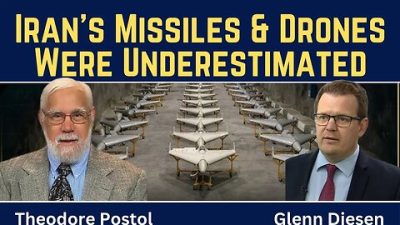
Theodore Postol: Iran’s Missiles & Drones Were Underestimated
or go to
Aletho News Archives – Video-Images
From the Archives
What is the Israeli Lobby in Australia Doing in Interfaith Dialogue?
By Ali Kazak | Dissident Voice | October 11, 2015
For years Israel and its lobby around the world have been trying to normalise their relations with Arabs and Muslims without solving the Palestine Question.
One of the methods they resorted to in the last few years is using human rights and community organizations such as interfaith dialogue and Multiculturalism to achieve this objective and to: isolate the Palestinians, marginalise the Palestine question, end Israel’s isolation, and prevent criticism of Israel, knowing that these organisations will be the first to stand against Israel’s violations, racial and religious discrimination.
The group responsible for this task in Australia is The Australia/Israel & Jewish Affairs Council (AIJAC); its Director of International & Community Affairs, Jeremy Jones is in charge of lobbying religious community organizations, specifically Muslims and Christians. Consequently he convened the Faith Communities for Reconciliation, founding participant in the Australian Partnership of Religious Organisations and the Australian National Dialogue of Christians, Muslims & Jews.
AIJAC is a private political propaganda group. It is recognised as the main Israeli lobby in Australia. It coordinates its activities and works intimately with the Israeli embassy in Canberra and different institutions in Israel. It is privately funded by some Jewish businessmen. It monitors closely Australian politicians, the media, ethnic and religious groups, (especially Arabs and Muslims), unions and academics on their stands towards Israel and the Palestine question. … continue
Blog Roll
 Aletho News
- The killing of three Indonesian soldiers in Lebanon should remind Jakarta that Israel does not want peace
- Defeated and delusional: Netanyahu’s remarks reveal $80bn war failure, says analyst
- Iran’s friends are about to make life much more difficult for Israel and the US
- The war of liberation of the Arab and Islamic peoples expands across the Gulf
- Envoy warns UN on Trump’s threat to ‘obliterate’ Iran’s civilian infrastructure
- The Larak Corridor: Iran’s Rial Gate With No US, No Israel, and No Way Around
- ‘Economic terrorism’: Steel facilities hit again in US-Israeli strike
- ‘War Crime’: Iran condemns attacks on Arak, Ardakan nuclear sites
- Two-thirds of Americans want quick end to Iran war even if goals unmet
- Trump to Give “Important Update on Iran” Wednesday in Prime-Time Speech
- If Americans Knew
- Gaza families reunite years after babies evacuated amid Israel’s war
- International Rescue Committee warns Gaza’s children face grave protection risks
- Iran’s Alleged 47-Year War on America: Debunking the 1,050 American Deaths Canard
- Israel wants US to bomb more of Iran’s civilian structures (113,000 is not enough) – Not a ceasefire Day 173
- Ann Coulter Rips Into Fox News for Iran War Coverage
- Joe Kent Urges Americans To Call White House and Congress To Object To Sending Troops Into Iran
- DNC Resolution to Reject AIPAC Funding Puts Democratic Leaders in the Hot Seat
- Swedish foundation to build 400 schools as over 650,000 Gaza children remain without education for 2 years
- Israeli army admits photshopping image of slain Lebanese journalist
- This is how Israel is systematically killing health workers under the cover of war in Lebanon
- No Tricks Zone
- New Study Finds Warming Saves Lives…Cold Temperatures 12 Times More Deadly Than Excess Heat
- German Science Blog Accuses PIK Climate Institute Of Hallucinating Climate Tipping Points
- Devastating Assessment Of Comirnaty Vaccine By Former Senior Pfizer Europe Toxicologist
- New Study: CO2 Is ‘Effectively Negligible’ As An Explanatory Climate Change Factor Since 2000
- Former Pfizer Toxicologist Dr. Helmut Sterz Tells Bundestag Hearing Pfizer Vaccine Should Have Never Been Approved
- Energy Expert: Germany’s Nuclear Phaseout Was A “500 Billion Euro Mistake”
- New Research: South Australia’s Mid-Holocene Sea Surface Temperatures Were 4°C Warmer Than Today
- Storing Green Energy To Last Germany 10 Days Would Require A 60-Million Tonne Battery
- New Studies: UK Sea Levels Were 4 Meters Higher Than Today During The Mid-Holocene
- Destructive Green New Deal: German Energy And Metal Group Warns Of Drastic Crisis
 Aletho News