Moscow Slams Closure of Russian TV in Ukraine
RIA Novosti | March 25, 2014
MOSCOW – A ruling by a Ukrainian court to suspend broadcasts of four Russian TV channels in Ukraine is an attack against human rights and media freedom, a senior Russian diplomat said on Tuesday.
The District Administrative Court in Kiev ruled to suspend broadcasts of Russia’s Rossiya 24, Channel One, RTR Planeta, and NTV-World in Ukraine pending hearings on a permanent ban.
“Undoubtedly, this should be viewed only as an infringement on democratic freedoms and as a violation of Ukraine’s international obligations. Certainly, millions of [Russian-speaking] residents of this country have the right to watch [Russian] TV and have access to [other] Russian-language media,” said Konstantin Dolgov, the Russian foreign ministry’s point man on human rights.
“Forces that came into power in Kiev as a result of an anti-constitutional coup, have declared their commitment to basic human rights and freedoms, to principles of democracy. Naturally, this announcement contradicts such statements,” Dolgov said.
Ukraine is split into Russian-speaking east and Ukrainian-speaking west.
National Television and Radio Broadcasting Council of Ukraine has ordered cable and satellite TV service providers to exclude Russian TV channels, popular among Russian speakers in eastern Ukraine, from their packages.
The watchdog said the Russian channels’ coverage of the recent events in Ukraine, including the political crisis and Crimea’s reunification with Russia, harms national security.
OSCE Representative on Freedom of the Media Dunja Mijatovic condemned the move in mid-March, saying that that “banning programming without a legal basis is a form of censorship; national security concerns should not be used at the expense of media freedom.”
Related articles


Slavery, Cotton and Imperialism
By W.T. Whitney, Jr. | CounterPunch | March 25, 2014
“Cuba is already ours. I feel it in my finger’s ends.”
– James Buchanan, 1849
Historian Walter Johnson’s highly recommended book, “River of Dark Dreams,” centers on cotton production and slave ownership in the Mississippi River Valley prior to the U.S. Civil War. Planters, it seems, believed their fate was linked to imperatives imposed through an internationalized system of sales, manufacture, and re-supply. Johnson’s spirited, enthralling narrative casts slave ownership and cotton growing as precarious undertakings. Planters on the edge of disaster strategized and improvised in order to retain both land and slaves.
Their intransigence vis-à-vis northern compatriots derived, Johnson suggests, from immersion in a labyrinth-like alternative universe that set conditions for their economic survival. Planters were alienated enough from pretensions of their own government to seek deliverance through privatized military interventions in countries seen as hospitable to plantations and slavery.
Johnson focuses on actualities and people’s lives rather than on well-trodden slavery-era themes like abolitionism, or northern industrialization, or states rights . Social and economic history in his hands tells of ledger books; cotton “pickability;” slaves starving, stolen, rebelling, and running away; search dogs; slave babies dying, slave prices, soil fertility, droughts, sandbars, and Haiti. Steamboats feature prominently, along with their explosions, gamblers, races, high-pressure engines, and dining room etiquette. They were technological marvels of their era and absolutely crucial for marketing cotton.
During the period under study, Valley cotton production increased fortyfold, the slave population, 17 times. “The greatest economic boom in the history of the United States” was in progress. Cotton was “the largest single sector of the global economy.” Planters were part of “a network of material connections that stretched from Mississippi and Louisiana to  Manhattan and Lowell to Manchester and Liverpool.” Indeed, the “rate of exploitation of slaves in a field in Mississippi … was keyed to the exchange in Liverpool (port of entry for 85 percent of U.S. planters’ cotton) and the labor of mill hands in Manchester.”
In New York southern cotton was re-sold, re-graded, and re-loaded onto other ships for the Atlantic crossing. That city consumed 40 percent of all income generated through cotton sales. Cotton made up two thirds of all U.S. exports. Yet only 10 percent of U.S. imports ended up in cotton-producing states. Southern manufacturers lacked essential equipment manufactured abroad. Cotton producers endured shortages of imported plantations supplies.
Johnson characterizes “the conceptual reach of the global economy in the first half of the nineteenth century” as “lashes into labor into bales into dollars into pounds sterling.” Cotton moved from plantations, to factors in New Orleans, to bankers and shippers in New York, to bankers, buyers, and manufacturers in England, all on a flood of promissory notes, loans, credit, and deductions.
Planters’ wealth took the form of slaves and land. Although land served as collateral for loans, “without slaves, land itself was worthless.” In effect, planters “buy Negroes to plant cotton and raise cotton to buy Negroes.” Facing hard times, slaveholders as a class could not simply transfer their investment from one form of capital to another… Their capital would not simply rust or lie fallow. It would starve. It would steal. It would revolt.”
Influential trade representatives and publicists determined upon a “spatial fix.” They envisioned the Mississippi River as conduit to southern venues favorable to cotton production and other investment possibilities. “In order to survive, slaveholders had to expand,” the author points out: “Proslavery globalism increasingly took the form of imperialist military action.”
“[F]or many in the Mississippi Valley … the most important issue in the early 1850s was Cuba.” Pursing annexation, former Spanish soldier Narciso López in 1851 invaded the island with troops drawn from “the margins of the cotton economy.” Slaveholders had donated supplies. The expedition failed, and López’ execution in Havana attracted 20,000 spectators. Former Mississippi governor and co-conspirator John Quitman raised 1000 men in 1855 for another invasion, which never materialized.
Johnson reviews the career also of slaveholder proxy William Walker whose small army in 1855 subdued Nicaraguan defenders and set him up as the country’s president. Mississippi Valley supporters provided supplies, arms, troops, and ample publicity.
Were slave-owners capitalist? Johnson rejects the notion of slavery as an “archaic” pre-capitalist mode of exploitation. He settles on “a materialist and historical analysis [that] begins from the premise that there was no nineteenth century capitalism without slavery.” […]
Johnson documents early stirrings of U.S. imperialism. The take among many leftists is that capitalism by its very nature entails recurring crises in accumulation. They assume too that for solutions capitalists look to overseas extension of their operations, even to war making. Thus slave owner longings for exploitative possibilities in the Caribbean and in Central America fueled military adventurism. “River of Dark Dreams” serves in this regard to have documented the beginnings of a U.S. turn toward a global fix for close-to-home economic incongruities. – Full review
W.T. Whitney Jr. is a retired pediatrician and political journalist living in Maine.
Should the left call for Taliban victory?
Socialist Worker | August 18, 2009
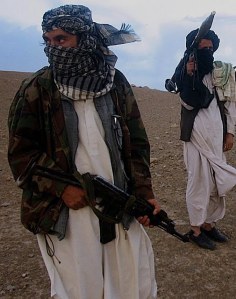 AS SOCIALISTS, we support the right of oppressed peoples to fight for self-determination unreservedly, just as we oppose imperialism, without caveat.
This perspective is generally accepted by the left without question in contexts such as Latin America or Africa, where bitter fights against U.S. and European imperialism have been fought and, in some cases, won.
Yet, when it comes to the Middle East and Afghanistan today there is suddenly much less clarity about what radicals and Marxists should be saying. Nowhere is that more evident than in the case of Afghanistan, which has suffered under the yoke of U.S. imperialism since 2001 (with active U.S. interference in the country since at least the 1970s).
The idea that the Taliban, as a movement fighting against U.S. occupation, is a force we should be supporting is, unfortunately, a somewhat controversial position to hold, even on the far left. This is a serious mistake and speaks both to the extent to which Islamophobia has penetrated the left, as well as to the lack of understanding of the social dynamics of an oppressed and devastated country like Afghanistan.
We are all familiar with the lies and excuses used to justify the invasion and occupation of Afghanistan in the wake of the September 11 attacks. Bush and his coterie of crooks and warmongers told us that only a military invasion could liberate the people, and especially the women, of Afghanistan from the brutal, misogynistic and “medieval” Taliban movement.
There was no mention, of course, of the substantial support offered to the Taliban regime in the late 1990s when Clinton was president and in the early days of the Bush presidency, nor of the long and ugly history of U.S. intervention in Central and South Asia, which was an important precondition for the rise of Islamism.
We should condemn unreservedly the oppression of women and the general social conservatism of the pre-2001 Taliban regime, as well, of course, as their efforts to cut deals with regional and global superpowers against the interests of the vast majority of Afghans. However, we must also unreservedly condemn the racism and Islamophobia used as an ideological fig leaf to justify invasion and imperialism, and it is the left’s weakness on this issue, which has blinded many to the new realities on the ground in Afghanistan.
Before addressing the important question of who the Taliban actually are, it is important to understand the material conditions Afghans face. Afghanistan is a devastated country. It is ranked at or near the bottom of a broad range of social indicators, such as levels of poverty, infant mortality, literacy, per capita income, prevalence of easily preventable diseases and so forth. Most major cities in Afghanistan, including the capital Kabul, are in ruins (despite claims of “reconstruction” by NATO imperialists) and decent roads, electricity, clean water, sanitation and basic social services are unheard of for most of the population, especially in the rural areas. The majority of the population ekes out a living on a subsistence basis, and the struggle for survival is the overarching concern for most Afghans.
In a nutshell, there is no Afghan working class or progressive petit bourgeoisie to speak of, and the major social classes (aside from the puppet regime and it’s assortment of bandits and thugs) are the poor peasantry and the Islamic clergy.
THE SIGNIFICANCE of this to a discussion of anti-imperialist resistance in Afghanistan should be obvious to any serious historical materialist. This question cannot be thought about in the abstract, it must be considered in light of the material realities on the ground. Such realities necessarily shape the kinds of social forces and the character of class struggle in that country and make it highly likely that any grassroots resistance will have a strongly religious character, given that the rural clergy are the only force capable of uniting the peasantry against the comprador ruling class.
The following point cannot be stressed enough; whilst the U.S. remains in Afghanistan, economic and social development will not occur much beyond current levels. This in turn means that the Taliban, as a broad-based movement of poor farmers and lower clergy, is the face of anti-imperialist resistance in Afghanistan for the foreseeable future.
To put it another way, if we, as avowed anti-imperialists, intend to wait around for a resistance movement that agrees with us on every issue, including the need to fight the oppression of women, gays, racial and religious minorities, etc., we’ll be waiting a long time. The Taliban is the resistance in Afghanistan and we must support it, critically, but unreservedly.
The Taliban that ruled Afghanistan prior to the U.S. invasion no longer exists. The U.S. and NATO routinely refer to any act of resistance as the work of the “Taliban” (meaning the followers of Mullah Omar), much as every act of resistance in Iraq was the work of “Baath loyalists.”
To be sure, there are attacks being carried out by people who support the former regime, but many, perhaps most, resistance fighters have no particular loyalty to the former leadership and some are actively hostile to it.
Anand Gopal, one of the few independent journalists actively trying to find out what is actually happening in Afghanistan has written some very useful and insightful work on this, and as he points out, the ranks of the Taliban have been swelled in recent years by rural peasants who have been radicalized as a result of US/NATO brutality, including the indiscriminate air attacks which have killed thousands of Afghans.
The Taliban are increasingly espousing a strong nationalist message and, in some cases, have substantially moderated their social conservatism in order to build a more broad-based and effective resistance movement.
It is also the case that the “Taliban” is effectively a blanket term for a coalition of groups, some drawn from the tiny strata of educated middle class Afghans, which aim to eject foreign troops from their country. In short, when the U.S. and its allies use the term “Taliban” they want us to think of public stonings, music bans and ultra-conservative clerics–and if we follow their lead we do a grave disservice to the Afghan resistance and only help to perpetuate Islamophobic caricatures of “crazed, bearded extremists.”
There is no fundamental difference between the liberation theology movements in South America and the popular Islamist resistance movements in the Middle East and Asia, movements such as Hezbollah, Hamas and the Taliban. To be sure, the former were less socially conservative, but as religiously colored grassroots resistance movements they are essentially the same kind of manifestation of class resistance.
The left needs to ask itself why it is much more critical of Muslims expressing class anger in a religious form than of South American Christians; to my mind, unexamined Islamophobia explains much of this discrepancy.
How “Extreme Levels” of Roundup in Food Became the Industry Norm
By Thomas Bøhn and Marek Cuhra | Independent Science News | March 24, 2014
Food and feed quality are crucial to human and animal health. Quality can be defined as sufficiency of appropriate minerals, vitamins and fats, etc. but it also includes the absence of toxins, whether man-made or from other sources. Surprisingly, almost no data exist in the scientific literature on herbicide residues in herbicide tolerant genetically modified (GM) plants, even after nearly 20 years on the market.
In research recently published by our laboratory (Bøhn et al. 2014) we collected soybean samples grown under three typical agricultural conditions: organic, GM, and conventional (but non-GM). The GM soybeans were resistant to the herbicide Roundup, whose active ingredient is glyphosate.
We tested these samples for nutrients and other compounds as well as relevant pesticides, including glyphosate and its principal breakdown product, Aminomethylphosponic acid (AMPA). All of the individual samples of GM-soy contained residues of both glyphosate and AMPA, on average 9.0 mg/kg. This amount is greater than is typical for many vitamins. In contrast, no sample from the conventional or the organic soybeans showed residues of these chemicals (Fig. 1).
This demonstrates that Roundup Ready GM-soybeans sprayed during the growing season take up and accumulate glyphosate and AMPA. Further, what has been considered a working hypothesis for herbicide tolerant crops, i.e. that, as resistant weeds have spread:
“there is a theoretical possibility that also the level of residues of the herbicide and its metabolites may have increased” (Kleter et al. 2011) is now shown to be actually happening.
Monsanto (manufacturer of glyphosate) has claimed that residues of glyphosate in GM soy are lower than in conventional soybeans, where glyphosate residues have been measured up to 16-17 mg/kg (Monsanto 1999). These residues, found in non-GM plants, likely must have been due to the practice of spraying before harvest (for desiccation). Another claim of Monsanto’s has been that residue levels of up to 5.6 mg/kg in GM-soy represent “… extreme levels, and far higher than those typically found” (Monsanto 1999).

Figure 1. Residues of glyphosate and AMPA in individual soybean samples (n=31).
For organic and conventional soybeans, glyphosate residues were below the detection limit.
Seven out of the 10 GM-soy samples we tested, however, surpassed this “extreme level” (of glyphosate + AMPA), indicating a trend towards higher residue levels. The increasing use of glyphosate on US Roundup Ready soybeans has been documented (Benbrook 2012). The explanation for this increase is the appearance of glyphosate-tolerant weeds (Shaner et al. 2012) to which farmers are responding with increased doses and more applications.
Maximum residue levels (MRLs) of glyphosate in food and feed
Globally, glyphosate-tolerant GM soy is the number one GM crop plant and glyphosate is the most widely used herbicide, with a global production of 620 000 tons in 2008 (Pollak 2011). The world soybean production in 2011 was 251.5 million metric tons, with the United States (33%), Brazil (29%), Argentina (19%), China (5%) and India (4%) as the main producing countries (American Soybean Association 2013).
In 2011-2012, soybeans were planted on about 30 million hectares in the USA, with Roundup Ready GM soy contributing 93-94 % of the production (USDA 2013). Globally, Roundup Ready GM soybeans contributed to 75 % of the production in 2011 (James 2012).
The legally acceptable level of glyphosate contamination in food and feed, i.e. the maximum residue level (MRL) has been increased by authorities in countries where Roundup-Ready GM crops are produced, or where such commodities are imported. In Brazil, the MRL in soybean was increased from 0.2 mg/kg to 10 mg/kg in 2004: a 50-fold increase, but only for GM-soy. The MRL for glyphosate in soybeans has been increased also in the US and Europe. In Europe, it was raised from 0.1 mg/kg to 20 mg/kg (a 200-fold increase) in 1999, and the same MRL of 20 mg/kg was adopted by the US. In all of these cases, MRL values appear to have been adjusted, not based on new scientific evidence, but pragmatically in response to actual observed increases in the content of residues in glyphosate-tolerant GM soybeans.
Has the toxicity of Roundup been greatly underestimated?
When regulatory agencies assess pesticides for safety they invariably test only the claimed active ingredient.
Nevertheless, these do not necessarily represent realistic conditions since in practice it is the full, formulated herbicide (there are many Roundup formulations) that is used in the field. Thus, it is relevant to consider, not only the active ingredient, in this case glyphosate and its breakdown product AMPA, but also the other compounds present in the herbicide formulation since these enhance toxicity. For example, formulations of glyphosate commonly contain adjuvants and surfactants to stabilize and facilitate penetration into the plant tissue. Polyoxyethylene amine (POEA) and polyethoxylated tallowamine (POE-15) are common ingredients in Roundup formulations and have been shown to contribute significantly to toxicity (Moore et al. 2012).
Our own recent study in the model organism Daphnia magna demonstrated that chronic exposure to glyphosate and a commercial formulation of Roundup resulted in negative effects on several life-history traits, in particular reproductive aberrations like reduced fecundity and increased abortion rate, at environmental concentrations of 0.45-1.35 mg/liter (active ingredient), i.e. below accepted environmental tolerance limits set in the US (0.7 mg/liter) (Cuhra et al. 2013). A reduced body size of juveniles was even observed at an exposure to Roundup at 0.05 mg/liter.
This is in sharp contrast to world-wide regulatory assumptions in general, which we have found to be strongly influenced by early industry studies and in the case of aquatic ecotoxicity assessment, to be based on 1978 and 1981 studies presented by Monsanto claiming that glyphosate is virtually non-toxic in D. magna (McAllister & Forbis, 1978; Forbis & Boudreau, 1981).
Thus a worrisome outlook for health and the environment can be found in the combination of i) the vast increase in use of glyphosate-based herbicides, in particular due to glyphosate-tolerant GM plants, and ii) new findings of higher toxicity of both glyphosate as an active ingredient (Cuhra et al., 2013) and increased toxicity due to contributions from chemical adjuvants in commercial formulations (Annett et al. 2014).
A similar situation can be found for other pesticides. Mesnage et al. (2014) found that 8 out of 9 tested pesticides were more toxic than their declared active principles.
This means that the Accepted Daily Intake (ADI) for humans, i.e. what society finds “admissible” regarding pesticide residues may have been set too high, even before potential combinatorial effects of different chemical exposures are taken into account.
For glyphosate formulations (Roundup), realistic exposure scenarios in the aquatic environment may harm non-target biodiversity from microorganisms, invertebrates, amphibians and fish, (reviewed in Annett et al. 2014) indicating that the environmental consequences of these agrochemicals need to be re-assessed.
Other compositional differences between GM, non-GM, and organic

Figure 2. Discriminant analysis for GM, conventional and organic soy samples based on 35 variables. Data was standardized (mean = 0 and SD = 1).
Our research also demonstrated that different agricultural practices lead to markedly different end products. Data on other measured compositional characteristics could be used to discriminate statistically all individual soy samples (without exception) into their respective agricultural practice background (Fig. 2).
Organic soybeans showed the healthiest nutritional profile with more glucose, fructose, sucrose and maltose, significantly more total protein, zinc and less fiber, compared with both conventional and GM-soy. Organic soybeans contained less total saturated fat and total omega-6 fatty acids than both conventional and GM-soy.
Conclusion
Roundup Ready GM-soy accumulates residues of glyphosate and AMPA, and also differs markedly in nutritional composition compared to soybeans from other agricultural practices. Organic soybean samples also showed a more healthy nutritional profile (e.g. higher in protein and lower in saturated fatty acids) than both industrial conventional and GM soybeans.
Lack of data on pesticide residues in major crop plants is a serious gap of knowledge with potential consequences for human and animal health. How is the public to trust a risk assessment system that has overlooked the most obvious risk factor for herbicide tolerant GM crops, i.e. high residue levels of herbicides, for nearly 20 years? If it has been due to lack of understanding, it would be bad. If it is the result of the producer’s power to influence the risk assessment system, it would be worse.
References
American Soy Association, Soystats. 2013. 16-5-2013.
Annett, R., Habibi, H. R. and Hontela, A. 2014. Impact of glyphosate and glyphosate-based herbicides on the freshwater environment. – Journal of Applied Toxicology DOI 10.1002/jat.2997.
Aumaitre, L. A. 2002. New feeds from genetically modified plants: substantial equivalence, nutritional equivalence and safety for animals and animal products. – Productions Animales 15: 97-108.
Benbrook, C. M. 2012. Impacts of genetically engineered crops on pesticide use in the U.S. – the first sixteen years. – Environmental Science Europe 24:24.
Binimelis, R., Pengue, W. and Monterroso, I. 2009. “Transgenic treadmill”: Responses to the emergence and spread of glyphosate-resistant johnsongrass in Argentina. – Geoforum 40: 623-633.
Bøhn, T., Cuhra, M., Traavik, T., Sanden, M., Fagan, J. and Primicerio, R. 2014. Compositional differences in soybeans on the market: Glyphosate accumulates in Roundup Ready GM soybeans. – Food Chemistry 153: 207-215.
Cuhra, M., Traavik, T. and Bøhn, T. 2013. Clone- and age-dependent toxicity of a glyphosate commercial formulation and its active ingredient in Daphnia magna. – Ecotoxicology 22: 251-262 (open access). DOI 10.1007/s10646-012-1021-1.
Duke, S. O., Rimando, A. M., Pace, P. F., Reddy, K. N. and Smeda, R. J. 2003. Isoflavone, glyphosate, and aminomethylphosphonic acid levels in seeds of glyphosate-treated, glyphosate-resistant soybean. – Journal of Agricultural and Food Chemistry 51: 340-344.
EC . Review report for the active substance glyphosate. 6511/VI/99-final, 1-56. 2002. European Commission. Health and Consumer Protection Directorate-General.
Forbis, A.D., Boudreau, P. 1981. Acute toxicity of MON0139 (Lot LURT 12011)(AB-81-074) To Daphnia magna: Static acute bio- assay report no. 27203. Unpublished study document from US EPA library
Harrigan, G. G., Ridley, G., Riordan, S. G., Nemeth, M. A., Sorbet, R., Trujillo, W. A., Breeze, M. L. and Schneider, R. W. 2007. Chemical composition of glyphosate-tolerant soybean 40–3-2 grown in Europe remains equivalent with that of conventional soybean (Glycine max L.). – Journal of Agricultural and Food Chemistry 55: 6160-6168.
James, C. Global Status of Commercialized Biotech/GM Crops: 2012. ISAAA Brief No. 44. 2012. ISAAA: Ithaca, NY.
Kleter, G. A., Unsworth, J. B. and Harris, C. A. 2011. The impact of altered herbicide residues in transgenic herbicide-resistant crops on standard setting for herbicide residues. – Pest Management Science 67: 1193-1210.
McAllister, W., Forbis A. 1978. Acute toxicity of technical glyphosate (AB–78–201) to Daphnia magna. Study reviewed and approved 8–30–85 by EEB/HED
Mesnage, R., Defarge, N., Vendômois, J. S. and Seralini, G. E. 2014. Major pesticides are more toxic to human cells than their declared active principles. – BioMed Research International http://dx.doi.org/10.1155/2014/179691.
Monsanto . Residues in Roundup Ready soya lower than conventional soy. http://www.monsanto.co.uk/news/99/june99/220699_residue.html . 1999.
Moore, L. J., Fuentes, L., Rodgers, J. H., Bowerman, W. W., Yarrow, G. K., Chao, W. Y. and Bridges, W. C. 2012. Relative toxicity of the components of the original formulation of Roundup (R) to five North American anurans. – Ecotoxicology and Environmental Safety 78: 128-133.
Pollak, P. 2011. Fine chemicals: the industry and the business. – Wiley.
Shaner, D. L., Lindenmeyer, R. B. and Ostlie, M. H. 2012. What have the mechanisms of resistance to glyphosate taught us? – Pest Management Science 68: 3-9.
USDA . National Agricultural Statistics Service. 2013. 16-5-2013.
The Authors:
Thomas Bøhn
GenØk – Centre for Biosafety, Tromsø, Norway
Professor of Gene Ecology, Faculty of Health Sciences, UiT The Arctic University of Norway
Marek Cuhra
GenØk – Centre for Biosafety, Tromsø, Norway
PhD student, Faculty of Health Sciences, UiT The Arctic University of Norway
BRICS rejects sanctions against Russia over Ukraine
Press TV – March 25, 2014
The group of five major emerging national economies known as the BRICS has rejected the Western sanctions against Russia and the “hostile language” being directed at the country over the crisis in Ukraine.
“The escalation of hostile language, sanctions and counter-sanctions, and force does not contribute to a sustainable and peaceful solution, according to international law, including the principles and purposes of the United Nations Charter,” foreign ministers of the BRICS countries – Brazil, Russia, India, China and South Africa – said in a statement issued on Monday.
The group agreed that the challenges that exist within the regions of the BRICS countries must be addressed within the framework of the United Nations.
“BRICS countries agreed that the challenges that exist within the regions of the BRICS countries must be addressed within the fold of the United Nations in a calm and level-headed manner,” the statement added.
The White House said earlier on Monday that US President Barack Obama and the leaders of Britain, Canada, France, Germany, Italy and Japan decided to end Russia’s role in the G8 over the crisis in Ukraine and the status of Crimea.
Meanwhile, the G7 group of top economic powers has snubbed a planned meeting that Russian President Vladimir Putin was due to host in the Black Sea resort city of Sochi in June.
The G7 said they would hold a meeting in Brussels without Russia instead of the wider G8 summit, and threatened tougher sanctions against Russia.
Russia brushed off the Western threat to expel it from the G8 on the same day. The Autonomous Republic of Crimea declared independence from Ukraine on March 17 and formally applied to become part of Russia following a referendum a day earlier, in which nearly 97 percent of the participants voted in favor of the move.
On March 21, Putin signed into law the documents officially making Crimea part of the Russian territory. Putin said the move was carried out based on the international law.
Israel-Palestine Talks
US Desperate to keep Futile Peace Process Show on the Road a Little Longer
By Jonathan Cook | Dissident Voice | March 24, 2014
For the first time since the US launched the Middle East peace talks last summer, the Palestinian leadership may be sensing it has a tiny bit of leverage.
Barack Obama met the Palestinian president Mahmoud Abbas in Washington last week in what Palestinian officials called a “candid and difficult” meeting. The US president hoped to dissuade Abbas from walking away when the original negotiations’ timetable ends in a month.
The US president and his secretary of state, John Kerry, want their much-delayed “framework agreement” to provide the pretext for spinning out the stalled talks for another year. The US outline for peace is now likely to amount to little more than a set of vague, possibly unwritten principles that both sides can assent to.
The last thing the US president needs is for the negotiations to collapse, after Kerry has repeatedly stressed that finding a solution to the Israeli-Palestinian conflict is imperative.
The US political cycle means Obama’s Democratic party is heading this autumn into the Congressional mid-term elections. A humiliating failure in the peace process would add to perceptions of him as a weak leader in the Middle East, following what has been widely presented as his folding in confrontations with Syria and Iran.
Renewed clashes between Israel and the Palestinians in the international arena would also deepen US diplomatic troubles at a time when Washington needs to conserve its energies for continuing negotiations with Iran and dealing with the fallout from its conflict with Russia over Crimea.
Obama therefore seems committed to keeping the peace process show on the road for a while longer, however aware he is of the ultimate futility of the exercise.
In this regard, US interests overlap with those of Israeli prime minister Benjamin Netanyahu. Israel has been the chief beneficiary of the past eight months: diplomatic pressure has largely lifted; Israeli officials have announced an orgy of settlement building in return for releasing a few dozen Palestinian prisoners; and the White House has gradually shifted ground even further towards Israel’s hardline positions.
The Palestinians, on the other hand, have nothing to show for their participation, and have lost much of the diplomatic momentum gained earlier by winning upgraded status at the United Nations. They have also had to put on hold moves to join dozens of international forums, as well as the threat to bring Israel up on war crimes charges at the International Criminal Court.
Abbas is under mounting pressure at home to put an end to the charade, with four Palestinian factions warning last week that the Kerry plan would be the equivalent of national “suicide”. For this reason, the White House is now focused on preventing Abbas from quitting next month – and that requires a major concession from Israel.
The Palestinians are said to be pushing hard for Israel’s agreement to halt settlement building and free senior prisoners, most notably Marwan Barghouti, who looks the most likely successor to Abbas as Palestinian leader.
Some kind of short-term settlement freeze – though deeply unpopular with Netanyahu’s supporters – may be possible, given the Israeli right’s triumph in advancing settlement-building of late. Abbas reportedly presented Obama with “a very ugly map” of more than 10,000 settler homes Israel has unveiled since the talks began.
Setting Barghouti free, as well as Ahmad Saadat, whose PLO faction assassinated the far-right tourism minister, Rehavam Zeevi, in 2001, would be an even harder pill for the Israeli government to swallow. Cabinet ministers are already threatening a mutiny over the final round of prisoner releases, due at the end of the week. But Israeli reports on Sunday suggested Washington might consider releasing Israeli spy Jonathan Pollard, possibly in return for Israel freeing more Palestinians, to keep the talks going.
Simmering tensions between the US and Israel, however, are suggestive of the intense pressure being exerted by the White House behind the scenes.
Those strains exploded into view again last week when Moshe Yaalon, Israel’s defence minister, used a speech to lambast Washington’s foreign policy as “feeble”. In a similar vein, he infuriated the White House in January by labelling Kerry “obsessive” and “messianic” in pursuing the peace process. But unlike the earlier incident, Washington has refused to let the matter drop, angrily demanding an explicit apology.
The pressure from the White House, however, is not chiefly intended to force concessions from Israel on an agreement. After all, the Israeli parliament approved this month the so-called referendum bill, seen by the right as an insurance policy. It gives the Israeli public, raised on the idea of Jerusalem as Israel’s exclusive and “eternal capital”, a vote on whether to share it with the Palestinians.
Washington’s goal is more modest: a few more months of quiet. But even on this reckoning, given Netanyahu’s intransigence, the talks are going to implode sooner or later. What then?
Obama and Kerry have set out a convincing scenario that in the longer term Israel will find itself shunned by the world. The Palestinian leadership will advance its cause at the UN, while conversely grassroots movements inside and outside Palestine will begin clamouring for a single state guaranteeing equality between Israeli Jews and Palestinians. Israel’s vehement and aggressive opposition on both fronts will only serve to damage its image – and its relations with the US.
An unexpected voice backing the one-state solution emerged last week when Tareq Abbas, the Palestinian president’s 48-year-old son, told the New York Times that a struggle for equal rights in a single state would be the “easier, peaceful way”.
Bolstering Washington’s argument that such pressures cannot be held in check forever, a poll this month of US public opinion revealed a startling finding. Despite a US political climate committed to a two-state solution, nearly two-thirds of Americans back a single democratic state for Jews and Palestinians should a Palestinian state prove unfeasible. That view is shared by more than half of Israel’s supporters in the US.
That would constitute a paradigm shift, a moment of reckoning that draws nearer by the day as the peace process again splutters into irrelevance.
Hide the decline deja vu? Mann’s ‘little white line’ as ‘False Hope’ may actually be false hype
Watts Up With That? | March 24, 2014
Foreword by Anthony Watts
An essay by Monckton of Brenchley follows, but I wanted to bring this graphic from Dr. Mann’s recent Scientific American article to attention first. In the infamous “hide the decline” episode revealed by Climategate surrounding the modern day ending portion of the “hockey stick”, Mann has been accused of using “Mike’s Nature Trick” to hide the decline in modern (proxy) temperatures by adding on the surface record. In this case, the little white line from his SciAm graphic shows how “the pause” is labeled a “faux pause”, (a little play on words) and how the pause is elevated above past surface temperatures.
![earth-will-cross-the-climate-danger-threshold-by-2036_large[1]](http://wattsupwiththat.files.wordpress.com/2014/03/earth-will-cross-the-climate-danger-threshold-by-2036_large1.jpg)

Looking at the SciAm graphic (see zoom at right), something didn’t seem right, especially since there doesn’t seem to be any citation given for what the temperature dataset used was. And oddly, the graphic shows Mann’s little white line peaking significantly warmer that the 1998 super El Niño, and showing the current temperature equal to 1998, which doesn’t make any sense.
So, over the weekend I asked Willis Eschenbach to use his “graph digitizer” tool (which he has used before) to turn Mann’s little white line into numerical data, and he happily obliged.
Here is the result when Mann’s little white line is compared and matched to two well known surface temperature anomaly datasets:

What is most interesting is that Mann’s “white line” shows a notable difference during the “pause” from HadCRUT4 and GISS LOTI. Why would our modern era of “the pause” be the only place where a significant divergence exists? It’s like “hide the decline” deja vu.
The digitized Mann’s white line data is available here: Manns_white_line_digitized.(.xlsx)
As of this writing, we don’t know what dataset was used to create Mann’s white line of surface temperature anomaly, or the base period used. On the SciAm graphic it simply says “Source: Michael E. Mann” on the lower right.
It isn’t GISS land ocean temperature index (LOTI), that starts in 1880. And it doesn’t appear to be HadCRUT4 either. Maybe it is BEST but not using the data going back to 1750? But that isn’t likely either, since BEST pretty much matches the other datasets, and in Mann’s graphic above, which peaks out at above 1°C, none of those hit higher than 0.7°C. What’s up with that? … continue
Related article

WHY? Stories of bombed Yugoslavia
Exactly 15 years ago, on March 24, NATO began its 78-day bombing of Yugoslavia. The alliance bypassed the UN under a “humanitarian” pretext, launching aggression that claimed hundreds of civilian lives and caused a much larger catastrophe than it averted.
Years on, Serbia still bears deep scars of the NATO bombings which, as the alliance put it, were aimed at “preventing instability spreading” in Kosovo.
Codenamed ‘Operation Allied Force,’ it was the largest attack ever undertaken by the alliance. It was also the first time that NATO used military force without the approval of the UN Security Council and against a sovereign nation that did not pose a real threat to any member of the alliance.
NATO demonstrated in 1999 that it can do whatever it wants under the guise of “humanitarian intervention,” “war on terror,” or “preventive war” — something that everyone has witnessed in subsequent years in different parts of the globe.
Nineteen NATO member states participated to some degree in the military campaign against the Federal Republic of Yugoslavia (Serbia and Montenegro), which lasted for 11 weeks until June 10, 1999.
In the course of the campaign, NATO launched 2,300 missiles at 990 targets and dropped 14,000 bombs, including depleted uranium bombs and cluster munitions (unexploded cluster bombs continued to pose a threat to people long after the campaign was over.) Over 2,000 civilians were killed, including 88 children, and thousands more were injured. Over 200,000 ethnic Serbs were forced to leave their homeland in Kosovo.
In what the alliance described as “collateral damage,” its airstrikes destroyed more than 300 schools, libraries, and over 20 hospitals. At least 40,000 homes were either completely eliminated or damaged and about 90 historic and architectural monuments were ruined. That is not to mention the long-term harm caused to the region’s ecology and, therefore, people’s health.
News correspondents Anissa Naouai and Jelena Milincic, the authors of RT’s documentary ‘Zashto?’ — which means “Why?” in English –traveled through former Yugoslavia to Belgrade, Kosovo, and Montenegro and spoke to people who endured the atrocities and horrors of the war and lost their friends and relatives. … http://rt.com/news/yugoslavia-kosovo-…
BRICS at Hague slam attempts to isolate Putin
BRICS Post | March 24, 2014
BRICS have slammed recent reports ahead of the G20 meet to isolate Russian President Vladimir Putin or to place any restrictions on his participation at the G-20 summit in Australia later this year.
“The Ministers noted with concern, the recent media statement on the forthcoming G20 Summit to be held in Brisbane in November 2014. The custodianship of the G20 belongs to all Member States equally and no one Member State can unilaterally determine its nature and character,” said a joint BRICS statement on Monday. Australian Foreign Minister Julie Bishop had said earlier that Putin could be barred from attending the G20 Summit in November.
BRICS Foreign Ministers met on the sidelines of the Nuclear Security Summit in the Hague on Monday to review cooperation among the bloc of five after the adoption of the eThekwini Action Plan of 2013.
The Ministers noted that the role of global governments should focus on “finance, security, information and production”.
“The BRICS agenda is not centered around any specific country or related issue and shares a common vision which drives it to also increasingly identify common areas for cooperation to assist with finding global solutions to global challenges,” noted the joint communiqué.
The BRICS meet convened by South African Foreign Minister Maite Nkoana-Mashabane was attended by her counterparts Sergey Lavrov, Salman Khurshid, Wang Yi and Carlos Antonio Paranhos, Under-Secretary General for Political Affairs of the Federative Republic of Brazil.
The BRICS Ministers also discussed cybersecurity and challenges to peace and security, “notably the significant infringements of privacy and related rights in the wake of the cyber threats experienced, for which there is a need to address these implications in respect of national laws as well as in terms of international law”, said the statement.
BRICS would “continue to act as positive catalysts for inclusive change in the transformation process towards a new and more equitable global order” asserted the Ministers.
BRICS have opposed sanctions against the Syrian government and have argued for a negotiated settlement of the Iranian issue. They are also pushing for reforms of global financial institutions like the IMF.
The five nations also agreed that the challenges that exist within the regions of the BRICS countries must be addressed within the fold of the United Nations.
“The escalation of hostile language, sanctions and counter-sanctions, and force does not contribute to a sustainable and peaceful solution, according to international law, including the principles and purposes of the United Nations Charter,” said the statement.
Related articles


Japan prepares to ship nuclear materials to the US
RT | March 24, 2014
Japan agreed to transfer a share of its highly enriched uranium and weapons grade plutonium stockpiles to the US as part of the global effort to secure nuclear materials. Other nations are also urged to deposit excess nuclear materials in the US.
On the eve of the two-day Nuclear Security Summit in The Hague, US and Japanese leaders arranged a deal on “final disposition” in the US of well over 300 kilograms of weapons grade plutonium and an unspecified quantity of highly enriched uranium (HEU) that will be “sent to a secure facility and fully converted into less sensitive forms.”
This quantity of plutonium is enough to produce 40-50 warheads. The total quantity of HEU currently stocked in Japan is estimated at approximately 1.2 tons. According to The New York Times, some 200 kilograms of HEU is currently designated for the US.
After Barack Obama announced in Prague in 2009 an ambitious agenda to seek “the peace and security of a world without nuclear weapons,” the American president has been pressing his foreign counterparts, both in Asia and Europe, demanding they either get rid of their excess nuclear materials via the US, or tighten security of stockpiles at home.
Two more countries, Belgium and Italy, have also agreed to hand over excess nuclear materials to the US and issued separate joint statements with the White House, Reuters reported.
“This effort involves the elimination of hundreds of kilograms of nuclear material, furthering our mutual goal of minimizing stocks of HEU and separated plutonium worldwide, which will help prevent unauthorized actors, criminals, or terrorists from acquiring such materials,” US President Barack Obama and Japanese Prime Minister Shinzo Abe said in a joint statement released by the White House on Monday.
There is no information whether the deal between Japan and the US has a financial side; nuclear materials, of course, have a solid market value.
After the Russian-American HEU-LEU agreement came to an end in 2013, the US nuclear power generation industry is likely to face a sharp fuel price surge and shortage.
For two decades, the US was buying nuclear fuel from Russia for a dumping price. This fuel was made from down blended Soviet military grade highly enriched uranium, which constituted up to 40 percent of nuclear fuel for America’s 104 nuclear reactors (America’s 65 nuclear power plants generate over 19 percent of electric power in the country).
In the meantime, the United States Enrichment Corporation (USEC), the leading US nuclear fuel supplier remains in dire straits and plans to voluntarily file for bankruptcy in the first quarter of 2014 in order to restructure.
The US also has problems with producing plutonium, used not only in nuclear warheads, but for space exploration as well; only plutonium can produce enough power for long missions to distant planets in the Solar system.
Tokyo also reportedly possesses several dozen tons of plutonium-uranium hybrid fuel called MOX, which it intends to burn in 16 reactors the country plans to restart. All Japanese nuclear power generating facilities halted operation following the Fukushima nuclear catastrophe in March 2011.
The nuclear materials designated for transfer to the US have been kept for decades at Japan’s research reactor site in Tokaimura, where it was used for research.
During the Cold War era, the US and UK reportedly handed over some 331 kilogram of plutonium to Japan to be used for developing breeder reactor technology.
After decades of research, practically all fast (breeder) reactor projects around the world, including Japanese ones, are now closed down. The only country that currently possesses operating breeder reactor power generation facility is Russia.
In 1999, the Tokaimura facility witnessed an accident involving a highly enriched uranium solution. Two workers mishandled radioactive fluid and died as a result, while over 300 were exposed to high doses of radiation.
The New York Times maintains that while the nuclear materials at the Tokaimura facility are of American and British origin, Japan also has vast stockpiles, up to nine tons of plutonium, created at the country’s nuclear power stations as a byproduct of burning uranium for electric power generation. Once Japan restarts some of its nuclear reactors, there will be even more plutonium generated.
Related articles

Iran dismisses Canadian court ruling on asset freeze
Press TV – March 22, 2014
Iran has rejected a politically-motivated ruling by a Canadian court to seize more than USD 7 million of the Islamic Republic’s assets and properties.
Iranian Foreign Ministry Spokeswoman Marzieh Afkham said on Saturday that Iran was not informed about the legal proceedings, adding that the court ruling has therefore “no legal value” to Iran.
An Ontario judge in Canada recently ordered the seizure of more than USD 7 million of assets and properties belonging to Iran over some plaintiffs alleging that the Islamic Republic funds terrorist groups.
“Given the approach of the Canadian government, it is crystal clear that the verdict is politically-motivated and such rulings have no legal value,” Afkham said, reminding the Ottawa government of its international commitment to protect diplomatic properties.
Pointing to Canada’s move to sever ties with Iran unilaterally, Afkham said under international law diplomatic properties have immunity, warning Ottawa of the legal repercussions of disrespecting international regulations.
The Iranian official stated that Iran, as a victim of terrorism, has always denounced this inhuman scourge.
She warned that the double standards used by Western countries, including Canada, in the fight against terrorism will not only fail to uproot it but will also contribute to the spread of this phenomenon.
On September 7, 2012 the Canadian government closed its embassy in Tehran and ordered Iranian diplomats to leave Canada within five days.
In a statement, Canadian Foreign Affairs Minister John Baird cited a number of reasons for Ottawa’s decision to sever ties with Iran, including the West’s dispute over Tehran’s nuclear energy program, the country’s support for the government of Syrian President Bashar al-Assad as well as “threatening the existence of Israel.”
Related article

Sanctions against Russia for the U.S. are a Dead-End
By Sufyan bin Uzayr | International Policy Digest | March 23, 2014
Now that Crimea has voted to unite with Russia and Vladimir Putin has welcomed Crimea with open arms, the Western half of the world, especially the United States and the European Union, are talking at lengths about imposing sanctions on Russia in order to bring Vladimir Putin to his senses.
However, the task seems easier said than done. The United States is simply not in a position to impose long-term sanctions on Russia. Economic and political ties between the United States and Russia are surely not exemplary. Yet, one key American industry relies heavily on a particular import from Russia: fuel for nuclear power plants. American dependency on Russia for its nuclear fuel is not a new development. It dates back to the early 1990s, when the HEU-LEU scheme was launched after the demise of the Soviet Union. Under this scheme, highly enriched uranium (HEU) from Russian nuclear warheads is processed into low enriched uranium (LEU) for use as fuel for American nuclear power plants.
While there are plans of reducing the need for nuclear energy, the United States still receives 100 GW of its power from nuclear power plants (compare this with Russia’s nuclear energy production of 230 GW). As a result, during 2014, 48 million pounds of uranium will be needed to fuel America’s nuclear power plants. Going by data released by the US Energy Information Administration (EIA), the total uranium Oxide produced within the United States is roughly 4.8 million pounds. Barely 10% of the total demand.
Quite obviously, this is not a new trend. Back in 2012 as well, the United States had to purchase over 80% of its nuclear fuel from foreign sources. Acquisition of uranium (ore and/or concentrate) is just one side of the story. The bigger task is the conversion of the acquired uranium into usable nuclear fuel — a process popularly known as ‘enrichment.’
As of now, nuclear enrichment is the responsibility of private firms in the United States. However, among all such private firms, the American ones constitute no more than 20%. Foreign enrichment facilities constitute the rest. European firms and work units undertake approximately 35% of the total enrichment task, and the remainder lies in the hands of Russian enterprises. Quite simply there are not many “home” enrichment facilities in the United States, and nuclear enrichment is accomplished primarily with the help of foreign facilities such as those from Europe and Russia.
Therefore, even though the HEU-LEU scheme ended recently, the United States is set on extending its lifespan by means of renewal. The real details of the renewed HEU-LEU scheme remain to be seen. But by all means, it is highly doubtful that American dependency on Russian help will come to an end, especially because the capacity of America’s own enrichment facilities is limited, as per the data from World Nuclear Association. With uranium supplier USEC planning to file for bankruptcy, the role of foreign facilities in general and Russian facilities in particular will rise manifold.
If sanctions are imposed on Russia, the United States might choose to make up for the missing nuclear imports and enrichment services from Russia by increasing the amount it imports from rest of the world; but even that will help only in part. In a nutshell, when it comes to nuclear energy, America will have a hard time finding an alternative to Russian help. Thus, while the European Union can indeed deliver on its promise of imposing sanctions against Russia, the United States cannot because if mutual sanctions were to come into effect, the primary loser will be America’s own nuclear industry.
Related article

Featured Video

WARNING: Delete TikTok Immediately!
or go to
Aletho News Archives – Video-Images
Book Review
In 2014, Michael Parenti Wrote A Prophetic Article About Ukraine
The Dissident | January 28, 2026
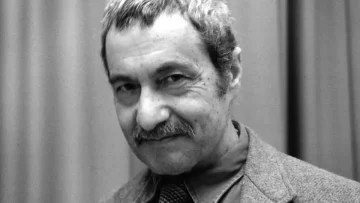
This week, the influential left-wing scholar Michael Parenti passed away at the age of 92.
Parenti was well known for his sharp criticism of U.S. foreign policy and U.S. imperialism throughout his life, waking up many to the reality of it and the lies used to justify it.
This is best underscored in one of his last published articles, “Ukraine and Regime Change”, which was published in the book “Flashpoint In Ukraine: How the U.S. Drive for Hegemony Risks World War III”, where he predicted to a tee what the result of the 2014 U.S. backed coup in Ukraine would be. … continue
Blog Roll
Recent Comments
eddieb on WEF Calls for ‘Cultural Revolu… loongtip on Trump wanted to play peacemake… Coronistan on EU member to sue bloc over ‘su… loongtip on Vicious loongtip on EU turns to India for defense… Coronistan on Donald Trump Is No Peace … seversonebcfb985d9 on French court jails pro-Palesti… eddieb on Fourteen Incredible Facts Abou… Bill Francis on European leaders’ shift in the… seversonebcfb985d9 on Villains of Judea: Philip Esfo… loongtip on Report warns that ‘Jewish terr… Craig Nelms on New study shows that toxic gas…


 Aletho News
- In One Of His Final Pieces, Written in 2014, Michael Parenti Wrote A Prophetic Article About Ukraine
- More Bombs, More Talks Zelensky Rejects Trump’s Plan
- WARNING: Delete TikTok Immediately!
- Bari Weiss’ New CBS Hire List Is Full Of Zionists
- As TikTok falls into Zionist hands, UpScrolled fills the vacuum to give voice to Palestine
- Former Biden Advisor, Amos Hochstein, Admits The Biden Administration Is Responsible For the Gaza Genocide
- Not a Trump anomaly: The Board of Peace and America’s crisis-driven power plays
- Manufacturing martyrdom: The west’s cynical use of Iranian protest figures
- Attack on Iran would backfire, causing great losses for US, warns European think-tank
- Davos and Abu Dhabi: How the Ukrainian Endgame Exposed Western Decline
- If Americans Knew
- “The Gaza ceasefire is a minefield” – Not a ceasefire Day 110
- Israel to seek new security deal from US, official says
- Leaked “Board of Peace” Resolution Outlines U.S.-Led Plan to Rule Over Gaza
- Jonathan Greenblatt Rolls Out Plan to Activate Hispanic Evangelical Golems
- Violence against hundreds of Gazan remains to find one Israeli – Not a ceasefire Day 109
- Greenpeace Demonstrator Exposes Folly of Protest Restrictions
- From CBS to TikTok, Pro-Israel Ellison is now in the driver’s seat
- Israel pays for UK advertisements attacking Doctors Without Borders
- Israel accused of extracting billions from Gazan people to pay for their own genocide
- ‘Deliberate Assassination’: 3 Journalists Among 11 Killed by Israeli Forces in Gaza
- No Tricks Zone
- New Study Affirms Rising CO2’s Greening Impact Across India – A Region With No Net Warming In 75 Years
- Germany’s Natural Gas Crisis Escalates … One Storage Site Near Empty …Government Silent
- Polar Colding…Antarctica Saw Its Coldest October In 44 Years!
- New Study: Sea Levels Rose 20 Times The Modern Rate During The Roman Warm Period
- As German Gas Storage Dips Dangerously Low…Shortage Hardly Avoidable
- New Study: Brazil’s Relative Sea Level Was 2+ Meters Higher And SSTs 3-4°C Warmer 6000 Years Ago
- Philosopher Schopenhauer: Climate Science Certainty Stems From Stupidity, Ignorance
- New Study: Species Extinction Rates Declining Since 1980 – ‘Climate Change Is Not An Important Threat’
- Denmark Places Climate Protection Above Animal Welfare, Poisoning And Culling Cows
- New Study: Greenland Was 3-7°C Warmer And Far Less Glaciated Than Today 6000-8000 Years Ago
 Aletho News
