Fourteen Palestinians Killed In Gaza, Tuesday
By Saed Bannoura | IMEMC & Agencies | July 8, 2014
Palestinian medical sources have reported that the number of Palestinians, killed by Israeli missiles in Gaza since morning hours, Tuesday, has arrived to 14, including children, while around a 100 Palestinians have been injured.
One Palestinian identified as Fakhry Saleh al-‘Ajjoury, was killed when an Israeli missile that struck a residential area, near Sheikh Zayed towers, north of Gaza City.
Dr. Ashraf al-Qodra, spokesperson of the Ministry of Health in Gaza, stated that at least 100 Palestinians, including many children and women, have been injured due to ongoing Israeli strikes targeting residential areas and homes, in different parts of the Gaza Strip.
Also on Tuesday evening, two Palestinians, identified as Ahmad Mousa Habib, 48, and Ahmad ‘Aahed Habib, 19, have been killed when the Israeli Air Force fired a missile into the al-Baltaji Street, east of Gaza City.
Earlier on Tuesday, Seven Palestinians, including children, have been killed and at least 25 have been injured, after the Israeli Air Force fired a missile into a Palestinian home, in Khan Younis, in the southern part of the Gaza Strip.
In an earlier attack, the army fired a missile into a civilian car, in the center of Gaza city, killing three Palestinians identified as Mohammad Sha’ban, 24, Amjad Sha’ban, 30, and Khader Abu Jabal. All are from Jabalia, in the northern part of the Gaza Strip.
Also on Tuesday, a Palestinian identified as Rashad Yassin, was killed when the Israeli army fired missiles into the Nusseirat refugee camp, in central Gaza.
Meanwhile, Israeli Defense Minister Moshe Ya’alon, said Israel is preparing for a long battle, adding that all options are on the table, including the possibility of a ground invasion into the coastal region.
The statements were made as dozens of tanks, armored vehicles and military bulldozers, have been lined up across the border with Gaza.
Armed groups in Gaza fired a barrage of shells into different Israeli areas, and vowed to continue the firing of shells in retaliation to the ongoing and escalating Israeli military aggression against the Palestinian people.
Israel launches massive offensive in Gaza: “Operation Protective Edge”
We Demand Justice for Amer Jubran
Amer Jubran Defense Campaign | July 8, 2014
Amer Jubran has now been detained for over 2 months without charge. Until last week, he was being held incommunicado. Because Amer is a political dissident, we are gravely concerned that he may be tried with serious offenses based on his political speech under Jordan’s legal framework. If so, he would be brought before the State Security Court in Jordan soon. The State Security Court is an institution that has been widely criticized by human rights advocates as a tribunal that lacks any real judicial independence from the Mukhabarat (Jordanian Secret Police).
Today, we sent an open letter to the recently elected UN High Commissioner for Human Rights Prince Zeid Ra’ad Zeid Al Hussein of Jordan demanding that he address the atrocious human rights abuses in Jordan, citing Amer’s case.
We are asking all supporters to take action on Wednesday July 9th.
Please take a few minutes to do the following on July 9th:
1) Please forward the open letter to Prince Zeid to all your contacts/lists and post to Facebook;
2) Please write your own letter reiterating the points in the open letter (see below) and e-mail your letter to:
***Prince Zeid Ra’ad Zeid Al Hussein, UN High Commissioner-Elect for Human Rights
e-mail: registry@ohchr.org
***Prime Minister Abdullah Ensour e-mail: info@pm.gov.jo
***Minister of Interior, Hussein Majali e-mail: info@moi.gov.jo
***Minister of Justice, Bassam Talhouni e-mail: Feedback@moj.gov.jo
3) Please encourage your contacts to sign the petition to free Amer Jubran if they have not signed it already http://freeamerpetition.wordpress.com/
Amer has always fought for justice. He needs your help now!
Please follow the action steps above on Wed July 9th and let us know if you receive any reply.
Thank you again for your continued support.
_________________________________________________________________________________________
July 8, 2014
To UN High Commissioner-Elect for Human Rights, Prince Zeid Ra’ad Zeid Al Hussein:
In light of your recent confirmation as UN High Commissioner for Human Rights, we are writing now to urge you to turn your attention to your own country, the Hashemite Kingdom of Jordan, and its atrocious history of human rights abuses.
The current case of Amer Jubran highlights Jordan’s ongoing contempt for the most basic international standards of civil and political rights. Mr. Jubran, a Jordanian citizen, was arrested at his home on May 5, 2014 by agents of the General Intelligence Directorate (GID) and continues to be detained without charges. For the first seven weeks of his detention, he was held incommunicado, without access to a lawyer or family. The international human rights organization Alkarama recently filed his case with the UN as an instance of arbitrary detention (http://en.alkarama.org/jordan/24-communiqu/1251-jordan-arbitrary-detention-of-human-rights-defender-amer-jubran-since-may-2014 ).
Mr. Jubran is an internationally known activist, speaker, and writer on Palestinian human rights and a critic of US and Israeli policies in the Arab world. All who know him and are familiar with his history recognize his arrest as a politically motivated silencing. We are therefore concerned that the amendments to Jordan’s “anti-terrorism” laws passed on June 1st criminalizing new categories of speech as “terrorism” may be applied in Mr. Jubran’s case. The legislation itself demonstrates the willingness of the Jordanian regime to exploit the label “terrorism” to further limit free speech, especially speech that is critical of the existing system of cooperation between Jordan, Israel and the United States. (See statement from Reporters without Borders: http://en.rsf.org/jordan-king-urged-to-repeal-draconian-16-06-2014,46423.html )
We further call attention to the use of the State Security Court as an instrument for political repression. As a direct extension of the executive branch of government, the State Security Court violates all standards of judicial independence. It is a rubber stamp for arrests and detentions carried out by the GID, which has a well-documented history of arbitrary detention and torture to silence political opposition (http://www.amnesty.org/en/region/jordan/report-2013). The collaboration between the GID and the State Security Court in human rights abuses has been specifically cited by Alkarama: “The methods of torture most commonly employed by GID officers are beatings, beatings with cables, ropes, plastic pipes, whips etc all over the body including the soles of the feet (falaqa), stress positions, sleep deprivation, injections that cause states of extreme anxiety, humiliation, threats of rape against the victim and members of his family, electroshock, prolonged isolation, etc. Abuse is more prevalent in the GID due to its close collaboration with the judges of the State Security Court. Incommunicado detention, which is itself a form of mental torture, is routinely extended for undetermined amounts of time.” (http://www2.ohchr.org/english/bodies/hrc/docs/ngos/Alkarama_Jordan_HRC100_en.pdf)
In your acceptance speech at your confirmation as the UN High Commissioner by the General Assembly in June, you spoke of the commitment to push forward the issue of human rights on the Asian continent. Such a commitment can only be taken seriously if you are willing to begin at home. We ask you to stand behind your words by demanding the release of Amer Jubran from his unjust imprisonment by unaccountable agencies within the state of Jordan, and to use your position to end extensive human rights violations carried out by the GID and the State Security Court.
Sincerely,
The Amer Jubran Defense Campaign
National Lawyers Guild, Palestine Subcommittee
Defending Dissent Foundation
cc: Prime Minister Abdullah Ensour (Jordan)
Minister of Interior Hussein Majali (Jordan)
Minister of Justice Bassam Talhouni (Jordan)
UN High Commissioner for Human Rights Navi Pillay
US defends Kiev’s use of airstrikes
RT | July 8, 2014
The US State Department has defended Kiev’s right to use airstrikes against civilians in eastern Ukraine explaining that it is defending the country.
“The government of Ukraine is defending the country of Ukraine and I think they have every right to do that as does the international community,” State Department spokeswoman Jen Psaki said in response to RT’s Gayane Chichakyan’s question about Ukrainian air force strikes in eastern Ukraine.
“The people of Ukraine have the right to live in peace and security without Russian-backed separatists attacking their homes and going into buildings and I think that is where the root cause of this is and we shouldn’t forget that fact,” Psaki added during the briefing on Monday.
Despite the horrific footage of eastern Ukrainian villages and towns being shelled by the Ukrainian air force, the State Department continues to stand behind Kiev’s actions, saying that all those killings are the fault of anti-Kiev forces.
“To be clear, on the ground the reports that we’ve seen and the vast majority of people who are reporting from the ground are reporting that the Russian-backed separatists are the ones who are not only engaged in violence and efforts to take over buildings and attack people and innocent civilians and they have no place doing that in a country that is a sovereign country like Ukraine.”
Just last week, 12 civilians were killed including a five-year old in the eastern Ukrainian village of Kondrashovka, which was shelled by Kiev troops. At least five shells hit the settlement, destroying an entire street in the peaceful Lugansk region community, 25km from the city of Lugansk.
Aside from approving Kiev’s actions, the US State Department denied reports on the number of refugees fleeing the conflict in eastern Ukraine to Russia, including UN’s statistics.
UN High Commissioner for Refugees (UNHCR) stated that the number of Ukrainian refugees in Russia has reached 110,000 people, while 54,400 others have been internally displaced. In response, the State Department’s spokesperson Maria Harf said she cannot confirm this data, and thus can’t consider it reliable.
7/7 attacks: What is MI5 hiding?
By Jane Calvari | Press TV | July 7, 2014
Lower Manhattan, New York City, September 11, 2001; a shocking event leads to the declaration of the so-called global “War on Terror” lead by the United States Government.
The world changed after 9/11. Since then Governments across the world and the British Government in particular have introduced anti-terror laws that have compromised essential liberties in the society.
But that was not enough for the British officials. There was a need for another shock to the society to introduce laws to discipline those who were outspoken about the Government’s behaviors.
On the morning of July 7, 2005, Londoners started their day with panicking news. On that day, several explosions occurred on the public transport system in the city of London.
Fifty-six people, including four alleged suicide bombers, died in three explosions on the London underground and one explosion on a London bus.
Within hours, the British Government, the Metropolitan Police, Intelligence agencies and many others started to propagate stories that do not simply add up to common sense.
Nine years on and there is still no clear picture of what happened that day. British officials hoped that time will erode the ambiguities, but they are now turned to snowballs attracting more attention among the public.
Preliminary Events: Coincidence or Planned?
In May 2004, the BBC’s investigative current affairs program “Panorama” had a panel of experts discussing how Britain would react to a terrorist attack just like the future 7/7 bombings. The scenario included three explosions on the London Underground and one of a vehicle.
The program entitled “London Under Attack” depicted a fictional terrorist attack. It was presented in a documentary style as if it were really happening. Surprisingly the simulation was as similar as possible to the real event that happened months later.
On the morning of 7 July 2005, there was one more territory that has caused controversy ever since. Senior Metropolitan police officer Peter Power was conducting a tabletop exercise that morning, that not only envisaged the attacks on the Underground involving three simultaneous explosions at 3 tube stations but a bombing on a bus. Power’s scenario involved the very same underground locations that were attacked in real life that morning.
Israel is Here Again
On the morning of 7/7 In London, Israeli Finance Minister of the time, Benjamin Netanyahu was scheduled for an economic conference in London but he never left his hotel room adjacent to the site of the first explosion. In the confusion after the attacks, Associated Press reported that Scotland Yard had tipped off the Israeli delegation. A senior Israeli official admitted that, minutes before the explosions it had informed the Israeli delegations that it had received warnings of possible terror attacks.
Netanyahu and Scotland Yard have since denied the reports. The story itself was being reported by other sources and traveled right around the world’s media.
The former mayor of New York and staunch Zionist, Rudi Giuliani was also in Britain. On July 6th, he appeared up in Yorkshire, where he gave a rousing pro-war on terror speech. He admired Tony Blair, while deploring the way the world had allowed terrorists to get out of control through failing to take the problem seriously enough.
What was Giuliani doing in London that morning or indeed the UK? No one has ever answered that. Was it a coincidence that Giuliani who was the mayor of New York on 9/11 was in London on just the day the London bombs went off?
The Secret Services Knew about the Threat and Colluded with the Terrorists
Although there have been suspicions and anecdotal evidence of a fifth or more bombers, the official 7/7 story claims that only four home-grown extremists were responsible for the attacks. They were Mohammed Siddique Khan age 30 from Beeston Leeds, accused of the Edgware Road blast. Shehzad Tanweer aged 22 also from Beeston, accused of the Liverpool Aldgate blast. Jamaican-born Germaine Lindsay age 19 from Aylesbury, allegedly set off the bomb at the carriage heading from Russell Square station and Hasib Hussain the youngest at just 18 said to have blown himself up on the number 30 bus outside of Tavistock Square.
One may ask why were all these radicals and potential terrorists with links to networks overseas, residing in Britain in the years leading up to 7/7? That question is a long and complex one that includes elements of collusion by the state and security services with the extremists.
In his book “7/7: What Went Wrong” former British army officer and intelligence expert Crispin Black, wrote of a secret Government policy known as the covenant of security.
He says this refers to the long-standing British habit of providing refuge and welfare to extremists on the unspoken assumption that “if we give them a safe haven they will not attack us.”
Under the covenant Britain spent years harboring preachers like Abu Hamza former Imam of the Finsbury Park mosque and Omar Bakri former leader of “Almuhajeruns” now “Muslims Against Crusades.”
In fact at various stages, both men were assets of the MI5 and the MI6.
Abu Hamza became an informant for special Branch and the MI5 in 1997 and despite his inflammatory sermons and role in recruiting for terrorism he was told that what he was doing fell under freedom of speech.
“You don’t have to worry unless we see blood on the street” the authorities told him.
While they were turning a blind eye, Hamza was training young men how to use AK-47, handguns and mock rocket launchers during country retreats. He was preparing them for the tougher times they could face overseas that the authorities also knew he was funding.
Hamza was so protected on British soil that the French even considered kidnapping him to stop him. Egypt was so concerned that they offered to swap him for a British prisoner, but they were turned down.
Richard Reid the “Shoe Bomber” was a regular attendee of Hamza’s Finsbury Park Mosque before he attempted to down American Airline’s flight 63.
Hamza’s influence also did not escape those surrounding the future 7/7 bombings. Alleged bombers Mohammed Siddique Khan, Shehzad Tanweer and Jermaine Lindsay had all attended his sermons at various stages.
It is hard to understand why there was such a careless policy of appeasement.
Was Britain really in such a position that it was safer to harbour extremists than it was to challenge them? One possibility is that the covenant was really to benefit Britain’s foreign policy goals. It’s easy for the Government to say four Muslims attacked Britain, but things get a lot more complicated when those four Muslims grew up in an extremist environment which the Government themselves permitted.
On the one hand, British citizens were told we’re fighting a war on terror but, on the other hand, their Government helped and supported the terrorists. What’s more worrying is that they may not have learned the lesson about this appeasement and collusion.
Since at least the 90s, the Government and its intelligence agencies put Britain at risk by harboring Wahhabi extremists and allowing them to groom young British men for terror overseas when it suited their foreign policy.
Paving the Way for Attacks
Despite all of the data, on June 2, 2005, just over a month before the attacks, the terror threat level was lowered, and police were moved out of the city. The official announcement stated “at present there is not a group with both the intent and the capability to attack the UK.”
So on the one hand, officials were warning about attacks on the underground and were conducting drills and exercises in preparation, yet on the other hand they lowered the threat level stating nobody was planning to attack, and had since claimed they had no inkling that anything like this was going to take place. Subsequent Government investigations have never adequately addressed this massive contradiction.
Resisting against Transparency
On May 1, 2007, survivors and relatives of those killed on July 7 2005, delivered a letter to the Home Office calling for an independent and impartial public inquiry into the attacks. That was brusquely rejected by the Government.
Perhaps what’s nonsensical and offensive is that survivors and family members of the victims had to wait five years for any judicial hearing.
What did take place was an inquest although it was long overdue. Its scope was limited, and the coroner’s main goal without certain guilt was to determine how the deaths occurred.
This proved extremely difficult because there were no internal post-mortems carried out on the bodies. There was no forensic evidence from the scenes as to what explosives were used. There was no CCTV on the trains or buses to verify the conflicting eyewitness’ reports and even the locations of the blasts in relation to the passengers have not been adequately determined.
The Home Office narrative gives locations for 3 of the alleged bombers on the tube and says that all of them took off their rucksacks containing the bombs, putting them on the floor and blew themselves up and killed those people. But the problem is that the Metropolitan police entered into evidence at the inquest a series of diagrams that do not for the most part, correspond with where the Home Office narrative says the explosions took place. So to talk about the official story of what exactly happened is a falsehood. There isn’t any accurate and clear official story.
The British establishment theory is that there was a conspiracy of four home-grown suicide bombers who were not known to the intelligence agencies, who attacked in London using home-made bombs with no outside help.
The MI5 were not challenged, or cross-examined at the inquest. It rejected recommendations put forward by the families to help prevent this happening in the future.
James Eadie QC arrogantly stated : “The evidence simply does not give rise to any concern about other deaths in the future or continuing risk.”
This echoed the King’s Cross Underground fire of 1987 when the authorities failed to implement recommendations even by 2005.
Consecutive Governments Tried to Hide Something?
Nick Clegg and David Cameron picked up on the events when they were in opposition and scolded Blair for rejecting the public’s wishes.
But now the coalition is in full swing. They too have shown no interest in getting to the truth behind Britain’s most devastating terrorist atrocity. Rather than becoming more transparent about their actions and protocols and more importantly their collusion with the very terrorists that citizens are supposed to be protected from, in November 2011 foreign secretary William Hague revealed plans to restrict further the ability of courts to discuss in public the work of the MI5 and the MI6, who suggested intelligence data should only be discussed in secret court hearing.
If that was the case following 7/7, we may not have been privy to most of the information covered in this report. What exactly are they trying to hide?
The Reef Abides … Or Not
By Willis Eschenbach | Watts Up With That? | July 6, 2014
I’ve written a few times on the question of one of my favorite hangouts on the planet, underwater tropical coral reefs. Don’t know if you’ve ever been down to one, but they are a fairyland of delights, full of hosts of strange and mysterious creatures. I’ve seen them far from the usual haunts of humanoids, where they are generally full of vigor and bursting with life.
I’ve also seen them in various stages of ill-health, including the bleaching caused by occasional high temperatures (which a healthy reef recovers from in a few years). In all of my writings on this subject, I’ve said that the health of the reef depends in large part on parrotfish. I’ve proposed that atoll nations declare the parrotfish as their national bird, just to bring attention to the fish that are responsible for the very existence of the atolls themselves.
This is for two reasons. First, parrotfish are herbivores. They graze on the algae that is constantly trying to take over the reef. This keeps the reef clear of algae so that the coral polyps can get the sunlight that they need to survive.
Second, the parrotfish graze by biting off chunks of coral. They crunch these up between specialized bony plates in their throats, digest all of the greenery, and they subsequently excrete nothing but the finest, whitest, softest coral sand … the very sand that makes the romantic tropical beaches. It’s quite funny to see what happens if you disturb a whole school of them—they drop their entire load and disappear in a flash, leaving nothing but a white cloud of sand slowly dropping to the ocean floor, eventually to be swept by the waves up onto the beach.
Unfortunately, although parrotfish are wary during the day, they sleep at night out in the open. As a result, the advent of the waterproof flashlight has led to their local extinction on many reefs.
To bring this story up to the present, over at his excellent NoTricksZone website, Pierre Gosselin points out a press release from the International Union of Concerned Scientists (IUCN) entitled From despair to repair: Dramatic decline of Caribbean corals can be reversed. It discusses a recent report called “Status and Trends of Caribbean Coral Reefs, 1970-2012″, linked to below.

In the press release, they point out that although climate change has been blamed for the decline in Caribbean coral reefs, the major reason for the decline is … drum roll … the loss of the parrotfish and other reef grazers. The press release says:
Climate change has long been thought to be the main culprit in coral degradation. While it does pose a serious threat by making oceans more acidic and causing coral bleaching, the report shows that the loss of parrotfish and sea urchin – the area’s two main grazers – has, in fact, been the key driver of coral decline in the region.
Despite the obligatory nod to climate change, they have finally come to their senses.
Now, the IUCN has been heavily invested in the “climate change” meme, so I find this to be a most welcome sign that perhaps some sanity is returning to the field. Back a decade ago I wrote about role of parrotfish in reef loss, but at that time everyone from the Sierra Club to the IUCN were blaming climate change.
And this is one of the huge problems with blaming everything and its cousin on climate change—when you blame wrongly climate change, you ignore the real problem. For example, the claimed (but illusory) “sinking” of coral atolls was long blamed on sea level rise from climate change.
But all that did is obscure the real danger to coral atolls, which is the decline of the reefs on which they depend for their continued wellbeing. Regarding the Caribbean reefs, the report itself says:
Outbreaks of Acropora and Diadema diseases in the 1970s and early 1980s, overpopulation in the form of too many tourists, and overfishing are the three best predictors of the decline in Caribbean coral cover over the past 30 or more years based on the data available. Coastal pollution is undoubtedly increasingly significant but there are still too little data to tell. Increasingly warming seas pose an ominous threat but so far extreme heating events have had only localized effects and could not have been responsible for the greatest losses of Caribbean corals that had occurred throughout most of the wider Caribbean region by the early to mid 1990s.
So … will the reefs abide? Fortunately, we now know that waving our hands at CO2 is not the solution to the problems of the reefs—as with far too much of such CO2 hysteria, the underlying problems indeed have human causes, but they have nothing to do with CO2.
And that’s great news, because although we have no hope of changing atmospheric CO2, we can indeed do something about overfishing of parrotfish, and about coastal pollution. Fix those, and we’ll fix the reefs, and they will abide.
Best regards to everyone, and thanks for all the parrotfish, I’m off for Las Vegas.
My previous posts on the subject:
Nuclear Radiation Releases Continue in New Mexico
Something Happened in February, Something is STILL Going On

By William Boardman | Reader Supported News | July 2, 2014
Environmental radiation releases spiked again in mid-June around the surface site of the only U.S. underground nuclear weapons waste storage facility near Carlsbad, New Mexico. The facility, the Waste Isolation Pilot Project (WIPP), has been shut down since February 14, when its isolation technology failed, releasing unsafe levels of Plutonium, Americium, and other radio-nuclides into the environment around the site.
Radiation levels in the underground storage area, 2,150 feet below the surface vary from near-normal to potentially lethal. At the time of the February accident, more than 20 WIPP workers suffered low level radioactive contamination, even though none of them were underground. WIPP assumes, but cannot confirm, that underground conditions have not changed since May 31, when the last entry team went into the mine, as reported by WIPP field manager Jose Franco on June 5:
As I noted in my previous letter, we have identified the damaged drum believed to be a contributing source of the radiological release. On May 31, an entry team was able to safely and successfully collect six samples from a variety of locations in Panel 7 of Room 7, including from the breached drum and a nearby standard waste box. These sample results are consistent with the contamination previously identified.
In mid-March, WIPP suffered a surface radiation release almost twice the levels released in February. WIPP was designed to isolate highly radioactive nuclear weapons waste from the environment for 10,000 years. It went 15 years before its first leak of radioactivity into the above ground environment.
The latest elevated radiation levels were detected by monitors placed by the New Mexico Environment Department (NMED). The monitors measure radiation only after it has passed through the WIPP filtration system that is designed to minimize radiation from escaping from the storage area half a mile underground. Radiation levels in the storage area where the original leak occurred are possibly as lethal as Fukushima, hampering efforts to determine the source, cause, and scale of the February leak.
What happened underground remains a mystery and a danger
More than five months after the February accident, officials still have no certain understanding of what went wrong. It is generally thought that one 55 gallon drum of waste (perhaps more than one) overheated and burst, spilling radioactive waste in a part of the storage area known as Panel 7, Room 7. This room, designated a “High Contamination Area,” measures 33 by 80 feet and presently has 24 rows of waste containers. The room holds 258 containers, tightly stacked and packed wall-to-wall, with no aisles to allow easy access. There is some clearance between the top of the stacks and the room’s ceiling.
The high contamination in Room 7 is a threat to human inspectors, limiting inspection of the room to date to mechanical means, primarily cameras on extension arms. As a result of these limitations, WIPP teams have inspected only ten of the 24 rows of waste containers in Room 7. Rows #1-14 have been out of reach of the available equipment.
WIPP has begun building a full scale replica of Room 7 above ground, to provide a realistic staging area in which to test methods of remote observation that might reach the 14 uninspected rows. According to WIPP:
Options include a device that uses carbon fiber rods to extend the camera, a gantry camera suspended on wires, or a boom system mounted on a trolley that would move across the waste face from wall to wall and out 90 feet to view all rows of waste.
WIPP has spent much of June improving the air filtration system to the mine, adding filters that reduce escaping radiation and improving underground air flow for the sake of entry teams. WIPP suspended underground entries on May 31, apparently to improve safety conditions. Reporting on June 18, field manager Jose Franco wrote:
Since the radiological event, we have safely entered the underground facility nearly a dozen times. Each time, we learn more and we use those discoveries to refine our tasks moving forward. Our entry teams have identified a breached container and we are using all of the resources at our disposal to find the cause.
No one is more eager than we are to determine what happened and return to normal operations.
Nuclear waste in Los Alamos puts National Lab at risk
“Normal operations” in the past included accepting thousands of waste-filled containers from the Los Alamos National Laboratory (LANL), which is under a June 30 legal deadline to clean up its above ground and shallow underground waste that has accumulated since the 1940s when Los Alamos scientists were building the first atomic bombs.
The contractor packaging LANL waste into containers made a change a while back, substituting organic kitty litter for the standard inorganic product. More than 500 containers with organic kitty litter have been prepared, 368 of them already stored underground at WIPP. One frequently cited theory (promoted by a WIPP booster) is that one or more of these containers underwent a chemical, heat-generating process because of the organic kitty litter and that reaction caused the container to burst.
The rest of these containers with organic matter are temporarily buried at a West Texas site or remain on the LANL property. They are under constant watch and reportedly none have failed to date.
Los Alamos has been under pressure to clean up its radioactive waste for years, if not decades. But it took the approach of wildfires to the LANL waste site for the laboratory to enter into a binding agreement with the state Environment Department to remove all the waste it has accumulated. As the June 30 deadline approached, LANL again asked the state for an extension of the deadline, saying there wasn’t enough money in its federal budget to comply with the court order.
In the past, the state had granted an extension more than 100 times. This time New Mexico said no. That will subject LANL to further sanctions, including fines.
Lawsuit over state-approved high-level waste containers
Almost two years ago, after the state approved new containers for use at WIPP without holding a public hearing on the application, the Southwest Research and Information Center (SRIC) sued to block the containers from coming into use. In the Center’s view, these new, shielded containers were less robust than containers already in use for highly radioactive waste. That issue should have been considered at a public hearing, SRIC argued at the time:
The Appellants and approximately 200 individuals requested that the request to modify the state’s WIPP permit be subject to a public hearing because of the dangers posed by RH [Remote Handled] waste, the technical complexity of handling RH waste at WIPP, and the substantial public interest in the request. NMED ignored those comments and approved the Department of Energy (DOE) request despite the fact that the state agency had in December 2011 and January 2012 rejected virtually the same request.
Remote Handled (RH) waste is so designated because radiation levels are too high to allow close personal contact, so the waste must be handled by remote-controlled machinery. About 10 per cent of WIPP waste is Remote Handled.
In December 2012, NMED had publicly announced a public hearing on the new container issue. The department rescinded the hearing notice four days later, without explaining the change.
The New Mexico Appeals Court heard closing arguments in the case in July 2013, but had not rendered a decision at the time of the February 2014 accident at WIPP.
On June 26, the court held a further hearing to consider whether the radiation release at WIPP was relevant to the use of the new, high-level waste containers. As reported by the New Mexican, this case has a number of anomalies:
The Environment Department said in an email that the shielded containers can be transported in fewer shipments, and the process is quicker and significantly reduces the dosage rates of radiation from the drums.
Moreover, although the department doesn’t know who manufactures the shielded containers, their safety has been vetted by the Nuclear Regulatory Commission and the Environmental Protection Agency….
Regulators and the nuclear watchdog group hope the judges will make a decision sooner rather than later. Even though WIPP is closed for now, a whole lot of highly radioactive waste has to be packaged into containers for temporary storage until shipments resume.
Investigations rampant, answers scarce
On June 16, four months after the radiation release from WIPP, the Department of Energy (DOE), announced its “decision to conduct an investigation into the facts and circumstances associated with potential programmatic deficiencies in the nuclear safety, radiation protection, emergency management, quality assurance, and worker safety and health programs revealed by the February 2014 fire and radiation release at the Waste Isolation Pilot Project.”
Currently there are at least nine investigations into WIPP’s failure, including DOE, which operates the facility largely through private contractors. A few days later, a DOE attorney told the New Mexico Court of Appeals that “Nobody is contemplating a closure of WIPP,” but that WIPP is unlikely to reopen until 2016 at the earliest.
In March, Don Hancok of SRIC published a piece listing questions that were then unanswered:
* What caused the leak?
* How much leaked into the underground salt mine?
* How much leaked into the environment?
* Where are those radioactive and toxic wastes now?
* To what amount of radiation were the workers exposed?
* What are the health effects for those workers?
* What decontamination is necessary in the underground mine?
* What decontamination is necessary on the WIPP site and surrounding area?
* If WIPP reopens, what changes in the operation, monitoring, and safety culture will be implemented?
On June 25, Hancock published another piece in the same online magazine, La Jicarita, pointing out that the questions of March all remained unanswered in June.
The piece carried this headline:
Why do we still not know what’s wrong with WIPP?
Jewish settlers attack Palestinian villages in Nablus, Ramallah
Ma’an – 07/07/2014
RAMALLAH – Settlers attacked Palestinian villagers in Ramallah and Nablus late Sunday and early Monday, locals said.
Witnesses told Ma’an that settlers began hurling stones at Palestinian vehicles traveling near the illegal Halamish settlement, located opposite the village of Deir Nidam.
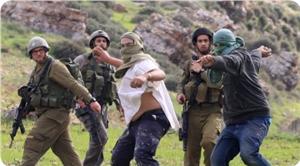 Dozens of settlers then raided the village, but were confronted by Palestinian villagers, who threw stones and empty bottles.
Israeli forces were present at the scene and opened fire at the villagers, locals said.
On Sunday, settlers from Halamish attempted to raid the nearby Nabi Saleh village but were blocked by locals.
Meanwhile, fierce clashes broke out late Sunday between Palestinians and settlers in the Nablus village of Einabus.
Dozens of settlers from Yizhar raided the village and attempted to attack houses, but were chased away by villagers.
Israeli military vehicles arrived at the scene and fired tear gas canisters at Palestinian residents, lightly injuring several people.
In 2013, there were 399 incidents of settler violence against Palestinians in the occupied West Bank, according to the UN Office for the Coordination of Humanitarian Affairs.
Nearly all settler attacks go unpunished by Israeli authorities.
See also:
Jewish Mob in Jerusalem: ‘Death to Arabs!’
9 Palestinians killed, several injured in Israeli airstrikes on Gaza
By Saed Bannoura | IMEMC News | July 7, 2014
Palestinian medical sources have reported that nine Palestinians have been killed by Israeli missiles and shells in the Gaza Strip on Sunday, and Monday at dawn.
Seven of the slain Palestinians are members of the al-Qassam Brigades of the Hamas movement.
The Brigades stated the six fighters have been killed when the Israeli army fired missiles into a siege-busting tunnel in Rafah, in the southern part of the Gaza Strip. Their bodies were found on Monday, at dawn.
The fighters have been identified as Ibrahim al-Bal’aawy, 24, Abdul-Rahman az-Zamely, 22, Mustafa Abu Morr, 22, his twin brother Khaled, Yousef Sharaf Ghannam, 22, and Jom’a Abu Shallouf, 24.
A Qassam fighter, identified as Ibrahim ‘Abdeen, died of wounds suffered during an earlier shelling in Rafah.
Sami Abu Zohri, spokesperson of the Hamas movement, stated the assassination of the fighters is a serious escalation, adding that “the enemy will pay a heavy price”.
Dr. Ashraf al-Qodra, spokesperson of the Ministry Of Health in Gaza, stated that five Palestinians, including a child and two young girls, have been injured when an Israeli missile detonated near their homes, in Beit Hanoun, in northern Gaza.
Another airstrike targeted al-Qarara town, east of Khan Younis in the southern part of the Gaza Strip.
Missiles have also been fired into agricultural lands in Shekh Radwan in Gaza, causing damage but no injuries.
Two fighters, identified as Mazen al-Jedya and Marwan Salim, have been killed by Israeli missiles in al-Boreij refugee camp. Their bodies have been severely mutilated.
Palestinian resistance groups in Gaza claimed responsibility for firing dozens of shells into adjacent Israeli areas in retaliation to the Israeli military escalation.
Featured Video
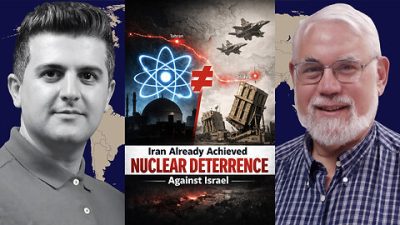
Prof. Ted Postol: Iran Already Achieved Nuclear Deterrence Against Israel
or go to
Aletho News Archives – Video-Images
From the Archives
How the occupied mentality syndrome works
Saudi Arabia on the American chessboard – Part 3
By B. J. Sabri | American Herald Tribune | June 27, 2016
Read part 2: “The occupied mentality Syndrome“
Previously I argued whether Saudi Arabia’s repeated involvements in U.S. interventions and wars stem from free national will or in response to a specific condition. For starters, in Saudi Arabia there is no national will. In Saudi Arabia, the national will is the will of the Al Saud clan. Still, when a major Arab state allies itself with a superpower that committed unspeakable crimes against humanity in almost every Arab country, then something is wrong. This fact alone should compel us to examine the U.S.-Saudi relation for one exceptional reason. As a result of the U.S.-Saudi wars, hundreds of thousands of people in Afghanistan, Iraq, Iran, Libya, Syria, Yemen, and Somalia have lost their lives. Millions became displaced in their own homelands. And millions more rendered refugees.
Attributing the Saudi policies to the bonds of “partnership” with the U.S. is frivolous. There are no bonds between these two thugs except those of business, military deals, secret plots, and wars. Proving this point, bonds such as these have no space for the American and Saudi peoples to share significant cultural or societal exchanges. If partnership is not the reason for the Saudi contribution to the U.S. strategy of empire and imperialism, then another reason must exist.
This leads to three possibilities. … continue
Blog Roll
 Aletho News
- NIAID/NIH and USDA Fund Bioengineered Chimeric Influenza Viruses Built Using Pandemic H1N1 Components: Journal ‘Science Advances’
- Hezbollah hits Israeli warship off Lebanon’s coast, sets it aflame
- Iran slams US strikes on B1 bridge, Mahshahr petrochemical plants as ‘blatant acts of state terrorism’
- In letter to UN chief, Araghchi warns of dire consequences of US-Israeli attacks on Iran’s nuclear facilities
- Why the CIA conspiracy to invade Iran with Kurdish militias failed
- Why Are Upbeat US Claims About Mission to Rescue Pilot ‘Highly Questionable’?
- Aircraft destroyed during US ‘rescue’ of downed F-15 pilot cost more than $100 million each
- Washington University removes professor who condemned US-Israeli war on Iran
- Russia Warns of Retaliation as UK Authorizes Seizure of Vessels
- Serbia thwarts plot to bomb Russia-Hungary gas pipeline – Vucic
- If Americans Knew
- In Iran, Israel-US take aim at “reason, research, and freedom of thought” – Daily Update
- US loses planes over Iran, Israel downgrades Lebanon war goals – Daily Update
- Israel Is Blocking Palestinians from Easter at Church Where Jesus Resurrected
- Plot to assassinate Palestinian activist follows harassment campaign promoted by Zionist groups and elected officials
- Prominent New York synagogue hosts presentation on why U.S. Jews should support the ethnic cleansing of Gaza
- Tapper vs. Piker: Is the CNN Anchor Auditioning for David Ellison?
- Shouldn’t Democrats Be Able to Condemn Genocide?
- Israel-US kill negotiators, destroy civilian structures, but Iran’s military capabilities still largely intact – Daily Update
- ‘War crime’: Global condemnation as Israeli ministers celebrate death penalty law targeting Palestinian prisoners
- 7 Ways Israel Is Turning Lebanon Into Gaza
- No Tricks Zone
- An Inconvenient Tree: Uncovered In Alps… Europe Much Warmer Than Today 6000 Years Ago
- New Study Reports A 60% Slowdown In Greenland’s Ice Loss Rate In The Last Decade
- Low Intensity Tornado Wrecks Major Solar Farm, Creating A Potential Toxic Dump
- New Study Finds Warming Saves Lives…Cold Temperatures 12 Times More Deadly Than Excess Heat
- German Science Blog Accuses PIK Climate Institute Of Hallucinating Climate Tipping Points
- Devastating Assessment Of Comirnaty Vaccine By Former Senior Pfizer Europe Toxicologist
- New Study: CO2 Is ‘Effectively Negligible’ As An Explanatory Climate Change Factor Since 2000
- Former Pfizer Toxicologist Dr. Helmut Sterz Tells Bundestag Hearing Pfizer Vaccine Should Have Never Been Approved
- Energy Expert: Germany’s Nuclear Phaseout Was A “500 Billion Euro Mistake”
- New Research: South Australia’s Mid-Holocene Sea Surface Temperatures Were 4°C Warmer Than Today
 Aletho News