9/11 researcher exposes failure of 2001 false flag ‘Anthrax attacks’
Review by Barrie Zwicker | Truth and Shadows | November 27, 2014
 The “anthrax attacks” that followed on the heels of the “9/11 attacks” have receded into memory for most people, even including those of us who were extremely skeptical about alleged al-Qaeda biowarfare at the time.
Prof. Graeme MacQueen, in his latest book, The 2001 Anthrax Deception: The Case for a Domestic Conspiracy, [1] sheds light on why most of us have all but forgotten the sensational “anthrax attacks.” They’ve been dropped down the memory hole as a touchstone to justify the “war on terror” because the “anthrax attacks” fraud fell apart.
In his tight (just 214 pages) but definitive account, MacQueen proves beyond doubt that the “anthrax attacks” were a false flag operation. Those who need to be persuaded need look no further than this overdue book.
The “anthrax attacks” were intended as a powerful evil twin of the 9/11 terror fraud. Taken together these ops were to be a one-two punch that would launch the “war on terror,” while simultaneously justifying the illegal invasions of Afghanistan and Iraq. The invasion of Afghanistan because allegedly Osama bin Laden directed 9/11 from a cave there. The invasion of Iraq because allegedly Iraq provided al-Qaeda with the anthrax.
But the wheels fell off of the anthrax wagon. MacQueen tracks the twists and turns of the official narrative to show how that happened.
This book, so long overdue, is also most contemporary. The “war on terror” now has been ramped up to the deadly and costly status of a permanent global “war,” a Manichean struggle between “the West” on one side and “the Islamic State” (IS) on the other. The “Islamic State” is a creation of “Western intelligence” serving the corporate militarists of “the West.”
MacQueen could not get deeply into this, since he had to keep his focus on the “anthrax attacks.” But the evidence obliged him to deal with 9/11 because they were twinned at the time. And he has the historical perspective that enables him to write:
… the documentary evidence […] when studied critically, raises serious questions not only about the FBI’s account of the anthrax attacks but also about the U.S. government’s account of what happened on September 11, 2001. Taken together, these sets of evidence erode the rationale for the Global War on Terror.
MacQueen is the founding director of the Centre for Peace Studies at McMaster University in Hamilton, Ontario, where he taught for 30 years. He’s a leader among the few academics who dare joust with the 800-pound Gorilla of Deception known as 9/11 – and its spinoffs. [2]
The 2001 Anthrax Deception shows how academically-sound evidence, marshaled in plain language in a rational framework, can be a counterforce against any deception.
And what a whack of deceptions MacQueen has to deal with. Take the intentions of the perpetrators, Cheney & Co. MacQueen invented the term the “Double Perpetrator hypothesis” to describe the intendedly clever deception.
The Double Perpetrator hypothesis had advantages over the simple al-Qaeda hypothesis. Spreading anthrax through mailed letters was a primitive and ineffective means of dispersing anthrax if the goal was multiple casualties. This crudity was reinforced by the text of the letters, with their misspellings and unidiomatic English. In the Double Perpetrator hypothesis these primitive elements could be laid at the feet of al-Qaeda, while the source of the sophisticated B. anthracis spores in the envelopes to the senators had to be a state, Iraq, which was known to have once possessed a stockpile of anthrax. A peculiar paradox was thus resolved.
Adding to the credibility of MacQueen’s Double Perpetrator hypothesis is the fact that the twinning effort had already been launched by George Bush. “…on the day of 9/11 there were plenty of allusions to the possibility of a state sponsor of the attacks,” MacQueen writes. “The formal warning to state sponsors occurred at 8:30 p.m. on September 11 with Mr. Bush’s words: ‘We will make no distinction between the terrorists who committed these acts and those who harbor them.’”
Then, addressing a joint session of the 107th Congress on September 20, Bush said: “From this day forward, any nation that continues to harbor or support terrorism will be regarded by the United States as a hostile regime.”
MacQueen notes that “what Bush said formally, many others said crudely. Neoconservative Charles Krauthammer explained on September 28 that the war against terrorism was not about chasing Osama bin Laden or other terrorists. The war was about getting rid of regimes.”
This theme was echoed by columnist George Will. He wrote that the choice to be given to state sponsors of terrorism was “reform or extinction.” Both Krauthammer and Will “spoke openly about Iraq as a target.”
But it was not just columnists’ opinions that were part of what MacQueen calls “a grand plan, not an opportunistic foray.” He writes:
Already in their surprisingly timely book, Germs: Biological Weapons and America’s Secret War, published in early October of 2001, Judith Miller and co-authors William Broad and Stephen Engelberg explained that Iraq might use a “surrogate, a terrorist group” to deliver a bioweapon to its target.
My wish is that MacQueen would be stating outright that Miller was clearly a CIA asset planted within the New York Times. She was subsequently disgraced when her 37-year career at the paper was terminated on November 9, 2005. This was, as I wrote in my book Towers of Deception, “six months after the Times found itself obliged to examine some of her work…” and found that 10 of 12 “flawed stories” on explosive issues had been written or co-written by Miller, including those infamously reporting that Iraq possessed weapons of mass destruction (WMDs). All of her journalism, I suggested in my book, bear the “hallmarks [of] extreme dependence on official sources, especially within the national security state apparatus, a dearth of supporting evidence for numerous assertions, and an ideological through-line in perfect sync with that of the White House, just as her … through-line on alleged WMDs in Iraq matched that of the White House.”
It will not surprise anyone reading The 2001 Anthrax Deception who is knowledgeably critical of the grotesque output of mainstream media (MSM) on issues of war, peace and “intelligence” that much of MacQueen’s book, perhaps a third of it, is devoted to MSM lies and propaganda. Without the almost blanket collusion of “news” outlets, the likes of Bush and Cheney would have been revealed as pathetic emperors with no clothing.
But the wheels fell off Cheney & Co.’s wagon when it became too widely known that the weaponized anthrax could only have come from one of the 15 sophisticated labs in the USA making this deadly stuff.
This is when the perps had to switch gears, change the narrative. “Suddenly,” MacQueen writes, “the White House began retreating not only from the Iraq hypothesis but also from the al-Qaeda hypothesis. Ari Fleischer, making an about-face, said on October 26 that, in the words of the Washington Post, ‘a skilled microbiologist and a small sophisticated lab would be capable of producing’ the Daschle anthrax.” (Thomas Daschle was an influential anthrax-targeted U.S. senator.)
This in turn cleared the way for the Plan B “lone wolf” theory, the eventual frame-up of Bruce Ivins, his almost-certainly-not “suicide” and the subsequent dispatch down the memory hole of the entire botched “anthrax attacks” illusion.
It turned out not to be much of a loss for the Machiavellian perps, however, because Cheney & Co. could go head and launch war on Afghanistan and Iraq as they intended all along without the aid of this substance-abusing false flag op. The monster 9/11 deception was alone enough to do the heavy lifting there.
The general brainwashing was easily accomplished through a surplus of media-megaphoned lies, propaganda and spin. These greased the skids for the illegal and bloody aggressions of the USA and its “allies,” including in the case of Afghanistan, Canada.
Perhaps my favourite chapter is eight, in which the author traces the origin and uses of the term “the unthinkable.” Numerous quotes from establishment figures and media pundits show that their use of the term serves radical right wing ideological fear-mongering purposes.
“Why does this matter?” MacQueen asks. “It matters because ‘the unthinkable’ is an expression that functioned to help launch a new conflict framework, the Global War on Terror.”
Part of chapter eight is devoted to a “simple word study” of the language of the infamous document entitled Rebuilding America’s Defenses, released in the year 2000 by the extreme pro-military right wing Project for the New American Century. MacQueen notes that although the term “security” occurs 94 times in the document, the term “Security Council” does not occur at all. Nor does the term “international law.” Keyword counts count, even when they’re zero.
MacQueen’s admirable critique of language leads me to a shortcoming, in my estimation, of The 2001 Anthrax Deception. This may be minor compared to the book’s strengths, but still is worth mentioning.
The author should in my view have drawn more attention throughout the text to the multitudinous and ongoing abuses of language by the perpetrators and the MSM, particularly their abuse of the word “attack” (as applied to 9/11 or the anthrax situation). Any conceivable attack – the word clearly denotes an assault from outside – is severely at odds with “a domestic conspiracy,” as the book’s title has it. The conspiracy of this book unmistakably is an inside phenomenon. A feigned attack should never be called “an attack.” Period.
In fairness, MacQueen addresses the language issue at the outset, but only briefly and in part, and in my view mistakenly. At the end of the Introduction, under the sub-head “A Note on the Hijackers,” he explains:
The alleged hijackers of four planes on September 11, 2001 play an important role in the anthrax story and will be mentioned frequently. To avoid repeated use of the word “alleged” or annoyingly frequent scare quotes (“the hijackers’” I will capitalize the term: Hijackers.
This to me is an odd way to downplay the reality that the alleged hijackers never boarded any of the planes, as Elias Davidsson painstakingly proves in his book Hijacking America’s Mind on 9/11: Counterfeiting Evidence.
In other words, for a book such as The 2001 Anthrax Deception: The Case for a Domestic Conspiracy to be as effective a counterforce against deception as it can be, the language bombs of the perpetrators must be defused before they can explode. Each. And. Every. One. Even within the pages of a dissenting academic activist’s book such as MacQueen’s.
The tools of word bomb dismantling include, besides a robust disquisition on the power of language, a plethora of synonyms such as alleged, supposed, claimed, asserted, made out to be, so-called, professed, purported, ostensible, putative, unproven, charged, declared, stated, contended, argued, maintained – and this is not a complete list.
Deployment of the many synonyms available plus quote marks would not, to me, be “annoyingly frequent” but rather refreshingly combative. They necessarily and importantly must be repeated. This is standard operating procedure required when de-fusing word bombs.
Notwithstanding my rant about language use, I fervently hope for more books from Graeme MacQueen. The world needs his assiduous research skills, his courageous tackling of the really big deceptions, his astute analyses and his clear thinking and writing. (Obviously, I don’t mean to attack him.
[1] From Clarity Press, Inc., Ste. 469, 3277 Roswell Rd. NE, Atlanta GA USA 30305, www.claritypress.com. Available in paper and as an e-book 978-0-9860731-3-7
[2] Graeme MacQueen makes a substantial contribution in Adnan Zuberi’s superb 2013 documentary 9/11 in the Academic Community. McQueen is the first person to be seen in a preview of the doc. The preview runs 3:15 and can be found at https://www.youtube.com/watch?v=OFzVKDdCa6s
Israeli soldiers shoot Italian in the chest at Kafr Qaddum rally
Al-Akhbar | November 29, 2014
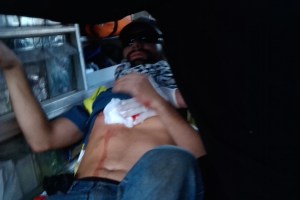
A pro-Palestinian Italian activist was shot and seriously wounded by Israeli gunfire during a Friday protest in the northern West Bank, medics and the activist’s organization said.
Palestinian security sources said Patrick Corsi, a 30-year-old member of the International Solidarity Movement (ISM), was shot during the weekly demonstration at Kafr Qaddum, west of Nablus.
Eyewitnesses said Corsi, who had participated in last week’s protest as well, had been documenting the event with a camera.
ISM, an activist group whose members frequently attend Palestinian protests to monitor the actions of Israeli soldiers, confirmed the shooting in a statement.
“The Italian activist, known as Patrick, was wearing a yellow high visibility jacket when he was shot with .22 live ammunition,” the statement said.
The statement added that 10 Palestinian protesters were wounded by rubber-coated steel bullets at the protest, in addition to 18-year-old Sami Jumma who was struck by live fire.
“We were standing with a group of Palestinian demonstrators when Patrick was shot. The military had fired three rounds of tear gas, and then a shot rang out and Patrick stumbled back. There was between five and ten minutes from the last tear gas canister fired and the bullet that shot Patrick.”
“He was just standing there, peacefully protesting, wearing a hi-viz jacket, he wasn’t doing anything and they just decided to shoot him,” the statement quoted an ISM volunteer at the scene as saying.
“The bullet entered Patrick’s chest near a main blood vessel, but thankfully did not puncture it. If God forbid it had, the lengthened journey to the hospital because of the closed road could have cost Patrick his life,” ISM media coordinator Ally Cohen was quoted in the statement as saying.
Due to an Israeli closure of Kafr Qaddum’s main road to Nablus, the travel time to the nearest hospital is around 30 minutes instead of 10.
Khaldoun Ishtewi, media coordinator for public campaigns in Kafr Qaddum, told Ma’an news agency that the Italian national was taken to the Rafidia Public Hospital in Nablus for treatment.
Ishtewi added that several Palestinians suffered from excessive tear-gas inhalation as a result of canisters fired by Israeli soldiers during the clashes.
An Israeli military spokesman did not immediately return a request for comment.
Palestinian Minister of Health Jawad Awwad told Ma’an that “shooting live fire at the upper part of the bodies of protesters is directly targeting them and is a deliberate attempt at murder.”
“Israel does not differentiate between foreign solidarity activists, Palestinians, or even journalists,” he added.
An Israeli army spokesman described the event as a “riot” during which 100 Palestinians allegedly hurled rocks at troops and burnt tires.
After failing to disperse people and “due to increased violence,” soldiers “fired small caliber rounds toward main masked instigators,” the spokesman said.
In the West Bank at the Qalandiya crossing between Jerusalem and Ramallah, Israeli border policemen “fired small caliber rounds toward two main instigators’ lower extremities” during a violent clash with some 150 Palestinians, the spokesman said.
There was no immediate report on their condition.
Protests are held every Friday in Kafr Qaddum against Israel’s closure of a main road linking the village to its nearest city, Nablus, as well as against the Israeli occupation more generally.
The West Bank and annexed East Jerusalem have been occupied by the Israeli military since 1967.
(AFP, Ma’an, Al-Akhbar)
Photo credit – ISM
Guantanamo force-feeding is illegal, says UN body
Reprieve | November 28, 2014
A United Nations panel has said that the force-feeding of hunger-striking detainees at Guantanamo Bay is a violation of the UN Convention Against Torture.
The report, released today by the UN Committee Against Torture, said that the practice “constitutes ill-treatment”, and called on the US to halt it. The Committee also noted that “detainees’ lawyers have argued in court that force feedings are allegedly administered in an unnecessarily brutal and painful manner” – an apparent reference to US litigation brought by international human rights NGO Reprieve on behalf of cleared Syrian detainee Abu Wa’el Dhiab.
As part of those legal proceedings, the Obama Administration has until Tuesday, December 2nd to appeal a recent court order to release over ten hours of classified footage showing the force-feeding of Mr Dhiab.
Commenting, Cori Crider, Strategic Director at Reprieve and Mr Dhiab’s attorney, said: “The UN is entirely right – abuse at Guantánamo is still happening on Obama’s watch, and I’ve seen the force-feeding footage to prove it. This assessment could not be more timely – the Obama administration has until next week to either face up to a court order to release these force-feeding videos, or to file an appeal, in hopes of covering up the evidence. The right course is clear – the American public has a right to see what’s being done in their name. Obama should release the tapes without delay, and end these abuses once and for all.”
Further detail on Reprieve’s force-feeding litigation can be found at the Reprieve US website.
Is Washington training a rebel army to “Occupy” Syria?
RT | November 27, 2014
Is the US planning the occupation of Syria by training an unconventional insurgent invasion force?
Think regime change in Syria is off the drawing board? Think again. The bombing of the ISIL or ISIS in Syria is part of a brinkmanship campaign leading up to a potential non-conventional invasion, parallel to the re-introduction of the US military to Iraq.
The ISIL and the other anti-government forces in Iraq and Syria are not the only ones to disregard the Iraqi-Syrian border drawn by the British and French by Sykes-Picot in 1916. The US also disregarded the border and international law when it began to illegally bomb Syria.
The bombing campaign was not enough for some in the US Congress. In a joint statement on September 23, the arch-hawks US Senators John McCain and Lindsey Graham called for US troops to be sent into Syria too. Both of them praised the Pentagon’s illegal airstrikes in Syria and then argued for US ground troops as well.
Although McCain and Graham went out of their way to say that this would not be an occupation of either Syria or Iraq, this is almost exactly what they were calling for when they said that the military campaign had to also be directed against the Syrian government.
Since, and even before the calls for an invasion of Syria by McCain and Graham different suggestions have circulated about an invasion of Syria.
The dilemma is that Washington does not want the Pentagon to directly invade Syria itself. It wants to pull the strings while another force does the work on the ground. Candidates for an outsourced invasion of Syria include the Turkish military or other US regional allies. There, however is also an impasse here as Washington’s allies are also afraid of the consequences of an invasion of Syria.
This is where a third opinion comes into the picture: the construction of a multinational insurgent army by the US.
Using non-state actors to invade and occupy Syria
While there seems to be no consensus on a Syrian strategy within the US political, intelligence, and military establishments, the objective of regime change is universally adhered to across the board. Regardless of the existence of a consensus, the US is moving ahead with the creation of an anti-government invasion force.
The third option is slowly emerging.
A few days after the US began the bombing of Syria, the Chairman of the Joint Chiefs of Staff General Martin Dempsey made it clear that the Pentagon also planned on creating a viable anti-government army in Syria consisting of 12,000 to 15,000 insurgents.
There also seems to be a growing consensus among the realists and neocons for US President Obama’s preference of using a rebel army to invade Syria. The Brookings Institute has been a major cheerleader for this.
During this same timeframe, the Brookings Institute released an opinion piece clearly calling for US intervention. The text, authored, by former CIA analyst for monitoring the Persian Gulf and US National Security Council official Kenneth Pollack, stipulated that Washington’s “strategy cannot require sending U.S. troops into combat. Funds, advisers, and even air power are all fair game — but only insofar as they do not lead to American boots on the ground.”
Pollack played an influential role in getting support for the illegal 2003 invasion of Iraq. He worked at the Council of Foreign Relations as its director of national security studies. He made the above statement as the director of research for the Saban Center for Middle East Policy and goes well beyond it by publishing a drawn-out October 2014 proposal for creating a US-made rebel invasion force as a means of taking over Syria and eventually conducting regime change in Damascus.

Brookings Institution in Washington, D.C.. (Image from wikipedia.org)
The Brookings Institute proposal suggests that a rebel Syrian army “is best not done in Syria itself. At least not at first” (p.9). The report points to the US and NATO success in “covertly” creating armed forces around the world, including the assembly of a Croat military, and deduces that these experiences would make it “entirely realistic for the United States to build a new Syrian opposition army” (p.8). It also says that the ideology of the fighters does not matter by stating the following: “A great many of those recruited may well be religious, even highly religious, including Salafist. That is not the issue” (p.9).
Welcome to the Brookings Institute and its Saban Center
What is the Brookings Institute exactly and why do suggestions from this think tank and others like it, matter?
The Brookings Institute is an influential think tank that has a revolving door of personnel with the US government and major corporations. All that one needs to do is look at its trustees and executives, which include interlocked directorships with the Carlyle Group, Goldman Sachs, and JP Morgan Chase.
Brookings also has ties to Israel and a full branch dedicated to Washington’s Middle East strategies and policies called the Saban Centre for Middle East Policy. Martin Indyk – the former US ambassador to Israel, a former high-level lobbyist for the American Israel Public Affairs Committee (AIPAC), and the founder of AIPAC’s research arm (the Washington Institute for Near East Policy) – is the Director of the Saban Center for Middle East Policy at Brookings. Like Indyk, Kenneth Pollack was involved in shaping the Middle East policies of the Clinton Administration.
It is also worth noting that the Brookings Institute’s Saban Center is named after US-Israeli businessman and media mogul Haim Saban. Saban himself is on the board of trustees for Brookings.
There is a Qatari connection too. One may remember that Washington was hostile towards Al Jazeera when it first emerged as a news broadcaster, because of its coverage of US actions in the Middle East.
Saban tried to buy half of the Al Jazeera network from Qatar in 2004 and 2009, but failed. In the same timeframe as the 2003 Anglo-American invasion of Iraq, the first set of negotiations happened when he went to Qatar with Bill Clinton in 2003.
It is possible that Brookings may have played a role in pacifying Al Jazeera. In 2009, the Institute setup an overseas branch in Qatar called the Brookings Doha Center. The new chapter in Doha included Qatar’s ruling Al-Thani family alongside people like Madeleine Albright, Zbigniew Brzezinski, and Fareed Zakaria as chairs and advisors.
It was in the same year that the Brookings Institute published a report, which included Pollack and Indyk as authors, called Which Path to Persia? The report outlined a map for confronting Iran and alluded to the neutralization of Syria, in one way or another (including the procurement of a peace agreement with Damascus by Israel), to “mitigate blowback” from Lebanon’s Hezbollah and the Palestinians, specifically Hamas, as a prerequisite for an enabling an attack on Iran.
All in all, the ideas that come out of the Brookings Institute are discussed at the highest levels within policy-making and corporate circles.
Is the Syrian Invasion Force Slowly Emerging?
Is a rebel invasion force emerging to attack Syria? In no uncertain terms, Brookings argues that it is.
Pollack’s report stipulates the following: “Adopting such a strategy would mean first and foremost that Washington would have to commit itself to building a new Syrian army that will rule Syria when the war is over. Although [Obama’s] description of his new Syria policy was more modest and tepid than his explanation of the Iraq piece of the strategy, he does appear to have committed the United States to just that course. More than that, it will mean putting the resources, prestige and credibility of the United States behind this effort. The $500 million now appropriated is a good start, but it is only a down payment on a much larger project” (p.8).
The US goal of training rebels in Saudi Arabia and Turkey is an indication of this too. On September 10, about two weeks before it started bombing Syria, Washington declared that Saudi Arabia had given it the green light to train a rebel army in the Arabian Peninsula. “We now have the commitment from the Kingdom of Saudi Arabia to be a full partner in this effort — the train-and-equip program — to host that program,” one official was quoted as saying by the New York Times.
The Brookings Institute in its proposal for an invasion of Syria claims: “The Saudi offer to provide facilities to train 10,000 Syrian opposition fighters is one of reasonable possibility, although one of Syria’s neighbors would probably be preferable. Jordan already serves as a training ground for America’s current training program and it would be an ideal locale to build a real Syrian army. However, Turkey could also conceivably serve that purpose if the Turks were willing” (p.10).
About two months later, in November, after US Vice President Joe Biden met with Turkish President Recep Tayyip Erdogan in Istanbul, it was announced that Kirsehir would be used by Turkey to train Syrian anti-government forces that the US would equip against Damascus.
The report also makes it clear that building the new opposition army “should not mean bolstering the existing ‘Free Syrian Army’” (p.10). Instead, the existing US-backed insurgent groups will slowly be swallowed or destroyed by the new opposition force that the US and its allies are constructing.
In mid-November, the Pentagon also presented a proposal to the US Congress, saying that it wants to arm Iraqi tribesmen with Kalashnikov rifles, rocket propelled grenades, and mortars. What is omitted is the cross-border dispersion of these tribes in both Iraq and Syria and the possibility that these weapons could be used in an attack on the Syrian government.
What moderates?
The talk about supporting “moderates” is very misleading. It is already clear that the ideology of the proposed insurgent army is not a key issue in practice for many US officials. There is also enough evidence to show that the Free Syrian Army, Al-Nusra, the ISIL, and the other insurgent forces are also collaborating and trading fighters.
The Telegraph, for example, had this to say on November 10 about Saddam Jamal, a US-backed Free Syrian Army commander that became an ISIL commander: “Before joining ISIL, Jamal had been a drug dealer, then a commander in the western-backed Free Syrian Army, claiming contacts in the CIA.”
It is also clear that religion is a mask for the ISIL too. The same British article writes the following testimony from Saddam Jamal’s body guard about his massacre of a Syrian family: “The ISIL commander felt no remorse for killing this Syrian family, his bodyguard said, nor did he believe he was fulfilling a God-given creed: for him being a member of the extremist group was a matter of business, not religion.”
In the end the ISIL may be used to incubate fighters or collapse, like the Free Syrian Army, into the proposed invasion force to occupy Syria.
Invasion army or armies?
General Dempsey said that “the anti-ISIL campaign could take several years to accomplish.” Leon Panetta, the former head of the CIA and Pentagon, has also claimed that this war will turn into a thirty-year US military project that will extend to North Africa, West Africa, and the Horn of Africa.
According to Brookings: “At some point, such a new Syrian army would have to move into Syria, but only when it was ready. Only when a force large enough to conquer and hold territory – something on the order of two to three brigades -were ready should it be sent in” (p.11).
A war of attrition that that will take years of fighting is underway. This matches up with the ideas about training an insurgent invasion force over the years.
In their joint statement Senators McCain and Graham said that President Bashar Assad will not stop fighting the so-called “moderate” US-backed insurgents “that remain committed to his ousting- especially when the United States and [its] partners still, correctly, share the same goal and will now be arming and training Assad’s moderate opponents.” In other words, the US-trained Syrian forces will ultimately target the Syrian government.
Mahdi Darius Nazemroaya is a sociologist, award-winning author and geopolitical analyst.
US Pays PR Firm to Create Anti-Cuban Multimedia Content
teleSUR | November 27, 2014
The U.S. government has signed a US$1.4-million-contract with a public relations company to produce “TV and radio programs designed specifically for audiences in Cuba,” according to the Office of Cuba Broadcasting’s press release that Tracey Eaton cited in her blog Along the Malecon.
The Los Angeles-based company, Canyon Communications, is a public relations firm that specializes in writing “corporate histories.” Founded by Jeff Kline, the company was offered the no-bid contract because of what government officials said was its “unique profile.”
The Office of Cuba Broadcasting (OCB), funded by the U.S. government through the presidentially appointed Broadcasting Board of Governors, runs Radio and Television Marti and has its headquarters in Miami, Florida.
In 2006, The New York Times revealed that OCB paid 10 journalists to work for Radio and TV Marti. The Miami Herald fired three of the journalists from El Nuevo Herald after learning they were receiving money from the Bush Administration.
The OCB’s interventions in Cuba have found their echo in more recent attempts by the U.S to use modern media to destabilize Cuba’s socialist system.
A scandal broke out in April when the U.S. was found to be engaged in “battle” with Cuba on the social media front. This latest onslaught was carried out under the guise of ZunZuneo, a social media platform targeted to Cuban users.
Funded by the U.S. Agency for International Development (USAID), ZunZuneo was intended to spark dissent against the Cuban government. In USAID’s own words, the project was designed to “renegotiate the balance of power between the state and society.”
ZunZuneo, set up with the help of high-tech contracting firms from Nicaragua and Costa Rica, eventually reached over 40,000 Cubans. The contractors, together with USAID, set up an equally elaborate scheme of front companies using Cayman Islands bank accounts to hide the venture from the Cuban government. New executive recruits were also not told about ZunZuneo’s ties to the U.S. government.
What the Fake Syria Sniper Boy Video Tells Us About Media Experts

By Maram Susli | New Eastern Outlook | November 27, 2014
Many mainstream media websites helped a fake video go viral this month. The video showing a young Syrian boy running through sniper fire to save a little girl, was exposed as a fake when the Norwegian producer Lars Klevberg made the fact public. One of the stated aims of the Norwegian film makers was to “see how the media would respond to a fake video.” This article examines how that experiment went.
The western press very quickly accepted the video as real and used it to support the US administration’s narrative on Syria. Many top US news sources began to spread the story. Even though the producer said he explicitly added big hints that the video was fake, like the children surviving multiple gun shots.
Propagating false stories on Syria, is nothing new for the western press. In the lead up to the conflict many stories were exposed as frauds, such as the Anti-government activist “Gay Girl in Damascus” which turned out to be a middle-aged American man in Scotland. Syrian Danny Abdul Dayem which was frequently interviewed by CNN was using fake gun fire and flames in his interviews.
The fake sniper video wasn’t enough to support US government narratives by itself, as the now deleted original upload didn’t suggest the identity of the snipers. So the west’s media suggested that it was Syrian military snipers that were targeting the children without any evidence. Journalists failed to mention how they reached the conclusion that an actor in Malta was shot by the Syrian military. It may be that the western press is quick to trust pro-rebel sources, as the video was uploaded by the pro-rebel Sham Times along with their own twist.
The Guardian’s headline for the video was “Syrian boy ‘saves girl from army sniper’” and the Telegraph delicately suggested the Syrian military was responsible for the fake bullets. The International Business Times stated, “the snipers, who reportedly are said to be the government forces loyal to Syrian President Bashar al-Assad.” IB Times never explicitly mentioned who reported this information. They then took it a step further and concluded the article with “the incident certainly is not the first time that Pro-Assad gunmen have targeted children”. Well it is at least not the first time the mainstream media has presented false reports as fact. In 2012, CNN claimed a bullet that killed a four year old girl in Aleppo was shot by government snipers even whilst admitting the bullet came from rebel held buildings.
Other journalists took to Twitter to make unfounded claims about army snipers targeting the boy. Vinnie O’Dowd who has done work for Channel 4 and Al Jazeera tweeted “Syrian Regime Targets kids”. Liz Sly of the Washington Post tweeted incredulously that “Soldiers kept shooting” at children.
These tweets were inline with an official State Department Twitter account @ThinkAgain_DOS which blamed Assad for the fictitious bullets in the film. This casts doubt on how deeply the US administration scrutinizes information it bases it’s policy on. In 2013 they relied heavily on video footage provided by rebels to support its planned attack on Syria in the wake the Ghouta chemical attack.
Scrutinising the Scrutinisers (Experts)
 But it isn’t just the mainstream media that was easily duped by the convenient propaganda film. The video experts that were asked to scrutinise the video, failed to recognise that the video was a fraud. The Telegraph stated that upon enquiry “experts told them they had no reason to doubt that the video is real”. International Business Times went a step further spinning the statement to “experts told The Telegraph that they have no doubts on the authenticity of the footage.”
This is very strange since both children in the film walk away after being directly and repeatedly hit by bullets. The creators of the film said he purposely scripted this as a big hint that the video is fake. The lack of scrutiny the media experts employed suggests incompetence or the same level of bias as the media that employs them.
Heather Saul of the Independent wrote that one of the ‘Middle East experts” she showed the video to was from Human Rights Watch. Indeed, Human Rights Watch European Media Director Andrew Stroehlein, showed no doubt on the authenticity of the film when he tweeted it out to his followers. The New York based human rights organisation is not new at tweeting false information, last month they used an image of the Odessa fire, where US-backed militia’s burned thirty two people to death, as an example of ‘Putin’s repressive policies’. In 2008 Venezuela expelled two HRW staff members accused of “anti-state activities” after producing a report against the Chavez government. Guardian journalist Hugh O’Shaughnessy accused HRW of using false and misleading information in the report, as well as pro-Washington bias. In 2009 HRW received financial donations from the Saudi government which may, in part, explain the anti-Syrian slant.
 HRW employed so called video expert Eliot Higgins and his colleague Daniel Kaszeta to investigate the August 21 chemical attack in Ghouta, and quickly reached the conclusion the Syrian government was behind the attack. Daniel Kaszeta was referred to as a fraud by prominent physicist and MIT Professor Theodore Postol. HRW’s CEO Kenneth Roth recently used a report by Eliot Higgins to make unfounded claims about Ukrainian rebels shooting down Malaysian flight MH17. Heather Saul did not respond to questions on whether Eliot Higgins was one of the expert she asked for advice. However the mainstream media’s most often quoted video expert, did not recognise that the video was a fraud, tweeting cautiously that he wasn’t sure if it was authentic but gave the video a reaction non the less.
However many viewers who aren’t referred to as video or Middle East experts, immediately recognised the video was a fraud and flooded social media sites Twitter and Youtube with doubts on its authenticity. If Heather Saul had used these individuals as experts rather than HRW, she would have reached the correct conclusion about the video. But perhaps it is this unbiased eye that the mainstream media avoids. The vast majority of Higgin’s conclusions support US government narratives and agendas, and that’s the kind of bias the mainstream media prefers.
Blaming the Producer
Instead of humbly accepting blame for spreading disinformation, many western journalists and their experts reacted by blaming the producer of the film. The collective rage of the entire mainstream media forced the film’s producer to delete any trace of this 30,000 dollar experiment. Some journalists took to Twitter to express their rage at being exposed as easily duped by convenient propaganda.
The experts that were fooled by the video also strongly protested. HRW posted a complaint that the fake video “eroded the public trust in war reporting”, in other words blind trust in HRW analysis and war propaganda. Eliot Higgins posted an open letter to the producer of the film on his website Bellingcat, condemning the film.
GlobalPost referred to the film as ‘irresponsible and dangerous’ but not because it could be used to promote wars and make false accusations. What the real danger to the mainstream media and their experts seems to be, is that as a result of the film’s exposure as a fraud, future video claims may now have to be properly scrutinized and the public may not be so unquestioning in future. However it is the journalists’ lack of scrutiny that is truly what is irresponsible and dangerous. Had the director not admitted the film was fake, these journalists more than likely would have kept promoting the story as an example of Syrian Army war crimes.
Maram Susli also known as “Syrian Girl,” is an activist-journalist and social commentator covering Syria and the wider topic of geopolitics.
Civilians killed in US drone attacks: Rights group
Press TV – November 28, 2014
A rights group says many civilians have been targeted and killed in US drone attacks in Pakistan and other countries where such raids are carried out, Press TV reports.
The UK-based rights group Reprieve revealed that civilians have been killed in Pakistan and other places before militants were targeted by US assassination drones.
Reprieve has presented several cases on how ruthlessly the US Central Intelligence Agency (CIA) has killed civilians but declared them militants through dubious reports in the media, which regularly cite anonymous Pakistani and US officials.
In one such case, the CIA killed 221 people, including over 100 children, in Pakistan in search of just four militants. This is while three of the militants are reportedly still alive and the fourth one has died of natural causes.
In another example, the report pointed out that on average each militant was targeted and reported killed more than three times before they were actually killed.
To kill one militant, sometimes “more than 300 people have been killed,” said Mirza Shazad Akbar, Reprieve’s representative in Pakistan.
“A former US drone operator said that by looking at the monitor and looking at people’s movement, he could actually tell who is a bad person and who is a good person… This is the extent of… the [US] flawed intelligence,” Akbar added.
But this is just the tip of the iceberg of the scale of tragedy in Pakistan’s tribal areas, where more than 3,800 people have been killed with the same pattern of the so-called precise surgical drone strikes.
The US carries out targeted killings through drone strikes in several Muslim countries, such as Afghanistan, Yemen, Pakistan and Somalia. Washington claims the targets of the drone attacks are militants, but local officials and witnesses maintain that civilians have been the main victims of such raids over the past few years.
The United Nations and several human rights organizations have identified the US as the world’s number-one user of “targeted killings,” largely due to its drone attacks in Pakistan and Afghanistan.
Swiss, French call to bring home gold reserves as Dutch move 122 tons out of US
RT | November 28, 2014
The financial crisis in Europe is prompting some nations to repatriate their gold reserves to national vaults. The Netherlands has moved $5 billion worth of gold from New York, and some are calling for similar action from France, Switzerland, and Germany.
An unmatched pace of money printing by major central banks has boosted concerns in European countries over the safety of their gold reserves abroad.
The Dutch central bank – De Nederlandsche Bank – was one of the latest to make the move. The bank announced last Friday that it moved a fifth of its total 612.5-metric-ton gold reserve from New York to Amsterdam earlier in November.
It was done in an effort to redistribute the gold stock in “a more balanced way,” and to boost public confidence, the bank explained.
“With this adjustment the Dutch Central Bank joins other banks that are keeping a larger share of their gold supply in their own country,” the bank said in a statement. “In addition to a more balanced division of the gold reserves…this may also contribute to a positive confidence effect with the public.”
Dutch gold reserves are now divided as follows: 31 percent in Amsterdam, 31 percent in New York, 20 percent in Ottawa, Canada and 18 percent in London.
Meanwhile, Switzerland has organized the ‘Save Our Swiss Gold’ referendum, which is taking place on November 30. If passed, it would force the Swiss National Bank to convert a fifth of its assets into gold and repatriate all of its reserves from vaults in the UK and Canada.
“The Swiss initiative is merely part of an increasing global scramble towards gold and away from the endless printing of money. Huge movements of gold are going on right now,” Koos Jansen, an Amsterdam-based gold analyst for the Singaporean precious metal dealer BullionStar, told the Guardian.
France has also recently joined in on the trend, with the leader of the far-right National Front party Marine Le Pen calling on the central bank to repatriate the country’s gold reserves.
In an open letter to the governor of the Banque de France, Christian Noyer, Le Pen also demanded an audit of 2,435 tons of physical gold inventory.
Germany tried and failed to adopt a similar path in early 2013 by announcing a plan to repatriate some of its gold reserves back from the US and France.
The efforts fizzled out this summer, when it was announced that Germany decided to leave $635 billion worth of gold in US vaults.
Germany only keeps about a third of its gold at home. Forty-five percent is held in New York, 13 percent in London, 11 percent in Paris, and only 31 percent in the Bundesbank in Frankfurt.
Lebanon’s war on ‘hashish’ indistinguishable from war on the poor

A cannabis farmer in the Bekaa Valley prays as Lebanese army men come to destroy his harvest. Al-Akhbar/Rameh Hamieh
By Amer Mohsen | Al-Akhbar | November 27, 2014
The cultivation of cannabis is popular in specific areas that have special characteristics like high altitude and sunlight, similar to the Bekaa region. This differential feature of Lebanon, which can revive the Lebanese countryside, has been overcome by the alternative agricultural policies required from abroad. The health risks associated with the use of cannabis are minimal compared to alcohol and tobacco, and compared with the results of the war on cannabis cultivation which only affects the poor segments of society.
A few years ago, Lebanese organizations, including left-wing movements, launched a media campaign warning against cannabis and the risk of its spread among the youth. The intention behind the campaign was noble, but it had several flaws: The first is related to the medical claims that accompanied the campaign – which are similar to the propaganda that was disseminated in America during the forties to scare people away from marijuana – saying that marijuana drives people crazy, makes them jump out of windows, and causes delinquency and crime. The main problem was in the “central-Beiruti” mentality, which led left-wing movements to claim their devotion to the grievances of the poor and the marginalized, and thus sought to combat and criminalize hashish rather than demand its legalization and lifting the ban on its cultivation.
The issue is very clear. There is a disregard – even contempt – by urban activists for the fates of hundreds of thousands of peasants in their country. They support policies and laws that have impoverished large parts of the Lebanese countryside, either because of their focus on “more important” issues (such as the rejection of the [parliamentary] extension and the “revolt against the sectarian system”), or because of a bourgeois view aimed at preserving morality and normalcy. There is no harm in adopting or defending such a view, but not when it is at the expense of the most vulnerable and disadvantaged segments of society. To date, there are no adequate studies on the social and economic deterioration that affected the villages of Bekaa and Hermel after the prohibition of cannabis cultivation in the nineties, and others on the prosperity witnessed in the region and the local development that resulted from it, while the rest of the country – paradoxically – was experiencing the worst stages of the civil war, and so the government left the farmers alone.
From the history of cannabis
In his book about the history of cannabis, Martin Booth (who also published a well-known book about opium) says that the cannabis is one of the oldest plantations that spread in human societies. He refers to one of the three major species of cannabis today, the “cannabis sativa,” whose name in Latin means “cultivated hemp” because it reached us in its hybrid version, which means that Neanderthals cultivated and hybridized it for thousands of years until the original “wild” seed has been lost and we now have the agriculturally-improved species.
The cultivation of cannabis was widespread not only because of its narcotic effect. Archeological excavations have shown that the consumption of cannabis was also part of religious rituals, and that the plant was an economic asset and resource used in the manufacturing of cloth, linen, ropes, and oils. A conspiracy theory popular among supporters of marijuana in the United States claims that the ban on cannabis cultivation is linked to influential circles in the timber industry, who sought to exclude cannabis as a competitive resource in the paper-manufacturing industry.
We also find many references to hashish and cannabis in Arab and Islamic history, which show its spread and recreational use in our countries through the eras, such as in the writings of chronicler Abdel Rahman al-Jabarti (who talked about his meeting with a mosque orator in Cairo, who claimed to be “under the effect of hashish” to justify his lack of focus during the sermon), as well as in the fatwas of Ibn Taymiyyah, where “Sheikh al-Islam” discussed the topic of hashish and ended up outlawing most of its uses. Based on his jurisprudential arguments, it appears that the people at the time used to consume cannabis either through melting it in tea, eating it directly, or cooking it with food (since the United States had not been discovered yet, and tobacco had not yet reached the ancient world). However, the prolonged explanation provided by Ibn Taymiyyah on the topic and his detailed justification of the prohibition show that the scholars of his day did not have a clear or decisive stance on the matter.
Lebanon and the differential feature
To be able to understand the secret behind the special relationship between Lebanon and hashish, and the differential feature that characterizes the Bekaa Valley and its surrounding hills in this regard, we have to know a few basics about the cultivation of this plant. According to Martin Booth, the “quality” of the hashish – i.e., the concentration of the principal psychoactive constituent Tetrahydrocannabinol (THC) in the female plants – is directly linked to two factors: altitude and sunlight. Cannabis needs large amounts of solar radiation during the maturity period so the plant can grow rapidly, and the growth of its genital parts, which contain the active substance, needs infrared (IR) radiation, whose concentration in the sun increases with altitude.
In other words, high-quality cannabis needs high-altitude mountainous areas, which are, at the same time, hot and exposed to the burning sun during the summer, which is rare in the world. For this reason, the cultivation of cannabis is prominent in specific areas that combine the characteristics of altitude and sunlight, like the Atlas Mountains in Morocco, the hills of Afghanistan … and the Lebanese Bekaa. This is a “geographic gift” that cannot be cloned or bought with money. It is limited to a few regions in the world – Booth says that the best and most expensive types of hashish are grown in India, on the foothills of the Himalayas and over-3,000-meter heights, and due to their rarity are preserved in special leather bags. These qualities have made Lebanon’s Bekaa and Hermel a center for cannabis cultivation since ancient times.
The charming town of Yamuna, which lies in a small internal valley in the highlands of Lebanon’s western mountain range, acquired its “market” reputation in the production of cannabis not because of its special soil, or the magic touch of al-Sharif. It is simply due to its high altitude in the barren areas and abundant water sources, which allows the cultivation of cannabis in perfect conditions. If the Hermel heights – which are rain fed areas today – were covered by irrigation projects – as it was supposed to be decades ago – the whole area would have been like Yamuna.
Lebanon’s gold
In the past two decades, new varieties of marijuana were bred in the West, and plantation techniques were developed in closed spaces under controlled lighting and temperature conditions to produce crops in which the concentration of the psychoactive constituent exceeds any product grown in nature.
However, this pattern of agriculture (which supplies the medical and commercial marijuana market in the West) requires the consumption of large amounts of energy for each plant separately. It is also less competitive – in the commercial sense – compared with lands that are, by nature, ideal for the cultivation of cannabis, and have been inherited by farmers over long years. Millions of meters of these lands can be cultivated at a low cost, and by relying solely on the generosity of the sun and the sky.
From here, we conclude that any kind of agriculture is – naturally – ideal for the marginal areas of Lebanon, and some have real differential features on a global level. A quick look at the labor force working in Lebanon, the price of land, and state policies is enough to understand that Lebanon’s competitive commodity – which will eliminate rural poverty and create development in rural areas – is most likely not potatoes or wheat. In addition, a main characteristic of agricultural property in eastern Lebanon is that [owned lands] are relatively small and fragmented. Also, most farmers own their land, which prevents the emergence of feudal and semi-feudal cartels (as in Afghanistan and South America), or huge agricultural companies that would exploit the peasants as laborers and monopolize profits for the benefit of major landowners. A significant part of proceeds from the cultivation of “contraband” plants in the Bekaa traditionally went to farmers.
This question should be raised, while the country that pressured and forced Lebanon to ban the cultivation of cannabis – the United States – has legalized the use of hashish in several states. The governments of the West no longer have a moral or legal excuse to impose such policies on our country. The general direction in the West is heading toward the legalization of cannabis derivatives, or at least not criminalizing it and prosecuting its users. But Lebanon is required to arrest its farmers who are seeking to avoid hunger and migration.
War on the poor
One of the reasons that triggered the wave of marijuana legalization in the West, even for recreational use, is the absence of a convincing medical argument – i.e. a threat to “public safety” – to justify the prohibition of hashish while allowing the sale of other “drugs” like alcohol and tobacco, which are far more dangerous and harmful than marijuana. As Professor As`ad AbuKhalil once wrote, if whiskey was produced by the countries of the South, while hashish was monopolized by the West, wine would be forbidden and frowned upon in Lebanon while ads by hashish companies would have filled the streets.
Science has become clear in this regard. Serious proven tests have shown that the consumption of cannabis may have side effects and can be dangerous for people who suffer from certain neurological problems. Also, heavy consumption can cause addiction and dependency in one out of 10 cases. However, these risks are insignificant compared with those of alcohol and tobacco, or even stress. Tobacco combustion may be the most dangerous thing in a “marijuana cigarette.” During the writing of this article, I consulted with a professor and researcher of Lebanese origin at Harvard Medical School, who graciously provided me with scientific studies and summaries. He expressed his opposition to the criminalization of cannabis cultivation, adding that its advantages in medical use are “very real,” and that the greatest harm results from the war on cultivation, as evidenced by the American experience, since it mainly affects – in Lebanon, as in America – the poorer classes, which do not have a voice in society.
This is one of the issues that will not be of concern to civil society organizations, and will not receive financing from European governments and institutions. However – unlike a lot of campaigns created by these organizations to justify their existence – it is achievable and can change – in the actual direct sense – many people’s lives.
It is possible to imagine a different future for large areas in Lebanon that are marginalized and disadvantaged today, in which farmers will be able to live in dignity and prosperity in their areas, and land and production will have real value.
The people living on the coast may migrate to internal areas, this time, in search of work and opportunities.
EU chief calls for decentralization and federalization of Ukraine
RT | November 27, 2014
To solve the current crisis in Ukraine, the country should become decentralized and federalized, Herman Van Rompuy, the president of the European Council, announced in his political anniversary speech in Paris this week.
Quoting “1,000 deaths” in the country since the cease-fire agreement was reached in Minsk on September 5, Van Rompuy said he could no longer call the situation a cease-fire. And a new cessation of conflict, if controlled by the same players, would have the identical outcome, the politician said in his speech, marking his five years presidency of the European Council.
Urging a “global solution,” the EU chief said a way for Ukraine to become a “decentralized (or federalized) country” must be found. He called for the country’s closer ties with the EU. However, he also said, “Europe has become unpopular among Europeans” in the past five to six years.
Kiev should “establish a correct relationship with Russia, its neighbor, with which it shares history, culture and language,” Van Rompuy said, adding that the interests of minorities in Ukraine should be respected.
Sharing his EU “experiences and perspectives” with students at the Sciences Po institute of political studies in Paris, he pointed out that the current crisis in Ukraine is “the most grave geopolitical crisis we’ve experienced in Europe since the end of the Cold war.” What makes it even worse, according to the Rompuy, is the fact that the “war” is happening on European soil.
Van Rompuy is not the first European politician to suggest Ukraine’s federalization. Earlier in August, Germany’s Vice Chancellor Sigmar Gabriel, who is also the country’s economy minister, spoke out for federalization to be introduced in Ukraine once the conflict in the east of the country is resolved.
The same measures to help settle the crisis in eastern Ukraine have been voiced by Moscow. However, Ukraine’s President Petro Poroshenko keeps ruling out such political changes, saying the country’s federalization is out of question.
Featured Video
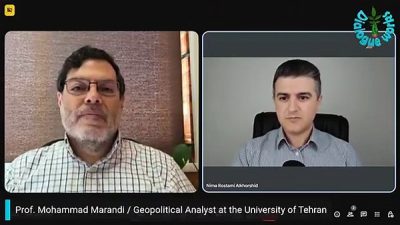
Seyed M. Marandi: U.S. Military DIVIDED? Iran’s Secret Defense EXPOSED
or go to
Aletho News Archives – Video-Images
From the Archives
‘Israel sees Iran as obstacle to its policies’
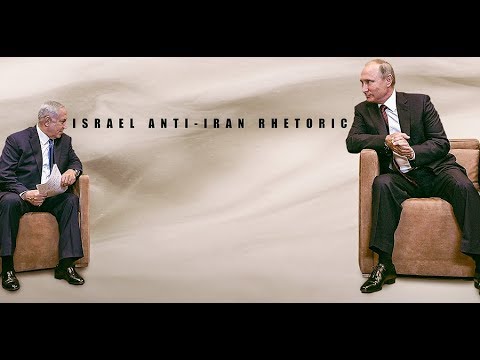
Press TV – August 25, 2017
Prime Minister Benjamin Netanyahu has said that Israel felt threatened by Iran’s growing influence in the Middle East. Netanyahu expressed his Iranophobic view in a meeting with Russian President Vladimir Putin in Russia’s Black Sea resort of Sochi on Wednesday. Press TV has asked Scott Rickard, former American intelligence linguist from Tampa, Florida, and Brent Budowsky, a columnist at The Hill from Washington, to give their thoughts on the issue.
Rickard said Tel Aviv is concerned about the fact that the regime could not carry out its old project to spread sectarian divisions and pave the way for dismemberment of the countries in the Middle East region because of the Iranian-led resistance against Israeli policies, not only in the occupied territories of Palestine but also in the whole region.
“Iran is not a threat to Israel whatsoever. The threat that Israel sees is the fact that their Oded Yinon Plan is being put to a hold by Iran,” the intelligence linguist said on Thursday night.
“They (the Israelis) look at Iran as a threat only because they have no influence on their governments and Iran is autonomous and is not under the Zionist influence,” he added.
Since the victory of the Islamic Republic of Iran in 1979, Tehran has been critical of Israel’s policies in the region, whereas “no leaders [of other states] even dared to speak out against Zionism,” Rickard argued. … continue
Blog Roll
 Aletho News
- Iran declares ‘historic victory’ over US, says enemy forced to accept its proposal
- Trump Claims Ceasefire, Reopening of Strait of Hormuz Agreement with Iran
- Israeli tank fire killed UN peacekeeper in Lebanon, UNIFIL investigation finds
- Russia, China block Bahrain-sponsored UN resolution on Strait of Hormuz
- The US-Israeli War on Science is an Assault on our Future
- Trump’s Promise to Bomb Iran ‘Like Never Before’ Faces Brutal Logistics — Expert
- Germany seeks to restrict stays abroad for men of fighting age – Berliner Zeitung
- Evidence points to Ukraine being behind TurkStream attempted sabotage, but that should come as no surprise
- Sri Lanka secures supplies of Russia oil – minister
- Nations across Asia strike direct deals with Iran for Hormuz passage
- If Americans Knew
- Thousands dead and neighborhoods razed to the ground: Aid agencies fear southern Lebanon is becoming the new Gaza
- The war the US is fighting for Israel could cost trillions
- ‘Cigarette Burns, Nail Wounds’: Toddler Tortured in Gaza to Coerce Father
- Trump Says US Sent ‘a Lot of Guns’ to Protesters in Iran
- Israeli forces destroy 17 UN peacekeeper cameras in south Lebanon
- US-Israeli strikes ‘completely destroy’ synagogue in Tehran
- Archbishop for US Military Says Iran War Is Unjust Under Catholic Teaching
- Iranian leaders’ Open Letters to the American People
- Trump says Iranians appreciate bombs, WHO warns of nuclear risks – Daily Update
- U.N. experts demand Israel release prominent Gaza doctor after reports of ‘severe torture’
- No Tricks Zone
- An Inconvenient Tree: Uncovered In Alps… Europe Much Warmer Than Today 6000 Years Ago
- New Study Reports A 60% Slowdown In Greenland’s Ice Loss Rate In The Last Decade
- Low Intensity Tornado Wrecks Major Solar Farm, Creating A Potential Toxic Dump
- New Study Finds Warming Saves Lives…Cold Temperatures 12 Times More Deadly Than Excess Heat
- German Science Blog Accuses PIK Climate Institute Of Hallucinating Climate Tipping Points
- Devastating Assessment Of Comirnaty Vaccine By Former Senior Pfizer Europe Toxicologist
- New Study: CO2 Is ‘Effectively Negligible’ As An Explanatory Climate Change Factor Since 2000
- Former Pfizer Toxicologist Dr. Helmut Sterz Tells Bundestag Hearing Pfizer Vaccine Should Have Never Been Approved
- Energy Expert: Germany’s Nuclear Phaseout Was A “500 Billion Euro Mistake”
- New Research: South Australia’s Mid-Holocene Sea Surface Temperatures Were 4°C Warmer Than Today
 Aletho News