Pro-Israel activists ask MPs to halt non-violent BDS protests
MEMO | November 24, 2014
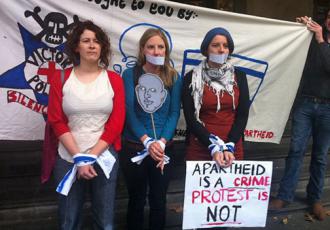 Zionist activists have urged British MPs to implement new legislation that police could use to stop non-violent, pro-BDS protests.
Manchester-based group North-West Friends of Israel have urged politicians to give police more power to stop boycotts of businesses by pro-Palestine solidarity activists.
As cited in a report by The Jewish Chronicle, the group’s co-chair Anthony Dennison wants the Public Order Act amended “to allow police to halt non-violent protests, if they disrupted ‘the lawful right of customers and shops to trade’.”
Dennison commented: “Peaceful protest can be intimidating, if demonstrators are stood outside a shop, holding placards with horrible images, are customers really going into that shop?”
UK approved $11mn Israeli arms sales before Gaza war: Report
Press TV – November 24, 2014
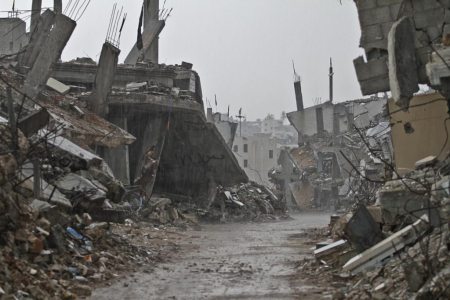
A new report has revealed Britain’s approval of arms sales to Israel worth nearly USD 11 million (£7 million) in the six months before the regime’s latest aggression against the Gaza Strip.
The Sunday report by The Independent newspaper raised fresh concerns about the use of British-made weapons and equipment by the Israeli army during the 50-day war on Gaza that killed more than 2,100 Palestinians and wounded 10,000 others in July-August.
Citing government figures, it added that the sales included components for drones, combat aircraft and helicopters along with spare parts for sniper rifles.
The figures also show that the British government has issued 68 export licenses for exports of military-use items to Israel between January and June.
“The Independent can reveal that ministers in the Department for Business Innovation and Skills (BIS) have also ordered a fresh review of military export licenses to Israel granted prior to the outbreak of the conflict after officials found 12 instances where arms containing British components may have been used in Gaza” by the Israeli army, it added.
“The refusal of the government to suspend these licenses caused a split in the coalition and led to the resignation of Foreign Office minister Baroness Warsi, who described Britain’s stance during the Israeli land and air assault as ‘morally indefensible’,” the British daily said.
Andrew Smith of the Campaign Against Arms Trade (CAAT) confirmed to the newspaper that “right up until the eve of the bombing, the UK was supporting licenses for the same kinds of weapons that (Secretary of State for Business, Innovation and Skills) Vince Cable’s own review found are likely to have been used against the people of Gaza.”
“Unfortunately it would not have been the first time UK weapons were used by Israel. The public was rightly shocked by this summer’s bombardment. That is why the UK must announce an embargo on all arms sales to Israel and an end to military collaboration.”
Katy Clark, a Labour party lawmaker, also said, “It is now abundantly clear that not only did the UK refuse to condemn Israeli military action,” but also it actively allowed UK companies to arm the Israeli military throughout the latest war on the beleaguered enclave.
Last month, the British government ordered the new review of licenses after campaigners began proceedings in the High Court to challenge its decision not to suspend the 12 licenses after Downing Street insisted Israel had a “legitimate right to self-defense.”
In August, The Independent revealed that arms export licenses worth $70 million had been granted to 130 British defense manufacturers since 2010 to sell military equipment to the Tel Aviv regime.
These range from bulletproof garments to naval gun parts and armored vehicles.
Russia loses $140bn with sanctions and falling oil prices – Finance Minister
RT | November 24, 2014
Russia is losing around $40 billion a year due to Western sanctions, but they are not as critical to the economy as lower oil prices, which add $90-100 billion in losses, says Russian Finance Minister Anton Siluanov.
“We lose about $40 billion a year because of the political sanctions and around $90-100 billion a year due to the 30 percent reduction in oil prices,” RIA quotes Siluanov speaking Monday at the International Financial and Economic Forum.
Lower investment and foreign loans along with capital outflow, estimated at $130 billion this year, are the key components of the loss, Siluanov explained.
Siluanov believes the decline in oil prices has a more significant impact on the Russian economy than the international sanctions.
“If we talk about the consequences of geopolitics, of course, they are important for us,” he said. However, he added that “it is not as critical for the course, and even for the budget, as the prices of goods exported by us.”
Talking about the ruble’s depreciation, Siluanov said that fluctuating oil prices should serve as a principal indicator of the ruble’s exchange rate amid a period of high volatility.
“The price of oil has fallen by 30 percent since the beginning of the year. Incidentally, the ruble has weakened by the same 30 percent. When people ask me – listen, you’re the Minister of Finance, what’s the ruble rate going to be? It is impossible to answer because there are a lot of factors. I say, look at oil prices. The behavior of the ruble will depend on them,” said Siluanov.
The price of Brent crude, which is used to calculate the price for Russian Urals blend, has fallen by 30 percent to about $80 a barrel since the end of June; its lowest price for four years.
According to the International Energy Agency, the total supply of oil on the world market in October increased by 35 thousand barrels to 94.2 million (2.7 million barrels more than in October 2013). In the same period, the average daily volume of oil supplies by OPEC countries in the world market amounted to 30.6 million barrels.
OPEC countries are also adding to the oversupply as they’ve been exceeding their quota of 30 million barrels per day for the last six months.
According to IEA experts, the decline in oil demand from China, world’s second largest oil consumer, and rising oil production in the US will lead to a sharper decline in prices in early 2015.
On November 27, OPEC leaders will meet in Vienna to decide whether to shore up oil prices by cutting output.
There to stay: US troops keep Poland, Baltic deployment for 2015
RT | November 24, 2014
A ‘temporary’ deployment of US troops in Poland and the Baltic states has been extended through 2015, a US commander in Europe said. NATO sells its presence as a deterrent to an ‘aggressive Russia’, with Moscow countering that it only escalates tension.
The alliance deployed several hundred US troops in Poland, Latvia, Lithuania and Estonia earlier this year. The move was explained by a desire to give confidence to these NATO members after the political crisis in Ukraine and the secession of its region of Crimea to rejoin Russia. The alliance called it an annexation and said countries in the region feared that Moscow would militarily attack them.
Originally the troops were supposed to stay until the end of the year, but now NATO wants to keep them for at least 12 months more, said Lieutenant-General Frederick Ben Hodges, Commanding General of US Army Europe.
“We have planned rotations out through next year. Units are designated that will continue to do this,” Hodges told journalist in the Lithuanian capital, Vilnius.
“There are going to be US Army forces here in Lithuania, as well as Estonia and Latvia and Poland, for as long as is required to deter Russian aggression and to assure our allies,” he said as cited by Reuters.
A 1997 Russia-NATO agreement forbids the alliance from having troops permanently stationed in the Baltic States, so the deployment remains a temporary mission. However, it’s not immediately clear when, if ever, NATO would consider the perceived threat of a Russian aggression no longer valid and withdraw the troops.
Washington’s assurances to its eastern NATO partners were also delivered last week through diplomatic channels.
“When NATO and the US as part of NATO took new members into the alliance, this means that we are ready to participate in the defense of the security of these countries, and this means that we are ready to give our lives for the security of these countries,” said US Assistant Secretary of State for European and Eurasian affairs Victoria Nuland during a visit to Latvia.
Amid the Ukrainian crisis, Poland and the Baltic states have been among the most vocal critics of Russia. Lithuanian President Dalia Grybauskaite went as far as branding Russia ‘a terrorist state’ last week, prompting some Russian MPs to call for the severing of diplomatic ties with Vilnius.
Russia considers the build-up of NATO troops close to its borders provocative and dangerous. Moscow’s envoy to the alliance Aleksandr Grushko said NATO “is turning the Baltic region, which used to be militarily calm, into an area of military confrontation with Russia.”
The Russian military said it would respond to the emerging NATO threat from the Baltic with appropriate counter-moves.
Defeat of USA FREEDOM Act is a Victory for Freedom
By Ron Paul | November 23, 2014
It will not shock readers to hear that quite often legislation on Capitol Hill is not as advertised. When Congress wants to do something particularly objectionable, they tend give it a fine-sounding name. The PATRIOT Act is perhaps the best-known example. The legislation had been drafted well before 9/11 but was going nowhere. Then the 9/11 attacks gave it a new lease on life. Politicians exploited the surge in patriotism following the attack to reintroduce the bill and call it the PATRIOT Act. To oppose it at that time was, by design, to seem unpatriotic.
At the time, 62 Democrats voted against the Act. On the Republican side there were only three no votes: former Rep. Bob Ney (R-OH), former Rep. Butch Otter (R-ID), and myself.
The abuses of the Constitution in the PATRIOT Act do not need to be fully recounted here, but Presidents Bush and Obama both claimed authority based on it to gut the Fourth Amendment. The PATRIOT Act ushered in the era of warrantless wiretapping, monitoring of our Internet behavior, watering down of probable cause, and much more. After the revelations by whistleblower Edward Snowden, we know how the NSA viewed constitutional restraints on surveillance of American people during the PATRIOT Act period.
After several re-authorizations of the PATRIOT Act, including some cosmetic reforms, Congress last October unveiled the USA FREEDOM Act. This was advertised as the first wholesale PATRIOT Act Reform bill. In fact, the House version was watered down to the point of meaninglessness and the Senate version was not much better. The final straw was the bill’s extension of key elements of the PATRIOT Act until 2017.
Fortunately, last week the USA FREEDOM Act was blocked from further consideration in the US Senate. The procedural vote was significant and important, but it caused some confusion as well. While some well-meaning pro-privacy groups endorsed the FREEDOM Act as a first step to reform, some anti-liberty neoconservatives opposed the legislation because even its anemic reforms were unacceptable. The truth is, Americans should not accept one more extension of the PATRIOT Act and should not endorse its continued dismemberment of our constitutional liberties. If that means some Senators vote with anti-liberty colleagues to kill the extension, we should still consider it a victory.
As the PATRIOT Act first faced a sunset in 2005, I had this to say in the debate over whether it should be re-authorized:
“When Congress passed the Patriot Act in the emotional aftermath of the September 11th terrorist attacks, a sunset provision was inserted in the bill that causes certain sections to expire at the end of 2005. But this begs the question: If these provisions are critical tools in the fight against terrorism, why revoke them after five years? Conversely, if these provisions violate civil liberties, why is it acceptable to suspend the Constitution for any amount of time?”
Reform is often meant to preserve, not repeal bad legislation. When the public is strongly opposed to a particular policy you will almost never hear politicians say “let’s repeal the law.” It is always a pledge to reform the policy or law. The USA FREEDOM Act was no different.
With the failure of the FREEDOM Act to move ahead in the Senate last week, several of the most egregious sections of the PATRIOT Act are set to sunset next June absent a new authorization. Congress will no doubt be under great pressure to extend these measures. We must do our very best to make sure they are unsuccessful!
Ben & Jerry’s Israeli Factory and Israel’s Stolen Land and Stolen Water

Vermonters for a Just Peace in Palestine/Israel
The Ben & Jerry’s factory is in Be’er Tuvia, adjacent to the town of Kiryat Malachi, one of four Israeli localities located on the lands of the former village of Qastina, in territory allotted to the Arab state under the 1947 UN Partition Plan. However on July 9, 1948, after Israel’s declaration of independence and the ensuing war, Qastina and its more than 147 houses were completely destroyed by Israeli forces of the Givati Brigade, and the land incorporated into Israel. (Based on information documented at http://en.wikipedia.org/wiki/Qastina, accessed December 2012).
 Ghatheyya Mifleh al-Khawalda was a 15-year old teenager when she fled to Gaza from her home in the village of al-Qastina, now the town of Kiriyat Malachi and site of the Ben & Jerry’s factory, during the Nakba of 1948. So this woman, a refugee living only a day’s walk from the village that she was driven from, represents a personal and tragic link to the site where now the Ben & Jerry’s factory churns out ‘Peace and Love’ ice cream. Yes, they do profit from this stolen land, and yes, the Nakba was a crime, and yes, the occupation is an affront. Ghatheyya is one of generations of Palestinians in Gaza who are locked away from their land, their families and the world. Some seethe with anger and resort to violence – three people in Kiriyat Malachi died in November 2012 in a rocket attack from Gaza. Ghatheyya said, “We had a very nice house, a big house with marble floors in the hallway. My father was a farmer, and we had farmland with orange trees, apple trees, grapefruit trees and others. We were very happy.” Her life changed dramatically in 1948, when Jewish militias arrived. “Some Jewish militia members were wearing uniform and others had civilian clothes,” Ghatheyya said, “and when they arrived in the village they began firing at people, killing three villagers. We ran away, afraid for our safety, and went to Tal al-Safi, a nearby village. It was within walking distance, and we were in a hurry to leave, so we didn’t take anything with us. It was like Doomsday. It was utter terror. We couldn’t think of anything except leaving, not even simple things like bringing food with us.” After a few days in Tal es-Safi, militias came again and forced them to leave. Ghatheyya and her family fled to Beit Jibrin to spend the night, but were followed and forced to leave again. “If you wanted to die, you stayed. If you wanted to live, you left,” she recalls. “Their main aim was not to kill us, but to get rid of us. If they had wanted us all dead, not one of us would have survived. They used fear to force us to leave our land.” The family walked along the coast until they reached Gaza. “There were thousands of people who fled other villages, sleeping in mosques or on the street,” Ghatheyya says, and UNRWA began to build tents for the families. (From a story “Nakba survivor: If you wanted to live, you left” at Ma’an News )
Water Used by the Factory
When investigating Ben & Jerry’s business dealings in Israel and the occupied territory, we also set out to determine if the company’s franchise was benefiting from Israel’s criminal diversion of Palestinian water. Our inquiry, which included discussions with an international water consultant, led us to the tentative conclusion that Ben & Jerry’s factory in Kiryat Malachi may be drawing water from the Jordan River system and the Mountain Aquifer in the occupied West Bank, the two highest-quality water sources in the region, thus diverting it from Palestinian use.
Palestinians under occupation have been denied access to the Jordan River since 1967, leaving the Mountain Aquifer as their only source of water. A study by The World Bank determined that “Palestinian per capita access to water resources in the West Bank is a quarter of Israeli access and is declining.” This is a result of Israeli government planning and regulation.
To make matters worse, Israeli settlers in the West Bank often obstruct or disconnect the flow of water to Arab communities, while 500,000 settlers consume in total approximately six times more water than three million Palestinians. This difference is even higher when agricultural use is factored in. Regular access to water explains why one commonly sees green lawns and swimming pools in Israeli settlements. In stark contrast, throughout the year, but especially in the summer, Palestinian cities and villages are denied continuous access to water, sometimes for weeks on end. This gross injustice is aggravated by Israel’s policy of denying permits to Palestinians to drill new wells or rehabilitate old ones.
By manufacturing in Israel and marketing in the occupied territory, Ben & Jerry’s is a willing partner to a water system that is grossly inequitable, transgresses international law, and denies Palestinians their fair share of the Mountain Aquifer and the Jordan River. Please see Our Report for more information on Israel’s water crimes in the occupied territory.
Bahrain opposition slams ‘ridiculous’ official voter turnout rate
Al-Akhbar | November 23, 2014
A war of words over the turnout rate in Bahrain’s legislative election heightened Sunday, between the authorities and the opposition, with the latter accusing the regime of “misleading the public.”
With the vote-counting still underway after Saturday’s elections to the 40-member parliament, the focus was on voter turnout, which became a key marker of the election’s validity after Bahrain’s main opposition movement, al-Wefaq, which was banned in October from carrying out any activities for three months for allegedly “violating the law on associations,” and four other opposition groups boycotted the polls.
The opposition demand a “real” constitutional monarchy with an elected prime minister who is independent from the ruling royal family. But the US and Saudi-backed King Hamad al-Khalifa, whose family has been in power for over 200 years, has refused to yield.
The Bahraini official electoral commission said 51.5 percent of registered voters turned out to vote, but the opposition, which has dismissed the elections as a “farce”, slammed the official turnout rate as “ridiculous”, saying that only 30 percent of eligible voters had turned out.
Both sides also traded accusations of electoral malpractice, with the opposition saying it has proof that tens of thousands of people were pressured to vote, while the authorities accused “militants” of preventing others from reaching ballot stations.
”Amusing and ridiculous”
Voting closed at 1900 GMT Saturday after a two-hour extension decided by the electoral commission, in a likely bid to boost turnout.
An hour later the head of the commission, Sheikh Khaled al-Khalifa, who is also justice minister, claimed initial estimates showed 51.5 percent of registered voters turned out to vote.
“Turnout for the legislative elections was 51.5 percent… (and this result) puts an end to confessionalism in Bahrain,” he said in reference to the opposition’s boycott call.
Al-Wefaq, which withdrew its 17 lawmakers after the regime’s violent crackdown on protests in 2011, called the official turnout rate “amusing, ridiculous, and lacking credibility”.
Government officials were “trying to fool public opinion and ignore the large election boycott by announcing exaggerated figures,” the opposition group said in a statement published early Sunday.
The opposition instead cited a turnout figure of “around 30 percent,” allowing a possible five percent difference either way.
It also accused the authorities of making tens of thousands of state employees vote or face consequences.
“Even a 30 percent turnout would not have been possible if the authorities had not pressured and threatened state employees,” the statement said, adding that “80 percent of voters are serving in the security, military and public apparatuses.”
”3,000 political prisoners behind bars”
With Saudi Arabia’s help, Bahrain, a country ruled by an unelected monarchy, crushed peaceful pro-democracy demonstrations that began on February 14, 2011.
Saudi Arabia and other Gulf neighbors sent troops into Bahrain in March 2011, reinforcing a crackdown that led to accusations of serious human rights violations.
At least 89 people are estimated to have been killed and hundreds have been arrested and tried since the uprising erupted.
In a press conference held by the National Democratic Opposition Parties at al-Wefaq headquarters on Saturday, al-Wefaq chief Sheikh Ali Salman said the regime continued to commit major human rights violations.
“The elections are being held while more than 3,000 prisoners are behind bars, including Ibrahim Sharif, who is the former chief of the National Democratic Action Society, and many other prominent political figures”, said Salman, adding that the authorities have repeatedly misled the public in the past.
Today, Bahrain, a key ally of Washington and home to the US Navy’s Fifth Fleet, has the distinction of being the country with the second highest prison population rate per 100,000 amongst Arab states in the West Asian and North African region.
Over 200 minors are being held within these prisons, forced to stay side-by-side with adults, and some have faced torture and sexual abuses.
Authorities ignored pleas by human rights groups to release political prisoners, instead increasing the punishment for violent crimes.
Besides imprisonment, 50 Bahrainis have had their citizenship revoked and several have also been deported since Bahrain adopted a law last year stipulating that suspects convicted of “terrorist” acts could be stripped of their nationality.
The Ministry of Interior in November 2012 revoked the nationality of 31 pro-democracy activists in the name of the Bahrain Citizenship Law, “under which the nationality of a person can be revoked if he or she causes harm to state security,” Amnesty International said in a report.
“The Bahraini authorities are running out of arguments to justify repression. They are now resorting to extreme measures such as jail sentences and revoking nationality to quell dissent in the country, rather than allowing people to peacefully express their views,” Amnesty International’s Middle East and North Africa deputy director, Hassiba Sahraoui, said in the report.
Moreover, government officials Saturday also accused “militants of provoking incidents” and blocking roads in areas of the capital Manama in order to prevent people from voting.
Clashes erupted between youths and security forces, with the latter firing tear gas and rubber-coated bullets at protesters, in many villages around Bahrain Saturday.
“Peaceful protesters in more than 50 areas around Bahrain were violently attacked and many have been left with shotgun injuries,” Salman added, urging UN Secretary-General Ban Ki-moon “to sanction a political solution to the Bahraini crisis.”
(Al-Akhbar, AFP)
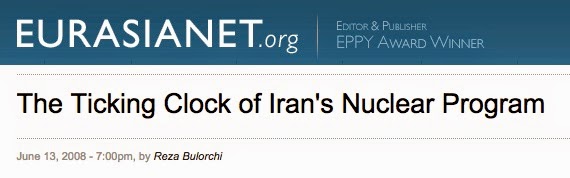
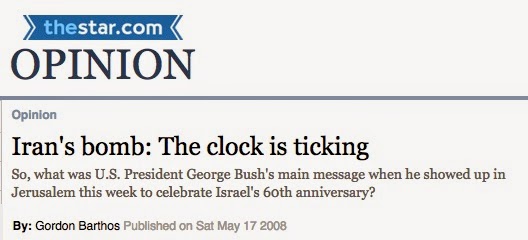
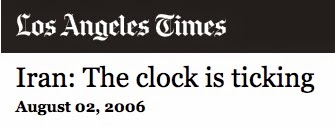
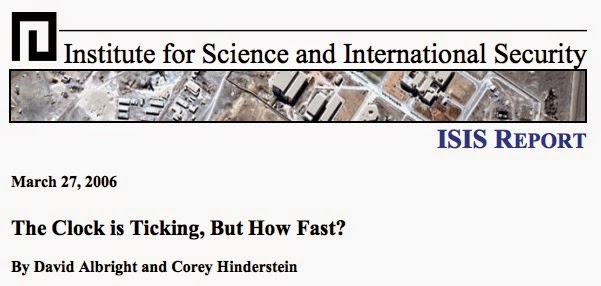
Iran’s Ever-Ticking Nuclear Clock: Countdown to Nothing
By Nima Shirazi | Wide Asleep in America | November 22, 2014

Recycled rhetoric that sounds ominous, yet signifies nothing – least of all reality – is standard practice when fear-mongering about, well, anything. But especially about Iran’s nuclear program, constant threats to bomb it, and the dire predictions of how soon Iran will have an atomic weapon.
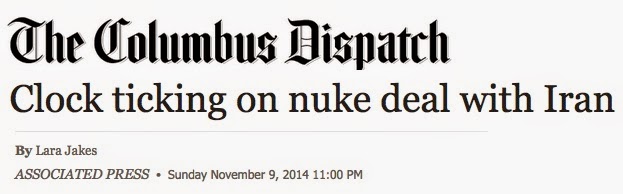
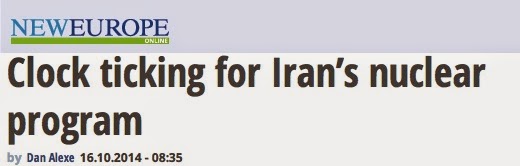
Time is always running out on diplomacy, a military operation is always around the corner, and Iran is always just months away from decimating Israel and holding the world hostage with a single nuclear bomb that it isn’t even making. The clock, we hear ad nauseum, is ticking.
With nuclear negotiations nearing their latest deadline in Vienna this weekend, we are hearing – once again – that it’s “crunch time” for diplomacy and anything less than a comprehensive deal sets the stage for war.
While a fair and just nuclear deal would certainly be in the best interest of all parties involved, we’ve heard all this before. The “clock” has long been “ticking” when it comes to Iran, or so we’ve been told for over a decade now.
Here’s a little trip down memory-hole lane and here’s hoping that, come Monday and the inking of an multilateral agreement, this talking point’s time will finally be up.
Associated Press / The Columbus Dispatch, November 9, 2014:
New Europe – October 16, 2014:
Council on Foreign Relations, September 17, 2014:
Newser, July 15, 2014:
AFP, July 1, 2014:
The Globe and Mail, June 10, 2014:
SBS, February 19, 2014:
CNN, January 13, 2014:

The New York Times, November 25, 2013:
The Jerusalem Post, November 4, 2013:

Roll Call, August 2, 2013:
American Enterprise Institute, July 10, 2013:

BBC News, April 7, 2013:
The Wall Street Journal, March 13, 2013:

The Hill, March 5, 2013:
The Telegraph, December 26, 2012:

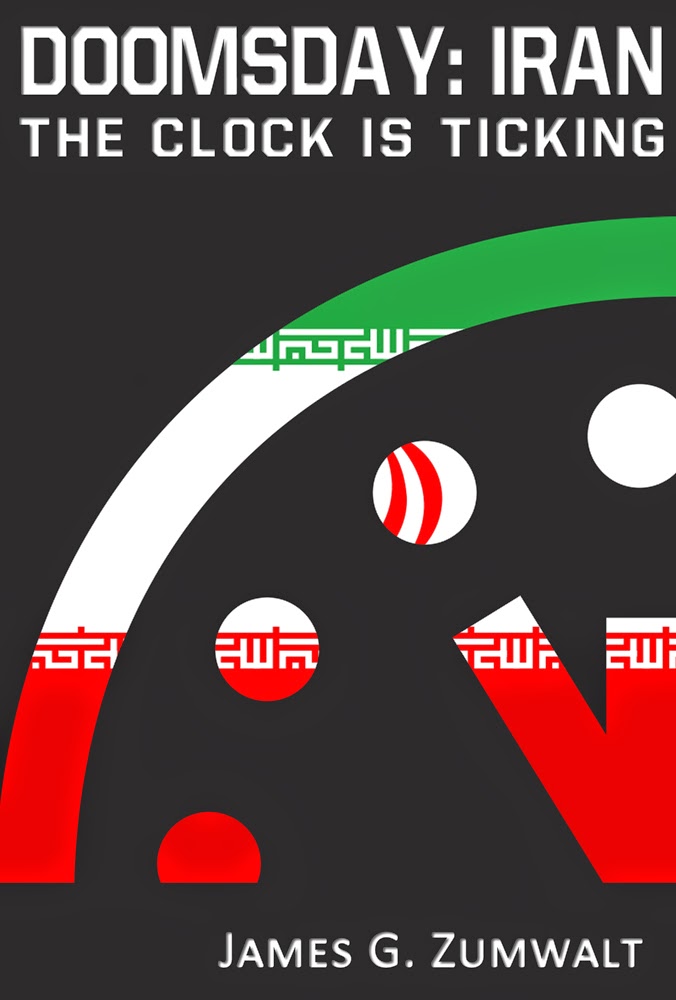
James G. Zumwalt, December 26, 2012:
CBS DC, October 22, 2012:

The Sydney Morning Herald, October 2, 2012:
Foreign Policy, August 30, 2012:
The American Spectator, August 27, 2012:

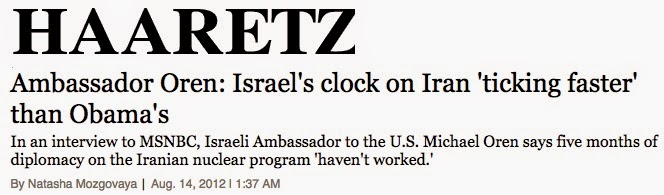
Ha’aretz, August 14, 2012:
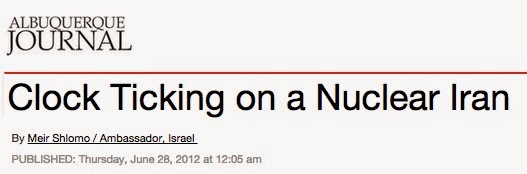
Albuquerque Journal, June 28, 2012:
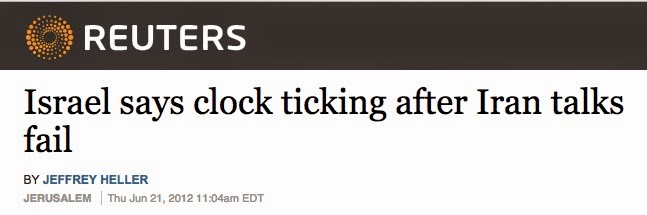
Reuters, June 21, 2012:
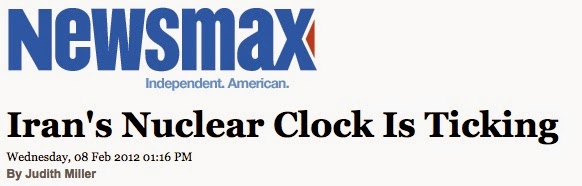
NewsMax, February 8, 2012:
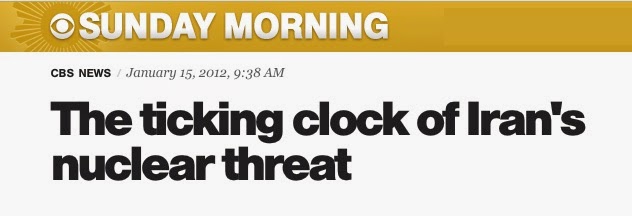
CBS Sunday Morning, January 15, 2012:
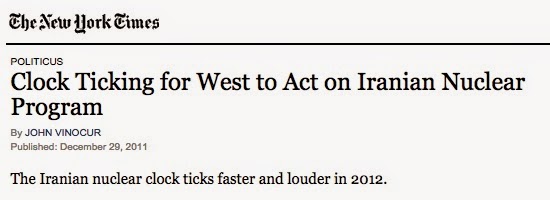
The New York Times, December 29, 2011:
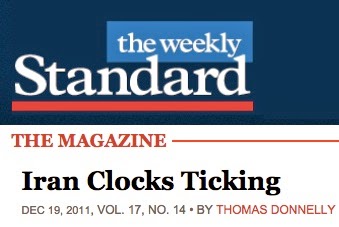
The Weekly Standard, December 19, 2011:
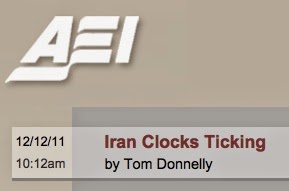
AEI Center for Defense Studies, December 12, 2011:
UPI, November 9, 2011:
The Hill, November 8, 2011:
Associated Press, November 4, 2011:

New York Post, January 18, 2011:
The Atlantic, August 20, 2010:

The New York Times, March 19, 2010:
Voice of America, December 6, 2009:

The Spectator (UK), December 1, 2009:

New York Post, November 16, 2009:
Christian Science Monitor, November 3, 2009:
Los Angeles Times, September 20, 2009:
Meet the Press, June 21, 2009:

Politico, June 19, 2009:

The Washington Post, March 8, 2009:
EurasiaNet, June 13, 2008:
Toronto Star, May 17, 2008:
Los Angeles Times, August 2, 2006:
Institute for Science and International Security, March 27, 2006:
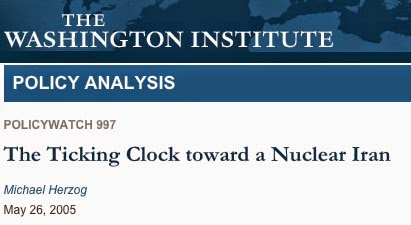
Washington Institute for Near East Policy (WINEP), May 26, 2005:
Dawn, March 19, 2005:

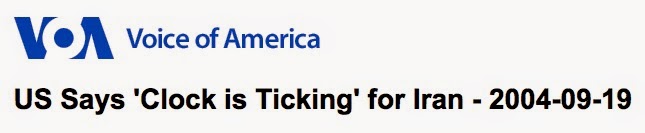
Voice of America, September 19, 2004:
*****
Zionist Settlers Torch Palestinian Home in West Bank
Al-Manar | November 23, 2014
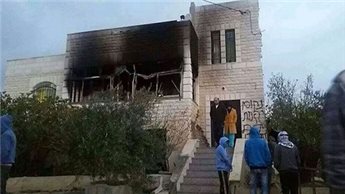 Zionist extremists firebombed a house in a Palestinian village in the occupied West Bank early on Sunday.
The mayor of Khirbet Abu Falah, Masud Abu Mura, reported the attack, saying: “At 4:00 am (0200 GMT), settlers came and threw molotov cocktails at a house which partly burned down.”
Four women were inside the house at the time, but they all escaped unharmed, the mayor of the village which lies northeast of Ramallah said.
Near the house, the assailants scrawled “Death to Arabs” in Hebrew.
Mohammad Abdelkarim Hamayel, whose aunt and two female cousins live in the house, said the assailants were believed to be from the Shilo settlement, a few kilometers to the north of the village.
“In the middle of the night, my aunt woke up when she heard voices speaking Hebrew. Someone knocked on the door but she didn’t answer because she was afraid,” he told AFP.
“They threw a tear gas canister and several molotov cocktails at the balcony which caught fire.”
Israeli occupation police also confirmed the attack, with its spokesman Luba Samri saying: “It is a two-storey house and the fire caused major damage to the ground floor.”
On November 12, Zionist settlers also torched a mosque in the neighboring village of Al-Mughayir.
Source: AFP
Featured Video
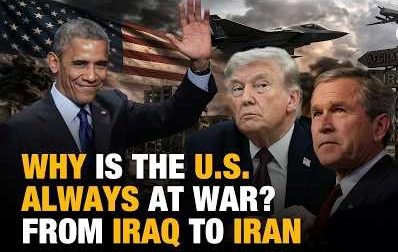
The Source of America’s Wars – Kristol Clear
or go to
Aletho News Archives – Video-Images
From the Archives
Is Israel to blame for the Iraq War?
American Goy | March 10, 2008
I am so tired of this old canard that “Israel had nothing to do with USA’s war with Iraq – in fact, it officially advised America against it”.
Bullshit. … continue
Blog Roll
 Aletho News
- Netanyahu unilaterally declares Lebanon outside of ceasefire deal
- Israeli leaders: ‘Not a single goal’ achieved in war with Iran
- What on earth just happened? Trump, Iran, and the unlikely ceasefire
- Alberta Bill Would Fine Political Deepfakes $10,000 Without Satire Exemptions
- Iran declares ‘historic victory’ over US, says enemy forced to accept its proposal
- Trump Claims Ceasefire, Reopening of Strait of Hormuz Agreement with Iran
- Israeli tank fire killed UN peacekeeper in Lebanon, UNIFIL investigation finds
- Russia, China block Bahrain-sponsored UN resolution on Strait of Hormuz
- The US-Israeli War on Science is an Assault on our Future
- Trump’s Promise to Bomb Iran ‘Like Never Before’ Faces Brutal Logistics — Expert
- If Americans Knew
- Thousands dead and neighborhoods razed to the ground: Aid agencies fear southern Lebanon is becoming the new Gaza
- The war the US is fighting for Israel could cost trillions
- ‘Cigarette Burns, Nail Wounds’: Toddler Tortured in Gaza to Coerce Father
- Trump Says US Sent ‘a Lot of Guns’ to Protesters in Iran
- Israeli forces destroy 17 UN peacekeeper cameras in south Lebanon
- US-Israeli strikes ‘completely destroy’ synagogue in Tehran
- Archbishop for US Military Says Iran War Is Unjust Under Catholic Teaching
- Iranian leaders’ Open Letters to the American People
- Trump says Iranians appreciate bombs, WHO warns of nuclear risks – Daily Update
- U.N. experts demand Israel release prominent Gaza doctor after reports of ‘severe torture’
- No Tricks Zone
- An Inconvenient Tree: Uncovered In Alps… Europe Much Warmer Than Today 6000 Years Ago
- New Study Reports A 60% Slowdown In Greenland’s Ice Loss Rate In The Last Decade
- Low Intensity Tornado Wrecks Major Solar Farm, Creating A Potential Toxic Dump
- New Study Finds Warming Saves Lives…Cold Temperatures 12 Times More Deadly Than Excess Heat
- German Science Blog Accuses PIK Climate Institute Of Hallucinating Climate Tipping Points
- Devastating Assessment Of Comirnaty Vaccine By Former Senior Pfizer Europe Toxicologist
- New Study: CO2 Is ‘Effectively Negligible’ As An Explanatory Climate Change Factor Since 2000
- Former Pfizer Toxicologist Dr. Helmut Sterz Tells Bundestag Hearing Pfizer Vaccine Should Have Never Been Approved
- Energy Expert: Germany’s Nuclear Phaseout Was A “500 Billion Euro Mistake”
- New Research: South Australia’s Mid-Holocene Sea Surface Temperatures Were 4°C Warmer Than Today
 Aletho News