LIVING WITH INSANITY
Harper, Abbott, and Cameron at the Brisbane G-20
By John Chuckman | Aletho News | November 18, 2014
Canada’s Prime Minister, Stephen Harper, is reported by a spokesman, to have had the following exchange with Russia’s President Vladimir Putin during the Brisbane G-20 summit: “Well, I guess I’ll shake your hand, but I only have one thing to say to you: you need to get out of Ukraine.” Putin is said to have replied, “Impossible. Since we are not there.”
A graceless bit of diplomatic crudity from a truly graceless man, Stephen Harper, someone Canadians know has a history of underhanded practices at home, from introducing ugly personal-attack campaign advertising, using secretive and bullying tactics in parliament, failing to deal with corrupt practices by subordinates especially an American-style election scandal of robo-calls which sent some voters to the wrong polls, to having appointed several unbelievably incompetent and corrupt ministers. He is known for a ferocious temper in private, a very controlling man who grants his political associates absolutely no freedom of expression, and is reported by insiders as having on at least one occasion thrown a chair in a meeting. His silencing of Canadian government scientists from offering their opinions on issues in areas of expertise has been a simmering international scandal, as has his complete suppression of environmental issues.
Before Harper, Canada enjoyed for many decades a reputation for fairness and decency and intelligence in international affairs with statesmanship and openness exhibited by figures like Lester Pearson or Jean Chretien or Paul Martin. Harper has destroyed a great deal of that as he pursues a single-minded role as American junior partner in almost all things.
He completely abandoned Canada’s traditional policies of fairness and balance in the Middle East, literally shocking many Canadians at times with fervent outbursts about Israel, including suggestions that Canadian critics of Israel are anti-Semitic. He does this, as any astute political observer recognizes, to solicit increased campaign funds from Canada’s financially successful Jewish community, taking his cue from Republicans in the United States such as Newt Gingrich who alone received $18 million dollars from one wealthy supporter of Israel for his last nomination campaign in exchange for inserting into his speeches that there was no such thing as a Palestinian, an utterly insincere and ridiculous statement. Since Israel is no admirer of President Putin’s, he being too independent-minded and opposed to the American exceptionalism Israel tightly embraces and by which it prospers, this activity of Harper’s puts him in an anti-Russian frame of mind from the start.
Harper has made an annual photo-op journey to Canada’s North, always trying to appear to voters as the man most concerned with a future there of melting ice creating free access through the Northwest Passage. Ironically, he periodically mentions Russia as the nation he is most concerned about, but Canada’s recent history couldn’t make it clearer that it is the United States which represents the great threat to our Northern waters and shore. Everything from unauthorized American atomic submarine prowling to a giant American oil tanker passing to published American charts showing this future open water as international tells a pretty harsh story. But in every detail, Harper only pretends America is a great and non-threatening friend.
Harper is the single most obsessed leader in Canada’s history with pleasing, almost fawning over, the United States. Had the history of Canada, which included a great deal of disagreement and contention with the United States over its many imperialistic behaviors, included many leaders of Harper’s character, there quite likely would not be a county called Canada today.
So here are the demonstrated qualities of the man performing as Canada’s diplomatic ass at the G-20 in Brisbane. He demonstrates a genuinely anal-retentive temperament, is intolerant of differences of opinion, and embraces a willful blindness to the world’s greatest threat to peace, the United States in its self-appointed role as imperial arbiter among nations.
In case you wonder why a man like Harper even holds office in Canada, it is because the effective opposition was split with internal battles and because the last leader they selected in desperation following those battles was a man of no political intelligence or even experience and a totally unattractive personality to the public, Michael Ignatieff, someone who managed to do almost everything wrong. It also reflects a democratic deficit in our parliamentary structure where a party with just over 39% of the vote can be a parliamentary majority. So despite Canadians consistently being about 60% or higher inclined to somewhat progressive parties, Harper has had a free run at pole-axing the country’s traditional international reputation. Every day we come to be seen as a bit more like the deceptive and brutal American colony in the Middle East he embraces so closely.
We unfortunately live in a time utterly lacking statesmen in the West. I don’t know the detailed backgrounds of those other aggressive fools at the G-20, Abbott of Australia and Cameron of Britain, but I know they are both men who have lied exceedingly and been intimately involved with such nasty business as favors for the unsavory Rupert Murdoch empire. I can think of nothing which recommends either of them as statesmen. Indeed, they both, quite literally, kowtow to America.
Putin is head and shoulders above these men in intellect and focus, readiness to communicate clear views to the world, someone demonstrating considerable patience, and, from all evidence, someone notably free of the blowhard ideology which virtually characterizes Harper, Abbott, and Cameron.
Putin’s moves in Ukraine seem to me appropriate for dealing with a deliberately-induced crisis in an important neighboring country, and one with a long history of connections and associations. He has not invaded Ukraine, something which he could easily do were he so inclined. I suspect he has supplied weapons to East Ukraine, but that is something the United States does all the time, including supplying weapons to some of the most brutal groups and governments on earth, as it is right now doing in Syria, with secret night cargo flights out of Turkey to terrorist cutthroats. Just ask yourself what America would do about a comparable situation in Mexico: patience simply would not exist, and Mexico City would be quickly overrun by tanks.
The people of East Ukraine, Russian in background and sympathies, deserve protection as much as they deserve the huge amounts of emergency supplies Russia has supplied in a conflict owing its origin entirely to the covert acts of America. Had the coup-established government of Ukraine originally offered protection of Eastern interests, including language rights they openly tried suppressing, the story might have been different, but they did precisely the opposite, passing unfair laws, making threat after threat, and attacking their own citizens. Who wouldn’t rebel in that environment, including any of the states of the United States? How easily people forget past rebellions in the United States, the greatest of which was the Civil War, still the bloodiest war Americans ever experienced.
It is quite clear that the United States is responsible for destabilizing Ukraine. Its CIA funds have been invested into many unsavoury projects, perhaps most disturbing is its paying support to a collection of neo-Nazi groups ranging from extremist parties to violent militia forces, some of the very groups who have committed atrocities such as murdering many hundreds of civilians and some of whom actually march under swastika-like flags. It does seem more than a bit strange that men like Harper, Abbott, and Cameron implicitly support that kind of filthy work while charging Putin with dark acts, dark acts which are stated ambiguously and certainly never proved.
It is also clear that the United States has pressured all authorities involved to delay and obscure the investigation into the destruction of Flight MH17, and the only explanation for that can be America’s preventing, for as long as possible while the new coup-created government of Ukraine consolidates its position, the highly embarrassing finding that Ukraine in fact shot it down. The United States has said over and over it has evidence about the crash, yet it has never produced a scrap of it. Just as it never produced evidence for so many past claims from what actually happened on 9/11 to the assassination of a President.
The great irony of the G-20 summit in Brisbane is that its only substantial agreement concerned doing everything possible to promote growth in a world whose economy is dangerously stagnating, yet it wasted time and energy on America’s fantasy stories about Russia and Ukraine, insulted Russia’s President, and threatened in some cases further growth-suppressing sanctions. Nothing could be more contradictory and unproductive or, frankly, just plain stupid.
Palestinians repair thoroughfare in nonviolent action
CPTnet | November 15, 2014
 SOUTH HEBRON HILLS — On Saturday, 15 November 2014 the South Hebron Hills Popular Committee (a nonviolent Palestinian organisation resisting occupation in the South Hebron Hills region), coordinated an action to develop the road that connects the city of Yatta to At-Tuwani and surrounding villages located in the area Israel has designated Firing Zone 918. Under the watchful eyes of the Israeli military and police, the action was attended by members of the South Hebron Hills Popular Committee, residents of At-Tuwani, Israeli peace activists from Ta’ayush, and internationals from Christian Peacemaker Teams (CPT), International Solidarity Movement (ISM) and EAPPI.
The unpaved road that runs between villages and the town of Yatta is the access route that Palestinians travel for employment, education, water, healthcare, and other necessities of life. Surrounded by the tarmacked roads developed by the Israeli state for the settlers living illegally in the area, the rubble and holes in the Palestinian roads illustrate the stark inequalities of power that characterise the Israeli occupation, and the specific context of the South Hebron Hills and Firing Zone 918.
Because Israel bans Palestinian construction with tractors and other machines in the area without rarely-given Israeli permits, busy hands set about with buckets and hoes attempting to remove rubble and stones and fill in the many potholes on the road.
A member of the South Hebron Hills Popular committee from At-Tuwani explained, “This road serves all the people from Yatta and around… This is a very bad road – the school bus can’t [travel on it] and when people need to bring something by tractor, it is very difficult. This road is also not good if you need to use an ambulance to take people to the hospital. Ten years ago it was an asphalt road, but at the start of the Al Aqsa intifada (in 2002), Israel demolished the road.”
He also said, “we need to build a channel for rain water… Last year with the snow, all this is closed with water…You need a machine to fix this road but the DCO asks us for a permit, but will not give one to us to use a machine to work here… Now every week we try to fix it with small things, with our hands, before the rain comes.”
The racial politics of occupation are clear in his statement that “if a Palestinian comes alone to work here, the army and the police would arrest him quickly and stop him working, but it helps having international people and cameras to film everything.”
Despite the slow progress made with hands, buckets and hoes, six Israeli police and military jeeps arrived. They told the Palestinians they could not carry the work out without a permit, and a soldier declared such work a supposed ‘health and safety’ hazard, an ironic statement given the ‘health and safety’ hazards of the current state of the road, not to mention the myriad physical and psychological effects of occupation.
Legal issues surrounding the firing zone and the South Hebron Hills are complex, with numerous bureaucratic intricacies through which it is nigh impossible for Palestinians to gain a permit for construction. Members of the South Hebron Hills Popular Committee asserted the unlikelihood of gaining such a permit demanded by the military, and managed to converse with soldiers until the action ended at the time initially planned by the committee.
Missouri governor unable to explain who’s in charge in Ferguson
RT | November 18, 2014
The governor of Missouri activated the National Guard on Monday ahead of what could be a new wave of mass protests, but doesn’t seem certain at all about who will be in charge of law enforcement operations in the coming days.
Gov. Jay Nixon’s decision to call up the Guard and declare a state of emergency raised questioned on Monday about what authorities are anticipating will happen when a federal grand jury will decide — likely within days — whether or not to indict Ferguson, MO police officer Darren Wilson on charges related to the August shooting death of Michael Brown, an unarmed black teen.
Nixon was largely unable to provide answers during a telephone press conference that occurred with reporters later that day, though. Audio of that teleconference captured by Guardian journalist Jon Swaine is now causing concerns to mount further as reporters realize that the governor might have less of a grasp on the situation in Ferguson than many would like to believe.
The audio, published on the internet by Swaine late Monday, shows Nixon struggling to answer a question posed by Huffington Post’s Matt Sledge: “Does the buck ultimately stop with you when it comes to how any protests are policed?”
“Um, we’re, um, I, you know, it, uh, our goal here is to, you know, keep the peace, and allow all voices to, uh, to be heard,” Nixon replies with a rambling, 14-second-long attempt at a response.
“I don’t spend a tremendous amount of time personalizing this,” Nixon says later, adding, “I’d prefer not to be a commentator on it.”
Nearly two minutes after Sledge first asked Nixon to explain who will be in charge of maintaining the peace at any potential protests, he rephrased his question and attempted again to get an answer.
“Is there any one official or agency ultimately in charge here in terms of response?” Sledge wondered.
Again, Nixon is heard on tape meandering between words while failing to actually explain who will ultimately be tasked with responding to any civil unrest in Ferguson or elsewhere in the coming days — be it the National Guard, local police forces, county sheriffs or whomever — this time trailing off at moments for seconds at a time as he struggles to provide an explanation.
“Well, I mean, it uh, clearly [silence] I feel good about the… we worked hard to establish unified command, to outline our responsibilities now with the additional assets provided by my order today of the Missouri National Guard we have worked through, uh, a number of, uh, operational issues the folks have and, uh, I’ll only say, uh, our efforts today are on top of a lot of last hundred days to make sure we’re prepared for any contingency.”
Nixon’s reply without a doubt was ripe with uncertainty, which rightfully causes concern ahead of what may be mass protests of a caliber previously unseen in Missouri. Demonstrations waged for days in Ferguson for days, then weeks, after Brown was shot and killed by Wilson more than three months ago. Now as the city braces itself to hear whether or not Wilson will be charged with that shooting death, officials are expecting the worst, to say the least: not only has Nixon asked the National Guard for assistance during the coming days, but a warning to law enforcement agencies across the country from the FBI on Monday revealed that the bureau believes the grand jury’s impending decision “will likely” lead to attacks against the police.
Israeli letter to Security Council repeats canard of victimhood
By Ramona Wadi | MEMO | November 18, 2014
Israel’s Ambassador to the United Nations, Ron Prosor, has once again utilised the platform offered by the imperialist organisation to incite against Palestinian resistance. His brief letter addressed to UN Secretary General Ban Ki-moon and the president of the Security Council obliterated the entire context of current violence initiated by Israel, while claiming incitement to violence was authored by Palestinian Authority President Mahmoud Abbas. The initiative is not surprising, considering Israel’s past exploitation of the international arena to garner support for perpetrating further massacres against Palestinians.
Resistance against settlement expansion in East Jerusalem and Israeli violations committed at Al-Aqsa Mosque were, predictably, manipulated into premeditated violence, projecting the recurring actions of colonial violence upon the colonised and exaggerating in his rhetoric through the language used. “In the past two and a half weeks,” wrote Prosor, “the Israeli people have seen a severe escalation in terrorist attacks.” His use of now mainstream, albeit misleading, terminology appeals to the UN Security Council and its misplaced use of “terror” which encourages further violence or, in the case of Israel, affirms institutional support for its atrocious colonial activities. Prosor also urged the letter to be “distributed as a document of the Security Council.”
Meanwhile, Maan News Agency has reported the murder of Palestinian bus driver Yusuf Hasan Al-Ramouni, aged 32, who was found hanged inside his vehicle; according to relatives, he had signs of torture on his body. Israeli police have, predictably, ruled out criminal activity and allege that the death was suicide. This is a convenient way out that has been claimed in other cases where Palestinians have died in suspicious circumstances. Nevertheless, Al-Ramouni’s family insists that Israeli settlers lynched him. The illegal settlers’ persecution of Palestinian civilians, including children, is documented as an ongoing phenomenon of Israeli colonisation, a fact that the UN acknowledges only as isolated incidents unrelated to the historical process of violence sustaining Israel’s establishment.
While Prosor cites “Palestinian incitement” in his letter to the UN Security Council, a reversal of the statement would prove to be more accurate. Palestinian resistance is the legitimate defence against the incitement inherent in the settler-colonial state, evidenced as a phenomenon endorsed and encouraged by the state through its institutions, notably education, in order to sustain its illegal existence and occupation. Suggesting Palestinian incitement through the leadership of the Palestinian Authority contradicts the foundations upon which the PA is based and recognised; namely complicity and collaboration with Israel in maintaining the conditions for colonial expansion and hence contributing to the escalation in settler violence against the Palestinian population through its frequent concessions to the occupation authorities.
Despite obvious bias towards Israel by the international community, Prosor’s concluding remarks attempt to convey otherwise. “Complacency breeds catastrophe and the international community has been nothing but complacent as Israelis are targeted by terrorists day after day,” he bleats. Complacency towards Israel is a fabrication conjured-up countless times by Israeli representatives and leaders as part of a propaganda campaign aimed at consolidating the old canard of poor, defenceless Israel threatened by the Palestinians. However, repeated assertions of Israel’s illusory victimhood, in particular within the international community and given credence thereby, continue to divert attention away from the Israeli occupation and the oppression suffered by Palestinians in terms of loss of land and memory, displacement and death.
French government will not sign TTIP agreement in 2015
EurActiv | November 17, 2014
Matthias Fekl, France’s Secretary of State for Foreign Trade, has made it clear that France will not support the inclusion of the Investor State Dispute Settlement mechanism (ISDS) in a potential TTIP agreement. The ISDS is a point of heated debate between the EU and the United States EurActiv France reports.
Europe’s fears over the Transatlantic Trade and Investment Partnership (TTIP) are not abating, while America is beginning to show signs of impatience. Europe and the United States have reached a standoff in the TTIP negotiations, over the question of the Investor State Dispute Settlement.
This mechanism could give companies the opportunity to take legal action against a state whose legislation has a negative impact on their economic activity.
“France did not want the ISDS to be included in the negotiation mandate,” Matthias Fekl told the French Senate. “We have to preserve the right of the state to set and apply its own standards, to maintain the impartiality of the justice system and to allow the people of France, and the world, to assert their values,” he added.
German opposition to the ISDS mechanism is also very strong. The German Minister for Economic Affairs has often expressed his support for the trade deal with the United States, on the condition that it does not include the ISDS.
The disagreement over the ISDS has caused negotiations to stall. “The year 2014 did not see any great advances in the transatlantic agreement,” Fekl said during a speech to the French Senate.
In Brussels, the EU’s position on the Investor State Dispute Settlement mechanism became clear after the appointment of the new team of EU Commissioners.
In his speech to the European Parliament on 22 October, the new Commission President Jean-Claude Juncker said he would not accept any external limitations being placed on the member states’ ability to settle their own industrial disputes.
Negotiators from the United States are trying to move the talks forward, despite reluctance from the European Union.
During a visit to the European Parliament’s October plenary session in Strasbourg, Anthony Luzzatto Gardner, from the United States’ mission to the EU, insisted that the ISDS was an important clause in the TTIP negotiations.
“Our message to the people of Europe is not to remove it from the table, but to conclude the discussion process and to improve it,” he said.
A bad signal
“Removing the ISDS from the negotiations would give off a very bad signal. It would clear the way for the removal of other chapters of the negotiations,” he added.
The American negotiators are beginning to show frustration at the demonisation of these arbitration tribunals. “Investor State Dispute Settlements have never been, and will not be, a way for businesses to challenge legislation they do not agree with,” an American negotiator said in Paris.
The next cycle of negotiations is due to take place in December.
National parliaments remain vigilant
The European Commission’s mandate for the TTIP negotiations was set by the member states, and the American negotiators will have to satisfy not only the Commission, but also the national parliaments of the EU if an agreement is to be reached.
In France, Matthias Fekl reminded the Senate that the Transatlantic Trade and Investment Partnership was “a mixed agreement”. “It is the parliamentarians who will have the last word when the agreement is finalised,” he said, adding “I don’t think will be any time soon”.
Read:
Venezuela and Russia to Cooperate to Stabilize Price of Oil
teleSUR | November 17, 2014
Venezuelan Foreign Minister Rafael Ramirez met with the Russian Energy Minister Alexander Novak in order to discuss potential strategies the two countries could implement in order to stabilize world oil prices. The visit by Ramirez is part of his tour of oil-producing countries in anticipation of the meeting of Organization of the Petroleum Exporting Countries in Vienna on November 27.
In an interview with teleSUR, Ramirez stated that the two ministers agreed on the need for oil producing countries to have closer coordination in order to preserve the price of oil. “During our comprehensive meeting we exchanged points of view on things we could do in the immediate future in order for us to maintain the price of oil and preserve for our people the income from natural resources.”
The price of oil has dropped 30 percent since June, negatively affecting the amount of income going into government coffers. Ramirez stated that this drop in the price of oil can be attributed to several factors such speculators and the sanctions placed on Russia and Iran. He stated that there is an over-production as a result of oil extracted via the environment-damaging hydraulic fracturing, or fracking, method out of the United States, which has flooded the market with an extra million barrels of oils this year.
Ramirez earlier met with the Iranian Oil Minister, Biyan Namdar Zangane, the two agreed to present a proposal at the upcoming OPEC meeting that would stabilize the price of oil at $USD100 a barrel.
Venezuela and Russia are important oil-producing countries, together with Iran, their oil policies have important effects on the world oil market.
Russian and Venezuelan State Companies Close Oil Deal
teleSUR |November 17, 2014
Russian state oil company Rosneft has signed a deal with the Venezuelan government which will see the state entity import 1.6 million tonnes of oil and 9 million tonnes of oil derivatives from Venezuela’s state owned oil company, PDVSA.
The agreement was finalised in a meeting between Rosneft CEO, Igor Sechin, and Venezuela’s Foreign Minister, Rafael Ramirez, earlier on Monday. Ramirez is currently on an international tour, meeting with other oil exporting countries and particularly member-states of OPEC (Organization of Petroleum Exporting Countries) in order to stabilize the falling price of oil. Russia will be his last stop after visiting Algeria, Qatar and Iran.
“I would like to note the growing volume of cooperation in the oil sphere between Russia and Venezuela. Thanks to Venezuelan … minister of foreign affairs Rafael Ramirez, as well as PDVSA’s new CEO Eulogio del Pino for supporting the new projects,” commented Sechin.
Following the announcement, Venezuelan president Nicolas Maduro, also revealed that the two countries had agreed to coordinate a “special meeting” of OPEC and non OPEC countries as a result of Ramirez’s visit.
This is the second oil exportation agreement to be signed between Rosneft and PDVSA, with the first having been negotiated in the May 2014 St. Petersberg International Economic Forum (SPIEF). Russia and Venezuela already have a number of joint oil projects operating in Venezuela, as well as a series of other bilateral agreements.
Do Wars Really Defend “America’s Freedom”?
By Lawrence Wittner | CounterPunch | November 17, 2014
U.S. politicians and pundits are fond of saying that America’s wars have defended America’s freedom. But the historical record doesn’t bear out this contention. In fact, over the past century, U.S. wars have triggered major encroachments upon civil liberties.
Shortly after the United States entered World War I, seven states passed laws abridging freedom of speech and freedom of the press. In June 1917, they were joined by Congress, which passed the Espionage Act. This law granted the federal government the power to censor publications and ban them from the mail, and made the obstruction of the draft or of enlistment in the armed forces punishable by a hefty fine and up to 20 years’ imprisonment. Thereafter, the U.S. government censored newspapers and magazines while conducting prosecutions of the war’s critics, sending over 1,500 to prison with lengthy sentences. This included the prominent labor leader and Socialist Party presidential candidate, Eugene V. Debs. Meanwhile, teachers were fired from the public schools and universities, elected state and federal legislators critical of the war were prevented from taking office, and religious pacifists who refused to carry weapons after they were drafted into the armed forces were forcibly clad in uniform, beaten, stabbed with bayonets, dragged by ropes around their necks, tortured, and killed. It was the worst outbreak of government repression in U.S. history, and sparked the formation of the American Civil Liberties Union.
Although America’s civil liberties record was much better during World War II, the nation’s participation in that conflict did lead to serious infringements upon American freedoms. Probably the best-known was the federal government’s incarceration of 110,000 people of Japanese heritage in internment camps. Two-thirds of them were U.S. citizens, most of whom had been born (and many of whose parents had been born) in the United States. In 1988, recognizing the blatant unconstitutionality of the wartime internment, Congress passed the Civil Liberties Act, which apologized for the action and paid reparations to the survivors and their families. But the war led to other violations of rights, as well, including the imprisonment of roughly 6,000 conscientious objectors and the confinement of some 12,000 others in Civilian Public Service camps. Congress also passed the Smith Act, which made the advocacy of the overthrow of the government a crime punishable by 20 years’ imprisonment. As this legislation was used to prosecute and imprison members of groups that merely talked abstractly of revolution, the U.S. Supreme Court ultimately narrowed its scope considerably.
The civil liberties situation worsened considerably with the advent of the Cold War. In Congress, the House Un-American Activities Committee gathered files on over a million Americans whose loyalty it questioned and held contentious hearings designed to expose alleged subversives. Jumping into the act, Senator Joseph McCarthy began reckless, demagogic accusations of Communism and treason, using his political power and, later, a Senate investigations subcommittee, to defame and intimidate. The president, for his part, established the Attorney General’s List of “subversive” organizations, as well as a federal Loyalty Program, which dismissed thousands of U.S. public servants from their jobs. The compulsory signing of loyalty oaths became standard practice on the federal, state, and local level. By 1952, 30 states required some sort of loyalty oath for teachers. Although this effort to root out “un-Americans” never resulted in the discovery of a single spy or saboteur, it did play havoc with people’s lives and cast a pall of fear over the nation.
When citizen activism bubbled up in the form of protest against the Vietnam War, the federal government responded with a stepped-up program of repression. J. Edgar Hoover, the FBI director, had been expanding his agency’s power ever since World War I, and swung into action with his COINTELPRO program. Designed to expose, disrupt, and neutralize the new wave of activism by any means necessary, COINTELPRO spread false, derogatory information about dissident leaders and organizations, created conflicts among their leaders and members, and resorted to burglary and violence. It targeted nearly all social change movements, including the peace movement, the civil rights movement, the women’s movement, and the environmental movement. The FBI’s files bulged with information on millions of Americans it viewed as national enemies or potential enemies, and it placed many of them under surveillance, including writers, teachers, activists, and U.S. senators Convinced that Martin Luther King, Jr. was a dangerous subversive, Hoover made numerous efforts to destroy him, including encouraging him to commit suicide.
Although revelations about the unsavory activities of U.S. intelligence agencies led to curbs on them in the 1970s, subsequent wars encouraged a new surge of police state measures. In 1981, the FBI opened an investigation of individuals and groups opposing President Reagan’s military intervention in Central America. It utilized informers at political meetings, break-ins at churches, members’ homes, and organizational offices, and surveillance of hundreds of peace demonstrations. Among the targeted groups were the National Council of Churches, the United Auto Workers, and the Maryknoll Sisters of the Roman Catholic Church. After the beginning of the Global War on Terror, the remaining checks on U.S. intelligence agencies were swept aside. The Patriot Act provided the government with sweeping power to spy on individuals, in some cases without any suspicion of wrongdoing, while the National Security Agency collected all Americans’ phone and internet communications.
The problem here lies not in some unique flaw of the United States but, rather, in the fact that warfare is not conducive to freedom. Amid the heightened fear and inflamed nationalism that accompany war, governments and many of their citizens regard dissent as akin to treason. In these circumstances, “national security” usually trumps liberty. As the journalist Randolph Bourne remarked during World War I: “War is the health of the state.” Americans who cherish freedom should keep this in mind.
Dr. Lawrence Wittner is Professor of History emeritus at SUNY/Albany. His latest book is a satirical novel about university corporatization and rebellion, What’s Going On at UAardvark?
Palestinian man found hanged in suspected hate crime in Jerusalem
Ma’an – November 17, 2014
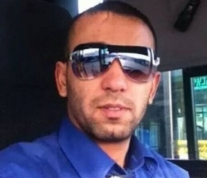 JERUSALEM – A Palestinian bus driver was found hanged to death at a terminal northwest of Jerusalem late Sunday.
Yusuf Hasan al-Ramouni, 32, from al-Tur in East Jerusalem was a driver with Israeli company Egged. He was found hanged inside his bus at the Har Hotzvim terminal near Jerusalem.
Witnesses told Ma’an that other drivers saw al-Ramouni’s bus parked in the bus terminal during his working hours. A driver checked inside the bus and found al-Ramouni’s body hanging from a steel bar in the middle of the bus.
His colleagues cut the body down and he was taken to Hadassah hospital. Medics at the bus station tried to resuscitate him but he was later pronounced dead.
“According to an initial investigation, it appears there is no suspicion of criminal activity, in other words a suicide,” Israeli police spokeswoman Luba Samri said in a statement, which said there were “no signs of violence on the body.”
But fellow bus driver Muatasem Fakeh said he had seen evidence to the contrary.
“We saw signs of violence on his body,” he told AFP.
“He was hanged over the steps at the back of the bus in a place where it would be impossible to hang yourself alone,” he added.
The victim’s brother, Osama al-Ramouni said the family did not accept the verdict of suicide, saying his body “had bruises on it,” suggesting he had been “tortured” before his death.
“My brother had children and was a happy man. It is impossible that he killed himself,” he told AFP.
“He had no problems that would make him do it,” he said, adding that a post-mortem would “reveal everything.”
“We reject the suicide theory. We all know it was settlers who killed him,” he said.
Several of al-Ramouni’s colleagues went on strike Monday in protest at his death.
An autopsy will be carried out later Monday. Al-Ramouni left behind a widow and two children.
Meanwhile, clashes broke out in the al-Tur neighborhood of East Jerusalem and Abu Dis following news of his death.

AFP contributed to this report
Muslim scholars’ union slams UAE ‘terrorist’ label
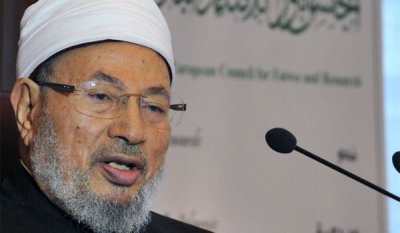
Yusuf Al-Qaradawi
MEMO | November 17, 2014
The International Union of Muslim Scholars (IUMS) expressed its surprise on Monday over the decision by the United Arab Emirates (UAE) to include the bloc on the country’s list of designated terrorist organisations.
In its statement, the union urged the UAE to “reconsider its unjustified position”.
The IUMS, established in 2004 and headed by Islamic scholar Yusuf Al-Qaradawi, was among 83 movements and organisations that were labelled terrorist groups by the UAE on Saturday.
Also included in the list were the Muslim Brotherhood, the Islamic State (ISIS), Yemen’s Shiite Houthi movement and the Egypt-based Ansar Beit Al-Maqdis militant group.
In its statement, the group said it rejects this labelling, asserting that since its establishment ten years ago, the IUMS “has promoted a moderate approach and discouraged extremism, terror and violence using cultural and educational means”.
“The IUMS has issued dozens of statements against terrorist and extremist groups,” it added.
On its website, the IUMS identifies itself as “an institution concerned with the call (Da’wah) to Islam by tongue, pen, and every contemporary legitimate medium; be it recorded, audio, or visual”.
“IUMS is not a local or a regional union, neither an Arab nor a national one, neither an eastern, nor a western union; rather, it represents all Muslims in the entire Islamic world, as well as all the Muslim [minority populations] and Islamic groups outside of the Islamic world.”
It also asserts that it “does not slant towards exaggerations and excesses, nor does it tilt towards default and negligence, but rather it adopts the centremost approach of the centremost Ummah (Islamic nation), an approach of mediation and moderation.”
The Egyptian-born Al-Qaradawi has been under fire by Egypt’s post-coup authorities for his vocal criticism of the military’s ouster – and subsequent imprisonment – of elected president Mohamed Morsi, a Muslim Brotherhood leader, last year.
Egypt branded the Brotherhood a “terrorist” movement late last year following the bombing of a security headquarters in the Nile Delta.
The label was attached to the movement amid a massive crackdown on its members, supporters and leaders on the streets of Cairo and other Egyptian cities and provinces.
Saudi Arabia also designated the Muslim Brotherhood a “terrorist” movement in March of this year, following in Egypt’s footsteps.
The UAE and Saudi Arabia were amongst the first countries to welcome Morsi’s ouster. Both countries – along with Bahrain – withdrew their ambassadors from Doha last March, accusing Qatar of interfering in their affairs.
Many observers, however, linked the rift to Doha’s perceived support for Morsi and the Muslim Brotherhood.
Yet, the three countries agreed on Sunday to return their ambassadors to the Qatari capital following a surprise Gulf summit in Saudi Arabia.
How Many Islamic State Fighters Are There?
By Ray McGovern | Consortium News | November 16, 2014
Why was I reminded of Vietnam on Saturday when Gen. Martin Dempsey, Chairman of the Joint Chiefs of Staff, visited Iraq to “get a firsthand look at the situation in Iraq, receive briefings, and get better sense of how the campaign is progressing” against the Islamic State, also known as ISIS or ISIL?
For years as the Vietnam quagmire deepened, U.S. political and military leaders flew off to Vietnam and were treated to a snow job by Gen. William Westmoreland, the commander there. Many would come back glowing about how the war was “progressing.”
Dempsey might have been better served if someone had shown him Patrick Cockburn’s article in the Independent entitled “War with Isis: Islamic militants have an army of 200,000, claims senior Kurdish leader.”
Fuad Hussein, the chief of staff of Kurdish President Massoud Barzani, told Cockburn that “I am talking about hundreds of thousands of fighters because they are able to mobilize Arab young men in the territory they have taken.”
Hussein estimated that Isis rules about one-third of Iraq and one-third of Syria with a population from 10 million to 12 million over an area of 250,000 square kilometers, roughly the size Great Britain, giving the jihadists a large pool of potential fighters to recruit.
While the Kurdish estimate may be high – it certainly exceeds “the tens of thousands,” maybe 20,000 to 30,000 that many Western analysts have claimed – the possibility that the Islamic State’s insurgency is bigger than believed could explain its startling success in overrunning the Iraqi Army around Mosul last summer and achieving surprising success against the well-regarded Kurdish pesh merga forces, too.
So, on his flight back to Washington, Dempsey will have time to ponder whether he has the courage to pass on this discouraging word to President Barack Obama about ISIS or whether he will put on the rose-colored glasses like an earlier generation of commanders did about Vietnam, where Westmoreland insisted that the number of enemy Vietnamese in South Vietnam could not go above 299,000.
Unfortunately, those obstinate Vietnamese Communists would not observe that artificial, politically inspired limit. Westmoreland was aware of the troubling reality but knew that acknowledging it would have undesired consequences in the United States where many Americans were souring on the war.
The inconvenient truth finally became abundantly clear during the Tet offensive in late January and early February 1968, but still the misbegotten war went on, and on, ultimately claiming some 58,000 U.S. lives and millions of Vietnamese.
Westmoreland’s gamesmanship with the numbers was known to some CIA officials – first and foremost, a very bright and courageous analyst named Sam Adams – but CIA Director Richard Helms silenced them out of fear of political retribution. “My responsibility is to protect the Agency,” Helms told them, “and I cannot do that if we get into a pissing match with a U.S. Army at war.”
Today’s CIA Director John Brennan is similarly at pains to protect the Agency on a number of fronts. Is he likely to tell the truth about ISIS if it means the prospects for a renewed war in Iraq and a new war in Syria are especially grim? If not, are there no Sam Adamses left at the CIA?
Honest Analysts?
Honest intelligence analysts played a key role in the November 2007 National Intelligence Estimate, “Iran: Nuclear Intentions and Capabilities,” which helped thwart Bush/Cheney plans to apply Iraqi-type “shock and awe” to Iran during their last year in office. The NIE concluded, unanimously and “with high confidence,” that Iran had stopped working on a nuclear weapon in late 2003.
In his memoir, Decision Points, President George W. Bush called the NIE’s findings “eye-popping.” He openly bemoaned how the estimate deprived him of the military option, writing “How could I possibly explain using the military to destroy the nuclear facilities of a country the intelligence community said had no active nuclear weapons program?”
The NIE on Iran was issued seven years ago. One has to hope that a few honest analysts on the Near East have survived the CIA directorships of Michael Hayden, Leon Panetta, David Petraeus and John Brennan and have the courage to tell the truth about ISIS – including how U.S. military intervention now is swelling ISIS’s ranks, much as the Bush/Cheney invasion of Iraq in 2003 created the conditions for the group’s birth, then called “Al-Qaeda in Iraq.”
If honest intelligence analysts are silenced, as Sam Adams was 47 years ago, they need to plumb their consciences and see if they have the guts to make public both the undercounting of enemy forces AND the fillip given to their multiplication by further U.S. military involvement.
Though having worked within the system to get the real enemy troop estimates to senior U.S. officials, Sam Adams went to an early, remorse-filled death, unable to overcome the thought of what might well have happened to shorten the war if he had broken with the CIA’s demands for secrecy and made the actual enemy numbers public.
Possibly, the armed conflict might have ended in 1968. Or, to put it another way, the Vietnam Memorial in Washington would have no need for a western wall since there would be no names to chisel into the granite.
If Gen. Dempsey decides to ape Westmoreland and dissemble about the realistic obstacles to military success against the Islamic State fighters and about the counterproductive effects of U.S. intervention, well, our country will need a new Sam Adams willing, this time, to blast the truth into the open.
Sam Adams Associates for Integrity in Intelligence
Sam Adams’s memory is invoked each year as Sam Adams Associates for Integrity in Intelligence make their annual award for integrity. SAAII is a movement of former CIA colleagues of former intelligence analyst Sam Adams, together with others who hold up his example as a model for those in intelligence who would aspire to the courage to speak truth to power.
SAAII confers an award each year to a member of the intelligence community or related professions who exemplifies Sam Adam’s courage, persistence and devotion to truth — no matter the consequences.
It was Adams who discovered in 1967 that there were more than a half-million Vietnamese Communists under arms — roughly twice the number that the U.S. command in Saigon would admit to, lest Americans learn that claims of “progress” were bogus.
Gen. Westmoreland had put an artificial limit on the number Army intelligence was allowed to carry on its books. And his deputy, Gen. Creighton Abrams, specifically warned Washington that the press would have a field day if Adam’s numbers were released, and that this would weaken the war effort.
A SECRET/EYES ONLY cable from Abrams on Aug. 20, 1967, stated: “We have been projecting an image of success over recent months,” and cautioned that if the higher figures became public, “all available caveats and explanations will not prevent the press from drawing an erroneous and gloomy conclusion.”
The Communist countrywide offensive during Tet made it clear that the generals had been lying and that Sam Adams’s “higher figures” were correct. Senior intelligence officials were aware of the deception, but lacked the courage to stand up to Westmoreland. Sadly, Sam Adams remained reluctant to go “outside channels.”
A few weeks after Tet, however, former Pentagon official Daniel Ellsberg rose to the occasion. Ellsberg learned that Westmoreland was asking for 206,000 more troops to widen the war into Cambodia, Laos, and North Vietnam — right up to the border with China, and perhaps beyond.
Someone else promptly leaked to the New York Times Westmoreland’s troop request, emboldening Ellsberg to do likewise with Sam Adams’ story. Ellsberg had come to the view that leaking truth about a deceitful war would be “a patriotic and constructive act.” It was his first unauthorized disclosure. On March 19, 1968, the Times published a stinging story based on Adams’s figures.
On March 25, President Lyndon Johnson complained to a small gathering, “The leaks to the New York Times hurt us. … We have no support for the war. This is caused by the 206,000 troop request [by Westmoreland] and the leaks. … I would have given Westy the 206,000 men.”
On March 31, 1968, Johnson introduced a bombing pause, opted for negotiations, and announced that he would not run for another term in November.
Sam Adams continued to press for honesty and accountability but stayed “inside channels” — and failed. He died at 55 of a heart attack, nagged by the thought that, had he not let himself be diddled, many lives might have been saved. His story is told in War of Numbers, published posthumously.
Ray McGovern works with Tell the Word, a publishing arm of the ecumenical Church of the Saviour in inner-city Washington. He was a close colleague of Sam Adams; the two began their CIA analyst careers together during the last months of John Kennedy’s administration. During the Vietnam War, McGovern was responsible for analyzing Soviet policy toward China and Vietnam.
Featured Video
The Source of America’s Wars – Kristol Clear
or go to
Aletho News Archives – Video-Images
From the Archives
Is Israel to blame for the Iraq War?
American Goy | March 10, 2008
I am so tired of this old canard that “Israel had nothing to do with USA’s war with Iraq – in fact, it officially advised America against it”.
Bullshit. … continue
Blog Roll
 Aletho News
- Ceasefire for all or for none: Iran shuts Hormuz over Lebanon attacks
- Strait of Hormuz is Iran’s ‘nuclear weapon’ that forced US retreat: Medvedev
- Energy crisis will last for months – Kremlin envoy
- Europe’s quiet role in the war on Iran
- Forty days that shook the Empire: How Iran turned the tables on US and prevailed
- Netanyahu unilaterally declares Lebanon outside of ceasefire deal
- Israeli leaders: ‘Not a single goal’ achieved in war with Iran
- What on earth just happened? Trump, Iran, and the unlikely ceasefire
- Alberta Bill Would Fine Political Deepfakes $10,000 Without Satire Exemptions
- Iran declares ‘historic victory’ over US, says enemy forced to accept its proposal
- If Americans Knew
- Gazans face a triple crisis: severe shortages of water and bread, healthcare in tatters
- NY Times reports how Netanyahu took the US into Iran War
- A sigh of relief over Iran, but Gaza and Lebanon in dire straits – Daily Update
- Thousands dead and neighborhoods razed to the ground: Aid agencies fear southern Lebanon is becoming the new Gaza
- The war the US is fighting for Israel could cost trillions
- ‘Cigarette Burns, Nail Wounds’: Toddler Tortured in Gaza to Coerce Father
- Trump Says US Sent ‘a Lot of Guns’ to Protesters in Iran
- Israeli forces destroy 17 UN peacekeeper cameras in south Lebanon
- US-Israeli strikes ‘completely destroy’ synagogue in Tehran
- Archbishop for US Military Says Iran War Is Unjust Under Catholic Teaching
- No Tricks Zone
- An Inconvenient Tree: Uncovered In Alps… Europe Much Warmer Than Today 6000 Years Ago
- New Study Reports A 60% Slowdown In Greenland’s Ice Loss Rate In The Last Decade
- Low Intensity Tornado Wrecks Major Solar Farm, Creating A Potential Toxic Dump
- New Study Finds Warming Saves Lives…Cold Temperatures 12 Times More Deadly Than Excess Heat
- German Science Blog Accuses PIK Climate Institute Of Hallucinating Climate Tipping Points
- Devastating Assessment Of Comirnaty Vaccine By Former Senior Pfizer Europe Toxicologist
- New Study: CO2 Is ‘Effectively Negligible’ As An Explanatory Climate Change Factor Since 2000
- Former Pfizer Toxicologist Dr. Helmut Sterz Tells Bundestag Hearing Pfizer Vaccine Should Have Never Been Approved
- Energy Expert: Germany’s Nuclear Phaseout Was A “500 Billion Euro Mistake”
- New Research: South Australia’s Mid-Holocene Sea Surface Temperatures Were 4°C Warmer Than Today
 Aletho News