U.S. Intelligence Agencies Mock America in 9/11 Trial
By Kevin Ryan | Dig Within | June 13, 2015
Last year, it was discovered that the FBI had attempted to infiltrate the legal defense team of a Guantanamo Bay prisoner. The defendant is charged, along with four others including Khalid Sheik Mohammed (KSM), of conspiring to commit the 9/11 attacks. As a result, the military trial was moved out for approximately one year to allow for an investigation into the FBI’s offense. Recently, Al-Jazeera reported that the trial has been moved out yet again because the Department of Justice team leading the investigation (of its own bureau) needs more time to complete its secret report. These delays highlight the absurdity of the case against these men and the contemptible abuse of justice that the military trial represents.
 Apparently, it has been difficult for the Justice Department to explain why the FBI approached a member of defendant Ramzi bin al-Shibh’s legal team to “create a relationship with him that he was forbidden from disclosing.” That explanation became more difficult when it was learned that another member of Bin al-Shibh’s defense team had been cooperating with the FBI since late 2013.
The FBI infiltration of the Bin Al-Shibh defense team is just the tip of this anti-justice iceberg, however. In February, it was revealed that a translator assigned to help defend the accused was a CIA operative. That’s one way to ensure that the official account of 9/11, created entirely through torture testimony and secret evidence provided by the CIA ad FBI, would not be contradicted by defendant testimony. More was needed, however, as previous disclosures showed that the CIA was controlling audio feeds from the courtroom, bugging the rooms where the accused met with their lawyers, and censoring the lawyers. Additionally, hundreds of thousands of confidential defense team emails were provided to the prosecutors.
The military trial of these men was never expected to bring justice. But the absurd actions taken by the CIA and FBI have made the whole thing seem ludicrous, mocking the U.S. justice system. Why would these measures be needed and tolerated if the defendants were actually involved in 9/11? The reasons include that:
- The charges against the defendants were largely established based on torture testimony, the records of which were destroyed by the CIA. That was after the agency misled the 9/11 Commission about the existence of the records.
- Bin al-Shibh and KSM were both originally identified by the first torture victim, Abu Zubaydah. However, the government now says that Zubaydah was never associated with al Qaeda at all and therefore he could not have known what the government previously said he knew. In other words, the arrest and torture of Bin al-Shibh and KSM were initiated by way of a fictional account attributed to Zubaydah.
- 9/11 Commission leader Lee Hamilton suddenly can’t recall anything about these torture victims or his use of their testimony (441 times) in the 9/11 Commission Report.
- KSM’s behavior prior to 9/11 was reported to be very different from that of a Muslim. He enjoyed go-go dancers and drinking parties and was said to be dangerous to nothing but his own bank account. The playboy lifestyle of KSM was similar to that of alleged hijacker ringleader Mohamed Atta, who seemed to be protected by U.S. authorities and might have been an intelligence asset.
- One of the defense team lawyers resigned from the Army in protest of what was happening. He accused the U.S. government of “stacking the deck against the defense” and conducting a “show trial.”
One reasonable explanation for why the CIA and FBI have gone to such great lengths to control this trial is that the agencies are trying to cover-up their own role in 9/11. Much has been learned that suggests the CIA and FBI were involved. For example:
- There are many examples of (admitted) government-sponsored terrorism.
- It is known that the FBI manufactures terrorism.
- FBI director Louis Freeh is a 9/11 suspect.
- CIA director George Tenet facilitated the 9/11 crimes.
- U.S. intelligence agencies continue to lie about their “response” to 9/11.
Whatever the reason for the antics, the military trial of these men has become an absolute farce leading American society farther down a path of tyranny. It sets a precedent in which the CIA and FBI can be suspected of crimes against the nation and then charge others with those crimes using secret evidence. The accused can be held in seclusion for thirteen years until agents of the CIA and FBI insert themselves as defense team members, ensuring total control from start to end.
At the same time, the press never notices that such an obviously fake trial would not be needed if there were actually any legitimate evidence against the accused. All things considered, this trial is not only a travesty of justice, it makes a mockery of 9/11 and brings shame upon the American people.
Leading Sunni group rejects further deployment of US and British troops in Iraq
MEMO | June 13, 2015
450 more US troops are currently being deployed to Iraq, while Britiain is said to be planning a deployment of an additional 125 military trainers
The Muslim Scholars Committee in Iraq condemned on Friday US and British plans to send additional military trainers to the country, stressing this is “not a useful measure”, Quds Press has reported.
On Wednesday, Reuters said that President Barack Obama has ordered the deployment of 450 more US troops to Iraq’s Sunni heartland to advise and assist fragile Iraqi forces being built up to try to retake territory lost to ISIS. Britain, it was reported, planned to deploy an additional 125 military trainers.
Several other countries, including France, Australia, Sweden and Norway have already sent advisers for the same purpose.
The scholars’ statement said that such international efforts have no beneficial effect because they “turn around the real reasons for the conflict and do not treat them.”
Russia and China support Sudanese demand for UNAMID withdrawal from Darfur
MEMO | June 13, 2015
A Sudanese diplomat revealed on Friday that Russia and China are supporting the demand for the UN-African Union Mission in Darfur (UNAMID) to be withdrawn from the area, Quds Press has reported.
According to Sudanese Radio, Foreign Minister Ibrahim Ghandour met with the Russian and Chinese ambassadors in Khartoum separately. After discussing the latest developments in the issue he told the ambassadors that the Sudanese, US and African committee had reached “positive understandings” regarding the UNAMID exit from Darfur.
Ghandour criticised the statement about Sudan presented by UN Secretary General Ban Ki-moon to the Security Council on Thursday. He said that Ban’s report sought to confuse the issue by mentioning irrelevant incidents and conflicts that have little bearing on international peace and security.
Ban, added Ghandour, also referred to the battle with the Justice and Equality movement, without referring to the fact that these rebel forces entered from a neighbouring country which has provided all types of assistance to them, in violation of international law. Positive developments like the general amnesty declared by the president of Sudan, who welcomes anyone to join the peace process and negotiations, were omitted by the UN chief, he added.
South African court prevents Sudan’s al-Bashir from leaving country
MEMO | June 14, 2015
A high court in South Africa issued an interim order Sunday preventing Sudanese President Omar al-Bashir from leaving the country.
Al-Bashir is currently in South Africa attending the 25th African Union Summit that is underway in Johannesburg.
The South African court will decide later on Sunday whether or not to hand the Sudanese leader over to the International Criminal Court, which issued an arrest warrant against al-Bashir in 2009.
He is accused of committing war crimes and crimes against humanity in Sudan’s Darfur region.
Pretoria High Court Judge Hans Fabricus issued the order on Sunday after the Southern Africa Litigation Centre submitted an application calling for the Sudanese leader’s arrest.
Amnesty International also appealed to South Africa to arrest al-Bashir.
“Al-Bashir is a fugitive from justice. If the government of President Zuma fails to arrest him, it would have done nothing, save to give succor to a leader who is accused of being complicit in the killing of hundreds of thousands of people in a conflict,” said Netsanet Belay, Amnesty International’s Research and Advocacy Director for Africa, late Friday.
“As soon as he lands in South Africa, the authorities must arrest al-Bashir and ensure that he is transferred to the International Criminal Court,” Belay said in a press release to Anadolu Agency.
South Africa is a signatory to the Rome Statute that formally established the International Criminal Court, which means they can arrest anyone accused of committing genocide, crimes against humanity, war crimes or crimes of aggression.
However, experts believe it will be difficult for South Africa to effect al-Bashir’s arrest when he sets foot on their territory because he is a guest of the African Union and not the government of South Africa.
“It would be unfortunate if South Africa arrested any African head of state wanted by the International Criminal Court because they accepted to host all leaders,” international relations expert Tom Wheeler told Anadolu Agency in an earlier interview.
South African government officials have thus far refused to comment and instead requested that questions be directed to the continental body.
East Must Provide Alternative to, Not Replace Western Hegemony
By Ulson Gunnar – New Eastern Outlook – 14.06.2015
Recent news has shown China quickly gaining ground against a West which has for centuries maintained hegemony over Asia Pacific. Beyond Asia, China has been steadily expanding its influence throughout Africa and the Middle East. Together with Russia, Iran and other nations of the “East,” they are constructing what is commonly referred to as a “multi-polar” world order.
This multi-polar world order stands in contrast to the unipolar order the West has sought to impose for decades after the end of the World Wars and is a continuation of Western imperialism carried out by the British and other European empires during the decline of the Ottoman Empire.
But is what the East doing truly building an alternative to the West’s brand of hegemonic imperialism? Or is it simply more of the same under a different label? Moreover, is the West’s behavior coaxing other nations to unify under a singular, consolidated banner, only to be rolled under the West’s vision of an international order ruled from Washington, Wall Street, London and Brussels?
These are questions that must be asked and explored particularly by the people who gravitate toward the East the most. They understand the threat of Western hegemony and the very real damage it has and still is inflicting upon humanity. From the devastation of Iraq and Afghanistan, to the wars raging in Yemen, Syria and Libya, Western designs have taken unstable tinderboxes around the globe and turned them into raging infernos.
Naturally, people look for a force to counter such inhumane violence, bloodshed and shameless exploitation and manipulation. They see that counter in Russia, China and those in their spheres of influence. And while in the past these nations have indeed served as counterweights to the forces of fascism or imperialism, one must always be careful not to simply back one hegemon over another.
For Moscow, Beijing and across the other BRICS nations, they must understand that the support and success they enjoy is specifically because they offer what many believe is an alternative to, not a replacement for Western hegemony. The world sees BRICS as a viable alternative specifically because they are not setting up military bases in foreign lands, intervening militarily thousands of miles from their borders and working with nations instead of coercing them. As soon as they cease to uphold these principles, they will cease to serve as a relevant alternative to the West.
China in particular has been long criticized by the West for doing business with any nation regardless of their so-called human rights record. The West however, makes these criticisms because it disrupts their ability to exploit human rights as a pretense to meddle diplomatically, militarily and economically in any targeted country. Meanwhile, the West gladly has conducted long-term business with the most egregious human rights offenders on Earth, the Saudi regime chief among them.
China has repeatedly, sometimes even painfully reasserted the primacy of national sovereignty in ruling over all international relations. It must not only continue to reassert this message diplomatically, but also pragmatically throughout its foreign policy. Not only is it a matter of self-interest, preventing foreign interests from dictating to Beijing what it should do within its own borders, but it helps set a solid precedent in establishing a new multi-polar global order.
Supranational Institutions Old and New
Russia, China and the rest of BRICS are themselves creating a variety of supranational institutions and military alliances to compete against those of the West, particularly the IMF, World Bank, NATO, and even the UN itself. However, while doing this, they must ensure the preservation, even the encouragement of national sovereignty as the primary organizing principle among these new institutions. And not just on paper, but especially in practice, whether it suits BRICS at the moment or not.
This is because whether those special interests behind BRICS and standing in apparent opposition to the West realize it or not, the very reason they have been given an opportunity by the global public is specifically because they are perceived as being different from the West and the Western way of using their global wealth and influence. And whether it serves their interests immediately or fully, they must fulfill these expectations or suffer the same backlash the West is now facing, both at home and abroad.
The world is changing economically, technologically and culturally. These shifts have not boded well for the concept of “globalization” or even supranational institutions. To seek to create doppelgangers of existing and failing Western supranational and international institutions seems folly at best.
Understanding this, and balancing competition with the West’s existing and still potent institutions, against the changing dynamics of the coming future is essential for the survival and eventual success of BRICS and the multi-polar world they claim to want to create.
A world where technology now empowers one individual to do what once required many people and tremendous resources, constitutes a shift in the balance of power between local communities, nations and global alliances and power brokers. Even if the people have yet to realize this, they will soon. The future of BRICS depends on a collective understanding that fighting this coming shift will lead BRICS to the same cliff the West is currently dangling over.
For the people themselves, they must understand that they have always been in the driver’s seat, even if insidious hands have reached past them to take the wheel for the majority of this trip. Realizing that the people, not special interests have the ability to steer the world toward a path we would all like to see it on is our greatest bet. We need not obsessively support one bloc over another, subscribing almost religiously to political parties, personalities and brands, but should instead agree on a set of principles and only back those as long as they uphold those principles.
By attaching ourselves to political parties, personalities and brands, we stand only to be inevitably disappointed. On the other hand, principles are inextinguishable, indomitable and everlasting. In the ongoing game of geopolitics, if ever we want to finally break the continuous turning of the wheel of history, we must stop following those whose hands are turning that wheel, and follow the principles that always and forever lead forward.
When Russia, China and the rest of BRICS stand up for national sovereignty, non-interventionism and non-military expansionism, we should applaud them not because they are simply BRICS, but because of the principles they are upholding. When they fail to do so, we must also, and as equally as vocal, condemn them.
Not Over Yet: Some Tough Votes Ahead on Fast Track
By Kevin Zeese and Margaret Flowers | Flush the TPP | June 13, 2015
While we all cheered the failure (TAA) to pass Trade Adjustment Assistance in the hope that its defeat would stop Fast Track, the House quickly voted to pass Fast Track Trade Promotion Authority (TPA) with 219 votes (218 is a majority but there were some abstentions). This situation means that the House and Senate have not passed identical versions of Fast Track (because the Senate version includes TAA) so Fast Track cannot go to the President’s desk yet to be signed into law. There are several possible scenarios ahead that leave the outcome of the fight against Fast Track uncertain.
While much of the media described today’s votes as a complete victory for those who oppose Fast Track and the Obama trade agenda, the fact is that we have some difficult challenges ahead. We won an important battle, and it was a tremendous victory especially when it is considered that President Obama did all he could including a special trip to the Congress for a private meeting with the Democratic leadership and the entire Democratic Caucus.
But, it is not over. Speaker Boehner called for reconsideration of TAA and a re-vote is supposed to happen within two legislative days so there may be another vote as early as Monday afternoon. We need to hold the line on TAA to prevent any form of TAA from passing the House and prepare for a vote in the Senate if a new form of TAA passes or if the TPA bill passed in the House goes back to the Senate without TAA.
Possibilities in the House
Since we won by a large majority on TAA in the House with a vote tally of 302 to 126 (76 vote difference), it is unlikely (but not impossible) that the current form of TAA would pass in a re-vote. No doubt this weekend President Obama is working overtime to convince Democrats to change their vote and Majority Leader Boehner is looking for Republicans to go against their views and vote for TAA. One Member told us after today’s vote that it is now a game of numbers. Politico does the numbers:
House Republican leaders say they have 100 votes for TAA, and Democrats would need to provide 118 if another vote happens. On Friday, Democrats provided 40 votes for TAA, while 86 Republicans supported it. In other words, Democrats would need to essentially triple their vote total to pass the measure.
If increased Democratic support cannot be achieved, passage would very likely require a mixture of Republicans voting for TAA in order to pass Fast Track and Democrats changing their position because they do not want to embarrass the president. Today, many of the “no” votes came after TAA failed to get a majority and everybody knew it would fail so they voted “no” or switched their vote to “no”. How firm are the votes of those who joined in after it had already failed? If the current TAA is not amended and it passes in the re-vote, there would be no need for any further action in the Senate and Fast Track would become law.
If the re-vote fails, a second possibility is for TAA to be re-written and voted on as a new bill in order to gain majority support. There were three problems with the current form of TAA: (1) Funding TAA by Medicare cuts; (2) Too small a budget; and (3) Failure to cover all workers, especially public workers.
The Medicare cuts were most significant in that almost no Democrat wants to be on record voting against Medicare. Prior to the vote, leadership of both parties came up with an alternative source of revenue (tax enforcement revenue). If this were written into a new TAA, the Medicare problem could be solved. It is not clear how real these tax enforcement dollars are so House leadership could also expand the budget for TAA and solve the budget problem as well. These two changes alone might be enough to gain a lot of Democratic votes. These changes would probably not lose a lot of Republican votes; in fact, Republican leadership still might be able to convince a group of Republicans to vote for TAA in order to get Fast Track passed.
The third problem is a significant one especially since under the Trade In Services Agreement (TISA) public workers will be threatened. For example, TISA could result in privatizing the US Postal Service which is the nation’s second-largest civilian employer after Wal-Mart with about 536,000 career workers. Adding public workers to TAA would require additional funding since more workers would be covered and this might be unpopular with Republicans.
If TAA is amended and passed in the House, the Senate would have to vote again – the House bill could either go to the Senate and be voted on as an original bill; or it could go to a conference committee where differences would be ironed out and then both chambers (House and Senate) would have to hold a re-vote.
We want our allies in the House to vote “no” on TAA no matter what kind of amendments are made to the bill. Now that TPA has passed, stopping TAA is critical for stopping Fast Track. The House TPA (Fast Track) without TAA would be much more difficult to pass in the Senate. Our goal in the House is for TAA bill to be defeated.
The Senate
When TPA came before the Senate, it was bundled together as one bill with TAA. It took a 62-38 vote to end debate on the bill and allow it to move forward. Other than Senators Collins (R-ME), Lee (R-UT), Paul (R-KY), Sessions (R-AL), Shelby (R-AL) and Enzi (R-WY) (who did not vote), all Republicans voted for the bill. In order to stop TPA in the Senate on a re-vote, three additional votes would be needed to prevent the new bill from reaching 60 votes and passing.
One possible scenario is that the House fails to pass TAA and sends a TPA bill to the Senate without TAA. This would be the most likely scenario that would lead to failure in the Senate. There were many Senators who insisted on TAA being included, indeed, some wanted a larger TAA. In addition, Senator Maria Cantwell (D-WA) was promised that the Export – Import Bank would be renewed in order to get her vote, that promise was not fulfilled so she is a possible “no” vote if this returns to the Senate.
The other possibility is that the House passes TAA in its present form or a new version. This would make it very difficult to stop TPA in the Senate. Other than Cantwell, it is hard to see who would change their vote. Senator Lindsay Graham (R-SC) had insisted that currency manipulation be included in the TPA. It wasn’t but he voted for the TPA anyway. Perhaps now that he is running for president, he might vote against TPA.
Our Task
The immediate task is to pressure Members of the House of Representatives to oppose any form of TAA.
Once again the Congress needs to be flooded with phone calls from across the political spectrum. The populist rebellion that has been taking place, especially during the last week, needs to continue so that Members of Congress know that they are risking their future election if TPA becomes law and rigged corporate trade agreements are given an easy path to becoming law.
It is also important to remind Members while they are home this weekend that you want them to vote “no” on TAA. Here is a link to a list of those Members who voted “no.” Thank your Member if she or he voted “no” and tell her or him to stay strong and not to compromise. Perhaps there will be an opportunity to reach her or him at a public event this weekend.
The Rigged Trade Rebellion was outside the Capitol all week. Once the vote was announced on Wednesday it became a 24 hour a day encampment until the vote on Friday.
The Popular Resistance Rapid Response Team will return to Capitol Hill on Monday to continue the Rigged Trade Rebellion. If you are able to make it to DC, we encourage you to come. This is a critical time to make the opposition to Fast Track highly visible. We have been staying at the corner of Independence Ave and New Jersey Ave SE so that we can speak to Members as they walk back and forth between their offices and the Capitol for votes.
One staffer mentioned to us that Members sometimes decide how they will vote just minutes beforehand. It could be that seeing your sign or speaking with you just prior to a vote could make a difference in what they do.
We still have the possibility of stopping Fast Track. Let’s put it over the edge in the next few weeks. You can follow the work to stop Fast Track at www.FlushtheTPP.org. And contact gro.ecnatsiseRralupoP@eiznekcaM if you have questions or are planning to come to DC.
Podemos supported anti-establishment mayors take control of Madrid & Barcelona
RT | June 14, 2015
Left wing party coalition leaders have been sworn in as mayors of Madrid and Barcelona, assuming control of the Spain’s two largest cities. This is yet another case of parts of Spain showing their opposition to the country’s conservative rule.
In the Spanish capital, a 71-year-old former judge, Manuela Carmena has put an end to the 24 years of conservative mayorship. She defeated her rival, 63-year-old Esperanza Aguirre from the People’s Party, in what proved to be a very close race.
The new mayor managed to claim 20 seats in the city chamber during the May 24 vote against Aguirre’s 21. However, Carmena managed to forge an alliance with the main opposition Socialist Party to secure victory. She was officially elected mayor by 29 of the 57 council representatives on Saturday morning.
Carmena, a former communist and rights activist, promised to improve the living conditions for the poor, who have been struggling since the 2008 financial crisis. She also echoed the calls of the massive Indignados (Outraged) protest movement that was formed in 2011 to fight corruption, government spending cuts and evictions.
“We are at the service of the citizens of Madrid. We want to govern by listening. We want them to call us by our first names,” Carmena said after being voted in.
Among her chief promises to the electorate are the development of public transport and increased support for poor families. She has promised to slash her salary by more than half to €45,000 ($51,000).
In Barcelona, 41-year old Ada Colau, an active protest leader, has become the city’s first female mayor. She rose to publicity after helping to organize the Platform for People Affected by Mortgages (PAH) movement, in Barcelona in 2009, to defend citizens against evictions caused by the collapse of the Spanish property market.
“Thank you for making possible something that had seemed impossible,” said Colau, representing the Barcelona en Comu party, after being elected mayor.
Her administration will now draft a list of 30 measures aimed at creating jobs and fighting corruption. Along with her colleague in Madrid, Colau announced that she will slash her salary from €140,000, down to €35,000.
Both Carmena and Colau secured victory during the May 24 local elections with the support of Pomedos, a new pro-worker and anti-establishment party that emerged last year.
Parties born out of the Indignado protest movement now rule five major Spanish cities: Madrid, Valencia, Zaragoza, Cadiz, and Barcelona.
The latest success of anti-establishment candidates in the two largest Spanish cities shows a major shift in the country’s politics, and erosion of the bipartisan system. The Popular Party and the main opposition Socialist Party together won just over half of the vote on May 24. The rest of the seats at the local elections went to candidates representing smaller populist parties who are demanding change.
Attacks on fishermen continue in Gaza
By Valeria Cortés | International Solidarity Movement | June 13, 2015
Gaza, Occupied Palestine – During the last weeks, the Israeli military has been shooting at the fishermen of Gaza almost daily with rubber coated steel-bullets and live ammunition. They also kidnapped 15 fishermen. Three of the injured and seven of the kidnapped belong to the Baker family, who are also the family of the 4 boys who were murdered by the Israeli military while they were playing football on the beach during the last massacre in Gaza. Yesterday, in Deir el Balah, the army stole 37 fishing nets and today the shooting went on all along the Strip.
ISM met some of the recently released fishermen from Baker family.
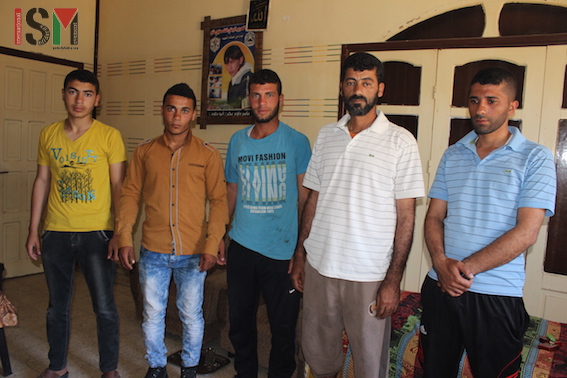
One of members of the family is Ziad Fahed Baker, 21 years old. Three weeks ago, he left the port on his small boat along with four other fishermen. As they were fishing at less than three miles away, the Israeli navy approached and ordered them to leave without taking the nets with them. They answered that they would leave but not without the nets. Ziad knew that abandoning the nets would leave his family without any income, so they ignored the soldiers and started collecting them. At this point the soldiers shot Ziad in the leg, and the 5 fishermen decided to flee to the port. Unfortunately the Israeli gunboat followed them and when they were just a mile and a half from the shore shot the engine of Ziad’s boat. With the boat stopped they ordered Ziad and the other four fishermen, two of whom were also injured, to swim towards their ship. Once in the gunboat they were blindfolded and handcuffed to a metal bar, “What are they afraid of? That we would leave flying?”

They were then taken to Ashdod, where Israeli forces subjected them to the usual routine of insults and humiliations before sending them back to Gaza.
They also explain how the Israeli military bombs the waters where they are working in order to scare away the fish and how the blockade prevents the entrance of all the tools needed for their activity, engines, fiber glass, hooks…
From the 1500 boats that laboured in the past, just 150 are still working today. This year the income of the fishing sector has decreased an 80% regarding the past year.
Ziad’s cousin, Mohamed Zied Baker, 30 years old, was also attacked last week while labouring in Sudania, north of Gaza. They ordered him to stop, shot him with rubber-coated steel bullets, kidnapped him and once in the Israeli boat they handcuffed him and stepped on his head with their boots.
Ziad, Mohamed, Fahed, Walid and Emad – this one, just 16 years old, also got shot with live ammunition and kidnapped – have similar stories to tell.
“They are now targeting the youngest fishermen, almost children”. “They want to scare us, but they can’t, we are Palestinians”.
Photos by Valeria Cortés
Jeb Bush’s Tangled Past
By Chelsea Gilmour | Consortium News | June 12, 2015
Making lots of money was very important to Jeb Bush. In 1983, he was famously quoted by a Miami News reporter saying, ”I’d like to be very wealthy, and I’ll be glad to let you know when I think I’ve reached my goal.” But the manner in which he has acquired his wealth, currently estimated between $8 million and $10 million, has raised many red flags and even allegations of wrongdoing.
Trading on his family name, Jeb Bush wove a spider’s web of business partners and deals based on family connections and (sometimes shadowy) business transactions. His associates ranged from Miami organized crime figures to Washington and Wall Street insiders. He experimented in various areas from real estate to international sales to investing in an NFL team.
By all accounts, Jeb Bush is a hard worker putting in long hours. But he is also a privileged individual whose success has its foundations in his family name. And his tangle of business affairs since 1974 is nothing if not entitled and convoluted.
Following graduation from the University of Texas at Austin in Latin American Studies in 1973, Jeb Bush went to work with the international division of the Texas Commerce Bank. As the St. Petersburg Times reported, an executive at the bank, James A. Baker III, was a close friend of Jeb’s father and would later run George H.W. Bush’s presidential campaign before becoming the Secretary of the Treasury under Ronald Reagan and Secretary of State under Bush Sr.
Three years later the 24-year old Jeb was sent to oil-rich Caracas, Venezuela, to open a new operation of the bank, managing hundreds of millions of dollars. While there, he rubbed elbows with executives such as Lady Bird Johnson, the widow of President Lyndon Johnson, a director of the bank.
In 1979, Jeb Bush quit his banking job and moved his family back to the United States to help on his father’s presidential campaign. Though he worked as an unpaid volunteer on the campaign, he received some compensation for his time: he forged a robust network of political and business connections which would serve him well over the next decades in his self-proclaimed quest to make money.
After the 1980 election – which made his father Vice President – Jeb Bush moved to Miami, Florida, where he became involved in the business and political world of the city, dominated at the time by wealthy Cuban émigrés. Bush became associated with Armando Codina, a Cuban real-estate investor and Republican supporter of George H. W. Bush. Because of Codina’s personal affinity towards the Bushes, Codina offered Jeb a business partnership in his real-estate company.
With no prior real-estate experience and for no initial investment, Bush received 40 percent of the profits and had his name on the company, Codina Bush Group. In return, Codina got the prestige carried by the Bush family name. Their alliance would set Bush on track to build his wealth and business reputation.
By 1983, Bush had earned enough to start making small investments in the acquisition of properties with Codina. One of their first ventures was Museum Tower, located at 1390 Brickell Ave., on Miami’s “Banker’s Row.” Bush invested $1,000. By 1990 he sold out for about $346,000.
But the building proved to be a headache for Bush and Codina, as a third-party investor, who had borrowed over $4 million from a local savings and loan company, defaulted on the loan. A 1990 New York Times article describes how the savings institution became insolvent and eventually had to be bailed out by the federal government. Bush and Codina are quoted as being unaware that the funds for the $4 million repayment of the loan came from taxpayer money.
The Cuban Connection
Jeb Bush’s connections with other prominent Cuban-American businessmen and politicians in Miami before and during his Florida governorship are extensive. Some of these alliances have raised eyebrows and occasionally got him into trouble.
As the Guardian recounted from the 2002 book, Cuba Confidential: Love and Vengeance in Miami and Havana by Ann Louise Bardach, Jeb Bush, in 1984, “began a close association with Camilo Padreda, a former intelligence agent under the Batista dictatorship, overthrown by Fidel Castro. Jeb Bush was then the chairman of the Dade county Republican party and Padreda its finance chairman.” Later, Padreda would be convicted of “defrauding the housing and urban development department of millions of dollars during the 1980’s.”
In 1984, Bush was approached by Miguel Recarey Jr., the owner of International Medical Centers (IMC), a large health maintenance organization. The Tampa Bay Times described Recarey as a charming yet volatile personality who openly bragged about his connection to the crime boss Santo Trafficante Jr. Recarey allegedly approached Bush to help him acquire an office building, but received an additional bonus — numerous calls by Bush to Washington to request a waiver of Medicare rules that were threatening IMC’s profits.
Bush was paid $75,000 compensation for helping obtain a property. But sources told the St. Petersburg Times that it was repayment for Bush’s political help, as IMC never purchased a building shown by Codina-Bush – and Recarey received his sought-after federal waiver. In addition, two months before Bush placed calls to Washington, “in September of 1984, the Dade County GOP received a $2000 contribution from IMC,” reported the Miami News.
Two years later, IMC was shut down because it was insolvent and Recarey was accused of stealing millions of government dollars, along with multiple charges of bribery and fraud against the government. The Miami News reported in 1991, “By the time the organization collapsed in mid-1987, IMC and Miguel Recarey were receiving a $30 million check from the federal government each month. In fact, IMC was the biggest Medicare fraud scheme in American history.”
Recarey fled the country and remains an international fugitive. According to a Tampa Bay Times article last March, Recarey has been working as a technology executive in Madrid, Spain.
There was another facet to the Bush-Recarey relationship, described by the Guardian via Bardach’s 2002 book on the Cuba-Miami link. “In 1985, Jeb Bush acted as a conduit on behalf of supporters of the Nicaraguan contras with his father, then the vice-president, and helped arrange for IMC to provide free medical treatment for the contras.”
The Miami News continued, “When the Iran-contra scandal began to break in October 1986, the CBS Evening News and the Herald quoted unnamed officials as saying that Jeb had served as his father’s chief point of contact with the contra rebels. Jeb’s denials were narrow. He did not deny being his father’s liaison to the contras, only that he had not participated ‘directly’ in the illegal contra resupply effort directed from the White House.”
Contra Ties
Robert Parry, who in the mid-1980s was an Associated Press reporter investigating the Reagan-Bush administration’s secret support for the Contras, confirms Jeb Bush’s association with Contra supporters operating out of Miami. Parry recalls that one Nicaraguan businessman with close ties to both Jeb Bush and the Contras told Parry that Jeb Bush was getting involved with a pro-Contra mercenary named Tom Posey, who was organizing groups of military advisers and weapons shipments.
In 1988, Posey was indicted along with several other individuals on charges of violating the Neutrality Act and firearms laws, charges that were dismissed in 1989 when a federal judge ruled that the United States was not at peace with Nicaragua.
Jeb Bush was also instrumental in helping Cuban-American politician Ileana Ros-Lehtinen get elected to Congress in 1989 when he became her campaign manager. Besides managing and handling strategy, Jeb helped raise funds, including imploring then-President George H.W. Bush to appear at a Miami fundraiser for the congressional hopeful.
President Bush was quoted as saying, “I am certain in my heart I will be the first American president to step foot on the soil of a free and independent Cuba.” Returning the favor now, Ros-Lehtinen has publicly endorsed Jeb Bush for the 2016 presidential election.
There is also the troubling history of the Bush family connection to the Cuban drug kingpin, Leonel Martinez, as reported by the Miami News. Martinez left Cuba following the communist overthrow to continue his capitalist ventures and eventually became one of the most successful cocaine and marijuana importers in Miami during the 1980s. He was also a generous benefactor of the Republican Party.
“Between 1984 and 1987, Martinez and his wife Margarita donated at least $14,200 to political organizations controlled by the Bush family,” including the Dade County GOP, of which Jeb became chairman in 1984, and the vice presidential campaign fund of George H.W. Bush. A photograph of Martinez and Bush Sr. shaking hands shows the value placed on Martinez’s contributions.
When Martinez was finally arrested in 1989 for possession of 300 kilos of cocaine he entered a plea deal. The Washington Post reported another layer of connection to the Bushes:
“Formal approval of the plea bargain had to be provided by Dexter Lehtinen, the top federal prosecutor in Miami — who owed his job to Jeb and George Bush. Lehtinen, a former Republican state legislator with little prosecutorial experience, is married to Ileana Ros-Lehtinen, the congresswoman from Miami. In July 1990, while Leonel Martinez’s case was still under consideration by Lehtinen’s office, his wife’s campaign received a $500 campaign contribution from Margarita Martinez, Leonel’s wife.”
The Post continued that, while it is not assumed the Bushes were aware of the source of Martinez’s money during the 1980s, the connection was troubling at a time when Vice President George H.W. Bush was head of the federal anti-drug task force. The Bushes also did not attempt to return any of the money contributed by Martinez after they learned of its source.
Jeb Bush was integral, too, in securing a number of “pardons” of Cubans involved in terrorist acts. One example was his intervention to help release Cuban terrorist Orlando Bosch from prison and grant him U.S. residency. A notorious right-wing Cuban terrorist, Bosch was convicted of firing a rocket at a Polish ship en route to Cuba and was implicated in many other acts of terrorism, including the 1976 mid-air bombing of a Cubana Airlines plane, killing 73 civilians.
The Cubana Airlines bombing and several other major acts of right-wing Cuban terrorism occurred while George H.W. Bush was CIA director and was working closely with anti-communist Cuban exiles employed by the CIA, including Felix Rodriguez, a close associate of Bosch’s alleged co-conspirator in the Cubana bombing Luis Posada Carriles.
In its 2002 review of Bardach’s book, The Guardian wrote, “Bosch’s release, often referred to in the US media as a pardon, was the result of pressure brought by hardline Cubans in Miami, with Jeb Bush serving as their point man.” And, in July 2002, while Jeb Bush was Florida’s governor, he “nominated Raoul Cantero, the grandson of Batista, as a Florida supreme court judge despite his lack of experience. Mr Cantero had previously represented Bosch and acted as his spokesman, once describing Bosch on Miami radio as a ‘great Cuban patriot’.”
During George W. Bush’s presidency, “[o]ther Cuban exiles involved in terrorist acts, Jose Dionisio Suarez and Virgilio Paz Romero, who carried out the 1976 assassination of the Chilean diplomat Orlando Letelier in Washington, [were also] released.”
In addition to the release of convicted Cuban terrorists, according to the Guardian, Bardach’s book suggests, “[t]he Bush family has also accommodated the demands of Cuban exile hardliners in exchange for electoral and financial support.” George W. Bush’s presidential adviser Karl Rove “‘has urged him to fully accommodate hardliners in return for electoral victories for both his brother and himself’, Bardach’s book says. For their help, many hardline Cuban-Americans have received plum jobs in the current administration.”
Swiss Bank
The Saint Petersburg Times reported that from 1986 to 1987 Bush sat on the board of the Private Bank and Trust, a secretive, Swiss-owned institution that managed wealthy foreigner customers’ investments for a fee. In 1991, the bank was shut down by federal regulators for “making investments contrary to client instructions and putting funds in companies affiliated with or managed by the bank.”
Bush denied any knowledge of nefarious financial activity while he was there. Yet rumors of the bank’s clientele included Latin American drug cartel leaders, presidents, generals and manufacturing oligarchs, which deepen suspicions of Bush’s connection to illicit dealings in Latin America, highlighted by his support of the Nicaraguan Contras in the 1980s.
In 1987, Bush became Florida’s secretary of commerce through an appointment by Gov. Bob Martinez (no relation to Leonel). Martinez was helped in his election bid by the Dade County Republican Party of which Bush was chairman from 1984 to 1994. Bush left the state position after a year to help with his father’s presidential campaign, but during his short-lived tenure as commerce secretary, he furthered his network of business and political connections.
One such connection was businessman David Eller, a Republican fundraiser and owner of MWI Corp., a water pump company. In 1988, Bush and Eller formed Bush-El. Corp. to market and sell water pumps internationally through MWI, most notably in Nigeria. According to the St. Petersburg Times, over the next few years Bush invested no money in the company yet made nearly $650,000. Eller later donated large sums to the Florida GOP and Bush’s gubernatorial campaign.
Again, a legal controversy marred Jeb Bush’s mix of politics and business. The federal government brought a lawsuit against MWI alleging fraud and bribery. The lawsuit involved the sale of water pumps to Nigeria, with a $74 million loan from the Export-Import Bank of the United States.
Originally, Bush had been enlisted to secure loans from Nigerian banks but, when the loans fell through, MWI turned to the federal government’s Ex-Im Bank. Bush asserts he stopped working on the transaction at this point, because it conflicted with his own rule not to work with U.S. government agencies. But the New York Times revealed Bush continued to be involved in the deal.
According to the Tampa Bay Times, “The government contends that in applying for Ex-Im loans, MWI fraudulently concealed that the deal would include a ‘highly irregular’ $28 million in commissions for the company’s Nigerian sales agent. The Justice Department argues Ex-Im never would have approved the deal had Ex-Im known of that payment.”
The government alleged that Mohammed Indimi, the recipient of the sales commission, had used the money to pay bribes. According to Forbes, by 2014 Indimi was the 37th richest man in Africa as the founder of a privately held oil exploration and production company.
Bush, Eller and MWI denied any wrongdoing by Bush or special benefits bestowed by his connections. Bush called it “patently absurd” to suggest he played a part in securing Ex-Im loans. But the deal prompted lingering questions about Bush’s use of familial influence and was referenced disparagingly by opponents in his gubernatorial bids. It may cause further allegations of cronyism and unlawful dealing in his 2016 presidential campaign.
The Lawless Link
In 1989, Bush began a series of real-estate ventures with another acquaintance, Richard Lawless, a former CIA officer who supposedly helped secure the release of American hostages in Lebanon in 1988 under Vice President George Bush. As reported by the St. Petersburg Times, during Jeb Bush’s term as state commerce secretary, “Lawless’s consulting firm — U.S. Asia Commercial Development Corp. — won a state contract worth $160,000 to promote Florida exports in Asia.”
Later, Bush and Lawless sought to sell property to wealthy foreign investors. Bush was paid by Lawless to find properties. Bush formed, among a number of other private companies, Uno and Uno Dos as “investment vehicles for different deals.” Lawless formed U.S. Asia Florida and a number of similarly named companies.
The Bush-Lawless connection raised more troubling questions about Jeb Bush’s merger of his business dealings with his father’s connections from the intelligence world. In 1988, the New York Times reported that in the aftermath of the Iran-Contra scandal, which involved secret sales of weapons to Iran with some profits diverted to support the Contra war in Nicaragua, more secret contacts with Iran may have continued involving an intermediary representing Vice President Bush in efforts to gain the release of American hostages in Lebanon. According to former Iranian President Abolhassan Bani-Sadr, that intermediary was Richard Lawless.
White House spokesman Marlin Fitzwater said: ”There is a fellow named Lawless. He is over there. What he’s up to, nobody knows. But he doesn’t represent the United States. . . . He does not represent the Vice President or the President or anybody else.”
But the Times reported that Lawless “had worked in the operations directorate of the Central Intelligence Agency until several years ago [and] that Mr. Lawless had served in the United States Embassy in South Korea in the years when Donald P. Gregg had been the C.I.A. station chief there. Mr. Gregg is now the national security adviser to Mr. Bush.” Lawless denied contacting Iran as part of a hostage deal on behalf of Vice President George Bush.
The Petway Tie
From 1989 to 1994, Bush was involved in other business dealings that were called into question. One deal, described by the St. Petersburg Times, was a 1993 investment in the soon-to-be NFL team, the Jacksonville Jaguars, through an acquaintance from his secretary of commerce days, Thomas Petway III. Petway, a Republican fundraiser, had worked on Jeb Bush’s gubernatorial campaign finance committee and would later become the co-chairman of President George W. Bush’s 2004 reelection campaign in Florida.
The Jaguar transaction produced another lawsuit, asserting Petway had pushed aside investors in favor of Bush, whom he offered special monetary rewards. The St. Petersburg Times reported, Bush “sold his Jaguars stake back to the ownership group in June 1997. ‘I just told them to pay me back for what I put in,’ Bush said. The transaction netted Bush a taxable gain of about $58,000.”
The Jacksonville Jaguars deal wasn’t Bush’s only profit from the association with Petway. In 1995, Petway facilitated a meeting between Bush and Paul Kahn, owner of Ideon Corp., a company that sold credit card protection services. Bush was offered $50,000 a year to become a board member, plus stock options. It was not their first meeting, as Kahn had held a fundraiser for Bush’s unsuccessful 1994 gubernatorial campaign.
But it became apparent that Ideon was in trouble; Kahn proved to be an inept owner and the company suffered huge losses. He left the company in 1996. According to the St. Petersburg Times, “Bush and the seven other directors agreed to sell Ideon to CUC International. Lawsuits filed against the Ideon board for stock manipulation and weak oversight were settled early [in 1998] for $15-million, all paid by CUC.”
In 1990, Bush and partner Armando Codina tried their hand in a new area of business when they purchased a shoe-importing business called Oriental Trading Corp. The intention was to sell the shoes to small stores using credit, but the venture broke down when lenders would no longer issue credit to the company. The investor group cashed out in 1993 and Bush, after investing $100,000, walked away with a net profit of $244,000.
One of Bush’s biggest real estate deals was the sale of IBM’s Boca Raton office park in 1996. The St. Petersburg Times reported the massive complex consisted of 2-million square feet of space sprawling on 565 acres of land with an assessed value of $100 million. In 1997, it was sold at $46.1 million, less than half the assessed value, to Blue Lake Ltd., a Florida company that included Republican fundraiser Mark Guzzetta. Jeb Bush had been best man at Guzzetta’s wedding and Guzzetta became finance co-chairman of Bush’s 1998 gubernatorial campaign.
The Lehman Link
Bush was elected Governor of Florida in 1998 and served two consecutive terms. When he left the Governor’s office in 2007, his wealth had diminished from $2 million to $1.3 million. He began working to restore his finances and started by creating two consulting firms, Jeb Bush and Associates, with his son Jeb Bush Jr., and Britton Hill Partners LLC.
Jeb Bush became a paid consultant for banking giant Lehman Brothers (later Barclay’s) and joined the board of a number of companies, receiving sizable salaries with each appointment. Bush’s post-governorship business relations included a larger network of partners yet were no less convoluted and problematic than his earlier dealings.
The New York Times noted last year that in board fees and stock grants from publicly traded companies, Jeb Bush earned $3.2 million. At one time, he sat on the board of six different companies. His work as a consultant with Lehman Brothers and Barclay’s generated millions of dollars. And additionally Bush received handsome compensation from his numerous speeches and public appearances. According to the Times, he received an average of $50,000 per speech, delivering more than 100 speeches since 2007.
In 2007, Bush joined Lehman Brothers, the global financial services company, as a paid consultant to its private equity business. A year later, Lehman Brothers filed for bankruptcy, touching off the 2008 financial crash that led to massive bank bailouts from the federal government and cost the jobs of millions of Americans. But Bush was not among them.
Barclay’s, the British multinational bank and financial services company, purchased Lehman Brothers’ North America Division and Bush shifted to Barclay’s payroll for an excess of $1 million a year until he left the company at the end of 2014.
Jeb Bush also joined the board of directors of Tenet Healthcare Corp. in April 2007. Though himself a strong critic of the Affordable Care Act, Bush’s relationship with Tenet, which enthusiastically supported the legislation and is estimated to receive up to $100 million in new revenue from the Act, has proved rewarding.
A Securities and Exchange Commission filing from 2014, published by ThinkProgress, notes Jeb Bush’s total income from Tenet for the year as $298,500, with $128,500 in fees and $170,000 in stock awards. The New York Times notes that Bush has earned more than $2 million from his tenure as a board member at Tenet.
But Tenet has had its share of problems, too. A ThinkProgress link to the Journal Enquirer of Connecticut estimated in 2013 that Tenet “has paid more than $1 billion over the last decade to settle a series of fraud, overbilling, kickback, and other allegations by its biggest customer: the federal government. Tenet Healthcare Corp. also agreed to pay more than half as much — $641 million — to settle hundreds of civil lawsuits as well as an additional $80 million to pay back taxes after an IRS audit.”
The article also notes that in September 2003, U.S. Sen. Charles Grassley observed, “Tenet appears to be a corporation that is ethically and morally bankrupt.” Grassley wrote in a letter that “in the annals of corporate fraud, Tenet (formerly National Medical Enterprises) … more than holds its own among the worst corporate wrongdoers.” Bush resigned from Tenet on Dec. 31, 2014, to focus on the 2016 presidential elections.
An Investor Scheme
In November 2007, Bush began work with InnoVida Holdings, a manufacturer of building materials, which was owned by Claudio Osorio, a Miami businessman whose previous company, CHS Electronics, ended in bankruptcy in 2001, according to the South Florida Business Journal. The 2007 contract between Jeb Bush and Associates and InnoVida agreed to pay Bush $15,000 a month plus reasonable expenses as a member of the board of directors. From 2007 to 2010 Jeb Bush and Associates were paid a total of $468,901.
Bush left the company in 2010 and the following year InnoVida filed for bankruptcy protection. In 2012, the Securities and Exchange Commission charged InnoVida and Osorio with “defrauding investors in an offering fraud scheme” and Osorio ultimately pleaded guilty to two counts of conspiracy to commit fraud and one count of conspiracy to commit money-laundering. Court records published by Thinkprogress show that in 2013, Jeb repaid $270,000 to InnoVida creditors “in order to avoid the expense and uncertainty of litigation … and to enhance the funds payable to creditors.”
Bush joined the board of Swisher Hygiene in 2010, at a time when company executives acknowledged their “financial statements were unreliable and their accounting practices were inadequate” reported the New York Times. This caused stock prices to drop dramatically and shareholders to file lawsuits against Bush and his colleagues.
The documents of one lawsuit, which named Bush, accused the defendants of “sustained and systematic failure to exercise their oversight responsibilities,” and was combined with other lawsuits, prompting Swisher Hygiene to agree “to a class-action settlement …, with no admission of fault,” according to ThinkProgress.
Britton Hill Partners was formed in 2008, but information didn’t emerge regarding the company until 2013, when a filing was made to the Securities and Exchange Commission under a law requiring a company to file a notice after managing more than $100 million.
As reported by Bloomberg News, the company was known as Britton Hill Holdings by 2013 and its board consisted of Bush and three other associates: two former employees of Swiss-based international bank Credit Suisse, David Savett and Ross Rodrigues, who worked in natural gas trading and leveraged finance, respectively, and one former banker from Lehman Brothers, Amar Bajpai.
A jumble of private equity funds and investors emerged after Britton Hill Holdings made their 2013 SEC filing. Bloomberg News reported that in addition to the original Florida based company were at least three other private equity funds: BH Logistics, BH Global Aviation Holdings based in Delaware, and BH Global Aviation in the United Kingdom, whose location essentially served as a tax-haven since the U.K. eliminated taxes on income earned outside the country. There are also at least eight limited partners involved in the Britton Hill funds, including former cronies from Bush’s days as governor and private equity funds based in China.
The funds generally invest in energy production and exploration and aviation technology. Two instances of corporate nepotism emerged by which Britton Hill partners were subsequently named to the board of the companies they had invested in. As outlined by Bloomberg News, these companies are Inflection Energy and Dorian LPG. After BH Global Aviation Holdings invested in Inflection Energy, a company exploring for natural gas in the Appalachian mountain range, Inflection named Bajpai to its board of directors. Later, David Savett was named to the board of Dorian LPG, a liquid petroleum gas shipping company, after BH Logistics bought 1.4 million shares of the company.
Over the past two years Jeb Bush’s business activity through the Britton Hill companies ramped up significantly, with the companies securing large investments from numerous financers. This whirlwind of activity has provoked questions regarding Bush’s presidential campaign strategy, as one would normally be pulling out of such business ventures before running for office, rather than getting more deeply involved. Holding a leadership role in such a variety of investments could raise issues of conflicts of interest.
White House Beckons
Jeb Bush’s litany of troubling business ventures and roster of dubious partners have prompted a number of unanswered questions. One puzzle is how he manages to repeatedly get involved with corrupt and/or soon-to-be defunct companies and then pulls out just before a lawsuit is brought against the company. Or how he has largely avoided legal liability over allegations of corporate malfeasance.
Also, how involved was he in the Iran-Contra affair through his various associations in Miami, including right-wing Cuban exiles such as Bosch associate Luis Posada, who worked closely on the Contra war with former CIA officer Felix Rodriguez, who, in turn, was in frequent contact with Donald Gregg, Vice President George H.W. Bush’s national security adviser?
Other Bush business crossovers to that scandal include Miguel Recarey Jr. and Richard Lawless. And if Bush was willing to bend the rules and call in political favors for his (sometimes less-than-esteemed) business associates in the past, what’s to stop him from doing the same if he reaches the White House?
The Washington Post reported, “Bush has spoken openly about his business experience while visiting early primary states, telling potential supporters that despite his years in politics, he’s also ‘signed the front side of a paycheck.’ He uses the line to suggest that his business experience makes him a rarity among the field of potential presidential candidates.”
But his business dealings might also have a downside for his 2016 presidential bid as he tries to maintain the shroud of secrecy that has surrounded them so far. Bush may face problems as Mitt Romney did during the 2012 campaign regarding his private equity funds, as Bloomberg News suggested last year. Bush’s business connections and investors, including his recent multi-million dollar deals with Chinese companies, may be dissected.
But one thing is certain: old alliances and family connections will continue to serve Bush in the future as he taps into the network of donors and political operatives who served his father and brother in their presidential elections. He also is turning to his own network of supporters.
The Wall Street Journal reported Bush is enlisting the help of past associates to lead his finance and fundraising teams for a presidential bid, including Thomas Petway, Mark Guzzetta and Armando Codina. And the Washington Post showed that, despite repeated assertions of being his “own man,” 19 of the 21 campaign foreign policy advisers to Jeb Bush worked in his father’s and/or brother’s administration.
Featured Video
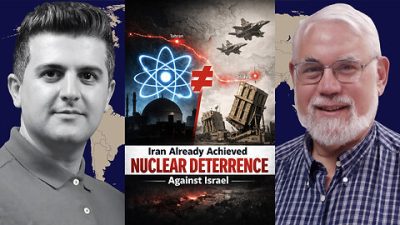
Prof. Ted Postol: Iran Already Achieved Nuclear Deterrence Against Israel
or go to
Aletho News Archives – Video-Images
From the Archives
How the occupied mentality syndrome works
Saudi Arabia on the American chessboard – Part 3
By B. J. Sabri | American Herald Tribune | June 27, 2016
Read part 2: “The occupied mentality Syndrome“
Previously I argued whether Saudi Arabia’s repeated involvements in U.S. interventions and wars stem from free national will or in response to a specific condition. For starters, in Saudi Arabia there is no national will. In Saudi Arabia, the national will is the will of the Al Saud clan. Still, when a major Arab state allies itself with a superpower that committed unspeakable crimes against humanity in almost every Arab country, then something is wrong. This fact alone should compel us to examine the U.S.-Saudi relation for one exceptional reason. As a result of the U.S.-Saudi wars, hundreds of thousands of people in Afghanistan, Iraq, Iran, Libya, Syria, Yemen, and Somalia have lost their lives. Millions became displaced in their own homelands. And millions more rendered refugees.
Attributing the Saudi policies to the bonds of “partnership” with the U.S. is frivolous. There are no bonds between these two thugs except those of business, military deals, secret plots, and wars. Proving this point, bonds such as these have no space for the American and Saudi peoples to share significant cultural or societal exchanges. If partnership is not the reason for the Saudi contribution to the U.S. strategy of empire and imperialism, then another reason must exist.
This leads to three possibilities. … continue
Blog Roll
 Aletho News
- “Davos Can Really Replace the UN”
- NIAID/NIH and USDA Fund Bioengineered Chimeric Influenza Viruses Built Using Pandemic H1N1 Components: Journal ‘Science Advances’
- Hezbollah hits Israeli warship off Lebanon’s coast, sets it aflame
- Iran slams US strikes on B1 bridge, Mahshahr petrochemical plants as ‘blatant acts of state terrorism’
- In letter to UN chief, Araghchi warns of dire consequences of US-Israeli attacks on Iran’s nuclear facilities
- Why the CIA conspiracy to invade Iran with Kurdish militias failed
- Why Are Upbeat US Claims About Mission to Rescue Pilot ‘Highly Questionable’?
- Aircraft destroyed during US ‘rescue’ of downed F-15 pilot cost more than $100 million each
- Washington University removes professor who condemned US-Israeli war on Iran
- Russia Warns of Retaliation as UK Authorizes Seizure of Vessels
- If Americans Knew
- In Iran, Israel-US take aim at “reason, research, and freedom of thought” – Daily Update
- US loses planes over Iran, Israel downgrades Lebanon war goals – Daily Update
- Israel Is Blocking Palestinians from Easter at Church Where Jesus Resurrected
- Plot to assassinate Palestinian activist follows harassment campaign promoted by Zionist groups and elected officials
- Prominent New York synagogue hosts presentation on why U.S. Jews should support the ethnic cleansing of Gaza
- Tapper vs. Piker: Is the CNN Anchor Auditioning for David Ellison?
- Shouldn’t Democrats Be Able to Condemn Genocide?
- Israel-US kill negotiators, destroy civilian structures, but Iran’s military capabilities still largely intact – Daily Update
- ‘War crime’: Global condemnation as Israeli ministers celebrate death penalty law targeting Palestinian prisoners
- 7 Ways Israel Is Turning Lebanon Into Gaza
- No Tricks Zone
- An Inconvenient Tree: Uncovered In Alps… Europe Much Warmer Than Today 6000 Years Ago
- New Study Reports A 60% Slowdown In Greenland’s Ice Loss Rate In The Last Decade
- Low Intensity Tornado Wrecks Major Solar Farm, Creating A Potential Toxic Dump
- New Study Finds Warming Saves Lives…Cold Temperatures 12 Times More Deadly Than Excess Heat
- German Science Blog Accuses PIK Climate Institute Of Hallucinating Climate Tipping Points
- Devastating Assessment Of Comirnaty Vaccine By Former Senior Pfizer Europe Toxicologist
- New Study: CO2 Is ‘Effectively Negligible’ As An Explanatory Climate Change Factor Since 2000
- Former Pfizer Toxicologist Dr. Helmut Sterz Tells Bundestag Hearing Pfizer Vaccine Should Have Never Been Approved
- Energy Expert: Germany’s Nuclear Phaseout Was A “500 Billion Euro Mistake”
- New Research: South Australia’s Mid-Holocene Sea Surface Temperatures Were 4°C Warmer Than Today
 Aletho News