Bernie Sanders and Elizabeth Warren are not quite progressive…
thewordsmithcollection | February 15, 2015

ISRAEL’S OPERATION Protective Edge has killed almost 2,000 people in Gaza, the vast majority of them civilians, and laid waste to schools, hospitals, mosques and factories.
The savagery of the slaughter was met by growing international opposition to Israel and solidarity with Palestine. Even in the U.S., recent opinion polls showed a growing minority of Americans, including Jews, rejecting Israel’s war on Gaza. That minority includes a strong majority of people aged 18 to 29.
This global shift in opinion has been underway for some years. People are being swayed to support Palestine by Israel’s apartheid-like behavior: building an illegal separation wall in the West Bank, turning Gaza into an open-air concentration camp and conducting regular military assaults on the occupied territories.
Thanks to the international boycott, divestment and sanctions (BDS) campaign–called for by Palestinians and mobilized by solidarity activists around the world–more and more people understand the reality that Israel is an apartheid state, and the cause of Palestinian liberation is simple justice.
But one political institution in the U.S. has stood completely unswayed by this evolving consciousness of the oppression of the Palestinians by Israel, with the support of its main international sponsor, the U.S. government.
That institution is the Democratic Party–including its liberal wing. Like their counterparts in the two-party U.S. political system, the Republicans, the Democrats never hesitated during the massacres in Gaza to reaffirm their unwavering support for Israel’s colonial project…
…The behavior of liberal Democrats during Operation Protective Edge has proved the rule. The darlings of progressive activists, from Massachusetts Sen. Elizabeth Warren to New York City Mayor Bill de Blasio to Vermont Sen. Bernie Sanders (a nominal independent who campaigns for Democrats and caucuses with them in the Senate), have made their commitment to Zionism clear. In the Senate vote on the pro-Israel resolution, none of the liberal stalwarts like Elizabeth Warren, Al Franken, Sherrod Brown and Bernie Sanders, made a peep in opposition. The same was true in the House.
Warren’s position shocked her progressive supporters, who either had ignored or didn’t know about her support of Israel. Despite her Native American roots, she sides not with Palestine’s indigenous population, but with Israeli colonization. On her Senate campaign website, for example, she said:
As a United States Senator, I will work to ensure Israel’s security and success. I believe Israel must maintain a qualitative military edge and defensible borders. The United States must continue to ensure that Israel can defend itself from terrorist organizations and hostile states, including Iran, Hamas, Hezbollah, and others.
The Democrats’ other new liberal lion, Bill de Blasio, outdoes Warren in Zionist proclamations. During his election campaign, De Blasio promised, “City Hall will always be open to AIPAC.” In a radio interview, he boasted that he opposed the “very, very wrongheaded movement to boycott, and disinvest from Israel. I’ve led the charge against that, whether you’re talking about the Park Slope Food Co-op or at Brooklyn College, I’ve stood against that divestment movement.” During the current war on Gaza, he announced, “I consider it my responsibility to stand up for Israel.”
Just as disappointing has been the traditionally progressive Congressional Black Caucus (CBC). Bruce Dixon of the Black Agenda Report reported on how CBC members in the House and Senate betrayed Palestine in AIPAC-backed resolutions. As Dixon wrote:
Not a single member of the CBC, despite their much heralded brand of standing for civil rights and against apartheid here and around the world, bothered to publicly question the racist ethnocracy that is the Israeli state. After signing the blank check with the rest of their colleagues, CBC members Conyers (MI), Lee (CA), Johnson (GA) and Ellison (MN) tried to cover their shame with a letter to Secretary of State Kerry urging a cease-fire, something which Kerry claims to have been doing anyway.
The self-proclaimed socialist Bernie Sanders has done little better. As left-wing Vermont writer Ron Jacobs noted, Senator Sanders has voted for “grants and loans to Israel, even after Israel bombed Gaza, attacked the Mavi Marmara and supported illegal settlements in the West Bank.” When asked by reporters for his view of the current war on Gaza, Sanders evaded the question, stating, “That’s not where my mind is right now.”
– – – – – – – – – – – – – – – –http://socialistworker.org/2014/08/13/liberal-champions-of-apartheid
Despite his own claims, Sanders has not been an antiwar leader. Ever since he won election to the House, he has taken either equivocal positions on U.S. wars or outright supported them. His hawkish positions — especially his decision to support Bill Clinton’s 1999 Kosovo War — drove one of his key advisers, Jeremy Brecher, to resign from his staff. Brecher wrote in his resignation letter, “Is there a moral limit to the military violence you are willing to participate in or support?”
So outraged were peace activists over Sanders’ support of the Kosovo War that they occupied his office in 1999. Sanders had them arrested. Under the Bush regime, Sanders’ militarism has only grown worse. While he called for alternative approaches to the war on Afghanistan, he failed to join the sole Democrat, Barbara Lee, to vote against Congress’ resolution that gave George Bush a blank check to launch war on any country he deemed connected to the September 11 attacks.
Ever since, he has voted for appropriations bills to fund the occupations of Iraq and Afghanistan, despite their horrific toll on the occupied peoples as well as U.S. soldiers.
Sanders has been critical of the war on Iraq, but he has supported pro-war measures — such as a March 21, 2003, resolution stating, “Congress expresses the unequivocal support and appreciation of the nation to the President as Commander-in-Chief for his firm leadership and decisive action in the conduct of military operations in Iraq as part of the ongoing Global War on Terrorism.” … Full article
The Age of Imperial Wars
From Regional War, “Regime Change” to Global Warfare
By Prof. James Petras | Global Research | August 22, 2015
2015 has become a year of living dangerously.
Wars are spreading across the globe.
Wars are escalating as new countries are bombed and the old are ravaged with ever greater intensity.
Countries, where relatively peaceful changes had taken place through recent elections, are now on the verge of civil wars.
These are wars without victors, but plenty of losers; wars that don’t end; wars where imperial occupations are faced with prolonged resistance.
There are never-ending torrents of war refugees flooding across borders. Desperate people are detained, degraded and criminalized for being the survivors and victims of imperial invasions.
Now major nuclear powers face off in Europe and Asia: NATO versus Russia, US-Japan versus China. Will these streams of blood and wars converge into one radiated wilderness drained of its precious life blood?
Living Dangerously: The Rising Tide of Violent Conflicts
There is no question that wars and military threats have replaced diplomacy, negotiations and democratic elections as the principal means of resolving political conflicts. Throughout the present year (2015) wars have spread across borders and escalated in intensity.
The NATO allies, US, Turkey and the EU have openly attacked Syria with air strikes and ground troops. There are plans to occupy the northern sector of that ravaged country, creating what the Erdogan regime dubs a ‘buffer zone’ cleansed of its people and villages.
Under the pretext of ‘fighting ISIS’, the Turkish government is bombing Kurds (civilians and resistance fighters) and their Syrian allies. On Syria’s southern border, US Special Forces have accelerated and expanded operations from their bases in Jordan on behalf of the mercenary terrorists – funded by the monarchist Gulf States.
Over 4 million Syrians have fled their homes as refugees and over 200,000 have been killed since the US-EU-Turkey-Saudi-sponsored war against the secular Syrian government was launched four years ago.
Dozens of terrorist, mercenary and sectarian groups have carved up Syria into rival fiefdoms, pillaged its economic and cultural resources and reduced the economy by over ninety percent.
The US-EU-Turkish military intervention extends the war into Iraq, Lebanon and…. Turkey – attacking secular governments, ethnic minority groups and secular civil society.
The feudal, monarchist Saudi Arabia and the United Arab Emirates have invaded Yemen with tanks, launching air strikes against a country without any air defenses. Major cities and towns are devastated. Saudi ground troops and armored carriers are killing and wounding thousands – mostly civilians. The brutal Saudi air and sea blockade of Yemen’s ports have led to a humanitarian crisis, as ten million Yemenis face starvation deliberately imposed by a grotesque and obscenely rich monarchy.
The Yemeni resistance fighters, driven out of the major cities, are preparing for prolonged guerrilla warfare against the Saudi monsters and their puppets. Their resistance has already spread across the frontiers of the absolutist Saudi dictatorship.
The brutal Israeli occupation troops, in collaboration with armed ‘settler’ colonists, have accelerated their violent seizure of Palestinian lands. They have stepped up the ethnic cleansing of Palestinians, Bedouins, Druze and Christian inhabitants replacing their communities with racist ‘Jews-only’ colonial settlements.
Daily assaults against the huge ‘concentration camps’ of Gaza accompany an armed blockade of land, air and water, preventing the reconstruction of the tens of thousands of homes, schools, hospital, factories and infrastructure, destroyed by last year’s Israeli blitzkrieg.
Israel’s continued annexation and ethnic cleansing of Palestinian territory precludes any diplomatic process; colonial wars have been and continue to be Israel’s policy of choice in dealing with its Arab neighbors and captive populations.
Africa’s wars, resulting from earlier US-EU interventions, continue to ravage-the Continent. Somalia, Sudan, Kenya, Libya are riven by bloody conflicts between US-EU backed regimes and armed Islamic and nationalist resistance movements.
Throughout North and Sub-Sahara Africa, US-EU backed regimes have provoked armed upheavals in Libya, Nigeria (Boko Harem), Egypt (ISIS, Moslem Brotherhood et al), Chad, Niger, South Sudan, Somalia and elsewhere.
Imperial client Egyptian and Ethiopian dictators rule with iron fists – financed and armed by their EU and US sponsors.
Imperial wars rage throughout the Middle East and South Asia. Hundreds of experienced Baathist Iraqi military officers, who had been expelled or jailed and tortured by the US Occupation army, have now made common cause with Islamist fighters to form ISIS and effectively occupy a third of Iraq and a strategic swath of Syria.
There are daily bombings in Baghdad undermining its US client. Strategic advances by ISIS are forcing the US to resume and escalate its direct combat role
The US-Baghdad retreat and the defeat of the US-trained Iraqi military in the face of the Baathist-Islamist offensive is the opening salvo of a long-term, large-scale war in Iraq and Syria. The Turkish air-war against the Kurds in Iraq will escalate the war in Northern Iraq and extend it into southeast Turkey.
Closer to ‘home’, the EU-US-backed coup (‘regime change’) in Kiev and the attempt to impose dictatorial-pro-West oligarchic rule in Ukraine have detonated a prolonged civil-national war devastating the country and pitting NATO’s proxies against Russian-backed allies in the Donbas.
US, England, Poland and other NATO powers are deeply committed to pushing war right up to Russia’s borders.
There is a new Cold War, with the imposition of wide-ranging US-EU economic sanctions against Russia and the organizing of major NATO military exercises on Russia’s doorsteps. It is no surprise that these provocations are met with a major counter-response – the Russian military build-up. The NATO power grab in Ukraine, which first led to a local ethnic war, now escalates to a global confrontation and may move toward a nuclear confrontation as Russia absorbs hundreds of thousands of refugees from the slaughter in Ukraine.
The US puppet regime in Afghanistan has faced a major advance of the Taliban in all regions, including the capital, Kabul.
The Afghan war is intensifying and the US-backed Kabul regime is in retreat. US troops can scarcely advance beyond their bunkers.
As the Taliban military advances, its leaders demand total surrender of the Kabul puppets and the withdrawal of US troops. The US response will be a prolonged escalation of war.
Pakistan, bristling with US arms, faces a major conflict along its borders with India and permanent war in its semi-autonomous Northwest frontier states with Islamist and ethnic Pashtu guerrilla movements backed by mass regional political parties. These parties exercise de facto control over the Northwest region providing sanctuary and arms for Taliban militants operating in Afghanistan and Pakistan.
Armed ethno-religious conflicts persist in western China, Myanmar and northern India. There are large-scale popular resistance movements in the militant northeast Thailand opposed to the current military-monarchist dictatorship in Bangkok.
In the 21st century, in South and Southeast Asia, as in the rest of the world, war and armed conflicts have become central in resolving ethnic, social, tribal and regional differences with central states: diplomacy and democratic elections have been rendered obsolete and inefficient.
Latin America – On the Verge
Burgeoning violent extra-parliamentary right-wing movements, intent on overthrowing or ‘impeaching’ elected center-left Latin American governments face major confrontations with the state and its mass supporters.
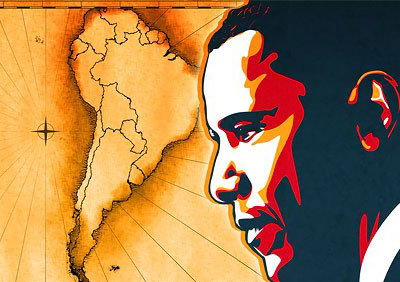 In Ecuador, Venezuela and Brazil, US-backed opposition groups are engaged in violent demonstrations, directed toward ousting the elected regimes. In the case of Ecuador, ‘popular sectors’, including some indigenous leaders and sectors of the trade union movement, have called for an ‘uprising’ to oust President Correa. They seem oblivious of the fact that the hard-right oligarchs who now control key offices in the three principal cities (Guayaquil, Quito and Cuenca) will be the real beneficiaries of their ‘uprisings’.
The resurgent Right envisions violent ‘regime change’ as the first step toward ‘wiping the slate clean’ of a decade of social reforms, independent regional organizations and independent foreign policies.
‘Civil war’ may be too strong a word for the situation in Latin America at this time – but this is the direction which the US-backed opposition is heading. Faced with the mess and difficulty of dislodging incumbent regimes via elections, the US and its local proxies have opted for the choreography of street violence, sabotage, martial law and coups – to be followed by sanitized elections – with US-vetted candidates.
War and violence run rampant through Mexico and most of Central America. A US-backed military coup ousted the popularly elected, independent President Zelaya in Honduras. The ensuing US-proxy regime has murdered and jailed hundreds of pro-democracy dissidents and driven thousands to flee the violence.
The 1990’s US-brokered ‘Peace Accords’ in El Salvador and Guatemala effectively blocked any agrarian reform and income redistribution that might have led to the rebuilding of their civil societies. This has led to over two decades of mass disaffection, the rise of armed ‘gangs’ numbering over 100,000 members and an average of six to ten thousand homicides a year with El Salvador becoming the ‘murder capital of the hemisphere’ on a per capita basis. The annual murder toll under the US-brokered ‘Peace Accords’ now exceeds those killed each year during the civil war.
The real ‘carnage capital’ of the hemisphere is Mexico. Over 100,000 people have been murdered during the decade-long, US-backed ‘war on drugs’ – a war which has become a state-sponsored war on the Mexican people.
The internal war has allowed the Mexican government to privatize and sell the crown jewels of the national economy – the petroleum industry. While thousands of Mexicans are terrorized and slaughtered, the US and EU oil companies are curiously shielded from the drug lords. The same Mexican government, its police, officials and military, who collaborate with the drug lords in dividing up the billions of drug dollars, protect foreign oil companies and their executives. After all, narco-dollars are laundered by banks in New York, Miami, Los Angeles and London to help fuel the speculation!
From Regional to Nuclear Wars
Regional and local wars spread under the shadow of a looming world war. The US moves its arms, planes, bases and operations to the Russian and Chinese borders.
Never have so many US troops and war planes been placed in so many strategic locations, often less than an hour drive from major Russian cities.
Not even during the height of the Cold War, did the US impose so many economic sanctions against Russian enterprises.
In Asia, Washington is organizing major trade, military and diplomatic treaties designed to exclude and undermine China’s growth as a trade competitor. It is engaged in provocative activities comparable to the boycott and blockade of Japan which led to the Second World War in Asia.
Open ‘warfare by proxy’ in Ukraine is perhaps the first salvo of the Third World War in Europe. The US-EU-sponsored coup in Kiev has led to the annexation of Western Ukraine. In response to the threat of violence toward the ethnic Russian majority in Crimea and the loss of its strategic naval base on the Black Sea, Russia annexed Crimea.
In the lead-up to the Second World War, Germany annexed Austria. In a similar manner the US-EU installed a puppet regime in Kiev by violent putsch as its own initial steps toward major power grabs in Central Asia. The military build-up includes the placement of major, forward offensive military bases in Poland.
Warsaw’s newly elected hard-right regime of President Andrzej Duda has demanded that Poland become NATO’s central military base of operation and the front line in a war against Russia.
Wars and More Wars and the Never-ending Torrents of Refugees
The US and EU imperial wars have devastated the lives and livelihoods of scores of millions of people in South Asia, North and Sub-Sahara Africa, Central America, Mexico, the Balkans and now Ukraine.
Four million Syrian refugees have joined millions of Afghan, Pakistani, Iraqi, Yemeni, Somali, Libyan, Palestinian and Sudanese refugees fleeing US-EU bombs, drones and proxy mercenaries ravaging their countries.
Millions of war refugees escape toward safety in Western Europe, joining the millions of economic refugees who have fled free market destitution in Lithuania, Latvia, Estonia, Bulgaria, Romania, Poland, the Balkans and other EU satellites.
Panic among the civilian population of Western Europe sets in as hundreds of thousands cross the Mediterranean, the Aegean and the Balkans.
Droves of refugees perish each day. Tens of thousands crowd detention centers. Local labor markets are saturated. Social services are overwhelmed.
The US builds walls and detention camps for the millions trying to escape the harsh consequences of imperial-centered free markets in Mexico, narco-terror and the fraudulent ‘peace accord’-induced violence in Central America.
As Western wars advance, the desperate refugees multiply. The poor and destitute clamber at the gates of the imperial heartland crying: ‘Your bombs and your destruction of our homelands have driven us here, now you must deal with us in your homeland’.
Fomenting class war between the refugees and ‘natives’ of the imperial West – may not be on the agenda . . . for now, but the future for ‘civil’ society in Europe and the US is bleak.
Meanwhile, more and even bigger wars are on the horizon and additional millions of civilians will be uprooted and face the choice of starving, fleeing with their families or fighting the empire. The ranks of seasoned and infuriated resistance fighters are swelling in Afghanistan, Iraq, Libya, Yemen, Ukraine and elsewhere.
The US and EU are becoming armed fortresses. US police deal with the marginalized citizenry as an occupying army, assaulting African-Americans, immigrants and dissidents – while looting poor communities . . . and protecting the rich…
Conclusion
War is everywhere and expanding: No continent or region, big or small, is free from the contagion of war.
Imperial wars have spawn local wars . . . igniting mass flights in a never-ending cycle. There are no real diplomatic success stories! There are no enduring, viable peace accords!
Some pundits may protest this analysis: They point to the recent US – Cuba rapprochement as a ‘success’. They conveniently forget that the US is still subverting Cuba’s biggest trading partner, Venezuela; that Washington’s major regional proxies are demanding regime change among Cuba’s allies in Ecuador, Brazil and Bolivia and that Washington is increasingly threatening Cuba’s alternative markets in Russia and China. The vision of the US flag flapping in the breeze outside its embassy in Havana does little to cover Washington’s iron fist threatening Cuba’s allies.
Others cite the US – Iran peace accord as a major ‘success’. They ignore that the US is backing the bloody Saudi invasion of neighboring Yemen and the massacre of Shiite communities; that the US has provided Israel with a road map detailing Iran’s entire defense system and that the US [Israel] and EU are bombing Iran’s Syrian ally without mercy.
As for the US – Cuba and Iranian agreements– are they enduring and strategic or just tactical imperial moves preparing for even greater assaults?
The war epidemic is not receding.
War refugees are still fleeing; they have no homes or communities left.
Disorder and destruction are increasing, not decreasing; there is no rebuilding the shattered societies, not in Gaza, not in Fallujah, not in the Donbas, not in Guerrero, not in Aleppo.
Europe feels the tremors of a major conflagration.
Americans still believe that the two oceans will protect them. They are told that placing NATO missiles on Russia’s borders and stationing warships off China’s shores and building electrified walls and laying barbed wire along the Rio Grande will protect them. Such is their faith in their political leaders and propagandists.
What a packet of lies! Inter-continental missiles can ‘rain down’ on New York, Washington and Los Angeles.
It is time to wake up!
It is time to stop the US – EU headlong race to World War III!
Where to start? Libya has been irrevocably destroyed; it is too late there! Syria, Iraq and Afghanistan are aflame. We are being plunged deeper into war while being told we are withdrawing! Ukraine sucks in more guns and more troops!
Can we really have peace with Iran if we cannot control our own government as it dances to the Israelis tune? And Israel insists on war – our waging war for them! As the Israeli war criminal General and Prime Minister Ariel Sharon once told some worried American Zionists: “Trouble with the US? We lead them by the nose…!”
Just look at the terrified families fleeing carnage in the Middle East or Mexico.
What is to be done?
When will we cut our losses and shake off the bonds of these war makers – foreign and domestic?
“Human Rights” in the Arab World: the Instruments of War, a Test Case for the UN High Commissioner for Human Rights
By Lana Habash | CounterPunch | August 21, 2015
Sometimes I love Republicans. They lay bare with such clarity what underlies and drives US foreign policy– the bottom line strategic interests without the pretense that more adept politicians use to justify US military aggression: the US government’s “concerns” about “human rights” for instance.
Take Syria.
John McCain laid it all out in his interview on CNN’s Situation Room in 2013:
“Look, the Middle East is about to erupt. This is turning into a regional conflict: Lebanon is destabilized, Jordan can’t — the king of Jordan can’t last, the conflict is spreading throughout the region, Hezbollah is all in. This is becoming a Sunni-Shia conflict . . . and it’s an unfair fight!” While arguing for more US military intervention in Syria, he goes on to say, “It’s a great blow to Iran — the greatest in twenty-five years, and they’re cut off from Hezbollah, which would mean that Hezbollah would die on the vine.”
It is strange to hear American politicians wring their hands about the instability of the Jordanian monarchy and its regime while pontificating about US intentions to “bring democracy to the Middle East.”
Over the past two decades, we have witnessed the increasing use of the human rights discourse by the United States as justification for US military aggression. In some cases, these human rights abuses (as in the case of Iraq) proved nothing more than Department of Defense propaganda that was later proved false. More recently, the Assad regime in Syria has been accused of such violations as torture and arbitrary arrest and detention, though the US hasn’t been above using these alleged services themselves. (US former CIA agent Robert Baer once said of US held prisoners, “If you want them to be tortured, you send them to Syria.”) The UN High Commissioner for Human Rights has echoed these allegations about the Syrian regime. These alleged human rights abuses, the same ones that Jordan continues to perpetrate against its own citizens with impunity, have been used as justification for US military intervention in Syria, including the arming and training of rebel forces in Jordan by US troops, which has resulted in the deaths of at least 220,000 people and over 3 million refugees. These interventions have done nothing to advance the human rights of the Syrian people, but have achieved some strategic goals for the US and Israel: Hezbollah, the only player that poses a serious threat to American and Israeli strategic interests regionally, is now embroiled in a Syrian civil war, and as McCain stated, a “great blow” has been served to both Iran and Hezbollah.
Last year, at his confirmation as the UN High Commissioner for Human Rights by the General Assembly, Prince Zeid Ra’ad Al Hussein spoke of his commitment to push forward human rights on the Asian continent. It has been hard to take seriously this pronouncement when the High Commissioner has used his office to support concrete measures that, not coincidentally, mesh with US strategic interests, while he remains silent about the human rights abuses in his own country, the Hashemite Kingdom of Jordan. Jordan is a signatory to the International Covenant on Civil and Political Rights, yet has one of the most abysmal human rights records in the world. The recent case of Amer Jubran reveals the entire spectrum of repression to which Jordanians are subjected.
Amer Jubran is an internationally known Palestinian activist, speaker and writer on the rights of Palestinians and against US and Israeli policies in the Arab world. He has also distributed information about US involvement in destabilizing Syria.
Jubran was arrested in Jordan on May 5, 2014, when 20 men in black military uniforms broke into his home in the middle of the night. He was held incommunicado by Jordan’s secret police, the General Intelligence Directorate (GID) for 2 months at an undisclosed location, in violation of Article 9 of the International Covenant on Civil and Political Rights. A petition against arbitrary detention was filed on his behalf with the UN Working Group on Arbitrary Detention. Nothing came of this.
Jubran was finally charged in August, 2014 under a new law that makes “harming the relationship with a foreign government” a crime of “terrorism.” The wording of this law is so vague that it criminalizes a broad range of political activities including journalism, in violation of Article 19 of the ICCPR, guaranteeing freedom of opinion and expression.
This same law was enacted one month after Amer Jubran’s arrest, also constituting a violation of Article 15 of the ICCPR, which stipulates, “No one shall be held guilty of any criminal offense … which did not constitute a criminal offense…at the time when it was committed.”
Jubran was tried before Jordan’s State Security Court (SSC), a military tribunal that fails to meet even minimum standards of judicial independence, violating Article 14 of the ICCPR, which guarantees the right to a fair trial by a “competent, independent and impartial tribunal established by law.” Jubran’s defense team effectively proved the “terrorism” charges against him false, but the verdict of the SSC was reached without regard for evidence. The only evidence presented in Jubran’s trial was the coerced testimony of other defendants, also arrested in May, 2014, subjected to interrogation, and all of whom received reduced sentences of two to three years. Robert Baer also said: “If you want a serious interrogation, you send a prisoner to Jordan.” While Jubran was being detained incommunicado and “interrogated” he was threatened not only with imprisonment, but with being disappeared when he refused to infiltrate Hezbollah and act as an informant for the GID. He was recently sentenced to ten years of hard labor by Jordan’s State Security Court (see statement by Amer Jubran on his sentencing.)
The human rights abuses perpetrated against Amer Jubran are the rule in Jordan, rather than the exception. Jordan’s long history of the use of arbitrary detention and torture have been well documented by the UN. In 2013, the UN Human Rights Council Working Group on Arbitrary Detention issued a report on Jordan, detailing a series of cases like that of Jubran in which basic political freedoms had been trampled. The report had a special section on the State Security Court:
“The Committee against Torture and the Human Rights Committee have repeatedly recommended that Jordan abolish special courts such as the State Security Court… The Committee reiterates its 1994 recommendation that the State party consider abolishing the State Security Court.” (Human Rights Council Working Group on Arbitrary Detention, November 2013).
What has the UN High Commissioner done thus far to respond to these recommendations and push forward the issue of human rights in his own country? When asked during a press conference as to whether it was illegal to criticize the king in the press in Jordan, the Human Rights Chief replied, “Essentially, we believe we are still a family,” while plugging the king’s new book (USA Today August 13, 2014). The UN High Commissioner failed to mention Jordan’s long history of criminalizing speech and imprisoning journalists like Jamal Ayyoub.
Interestingly, Jubran has written nothing about the Jordanian regime. His writing has consistently concerned itself with the policies of the US and Israel in the region. This speaks to the new law of “harming relationships with foreign governments.” Mr. Jubran has stated that he was told directly by his GID interrogators that any decision made about him would involve “our American and Israeli friends.”
Recent revelations about NSA cooperation with Jordanian intelligence agencies underline the central role Jordan plays in the US and Israeli “security” regime for the region. Spying on Palestinians and providing intelligence about “high security targets” is perhaps the least of the services Jordan provides. The abuses of fundamental freedoms in Jordan are consistently carried out, as in Amer Jubran’s case, in the interests of protecting US and Israeli power.
Institutions like the Office of the UN High Commissioner for Human Rights are supposed to exist to guarantee the protection of human and political rights globally. The real test of the UN High Commissioner’s commitment to push forward the issue of human rights in Asia must begin in his home country of Jordan and will involve a confrontation not only with that regime, but with the nation states calling the shots. Will the UN High Commissioner Zeid Ra’ad Al Hussein use the powers of his office to advocate for human rights, when those powers come in conflict with the US, Israel, and their regional allies? If not, then the term “human rights” has become nothing more than Orwellian doublespeak, and the Office of the UN High Commissioner for Human Rights is just one more weapon in the military arsenal of US regional dominance.
More details about the case of Amer Jubran can be found at freeamer.wordpress.com.
Lana Habash is a Palestinian physician living in Boston, MA. She can be reached at defense@amerjubrandefense.org.
Another Egyptian prisoner dies, 3rd in 48 hours

A file photo of Ahmed Hamed, an Egyptian political prisoner who died while in custody on August 21, 2015.
Press TV – August 22, 2015
Another Egyptian political prisoner has died while in custody, the third death in 48 hours and the 13th of the month of August.
Thirty-seven-year-old Ahmed Hamed, father of three children, was pronounced dead on Friday evening in a police station in the city of Faiyum, 100 kilometers southwest of the Egyptian capital Cairo.
Hamed, a supporter of Egypt’s Muslim Brotherhood, lost his life just four days after being “kidnapped” by security forces in civilian clothes from the premises of his residence in Faiyum.
According to Hamed’s family and human rights activists in the city, he died of torture. No further details on his death have been released yet.
This is the third similar case in just 48 hours in Egypt. A 40-year-old man passed away in custody on Wednesday in a hospital in Matariya district in northeastern Cairo. He was detained 15 days before his death on charges of belonging to the Muslim Brotherhood.
Human rights activists in the Egyptian capital had said the man was only transferred to hospital when he was already in a very critical condition also due to torture.
Also on Wednesday, a 72-year-old inmate, serving a three-year prison term on similar charges, died in the Borg El Arab prison in Egypt’s city of Alexandria in the north.
The victim, who was suffering from diabetes and high blood pressure, lost his life due to purported medical negligence upon his return from a court session a day earlier, where he had appeared in a wheelchair.
At least 13 political detainees are now known to have lost their lives inside detention facilities in August alone.
Human rights activists emphasize that “deliberate and systematic medical negligence” on the part of prison authorities, torture, overcrowded prisons, and overall “unhealthy and inhumane” conditions imposed on more than 40,000 political prisoners in Egypt’s detention facilities are the causes behind the deaths.
Nearly 300 political prisoners have died in Egyptian detention facilities since then army chief and current President Abdel-Fattah al-Sisi ousted Egypt’s first democratically-elected president, Mohamed Morsi, in July 2013 in a coup.
Sisi then launched brutal crackdown on pro-Morsi protesters and brotherhood members, leading to the killing of hundreds and the arrest and imprisonment of tens of thousands, many of whom have been sentenced to death and long prison terms in mass trials.
Misleading AP tales can’t damage ‘Teflon Iran’
By Sharmine Narwani | RT | August 22, 2015
When a US media outlet broke a misleading story on the Iran nuclear file this week, many in the West found themselves rushing to defend the Iranian position. Only a few months ago, they would have been the ones to leak, seed and spread the disinformation.
The Associated Press (AP) on Wednesday published an “exclusive,” claiming to have seen a draft of a hotly debated ‘confidential agreement’ between Iran and the International Atomic Energy Agency (IAEA), the monitoring organization that safeguards the peaceful nature of member-states’ nuclear programs.
AP’s “unsigned draft” heavily suggests that Iran will, in effect, be investigating its own controversial military facility – Parchin – on behalf of the IAEA.
This made the deal’s critics howl with outrage. US politicians and pundits opposing the Vienna agreement between the UN Security Council P5+1 and Iran, quickly hit the media circuit – with AP’s sketchy details – to cement their case against the historic nuclear deal.
But then what followed was quite instructive on The New Order Of Things.
US administration officials, the director general of the IAEA, former IAEA officials and a whole host of American media outlets stepped in to make the counter-argument. On behalf of the Iranians, mind you.
Not much was heard from the Islamic Republic itself.
Before the Joint Comprehensive Plan of Action (JCPOA) was concluded on July 14, Iran stood alone in what amounted to a global ‘public diplomacy’ onslaught against its peaceful nuclear program. No matter what information, data points, sampling or intrusive inspections Tehran offered up since 2002, it was always one more ‘question mark’ behind its accusers.
I recall a frustrated letter penned by Iran’s permanent representative to the IAEA, Ali Asghar Soltanieh, to the Agency’s board of governors on June 17, 2009, in which he argued:
“After six years of the most robust and intrusive inspection in the history of the Agency, and in spite of the continuous declaration of the Director General (of the IAEA) in over 20 reports to the Board of Governors, that there is no evidence of diversion of nuclear materials and activities to prohibited purposes (i.e., weaponization), the issue is still on the agenda. The simple question is: Why?”
He goes on to allege that the issue of Iran’s nuclear program remains on the table because of the political motivations of a few nations, who would like to turn the Agency into a “watchdog, with maximum intrusiveness in safeguards in order to interfere in the national security… of member states, under the pretext of proliferation.” Read his September 4 letter which outlines Iran’s grievances in detail.
Laptops, dossiers, dodgy foreign scientists, secret nuclear sites… the whole gamut of Hollywood-inspired smoking guns were tossed Iran’s way – usually seeded by the Israelis, Americans, Brits or the Mujaheddin-e Khalq (MEK), a formerly US-designated terrorist group now happily embraced by Congress.
The problem with much of this manufactured evidence on Iran’s nuclear program was that the IAEA would use it as a pretext for more questions – often without allowing the Iranians to review the material in order to “protect” their sources. How could the Iranians respond to something they couldn’t examine?
All this changed when the JCPOA was agreed upon in Vienna in July. But the Americans have spent over a decade creating a cottage industry of flimsy evidence focused on Iranian “nuclear bombs” and “terrorism,” and Washington is now facing the monster it spawned.
An Iranian official explained this to me in Vienna, before the deal: “These are not real issues. This is more a matter of the US trying to prove the credibility of past issues. It was wrong, they know they were wrong, but they have a need to stick to the script.”
Twelve years of American credibility on the Iran ‘story’ is on the line, after all.
Some Facts about the IAEA and Parchin
On the issue of inspections at Parchin – this is a military facility that allegedly, pre-2003, dabbled in something the Americans ‘find suspect.’ In 2005, on two separate occasions, the Islamic Republic “voluntarily provided access” to the IAEA to inspect the site.
Since then, Western sources allege that Parchin has been “swept” and remodeled. So, either way, there is nothing anybody is going to find there 10 years later. Access to the site for a final inspection is more an exercise for Washington to tick a box for public consumption.
Nevertheless, the IAEA is a technically professional agency that has politically served western P5 (US, UK, France) interests for much of the past decade, and so it isn’t going to do this job haphazardly.
The IAEA says it has “hundreds” of confidential agreements with member-states. They manage access to non-standard sites all the time – the difference is only in how the access is customized to suit the needs of both parties. The Agency’s head Yukiya Amano, says:
“I can state that the arrangements (with Iran) are technically sound and consistent with our long-established practices. They do not compromise our safeguards standards in any way. The Road-map between Iran and the IAEA is a very robust agreement, with strict timelines, which will help us to clarify past and present outstanding issues regarding Iran’s nuclear programme.”
Whatever the process, the IAEA will obtain Parchin environmental samples whose origins and sanctity are unimpeachable. IAEA Inspectors could oversee the sampling, GPS-tracking devices could be strapped onto local inspectors – who knows? The Agency is bound by confidentiality to its agreements with members. Those are the rules.
Where’s the media interest in IAEA safeguards outside of the Iran inspections regime? The Agency has, over the years, amassed considerable tools and networks to ensure the quality of its results. These include a sprawling inventory of 45,000 pieces of equipment of 140 different varieties, 20 qualified laboratories worldwide, access to satellite data to supplement physical analysis, and 850 staff members from 95 different countries. Furthermore, the Agency has 182 safeguard agreements in force with member-states, has conducted more than 2,700 inspections, generated 3,000 safeguards statements and reports, and currently has more than 193,500 ‘significant quantities’ of nuclear materials under safeguard.
So the AP story claiming ‘self-inspection’ has already been challenged by experts galore this week – by former IAEA officials and inspectors here and here, and by Amano himself, who expressed dismay at the “misleading” information circulating about the Parchin inspection in a rare public statement on this issue.
The IAEA safeguards practices continue to evolve, both according to the challenges they confront and to improve efficiencies. A member of an IAEA team assembled to test the viability of off-site environmental sampling told me recently that they had conducted an exercise in a Mideast state to take samples from outside the perimeter of a target facility. Perhaps some of those lessons will have already been applied to the Parchin inspection protocol – but likely only if the process was found to meet IAEA standards.
More facts, less spin
Hot button issues like Parchin and other ‘possible military dimensions’ (PMDs) of Iran’s nuclear program will not go away anytime soon. But the debate has changed already with the entrance of atypical ‘deal defenders’ – a crop of elite, Western establishment politicians, journalists and analysts – who are pitching the arguments that Iran has previously been unable to make heard.
JCPOA opponents are short of material to fling at deal defenders these days. The Vienna agreement is basically a fair one (if implemented according to its stated intent) that has been scrutinized ad infinitum by six world powers and the Islamic Republic of Iran, after all.
So silly minutiae, non-issues that play well to the suggestible masses, grabs the headlines instead. Take another issue that has had some airtime on social media and in the US press recently: Three weeks ago, another AP report headlined that Iran will not allow US (and Canadian) IAEA inspectors to visit its nuclear facilities. Newsweek magazine said, for JCPOA opponents, this step “will only compound doubts over whether the IAEA will be able to oversee the terms of the deal.”
But Iran’s Deputy Foreign Minister Abbas Araghchi insisted the Vienna agreement mentions that inspectors “should be from countries that have diplomatic relations with the Islamic Republic of Iran.”
And an IAEA spokesperson provided further context by referencing an August 28, 1961 memorandum by the Agency’s director general on “inspectors,” which states:
“The (member) State shall inform the Director General, within 30 days of receipt of such a proposal, whether it accepts the designation of that inspector… If a State, either upon proposal of a designation or at any time after a designation has been made, objects to the designation of an Agency inspector for that State, it shall inform the Director General of its objection. In this event, the Director General shall propose to the State an alternative designation or designations.”
This is standard procedure for member states of the IAEA – nothing suspect or unusual here. It is common sense that a nation will not allow nationals from adversarial or hostile states to inspect its national security-related or prized technological sites.
It is highly unlikely that Iran will veer from the letter and intent of the JCPOA now or in the foreseeable future. The Islamic Republic has been subject to the most intrusive inspections in the history of the IAEA and has taken tremendous hits from an international sanctions regime that sought to strangle Iran’s economic and political systems – all in service of cleaving to its “inalienable right” to pursue an indigenous civilian nuclear program.
In Iran’s view, “international law” serves the country best – and Tehran’s public and private fights are mostly about foreign actions that circumvent the rule of law as applied to relations between states – via illegal or unjust sanctions, sabotage, propaganda, blackmail, assassination, etc.
The JCPOA helps Iran plod along its desired nuclear and economic trajectory with legally-binding ‘safeguards’ against the external trickery and ploys it has been subjected to in the past. Providing, of course, those same Western parties don’t exploit loopholes and revert back to their old tricks, as Iranian conservatives constantly warn.
In its past nuclear-file battles, Tehran usually lacked two key weapons: the ability to fight back against evidence it was not allowed to see, and the ability to communicate its messages to a global audience.
In one fell swoop, the Vienna agreement provided both tools. Buried in the details of the JCPOA is one line regarding any concerns the IAEA has about undeclared nuclear materials, activities or locations: “The IAEA will provide Iran the basis for such concerns and request clarification.”
An Iranian negotiator privately told me in Vienna that the deal must provide Tehran with direct access to any evidence suggesting inconsistency in its nuclear activities. Iran has been denied this in the past. With evidence to touch and feel, it will be much easier for Iran to refute or disprove allegations against it.
Post-deal – and as long as US administration calculations remain pro-deal – Iran’s opponents no longer have an unfettered ability to use the UNSC P5 and IAEA to float unsubstantiated charges against Tehran. This is why we can expect the charges to now come hard and fast through media channels and “leaks.”
And that brings us to Iran’s second “gain” in the aftermath of the Vienna agreement. Having bought into and become fully vested in the JCPOA, the six powerful members of the P5+1 will act, in a sense, as a communications channel for the Iranians, whose ‘facts’ have long been ignored in the media. It is currently in the interest of the P5+1 to make this deal ‘stick’ – and so Iran has experienced enormous relief in its counter-messaging activities related to its nuclear file.
The Islamic Republic just became ‘Teflon Iran.” And Western punditry and establishment figures seeking to spoil the JCPOA environment can now expect a lot more mutiny from within.
Until the Western political pendulum swings back the other way.
Sharmine Narwani is a former senior associate at St. Antony’s College, Oxford University and has a master’s degree in International Relations from Columbia University.
International Solidarity Movement call for volunteers
International Solidarity Movement | August 21, 2015
Occuppied Palestine – During the months of July and August, there has been an escalation of violence from illegal Israeli settlers and the Israeli army towards Palestinians.
ISM is sending an urgent call for volunteers to join us in Palestine. Check the join us section of our website or email ISM at palreports@gmail.com for more information.
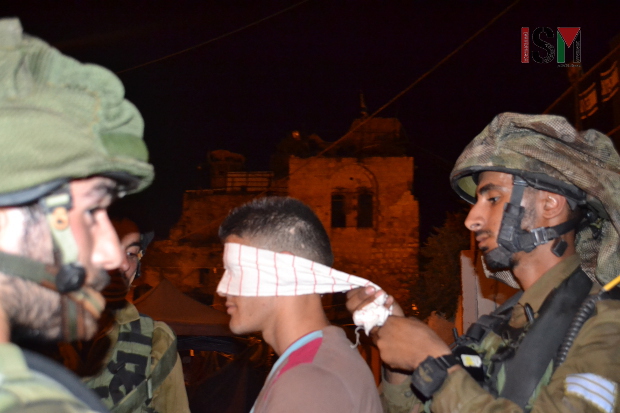
On a weekly basis, people throughout the West Bank are being arrested without charges, houses raided during the night, new houses have been demolished, settler violence has increased in the city of Hebron and in other villages, and the Israeli navy has increased the number of attacks towards Gazan fishermen.
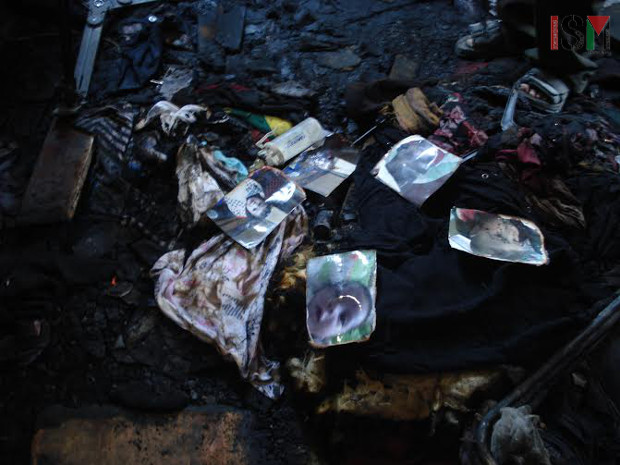
On August 1st, the infant Ali Dawabshe was brutally murdered with an arson attack to his house perpetrated by illegal Israeli settlers in the village of Duma. His father, Saad Dawabshe, died one week after from severe burn injuries. Both his mother, Riham, and his 4 year old brother, Ahamd, remain hospitalized with severe burn injuries all over their bodies, with high risk of dying.
Since the end of the last Zionist massacre against Gaza there have been 1312 reported attacks against Gazan fishermen.
Since then, 22 boats have been stolen; 26 fishermen have been injured; one fisherman, Tawfiq Abu Riela, has been assassinated; 28 boats have been disabled by bullet fire; 2 big fishing boats have been sunken by rocket fire, one in Deir El Balah at 300m from the coast and one in Gaza City at 5 miles; 51 fishermen have been kidnapped while working and 3 fishermen remain prisoners until now.
The team in Hebron has reported an increase of night raids by Israeli forces and attacks by illegal settlers, which is terrorizing Palestinians living in Hebron. Two days ago, on August 20th, a group of French extremist Zionists intimidated and attacked international activists and local Palestinians. This group of extremists, called Kahane, which is considered a terrorist organization under Israeli law, was received with signs of sympathy by the soldiers.
At approximately 5:00 am, on Wednesday, August 19, the homes of the Totah and Totanji families were demolished by the Israeli army in the neighborhood of Wadi al Joz, in East Jerusalem. This neighborhood has been under threat of demolition since December, 2014, despite the fact that there are no accountable papers presenting a demolition order, nonetheless, the army has been slowly carrying out this plan. Neighbors live in constant fear that anytime their homes will be torn down.
In very similar conditions, the village of Susiya has been suffering from enormous fear by the threat of mass demolition orders issued by the Israeli government since 2012.
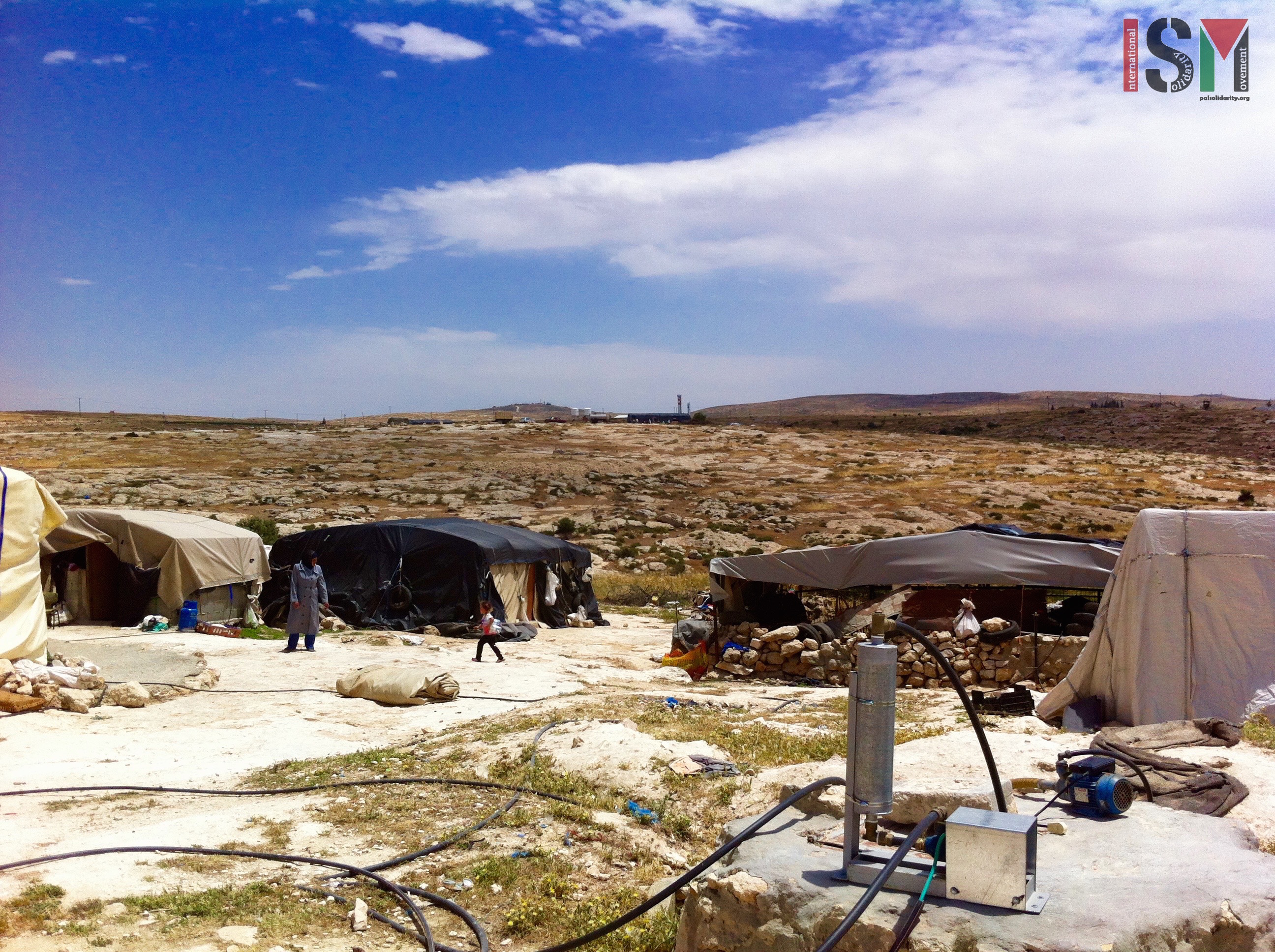
ISM also needs volunteers to join the 2015 olive harvest campaign.
ISM volunteers join Palestinian farming communities each year to harvest olives in areas where Palestinians face settler and military violence while working their land. Your presence can make a big difference, with Palestinian communities stating that the presence of international volunteers reduces the risk of extreme violence from Israeli settlers and the Israeli army.
The olive tree is a Palestinian national symbol, and the Israeli military systematically prevents agricultural fruition, in order to make life for Palestinians more difficult. The Israeli occupation provides a platform for Palestinian rights to be violated in an array of ways; the attack on agriculture is at the forefront.
Already documented this year, and to list a few cases; the trees have suffered settler sewage runoff , sabotaging fires, and being uprooted. Olive trees comprise of an essential 14% of the Palestinian agricultural economy.
We support Palestinians’ assertion of their right to earn their livelihoods and be present on their lands. International solidarity activists engage in non-violent intervention and documentation and practical support, which enables many families to pick their olives.
The campaign will begin during the last week of September and will last around 5 weeks. We request a minimum one week commitment from volunteers, but stress that longtermers are needed as well. We ask that volunteers start arriving around the 20th of September, so that we will be prepared when the harvest begins.
Training
We request a minimum two week commitment from volunteers, but stress that longtermers are needed as well. The ISM will be holding mandatory two day training sessions which will run weekly on Wednesdays and Thursdays. Please see the join ISM page or contact palreports@gmail.com for further information.
Florida Man Arrested in FBI/ISIS-Inspired Plot to Bomb a Beach
By Peter Van Buren | We Meant Well | August 21, 2015
 So you be the judge: which organization, the FBI or ISIS, had more to do with this supposed “threat” to the “Homeland”?
The FBI has arrested a man who allegedly wanted to detonate a bomb in what authorities describe as an ISIS-inspired terror attack, officials said.
Harlem Suarez, 23, of Key West, Florida, (pictured, and do note the Batman T-shirt) has been charged with attempting to use a weapon of mass destruction in the United States.
So Terrorist Suarez first came onto the FBI’s radar in April, after he posted whatever “extremist rhetoric” and pro-ISIS messages are on Facebook, according to the Justice Department. Facebook, yep, everything people post on Facebook is serious sh*t, man, no boasting or false bravado online, ever. Everybody always means exactly what they say.
Anyway, after creeping Suarez on Facebook, the FBI then sent in an FBI-employed “confidential source” who for months allegedly talked with Suarez online and in person about plans to attack the United States. Not that any of that would have encouraged or emboldened someone whose previous plans would have otherwise never left his bedroom.
In May, according to the FBI, Suarez recorded his own video, declaring: “We will destroy America and divide it into two. We will raise our black flag on top of your White House and any president on duty.”
Nice touch– “any president on duty.” Man, Suarez was obviously well-informed.
The FBI said that in subsequent meetings with the FBI informant, Suarez discussed plans for an attack around the July 4 holiday and said he would “cook American in cages” — an apparent reference to the ISIS video of a captured Jordanian pilot being burned alive while in a cage.
Last week, Suarez allegedly gave the informant two boxes of nails, a cell phone, a backpack and $100 to build a bomb. In the most recent discussions, Suarez talked about bombing a public beach in Key West and placing explosive devices under police cars, according to charging documents filed by the FBI.
Note that without some actual explosive material and the knowledge to build a bomb without first blowing yourself up (yeah, yeah, it’s all online, but so is a lot of stuff. Reading stuff online and actually safely handling explosives and ensuring they work remotely is a whole ‘nother story.)
And seriously, a backpack bomb, is that really a weapon of mass destruction?
Also note that at no point was anyone in America in danger in any way whatsoever.
“There is no room for failure when it comes to investigating the potential use of a weapon of mass destruction,” said Special Agent in Charge George Piro, head of the FBI’s Miami Field Office.
The New “Steps Towards Democracy” in South Korea
By Konstantin Asmolov | New Eastern Outlook | August 22, 2015
On July 15 2015, the police of the Republic of Korea in Seoul raided the office and residence of members of the civil movement, “Korean Alliance”, (in Korea – the association for independent reunification and the development of democracy), who advocate the expansion of ties with the DPRK. This organization was created in November 2011 to implement the independent reunification of the two Koreas without external influence. It demands the withdrawal of foreign troops (read – the US, because there are no others) from the Korean peninsula and advocates the abolition of the National Security Law (NSL), which (among other things) prohibits citizens of the Republic of Korea, any unauthorized contact with North Koreans and actions to support the DPRK.
According to law enforcement officials, the movement is suspected of “promoting North Korean ideology and actions in support of Pyongyang.” About 100 police officers went to the movement’s offices in order to seize documents for the investigation.
According to investigators, members of the movement, which the authorities consider “anti-government“, repeatedly published messages indicating a positive attitude towards the North Korean regime on the Internet, as well as organizing public events against the NSL. Furthermore, in 2013 during a stay in Germany, one of the members of the movement allegedly attended a seminar organized by the pro-North Korean group and was in contact with officials from the DPRK.
In addition, the chairman of the organization was the late pastor, Pak Chan Kyung, who, according to secret service agents, was previously deputy chairman of the pro-North Korean, organization “Korean Association for the Reunification of the Motherland.”
Its members are holding protests, calling for a stop to the investigation, but the chances of getting away with this are very slim. After all, at the same time the law-enforcement system in South Korea has taken “an important step toward democracy.” This entails the decision by the Constitutional Court on the issue of whether possession of North Korean literature is a political offense subject to proceedings under the Law on National Security. In comparison to the ban on the United Progressive Party, against which only one judge out of nine spoke up, the number of those voting “against” has risen to three, yet the ruling has been passed.
The decision was made in connection with the appeal by Hon, who was accused by the court of Suwon of violating the National Security Law. He was counted as belonging to the “anti-state organization” on the grounds that memoirs of Kim Il Sung were found on the hard drive of his computer, but he filed a protest, claiming that he held such materials to “better know the enemy.”
The court judgement confirmed that the NSL is vital in curbing social unrest, and necessary to ensure public safety and freedom by preventing actions that could lead to a violent regime change. Moreover, according to the Court, these restrictions did not violate freedom of speech. Of course, they could be used to suppress political opposition, but this should be separated from pro-North Korean activities. Such bans are precautions against possible social instability achieved by means of illegal protests.
As stated by the judges in their verdict, “given the current circumstances in the country, national security is critically dependent on the law which is being proposed for review. We recognize that, currently, there is no clear and direct threat, but it is in the public’s interest to restrain these violent ideas before they gain impetus.” Therefore, the storage of materials was sufficient for prosecution. “Given the level of modern scientific and technological progress, the rapid dissemination of materials via the Internet is very likely. The law prohibits the storage of individual anti-state literature without legal authorization.” In other words, anything that is not permitted is prohibited. Even if you’re just interested in North Korea without being a patented fighter with the Communists, this poses the threat of sedition.
It is curious that such an interpretation is, in fact, the assumption that a person that stores such information is, a priori, a supporter of North Korea.
Three of the judges, however, did not agree with this interpretation: the punishment for possession alone without proof of proliferation creates a great potential for errors or violations of the law. Too much depends on the personal opinion of the investigator. It requires additional evidence that the accused distributed these materials or kept them because they held similar views.
Let’s translate this law into the language of reality. Just the mere fact that you keep a copy of “Mein Kampf” at home automatically makes you a fascist and a suspect in a series of other crimes motivated by ethnic hatred, why else would a person keep this at home? And silly talk such as “how can you study Hitler, without reading Hitler?” are just flimsy excuses; if you are not registered as an official opponent of Hitler, then you must be one of his secret supporters, and so, face criminal prosecution. In general, if we compare this case with Russian practice, we have to ask ourselves who is catching up with the Russian Federation – North Korea, or even the Republic of Korea?
In this context, one cannot but recall the textbook for North Korea’s lawyers, issued by the Ministry of Public Security (i.e. by the ordinary, detective police) of North Korea in 2009. The book contains a great number of examples of various offenses, including an example very similar to the aforementioned, right up to the prescribed punishment.
Finally, here’s more recent news from July 31, 2015. The Constitutional Court has recognized the legitimacy of the Republic of Korea’s Law on the election of officials, which requires Internet users to use their real names during the electoral period. This relates to paragraph 6 of Article 82 and paragraph 1 of Article 261, which requires the user to specify their real names if they want to express opinions about political parties or candidates for leadership positions. For violation of these requirements, fines of up to 10 million Won, or 8.5 thousand Dollars are enforced. This requirement is effective only during the election period, because, according to the decision of the Constitutional Court dated August 23, 2010, the collection of users’ personal information when working with the Internet violates the constitutional rights of citizens. Thus, the 2007 requirement of the identification of Internet users was lifted, so as to prevent the interference with freedom of expression on the Internet.
Today’s decision by the Constitutional Court came in response to a complaint filed in 2013 by Daum, the web-portal whose headquarters are on the island of Jeju. The Jeju Provincial Electoral Commission fined the portal for breach of compliance with the requirement to indicate the real names of users during the 2012 presidential election. The Portal administration felt that this requirement was contrary to the decision of the Constitutional Court from 2010. Meanwhile, five of the nine judges found no violation of the law requiring users to indicate their real names. Especially, since it does not reveal the individual’s full personal information and is valid only during the election period. The other four judges considered that the requirement was unconstitutional because it required online-voters to disclose personal data, even if only for a limited period.
Here we should note the following: the Internet in South Korea is already only provided with passport identification. To register on a forum or to perform any transaction, it is necessary to submit a unique identification number. But here we are talking about the compulsory disclosure of personal data in any attempt to discuss politicized issues. Obviously, it’s not just for the sake of combating Internet trolling (which is usually cited to justify abolishing anonymity), but, so the state security organs could easily identify anyone whose thinking does not coincide with “the party line.”
This is an obvious crackdown. How it interfaces with the internal policies and whether it is possible, in this context, to say that conservative circles are regaining their former influence in the Republic of Korea will be in one of our forthcoming articles.
Konstantin Asmolov, PhD (History) is a Senior Researcher at the Institute of Oriental Studies of the Russian Academy of Sciences.
Kiev ordered deployment of ‘illegal & inhumane’ anti-personnel mines – ex-Ukrainian officer
RT | August 22, 2015
Kiev has been deploying anti-personnel mines in Donbass in breach of Ukraine’s own laws as well as international treaties, claims a former high-ranking Ukrainian officer and chief of the engineering service, who refused to obey the “illegal” and “inhumane” order.
In February 2014 Vadim Yatsulyak served as chief of the engineering service of the Interior Ministry of Ukraine, before being appointed as a commander of the Army Corps of Engineers of the National Guard. According to him, one of the first orders he was given in his new role was to receive a supply of anti-personnel mines from military warehouses, that would be later deployed throughout the territory of the so-called “anti-terrorist operation” to reinforce Ukrainian army positions.
“I was given, to put it mildly, inhumane or in legal terms unlawful orders by my superiors,” Yatsulyak told Russian tabloid Komsomolskya Pravda (KP) daily. “The deployment of anti-personnel mines in particular.”
Yatsulyak explained he was basically told by phone to accept the delivery of OZM-72 and MON-50 munitions and sign for it, while superiors would “stay aside assuming no responsibility.”
Refusing to implement the order, he notified his superiors, going as far as sending letters to the Minister of Defence, Ukraine’s parliament, and even the president, but “never received a single reply” to more than 85 complaints which he had sent to various ministries and officials. Eventually Yatsulyak was sacked as “unfit” for the position, and later left the country.
Even though he was never ordered to actually install anti-personnel mines, Yatsulyak speculates that Kiev eventually circumvented the law to deploy them, given the number of reports of deadly mine explosions in Donbass.
An order for the transition of “engineering munitions” such as mines between the Ministry of Defense and the National Guard would be coming “very high level,” and if properly documented would leave a trail of paperwork, Yatsulyak says. But he does not rule out that the papers could have been destroyed to cover the tracks of the perpetrators.
OZM-72 are Soviet manufactured bounding mine type anti-personnel mines, that according to now retired colonel, “jumps to a height of one meter and strikes manpower within a radius of 25-30 meters.” These mines can be activated by a number of fuses, but they are most commonly fitted with a booby trap switch which is activated by a tripwire.
The MON-50 is a directional type of anti-personnel mine that is deployed to wound or kill by explosive fragmentation. It is mounted above ground level on the surface or in trees to give the greatest dispersion of fragments and impact radius.
Both mines are illegal under the international Ottawa Treaty, as they can be indiscriminately activated potentially by non-combatants.
Ukraine signed the so-called Mine Ban Treaty in 1999 and ratified it in 2005. Kiev’s deadline to destroy anti-personnel mines stockpiles passed on 1 June 2010, but as of 2015 over 5 million anti-personnel mines remained in its warehouses.
In its technical briefing note released in April this year, Human Rights Watch (HRW), reviewed the types of landmines documented in the Ukraine conflict since early 2014, specifically focusing on antipersonnel mines.
“While it is clear that antipersonnel mines were used on a limited and localized scale, it is not possible at this time to concretely determine the responsibility of any party for using antipersonnel mines,” HRW concluded.
But as reports of their use in Donbass region keep surfacing, experts interviewed by RT seem to agree that anti-personnel mines could have easily been deployed by Kiev’s forces.
Yatsulyak’s allegations are “plausible” professor of politics at the University of Rhode Island, Nikolai Petro, told RT. “There have been prior suggestions by international organizations that watch over the placement of such mines, that they are being used in this conflict, so it is certainly possible.”
Although the Ottawa Treaty does offer “an exception” for the use of these weapons in the “state of war” and “specific combat situations,” Petro pointed out this is not the case, because “this is essentially a civil war, internal battle.”
Even Kiev itself keeps referring to its military operations in the east of the country as an “anti-terrorist operation,” which according to the country’s own laws must performed by anti-terrorist units of the Interior Ministry without the participation of the army.
Implementing illegal munitions, Petro says, would suggest that Kiev is not planning to “exert control over that area” and expects it to fall into “enemy hands.” Such a plan to “give up” on the region would certainly raise a debate in Ukraine, but Petro does not expect the official reaction to go beyond assurances that “the matter is under investigation.”
Indeed, the Ukraine National Guard press service told RT that “as of yet [they] can neither confirm, nor deny this information,” adding that they first “need to check the documents issued at that time.”
After Decades of Denial National Cancer Institute Finally Admits that “Cannabis Kills Cancer”
By Jay Syrmopoulos | The Free Thought Project | August 21, 2015
After decades of claiming that cannabis has no medicinal value, the U.S. government is finally admitting that cannabis can kill cancer cells.
Although still claiming, “there is not enough evidence to recommend that patients inhale or ingest cannabis as a treatment for cancer-related symptoms or side effects of cancer therapy,” the admission that “cannabis has been shown to kill cancer cells in the laboratory,” highlights a rapidly changing perspective on medicinal cannabis treatments.
In the most recent update to the National Cancer Institute’s (NCI) website included a listing of studies, which indicated anti-tumor effects of cannabis treatment.
Preclinical studies of cannabinoids have investigated the following activities:
Antitumor activity
• Studies in mice and rats have shown that cannabinoids may inhibit tumor growth by causing cell death, blocking cell growth, and blocking the development of blood vessels needed by tumors to grow. Laboratory and animal studies have shown that cannabinoids may be able to kill cancer cells while protecting normal cells.
• A study in mice showed that cannabinoids may protect against inflammation of the colon and may have potential in reducing the risk of colon cancer, and possibly in its treatment.
• A laboratory study of delta-9-THC in hepatocellular carcinoma (liver cancer) cells showed that it damaged or killed the cancer cells. The same study of delta-9-THC in mouse models of liver cancer showed that it had antitumor effects. Delta-9-THC has been shown to cause these effects by acting on molecules that may also be found in non-small cell lung cancer cells and breast cancer cells.
• A laboratory study of cannabidiol (CBD) in estrogen receptor positive and estrogen receptor negative breast cancer cells showed that it caused cancer cell death while having little effect on normal breast cells. Studies in mouse models of metastatic breast cancer showed that cannabinoids may lessen the growth, number, and spread of tumors.
• A laboratory study of cannabidiol (CBD) in human glioma cells showed that when given along with chemotherapy, CBD may make chemotherapy more effective and increase cancer cell death without harming normal cells. Studies in mouse models of cancer showed that CBD together with delta-9-THC may make chemotherapy such as temozolomide more effective.
The NCI, part of the U.S. Department of Health, advises that ‘cannabinoids may be useful in treating the side effects of cancer and cancer treatment’ by smoking, eating it in baked products, drinking herbal teas or even spraying it under the tongue.
The site goes on to list other beneficial uses, which include: anti-inflammatory activity, blocking cell growth, preventing the growth of blood vessels that supply tumors, antiviral activity and relieving muscle spasms caused by multiple sclerosis.
Several scientific studies have given indications of these beneficial properties in the past, and this past April the US government’s National Institute on Drug Abuse (NIDA) revised their publications to suggest cannabis could shrink brain tumors by killing off cancer cells, stating, “marijuana can kill certain cancer cells and reduce the size of others.”
“Evidence from one animal study suggests that extracts from whole-plant marijuana can shrink one of the most serious types of brain tumors,” the NIDA said. “Research in mice showed that these extracts, when used with radiation, increased the cancer-killing effects of the radiation.”
Research on marijuana’s potential as a medicine has been stifled for decades by federal restrictions, even though nearly half of the states and the District of Columbia have legalized medical marijuana in some form.
Although cannabis has been increasingly legalized by states, the federal government still classifies marijuana as a Schedule 1 drug — along with heroin and ecstasy — defining it as having no medical benefits and a potential for abuse.
The vast majority of the $1.4 billion spent on marijuana research, by the National Institute of Health, absurdly involves the study of abuse and addiction, with only $297 million being spent researching potential medical benefits.
Judging by the spending levels, it seems the feds have a vested interest in keeping public opinion of cannabis negative. Perhaps “Big Pharma” is utilizing their financial influence over politicians in an effort to maintain a stranglehold on the medical treatment market.
Are Zionist terrorist settlers backed by the Israeli regime?
Press TV
After the burning alive of 18-month-old Ali Dawabsheh by a fanatical Zionist settler, the world has reacted with outrage.
The attack was so horrendous that even Israeli leader Benjamin Netanyahu distanced himself from it, calling it an act of terrorism.
But on today’s show we will be asking to what extent Israel is responsible for the activities of its extremists. Are these fanatical terrorists really just a few bad apples, as Netanyahu would have us believe?
Or are they the product of decades of deliberate Zionist policy to colonize stolen land?
Featured Video
Prof. Ted Postol: Iran Already Achieved Nuclear Deterrence Against Israel
or go to
Aletho News Archives – Video-Images
From the Archives
How the occupied mentality syndrome works
Saudi Arabia on the American chessboard – Part 3
By B. J. Sabri | American Herald Tribune | June 27, 2016
Read part 2: “The occupied mentality Syndrome“
Previously I argued whether Saudi Arabia’s repeated involvements in U.S. interventions and wars stem from free national will or in response to a specific condition. For starters, in Saudi Arabia there is no national will. In Saudi Arabia, the national will is the will of the Al Saud clan. Still, when a major Arab state allies itself with a superpower that committed unspeakable crimes against humanity in almost every Arab country, then something is wrong. This fact alone should compel us to examine the U.S.-Saudi relation for one exceptional reason. As a result of the U.S.-Saudi wars, hundreds of thousands of people in Afghanistan, Iraq, Iran, Libya, Syria, Yemen, and Somalia have lost their lives. Millions became displaced in their own homelands. And millions more rendered refugees.
Attributing the Saudi policies to the bonds of “partnership” with the U.S. is frivolous. There are no bonds between these two thugs except those of business, military deals, secret plots, and wars. Proving this point, bonds such as these have no space for the American and Saudi peoples to share significant cultural or societal exchanges. If partnership is not the reason for the Saudi contribution to the U.S. strategy of empire and imperialism, then another reason must exist.
This leads to three possibilities. … continue
Blog Roll
 Aletho News
- REWRITING THE RISK? INSIDE THE GOVERNMENT’S VACCINE SAFETY MESSAGING
- “Davos Can Really Replace the UN”
- NIAID/NIH and USDA Fund Bioengineered Chimeric Influenza Viruses Built Using Pandemic H1N1 Components: Journal ‘Science Advances’
- Hezbollah hits Israeli warship off Lebanon’s coast, sets it aflame
- Iran slams US strikes on B1 bridge, Mahshahr petrochemical plants as ‘blatant acts of state terrorism’
- In letter to UN chief, Araghchi warns of dire consequences of US-Israeli attacks on Iran’s nuclear facilities
- Why the CIA conspiracy to invade Iran with Kurdish militias failed
- Why Are Upbeat US Claims About Mission to Rescue Pilot ‘Highly Questionable’?
- Aircraft destroyed during US ‘rescue’ of downed F-15 pilot cost more than $100 million each
- Washington University removes professor who condemned US-Israeli war on Iran
- If Americans Knew
- In Iran, Israel-US take aim at “reason, research, and freedom of thought” – Daily Update
- US loses planes over Iran, Israel downgrades Lebanon war goals – Daily Update
- Israel Is Blocking Palestinians from Easter at Church Where Jesus Resurrected
- Plot to assassinate Palestinian activist follows harassment campaign promoted by Zionist groups and elected officials
- Prominent New York synagogue hosts presentation on why U.S. Jews should support the ethnic cleansing of Gaza
- Tapper vs. Piker: Is the CNN Anchor Auditioning for David Ellison?
- Shouldn’t Democrats Be Able to Condemn Genocide?
- Israel-US kill negotiators, destroy civilian structures, but Iran’s military capabilities still largely intact – Daily Update
- ‘War crime’: Global condemnation as Israeli ministers celebrate death penalty law targeting Palestinian prisoners
- 7 Ways Israel Is Turning Lebanon Into Gaza
- No Tricks Zone
- An Inconvenient Tree: Uncovered In Alps… Europe Much Warmer Than Today 6000 Years Ago
- New Study Reports A 60% Slowdown In Greenland’s Ice Loss Rate In The Last Decade
- Low Intensity Tornado Wrecks Major Solar Farm, Creating A Potential Toxic Dump
- New Study Finds Warming Saves Lives…Cold Temperatures 12 Times More Deadly Than Excess Heat
- German Science Blog Accuses PIK Climate Institute Of Hallucinating Climate Tipping Points
- Devastating Assessment Of Comirnaty Vaccine By Former Senior Pfizer Europe Toxicologist
- New Study: CO2 Is ‘Effectively Negligible’ As An Explanatory Climate Change Factor Since 2000
- Former Pfizer Toxicologist Dr. Helmut Sterz Tells Bundestag Hearing Pfizer Vaccine Should Have Never Been Approved
- Energy Expert: Germany’s Nuclear Phaseout Was A “500 Billion Euro Mistake”
- New Research: South Australia’s Mid-Holocene Sea Surface Temperatures Were 4°C Warmer Than Today
 Aletho News