Western Media Hype ‘Russian Aggression’ in Syria
By Eric Draitser | New Eastern Outlook | September 11, 2015
From Washington to the western media, everyone has been talking about reports of potential Russian ‘intervention’ in Syria. On the one hand, the proliferation of this meme is a case study in the western propaganda system, as one report is then repeated ad nauseam from thousands of sources, then built upon by subsequent reports, thereby manufacturing the irrefutable truth from the perspective of media pundits and western mouthpieces. On the other hand, the new reports also raise some interesting questions about the motives of both the US and Russia, as well as the other interested parties to the conflict in Syria.
In examining this new chapter of the ongoing war in Syria, two critical and interrelated points seem to rise above all others in importance: Why is the western media hyping this narrative of Russian intervention? And why is direct Russian involvement, limited though it may be, seen as such a threat by the US?
Dissecting the Propaganda
An Israeli publication reported that Russian air power would be increasing in Syria with “Russian jets in Syrian skies,” as the headline read. While all the information came from unnamed “western diplomatic sources,” and was accompanied by little more than assertions of fact without any tangible evidence, the media outcry began almost immediately, with literally hundreds of news outlets reporting the same information. Within 24 hours however, a Russian military source denied the allegations, saying, “There has been no redeployment of Russian combat aircraft to the Syrian Arab Republic…The Russian Air Force is at its permanent bases and carrying out normal troop training and combat duty.”
Almost as if on cue, the next day The Daily Beast published a story claiming that there were Russian boots on the ground in Syria, as well as large shipments of military materiel en route to Syria, including trucks and BTR infantry fighting vehicles. The article cited Turkish navy photos showing a Russian ship purportedly carrying the cargo, quite openly it must be said (more on this later).
Naturally, the conversation in Washington instantly became about Russian intervention and the danger of Russia “destabilizing” the situation in Syria, an assertion that would be laughable if it weren’t so deeply cynical and hypocritical considering four and a half years of US-NATO-GCC-Israel intervention in Syria.
Official denials of escalation from Moscow did nothing to calm tensions on the issue as US Secretary of State Kerry called Russian Foreign Minister Lavrov to voice concerns that Russian involvement could escalate the conflict. After the call, the State Department released a statement explaining that the US had:
… concerns about reports suggesting an imminent enhanced Russian buildup [in Syria]. The secretary made clear that if such reports were accurate, these actions could further escalate the conflict, lead to greater loss of innocent life, increase refugee flows and risk confrontation with the anti-ISIL coalition operating in Syria… The two agreed that discussions on the Syrian conflict would continue in New York later this month.
A careful reading of this short, but important, statement should raise one obvious question: what does the State Department mean by “reports”? Specifically, the initial Israeli report was allegedly based on intelligence from key Western (presumably US) sources that would obviously have access to classified information. Were that true, then surely the State Department would be alarmed by the intelligence, and not the reports.
In other words, the US military and government, with its vast surveillance and intelligence apparatus, knows perfectly well if a true Russian military buildup in Syria is really happening. Instead, the State Department focuses on the media reports, indicating that, rather than responding to intelligence, it is responding to a media story, one which is based entirely on information the US itself supplied.
So, the dramatic reaction to the reports is essentially a reaction to a story they themselves planted. Translation: Washington is hyping the story in order to further its political position, and to weaken Russia’s, by framing the debate as one of ‘Russian interventionism.’
And, in true western corporate propaganda fashion, the reports have been built upon since then. There are now allegations that Russia is building “a huge 1,000 personnel compound,” and even a report from the decidedly dubious DebkaFile – an outlet notoriously close to Israeli intelligence which has published as much disinformation as credible information – alleging that the Russians have deployed a submarine loaded with 20 intercontinental ballistic missiles (ICBMs) and 200 nuclear warheads to Syria. All of this is an attempt to further bolster the narrative that Russia is the aggressor, attempting to escalate the conflict in Syria for its own purposes.
Returning to the information on the trucks being supplied through the Bosphorous, as reported in international press, there is a painfully obvious question that must be asked; namely why Moscow would choose to initiate a covert military buildup but would transport the equipment openly, in plain sight of any naval intelligence or satellite imagery. Obviously, it is because Russia is not doing this covertly, but is merely continuing to supply the Syrian government as it has done since 2011.
And that is precisely the point that Foreign Ministry spokeswoman Maria Zakharova made in a recent interview. She noted that, “We have always supplied equipment to them for their struggle against terrorists… We are supporting them, we were supporting them and we will be supporting them.” In other words, there is nothing secret about what Russia is providing to the Syrian government under its existing contracts.
This is also in keeping with comments from Russian President Putin who confirmed what all serious analysts following the conflict in Syria already knew, that Russian advisers have been providing training and logistical support to the Syrian military. Of course, based on the hype in western media, one could be forgiven for thinking that Russia’s military had moved in and taken command of the war effort in Syria. In reality, Russia’s participation from a logistical and advisory perspective has been rather limited.
It is becoming increasingly clear that Moscow is stepping up its aid and engagement in Syria, but it obviously has not fundamentally changed its policy. As one source confirmed to Reuters this week, “The Russians are no longer just advisors… The Russians have decided to join the war against terrorism.” Indeed, another of the sources noted that, “[The Russians] have started in small numbers, but the bigger force did not yet take part … Russians [are] taking part in Syria but they did not yet join the fight against terrorism strongly.”
These statements are particularly interesting if set against the media narrative being portrayed in the West, as well as the language employed by the State Department and White House which was quoted as saying “We would welcome constructive Russian contributions to the counter-ISIL effort, but we’ve been clear that it would be unconscionable for any party, including the Russians, to provide any support to the Assad regime.”
Analysts with knowledge of the situation seem convinced that Russian participation is geared towards helping the Syrian government in the fight against terror groups such as ISIS/ISIL and Al Qaeda’s al-Nusra Front, and that the increased presence is clear evidence of Moscow’s commitment to anti-terrorism. This presents a complex quandary for Washington which pays lip service to counter-terrorism while simultaneously describing as “unconscionable” any effective counter-terrorism aid in the war.
What is perhaps most interesting about the media coverage and comments from US officials about Russian moves being “destabilizing,” is the fact that since 2011 the western media has published literally thousands upon thousands of articles documenting openly the role of US military and intelligence, and its counterparts in NATO (including Turkey), Israel, and the Gulf monarchies, in arming and training fighters to wage war against the Syrian government (see here, here, here, here, here, and here for just a tiny sample). Somehow these actions are not considered “meddling” or “destabilizing” to the conflict in Syria, while Russia’s alleged involvement is cause for international outcry.
The Real Agenda
The obvious conclusion is that Russia’s aid to Syria has been critical in stymieing Washington’s regime change agenda, thereby necessitating an active propaganda assault to demonize Moscow’s moves both in regard to supplying and aiding Damascus, and its calls to form a coalition against the Islamic State and international terrorism. In effect, the media is working to caricature Russia as an aggressor in Syria in order to deflect attention from the fact that US efforts in Syria have failed, and that the US has no intention of effectively fighting the terrorism it continues to promote.
The US-NATO-GCC-Israel axis seeks to continue the war on Syria using any means necessary, including continued support for terrorist factions such as the so called “Army of Conquest,” al Qaeda linked groups like al Nusra Front, and ISIS/ISIL. The ultimate goal is the collapse of the Syrian state and the breaking of the Iran-Syria-Hezbollah alliance, which would mean the final and permanent ejection of Russian influence from the region.
Russia fully understands this strategic imperative for Washington, just as it knows that terrorism is the principal weapon being employed in the ongoing war. As such, Moscow has moved to bolster the Syrian government (Russia knows that the Syrian Arab Army is the most effective counter-terrorism fighting force) in order to provide it with the necessary aid to continue to destroy terrorist groups. Moreover, any additional Russian support in terms of advisers, increased shipments of materiel, and/or limited numbers of combat troops, provide Damascus with the physical resources necessary to wage the war.
At the largest level however, Moscow is moving to call Washington’s bluff regarding the fight against the Islamic State, and terrorism generally. Putin knows that the US does not want to destroy ISIS/ISIL, but rather to manage its development in an attempt to steer it toward US strategic objectives.
This strategy was outlined in the declassified 2012 US Defense Intelligence Agency (DIA) document obtained by Judicial Watch, which revealed that the US has knowingly promoted the spread of the Islamic State since at least 2012 in order to use it as a weapon against the Assad government. The document noted that, “… there is the possibility of establishing a declared or undeclared Salafist Principality in eastern Syria… and this is exactly what the supporting powers to the opposition want, in order to isolate the Syrian regime, which is considered the strategic depth of the Shia expansion (Iraq and Iran).”
So, by proposing an international coalition to defeat ISIS/ISIL, Putin is essentially forcing the US either to admit that it is not serious about destroying the terrorist network, or that it will only do so under its own aegis, thereby exposing Washington’s motives as entirely self-serving, and rooted in the US hegemonic agenda for the region.
But Washington will not simply allow Putin to outmaneuver it in terms of public relations. Instead, it reverts to the tried and true, and still remarkably effective, meme of Russian aggression. By portraying Russia as the villain bent on arming the “brutal dictator,” the US hopes to transform the discourse on Syria, moving from its own ghastly record of arming terrorists and seeking the destruction of the state, to Russia “meddling” in the conflict.
Keen political observers shouldn’t be fooled by this sort of sleight of hand propaganda. But don’t tell the corporate media. They’re busy working overtime, parroting US-NATO talking points, rather than asking questions and seeking answers.
Britain fueling war in Yemen, breaking international law – Oxfam UK
RT | September 11, 2015
The conflict in Yemen has been exacerbated by the UK government’s arms deals with Saudi Arabia, causing a terrible humanitarian catastrophe and potentially placing the government in breach of international law, Oxfam UK has said.
The ongoing war has seen Saudi Arabia, backed by US and UK arms, carry out airstrikes on Houthi rebels attempting to take control of Yemen.
International law states that arms deals should be prohibited if there is a risk they could be used to commit war crimes or human rights abuses, the charity said, adding the UK’s response to the conflict has been a “paradox.”
The British government insists is has not been directly involved in the bombings, but Oxfam says the UK has been replenishing Saudi weapons since the conflict began. Simultaneously, it has been donating money from the Department of International Development to aid the millions of civilians caught up in Saudi bombing raids, which have targeted factories, warehouses and markets.
Oxfam Chief Executive Mark Goldring called the conflict a “humanitarian disaster.”
“Yemen has descended into a humanitarian disaster putting its people at risk of famine and the UK is materially involved through its export of arms and military support to the bombing campaign. An estimated eight children a day are killed or injured in Yemen’s conflict. The ongoing conflict in Syria and the refugee crisis it has produced show why it is so vitally important to search for political solutions before it is too late. It is time the government stopped supporting this war and put every possible effort into bringing an end to the carnage.
“There is a paradox at the heart of the government’s approach to Yemen. On the one hand the Department for International Development is funding efforts to help civilians caught up in the conflict, while on the other the government is fueling the conflict that is causing unbearable human suffering,” he said.
“The UK successfully lobbied hard over many years for a UN Arms Trade Treaty to regulate the arms trade which came into being last year. This government has incorporated the treaty into national law, yet at the first test of the new law it has turned a blind eye to mounting evidence of potential misuse of its weapons and support.”
The charity is calling for a suspension of arms trading with Saudi Arabia and a full investigation into the legal implications of its trade with the country, as well as a push for more humanitarian aid.
Its plea comes after an investigation into the conflict by BBC’s Newsnight revealed the plight of civilians in Yemen, many of whom have been forced to flee their homes.
The report showed one target of a Saudi airstrike believed to have been a training camp and arms factory. In actual fact the target was a water-bottling plant. The airstrike killed many workers, some as young as 13.
Iran, Israel and U.S. Subservience
By Robert Fantina | CounterPunch | September 11, 2015
As the United States Congress debates whether or not to accept an agreement that the U.S. and five other nations reached with Iran, regulating that nation’s nuclear program, the media keeps a less-than-rapt public informed. Each day, news pundits first speculate on how this or that senator may vote, and then when some senator announces his or her position, it is tallied up as a ‘yes’ or ‘no’, and a victory or defeat for President Barack Obama.
As all this takes place, some odd but revealing statements have been made. Let us first look at just two, both from Democrats, one from a senator voting for the deal, and one who opposes it, and see what they tells us.
Colorado Senator Michael Bennett, in endorsing the deal, made this astonishing statement: “Our primary objectives are to prevent Iran from having a nuclear weapon, make sure Israel is safe and, if possible, avoid another war in the Middle East.”
As this writer is wont to do, let us break this statement down to its component parts. We will look at Mr. Bennett’s ‘primary objectives’.
“Prevent Iran from having a nuclear weapon”. Well, the fewer nuclear weapons in the world, the better. But why are some countries allowed to have them, and others not? The only nation in the world ever to have used nuclear weapons, the U.S., has a large stockpile, and has done nothing to reduce it. Please note that the U.S. has been at war with one country or another for most of its long and bloody history, so the fact that it has nuclear weapons is certainly a great risk to the world. Former President Richard Nixon is said to have considered using nuclear weapons in Vietnam. Why is Iran being singled out as not allowed to have such weapons when the U.S. can have them?
“Make sure Israel is safe”. See how quickly we get to the crux of the matter? Israel’s safety, for Mr. Bennett, is of paramount importance. And if Iran were to develop nuclear weapons, then Israel wouldn’t be the only Middle East country with them.
There is always so much concern about Israel’s safety! Does the U.S. not care about the safety and security of other Middle Eastern nations? We know that Iraq’s security is not of any interest to the U.S., or it wouldn’t have destabilized Iraq by invading it in 2003. And with Israel assassinating Iran’s nuclear scientists, there can’t be too much concern about that nation’s internal security.
And what about Palestine? Israel increasingly steals Palestinian land, but no U.S. politician ever talks about the national security of Palestine.
U.S. spokespeople always proclaim that Israel is the U.S.’s only ally in the Middle East. Perhaps if the U.S. would stop bombing the men, women and children of other Middle Eastern countries, and would be a little more equitable in its foreign aid distribution (currently, Israel gets more foreign aid from the U.S. than all other countries combined), it might find that it suddenly would have more friends in the Middle East. It has been said that before the bloody, murderous and genocidal establishment of Israel in 1948, the U.S. had no enemies in the Middle East.
Why, then, might Mr. Bennett be so concerned about Israel? Could it be the $108,766.00 in donations from Israeli lobbies that he received between 2009 and 2015? Perhaps we will dismiss that notion, and say that Mr. Bennett is a statesman, rising above such petty things as campaign contributions, and only doing what he feels, in his heart of hearts, is best for the U.S. citizenry, come what may. When pigs fly.
“If possible, avoid another war in the Middle East.” So, as an afterthought, after concerns about Israel’s security have been addressed, perhaps avoiding a war isn’t such a bad idea. This is not the usual U.S. way; diplomacy isn’t high on the list of characteristics held by most of Congress. There isn’t a lot of muscle-flexing and chest-thumping involved in diplomacy, and what’s a little blood of U.S. citizens, and lots of it of foreign citizens, when such macho displays of power are to be demonstrated?
Now, to the opposition. Democratic Senator Ben Cardin of Maryland, who greatly distrusts Iran, said this: “There cannot be respect for a country that actively foments regional instability, advocates for Israel’s destruction, kills the innocent and shouts ‘Death to America.’” Again, we will look at the component parts.
Mr. Cardin is critical of nations that
1 ‘Actively foment regional instability’. The U.S. is causing untold suffering and ‘regional instability’ through drone strikes and support for repressive regimes or rebel groups throughout the region. One would like to hear Mr. Cardin oppose such active fomenting of regional instability.
2 ‘Advocate for Israel’s destruction’. Once again, Israel is foremost in the mind of another senator, as he looks at the nuclear agreement with Iran. Israel, of course, acts to destroy Palestine with full U.S. support, but that, as mentioned above, isn’t a concern.
Between 2009 and 2015, Mr. Cardin received $241,293.00 from Israeli lobbies. We will wonder again if this, perhaps, didn’t factor in strongly in Mr. Cardin’s deliberations.
As might be expected, the multitudinous Republican presidential candidate wannabes were universally opposed to the agreement. Oddly (not!), Israel was a major factor in their criticisms. The following are just a few of their comments.
Wisconsin Governor Scott Walker: “The deal rewards the world’s leading state sponsor of terrorism with a massive financial windfall, which Iran will use to further threaten our interests and key allies, especially Israel.” No, Mr. Walker, by any objective means, it is the U.S., not Iran, that is the world’s leading state sponsor of terror.
Former Arkansas Governor Mike Huckabee: “As president, I will stand with Israel and keep all options on the table, including military force, to topple the terrorist Iranian regime.” It sounds as if Mr. Huckabee wants ‘regime change’: when have we heard this before? Oh yes, that was President George W. Bush’s mantra when he sent soldiers in to ‘fix’ Iraq. We all know how well that turned out. Mr. Huckabee further said: “A threat to Israel is a threat to America.” No, it simply is not. Also, preventing Iran from developing nuclear weapons doesn’t seem to constitute a threat to any nation, with the possible exception of Iran.
Senator Lindsay Graham weighed in with these pearls of wisdom: “You’ve put Israel in the worst possible box. This will be a death over time sentence to Israel if they don’t push back.” It is interesting to note that between 2009 and 2015, Mr. Graham received $286,350.00 from Israeli lobbies.
It is no secret where this great anxiety for Israel originates; money talks in the U.S., and Israeli lobby groups speak loudly. What is disturbing is how it takes precedence over every other concern, to the point where elected officials are willing to wage war to protect an apartheid nation, censured more by the United Nations than any other country on the planet. This is the nation whose interests the U.S. puts front and center, before its own. This is the nation that receives billions of dollars in U.S. aid annually, as U.S. cities decay. This is the nation for which the U.S. will jeopardize the lives of its young citizens, by disdaining diplomacy and using war as the dominant means of ‘leading’ in the world.
That leading politicians so blatantly state their adoration for Israel should give every U.S. citizen cause for concern. It is time for justice and human rights to be enshrined as the hallmarks of U.S. foreign policy. As that has never been the case, it will be difficult to introduce it now. But it must be done; the world has suffered for too long because of the U.S.
Point H-2: The Claim that ‘Able Danger’ Failed to Identify Mohamed Atta’s Probable Presence in the US in January 2000
Consensus 9/11
Introduction
Able Danger was the code name for a high-level intelligence operation co-founded by Generals Hugh Shelton and Peter Schoomaker, Commanders in Chief of the Defense Department’s Special Operations Command (SOCOM).
Telling the story about Able Danger takes time, but it is important, because its work strongly indicated that the man identified as “Mohamed Atta” had been in the United States in January-February 2000, about 18 months before the 9/11 attacks, whereas the official story said he arrived in June, 2000.
Furthermore, the official story claimed that US intelligence didn’t know he was in the country before 9/11, whereas an important part of US intelligence knew he had been there since Jan-Feb, 2000. (For the reason why we speak of “the man identified as ‘Mohamed Atta,’” see the footnote. [1])
However, the Able Danger evidence was consistently ignored by government officials; the 9/11 Commission failed to mention the evidence; and the Defense Department’s Inspector General covered it up. [2] Louis Freeh, the former director of the FBI, called the 9/11 Commission’s claim that it was not historically significant “astounding.”
Background
Here are the details of this story:
Tasked with collecting open-source Internet data on worldwide al-Qaeda networks and terrorist financing, this massive “data- mining” operation employing 80 people began in late 1999.
It used a link-mapping strategy to download and analyze data from thousands of websites. The terrorist network data were then presented visually on wall charts.
The Able Danger leadership team included:
- Navy Captain Scott Phillpott (the head of Able Danger)
- US Army Lt. Col. Anthony E. Shaffer (on loan from the Defense Intelligence Agency)
- Erik Kleinsmith (Army Major and the Chief of Intelligence of the Land Information Warfare Activity)
- James D. Smith (a civilian defense contractor from Orion Scientific Systems)
- Dr. Eileen Preisser (Dual PhD, analytical lead, from the Land Information Warfare Activity)
By January-February 2000, the team had discovered the surprising probability of al-Qaeda members within a terrorist cell in Brooklyn. [3]
In mid-2000, Lt. Col. Shaffer was asked by Captain Phillpott to open communications between the head of Able Danger and the FBI in order to collaboratively take down the cell in Brooklyn. However, SOCOM attorneys rejected this effort three times, leaving the FBI unaware of information that suggested the man identified as Atta was inside the U.S. in early 2000. [4]
Soon after 9/11, when photos of the suspected terrorists were released, Phillpott, Shaffer, Preisser, and Smith were shocked to recognize alleged lead hijacker Mohamed Atta and two other alleged hijackers from an Able Danger chart.
Two weeks later, Dr. Preisser, along with three Republican Congressmen – Curt Weldon, Chris Shays, and Dan Burton – showed the “Atta chart” to Deputy National Security Advisor Stephen Hadley in the White House, who said he would show it to President Bush. [5]
In October 2003, Lt. Col. Shaffer contacted 9/11 Commission Executive Director Philip Zelikow, while both were in Afghanistan, to report that Able Danger had identified Atta over a year before the attacks.
In March 2004, Shaffer’s Defense Intelligence Agency security clearance was suspended, preventing him from further accessing the documents. [6]
In June 2005, Congressman Curt Weldon (Vice Chairman of the House Armed Services and Homeland Security Committees) told about Able Danger in an interview with the Norristown Times Herald, [7] and in a subsequent speech on the floor of the House he called for an investigation. [8]
Thomas Kean and Lee Hamilton, the co-chairs of the 9/11 Commission, which had not mentioned Able Danger in its July 2004 final report, stated in August 2005 that Able Danger was not “historically significant.” [9]
One day before a 2005 U.S. Senate Hearing on the matter, key Able Danger witnesses Shaffer, Phillpott and Smith were placed under a gag order by Secretary of Defense Donald Rumsfeld. [10]
At the same Senate Hearing, Able Danger team member Erik Kleinsmith testified that he was ordered, under Army oversight regulations, to destroy all 2.5 terabytes of the Able Danger material, which he did in May or June of 2000. [11]
In October 2005, Congressman Weldon called for “a full independent investigation by the Inspector General [IG] of the Pentagon.” [12] The IG investigation reported that the five Able Danger witness “recollections were not accurate.” [13]
The Official Account
- As The 9/11 Commission Report informed us, Mohamed Atta was the “tactical leader of the 9/11 plot.” [14] He first arrived in the United States on a tourist visa, June 3, 2000. [15] The 9/11 Commission also said that “American intelligence agencies were unaware of Mr. Atta until the day of the attacks.” [16]
- In August 2005, a year after the 9/11 Commission had closed, Commissioners Kean and Hamilton explained to the media why Able Danger had not been included in The 9/11 Commission Report:
- They had been informed about Able Danger in 2003, but were “never told that it had identified Mr. Atta and the others as threats.” [17] Although the project leader Captain Phillpott was interviewed by the Commission about Atta in July 2004, his “knowledge and credibility” were not “sufficiently reliable” to warrant further investigation of Able Danger, so they concluded that the project was not “historically significant.” [18]
- When the Commission asked the Pentagon for all its documents relating to Able Danger, “none of the documents turned over to the Commission mention Mohamed Atta or any of the other future hijackers.” [19]
According to an Associated Press story reported in mid-September 2005:
“The commission’s former chairman, Thomas Kean, said there was no evidence anyone in the government knew about Atta before Sept. 11, 2001. … Kean said the recollections of the intelligence officers cannot be verified by any document.”“ ‘Bluntly, it just didn’t happen and that’s the conclusion of all 10 of us,’ said a former commissioner, former Senator Slade Gorton.” [20]
- Although several of Able Danger’s officers and intelligence analysts had been scheduled to testify at a hearing of the Senate Judiciary Committee September 21, 2005, the Defense Department said that open testimony “would not be appropriate [because of] security concerns.” [21]
- In a September 2006 investigative report, the DOD Office of the Inspector General (IG) wrote:“We concluded that prior to September 11, 2001, Able Danger team members did not identify Mohammed [sic] Atta or any other 9/11 hijacker. While we interviewed four witnesses who claimed to have seen a chart depicting Mohammed Atta and possibly other terrorists or ‘cells’ involved in 9/11, we determined that their recollections were not accurate.” [22]
The Best Evidence
I. Regarding Mohamed Atta’s Date of Arrival in the United States:
- Three senior staff from the Able Danger project gave written testimony to a September 2005 Senate Hearing that Mohamed Atta was identified as a potential member of a terrorist cell in New York in January-February 2000, four months earlier than the June 2000 date stated by the official account. A fourth member of the project, Mr. Kleinsmith, was asked during the same Hearing:“Are you in a position to evaluate the credibility of Captain Philpott [sic], Colonel Shaffer, Mr. Westphal, Ms. Preisser, or Mr. J.D. Smith, when they say they saw Mohammed [sic] Atta on the chart?”Mr. Kleinsmith: “Yes, sir. I believe them implicitly from the time that I had worked with all of them.” [23]
- After 9/11, civilian sightings of Atta during the spring of 2000 were reported in the news:
- Johnelle Bryant of the US Department of Agriculture, talking to Brian Ross of ABC News “in defiance of direct orders from the USDA’s Washington headquarters,” said that Atta came into her office “sometime between the end of April and the middle of May 2000,” asking for a loan to buy a small airplane (which she refused to give). Bryant reported that when she wrote down his name, she spelled it A-T-T-A-H, leading him to say: “No, A-T-T-A, as in Atta boy!” [24]
- In April 2000 and into the summer, Atta was, according to the head of security and a reference librarian, seen repeatedly using the computers in the Portland Maine Public Library. [25]
- A federal investigator reported to Associated Press on condition of anonymity that Atta and another hijacker rented rooms in Brooklyn and the Bronx in the spring of 2000. A senior Justice Department official reported that Atta’s trail in Brooklyn began with a parking ticket issued to a rental car he was driving. [26]
II. Regarding the reasons given in the Kean-Hamilton 2005 statement for not including Able Danger in The 9/11 Commission Report:
- The 9/11 Commission staff members were briefed twice by Able Danger project members:
- The first briefing was by Colonel Anthony Shaffer on October 23, 2003. Although he was no longer with the Able Danger project, he was given clearance to meet with 9/11 Commission Executive Director Philip Zelikow and some Commission staff members who were visiting Bagram Air Force Base, Afghanistan, where Shaffer was stationed.In an hour-long meeting, Shaffer told Commission staff about the Able Danger project and how it had identified Atta in early 2000. In 2005, answering the Kean-Hamilton claim that he had not mentioned Atta to the Commission, Shaffer insisted that he had named Atta, saying: “I kept my talking points (from the meeting). And I’m confident about what I said.” [27]
- The second briefing was by Navy Captain Scott Phillpott (who had held four US Naval commands) on July 13, 2004. Phillpott, the leader of Able Danger, was interviewed by Commission staff member Dieter Snell. [28] Although Phillpott’s statement clearly reinforced Shaffer’s October 2003 statement, The 9/11 Commission Report had included neither, because as mentioned above, the Report said that Captain Phillpott’s “knowledge and credibility” were not “sufficiently reliable” to warrant further investigation of Able Danger. [29]
- Kean and Hamilton also rejected Able Danger’s Atta claim on grounds that the Pentagon records contained no documentary evidence. They thus disregarded the consistent briefings and testimony from four members of the project’s senior management team. A clue to why may be provided by Anthony Shaffer’s report (backed up by Curt Weldon; see IV-a below) that when Christopher Kojm, Deputy Executive Director of the 9/11 Commission, was asked by Congressman Curt Weldon’s chief of staff why the Commission had not included Able Danger in its report, Kojm replied, “It did not fit with the story we wanted to tell.” [30]
- With regard to the Commission’s claim that Able Danger was not historically significant, former FBI Director Louis Freeh said that “[t]he Able Danger intelligence, if confirmed, is undoubtedly the most relevant fact of the entire post-9/11 inquiry,” calling the Commission’s claim “astounding.” [31]
III. Regarding the Pentagon concern that “it is simply not possible to discuss Able Danger in any great detail in an open public forum” such as the Senate Judiciary Committee:
- Phillpott, Shaffer and Smith had already made their written submissions when testifying before the September 21, 2005, Senate Hearing on Able Danger.
- Senate Judiciary Committee Chairman Arlen Specter said he was surprised by the Pentagon’s decision because “so much of this is already in the public domain,” [32] and “[t]hat looks to me like it may be obstruction of the committee’s activities.” [33]
IV. Regarding the Inspector-General’s 2006 conclusion that the Able Danger team’s recollection of an Atta chart was not accurate:
- In late June 2005, Congressman Curt Weldon, during an address to the House, had presented an enlarged version of the chart that he had received from Dr. Eileen Preisser and had then given to Stephen Hadley in the White House. Pointing out Mohamed Atta’s name in the center of the chart, Weldon had asked: “Why is there no mention, Mr. Speaker, of a recommendation in September of 2000 to take out Mohammed [sic] Atta’s cell which would have detained three of the terrorists who struck us? We have to ask the question, why have these issues not been brought forth before this day? I had my Chief of Staff call the 9/11 Commission staff and ask the question: Why did you not mention Able Danger in your report? The Deputy Chief of Staff [Christopher Kojm] said, well, we looked at it, but we did not want to go down that direction.So the question, Mr. Speaker, is why did they not want to go down that direction? Where will that lead us? Who made the decision to tell our military not to pursue Mohamed Atta?” [34]
- In late August, 2005, three members of the Able Danger team had gone public, confirming the Atta chart: Defense intelligence analyst Lt. Col. Anthony Shaffer, [35] project leader Scott Phillpott, [36] and defense contractor James D. Smith, saying he was “absolutely positive that Atta was on our chart.” [37] Important testimony from Smith came in a Hearing of the House Arms Services Committee on February 15, 2006. Explaining that he had used Arab intermediaries in Los Angeles to buy a photograph of Atta, Smith added that it was one of some 40 photos of al-Qaeda members on a chart that he had given to Pentagon officials in 2000. [38] Smith also said: “I have recollection of a visual chart that identified associations of known terrorist Omar Abdul-Rahman within the New York City geographic area. … Mohamed Atta’s picture … was on the chart. … The particular Atta chart is no longer available, as it was destroyed in an office move that I had in 2004. [Smith later, explaining to the Pentagon’s Inspector General how his Atta chart was destroyed, said: [I]t had been up there so long I had quite a lot of tape up there because it had been rolled up. In the process the tape was tearing the chart. … It shredded itself as I was trying to pull it off the wall carefully … so I just threw it away.” [39] During questioning by Weldon, the following exchange had occurred: “Weldon: Mr. Smith? I have direct recollection of the chart because I had a copy up until 2004. … At the time, after 9/11 when the pictures were released in newspapers and I did the compare on the chart, when I saw [Atta’s] picture there, I was extremely elated and, to anyone that would listen to me, I showed them the chart that was in my possession. Weldon: How sure are you that it was Mohammed Atta’s name and picture [on the chart]? Smith: I’m absolutely certain. I used to look at it every morning …Weldon: And was that the chart you think that was given to me that I gave to the White House?Smith: Yes, sir. It was.
Weldon: And you’re aware that when I gave that chart to the White House, Dan Burton, the chairman of the Government Ops Committee, was with me and stated to the New York Times, that he actually showed the chart to Steve Hadley and explained the linkages?
Smith: Yes, sir.” [40]
- Confirming the public statements released in August, 2005, by Phillpott, Shaffer, and Smith, two more people reported having seen a chart with Atta’s name on it when the Pentagon interviewed 80 Able Danger employees in early September 2005. Dr. Eileen Preisser and a Mr. (probably Christopher) Westphal brought the number of people who had seen the chart up to five, four of whom remembered Atta’s picture. [41]
- A purported image of one of Able Danger’s charts, shown below, is available online, [42] supporting the existence of the charts and what they looked like:

- Regarding the Pentagon Inspector General’s 2006 90-page summary claiming that the team’s recollections were not accurate, Dr. David Ray Griffin has provided a detailed analysis, showing its lack of transcripts, circular reasoning, and prejudicial treatment of witnesses. [43]
- In an unusual departure from government and military investigation procedures, the Inspector General’s 2006 report refers only to the positions of its witnesses, and does not identify them by name, thus offering witness protection through anonymity, although it was not a criminal investigation. [44]In Congressman Weldon’s words, “The report trashes the reputations of military officers who had the courage to step forward and put their necks on the line to describe important work they were doing to track al-Qaeda prior to 9/11. … I am appalled that the DOD IG would expect the American people to actually consider this a full and thorough investigation.” [45]
Summary and Conclusion
The official 9/11 account is discredited by the evidence below:
- The 9/11 Commission Report described Mohamed Atta as the “tactical leader of the 9/11 plot.”
- According to the official story, Mohamed Atta entered the US in June of 2000, but in fact he had come months earlier (January-February, 2000).
- According to the official story US intelligence didn’t know he was in the country before 9/11, whereas a major research agency co-founded by two Commanders in Chief of the Defense Department’s Special Operations Command (SOCOM) produced evidence showing that the man being called Mohamed Atta was probably in the United States from January 2000 onward.
- This evidence was blocked from the FBI on three occasions.
- The Commission was notified of the Atta evidence in October 2003 and July 2004, yet failed to include the evidence in its July 2004 Report, and later described it as having no “historical significance.”
- The five witnesses to the evidence were later claimed to have been unreliable or deficient in memory.
- The official story may imply not just incompetence but deliberate cover-up, with serious implications.
Given this evidence, at best, the 9/11 official account is discredited, and the public is apparently faced with lies and cover-up.
At worst, the man called Mohamed Atta was protected by elements within the Pentagon and allowed to act and travel freely until 9/11.
References for Point H-2
|
There is considerable evidence that the man who was calling himself “Mohamed Atta” in the United States prior to 9/11, and who after 9/11 was accused of being one of the (alleged) hijackers, was not the real Mohamed Atta. In the first place, the behavior and attitudes of the two men were reportedly very different:
Also, the physical appearances of the two men were reportedly very different.
|
|
|
“Lt. Col. Shaffer’s Written Testimony: Able Danger and the 9/11 Attacks,” Armed Services Committee, US House of Representatives, February 15, 2006; see also this “Statement of Anthony A. Shaffer, Lt.Col. … ,” and Atta Reportedly Identified on Pre-9/11 Chart by Able Danger Team Members (historycommons).
|
|
|
“Lt. Col. Shaffer’s Written Testimony: Able Danger and the 9/11 Attacks,” Armed Services Committee, US House of Representatives, February 15, 2006; see also this “Statement of Anthony A. Shaffer, Lt.Col. … .”
|
|
|
Representative Curt Weldon (R-Penn.), US House of Representatives,“Congressional Record: June 27, 2005 (House),” and “Lt. Col. Shaffer’s Written Testimony: Able Danger and the 9/11 Attacks,” Armed Services Committee, US House of Representatives, February 15, 2006, and see also this “Statement of Anthony A. Shaffer, Lt.Col. … .”
|
|
|
Jacob Goodwin, “Inside Able Danger – The Secret Birth, Extraordinary Life and Untimely Death of a U.S. Military Intelligence Program,” Government Security News, circa August 23, 2005.
|
|
|
Keith Phucas, “Missed chance on way to 9/11,” Times Herald, June 19, 2005.
|
|
|
US Congressional Record, June 25, 2005, p. H5249.
|
|
|
“Kean-Hamilton Statement on Able Danger,” August 12, 2005.
|
|
|
See Senator Joe Biden’s comment during the September 21, 2005, Senate Hearing. See also: Shaun Waterman, “Pentagon gags ‘Able Danger’ team,” UPI Business News, September 20, 2005.
|
|
|
“Able Danger and Intelligence Information Sharing,” Hearing before the Committee on the Judiciary, United States Senate, September 21, 2005.
|
|
|
Curt Weldon Address to the House: “Able Danger Failure,” US Congressional Record, October 19, 2005, p. H8983.
|
|
|
US Department of Defense. Office of Inspector General, “Report of Investigation: Alleged Misconduct by Senior DOD Officials Concerning the Able Danger Program and Lieutenant Colonel Anthony A. Shaffer, U.S. Army Reserve,” September 18, 2006.
|
|
|
The 9/11 Commission Report, July 2004, p. 434.
|
|
|
Thomas R. Eldridge et al., “9/11 and Terrorist Travel: Staff Report of the National Commission on Terrorist Attacks Upon the United States,” p. 11. See also The 9/11 Commission Report, p. 519, and the Kean-Hamilton statement.
|
|
|
Philip Shenon, “Second Officer Says 9/11 Leader Was Named Before Attacks,” New York Times, August 23, 2005.
|
|
|
Philip Shenon and Douglas Jehl, “9/11 Panel Seeks Inquiry on New Atta Report,” New York Times, August 10, 2005.
|
|
|
“Kean-Hamilton Statement on Able Danger,” August 12, 2005.
|
|
|
“Kean-Hamilton Statement on Able Danger,” August 12, 2005.
|
|
|
Devlin Barrett, “Panel Rejects Assertion US Knew of Atta before Sept. 11,” Associated Press, September 15, 2005.
|
|
|
Philip Shenon, “Pentagon Bars Military Officers and Analysts From Testifying,” New York Times, September 21, 2005.
|
|
|
US Department of Defense. Office of Inspector General, “Report of Investigation: Alleged Misconduct by Senior DOD Officials Concerning the Able Danger Program and Lieutenant Colonel Anthony A. Shaffer, U.S. Army Reserve,” September 18, 2006.
|
|
|
“Able Danger and Intelligence Information Sharing,” Hearing before the Committee on the Judiciary, United States Senate, September 21, 2005.
|
|
|
Brian Ross, “Face to Face with a Terrorist: Government Worker Recalls Mohamed Atta Seeking Funds Before Sept. 11,” ABC News, June 6, 2002.
|
|
|
“The Night before Terror,” Portland Press Herald, October 5, 2001.
|
|
|
Pat Milton, “Investigator: Hijack leader Atta visited New York before attacks,” Associated Press, December 10, 2001.
|
|
|
Keith Phucas, “Able Danger Source Goes Public,” The Times Herald, August 17, 2005. Shaffer’s attorney Mark Zaid, testified: “It is Lt Col Shaffer’s specific recollection that he informed those in attendance, which included Defense Department personnel, that Able Danger had identified two of the three successful 9/11 cells to include Atta.” See “Prepared Statement of Mark S. Zaid,” “Able Danger and Intelligence Information Sharing.” Hearing before the Committee on the Judiciary, United States Senate, September 21, 2005.
|
|
|
The 9/11 Commission, “Memorandum for the Record: Interview – Commander Scott Phillpott,” July 13, 2004.
|
|
|
“Kean-Hamilton Statement on Able Danger,” August 12, 2005.
|
|
|
Lt. Col. Shaffer’s written testimony to the September 21, 2005 Senate Hearing.
|
|
|
“An Incomplete Investigation: Why did the 9/11 Commission ignore ‘Able Danger’?” Wall Street Journal, November 17, 2005.
|
|
|
Philip Shenon, “Pentagon Bars Military Officers and Analysts From Testifying,” New York Times, September 21, 2005.
|
|
|
David Morgan, “Pentagon blocking September 11 inquiry: Senator,” posted September 23, 2005. Originally published by Reuters, September 21, 2005 (no longer available but picked up by Pravda.
|
|
|
Curt Weldon, Address to the House, Congressional Record, June 27, 2005, p. H5250.
|
|
|
Keith Phucas, “Able Danger Source Goes Public,” The Times Herald, August 17, 2005.
|
|
|
Philip Shenon, “Naval Officer Says Atta’s Identity Known Pre-9/11: Captain is Second Military Man to Say Terrorist Was Named.” New York Times, August 23, 2005, picked up by San Francisco Chronicle.
|
|
|
“Third Source Backs ‘Able Danger’ Claims About Atta,” FoxNews.com, August 28, 2005. Note that Christopher Kojm’s name is incorrectly reported as Cojm in the news story.
|
|
|
James Rosen, “Able Danger Hearing Sets Intelligence Officers at Odds,” The News & Observer, February 16, 2006.
|
|
|
US Department of Defense. Office of Inspector General, “Report of Investigation, Alleged Misconduct by Senior DOD Officials Concerning the Able Danger Program and Lieutenant Colonel Anthony A. Shaffer, U.S. Army Reserve,” September 18, 2006, p. 32.
|
|
|
Joint Hearing on the Able Danger Program. Subcommittees on Strategic Forces and on Terrorism, Unconventional Threats, and Capabilities, House Armed Services Committee, February 15, 2006.
|
|
|
Associated Press, “More remember Atta ID’d as terrorist pre-9/11,” September 1, 2005; Thom Shanker, “Terrorist Known Before 9/11, More Say,” New York Times, September 2, 2005.
|
|
|
Sherman de Brosse, “Able Danger, Mohamed Atta and Ali Mohammed,” November 5, 2010.
|
|
|
David Ray Griffin, The New Pearl Harbor Revisited: 9/11, the Cover-Up, and the Exposé (Interlink, 2008), pp. 187-195.
|
|
|
US Department of Defense, Office of Inspector General, “Report of Investigation: Alleged Misconduct by Senior DOD Officials Concerning the Able Danger Program and Lieutenant Colonel Anthony A. Shaffer, U.S. Army Reserve,” September 18, 2006, p. 32.
|
|
|
“Weldon Rejects DOD Report on Able Danger & Harassment of Military Officer,” September 21, 2006.
|
Montez Spradley, an Innocent Man Once on Death Row, Is Free
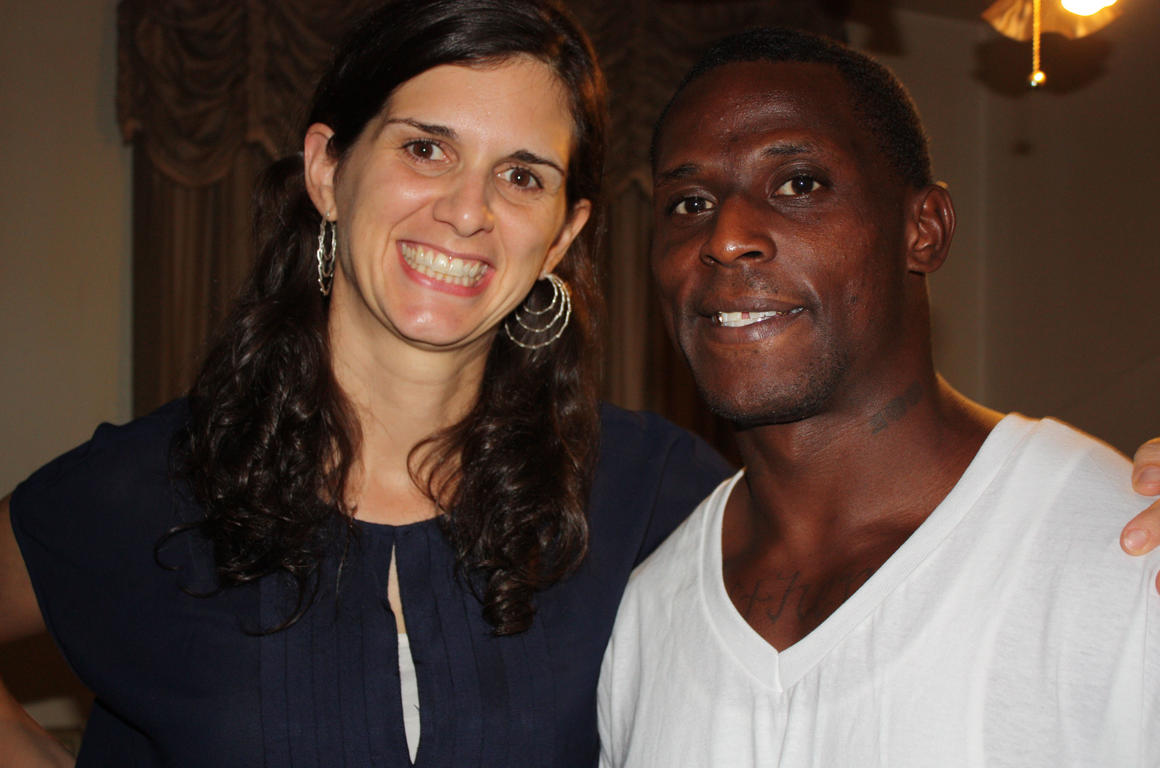
By Anna Arceneaux | ACLU | September 10, 2015
Montez Spradley is finally free. He walked out of prison late last week, after spending more than nine years behind bars — including three-and-a-half years on Alabama’s death row — for a murder he did not commit.
I began representing Montez seven years ago, not long after joining the ACLU. From the very first day that I met him, Montez maintained his innocence. No physical evidence ever tied him, a young Black man, to the 2004 murder of a 58-year old white woman in Birmingham. The prosecution instead relied on the highly tainted and inconsistent testimony of his disgruntled ex-girlfriend as well as a jailhouse snitch, who both claimed he had confessed to them.
Montez’s jurors did not want him to die. They voted 10-2 to sentence him to life, but the trial judge who presided over his first trial, Judge Gloria Bahakel, overrode their decision of life in prison and sentenced him to death, in a process known as “judicial override.” More than 20 percent of the men on Alabama’s death row have been sent there by Alabama judges, even though their juries voted for life. While Florida and Delaware still have judicial override on the books, only Alabama continues to use it with disturbing frequency. And Alabama judges almost never use override to reverse a jury’s death verdict to impose life. In fact, since 1976, death-to-life overrides have only happened nine times — and only once in the last 10 years — compared to 99 times the Montez way.
Montez was not the first innocent man to arrive to death row after a judge had overridden the jury’s life vote, and until the practice is shut down, he will not be the last. Residual doubt about a defendant’s guilt is often a major reason why a jury would vote for life. The fact that innocent people continue to be sentenced to death, especially when a jury would have spared their lives, is the very definition of a failed system.
Fortunately, in a rare victory, the Alabama Court of Criminal Appeals recognized that Montez’s first trial had been a “miscarriage of justice.” Still, it took years to untangle the web of police misconduct and judicial misconduct by Judge Bahakel that led to Montez’s conviction and death sentence.
Montez had heard rumors that his ex-girlfriend had been paid reward money, but it was not until we won his appeal, that we started to find evidence of the payments. And we learned that she had been paid an incredible sum for her testimony: $10,000. We learned that she had tried to back out before Montez’s trial and told the police that Montez had never confessed to her. Rather than honoring the truth, they dangled the $10,000 over her head and threatened to take her children away and to prosecute her for perjury if she did not “stick with her original story.”
Neither the police nor the prosecutors ever disclosed the payments to the defense. Judge Bahakel, before sentencing Montez to death, had signed off on a payment herself. Yet she never told Montez’s trial lawyers about it, and her order authorizing the payment never made it into the court file. We also knew that the lead detective on the case — the same one who authorized the payments — had lied on the stand about the ex-girlfriend’s statement to him. Unfortunately, such things are far too common in our system where the state often focuses on winning rather than justice.
Police and prosecutors are rarely held accountable for their misconduct. In fact, the lead detective on the case — the same one who lied on the stand at trial — was honored with an award from a victims’ rights group for solving this cold case that led to Montez’s arrest. No one should be rewarded for turning a blind eye to truth and justice, especially when it means an innocent person faces execution.
Montez is still a young man. More than anything, he wanted his freedom so he could be there for his children, and now he gets to be more present in their lives and watch them grow. But nothing can give him those years back, and he faces many challenges ahead.
Others have not fared as well. Innocent people, and people whose juries wanted them to live, remain on death row. For Montez and for them, it is time to reject the failed system of capital punishment.
Israel nuclear whistleblower Vanunu placed under house arrest over TV interview
RT | September 10, 2015
Whistleblower Mordechai Vanunu, who served 18 years for exposing details concerning Israel’s clandestine nuclear program in 1986, has been put under house arrest for giving an interview to local media, thus allegedly violating terms of his release.
The Magistrate’s Court in Jerusalem on Thursday confined the nuclear whistleblower to a seven-day house arrest, prohibiting him from using the internet or talking to the press, following a police investigation launched the previous day.
Local media report that the investigation was initiated by Shin Bet (the Israel Security Agency), which has been monitoring Vanunu’s activities since his release in 2004.
The arrest was prompted by an interview the whistleblower gave to the local Channel 2 TV station last week. The news channel said the interview’s content had been cleared for broadcast by the military censor. It added that police also asked for the unedited footage of the interview, suspecting that Vanunu had discussed sensitive information.
Channel 2 refused to hand it over, however, citing the media’s right to protect its sources. This principle is an “important element in the system of rights and freedoms on which a democratic government is based,” the station’s lawyer asserted, as quoted by the Haaretz newspaper.
Vanunu’s defense attorney, Yemima Abramovich, said that the interview was not a breach of his parole, as Vanunu had only been prohibited from talking to foreign journalists.
“He is allowed to talk to Israeli journalists,” she said, as quoted by Ynetnews, stressing that “the interview was approved by the military censor.”
“I’ve been Mordechai Vanunu’s lawyer for many years,” she added. “He is out of prison, but isn’t really free. It’s impossible for him to live a normal life.”
A senior Israeli security official told DPA news agency that, according to his release agreement, Vanunu was forbidden from sharing any classified information he had obtained as an employee at the Negev Nuclear Research Center near Dimona, “even if he already published that information in the past.”
In the parts of the interview that were aired last Friday, Vanunu spoke about his personal life and motives for leaking information about the existence of Israel’s nuclear activities, which the country neither denies, nor admits. However, he didn’t go into detail about what he leaked to the British press in 1986.
It was a desire to “inform the citizens of the Middle East, the world, and the state of Israel” that had prompted him to act, Vanunu told Channel 2, saying he was horrified at the “danger” posed by the Israel’s nuclear weapons program while working there.
The African-born Israeli worked as a technician at the Negev Nuclear Research Center until 1985. He leaked the information, including photographs, about Israeli’s nuclear activities to The Sunday Times in 1986.
Israel’s spy agency, Mossad, infamously organized a complex 1986 operation to abduct Vanunu and smuggle him back to Israel. It involved a female agent in disguise seducing the whistleblower and luring him into Rome. Once there, he was injected with a paralyzing drug and transported to an Israeli reconnaissance vessel docked under the guise of a merchant ship.
After serving an 18 year prison sentence, he was released on parole under the terms of which he is prohibited from leaving the state of Israel and having contact with foreigners, including the press. He was imprisoned again for three months in 2010 on the grounds that he had contacted foreign agents.
Grant F. Smith from the Institute for Research of Middle Eastern policy told RT that Vanunu is the key witness to Israeli’s nuclear program, which the state has kept secret.
“Vanunu did something nobody else was ever able to do,” he said. “He was able to take photos inside of Dimona to the London Sunday Times, and even more surprising – they published them. He has been considered to be the key witness to the fact that there is a nuclear weapons program research and development going on [in Israel]. He was also there right at the point where, according to Department of Defense Documents released recently, they were beginning hydrogen bomb research.”
READ MORE:
Israel gags famous nuclear whistleblower invited to speak at human rights conference
US-Israeli computer super-worm hit Russian nuclear plant – Kaspersky
Investigators Dismiss Mexican Government’s Official Story on Missing Students

A protester at a rally against the disappearance of 43 students in the southwestern Mexican state of Guerrero holds a sign that reads: ‘We Are Ayotzinapa. We Demand Justice.’
Credit: Montecruz Foto/CC-BY-SA-2.0
IPS – September 7, 2015
A group of independent investigators has roundly dismissed the Mexican government’s claims that the 43 students who went missing in the southwestern city of Iguala last fall were burned to ashes in a garbage dump, reigniting an international outcry against the disappearance and heaping pressure on the government to provide answers to families of the victims.
The 500-page report released this past weekend by an expert group appointed by the Inter-American Commission of Human Rights (IACHR) refutes key aspects of the government’s official story, concluding in no uncertain terms that there is “no evidence” to support the Attorney General’s findings that the college students were executed and burned by a drug gang.
“This report provides an utterly damning indictment of Mexico’s handling of the worst human rights atrocity in recent memory,” José Miguel Vivanco, Americas Director at Human Rights Watch (HRW), said in a Sep. 6 statement.
“Even with the world watching and with substantial resources at hand, the authorities proved unable or unwilling to conduct a serious investigation,” he added.
HRW is calling on the government to urgently address its own flawed investigation, which was declared ‘closed’ this past January, and bring those responsible to justice.
The students, all members of the Ayotzinapa Rural Teachers’ College in Mexico’s southern Guerrero state, disappeared on Sep. 26, 2014.
Amid massive protests across the country and around the world, the government concluded that the students had commandeered several buses and traveled in them to a protest in Iguala. Following clashes with local police, the students were allegedly detained and then handed over to a criminal gang, who presumably executed them before burning their bodies in a municipal dump.
But the IACHR investigators say those “conclusions hinge on allegedly coerced witness testimony that is contradicted by physical evidence,” HRW said Sunday.
Negligence, mishandling of evidence and long delays marked the government’s official investigation, the expert panel found, adding that federal prosecutors failed to review footage from security cameras or interview key eyewitnesses.
HRW points out that “crucial pieces of evidence, such as blood and hair” were vulnerable to contamination and manipulation during the investigation, and “in July 2015, more than nine months into the investigation, the group discovered that multiple articles of clothing belonging to the victims had been collected but never examined.”
Perhaps the most damning revelation involves the government’s claim that the drug gang responsible for the students’ deaths built a pyre and fed it over a 16-hour period with scrap material like wood and tires, as well as small amounts of fuel.
Quoting the IACHR study, the Guardian reported Sunday: “It would have required 30,000 kg of wood or 13,330 kg of rubber tyres and burned for 60 hours in order to consume the bodies. [The report] adds that feeding the pyre would have been impossible, and that a conflagration of those dimensions would have left obvious evidence in the surrounding area, which an inspection of the site failed to find.”
Other major flaws in the government’s official version of events include so-called ‘confessions’ extracted from suspects under conditions likely amounting to torture and authorities’ failure to inspect the offices of members of municipal police identified by eyewitnesses.
The expert panel spent six months on the investigation, reviewing existing government evidence, conducting in-depth inspections of the crime scene and interviewing surviving witnesses and family members of the deceased.
Earlier this year, the United Nations Committee on Enforced Disappearance highlighted shortcomings in the government’s investigation of the Ayotzinapa case, and called on the government to do more to tackle impunity.
HRW estimates that there are currently 300 open investigations relating to enforced disappearances in Iguala alone, and over 25,000 people reported as ‘missing’ nationwide.
“As of April 2014, no one had been convicted of an enforced disappearance committed after 2006, according to official statistics,” the rights group concluded.
Report ends.
Holocaust Hoax: Science Repudiates Mass Cremation Stories
Cuba Vows to Continue Supporting Sahrawi Education
Cuba has long supported SADR, including sponsoring education initiatives for refugees

A SADR-administered refugee camp in Western Sahara | Photo: Ryan Mallett-Outtrim/ THKW
teleSUR – September 10, 2015
Cuba’s acting education minister Cira Pineiro Alonso met with Sahrawi ambassador Malainin Etgana Wednesday, and vowed to deepen education ties with the Sahrawi Arab Democratic Republic (SADR).
The meeting in Havana, Cuba focused on Cuban investment in education in SADR, including the Simon Bolivar high school. Supported by both Cuba and Venezuela, the institution was the first high school to be constructed in SADR-administered Western Sahara.
According to SADR media, Piniero said Cuba remains willing to continue investing in the school, along with other joint projects in Western Sahara.
A sparsely inhabited territory in North Africa, most of Western Sahara has been occupied by the Moroccan military since 1975. A thin strip of the territory’s east is administered by the indigenous government, SADR. Most of SADR-administered Western Sahara is uninhabited desert, with the population almost entirely living in refugee camps huddled near the Algerian border. The Simon Bolivar school is located in one such camp.
Cuba has long supported Western Saharan independence from Morocco, and backed SADR as the legitimate government of the indigenous Sahrawi people.
Outside countries like Cuba, the drawn out political crisis in Western Sahara rarely hits international headlines, largely due to a media blackout in the disputed territory by Morocco’s occupation forces, which control around 80 percent of the territory.
Egypt: 680 death sentences handed down since 3 July 2013
MEMO | September 10, 2015
Nine anti-government defendants were sentenced to death in Egypt on Monday, bringing the number of those handed the death penalty to 680 since 3 July 2013, the Arab Organisation for Human Rights in the UK (AOHR UK) said in a report on Tuesday.
The organisation said the Egyptian security services torture opponents of the Egyptian regime and commit crimes against them so as to force them to confess to “fabricated” charges so they can be given severe sentences that may amount to the death penalty.
Seven of those who have received the death penalty have already been executed. The total number of defendants whose papers were referred to the Grand Mufti has reached 1,734. The report pointed out that senior officials at Mansoura’s security directorate systematically exercise illegal detention, kidnapping, torture and the forgery of official documents and fabrications.
The AOHR UK noted that photographing the defendants in a degrading manner, humiliating and torturing them and forcing them to give false confessions that were dictated to them constitute “unacceptable behaviour both legally and morally; and are also serious human rights violations which, if added to other human rights violations in Egypt, underline the collapse of the moral and legal system among individuals in the Egyptian police.”
The organisation warned that the adoption of the anti-terror law poses a threat to defendants who had already been sentenced to death as the new law decreased their chances of avoiding the death penalty and having fair trials.
It invited UN Secretary-General Ban Ki-moon to form a fact-finding committee with full powers to investigate crimes committed after 3 July 2013 and bring those responsible for these crimes to justice.
On Monday, the Terrorism Circuit at the Mansoura Criminal Court, headed by Judge Osama Abdul Zahir, sentenced to death nine young men, including four students, in case number 16,850 of the year 2014, in which 24 people from the province of Dakahlia are accused. The remaining defendants were sentenced to life in prison.
Yesterday the court referred the cases of 10 defendants to the Grand Mufti for his approval. They were sentenced on charges of killing a police sergeant, committing acts of violence against the army and police forces, forming a cell that seeks regime change, and possessing explosives and weapons.
AOHR UK said that defendants were subjected to torture to force them to make fabricated confessions. Such confessions would help the regime demonise its opponents and incite public hatred ahead of the judicial procedures.
I’m confused, can anyone help me? Part 5
RT | September 9, 2015
I’m confused about quite a lot of things going on in the world. The West is supposed to be fighting ISIS, yet seems keener on toppling a government which is fighting ISIS. A refugee crisis caused by Western interventions is being used as a pretext for more Western wars.
Elite media commentators keen to stress their humanitarianism, cry ‘something must be done’ about Syria, yet appear not to notice the on-going humanitarian catastrophe in Yemen.
There are violent anti-government protests again in Ukraine, but the reaction from the US is very different to when there were violent anti-government protests in Ukraine eighteen months ago. What on earth is going on? Perhaps you can help me sort out my confusion…
The first thing I’m confused about is the refugee crisis currently affecting Europe.
The vast majority of refugees are coming from countries e.g. Syria, Libya, Afghanistan, Iraq, which were targeted by the West for ‘regime change’ and which experienced bombing/invasion or destabilization by NATO powers and their regional allies.
We’re told by the West’s political elite and much of the media that in order to stop the influx of refugees to Europe we need to do more bombing.
But if bombing solves the problem of refugees, why are people fleeing from countries, such as Iraq and Afghanistan and Libya that the West has already bombed?
How can more bombs and intervention solve a problem caused by bombs and intervention? And how can the imposition of a no-fly zone in Syria stop ISIS, which doesn’t have an air force?
I’m confused. Can anyone help me?
On the subject of Syria I’m confused about the West’s obsession with toppling President Assad and his government. The secular Syrian government does not and did not threaten the West, and its sworn enemies are the groups- such as Al-Qaeda and its affiliates, which we are supposed to have been fighting ‘a war on terror’ against. If radical Islamist terror groups such as Al-Qaeda and ISIS are such a danger, why are we still trying to topple a government which has been fighting them? Why does UK Chancellor of the Exchequer George Osborne say that the British Parliament’s refusal to support US-led air-strikes on the Syrian government in 2013 was “one of the worst decisions the House of Commons has ever made” when voting ‘Yes’ would have put the RAF on the same side as ISIS – a group which claimed responsibility for the killing of 30 British tourists on a beach in Tunisia earlier this summer? Surely if our leaders really wanted to defeat ISIS, they would be working with countries in the region that have a vested interest in defeating ISIS – like the government in Syria – and not working to overthrow them, which would only help ISIS.
I’m confused. Can anyone help me?
I’m confused about the Transatlantic Trade and Investment Partnership (TTIP).
It’s the proposed free trade deal between the free, open democracies of Europe, and that bastion of democracy the US, but the deal itself is shrouded in secrecy and can only be read by politicians in a secure reading room in Brussels.
If TTIP is so great- as its supporters claim, why can’t we see its terms and provisions? Why in ‘democratic’ Europe, where our leaders all claim to support public participation in the political process, are we being kept in the dark over a deal which is likely to have a major impact on our daily lives? I’m confused. Can anyone help me?
I’m confused too about events in Yemen, and the lack of concern from Western ’humanitarian interventionists’ over what is happening in the country.
A Saudi-Arabian led alliance has been bombing Yemen since March – yet despite Amnesty International reporting that the bombing campaign has left a “bloody trail of civilian death and destruction paved with evidence of war crimes”- the West‘s “Something Must Be Done” brigade have been strangely silent.
“The civilian population is bearing the brunt of the conflict: a shocking four out of five Yemenis require humanitarian assistance and nearly 1.5 million people are internally displaced,” says Stephen O’Brien, the UN Under-Secretary-General for Humanitarian Affairs and UN Emergency Relief Coordinator.
In Libya in 2011 we had a no-fly zone imposed to prevent massacres that might happen- in Yemen, we’re seeing large scale casualties as a result of airstrikes but this time there’s no calls for NFZs from Western leaders or ‘liberal interventionists’ in the media.
Why was there a ‘Responsibility to Protect’ civilians in Libya in 2011, but not a ‘Responsibility to Protect’ civilians who are being killed in Yemen in 2015?
I’m confused. Can anyone help me?
I’m confused about US policy towards anti-government protests in Ukraine which involve violence from ultra-nationalists.
In early 2014, there were violent protests against the democratically elected government of Viktor Yanukovich, protests in which ultra-nationalists played a prominent role. The US and its allies told the Ukrainian government that it was not allowed to use force against protestors, even though some of them smashed into government buildings and threw Molotov cocktails at police.
“We unequivocally condemn the use of force against civilians by security forces and urge that those forces be withdrawn immediately,” said Secretary of State Kerry.
But last week, when there were fresh anti-government protests involving ultra-nationalists in Kiev which also involved violence, the US’s line was rather different. “Law enforcement agencies need to exercise restraint, but there’s an obligation on the protestors to behave in a peaceful manner”- a State Department spokesman said. Why was there criticism of violent ultra-nationalist protestors in August 2015, but not criticism of violent ultra-nationalist protestors in February 2014? And why was the Ukrainian government given a fierce warning in 2014, but not one this time?
I’m confused. Can anyone help me?
I’m also confused about the continuation of the sanctions war between the US and its allies and Russia. The OSCE report that things are calming down in eastern Ukraine.
Its Special Monitoring Mission report of 5th September said there were “few ceasefire violations in the Donetsk region and none in Lugansk.”
But despite this, the US and Britain are not talking about the easing of sanctions. On the contrary, there have been calls for sanctions to be extended. The economic damage of the sanctions war to EU economies has been put at $100 billion-with 2 million jobs at risk. Surely, seeing how things have calmed down in the Donbass region, and the damage that the sanctions war is doing to Europe, the sensible thing is for the sanctions to be eased or lifted altogether?
Or is there another agenda at work here, that has nothing to do with events in eastern Ukraine and which we’re not being told about?
I’m confused. Can anyone help me?
I’m confused about photographs of dead children and why some seem to affect the Western elites more than others. The photograph of poor little Aylan Kurdi, the three-year-old Syrian refugee washed up on the shore in Turkey, has been used to drum up support for bombing Syria.
Yet photographs of dead Palestinian children, killed in the Israeli offensive against Gaza last year, brought no such response. On the contrary, this week the Prime Minister of Israel Benjamin Netanyahu is visiting Britain and can expect to receive the red carpet treatment. Among the 539 killed by Israeli forces in Gaza were four children, aged between 9 and 11, who were killed while playing on the beach. Why did their deaths not lead to a political/media campaign for ‘action’ to be taken, as the death of Aylan Kurdi has?
The general public certainly cares: a petition calling for Netanyahu to be arrested for Israeli war crimes when he visits Britain received over 100,000 signatures, meaning that it has to be debated in Parliament. But government minister Eric Pickles dismissed the petition as ‘completely absurd’. Why is it ‘completely absurd’ to care about dead Palestinian children as well as dead Syrian ones?
I’m confused. Can anyone help me?
Featured Video
Prof. Ted Postol: Iran Already Achieved Nuclear Deterrence Against Israel
or go to
Aletho News Archives – Video-Images
From the Archives
How the occupied mentality syndrome works
Saudi Arabia on the American chessboard – Part 3
By B. J. Sabri | American Herald Tribune | June 27, 2016
Read part 2: “The occupied mentality Syndrome“
Previously I argued whether Saudi Arabia’s repeated involvements in U.S. interventions and wars stem from free national will or in response to a specific condition. For starters, in Saudi Arabia there is no national will. In Saudi Arabia, the national will is the will of the Al Saud clan. Still, when a major Arab state allies itself with a superpower that committed unspeakable crimes against humanity in almost every Arab country, then something is wrong. This fact alone should compel us to examine the U.S.-Saudi relation for one exceptional reason. As a result of the U.S.-Saudi wars, hundreds of thousands of people in Afghanistan, Iraq, Iran, Libya, Syria, Yemen, and Somalia have lost their lives. Millions became displaced in their own homelands. And millions more rendered refugees.
Attributing the Saudi policies to the bonds of “partnership” with the U.S. is frivolous. There are no bonds between these two thugs except those of business, military deals, secret plots, and wars. Proving this point, bonds such as these have no space for the American and Saudi peoples to share significant cultural or societal exchanges. If partnership is not the reason for the Saudi contribution to the U.S. strategy of empire and imperialism, then another reason must exist.
This leads to three possibilities. … continue
Blog Roll
 Aletho News
- Hezbollah hits Israeli warship off Lebanon’s coast, sets it aflame
- Iran slams US strikes on B1 bridge, Mahshahr petrochemical plants as ‘blatant acts of state terrorism’
- In letter to UN chief, Araghchi warns of dire consequences of US-Israeli attacks on Iran’s nuclear facilities
- Why the CIA conspiracy to invade Iran with Kurdish militias failed
- Why Are Upbeat US Claims About Mission to Rescue Pilot ‘Highly Questionable’?
- Aircraft destroyed during US ‘rescue’ of downed F-15 pilot cost more than $100 million each
- Washington University removes professor who condemned US-Israeli war on Iran
- Russia Warns of Retaliation as UK Authorizes Seizure of Vessels
- Serbia thwarts plot to bomb Russia-Hungary gas pipeline – Vucic
- Al Mayadeen voices solidarity with Dr. Marandi amid death threats
- If Americans Knew
- In Iran, Israel-US take aim at “reason, research, and freedom of thought” – Daily Update
- US loses planes over Iran, Israel downgrades Lebanon war goals – Daily Update
- Israel Is Blocking Palestinians from Easter at Church Where Jesus Resurrected
- Plot to assassinate Palestinian activist follows harassment campaign promoted by Zionist groups and elected officials
- Prominent New York synagogue hosts presentation on why U.S. Jews should support the ethnic cleansing of Gaza
- Tapper vs. Piker: Is the CNN Anchor Auditioning for David Ellison?
- Shouldn’t Democrats Be Able to Condemn Genocide?
- Israel-US kill negotiators, destroy civilian structures, but Iran’s military capabilities still largely intact – Daily Update
- ‘War crime’: Global condemnation as Israeli ministers celebrate death penalty law targeting Palestinian prisoners
- 7 Ways Israel Is Turning Lebanon Into Gaza
- No Tricks Zone
- An Inconvenient Tree: Uncovered In Alps… Europe Much Warmer Than Today 6000 Years Ago
- New Study Reports A 60% Slowdown In Greenland’s Ice Loss Rate In The Last Decade
- Low Intensity Tornado Wrecks Major Solar Farm, Creating A Potential Toxic Dump
- New Study Finds Warming Saves Lives…Cold Temperatures 12 Times More Deadly Than Excess Heat
- German Science Blog Accuses PIK Climate Institute Of Hallucinating Climate Tipping Points
- Devastating Assessment Of Comirnaty Vaccine By Former Senior Pfizer Europe Toxicologist
- New Study: CO2 Is ‘Effectively Negligible’ As An Explanatory Climate Change Factor Since 2000
- Former Pfizer Toxicologist Dr. Helmut Sterz Tells Bundestag Hearing Pfizer Vaccine Should Have Never Been Approved
- Energy Expert: Germany’s Nuclear Phaseout Was A “500 Billion Euro Mistake”
- New Research: South Australia’s Mid-Holocene Sea Surface Temperatures Were 4°C Warmer Than Today
 Aletho News