Qatar charts a new diplomatic path to Russia
By Firas Al-Atraqchi | The BRICS Post | January 16, 2016
The visit of Qatari Emir Sheikh Tamim bin Hamad Al Thani to Moscow to meet with Russian President Vladimir Putin may be considered by some to be unexpected, but it is hardly surprising.
Although the two countries maintain considerable trade ties to the tune of half a billion dollars a year, they have for more than a decade been erstwhile adversaries.
As two of the greatest gas exporters, they rarely agree on production quotas, vying for control of this essential market. In the past 20 months, Russia has been highly critical of Saudi Arabia and Qatar for refusing to curb oil production output as global prices plummeted.
A major oil exporter, Russia – already reeling from EU and US sanctions – has suffered considerably as prices drop to the $30 mark.
The rhetoric between both countries peaked after Russian fighter bombers and naval vessels began pounding Islamist extremist groups fighting to remove Moscow’s Syrian ally President Bashar Al Assad.
As the Sunni-funded campaign to remove Assad appeared to reach a stalemate, both Qatar and Saudi Arabia have since May 2015 significantly increased their support (financially, logistically and with materiel) to Wahabist Islamist factions in Syria.
The increase in support came as both countries realized that Washington was unable – or unwilling – to provide such groups as Nusra Front and the Free Syrian Army with the upper hand to turn the tide against Assad.
When Russia moved to reinforce its bases in Syria and presence in the Mediterranean, the Qataris in late October 2015 announced they could militarily intervene in the civil war there to aid their Islamist allies.
“If a military intervention will protect the Syrian people from the brutality of the regime, we will do it,” Qatari Foreign Minister Khalid al-Attiyah said at the time.
If such bravado was meant to nudge Washington to up the ante against Assad, it failed.
Russian diplomacy moves forward
A week later, the US appeared to cave in to Russian pressure to bring together senior representatives from Germany, France, Great Britain, Italy, Iraq, Egypt, Lebanon, Qatar, the United Arab Emirates, Jordan, as well as the UN’s special envoy to Syria Staffan de Mistura, and EU foreign policy chief Federica Mogherini to meet in Vienna to resolve the Syrian civil war.
It marked the first time rivals Saudi Arabia and Iran joined discussions on Syria. The two countries have backed opposing sides in the Syrian and Yemeni conflicts.
The armed Syrian opposition – classified as moderates by the US – did not participate in the talks.
By expanding the number of countries meeting on the crisis – and bringing Assad’s critical backer Iran to the table – Russia effectively minimized Qatar’s and Saudi Arabia’s influence in the conflict.
In late November, on the sidelines of the third summit of the Gas Exporting Countries Forum (GECF) in Tehran, Putin thanked Iranian Supreme Leader Ayatollah Seyyed Ali Khamenei for his help in Vienna.
Moscow and Tehran have supported Syria’s President Bashar Al Assad and insisted that he be part of an interim political process and future elections.
“All this is done, of course, in agreement with the Iranian partners … I think that without them it would be impossible,” Putin said in comments carried by Russian news agencies.
Russia also played a critical role in ensuring that Iran and the other permanent Security Council members (and Germany) sign a deal which would curb Tehran’s nuclear program in exchange for a lifting of debilitating sanctions.
If it wasn’t clear yet, a rising Russia was increasingly flexing both its military and diplomatic muscles in the Middle East.
Even Egypt, which has been financially sustained by Saudi Arabia, defied its Riyadh benefactors and backed Russia’s approach to resolving the conflict.
On December 18, Russia and the US agreed to a UN Security Council resolution “to convene representatives of the Syrian government and the opposition to engage in formal negotiations on a political transition process on an urgent basis, with a target of early January 2016 for the initiation of talks, pursuant to the Geneva Communiqué, consistent with the 14 November 2015 ISSG Statement, with a view to a lasting political settlement of the crisis”.
A week later, the previously chest-pumping Qatar Foreign Minister al-Attiyah was in Moscow where he praised his Russian counterpart Sergey Lavrov for Russia’s efforts to stabilize the Middle East.
The two diplomats agreed on the need to move the UNSC resolution forward.
“We discussed in detail what’s necessary to be done to implement the agreements on the Syrian settlement,” Lavrov said at the time.
In early January, Russia’s BRICS ally China, which is also increasingly playing a political role in the Middle East, separately hosted members of both the Syrian government and the opposition. It encouraged the latter to drop its preconditions to meeting with Syrian government representatives.
In less than six months, the momentum to bring Assad down has shifted toward ensuring that a political peace process get off the ground.
So, what changed?
Qatar’s ambitions to become a regional and global player have in recent months been tamed.
Its ‘soft power’ approach to controlling the Middle East has backfired as it rushed head on against countries that have for centuries been well-versed in the art of Machiavellian empire-building and proxy manipulation.
At the same time, Russia’s aggressive immersion in the Middle East muddle has altered not only the narrative in the region but physical realities on the ground.
Anti-Assad forces have been losing significant territory to the Syrian military and its Hezbollah allies.
As Russia pounds and destroys the weapons bought by Qatar and Saudi Arabia, the US appears to have retreated despite Arab Sunni protestations.
As Sheikh Tamim bin Hamad Al Thani himself likes to point out, Qatar is a peace-loving member of nations that will work with the US and Western allies to bring the Middle East back from the brink of chaos and collapse.
He has blamed the international community for not supporting Arab youth in their drive for democracy, justice and economic security. That is really a scolding of the US and the West for not doing more to bring the Assad regime down.
Iran rising, Russia to stay
New realities have been forming in the Middle East.
The Iran nuclear deal, which has alarmed Washington’s Sunni allies, will not only be a moral and propaganda boost for Tehran but also allow tens of billions of dollars to flow into its cash-strapped coffers.
Iran is soon expected to flood already saturated oil markets with an additional one million barrels – a day.
Iran has successfully ‘managed’ its new ally Iraq, kept Assad in power, and maintained its proxy Hezbollah’s influence in Lebanon.
With Iran and the US appearing to be at the very least cordial now, Tehran’s influence is only set to grow.
For Iran to grow as a geopolitical power, other players must first retreat.
Backing the wrong horse
By continuing to back Islamist factions in Libya, Syria and Egypt, Qatar misread and miscalculated the response of erstwhile allies in its own front yard.
Nowhere has that been more evident than in Qatar’s commitment to Egypt following the 2011 uprising which resulted in President Hosni Mubarak stepping down and the Muslim Brotherhood eventually winning power through the ballot box.
Qatar backed the Muslim Brotherhood and Islamist factions in Egypt.
Egyptian hardline cleric Yussuf Al Qaradawi, who was a vociferous critic of the Mubarak government, returned to Cairo from his home in Doha just a week after the president stepped down.
Qaradawi, who is close to Qatar’s ruling family, is also a strong advocate of the Muslim Brotherhood in Egypt.
When the Muslim Brotherhood’s President Mohamed Morsi was forced from power, many in Egypt felt that Qatar’s Al Jazeera was biased in favor of the Islamist group and openly belligerent against the new government.
According to prominent Middle East commentator Sultan Sooud Al Qassemi, Al Jazeera was used by the Qatari leadership to the service of the Muslim Brotherhood.
Even after Morsi was imprisoned and put on trial, Al Jazeera continued to support the Muslim Brotherhood despite the advice to the contrary and objections of many of its allies in the Gulf Cooperation Council (GCC).
Saudi Arabia and the UAE, the latter having been directly threatened by Brotherhood officials in 2012 and 2013, urged Qatar to back away from supporting the group.
After failing to persuade Qatar to terminate its ties to the Muslim Brotherhood, and in the wake of Saudi Arabia classifying the group as a terrorist organization, key GCC states turned on Qatar.
They accused Doha of failing to live up to a 2013 GCC security agreement to end support for the Muslim Brotherhood and stop providing sanctuary to its leaders and members.
GCC, oil and Al Jazeera America
In March 2014, Saudi Arabia, the UAE and Bahrain withdrew their ambassadors from Doha.
This was unprecedented among the usually unified and resolute GCC.
The diplomatic rift indicated that there were significant fissures within the GCC and marked a shift in Qatar’s fortunes. How could it influence the region like it once did if it was becoming a pariah among its closest friends and allies?
As Europe, the US, China, Russia, Saudi Arabia, and the UAE declared support for the new Egyptian President Abdel-Fatah El-Sissi, Qatar was growing increasingly isolated.
The drastic fall of global oil prices has also delivered a debilitating blow to GCC countries, Qatar included.
Brent Crude was at nearly $110 in 2013; on January 15, 2015 it closed below $30 a barrel – more than a 75 per cent drop.
Funding a civil war that is not paying dividends is not the best of financial decisions given the current oil glut.
Some media analysts have speculated that the drop in oil prices played a role in Qatar deciding to shut down its media operations in the US – Al Jazeera America.
Having lost leverage, Qatar is adopting a more pragmatic approach to carefully chart a way back to international cooperation.
Ahead of his trip to the US last year, Sheikh Tamim said in a New York Times editorial that Qatar sees itself as a force of good. It aggressively seeks to resolve conflict and enjoys playing the role of mediator and arbiter.
Russia has in recent months made significant overtures to several Arab countries, including Jordan, Saudi Arabia and the United Arab Emirates.
Qatar cannot afford to be left out. When Sheikh Tamim arrives in Moscow this weekend he will likely discuss current gas and oil crises with his Russian counterpart as both seek ways to raise global prices.
Qatar could also offer to mediate between Russia and Turkey, one of its strongest allies in the region, following the diplomatic spat between Moscow and Ankara in the wake of the downing of a Russian fighter jet over Syrian air space.
Middle East commentator Camille Otrakji, however, cautions that “one can expect Qatar’s ruler to talk to Russia, without necessarily being ready to stop financing and arming the Jihadists”.
“[The] Qataris show interest in any promising investment, and Russia is today looking very attractive,” he added.
In 2006, then Secretary of State Condi Rice said that the Middle East map was being redrawn.
She likely could have never predicted the Qatar-Russia detente we see today.
Is Obama the Biggest Puppet in History?
By Steven MacMillan – New Eastern Outlook – 16.01.2016
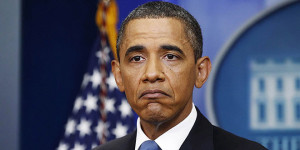 Out of all the political prostitutes in the Western world, one man stands out as the perfect illustration of a politician who works solely to serve his puppet masters. Even though the majority of politicians are controlled by economic and corporate elites, the current US President, Barack Obama, is the epitome of a man who is bought and paid for by special interests.
Obama was elected President in November 2008, and inaugurated in January 2009. From the very beginning of his Presidency, it was clear who the “lord and saviour” was beholden to. According to OpenSecrets.org, Obama’s top campaign donors in 2008 included: Goldman Sachs; JPMorgan Chase; Citigroup; Morgan Stanley; Microsoft; Google; and IBM. Considering Obama’s donors, it’s no wonder that (unlike Iceland) the US has not prosecuted the plethora of bankers and financial institutions that have engaged in fraud for years, and subsequently played a pivotal role in causing the financial crisis of 2007/08.
“I’ve now been in 57 states; I think one left to go”
In a bizarre speech in 2008, Obama said: “Over the last 15 months, we’ve travelled to every corner of the United States. I’ve now been in 57 states; I think one left to go. Alaska and Hawaii I was not allowed to go to, even though I really wanted to visit.” Did he simply make a mistake? Was he joking? Or was this just another slip from a person who is really just hypnotically going through the motions anytime he speaks, with no real interest in what he is saying. This bizarre statement is not an isolated one from the US President, as just a few months ago, Obama tried to argue that Russia bombing ISIL is only “strengthening ISIL.”
The Narcissist
In Greek mythology, Narcissus, the son of a river god, fell in love with his own reflection. Judging from his actions in office, Obama also appears to care more about himself than anything else. In a recent 33-minute speech, Obama referred to himself a whopping 76 times; a true mark of a narcissistic, arrogant and egocentric person. Perhaps he was trying to challenge Julius Caesar’s record, as the former Roman general penned the majority of the ‘Commentaries on the Gallic War,’ in which the word “Caesar” is used 775 times, according to the historian Robin Lane Fox.
Tears of Deceit
Emotive propaganda 101; cry and weep during a highly controversial and political speech on gun control, pulling at the heartstrings of the American public to push a political agenda. In this piece, I’m not trying to underplay the death of innocent people, but merely point out the way in which Obama is emotively trying to manipulate the opinions of the American public in order to push through legislation. Whatever your personal views are on gun control in the US, Obama’s tactics should be denounced as deceitful and staged.
Remember, the man who stood up and gave an Oscar winning performance recently, is the same man who is the head of the country that is carrying out more drone strikes around the world than ever before; has been funding and arming terrorists to overthrow the secular Syrian government; bombed a hospital in Afghanistan which killed at least three children; destroyed and destabilized the nation of Libya (which previously had the highest standard of living in Africa); supports Saudi Arabia in its war crime in Yemen; tortures and interrogates people across the world; and countless other crimes that kill and maim innocent people, yet no tears are shed by the US President.
Was San Bernardino a Black Op?
There are also some anomalies in many of the mainstream narratives regarding mass shootings in the US. The tragic shooting in San Bernardino for instance, which the mainstream media claimed was carried out by husband and wife, Syed Rizwan Farook and Tashfeen Malik, appears to conflict with some eyewitness accounts of the attack. Two reported eyewitnesses claim that the shooters were three tall white men wearing military gear.
Was San Bernardino a black op carried out by military personnel or mercenaries to further legitimize the push for gun control? It is difficult to conclusively say what actually happened, but the official narrative is a shaky one. It should also be noted that some investigative journalists have argued that there has been a dramatic increase in the number of mass shootings under Obama, one of the most pro-gun control President’s in recent decades.
Great Lakes Nuclear Waste Dump: The Battle Continues
By Joyce Nelson | CounterPunch | January 15, 2016
Opposition to the proposed nuclear waste facility by Lake Huron continues to grow. By the end of 2015, at least 182 communities (representing more than 22 million people) on both sides of the U.S.-Canada border have adopted resolutions opposing the plan by Ontario Power Generation to build a deep geological repository (DGR) for storage of low- and intermediate-level radioactive nuclear waste.
A Canadian federal panel approved the nuclear waste dump in May 2015, accepting testimony that Lake Huron would be large enough to dilute any radioactive pollution that might leak from the DGR.
The immediate outcry on both sides of the border prompted the Conservative government of Stephen Harper to postpone any decision until Dec. 1, 2015, after the Oct. 19 federal election – in which they were booted out of office. The new government of Liberal Justin Trudeau then pushed that decision to March 1, 2016, after a dozen members of Michigan’s congressional delegation urged the new prime minister to deny the construction permits necessary for the storage facility to be built.
Meanwhile, American efforts to engage the International Joint Commision (IJC), which oversees boundary waters’ issues, have come to naught. As the IJC’s Public Information Officer Frank Bevacqua told me by email, both the Canadian and U.S. federal governments would have to ask the IJC to intervene on the issue. “The IJC does not review proposals for site-specific projects [like the DGR] unless asked to do so by both governments,” he said.
That means a final decision on the DGR may reside with a small First Nations community.
First Nation Decision
The proposed DGR would be located on the territory of the Saugeen First Nation, which is in the process of evaluating the proposal. The Saugeen First Nation has a promise from Ontario Power Generation to not proceed without their support. As Saugeen Chief Vernon Roote told Indian Country Today Media Network (ICTMN) in December, “Ontario Power Generation had given us their commitment that they will not proceed unless they have community support. That’s a letter that we have on file.” [1]
Saugeen First Nation negotiator (and former Chief) Randall Kahgee told ICTMN that “we are starting to build some momentum on the community engagement process.” The Saugeen leaders are determining how to gauge the community voice, whether by polling or by vote at public gatherings, and have already held some engagement sessions on the issue. [2]
Randall Kahgee told ICTMN, “For the communities, this is not just about the deep geological repository but also about the nuclear waste problem within our territory. We have always insisted that while this problem is not of our own design, we must be part of shaping the solution. Gone are the days when our people, communities and Nation are left on the outside looking in within our own territory. These are complex issues that will force us to really ask ourselves what does it mean to be stewards of the land. The opportunity to be able to shape the discourse on these matters is both exciting and frightening at the same time.” [3]
The Saugeen First Nation is especially concerned about simply moving the proposed facility into somebody else’s backyard. “We might not be the best of friends when we push nuclear waste on our brothers’ and sisters’ territory,” he told ICTMN.
Nuclear Expansion
The proposal by provincial Crown corporation Ontario Power Generation (OPG) is for at least 7 million cubic feet of nuclear wastes from Ontario nuclear power plants to be buried in chambers drilled into limestone 2,231 feet below the surface and under the Bruce nuclear site at Kincardine, Ontario. The waste to be entombed in the DGR would come from the Bruce, Pickering and Darlington nuclear sites in Ontario – currently home to 18 Candu reactors.
The eight nuclear reactors at the Bruce site (the world’s largest nuclear station) are leased from OPG by a private company called Bruce Power, whose major shareholders/partners include TransCanada Corp. – better known for its tarsands pipeline projects. (TransCanada earns more than one-third of its profits from power-generation.) Bruce Power pays OPG for storage of nuclear wastes, which are currently stored and monitored above-ground on site. [4]
In December, Bruce Power announced that it will invest $13 billion to refurbish the Bruce site, overhauling six of the eight reactors on Lake Huron beginning in 2020. [5] Just weeks later, OPG announced a $12.8 billion refurbishment of four nuclear reactors at Darlington, while extending the life of its ageing Pickering nuclear power plant on Lake Ontario. [6] The Pickering move requires public hearings and approval from the Canadian Nuclear Safety Commission, but Ontario’s Energy Minister Bob Chiarelli has voiced his approval and touted the nuclear industry as “emissions-free,” while ignoring the issue of nuclear wastes.
OPG, Bruce Power, and the Ontario government are obviously onside with the Canadian Nuclear Association lobby, whose president and CEO John Barrett is using the COP21 Paris Climate Agreement to push for nuclear expansion. In an op-ed for The Globe and Mail, Barrett declared that “it is time to recognize the contribution – current and potential – of nuclear power in curbing greenhouse gas (GHG) emissions worldwide,” and he stated that Canada, with its uranium mining and nuclear reactor technology, is “ready to play an international leadership role on climate change.” [7]
Barrett, in turn, is onside with the billionaires now pushing nuclear energy expansion worldwide: Richard Branson (Virgin Group), Peter Thiel (PayPal co-founder), Bill Gates and Paul Allen (Microsoft co-founders), and Jeff Bezos (Amazon) have all endorsed nuclear energy as the solution to climate change. [8] As well, scientists James Hansen, Kerry Emmanuel, Ken Caldeira and Tom Wigley have recently called for building 115 new reactors per year as “the only viable path forward”. [8] They dismiss nuclear waste as “trivial” and claim that there “are technical means to dispose of this small amount of waste safely.”
In that case, the resulting nuclear waste should be stored in their basements and under the billionaires’ mansions, rather than near bodies of water like the Great Lakes, which provide 40 million people with their drinking water.
Footnotes:
[1] Konnie Lemay, “Saugeen Nation May Be Final Word in Nuclear Waste Storage Next to Lake Huron,” Indian Country Today Media Network, December 11, 2015.
[2] Ibid.
[3] Ibid.
[4] Joyce Nelson, “Nuclear Dump Controversy,” Watershed Sentinel, Sept.-Oct., 2015.
[5] Robert Benzie, “Bruce Power to invest $13 billion to refurbish nuclear station on Lake Huron,” Toronto Star, December 3, 2015.
[6] Rob Ferguson, “Ontario Power Generation to spend $12.8 billion refurbishing four Darlington nuclear reactors,” Toronto Star, January 11, 2016.
[7] John Barrett, “Nuclear power is key to decarbonization, and Canada can lead the way,” The Globe and Mail, December 16, 2015.
[8] Emily Schwartz Greco, “A Big Fat Radioactive Lie,” Other words.org, December 4, 2015.
Joyce Nelson is an award-winning Canadian freelance writer/researcher working on her sixth book.
Netanyahu: Muslims cause “unbearable noise”
Palestine Information Center – January 15, 2016
 NAZARETH – Israeli Premier Benjamin Netanyahu said that Adhan (Islamic call to prayer) violates Israel’s interior laws as it causes “unbearable noise.”
During a meeting with the Likud bloc in the Knesset, Netanyahu claimed that “Arab towns must abide by the law of the land and fulfill their obligations to the state and society.”
This includes, Netanyahu continued, refraining from polygamy, which is practiced by Muslim-Arabs, stopping the noise caused by the Adhan, voiced five times a day by Muslim-Arab mosques, and halting construction without permit.
“I am not prepared to accept two States of Israel, a state of law for most of its citizens and a state within a state for some of them, in enclaves in which there is no law enforcement.”
There is no religious text that allows disturbing people by loudspeakers, according to his claims.
He also pointed to polygamy in Arab towns, claiming that “women’s rights organizations remain silent over this practice.”
Israeli plan for minorities slammed as bid to ‘divide and conquer’
By Chloe Benoist – Ma’an – January 15, 2016
BETHLEHEM – A plan approved by Israel’s cabinet last week to provide half a billion dollars worth of assistance to Israel’s Druze and Circassian minorities has been denounced by leaders of Israel’s Palestinian community as a “divide and conquer” tactic.
Israeli Prime Minister Benjamin Netanyahu announced the 2 billion shekel ($510 million) multi-year plan “for the development of the Druze and Circassian communities” at the start of the weekly cabinet meeting on Sunday.
The plans followed the earlier announcement of a 15 billion shekel ($3.8 billion) five-year plan to address the gaps in access to infrastructure and discrepancies in rights between Palestinians with Israeli citizenship and their Jewish counterparts.
While it was not initially clear whether the assistance to the Druze and Circassian communities was included in this larger plan, Netanyahu warned separately on Sunday that the larger plan for the development of other “Arab communities” was dependent on the implementation of a law enforcement plan alongside it.
“I want to make it clear that nothing that has been done in various areas — infrastructure, tourism, education, trade, economy — can move forward if we do not address the question of enforcing the laws of the state of Israel in the Arab sector,” the prime minister said.
The further security measures proposed by Netanyahu would target Palestinian citizens of Israel — who represent an estimated 20 percent of the Israeli population — but would, critics say, do so unequally.
Security measures for ‘good Arabs and bad Arabs’
Palestinian communities in Israel recently came under intense scrutiny from Israel’s security forces after a Palestinian with Israeli citizenship, Nashat Melhem, allegedly killed two Israelis at a Tel Aviv cafe on Jan. 1, before killing a Palestinian citizen of Israel as he fled the scene.
Melhem was killed in a shootout with Israeli forces on Jan. 8 in his hometown of Arara in northern Israel.
Jafar Farah, the director of the Mossawa Advocacy Center For Arab Citizens In Israel, told Ma’an at the time that there had been a high level of incitement against Palestinians with Israeli citizenship on the part of Israeli government officials.
“The atmosphere right now is very heavy and racist — there is a lot of incitement against Arabs,” Farah said. “We know that in these circumstances there is no authority willing to intervene in the media to do anything other than support the (crackdown).”
“This is a period where the extreme right wing is trying to prove that the occupation is not the problem, but the relationship between Jewish and Arab communities is.”
Farah’s sentiments were echoed by Aida Touma-Suleiman, a member of the Israeli’s Knesset representing the left-wing Hadash party of the Arab Joint List coalition, who sees the Israeli government’s recent funding plans as reflective of its discriminatory policy.
Touma-Suleiman slammed the government’s intention to tie development aid for Palestinian communities to law enforcement as an attempt “to create conditioned citizenship.”
This “conditioned citizenship,” she said, was being carried out by the Israeli government with the aim of creating divisions among Palestinians in Israel.
“This has been a tactic from different Israeli governments, even those who claim they are from the left,” she told Ma’an.
“They try to divide and conquer us, either based on geographical locations, religious affiliations, and now between good Arabs and bad Arabs. Those who obey the government, who serve in the military, will benefit from the plan, and those who refuse the government’s oppression will not.
“We are used to the attempted fragmentation of the community, and we’ll always stand against it,” she said.
‘Divide and conquer policy’
Israeli law differentiates between Jewish and Palestinian citizens of Israel, and forms further distinctions between various Palestinians minorities.
Druze and Circassians are subject to mandatory military service in the Israeli army, whereas Muslim or Christian Palestinian citizens of Israel are not. Israeli identification papers do not recognize Christians, Druze and Circassians as Arabs, unlike Muslims.
These legal distinctions have been criticized by many, including MK Abdullah Abu Maruf, as an attempt to divide the Palestinian population inside Israel.
Abu Maruf, a Palestinian citizen of Israel and, like Touma-Suleiman, a member of the Hadash party, told Ma’an that Israel’s plan — which he said would actually only amount to 1.2 billion shekels — was an attempt to sow divisions among Israel’s Palestinian minorities through preferential treatment.
“As an Arab citizen and a member of Knesset I never oppose allocation of money to the Arab citizens, but we are against a political process of discrimination,” the MK said.
“All members of the Joint List view this plan in the same way,” he added. “We consider it a ‘divide and conquer’ policy. It’s a continuation of the systematic Israeli government policy towards Arabs in Israel.”
Abu Maruf noted that a similar plan to allocate funds to the Druze and Circassian communities was approved by the Israeli cabinet in late 2014, although he pointed out that only 10 percent of the 185 million shekel project had been allocated so far.
A Druze himself, he further pointed to the small size of the Druze and Circassian communities in Israel, which total around 130,000 and 4,000 respectively.
“With all due respect, this is a small number and the Israelis are using this to talk about minorities and enact discriminatory policies,” Abu Maruf said.
‘The rights we deserve’
This is not the only initiative since the beginning of the year to explicitly benefit the two communities. On Jan. 5, less than a week earlier, the Israeli National Planning and Building Council approved an initiative presented by Netanyahu to “build a new Druze town” near the northern town of Tiberias, a press release from the Israeli Prime Minister’s office revealed at the time.
“I ascribe great importance to the establishment of a new Druze town that will advance the Druze sector,” Netanyahu said following the announcement. “The Druze community has bound its fate to the State of Israel.”
According to rights organization Adalah, there are at least 76 Israeli laws that discriminate between Jewish and Palestinian citizens of Israel.
A 2011 report by the organization stated that “Arab municipalities exercis[ed] jurisdiction over only 2.5 percent of the total area of the state,” adding that no new Palestinian towns had been built in Israel since 1948, compared to 600 Jewish municipalities. Infrastructure in Palestinian-majority towns is notoriously inadequately maintained, and access to public transportation is insufficient.
“This plan is not a favor from anybody, it is only a small part of the rights we deserve,” Touma-Suleiman said.
“We are also worried of the political use of this plan against us,” she added. “Netanyahu’s government needs this plan for international reasons, in order to build an image of Israel as a democratic state at a time when there is international criticism of Israeli policies.”
“Even if this plan is not implemented later on, it will still look like the government is looking after its Arab citizens.”
Government must clarify whether UK personnel are under Saudi orders
Reprieve | January 15, 2016
UK personnel are working in a Saudi Arabian “control centre” assisting with targeting as part of a bombing campaign in Yemen, which has been accused of attacks which “may amount to a war crime” by the UN Secretary General.
Saudi Arabia’s foreign minister told journalists today that “British officers were working alongside Saudi and other coalition colleagues in the campaign’s operations rooms,” according to media reports. The campaign has reportedly hit several Medicins Sans Frontieres (MSF) facilities, as well as a centre for the blind and a wedding hall.
The Saudi minister’s revelations go further than previous British Government statements, which have said that nearly 100 UK personnel are embedded in ‘Coalition HQs’ but have failed to specify which coalitions those are. It now appears that the Written Statement published by the Defence Secretary in December last year may have been referring to UK personnel embedded with the Saudi coalition, but did not make this clear at the time.
Whether or not the British personnel in the Saudi centre are ‘embedded’ is significant because the UK Government has previously stated that such personnel fall under the control of the ‘host nation’ – in this case, the Saudis. In a July 2015 statement to Parliament, Michael Fallon said that “Embedded UK personnel operate as if they were the host nation’s personnel, under that nation’s chain of command, but remain subject to UK domestic, international and Host Nation law.” Therefore, there are concerns that the UK personnel in the centre could be under the command of the Saudi authorities.
Commenting, Jennifer Gibson, staff attorney at international human rights organization Reprieve said:
“The Saudi bombing campaign in Yemen has killed thousands of civilians, hitting Medicins Sans Frontieres clinics, a school for the blind and a wedding hall.’
“It is shocking to discover that our Government has embroiled British personnel in the targeting process that is creating this mayhem. More disturbingly, we’re learning about the UK’s involvement not from the our Government, but from the Saudi authorities who now appear to be more transparent than their British counterparts.
“Crucial questions remain unanswered: whose command are British personnel in the Saudi operations centre under – British or Saudi? Are they ‘embedded’ personnel referred to in the Defence Secretary’s vague December statement, which stated that 94 British personnel were embedded in ‘Coalition HQs?’ And what part have ministers played in signing off their activities? The British public has a right to know.”
Israeli occupation authorities extend remand of journalist, slap travel ban on MP

Journalist Mujahed al-Saadi
Palestine Information Center – January 15, 2016
JENIN – The Israeli occupation authorities (IOA) on Thursday extended the detention of a Palestinian journalist for eight days and slapped a travel ban on the Second Deputy-Speaker of the Palestinian Legislative Council (PLC).
A PIC news reporter quoted local sources as stating that the Israeli court at the Jalama lock-up, in 1948 Occupied Palestine, extended the remand of journalist Mujahed al-Saadi for eight days pending further investigation.
Al-Saadi, working as a reporter and photojournalist for the Palestine Today TV Channel, was kidnapped by the Israeli occupation soldiers a couple of days ago from his own family home in the occupied West Bank province of Jenin.
Meanwhile, the IOA banned the PLC Second Deputy-Speaker, Hassan Khreisheh, from travelling to Turkey via the al-Karama border crossing.
Khreisheh was quoted by the Quds Press as saying that the IOA informed him of the ban after he had been detained for four hours at the al-Karama crossing and without specifying the reasons for the ban.
MP Khreisheh was on his way to Turkey to take part in a pro-Palestine event.
He said the IOA has renewed a travel ban to which he had been subjected to over the past seven years.
The MP said such arbitrary bans make part of Israeli attempts to quell anti-occupation voices overseas.
Khreisheh slammed the silence maintained by the Palestinian Authority (PA), chaired by Mahmoud Abbas, over Israeli bans on Palestinian MPs.
Indonesia snubs Saudi ‘anti-terror’ coalition… then its capital gets hit
RT | January 15, 2016
Indonesia joins a growing list of countries beyond the Middle East region reportedly hit by the Islamic State group or its affiliates. Is it a case of IS simply going global, or is there something else to the latest incident in Indonesia?
On the face of it, the attacks this week in downtown Jakarta – the Indonesian capital of 10 million people – are similar to those carried out in Paris last November, albeit with much less deadly results. Both involved a team of suicide bombers and gun attacks.
In the Paris attacks, some eight armed men killed 130 people when they struck at various public venues on November 13. This week in Jakarta up to 15 assailants armed with explosives and rifles managed to kill only two civilians; the other five reported dead were attackers who were shot by police or blew themselves up.
From the terrorists’ point of view, the Jakarta operation was a failure. That failure was partly due to the vigilance of Indonesian police, who had increased security across the capital in recent weeks due to what they said was the interception of terror communications.
Jakarta deputy police chief Budi Gunawan was quoted by The Wall Street Journal as saying that a homegrown Islamist network in the Java city of Solo had been plotting terror attacks with jihadists based in Syria.
“We detected communications between a Syria group and the Solo group,” said Gunawan. Following the Jakarta violence, the IS group reportedly claimed responsibility.
The question is: what’s behind the uptick in IS-affiliated activity in Indonesia? Police reportedly made several arrests against suspected IS operatives in recent weeks.
Indonesia is no stranger to terrorism carried out by Islamist groups. Between 2000 and 2009, there were six major terrorist atrocities. The biggest one was the bombings in the tourist resort of Bali in 2002 which killed over 200 people. But for the past five years, the country has enjoyed relative peace.
Author and expert on Indonesia Jeremy Menchik told France 24 in an interview Thursday night that the relative quiet in the world’s fourth largest nation has been achieved because of the country’s relatively democratic transition having been able to co-opt dissident Islamist groups.
With a population of over 240 million, Indonesia is the world’s most populous Muslim country. While the country suffered from a brutal dictatorship under Suharto from 1965 until the late 1990s, it has since managed to steer a more benign, inclusive and secular political path.
Under President Joko Widodo, elected in 2014, Indonesia has managed to contain its erstwhile radical Islamist problem.
Saudi revenge for Indonesia’s PR snub?
One month ago, on December 17, Saudi Arabia launched a 34 Islamic nation “anti-terror” coalition, with an ostentatious announcement in the Saudi capital Riyadh. The surprise initiative was welcomed by Washington and London, although it was greeted with skepticism by many observers given the documented role that the Saudi rulers have had in funding and arming terror groups, including the Islamic State and other Al Qaeda-linked militants.
Skeptics noted that the Saudi-led coalition of 34 Islamic nations appeared to be hastily cobbled together, with some of the nominal member countries later saying that they had not been consulted by the Saudis in its formation. Not included in the Saudi initiative of the “anti-terror” Islamic bloc were Iraq and Iran, perhaps unsurprisingly given the Saudi antagonism with these mainly Shiite countries.
Even more pointedly, two major Islamic nations, Algeria and Indonesia, explicitly declined to participate in the Saudi-led alliance.
Given the prominence of Indonesia as the world’s biggest Muslim country, the Saudi initiative was thus dealt a severe public relations blow by Jakarta’s refusal to sign up.
It is believed that Saudi Arabia has been behind the funding of radical Islamist groups within Indonesia going back several years, according to the Financial Times.
With that in mind, the Indonesia authorities most likely snubbed the Saudi “anti-terror” coalition last month for precisely the same reasons that many analysts dismissed it. Seeing it as a cynical public-relations gimmick by the Saudis who are trying to burnish their badly tarnished international image over suspected links with terrorism, particularly in Syria’s five-year conflict.
That raises the plausible conjecture that the terror attacks this week in Jakarta by an IS-connected group may have been orchestrated as a form of retaliation against the Indonesian government for its embarrassing snub against the Saudis last month.
If the Saudis and Western intelligence are indeed in some murky way driving jihadist terrorism for their geopolitical agenda, then it stands to reason that such terror groups could be manipulated by these same protagonists in Indonesia – or anywhere else for that matter.
A terror attack in the heart of Jakarta apparently carried out by the IS group would serve as a sharp warning to Indonesia over its derisory put-down of the Western-backed Saudi “anti-terror” coalition.
The sudden uptick in Islamist terror activity in Indonesia and the failure of the attackers in Jakarta to inflict greater damage suggest that the assault was hurriedly planned. As in the orders to the operatives were hastily dispatched and acted on.
That would fit with the theory that the Saudi sponsors of terrorism were looking for a quick counter to Indonesia undermining their anti-terror charade last month.
Featured Video
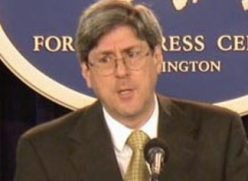
Pentagon insider says high US official Douglas Feith reported to Netanyahu
or go to
Aletho News Archives – Video-Images
Frlom the Archives
Who’s to blame for the Iraq war?
A not-so-trivial quiz
By Maidhc Ó Cathail | 14 March 2010
Maidhc Ó Cathail names and shames the top 19 politicians, academics and policy makers – all con men and all Zionist Jews – who lied and conspired to steer the US toward aggression against the Iraqi people. … continue
Blog Roll
 Aletho News
- Hegseth’s call for ‘no mercy’ to Iranians deemed war crime
- Iran War Exposes Limits of US Military Power – Journalist
- Even The Neo-Cons Admit The Iran War Is Failing
- Inside the Caucasus Drone Corridor Fueling Tensions With Iran
- ‘Not our war’: Trump’s naval coalition to reopen Strait of Hormuz dead in the water
- Iran declares support centers for USS Gerald R. Ford legitimate targets
- Moscow issues warning over Trump’s Golden Dome plan
- Brussels wants ‘our sons to die for Ukraine’ – Orban
- Where in the World Is Benjamin Netanyahu? On the Move or Out of Sight?
- Pentagon insider says high US official Douglas Feith reported to Netanyahu
- If Americans Knew
- Predictions of another 9/11, amid Israel-US killing spree – Not a ceasefire Day 157
- As US-Israel war on Iran rages, Gaza faces massive dust storm – Not a ceasefire Day 156
- No let-up in attacks on Gaza as Israel takes on Iran, Lebanon – Not a ceasefire Day 155
- ‘Of Course’: IDF Drops Case Against Soldiers Accused of Raping Palestinian Prisoner
- Don’t Fall for the Regime Change Talk. Israel Is ‘Mowing the Lawn’ in Iran
- Will Israel and the US wreck the Gulf States along with Iran?
- US so far burned through ‘years’ of munitions in Iran war: Report
- How the Israeli Tail Wags the American Dog
- Outdated intel likely led to deadly U.S. strike on Iranian elementary school, sources say
- Pentagon insider says high U.S official Douglas Feith reported to Netanyahu
- No Tricks Zone
- Storing Green Energy To Last Germany 10 Days Would Require A 60-Million Tonne Battery
- New Studies: UK Sea Levels Were 4 Meters Higher Than Today During The Mid-Holocene
- Destructive Green New Deal: German Energy And Metal Group Warns Of Drastic Crisis
- New Study Documents A 20-Year Pause In Arctic Sea Ice Decline – Driven By Internal Variability
- Wake-up Call: Survey Shows Majority Of Germans Now Favor Postponing Climate Targets!
- Televised! Leading German Political Candidate Tells Schoolchildren CO2 Makes Sun Hotter!
- New Study: A Century Warming Of 1.1°C Is ‘Commonplace’ And ‘Not Unusual’ During This Interglacial
- New Study: ‘Internal Noise’ And Volcanic Forcing Can Trigger 10-15°C Warming Within Decades
- Glaciers Worldwide Are Suddendly Surging, Experts Blame Warming!
- Surprising Discovery: Sahara Is Greening…Billions Of Trees Where Once Thought To Be Barren
 Aletho News