HDP deputies: Killings of 12 young men in Van, eastern Turkey were executions
ANF News, published by Kurdish Daily News, January 10, 2016
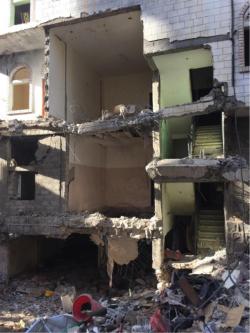
VAN – 12 youths aged between 18-25 have been executed as a result of a house-raid conducted by Turkish terrorists in the central Edremit district of Van province early this morning. ID details of the youths remain unknown.
HDP Van MP Lezgin Botan who spoke to ANF about the incident said bodies of 12 youths, all aged 18-25, have been taken to a hospital morgue. Botan said the youths were shot in the head, and described the incident as not a clash but mass execution. He added that police forces have blockaded the scene of the executions and hospital where youths are being held now.
HDP Van deputy Tugba Hezer told that; “Apart from one, all have been shot in the head. They are all young people in civilian clothes, as has been conveyed to us by those who saw the bodies. Not every single one of them can possible be shot in the head during a clash. It is not possible. This is a mass execution. Police have evacuated and entirely blockaded the hospital.”
Police disperse protesters in Turkey’s east, deputy injured
By Cihan News Agency, published by Hurriyet Daily News, January 11, 2016
VAN, eastern Turkey – Police dispersed protesters who were staging a sit-in against a Jan. 10 police raid into a house of militants of the outlawed Kurdistan Workers’ Party (PKK) in the eastern province of Van’s Edremit district on Jan. 11, detaining many.
Members of the provincial center of the Peoples’ Democratic Party (HDP) gathered in front of its headquarters to make a press statement as some shopkeepers in the district also refused to open their shops to protest the recent police raid. HDP provincial organization members staged a sit-in before the statement. However, police dispersed the crowd with pressurized water and detained a number of protesters.
Meanwhile, HDP Van deputy Lezgin Botan was injured during the police action and has been reported to be in good condition.
Police special forces raided a two-story house around 5 a.m. on Jan. 10, following a tip-off that its occupants were planning a large-scale attack in Van. Twelve suspected PKK militants in the house, along with an officer identified as Önder Ertas, were killed in the raid, which also injured two other officers, as the security forces seized weapons and ammunition in the house.
URGENT CALL FROM TURKEY’S HUMAN RIGHTS ORGANIZATIONS TO THE INTERNATIONAL COMMUNITY
Human Rights Foundation of Turkey | January 6, 2016
With the interruption of the peace talks, the government of Turkey started, in mid-August, to implement a security policy that unlawfully restricts fundamental rights and freedoms in those cities and towns largely populated by Kurds.
Since August 2015, long-term and consecutive curfews have been declared in the provinces of, and the towns attached to Şırnak, Mardin, Diyarbakır, Hakkari and Muş, and are still underway in certain cities and towns. During these prohibitions, national and international media, human rights or professional organizations as well as representatives of the parliament who wanted to identify violations of rights have been denied access to these cities and towns. According to the findings in reports drawn up by the very small number of civil society organizations which could make their way into the region in the face of huge obstacles, it has been determined that the civilian population has become the target of both snipers and heavy weaponry, which has been used in an arbitrary fashion.
According to reports prepared by rights based organizations, 1,3 million people have been impacted by the curfews; more than 120 civilians –including children and the elderly– have lost their lives[1]. Many people have been injured, and hundreds of thousands of people have been displaced. Arbitrary detentions and arrests have occurred; and civilians are being subjected to torture and maltreatment in detention centres and in the open. Intrusion in telecommunication networks restricts the right to information and freedom of communication. By an official decision to send away teachers from the region, education has been disrupted without a deadline, and health services have also been suspended. Due diligence in protecting civilians is not being demonstrated in any sense and they are not even provided the opportunity to meet minimum daily needs such as the right to food and water. After the curfews, no immediate and explicitly effective investigations have been conducted. Trial and punishment of those security forces that violate rights are being rendered impossible. The policy of impunity expands and continues, getting more severe.
Although curfews have been declared pursuant to article 11/C of the Provincial Administrations Law, with the justification “apprehending the members of the terrorist organization” and “ensuring the physical safety of the people and their properties”, jurists largely agree that the aforementioned law does not entitle the relevant senior public officer to declare such a prohibition, which would impact the rights and freedoms of the entire people living in a city or a town. Pursuant to constitutional article 13, such a restriction can only be introduced through ‘law’. Curfews declared upon the governorate’s instructions are in breach of the constitution. The fact that the framework of the curfews and the sanctions thereof are not subject to the law means that security operations conducted in this period and rights violations too are not subject to any legal supervision.
Other than in times of war, in populated areas where a state of emergency or martial law has not been declared, the security forces are not entitled to use heavy weaponry and ammunition in violation of the principle of absolute necessity without ensuring evacuation of the civilian population. During the planning, command and control of operations alleged to serve the purpose of protecting the lives of civilians from unlawful violence, it is unacceptable to perpetrate arbitrary and disproportionate force which does not accord to the duty of care expected from the state in a democratic society. The lethal force used by the government of Turkey in the aforementioned provinces and districts is currently in gross violation of the principle of proportionality to be ensured between the intended objective and the force used for this purpose in a democratic society.
The environment of conflict unfolding has turned human rights defenders into targets of state violence and political assassination. President of the Diyarbakır Bar Association and human rights defender Tahir Elçi was killed while he was delivering a press statement whereby he called for an end to security operations and resumption of peace negotiations.
The situation is dire and our call is urgent!
As civil society organisations we demand the international community to remind the Government of Republic of Turkey that:
- curfews declared in the absence of any legal basis are unacceptable,
- lethal force cannot be used by any means whatsoever in a disproportionate and arbitrary fashion,
- during security operations obligations stemming from international human rights law, international criminal law as well as the humanitarian law cannot be suspended,
- human rights organisations, professional organisations, representatives of local government and of the Parliament, struggling to end, identify and penalise right violations and to reflect the process in total transparency to the international community, should be supported, and
- we call for a bilateral ceasefire, the cessation of conflict and the resumption of peace negotiations to be carried out in an official and transparent manner in the presence of independence observers.
—
Signatory members of the Coalition Against Impunity
Batman Bar Association, Diyarbakır Bar Association, Helsinki Citizens’ Assembly – Turkey, Human Rights Agenda Association, Human Rights Association, Human Rights Foundation of Turkey, Şırnak Bar Association, Truth, Justice and Memory Center
[1] Updated numbers on violations of the right to life as a result of curfew by different sources are as follows: According to figures of Human Rights Foundation of Turkey’s Documentation Center, as of January 6, 2016, at least 151 civilians have lost their lives within the period of the declared curfews in 17 towns of 7 districts. According to Human Rights Association’s Documentation Unit, from the start of armed conflict in July 24, 2015 until January 6, 2016, 134 civilians living in cities with declared curfews have lost their lives. 12 people have lost their lives in the year 2016 during curfews in towns of Sur, Cizre and Silopi. People’s Democratic Party’s Information Center which also daily monitor the violations of the right to life, state number of people who lost their lives to be 152 as of January 6, 2016.
Turkey Bans Media From Publishing Information on Istanbul Explosion
Sputnik — 12.01.2016
Turkish authorities introduced a gag order on the media on Tuesday to restrict the dissemination of information about the explosion that shook Istanbul earlier that day, local media reported.
The ban on the distribution of information will affect all kinds of news, interviews, analyses and other article formats in the printed press, on television, on the radio, via social networks and on the Internet, Anadolu news agency reported.
The decision will take effect immediately, once all Turkish media outlets have been officially notified by Ankara, according to the agency.
At least 10 people died and 15 were injured in an explosion in Istanbul’s historical center earlier on Tuesday, according to local authorities.
Madaya hunger reports aim to demonize government: Syria
Press TV – January 12, 2016
Syria’s ambassador to the UN says media reports of starving civilians in the southwestern town of Madaya have been fabricated in an attempt to defame the government of President Bashar al-Assad.
“Actually, there was no starvation in Madaya,” Bashar Ja’afari told reporters at the UN headquarters in New York, where the UN Security Council met to discuss the humanitarian crisis in Syria.
Jaafari said journalists from the Qatari-owned al-Jazeera broadcaster and the Saudi-owned al-Arabiya TV network are “mainly responsible for fabricating these allegations and lies.”
He said false information about starvation deaths in the Syrian town are aimed at “demonizing” Damascus and “torpedoing” peace negotiations due in the Swiss city of Geneva on January 25.
The Syrian diplomat also said aid delivered to Madaya in October had been looted by terrorist groups and sold to civilians at high prices.
“The Syrian government is not and will not exert any policy of starvation on its own people,” he said, adding the “terrorists are stealing humanitarian assistance.”
On Monday, a convoy of 44 trucks loaded with food, baby formula, blankets and other supplies entered Madaya. An equivalent amount of aid would also arrive in two other besieged towns of Foua and Kefraya.
The Syrian government recently agreed to facilitate the flow of relief aid into Madaya, which has been the scene of fierce clashes between pro-government forces and Takfiri elements.
Locals told the Lebanese al-Manar TV on Sunday that terrorist groups had stored aid packages for Madaya and sold it to the locals at inflated prices.
According to the UN, up to 4.5 million people live in hard-to-reach areas of Syria which has witnessed a deadly conflict fueled by foreign-sponsored Takfiri terrorists since March 2011.
Over 260,000 people have reportedly lost their lives while millions of others have been forced to flee their homes due to the violence.
Nobel Peace Prize-Winner Obama Dropped 23,144 Bombs in 2015
Sputnik – January 11, 2016
 The United States in the past year dropped more than 20,000 bombs on Muslim-majority countries Iraq, Syria, Afghanistan, Pakistan, Yemen and Somalia, according to a study by the Council on Foreign Relations (CFR).
In an article published January 7, Micah Zenko, a senior fellow at CFR, states that since January 1, 2015, the United States has dropped an estimated 23,144 bombs in those six countries: 22,110 in Iraq and Syria; 947 in Afghanistan; 58 in Yemen; 18 in Somalia; and 11 in Pakistan.
“This estimate is based on the fact that the United States has conducted 77 percent of all airstrikes in Iraq and Syria, while there were 28,714 US-led coalition munitions dropped in 2015. This overall estimate is probably slightly low, because it also assumes one bomb dropped in each drone strike in Pakistan, Yemen, and Somalia, which is not always the case,” Zenko writes.
Despite dropping tens of thousands of bombs over the past 17 months, Washington’s strategy has failed to defeat Daesh and other Islamic militant groups, Zenko observed.
In Afghanistan, the Taliban control more territory than at any point since the 2001 US invasion, according to a recent analysis in Foreign Policy magazine.
Zenko notes that the primary focus of Washington’s counter-terrorism strategy is to kill extremists, and that far less attention is paid to prevent a moderate individual from becoming radicalized.
As a result, “the size of [Daesh] has remained wholly unchanged,” Zenko writes.
In 2014, the Central Intelligence Agency estimated the size of Daesh to be between 20,000-31,000 members. On Wednesday, Colonel Steve Warren, a spokesman for the US-led coalition, estimated the group at 30,000 members, despite Pentagon claims that 25,000 Daesh members have been killed in US air strikes.
At the same time, the Pentagon claims that only six civilians have “likely” been killed in the course of the bombing campaign.
The Real Terrorists: The .01%
By Paul Buchheit | Common Dreams | January 11, 2016
They consist of 16,000 individuals, about the size of a crowd at a professional basketball game. The inequality horror they’ve fomented is reaching far beyond the half of America that is in or near poverty, for it now impacts those of us well above the median, those of us in the second highest of four wealth quartiles.
1. The .01% Have as Much Wealth as 80% of America
The combined net worth of the 16,000 richest Americans is approximately the same as the total wealth of 256,000,000 people. Details for this statistic and other facts to follow are at You Deserve Facts.
2. Americans with up to a Quarter-Million Dollars are Part of the Nearly 80% of Americans with Less Wealth Than the .01%
The 80% includes all Americans with a net worth up to about $277,000.
3. The .01% Own about as Much as 75% of the Entire World
The world’s poorest 75% own roughly 4 percent of total global wealth, approximately the same percentage of wealth owned by the .01% in the United States. Again, calculations are shown here.
4. The .01% – Who Are They?
It starts with the billionaires, the Forbes 400 and 136 more, for a total of 536 individuals with a total net worth of $2.6 trillion at the end of 2015.
It continues with more Ultra High Net Worth Individuals (UHNWIs). These loftily-named people, over 15,000 of them, are worth hundreds of millions of dollars apiece, bringing the total .01% wealth to about $6.2 trillion, based on 2013-14 data. But U.S. wealth has grown by about 30 percent in three years, and the Forbes 400 has grown by 38 percent, and thus the total wealth of the .01% has grown to over $9 trillion.
In contrast, a recent Institute for Policy Studies report calculated that the bottom half of America has about $732 billion in total wealth, and further calculations on the same data show that the bottom 75% of America owned about $6.2 trillion in 2013.
5. The Unique Brand of .01% Terror: Making a Game of Tax Avoidance While 2,500,000 Children Experience Homelessness
Wealth ownership is not contemptible if the owners of that wealth accept their responsibility to the society that makes their great fortunes possible. But instead of paying taxes, the wealthiest Americans have formed an “income defense industry” to shelter their riches, with, according to the New York Times, “a high-priced phalanx of lawyers, estate planners, lobbyists and anti-tax activists who exploit and defend a dizzying array of tax maneuvers, virtually none of them available to taxpayers of more modest means.”
On the corporate end, over half of U.S. corporate foreign profits are now being held in tax havens, double the share of just twenty years ago. Yet for some of our largest corporations, according to the Wall Street Journal, over 75 percent of the cash owned by their foreign subsidiaries remains in U.S. banks, “held in U.S. dollars or parked in U.S. government and corporate securities.” Thus they get the benefit of our national security while they eagerly avoid taxes.
The .01% go about their self-serving tax avoidance while 2.5 million children experience homelessness every year. The corporations of the .01% hoard hundreds of billions overseas while nearly two-thirds of American families don’t have enough money to replace a broken furnace.
This is real terror, facing life without shelter and warmth and sustenance, without a semblance of security for even one day in the future. It is terror caused in good part by the 16,000 people who don’t feel it’s necessary to pay for the benefits heaped upon them by a perversely unequal society.
Paul Buchheit is the editor and main author of “American Wars: Illusions and Realities” (Clarity Press). He can be reached at paul@UsAgainstGreed.org.
Is the Chinese Economy Really in Trouble?
Here Are the Lessons of History the Press Ignores
By Eamonn Fingleton • Unz Review • January 11, 2016
“You cannot hope to bribe or twist – thank God! – the British journalist. But, seeing what the man will do unbribed, there’s no occasion to.”
So wrote the witty early twentieth century British man of letters Humbert Wolfe. His assessment of American journalists isn’t recorded but, where pivotal issues are concerned, they have probably proved even more naïve lately than their British counterparts.
American journalistic naïveté has rarely been more embarrassingly on display than in recent coverage of the Chinese economy.
Here is probably the most successful export economy in world history, yet American journalists have somehow been persuaded that it is in such terrible shape that it needs a devaluation. CNBC, for instance, reported the other day that “most experts” believe the yuan is overvalued by fully 10 percent. This despite the fact that the Chinese currency has already dropped more than 8 percent against the U.S. dollar in the last two years.
True China’s export performance has been lackluster lately – exports were down 3.7 percent in yuan in November, for instance, and the drop was considerably greater in dollars. What is rarely mentioned, however, is that China’s exports are one of the most volatile series in global economics. Short-term setbacks of as much as 20 percent or more are common and bespeak remarkably little about China’s underlying economic health. What matters is the long-term trend, a rate of growth in dollar-denominated export revenues that has averaged more than 17 percent a year in the last fifteen years. That is a truly sensational number and its accuracy is attested by other nations’ imports.
It hardly needs to be said that, pace what the press’s “expert” sources say, the case for devaluation does not stand up to even cursory examination. After all, the point of exchange rates is to ensure that trade is conducted on fair and mutually advantageous terms. Yet for a generation now the yuan has been so undervalued that it has wreaked havoc on what little has remained of America’s once superlative industrial base.
The result as of 2014 was that America’s bilateral trade deficit with China totalled $348 billion. This accounted for the vast bulk of the entire U.S. current account deficit with the world as a whole, which totalled $389 billion (the current account is the widest and most meaningful measure of a nation’s trade). Meanwhile China enjoyed a current account surplus of $220 billion.
Even in the face of figures like this, the press has often put a distinctly negative spin on Chinese economic news. Indeed many journalists have gone so far as to entertain suggestions – emanating ultimately from Sinology’s lunatic fringe – that the Chinese economic miracle is just smoke and mirrors and that in reality China is teetering on the brink of economic or political disaster, or both.
The political consequences are hard to exaggerate. Reports of economic trouble in China not only pander to wishful thinking among ordinary Americans but provide U.S. policymakers with an excuse to procrastinate on long-overdue measures to crack down on China’s trade cheating. Meanwhile the ground is cut from under economic hawks like Donald Trump who want to get tough with China.
In the circumstances the Beijing authorities could hardly be better served and it seems clear that for many years they have been quietly promoting a “bad news” propaganda agenda. (Japan does so as well, but that is a story for another day.)
The root of the press’s problem is a poor choice of sources. Instead of proactively seeking out trustworthy, independent sources, journalists too often sit around passively heeding whomsoever happens to be within earshot. Far too often this means listening to sources artfully placed in prominent positions by the China lobby.
What is clear is that many of the top academic Sinologists seem to be congenitally pro-Beijing. Others are merely ambitious, and know that to land a big job in a future presidential administration, they have to avoid saying things that might discomfit the China lobby. That lobby is largely funded by major U.S. corporations that do much of their manufacturing in China. One of the lobby’s most obvious objectives has been to keep the yuan low, with all that has implied for the future of America’s manufacturing base. As the lobby controls large tranches of China-studies money, it has had little difficulty ensuring that America’s most frequently quoted Sinologists are on message.
As for other key sources, China-watching securities analysts and bank economists are generally even less reliable than university-based Sinologists. They are clearly constrained by a need to please their most profitable and demanding customers, among whom various financial arms of the Chinese system have long taken pride of place. (China is now a vast exporter of capital, which is, of course, great news for those Wall Street firms who find favor in Beijing.)
Of course, some frequently quoted sources undoubtedly do believe what they are saying. In particular there is a minority of far-right China-watchers who love to preach textbook American laissez-faire to an apparently benighted Beijing. This is the “Tea Party” wing of American Sinology. Its members seem to be particularly lacking in the listening skills that are essential to understanding a place like China (basically you have to listen to the unsaid – something that Tea Party types probably consider an oxymoron). Of course, precisely because such Sinologists are so often wrong, they are viewed in Beijing as useful idiots who work wonders in keeping Americans confused and disunited.
While we can rarely say for sure whether any particular China watcher is in Beijing’s pocket, most undoubtedly are. Though they would be horrified to be so identified, their agenda is pretty obvious in the way they censor themselves. Instead of speaking out on China’s trade barriers, intellectual property theft, and the undervalued yuan, they typically tiptoe away from frank discussions of such matters.
Let’s take a closer look at some of Sinology’s more problematic figures. It takes no more than a cursory internet search to turn up countless China watchers who have vainly predicted the Middle Kingdom’s eclipse, if not collapse, over the years. In a moment we’ll look at Gordon Chang, who ranks as the king of the “collapsing China” crowd, but first let’s consider a few pretenders to the throne.
One often quoted source is the Beijing-based professor and analyst Michael Pettis. Though the tenor of Pettis’s comments varies, he has often come across as a super-bear.
Here, for instance, is how he described the Chinese economy to the Associated Press in 2007: “Right now, we’re in a sweet spot. Everything is as good as it can get…. You can make a very plausible case that we have all the conditions for a serious crisis when there’s an adverse shock. There’s a lot more debt out there than we think.”
Any U.S. policymaker who was persuaded by this would have been blindsided by subsequent events. China’s exports, for instance, multiplied more than three-fold in dollar terms in the next seven years.
Among China super-bears, few are more outspoken than Arthur Waldron, a professor at the University of Pennsylvania and a member of the Council on Foreign Relations. As far back as 2002, he claimed that Chinese economic growth was make-believe. Writing in the Washington Post, he backed a madcap theory that instead of growing at about 6 percent, as officially stated, the Chinese economy had actually been contracting for the previous four years. He concluded that China’s industrial policy was “a recipe not for growth but for economic collapse.”
Another Sinologist who has played an outsize role in confusing American opinion is Susan Shirk. As the Ho Miu Lam Professor of China and Pacific Relations at the University of California, San Diego, Shirk remains what she has long been: a notable “friend of China.” An early indication of her style came in 1994 when she published How China Opened Its Door: The Political Success of the PRC’s Foreign Trade and Investment Reform. She went on as Deputy Assistant Secretary of State in the Clinton administration to play a key role in negotiations that led to China receiving Most Favored Nation trade status.
Her claim to fame as a China super-bear is based largely on her 2007 book, China: Fragile Superpower: How China’s Internal Politics Could Derail Its Peaceful Rise. The book postulated a supposedly serious risk that the Chinese regime would be overthrown in a popular revolution. The consequences, she suggested, could be devastating not only for China but for the West. She urged the West not only to accord Chinese leaders exaggerated respect but to adopt an explicit policy of keeping them in power. Among other measures that presumably meant holding back on complaints about China’s trade policies.
Virtually every aspect of her analysis can be debunked but a full rebuttal would require more space than I have here. The first thing to note is that she claimed her analysis was based on conversations with numerous top Chinese leaders. That may well be so – but she evidently didn’t ask herself what was in it for them. After all they have made a fine art of keeping things secret from their own people. Why would they pour their hearts out to a mere gweilo (and a gormless one, by the sound of it)?
For now let’s simply note that for millenia, Chinese leaders have generally shown themselves uncommonly adept at nipping in the bud any signs of incipient revolution. Supreme leader Deng Xiaoping perpetuated the tradition by so brutally breaking up the Tiananmen protests in 1989. Today’s leaders moreover seem more secure than their predecessors in that they are equipped with modern methods of electronic surveillance that can provide a much earlier warning of incipient trouble than in the past.
Now let’s consider David Shambaugh, a political scientist at George Washington University. Long noted for suggestions that the People’s Liberation Army is a paper tiger, he has become outspokenly pessimistic about China’s political system in recent years. One recent essay, published in the National Interest in 2014, was headed “The Illusion of Chinese Power.”
Then in March 2015 he persuaded the editors of the Wall Street Journal to publish a commentary headed “The Coming Chinese Crackup.”
He wrote: “The endgame of Chinese communist rule has now begun, I believe, and it has progressed further than many think.” Referring to Communist Party rule, he added: “Its demise is likely to be protracted, messy and violent. I wouldn’t rule out the possibility that Mr. Xi will be deposed in a power struggle or coup d’état.”
His analysis was so melodramatically worded that it attracted considerable criticism, not least a point-by-point rebuttal from Forbes.com commentator Stephen Harner (who, unlike Shambaugh, can claim to have spent much of his career in China).
Shambaugh’s central point was a surmise that Chinese president Xi Jinping’s efforts to curb corruption had dangerously ruffled the feathers of power rivals.
As a measure of Xi’s allegedly weakening grip, Shambaugh mentioned that on a recent visit to a Chinese campus bookstore, he noticed that a pile of pamphlets by Xi didn’t seem to be moving. This, of course, is broadly as fatuous as an illiterate Chinese visitor judging Hillary Clinton’s presidential prospects from the height of a pile of pamphlets at Columbia University.
Shambaugh also noted that an increasing number of Chinese students have been studying abroad lately. This, he suggested, stemmed mainly from a morbid fear of political instability at home. He did not seem to wonder whether less sensational explanations might suffice. After all, on the latest figures, Koreans are proportionately nearly seven times more likely than the Chinese to study in the United States – and the Taiwanese are more than four times more likely. Are we to believe that the danger of “crackup” is even greater in South Korea and Taiwan than in China? The truth is that East Asian students study abroad for a variety of rather mundane reasons, most notably the chance to improve their English. The trend has been powerfully stimulated not only by East Asia’s increasing wealth but by the same advances in air travel and communications that have been generally promoting globalization.
Perhaps Shambaugh’s most important point was that many super-rich Chinese families have been buying homes overseas. But, as Stephen Harner pointed out, this is hardly news. The Chinese have been doing so for generations. The only difference these days is that they have so much more money to spend. This, of course, attracts notice and even gets written about in the press.
Probably the single most widely publicized member of the “collapsing China” club is Gordon Chang, a Chinese-American lawyer. Since he published The Coming Collapse of China in 2001, he hasn’t had a good word to say about China’s prospects. Yet between 2001 and 2014, China boosted its exports from $267 billion to $2,331 billion – a more than eight-fold rise and a compound annual growth rate of an almost unbelievable 18.1 percent. This signified a rate of sustained productivity growth that few, if any, other nations have ever matched.
Contacted recently, Chang professed to be still a convinced China super-bear. But if China managed to escape economic Armageddon in the wake of his book’s publication fourteen years ago, what’s different today? In its latest reformulation, Chang’s argument is that China is facing devastating new competition from India. Just as a rising China wreaked havoc on the U.S. economy, a rising India supposedly poses a similar threat to the Chinese economy.
To a non-economist, especially one who is not familiar with Asia, this might not seem entirely implausible. In reality Chang’s argument is based on one of the most elementary fallacies in economics, the idea that success is a zero-sum game. His implicit assumption is that for some nations to win, others necessarily have to lose. This is Malthusianism and it overlooks the fact that in normal modern conditions economic growth is an expanding universe. Think, for instance, of the rise of Scandinavia. Though Norway, Sweden and Denmark now rank near or at the top of the world income league, this has hardly on balance posed a problem for a nation like Germany.
What Chang seems to be implying is that India will be accorded carte blanche to use the same super-aggressive methods on the Chinese industrial base that China has used on the American industrial base. He fails to note, however, that Washington has been asleep at the switch, with the result that China has been allowed to get away with the economic equivalent of murder. In particular China has extorted a cornucopia of advanced production technologies from America. U.S. corporations have been told that to sell their products in China they must manufacture there and bring their best technologies. To say the least, such diktats ride roughshod over China’s obligations under international trade agreements. India is unlikely to be permitted to use similar extortion techniques against China.
In truth about the only thing India and China have in common is an Asian address. In economic and political fundamentals, they are chalk and cheese. In trade, for instance, India remains a negligible force, despite many years of bullish econobabble in the West. At last count it was not only being out-exported nine to one by China but China seemed to be lengthening its lead. (Measured since 2006, India’s exports have hardly doubled, whereas China’s have more than quadrupled.)
Crucially the Indian savings rate runs little more than half of China’s. Worse, the Indian authorities seem to lack the authoritarian tools necessary to boost it. (In In the Jaws of the Dragon, a book I published in 2008, I showed how China uses authoritarian controls to suppress consumption, thereby automatically and powerfully boosting the savings rate.)
Another key distinction is that whereas China has run huge current account surpluses for decades, the Indian balance of payments remains stubbornly in the red.
A second strand in Chang’s argument is that capital flight threatens to destroy the Chinese economy. Though this again may impress a non-economist, there is again a lot less here than meets the eye. For a start, China is necessarily a huge capital exporter as a result of its current account surpluses (as a matter of simple arithmetic, every dollar of surplus represents a dollar of capital that will willy-nilly be exported).
To be sure Chinese leaders have often talked as if they are worried about capital flight. The point of such talk, however, would appear to be merely to deflect attention from the People’s Bank of China’s market interventions to keep the yuan undervalued.
What is clear is that if the Beijing authorities can control the internet and the press, a fortiori they can control capital flight (which requires mainly just a firm grip on a mere handful of major banks, most of which are, in China’s case, state-owned). What we know for sure is that historically other nations with a far more liberal tradition – the United Kingdom in the mid-twentieth century, for instance – have had little trouble maintaining effective capital controls. Moreover the investment case for the British getting their money out in those days was far greater than for the Chinese today. After all Britain’s economic performance was persistently anemic, whereas China’s current growth rate, at around 6 percent, remains one of the world’s highest. In the unlikely event that Chinese capital flight really becomes a problem, the authorities have a host of remedies available, not least an Orwellian system of electronic snooping far more intrusive than anything known in the West today, let alone in the United Kingdom of the 1960s.
So what are we left with? It is past time the American press remembered its traditional commitment to balance – and recovered its commonsense. Hearteningly, not all members of the press are incapable of learning from experience.
I will leave the last word to Gideon Rachman of the Financial Times. He cut to the core of the matter in a well-balanced commentary in 2012.
He wrote:
It is clearly true that China has enormous political and economic challenges ahead. Yet future instability is highly unlikely to derail the rise of China. Whatever the wishful thinking of some in the west, we are not suddenly going to wake up and discover that the Chinese miracle was, in fact, a mirage.
“My own scepticism about China is tempered by the knowledge that analysts in the west have been predicting the end of the Chinese boom almost since it began. In the mid-1990s, as the Asia editor of The Economist, I was perpetually running stories about the inherent instability of China – whether it was dire predictions about the fragility of the banking system, or reports of savage infighting at the top of the Communist party. In 2003, I purchased a much-acclaimed book, Gordon Chang’s, The Coming Collapse of China – which predicted that the Chinese miracle had five years to run, at most. So now, when I read that China’s banks are near collapse, that the countryside is in a ferment of unrest, that the cities are on the brink of environmental disaster and that the middle-classes are in revolt, I am tempted to yawn and turn the page. I really have heard it all before.
Eamonn Fingleton reported on East Asian economics and finance from a base in Tokyo for 27 years. He met China’s supreme leader Deng Xiaoping in 1986 and predicted the Japanese stock market and real estate crashes in a major article in Euromoney in September 1987. He is the author of Unsustainable: How Economic Dogma Is Destroying American Prosperity (New York: Nation Books, 2003).
Corbyn backs anti-nukes rally amid fresh Shadow Cabinet resignations
RT | January 11, 2016
Labour Party leader Jeremy Corbyn has backed a mass Campaign for Nuclear Disarmament (CND) rally opposing the renewal of Britain’s Trident nuclear arsenal amid a flurry of resignations and threats from right-wing shadow ministers.
Corbyn told the BBC on Monday that Britain could play a part in achieving a nuclear-free world.
“Let’s get the discussion and debate out there,” he said.
“I want [Labour] members to have a big say in it. Whether that comes as a vote of individual members, or a vote at conference, that will be decided. I have not made up my mind on that.
“My whole election program was based on the need for ordinary people to be able to participate much more in politics, so that leaders don’t go away and write policy, so that executive groups don’t go off and decide what the policy is, ordinary people do,” he said.
His comments indicate he may push for a ballot of the entire Labour membership to decide on the party’s nuclear weapons policy.
A vote to rid Britain of nukes would end 25 years of pro-nuclear Labour policy, a prospect which has rattled many on the party’s right-wing.
Senior MPs from the Blairite quarters of the party have previously said Trident is a “fundamental red line” they will not compromise on.
Corbyn’s comments come as two more Shadow Cabinet figures tendered their resignations. Shadow Attorney General Catherine McKinnell was the most senior to quit, citing concerns over the party’s “direction and internal conflict.”
She claimed Labour is taking an “increasingly negative path.”
She was the fourth to resign since last week’s Shadow Cabinet reshuffle after two junior shadow ministers, Stephan Doughty and Jonathon Reynolds, threw in the towel over the sacking of Tony Blair loyalist Pat McFadden as Europe minister. Shadow Armed Forces Minister Kevan Jones also returned to the backbenches.
The fifth Shadow Cabinet figure to go, also on Monday, was Dewsbury MP Paula Sherriff, who was serving as the parliamentary private secretary (PPS) for John Trickett MP.
On Sunday, Alison McGovern MP acted prematurely, attempting to resign from a role overseeing party policy on child poverty that hadn’t yet been established. She did so while condemning Shadow Chancellor John McDonnell, who had branded Progress, a Blairite faction within Labour, a “hard right” group.
Others who have hinted at resignations, particularly in relation to nuclear weapons policy, include the Shadow Work and Pensions Secretary Owen Smith and Shadow Justice Secretary Lord Falconer.
Falconer, who once shared a flat with former PM Tony Blair, told the BBC on Sunday: “I am clear that I support Trident remaining.”
The anti-Trident demonstration will be held in Trafalgar Square on February 27.
Health of Palestinian journalist on hunger strike in Israeli jail ‘deteriorating’
Press TV – January 11, 2016
 A Palestinian official says the health condition of a Palestinian journalist on hunger strike in an Israeli prison is worsening.
The Palestinian minister of prisoner affairs, Issa Qaraqe, said on Monday that Mohammed al-Qeq, 33, is in “critical condition” on the 48th day of his hunger strike. The journalist was arrested in November 2015, when Israeli forces blew up the front door of his house and took him in for interrogation.
Following his arrest, and for several days, he was not allowed to contact either his wife or his attorney.
He has been protesting his detention without trial or charge with the hunger strike.
Sources close to al-Qeq said he was interrogated for “journalistic incitement,” and when he refused to cooperate, he was put in administrative detention for a period of six months.
According to the sources, Israeli forces tortured al-Qeq during his interrogation, when he was subjected to beatings, sleep deprivation, exposure to cold, and other forms of abuse.
Administrative detention is a sort of imprisonment without trial or charge that allows Israel to incarcerate Palestinians for up to six months. The detention order can be renewed for indefinite periods of time.
Featured Video

Rewriting the risk? Inside the government’s vaccine safety messaging
or go to
Aletho News Archives – Video-Images
Book Review
“Davos Can Really Replace the UN”
Inside the book that maps the architecture behind global governance — from the Epstein files to the Pact for the Future
Lies are Unbekoming | April 1, 2026
On June 13, 2019, the United Nations and the World Economic Forum signed a partnership deal to “accelerate the implementation of the 2030 Agenda for Sustainable Development.” That same evening, WEF president Börge Brende — Norway’s former Foreign Minister — had dinner with Jeffrey Epstein at Epstein’s Manhattan townhouse. The Epstein files, released January 2026, contain an exchange between the two from the previous year. Epstein to Brende: “Davos can really replace the UN. C21, cyber, crypto . genetics… intl coordination.” Brende back to Epstein: “Exactly — we need a new global architecture. World Economic Forum (Davos) is uniquely positioned — public private.”
The next day, the UN General Assembly adopted the framework for restructuring global governance.
That sequence — the partnership signing, the Epstein dinner, the candid admission about replacing the UN with a public-private architecture, and then the formal adoption — opens Jacob Nordangård’s The Digital World Brain. Pages two and three. Footnoted to the UN resolution number, the Epstein files, and the General Assembly record.
I keep coming back to it because it captures what this book does that almost nothing else in the independent research space manages. I’ve followed Jacob’s work for years now and interviewed him about his research. Each book peels back another layer of the same institutional architecture, and each time I think he’s reached the limit of what can be documented, the next one goes further. Nordangård doesn’t speculate. He doesn’t editorialize much. He lays institutional actions next to each other in chronological order and lets the pattern announce itself. … continue
Blog Roll
 Aletho News
- Iran Threatens Retaliatory Strike on Stargate AI Project in UAE
- US sent ‘a lot’ of arms to Iranian protesters – Trump
- Barak Ravid Launders Deception To Allow Trump To Back Off Of His Power Plant Threat – Again
- REWRITING THE RISK? INSIDE THE GOVERNMENT’S VACCINE SAFETY MESSAGING
- “Davos Can Really Replace the UN”
- NIAID/NIH and USDA Fund Bioengineered Chimeric Influenza Viruses Built Using Pandemic H1N1 Components: Journal ‘Science Advances’
- Hezbollah hits Israeli warship off Lebanon’s coast, sets it aflame
- Iran slams US strikes on B1 bridge, Mahshahr petrochemical plants as ‘blatant acts of state terrorism’
- In letter to UN chief, Araghchi warns of dire consequences of US-Israeli attacks on Iran’s nuclear facilities
- Why the CIA conspiracy to invade Iran with Kurdish militias failed
- If Americans Knew
- In Iran, Israel-US take aim at “reason, research, and freedom of thought” – Daily Update
- US loses planes over Iran, Israel downgrades Lebanon war goals – Daily Update
- Israel Is Blocking Palestinians from Easter at Church Where Jesus Resurrected
- Plot to assassinate Palestinian activist follows harassment campaign promoted by Zionist groups and elected officials
- Prominent New York synagogue hosts presentation on why U.S. Jews should support the ethnic cleansing of Gaza
- Tapper vs. Piker: Is the CNN Anchor Auditioning for David Ellison?
- Shouldn’t Democrats Be Able to Condemn Genocide?
- Israel-US kill negotiators, destroy civilian structures, but Iran’s military capabilities still largely intact – Daily Update
- ‘War crime’: Global condemnation as Israeli ministers celebrate death penalty law targeting Palestinian prisoners
- 7 Ways Israel Is Turning Lebanon Into Gaza
- No Tricks Zone
- An Inconvenient Tree: Uncovered In Alps… Europe Much Warmer Than Today 6000 Years Ago
- New Study Reports A 60% Slowdown In Greenland’s Ice Loss Rate In The Last Decade
- Low Intensity Tornado Wrecks Major Solar Farm, Creating A Potential Toxic Dump
- New Study Finds Warming Saves Lives…Cold Temperatures 12 Times More Deadly Than Excess Heat
- German Science Blog Accuses PIK Climate Institute Of Hallucinating Climate Tipping Points
- Devastating Assessment Of Comirnaty Vaccine By Former Senior Pfizer Europe Toxicologist
- New Study: CO2 Is ‘Effectively Negligible’ As An Explanatory Climate Change Factor Since 2000
- Former Pfizer Toxicologist Dr. Helmut Sterz Tells Bundestag Hearing Pfizer Vaccine Should Have Never Been Approved
- Energy Expert: Germany’s Nuclear Phaseout Was A “500 Billion Euro Mistake”
- New Research: South Australia’s Mid-Holocene Sea Surface Temperatures Were 4°C Warmer Than Today
 Aletho News