French ‘Anti-Fascists’ Threaten to Beat Up RT Reporter for Paris Coverage
Sputnik – April 16, 2016
 An RT France reporter who was broadcasting live from the scene of protests over labor law on Paris Republic Square via Periscope has been threatened by the Blocus Paris (Siege of Paris) movement via Facebook with bodily harm; the post however was later removed.
On April 14, the journalist was broadcasting live from the scene of anti-labor law protests on Republic Square via Periscope.
One of the participants of the movement Blocus Paris (Siege of Paris), Helana Berkane, took a picture of the correspondent and published it on the group’s Facebook page calling for other members of the movement to physically assault him.
The post was later removed, but the RT team had already made a screenshot of the message.
“He is filming for his Periscope here, and hides behind the police when we speak to him. Let’s beat the mother****r,” the post reads.
According to the RT website, comments on the post “took the threats even further, with calls to “catch this Putinist cretin”, “make the poor scum miserable” and “send him to the Gulag.”
The picture was shared by the Mouvement Inter Lutte Indépendant (Independent movement for internal fight) with similar assaults.
The work of the journalist was also criticized by a photojournalist Louis Witter, who tweeted that while filming a “mere protest,” some journalists are dressed as if for battle.
RT France filed a complaint to the French police for “threats submitted in writing, picture or other form”, after which the posts were removed.
The channel says this is not the first time that RT France reporters have been confronted by individuals from the anti-fascist movement. Ten days ago, another member of the RT team was the subject of an attempted assault during the ongoing protests.
It should be mentioned that during the “mere protests”, which have been going on in the country since March 31, protesters have been using fireworks and stones while police have resorted to using tear gas to disperse the crowd.
Israeli Gov’t Meets in Golan Heights, Extolls Conquest
Sputnik – April 17, 2016
On Sunday, Israeli Prime Minister Benjamin Netanyahu conducted a cabinet meeting in the Golan Heights for the first time in history, in order to stress that the region had been “captured from Syria almost a half of century ago” and that it has been Israeli territory ever since, calling on the international community to recognize this fact.
According to the draft resolution on Syria, which has been endorsed by US, Russia and other states, the Golan Heights were unlawfully captured by Israel during the Six-Day War in 1967 and must be returned to Syria.
Benjamin Netanyahu promised not to oppose the resolution of the ongoing crisis in the neighboring country, provided that the Syrian peace process doesn’t impinge on Israeli security.
“I made a decision to hold a Cabinet meeting in the Golan Heights, to convey a clear message: the Golan Heights will remain in Israeli hands. Israel will never withdraw from the Golan,” said Netanyahu. This can be regarded as a symbolic gesture reflecting Israel’s adamant determination not to abandon the Golan Heights.
When Syria gained independence from French rule in 1944, the Golan Heights became part of the country and was later incorporated into Quneitra Province. Most of the province was conquered by Israel in 1967 and 1973, which conducted a policy of ethnic cleansing, forcing over 130,000 people to flee their homes.
Yes, Hillary Clinton Is a Neocon
By Robert Parry | Consortium News | April 16, 2016
If there were any doubts that Hillary Clinton favors a neoconservative foreign policy, her performance at Thursday’s debate should have laid them to rest. In every meaningful sense, she is a neocon and – if she becomes President – Americans should expect more global tensions and conflicts in pursuit of the neocons’ signature goal of “regime change” in countries that get in their way.
Beyond sharing this neocon “regime change” obsession, former Secretary of State Clinton also talks like a neocon. One of their trademark skills is to use propaganda or “perception management” to demonize their targets and to romanticize their allies, what is called “gluing white hats” on their side and “gluing black hats” on the other.
So, in defending her role in the Libyan “regime change,” Clinton called the slain Libyan leader Muammar Gaddafi “genocidal” though that is a gross exaggeration of Gaddafi’s efforts to beat back Islamic militants in 2011. But her approach fits with what the neocons do. They realize that almost no one will dare challenge such a characterization because to do so opens you to accusations of being a “Gaddafi apologist.”
Similarly, before the Iraq War, the neocons knew that they could level pretty much any charge against Saddam Hussein no matter how false or absurd, knowing that it would go uncontested in mainstream political and media circles. No one wanted to be a “Saddam apologist.”
Clinton, like the neocons, also shows selective humanitarian outrage. For instance, she laments the suffering of Israelis under crude (almost never lethal) rocket fire from Gaza but shows next to no sympathy for Palestinians being slaughtered by sophisticated (highly lethal) Israeli missiles and bombs.
She talks about the need for “safe zones” or “no-fly zones” for Syrians opposed to another demonized enemy, Syria’s President Bashar al-Assad, but not for the people of Gaza who face the wrath of Israeli Prime Minister Benjamin Netanyahu.
“Yes, I do still support a no-fly zone [in Syria] because I think we need to put in safe havens for those poor Syrians who are fleeing both Assad and ISIS and have some place that they can be safe,” Clinton said. But she showed no such empathy for Palestinians defenseless against Israel’s “mowing the grass” operations against men, women and children trapped in Gaza.
In Clinton’s (and the neocons’) worldview, the Israelis are the aggrieved victims and the Palestinians the heartless aggressors. Referring to the Gaza rocket fire, she said: “I can tell you right now I have been there with Israeli officials going back more than 25 years that they do not seek this kind of attacks. They do not invite the rockets raining down on their towns and villages. They do not believe that there should be a constant incitement by Hamas aided and abetted by Iran against Israel. …
“So, I don’t know how you run a country when you are under constant threat, terrorist attack, rockets coming at you. You have a right to defend yourself.”
Ignoring History
Clinton ignored the history of the Israeli-Palestinian conflict, which dates back to the 1940s when Israeli terrorist organizations engaged in massacres to drive Palestinians from their ancestral lands and murdered British officials who were responsible for governing the territory. Israeli encroachment on Palestinian lands has continued to the present day.
But Clinton framed the conflict entirely along the propaganda lines of the Israeli government: “Remember, Israel left Gaza. They took out all the Israelis. They turned the keys over to the Palestinian people. And what happened? Hamas took over Gaza. So instead of having a thriving economy with the kind of opportunities that the children of the Palestinians deserve, we have a terrorist haven that is getting more and more rockets shipped in from Iran and elsewhere.”
So, Clinton made clear – both at the debate and in her recent AIPAC speech – that she is fully in line with the neocon reverence for Israel and eager to take out any government or group that Israel puts on its enemies list. While waxing rhapsodic about the U.S.-Israeli relationship – promising to take it “to the next level” – Clinton vows to challenge Syria, Iran, Russia and other countries that have resisted or obstructed the neocon/Israeli “wish list” for “regime change.”
In response to Clinton’s Israel-pandering, Sen. Bernie Sanders, who once worked on an Israeli kibbutz as a young man, did the unthinkable in American politics. He called out Clinton for her double standards on Israel-Palestine and suggested that Netanyahu may not be the greatest man on earth.
“You gave a major speech to AIPAC,” Sanders said, “and you barely mentioned the Palestinians. … All that I am saying is we cannot continue to be one-sided. There are two sides to the issue. … There comes a time when if we pursue justice and peace, we are going to have to say that Netanyahu is not right all of the time.”
But in Hillary Clinton’s mind, the Israeli-Palestinian dispute is essentially one-sided. During her speech to the American Israel Public Affairs Committee last month, she depicted Israel as entirely an innocent victim in the Mideast conflicts.
“As we gather here, three evolving threats — Iran’s continued aggression, a rising tide of extremism across a wide arc of instability, and the growing effort to de-legitimize Israel on the world stage — are converging to make the U.S.-Israel alliance more indispensable than ever,” she declared.
“The United States and Israel must be closer than ever, stronger than ever and more determined than ever to prevail against our common adversaries and to advance our shared values. … This is especially true at a time when Israel faces brutal terrorist stabbings, shootings and vehicle attacks at home. Parents worry about letting their children walk down the street. Families live in fear.”
Yet, Clinton made no reference to Palestinian parents who worry about their children walking down the street or playing on a beach and facing the possibility of sudden death from an Israeli drone or warplane. Instead, she scolded Palestinian adults. “Palestinian leaders need to stop inciting violence, stop celebrating terrorists as martyrs and stop paying rewards to their families,” she said.
Then, Clinton promised to put her future administration at the service of the Israeli government. Clinton said, “One of the first things I’ll do in office is invite the Israeli prime minister to visit the White House. And I will send a delegation from the Pentagon and the Joint Chiefs to Israel for early consultations. Let’s also expand our collaboration beyond security.”
Pleasing Phrases
In selling her neocon policies to the American public, Clinton puts the military aspects in pleasing phrases, like “safe zones” and “no-fly zones.” Yet, what she means by that is that as President she will invade Syria and push “regime change,” following much the same course that she used to persuade a reluctant President Obama to invade Libya in 2011.
The Libyan operation was sold as a “humanitarian” mission to protect innocent civilians though Gaddafi was targeting Islamic militants much as he claimed at the time and was not engaging in any mass slaughter of civilians. Clinton also knew that the European allies, such as France, had less than noble motives in wanting to take out Gaddafi.
As Clinton confidant Sidney Blumenthal explained to her, the French were concerned that Gaddafi was working to develop a pan-African currency which would have given Francophone African countries greater freedom from their former colonial master and would undermine French economic dominance of those ex-colonies.
In an April 2, 2011 email, Blumenthal informed Clinton that sources close to one of Gaddafi sons reported that Gaddafi’s government had accumulated 143 tons of gold and a similar amount of silver that “was intended to be used to establish a pan-African currency” that would be an alternative to the French franc.
Blumenthal added that “this was one of the factors that influenced President Nicolas Sarkozy’s decision to commit France to the attack on Libya.” Sarkozy also wanted a greater share of Libya’s oil production and to increase French influence in North Africa, Blumenthal wrote.
But few Americans would rally to a war fought to keep North Africa under France’s thumb. So, the winning approach was to demonize Gaddafi with salacious rumors about him giving Viagra to his troops so they could rape more, a ludicrous allegation that was raised by then-U.S. Ambassador to the United Nations Susan Rice, who also claimed that Gaddafi’s snipers were intentionally shooting children.
With Americans fed a steady diet of such crude propaganda, there was little serious debate about the wisdom of Clinton’s Libyan “regime change.” Meanwhile, other emails show that Clinton’s advisers were contemplating how to exploit Gaddafi’s overthrow as the dramatic moment to declare a “Clinton Doctrine” built on using “smart power.”
On Oct. 20, 2011, when U.S.-backed rebels captured Gaddafi, sodomized him with a knife and then murdered him, Secretary of State Clinton couldn’t contain her glee. Paraphrasing a famous Julius Caesar quote, she declared about Gaddafi, “we came, we saw, he died.”
But this U.S.-organized “regime change” quickly turned sour as old tribal rivalries, which Gaddafi had contained, were unleashed. Plus, it turned out that Gaddafi’s warnings that many of the rebels were Islamic militants turned out to be true. On Sept. 11, 2012, one extremist militia overran the U.S. consulate in Benghazi killing U.S. Ambassador Christopher Stevens and three other Americans.
Soon, Libya slid into anarchy and Western nations abandoned their embassies in Tripoli. President Obama now terms the Libyan fiasco the biggest mistake of his presidency. But Clinton refuses to be chastened by the debacle, much as she appeared to learn nothing from her support for the Iraq invasion in 2003.
The Libyan Mirage
During Thursday’s debate – instead of joining Obama in recognition of the Libyan failure – Clinton acted as if she had overseen some glowing success: “Well, let me say I think we did a great deal to help the Libyan people after Gaddafi’s demise. … We helped them hold two successful elections, something that is not easy, which they did very well because they had a pent-up desire to try to chart their own future after 42 years of dictatorship. I was very proud of that. …
“We also worked to help them set up their government. We sent a lot of American experts there. We offered to help them secure their borders, to train a new military. They, at the end, when it came to security issues, … did not want troops from any other country, not just us, European or other countries, in Libya.
“And so we were caught in a very difficult position. They could not provide security on their own, which we could see and we told them that, but they didn’t want to have others helping to provide that security. And the result has been a clash between different parts of the country, terrorists taking up some locations in the country.”
But that is exactly the point. Like the earlier neocon-driven “regime change” in Iraq, the “regime change” obsession blinds the neocons from recognizing that not only are these operations violations of basic international law regarding sovereignty of other nations but the invasions unleash powerful internal rivalries that neocons, who know little about the inner workings of these countries, soon find they can’t control.
Yet, America’s neocons are so arrogant and so influential that they simply move from one catastrophe to the next like a swarm of locust spreading chaos and death around the globe. They also adapt readily to changes in the political climate.
That’s why some savvy neocons, such as the Brookings Institution’s Robert Kagan, have endorsed Clinton, who The New York Times reported has become “the vessel into which many interventionists are pouring their hopes.”
Kagan told the Times, “I feel comfortable with her on foreign policy. If she pursues a policy which we think she will pursue it’s something that might have been called neocon, but clearly her supporters are not going to call it that; they are going to call it something else.”
Now with Clinton’s election seemingly within reach, the neocons are even more excited about how they can get back to work achieving Syrian “regime change,” overturning Obama’s nuclear deal with Iran, and – what is becoming their ultimate goal – destabilizing nuclear-armed Russia and seeking “regime change” in Moscow.
After all, by helping Assad bring some stability to Syria and assisting Obama in securing the Iranian nuclear deal, Russian President Vladimir Putin has become what the neocons view as the linchpin of resistance to their “regime change” goals. Pull Putin down, the thinking goes, and the neocons can resume checking off their to-do list of Israel’s adversaries: Syria, Iran, Hezbollah, Hamas, etc.
And what could possibly go wrong by destabilizing nuclear-armed Russia and forcing some disruptive “regime change”?
By making Russia’s economy scream and instigating a Maidan-style revolt in Moscow’s Red Square, the neocons see their geopolitical path being cleared, but what they don’t take into account is that the likely successor to Putin would not be some malleable drunk like the late Russian President Boris Yeltsin but, far more likely, a hardline nationalist who might be a lot more careless with the nuclear codes than Putin.
But, hey, when has a neocon “regime change” scheme veered off into a dangerous and unanticipated direction?
A Neocon True-Believer
In Thursday’s debate, Hillary Clinton showed how much she has become a neocon true-believer. Despite the catastrophic “regime changes” in Iraq and Libya, she vowed to invade Syria, although she dresses up that reality in pretty phrases like “safe zones” and “no-fly zones.” She also revived the idea of increasing the flow of weapons to “moderate” rebels although they, in reality, mostly fight under the command umbrella of Al Qaeda’s Nusra Front.
Clinton also suggested that the Syria mess can be blamed on President Obama’s rejection of her recommendations in 2011 to authorize a more direct U.S. military intervention. “Nobody stood up to Assad and removed him,” Clinton said, “and we have had a far greater disaster in Syria than we are currently dealing with right now in Libya.”
In other words, Clinton still harbors the “regime change” goal in Syria. But the problem always was that the anti-Assad forces were penetrated by Al Qaeda and what is now called the Islamic State. The more likely result from Clinton’s goal of removing Assad would be the collapse of the Syrian security forces and a victory for Al Qaeda’s Nusra Front and/or the Islamic State.
If that were to happen, the horrific situation in Syria would become cataclysmic. Millions of Syrians – Alawites, Shiites, Christians, secularists and other “infidels” – would have to flee the beheading swords of these terror groups. That might well force a full-scale U.S. and European invasion of Syria with the bloody outcome probably similar to the disastrous Iraq War.
The only reasonable hope for Syria is for the Assad regime and the less radical Sunni oppositionists to work out some power-sharing agreement, stabilize most of the country, neutralize to some degree the jihadists, and then hold elections, letting the Syrian people decide whether “Assad must go!” – not the U.S. government. But that’s not what Clinton wants.
Perhaps even more dangerous, Clinton’s bellicose rhetoric suggests that she would eagerly move into a dangerous Cold War confrontation with Russia under the upside-down propaganda theme blaming tensions in Eastern Europe on “Russian aggression,” not NATO’s expansion up to Russia’s borders and the U.S.-backed coup in Ukraine in 2014 which ousted an elected president and touched off a civil war.
That coup, which followed neocon fury at Putin for his helping Obama avert U.S. bombing campaigns against Syria and Iran, was largely orchestrated by neocons associated with the U.S. government, including Assistant Secretary of State for European Affairs Victoria Nuland (Robert Kagan’s wife), Sen. John McCain and National Endowment for Democracy President Carl Gershman.
After the violent coup, when the people of Crimea voted by 96 percent to secede from Ukraine and rejoin Russia, the U.S. government and Western media deemed that a “Russian invasion” and when ethnic Russians in eastern Ukraine rose up in resistance to the new authorities in Kiev that became “Russian aggression.”
NATO on the Move
Though President Obama should know better – and I’m told that he does know better – he has succumbed this time to pressure to go along with what he calls the Washington “playbook” of saber-rattling and militarism. NATO is moving more and more combat troops up to the Russian border while Washington has organized punishing economic sanctions aimed at disrupting the Russian economy.
Hillary Clinton appears fully onboard with the neocon goal of grabbing the Big Enchilada, “regime change” in Moscow. Rather than seeing the world as it is, she continues to look through the wrong end of the telescope in line with all the anti-Russian propaganda and the demonization of Putin, whom Clinton has compared to Hitler.
Supporting NATO’s military buildup on Russia’s border, Clinton said, “With Russia being more aggressive, making all kinds of intimidating moves toward the Baltic countries, we’ve seen what they’ve done in eastern Ukraine, we know how they want to rewrite the map of Europe, it is not in our interests [to reduce U.S. support for NATO]. Think of how much it would cost if Russia’s aggression were not deterred because NATO was there on the front lines making it clear they could not move forward.”
Though Clinton’s anti-Russian delusions are shared by many powerful people in Official Washington, they are no more accurate than the other claims about Iraq’s WMD, Gaddafi passing out Viagra to his troops, the humanitarian need to invade Syria, the craziness about Iran being the principal source of terrorism (when it is the Saudis, the Qataris, the Turks and other Sunni powers that have bred Al Qaeda and the Islamic State), and the notion that the Palestinians are the ones picking on the Israelis, not the other way around.
However, Clinton’s buying into the neocon propaganda about Russia may be the most dangerous – arguably existential – threat that a Clinton presidency would present to the world. Yes, she may launch U.S. military strikes against the Syrian government (which could open the gates of Damascus to Al Qaeda and the Islamic State); yes, she might push Iran into renouncing the nuclear agreement (and putting the Israeli/neocon goal to bomb-bomb-bomb-Iran back on the table); yes, she might make Obama’s progressive critics long for his more temperate presidency.
But Clinton’s potential escalation of the new Cold War with Russia could be both the most costly and conceivably the most suicidal feature of a Clinton-45 presidency. Unlike her times as Secretary of State, when Obama could block her militaristic schemes, there will be no one to stop her if she is elected President, surrounded by likeminded neocon advisers.
Investigative reporter Robert Parry broke many of the Iran-Contra stories for The Associated Press and Newsweek in the 1980s. You can buy his latest book, America’s Stolen Narrative, either in print here or as an e-book (from Amazon and barnesandnoble.com).
Palestinian Prisoners Day Statement: In Struggle, Towards Liberation
Samidoun Palestinian Prisoner Solidarity Network – April 17, 2016

On 17 April, Palestinian Prisoners’ Day, Samidoun Palestinian Prisoner Solidarity Network salutes the struggle of 7,000 Palestinian prisoners inside Israeli jails: struggling for not only their own freedom, but for the freedom of the land and people of Palestine. Palestinian prisoners struggle through torture, solitary confinement, abuse, repression, denial of family visits, arbitrary imprisonment and brutal racism on a daily basis. Yet they not only persist and exemplify “samidoun” – those who are steadfast – the Palestinian prisoners are leaders of the Palestinian liberation movement, and of the global struggle for justice and liberation.
Each year, on 17 April, in Palestine and around the world, Palestinians and supporters of justice in Palestine come together to review the situation of Palestinian prisoners and demand their freedom. It is an opportunity to renew our work and our activity to free Palestinian prisoners, and to examine the last year of struggle, inside and outside the prison walls.
Imprisonment has always been a weapon of colonialism in Palestine. From the British colonizers who suppressed Palestinian revolts through mass imprisonment, home demolitions, and execution – and who first imposed the “emergency law” of administrative detention used against Palestinians today – to the Zionist colonizers who for 68 years have imposed a system of occupation, apartheid, criminalization, racism and dispossession upon the Palestinian people, the colonizers of Palestine have imprisoned strugglers, leaders, fighters, and visionaries. Imprisonment targets all sectors of the Palestinian people: workers, strugglers, teachers, journalists, doctors and health workers, farmers, fishers; from Jerusalem, the West Bank, the Gaza Strip, Occupied Palestine ’48; refugees in the camps inside Palestine and around the world – millions denied their right to return and yet pursued and imprisoned in international jails.
In the past year, as throughout this history of struggle, we have witnessed time and again the resilience, resistance and struggle of Palestinian prisoners. It is not only the case that thousands of Palestinians have been jailed since October 2015 in an attempt to stop the rising intifada in the streets and villages of Palestine; it is also the case that Palestinian prisoners are engaged in daily intifada, daily resistance, behind the prison walls. They are part of the struggle – indeed, leaders in the struggle – confronting occupation, colonialism, settlements, home demolition, land confiscation and extrajudicial executions.
From Palestinian lawyer Muhammad Allan, to Palestinian journalist Mohammed al-Qeeq, to baker and resistor Khader Adnan, to the strugglers of the “Battle of Breaking the Chains” – Nidal Abu Aker, Ghassan Zawahreh, Shadi Ma’ali, Munir Abu Sharar and Badr al-Ruzza – Palestinian prisoners have put their bodies on the line in hunger strikes, demanding not only their own freedom but an end to the system of administrative detention without charge or trial that currently holds approximately 700 Palestinians in Israeli prisons. Today, Sami Janazrah, Fouad Assi, and Adib Mafarjah are on hunger strike against administrative detention. Eyad Fawaghra is refusing food, demanding an end to the denial of family visits. Shukri Khawaja is demanding an end to solitary confinement, joined by up to 88 other Palestinian prisoners expressing their solidarity in daily hunger strikes.
Today, 17 April, thousands of Palestinian prisoners are refusing food in a one-day hunger strike in support of prisoners in Nafha subject to violent attacks by Israeli occupation prison guards and special forces on 14 April. Throughout the prisons of the south, prisoners have joined across political lines in rejection of the violent raids that are a constant of Palestinian prisoner life in Israeli jails.
Statistics: Israeli jails hold approximately 7,000 Palestinian prisoners. These include over 400 children and 70 women prisoners, held in 22 prisons and interrogation centers. There have been 4,800 arrests since October 2015, including 1,400 children and minor teens. Approximately 700 Palestinians are held in administrative detention without charge or trial.
Women Prisoners: The number of women prisoners is now 68, including 17 girls under 18. Imprisoned in Hasharon and Damon prisons, injured women prisoners are being denied access to needed medical services and are instead supported by their fellow prisoners. The longest-serving woman prisoner, Lena Jarbouni, has been imprisoned since 2001. The youngest girl prisoner, Dima al-Wawi, is 12 years old. Khalida Jarrar. Palestinian parliamentarian, leftist and prisoner advocate, serving a 15-month sentence, is also among the women prisoners at Hasharon.
Administrative Detainees: Approximately 700 Palestinians are imprisoned without charge or trial under administrative detention by Israeli military order. Administrative detention orders are issued on the basis of secret evidence hidden from both the detainee and their lawyer. These orders are indefinitely renewable and are often renewed repeatedly over years.
Sick and ill prisoners: Over 1,700 sick prisoners inside Israeli jails suffer from various diseases, worsened by ill treatment, delay and denial of medical care, and dismissal of medical issues. Dozens of Palestinian prisoners suffer from serious diseases, including cancer, heart disease, kidney disease, rheumatoid arthritis, stomach ulcers and high blood pressure. There are 24 prisoners with cancer in Israeli prisons, and 23 Palestinians permanently confined in the Ramle Prison Clinic, infamous among Palestinian prisoners for its poor treatment. Some of them are unable to move from their hospital beds. Despite severe illness, they are consistently denied medical release or access to private physicians.
Child Prisoners: Over 400 Palestinians under 18 are imprisoned. Many are arrested in traumatic and violent night-time military raids on their homes, and Palestinian child detainees report very high levels of physical and psychological abuse and torture. Six children are held in administrative detention. Several Palestinian children between the ages of 12 and 14 are imprisoned in Israeli jails. Recent reports from Defence for Children International Palestine and Human Rights Watch highlight the abuse of Palestinian children in Israeli detention, interrogation and imprisonment.
Former Prisoners, Re-Arrests and Pursuit: Former prisoners, including over 70 released in the 2011 Wafa al-Ahrar prisoner exchange for captured Israeli soldier Gilad Shalit, are pursued for renewed arrest and imprisonment. Under Israeli Military Order 1651, released prisoners in an exchange face the reimposition of their original sentence at any time on the basis of “secret evidence.” As in administrative detention cases, Palestinian prisoners and their lawyers are denied access to this evidence, which can include allegations such as “association” or “support” for a “prohibited organization,” a category which includes all major Palestinian political parties. 47 former prisoners have seen their sentences reimposed under this order. The targeting of former prisoners does not only happen inside Palestine. The pursuit, attempt to extradite, and killing of Omar Nayef Zayed in the Palestinian Embassy in Sofia, Bulgaria emphasizes the global nature of this targeting. Rasmea Odeh, Palestinian community leader in the United States, is threatened with imprisonment and deportation on the basis of her imprisonment – and torture – by Israeli forces in the 1960s and 1970s.
Torture is a constant reality of Israeli occupation arrest, detention and interrogation of Palestinians, including beatings, psychological torture, threats and insults, including threats of sexual abuse and violence and threats to family members; forced stress positions and shackling; sleep deprivation; long-term solitary confinement and isolation.
Palestinians are facing ongoing and increasing attacks. The extrajudicial execution of Palestinians under the control of Israeli occupation soldiers – including but not limited to the filmed and photographed executions of Abdelfattah Al Sharif and Hadeel al Hashlamoun – are a new attack on Palestinians that is part and parcel of the same system of terror and repression that carries out mass arrests and violent dawn raids on Palestinian homes. This comes alongside the ongoing imprisonment of the bodies of Palestinians killed by Israeli occupation soldiers. Some Palestinian corpses have been held for over 30 years. Today, the Israeli occupation forces continue to withhold 15 bodies of Palestinians. Nearly every week brings news of a new racist and repressive law being considered or enacted by the Israeli occupation: the “Law to Prevent Harm Caused by Hunger Strikers” permitting forced feeding; lengthy sentences for stone throwing; the imprisonment of 12-year-old Palestinians; threats to execute Palestinian prisoners.
The imprisonment of Palestinians is a collective attack on the Palestinian people and their struggle for liberation. These are not individual cases, but part of the comprehensive attempt of a colonial power to erase and suppress the indigenous Palestinian people and their collective struggle. We see this in the criminalization of Palestinian political parties, all declared “prohibited” by military order, and the military courts and trials that convict Palestinians at a rate of over 99% on the basis of these military orders that govern occupied Palestine. We see this in the targeting of Palestinian student organizers and leaders like Abdullah Ramadan, Asmaa Qadah and Donya Musleh, the ransacking of student blocs’ offices and the attempt to disrupt the vibrant political life of Palestinian students on campuses. We see this in the increased threats of arrests or denial of residence made against Palestinian BDS organizers and activists building the international movement for boycott, divestment and sanctions against Israel. And we see this, of course, in the imprisonment of Palestinian political leaders like Ahmad Sa’adat, General Secretary of the Popular Front for the Liberation of Palestine; Marwan Barghouthi, Fateh leader; Khalida Jarrar, Palestinian parliamentarian and prisoners’ advocate; Hassan Yousef, Hamas leader and Palestinian Legislative Council member; and the countless local leaders targeted for administrative detention and military trials.
We see this in the imprisonment of over 18 Palestinian journalists – 43 in the past six months – and the forced closure of Palestinian TV and radio stations, and in the targeting of Palestinian researchers and human rights defenders like Eteraf Rimawi of Bisan Center, and also in the administrative detention of teachers like circus trainer Mohammed Abu Sakha, 24, who combined Palestinian identity with circus performance as he taught numerous Palestinian children.
We also see the targeting and imprisonment of Palestinians and strugglers for Palestine in international courts and prisons. Georges Ibrahim Abdallah, Lebanese Arab communist struggler for Palestine, has been imprisoned in French jails for 32 years, despite being eligible for release for 16 years. Hillary Clinton – today a US presidential candidate – personally intervened to pressure the French state to overturn its own judiciary to keep him imprisoned. The interior minister who agreed to do so, Manuel Valls, today threatens and supports the prosecution of dozens of Palestine solidarity activists across France for calling for boycott, divestment and sanctions against the Israeli state for its ongoing crimes against Palestinians. In the United States, the Holy Land Five are serving lengthy sentences for fundraising for charity for Palestinians among the Palestinian community. Rasmea Odeh, torture survivor and community leader, is facing imprisonment and deportation because of her time in Israeli prisons. Omar Nayef Zayed was pursued in Bulgaria for extradition and renewed imprisonment over 25 years after he escaped Israeli prisons, only to be found dead inside the Palestinian Embassy in Sofia, where he had taken refuge, on 26 February.
Towards Liberation
Just as imprisonment is a collective experience, the resistance struggle for the liberation of the prisoners is also collective. As the Palestinian Human Rights Organizations Council noted in their statement for Palestinian Prisoners’ Day, “The issues of prisoners transcends one of individual human rights; it is also one of collective rights of an entire people – the Palestinian people, who continue to be deprived of the right to self-determination and sovereignty.”
And so the struggle to liberate Palestinian prisoners – and all political prisoners – is not simply a struggle for an individual human right, but for collective liberation from occupation, apartheid and settler colonialism. This is one reason why this struggle finds such resonance with other struggles for justice and liberation, linked in collective confrontation of oppression, imperialism, settler colonialism, Zionism and racism.
The movement to boycott G4S, the British-Danish security conglomerate that provides security systems, equipment and control rooms for Israeli prisons, checkpoints and police training centers – and youth imprisonment, migrant detention and deportation contracts in the US, UK and Australia – has grown even more in the past year. Palestinian prisoners and Palestinian civil society organizations joined with hundreds of international organizations to demand the UN stop doing business with G4S, a demand that has achieved clear victories in Jordan and elsewhere. In the United States, prison divestment movements challenging the mass incarceration of Black youth and other oppressed communities in the US have won divestment from G4S and the cancellation of its contracts at multiple universities. Indeed, the collective movements against G4S have garnered so much strength that the corporation announced that it would be selling off its Israeli subsidiary and exiting other “reputationally damaging” industries like youth incarceration in the US and UK within the next one to two years. At the same time, on a daily basis, G4S and its “security” technology continue to contribute to the insecurity and oppression of Palestinians and other oppressed people. The struggle to boycott G4S must continue until it is out of occupied Palestine and the prison business.
Palestinian prisoners called for “the inclusion of our cause, as prisoners of freedom and fighters for the freedom of our people, human dignity, and the right to a dignified life, within the program of the boycott movement as a major issue of paramount importance.” The struggle of Palestinian prisoners is an essential and powerful part of BDS and boycott struggles, and builds our solidarity and our responsibility to act in support of other oppressed peoples and communities.
As the Black4Palestine statement highlighted, “Israel’s widespread use of detention and imprisonment against Palestinians evokes the mass incarceration of Black people in the US, including the political imprisonment of our own revolutionaries. Soldiers, police, and courts justify lethal force against us and our children who pose no imminent threat. And while the US and Israel would continue to oppress us without collaborating with each other, we have witnessed police and soldiers from the two countries train side-by-side.”
The United States, European Union and Canada are complicit in the imprisonment of Palestinians, funding Israel and its military, supporting its military research and development and defending it in international bodies from prosecution or condemnation for its oppression of Palestinians. At the same time, these states are responsible for the detention and incarceration of migrants, the mass targeting, criminalization and oppression of Black communities, police repression, racist incarceration in countries throughout Europe, and the colonial repression of Indigenous people and communities. These policies represent one logic, that of imperialism.
At the same time, these forces are confronted by a growing movement of joint struggle against racist imprisonment and mass incarceration, in North America and around the world. Black communities, migrant justice movements, Indigenous movements and others have been leading powerful upsurges against the state repression, violence and incarceration targeting entire communities and oppressed peoples. Palestinian and pro-Palestinian activists and organizations are involved – and must be more deeply so – in all of these critical struggles.
These powerful grassroots movements – including the movement for justice in Palestine – are witnessing breakthroughs on a popular level, witnessing real, mass public demand for an end to the policies of mass incarceration and the state violence of imprisonment and police repression. Prison divestment and abolition movements and demands are growing, gathering allies and support.
The movement to free Palestinian political prisoners – and to free Palestine – is a movement to confront settler colonialism, Zionism and imperialism. It is connected deeply to movements to free international political prisoners imprisoned by the same forces: Mumia Abu-Jamal, Leonard Peltier, Oscar Lopez Rivera, Ricardo Palmera, the political prisoners of the Philippines, of the Black Liberation Movement, and all prisoners jailed for their struggle for justice.
On 17 April 2016, Palestinian Prisoners’ Day, it is critical to escalate the struggle; to consolidate and build on the victories achieved in the G4S campaign; to deepen our collective movements against mass incarceration, racism, police repression and state violence; to raise high the voices, ideas and visions of imprisoned Palestinians, leaders in the struggle for a free and liberated Palestine; and to do everything we can, at grassroots, popular and official levels, to support the demands of the Palestinian prisoners, to seek the freedom of the Palestinian people, and to hold accountable and prosecute the Israeli officials responsible for their oppression and torture in all international arenas, from prosecutions in the International Criminal Court to the international grassroots isolation of settler-colonial Israel through BDS campaigns.
We invite activists and organizations to build on and intensify their work on Palestinian prisoners in the coming year, as we seek to do this in our own organizing. We invite organizers to form Samidoun chapters in your own cities and areas, or to form Samidoun committees and subcommittees to work on Palestinian prisoners in your existing organizations. To join us, please email us at samidoun@samidoun.net.
Dutch people are stupid and they shouldn’t be allowed to vote!*
(*What Anne Applebaum really meant but couldn’t say in her Washington Post column.)
By Bryan MacDonald | RT | April 16, 2016
The Washington Post’s foreign affairs columnist seems to believe that Dutch people are stupid and, as a result, they shouldn’t be allowed to vote. Of course, she can’t write it directly. So, instead, she blames RT, and other Russian media, for a democratic choice that delivered a result she doesn’t like.
In the legendary 1976 movie, Network, Peter Finch, as Howard Beale, famously bellowed: “I’m mad as hell and I’m not going to take it anymore.” The film was loaded with preachy rants and self-righteous contempt for ordinary folk watching the television channel in question.
Anne Applebaum is a pro-establishment Howard Beale. Given to similar hubris from her various soapboxes. Yet, her visceral hatred of Russia helps makes her position even more entrenched than the fictional anti-hero. As a result, Applebaum seems incapable of reviewing a situation without seeing Russia’s hand somewhere.
Take last week’s Dutch Referendum on the proposed association agreement between Ukraine and the EU.
Numerous analysts, actual EU officials, the Dutch Prime Minister and voters themselves, have given reasons why the scheme was rejected. They have, most prominently, cited anger with the EU’s lack of transparency, Ukrainian corruption, fear of eventual EU membership for another large, poor eastern state and internal Dutch disillusion with the country’s elite.
Over in Kiev, locals have blamed “their (own) political leaders for not doing enough to tackle corruption and improve the country’s image,” according to Reuters correspondents on the ground. Here’s a sample reaction: “People there in Europe understand the level of corruption, that the authorities are now simply incapable of doing anything better for their own citizens,” said Ilya Zhyzhyyan, a 29-year-old Kiev resident. “So the Dutch probably think – why do they need a country that can’t do any good for its own people?”
The head of the Ukrainian parliament’s own committee on European integration MP, Iryna Herashchenko, blasted the fallout from the Panama Papers. The massive data leak contained information that Ukraine’s President Petro Poroshenko was probably evading taxes while his impoverished country endured a brutal civil war.
As you can see, people directly affected by the Netherlands ballot are capable of offering reasonable explanations for the negative verdict. They make grown up, measured arguments. Yet, Applebaum can only see Russia, Russia, Russia!
Blinkered views
In her latest Washington Post column, her primary argument is that “the Dutch just showed the world how Russia influences Western European elections.” You can translate that to mean that Applebaum refuses to accept any other reason for failure aside from dastardly Russian meddling. This is utterly bizarre.
She takes issue with 59 percent of Dutch ‘no’ voters stating that Ukrainian corruption motivated their unfavorable ballots. Applebaum derides their, quite understandable, worries as “hardly a rational argument.” Yet, two years ago, she wrote: “The West has let Russian corruption destabilize Europe. It’s time to stop it.” It’s beyond reasonable logic that anybody could believe that Russian corruption is a grave threat to Europe, but extortion in Ukraine is totally harmless.
Even Ukrainians admit that bribery in their nation is endemic. In fact, Transparency International reports that it’s the “most corrupt country in Europe.” Indeed, many experts believe that graft has actually worsened since the Maidan coup in 2014. Even the Wall Street Journal has acknowledged the fact. Without question, this situation is depressing, considering that corruption was ostensibly the motivation for the initial, peaceful, marches against Viktor Yanukovich’s government. Nevertheless, remaining in denial about it isn’t going to help matters.
A European Dream
She also argues that Dutch voters are wrong to blame Ukraine for the MH17 disaster. However, families of the victims are suing Kiev for not closing its airspace during a time of war. Even if, as investigators believe, the Donbass rebels were responsible, they didn’t have control of civilian aviation.
Applebaum further rails against the belief “that the treaty would (eventually) guarantee Ukraine’s membership in the European Union.” The problem is that it’s not Russians scaring people with this notion. It’s Ukrainians. President Poroshenko has stated that Ukraine will be “ready to join the EU in five years.” Meanwhile, outgoing Prime Minister Arseny Yatsenyuk recently said that he is “sure that Ukraine will become a European Union member state despite all the challenges and hardships.”
Applebaum has written extensively about her support for democracy. Indeed, she’s warned that we “shouldn’t take it for granted.” Now, because of a verdict she objects to, she backtracks. “A treaty already approved by 27 countries can’t be renegotiated from scratch,” our hero writes.
The problem here is that these countries didn’t vote on the Ukrainian question. Their governments merely nodded through the agreement, as is the norm on EU issues. Yet, when one country actually let the people decide, the verdict was an overwhelming ‘no.’ Now, Applebaum, a self-styled champion of democracy, suggests we ignore that choice. This is amazing hypocrisy.
Applebaum is blinkered by her association with a Eurocrat elite, who are doing their best to suppress suffrage within the EU. Despite platitudes about “liberation” and “freedom,” these people are vigorously anti-populist and are determined to deny people the right to choose their own fate. It’s revealing that Carl Bildt, a close political ally of Applebaum’s husband Radoslaw Sikorski, expressed almost identical sentiments on Twitter after the results became known.
Utterly convinced that their Atlanticist, neoliberal outlook is the only possible future for Europe, they are unwilling to accept their own inadequacies or admit their own failures. Thus, whenever something puts a brake on their plans, they need to blame a third-party. Russia, as the only major European nation outside the EU/NATO blocs, is their favorite whipping boy.
If something doesn’t go the way Brussels/Washington establishments want, the Kremlin is always behind it. This denies ordinary EU citizens any kind of respect for their own concerns and interests.
Nobody, with any grip on reality, could honestly believe that 2.5 million Dutch voters rejected closer cooperation with Ukraine because Russia, and its media services, told them to. So why does the Washington Post’s star foreign affairs columnist, and, presumably, the editorial board who appointed her, think people will swallow this nonsense?
Voices of Reason vs the Doomsday Lobby
By John Laforge | CounterPunch | April 15, 2016

This Nukewatch graphic by Bonnie Urfer and Arianne Peterson shows the 150 Minuteman III nuclear-armed missile sites around Minot, North Dakota, along with their 15 Launch Control Centers.
In 2010, three high-ranking military officials including Air Force Colonel B. Chance Saltzman, a Chief of the US Air Force’s Strategic Plans and Policy Division who had worked directly for the Secretary of the Air Force, published a major policy paper suggesting that the US should unilaterally cut its nuclear arsenal by more than 90 percent. The paper argued, “… the United States could address military utility concerns with only 311 nuclear weapons in its nuclear force structure….” With about 1,300 warheads on Trident submarines, another 500 or so on heavy bombers like B-52s or B2s, 180 on fighter-bombers in Europe and the last 450 on top of the Minuteman rockets, cutting to 311 would clearly mean the ICBMs would go the way of the Berlin Wall (since the favored war-fighting nukes are on submarines which can be kept secret from the American public and everybody else).
An even more direct dismissal of land-based missiles came in 2012, when Gen. James Cartwright, a former Vice Chairman of the Joint Chiefs of Staff, chaired a large study group which concluded that US ICBMs are not useful. The committee’s report was signed by then Senator Chuck Hagel who would later become the Secretary of Defense. At a Senate committee hearing that year, Gen. Cartwright defended his findings in formal testimony. Gen. Cartwright’s study said: “No sensible argument has been put forward for using nuclear weapons to solve any of the major 21st century problems we face …. In fact, nuclear weapons have on balance arguably become more a part of the problem than any solution.”
Then, as a sort of exclamation point for our Revised Edition, on December 3, 2014, former Secretary of Defense William Perry declared, “ICBMS aren’t necessary … they’re not needed.” Speaking to a group of military affairs writers, Sec. Perry called for the complete elimination the last Minuteman IIIs, saying, “Any reasonable definition of deterrence will not require [the ICBMs].” Perry warns that ICBMs, “are simply too easy to launch on bad information and would be the most likely source of an accidental nuclear war. He referred to the ICBM force as “‘destabilizing’ in that it invites an attack from another power.” On the former secretary’s web site, the “William J. Perry Project,” he declares emphatically, “Nuclear weapons no longer provide for our security, they endanger it.”
ICBM Coalition Learned to Love the Bomb
These voices of reason — and earlier ones — have been drowned out by the powerful self-styled “ICBM Coalition” – a group of 10 U.S. Senators with large Air Force Bases in their states. The mixed group of Democrats and Republicans are from Wyoming, Montana, North Dakota, Utah, and Louisiana. (Utah has Hill Air Force Base where Minuteman IIIs are tested and refurbished; Louisiana has Barksdale Air Base, headquarters of Global Strike Command (its real name) which controls Air Force bombings across the Middle East and Africa.)
The 10 senators would evidently rather take their chances with accidental nuclear war, as long as billions keep pouring into their home states and into the bank accounts of weapons contractors that support their election campaigns. They are John Hoeven (R) and Heidi Heitkamp (D) (earlier Kent Conrad) of N. Dakota; Mike Enzi (R) and John Barrasso (R) from Wyo.; Jon Tester (D) and Steve Daines (R) of Mont.; Orrin Hatch (R) and Mike Lee (R), from Utah; and finally Bill Cassidy (R), and Dave Vitter (R) of Louisiana.
Sometimes called the “Doomsday Lobby,” the ICBM Coalition works to stop further reductions in the nuclear arsenal “to protect jobs” (ie. votes) in their districts, and large military contracts upgrading and maintaining the rockets in their ready-for-launch alert status. The 10 lead moves in Congress to spend several hundred billion dollars to replace rather than retire the land-based arsenal.
In 2012, a Russian proposal to cut 1,950 active warheads now on various launchers down to 1,550 was halted by Montana’s Jon Tester and (then) Max Baucus. The senators didn’t say the cut would weaken the force. They warned the move would mean closing a missile base — probably their beloved Malmstrom AFB in Montana. Bill Hartung with the Center for Responsive Politics reported the same year that the 10 senators over their careers had gotten $513,000 from the military’s four largest missile contractors: GE, Northrup-Grumman, Boeing, and United Technologies.
Taking the generals and Pentagon chiefs at their word, it’s not just the missiles that endanger our security, but the Senators from Missileville.
John LaForge is a Co-director of Nukewatch, a peace and environmental justice group in Wisconsin, and edits its newsletter.
Dutch Set to Deliver Second EU Bombshell Referendum Over TTIP Deal
Sputnik | April 15, 2016
A Dutch petition demanding another referendum – this time on the controversial Transatlantic Trade and Investment Partnership (TTIP) negotiations between the European Union and the United State – has gone past the 100,000 mark and is rapidly gaining support.
People in the Netherlands delivered a blow to the European Union last week in a referendum over Ukraine’s accession to the EU, which developed into a vote of confidence in the EU. On a turnout of about 33 percent, 61 percent voted against the Approval Act.
Both petitions use the Dutch system, whereby 300,000 signatures are needed to force a referendum and, although the Ukraine one was started as a joke by a satirical magazine, the TTIP vote could prove more damaging and controversial.
The TTIP negotiations are due to create the biggest trade pact in the world, between the European Union and the United States. However, the talks have been beset by controversy — not least over the massive lobbying by multinational companies and worries that they are likely to be able to sue governments for loss of trade.
Critics of the TTIP deal point to the fact the European food regulations are different from — and some say more stringent than — those in the US.
They also fear strict European environmental regulations will be flouted under the proposed deal, which critics say has been dominated by big business lobbying. Concerns have also been raised that EU regulations in every sector will be rendered powerless, because multinational companies will hold more powers under TTIP.
States Sued
Crucially, at the heart of the TTIP is a controversial proposal for an investor-state dispute settlement (ISDS) mechanism, which would allow companies to sue governments if their regulations or laws affected their profits. Thus, if a US multinational company lost profits because their product or service was banned by law for health or other reasons, they would be able to sue a government — or the EU — for loss of earnings.
Under ISDS, in April 1997 the Canadian parliament banned the import and transport of MMT, a gasoline additive, over concerns that it poses a significant public health risk. Ethyl Corporation, the additive’s manufacturer, sued the Canadian Government for US$251 million, to cover losses resulting from the “expropriation” of both its MMT production plant and its “good reputation.”
Tobacco giant Philip Morris is currently suing Uruguay and Australia over tobacco packaging and the Dutch insurance company, Achmea, is suing the Slovakia for trying to reverse health privatization.
The Dutch petitioners say:
“Large companies can sue governments in special tribunal. Europe will have to accept the often poorer American standards for consumer protection, social rights and environmental protection. Then we will see the introduction of US legislation in Europe without citizens or parliaments having any say over it.”
Iran Accuses US of Violating Nuclear Deal
By Stephen Lendman | April 16, 2016
America’s history shows trustworthiness isn’t its long suit, treaties and other deals agreed to systematically violated – culpability ignored or counterparties wrongfully blamed for its breaches.
After last year’s nuclear deal was consummated, Obama lied, saying “(h)istory shows that America must lead not just with our might, but with our principles. It shows we are stronger not when we are alone, but when we bring the world together.”
According to a complaint filed last August with the IAEA, Iran said Washington breached nuclear deal principles straightaway – three days after the deal was reached.
At the time, White House press secretary Josh Earnest said “(t)he military option… remain(s) on the table…enhanced because we’ve been spending (past) years gathering significantly more (intelligence) about Iran’s nuclear program.”
Tehran said this threat to use military force preemptively without just cause constitutes a “material breach of the commitments just undertaken.”
The agreement was never meant to be a vehicle to facilitate US spying on the Islamic Republic.
Iran “(r)ecall(ed) past instances, in which highly confidential information provided by the Islamic Republic of Iran to the Agency inspectors had been leaked, posing a grave threat to the national security of Iran… it is absolutely essential and imperative for the Agency to take immediate and urgent action to reject such flagrant abuses,” a statement said.
Washington used the nuclear deal to justify expanding its regional military footprint, increase aid to Israel and sell billions of dollars more weapons to Saudi Arabia and other Gulf states.
On Friday, Iranian central bank head Valiollah Seif accused US-led Western countries of locking Tehran out of the international financial system, another flagrant deal breach with likely more coming.
According to Seif, Western nuclear deal counterparties have done “almost nothing” to live up to provisions agreed on.
“(W)e are not able to use our frozen funds abroad.” Unless resolved, the deal “breaks up on its own terms,” he said without further elaboration.
White House press secretary Josh Earnest lied, claiming “(t)he United States, along with the rest of the international community, is committed to living up to our end of the bargain” – at the same time saying Washington has no intention of giving Tehran access to America’s financial system.
State Department spokesman admiral John Kirby compounded the Big Lie, claiming Washington fulfilled its part of the deal.
“There is no need to do more when we have met all of our commitments,” he disingenuously claimed.
It’s well known Iran’s nuclear program is peaceful with no military component and no known intention to have one.
Washington’s concerns otherwise were and remain red herring cover for its real aim – regime change, replacing Iran’s sovereign independence with puppet governance it controls.
Longstanding US hostility persists. Normalization remains unattainable as long as neocons infesting Washington, Israel and AIPAC reject it.
Stephen Lendman can be reached at lendmanstephen@sbcglobal.net.
His new book as editor and contributor is titled Flashpoint in Ukraine: US Drive for Hegemony Risks WW III.
Deadly Myths: Iraq ‘Surge’ General Calls for ‘Surge 2.0’

By Daniel McAdams | Ron Paul Institute | April 16, 2016
The history of post Cold War US involvement in Iraq is the story of the enduring power of myths to drive a false foreign policy narrative and achieve the goals of a singularly-focused pressure group (the interventionist neocons). From the 1990 myth that Saddam Hussein had on his own and in opposition to stated US wishes made a land grab in Kuwait, the myth that Iraqi troops were poised to invade Saudi Arabia, the 2003 myth that Saddam had, “in fact, reconstituted nuclear weapons,” to the myth that the invasion of Iraq would be a “cakewalk,” to the myth that the US attack on Iraq would bring the Iraqi people “hope and progress.”
But perhaps one of the most enduring myths of all, endlessly reinforced by the media, has been that after the disastrous aftermath of the 2003 invasion of Iraq, a few brilliant military philosophers in the Pentagon came up with a “surge” in tandem with a new “counterinsurgency doctrine” that snatched victory in Iraq from the jaws of a horrible, scorched earth defeat.
The “Surge” of some 20,000 additional American troops along with the cancellation of out-rotations of many others is said to have been responsible for an end to — or at least a great reduction in — the almost unimaginable levels of violence in Iraq, both among Iraqis and toward the US occupying army. In the words of then-President George W. Bush, the purpose of the surge was “to help Iraqis clear and secure neighborhoods, to help them protect the local population, and to help ensure that the Iraqi forces left behind are capable of providing the security.”
In fact none of those goals was reached. Zero.
While it is true that violence temporarily dissipated after the “surge,” one cannot automatically argue a case for causation. In fact, as Patrick Cockburn observed, one major reason for the decrease in violence circa 2007-2008 was that the wave of sectarian violence had by then largely played itself out. In other words, with ethnic cleansing complete, there was just very little left to kill. Also, as we now know, the Surge “victory” was in fact just the calm before the storm. Emerging out of the chaos produced by the US attack on Iraq was al-Qaeda and then its breakaway, ISIS.
Popular conservative mythology is that the “Surge” of General David Petraeus and Gen. Raymond T. Odierno saved Iraq, only to have President Obama lose it again with his timidity and fecklessness. The truth is the surge produced nothing of lasting value, it only delayed the inevitable collapse and blowback set in motion in March 2003 with the US invasion. Even if the US occupation force had been able to remain in Iraq (it could not, because President Bush could not negotiate an acceptable status of forces agreement with the Iraqi government), the rise of al-Qaeda and ISIS would not have been prevented. The only difference if the US military had stayed is that more US soldiers would have been killed and maimed.
As with all myths, however, they take on a life of their own and seldom die under the weight of their own contradictions. That is certainly the case with the “Surge.” In fact, Gen. Odierno, mentioned above and considered a co-architect of the Surge, was in Washington this week to argue for another, even more massive “surge.” Speaking to a conference put on by the neoconservative Foundation for the Defense of Democracies (FDD), the former Army chief of staff Odierno said what is needed to defeat ISIS and save the region is a massive 50,000 strong force, led by the US but not entirely made up of US troops.
There is no question that the neocons in the room, whose lavish sinecures come to them courtesy of the military-industrial complex, were hyperventilating in anticipation of another major US invasion of Iraq (and Syria). War is the greatest DC jobs program and the hits just keep coming.
But Odierno’s brain is a hammer and he only sees nails. He is wrong again. It wasn’t a lack of massive overwhelming force that “lost” Iraq, but rather it was a strategy that could only ever deliver a US defeat. Destroying other functioning societies and then in a breathtaking act of hubris expecting to remake them in one’s own image is a plan sure to fail. There are no numbers of soldiers who can achieve such a fool’s errand. The only thing that can happen is that many of them are needlessly killed in the process — something general officers used to care about, before making political statements and basking in the praise of the neoconservative armchair warriors became the order of the day.
General Odierno must sense that his Surge was not all it was cracked up to be. Looking at the fruits of his labor in Iraq he no doubt does not see Switzerland, but Swaziland. So he does what all politicians in Washington do when their grand plans meet stark reality: he blames someone else. This time it’s the Iranians. It’s all their fault, he tells the FDD crowd.
Though he once supported a unified Iraq, Odierno now finds that:
[I]t’s becoming harder and harder to have a unified Iraq. And the reason is I believe the influence of Iran inside of Iraq is so great, they will never allow the Sunnis to participate in a meaningful way in the government. If that doesn’t happen, you cannot have a unified Iraq.
So he had no idea that a majority Shia country next-door to Iran with historic ties to Iran, with a segment of the population that had spent time in Iran, would elect an Iran-friendly Shia government and make a strategic shift toward Iran once a popular vote was held after the destruction caused by the US invasion (and continued US hostility to Iran)? It was shocking to General Odierno that a thoroughly US-bombed Iraq, where the economy and social structures had been obliterated and sectarian fault lines had been exploded would not, in the words of Dick Cheney, welcome us as liberators?
If there were ever an argument for military officers to keep clear from politics this is it.
Odierno’s speech to the FDD neocons captures the moral and intellectual bankruptcy of Washington’s foreign policy. He got it completely wrong back when he was in charge of things in Iraq and he gets it completely wrong when he tells us that we need to go back in, with less troops this time and less time to get the job done (no one is going to agree to another eight or so years). What does he get for being wrong on both counts? An adoring audience of neocons and plenty of coverage in venues like Fox News. For a blessed while it was considered unfashionable to praise the Iraq war, but as time seemingly accelerates the same people who botched Iraq — like General Odierno — are let loose from their asylums to again screech “let loose the dogs of war!” And the worst part is that all of a sudden people no longer laugh.
Photo: Flickr.
Featured Video
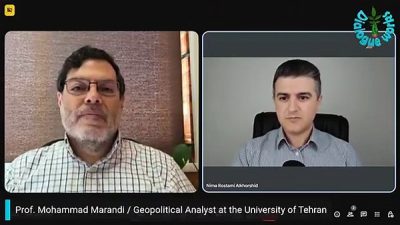
Seyed M. Marandi: U.S. Military DIVIDED? Iran’s Secret Defense EXPOSED
or go to
Aletho News Archives – Video-Images
From the Archives
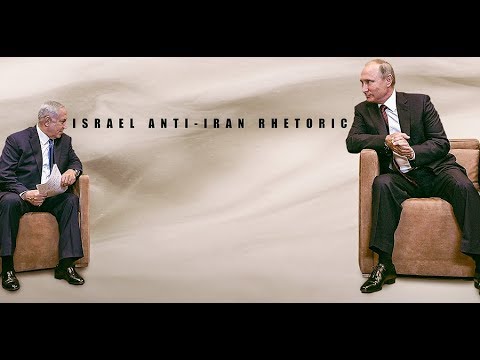
‘Israel sees Iran as obstacle to its policies’
Press TV – August 25, 2017
Prime Minister Benjamin Netanyahu has said that Israel felt threatened by Iran’s growing influence in the Middle East. Netanyahu expressed his Iranophobic view in a meeting with Russian President Vladimir Putin in Russia’s Black Sea resort of Sochi on Wednesday. Press TV has asked Scott Rickard, former American intelligence linguist from Tampa, Florida, and Brent Budowsky, a columnist at The Hill from Washington, to give their thoughts on the issue.
Rickard said Tel Aviv is concerned about the fact that the regime could not carry out its old project to spread sectarian divisions and pave the way for dismemberment of the countries in the Middle East region because of the Iranian-led resistance against Israeli policies, not only in the occupied territories of Palestine but also in the whole region.
“Iran is not a threat to Israel whatsoever. The threat that Israel sees is the fact that their Oded Yinon Plan is being put to a hold by Iran,” the intelligence linguist said on Thursday night.
“They (the Israelis) look at Iran as a threat only because they have no influence on their governments and Iran is autonomous and is not under the Zionist influence,” he added.
Since the victory of the Islamic Republic of Iran in 1979, Tehran has been critical of Israel’s policies in the region, whereas “no leaders [of other states] even dared to speak out against Zionism,” Rickard argued. … continue
Blog Roll
 Aletho News
- Iran declares ‘historic victory’ over US, says enemy forced to accept its proposal
- Trump Claims Ceasefire, Reopening of Strait of Hormuz Agreement with Iran
- Israeli tank fire killed UN peacekeeper in Lebanon, UNIFIL investigation finds
- Russia, China block Bahrain-sponsored UN resolution on Strait of Hormuz
- The US-Israeli War on Science is an Assault on our Future
- Trump’s Promise to Bomb Iran ‘Like Never Before’ Faces Brutal Logistics — Expert
- Germany seeks to restrict stays abroad for men of fighting age – Berliner Zeitung
- Evidence points to Ukraine being behind TurkStream attempted sabotage, but that should come as no surprise
- Sri Lanka secures supplies of Russia oil – minister
- Nations across Asia strike direct deals with Iran for Hormuz passage
- If Americans Knew
- Thousands dead and neighborhoods razed to the ground: Aid agencies fear southern Lebanon is becoming the new Gaza
- The war the US is fighting for Israel could cost trillions
- ‘Cigarette Burns, Nail Wounds’: Toddler Tortured in Gaza to Coerce Father
- Trump Says US Sent ‘a Lot of Guns’ to Protesters in Iran
- Israeli forces destroy 17 UN peacekeeper cameras in south Lebanon
- US-Israeli strikes ‘completely destroy’ synagogue in Tehran
- Archbishop for US Military Says Iran War Is Unjust Under Catholic Teaching
- Iranian leaders’ Open Letters to the American People
- Trump says Iranians appreciate bombs, WHO warns of nuclear risks – Daily Update
- U.N. experts demand Israel release prominent Gaza doctor after reports of ‘severe torture’
- No Tricks Zone
- An Inconvenient Tree: Uncovered In Alps… Europe Much Warmer Than Today 6000 Years Ago
- New Study Reports A 60% Slowdown In Greenland’s Ice Loss Rate In The Last Decade
- Low Intensity Tornado Wrecks Major Solar Farm, Creating A Potential Toxic Dump
- New Study Finds Warming Saves Lives…Cold Temperatures 12 Times More Deadly Than Excess Heat
- German Science Blog Accuses PIK Climate Institute Of Hallucinating Climate Tipping Points
- Devastating Assessment Of Comirnaty Vaccine By Former Senior Pfizer Europe Toxicologist
- New Study: CO2 Is ‘Effectively Negligible’ As An Explanatory Climate Change Factor Since 2000
- Former Pfizer Toxicologist Dr. Helmut Sterz Tells Bundestag Hearing Pfizer Vaccine Should Have Never Been Approved
- Energy Expert: Germany’s Nuclear Phaseout Was A “500 Billion Euro Mistake”
- New Research: South Australia’s Mid-Holocene Sea Surface Temperatures Were 4°C Warmer Than Today
 Aletho News