Soft Coup in Brazil: A Blow to Brazilian Democracy
By Juan Sebastian Chavarro, Raiesa Frazer, Rachael Hilderbrand and Emma Tyrou | Council on Hemispheric Affairs | May 12, 2016
The impeachment this week of Brazilian President Dilma Rousseff represents the most significant test for Brazil’s institutions since the end of its military dictatorship in 1985. After the Senate voted Thursday to begin an impeachment trial of the country’s first female president, less than halfway through her second term in office, one politician described the events as representing the “saddest day for Brazil’s young democracy.”[1] Since the post-dictatorship transition, impeachment requests have been filed against each and every one of Brazil’s presidents, but none were carried through.[2] Rousseff, however, will be only the second president to experience an actual trial. Portrayed as a crusade against corruption, the current process against a democratically elected president rests on unclear budgetary charges and bears the mark of a right wing retaliation after 13 years of left rule. This process is further complicated by the fact that virtually all of Brazil’s leading political figures are implicated to some degree in the corruption schemes. In the eyes of many, Brazil’s institutions seem to be failing this test and are not holding all actors equally accountable. From the outside it appears that in the young Brazilian republic, the structures of democracy are being shaken down. While the right-wing claims that Rousseff’s impeachment request is a legitimate response to budgetary malfeasance, her supporters are characterizing the efforts to impeach her as unconstitutional, and therefore a coup.
In “Behind Dilma’s Destitution, a Neoliberal Coup,” Tatiana Roque, a professor at the Federal University of Rio de Janeiro (UFRJ) described the events surrounding Rousseff’s impeachment as a “neoliberal coup.” She states: “In the putting on hold of the democratic principles and the weakening of the voting power, we foresee the appearance of a dramatically anti-democratic process.”[3] In coverage of such a complex situation, the crisis has been portrayed by the privately owned media as a movement of the people against a corrupt government, which is ultimately an inaccurate and oversimplified explanation. In light of events this past week, it is even more necessary to analyze the legal ground on which the whole illegitimate process rests and to grasp its significance for the entire region.
Brazil’s Senate Vote to Continue the Impeachment Process
The push to oust Rousseff from office has been a protracted and chaotic process littered with soap opera-like developments and reversals. On Wednesday, May 11, Brazil’s Senate voted in favor 55 votes to 22, after 21 hours of tense debate, to suspend the office of President Dilma Rousseff and to begin the formal impeachment trial against her on charges of fiscal and budget responsibility crimes. The process now moved to the Senate after a series of complicated events. On April 17, the Chamber of Deputies voted to approve the continuation of the impeachment process, in a circus-like atmosphere where almost none of the Deputies directly addressed the charge backing her impeachment. The former President of the Chamber of Deputies, Eduardo Cunha, was removed earlier this week on the grounds of the obstruction of investigations in the Petrobras corruption scandal. He was replaced by Waldir Maranhão who immediately after taking office, decided to annul the April 17 decision only to then cancel the request, a mere 48 hours before the Senate was scheduled to commence and vote. In response to this wild back and forth, the highly respected former Supreme Court (STF) judge, Joaquim Barbosa, tweeted: “Do you know what the whole world must be thinking about us Brazilians? “A laughing stock’.” Amidst all this, Rousseff insists that she will continue to keep fighting until the very end. In Brasilia, while waiting for the announcement of the Senate’s decision the two sides of the makeshift wall that separated those supporting from those opposing the impeachment could not have been more contrasting. While on one side the pro-impeachment crowd dressed in yellow and green had a Carnival like celebration, those opposing the impeachment process were at certain times in the evening subjected to tear gas by the police.
Now the Senate has voted in favor of the commencement of the impeachment trial, which will be conducted in the Senate and led by the President of the Supreme Court Ricardo Lewandowski. Within 180 days and after consideration of evidence and testimonies by both the accusatory commission and Rousseff’s defense team, a verdict will be rendered: guilty or not guilty. Meanwhile, she will be suspended from office and her duties will be temporarily fulfilled by the universally unpopular Vice President Michel Temer, from the Brazilian Democratic Movement Party (PMDB). Temer, however, is himself implicated in a number of scandals, leaving his political future uncertain. He stands accused of illegal financing during the 2014 elections and also has been cited in a plea bargain regarding his alleged involvement in the Petrobras corruption scandal.[4]
The Veneer of Legitimacy
Opponents of Rousseff’s administration claim that the current impeachment followed a legal procedure: it was voted on by Congress and is a political process acting on the people’s desire to remove an increasingly unpopular president. According to them, the charges behind Dilma’s impeachment request – the maneuvering of funds and tampering with budgets – are sufficient cause for her removal since such acts are illegal under the Constitution due to the Fiscal Responsibility Law. However, the case against Dilma is missing the most important component: proof that a crime of responsibility has been committed.
The right-wing of Brazilian politics, represented by different parties – the main being the Brazilian Social Democratic Party (PSDB) – and principally supported by the traditional ruling class, economic elite, and a highly concentrated national mainstream media, have been out of power at the federal level for over a decade. However, in the current political crisis, recession, and corruption scandals, this coalition sees an opportunity to take back power from Rousseff’s Workers Party (PT) that has been ruling for the past 13 years. Since the right-wing has not been able to win at the ballot box, they have stirred up yet another anti-corruption campaign to gain support from the already angered population.[5] In the midst of an economic crisis there may be enough public discontent to push for Dilma’s impeachment due to fiscal irresponsibility, even if she has not committed a crime. Yet the already complicated situation becomes more complex when one considers that many of the very same politicians fighting for Dilma’s impeachment are also accused of personal embezzlement. All parties – those in power, the left; as well as those in the right-wing opposition trying to replace the current government – are involved in some measure of corruption. Ironically, Rousseff is one of the only political leaders not accused of personal enrichment. Nearly a third of the 594 members of Congress, including the leaders of the lower house and the Senate, are under scrutiny before the courts over claims of violating laws including Eduardo Cunha (PMDB), the former President of the Chamber of Deputies, Renan Calheiros (PMDB), the President of the Senate, and Aecio Neves, the opposition’s (PSDB) leader.[6] The motivation behind the impeachment process therefore appears not to be an anti-corruption campaign, but rather the desire to instigate a political war between the right and left in an opportunistic strategy for Brazil’s political elite to regain power without votes or democratic legitimacy.
Rousseff and her government supporters argue that she has not committed any crime that justifies her removal. Under any circumstances, impeachment without proof of a crime should be considered a coup. The legal flaws in the case against Dilma make the continuation of the impeachment process an undemocratic attempt by the Brazilian elite to enter into power by overthrowing a democratically elected leader. President Rousseff was democratically elected by majority vote in 2010 and again in 2014. Given that she was thereby twice granted a democratic mandate to govern in free and fair elections, the entire process, especially now that the trial has opened, is setting a dangerous precedent in Brazilian politics. The Brazilian Constitution (enacted in 1988 after decades of rule by a military junta) defines the country as a “presidential regime” rather than a parliamentary one. In the former, impeachment is designed as an ultimate solution to remove from power a leader guilty of crime, and therefore deemed unfit to conduct the remainder of its mandate. It should by no means be confused with the more common vote of non-confidence, aiming at replacing a leader who has lost legislative support in a parliamentarian system. Simply put, these attempted impeachments are trivializing the impeachment clause process, and are eroding citizens’ faith in their own political system.
Such a situation raises concerns over the prevailing strength of Brazilian democracy. In an interview with Democracy Now! on May 10, journalist Glenn Greenwald stated,
“To sit here and witness the utter dismantling of a democracy, which is exactly what is taking place, by the richest and most powerful people in the society, using their media organs that masquerade as journalistic outlets, but which are in fact propaganda channels for a tiny number of extremely rich families, almost all of whom supported that coup and then the military dictatorship, is really disturbing and frightening to see.”[7]
No more than three years ago, Brazil’s economy was booming, its prospects improving, and in the long-term it looked as if Brazil’s goal to become a developed power in the world was close at hand. The current economic crisis has reversed this process and frustrated the Brazilian people. While approval ratings for Rousseff and her administration were once high, Brazilian voters have directed their frustration towards Dilma and the Worker’s Party due to the economic downturn. The right-wing political and economic elite have used this economic discontent on top of the nation’s largest corruption scandal to remove Dilma from office – even if there is no legitimate claim backing her removal.
Regional Implications
With clear parallels to the 1964 coup that ousted then-President João Goulart as well as to the political crisis that led to oustings of democratically elected presidents in Paraguay and Honduras, Brazil’s ongoing impeachment process is an assault on democracy. The ousting of the current Brazilian president based on political and judicial manipulations, as well as constitutional misinterpretations, undermines the democratic legitimacy of the government but moreover calls into question the viability of Brazil’s major institutions. In its success, the precedents set for future governments are devastating not only in Brazil but in all Latin America. Brazil represents the eighth largest economy in the world, and it is a leading power in the continent.
In the first hours of his new mandate, acting President Temer promised the new government will announce austerity measures.[8] Temer has previously set eyes on Paulo Leme, the chairman of Goldman Sachs in Brazil, to potentially serve as finance minister or central bank chief. Temer also is considering Luiz Fernando Figueiredo, a previous central bank official and founder of asset manager Mauá Capital, to be Treasury secretary for the central bank. They have been consulted for the drafting of “A bridge to the Future”, the PMDB economic plan.[9]
The right wing takeover of the government in Brazil will likely have momentous consequences for the integrity of UNASUR as a bastion of independence from U.S. hegemony in the region. Combined with the neoliberal stance of President Macri in Argentina, we can expect a concerted effort by this conservative wave to drive MERCOSUR in to the free trade camp, isolate Venezuela, and undermine the Bolivarian cause in Bolivia and throughout the region. But just as Macri appears to be overplaying his hand in provoking popular outrage, the right in Brazil may soon find itself faced with an eroding, ephemeral legitimacy.
[1] Watts, Jonathan. “Dilma Rousseff Suspended as Senate Votes to Impeach Brazilian President.” The Guardian. 2016. Accessed May 12, 2016. http://www.theguardian.com/world/2016/may/12/dilma-rousseff-brazil-president-impeached-senate-vote?utm_source=esp.
[2] Nolte Detlef, and Llanos Mariana. “The Many Faces of Latin American Presidentialism.” GIGA Focus Latin America, May 2016. Accessed May 11, 2016. https://www.academia.edu/25159273/The_Many_Faces_of_Latin_American_Presidentialism
[3] Roque, Tatiana. “Sous la Destitution de Dilma Rousseff un Coup d’Etat Neoliberal.” Regards, May 12, 2016. Accessed May 12, 2016. http://www.regards.fr/web/article/sous-la-destitution-de-dilma-rousseff-un-coup-d-etat-neoliberal
[4] Esther Fuentes. “Who Is Who in Brazil’s Complicated Lava Jato Corruption Allegations?” COHA. March 17, 2016. Accessed May 12, 2016. http://www.coha.org/who-is-who-in-brazils-complicated-lava-jato-corruption-allegations/
[5] Jen Glüsing. “Staatskrise in Brasilien: Kalter Putsch.” Der Spiegel, March 19, 2016. Accessed May 12, 2016. http://www.spiegel.de/politik/ausland/brasilien-hexenjagd-auf-lula-ein-kalter-putsch-kommentar-a-1083218.html and Laurent Delcourt. “Printemps Trompeur Au Brésil.” Le Monde Diplomatique, May 2016. Accessed May 12, 2016. https://www.monde-diplomatique.fr/2016/05/DELCOURT/55435
[6] Esther Fuentes. “Who Is Who in Brazil’s Complicated Lava Jato Corruption Allegations?” COHA. March 17, 2016. Accessed May 12, 2016. http://www.coha.org/who-is-who-in-brazils-complicated-lava-jato-corruption-allegations/
[7] Amy Goodman. “Glenn Greenwald on Brazil: Goal of Rousseff Impeachment Is to Boost Neoliberals & Protect Corruption.” Democracy Now! May 10, 2016. Accessed May 12, 2016. http://www.democracynow.org/2016/5/10/glenn_greenwald_on_brazil_goal_of
[8] “Brazil’s Rousseff Set to Bow out after Senate Votes to Put Her on Trial.” Reuters. May 12, 2016. Accessed May 12, 2016. http://www.reuters.com/article/us-brazil-politics-idUSKCN0Y206H
[9] “Exclusive: Temer Eyes Goldman Banker, Investor for Brazil Economic Team: Sources.” Reuters. April 15, 2016. Accessed May 12, 2016. https://www.yahoo.com/news/exclusive-temer-eyes-goldman-banker-investor-brazil-economic-205132190–sector.html
To download a PDF version of this article, click here.
Trump Slams US Wars in the Middle East
By Yves Smith | naked capitalism | May 13, 2016
There are good reasons to harbor serious reservations about The Donald, given that he changes his position as frequently as most people change their clothes. But so far, he has been consistent in making an argument that is sorely underrepresented in the media and in policy circles: that our war-making in the Middle East has been a costly disaster with no upside to the US. Trump even cites, without naming him, Joe Stiglitz’s estimate that our wars have cost at least $4 trillion.
As Lambert put it, “I hate it when Trump is right.”
If you think Trump is overstating his case on Hillary’s trigger-happiness, read this New York Times story, How Hillary Clinton Became a Hawk.
And on Clinton’s role in Libya, which Obama has since called the worst decision of his presidency:
Mrs. Clinton’s account of a unified European-Arab front powerfully influenced Mr. Obama. “Because the president would never have done this thing on our own,” said Benjamin J. Rhodes, the deputy national security adviser.
Mr. Gates, among others, thought Mrs. Clinton’s backing decisive. Mr. Obama later told him privately in the Oval Office, he said, that the Libya decision was “51-49.”
“I’ve always thought that Hillary’s support for the broader mission in Libya put the president on the 51 side of the line for a more aggressive approach,” Mr. Gates said. Had the secretaries of state and defense both opposed the war, he and others said, the president’s decision might have been politically impossible.
And yes, that’s this Ben Rhodes.
The Clinton Economy Is The Wal-Mart Economy
By Brandon Turbeville | Activist Post | May 10, 2016
If any corporate donation can accurately predict the direction in which a Hillary Clinton presidency would take the American economy, it would be the sizeable donations made by Wal-Mart executives.
As early as 2013, Alice Walton, heiress to the Wal-Mart fortune, donated the maximum allowed amount ($25,000) to the Ready For Hillary PAC. [1]
The Clinton Foundation has also received a sizeable amount of direct donations from Wal-Mart. Indeed, the Wal-Mart Foundation has even donated anywhere from $1 to $5 million to the Clinton Foundation in 2013 alone. The Wal-Mart Foundation has also funded and hosted a number of “energy and climate change” awards for the Clinton Global Initiative. [2]
The assistance and promotion has been reciprocal, of course, with the Clinton Global Initiative posting a rave review of the Wal-Mart corporation, naming it a company that makes great “efforts to empower girls and women.” It was unclear as to whether it was the slave labor wages, the humiliating work environment, or the abusive labor policies of Wal-mart that were the “empowerment of girls and women.” Such questions generally do go unanswered.[3]
The Clinton’s have also assisted Wal-Mart in the past regarding its effort to appear as more environmentally-friendly. For this reason, Bill Clinton met with past Wal-Mart CEO Lee Scott in order to help boost the company’s relationship with environmentalists.[4]
Yet the Clinton connection to Wal-Mart goes much further back than 2013. As Kevin Young and Diana C. Sierra Becerra of Solidarity wrote in their article “Something That Might Be Called A Neo-Con: Hillary Clinton And Corporate Feminism,”
Hillary Clinton’s record on such issues is hardly encouraging. Her decades of service on corporate boards and in major policy roles as First Lady, U.S. Senator, and Secretary of State give a clear indication of where she stands. One of Clinton’s first high-profile public positions was at Walmart, where she served on the board from 1986 to 1992. [5] She “remained silent” in board meetings as her company “waged a major campaign against labor unions seeking to represent store workers,” as an ABC review of video recordings later noted.[6]
Clinton recounted in her 2003 book that Walmart CEO Sam Walton “taught me a great deal about corporate integrity and success.” Though she later began trying to shed her public identification with the company in order to attract labor support for her Senate and presidential candidacies, Walmart executives have continued to look favorably on her, with Alice Walton donating the maximum amount to the “Ready for Hillary” Super PAC in 2013.[7] Walton’s $25,000 donation was considerably higher than the average annual salary for Walmart’s hourly employees, two-thirds of whom are women. [8] [9] [10]
In regards to her “remaining silent” on Wal-Mart’s war on labor and labor unions while she served on the Wal-Mart corporate board, it appears that Clinton did much more than merely remain silent. Patrick Caldwell of Mother Jones reports that she was actually involved in these decisions. Caldwell writes,
Clinton was the first woman to serve on the board of the company. As the Village Voice noted in a 2000 article denouncing Clinton Walmart past, Clinton’s spot on the board was designed just for her: she wasn’t filling any open vacancies, and the company didn’t replace her seat when she resigned in 1992.[11] Her ties to Walmart weren’t confined to her role on the board, either. Walmart was one of Rose’s clients and, according to a 1994 New York Times article, Hillary served as “director” for the firm’s representation of Walmart.[12] [13]
In 2007 the New York Times reported that during her time on the board, Clinton pushed for greater representation for women in the company’s management and led an advisory group that focused on ways Walmart could improve its environmental practices.[14] During a shareholder meeting the year after she joined the company, Walton said they’d added a “strong-willed young lady on the board now who has already told the board it should do more to ensure the advancement of women.”
But on unionization—the primary liberal complaint against Walmart—Clinton had little to say. A 2008 ABC review of videotapes from Walmart meetings found that “Clinton remained silent as the world’s largest retailer waged a major campaign against labor unions seeking to represent store workers.”[15]
“She was not a dissenter,” one of her fellow board members told the Los Angeles Times in 2007. “She was a part of those decisions.”[16]
Even while Bill Clinton served as Governor of Arkansas, the Clintons, due to Hillary’s position on the board, traveled for free on the Wal-Mart corporate jet 14 times in the time span between 1990 and 1991. Bill was a widespread defender of Wal-Mart during his tenure as Governor. This is, of course, not surprising, since Bill depended on Wal-Mart for funding his campaigns both on the State and Federal level.[17]
It is thus a true pity that union members – we can assume the big union bosses are not unaware of Clinton’s Wal-Mart, anti-union history – find themselves at Clinton rallies, with their hard-earned dues being donated to the Clinton campaign merely to hear empty slogans of how Clinton supports labor, unions, and the right to collectively bargain.[18] All the evidence shows that, when Clinton finally seizes the reins of power, she does her part in crushing union formation, worker’s rights, and reasonable working conditions. In the meantime, however, the empty slogans come flowing out like rushing water.
[1] Caldwell, Patrick. “Retail Politics: Hillary Clinton Heads To Costco, Skips Walmart On Latest Book Tour.” Mother Jones. June 14, 2014. http://www.motherjones.com/politics/2014/06/hillary-clinton-costco-walmart Accessed on September 8, 2015.
[2] Caldwell, Patrick. “Retail Politics: Hillary Clinton Heads To Costco, Skips Walmart On Latest Book Tour.” Mother Jones. June 14, 2014. http://www.motherjones.com/politics/2014/06/hillary-clinton-costco-walmart Accessed on September 8, 2015.
[3] Abeywardena, Penny. “How Walmart Is Reimagining Its Investments To Empower Girls And Women.” Clinton Foundation website. April 29, 2014. https://www.clintonfoundation.org/blog/2014/04/29/how-walmart-reimagining-its-investments-empower-girls-and-women Accessed on September 8, 2015.
[4] Eidelson, Josh. “Wal-mart’s Big Green Con: Environmentalists Blast Megastore, As Worker’s Strike.” Salon. November 13, 2013. http://www.salon.com/2013/11/13/wal_marts_big_green_con_environmentalists_blast_megastore_as_workers_strike/ Accessed on September 8, 2015.
[5] Harkavy, Ward. “Wal-Mart’s First Lady.” Village Voice. May 23, 2000. http://www.villagevoice.com/news/wal-marts-first-lady-6418414 Accessed on September 8, 2015.
[6] Ross, Brian; Schwartz, Rhonda. “Clinton Remained Silent As Walmart Fought Unions.” ABC News. January 31, 2008. http://abcnews.go.com/Blotter/story?id=4218509 Accessed on September 8, 2015.
[7] Caldwell, Patrick. “Retail Politics: Hillary Clinton Heads To Costco, Skips Walmart On Latest Book Tour.” Mother Jones. June 14, 2014. http://www.motherjones.com/politics/2014/06/hillary-clinton-costco-walmart Accessed on September 8, 2015.
[8] “Fact Sheet – Wages.” Making A Change At Walmart website. http://makingchangeatwalmart.org/factsheet/walmart-watch-fact-sheets/fact-sheet-wages/ Accessed on September 9, 2015.
[9] “Walmart’s Women Workers Take Case To Supreme Court.” Alternet. http://www.alternet.org/rss/breaking_news/542766/walmart%27s_women_workers_take_case_to_supreme_court Accessed on September 9, 2015.
[10] Young, Kevin; Becerra, Diana C. Sierra. “’Something That Might Be Called A Neocon:’ Hillary Clinton And Corporate Feminism.” Solidarity. March 3, 2015. https://solidarity-us.org/node/4389 Accessed on September 8, 2015.
[11] Harkavy, Ward. “Wal-Mart’s First Lady.” Village Voice. May 23, 2000. http://www.villagevoice.com/news/wal-marts-first-lady-6418414 Accessed on September 9, 2015.
[12] Labaton, Stephen. “Rose Law Firm, Arkansas Power, Slips As It Steps Onto A Bigger Stage.” New York Times. February 26, 1994.
[13] Caldwell, Patrick. “Retail Politics: Hillary Clinton Heads To Costco, Skips Walmart On Her Latest Book Tour.” Mother Jones. June 14, 2014. http://www.motherjones.com/politics/2014/06/hillary-clinton-costco-walmart Accessed on September 9, 2015.
[14] Barbaro, Michael. “As A Director, Clinton Moved Wal-Mart Board, but Only So Far.” New York Times. May 20, 2007. http://www.nytimes.com/2007/05/20/us/politics/20walmart.html?pagewanted=all&_r=0 Accessed on September 9, 2015.
[15] Ross, Brian; Schwartz, Rhonda. “Clinton Remained Silent As Wal-Mart Fought Unions.” ABC News. January 31, 2008. http://abcnews.go.com/Blotter/story?id=4218509 Accessed on September 9, 2015.
[16] Braun, Stephen. “At Wal-Mart, Clinton Didn’t Upset Any Carts.” Los Angeles Times. May 19, 2007. http://www.latimes.com/la-na-clintonwalmart19-2007may19-story.html#page=1 Accessed on September 9, 2015.
[17] Harkavy, Ward. “Wal-Mart’s First Lady.” Village Voice. May 23, 2000. http://www.villagevoice.com/news/wal-marts-first-lady-6418414 Accessed on September 9, 2015.
[18] Harkavy, Ward. “Wal-Mart’s First Lady.” Village Voice. May 23, 2000. http://www.villagevoice.com/news/wal-marts-first-lady-6418414 Accessed on September 9, 2015.
Brandon Turbeville – article archive here – is the author of seven books, including Codex Alimentarius — The End of Health Freedom, 7 Real Conspiracies, Five Sense Solutions and Dispatches From a Dissident, volume 1 and volume 2, The Road to Damascus: The Anglo-American Assault on Syria. Brandon Turbeville’s new book, The Difference it Makes: 36 Reasons Why Hillary Clinton Should Never Be President is available in three different formats: Hardcopy (available here), Amazon Kindle for only .99 (available here), and a Free PDF Format (accessible free from his website, BrandonTurbeville.com). Please contact activistpost (at) gmail.com.
The London Mayoral Election: a Victory for Whom?
By Thomas Barker | CounterPunch | May 13, 2016
The last couple of weeks have been tumultuous for the Labour Party, to say the least. Jeremy Corbyn’s anti-austerity message has made significant gains at the polls, despite the best efforts of Labour right wingers to smear the left of party with accusations of anti-Semitism.
One of the biggest wins for Labour was the election of Sadiq Khan as Mayor of London.
Khan’s campaign benefitted enormously from the surge of grassroots support for Corbyn, many of whom took to social media and the streets under the slogan “Jez We Khan” – an extension of “Jez We Can”, used to back Corbyn in last year’s leadership race.
Curiously, however, whilst accepting support from these activists, London’s first Muslim Mayor has constantly sought to distance himself from his party’s leader, claiming that he has his “own mandate” and is not beholden to Corbyn.
Although Khan is frequently described as “soft-left” or a “social democrat”, his political record reveals an active hostility toward the principles which saw Corbyn elected as Labour leader last year.
During his election campaign, Khan vowed to be “the most pro-business Mayor London has ever had”; stated his opposition to the “mansion tax”, the nationalisation of banks, and has pledged to work with the Tory government to defeat Corbyn’s push for a “Robin Hood Tax” – a fee on buying stocks, shares and derivatives publicly backed by the Labour leader last summer; and in recent weeks, Khan has described the fact that there are 140-plus billionaires and 400,000 millionaires in London as “a good thing” – echoing the haughty words of Labour’s true blue Tory Peter Mandelson,
Khan has also come out in opposition to Corbyn on the issue of defence, in particular the renewal of Britain’s nuclear “deterrent” Trident – estimated to cost the tax payer a cool £100billion. In an interview with the Telegraph, Khan states unequivocally: “I’m quite clear that I can’t foresee any circumstances in which I would vote to unilaterally end our nuclear capability.”
Since his election, Khan has now expressed support for Chicago Mayor Rahm Emanuel who, he states, “is doing interesting stuff with the infrastructure bank in Chicago.”
The Chicago Infrastructure Trust is a project, backed by former President Bill Clinton, to entice private investors to fund public projects – hardly a left wing solution.
Mayor Emanuel, a former investment banker, is himself a controversial figure, and has been implicated in a number of high profile corruption cases and is renowned for his hostility toward the public sector.
It has also been exposed that Khan, the man who has pledged to solve London’s housing crisis, accepted almost £30,000 in donations from parasite landlords during his election campaign. £10,000 came from a Mancunian firm which Magistrates fined £14,000 for breaching tenant safety rules. And £19,900 came from a south London developer which campaigns against landlord licensing.
But perhaps most revealing of all, is Khan’s eagerness to join in the witch-hunt against Labour members who criticise the brutal militarism of the Israeli government, which has been purposefully conflated with anti-Semitism.
Just last week, Khan was one of many Labour MPs calling for the suspension of Corbyn’s close political ally Ken Livingstone over alleged anti-Semitic (in reality anti-Israeli government) statements.
Such scurrilous attacks are intended to discredit the left wing leadership of the Labour Party.
The Labour right, with the full backing of the capitalist class, are cynically and sickeningly using this very real form of discrimination to undermine Corbyn, who has close links with pro-Palestine groups, with an eye, first of all, to isolate him, then eventually to remove him as the party leader.
His high profile mayoral campaign has meant that Khan has played a key role in this process.
But perhaps we should not be surprised. Khan’s association with the Labour right goes back to his election as Labour MP in 2005 – the same year that he became a patron to the Blairite faction of the Labour Party, Progress, the group responsible for organising attacks on Corbyn’s leadership.
Apparently, Sadiq Khan’t stop supporting the 1%
Detaining Suspects Without Trial
In February 2005, Tony Blair’s government voted in favour of the Prevention of Terrorism Bill which, amongst other things, legislated to create “control orders”: civil orders made by the Home Secretary against individuals who the intelligence services suspect of “involvement in terrorism-related activity” on a domestic or an international level.
Control orders allow for a range of restrictions from house arrest and electronic tagging to rules on whom the suspect may contact, where they can go and where they may work. The orders also significantly lowered the standard of proof necessary to detain terror suspects (no trial is necessary, for instance).
The legislation was roundly criticised by human rights organisations for providing the Home Secretary, then Charles Clarke, with powers equivalent to that of the judiciary.
Although Khan was not yet an elected MP when this vote was passed, in 2007 and 2010 he voted to renew these highly undemocratic measures… despite being a former human rights lawyer himself and despite being a persistent critic of the War in Iraq!
Corbyn consistently voted against control orders.
Pro-Academisation
In 2006, Blair’s government voted on the Education and Inspections Bill. The bill served as an important step toward expanding the academisation (i.e. privatisation) project, the rotten fruits of which are being reaped today, by encouraging councils to pass schools from the hands of democratically elected Local Authorities into those of private sponsors.
One representative from the National Union of Teachers described Blair’s Education Bill as giving “even greater opportunities to business and religious sponsors to instil their ideas on young people.”
Khan voted in favour of this bill, but the Labour Party faced a major backbench rebellion, with over fifty MPs (including Corbyn) voting against the proposed legislation.
Revealingly, Blair could rely on the full support of the Tory opposition to push through this attack on comprehensive schools, the leader of whom, David Cameron, said that the reforms were in line with Conservative Party policy.
Anti-Worker
With the Prison Officer Association coordinating a series of strikes at the end of 2007 because of privatisation and cuts to pay, the government responded on January 9, 2008 by strengthening the Criminal Justice and Public Order Act 1994, section 138 of which prohibits prison workers from taking strike action.
Khan voted in favour of this act, Corbyn against.
Treaty of Lisbon
A few weeks later, the news media was dominated by the issue of the Treaty of Lisbon, which was widely understood as providing an EU-wide legislative basis for the privatisation of public services, as well as facilitating attacks on the wages, conditions, and rights of workers.
Article 188c, for instance, helps to remove the ability of states to veto trade deals involving health and education, opening up the prospect that financial speculators, as a right, could intervene and cherry pick the most profitable aspects of health and education.
The Lisbon Treaty was opposed overwhelmingly by delegates at the Trade Union Congress (TUC). Irish workers rejected the Treaty outright in a referendum.
Whether or not one is in favour of remaining or leaving in the upcoming EU referendum, the decision as to whether or not the Lisbon Treaty should have approved should have been put to the public.
Khan voted in favour of the Treaty, and against a referendum on its imposition. Corbyn voted against the Treaty, and in favour of a referendum.
Khan’s Record on Welfare 1
Perhaps one of the most pernicious attacks on welfare that the Tory-Liberal coalition government (2010-2015) carried out was the introduction of the 2013 Jobseeker’s Bill. After the court of appeal quashed the regulations that underpinned the government’s hated Back to Work programme (introduced in 2011) for “lack of clarity”, the Tories responded by rushing through “emergency” Jobseeker’s legislation to set out the bill in more stark terms.
The Workfare program has been described by Dr Simon Duffy, the Director of the Centre for Welfare Reform, as a form of “modern slavery.”
So, what was Labour’s response?
After much debate, discussion, and disputation, the Labour leadership took the bold move of whipping its MPs into abstaining from the vote.
The reason given for this was that by abstaining, and allowing the coalition government to fast-track the workfare scheme through parliament, Labour were able to negotiate concessions, including a full review into the sanctions regime. And yet, just two months prior, the Labour Party described the Work programme as “a worse outcome than no programme at all.”
If this was the case, what would be the purpose of a review?
Khan was one of the many who abstained on the vote. Corbyn voted against it.
Khan’s Record on Welfare 2
Next up is the Welfare Cap which was introduced by the Tory-Liberal coalition in 2014 as a way of curtailing the amount in state benefits that an individual can claim per year, as well as the amount of overall welfare spending.
Diane Abbot gave a particularly impassioned speech against the bill:
This benefits cap is arbitrary and bears no relationship to need, as our benefits system should. It does not allow for changing circumstances—rents going up and population rising—and will make inequality harder to tackle. There are ways to cut welfare. We could put people back to work, introduce a national living wage, build affordable homes and have our compulsory jobs guarantee.
Others read the bill as an attempt to perpetuate a false divide between “strivers” and “scroungers”.
And yet, under the leadership of Ed Miliband, the Labour Party, including Khan, voted overwhelmingly in favour of the cap. Thirteen Labour backbenchers, including Corbyn, defied the party whip to vote against the cap.
Khan’s Record on Welfare 3
More recently we have the controversial Welfare Reform and Work Bill, voted on in the aftermath of the 2015 general elections. The Tories, having narrowly been elected with an outright majority – although with the smallest mandate since Universal Suffrage – took the opportunity to hammer home their cuts agenda against a weak, divided, and (apparently) confused Labour Party.
Amongst other things, the Bill was committed to reducing the household benefit cap from £26,000 to £20,000 (£23,000 in London); freezing the rate of many major benefits and tax credits for four years; limiting the child element of universal credit to a maximum of two children; and stopping those on certain benefits being able to claim additional help towards their mortgage payments.
Against a backdrop of huge anger, the interim Labour leader Harriet Harman whipped fellow MPs to abstain on the vote in order to show the electorate that Labour “was listening” to their concerns about welfare. According to Harman:
The temptation is always to oppose everything. That does not make sense. We have got to wake up and recognise this is not a blip and we have got to listen to why. No one is going to listen to us if they think we are not to listening to them.
Amongst those who absented themselves, many remain in the Labour shadow cabinet: Tom Watson, Angela Eagle, Seema Maholtra, Hilary Benn, Andy Burnham, Heidi Alexander, Rosie Winterton, Lucy Powell, Owen Smith, Jon Trickett, Lisa Nandy, Chris Bryant, Lilian Greenwood, Vernon Coaker, Ian Murray, Nia Griffith, Kerry McCarthy, Kate Green, Maria Eagle, Gloria de Piero, Luciana Berger, Karl Turner, John Ashworth, and John Healey.
That is an astonishing 89% of the current shadow cabinet who refused to oppose the Tories’ Welfare Bill (anyone looking for evidence of Corbyn’s isolation within the Parliamentary Labour Party need look no further than this fact). In fact, only three members of the current shadow cabinet opposed it: Corbyn, McDonnell, and Abbott.
Credit to Khan, however, who, unlike the majority of his right wing colleagues, defied the whip to oppose this bill, but given his background and his planned Mayoral bid it is tempting to speculate that there was no small amount of political opportunism in this vote.
In Summary
Jeremy Corbyn’s landslide election as Labour leader showed the potential for creating a mass anti-capitalist party. Unfortunately, however, the majority of Labour MPs and councillors remain pro-capitalist and pro-austerity. Khan is amongst this group
To defeat the right means starting to mobilise the currently fragmented anti-austerity mood into a mass, democratic movement. This will not succeed if it remains trapped within the current undemocratic structure of the Labour Party, vainly trying to compromise with “the 4.5%” – the Blairite representatives of big business in the Labour Party.
Instead it means building an open, democratic movement – organised on federal lines – that brings together all of those who have been inspired by Corbyn and want to see a determined anti-capitalist party.
Thomas Barker is an independent journalist and PhD student in Aesthetics and Politics. He can be reached at https://durham.academia.edu/ThomasBarker
US Financial System, Tax Authorities Refuse to Police Super-Rich
Sputnik – 12.05.2016
Only a handful of wealthy Americans and institutions bother to use overseas tax havens because they know the US government and financial regulators will let them get away with illegal behavior, US analysts told Sputnik.
Mossack Fonseca was the source of 11.5 million leaked documents, referred to as the Panama Papers, identifying more than 360,000 individuals and corporations around the world, among which only 36 American entities or persons were found.
“None of the big banks or ratings agencies that were engaged in criminal behavior and so were responsible for the [2008 Wall Street financial] crash was even indicted let alone prosecuted and jailed.” scientist and political commentator John V. Walsh said.
Only one very small investor was convicted but no serious action was taken against any of the major US banks or other financial institutions involved, Walsh recalled.
Walsh concluded that the major Wall Street financial institutions that survived the 2008-9 crisis were not only too big to be allowed to fail, they were also too big to be prosecuted.
Walsh dismissed an article published in the US journal Foreign Policy arguing that the United States benefitted from vigorously enforced financial laws and regulations as “gibberish.”
He said the problem was the opposite – that financial regulations already on the books had not been effectively implemented.
Executive Intelligence Review (EIR) senior editor Jeff Steinberg said there could have been many more Americans exposed in the Panama papers but the Mossack Fonseca law firm had stopped taking on US clients after it became aware of new federal government investigations into its activities.
“The law firm policy [was] to stop taking American clients after the FBI-DOJ [Department of Justice] started probes,” Steinberg explained.
On Monday the International Consortium of Investigative Journalists (ICIJ) published a searchable database of nearly 214,000 offshore entities created in 21 jurisdictions, from Nevada to Hong Kong and the British Virgin Islands.
5 reasons why US antimissiles in Europe threaten Russia
RT | May 12, 2016
Russia has opposed America’s plans to deploy antimissile systems close to its borders for decades. Washington says the system would not compromise Russia’s security, but Moscow sees a number of reasons why it does.
ABM sites in Romania and Poland could be converted to fire Tomahawks
The system deployed in Europe is called Aegis Ashore and is derived from a naval antiballistic missile system. The Standard Missile 3 interceptors are launched by a variant of Mk 41 VLS. The same vertical launch system is used by the US Navy to launch Tomahawk cruise missiles. Russian defense experts believe the launchers in Romania and Poland can be secretly converted to enable firing cruise missiles at targets in Russia. The US is banned from deploying Tomahawk missiles in Europe by the Intermediate-Range Nuclear Forces Treaty (INF), which Moscow and Washington signed in 1987.
ABM sites will constantly monitor Russian airspace
To fire interceptors at ballistic missiles they must be targeted by a powerful radar station, and US sites in Europe have those. They can be used to monitor a large part of Russian airspace. The Russian military are not happy that NATO would get additional intelligence on movements of aircraft and missile tests. A similar concern is voiced by China, when it criticizes US plans to deploy the THAAD long-range antimissile system in South Korea to counter threats from Pyongyang.
ABM sites would counter Russian capabilities in a potential small-scale conflict
While the US is right in saying that the few interceptors placed in Europe would not stop a full-scale strategic nuclear missile attack by Russia, in a smaller-scale conventional conflict the European sites would undermine Russia’s ability to use warplanes and tactical missiles.
US-developed target missiles for ABM shield violate missile treaty, Russia says
The US has developed several rockets to serve as targets during tests of its national antiballistic missile technologies, including Hera, LRALT and MRT. Russia believes those missiles violate the spirit of the INF treaty, because if they had warheads, they would have been banned. The reasoning is not unlike the one the US uses, when it says that North Korea’s satellite launches are actually disguised tests of long-range ballistic missiles for Pyongyang’s military.
The US rejected all Russian suggestions to address Russia’s concerns
Over the decades Russia suggested a number of ways, which would have reduced the tension over American antimissile deployments. It offered alternative radar, which would monitor Iran, but not Russia. It suggested inspection mechanisms, which would allow the Russian military to ensure that no foul play was happening on the ABM sites. It suggested a new treaty, which would legally bind the US not to use the system against Russia. Washington rejected them all and said that verbal assurances were enough. Considering that Moscow was verbally assured that NATO would not expand eastwards after withdrawal from Eastern Germany and how things actually turned out, Russia’s skepticism is well-grounded.
Privacy bogeyman: Putin’s face invades London in campaign against controversial UK spy bill
RT | May 12, 2016
Warning Brits about the dangers of a new surveillance bill, UK campaigners have flooded London with sinister captioned portraits of Vladimir Putin. The choice of bogeyman however could be better, given the notoriety of Western global spying operations.
The posters and billboards which have been recently appearing all across the British capital, and also in newspapers, including the Guardian and The Telegraph, feature a very distinctive face with a caption that reads: “A government that spies on its citizens. What’s not to like?”
The Don’t Spy On Us Campaign, which is behind the billboards, is trying to warn British citizens about the danger of the UK governments’ Surveillance Bill currently going through parliament. If passed, it would give “government, intelligence agencies and police the kind of powers you would expect in an authoritarian regime,” the campaign said on its website.
The state will “snoop on our private communications and internet use,” collect and store “data about your emails, phone calls, texts and internet use,” while security agencies will be allowed to hack people’s computers and phones, campaigners stressed.
The Don’t Spy On Us Campaign, a coalition of several pro-privacy organizations, also launched an online petition urging the reformation of the surveillance bill. Photographs of Chinese and North Korean leaders were also used by campaigners, but drew less attention, RT’s Harry Fear reported from London.
“Of course, Putin’s face and the Russian brand, if you will, have resonance here in the UK given all of the demonizing in politics and the media,” Fear said. He noted however that “the British public on average knows a great deal about the American surveillance program, not the Russian or Chinese.”
Indeed many on the internet are puzzled by the choice of the Russian president as the face for the campaign, calling the whole affair “a bit peculiar.”
In particular, some mocked the campaigners’ choice of images, saying that faces of other leaders, such as US President Baraсk Obama or UK Prime Minister David Cameron would have been more suitable.
Mass surveillance practices by the US national Security Agency made headlines worldwide after they were unmasked by whistleblower, Edward Snowden, with the help of the Guardian, back in 2013.
“Some are saying that comparing the UK, perhaps, uncertain security state future to the American’s campaign and having Obama’s face instead of Putin’s face here may have been a more appropriate marketing and campaigning choice,” Fear said.
READ MORE:
Brits blindly walking into Orwellian surveillance state, survey suggests
‘Privacy is not a privilege, it’s a fundamental human right,’ top privacy expert tells RT
Good chance spies are hoovering up your personal data in bulk, documents show
Parliamentary Coups: the New Strategy of Latin America’s Right
By Pablo Vivanco – teleSUR – May 12, 2016
Like Honduras and Paraguay, Brazil’s elites used the legislature against Dilma Rousseff. Is Venezuela next?
For most, the decades of the 1970’s and 1980’s are regarded as a dark period for Latin America.
The majority of South American nations were taken over by brutal military juntas, while in Central America civil wars claimed the lives of hundreds of thousands. The armed forces in the region, often trained and financed by the United States, ruled through force and where civilian governments didn’t heed their agendas, these were ignored or overthrown.
Despite entailing the onslaught of disastrous neoliberal economic policies that exacerbated poverty and inequality, the 1990’s also ushered in an end to the military dictatorships in Latin America. Elected governments returned to Chile, Argentina, Brazil, Uruguay and Paraguay, while peace accords in Guatemala and El Salvador also meant that the militaries would see a diminished role in the politics of those countries (at least in theory).
Latin America did not solve its numerous problems, but a general consensus was arrived at — no coups or military regimes should be permitted again in the region.
Of course, this consensus began to break with the resurgence of Latin America’s left, beginning with the Bolivarian movement and Hugo Chavez in Venezuela. Even though he initially harbored very modest proposals for reforms, Venezuela’s ruling class almost immediately sought to topple Chavez’s government. In April 2002 they acted as Latin American elites had done in previous decades and enlisted the upper echelons of the military to stage a coup to remove Chavez. The results were predictable — Venezuelans revolted against the coup and its leaders and the region (except for the U.S. government led by George W. Bush), rejected the move.
The lesson: military coups make for bad PR.
As the decade and Latin America’s left advanced, the regional right adopted a different strategy to counter the trend. While in many countries the left was winning presidencies, in these countries the legislative branches remained largely under the control of traditional (and generally right-wing) parties. Far from providing checks and balances on the authority of the executive branch, opposition-controlled legislatures began to be used as the instrument to overthrow elected presidents.
The first test came in 2009, when Honduran President Manuel Zelaya was removed from office after calling for a non-binding referendum on changing the country’s constitution. The Honduran Congress had voted to remove Zelaya from office, and the country’s Supreme Court — dominated by figures connected to the previous military government — ordered his arrest. The Honduran military dutifully complied with their order, kidnapping Zelaya and forcing him onto a plane to Costa Rica.
Three years later, Paraguay’s parliament impeached President Fernando Lugo, a former bishop who ended 61 years of one-party rule in the country. The charges and process against Lugo were met with skepticism in Paraguay as well as in the region, prompting Paraguay to be suspended from the Mercosur pact.
The impeachment process against the president of Latin America’s largest nation mirrors the intentions of the coups of the 70’s and 80’s and the methods of those in the last decade. Despite the absence of evidence that could justify an impeach against Dilma Rousseff, a majority of Brazilian legislators — many of whom are implicated or being investigated in a massive corruption scandal — have approved removing her from the office she was elected to. The man who will fill the seat is one of those being investigated, but he faces no repercussions from his colleagues.
In neighboring Venezuela, the opposition-led National Assembly has the same objective and has initiated the “recall” clause in the country’s constitution in an attempt to oust Nicolas Maduro from the Miraflores presidential palace.
In all of these cases, the objective is not merely power, but what power facilitates. Since 1998, numerous left-leaning governments have been elected to redistribute wealth and decision-making power. Not only has this led to inequality and poverty being slashed, but the political dynamics in those countries have shifted and the region has become more unified and independent.
The new strategy to stem the Pink Tide builds from the same objectives as those employed by the dictatorships of Pinochet, Videla and others: stop the left from being able to implement its program. But while it uses one elected institution to subvert another, it should be clear that these maneuvers are no less undemocratic than their military predecessors.
Pablo Vivanco is Director of teleSUR English.
Panther Power: Afeni Shakur and the “New York 21”
By Lamont Lilly | Dissident Voice | May 10, 2016
On April 2, 1969, twenty-one members of the Harlem Chapter of the Black Panther Party were formally indicted and charged with 156 counts of “conspiracy” to blow up subway and police stations, five local department stores, six railroads, and the Bronx based New York Botanical Garden.
By the early morning hours of April 3, mass sweeps were conducted city wide by combat squads of armed police. Law enforcement agencies ranging from the CIA, FBI, U.S. Marshalls and NY state police worked simultaneously to coordinate assaults on panther homes and community-based offices. After numerous raids, ten panther men and two panther women were formally arrested, processed and quickly jailed. To anyone who supported radical politics of the 1960’s, there was no doubt that the indictment of the Panther ‘New York 21’ was a political and racist frame-up to not only “disrupt, discredit and destroy,” but to utterly dismantle the Black Panther Party from the inside out.
The absurd and excessive nature of such charges were clearly mounted as a federal effort to pit chapters and regions against each other, in a manner that would totally paralyze panther party leadership. What these charges represented was a form of unprecedented legal repression, created as a structural alternative to break their stronghold, reputation and community base. For the panthers who fortunately weren’t murdered or assassinated, exiled or imprisoned, the courts became a convenient and effective form of legal lynching, a straight-jacket beyond the walls—a robbery of valuable time and resources.
Each member of the ‘New York 21’ was held on $100,000 bail, totaling over $2.1 million. It was not until January of 1970 that the first panther was able to post bail. That panther was 22 year old Alice Faye Williams, better known as Afeni Shakur.
Self-Appointed, Black Anointed
 In a grueling and tedious trial, Afeni Shakur (facing 300 years of prison time) daringly chose to be her own attorney in court, partly because financial resources were already razor-thin. Afeni, however, meticulously conducted her own legal research, her own interviews, as well as in-court cross examinations – fully realizing that “she would be the one serving, not the lawyers.” She was the only panther who served as their own counsel.
Here was a small-framed impoverished black girl from the backwoods of Lumberton, North Carolina, staring down a full team of New York state prosecutors – outwitting a full cast of establishment-owned media outlets. Here was a single mother with no formal degree, going legally toe to toe with COINTELPRO.
Despite the odds, after all the surveillance, warrantless wiretapping, infiltration and frame-ups, not one shred of state’s evidence stood in court. In their undying efforts to “discredit,” it was revealed during the trial that the FBI had actually planted undercover infiltrators who, under oath, admitted their role as provocateurs.
Though the case of the Black Panther ‘New York 21’ was the longest trial in New York state history, on her own guts and wit, Afeni Shakur would successfully secure her freedom. No money. No attorney. No privilege. Pregnant with her second child, Tupac Amaru Shakur, what Afeni was able to do in that courtroom was nothing short of miraculous. Magical. Mind blowing.
On May 12 1971, after 2 years of legal proceedings, all 21 panthers were acquitted of their charges. The jury needed just a mere 45 minutes to see the truth.
Sister Soldier, Woman Warrior
 Afeni Shakur may have hailed from the Black Panther Party’s, esteemed Harlem Chapter, but her roots were originally from the Black Belt South. Viciously poor, but still mobile, her family moved to the Bronx when she was 11 years. Her inquisitive affection toward the Black Nationalist scene fit right in there.
Afeni first learned of the Black Panther Party at the corner of 125th and 7th Avenue while listening to party co-founder, Bobby Seale deliver a speech. A dedicated soldier from the very beginning, Afeni always placed principle over profit, the people above her own individual desire. Black Panther Party member and ‘New York 21’ co-defendant, Dhoruba Bin Wahad very warmly remembers Afeni as, “the type of person that worked hard, who would stay up all night to get leaflets done.”
Afeni was the kind of comrade who garnered respect from both the women and the men. As former Black Panther, Jamal Joseph stated, “Afeni taught me more about being a man, more than any other man or woman.” As the only high school member of the New York 21, Joseph very often, looked to Afeni for guidance and leadership.
The name Afeni was given to her by a community elder from South Carolina, a descendant of the Yoruba tradition who chose the name Afeni meaning, “lover of the people.” And love the people is exactly what Afeni did. A dedicated community organizer, fearless warrior, activist, scholar, teacher, and real-life revolutionary, Afeni Shakur gave her life to the people, to the full embodiment of Black Power, people power, (and as the sisters say today) Black Girl Magic!
As we commemorate the mother of Hip Hop’s “Black Jesus,” let us not forget the Black woman general who indubitably blazed her own legacy, who literally offered her life as a gift to the people, who taught her son, Tupac Amaru to do the same. Farewell to the Black woman general who just joined Malcolm, Harriet, Ida. All power to the people! Black Power!
Lamont Lilly is a contributing editor with the Triangle Free Press and Human Rights Delegate with Witness for Peace and organizer with Workers World Socialist Party. He has recently served as field staff in Baltimore, Ferguson, Oakland, Boston and Philadelphia. In February 2015, he traveled to both Syria and Lebanon with Ramsey Clark and Cynthia McKinney. Follow him on Twitter @LamontLilly.
UNASUR Head Says Rousseff Remains ‘Legitimate Leader’ of Brazil

Ernesto Samper, secretary-general of the Union of South American Nations. Photo – UNASUR
teleSUR | May 12, 2016
Ernesto Samper, secretary-general of the Union of South American Nations, told teleSUR in an exclusive interview that Dilma Rousseff remained “the legitimate leader” of the Brazilian people and maintains “democratic legitimacy” by virtue of having been re-elected in 2014.
During a press conference Thursday, Samper said that the decision of the Brazilian Congress to initiate an impeachment trial against President Dilma Rousseff was “compromising the democratic governability of the region in a dangerous way.”
“What has happened in Brazil, is a parliamentary political majority is challenging the citizens’ majority that expressed themselves in a clear way in favor of Rousseff,” said Samper referring to the 2014 re-election of President Rousseff.
He stopped short of calling the impeachment trial of Rousseff a rupture of democratic order, which would have triggered the possible suspension of Brazil from the regional bloc.
He added that the efforts by Brazilian politicians to oust Rousseff via impeachment were of “a political character” and criticized the lower chamber for failing to provide Rousseff with room to defend herself.
Samper called on the upper chamber, which will now preside over her trial, to respect due process.
“In this new phase, we ask that the right to defense for President Rousseff be guaranteed,” said Samper.
The secretary-general of UNASUR said it was “not their place to comment on the interim government (of Michel Temer).”
During an earlier event Wednesday, Samper said the greatest risk to governance in the region were groups who “engage in political work without political responsibility.”
The impeachment effort against Rousseff was largely driven by political, media, and economic elites in Brazil.
The support of the Globo media conglomerate was essential in stirring up support for impeachment, providing disproportional coverage of corruption allegations against members of the Workers’ Party and granting widespread media attention to right-wing rallies calling for Rousseff’s ouster.
Elements of the country’s judiciary—including Sergio Moro, the judge who is presiding over the investigation into a corruption scandal—played a lead political role, which Rousseff’s supporters said were inappropriate for a judge.
The country’s Supreme Court also refrained from intervening and stopping the coup plot, despite the fact that Rousseff was being put on trial without having been found guilty of any crime.
The impeachment effort against the ousted Brazilian president is based on allegations she manipulated budget accounts, a deed committed by most of her predecessors and by some of the very senators who voted for impeachment efforts to proceed.
The UNASUR chief previously warned that a potential impeachment scenario would set a “dangerous” precedent by criminalizing standard government budget management practices.
RELATED:
Israel can commit crimes with impunity; condemn them at your peril
MEMO | May 12, 2016
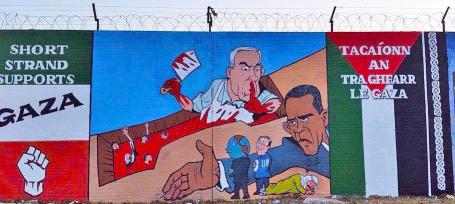
Israel’s latest display of misplaced ire at the UN Security Council has provided a succinct illustration of how criticism of settler colonialism, even by Israeli NGOs, remains a cloistered subject. Following a presentation by Yesh Din, in which the NGO’s legal adviser Michael Sfard presented statistical information regarding Israeli settler terror, both Sfard and Israel’s Ambassador to the UN, Danny Danon, retaliated against Venezuelan Ambassador Rafael Ramirez’s criticism of their country’s slow extermination policies.
According to Haaretz, Ramirez challenged the UN Security Council to ponder the information, asking: “What does Israel plan to do with the Palestinians? Will they be disappeared? Is Israel trying to impose a ‘final solution’ on the Palestinians in the West Bank?”
Right-winger Danon — who has advocated punitive attacks on the civilian infrastructure in the Gaza Strip — promptly resorted to the clichéd “anti-Semitism” accusation: “These are blunt anti-Semitic statements coming from the Venezuelan ambassador towards the Jewish nation.”
According to Yesh Din’s lawyer, the Venezuelan ambassador’s use of the phrase ‘final solution’ is “offensive, angering and completely incorrect.” Sfard made this claim despite telling the Security Council: “Yesh Din vigorously and unequivocally condemns all human rights violations and all international law infractions. There can be no justification for attacks on civilians no matter who the perpetrators are and whatever the identity of the victim is.”
According to YNet news, the Israeli delegation demanded immediate condemnations following Ramirez’s remarks, and was gratified by the US, Britain and France issuing — predictably — “decisive” statements. Danon also called on Ramirez to apologise for his use of the phrase “final solution” with its obvious connotations with the Holocaust; his apology was met by a demand for a more public version.
Israel thrives upon the blatant contradiction of committing human rights violations openly and without remorse, while resenting criticism of such illegal actions. Furthermore, this episode at the UN is evidence of the cycle of hypocrisy plaguing such organisations which are, allegedly, standing up for Palestinian rights; they fail to act on the evidence, no matter how strong it is, and this exposes their allegiance to the colonial state of Israel as well as the terrorism of its illegal settlers. However, the tactic has now been perfected to project blame elsewhere to the point where logical condemnation of colonial violence is deemed to be offensive, but the violence itself isn’t. This is despite the fact that Israel is adhering publicly to the implementation of Zionism’s ideological goal of “Greater Israel” by continuing its territorial expansion, ethnic cleansing and — yes — slow extermination of the Palestinian population.
Ramirez’s comments expose Israeli state terror, incorporating historical memory and exposing a colonial cycle that has not yet reached its completion. Israel has applied various forms of human rights violations against Palestinians, all geared towards a system that leaves no recourse, thus isolating Palestinians and creating a perpetual implosion. State policies reflect impunity while Israeli ministers such as Naftali Bennett have spoken openly about “disappearing” Palestinians. Hence, nothing in Ramirez’s speech can be construed to be within any context other than that of the reality on the ground. If anything, the Venezuelan’s words portray an awareness that is common to both Palestine and South America, both having experienced colonial and imperialist violence.
Nobody should take offence at what was said by the ambassador from South America. The incident should be seen as an educational experience of how the interpretation of colonial violence through time has navigated the perpetually-changing circumstances and, as a response, carved out a niche that encourages selective remembrance and memory of genocide in order to allow for a new form of genocide to be carried out within the framework of the ambiguities of international law. As Rafael Ramirez has found to his cost, Israel is allowed to commit genocidal crimes with impunity; it is those who condemn them who have to apologise.
Featured Video

Theodore Postol: Iran’s Missiles & Drones Were Underestimated
or go to
Aletho News Archives – Video-Images
From the Archives
What is the Israeli Lobby in Australia Doing in Interfaith Dialogue?
By Ali Kazak | Dissident Voice | October 11, 2015
For years Israel and its lobby around the world have been trying to normalise their relations with Arabs and Muslims without solving the Palestine Question.
One of the methods they resorted to in the last few years is using human rights and community organizations such as interfaith dialogue and Multiculturalism to achieve this objective and to: isolate the Palestinians, marginalise the Palestine question, end Israel’s isolation, and prevent criticism of Israel, knowing that these organisations will be the first to stand against Israel’s violations, racial and religious discrimination.
The group responsible for this task in Australia is The Australia/Israel & Jewish Affairs Council (AIJAC); its Director of International & Community Affairs, Jeremy Jones is in charge of lobbying religious community organizations, specifically Muslims and Christians. Consequently he convened the Faith Communities for Reconciliation, founding participant in the Australian Partnership of Religious Organisations and the Australian National Dialogue of Christians, Muslims & Jews.
AIJAC is a private political propaganda group. It is recognised as the main Israeli lobby in Australia. It coordinates its activities and works intimately with the Israeli embassy in Canberra and different institutions in Israel. It is privately funded by some Jewish businessmen. It monitors closely Australian politicians, the media, ethnic and religious groups, (especially Arabs and Muslims), unions and academics on their stands towards Israel and the Palestine question. … continue
Blog Roll
 Aletho News
- Iran’s friends are about to make life much more difficult for Israel and the US
- The war of liberation of the Arab and Islamic peoples expands across the Gulf
- Envoy warns UN on Trump’s threat to ‘obliterate’ Iran’s civilian infrastructure
- The Larak Corridor: Iran’s Rial Gate With No US, No Israel, and No Way Around
- ‘Economic terrorism’: Steel facilities hit again in US-Israeli strike
- ‘War Crime’: Iran condemns attacks on Arak, Ardakan nuclear sites
- Two-thirds of Americans want quick end to Iran war even if goals unmet
- Trump to Give “Important Update on Iran” Wednesday in Prime-Time Speech
- Theodore Postol: Iran’s Missiles & Drones Were Underestimated
- Iran To Target Military Industrial-Tech Complex That Facilitated Gaza Genocide
- If Americans Knew
- Israel wants US to bomb more of Iran’s civilian structures (113,000 is not enough) – Not a ceasefire Day 173
- Ann Coulter Rips Into Fox News for Iran War Coverage
- Joe Kent Urges Americans To Call White House and Congress To Object To Sending Troops Into Iran
- DNC Resolution to Reject AIPAC Funding Puts Democratic Leaders in the Hot Seat
- Swedish foundation to build 400 schools as over 650,000 Gaza children remain without education for 2 years
- Israeli army admits photshopping image of slain Lebanese journalist
- This is how Israel is systematically killing health workers under the cover of war in Lebanon
- Carrying life under fire: Israeli invasion of Lebanon leaves pregnant women facing deadly risks
- Champagne all around for the new death penalty (for Palestinians) law – Not a ceasefire Day 172
- Why are Palestinian books struggling to be seen on Amazon?
- No Tricks Zone
- New Study Finds Warming Saves Lives…Cold Temperatures 12 Times More Deadly Than Excess Heat
- German Science Blog Accuses PIK Climate Institute Of Hallucinating Climate Tipping Points
- Devastating Assessment Of Comirnaty Vaccine By Former Senior Pfizer Europe Toxicologist
- New Study: CO2 Is ‘Effectively Negligible’ As An Explanatory Climate Change Factor Since 2000
- Former Pfizer Toxicologist Dr. Helmut Sterz Tells Bundestag Hearing Pfizer Vaccine Should Have Never Been Approved
- Energy Expert: Germany’s Nuclear Phaseout Was A “500 Billion Euro Mistake”
- New Research: South Australia’s Mid-Holocene Sea Surface Temperatures Were 4°C Warmer Than Today
- Storing Green Energy To Last Germany 10 Days Would Require A 60-Million Tonne Battery
- New Studies: UK Sea Levels Were 4 Meters Higher Than Today During The Mid-Holocene
- Destructive Green New Deal: German Energy And Metal Group Warns Of Drastic Crisis
 Aletho News