Outrage as Ukrainian witch-hunt site leaks personal info of ‘terrorist-collaborating journalists’
RT | May 12, 2016
Governments, NGOs and journalists across the globe have condemned a leak of personal data of more than 4,000 media staff, accused by pro-Kiev activists of “collaborating with terrorists” for their reporting from war-torn eastern Ukraine.
The names on the list include people working for respectable outlets, such as news agencies AFP, AP and Reuters, broadcasters BBC, CNN, CCTV, Deutsche Welle and Al Jazeera, newspapers, including the New York Times, Gazeta Wyborcza and Kyiv Post, news websites Vice News and Daily Beast and many others. RT journalists are on the list too.
“This is a very alarming development which could further endanger the safety of journalists, who report on issues of public interest and they should not be harassed for doing their job,” said OSCE Representative on Freedom of the Media Dunja Mijatović.
Some of the journalists, whose data was leaked, have complained they have started to receive threats.
“After being accused of ‘working for the terrorists’ and having their personal data, phone numbers and emails made public, they started receiving phone calls and emails with threats, and some Ukrainian politicians have called for these journalists to be labeled ‘enemies of Ukraine’ and to prevent them from working in the country completely,” an open letter, from Kiev-based journalists representing local and international media, stated.
“We are aware that details of staff accreditation from a wide range of media organizations – including the BBC – have been hacked. We have taken immediate and appropriate action to protect privacy and security,” said the BBC.
Publication was condemned by a number of governments, international organizations and media organizations. EU envoy to Ukraine Jan Tombinski said that while the leak was published by a privately-run website, he held the Ukrainian authorities accountable for endangering journalists and said the database should be blocked.
The website that leaked the personal data is called Mirotvorets (Peacekeeper). It purports to be fighting separatism and terrorism and publishes personal data of anyone its contributors consider enemies of Ukraine. Mirotvorets was founded in January 2015 by Georgy Tuka, who now serves as a deputy to the minister responsible for dealing with rebel-held areas and refugees. Among its high-ranking supporters is Anton Gerashchenko, an MP and aide to the interior minister. The website’s partners include the Security Service of Ukraine and the country’s Interior Ministry.
The project has caused controversy in the past. At least two Ukrainian public figures, writer Oles Buzina and former lawmaker Oleg Kalashnikov, were killed days after their home addresses were published by Mirotvorets. Last year, Gerashchenko called for leaking the personal data of Russian soldiers and officers taking part in the counter-terrorism mission in Syria, so that Islamic State sympathizers could find and kill them.
The latest leak includes data of journalists and NGO employees, who have been given accreditation by the de facto authorities of the rebellious eastern Ukrainian regions over the past two years. Gerashchenko said the data was obtained as a result of a hack, at least a month before publication.
The Interior Minister’s aid praised “patriot hackers” for exposing “a powerful propaganda machine that has an impact on par with the propaganda by [Nazi Germany’s] Goebbels or Stalin” and demanded more budget money to fight it.
Accompanying the leak, which was first posted on May 7, but widely disseminated this week, was a statement claiming “these journalists are cooperating with the militants of a terrorist organization.”
Derek Monroe, independent reporter and writer, who has received death threats from people unhappy with his reporting on the Ukraine crisis, told RT that serious measures should be undertaken in order to protect journalists, as the information can now “trickle down everywhere” and “once it’s comes out of the box, it’s very hard to put back.”
“What happened in Kiev is not only illegal, but is an outrage,” Monroe said.
Investigative journalist Russ Baker said the fact that journalists might nowadays “by definition” be regarded as enemies points towards a significant growth of extremism.
“The situation in the Ukraine is particularly striking because the fact that these people even think that a journalist going to an area makes them an enemy just indicates how extremism has risen to a rather staggering level. Journalists always go to war-zones, they always go to places where there is conflict, and to think that by definition that makes them unfair or somebody that needs to be threatened is pretty staggering,” Baker told RT.
Read more:
Top Ukraine official backs idea ‘to help ISIS take revenge on Russian soldiers in Syria’
US Congress Wants New Federal Agency to Fight Russian, Chinese ‘Propaganda’
Sputnik – May 12, 2016
A dozen members of the US House of Representatives have introduced a new bill proposing the creation of an entire agency meant to ‘counter Chinese and Russian propaganda’, The Washington Examiner reported.
The ‘Countering Foreign Propaganda and Disinformation Act’, the political news publication explained, would create a new federal agency reporting to the State Department called the Center for Information Analysis and Response.
The center, The Washington Examiner added, “would analyze ‘government information warfare’ and ‘disinformation efforts’, and work to ‘expose and counter’ those operations when they are directed against US national security.”
The legislation, a bipartisan effort coauthored by Congressmen Adam Kinzinger and Ted Lieu, claims that Russia and China are “us[ing] disinformation and other propaganda tools” to undermine US initiatives around the globe.
“As Russia continues to spew its disinformation and false narratives, they undermine the United States and its interests in places like Ukraine, while also breeding further instability in these countries,” Kinzinger said, introducing the bill to Congress on Wednesday.
For his part, Congressman Lieu added that “from Ukraine to the South China Sea, foreign disinformation campaigns do more than spread anti-Western sentiments – they manipulate public perception to change the facts on the ground, subvert democracy and undermine US interests. In short, they make the world less safe.”
Kinzinger emphasized that a new federal agency to fight this threat would give Washington “a unique opportunity to respond to further manipulation by encouraging the free flow of truthful information,” which “can prevent conflict and ensure future stability.”
If the bill is approved and the agency is created, the Center for Information Analysis and Response will see US ‘information officers’ dispatched to promote an “independent press” in countries “deemed vulnerable to foreign propaganda and disinformation campaigns.” The agency will also be tasked with ‘exposing’ and countering information operations directed against US interests by creating an alternative narrative.
It’s unclear how exactly the new agency will be able to help Washington’s global propaganda and counter-propaganda effort. The Broadcasting Board of Governors already receives over than $750 million annually for funding of broadcasters including Voice of America, Radio Free Europe/Radio Liberty, Radio Free Asia, and other media across the Middle East and Latin America. When taking account of additional contributions from private individuals including George Soros and his Open Democracy Foundations initiatives, it’s unclear how much more the State Department can really squeeze out of its anti-Russian and anti-Chinese propaganda machine.
Read more:
Building the Echo Chamber: Is There Free Press in the US?
Huxley’s Brave New World Nightmare is Becoming a Geopolitical Reality
Dieudonne Barred by Free Speech Loving Canada!
Penny For Your Thoughts | May 11, 2016
Of course, I’m being completely facetious. The only speech that is acceptable here is state approved speech- And Canada hates freedom, anywhere. Anywhere at all. That’s why Canada is a NATO member, killing people globally, particularly in the Middle East/Asia area in order to redraw borders for their latest insane episode of playing global overlord alongside the US and the UK. Canadians need to wake up to the reality.
Dieudonne blocked from entry by Canada Customs:
Canada Customs allowed George Bush into the nation years ago. Despite thousands and thousands protesting across the nation- And that man is a real criminal. The blood soaked kind. Dick Cheney was ok for Canada too. Real criminals? Canada let’s them in. And wines & dines them!
But not Dieudonne. A comedian. No blood or torture or mass death on his hands.
As mentioned in my earlier post, Will Free Speech Loving Canada allow Dieudonne to Perform at His Sold Out Shows?, the Jewish Lobby, you know the one that doesn’t exist and is powerless, here in Canada, had Dieudonne in their sights… They were locked and loaded, looking for another kill. Another trophy for their collection of rights denied to the non Judiac masses.
And gloating all the while!
Dieudonne Barred from Entering Canda.
Canadian border services agents in Montreal sent comedian Dieudonné M’bala M’bala back to France.
It also came in the wake of more than two weeks of pressure on Ottawa by Jewish groups to keep Dieudonné from entering Canada
Early news items regarding Dieudonne’s Canadian visit were very clear, very clear, that it was the ‘usual suspects’ that were gunning for the comedian. The media marched in lockstep and the dumbed down masses believe that this man is a “criminal” Any law can be made to turn anyone into a ‘criminal’ ya bunch of dunderheads!
So, I shake my head in disgust at the level of control a small minority of persons exerts on everyone else in this nation.
I laugh at a Mayor who says “When you promote hatred, you promote social division,” speaking of the comedian Dieudonne, but not about the Jewish lobby here in Canada.
– A lobby that stomps regularly on the rights of others. – Those who had chose to see Dieudonne were deprived of their right to be entertained as they saw fit
– A lobby that cries wolf far too often. Dieudonne being just the most recent case
– A lobby that has the ear of (or a lot of dirt on) way too many politicians in this country.
– A lobby that promotes hatred and division by demonizing/smearing others the lobby does not approve of
-A lobby whose very existence is for the express purpose of social division. Looking after the interests of the followers of Judaism and their interests ONLY- That is social division Denis Coderre!!!
When the interests of one group supersede and/or impede on the interests of everyone else, that is socially divisive.
Bnai Brith looking to Ban Dieudonne from entering Canada
“B’nai Brith in Montreal is trying to block the entry into Canada of French comedian Dieudonné”
Canadian Jews Opposed to French Comedian’s Planned Performances
Jewish groups in Canada are mobilizing against the controversial French comedian Dieudonné M’bala M’bala,

The Jewish Lobby didn’t hide their goal or agenda. It was right out in the open.
The Dangers of Free Trade Agreements: TTIP’s Threat to Europe’s Elderly
By Michael Hudson | CounterPunch | May 11, 2016
The most obvious approach to look at how European care for the elderly will evolve is to project technological trends and the costs of people living longer as diagnostic equipment, drug treatments and other medical science continues to improve. This kind of projection shows a rising cost to society of pensions and health care, because a rising proportion of the aging population is retiring. How will economies pay for it?
I want to point to some special problems that are looming on the political front. I assume that the reason you have invited me from America is that my country has been doing just about everything wrong in its health care. Its experience may provide an object lesson for what Europe should avoid (and indeed, has avoided up to this point).
For starters, privatization is much more expensive than European-style Single Payer public health care. Monopoly prices also are higher. And of course, fraud is a problem.
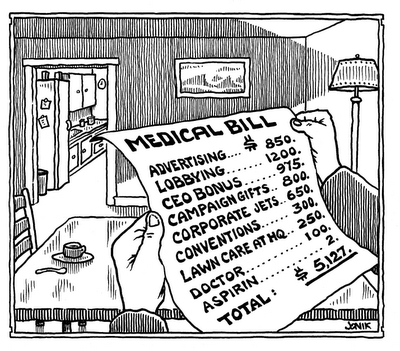
America’s Obamacare and health insurance laws have been written by political lobbyists for special interests. So has the TTIP: Transatlantische Handelsabwollen. Since George W. Bush, the U.S. Government has been prohibited from bargaining for low bulk prices from the pharmaceutical companies. Most Americans think that Health Management Organizations (HMOs) are rife with corruption and billing fraud. The insurance sector has made a killing by spending a great deal of money on bureaucratic techniques to reject patients who seem likely to require expensive health care. Doctors need to hire specialists working full time just to fill out the paperwork. Error is constant, and any visit to the doctor, even for a simple annual checkup, requires many hours by most patients on the phone with their insurance company to correct over-billing.
The dream of U.S. “free market” lobbyists to shift the costs of health care onto its users instead of as a public program. According to current plans backed both by the Republicans and by much of the Democratic Party leadership, these user costs ideally would be paid by pre-saving in special “health savings” accounts, to be managed by Wall Street banks as a kind of mutual fund (with all the financial risks this entails – the same kind of risks that are troubling most U.S. pension funds today).
The reason why the U.S. discussion of health care for the elderly is so relevant for Europeans is that the Transatlantic Trade and Investment Partnership (TTIP) that President Barack Obama pushed on German Chancellor Angela Merkel two weeks ago poses a far-reaching threat to European policies.
The agreement has been drawn up in secret, and has only been available to Congressmen in a special room as a read-only copy. Not even Congressional staff have been permitted to see the details. The reason is that the terms of the TTIP are so awful that it could never be approved by voters. That is why the lobbyists for banks, insurance companies, drug companies, oil and gas companies and other special interests that wrote the law are trying to bypass democratic government and are going directly to Brussels – and in the United States to the Executive Branch of government.
The aim of the TTIP is to replace the application of national laws with special courts of referees nominated by the special interests. This includes the organization of health care. Last week Britain’s main labor union, Unite, warned that the TTIP would mean that the National Health Service would have to be wound down and privatized.[1] Although “Austria, Germany, Greece and Italy do have explicit reservations in the TTIP text to protect existing rules relating to healthcare,” the privatization lobbyist strategy is to have the treaty “provisionally applied” to force matters, by backing compliant politicians. Objections will be sidestepped as the “provisional’ law becomes a fait accompli.
I think that the best perspective that I can give you is to discuss how the various interest groups are working to shape political decisions regarding the public and private role of health care. This is an area I have been involved with for forty years. In 1976, I contributed the economic section for two reports by The Futures Group in Glastonbury, Connecticut for the National Science Foundation analyzing the economic and financial consequences of life‑extending technology: When We Live Longer: Prospects for America (with Herb Gurjuoy et al., 1977) and A Technology Assessment of Life-Extending Technologies (Vol. 5: Demography, Economics and Aging, 1977). I believe these were the first reports to pinpoint the implications for the Social Security system of an aging population and its inter-generational financial tensions.
American politicians and economic futurists were concerned with the effect on public health budgets of a rising proportion of the population able to live out the maximum present human lifespan of 125 years (called “squaring” the life expectancy curve). What is the best public response to what should be a dream being realized? More to the point, how should governments cope with special interests seeking merely to profiteer from such breakthroughs – and use their promise in an extortionate manner?
Every interest group has its own perspective. Most politicians in the United States are lawyers, and they worried that the Social Security, pension and health care contracts were a legal right that could not be broken or modified. President Eisenhower had called Social Security the “third rail” of American politics – meaning that any politician or party that sought to downgrade its promises would quickly be voted out of office.
It was obvious that a population living longer would receive more Social Security and pension payments, and that a rising proportion of national income would be spent on their health care. Some of the politicians I talked to were so pessimistic about the costs involved that one said that he was sorry that kidney dialysis procedures had been invented, because with so many people having kidney problems, it would cost a fortune to provide this service to everyone who medically needed it.
Some politicians sought ways to not to fund expensive medical technologies – on the ground that if these were developed, the government might have an obligation to supply the most expensive technologies (especially dialysis and organ transplants) to the population at large. The costs of doing this would absorb nearly all the economic growth.
One set of futures envisioned that the more costly medical treatments might become available only on islands – in the Caribbean, for instance. After all, did not Hippocrates practice on the island of Cos?
As forecast decades ago, health care is the most sharply rising cost in the United States. What none of us were cynical enough to forecast was the corrupt role played by special interests in maximizing the costs by treating each element of health care as a profit center – indeed, as an opportunity to extract monopoly rent.
Privatization of health insurance under Obamacare has been a bonanza for the financial sector and the insurance industry. Initially a Republican “free market” proposal, it required the Democratic Party in power to disable popular pressure for “Medicare for all” in the form of single payer public health care. No discussion within Congress was even permitted to favor public health care. (I was economic advisor to Presidential candidate Dennis Kucinich, whom the Democratic Party leadership blocked from even discussing a public option in the Congressional debate.)
The enormous power of lobbyists from the pharmaceutical industry bought the loyalty of politicians who blocked anti-trust laws from being applied against the drug companies. As I noted earlier, these lobbyists even succeeded in blocking the government from negotiating directly with the drug companies over prices.
I mention these points because the U.S. solution should serve as an object lesson for what European and other countries should avoid in managing their care for the elderly. This is especially important to Europe, because its neoliberal policies favoring the financial sector imply a slow economic crash squeezing household and employer budgets. Five concerns are paramount.
Triage: restricting the most expensive health care only to the wealthy
Lower incomes lead to shorter lifespans as a result of worse health, and also suicides. Marriage and birth rates also are lower as economies polarize and growth slows. Russia, Ukraine, Latvia and other post-Soviet states show this – and it may be a forecast of European experience. This raises the ratio of elderly to working-age populations. A slowly growing labor force must support more and more retirees.
Studies in almost every country have shown that health standards and lifespans are polarizing between wealthy and poor. A recent U.S. study notes: “The life-expectancy gap between rich and poor in the United States is actually accelerating. Since 2001, American men among the nation’s most affluent 5 percent have seen their lifespans increase by more than two years. American women in that bracket have registered an almost three-year extension to their life expectancy. Meanwhile, the poorest five percent of Americans have seen essentially no gains at all.”[2]
This has important implications regarding recent proposals to raise the retirement age at which people can qualify for Social Security. Only the well to do are living longer, not blue-collar labor. Raising the retirement age would deprive the latter of the retirement years that better-paid individuals enjoy as a result of their healthier lives.
I mentioned above one scenario drawn by futurists: that the best medical care might only be available in “medical islands” or their equivalent in the United States, called “Cadillac health insurance plans.”
Blaming the victims for their unhealthy environment as the problem were their “personal responsibility.”
George W. Bush recommended that the poor simply should go to hospital emergency wards when they get sick. This obviously is the most expensive approach. Prevention is by far more economical. But public moves along this line are being fought tooth and nail by the tobacco and soft-drink industries, and other purveyors of bad health.
Better health and longer lifespans are achieved not only by advanced medical technology, but by better public health standards, and personal diets and exercise. The most serious behaviors impairing health and longevity are smoking cigarettes, drinking alcohol and eating junk foods to the point of obesity. In the United States, childhood diabetes is rising sharply, especially among racial and ethnic minorities, and the poor in general.
An obvious way to keep down health expenditures is to lead a more healthy life. In New York City, Mayor Bloomberg sought to ban the sale of large sugar-drink servings. Lawyers for the junk-food industry, supported by fast food restaurants and movie theaters, blocked his initiative. And an even more powerful legal tool to block public health warnings is contained in the Trans-Pacific Trade Agreement and its European counterpart, the Transatlantic Trade and Investment Partnership. These proposed treaties follow the earlier North American Free Trade Agreement (NAFTA) in levying enormous fines on government who warn populations of the dangers of smoking or other unhealthy behavior that is highly profitable to cigarette companies, soft drink “sugar water” makers, and fast food restaurants selling food-like substances that give little nourishment. Under the proposed neoliberal agreement being put in the hands of Brussels politicians by American lobbyists, government warnings of the health hazards of smoking will require these governments to pay the tobacco companies what they would have earned if cigarette sales had not declined as a result of these warnings! Fines already have been levied against Australia for seeking to improve public health by requiring such warnings on cigarette packages. A recent Australian report concludes:
Tobacco policies implemented in the past have been effective at decreasing overall rates of smoking, but new and innovative interventions will be needed in the future to affect change in all populations.
Six chapters were identified with potential to limit governments’ ability to implement tobacco control policies. The key chapters are: investment, particularly the ISDS mechanism; rules related to trademarks in intellectual property, regulatory coherence, cross-border services and technical barriers to trade. … Multiple chapters may also interact with the potential for amplified effects on tobacco control. Various provisions in these parts of the TPP may provide the tobacco industry with greater influence over policymaking and more avenues to contest tobacco control measures, as well as preventing governments from introducing new policies.[3]
Last week the European Court of Justice upheld the 2014 Tobacco Products Directive against challenges from British-American Tobacco (BAT) and Philip Morris. Like similar laws in other countries, the European law called for public warnings on cigarette packs telling smokers that nicotine kills. But the tobacco companies vowed to fight back, and the TTIP is now their major hope.
Dangers of privatization of health law under the TTIP
A recent British article lays out the problem:
A salient goal of TTIP is to shadow the Investor-State Dispute Settlement system (ISDS), an instrument of public international law granting firms the right to raise an action in a tribunal on the basis that a state’s policies have harmed their commercial interests. … The economist Max Otte has called ISDS ‘a complete disempowerment of politics’. The tribunals are confidential, as is usual in arbitration. Negotiations over ISDS within TTIP are also secret, the aim being to get the ink dry on the agreement before it can provoke opposition by being made public. …
As the Economist put it, ‘if you wanted to convince the public that international trade agreements are a way to let multinational companies get rich at the expense of ordinary people, this is what you would do.’[4]
Dangers of financialization
The most efficient way to finance care for the elderly – and pensions – remains pay-as-you-go planning. This is becoming difficult in a neoliberal political environment with shrinking economic growth and consequent demographic shrinkage. The horror story today is a Ukraine-like situation where the labor force has fled, leaving the elderly to be supported without much of a social budget. That is becoming the post-Soviet model, from East Germany to the Baltics.
The American situation is worse, because Social Security, Medicare and pensions are front-loaded by being financialized – paid for in advance. For decades, savings have been set aside in the form of stock and bond purchases. The problem is that when more workers retire than are contributing to the pension plan or similar plans, their prices will decline. This will leave the retirement plan under-funded.
As interest rates have been reduced to nearly zero since 2008 by Quantitative Easing by the U.S. Federal Reserve and now European Central Bank, pension funds and insurance companies have become desperate to meet their statistically required targets. They have turned to gambling on complex financial derivatives – and have lost heavily, because their managers are no match for Wall Street sharpies.
It may be appropriate here to note the monetary madness of the eurozone not having a central bank to monetize budget deficits to spend into the economy to help it grow. That is the proper function of a real central bank, from the Bank of England to the U.S. Federal Reserve System. European voters are being frightened by junk economics claiming that only commercial banks should create money and credit, not central banks. The reality is that central banks can create the money to fund health programs without inflating the economy. What would inflate health care costs, especially proper care for the elderly, would be privatization and a relinquishing of health policy to the large corporations best in a position to profiteer.
Danger of trade agreements raising the cost of drugs and medical technology
The technological medical revolution involves high rent-extracting opportunities, especially in treating the elderly. The Australian study cited above notes the dangers posed by the TPP (and hence also by its European version) to public health expenditure, especially health costs for the elderly. Designed largely to protect “intellectual property rights,” the proposed treaty aims to increase monopolyrent extraction by the pharmaceutical sector.
Provisions proposed for the TPP that have the potential to limit implementation of new food labelling requirements in Australia include the ISDS mechanism; the regulatory coherence chapter and technical barriers to trade chapter. Provisions in these parts of the TPP have the potential to restrict policymakers to regulate using the most effective public health nutrition instruments. For example, the food industry could argue that introduction of mandatory front-of-pack nutrition labelling would be a technical barrier to trade. Without strong compensatory intervention to improve consumer awareness of the relative healthfulness of foods, it is likely that there will be no change to current high rates of obesity, metabolic syndrome and non-communicable diseases. This would have a negative impact on health, particularly for vulnerable populations.
For starters, the trade agreement limits the ability of public or community pharmacies to bargain for lower drug prices. Also, any attempt at anti-monopoly legislation would require governments to pay the foreign producers or investors as much money as they would have earned if no “interference with markets” (that is, regulation of monopoly prices) had existed. This would sharply increase the cost of healthcare, and “many TPP provisions proposed during the negotiations are likely to be harmful to health.”
There is sufficient evidence which show that increases in the cost of medicines lead to greater patient copayments through the PBS, and that increases in patient copayments lead to lower rates of prescription use. Changes to prescription costs impact particularly on vulnerable populations who have less capacity to accommodate increased out-of-pocket expenses such as women, elderly adults, cultural and linguistic minorities, and low-income populations; people with chronic disease; geographically remote communities; and Aboriginal and Torres Strait Islander populations.
Many provisions proposed for the TPP had the potential to increase the cost of medicines. These were identified in leaked drafts of the intellectual property chapter; the healthcare transparency annex; and the investment chapter, which includes an investor-state dispute settlement (ISDS) mechanism. These provisions, if adopted, could be expected to lead to an increase in the costs of managing the PBS by delaying the availability of generic medicines, and constraining the ability of the PBS to contain costs. An increase in the cost of the PBS to government would be likely to lead to higher copayments for patients.
Summary
European sponsors of U.S.-style neoliberalism pose a threat of transforming European politics, and with it the structure of economies and society. Enormous sums of money are being spent on public relations, and to support politicians willing to shepherd corporate monopoly power against that of democratic government and voters. The most serious threat to European health care and care for the aging population in general is pressure from U.S. firms and diplomats to ram through the TTIP.
It is much more than a free trade agreement. Its “investor dispute” mechanism threatens to disenfranchise governments. The intent is to block them from protecting Europe’s economy, population and basic social philosophy that has developed over the past century of social democracy.
That is why so many of us in the United States also are fighting against this agreement. It has been a major issue in this year’s presidential campaign. Republican nominee Donald Trump has affirmed that the public option is by far the most economic. And Democratic contender Bernie Sanders has opposed Hillary Clinton’s support for her patrons on Wall Street and in the pharmaceutical monopolies. I hope that a similar fight will be waged in Europe.
This is the text of Michael Hudson’s speech to SANICADEMIA, May 9, 2016 in Villach, Austria for the 5th International Congress on Geriatrics and Gerontology = 59th Austrian Convention for Hospital Management, “We’re Living Longer: The healthcare challenges for today and tomorrow.”
Notes.
[1] Hazel Sheffield, “TTIP could cause an NHS sell-off and UK Parliament would be powerless to stop it, says leading union,” The Independent, April 29 2016. http://www.independent.co.uk/news/business/news/ttip-could-cause-an-nhs-sell-off-and-parliament-would-be-powerless-to-stop-it-says-leading-union-a7006471.html
[2] Sam Pizzigati, “Inequality Kills: Top 1% Lives 15 Years Longer Than the Poorest,” Naked Capitalism, May 3, 2016, originally published at Other Words. http://www.nakedcapitalism.com/2016/05/inequality-kills-top-1-lives-15-years-longer-than-the-poorest.html
[3] Katherine Hirono, Fiona Haigh, Deborah Gleeson, Patrick Harris, Anne Marie Thow and Sharon Frie, “Is health impact assessment useful in the context of trade negotiations? A case study of the Trans Pacific Partnership Agreement,” April 4, 2016. http://bmjopen.bmj.com/content/6/4/e010339.full. The report notes: “The final agreement also included an optional tobacco carve-out from ISDS, allowing TPP countries to prevent the use of ISDS to challenge tobacco control measures. Yet even these apparent ‘wins’ have some limitations. Unlike tobacco, the health system, food and alcohol were not carved out from ISDS, leaving these policy areas vulnerable to claims by foreign investors. While various safeguards have been included to try and protect public health, experts have raised doubts about whether they will be sufficient.”
[4] Glen Newey, “Investors v. States,” London Review of Books blog, April 29, 2016. http://www.lrb.co.uk/blog/2016/04/29/glen-newey/investors-v-states/
Pemex No Longer to Be Main Producer of Oil in Mexico
teleSUR | May 11, 2016
The country’s state oil company, Pemex, which is one of the federal government’s main sources of revenue, is since May 10 no longer be the country’s only producer of oil, reports revealed Wednesday, after the state-owned company granted the first six licenses for oil extraction since left-leaning Mexican former President Lazaro Cardenas nationalized the industry in 1938.
The country’s oil production will now include the participation of private energy companies in the extracting fossil fuels from designated oil fields across the country.
Mexico’s energy ministry awarded six foreign companies with contractual licences for oil extraction, during the first round of government led energy auction on Tuesday.
The Mexican Secretary of Energy Pedro Joaquin Coldwell said on Tuesday that the signing of contracts generated “great trust” between investors and companies seeking to put their money to work in the country.
International oil companies are keenly interested in the forthcoming bidding processes, which includes the participation of 28 companies are in in the upcoming bidding rounds.
The news takes place as Mexican President Enrique Peña Nieto intends to move forward with energy-sector reforms, which will allow foreign participation and financing in the energy sector, with the assumption that these measures will result in a more efficient exploitation of the country’s untapped energy potential.
RELATED:
WikiLeaks: Hillary Clinton Pushed Mexico’s Oil Privatization
Nigerian president doesn’t want Cameron corruption apology… just all the country’s money back
RT | May 11, 2016
Nigerian leader Muhammadu Buhari used a keynote speech at a major anti-corruption conference in London to blast Prime Minister David Cameron for calling the African country “fantastically corrupt.”
The conference, which is currently underway, was meant to address global corruption, but a shadow was cast when Cameron was caught on camera calling Afghanistan and Nigeria “fantastically corrupt” in a conversation with the Queen and Speaker of the House John Bercow.
“What would I do with an apology? I need something tangible,” Buhari said.
“I am not going to demand any apology from anyone. What I am demanding is a return of assets.”
Buhari freely admitted before his address that his country had a graft problem and is thought to have been referring to major assets stashed in the UK by corrupt Nigerian figures.
In April 2016 a group of leading figures from Nigerian civil society raised a similar issue in an open letter, demanding Britain end its role as a “safe haven” for white-collar criminals who steal Nigeria’s wealth and resources for personal gain.
The letter’s signatories stressed the devastating effect corruption can have on ordinary citizens, stunting economic growth and exacerbating violent conflict and mass migration in its wake.
“Our Nigeria is one of those countries that has most bitterly suffered the impact. Despite the blessings of nature, which endowed us with abundant oil wealth, our infrastructure is deplorable,” the letter said.
The conference, a pet project of the PM’s, is likely to see Cameron file a motion to create a global anti-corruption body.
However, his plans have been attacked by critics on the basis the organization would have no meaningful powers of enforcement, instead relying on national and international policing agencies to intervene.
The summit comes only weeks after Cameron himself was caught up in a scandal relating to his father’s offshore company, Blairmore Holdings.
Following the Panama Papers leak that showed Cameron had profited from offshore tax schemes, the parliamentary standards committee said the PM would not be investigated. It gave no reason why.
Sanders Supporters Can Bring Down the Democrats
By Margaret Kimberley | Black Agenda Report | May 11, 2016
 Donald Trump’s ascension to the Republican presidential nomination has created an enormous rift between the Republican elites and the rank and file. This process is a welcome development that could lead to the end of that party.
While the Republicans implode Hillary Clinton moves towards the Democratic party nomination by moving ever more towards the right. She and former president Bill Clinton have made it clear. They intend to get votes from independents and Republicans who can’t stomach the idea of a Trump presidency. That has been her modus operandi throughout her political career. She bragged about being a teenaged Goldwater girl and now brags about killing in Libya.
She ignores the Bernie Sanders phenomenon because she has no reason to do otherwise. From the moment he started his campaign he said he would endorse her if she won the nomination. Of course Sanders followers might change the trajectory of history by refusing to go along with the charade. If they stand firm they can also send their party into the historical dustbin where it belongs.
Trump’s supporters epitomize white nationalist sentiment but they are also driven by personal need. They have been left behind by the machinations of both parties. The trade deals concocted by Republicans and Democrats have taken the living wage jobs they expected to have forever. While they prosper more than any other group in the country they still feel affronted by their change in fortune. They don’t care about the imperial project and wouldn’t mind if Trump made good on his pledge to cease invasions and regime change plots.
Democrats on the other hand are less likely to send their party packing. They have been hypnotized by years of lies which have allowed wars, austerity, and mass incarceration to be considered acceptable, small prices to pay to keep the Republicans at bay. Black voters in particular are so fearful of Republican victory that any Democratic Party policy, no matter how damaging to them, gets the go ahead.
The election of 2016 should be historic not just because two people who are disliked by millions will run for president. It should be ground breaking because it will mean that Americans who love to think of themselves as independent will finally live up to that self-image.
The Sanders people in particular claimed to want a revolution. Now is their chance to make good on this assertion. Their task is a simple one. They must not support or vote for Hillary Clinton in November and they must say so loudly and clearly. They can vote for another party’s candidate or write in one of their own. They may exhort Sanders to deny her an endorsement. Any tactic will do. But if they follow tradition and vote for a conservative Democrat they will have made a mockery of their demand for change.
Liberal Democrats who like to think of themselves as leftists must put up or shut up. They should know by now that their party cannot be reformed. It must be done away with for good. The duplicity of the Democrats is fully on display for everyone who really wants to see it. On the one hand they will use the infamous Koch brothers to strike fear, raise money and keep their voters in line. Will they continue to do that now that Charles Koch has declared Hillary Clinton to be possibly more acceptable than Donald Trump?
In reality the Bernie Sanders campaign held more pretense than reality. Sanders isn’t really a socialist and neither are most of his voters. Yet they found it appealing to be connected to a candidate who gave them political cache. Neither are Sanders or his supporters revolutionary. The word revolution was more of a marketing ploy than anything else and continued the mirage of the possibility for change.
Sanders was always the sheep dog, as Black Agenda Report said in 2015. That does not mean his followers have to follow suit. The necessary rejection of Hillary Clinton will also mean a rejection of the man they admired and voted for if he does as he promised and endorses her.
Sanders voters can be the revolutionaries they aspired to be if they loudly and publicly state that they won’t vote for Hillary Clinton. They will need a great deal of determination as they will surely be scapegoated, guilt whipped and blamed for her defeat. But those attacks should be considered as a badge of honor in what may well be a revolutionary effort.
Of course if people “felt the Bern” only because they hoped for a better Democrat then this effort is for naught. By now everyone should know that the corruption in the Democrat party cannot be cut out. The party doesn’t want to change itself and makes sure that opponents end up just driving the sheep.
It is time for the Sanders supporters to make good on calls for revolution. They can do that by actively and openly denying Hillary Clinton the presidency. When they are called spoilers they must proudly own the charge and declare that they meant what they said. They are fighting for a revolution.
Margaret Kimberley can be reached via e-Mail at Margaret.Kimberley(at)BlackAgendaReport.com.
Moscow voices alarm as NATO Romanian missile defense base goes live
RT | May 11, 2016
As a new Romanian interceptor missile base prepares to go live Thursday, Moscow has slammed NATO’s expanding defense shield, calling it a threat to security, and a violation of a key international treaty.
“The creation of a European and global missile defense shield has an adverse effect on strategic stability,” Mikhail Ulyanov, head of the Russian foreign ministry’s department for proliferation and arms control issues, said on Wednesday.
NATO will formally declare its missile defense base in the remote location of Deveselu, Romania, operational on Thursday, bringing to fruition a plan to construct a shield in eastern Europe that was first announced by George W. Bush as far back as 2007.
“Our direct interests, the interests of our national security are affected by the decision,” said Ulyanov.
The Russian official said that not only was the missile defense aimed at neutralizing Russia’s offensive capability – an accusation the Pentagon has repeatedly rejected – but that Deveselu’s MK 41 launching systems it uses could be re-equipped with offensive cruise missiles.
Ulyanov said that Washington was acting in breach of the 1987 INF treaty, under which Mikhail Gorbachev and Ronald Reagan signed their respective countries up to obligations “not to possess, produce, or flight-test a ground-launched cruise missile (GLCM) with a range capability of 500 km to 5,500 km, or to possess or produce launchers of such missiles.”
The US embassy in Moscow produced a counter-statement, condemning Moscow’s allegations as “unacceptable and irresponsible.”
“The missile defense system is not aimed at Russia, or undermining its strategic potential. From the point of view of geography and physics, it is impossible to shoot down Russian inter-continental missiles from Romania or Poland,” said the document, penned by embassy spokesman William Stephens, and obtained by RIA news agency.
Washington says that the eastern European missile defense segment is meant to thwart a potential threat from Iran, but in a separate statement on Wednesday evening, Russia’s foreign ministry said that worries that Tehran posed a threat to NATO were “unfounded.”
The missile shield uses a network of radars that track potential threats in the atmosphere, before launching an interceptor missile from a stationary base, or a fleet.
Simultaneously with Romania coming online, construction work is beginning on a complementary base in Poland, which will complete the eastern European segment of the shield in 2018.
Israel imposes “general closure” on Palestinian territory for Israeli Independence day
Ma’an – May 11, 2016
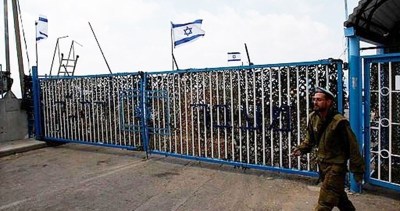
BETHLEHEM – Israeli authorities declared a “general closure” on Gaza and the occupied West Bank since midnight on Tuesday and continuing until midnight on Thursday as Israel celebrates its Memorial and Independence day.
The general closure was implemented on the West Bank and the besieged Gaza Strip yesterday, marking Israeli Memorial day, and will continue until the finish of Israel’s Independence day on Thursday.
Crossings into Israel from the West Bank and Gaza are only being permitted in humanitarian cases. However, a representative of the Palestinian Authority (PA) has requested approval for Palestinians in need of serious medical assistance, a spokesperson for the Coordination of Government Activities in the Territories (COGAT) told Ma’an.
An Israeli army spokesperson said the closure was implemented following an army “security assessment” and added that the closure restrictions included the passage of products and the movement of people into Israel and its illegal settlements.
Debilitating poverty and lack of employment drives many workers in the occupied West Bank to enter Israel in search of work. Israel’s imposition of closures on the Palestinian territory has severely affected the livelihoods of hundreds of thousands of Palestinians who depend on entering Israel, or its illegal settlements, for employment opportunities.
The number of Palestinians employed, both documented and undocumented, in Israel and its illegal settlements for the first quarter of 2016 was 114,000, according to the Palestinian Central Bureau of Statistics (PCBS).
The average unemployment rate for the Palestinian territory was 26.6% for this same period: 18% in the West Bank and a staggering 41.2% in Gaza. The poor state of the Palestinian territory’s economy is largely attributed to the decades-long Israeli military occupation of the West Bank and the nearly nine year Israeli blockade on the Gaza Strip which severely undermines any economic developments.
Israeli authorities movement restrictions on Palestinians in the West Bank as recently as a few weeks ago during the Jewish holiday of Passover, including implementing a full closure on the besieged enclave of Gaza.
US Military Supports Trump: New Poll
Sputnik | May 11, 2016
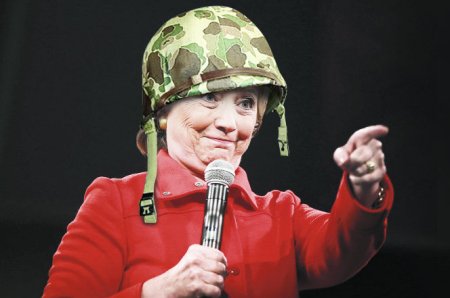
A new survey of US military personnel finds presumptive Republican nominee Donald Trump leading his Democratic opponent Hillary Clinton by over a 2-to-1 margin. […]
In polling of 951 verified active-duty troops, reservists and National Guardsmen, The Military Times found that in a match-up between Trump and Clinton, 54% of respondents said they would support the business mogul-turned-candidate, compared to 25% who chose the former secretary of state (the remaining 21% said they would not vote). At the same time, when the match-up was switched to Trump vs. Senator Bernie Sanders, Trump got 51% support, compared to 38% for the Vermont senator. […]
With Russian analysts and much of the public watching the US presidential campaign almost as closely as Americans themselves, independent online newspaper Svobodnaya Pressa attempted to explain the landslide in Trump’s favor, turning to Sergei Bespalov, a senior researcher at the Russian Presidential Academy of National Economy and Public Administration, for possible answers.
The biggest reason for the military’s support for Trump, Bespalov suggested, is Trump’s rhetoric on foreign policy.
“Trump’s promises to significantly temper the military activity of the United States around the globe very likely brings forth a positive reaction from the military. They are, in general, not too thrilled about the idea of their country being dragged into new armed conflicts, since they are the ones who take most of the risks” when this happens.
“At the same time,” the analyst says, “Clinton has a reputation for being a supporter of a very aggressive foreign policy, connected to the continuation of the current policy of the forced expansion of ‘Western-style democracy’ throughout the world, and for active intervention in the internal affairs of a host of countries and regimes which Washington finds undesirable. This, of course, is fraught with the danger of the intensification of the use of the US armed forces abroad, and for new military conflicts.”
Asked by the newspaper why the Pentagon would prefer Trump and his non-interventionism, Bespalov corrected his interviewer. “It’s not the Pentagon that prefers Trump, and not the military elite, but the majority of ordinary servicemen and women. The Pentagon supports Clinton. But those soldiers who, in the case of a Clinton victory, will be drawn into new conflicts, and will have to risk their lives, clearly aren’t thrilled about this prospect. And therefore among ordinary soldiers and officers Trump has proven to be more popular.”
Mikhail Alexandrov, a senior expert at the Center for Military-Political Studies at the Moscow State Institute of International Relations, suggests that other reasons may be at play.
“Trump shows resolve in the use of force. He demands that Obama use force, including in Syria. He is prepared to aggravate relations with Iran. He says that dialogue with Russia can come only ‘from a position of strength’. And recently he said that it would be necessary to shoot down Russian planes, referring to the recent incident involving the American destroyer Donald cook and our fighters.””Trump, in his rhetoric at least, is creating an image of an aggressive macho, who is willing to use force when, in his view, American interests are threatened. This approach appeals to the military.”
In other words, Alexandrov suggests, Trump “is a supporter of a more open policy of the use of force, unlike Clinton, who prefers methods of hybrid warfare, including ‘soft power’ and special operations. Trump is ready to use [military] force directly, decisively, and on a large scale.”
Which approach is preferable for Russia, and for other countries looking to escape US hegemony and create a multipolar world, remains to be seen. Moscow has already had a taste of the approach proposed by Mrs. Clinton, which includes more color revolutions on Russia’s borders, and endless wars in the Middle East. Trump, at the very least, has talked about negotiating with Moscow, and has criticized Clinton, Obama and George W. Bush for the disastrous military interventions over the last fifteen years which cost thousands of American servicemen and women, along with hundreds of thousands of people in the Middle East their lives.
Read more:
Clinton’s Neocon Ties Could Mean More Regime Change on the Menu
Clinton Receives More Wall Street Donations Than Republican Rivals
Moscow Slams US Concerns About Russian, Chinese Military Space Activities
Sputnik — 11.05.2016
Moscow does not take seriously US concerns regarding Russia’s and China’s activities in space, the head of the Russian Foreign Ministry’s Department for Non-Proliferation and Arms Control said Wednesday.
The Washington Post reported earlier in the week that Frank Rose, Assistant Secretary of State for Arms Control, had expressed concern over “the continued development by Russia and China of anti-satellite weapons.”
“Indeed, such statements have been made recently by official representatives of the US administration, fairly regularly. Taking them literally and seriously is impossible. After all, any country, including the United States, has the opportunity to address real concerns, if they arise, through established political and diplomatic means,” Mikhail Ulyanov told RIA Novosti.
“Not only will Washington not use [diplomatic channels], but it actively tries to avoid them,” he added.
Ulyanov noted that the United States itself has been blocking a 2008 proposal by Russia and China on preventing the deployment of weapons in outer space, which would “effectively solve the problem of anti-satellite weapons.”
“The Russian-Chinese proposal has gained broad support on the international arena, but its practical implementation is categorically blocked by the United States,” he said.
Western Kim-Phobia & The Danger of War
By Caleb Maupin | New Eastern Outlook | May 11, 2016
In almost every US aligned Gulf State, you can find an autocratic monarch who rules over a small, oil-rich corner of the world via an outdated, pre-democratic legal system that grants him absolute authority. King Abdullah of Saudi Arabia, an absolute monarch with dictatorial powers, was married to 30 different women, by whom he has fathered a total of 35 children. The recently deceased King Abdullah, now replaced by Salman, was a serial human rights violating autocrat who routinely beheaded people for “insulting” him, and he was certainly not alone.
If investigative journalists in the Western press bothered to dig, they could most certainly find out the shocking details about the wealthy aristocracies of Bahrain, Kuwait, Oman, Qatar, Abu Dhabi, Dubai, and Jordan. The US-backed oil monarchies of the Middle East are known to have rooms full of trafficked sexual slaves from around the world, and to preside over populations with no human rights or freedoms.
Due to the fact that the decadent and oppressive Gulf state monarchs are allies of the United States, sell oil to Wall Street and buy weapons from the Pentagon, Western media mostly ignores their undisputed and well documented scandals and atrocities.
However, when reporting on the Democratic People’s Republic of Korea (DPRK), Western media reports every rumor and unsubstantiated claim as undisputed truth. Everything said by defectors from the northern part of the Korean peninsula is believed and uncritically repeated. Western media has embarrassed itself more than a few times in the past years, by repeating allegations that are so obviously false and easily disproven, that they must be quietly retracted.
The claim that women in the DPRK are forbidden from riding bicycles was ripped to shreds with video from inside the country. The Korean Workers Party actually prides itself on its advancement of women, with women winning Olympic gold medals and playing a prominent role in the military. The outrageous claim that the DPRK executes people by “feeding them to wild dogs” was traced to a satirical Chinese publication.
Unlike the US-aligned autocracies in the Middle East, the DPRK has a constitution and elections. Even though the Korean Workers Party promotes dialectical materialism and atheism, there are freely practicing Christian churches all throughout the northern half of the Korean peninsula. Even the DPRK’s harshest critics admit that the country has “universal housing” (no homelessness), and that it has completely wiped out illiteracy. These facts alone show that the DPRK, regardless of its flaws, is a much more humane and human rights-respecting society than Saudi Arabia, Qatar, Oman, Bahrain, Kuwait, and many other US aligned regimes.
The special, obsessive demonization of the Democratic People’s Republic of Korea in Western media, rightly called “Kim-Phobia” is not just an insult to journalistic integrity. Kim-phobia could have catastrophic consequences, not only for the Korean peninsula, but for the entire human race. US media has selected the “North Koreans” for demonization and isolation for special, strategic reasons.
“Human Rights” Testimony Given Under Duress
If mainstream US media were to start slandering Vladimir Putin or Xi Jinping by saying they were cannibals or child molesters, it’s not guaranteed that many people would automatically believe it. The governments of both Russia and China have enough respect and credibility, as well as economic ties to the United States, that such false claims would be widely dismissed and refuted. While some rightists and non-thinking war-hawks are tempted to believe whatever slanderous allegation is made, a very large percentage of the western populace would question such claims.
Likewise, wild and extreme claims against Raul Castro and the leadership of Cuba would face similar scrutiny. While the Tea Party and many Cuban exiles in Miami may accept any anti-Cuban propaganda, with many Americans visiting Cuba and prominent celebrities praising its healthcare system, not all anti-Cuban allegations are merely accepted as fact.
However, the outrageous statements and accusations against Kim Jong-Un and the Korean Workers Party can be routinely passed on without any scrutiny or filter. Why?
With tens of thousands of US troops on its border and under an economic blockade, the Democratic People’s Republic of Korea is focused on military defense, not the information war. Very few Westerners visit the northern part of the Korean peninsula. The country has made a point of strategically cutting itself off from the Western press and the Internet for military purposes. Because of these unique circumstances, Wolf Blitzer and Don Lemon can pretty much say anything about Kim Jong-Un and the Korean people without anyone fact-checking them.
The bombardment of anti-DPRK propaganda has become very effective. For example, the United Nations held hearings about “Human Rights” in the DPRK in Seoul. At these hearings, person after person stood up and accused the government in the North of horrific atrocities. What the media ignored while reporting on the human rights hearings was that this testimony was given under duress.
The government in southern Korea has its infamous “National Security Laws” which have been condemned by Human Rights Watch, Amnesty International, and other bodies. Under the National Security Laws, anyone who says or writes anything that could be interpreted as supporting or speaking positively of the DPRK can be imprisoned for decades.
These laws are not symbolic, but routinely enforced against anyone who dares utter a positive word about Kim Il Sung, Communism, Socialism, or US atrocities during the Korean war. For example, Park Geun-Jung was sentenced to 10 months in prison for activity on social media. Park is not a Communist, and was obviously being sarcastic with his tweets about his northern countryfolk, but this did not prevent him from being locked up.
The United Nations Human Rights hearings in Seoul were a violation of the UN’s own procedures. The UN received what was essentially coerced testimony from people who knew they would be imprisoned and possibly tortured if they said anything other than “North Korea is hell on earth.”
THAAD and War Danger
The United States is now installing a huge missile system in the southern part of the Korean peninsula. This is the latest measure in the “Asian Pivot” of the US military. The Terminal High Altitude Area Defense (THAAD) system’s installment has garnered objections, and not only from the DPRK. China and Russia have also raised deep concerns.
Why would China and Russia be concerned about the THAAD system? Essentially, this system gives US forces in South Korea the ability to strike both Russia and China, and to deflect any retaliatory measure.
Southern Korea can be used as a base, not just to attack the north, but also Russia and China. The THAAD system shields US missile launchers from any response, and would allow the US to continue unloading its missiles onto Russia and China.
China and Russia both now have hypersonic gliders, which could probably penetrate the THAAD system. However, it is very disturbing that the United States is looking to make south Korea, where tens of thousands of US troops are stationed, immune from Russian or Chinese retaliation. If the United States and the “Republic of Korea” are not planning an attack on Russia, China, or the DPRK, why prepare southern Korea for such a thing?
The excuse of the United States and the south Korean regime for this highly provocative move against the two largest countries in the world is “Crazy Kim made us do it.”
US audiences have been psyched up by “The Interview”, “Red Dawn”, and “Olympus Has Fallen”, along with press reports saying bizarre, unsubstantiated things like “Kim Jong Il Claims to have invented the Hamburger” into believing that the DPRK is somehow bent on world conquest. In reality, all the DPRK asks for is the peaceful democratic re-unification of the peninsula.
The anti-Kim obsession of the western press is serving to justify US preparations for war in Asia. US weapons and military personnel are pouring, not just into southern Korea, but also into the Philippines, Indonesia, and other parts of the world.
Meanwhile, US troops and military equipment are being deployed into Eastern Europe. Latvia, Lithuania, Poland, and Romania, all of which have been gutted by neoliberalism since the collapse of the USSR, are now having their homelands turned into launch pads for a third world war.
The United States is surrounding Russia and China with troops, and continuing to describe any defensive move by the two countries as “aggression.”
In such a context, hostilities on the Korean peninsula, with the USA supporting the south and Russia and China supporting the north, could easily spin way out of control. With the DPRK as such an easily demonized target, a single spark could easily light up the entire world.
The “Kim-Phobia” of the US media is very strategic. Hipster journalism about “crazy Kim” has very important public relations value for the Pentagon as it escalates its presence in Asia.
Progressive minded human beings should see how dangerous this is. “Kim-Phobia” could be setting the stage for World War Three, as more and more weapons and US military personnel pour into the region.
Featured Video
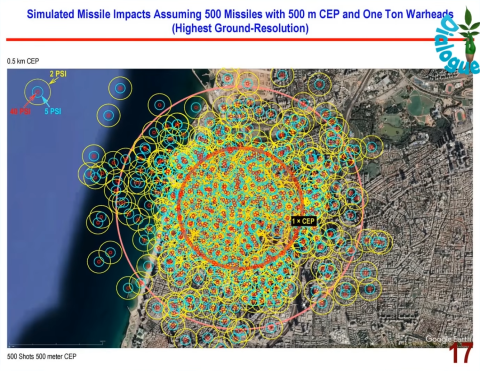
Prof. Ted Postol: US–Iran War? Israel’s Fatal Gamble
or go to
Aletho News Archives – Video-Images
From the Archives
Neocon Max Boot: Legal and illegal aliens need to enlist in the US army and die for Israel

By Jonas E. Alexis | Veterans Today | October 16, 2107
In 1973 Irving Kristol, the godfather of the Neoconservative movement, made a stunning statement which is still relevant to understanding the Israeli influence in US foreign policy. Kristol said:
“Senator McGovern is very sincere when he says that he will try to cut the military budget by 30%. And this is to drive a knife in the heart of Israel… Jews don’t like big military budgets. But it is now an interest of the Jews to have a large and powerful military establishment in the United States…
“American Jews who care about the survival of the state of Israel have to say, no, we don’t want to cut the military budget, it is important to keep that military budget big, so that we can defend Israel.”
Read the statement again very carefully. A big military budget, said Kristol, is only good for Israel, not America or much of the Western World. In other words, precious American soldiers who go to the Middle East to fight so-called terrorism are just working for Israel, not for America.
So, whenever the Neocons use words such as “democracy” or “freedom,” they are essentially conning decent Americans to support Israel’s perpetual wars. … continue
Blog Roll
 Aletho News
- The Only Motive Behind The ‘Imminent’ U.S. War With Iran Is The Zionist Lobby
- Trump eyes 350-acre US military base housing 5,000 troops in Gaza
- Israel Pushing US Toward a Big and Damaging War With Iran – Ex-Pentagon Analyst
- Meet The Liberal Zionist And Ukraine War Supporter Advising AOC On Foreign Policy
- Buck Dancing for Zion: Kenya’s and Nigeria’s Growing Love Affair With Israel
- Israel installed, oversaw security system at Barak-Epstein residence in New York: Report
- ‘Britain’s Index of Repression’ documents 964 incidents of anti-Palestinian crackdown
- Prof. Ted Postol: US–Iran War? Israel’s Fatal Gamble
- UK prosecutors drop aggravated burglary charges against 24 Palestine Action activists
- Unidentified drone downed over Lebanon airbase, US forces block authorities from crash site
- If Americans Knew
- The Lancet: Gaza death toll far higher than reported – Not a ceasefire Day 132
- Compliant aid: Who are the Israel-approved NGOs scaling up in Gaza?
- Why won’t Trump’s “Board of Peace” bring peace? – Not a ceasefire Day 131
- Help end the injustice against Shadi
- Israel’s Favorite American President
- Israel’s “Yellow Line” Is a Death Trap for Palestinians. We Drove Into It.
- Why Israel’s expanding occupation in Syria presents a critical legal test
- Gaza is not a natural disaster. It is the victim of genocide enabled by global inaction
- Netanyahu’s plan to “end” US aid to Israel is to give even more money under a different name
- Israel ceased firing on Gaza for just 15 days of the “ceasefire” – Not a ceasefire Day 130
- No Tricks Zone
- Coal Power Back In Trend As Globe Tries To Keep Pace With Growing Demand For Power
- New Study: A 4°C Warmer Beaufort Sea Had ‘No Sea Ice’ 11,700 – 8200 Years Ago
- Unfudging The Data: Dutch Meteorological Institute Reinstates Early 20th Centruy Heat Waves It Had Erased Earlier
- German Gas Crisis…Chancellor Merz Allegedly Bans Gas Debate Ahead of Elections!
- Pollen Reconstructions Show The Last Glacial’s Warming Events Were Global, 10x Greater Than Modern
- Germany’s Natural Gas Storage Level Dwindles To Just 28%… Increasingly Critical
- New Study Rebuts The Assumption That Anthropogenic CO2 Molecules Have ‘Special’ Properties
- Climate Scientist Who Predicted End Of “Heavy Frost And Snow” Now Refuses Media Inquiries
- Polar Bear Numbers Rising And Health Improving In Areas With The Most Rapid Sea Ice Decline
- One Reason Only For Germany’s Heating Gas Crisis: Its Hardcore-Dumbass Energy Policy
 Aletho News