Washington is promoting commercial interests of the energy corporation Westinghouse in Europe, creating risks for European nuclear power plants, an article in Forbes read.
For example, in 2015, two of the Westinghouse-made fuel assemblies at the South Ukraine nuclear power plant (NPP) were found to be leaking. Since 2015, the NPP has been using US-made fuel.
In 2014, Ukraine and Westinghouse reached an agreement to supply nuclear fuel to some Ukrainian NPPs. The alleged reason behind the contract was the need to help Ukraine become energetically independent from Russia. Russia was a long-time supplier of nuclear fuel to Ukraine.
Experts have repeatedly warned that the deal would create serious risks for the safety of Ukrainian NPPs.
They cited the example of an incident which took place several years ago at the Temelin nuclear power plant, in the Czech Republic. The NPP operated on Russian-designed reactors and used fuel supplied by Westinghouse. The fuel was leaking and the rods were bending. All the Westinghouse fuel was removed from the core and replaced with Russian-made fuel.
As for Ukraine, the company announced that its fuel for Ukrainian NPPs had been improved.
Despite experts’ warnings, in March 2015, the first 42 fuel assemblies made by Westinghouse were loaded to the third reactor unit at the South Ukraine NPP.
According to Forbes, the two Westinghouse-made assemblies were found leaking during a scheduled outage at the third unit of the NPP.
The author of the article, Forbes contributor Kenneth Rapoza described how Washington has promoted Westinghouse’s interest in Eastern Europe, neglecting safety recommendations.
“Westinghouse is more than a brand name American power company. It’s a battering ram used by Washington to promote energy security,” the author wrote.
A source who wished to remain anonymous told Forbes that Westinghouse wants a market share in Eastern Europe in a bid to prevent the company from insolvency.
“Their new reactor division is loss-making, the fuel division is their only cash cow and it is not growing and existing margins are getting slimmer and slimmer. We think Westinghouse has spent millions of dollars to include nuclear fuel as part of the energy security narrative, and the current EU sentiment against Russia play into their hand,” the source said.
“But derailing nuclear projects while running into technical difficulties with Westinghouse fuel assemblies in Rosatom reactors is a dangerous way to promote energy security,” Rapoza noted.
According to former Czech Prime Minister Jiri Paroubek, the US has been promoting Westinghouse for years.
In the 1990s, US diplomats supported contribution between the Czech Republic and Westinghouse. The company pledged to improve Russian-designed nuclear plants to Western standards.
“However, the opposite proved to be true. Fuel assemblies delivered by Westinghouse were of inferior quality and higher price compared with than Russian fuel and caused frequent outages of Temelin reactors,” Paroubek told Forbes.
After, Westinghouse’s fuel assemblies were found leaking in the 2000s the Czech company CEZ decided to return to Russian-made nuclear fuel for the Temelin NPP.
“CEZ’s decision serves as a testament to the fact that the Russian fuel assembly was safer and that Washington was selling a product that did not quite work at the time, potentially putting nuclear power plants in danger,” the article read.
US presidential hopeful Hillary Clinton was also involved in promoting Westinghouse in Eastern Europe. In 2012 when she served as US State Secretary Clinton met with then Czech Prime Minister Petr Necas, using the energy security argument to promote the company.
According to the article, Westinghouse can produce fuel for Russia-designed reactors as well as Rosatom can build fuel assemblies for Western-designed power units. However, for third parties working with Westinghouse is less economically efficient.
“Russia is the cheaper producer of the two, so when countries turn to Westinghouse for the fuel assemblies, they have to pay a premium for diversification,” Rapoza wrote.
Nevertheless, the largest initiative by Westinghouse is squeezing Russia from the Ukrainian nuclear fuel market, using again the argument of diversifying supplies.
In 2012, the Ukrainian nuclear regulator banned the use of Westinghouse’s fuel assemblies in the country pending an investigation over the incident at the South Ukraine NPP.
“Two years later, then-Prime Minister, Arseniy Yatsenyuk consulted Westinghouse on picking a new nuclear safety regulator for his new government,” the author wrote citing a source in Ukraine.
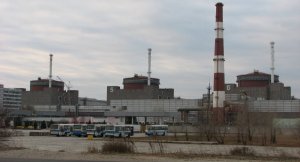
In April, the Ukrainian Energy Ministry announced it would buy more nuclear fuel from Westinghouse. The company is planning to deliver five reloads of fuel to South Ukraine and Zaporizhia NPPs.
According to the author, Westinghouse’s commercial interests are closely tied to politics and thus the company neglects safety.
There is a simple explanation why Washington refuses to proscribe the militant groups Jaysh al-Islam and Ahrar al-Sham as terrorist. Because Washington relies on them for regime change in Syria.
Therefore, Washington and its Western and Middle East allies cannot possibly designate Jaysh al-Islam and Ahrar al-Sham as terrorist; otherwise it would be a self-indicting admission that the war in Syria is a foreign state-sponsored terrorist assault on a sovereign country.
This criminal conspiracy is understood by many observers as an accurate description of the five-year Syrian conflict and how it originated. Syria fits into the mold of US-led regime change wars in the Middle East and elsewhere. However, Washington and its allies, assisted by the Western corporate news media, have maintained a fictitious alternative narrative on Syria, claiming the war is an insurgency by a pro-democracy rebel movement.
That narrative has strained credulity over the years as the putative “secular rebels” have either vanished or turned out to be indistinguishable from extremist groups like al-Qaeda-linked Jabhat al-Nusra and so-called Islamic State (also known as Daesh).
Washington asserts that it only supports “moderate, secular rebels” of the Free Syrian Army. British Prime Minister David Cameron has claimed that there are 70,000 such “moderate rebels” fighting in Syria against the government of President Bashar al-Assad. But no-one can locate these supposed pro-democracy warriors.
All that can be seen is that the fight against the Syrian government is being waged by self-professed extremist jihadists who have no intention of establishing “democracy”. Instead, they explicitly want to carve out an Islamic state dominated by draconian Sharia law.
In addition to Jabhat al-Nusra and Daesh, the two other major militant groups, Jaish al-Islam and Ahrar al-Sham, are vehemently committed to forming a Caliphate based on Salafi or Wahhabi ideology. That ideology views all other religious faiths, including moderate Sunni Muslims, as well as Shia and Alawites, as “infidels” fit to be persecuted until death.
Leaders of both Jaysh and Ahrar have publicly declared their repudiation of democracy.
Yet these two groups are nominated as the Syrian “opposition” in the Geneva talks, as part of the High Negotiations Committee (HNC). The HNC was cobbled together at a summit held in the Saudi capital Riyadh in December ahead of the anticipated negotiations to find a Syrian political settlement.
The HNC is endorsed by Washington as official representatives of the Syrian opposition. It is supported by Saudi Arabia, or indeed more accurately, orchestrated by the Saudi rulers since the main components of the HNC are Jaysh al-Islam and Ahrar al-Sham. Other major sponsors of the militant groups are Qatar and Turkey.
Staffan de Mistura, the UN envoy to Syria, also plays an important part in the charade of furnishing an opposition composed of extremists who demand the Syrian government must stand down as a precondition for talks. This maximalist position is one of the main reasons why the negotiations have come unstuck, according to Russian Foreign Minister Sergey Lavrov.
Another basic reason is that the HNC members have been involved in breaching the cessation of violence the US and Russia brokered on February 27, as a confidence-building measure to assist the talks process in Geneva.
That Jaysh al-Islam and Ahrar al-Sham have not observed the shaky ceasefire is a corollary of the fact that both groups are integrated with al-Qaeda-affiliated terror organizations, al Nusra and Daesh, which are internationally designated terrorist organizations.
The UN excluded al-Qaeda franchises from the ceasefire when it passed Security Council Resolution 2254 in December to mandate the purported Syrian peace talks. In that way, Syria and its foreign allies, Russia, Iran and Lebanon’s Hezbollah, have been legally entitled to continue offensive operations against the extremists in parallel to the Geneva process.
The offensive on the terror groups should include HNC members Jaysh and Ahrar. Both groups have publicly admitted to fighting alongside both Nusra and Daesh in their campaign against the Syrian army. All of these organizations have been involved at various times in bloody feuds and turf wars. Nevertheless, they are at other times self-declared collaborators.
Jaysh al-Islam and Ahrar al-Sham are also well-documented to having engaged in massacres and barbarities as vile as the other higher profile terror outfits.
Only last week, Ahrar al-Sham was responsible for the massacre of women and children in the village of Al-Zahraa, near Aleppo, according to survivors. The group has carried out countless no-warning car bombings in civilians neighborhoods. It claimed responsibility for a bombing outside the Russian base at Idlib earlier this year, which killed dozens.
Jaysh al-Islam has publicly admitted using chemical weapons against Kurdish civilians in recent weeks, also near Aleppo, Syria’s second city after the capital Damascus, and currently the key battleground in the whole conflict.
The same jihadist militia is allegedly linked to the chemical weapon atrocity in August 2013 in the Damascus suburb of East Ghouta, when hundreds of civilians, including children, were apparently killed from exposure to Sarin gas. That attack was initially blamed on Syrian government forces and it nearly prompted the Obama administration to order direct military intervention on the pretext that a “red line” was crossed. Until that is, Moscow steered a ground-breaking deal to decommission chemical weapons held by the Syrian state. It later transpired that the more likely culprit for the East Ghouta atrocity was the Jaysh al-Islam militants.
A former commander of the group, Zahran Alloush, once declared that he would “cleanse” all Shia, Alawites and other infidels from the Levant. Many Syrian civilians later rejoiced when the “terrorist boss” – their words – was killed in a Syrian air force strike on December 25. Notably, Saudi Arabia and Turkey vehemently protested over Alloush’s death.
It is irrefutable from both their actions and self-declarations that Jaysh al-Islam and Ahrar al-Sham are by any definition terrorist groups. Certainly, Russia and Iran have officially listed both as such.
But not so Washington and its allies. Earlier this month, a Russian proposal at the UN Security Council to proscribe Jaysh and Ahrar was blocked by the US, Britain and France. An American spokesperson told the AFP news agency that it rejected the Russian motion because it feared the tentative Syrian ceasefire would collapse entirely. This is an unwitting US admission about who the main fighting forces in the Syrian “rebellion” are.
This week US Secretary of State John Kerry made an extraordinary claim which, as usual, went unnoticed in the Western media. Kerry said the US “still has leverage in Syria” because if the Syrian government does not accept Washington’s demands for political transition then the country would face years of more war.
Kerry’s confidence in threatening a war of attrition on Syria is based on the fact that the main terror groups are directly or indirectly controlled by Washington and its regional allies in Saudi Arabia and Turkey.
Jaysh al-Islam and Ahrar al-Sham are essential to the terror front that gives Washington its leverage in Syria. But the charade must be kept covered with the preposterous denial that these groups are not terrorists.
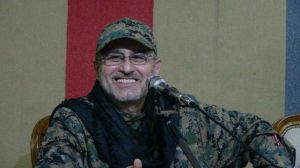
The leader of the Lebanese resistance movement Hezbollah, Seyyed Hassan Nasrallah, heaps praise on the movement’s military commander Mustafa Badreddine, who was killed in Syria last week, saying he was a front-runner in the fight against Israel.
“Badreddine played a key role alongside [his predecessor] Imad Mughniyeh… in the 2006 war against Israel before assuming several responsibilities including the dismantling of Israeli spy networks,” Nasrallah said in a televised speech on Friday.
Nasrallah was speaking to mark one week after Badreddine was killed.
He said Badreddine was tasked with overseeing Hezbollah’s security and military units in Syria since Takfiri militants initiated a war there in 2011.
Hezbollah fighters are combating alongside the Syrian government forces against a range of terrorist groups operating in the war-torn Arab country, including Daesh and the al-Qaeda-affiliated al-Nusra Front.
The Hezbollah leader said Badreddine was initially directing the Syria operation from Lebanon, but later “insisted” on traveling to Syria to oversee in person the sensitive operation.
Nasrallah said Hezbollah was against Badreddine’s presence in Syria as the group knew of the media controversy that would arise of his involvement in the war.
He noted that Badreddine’s presence in Syria helped Hezbollah prevent the fall of the country “into the hands of Takfiris and their American masters and spies in the region.”
The 55-year-old Hezbollah commander led Hezbollah’s military wing which is helping the Syrian government drive out foreign-backed Takfiri terrorists from Syria.
Badreddine also directed military operations against the Israeli invasion of Lebanon and was a frequent target of attempts by Tel Aviv, Washington and its allies to assassinate or capture him.
He was the cousin and brother-in-law of Imad Mughniyeh, who was assassinated by Israel in 2008.
He said Hezbollah has not entirely ruled out Israel of having a hand in Badreddine’s killing, but the group has not found any clues during the probe that could directly hint at Israel’s role.
Nasrallah denied speculations raised in some Arab media that Hezbollah did not assign blame on Israel for Badreddine’s killing because it wanted to escape responsibility for retaliation, saying throughout 34 years of confrontation with Israel, the regime in Tel Aviv has never doubted the genuineness of Hezbollah pledges for carrying out such retaliations.
“Our history is a proof that when we vow to retaliate we honor our pledges,” Nasrallah said, adding that Hezbollah would not stand on ceremony to openly blame Israel for perpetrating a crime when the evidence exists.
Nasrallah said Badreddine’s murder came at the hands of Takfiri groups and was orchestrated by those actively seeking to undermine the resistance front, including the United States.
He said, however, that the death of the commander would not lead to Hezbollah withdrawing from Syria. “Badreddine’s blood will push us to a bigger presence in Syria… We will remain in Syria and more leader will go into Syria,” Nasrallah said.
Else in his speech blasted Al-Saud’s calls for « democracy » in Syria and said:
The Saudi regime wants early parliamentary and presidential elections in Syria. But Saudi Arabia from its very inception as a nation-state until now has never had elections on its own soil. There is a ‘king’ and a ‘royal’ family and a dictatorship. Does anyone dare open his mouth against the regime in Saudi Arabia?! If someone dares to post two lines on Twitter, the ‘royal’ family goes crazy and sentences him to 1,000 lashes. What kind of Islam is this?! What sort of religion is this?! This is the ugliest form of hypocrisy!
Nasrallah continued, “This is not about freedom or democracy or elections or constituons! This is about the Syrian government not kneeling! This is about #Syria refusing to be a tool of American-Zionist hegemony. This is because Syria holds on to Resistance, refuses to betray Iran, defends Palestine, demands the return of the Golan Heights and maintains its sovereignty. This is because Syria is still a bastion of Arabism. Mark my words, if Bashar al-Assad was to say right now that he’d become a slave of the US-‘Israeli’ project, the war against Syria would be over tomorrow.”
Hizbollah Secretary Genral concluded his speech by saying: “I say to you with all confidence, throughout our 34 years, we have witnessed worse circumstances than what we’re dealing with today. And with our loyalty, steadfastness and commitment to the ongoing march on our path of Resistance, we shall overcome this new phase as well. In this battle, we are advancing and achieving victories. The Americans, the Zionists and Al-Saud said they’d gobble up #Syria five years ago, but yet Syria still stands today! This is because of the sacrifices of our martyrs. Indeed, Sayyed Mustafa’s blood and the blood of all our martyrs is the fuel which contributes to driving us to victory in this historic defense of the Ummah. Therefore our decision about continuing this fight is a simple one. I say to all of you who propagandized we’d leave Syria because of Sayyed Mustafa’s martyrdom – The martyrdom of any of our commanders has never made us leave any battle. Quite to the contrary, their martyrdoms will only make us increase our presence in Syria. We will be in Syria in greater numbers and different forms until victory. This is how we honor our martyrs and bring defeat to the US-Zionist-Takfiri-Saudi project. This project will fall; this project will be destroyed. I vow to you once more, Syria will never become the tool of our enemies and they will never get control of our region!”
As the current Democratic presidential front-runner Hillary Clinton was entering the presidential race, her husband and former US President Bill Clinton received millions of dollars from special interest groups, including $325,000 from a group lobbying for the TPP (Trans-Pacific Partnership).
In October 2015, Hillary Clinton was pressured by her Democratic rival, Bernie Sanders, to openly oppose the controversial global deal to deregulate trade. The Vermont Senator did not hesitate to condemn the deal early in his campaign, claiming that it favors the corporate elite at the expense of American jobs.
Meanwhile, the National Association of Manufacturers, from which Bill Clinton received a substantial fee just one month before his wife announced her campaign, backs the TPP.
According to the Center for Responsive Politics (CRP), the manufacturing business group affirmed its support for the hotly-debated deal three months before turning to Bill Clinton. The CRP called the proposed deal “a significant improvement over the status quo” for corporations.
Another $300,000 was donated to candidate Clinton from technology firm Oracle, when the former Secretary of State’s Democratic primary was in full swing. Disclosure forms reveal that Oracle supports ratification of the TPP.
Previously Hillary Clinton indicated that she would support the global deregulation deal, calling it the “gold standard” of free trade.
Brazil’s new unelected government is looking to introduce new measures that would “soften the definition of slavery” in the country in what is being seen as a roll-back of many of the reforms introduced by the leftist government of President Dilma Rousseff.
The new measures will be introduced by the newly appointed Agriculture Minister Blairo Maggi and are expected to worsen conditions for vulnerable workers in farming and food processing, according to a report by The Guardian Friday.
Maggi, one of the richest men in Brazil who owns the world’s largest Soya company, has proposed legislation that would separate “degrading conditions” and “exhausting shifts” from the definition of slavery, the newspaper reported, citing public record documents available online.
In February, Brazil’s Ministry of Labor fined 340 Brazilian companies for slave labor practices, including forced labor and people working in degrading conditions for little or no pay in rural and urban areas.
The companies were included in a “dirty list” published by the Ministry of Labor of employers benefiting from modern slavery in the country. The list was part of the Rousseff government’s efforts to crack down on modern day slavery practices.
About 400 workers have been freed from slave-like conditions in Brazilian coffee plantations since 2002, according to rights groups and activists.
The Guardian also reported that the controversial billionaire and his lobby group have also been seeking to reverse measures introduced by Rousseff that acknowledged several quilombolos (territories inhabited by the descendants of runaway slaves), created 56 million hectares of conservation land and recognized Indigenous claims on other areas.
Maggi and the new government want to retake these lands and territories from their rightful owners and open them up for large-scale agriculture and cattle-ranching by massive corporations.
Maggi is an agribusiness mogul, known as the “Soybean King,” who has been accused of destroying large portions of the the Amazon rainforest in order to turn it into areas for soybean production.
Maggi received the Golden Chainsaw Award in 2006 from Greenpeace for being the Brazilian who most contributed to the destruction of the Amazon Rainforest.
At least three Yemeni civilians have lost their lives and several others sustained injuries in new Saudi airstrikes against Yemen.
Saudi jets attacked two trucks loaded with bags of cement in the Hardin neighborhood of the southern Yemen port city of Mokha, situated 346 kilometers (214 miles) south of the capital, Sana’a, on Friday evening, killing three people and injuring five others, Yemen’s Arabic-language al-Masirah satellite television network reported.
Local sources said the trucks had made a stopover in the area where they were targeted on their way to the city of Ta’izz.
Eyewitnesses said charred body parts were strewn about the area, noting that the death toll would further increase as some of the injured are in a critical condition.
Saudi fighter jets also flew over several areas in the provinces of Ta’izz, Ma’rib and Amran, but there were no immediate reports of attacks.
Separately, a woman lost her life when Saudi warplanes conducted an airstrike in Sahar district of the northwestern Yemeni province of Sa’ada on Friday.
Another Saudi aerial raid against Qa’atabah district in Yemen’s southern province of Dhale left a woman injured.
Moreover, militiamen loyal to former President Abd Rabbuh Mansur Hadi lobbed a barrage of mortar shells against a position of Ansarullah fighters in al-Wazi’iyah district of Ta’izz Province on Friday, but no casualties were reported.
Elsewhere in al-Mansura district of the southern province of Aden, unidentified armed men fatally shot a pro-Hadi commander.
Moreover, there are reports that clashes have broken out between Hadi loyalists and Takfiri terrorists in the port city of Aden, with both sides exchanging heavy gunfire.
Saudi Arabia launched its military aggression against Yemen on March 26, 2015, in a bid to bring former President Abd Rabbuh Mansur Hadi —a staunch ally of Riyadh who resigned from the presidency — back to power and undermine the Houthi Ansarullah movement.
More than 9,400 people have been killed and at least 16,000 others injured since the onset of the aggression.
The Saudi strikes have also taken a heavy toll on the country’s facilities and infrastructure, destroying many hospitals, schools, and factories.
Last week, UN-brokered peace talks between delegates from Ansarullah movement and the Saudi-backed former Yemeni government in Kuwait were suspended after the latter declared its withdrawal from the talks.
Abdulmalek al-Mikhlafi, a representative of the pro-Hadi delegation, blamed Yemen’s Houthi Ansarullah movement and allies of torpedoing the talks, saying they have backtracked on their commitments.
The development came as UN Special Envoy for Yemen Ismail Ould Sheikh Ahmed had said he was optimistic about achieving a settlement for the conflict in Yemen.
The Sudanese foreign ministry has sent a formal request to the US Embassy in Khartoum to grant the Sudanese President Omar Al-Bashir an entry visa to the US to attend the next United Nations General Assembly.
Information Minister Ahmed Bilal said President Al-Bashir had been invited by UN Secretary-General Ban Ki-moon. He said the US is obligated, as host of the UN, to grant a visa to the leader.
It would be Bashir’s first visit to the US since 2009 when he was indicted by the Hague-based ICC for alleged war crimes in Darfur.
In addition, the Sudanese minister announced the government’s desire to make a formal request, as it previously did, for the mandate of the international peacekeeping mission in Darfur, known as UNAMID, not to be renewed.
Ismail said that the reasons for the existence of UNAMID in Darfur are no longer present and that the government is now able to protect civilians and to ensure the stability of the situation.
UNAMID has been stationed in Darfur since 2007 with a mandate to stem violence against civilians. The UN Security Council will discuss a one-year renewal of its mission in June.
The American legal system is rapidly transforming itself with the expressed purpose of replacing much of international law. Be it within the realm of trade and banking, criminal prosecutions and even sports. The Americanization of law supplants the United Nations and the sovereignty of every state on the planet.
CrossTalking with Joe Lauria, Daoud Khairallah, and Toby Cadman.
Can’t you see the writing on the touchscreen? A techno-utopia is upon us. We’ve gone from smartphones at the turn of the twenty-first century to smart fridges and smart cars. The revolutionary changes to our everyday life will no doubt keep barreling along. By 2018, so predictsGartner, an information technology research and advisory company, more than three million employees will work for “robo-bosses” and soon enough we — or at least the wealthiest among us — will be shopping in fully automated supermarkets and sleeping in robotic hotels.
With all this techno-triumphalism permeating our digitally saturated world, it’s hardly surprising that law enforcement would look to technology — “smart policing,” anyone? — to help reestablish public trust after the 2014 death of Michael Brown in Ferguson, Missouri, and the long list of other unarmed black men killed by cops in Anytown, USA. The idea that technology has a decisive role to play in improving policing was, in fact, a central plank of President Obama’s policing reform task force.
In its report, released last May, the Task Force on 21st Century Policing emphasized the crucial role of technology in promoting better law enforcement, highlighting the use of police body cameras in creating greater openness. “Implementing new technologies,” it claimed, “can give police departments an opportunity to fully engage and educate communities in a dialogue about their expectations for transparency, accountability, and privacy.”
Indeed, the report emphasized ways in which the police could engage communities, work collaboratively, and practice transparency in the use of those new technologies. Perhaps it won’t shock you to learn, however, that the on-the-ground reality of twenty-first-century policing looks nothing like what the task force was promoting. Police departments nationwide have been adopting powerful new technologies that are remarkably capable of intruding on people’s privacy, and much of the time these are being deployed in secret, without public notice or discussion, let alone permission.
And while the task force’s report says all the right things, a little digging reveals that the feds not only aren’t putting the brakes on improper police use of technology, but are encouraging it — even subsidizing the misuse of the very technology the task force believes will keep cops honest. To put it bluntly, a techno-utopia isn’t remotely on the horizon, but its flipside may be.
Getting Stung and Not Even Knowing It
Shemar Taylor was charged with robbing a pizza delivery driver at gunpoint. The police got a warrant to search his home and arrested him after learning that the cell phone used to order the pizza was located in his house. How the police tracked down the location of that cell phone is what Taylor’s attorney wanted to know.
The Baltimore police detective called to the stand in Taylor’s trial was evasive. “There’s equipment we would use that I’m not going to discuss,” he said. When Judge Barry Williams ordered him to discuss it, he still refused, insisting that his department had signed a nondisclosure agreement with the FBI.
“You don’t have a nondisclosure agreement with the court,” replied the judge, threatening to hold the detective in contempt if he did not answer. And yet he refused again. In the end, rather than reveal the technology that had located Taylor’s cell phone to the court, prosecutors decided to withdraw the evidence, jeopardizing their case.
And don’t imagine that this courtroom scene was unique or even out of the ordinary these days. In fact, it was just one sign of a striking nationwide attempt to keep an invasive, constitutionally questionable technology from being scrutinized, whether by courts or communities.
The technology at issue is known as a “Stingray,” a brand name for what’s generically called a cell site simulator or IMSI catcher. By mimicking a cell phone tower, this device, developed for overseas battlefields, gets nearby cell phones to connect to it. It operates a bit like the children’s game Marco Polo. “Marco,” the cell-site simulator shouts out and every cell phone on that network in the vicinity replies, “Polo, and here’s my ID!”
Thanks to this call-and-response process, the Stingray knows both what cell phones are in the area and where they are. In other words, it gathers information not only about a specific suspect, but any bystanders in the area as well. While the police may indeed use this technology to pinpoint a suspect’s location, by casting such a wide net there is also the potential for many kinds of constitutional abuses — for instance, sweeping up the identities of every person attending a demonstration or a political meeting. Some Stingrays are capable of collecting not only cell phone ID numbers but also numbers those phones have dialed and even phone conversations. In other words, the Stingray is a technology that potentially opens the door for law enforcement to sweep up information that not so long ago wouldn’t have been available to them.
All of this raises the sorts of constitutional issues that might normally be settled through the courts and public debate… unless, of course, the technology is kept largely secret, which is exactly what’s been happening.
After the use of Stingrays was first reported in 2011, the American Civil Liberties Union (ACLU) and other activist groups attempted to find out more about how the technology was being used, only to quickly run into heavy resistance from police departments nationwide. Served with “open-records requests” under Freedom of Information Act-like state laws, they almost uniformly resisted disclosing information about the devices and their uses. In doing so, they regularly cited nondisclosure agreements they had signed with the Harris Corporation, maker of the Stingray, and with the FBI, prohibiting them from telling anyone (including other government outfits) about how — or even that — they use the devices.
Sometimes such evasiveness reaches near-comical levels. For example, police in the city of Sunrise, Florida, served with an open-records request, refused to confirm or deny that they had any Stingray records at all. Under cover of a controversial national security court ruling, the CIA and the NSA sometimes resort to just this evasive tactic (known as a “Glomar response“). The Sunrise Police Department, however, is not the CIA, and no provision in Florida law would allow it to take such a tack. When the ACLU pointed out that the department had already posted purchase records for Stingrays on its public website, it generously provided duplicate copies of those very documents and then tried to charge the ACLU $20,000 for additional records.
In a no-less-bizarre incident, the Sarasota Police Department was about to turn some Stingray records over to the ACLU in accordance with Florida’s open-records law, when the U.S. Marshals Service swooped in and seized the records first, claiming ownership because it had deputized one local officer. And excessive efforts at secrecy are not unique to Florida, as those charged with enforcing the law commit themselves to Stingray secrecy in a way that makes them lawbreakers.
And it’s not just the public that’s being denied information about the devices and their uses; so are judges. Often, the police get a judge’s sign-off for surveillance without even bothering to mention that they will be using a Stingray. In fact, officers regularly avoid describing the technology to judges, claiming that they simply can’t violate those FBI nondisclosure agreements.
More often than not, police use Stingrays without bothering to get a warrant, instead seeking a court order on a more permissive legal standard. This is part of the charm of a new technology for the authorities: nothing is settled on how to use it. Appellate judges in Tallahassee, Florida, for instance, revealed that local police had used the tool more than 200 times without a warrant. In Sacramento, California, police admitted in court that they had, in more than 500 investigations, used Stingrays without telling judges or prosecutors. That was “an estimated guess,” since they had no way of knowing the exact number because they had conveniently deleted records of Stingray use after passing evidence discovered by the devices on to detectives.
Much of this blanket of secrecy, spreading nationwide, has indeed been orchestrated by the FBI, which has required local departments eager for the hottest new technology around to sign those nondisclosure agreements. One agreement, unearthed in Oklahoma, explicitly instructs the local police to find “additional and independent investigative means” to corroborate Stingray evidence. In short, they are to cover up the use of Stingrays by pretending their information was obtained some other way — the sort of dangerous constitutional runaround that is known euphemistically in law enforcement circles as a “parallel construction.” Now that information about the widespread use of this new technology is coming out — as in the Shemar Taylor trial in Baltimore — judges are beginning to rule that Stingray use does indeed require a warrant. They are also insisting that police must accurately inform judges when they intend to use a Stingray and disclose its privacy implications.
Garbage In, Garbage Out
And it’s not just the Stingray that’s taking local police forces into new and unknown realms of constitutionally questionable but deeply seductive technology. Consider the hot new trend of “predictive policing.” Its products couldn’t be high-techier. They go by a variety of names like PredPol (yep, short for predictive policing) and HunchLab (and there’s nothing wrong with a hunch, is there?). What they all promise, however, is the same thing: supposedly bias-free policing built on the latest in computer software and capable of leveraging big data in ways that — so their salesmen will tell you — can coolly determine where crime is most likely to occur next.
Such technology holds out the promise of allowing law enforcement agencies to deploy their resources to areas that need them most without that nasty element of human prejudice getting involved. “Predictive methods allow police to work more proactively with limited resources,” reports the RAND Corporation. But the new software offers something just as potentially alluring as efficient policing — exactly what the president’s task force called for. According to market leader PredPol, its technology “provides officers an opportunity to interact with residents, aiding in relationship building and strengthening community ties.”
How idyllic! In post-Ferguson America, that’s a winning sales pitch for decision-makers in blue. Not so surprisingly, then, PredPol is now used by nearly 60 law enforcement agencies in the United States, and investment capital just keeps pouring into the company. In 2013, SF Weeklyreported that over 150 departments across the nation were already using predictive policing software, and those numbers can only have risen as the potential for cashing in on the craze has attracted tech heavy hitters like IBM, Microsoft, and Palantir, the co-creation of PayPal co-founder Peter Thiel.
Like the Stingray, the software for predictive policing is yet another spillover from the country’s distant wars. PredPol was, according to SF Weekly, initially designed for “tracking insurgents and forecasting casualties in Iraq,” and was financed by the Pentagon. One of the company’s advisors, Harsh Patel, used to work for In-Q-Tel, the CIA’s venture capital firm.
Civil libertarians and civil rights activists, however, are less than impressed with what’s being hailed as breakthrough police technology. We tend to view it instead as a set of potential new ways for the police to continue a long history of profiling and pre-convicting poor and minority youth. We also question whether the technology even performs as advertised. As we see it, the old saying “garbage in, garbage out” is likely to best describe how the new software will operate, or as the RAND Corporation puts it, “predictions are only as good as the underlying data used to make them.”
If, for instance, the software depends on historical crime data from a racially biased police force, then it’s just going to send a flood of officers into the very same neighborhoods they’ve always over-policed. And if that happens, of course, more personnel will find more crime — and presto, you have the potential for a perfect feedback loop of prejudice, arrests, and high-tech “success.” To understand what that means, keep in mind that, without a computer in sight, nearly four times as many blacks as whites are arrested for marijuana possession, even though usage among the two groups is about the same.
If you leave aside issues of bias, there’s still a fundamental question to answer about the new technology: Does the software actually work or, for that matter, reduce crime? Of course, the companies peddling such products insist that it does, but no independent analyses or reviews had yet verified its effectiveness until last year — or so it seemed at first.
In December 2015, the Journal of the American Statistical Associationpublished a study that brought joy to the predictive crime-fighting industry. The study’s researchers concluded that a predictive policing algorithm outperformed human analysts in indicating where crime would occur, which in turn led to real crime reductions after officers were dispatched to the flagged areas. Only one problem: five of the seven authors held PredPol stock, and two were co-founders of the company. On its website, PredPol identifies the research as a “UCLA study,” but only because PredPol co-founder Jeffery Brantingham is an anthropology professor there.
Predictive policing is a brand new area where question marks abound. Transparency should be vital in assessing this technology, but the companies generally won’t allow communities targeted by it to examine the code behind it. “We wanted a greater explanation for how this all worked, and we were told it was all proprietary,” Kim Harris, a spokeswoman for Bellingham, Washington’s Racial Justice Coalition, told the Marshall Project after the city purchased such software last August. “We haven’t been comforted by the process.”
The Bellingham Police Department, which bought predictive software made by Bair Analytics with a $21,200 Justice Department grant, didn’t need to go to the city council for approval and didn’t hold community meetings to discuss the development or explain how the software worked. Because the code is proprietary, the public is unable to independently verify that it doesn’t have serious problems.
Even if the data underlying most predictive policing software accurately anticipates where crime will indeed occur — and that’s a gigantic if — questions of fundamental fairness still arise. Innocent people living in or passing through identified high crime areas will have to deal with an increased police presence, which, given recent history, will likely mean more questioning or stopping and frisking — and arrests for things like marijuana possession for which more affluent citizens are rarely brought in. Moreover, the potential inequality of all this may only worsen as police departments bring online other new technologies like facial recognition.
We’re on the verge of “big data policing,” suggests law professor Andrew Ferguson, which will “turn any unknown suspect into a known suspect,” allowing an officer to “search for information that might justify reasonable suspicion” and lead to stop-and-frisk incidents and aggressive questioning. Just imagine having a decades-old criminal record and facing police armed with such powerful, invasive technology.
This could lead to “the tyranny of the algorithm” and a Faustian bargain in which the public increasingly forfeits its freedoms in certain areas out of fears for its safety. “The Soviet Union had remarkably little street crime when they were at their worst of their totalitarian, authoritarian controls,” MIT sociologist Gary Marx observed. “But, my god, at what price?”
To Record and Serve… Those in Blue
On a June night in 2013, Augustin Reynoso discovered that his bicycle had been stolen from a CVS in the Los Angeles suburb of Gardena. A store security guard called the police while Reynoso’s brother Ricardo Diaz Zeferino and two friends tried to find the missing bike in the neighborhood. When the police arrived, they promptly ordered his two friends to put their hands up. Zeferino ran over, protesting that the police had the wrong men. At that point, they told him to raise his hands, too. He then lowered and raised his hands as the police yelled at him. When he removed his baseball hat, lowered his hands, and began to raise them again, he was shot to death.
The police insisted that Zeferino’s actions were “threatening” and so their shooting justified. They had two videos of it taken by police car cameras — but refused to release them.
Although police departments nationwide have been fighting any spirit of new openness, car and body cameras have at least offered the promise of bringing new transparency to the actions of officers on the beat. That’s why the ACLU and many civil rights groups, as well as President Obama, have spoken out in favor of the technology’s potential to improve police-community relations — but only, of course, if the police are obliged to release videos in situations involving allegations of abuse. And many departments are fighting that fiercely.
In Chicago, for instance, the police notoriously opposed the release of dashcam video in the shooting death of Laquan McDonald, citing the supposed imperative of an “ongoing investigation.” After more than a year of such resistance, a judge finally ordered the video made public. Only then did the scandal of seeing Officer Jason Van Dyke unnecessarily pump 16 bullets into the 17-year-old’s body explode into national consciousness.
In Zeferino’s case, the police settled a lawsuit with his family for $4.7 million and yet continued to refuse to release the videos. It took two years before a judge finally ordered their release, allowing the public to see the shooting for itself.
Despite this, in April 2015 the Los Angeles Board of Police Commissioners approved a body-camera policy that failed to ensure future transparency, while protecting and serving the needs of the Los Angeles Police Department (LAPD). In doing so, it ignored the sort of best practices advocated by the White House, the president’s task force on policing, and even the Police Executive Research Forum, one of the profession’s most respected think tanks.
On the possibility of releasing videos of alleged police misconduct and abuse, the new policy remained silent, but LAPD officials, including Chief Charlie Beck, didn’t. They made it clear that such videos would generally be exempt from California’s public records law and wouldn’t be released without a judge’s orders. Essentially, the police reserved the right to release video when and how they saw fit. This self-serving policy comes from the most lethal large police department in the country, whose officers shot and killed 21 people last year.
Other departments around the country have made similar moves to ensure control over body camera videos. Texas and South Carolina, among other states, have even changed their open-records laws to give the police power over when such footage should (or should not) be released. In other words, when a heroic cop saves a drowning child, you’ll see the video; when that same cop guns down a fleeing suspect, don’t count on it.
Curiously, given the stated positions of the president and his task force, the federal government seems to have no fundamental problem with that. In May 2015, for example, the Justice Department announced competitive grants for the purchase of police body cameras, officially tying funding to good body-cam-use policies. The LAPD applied. Despite letters from groups like the ACLU pointing out just how poor its version of body-cam policy was, the Justice Department awarded it $1 million to purchase approximately 700 cameras — accountability and transparency be damned.
To receive public money for a tool theoretically meant for transparency and accountability and turn it into one of secrecy and impunity, with the feds’ complicity and financial backing, sends an unmistakable message on how new technology is likely to affect America’s future policing practices. Think of it as a door slowly opening onto a potential policing dystopia.
Hello Darkness, Power’s Old Friend
Keep in mind that this article barely scratches the surface when it comes to the increasing numbers of ways in which the police’s use of technology has infiltrated our everyday lives.
In states and cities across America, some public bus and train systems havebegun to add to video surveillance, the surreptitious recording of the conversations of passengers, a potential body blow to the concept of a private conversation in public space. And whether or not the earliest versions of predictive policing actually work, the law enforcement community is already moving to technology that will try to predict who will commit crimes in the future. In Chicago, the police are using social networking analysis and prediction technology to draw up “heat lists” of those who might perpetuate violent crimes someday and pay them visits now. You won’t be shocked to learn which side of the tracks such future perpetrators live on. The rationale behind all this, as always, is “public safety.”
Nor can anyone begin to predict how law enforcement will avail itself of science-fiction-like technology in the decade to come, much less decades from now, though cops on patrol may very soon know a lot about you and your past. They will be able to cull such information from a multitude of databases at their fingertips, while you will know little or nothing about them — a striking power imbalance in a situation in which one person can deprive the other of liberty or even life itself.
With little public debate, often in almost total secrecy, increasing numbers of police departments are wielding technology to empower themselves rather than the communities they protect and serve. At a time when trust in law enforcement is dangerously low, police departments should be embracing technology’s democratizing potential rather than its ability to give them almost superhuman powers at the expense of the public trust.
Unfortunately, power loves the dark.
Matthew Harwood is senior writer/editor with the American Civil Liberties Union. His work has appeared at Al Jazeera America, the American Conservative, the Guardian, Guernica, Salon, War is Boring, and the Washington Monthly.
Jay Stanley is senior policy analyst with the American Civil Liberty Union’s Speech, Privacy, and Technology Project. He is the editor of the ACLU’s Free Future blog and has authored and co-authored a variety of ACLU reports on privacy and technology topics.
Visiting an art exhibit featuring works about the U.S. war on terror or going to a lecture about Islam wouldn’t be cause for worry—unless you found out that the government was monitoring and keeping track of attendees. At that point, some people would be spooked and stay away, sacrificing their interests and curiosity to protect their privacy, not look suspicious, or stay off a list some intelligence agency might be keeping.
Government surveillance has that chilling effect—on our activities, choices and communications—and carries serious consequences. We argue in our lawsuit First Unitarian Church of Los Angeles, et al v. NSA that the government’s collection of phone records violates the First Amendment rights of our clients—churches and civil and human rights organizations—by discouraging members and constituents from associating and communicating with them for fear of being spied on.
Now two new studies examining the use of Facebook and Wikipedia show that this chilling effect is real. Both studies demonstrate that government surveillance discourages speech and access to information and knowledge on the Internet. What happens is that people begin to self-police their communications: they are more likely to avoid associating with certain groups or individuals, or looking at websites or articles, when they think the government is watching them or the groups/people with whom they connect. This hurts our democracy and society as a whole.
The Facebook study, published in Journalism & Mass Communications Quarterly, showed that people censor themselves on the social network, refraining from posting comments voicing minority views when they’re aware that the National Security Agency (NSA) monitors online activities.
Participants in the study were told of NSA monitoring and shown a fictional Facebook posting about U.S. airstrikes against ISIS. They were asked about their willingness to comment, share, and like the post, or create a new post about the same topic. They were also asked whether they supported or opposed U.S. airstrikes, what they thought most other Americans believed about the airstrikes, and whether surveillance is necessary for national security.
The study showed that people who are aware of government surveillance and support it are significantly less likely to speak out when their views differ from what they perceive to be the majority opinion. As Dr. Elizabeth Stoycheff, Wayne State University assistant professor of journalism and new media and study author, writes:
This is the first study to provide empirical evidence that the government’s online surveillance programs may threaten the disclosure of minority views and contribute to the reinforcement of majority opinion… These individuals expressed that surveillance was necessary for maintaining national security and they have nothing to hide. However, when these individuals perceive they are being monitored, they readily conform their behavior—expressing opinions when they are in the majority, and suppressing them when they’re not.
The Wikipedia study, to be published in an upcoming issue of the Berkeley Technology Law Journal, found a dramatic fall in monthly traffic to Wikipedia articles about terror groups and their techniques after the June 2013 disclosures of the NSA PRISM surveillance program by whistleblower Edward Snowden. The study looked at 48 Wikipedia articles that contained terrorism-related keywords tracked by the Department of Homeland Security, such as “suicide attack” and “dirty bomb.”
Article views dropped 30 percent after June 2013, which supports “the existence of an immediate and substantial chilling effect,” wrote author Jonathon Penney. He also found that monthly views continued to fall, suggesting that the chilling effects of NSA surveillance are long term. The study, he says, has “implications for the health of democratic deliberation among citizens” and the broader health of society.
The government itself uncovered evidence in a recent survey that its surveillance causes Americans to limit their online activity. The Department of Commerce’s National Telecommunications and Information Administration (NTIA) found that in a survey of 41,000 U.S. households that use the Internet, one in five avoided online activity because of concerns about data collection by the government.
These studies provide evidence of what we have long argued—our freedom to read what we choose online and communicate and associate with others privately is profoundly affected by the prospect of the government looking over our shoulder. It’s changed our behavior, whether that means not commenting on a Facebook post about terrorism, avoiding a Wikipedia page, or steering clear of certain organizations.
The stakes are high for the 24 diverse political and activist groups that are our plaintiffs in First Unitarian. They connect people to advance political beliefs, and sometimes take dissenting positions on issues. Government surveillance of phone records to and from these groups, which work with whistleblowers, dissidents, Muslims, patients, gun owners, laborers, and others, have hurt their ability to carry out their missions. Their members and potential clients simply don’t want to call them, visit them on the web, or email them when they know the government is watching. The Council on American-Islamic Relations (CAIR)-Ohio, a community service and civil rights organization that assists Muslim facing racial profiling, harassment, and discrimination, has seen a decrease in communications from its constituency of Muslim Americans. Calguns, a group that assists California gun owners in exercising their rights, has also experienced fewer communications from members who want their communications with the group to be confidential. Human Rights Watch, another plaintiff, says fewer people are reporting human rights abuses—the organization can no longer guarantee security and confidentiality in their communications and those people contacting the group fear retaliation.
We’ve documented these and other affects of the government surveillance in our court filings. We argue that phone record collection violates our clients’ freedoms to associate with others to advance political beliefs. Their work is hampered by the fact that people are deterred from contacting them and they can’t guarantee confidentiality because of government surveillance.
Penney points out that courts, legal scholars, and researchers have been skeptical about the extent and even the existence of the chilling effects of government surveillance. We think these studies strongly support that phone record collection has discouraged Americans from communicating and speaking out, and should put that skepticism to rest.
A controversial Ukrainian website, which was condemned by many international organizations for leaking personal information about more than 4,000 journalists who reported from eastern Ukraine, responded to criticism by expanding the list with some 1,400 new names.
“After our publication, we saw strong public interest in the list. Many journalists demanded apologies and now we finally realize why. Our staff sincerely apologizes because the list we published is quite out of date,” the website said in a taunting statement.
The website, called Mirotvorets (Peacemaker), sparked international outcry last week when it published the personal data of thousands of journalists who have worked in eastern Ukraine in the past two years. The data was said to be obtained by “patriotic hackers” who stole it from computer networks of the de facto Donbass authorities.
People working for dozens of media outlets, including AP, AFP, Reuters, BBC, CNN, CCTV, Al Jazeera, RT, Deutsche Welle, the New York Times, Vice News and others were exposed by the leak. The publication was criticized by media professionals, journalists’ trade unions and political organization, including the OSCE and the EU.
Amid an international outcry, Kiev launched a criminal investigation into alleged violations of privacy. The website was shut down last Friday, only to reopen on Thursday this week. Its patron, Anton Gerashchenko, a Ukrainian MP and aide to the interior minister, commented on the revival by citing a maxim by German philosopher Friedrich Nietzsche. “What does not kill me, makes me stronger,” Gerashchenko wrote in English.
The MP earlier demanded that the criminal investigation against the website be closed and called for the resignation of the Ukrainian human rights ombudswoman, Valeria Lutovskaya, who is playing a key role in the Ukrainian campaign against Mirotvorets.
The website’s purported goal is to fight separatism and terrorism and it publishes personal data of anyone its contributors consider enemies of Ukraine. At least two Ukrainian public figures were killed days after their home addresses were leaked by the website.
The Turkish parliament has approved a bill allowing its lawmakers to be prosecuted. The third and final vote on the matter was a secret ballot on Friday, with 376 MPs out of 550 voting in favor of the lifting of immunity from prosecution.
The bill garnered enough support to go directly to implementation, avoiding a referendum.
The government of President Recep Tayyip Erdogan, in the midst of a crackdown on free speech and the press, is apparently turning on its own lawmakers for their alleged “support of terrorism,” which implies members of the People’s Democratic Party (HDP) in particular, and their views on Kurdish groups.
One of the MPs who could soon find themselves in hot water is Eren Erdem of the Republican People’s Party (CHP). Currently under investigation for treason, his crime was to allege that the government allowed Islamic State (IS, formerly ISIS/ISIL) terrorists to deliver deadly sarin gas through its territory and on to Syria.
“Chemical weapon materials were brought to Turkey and put together in ISIS camps in Syria, which was known as the Iraqi Al-Qaeda at that time,” Erdem told RT in an exclusive in December.
All 316 lawmakers from Turkey’s ruling Justice and Development Party (AKP) reportedly signed the proposal.
Prime Minister Ahmet Davutoglu did not hold back, claiming the measure is aimed at “so-called lawmakers who lend support to terror and terrorists,” in an apparent reference to HDP members.
The Kurdish population in the southeast of Turkey is facing a crackdown by the country’s military, as Erdogan’s government considers the territory a haven for the militants of the Kurdistan Workers Party (PKK).
Despite the fact that Kurdish groups are engaged in a fight against Islamic State in northern Syria, Ankara likes them no better than the terrorists. Its current military campaign against the ethnic group striving for independence began in mid-2015, ending a two-year ceasefire in a conflict that claimed over 40,000 lives since it began in 1984.
Turkey’s parliament has approved a government-backed bill which would strip lawmakers of their immunity from prosecution in a move which critics say targets Kurds and dissidents.
In a secret ballot, 373 MPs in the 550-seat parliament voted for the bill on Friday with a quorum which is sufficient to avoid a referendum on the issue.
The lawmakers were also set to hold two further votes on elements of the bill later in the day, which will determine the final outcome.
Under the Turkish law, members of parliament are immune from prosecution while in office. The police can file “dossiers” against politicians, which can lead to a legal process once they cease to be members of parliament.
The new law will authorize prosecutors to pursue the MPs who currently face investigation; 138 deputies, of whom 101 are from the HDP and main opposition Republican People’s Party (CHP).
The bill had already led to unprecedented scenes at the Parliamentary Constitutional Committee, with angry legislators exchanging fist and feet blows.
The pro-Kurdish People’s Democratic Party (HDP) says the legislation is essentially a move to drive its MPs out of the parliament.
The HDP said the bill could lead to the prosecution of 50 HDP legislators out of its total contingent of 59.
Erdogan has called for the prosecution of HDP members, accusing them of being affiliated to the Kurdistan Workers’ Party (PKK) militant group.
Should a number of HDP lawmakers leave the parliament, it would ease the way for Erdogan to push for his bid to change the constitution and create a presidential system in Turkey.
Tensions have been on the rise between the Turkish government and PKK militants over the military’s campaign in several regions with a majority Kurdish population in the past few months, following a number of deadly bombing attacks in the country last year.
By Prof. Tony Hall | American Herald Tribune | July 17, 2016
The Kevin Barrett-Chomsky Dispute in Historical Perspective – Fourth part of the series titled “9/11 and the Zionist Question”
Back in 2006 all but a prescient few, such as Christopher Bollyn, perceived it as premature to try to identify and bring to justice the actual perpetrators of the 9/11 crimes. There was still some residue of confidence that responsible officials in government, law enforcement, media and the universities could and would respond in good faith to multiple revelations that great frauds had occurred in interpreting 9/11 for the public.
Accordingly, the main methodology of public intellectuals like Dr. Kevin Barrett or, for instance, Professors David Ray Griffin, Steven E. Jones, Peter Dale Scott, Graeme MacQueen, John McMurtry, Michael Keefer, Richard B. Lee, A.K. Dewdney, Nafeez Mossadeq Ahmed, and Michel Chossudovsky, was to marshal evidence demonstrating that the official narrative of 9/11 could not be true.
The marshaling of evidence was spurred on by observations coming from government insiders like Eckehardt Wertherbach, a former head of Germany’s intelligence service. In a meeting in Germany with Christopher Bollyn and Dr. Andreas von Bülow, Wertherbach pointed out that, “an attack of this magnitude and precision would have required years of planning. Such a sophisticated operation would require the fixed frame of a state intelligence organization, something not found in a loose group like the one led by the student Mohammed Atta in Hamburg.”
Andreas von Bülow was a German parliamentarian and Defense Ministry official. He confirmed this assessment in his book on the CIA and 9/11. In the text von Bülow remarked that the execution of the 9/11 plan “would have been unthinkable without backing from secret apparatuses of state and industry.” The author spoke of the “invented story of 19 Muslims working with Osama bin Laden in order the hide the truth” of the real perpetrators’ identity. … continue
This site is provided as a research and reference tool. Although we make every reasonable effort to ensure that the information and data provided at this site are useful, accurate, and current, we cannot guarantee that the information and data provided here will be error-free. By using this site, you assume all responsibility for and risk arising from your use of and reliance upon the contents of this site.
This site and the information available through it do not, and are not intended to constitute legal advice. Should you require legal advice, you should consult your own attorney.
Nothing within this site or linked to by this site constitutes investment advice or medical advice.
Materials accessible from or added to this site by third parties, such as comments posted, are strictly the responsibility of the third party who added such materials or made them accessible and we neither endorse nor undertake to control, monitor, edit or assume responsibility for any such third-party material.
The posting of stories, commentaries, reports, documents and links (embedded or otherwise) on this site does not in any way, shape or form, implied or otherwise, necessarily express or suggest endorsement or support of any of such posted material or parts therein.
The word “alleged” is deemed to occur before the word “fraud.” Since the rule of law still applies. To peasants, at least.
Fair Use
This site contains copyrighted material the use of which has not always been specifically authorized by the copyright owner. We are making such material available in our efforts to advance understanding of environmental, political, human rights, economic, democracy, scientific, and social justice issues, etc. We believe this constitutes a ‘fair use’ of any such copyrighted material as provided for in section 107 of the US Copyright Law. In accordance with Title 17 U.S.C. Section 107, the material on this site is distributed without profit to those who have expressed a prior interest in receiving the included information for research and educational purposes. For more info go to: http://www.law.cornell.edu/uscode/17/107.shtml. If you wish to use copyrighted material from this site for purposes of your own that go beyond ‘fair use’, you must obtain permission from the copyright owner.
DMCA Contact
This is information for anyone that wishes to challenge our “fair use” of copyrighted material.
If you are a legal copyright holder or a designated agent for such and you believe that content residing on or accessible through our website infringes a copyright and falls outside the boundaries of “Fair Use”, please send a notice of infringement by contacting atheonews@gmail.com.
We will respond and take necessary action immediately.
If notice is given of an alleged copyright violation we will act expeditiously to remove or disable access to the material(s) in question.
All 3rd party material posted on this website is copyright the respective owners / authors. Aletho News makes no claim of copyright on such material.


 Aletho News