Guardian’s Corbyn survey
By Seamus Padraig | OffGuardian | July 21, 2016
Here we go again!
Ever since Jeremy Corbyn won the leadership of Labour last September in a record-breaking landslide victory, the Blairites have tried every desperate ruse and tactic imaginable to oust or undermine him. First, there were the baseless accusations of misogyny; then came even more baseless accusations of ‘anti-semtism’; and then, after the Brexit referendum, Corbyn was absurdly blamed for the defeat of Remain, prompting his own shadow cabinet to resign en masse and try, unsuccessfully, to oust him. It seems about the only thing the Blairites haven’t tried yet to get rid of Corbyn is a car-bomb! (On second thought, we probably shouldn’t say that out loud; it might give them ideas.)
And all the while, The Guardian (with a few honourable exceptions, such as Gary Younge) has consistently operated as the house organ of the Blairites, eager to spread the latest slander and calumny against Corbyn. Their latest hit-piece on him, like so many others, desperately tries to convince us that night is day and day is night. Bearing the authoritative sounding title, ‘Labour supporters have cooled on Corbyn, Guardian survey finds’, the article spends a considerable amount of time implying that Labour Party members are now turning against him: “Enthusiasm for Jeremy Corbyn has waned since the start of the year among Labour supporters, according to a survey of more than 100 constituencies across the country.” The article later lists a veritable catalogue of calamities—present and future—for which Corbyn, presumably, should be held responsible:
The survey also reveals:
- A reluctance to acknowledge that the party might split, though some expressed fear that this is an inevitable outcome of the current divisions.
- Fears that Ukip could exploit the chaos, especially in seats where they are the second largest party after Labour.
- Complaints that many of the new members were not turning up at constituency party meetings or helping with leafleting.
- Reports of intimidation and bullying – widespread across the country.
- Little support so far for deselection of MPs.
As usual, there are plenty of catty-sounding quotes from party officials who’d probably never supported him to start with, such as:
Samantha Atkinson, chair of the CLP (constituency Labour party) in Clacton, which is held by Ukip, expressed pessimism about Labour’s chances at the next general election if Corbyn remains in charge. “If Jeremy Corbyn is re-elected, then I think we’ll fail. In a way, I hope that there’s a snap election and we fail. That way we have a chance to build again.”
But after twenty-two paragraphs of trying to convince us that Corbyn is responsible for just about every misfortune on earth—with possible exception of the Ebola virus—we finally come to this little gem:
James Schneider, a Momentum spokesman, said of the survey: “There does appear to be a disparity between the CLP secretaries and executive officers and the membership as a whole. If you look at the YouGov poll, support for Jeremy Corbyn is up.”
That’s right! This Guardian’s survey is only a survey of Labour’s elites—who, we already know, detest Corbyn: “The Guardian interviewed Labour chairs, secretaries and other office-holders, past and present, as well as councillors from 101 of the 632 constituencies in England, Scotland and Wales on Thursday, Friday and Monday.”
The ordinary rank-and-file members love him as much as ever, while new members are still flocking to the party (and Momentum) just to support him. And readers’ comments—not censored for once!—largely reflect this fact:

Homeland Security detains US journalist returning from Beirut, tries to confiscate phones
RT | July 22, 2016
A Wall Street Journal reporter returning from Beirut was taken into holding, grilled and asked to hand over her phones by the Department of Homeland Security at Los Angeles International Airport.
When the journalist, Maria Abi-Habib, returned from Beirut, it was another ordinary work trip. But after touching down at LAX in Los Angeles, she was treated as a dangerous suspect by the service, which now enjoys broad authority at airports.
She outlined the ordeal in a Facebook post, largely focusing on the dangers of the loss of privacy and the risk to journalistic work emerging out of the DHS practice.
As soon as she joined the line for immigration, a friendly officer walked up, giddily saying “Oh, there you are. I was trying to recognize you from your picture. I’m here to help you get through the line.” The friendly greeting by the female agent was only offset by the fact of how much she already knew. As Abi-Habib explains:
“The DHS agent went on to say she was there to help me navigate immigration because I am a journalist with The Wall Street Journal and have travelled to many dangerous places that are on the US’ radar for terrorism. She independently knew who I worked for and my Twitter account, countries I’d reported from (like Iraq) and even recent articles I’d written — I told her nothing about myself.”
But to a journalist already on the US Immigration list, this was unsurprising. Abi-Habib was put on the list precisely because of her line of work, and it had previously served to help her navigate customs more quickly.
But this time was different. After being escorted to baggage claim, she was led into a closed-off section of LAX into a room, where another DHS agent was already waiting.
“They grilled me for an hour – asking me about the years I lived in the US, when I moved to Beirut and why, who lives at my in-laws’ house in LA and numbers for the groom and bride whose wedding I was attending.”
Although she took this all in high spirits – given her previous work experience with security checks – Abi-Habib’s story quickly took a darker turn when the DHS officers asked her for her two mobile phones, saying they needed to “collect information,” though didn’t say about what.
Abi-Habib tried to explain that this not only violated her First Amendment rights, but exposed the professional sources she was protecting as a journalist. Although the words are nothing out of the ordinary for the profession, the DHS officer questioning her shot back: “Did you just admit you collect information for foreign governments?”
Shocked, Abi-Habib replied: “No, that’s exactly not what I just said,” as she proceeded to protest the confiscation of the phones.
That is when the real shock came. Abi-Habib was promptly handed a DHS document, which outlined that the service could deprive her of her rights as a US citizen at any border, and that the authority extended up to 100 miles (160km) from the border inside the actual country.
“So, all of NY city for instance,” she writes. “If they forgot to ask you at JFK airport for your phones, but you’re having a drink in Manhattan the next day, you technically fall under this authority. And because they are acting under the pretence to protect the US from terrorism, you have to give it up.”
Abi-Habib tried a different tactic – revealing that the phones were the property of the Wall Street Journal, and that the service would need to contact the paper’s attorneys to obtain permission. At that point things became potentially even more dangerous. The DHS now accused her of impeding the investigation.
That is “a dangerous accusation,” she wrote, “as at that point, they can use force.”
“She said she had to speak to her supervisor about my lack of cooperation and would return,” she wrote, as another officer remained.
The female officer returned 30 minutes later and said Abi-Habib was free to go.
“I have no idea why they wanted my phones – it could have been a way for them to download my contacts. Or maybe they expect [sic] me of terrorism or sympathizing with terrorists – although my profile wouldn’t fit, considering I am named Maria Teresa, and for a variety of other reasons including my small child.”
The DHS’ expanded powers are coming under increasing scrutiny in an age when all of one’s most private information is carried in their back pocket – not to mention sensitive work-related information. But as Abi-Habib later found out, the DHS was indeed perfectly within its right to deprive a citizen of their rights for up to 100 miles within US borders – a law that was “quietly passed” in 2013.
“This legislation also circumvents the Fourth Amendment that protects Americans’ privacy and prevents searches and seizures without a proper warrant,” she explains, adding that using encryption is now practically a must – although even then is not a guarantee, seeing as some apps will reveal the identity of the recipient, if not the chat history.
“Never download anything or even open a link from a friend or source that looks suspicious. This may be malware, meaning that they have downloaded software on your phone that will be able to circumvent the powers of encryption,” Abi-Habib warns after speaking to an encryption expert.
She also advises to “travel naked” – an expression which a tech-savvy acquaintance used. That means not taking a sensitive phone with you – only the SIM card – and using it in a ‘clean’ phone. All sensitive numbers should also be written on paper.
Abi-Habib’s story follows a wave of controversy over special powers now afforded to US agencies at the border. A new proposal to ask visitors for their “social media identifier” could help border agents search your background without having to go to the National Security Agency (NSA), it turned out late June.
Customs and Border Protection (CBP), which is part of the DHS, believes having this “identifier” could help it find “possible nefarious activity and connections.”
The public consultation process for that proposal will expire August 22. If successful, the social media information would be gathered in addition to the numerous database checks, fingerprinting, and face-to-interviews that already take place. How it would be processed is not revealed in the proposal and providing the information would be voluntary.
Read more:
Social profiling: US border agents want to know what you’re saying on Facebook & Twitter
Turkey’s failed coup throws up surprises
By M K Bhadrakumar – India Punchline – July 21, 2016
What emerges on the sixth day of the failed coup attempt in Turkey is that three inflection points could be in play in the Turkish-American relations in the coming days and weeks. They are:
- The functioning of the Incirlik Air Base on the Syrian border;
- Extradition of Islamist cleric Fetullah Gulen from the US; and,
- The massive purge of ‘Gulenists’ that is under way in Turkey.
Each of them is going to be trickier to negotiate than the other two and, yet, all three are also inter-related.
The power supply for Incirlik has been suspended since Friday and a back-up generator is barely enabling the US facilities there to support flight operations and around 2700 stationed in that NATO base. It’s an untenable situation. The US Defence Secretary Ashton Carter telephoned his Turkish counterpart Fikri Isik on Tuesday evening to stress the importance of operations at the Incirlik to the counter-ISIS campaign.
But on his part, Isik regretted his inability to attend the counter-ISIS defence ministerial that Carter was hosting in Washington on Wednesday. Turkey was represented only at ambassadorial level at Wednesday’s conference which was attended by the defence ministers of some 30 countries, NATO, and top Pentagon officials to discuss “the next plays in the campaign that will culminate in the collapse of ISIL’s control over Mosul and Raqqa”. (Pentagon)
The detention of the commander at Incirlik Gen. Bekir Ercan Van and his subordinates underscores the sensitivities involved here. Gen. Van resisted arrest and had apparently sought political asylum in the US before being led away by the Turkish security.
Interestingly, in an interview with Al Jazeera on Wednesday, President Recep Erdogan said some of those who have been detained have started confessing and that there might have been foreign involvement. Erdogan warned that it would be a “big mistake” if the US decided not to extradite Gulen.
The official Turkish position will be that there is no linkage between continued access of US forces to Incirlik and Gulen’s extradition, but, clearly, that is not the state of play here. The Turks know that Incirlik provides the most efficient base for conducting the US operations in Syria.
However, Washington is not likely to extradite Gulen to Turkey, while Erdogan has staked his prestige on that issue. It seems as of now no wriggle room really exists here – unless some face-saving formula can be found such as the US revoking Gulen’s ‘green card’ and/or persuading him to leave for a third country.
The point is, Gulen has been a ‘strategic asset’ of the US intelligence for two or three decades and if Turkish security agencies interrogate him, that may cause even more damage to the Turkish-American relationship and even, perhaps, complicate the US’ relations with third countries where Gulen’s extensive network might have functioned or are still functioning as the CIA’s front organizations. (Sputnik )
Meanwhile, what role, if any, that Israel might have played in the coup attempt also remains a mystery. Israel is keeping pin-drop silence, but would certainly know that Gen. Akin Ozturk, former chief of air force, who has confessed his leadership role in the attempted coup, used to be the Turkish military attaché in Tel Aviv at one time. (Algemeiner )
By the way, these are the exact words Erdogan used in the interview on Wednesday with Al Jazeera:
- Other states could be behind this coup attempt. Gulenists have a ‘supreme intelligence,’ which could have plotted all this. The time will come for all these links to be revealed.
Erdogan explicitly hinted at the involvement of more than one country in the coup attempt.
Israel is mighty upset with Erdogan over his close ties with Hamas. Equally, Israel favors the creation of a Kurdistan state that could provide a base for its intelligence in a highly strategic region neighboring Iran. There is congruence on this issue between Israel and the US. The Turks have long suspected the US intentions in Iraq and Syria. (Read a fascinating interview with a retired Turkish admiral titled Goal Reached? Military Coup Attempt Disempowers Turkish Armed Forces.)
The plot really thickens if the opinion piece in the Saudi establishment daily Asharq Al-Awsat yesterday is read keeping in view the recent establishment of a Saudi consulate in Erbil in the Kurdish region of northern Iraq. (The daily, incidentally, is owned by Prince Faisal, son of King Salman.) The article all but warns Erdogan that he may be overthrown if he pushes for Gulen’s extradition from the US, and that he risks the West’s wrath if he proceeds with the crackdown on ‘Gulenists’. (Asharq al-Sharq )
Now, on whose side are the Saudis playing in this great game? For a quick answer, read a stunning statement by a top Israeli national security expert, here, recently.
Make no mistake, the US and its European allies are certain to pile pressure on Erdogan to fall in line. The standoff can become a showdown as time passes — and even take an ugly turn. The stakes are very very high for the western alliance system and the US’ regional strategies. This is where Erdogan’s crackdown on ‘Gulenists’ will be grabbed by the West as an alibi to isolate him.
Simply put, the US cannot let go of Turkey. Sans Turkey, NATO gets badly weakened in the entire southern tier – Balkans, Black Sea, Caucasus, Caspian, Southern Russia and Central Asia, Middle East and Eastern Mediterranean – and the US’ containment strategy against Russia will be doomed.
Beyond that, from the limited perspective of the Syrian conflict also, whatever chance the US and its allies (Israel, Saudi Arabia, etc) still would have to put in motion a viable ‘Plan B’ to counter the Russian-Iranian axis would critically depend on Turkey remaining a partner and willing to pursue an interventionist role.
Scots express safety concerns after UK submarine collides with merchant ship off Gibraltar

By Stuart Rodger | CommonSpace | July 21, 2016
ANTI-NUCLEAR activists have claimed that a recent incident off the coast of Gibraltar in which a nuclear-powered submarine made a “glancing collision” with a merchant vessel shows the “risks” of the technology.
A statement on the Ministry of Defence website said the collision took place at approximately 1.30pm yesterday, with the submarine suffering “some external damage”, but claimed the nuclear reactor was was left undamaged while none of the submarine’s crew were injured.
The statement says the MoD were in contact with the merchant ship and that “initial indications are that it has not sustained damage”, and that the submarine – HMS Ambush – would be entering Gibraltar for further checks.
“It is yet another example of the risks of nuclear submarines operating out of Faslane.” John Ainslie
HMS Ambush is part of the Royal Navy’s Astute-class, of which there are seven in development. They are distinct from the Vanguard-class of submarines which carry the UK’s Trident nuclear missiles.
John Ainslie, co-ordinator with the Scottish Campaign for Nuclear Disarmament (CND), said: “You can’t have a minor incident on a nuclear submarine, there’s no such thing. It’s a question of what follows on. Clearly from the picture there’s major damage to the conning tower. The shock of that will have upset everything on the submarine.”
Ainslie questioned whether it was genuinely a “glancing” collision, pointing out that similar incidents have taken place in the past: “The MoD describe this as a ‘glancing’ collision but HMS Triumph ran aground in Skye at high speed and the description of the circumstances was pretty scathing.
“One of the main risks on a nuclear submarine is fire. The reactor may have automatically shut down, as a result of the shock, but these submarines carry an over-ride system which can over-ride the shutdown.
“We have consistently campaigned against nuclear-powered submarines as well. The whole thing is linked in. All the nuclear armed submarines are all nuclear-powered. It is yet another example of the risks of nuclear submarines operating out of Faslane.”
Picture couresty of: Ministry of Defence
US imposes new sanctions on Assad government

Adam J. Szubin, US Treasury Department’s acting undersecretary for terrorism and financial intelligence
Press TV – July 21, 2016
The United States has imposed new sanctions on Syria, targeting the arms and financial networks of the government of President Bashar al-Assad.
The Department of the Treasury on Thursday included eight individuals and seven entities to its sanctions blacklist, which aims to cut them out of the global financial system.
The Treasury said the Syrian firm Hesco Engineering and Construction is operating energy production facilities in Syria, and added its Russia-based representatives to the sanctions list.
The Treasury also claimed that Yona Star International and T-Rubber are supplying the Syrian defense ministry, air force and other military bodies from their international offices and slapped sanctions on them.
Sanctions were also imposed on many individuals and businesses involved in international money transfers.
Adam Szubin, Treasury Acting Under Secretary for Terrorism and Financial Intelligence, said the Assad government is engaged in “destabilizing behavior.”
“Treasury will continue to act against those responsible for fueling the Assad regime’s repressive actions and dangerous weapons proliferation,” Szubin added.
Since March 2011, the United States and its regional allies, in particular Saudi Arabia, Qatar and Turkey, have been conducting a proxy war against Syria.
The conflict has left more than 470,000 Syrians dead and half of the country’s population of about 23 million displaced within or beyond the Arab country’s borders.
In September 2014, the US and some of its allies started conducting airstrikes inside Syria against Daesh terrorists, many of whom were initially trained by the CIA to fight against the Syrian government.
In September of last year, Russia launched its own air offensive against the terrorists who were still wreaking havoc in Syria. The Russian campaign, analysts say, has broken the backbone of ISIL and other militants.
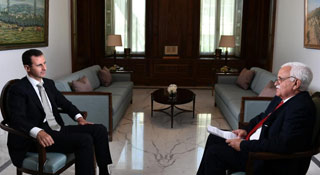
5,000 terrorists entered Aleppo via Turkey in 2 months: Assad
Prensa Latina | July 21, 2016
Prensa Latina transmits below the full text of the exclusive interview with Syrian President Bashar Al Assad:
PRENSA LATINA: Mr. President, thanks for giving Prensa Latina this historic opportunity of conveying your point of views to the rest of the world about the reality in Syria, because as you know, there is a lot of misinformation out there about your country, about the foreign aggression that is taking place against this beautiful country.
Mr. President, how would you evaluate the current military situation of the external aggression against Syria, and what are the main challenges of Syrian forces on the ground to fight anti-government groups? If it is possible, we would like to know your opinion about the battles or combats in Aleppo, in Homs.
President Assad: Of course, there was a lot of support to the terrorists from around the world. We have more than one hundred nationalities participating in the aggression against Syria with the support of certain countries like Saudi Arabia and Qatar with their money and Turkey with the logistical support, and of course with the endorsement and supervision of the Western countries, mainly the United States, France, and the UK, and some other allies.
But since the Russians decided to intervene in supporting legally the Syrian Army in fighting the terrorists in Syria, mainly al-Nusra and ISIS and some other affiliated groups, the scales have been tipped against those terrorists, and the Syrian Army has made many advancements in different areas in Syria.
And we are still moving forward, and the Syrian Army is determined to destroy and to defeat those terrorists. You mentioned Homs and Aleppo.
Of course, the situation in Homs, since the terrorists left Homs more than a year ago, the situation has been much, much better, more stable.
You have some suburbs of the city which were infiltrated by terrorists. Now there is a process of reconciliation in those areas in which either the terrorists give up their armaments and go back to their normal life with amnesty from the government, or they can leave Homs to any other place within Syria, like what happened more than a year ago in the center of the city.
For Aleppo it is a different situation, because the Turks and their allies like the Saudis and Qataris lost most of their cards on the battlefields in Syria, so the last card for them, especially for Erdogan, is Aleppo.
That is why he worked hard with the Saudis to send as much as they can of the terrorists – the estimation is more than five thousand terrorists – to Aleppo.
PRENSA LATINA: Through the Turkish borders?
President Assad: Yes, from Turkey to Aleppo, during the last two months, in order to recapture the city of Aleppo, and that didn’t work.
Actually, our army has been making advancement in Aleppo and the suburbs of Aleppo in order to encircle the terrorists, then, let’s say, either to negotiate their going back to their normal life as part of reconciliation, or for the terrorists to leave the city of Aleppo, or to be defeated. There’s no other solution.
PRENSA LATINA: Mr. President, which are the priorities of the Syrian Army in the confrontation with the terrorist groups? What is the role that the popular defence groups are playing in the theatre of operations?
President Assad: The priority of the Syrian Army, first of all, is to fight ISIS, al-Nusra and Ahrar al-Cham and Jaish al-Islam. These four organizations are directly linked to Al Qaeda through the ideology; they have the same ideology, they are Islamic extremist groups who want to kill anyone who doesn’t look or doesn’t feel or behave like them.
But regarding what you called the popular militia groups, actually, at the beginning of the war, the terrorists started an unconventional war against our army, and our army is a traditional army, like any other in the world, so the support of those popular defence groups was very important in order to defeat the terrorists in an unconventional way.
That was very helpful to the Syrian Army, because those fighters, those national fighters, they fight in their regions, in their cities, in their villages, so they know the area very well, they know the region very well, I mean the pathways, the terrain, let’s say, very well.
So, they can be very huge assets for the Syrian Army. That is their role.
PRENSA LATINA: Mr. President, how does the resistance of the Syrian people take place in the economic front to foreign aggression, I mean the economy, and please, what is your opinion on which sectors of the Syrian economy have remained functioning despite the war, economic blockade, looting, and so forth?
President Assad: Actually, the war on Syria is a full-blown war; it is not only supporting terrorists. They support the terrorists, and at the same time they launched a political war against Syria on the international level, and the third front was the economic front, in which they dictate to their terrorists, to their surrogate mercenaries, to start destroying the infrastructure in Syria that helped the economy and the daily needs of the Syrian citizens.
At the same time, they started an embargo directly on the borders of Syria through the terrorists and abroad through the banking systems around the world. In spite of that, the Syrian people were determined to live as much normal life as they can.
That prompted many Syrian businessmen or the owners of, let’s say, the industry, which is mainly medium and small industry, to move from the conflict areas and unstable areas toward more stable areas, on a smaller scale of business, in order to survive and to keep the economy running and to keep the needs of the Syrian people available.
So, in that regard, most of the sectors are still working. For example, the pharmaceutical sector is still working in more than 60 percent of its capacity, which is very important, helpful, and very supportive to our economy in such circumstances.
And I think now we are doing our best in order to re-expand the base of the economy in spite of the situation, especially after the Syrian Army made many advancements in different areas.
PRENSA LATINA: Mr. President, let’s talk a little bit about the international environment, please, give me your opinion about the role of the United Nations in the Syrian conflict, the attempts of Washington and its allies to impose their will on the Security Council and in the Geneva peace talks.
President Assad: Talking about the role of the United Nations or Security Council could be illusive, because actually the United Nations is now an American arm, where they can use it the way they want, they can impose their double standards on it instead of the Charter.
They can use it like any other institution within the American administration. Without some Russian and Chinese stances in certain issues, it would be a full American institution.
So, the Russian and Chinese role has made some balance within these institutions, mainly regarding the Syrian issue during the last five years. But if you want to talk about their role through their mediators or their envoys, like recently de Mistura, and before that Kofi Annan, and in between Brahimi, and so on. Let’s say that those mediators are not independent; they reflect either the pressure from the Western countries, or sometimes the dialogue between the main powers, mainly Russia and the United States.
So, they’re not independent, so you cannot talk about the role of the United Nations; it is a reflection of that balance. That is why so far, there is no United Nations role in the Syrian conflict; there is only Russian and American dialogue, and we know that the Russians are working hard and seriously and genuinely in order to defeat the terrorists, while the Americans always play games in order to use the terrorists, not to defeat them.
PRENSA LATINA: Mr. President, how do you see at the present time the coexistence among Syrian ethnic and religious groups against this foreign intervention? How do they contribute or not in this regard?
President Assad: The most important thing about this harmony between the different spectrums of the Syrian fabric, is that it is genuine, because that has been built up through the history, through centuries, so for such a conflict, it cannot destroy that social fabric.
That is why if you go around and visit different areas under the control of the government, you will see all the colors of the Syrian society living with each other.
And I would say, I would add to this, that during the conflict, this harmony has become much better and stronger, and this is not rhetoric; actually, this is reality, for different reasons, because this conflict is a lesson.
This diversity that you have, it is either to be a richness to your country, or a problem. There’s no something in the middle. So, the people learned that we need to work more on this harmony, because the first rhetoric used by the terrorists and by their allies in the region and in the West regarding the Syrian conflict at the very beginning was sectarian rhetoric.
They wanted people to divide in order to have conflict with each other, to stoke the fire within Syria, and it didn’t work. And the Syrians learned that lesson, that we had harmony; we had had harmony before the conflict, in the normal times, but we have to work more in order to make it much stronger.
So, I can say without any exaggeration that the situation regarding this part is good. In spite of that, I would say the areas under the control of the terrorists – and as you know those terrorists are mainly extremist groups affiliated to Al Qaeda – in which they worked very hard in order to indoctrinate the young generation with their dark ideology, and they succeeded in some areas, this dark ideology with the killing and beheading and all these horrible practices.
With the time, it is going to be more difficult to deal with this new generation of young people who have been indoctrinated with Al Qaeda and Wahabi doctrine and ideology. So this is the only danger that we are going to face regarding our society, harmony, and coexistence that you just mentioned.
PRENSA LATINA: Mr. President, I would like to go again to the international arena. What is in your opinion the role of the U.S.-led international coalition in relation to the groups that operate in northern Syria, in particular regarding the Kurds group. I mean the bombing of the American airplanes and the coalition in the northern part of the country. What to do you think about that?
President Assad: You know, traditionally, the American administrations, when they had relations with any group or community in any country, it is not for the sake of the country, it is not for the interest of the people; it is for the agenda of the United States.
So, that is what we have to ask ourselves: why would the Americans support any group in Syria? Not for Syria. They must their agenda, and the American agenda has always been divisive in any country. They don’t work to unite the people; they work to make division between the different kinds of people.
Sometimes they choose a sectarian group, sometimes they choose an ethnical group in order to support them against other ethnicities or to push them in a way that takes them far from the rest of the society.
This is their agenda. So, it is very clear that this American support is not related to ISIS, it is not related to al-Nusra, it is not related to fighting terrorism, because since the beginning of the American intervention, ISIS was expanding, not shrinking. It has only started to shrink when the Russian support to the Syrian Army took place last September.
PRENSA LATINA: Mr. President, what is your opinion about the recent coup d’état in Turkey, and its impact on the current situation in that country, and on the international level, and on the Syrian conflict also?
President Assad: Such a coup d’état, we have to look at it as a reflection of instability and disturbances within Turkey, mainly on the social level. It could be political, it could be whatever, but at the end, the society is the main issue when you have instability.
Regardless of who is going to govern Turkey, who is going to be the president, who is going to be the leader of Turkey; this is an internal issue. We don’t interfere, we don’t make the mistake to say that Erdogan should go or should stay. This is a Turkish issue, and the Turkish people have to decide.
But what is more important than the coup d’état itself, we have to look at the procedures and the steps that are being taken by Erdogan and his coterie recently during the last few days, when they started attacking the judges; they removed more than 2,700 judges from their positions, more than 1,500 professors in the universities, more than 15,000 employees in the education sector. What do the universities and the judges and that civil society have to do with the coup d’état?
So, that reflects the bad intentions of Erdogan and his misconduct and his real intentions toward what happened, because the investigation hasn’t been finalized yet. How did they take the decision to remove all those?
So, he used the coup d’état in order to implement his own extremist agenda, Muslim Brotherhood agenda, within Turkey, and that is dangerous for Turkey and for the neighboring countries, including Syria.
PRENSA LATINA: Mr. President, how do you evaluate the Syrian government’s relations with the opposition inside Syria? What is the difference between these opposition organizations and those based outside Syria?
President Assad: We have good relations with the opposition within Syria based on the national principles. Of course, they have their own political agenda and they have their own beliefs, and we have our own agenda and our beliefs, and the way we can make the dialogue either directly or through the ballot boxes; it could be a different way of dialogue, which is the situation in every country.
But we cannot compare them with the other oppositions outside Syria, because the word “opposition” means to resort to peaceful means, not to support terrorists, and not to be formed outside your country, and to have grassroots, to have real grassroots made of Syrian people.
You cannot have your grassroots be the foreign ministry in the UK, Franceor the intelligence in Qatar and Saudi Arabia and the United States. This is not opposition, this is called, in that case, you are called a traitor.
So, they call them oppositions, we call them traitors. The real opposition is the one that works for the Syrian people and is based in Syria and its agenda derived its vision from the Syrian people and the Syrian interests.
PRENSA LATINA: Mr. President, how do you evaluate the insistence of the U.S. and its allies that you leave power in addition to the campaign to distort the image of your government?
President Assad: Regarding their wish for me to leave power, they have been talking about this for the last five years, and we never responded even with a statement.
We never cared about them. Actually, this is a Syrian issue; only the Syrian people can say who should come and go, who should stay in his position, who should leave, and the West knows our position very well regarding this.
So, we don’t care and don’t have to waste our time with their rhetoric. I am here because of the support of the Syrian people. Without that, I wouldn’t be here. That is very simple.
About how they defame, or try to demonize certain presidents, this is the American way, at least since the second World War, since they substituted British colonization in this region, and maybe in the world, the American administrations and the American politicians haven’t said a single honest word regarding anything.
They always lie. And as time goes by, they are becoming more inveterate liars, so this is part of their politics. So, to demonize me is like how they tried to demonize President Vladimir Putin during the last two years and they did the same with the Cuban leader Fidel Castro during the last five decades.
This is their way. So, we have to know that this is the American way. We don’t have to worry about it. The most important thing is to have good reputation among your own people. That is what we have to worry about.
PRENSA LATINA: Mr. President, what is your opinion on Syria’s relation with Latin America, particularly the historical links with Cuba?
President Assad: In spite of the long distance between Syria and Latin America, we are always surprised how much the people in Latin America, not only the politicians, know about this region. I think this has many reasons, but one of them is the historical similarities and commonalities between our region, between Syria and Latin America.
Latin America was under direct occupation for long time ago but after that it was under the occupation of the American companies, and the American coup d’états and the American intervention.
So, they know what is the meaning of being independent or not to be independent. They understand that the war in Syria is about independence.
But the most important thing is the role of Cuba. Cuba was the spearhead of the independence movement within Latin America and Fidel Castro was the iconic figure in that regard.
So, on the political level and the knowledge level, there is a strong harmony between Syria and Latin America, especially Cuba. But I do not think we work enough to improve the other part of the relation; to be on the same level mainly on the educational and the economic level.
That was my ambition before the crisis and that is why I visited Latin America, Cuba, Venezuela, Argentine and Brazil, in order toinvigorate this relation. Then, we had this conflict started and it was a big obstacle to do anything in that regard, but I think that we have not to restrain the relation on the historical and the political levels. That is not enough. You have so many other sectors, people should know more about each other. The long distance could be an obstacle, but it shouldn’t because we have strong relations with the rest of the world, east and west.
So, it is not an obstacle in these days. So, I think if we overcome this crisis and this war, we should work harder in order to invigorate the different sectors of this relation with Latin America and especially with Cuba.
PRENSA LATINA: Mr. President, would you tell me your opinion about the electoral process in the United States mainly for the president? Now, there are two candidates; the Republican one is Mr. Donald Trump and the Democrat one is Mrs. Hillary Clinton, what is your opinion about this process, about the result of this process and how it could impact the conflict here, in the war in Syria?
President Assad: We resumed our relation with the United States in 1974. Now, it has been 42 years since then and we witnessed many American presidents in different situations and the lesson that we have learned is that no one should bet on any American president, that is the most important thing. So, it is not about the name.
They have institutions, they have their own agenda and every president should come to implement that agenda in his own way, but at the end he has to implement that agenda.
All of them have militaristic agendas, and the only difference is the way. One of them sends his army like Bush and the other one sends mercenaries and proxies like Obama, but all of them have to implement this agenda.
So, I do not believe that the president is allowed completely to fulfill his own political convictions in the United States, he has to obey the institutions and the lobbies, and the lobbies have not changed and the institutions’ agenda has not change.
So, no president in the near future will come to make a serious and dramatic change regarding the politics of the United States.
PRENSA LATINA: Mr. President, one final question: what message would you send using this interview with Prensa Latina to the governments and people of Latin America, the Caribbean, and also why not the American people, about the importance of supporting Syria against terrorism?
President Assad: Latin America is a very good and important example to the world about how the people and their governments regain their independence.
They are the backyard of the United States as the United States sees, but this backyard was used by the United States to play its own games, to implement its own agenda and the people in Latin America sacrificed a lot in order to regain their independence and everybody knows that.
After regaining their independence, those countries moved from being developing countries, or sometimes under-developed countries, to be developed countries. So, independence is a very important thing and it is very dear for every Latin American citizen.
We think they have to keep this independence because the United States will not stop trying to topple every independent government, every government that reflects the vast majority of the people in every country in Latin America.
And again, Cuba knows this, knows what I am talking about more than any other one in the world; you suffered more than anyone from the American attempts and you succeeded in withstanding all these attempts during the last sixty years or more just because the government reflected the Cuban people.
So, holding strongly to this independence, I think, is the crucial thing, the most important thing for the future of Latin America. Regarding Syria, we can say that Syria is paying the price of its independence because we never worked against the United States; we never worked against France or the UK. We always try to have good relations with the West.
But their problem is that they do not accept any independent country and I think this is same for Cuba. You never tried to do any harm to the American people but they do not accept you as an independent country.
The same is true for other countries in Latin America and that’s why you always have coup d’états mainly between the sixties and the seventies.
So, I think preserving the independence of a certain country is not only an isolated case; if I want to be independent, I have to support the independence in the rest of the world. So, the independence anywhere in the world, including Latin America, will support my independence. If I am alone, I will be weak.
Supporting Syria will be mainly in the international arena. There are many international organizations, mainly the United Nation, in spite of its impotence, but at the end, their support could play a vital role in supporting Syria and, of course, the Security Council; it depends on who is going to be the temporary member in the Security Council, and any other organization supporting Syria will be very important.
PRENSA LATINA: Mr. President, we know you are a very busy person, that is why I appreciate very much your time that you have dedicated to Prensa Latina interview in this moment. I hope this would not be the last interview that we have with you.
President Assad: You are welcome anytime.
What explains US-Russia tango over Syria
By M K Bhadrakumar | India Punchline | July 20, 2016
A 5-hour meeting between a visiting foreign minister and Russian President Vladimir Putin is not only rare but difficult to recall. Putin makes rare exceptions to receive foreign ministers. And he always receives them after their talks with Foreign Minister Sergey Lavrov. By all these yardsticks, US Secretary of State John Kerry’s meeting with Putin last Thursday in the Kremlin was extraordinary.
He drove into the Kremlin straight after touching down in Moscow Thursday evening and had talks with Putin lasting till 1 am in the wee hours of Friday morning. Putin’s rare appearance for a joint press briefing with a foreign minister (Kerry), Puitn’s ‘body language’ and, of course, the subsequent joint press conference by Kerry and Lavrov — they distinctly sought to convey the impression that the US and Russia were on to a big joint venture apropos the Syrian conflict. (here and here)
None of the three statesmen – neither Putin and Lavrov nor Kerry – was even remotely affected by the negative energy radiated by the high-profile summit meeting of the NATO, which had taken place in Warsaw hardly four days ago whose leitmotif was the strong determination of the western alliance to defend and deter Russia’s perceived aggressive tendencies in Eurasia.
Kerry is going to meet a select group of European allies later today in London to brief them on “the concrete steps that the U.S. and Russia are planning to take”. He disclosed that he had a phone conversation with Lavrov on Tuesday, and,
- We both [with Lavrov] believe that we have understanding of the direction we are going in and what needs to be achieved. Our teams will meet shortly in order to continue to do that, in order to bolster the cessation of hostilities, in order to increase our capacity to fight against Al Qaeda, an Nusra, as well as fight back against ISIL.
It all sounds too good to be true. But then, Kerry is a seasoned diplomat with 30 years as a senator behind him during which he also headed the senate foreign relations committee and now as America’s top diplomat for over 3 years. Why is the US all of a sudden giving such hype to a peace project with Russia, an aggressive regional power, to kickstart a political process Syria?
The US has always sought a “selective engagement” of Russia on issues of concern to Washington while pursuing the containment strategy on another track. Lavrov may have gently rubbed this in when Kerry phoned him on Thursday to discuss the “concrete steps” on Syria as follow-up to his talks in the Kremlin last week. Curiously, the Russian Foreign Ministry readout makes a wry reference to Lavrov also, inter alia, availing of the opportunity to gently remind Kerry how the Obama administration is also simultaneously moving heaven and earth to humiliate Russia on another front by keeping it out of the Rio Olympics. These seasoned diplomats must be having the hide of rhinoceros — the readout says, “Mr. Kerry agreed that sports should not be politicized”. (here)
Won’t Moscow be aware that Kerry might even be dissimulating a concord with Russia over Syria? Won’t Moscow know that the Obama administration is on its last leg and time has run out? The point is, there is a powerful lobby in Washington, including the Pentagon and apparently within the State Department itself, which opposes any form of US-Russia cooperation in Syria that does not lead to the ouster of President Bashar al-Assad in a near term. (Read a briefing by the Brookings Institution, on the hawkish opinion in Washington.)
Indeed, the US is engaging Russia assiduously against the backdrop of the dramatic events in Turkey. The ground has shifted in the geopolitics of the region. Interestingly, Kerry made the hurried unscheduled trip to Moscow last week within 4 days of the NATO summit even as the failed coup attempt was getting under way in Turkey. Actually, Kerry was about to meet with Putin in the Kremlin — or had been conversing with him already –even as the coup began in Turkey. Something doesn’t quite gel here, isn’t it? Suffice it to say, much depends on how far back Kerry (Obama administration) actually had known about the coup that was in the making in Turkey. (Read a breath-taking, blow-by-blow account of the ‘Turkish coup’ by senior editor Murat Yetkin in today’s Hurriyet.)
Of course, the failed coup in Turkey becomes a defining moment for the Syrian conflict. The Turkish military and state intelligence – and the political leadership – are all passing through such turbulence that Ankara simply lacks the presence of mind or the sheer capacity to continue to pursue an interventionist policy in Syria in a foreseeable future. Meanwhile, great uncertainties have crept into Turkey’s relations with the US and Europe. Moscow cannot but be aware that Turkey desperately needs to hold the Russian hand — and that indeed adds to Russia’s politico-military options in Syria. The thinking is reflected in a commentary by a top Kremlin pundit Fyodor Lukyanov in Moscow Times.
Clearly, the US policies on Syria are floundering. The Syrian forces have laid siege to Aleppo and the US-backed rebels are trapped inside the city, while Turkey may have begun disengaging from reaching aid to them. Washington has no option but to engage Moscow to work out some sort of face-saving compromise formula.
But what does Russia get in return? Participation in Rio Olympics? It shouldn’t be surprising if the International Olympics Committee has a last-minute change of heart and says ‘Da‘ to the Russian team, finally. If that happens, it will be in the best traditions of Russian-American trade-offs, and Kerry worked hard on it.
Palestinian student Donya Musleh sentenced to 10 months in Israeli prison for posting on Facebook

Samidoun Palestinian Prisoner Solidarity Network – July 21, 2016
Palestinian student activist Donya Musleh was sentenced to 10 months in Israeli prison and a fine of NIS 2,000 (approximately $500) on charges of “incitement” for posting on Facebook about the Israeli occupation and Palestinian resistance.
Musleh, 19, a Palestinian refugee from Dheisheh camp near Bethlehem, is a student at Palestine National University and an activist with the leftist student organization, the Progressive Student Labor Front. She was arrested in a raid on her home in the camp on 16 November 2015.
Musleh is one of hundreds of Palestinians arrested, charged, or ordered to administrative detention for posting their political opinions and views about their occupied homeland on social media. Just days ago, journalist Samah Dweik was sentenced to six months and one day in prison for posting on Facebook. Astrophysicist Imad Barghouthi is currently being charged with Facebook “incitement,” after winning an end to his administrative detention with the support of hundreds of international scientists. Poet Dareen Tatour is held in house arrest after three months in prison, for posting her poetry on Youtube.
The PSLF is currently calling for a World Student Day of Solidarity with Bilal Kayed and Palestinian Prisoners on 25 July. Bilal Kayed, 35, is on hunger strike for the 37th day in protest of his administrative detention without charge or trial, imposed upon him after 14.5 years of Israeli imprisonment.
The detention of two more Palestinian women, Banan Mahmoud Mafarjah, 21, a medical student at Al-Quds University in Abu Dis, arrested at an Israeli occupation “flying checkpoint” west of Ramallah on 16 July; and Samaher Abdul Qader Musalma, of Beit Awwa near al-Khalil, arrested on 18 July while visiting her husband Nabil in the Negev desert prison; were extended until Sunday, 24 July. There are approximately 61 Palestinian women currently held in Israeli jails.
EU eyes Israeli technology for surveillance: Official
Press TV – July 20, 2016
A senior European Union security official says the body is looking into Israeli technology for online surveillance in Europe.
EU Counter-Terrorism Coordinator Gilles de Kerchove said Tuesday that the bloc was turning to Israeli methods after internet companies proved reluctant to monitor individuals.
The official cited a series of deadly attacks across Europe which had prompted officials to think of using Israeli technologies.
Once focused on “meta data” or information regarding individuals’ communications patterns, Israeli spy agencies now have refocused on social media as a complementary means of snooping on Palestinians.
An Israeli military official who administers these methods said human intervention is required to set parameters such as age, religiosity, socio-economic background for the population being monitored.
Traditionally a source of funds for the Israeli military to maintain its “edge” in the Middle East, the US and Europeans have recently turned to a major customer of Israeli weapons.
Last month, the US military said it had tested an Israeli short-range missile for possible use in its European network of missile systems to deter Russia.
Major General Glenn Bramhall of the US Army’s Air and Missile Defense Command said a variant of the Israeli “Tamir” rocket which is incorporated to Tel Aviv’s so-called Iron Dome missile system had been tested.
Last month, a report said European countries were increasingly purchasing weapons from Israeli arms manufacturers, promoting their products on the grounds that they have been “field-tested” against Palestinians.
The report came as 29 Israeli arms makers displayed their military technologies earlier this week at the Eurosatory conference in Paris, one of the world’s largest land defense exhibitions.
French purchases of weaponry from Israeli firms more than doubled in 2015 compared to a year earlier, amounting to $355 million.
In 2016, Israel is projected to overtake Italy as the world’s seventh-largest weapons exporter, the report said, citing IHS Jane’s.
Many of the Israeli arms technologies being sold to Europe are used in the repression of Palestinians, including in the destructive 2014 war on the besieged and densely-populated Gaza Strip.
The war left over 2,200 dead — mostly civilians — while injuring thousands more and displacing nearly 500,000 people, according to UN figures.
Human Rights Watch has criticized the purchase of field-tested Israeli weapons, saying the group has documented “violations of the rules of war that appear to rise to the level of war crimes in Gaza using some of these weapons.”
Deir Qaddis resists ongoing theft of village land
International Solidarity Movement | July 21, 2016
Deir Qaddis, Occupied Palestine – On the morning of July 14th, Israeli excavators arrived on Majid Mahmoud’s farmland in Deir Qaddis to begin work on an illegal expansion of a wastewater facility for the nearby illegal settlement of Nili.
Construction vehicles and Occupation forces were met by about fifty Palestinians from Deir Qaddis and nearby Nil’in in protest of the theft and destruction of village land, who refused to leave until the construction was halted. Through nonviolent means the villagers managed to temporarily prevent the destruction of their grazing lands, though excavation and land clearing did resume in the days afterwards. Illegal settlements around Deir Qaddis have been expanding for decades, swallowing up thousands of dunams and dispossessing farmers and agricultural workers in the area.
Majid’s land, now on the other side of a settler road, has been rendered mostly inaccessible by both the expansion of illegal settlements and the threat of violence from Israeli forces and private settlement security.
“We have no rights under this Occupation. I cannot ask the soldiers why they are on my land. It is as if I am being beaten, but cannot question it or raise my hands to stop it,” Majid said. “We have all the papers to prove ownership, but it does not matter.”
Majid and members of the local council are planning to bring the case to court and have all the documentation necessary to do so. They are not optimistic, however, about their chances.
Though the people of Deir Qaddis did succeed in halting the illegal construction on Thursday, it has since resumed. Fares Naser, mayor of the village, has little confidence that the settlement expansion and illegal construction will ever end. “It will not stop,” said Fares, “and the next generation will wonder why it is this way.”
Deir Qaddis is surrounded on three sides by the Apartheid Wall and the illegal Israeli settlements of Nili, Modi’in Illit, and Na’aleh, cutting it off from much of the West Bank. According to Fares, only 4,000 of the village’s original 10,000 dunams have not yet been seized by Israeli forces and settlers. Over ninety percent of the Deir Qaddis is classified as “Area C,” territory in which Israel maintains full military and civil control.
In 1999, Israeli authorities assured the people of Deir Qaddis that all land lying west of the town would remain untouched. Israel has since broken that promise, with both state confiscation and private theft of valuable farmland within Deir Qaddis. According to international law, all Israeli settlements are illegal, as is nearly every piece of the Israeli colonial apparatus. Israel will continue to build, and the people of Deir Qaddis will continue to resist the ongoing theft of their land and livelihoods.
Israel bans travel of noted Jerusalemite figure abroad & to West Bank
Palestinian Information Center – July 21, 2016
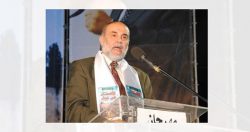 OCCUPIED JERUSALEM – The Israeli occupation police have handed professor Jamil Hamami, secretary-general of the higher Islamic commission in Occupied Jerusalem, a written order banning his travel abroad and to the West Bank.
According to this police order, Hamami will be prohibited from entering the West Bank for four months and the previous ban on his travel abroad will be extended for six months.
The police justified the measure against Hamami by saying that he is involved in banned activities and his departure for other countries will constitute a security threat to Israel.
For his part, Hamami, who works as a lecturer at al-Quds University, condemned Israel’s decision against him as “unjust and a violation of the Palestinians’ right to travel and movement”. He considered this Israeli step as “part of the Israeli campaign that targets the Palestinian dignitaries in Jerusalem.”
Featured Video

Rewriting the risk? Inside the government’s vaccine safety messaging
or go to
Aletho News Archives – Video-Images
Book Review
“Davos Can Really Replace the UN”
Inside the book that maps the architecture behind global governance — from the Epstein files to the Pact for the Future
Lies are Unbekoming | April 1, 2026
On June 13, 2019, the United Nations and the World Economic Forum signed a partnership deal to “accelerate the implementation of the 2030 Agenda for Sustainable Development.” That same evening, WEF president Börge Brende — Norway’s former Foreign Minister — had dinner with Jeffrey Epstein at Epstein’s Manhattan townhouse. The Epstein files, released January 2026, contain an exchange between the two from the previous year. Epstein to Brende: “Davos can really replace the UN. C21, cyber, crypto . genetics… intl coordination.” Brende back to Epstein: “Exactly — we need a new global architecture. World Economic Forum (Davos) is uniquely positioned — public private.”
The next day, the UN General Assembly adopted the framework for restructuring global governance.
That sequence — the partnership signing, the Epstein dinner, the candid admission about replacing the UN with a public-private architecture, and then the formal adoption — opens Jacob Nordangård’s The Digital World Brain. Pages two and three. Footnoted to the UN resolution number, the Epstein files, and the General Assembly record.
I keep coming back to it because it captures what this book does that almost nothing else in the independent research space manages. I’ve followed Jacob’s work for years now and interviewed him about his research. Each book peels back another layer of the same institutional architecture, and each time I think he’s reached the limit of what can be documented, the next one goes further. Nordangård doesn’t speculate. He doesn’t editorialize much. He lays institutional actions next to each other in chronological order and lets the pattern announce itself. … continue
Blog Roll
 Aletho News
- Iran Threatens Retaliatory Strike on Stargate AI Project in UAE
- US sent ‘a lot’ of arms to Iranian protesters – Trump
- Barak Ravid Launders Deception To Allow Trump To Back Off Of His Power Plant Threat – Again
- REWRITING THE RISK? INSIDE THE GOVERNMENT’S VACCINE SAFETY MESSAGING
- “Davos Can Really Replace the UN”
- NIAID/NIH and USDA Fund Bioengineered Chimeric Influenza Viruses Built Using Pandemic H1N1 Components: Journal ‘Science Advances’
- Hezbollah hits Israeli warship off Lebanon’s coast, sets it aflame
- Iran slams US strikes on B1 bridge, Mahshahr petrochemical plants as ‘blatant acts of state terrorism’
- In letter to UN chief, Araghchi warns of dire consequences of US-Israeli attacks on Iran’s nuclear facilities
- Why the CIA conspiracy to invade Iran with Kurdish militias failed
- If Americans Knew
- In Iran, Israel-US take aim at “reason, research, and freedom of thought” – Daily Update
- US loses planes over Iran, Israel downgrades Lebanon war goals – Daily Update
- Israel Is Blocking Palestinians from Easter at Church Where Jesus Resurrected
- Plot to assassinate Palestinian activist follows harassment campaign promoted by Zionist groups and elected officials
- Prominent New York synagogue hosts presentation on why U.S. Jews should support the ethnic cleansing of Gaza
- Tapper vs. Piker: Is the CNN Anchor Auditioning for David Ellison?
- Shouldn’t Democrats Be Able to Condemn Genocide?
- Israel-US kill negotiators, destroy civilian structures, but Iran’s military capabilities still largely intact – Daily Update
- ‘War crime’: Global condemnation as Israeli ministers celebrate death penalty law targeting Palestinian prisoners
- 7 Ways Israel Is Turning Lebanon Into Gaza
- No Tricks Zone
- An Inconvenient Tree: Uncovered In Alps… Europe Much Warmer Than Today 6000 Years Ago
- New Study Reports A 60% Slowdown In Greenland’s Ice Loss Rate In The Last Decade
- Low Intensity Tornado Wrecks Major Solar Farm, Creating A Potential Toxic Dump
- New Study Finds Warming Saves Lives…Cold Temperatures 12 Times More Deadly Than Excess Heat
- German Science Blog Accuses PIK Climate Institute Of Hallucinating Climate Tipping Points
- Devastating Assessment Of Comirnaty Vaccine By Former Senior Pfizer Europe Toxicologist
- New Study: CO2 Is ‘Effectively Negligible’ As An Explanatory Climate Change Factor Since 2000
- Former Pfizer Toxicologist Dr. Helmut Sterz Tells Bundestag Hearing Pfizer Vaccine Should Have Never Been Approved
- Energy Expert: Germany’s Nuclear Phaseout Was A “500 Billion Euro Mistake”
- New Research: South Australia’s Mid-Holocene Sea Surface Temperatures Were 4°C Warmer Than Today
 Aletho News