Debate Moderator Distorted Syrian Reality
By Robert Parry | Consortium News | October 11, 2016
How ABC News’ Martha Raddatz framed her question about Syria in the second presidential debate shows why the mainstream U.S. news media, with its deep-seated biases and inability to deal with complexity, has become such a driving force for wider wars and even a threat to the future of the planet.
Raddatz, the network’s chief global affairs correspondent, presented the Syrian conflict as simply a case of barbaric aggression by the Syrian government and its Russian allies against the Syrian people, especially the innocents living in Aleppo.
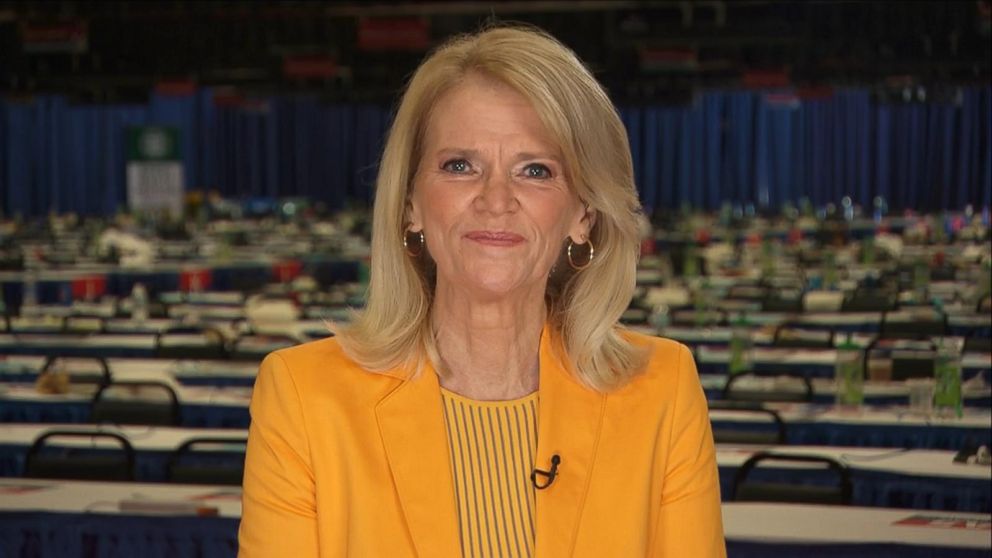
ABC News’ correspondent Martha Raddatz
“Just days ago, the State Department called for a war crimes investigation of the Syrian regime of Bashar al-Assad and its ally, Russia, for their bombardment of Aleppo,” Raddatz said. “So this next question comes through social media through Facebook. Diane from Pennsylvania asks, if you were president, what would you do about Syria and the humanitarian crisis in Aleppo? Isn’t it a lot like the Holocaust when the U.S. waited too long before we helped?”
The framing of the question assured a response from former Secretary of State Hillary Clinton about her determination to expand the U.S. military intervention in Syria to include a “no-fly zone,” which U.S. military commanders say would require a massive operation that would kill many Syrians, both soldiers and civilians, to eliminate Syria’s sophisticated air-defense systems and its air force.
But Raddatz’s loaded question was also a way of influencing – or misleading – U.S. public opinion. Consider for a moment how a more honest and balanced question could have elicited a very different response and a more thoughtful discussion:
“The situation in Aleppo presents a heartrending and nettlesome concern. Al Qaeda fighters and their rebel allies, including some who have been armed by the United States, are holed up in some neighborhoods of eastern Aleppo. They’ve been firing rockets into the center and western sections of Aleppo and they have shot civilians seeking to leave east Aleppo through humanitarian corridors.
“These terrorists and their ‘moderate’ rebel allies seem to be using the tens of thousands of civilians still in east Aleppo as ‘human shields’ in order to create sympathy from Western audiences when the Syrian government seeks to root the terrorists and other insurgents from these neighborhoods with airstrikes that have killed both armed fighters and civilians. In such a circumstance, what should the U.S. role be and was it a terrible mistake to supply these fighters with sophisticated rockets and other weapons, given that these weapons have helped Al Qaeda in seizing and holding territory?”
Siding with Al Qaeda
Raddatz also could have noted that a key reason why the recent limited cease-fire failed was that the U.S.-backed “moderate” rebels in east Aleppo had rebuffed Secretary of State John Kerry’s demand that they separate themselves from Al Qaeda’s Nusra Front, which now calls itself the Syria Conquest Front.
Instead of breaking ties with Al Qaeda, some of these “moderate” rebel groups reaffirmed or expanded their alliances with Al Qaeda. In other words, Official Washington’s distinction between Al Qaeda’s terrorists and the “moderate” rebels was publicly revealed to be largely a myth. But the reality of U.S.-aided rebels collaborating with the terror group that carried out the 9/11 attacks complicates the preferred mainstream narrative of Bashar al-Assad and Vladimir Putin “the bad guys” versus the rebels “the good guys.”
If Raddatz had posed her question with the more complex reality (rather than the simplistic, biased form that she chose) and if Clinton still responded with her recipe of a “no-fly zone,” the obvious follow-up would be: “Wouldn’t such a military intervention constitute aggressive war against Syria in violation of the United Nations Charter and the Nuremberg principles?
“And wouldn’t such a strategy risk tipping the military balance inside Syria in favor of Al Qaeda and its jihadist allies, possibly even its spinoff terror group, the Islamic State? And what would the United States do then, if its destruction of the Syrian air force led to the black flag of jihadist terror flying over Damascus as well as all of Aleppo? Would a Clinton-45 administration send in U.S. troops to stop the likely massacre of Christians, Alawites, Shiites, secular Sunnis and other ‘heretics’?”
There would be other obvious and important questions that a more objective Martha Raddatz would ask: “Would your no-fly zone include shooting down Russian aircraft that are flying inside Syria at the invitation of the Syrian government? Might such a clash provoke a superpower escalation, possibly even invite nuclear war?”
But no such discussion is allowed inside the mainstream U.S. media’s frame. There is an unstated assumption that the United States has the unquestioned right to invade other countries at will, regardless of international law, and there is a studied silence about this hypocrisy even as the U.S. State Department touts the sanctity of international law.
Whose War Crimes?
Raddatz’s favorable reference to the State Department accusing the Syrian and Russian governments of war crimes further suggests a stunning lack of self-awareness, a blindness to America’s own guilt in that regard. How can any American journalist put on such blinders regarding even recent U.S. war crimes, including the illegal invasion of Iraq that led to the deaths of hundreds of thousands of Iraqis?
While Raddatz referenced “the heart-breaking video of a 5-year-old Syrian boy named Omran sitting in an ambulance after being pulled from the rubble after an air strike in Aleppo,” she seems to have no similar sympathy for the slaughtered and maimed children of Iraq who suffered under American bombs – or the people of Yemen who have faced a prolonged aerial onslaught from Saudi Arabia using U.S. aircraft and U.S.-supplied ordnance.
Regarding Iraq, there was the case at the start of the U.S.-led war when President George W. Bush mistakenly thought Iraqi dictator Saddam Hussein might be eating at a Baghdad restaurant so U.S. warplanes leveled it, killing more than a dozen civilians, including children and a young woman whose headless body was recovered by her mother.
“When the broken body of the 20-year-old woman was brought out torso first, then her head,” the Associated Press reported, “her mother started crying uncontrollably, then collapsed.” The London Independent cited this restaurant attack as one that represented “a clear breach” of the Geneva Conventions ban on bombing civilian targets.
But such civilian deaths were of little interest to the mainstream U.S. media. “American talking heads … never seemed to give the issue any thought,” wrote Eric Boehlert in a report on the U.S. war coverage for Salon.com. “Certainly they did not linger on images of the hellacious human carnage left in the aftermath.”
Thousands of other civilian deaths were equally horrific. Saad Abbas, 34, was wounded in an American bombing raid, but his family sought to shield him from the greater horror. The bombing had killed his three daughters Marwa, 11; Tabarek, 8; and Safia, 5 who had been the center of his life. “It wasn’t just ordinary love,” his wife said. “He was crazy about them. It wasn’t like other fathers.” [NYT, April 14, 2003]
The horror of the war was captured, too, in the fate of 12-year-old Ali Ismaeel Abbas, who lost his two arms when a U.S. missile struck his Baghdad home. Ali’s father, his pregnant mother and his siblings were all killed. As the armless Ali was evacuated to a Kuwaiti hospital, becoming a symbol of U.S. compassion for injured Iraqi civilians, the boy said he would rather die than live without his hands.
Because of the horrors inflicted on Iraq – and the resulting chaos that has now spread across the region and into Europe – Raddatz could have asked Clinton, who as a U.S. senator voted for the illegal war, whether she felt any responsibility for this carnage. Of course, Raddatz would not ask that question because the U.S. mainstream media was almost universally onboard the Iraq War bandwagon, which helps explain why there has been virtually no accountability for those war crimes.
Letting Clinton Off
So, Clinton was not pressed on her war judgments regarding either Iraq or the Libyan “regime change” that she championed in 2011, another war of choice that transformed the once-prosperous North African nation into a failed state. Raddatz’s biased framing also put Republican Donald Trump on the defensive for resisting yet another American “regime change” project in Syria.
Trump was left muttering some right-wing talking points that sought to attack Clinton as soft on Syria, trying to link her to President Barack Obama’s decision not to bomb the Syrian military in August 2013 after a mysterious sarin gas attack outside Damascus, which occurred six months after Clinton had resigned as Secretary of State.
Trump: “She was there as Secretary of State with the so-called line in the sand, which…
Clinton: “No, I wasn’t. I was gone. I hate to interrupt you, but at some point…
Trump: “OK. But you were in contact — excuse me. You were…
Clinton: “At some point, we need to do some fact-checking here.
Trump: “You were in total contact with the White House, and perhaps, sadly, Obama probably still listened to you. I don’t think he would be listening to you very much anymore. Obama draws the line in the sand. It was laughed at all over the world what happened.”
In bashing Obama for not bombing Syria – after U.S. intelligence expressed suspicion that the sarin attack was actually carried out by Al Qaeda or a related group trying to trick the U.S. military into attacking the Syrian government – Trump may have pleased his right-wing base but he was deviating from his generally less war-like stance on the Middle East.
He followed that up with another false right-wing claim that Clinton and Obama had allowed the Russians to surge ahead on nuclear weapons, saying: “our nuclear program has fallen way behind, and they’ve gone wild with their nuclear program. Not good.”
Only after attacking Clinton for not being more militaristic did Trump say a few things that made sense, albeit in his incoherent snide-aside style.
Trump: “Now, she talks tough, she talks really tough against Putin and against Assad. She talks in favor of the rebels. She doesn’t even know who the rebels are. You know, every time we take rebels, whether it’s in Iraq or anywhere else, we’re arming people. And you know what happens? They end up being worse than the people [we overthrow].
“Look at what she did in Libya with [Muammar] Gaddafi. Gaddafi’s out. It’s a mess. And, by the way, ISIS has a good chunk of their oil. I’m sure you probably have heard that.” [Actually, whether one has heard it or not, that point is not true. During the ongoing political and military strife, Libya has been blocked from selling its oil, which is shipped by sea.]
Trump continued: “It was a disaster. Because the fact is, almost everything she’s done in foreign policy has been a mistake and it’s been a disaster.
“But if you look at Russia, just take a look at Russia, and look at what they did this week, where I agree, she wasn’t there, but possibly she’s consulted. We sign a peace treaty. Everyone’s all excited. Well, what Russia did with Assad and, by the way, with Iran, who you made very powerful with the dumbest deal perhaps I’ve ever seen in the history of deal-making, the Iran deal, with the $150 billion, with the $1.7 billion in cash, which is enough to fill up this room.
“But look at that deal. Iran now and Russia are now against us. So she wants to fight. She wants to fight for rebels. There’s only one problem. You don’t even know who the rebels are. So what’s the purpose?”
While one can’t blame Raddatz for Trump’s scattered thinking – or for Clinton’s hawkishness – the moderator’s failure to frame the Syrian issue in a factual and nuanced way contributed to this dangerously misleading “debate” on a grave issue of war and peace.
It is surely not the first time that the mainstream U.S. media has failed the American people in this way, but – given the stakes of a possible nuclear war with Russia – this propagandistic style of “journalism” is fast becoming an existential threat.
US seeks to partition Syria to serve Israel: Nasrallah

Sayyed Hassan Nasrallah, the secretary general of the Lebanese resistance movement, Hezbollah, addresses a ceremony on October 11, 2016 on the occasion of Tasu’a.
Press TV – October 11, 2016
Sayyed Hassan Nasrallah, the secretary general of the Lebanese resistance movement, Hezbollah, has warned of plots by the US, Saudi Arabia and their regional allies to partition Syria in order to serve the Israeli regime’s interests in the Middle East.
The “real goal” of the countries that have neither democracy nor elections was not democracy or elections in Syria, Nasrallah said on Tuesday.
“The goal was for Syria to fall and be fragmented and be ripped apart” in line with Israel’s interests, he added.
Nasrallah made the remarks at the Sayyed al-Shohada Complex in the Lebanese capital, Beirut, on the ninth day of the lunar month of Muharram, Tasu’a, the eve of the martyrdom anniversary of Imam Hussein, the third Shia Imam, and his 72 companions.
He said the Daesh Takfiri militants and al-Qaeda affiliated terrorists of Jabhat Fateh al-Sham, formerly known as al-Nusra, “are being used to serve and achieve US and Israeli goals.”
Nasrallah further noted that the US seeks to concentrate Daesh terrorists in eastern Syria, adding that Washington is allowing and “opening the roads for” Daesh militants to flee from Iraq into Syria.
He cited the recent “deliberate action” by the US to launch airstrikes against Syrian army positions in eastern Syria as an example of Washington’s attempts to boost Daesh in the region, adding, “US raids on Dayr al-Zawr were targeting the Syrian army positions so that the whole area would fall to Daesh.”
The Hezbollah leader said, “All those who are defending Syria defend the Resistance and look forward to a political solution and not to more bloodshed,” but “US, Saudi Arabia and some regional states are demanding crippling conditions to neutralize the political solutions.”
Pointing to a recent abortive truce deal between the US and Russia on Syria, the Hezbollah chief said Washington withdrew from the agreement because it called for the separation of Jabhat Fateh al-Sham from other militant groups and the identification and targeting of Daesh and Jabhat Fateh al-Sham positions.
Nasrallah said the US, Saudi Arabia and their regional allies are obstructing a diplomatic solution to the crisis in Syria and the easing of the sufferings of the Syrian people.
He expressed regret that “more escalation and tensions” is on the horizon in Syria, but called for “perseverance and firm stance” in order to counter the plots of the country’s enemies.
The Hezbollah chief said Syria’s foes sought “a decisive victory within a few weeks” but have faced stiff resistance from the Syrian government and nation and their allies for over five years.
Sana’a carnage major scandal for Saudi Arabia
In another part of his speech, Nasrallah pointed to the recent bloody air raid by Saudi Arabia on a funeral hall in the Yemeni capital of Sana’a and said the strike was a major scandal for Al Saud regime.
Hezbollah leader said some media circles had noted that his remarks on Saudi attack in Sana’a would affect chances of Michel Aoun becoming Lebanon’s next president, which could end a political crisis in the country.
Noting that the demand was tantamount to political blackmail, Nasrallah added, “Even [UN Secretary General] Ban Ki-moon has condemned this strike, although he has always been silent, so how do you want me to remain silent?”
Nasrallah added that the Saudi regime committed a “historic mistake” in Yemen by thinking that it could emerge victorious from the battle within weeks.
The Hezbollah chief condemned the international community’s silence on the bombardment of Yemen by Saudi warplanes and said the world must convince Riyadh that it cannot win this war.
He emphasized that the Sana’a massacre must provide a motive for ending the war in Yemen and added that the Saudi regime has no option but to accept the political solution.
“Saudi Arabia’s insistence on carrying on with the war will not only make it lose Yemen, but will also make it lose itself. The current Saudi leadership is pushing the kingdom to the brink of the abyss,” Nasrallah pointed out, recommending the Saudi rulers to come to their senses.
All parties must preserve Lebanon’s peace and security
The Hezbollah secretary general further stressed the importance of preserving security, stability and civil in Lebanon, describing them as the “pillars of everything,” and adding, “Despite their differences, the Lebanese have managed to preserve security, stability and peace.”
Nasrallah stated that Lebanon has entered a positive political phase during the past few weeks with regard to the presidential election.
“We support and welcome any positive political developments regarding the presidency and we will acknowledge the efforts and courage of anyone who makes efforts in this regard,” Nasrallah pointed out.
He noted that Hezbollah has always pursued a clear stance on Lebanon’s presidential election, adding, “We support every positive political change, which may solve the presidency challenge.”
Hezbollah leader concluded his remarks by stressing the importance of supporting the Lebanese army without any political reservations.
Israel sets restrictions across Jerusalem for Yom Kippur, arms Israeli ‘volunteers’
Palestinian Information Center – October 11, 2016
OCCUPIED JERUSALEM – The Israeli authorities imposed tight restrictions throughout occupied Jerusalem in anticipation of the Jewish holiday of Yom Kippur.
Haaretz Hebrew newspaper said that a series of closures and heightened security operations were declared between the eastern and western parts of occupied Jerusalem.
Palestinian vehicles’ movement is completely restricted as several checkpoints were erected throughout the occupied city, according to the sources.
 Israeli Police spokeswoman Luba al-Samri said in a statement that Israeli police, border police, and Israeli “volunteers” would be spread through different areas in the city of Jerusalem beginning early Tuesday morning, the beginning of Yom Kippur.
Al-Samri added that Israeli police provided the volunteers with weapons to “guarantee the safety of the worshipers.”
“Israeli police in cooperation with the Jerusalem municipality will install checkpoints at the main roads to prevent cars of Eastern residents from heading to West Jerusalem,” al-Samri said in her statement, referring to preventing the access of any Palestinian residents from the eastern part of Jerusalem to its western part.
“Israeli police will also be stationed at neighborhoods to prevent any rock throwing,” according to her statements.
Earlier Monday, Israeli authorities imposed a complete closure in occupied West Bank and Gaza Strip on the occasion of Jewish holiday Yom Kippur.
Israel’s Stern Gang Mailed Letter Bomb to White House, President Truman
By Richard Silverstein | Tikun Olam | October 11, 2016
I’ve been interviewing a Kansas City activist, Jeremy Rothe-Kushel for a future article about his arrest at the behest of the local Jewish federation during a speech by Dennis Ross. Jeremy is a keen researcher and I love talking to people like this because I invariably learn things about Zionist history I never knew. So how about this…
In 1947, the Yishuv was in turmoil. David Ben Gurion was pursuing his plan to declare a Jewish state. He was competing with Jewish extremists who had their own plans to free Palestine from the yoke of the British Empire. While Ben Gurion saw them as dangerous rivals, he also knew they were the bad cop to his good cop. Their mere existence and the havoc they wreaked on British colonial apparatus made Ben Gurion look moderate in comparsion. As such, they were exceedingly useful. The fact that Ben Gurion pardoned many of these terrorists for their crimes after the State was founded and prosecuted none of them indicates that he either colluded with them directly; or that they served his purposes so well, that he felt compelled to forgive them.

Wanted posters, pictured Yitzhak Shamir, Natan Yelin-Mor and Avraham Stern
At the same time as all this was happening, the UN was pursuing it’s own plan to partition the region into Jewish and Arab enclaves. The Jewish extremists of the Irgun and particularly the splinter group, Lehi (aka the Stern Gang), felt Ben Gurion’s way was too accomodationist. They believed there was little to be gained from negotiating with the colonial power. Instead, they sought to drive the British to their knees and in this way force them to abandon the Mandate and free Palestine.
Lehi in particular engaged, much like the PLO of the 1970s, in spectacular acts of terror. The former’s specialty was assassination. Their most shocking attack was the Cairo murder of Lord Moyne. They also assassinated Count Folke von Bernadotte, the Swedish royal who’d saved Jewish lives during the Holocaust and was appointed by the UN to further negotiations between the parties toward accepting the Partition. There were also spectacular failures like a series of letter bombs sent to the homes and offices of current and former foreign ministers and other senior British officials. Several of them exploded wounding postal service employees or government staff. None, thankfully, ever injured their intended targets.
Historically, we’ve known that the Jewish terrorists targeted the British. But much less known is that they also expanded their targets to American officials. Both Margaret Truman and the chief of the White House mail room wrote separate books (hers a biography of her father, and the mail room chief a memoir about his decades of service in the job to several presidents). Both noted that in 1947 a series of mail bombs were discovered and detonated by the Secret Service before they reached their intended victims. At least one was sent directly to the President and marked “Private and Confidential” in order to guarantee it reached its target:
In the summer of 1947, the so-called Stern gang of Palestine terrorists tried to assassinate Dad by mail. A number of cream-colored envelopes about eight by six inches, arrived in the White House, addressed to the President and various members of the staff. Inside them was a smaller envelope marked “Private and Confidential.” Inside that second envelope was powdered gelignite, a pencil battery and a detonator rigged to explode the gelignite when the envelope was opened. Fortunately, the White House mail room was alert to the possibility that such letters might arrive. The previous June at least eight were sent to British government officials, including Foreign Secretary Ernest Bevin and former Foreign Secretary Anthony Eden. The British police exploded one of these experimentally and said it could kill, or at the very least maim, anyone unlucky enough to open it. The mail room turned the letters over to the Secret Service and they were defused by their bomb experts.
After Truman’s book was published, Natan Yelin-Mor, the last chief of Lehi denounced Truman and this story. He called her claim false and dared her to sue him in court. Yelin-Mor was either a fool or a very smart lawyer. Because there is no way any author can sue you if you claim a story in his or her book is false. What would be the grounds? You are expressing your opinion, which is protected speech. On the contrary, Yelin-Mor could have sued Truman for libel and sought to prove that her claim was false and that she knew it was false. That’s called libel. But of course, Yelin-Mor knew he’d lose that fight. So he didn’t go there.
The Lehi boss argued that his organization had no reason to attack the U.S. because Israel needed all the allies it could muster in its fight to become an independent state. That claim is disingenuous because Truman was never an enthusiastic supporter of the State of Israel. In fact, he made numerous statements that indicated his profound skepticism that the new country could lead to any peaceful resolution of the conflict. While it is true he finally did acquiesce and permitted his representatives to vote in favor of the UN resolution and that the U.S. did recoginze the new state, Lehi could know nothing of this in 1947.
Had Lehi dissolved into oblivion after 1948 then none of this would matter especially. But Yitzhak Shamir, the Lehi commander, and Menachem Begin, the Irgun commander, went on to become prime ministers. Their successors have assumed the mantle of leadership and led Israel for much of the past forty years. Israel has become a state that embodies the vision of these former Israeli terrorists. Assassination eventually became one of the signature Israeli methods of ridding the world of political enemies among the Arabs. To this day, the Mossad and Shabak engage in murder as state policy (read my new Mint Press article portraying the assassination of Omar Zayed by Yossi Cohen’s Mossad).
Further, Israel’s far-right inheritors of the Lehi-Irgun mantle also reject the pragmatism of the old Labor left who were willing to pursue their interests in a gradual mode. While Labor might’ve been the iron hand in the velvet glove, Likud is the naked iron hand ready to strike a blow for Jewish supremacy, ethnic cleansing and maximalism in all things. Bibi Netanyahu is Avraham Stern in a suit.
What Begin accomplished on a relatively small scale at Deir Yassin, Ben Gurion accomplished on a large scale in the Nakba. Israel’s subsequent wars of conquest in 1956 and 1967 and Israel’s military adventurism in Gaza and Lebanon since the turn of the century are of a piece with the early terrorist vision of an Israeli garrison state dominating the region and imposing its will on anyone daring to disagree.
Is Andrew Mitchell MP really suggesting we start WWIII?
OffGuardian | October 11, 2016
The House of Commons is set to have an “emergency debate” on the declaration of a no-fly zone over Syria, specifically to “defend Aleppo from Russia”. The debate, called by Andrew Mitchell, will be over whether or not NATO planes should confront, and attack, Russian jets. Speaking on the BBC’s Today programme Mitchell said:
… what we do say is that the international community has an avowed responsibility to protect and that protection must be exerted. If that means confronting Russian air power defensively, on behalf of the innocent people on the ground who we are trying to protect, then we should do that.”
He added:
I think that Britain should explore with its allies how it would enforce a no-fly zone.”
Well, we can save Britain and her allies some time here, there’s nothing to “explore”. There is only one way to enforce a no-fly zone, and that is by shooting down any plane that violates it. There is literally no other action to be taken.
Curiously, when the Today host John Humphrys pointed out – very reasonably – that this is tantamount to declaration of war, Mitchell disagreed:
It’s not a declaration of war against Russia but it is an absolute declaration that we will seek to protect the innocent victims of these war crimes.”
…. without any reference to that fact that, from Russia’s POV, it would DEFINITELY be an act of war.
This debate is, at best, some ridiculous macho-posturing from an idiot who wants to be seen as “tough”, and at worst an indication that the British political class are literally, totally divorced from reality. Either way it is a highly dangerous situation, because whatever the intentions of Mitchell and the Commons at large, there’s no telling how or when the lunatics in the Pentagon will pick up this ball and run with it. There are crazy hawks in Washington who genuinely want a war with Russia, and it is the responsibility of all people with any sense to box in this element and limit their opportunities to incite chaos.
If nothing else the debate is the first real test of Jeremy Corbyn since his re-election as Labour leader. Will he stand up to the increasingly bizarre and dangerous view of the Syrian conflict being presented in the Western press? Or will he vacillate and equivocate in the worst traditions of Britain’s soft-left non-opposition?
Watch this space.
Boris Johnson calls for Russian Embassy protests during Syria debate
RT | October 11, 2016
UK Foreign Secretary Boris Johnson has used his debut at the House of Commons dispatch box to accuse Russia of bombing an aid convoy in Aleppo, and asked why anti-war activists have not mounted protests outside the Russian Embassy in London.
“Where is the Stop The War coalition at the moment? Where are they?” asked Johnson, during an emergency parliamentary debate on the situation in Aleppo, Syria.
“All the available evidence therefore points to Russian responsibility for the atrocity,” said Johnson, referring to the bombing of the UN aid convoy on September 20 that resulted in the deaths of 20 people, and the destruction of 18 trucks, which he had previously called a “war crime.”
“There is no commensurate horror, it seems to me, amongst some of those anti-war protest groups,” said Johnson.
“If Russia continues in its current path, then I believe that great nation is in danger of becoming a pariah nation,” said the Foreign Secretary, who was appointed by Theresa May in July.
Johnson also called for further sanctions against Russia, which is already under several Western embargoes over Crimea, and the conflict in eastern Ukraine.
“We’ve got to make sure we have innovative ways of getting aid into Aleppo, and as several members have said, we have to step up the pressure on Assad’s regime through sanctions and on the Russians through sanctions,” said the Conservative politician.
He also raised the possibility of an international legal effort to bring to justice those allegedly responsible for war crimes in Syria, a day after France and UN Secretary Ban Ki-Moon made the same appeal.
“I’m personally very attracted to the idea of getting these people [war criminals] to come before the International Criminal Court. That’s certainly something I would like to pursue,” said Johnson.
How the US Manipulates Humanitarianism for Imperialism #Aleppo
By Steven Chovanec | Reports From The Underground | October 6, 2016
The United States is manipulating humanitarian concern in an effort to protect its proxy militias and its imperial regime-change project in Syria. The media and intellectual classes are dutifully falling in line, promoting a narrative of military aggression under the cover of “protecting civilians.” These same “responsibility to protect” arguments led to the invasions of Iraq and Libya, exponentially increasing the massacres, chaos, and proliferation of violent extremism within those countries. They are hypocritical, designed to further interests of conquest and domination, and will lead to more death and destruction in Syria as well.
The United States has no stake in the wellbeing of Syrian civilians, despite their condemnations of Russia’s offensive in Aleppo. This is clearly shown in the fact that the people they are supporting are guilty of the same crimes they accuse Russia and Syria of: indiscriminate attacks, targeting of civilians, destruction of schools, hospitals, etc. Furthermore, the offensive in Aleppo is really no different from what the US did in Manbij, where they are said to have incorporated a “scorched earth policy” while they liberated the city from ISIS, whereby the civilian population was treated “as if they were terrorists or ISIS supporters.” Arguably their conduct was even worse, as they there earned the distinction of launching the deadliest single airstrike on civilians out of the entire 5-year conflict, massacring at least 73 where no ISIS fighters were present. The Manbij operation elicited no moral outcry from the media and punditry, understandably since these were “unworthy victims” given that they were our victims and not those of our enemies. The same can be said about the US operations in Kobani and Fallujah, whereby the entire towns were essentially reduced to rubble without any uproar.
Saudi Arabia as well has no concern for Syrian civilians, as they have been ruthlessly besieging and bombing Yemen, with the support and help of the United States, for two years without any concern for civilian lives. Their assault has led to a humanitarian situation even more dire than in Syria, leaving at least 19 million in need of humanitarian assistance; in Syria it is estimated that a total of 18 million are in need of aid.
Turkey as well is not concerned, as is evidenced by their conduct towards their Kurdish population, yet the recent quiet by Erdogan over the fate of Aleppo is indicative of an understanding reached between him with President Putin, whereby Turkey establishes a presence in northern Syria and blocks the advance of the Kurds, and in return limits its support to the rebels and the insurgents in Aleppo.
The real reason the US is decrying the Russian operation is the fact that they are staring aghast at the near-term possibility that their proxy insurgency in Aleppo will be defeated. Not only will this mark the decisive turning point in the war, the rebels all-but being fully overcome with the Syrian government in control of all the populated city centers except Idlib, but others have argued that it could as well mark the end of US hegemony over the entire Middle Eastern region in general. In other words, the US is trying to turn global public opinion against the Russian effort in an attempt to halt the advance and protect their rebel proxies trapped in Aleppo.
So, who are these rebels?
In short, they are an array of US-supported groups in alliance with and dominated by al-Qaeda. During the past ceasefire agreement these rebels refused to break ties with al-Qaeda and instead reasserted their commitment to their alliances with the group. The UN’s special envoy for Syria recently explained that over half of the fighters in eastern Aleppo are al-Nusra (al-Qaeda’s Syria affiliate), while according to the US Department of Defense, it is “primarily Nusra who holds Aleppo.”
Expert analysis concurs, as Fabrice Balanche of the Washington Institute details how these rebel alliances indicate “that the al-Nusra Front dominates more different rebel factions, including those considered ‘moderate.’” He explains that al-Qaeda’s “grip on East Aleppo has only increased since the spring of 2016.”
It is these fighters, al-Qaeda and their affiliates, that the US is trying to protect from the Russians, and as well other US intelligence operatives that are likely embedded with them. The narrative that Russia is committing a humanitarian catastrophe is intended to hide this fact, as well as to shift the blame for the suffering in Aleppo off of the US’ shoulders. Yet it was the US support to the rebels that is primarily responsible for the suffering.
To illustrate this, the people of eastern Aleppo never supported the rebels nor welcomed them. The rebels nonetheless “brought the revolution to them” and conquered the people against their will all the same. Of the few reporters who actually went to the city, they describe how Aleppo has been overrun by violent militants through a wave of repression, and that the people only “saw glimmers of hope” as the Syrian army was driving them from the area. The people decried this “malicious revolution” and characterized the rebel’s rule as a “scourge of terrorism.” This, of course, was of no concern to the US at the time, who now proclaims to be the “protectors” of the civilians in Aleppo.
Around 200-600,000 of the original population fled and relocated in the government-held western part of the city. Of the civilians who remain, they are primarily the families of the fighters, who themselves are paid to stay and fight. The official numbers for those remaining are 200,000, yet the actual number is likely much lower, around 40-50,000.
Nonetheless, the remaining civilians who were trapped within this warzone were prevented from leaving.
During the first ceasefire, humanitarian corridors were opened and the civilians were encouraged by the Syrian army to leave, yet the rebels stopped them, with reports saying they went as far as to shoot at those who tried. The attempt to evacuate the civilians was condemned by the US, who argued that the innocent people “should be able to stay in their homes.” The radical groups were using the civilian population as human shields in order to protect themselves, and the US was supporting it. Further corroborating this is the special UN envoy Steffan de Mistura, who quotes reports indicating that the rebels have been utilizing “intentional placement of firing positions close to social infrastructure, aside and inside civilian quarters.” This is because it has always been the policy of the Syrian government to separate civilians from insurgents, as it is simply much more militarily effective to fight against an enemy that is not ensconced within a civilian population. Likewise, it has always been US and rebel policy to prevent this separation.
According to a knowledgeable individual with contacts with high level Syrian officials, the US and EU always rejected the Syrian governments proposals to separate civilians from the fighters, as they explained, “because doing so will be helping you win.” This makes sense, given that if all of the civilians from eastern Aleppo were evacuated there would then be nothing stopping the Syrian army from crushing the remaining fighters, and there as well would be no international outcry over them doing so. The source explains: “Syria’s war is an urban war theater. [The] only way for insurgents to compete is to use residential areas to hide and operate out of. This is in direct contrast to [the] Syrian army who would like to fight a theater totally void of civilians.”
Those claiming to be protecting Aleppo’s civilians from the Russian and Syrian onslaught are in actuality using them as a means to protect their success on the battlefield.
Given this, the strategy of the Syrian government has been to bomb sporadically in order to scare the civilians and force them to flee from areas controlled by the militants. This is also why the Syrian army just recently halted their advance in order to allow civilians to evacuate; they wanted the civilians out of the picture so they could militarily defeat the rebels more quickly and easily.
If one actually were concerned about saving the civilians in eastern Aleppo it is pretty straight forward that one would try to evacuate the civilians from the area, and that the backers of the rebel groups would put pressure on them to allow this to happen. From there it would follow that all sides abide by the UN Security Council resolutions of which they agreed to, which call for the suppression of financing, fighters, and support to al-Qaeda, for the suppression of al-Qaeda “and all other entities associated” with them, and “to eradicate the safe haven they have established over significant parts of Syria,” of which Aleppo is one of the largest.
Unfortunately, it is only Syria and Russia who are following through on these commitments, while the US and its allies are consciously blocking them. The media and intellectual opinion are as well falling in line, obscuring from the narrative all of these inconvenient truths that do not support the interests of the policy planners in Washington. In this way, the media are shown to be completely subservient to state power, drumming up support for another aggressive war based on falsities and half-truths in the exact same way that led to the continuing catastrophes in Libya and Iraq. When the US was driving ISIS from Manbij, just as Syria is now driving al-Qaeda from Aleppo, killing hundreds of civilians at a time, there was not so much as a debate about it, much less an international outcry.
Yet now there are countless calling to “save” Syrians by bombing them and flooding the warzone with more weapons and fighters, ironically using “humanitarian” concern to call for policies that will lead to even more death and misery. The rebels are dominated by jihadi extremists, and any further support to them will further strengthen the radicals engaged in a project of ethnic cleansing, conquest, and reactionary theocratic governance. Bombing would only help to further descend Syria into chaos and death, just as it did in Iraq and Libya.
This is an international proxy war and humanitarian concerns are being manipulated unscrupulously in support of interests having nothing to do with concern for innocent lives. Don’t fall for this faux humanitarianism from which more war, imperialism, and thus more death and destruction will result.
Pentagon spends most of US government PR budget
RT | October 10, 2016
By far the greatest share of the US government’s public relations budget – more than all the other agencies combined – is spent by the military, an audit has revealed. While that has helped the Pentagon pitch fancy weapons, it hasn’t managed to make them work.
The Department of Defense employs 40 percent of the government’s public relations workforce and accounts for almost 63 percent of all public relations spending between 2006 and 2015, according to the Government Accountability Office.
The GAO report on government PR spending, released last week, showed a $1 billion annual outlay on various forms of public relations, with 5,000 government employees working in PR for a combined annual salary of $475 million in 2015. By comparison, the entire Department of Education has 4,500 employees.
Of those expenditures, the Pentagon spent more than $626 million on average each year, the report showed. Over the 10-year period surveyed, the Department of Defense spent more money on PR than all other departments combined.

Government Accountability Office (GAO)
Additionally, the Pentagon has been paying hundreds of millions to outside contractors – such as the UK-based firm Bell Pottinger, which received $540 million between 2007 and 2011, and another $120 million in 2006. Among the services provided by the agency was the making and dissemination of fake terrorist videos attributed to Al-Qaeda.
The PR spending far outweighs the Pentagon’s share of the government’s overall budget, which official estimates put at 16 percent. For the fiscal year 2017, the Department of Defense has requested a budget of $582.7 billion.
There is no telling where all that public relations funding ends up, either. The military has had to deal with a number of embarrassments lately, from frisky generals to expensive futuristic weaponry that just doesn’t seem to work.
Major General Ron Lewis, the former senior military assistant to Secretary Ash Carter, was sacked in 2015 for inappropriately spending government money to pay for strippers and alcohol, a Pentagon inquiry announced last week. Nor was he the only one: Department of Defense employees, both civilian and military, reportedly racked up 5,000 charges at casinos and strip clubs, totaling more than $1 million over the course of a year.
Though the military has been heavily promoting the F-35 Lightning II Joint Strike Fighter as the future of combat aviation, the Lockheed Martin jet not only costs a fortune but keeps suffering troublesome setbacks. No sooner did the US Air Force declare its version of the F-35 operational, it had to ground all the planes over concerns that poor insulation inside the fuel tanks was causing the jets to catch fire.
The US Navy’s futuristic designs for the Littoral Combat Ship (LCS) and the guided missile destroyer (DDG) have also foundered recently. In August, commander of the Naval Surface Forces, Vice-Admiral Tom Rowden, had to order all LCS to “stand down” for engineering re-training, after a half-dozen ships broke down due to “seawater leaks” in their propulsion systems.
A similar problem was reported aboard the missile destroyer Zumwalt, as it prepared to conduct sea trials at Naval Station Norfolk in Virginia on September 19.
Earlier this year, an Army PR stunt backfired when US tankers failed to place in the top three in the “Strong Europe Tank Challenge.” The first NATO competition of the kind since the Cold War took place at the Grafenwoehr training grounds in Germany this May, with two American tank platoons taking part alongside the crews from Denmark, Germany, Italy, Poland, and Slovenia.
German tankers took the top honors, with the Danes coming in second and the Poles bringing up the third place.
US maternal mortality rate worse than Libya, Palestine – report
RT | October 10, 2016
The maternal mortality rate in the United States is higher than that of Iran, Palestine, Libya, and Saudi Arabia. The rate has risen since 2000 and is higher than most “high-income locations,” according to a study of health factors in 195 nations.
In 2015, the US had a maternal mortality rate (MMR) per 1,000 livebirths of 26.4, an increase from both 1990 (16.9) and 2000 (17.5), according to the Global Burden of Diseases, Injuries, and Risk Factors Study. The multi-pronged study, coordinated by the Institute for Health Metrics and Evaluation (IHME), included worldwide data on diseases, life expectancy, nutrition, and a host of other factors.
The 2015 MMR in the US was higher than that of the likes of Vietnam (15.6), Saudi Arabia (15.7), Palestine (16.2), Thailand (20), Iran (20.8), Libya (22.8), and Qatar (25.5), among many others.
Overall, the US had 1,063 maternal deaths in 2015, compared to 28 in Canada, 315 in all of western Europe, and 1,135 in all of central Europe, eastern Europe, and Central Asia, the study found. Russia had 340 deaths, down from 655 in 2000. China had 2,948 deaths, but with an MMR lower than the US, at 17.7.
The US was among the few “high-income locations” that had an MMR of more than 15, the study found.
“By the year 2015 … 49 countries had an MMR of less than 15, including Saudi Arabia, all countries in central Europe, and all high-income locations with the exception of the USA, Argentina, Brunei, Chile, and Uruguay,” the report stated.
The MMR in the US was on par with nations like Kazakhstan (26.5) and Uzbekistan (26.2).
“Several other countries in North Africa and Middle East along with the USA, Armenia, Azerbaijan, Bulgaria, Chile, China, Costa Rica, Kazakhstan, Puerto Rico, Romania, Russia, Tajikistan, Thailand, Turkmenistan, Ukraine, Uruguay, Uzbekistan, and Vietnam had an MMR between 15 and 30,” according to the study
Many Latin American, Caribbean, Southeast Asian, and African nations had among the highest MMRs in 2015. The Central African Republic had the highest MMR in the world, at 1074.3.
Some of the increase in America’s MMR in recent years, the report said, may be due to increased, official awareness of cause of death.
The US “has high MMR for a high-SDI (Socio-demographic Index, or rates of education, fertility, and income) country—and is one of the few where it is increasing—but following the lead of Mexico and much of Latin America, it is also one of the only countries that has proactively improved its civil registration system with addition of a pregnancy checkbox on the standard death certificate,” the report stated.
It added: “The USA should learn from the experiences of other countries and consider implementing regular, comprehensive confidential enquiries into drivers of maternal mortality.”
The study said that to improve on maternal mortality rates, nations should “expand coverage and improve quality of family planning services, including access to contraception and safe abortion to address high adolescent fertility; invest in improving health system capacity, including coverage of routine reproductive health care and of more advanced obstetric care” among other suggestions.
A separate report released in September found that the state of Texas, ground zero for restrictions to sexual and reproductive health care in the US, has a maternal mortality rate that is among the highest in the industrial world.
Outside of maternal mortality rates, the study included many global health factors that had improved in the last several years, including an increased average life span by 10 years (62 to 72) since 1980 and decreases in deaths from HIV/AIDS and malaria — by 33 percent and 37 percent, respectively — since 2005.
The world has also halved the death rate of children younger than five years old, to 5.8 million per year, the study found. The top conditions that make humans sick but are not necessarily fatal include upper respiratory infections like pneumonia and diarrheal diseases, the study said.
The study included analyses of women’s health and childbirth, healthy life expectancy, behavioral and environmental risks, and child mortality.
“Development drives, but does not determine health,”said Dr. Christopher Murray, director of IHME at the University of Washington in Seattle. “We see countries that have improved far faster than can be explained by income, education, or fertility. And we also continue to see countries – including the United States – that are far less healthy than they should be given their resources.”
Jerusalemite activist sentenced to 20 months in Israeli prison
Samidoun Palestinian Prisoner Solidarity Network – October 10, 2016
 Israeli Magistrate’s Court in Jerusalem sentenced Palestinian Jerusalemite journalist and activist Samer Hussam Abu Aisha, 29, to 20 months in Israeli occupation prison. Abu Aisha has been imprisoned since 6 January 2016; he was attacked and abducted from inside the Jerusalem office of the International Committee of the Red Cross, where he and Hijazi Abu Sabih had erected a protest tent against the Israeli occupation’s order expelling them from their city of Jerusalem. They held evening events, lectures and cultural programs in rejection of deportation and in defense of the Palestinian identity of Jerusalem.
The two organizers were leaders of a campaign against Israeli occupation orders of expulsion from Al-Aqsa Mosque and from the city of Jerusalem. Their campaign included singing protests and other forms of cultural resistance and creative actions. On 16 December 2015, he and Abu Sbeih were delivered an order of expulsion from the city of Jerusalem for five months, citing “state security and order.” He had previously been arrested and harshly interrogated for 33 days, then released and banned from traveling outside Palestine. As soon as his house arrest ended, the Israeli occupation imposed the expulsion order upon them.
Abu Aisha went on hunger strike for 21 days in August in solidarity with Bilal Kayed’s demand for release from Israeli prison; he was part of a group of 35 prisoners from Gilboa prison who also demanded improved conditions inside the prison. Rawan Abu Aisha, Samer’s wife, said that the strike was in part prompted by ongoing denials of family visits.
Abu Aisha wrote earlier regarding the Israeli charges against him:
I was born in Jerusalem in 1987. I lived there all my life except for a few years during my studies in Egypt. As part of my work, I often travel to participate in conferences and youth exchanges in Arab countries and across the world.
Last August I travelled to Lebanon to participate in the 25th Arab Youth Camp. 28 hours after my return to Jerusalem on 17 August 2015, I was arrested by Israeli occupation forces and subjected to an interrogation that lasted 44 days. Eventually, I was conditionally released under open ended house arrest and accused of traveling to an “enemy state” in violation of the “Israeli” emergency regulations of 1952 which place a ban on travel to enemy state of the Zionist regime. These “laws” and policies are forced on us Palestinians despite the fact that we don’t recognize these laws, and the fact that Palestinians hold Lebanon to be a sister state which is naturally, geographically and culturally connected to Palestine.
The detention of Yasser Qous, Jerusalem director of the Palestinian Prisoners’ Society, was extended as well by Israeli occupation courts on 9 October; he had been assaulted and arrested by police forces in the Old City of Jerusalem and accused of “obstructing police work.”
Featured Video

Rewriting the risk? Inside the government’s vaccine safety messaging
or go to
Aletho News Archives – Video-Images
Book Review
“Davos Can Really Replace the UN”
Inside the book that maps the architecture behind global governance — from the Epstein files to the Pact for the Future
Lies are Unbekoming | April 1, 2026
On June 13, 2019, the United Nations and the World Economic Forum signed a partnership deal to “accelerate the implementation of the 2030 Agenda for Sustainable Development.” That same evening, WEF president Börge Brende — Norway’s former Foreign Minister — had dinner with Jeffrey Epstein at Epstein’s Manhattan townhouse. The Epstein files, released January 2026, contain an exchange between the two from the previous year. Epstein to Brende: “Davos can really replace the UN. C21, cyber, crypto . genetics… intl coordination.” Brende back to Epstein: “Exactly — we need a new global architecture. World Economic Forum (Davos) is uniquely positioned — public private.”
The next day, the UN General Assembly adopted the framework for restructuring global governance.
That sequence — the partnership signing, the Epstein dinner, the candid admission about replacing the UN with a public-private architecture, and then the formal adoption — opens Jacob Nordangård’s The Digital World Brain. Pages two and three. Footnoted to the UN resolution number, the Epstein files, and the General Assembly record.
I keep coming back to it because it captures what this book does that almost nothing else in the independent research space manages. I’ve followed Jacob’s work for years now and interviewed him about his research. Each book peels back another layer of the same institutional architecture, and each time I think he’s reached the limit of what can be documented, the next one goes further. Nordangård doesn’t speculate. He doesn’t editorialize much. He lays institutional actions next to each other in chronological order and lets the pattern announce itself. … continue
Blog Roll
 Aletho News
- Iran Threatens Retaliatory Strike on Stargate AI Project in UAE
- US sent ‘a lot’ of arms to Iranian protesters – Trump
- Barak Ravid Launders Deception To Allow Trump To Back Off Of His Power Plant Threat – Again
- REWRITING THE RISK? INSIDE THE GOVERNMENT’S VACCINE SAFETY MESSAGING
- “Davos Can Really Replace the UN”
- NIAID/NIH and USDA Fund Bioengineered Chimeric Influenza Viruses Built Using Pandemic H1N1 Components: Journal ‘Science Advances’
- Hezbollah hits Israeli warship off Lebanon’s coast, sets it aflame
- Iran slams US strikes on B1 bridge, Mahshahr petrochemical plants as ‘blatant acts of state terrorism’
- In letter to UN chief, Araghchi warns of dire consequences of US-Israeli attacks on Iran’s nuclear facilities
- Why the CIA conspiracy to invade Iran with Kurdish militias failed
- If Americans Knew
- In Iran, Israel-US take aim at “reason, research, and freedom of thought” – Daily Update
- US loses planes over Iran, Israel downgrades Lebanon war goals – Daily Update
- Israel Is Blocking Palestinians from Easter at Church Where Jesus Resurrected
- Plot to assassinate Palestinian activist follows harassment campaign promoted by Zionist groups and elected officials
- Prominent New York synagogue hosts presentation on why U.S. Jews should support the ethnic cleansing of Gaza
- Tapper vs. Piker: Is the CNN Anchor Auditioning for David Ellison?
- Shouldn’t Democrats Be Able to Condemn Genocide?
- Israel-US kill negotiators, destroy civilian structures, but Iran’s military capabilities still largely intact – Daily Update
- ‘War crime’: Global condemnation as Israeli ministers celebrate death penalty law targeting Palestinian prisoners
- 7 Ways Israel Is Turning Lebanon Into Gaza
- No Tricks Zone
- An Inconvenient Tree: Uncovered In Alps… Europe Much Warmer Than Today 6000 Years Ago
- New Study Reports A 60% Slowdown In Greenland’s Ice Loss Rate In The Last Decade
- Low Intensity Tornado Wrecks Major Solar Farm, Creating A Potential Toxic Dump
- New Study Finds Warming Saves Lives…Cold Temperatures 12 Times More Deadly Than Excess Heat
- German Science Blog Accuses PIK Climate Institute Of Hallucinating Climate Tipping Points
- Devastating Assessment Of Comirnaty Vaccine By Former Senior Pfizer Europe Toxicologist
- New Study: CO2 Is ‘Effectively Negligible’ As An Explanatory Climate Change Factor Since 2000
- Former Pfizer Toxicologist Dr. Helmut Sterz Tells Bundestag Hearing Pfizer Vaccine Should Have Never Been Approved
- Energy Expert: Germany’s Nuclear Phaseout Was A “500 Billion Euro Mistake”
- New Research: South Australia’s Mid-Holocene Sea Surface Temperatures Were 4°C Warmer Than Today
 Aletho News