Toshiba boss quits over massive losses in nuclear power projects
RT | February 14, 2017
The chairman of Japanese multinational Toshiba, Shigenori Shiga resigned on Tuesday, taking responsibility for the company’s multi-billion dollar losses in the troubled US nuclear power business.
He will step down from the board but will remain a Toshiba executive.
According to Associated Press, Toshiba announced it is on track to report a net loss of $3.4 billion (390 billion yen) in the current fiscal year that ends in March 2017. It also warned the estimated loss may change “by a wide margin,” projecting a $6.3 billion (712.5 billion yen) loss for its nuclear business. That was related to the acquisition of a nuclear construction firm by its Westinghouse unit.
Toshiba stock tumbled eight percent in Tokyo trading after the announcement.
In December, Toshiba said it might write down billions of dollars in losses following Westinghouse’s announcement that costs had significantly surpassed estimates.
According to the Japanese company’s president Satoshi Tsunakawa, Toshiba won’t take on new projects to construct nuclear plants. He said the company was looking for potential partners to acquire a stake in Westinghouse.
Toshiba said it hopes to fix the situation by selling its flash memory business and other assets.
The Japanese conglomerate has been grappling with an accounting scandal in which it admitted doctoring financial results to meet unrealistic profit targets.
“It is so unfortunate that this has happened,” a company director Ryoji Sato told reporters about the company’s promises to come clean. “We must keep trying to do better.”
Founded in 1875, Toshiba employs almost 200,000 people. Its business includes household appliances, railways, hydrogen energy and elevator systems.
The Negotiation Option with North Korea
By Jonathan Marshall | Consortium news | February 14, 2117
The unexpected missile launch this weekend by North Korea hit a bulls-eye. Its perfect aim, however, owed more to Pyongyang’s mastery of international theatrics than to rocket technology.
Traveling just 310 miles, the intermediate-range Pukguksong-2 missile struck nothing but water in the Sea of Japan. But it fully succeeded, as planned, in grabbing the attention of two of North Korea’s biggest enemies: Presidents Donald Trump of the United States and Shinzo Abe of Japan.
Instead of relaxing over dinner at Trump’s $200,000-per-membership Mar-a-Lago club, the two heads of state had to surround themselves with advisers and translators Saturday evening, scrambling to draft a joint statement by the light of their cell phones.
They came up with the usual bluster: Abe denounced the launch as “absolutely intolerable,” and Trump vowed to stand behind Japan, America’s “great ally, 100 percent.”
North Korean Premier Kim Jon Un certainly didn’t win any friends with the launch. China criticized it as a provocation, and Russia declared that the test was in “defiant disregard” of United Nations resolutions. But it gave Kim something to brag about at home and, more important, kept his demands front and center on the world’s stage.
No Good Options?
A Reuters news report summed up the conventional wisdom among U.S. analysts: “Few good options in Trump arsenal to counter defiant North Korea.” In a nutshell, President Obama’s eight-year policy of “strategic patience” — ratcheting up economic sanctions and diplomatic pressure — was a spectacular failure. Leaning on China to make it dictate terms to Pyongyang hasn’t worked either—in part because Beijing doesn’t want to risk triggering a collapse of North Korea’s regime. Tough U.N. resolutions condemning North Korea are worth less than a bowl of steaming kimche.
Then there is the military option. Its many advocates in Washington — including former Secretary of State John Kerry — argue the United States may need to wipe out North Korea’s nuclear and missile launch facilities, or even decapitate its regime, to prevent it from acquiring long-range missiles capable of reaching U.S. soil.
But North Korea’s nuclear facilities are designed to withstand anything short of a nuclear attack, and its conventional forces could quickly leave Seoul a smoldering ruin. How China would react to a preemptive U.S. attack is anyone’s guess. No less an authority than former Secretary of Defense William Perry says that a war with North Korea would be “catastrophic, possibly destroying the societies of both Koreas as well as causing large casualties in the U.S. military.”
A Voice of Reason
Perry is one of the few voices of reason who contests the militant groupthink prevalent in Washington. He counsels instead an attempt to engage Pyongyang in diplomacy. That strategy should appeal to the dealmaker who now inhabits the White House.
As Trump said during his campaign, responding to Hillary Clinton’s disparagement of trying to engage with Kim, “What the hell is wrong with speaking? . . . It’s called opening a dialogue.”
Perry participated in the Clinton administration’s successful negotiation of a 1994 deal with North Korea that suspended its plutonium enrichment program. George W. Bush, in his wisdom, scrapped the agreement and made North Korea a charter member of his “axis of evil.”
Watching Presidents Bush and Obama in action, Pyongyang understandably redoubled its nuclear program. “North Korea has decided, based on lessons from Iran, Iraq, and Libya, that its only sure means of survival is to be ‘too nuclear’ to fail,” remarked Scott Snyder, a Korea expert at the Council on Foreign Relations, during a recent Senate Foreign Relations Committee hearing. Or as committee chairman Sen. Bob Corker, R-Tennessee, put it, “What they learned is, you get rid of your WMDs, we take you out.”
That exchange was a rare recognition by Washington insiders that Kim, however, brutish and blustering, is pushing his country’s weapons program for the same reason that other nuclear powers acquired the Bomb: not to commit suicide, but to deter enemies. His regime states unequivocally that “we will not use our weapons on anyone unless they have attacked us.”
As Perry commented in January, “During my discussions and negotiations with members of the North Korean government, I have found that they are not irrational, nor do they have the objective of achieving martyrdom. Their goals, in order of priority, are: preserving the Kim dynasty, gaining international respect and improving their economy.”
Risk to Peace
Those words offer only a small measure of comfort, however. A nuclear-armed North Korea, with its inherently unstable political system, remains a huge risk to peace — all the more so if it prompts revived militarism in South Korea and Japan and unleashes a regional arms race.
The logical response is to try diplomacy, not more military threats, to reduce North Korea’s sense of isolation and paranoia. As China’s foreign ministry has repeatedly pointed out, “the root cause (of) the North Korea nuclear missile issue is the conflicts between North Korea and the United States, as well as between North and South Korea.”
The place to start resolving those conflicts, according to many Korea experts, is with negotiations to end the state of war between North Korea and its adversaries. The Korean War ended in 1953 with a temporary armistice, not a peace treaty. Washington’s failure to negotiate such a treaty tells a deeply insecure Pyongyang that the United States views its regime as illegitimate and ripe for forcible change.
By refusing to consider unconditional normalization of relations with North Korea, President Obama forfeited real opportunities to rein in its nuclear program. Instead, he continued holding huge annual military exercises with South Korea, complete with mock amphibious landings, which sent Pyongyang into “a frenzy of bloodthirsty threats and sabre rattling.”
North Korea’s ambassador to the United Nations told a reporter in November that diplomacy remains a viable option: “If (Trump) really gives up the hostile policy towards DPRK, withdrawing all the military equipment from South Korea, including the U.S. troops and coming to conclude the peace treaty, then I think it might be an opportunity to discuss the relations as we did in the 1990s.”
That was a rhetorical opening position, not a final demand, but it pointed to a peaceful way forward. Diplomacy offers no panacea. In particular, nothing will likely put North Korea’s nuclear genie back in its lamp anytime soon.
As Perry observed, “We lost the opportunity to negotiate with a non-nuclear North Korea when we cut off negotiations in 2001, before it had a nuclear arsenal. The most we can reasonably expect today is an agreement that lowers the dangers of that arsenal. The goals would be an agreement with Pyongyang to not export nuclear technology, to conduct no further nuclear testing and to conduct no further ICBM testing. These goals are worth achieving and, if we succeed, could be the basis for a later discussion of a non-nuclear Korean Peninsula.”
Joe Cirincione, a leading arms control expert, reminds us that “It was the negotiations, not the sanctions, that ultimately stopped Iran’s (nuclear) program.”
President Trump, a harsh critic of the nuclear treaty with Iran, now stands at a critical crossroads with North Korea. Will he heed the increasingly loud demands of interventionists for greater shows of force on the Korean peninsula, or channel candidate Trump and seek talks with Premier Kim? It’s no exaggeration to say that the fate of world peace may rest in part on his decision.
RT debunks charges of ‘fake news’ on French election
RT | February 13, 2017
Western media accuses RT of ‘spreading fake news’ citing an Emmanuel Macron story RT never published.
The accusations against RT were leveled by Richard Ferrand, secretary-general of Macron’s En Marche! party, in an interview with the France 2 TV channel.
RT responded to the allegations that it had targeted French presidential candidate Emmanuel Macron with “fake news” in a statement:
“RT adamantly rejects any and all claims that it has any part in spreading fake news in general and in relation to Mr. Macron and the upcoming French election in particular. Furthermore, we are appalled that such baseless accusations are taking place on a quotidian basis. Indeed, it seems that it has become acceptable to level such serious charges at RT without presenting any evidence to substantiate them, as well as to apply this ‘fake news’ label to any reporting that one might simply find unfavorable. It is both ironic and deeply disappointing that, in the noble fight against fake news, journalistic standards are so casually sacrificed when the conversation concerns RT.”
International news media outlets picked up the Ferrand interview, apparently without checking the facts.
Many outlets relied on Monday’s Reuters report, which claimed that RT ran comments by French National Assembly member Nicolas Dhuicq about Macron being an agent of ‘the big American banking system.’
The Reuters claim was entirely false as RT has never published such a report.
Reuters did not provide any other examples of RT’s supposed role in the “fake news” attack on Macron in its lengthy article on the subject.
Furthermore, the agency did not contact RT’s press office for comment to give the network the right of reply. Neither did almost all the outlets who reprinted the false claims.
Reuters amended their report and removed mention of RT from the discussion of Dhuicq’s comments only after RT representatives reached out to the news service. The Reuters website eventually added the RT statement to their report.
However, Reuters has not provided any indication that the original report was amended in any way, that it included uncorroborated statements about RT and, that the network was denied the right to reply to these allegations prior to the article’s publication.
Britain’s sickening infatuation with Israel continues
Iran still the victim of unshakable Israeli influence over the UK’s political establishment
By Stuart Littlewood | Veterans News | February 11, 2017
Here in the UK the Campaign Against the Arms Trade (CAAT) has initiated a judicial review in a bid to halt UK arms sales to Saudi Arabia on suspicion that they are being used against civilians in Yemen. The indiscriminate nature of Saudi air-strikes makes it highly likely that British weaponry is being deployed in breach of international humanitarian law.
The slaughter has been going on for nearly 2 years leading to a humanitarian crisis of appalling magnitude and great cruelty. Since the Yemen campaign began the British government has granted export licences for more than £3.3 billions worth of war equipment when there was a “clear risk” that some of it would be used in violation of all norms of human conduct.
It is claimed that the Government has ignored warnings by senior civil servants and its own arms control experts, and some records of expressed concern have gone missing. This is no great surprise when we discover that export licensing is overseen by none other than the Secretary of State for international trade, Liam Fox. For Fox has ‘form’ as a crazed stooge of Israel and a sworn enemy of Iran.
Fox, while Secretary of State for Defence, was quoted on the Conservative Friends of Israel website as saying: “… We must remember that in the battle for the values that we stand for, for democracy against theocracy, for democratic liberal values against repression – Israel’s enemies are our enemies and this is a battle in which we all stand together or we will all fall divided.”
And in June 2015 Fox declared: “It is logical to assume that Iran’s intentions are to develop a nuclear weapons capability and any claims that its intentions are exclusively peaceful should not be regarded as credible… Iran’s nuclear intentions cannot be seen outside the context of its support for terror proxies, arguably the defining feature of its foreign policy. The risks are clear.”
Fox was forced to resign as Defence Secretary in 2011 following scandalous goings-on between him, his ‘close friend’ Adam Werritty, the UK ambassador to Israel (Matthew Gould) and Israeli intelligence figures allegedly involved in plotting sanctions against Iran.
Just lately prime minister Theresa May has accused Iran of working with Hezbollah, interfering in Iraq, sending fighters to Syria to help Assad, and supporting the Houthis in the conflict in Yemen. The British Government, of course, can meddle where it pleases and recently concluded another huge arms deal with the Saudis which, says Mrs May, is for the sake of long-term security in the Gulf. She argues that the same extremists who plot terror in the Gulf states are also targeting the streets of Europe: “Gulf security is our security.”
However, public pressure to end arms sales to Saudi Arabia is now so great that the Government has adopted a new export licensing scheme that hides the value and scale of weaponry being supplied.
The reason for the British Government’s current hostility towards Iran was plain from what David Cameron told the Knesset in 2014: “A nuclear armed Iran is a threat to the whole world not just Israel. And with Israel and all our allies, Britain will ensure that it is never allowed to happen.” That position carries forward into the present day and beyond, and serves as an excuse for the rednecks who rule our political swamp to carry on being unpleasant to the Muslim world.

Oh, How he loves these Photo Ops!
Theresa May lost no time in welcoming Mr Netanyahu to London. The two leaders this week agreed to establish a new UK-Israel Trade Working Group to strengthen their existing trade and investment relationship and “to prepare the ground for a post-Brexit trade agreement”. What good that will do in the face of rising popularity among the public of boycotting everything Israeli remains to be seen.
Regional issues including Syria and Iran are to be on the agenda for discussion. And regarding Palestine May repeated the mantra that “We remain committed to a two-state solution as the best way of building stability and peace for the future”…. though she doesn’t say what that will look like.
Netanyahu also met with Foreign Secretary Boris Johnson and they sat alongside the desk on which the Balfour Declaration was composed in 1917. As for the forthcoming Balfour Declaration centenary celebrations, a statement said that May invited Prime Minister Netanyahu to attend events taking place in the UK “as a Guest of Government” and that Prime Minister Netanyahu “also invited her to visit him in Israel”.
Netanyahu didn’t miss the opportunity to warn that Iran “seeks to annihilate Israel” and called on nations to back renewed sanctions against the Iranian regime.
I looked up one of my old reports about how Craig Murray, a former UK ambassador to Uzbekistan, argued five years ago that British policy was being driven in an underhand fashion by the Israel lobby. He linked Matthew Gould, the then British ambassador to Israel, with the Fox-Werritty scandal and raised questions about meetings between Gould, Liam Fox and Fox’s strange friend Adam Werritty. Werritty was referred to as Fox’s adviser but according to reports he was backed financially by Israel lobbyists and had no security clearance and therefore no authorised role.
Murray, with many useful contacts from his days as an ambassador, claimed to have serious evidence connecting Gould with a secret plan to attack Iran, but the Foreign Office and the Cabinet Secretary blocked questions. Murray published his story ‘Matthew Gould and the plot to attack Iran’ here.
In it he pointed out that “Matthew Gould does not see his race or religion as irrelevant. He has chosen to give numerous interviews to both British and Israeli media on the subject of being a jewish ambassador, and has been at pains to be photographed by the Israeli media participating in jewish religious festivals. Israeli newspaper Haaretz described him as ‘not just an ambassador who is jewish, but a jewish ambassador’. That rather peculiar phrase appears directly to indicate that the potential conflict of interest for a British ambassador in Israel has indeed arisen.”
He went on to say that Gould stood suspected of participating with Fox and Werritty “in a scheme to forward war with Iran, in co-operation with Israel”. The stonewalling by the Cabinet Office and Foreign Office led Murray to conclude that “something very important is being hidden right at the heart of government”.
Labour MP Paul Flynn remarked that no previous ambassadors to Israel had been Jewish so that a conflict of interest and accusations of going native would be avoided. He was immediately rebuked. Flynn also asked about meetings between Werritty and Gould, as some reports suggested that Gould, Werritty and Fox discussed a potential military strike on Iran with Mossad. “I do not normally fall for conspiracy theories,” said Flynn, “but the ambassador has proclaimed himself to be a Zionist and he has previously served in Iran.”
Fox had earlier made the idiotic claim: “Israel’s enemies are our enemies”, and the Jewish Chronicle hailed him as “a champion of Israel within the government”. Furthermore Fox continually rattled the sabre against Iran which, of course, is no threat to Britain but regarded by Israel as a bitter enemy. Iraq too was Israel’s enemy, not ours. Yet Fox, according to the theyworkforyou.com, voted “very strongly” for the Iraq war. He was also an enthusiastic supporter of the war in Afghanistan.
Given that Fox so eagerly waved the flag of a foreign military power and was a man with dangerous beliefs and demonstrably weak judgement, how could those who appointed him not see that he was unfit to serve as a Minister of the British Crown – unless they were similarly tainted?
When the Werritty relationship came to light Fox jumped before being flung from the battlements. But instead of melting into obscurity he has now been rehabilitated into the senior ranks of Government and is once again a Minister of the Crown. And after watching the trail blazed by our former Jewish ambassador to the Jewish State, we now gawp with fascination at the inevitably messy conflicts of interest arising from Trump’s pick for US ambassador to Israel – David Friedman, a Jewish lawyer with scant respect for international law or Middle East sensitivities.
Despite the strong whiff of misconduct David Cameron rewarded Gould with head of The Office of Cyber Security & Information Assurance (OCSIA), which includes e-crime, working with private sector partners on exchanging information, and engaging with international partners in improving the security of cyberspace and information security. Did it seem right for such a person to be in charge of crucial security matters at the heart of our Government? What was in fellow Zionist David Cameron’s mind when he appointed him?
Could it have had anything to do with the UK-Israel academic collaboration ventures with cyber research funding, which involve partnerships between British and Israeli universities and cover research areas such identity management, regulating cyber security, privacy assurance, mobile and cloud security, human aspects of security, and cryptography?
Both countries signed a Memorandum of Understanding on digital co-operation in March 2014. And Gould’s new appointment came at a time when the Cameron government was lecturing us on threats to national security and announcing plans to trawl through our personal emails and web browsers in order to “keep us safe”. Question was, who would trawl Gould’s private emails?
The vipers in our bosom
CAAT expect a decision on the judicial review on arms to Saudi Arabia in 4 to 6 weeks. In the meantime an undercover Al Jazeera report has revealed that a senior political officer at the Israeli embassy in London, Shai Masot, was plotting with stooges among British MPs and other vipers in the political snake-pit to “take down” senior government figures including Boris Johnson’s deputy at the Foreign Office, Sir Alan Duncan, a noted sympathiser of the Palestinian’s struggle. This should have resulted in the expulsion of the ambassador himself, the Israeli propaganda maestro and Netanyahu’s pet, Mark Regev, who took up the post last year. Regev is the sort of person no sensible government would let into their country. But he was let off the hook and the affair hurriedly smoothed over with an announcement from the Foreign Office that the matter was closed.
Craig Murray, however, has been digging again. The Foreign Office deflected his many questions and dismissed the idea that Masot was anything more than a member of the technical and administrative staff at the embassy. “This is plainly a nonsense,” says Murray. “Masot, as an ex-Major in the Israeli Navy and senior officer in the Ministry of Strategic Affairs, is plainly senior to many who are on the Diplomatic List.” He concludes that the Foreign Office is complicit in “a large nest of Israeli spies seeking to influence policy and opinion in the UK in a pro-Israeli direction. That is why the government reaction to one of those spies being caught on camera plotting a scandal against an FCO minister, and giving £1 million to anti-Corbyn MPs, was so astonishingly muted.”
All this and the recent UN resolution 2334, which condemned Israel’s continuing squats on Palestinian land as illegal and an obstacle to peace, has done nothing to disturb the cosy relationship between Her Majesty’s Government and the obnoxious Israelis
On the contrary, after May’s meeting with Netanyahu a Downing Street spokesperson said they focused on, yes, cyber security: “In their discussions, the Prime Ministers committed to working together to build on our longstanding relationship and the strong ties that already exist between our two countries in a wide range of areas, from trade and investment, to innovation and technology, and defence and security. They talked about the important work we do together on intelligence-sharing and cyber-security, and committed to talk further about how we can deepen this cooperation, to help keep our people safe”.
Sitting comfortably?
Meet Dan Lederman: South Dakota politician for Israel

Dan Lederman poses with an Israeli soldier
By Alison Weir | If Americans Knew | February 13, 2017
Former state senator Dan Lederman has just been elected chair of the South Dakota Republican Party. Lederman is a fervent supporter of Israel.
A 2011 profile in the Jewish Telegraphic Agency (JTA), “Meet Dan Lederman: The Jewish bail bondsman legislator from South Dakota,” emphasizes how Lederman benefits Israel.
The profile, by JTA’s Ron Kampeas, begins with: “AIPAC photo-ops? Check. Initiate and pass Iran divestment bill? Check. Pheasant-hunt fundraisers, sandbagging for flood protection… Check. Could Dan Lederman, an energetic and peripatetic 38-year-old Republican state senator in South Dakota, set a new template for Jewish politicians?”

Kampeas quotes the executive director of the Republican Jewish Coalition, Matt Brooks, about Lederman: “He’s somebody who clearly could be governor, congressman, senator. He’s somebody who is totally committed to his constituents.”
And, it appears, to Israel.
Like most successful politicians, Lederman has worked to develop friendly relationships with voters, participating in pheasant hunts, helping during floods, etc. These relationships are useful, Kampeas observes, in promoting Israel:
“Such first-name-basis relationships in a state with only 800,000 people,” Kampeas writes, “help Lederman advance a pro-Israel agenda, one that he prominently displays on his website’s home page, where he touts his leadership on the Iran sanctions legislation as well as a pro-Israel resolution in the wake of Israel’s 2008-2009 Gaza military campaign.”
Lederman’s mentor has been fellow Republican State Senator Stan Adelstein, a mullti-millionaire known in the state for his philanthropy, and his commitment to Israel. A bio of Adelstein reports:
“From 1975 to 1982, and again in 1986, he was a U.S. Delegate to the World Assembly of the Jewish Agency in Jerusalem, which he describes as a sort of ‘Congress of Jews of the world’ and the governing body of Israel before 1948.”
Kampeas writes: “Adelstein, who is 80, said he is pleased Lederman is taking his place as a prominent Jewish voice in a region where such voices are otherwise lacking — but which deserves attention from supporters of Israel.”
Adelstein points out: “South Dakota, Montana and North Dakota have just as many U.S. senators as New York, California and Pennsylvania. And South Dakota has two more U.S. senators than it has rabbis. I’m so grateful he’s taking the positions he is.”
Another person pleased with Lederman’s ascendancy is Steve Hunegs, director of the Jewish Community Relations Council of Minnesota and the Dakotas, which advocates for Israel.
JTA reports: “Lederman has acted as a bridge between the Jewish community and South Dakota conservatives, said Steve Hunegs… That’s key in a state where Republicans have supermajorities in both houses.”
Kampeas reports that the JCRC provided research to Lederman that he used in promoting Iran sanctions.
Lederman was originally a Democrat, but like many neoconservatives, he switched to the Republican party over U.S. foreign policies.
Kampeas reports: “Lederman’s trajectory to Republican lawmaker is not unusual for Republican Jews: He grew up in a politically active Democratic household and switched gears in college when he found that his concerns about national security did not jibe with those of the party with which he was raised.
“It’s the same narrative that shaped nationally prominent figures like Ari Fleischer, the former press secretary for President George W. Bush.”
While traditional conservatives are generally in favor of small government, balanced budgets and minimal foreign aid, neocons, like other Israel partisans, have promoted massive funding to Israel, now over $10 million per day.
Alison Weir is executive director of If Americans Knew, president of the Council for the National Interest, and author of Against Our Better Judgment: The Hidden History of How the U.S. Was Used to Create Israel.
US-North Korean Relations in a Time of Change

By Gregory Elich | February 13, 2017
The months ahead may reveal the direction that U.S.-North Korean relations will take under the Trump administration. After eight years of ‘strategic patience’ and the Rebalance to Asia, those relations now stand at their lowest point in decades. Many foreign policy elites are expressing frustration over Washington’s failure to impose its will on the Democratic People’s Republic of Korea (DPRK). There are increasing calls for a change in policy, but what kind of change do they have in mind? We may be at the point of a major transition.
President Trump has given mixed signals on North Korea, ranging from saying he is open to dialogue, to insisting that North Korea cannot be allowed to possess nuclear weapons and that he could solve the dispute with a single call to China. It is fair to say that any change in policy direction is possible, although deeply entrenched interests can be counted on to resist any positive movement.
Other than his frequently expressed hard line on China, Trump has not otherwise demonstrated much interest in Asian-Pacific affairs. That may mean an increased likelihood that he will defer to his advisors, and conventional wisdom may prevail. The more influence Trump’s advisors have on North Korea policy, the more dangerous the prospects.
National Security Advisor Michael Flynn could be a key figure. Back in November, he told a South Korean delegation that the North Korean nuclear issue would be a top priority for the Trump administration. [1] At around the same time, he told a Japanese newspaper that the North Korean government should not be allowed to last very long, and he has no intention of negotiating an agreement. [2]
Flynn has written that North Korea, Russia, China, Cuba and Venezuela are in a global alliance with radical Islam, a loopy concept if ever there was one. [3] It is a disturbing thought that a man so disconnected from reality is helping to shape policy.
CIA Director Mike Pompeo believes that Iran and North Korea cooperate in what he calls “an evil partnership.” [4] He has also called for the mobilization of economic and military powers against the DPRK. [5]
Establishment think tanks have churned out a number of policy papers, filled with recommendations for the new administration. Their advice is likely to fall on receptive ears among Trump’s advisors. How much influence they will have on Trump’s decision-making is another question, but he is hearing a single message from those around him and from the Washington establishment.
A common theme running through these think tank policy papers is the demand to punish China for its relations with the DPRK.
The most moderate set of proposals offered the Trump administration is the one produced by Joel Wit for the U.S.-Korea Institute, in that it at least calls for an initial stage that Wit terms “phased coercive diplomacy.” Initial diplomatic contacts would “explore whether agreements that serve U.S. interests are possible while at the same time” the U.S. would lay the groundwork for “increasing pressure” on North Korea. A modest scaling back of the annual U.S. war games could be offered as an incentive to North Korea, along with negotiations on a peace treaty, as long as the U.S. feels it can gain more from North Korean concessions.
At the same time, Wit calls for the new administration to “communicate toughness” and implement a “long-term deterrence campaign.” This would include the rotation of B-1 and B-52 bombers into South Korea on a regular basis, along with stationing nuclear weapons-armed submarines off the Korean coast.
While negotiations are underway, Wit wants the U.S. to direct a propaganda war against the DPRK, by increasing radio broadcasts and infiltrating portable storage devices containing information designed to destabilize the government. What he does not say is that such hostile measures can only have the effect of derailing diplomacy.
If North Korea proves less than compliant to U.S. demands, or if it prepares to test an ICBM, then Wit advises Washington to impose a total “energy and non-food embargo” on North Korea. Wit argues that China must accede to U.S. demands in the UN Security Council for what amounts to economic warfare on North Korea, or else the United States should impose “crippling sanctions” on the DPRK and secondary sanctions on China. By attacking the Chinese economy in this manner, Wit says this would send a message “that the United States would be prepared to face a serious crisis with China over North Korean behavior.” The arrogance is stunning. If China does not agree to American demands in the United Nations, then it is to be punished through U.S. sanctions. [6]
This is what passes as the “moderate” approach among Washington’s foreign policy establishment.
Wit is not alone in his eagerness to punish China. Nicholas Eberstadt of the American Enterprise Institute believes that “the next round of penalties will probably have to be ones which have some sort of collateral fallout for China…Sanctions are fine, more sanctions are better,” he says. “Increasing the cost for China, I think, is the way to go.” [7]
Eberstadt argues that U.S. North Korea policy should “consist mainly, though not entirely, of military measures.” “It is time for Beijing to pay a penalty for all its support” for North Korea, he declares. “We can begin by exacting it in diplomatic venues all around the world.” [8] Displaying the presumption all too typical of Washington elites, he has nothing to say about how China might react to his hostile policy prescriptions. The assumption is that China should just take the punishment without complaint. That will not happen.
U.S. Navy Commander ‘Skip’ Vincenzo prepared a set of recommendations that proved so popular that it was jointly published by four think tanks. Vincenzo is looking ahead and planning for how the United States and South Korea could attack the DPRK without suffering great losses. He urges the Trump administration to conduct an information war to undermine North Korea from within. The aim would be “convincing regime elites that their best options” in a conflict “would be to support ROK-U.S. alliance efforts.” He adds that “easily understood themes such as ‘stay in your garrisons and you will get paid’ should target the military rank and file.” North Korean military commanders should be told they would be “financially rewarded” for avoiding combat. “The objective is to get them to act independently when the time comes with the expectation that they will benefit later.” [9]
Interesting phrase, ‘when the time comes.’ Vincenzo anticipates that military intervention in North Korea is only a matter of time. He clearly envisions a scenario like the U.S. invasion of Iraq, when many Iraqi units melted away rather than fight. The fantasy that the U.S. could repeat the Iraqi experience in the DPRK is based on a misjudgment of the Korean national character. Nor does it take into account that what followed the invasion of Iraq could hardly be construed as a peaceful development.
The Brookings Institute, despite its centrist reputation, encourages Trump to take actions that are savage and reckless. “The new president,” the Institute says, “should adopt an approach that focuses on North Korea’s main goal: regime survival… The United States and its allies and partners should make North Korea choose between nuclear weapons and survival.”
The Brookings Institute calls for all-out economic warfare on the North Korean people. “A more robust approach,” it advises, “should go after “the financial lifeblood of the North Korean regime in new ways: starving the regime of foreign currency, cutting Pyongyang off from the international financial and trading system, squeezing its trading networks, interdicting its commerce, and using covert and overt means to take advantage of the regime’s many vulnerabilities. A strong foundation of military measures must underline this approach.”
In a major understatement, the Institute admits that “such an approach carries risks.” Indeed it does, and it is the Korean people who would bear that cost, while Washington’s elites would face none of the consequences of their actions. What the Brookings Institute is calling for is the economic strangulation of North Korea, which would bring about the collapse of people’s livelihoods and mass starvation.
Like other think tanks, the Brookings Institute advocates targeting China, calling for the imposition of secondary sanctions on “Chinese firms, banks, and state-owned enterprises” that do business with North Korea. [10] The aim would be to cut North Korea off from all trade with China.
Walter Sharp, a former commander of U.S. Forces Korea, says that the United States should launch a preemptive strike if North Korea prepares to launch a satellite or test a ballistic missile. “The missile should be destroyed,” he declares. It is easy to imagine the violent response by the United States, were a foreign nation to attack one of its missiles on the launch pad. It is delusional to expect that North Korea not only wouldn’t respond in some manner but would have no right to do so. But Sharp advocates “overwhelming force” if North Korea retaliates, because, as he puts it, Kim Jong-un should know “that there is a lot more coming his way, something he will fear.” [11] If this sounds like a prescription for war, that is because it is.
It is a measure of how decades of militarized foreign policy have degraded public discourse in this country to such an extent that these lunatic notions are not only taken seriously, but advocates are sought out for advice and treated with respect.
With suggestions like that, it is not surprising that Walter Sharp was invited to join the task force that produced a set of recommendations on behalf of the Council on Foreign Relations. The task force calls for the early stages of negotiations to focus on a nuclear freeze, limitations on North Korean conventional forces and missile development, and inspection of nuclear facilities. Obligations on North Korea would be front-loaded, with absolutely nothing offered in return. The promise of a peace treaty and gradual normalization of relations would be back-loaded, contingent on full disarmament, an improvement on human rights, and allowing U.S. and South Korean media to saturate the DPRK. Certainly, that last demand would be a non-starter, as it is impossible to imagine that North Korea would agree to allow its media space to be dominated by hostile foreign entities.
Such a one-sided approach has no chance of achieving a diplomatic settlement. As a solution, the Council recommends that the United States continually escalate sanctions during the negotiating process.
The Council on Foreign Relations calls for the U.S., South Korea, and Japan to build up the capability to intercept North Korean missile launches, “whether they are declared to be ballistic missile tests or civil space launch vehicles.” If negotiations falter, it advises the three allies to shoot down North Korean missiles as soon as they are launched. That would be an act of war. And how does the Council on Foreign Relations imagine North Korea would respond to having a satellite launch shot down? It does not say.
Further development of North Korea’s nuclear program, the Council suggests, would require “more assertive diplomatic and military steps, including some that directly threaten the regime’s nuclear and missile programs and, therefore, the regime itself.”
“The United States should support enhanced information operations” against North Korea, the Council adds, to undermine the government and “strengthen emerging market forces.” Predictably enough, it advocates “severe economic pressure” on North Korea, as well as encouraging private companies to bring legal suits against nations and companies that do business with North Korea. [12]
It is not diplomacy that the Council on Foreign Relations seeks, but regime change, and its policy paper is filled with the language of the bully.
Bruce Bennett is a senior defense analyst at the Rand Corporation. He warns that North Korea’s desire for a peace treaty is a ruse. “In reality,” he says, “by insisting on a peace treaty, North Korea is probably not seeking peace, but war.” He goes on to claim that a peace treaty might lead to the withdrawal of U.S. forces, after which the North could be counted on to invade South Korea. Calls for a peace treaty, he adds, “should be regarded as nothing but a deceitful scam that could lead to the devastation of South Korea, a U.S. ally.” [13] This is an argument that other analysts also make, and is clearly delusional. But it serves as a good illustration of how in the blinkered mindset of Washington’s policy analysts, unsupported assertion takes the place of any sense of reality.
The Center for a New American Security has planted deep roots in the U.S. establishment. Ashton Carter, secretary of defense in the Obama administration, expressed the level of respect and influence that CNAS holds in Washington. “For almost a decade now,” Carter said, “CNAS has been an engine for the ideas and talent that have shaped American foreign policy and defense policy.” Carter added that “in meeting after meeting, on issue after issue,” he worked with CNAS members. [14] His comments reveal that this is an organization that has constant access to the halls of power.
The Center for a New American Security has produced a set of policy documents intended to influence the Trump administration. Not surprisingly, it favors the Rebalance to Asia that was initiated by President Obama, and advocates a further expansion of U.S. military forces in Asia. [15] It also wants to see greater involvement by NATO in the Asia-Pacific in support of the U.S. military. [16]
Patrick Cronin is senior director of the Asia-Pacific Security Program at CNAS, and as such, he wields considerable influence on U.S. policy. Cronin asserts that “Trump will want to enact harsh sanctions and undertake a serious crackdown” on North Korean financial operations, but these steps should be of secondary importance. Trump should “double down” on the U.S. military buildup in the region, he says, and alliance strategy should send the message to Kim Jong-un that nuclear weapons would threaten his survival. There it is again: the the proposal to threaten North Korea’s survival if it does not abandon its nuclear program.
Regardless of diplomatic progress, Cronin believes the U.S. and its allies should conduct an information war against North Korea “at both elite and grassroots’ levels.” [17]
China is not to be ignored, and Cronin feels Trump will need to integrate “tougher diplomacy” with economic sanctions against China. [18]
It remains to be seen to what extent Trump will heed such advice. But the entire foreign policy establishment and mainstream media are united in staunch opposition to any genuinely diplomatic resolution of the dispute. Trump has expressed a healthy skepticism concerning CIA intelligence briefings. Whether that skepticism will be extended to the advice coming from Washington think tanks is an open question.
If the aim of these proposals is to bring about denuclearization on the Korean Peninsula, then they are recipes for failure. But if the intent is to impose economic hardship on the North Korean people, while capitalizing on the nuclear issue as a pretext to dominate the region, then these think tanks know what they are doing. As always, human considerations mean nothing when it comes to serving corporate and imperial interests, and if they fully have their way, it will be no surprise if they succeed in bringing to the Korean Peninsula the same chaos and destruction that they gave to the Middle East. One can only hope that more reasonable voices will prevail during policy formulation.
What none of the policy papers address is the role that South Korea has to play. It is simply assumed that the status quo will continue, and South Korea will go along with any action the U.S. chooses to take, no matter how harsh or dangerous. In the mind of the Washington establishment, this is a master-servant relationship and nothing more.
That Koreans, north and south, may have their own goals and interests is not considered. The truly astonishing mass protests against South Korean President Park Geun-hye, which led to her impeachment, have opened up a world of possibilities. Whatever happens in the months ahead, it won’t be business as usual. U.S. policymakers are in a panic at the prospect of a more progressive and independent-minded government taking power after the next election in South Korea, and this is what lies behind plans to rush the deployment of a THAAD battery ahead of schedule. But in a sense, it may already be too late. Park Geun-hye, and by implication her policies, have been thoroughly discredited. It may well be that the harsher the measures Washington wants to impose on the DPRK, the less it can count on cooperation from South Korea. And it could be this that prevents the United States from recklessly plunging the Korean Peninsula into chaos or even war.
Let us imagine a more progressive government taking power in South Korea, engaging in dialogue with its neighbor to the north and signing agreements on economic cooperation. Were the U.S. so inclined, it could work together with such a government in South Korea to reduce tensions and develop economic ties with the DPRK. Rail and gas links could cross North Korea, connecting the south with China and Russia, and provide an economic boost to the entire region. North and South Korea could shift resources from military to civilian needs and start to dismantle national security state structures. The nuclear issue would cease to matter. All of those things could be done, but it would take a change in mentality in Washington and a willingness to defy the entire establishment.
Alas, it is far more likely that tensions will continue to be ratcheted up. Longstanding confrontation with Russia and China has been the keynote of U.S. policy, leading to the encirclement of those nations by a ring of military bases and anti-ballistic missile systems. The Rebalance to Asia aims to reinforce military power around China. North Korea, in this context, serves as a convenient justification for the U.S. military and economic domination of the Asia-Pacific.
Why is North Korea’s nuclear weapons program regarded as an unacceptable threat, whereas those of other nations are not? Why do we not see the United States imposing sanctions on Pakistan for its nuclear program, or conducting war games in the Indian Ocean, practicing the invasion of India? Why do we not hear calls for regime change in Israel over its nuclear program?
Instead, Pakistan is the fifth largest recipient of U.S. aid, slated to receive $742 million this year. India receives one-tenth of that amount, and the United States recently signed an agreement with it on military cooperation. [19] As for Israel, the United States has pledged to provide it with $38 billion in military aid over the next ten years. [20]
What is it about its nuclear weapons program that causes North Korea to be sanctioned and threatened, whereas the U.S. warmly embraces the others? Pakistan, India, and Israel have nuclear programs that are far more advanced than North Korea’s, with sizeable arsenals and well-tested ballistic missiles. The other major difference is that North Korea is the only one of the four nations facing an existential threat from the United States, and therefore has the greatest need of a nuclear deterrent.
There is no threat of North Korea attacking the United States. It has yet to test a re-entry vehicle, and so cannot be said to have the means of delivering a nuclear weapon. Furthermore, the nation will never have more than a small arsenal relative to the size of that owned by the U.S., so its nuclear weapons can only play a deterrent role.
The “threat” that North Korea’s nuclear program presents is twofold. Once North Korea succeeds in completing development of its program, the United States will lose any realistic possibility of attacking it. Whether the U.S. would choose to exercise that capability or not, it wants to retain that option.
The other aspect of the “threat” is that if the DPRK succeeds in establishing an effective nuclear weapons program, then other small nations facing U.S. hostility may feel emboldened to develop nuclear programs, thereby reducing the ability of the U.S. to impose its will on others.
It’s difficult to see why North Korea would ever give up its nuclear program. For one thing, according to U.S. State Department estimates, North Korea is spending anywhere from 15 to 24 percent of its GDP on the military. [21] This is unsustainable for an economy in recovery, and nuclear weapons are cheap in comparison to the expense of conventional armed forces. The DPRK is placing great emphasis on economic development, and a nuclear weapons program allows it to shift more resources to the civilian economy. [22]
Recent history has also shown that a small nation relying on conventional military forces has no chance of defending itself against attack by the United States. For a nation like North Korea, nuclear weapons present the only reliable means of defense.
North Korea attaches great importance to the signing of a peace treaty. After more than six decades since the Korean War, a peace treaty is long overdue and a worthy goal. But if the DPRK imagines that a peace treaty would provide a measure of security, I think it is mistaken. The U.S. was officially at peace with each of the nations it attacked or undermined.
What kind of guarantees could the United States possibly give North Korea to ensure its security in exchange for disarmament? An agreement could be signed, and promises made, and mean nothing. Libya, it should be recalled, signed a nuclear disarmament agreement with one U.S. administration, only to be bombed by the next. No verbal or written promise could provide any measure of security.
The one-sided record of U.S. negotiators is hardly an encouragement for North Korea to disarm either.
For example, shortly after the United States signed the September 2005 Joint Agreement with North Korea, U.S. negotiator Christopher Hill sought to reassure Congress that the United States was not about to begin to normalize relations, even though that is precisely what the agreement obligated it to do.
Normalization of relations, he explained to Congress, would be “subject to resolution of our longstanding concerns. By this, I meant that as a necessary part of the process leading to normalization, we must discuss important issues, including human rights, biological and chemical weapons, ballistic missile programs, proliferation of conventional weapons, terrorism, and other illicit activities.” North Korea “would have to commit to international standards across the board, and then prove its intentions.” Christopher Hill’s point was clear. Even if North Korea were to denuclearize fully, relations would still not move toward normalization. North Korea would only be faced with a host of additional demands. [23]
Indeed, far from beginning to normalize relations, within days of the signing of the September 2005 agreement, the Treasury Department designated Macao-based Banco Delta Asia as a “primary money-laundering concern,” despite a lack of any evidence to back that claim. U.S. financial firms were ordered to sever relations with the bank, which led to a wave of withdrawals by panicked customers, and the bank’s closure. The aim of the Treasury Department was to shut off one of the key institutions North Korea used to conduct regular international trade. That action killed the agreement.
The Libyan nuclear agreement provides the model that Washington expects North Korea to follow. That agreement compelled Libya to dismantle its nuclear program as a precondition for receiving any rewards, and it was only after that process was complete that many of the sanctions on Libya were lifted. It took another two years to remove Libya from the list of sponsors of terrorism and restore diplomatic relations.
Upon closer examination, these ‘rewards’ look more like a reduction in punishment. Can it be said that a reduction in sanctions is a reward? If someone is beating you, and then promises to cut back on the number of beatings, is he rewarding you?
It did not seem so to the Libyans, who often complained that U.S. officials had not rewarded them for their compliance. [24]
What the U.S. did have to offer Libya, though, were more demands. Early on, Undersecretary of State John Bolton told Libyan officials that they had to halt military cooperation with Iran in order to complete the denuclearization agreement.[25] And on at least one occasion, a U.S. official pressured Libya to cut off military trade with North Korea, Iran, and Syria. [26]
American officials demanded that Libya recognize the unilateral independence of Kosovo, a position which Libya had consistently opposed. [27] This was followed by a U.S. diplomatic note to Libya, ordering it to vote against the Serbian government’s resolution at the United Nations, which asked for a ruling by the International Court of Justice on Kosovo independence. [28]
Under the circumstances, Libya preferred to absent itself from the vote, rather than join the United States and three other nations in opposing the measure.
The U.S. did succeed, however, in obtaining Libya’s vote for UN sanctions against Iran. [29] In response to U.S. directives, Libya repeatedly advised North Korea to follow its example and denuclearize. Under U.S. pressure, Libya also launched a privatization program and opened opportunities for U.S. businesses.
U.S. officials often urged the North Koreans to take note of the Libyan deal and learn from its example. These days, that example looks rather different, given the bombing of Libya by U.S. warplanes and missiles. Colonel Muammar Qaddafi was rewarded for his cooperation with the United States by being beaten, impaled on a bayonet, and shot several times. There is a lesson here, all right, and the North Koreans have taken due note of it.
It is time to challenge the standard Western narrative.
Under international space law, every nation has the right to launch a satellite into orbit, yet North Korea alone is singled out for condemnation and denied that right. The United States, with over one thousand nuclear tests, [30] reacts with outrage to North Korea’s five.
To quote political analyst Tim Beal, “The construction of North Korea as an international pariah is an expression of American power rather than, as is usually claimed, a result of the infringement of international law. In fact, the discriminatory charges against North Korea are themselves a violation of the norms of international law and the equal sovereignty of states.” [31]
Since 1953, North Korea has never been at war.
During that same period, to list only a sampling of interventions, the U.S. overthrew the government of Guatemala, sent a proxy army to invade Cuba, and bombed and invaded Vietnam, at the cost of two million lives. It bombed Cambodia and Laos, sent troops into the Dominican Republic, backed a military coup in Indonesia, in which half a million people were killed, organized a military coup in Chile, backed Islamic extremists in their efforts to topple a secular government in Afghanistan. The U.S. invaded Grenada, mined harbors and armed anti-government forces in Nicaragua, armed right-wing guerrillas in Angola and Mozambique, armed and trained Croatian forces and supplied air cover as they expelled 200,000 people from their homes in Krajina, bombed half of Bosnia, armed and trained the Kosovo Liberation Army, attacked Yugoslavia, invaded Iraq, backed the overthrow of governments in Yugoslavia, Ukraine, Georgia, Honduras, and many other nations, bombed Libya, and armed and trained jihadists in Syria.
And yet, we are told that it is North Korea that is the threat to international peace.
2017 could be a pivotal year for the Korean Peninsula. An energized population is bringing change to South Korea. We should join them and demand change here in the United States, as well. It is time to resist continued calls for a reckless and militarized foreign policy.
Notes
[1] Jesse Johnson, “Trump National Security Pick Tells South Koreans that North’s Nuke Program will be Priority,” The Japan Times, November 19, 2016.
[2] Chang Jae-soon, “Trump Names Former DIA Chief Mike Flynn as his National Security Advisor,” Yonhap, November 19, 2016.
[3] Edward Wong, “Michael Flynn, a Top Trump Adviser, Ties China and North Korea to Jihadists,” New York Times, November 30, 2016.
[4] Press Release, “Pompeo on North Korea’s Nuclear Test,” U.S. Congressman Mike Pompeo, January 16, 2016.
[5] Chang Jae-soon, “Trump’s Foreign Policy Lineup Expected to be Supportive of Alliance with Seoul, Tough on N.K.,” December 13, 2016.
[6] Joel S. Wit, “The Way Ahead: North Korea Policy Recommendations for the Trump Administration,” U.S.-Korea Institute at the Johns Hopkins School of Advanced International Studies (SAIS), December 2016.
[7] FPI Conference Call: North Korea’s Dangerous Nuclear Escalation,” The Foreign Policy Initiative, September 15, 2016.
[8] Nicholas Eberstadt, “Wishful Thinking has Prevented Effective Threat Reduction in North Korea,” National Review, February 29, 2016.
[9] Commander Frederick ‘Skip’ Vincenzo, “An Information Based Strategy to Reduce North Korea’s Increasing Threat: Recommendations for ROK & U.S. Policy Makers,” Center for a New American Security, U.S.-Korea Institute, National Defense University, Georgetown University School of Foreign Service Center for Security Studies,” October 2016.
[10] Evans J.R. Revere, “Dealing with a Nuclear-Armed North Korea: Rising Danger, Narrowing Options, Hard Choices,” Brookings Institute, October 4, 2016.
[11] Richard Sisk, “Former US General Calls for Pre-emptive Strike on North Korea,” Defense Tech, December 1, 2016.
[12] Mike Mullen and Sam Nunn, chairs, and Adam Mount, project director, “A Sharper Choice on North Korea: Engaging China for a Stable Northeast Asia,” Independent Task Force Report No. 74, Council on Foreign Relations, 2016.
[13] Bruce W. Bennett, “Kim Jong-un is Trolling America Again,” The National Interest, May 17, 2016.
[14] Ashton Carter, “Networking Defense in the 21st Century”, Remarks at CNAS, Washington, DC, Defense.gov, June 20, 2016.
[15] Mira Rapp-Hooper, Patrick M. Cronin, Harry Krejsa, Hannah Suh, “Counterbalance: Red Teaming the Rebalance in the Asia-Pacific,” Center for a New American Security, November 2016.
[16] Julianne Smith, Erik Brattberg, and Rachel Rizzo, “Translatlantic Security Cooperation in the Asia-Pacific,” Center for a New American Security, October 2016.
[17] Patrick M. Cronin, “4 Ways Trump Can Avoid a North Korea Disaster,” The Diplomat, December 13, 2016.
[18] Patrick M. Cronin and Marcel Angliviel de la Beaumelle, “How the Next US President Should Handle the South China Sea,” The Diplomat. May 2, 2016.
[19] “Foreign Assistance in Pakistan,” foreignassistance.gov
Rama Lakshmi, “India and U.S. Deepen Defense Ties with Landmark Agreement,” Washington Post, August 30, 2016.
[20] “U.S. Foreign Aid to Israel,” everycrsreport.com, December 22, 2016.
[21] U.S. Department of State, “World Military Expenditures and Arms Transfers 2016,” December 2016.
[22] Bradley O. Babson, “After the Party Congress: What to Make of North Korea’s Commitment to Economic Development?” 38 North, May 19, 2016.Elizabeth Shim, “Kim Jong Un’s Economic Plan Targets Foreign Investment,” UPI, May 19, 2015.
[23] “The Six-Party Talks and the North Korean Nuclear Issue: Old Wine in New Bottles?” Hearing Before the Committee on International Relations, House of Representatives, October 6, 2005.
[24] “Libya Nuclear Chronology,” Nuclear Threat Initiative, February 2011.
[25] U.S. Department of State cable, “U/S Bolton’s July 10 Meeting with Libyan Officials, August 11, 2004.
[26] William Tobey, “A Message from Tripoli, Part 4: How Libya Gave Up its WMD,” Bulletin of the Atomic Scientists, December 7, 2014.
[27] U.S. Embassy Tripoli cable, “Libya/UNSC: 1267, Iran and Kosovo, July 1, 2008.
[28] U.S. Embassy Tripoli cable, “Kosovo ICJ Resolution at UNGA — Libya,” October 6, 2008.
[29] “Libya Nuclear Chronology,” Nuclear Threat Initiative, February 2011.
[30] https://en.wikipedia.org/wiki/List_of_nuclear_weapons_tests_of_the_United_States
[31] Tim Beal, “The Korean Peninsula within the Framework of US Global Hegemony,” The Asia-Pacific Journal, November 15, 2016.
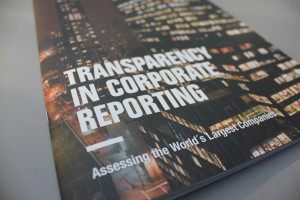
The Problem with Transparency International’s Corruption Perceptions Index
By Joseph Thomas – New Eastern Outlook – 13.02.2017
Transparency International puts out what it calls the “Corruption Perceptions Index.” It is an annual index it claims “has been widely credited with putting the issue of corruption on the international policy agenda.”
These carefully selected words, taken at face value appear benign, even progressive. But upon digging deeper into this organisation’s background it becomes clear that these “perceptions” are politically motivated, and the “international policy agenda” clearly favours a very specific region of the globe, particularly that region occupied by Washington, London and Brussels.
Transparency International claims upon its “Who We Are” page of its website that (our emphasis):
From villages in rural India to the corridors of power in Brussels, Transparency International gives voice to the victims and witnesses of corruption. We work together with governments, businesses and citizens to stop the abuse of power, bribery and secret deals. As a global movement with one vision, we want a world free of corruption. Through chapters in more than 100 countries and an international secretariat in Berlin, we are leading the fight against corruption to turn this vision into reality.
Before moving onto the organisation’s funding and financials, one would assume that above and beyond any other organisation in the world, Transparency International would carefully and diligently avoid any perceptions of conflicts of interest on its own part. Yet, not surprisingly, that isn’t the case.
An Anti-Corruption Org Swimming in Conflicts of Interest
Upon their page, “Who Supports Us,” Transparency International admits that it receives funding from government agencies including:
- The United Kingdom’s Department for International Development (DFID);
- Federal Foreign Office, Germany and;
- The US State Department.
Transparency International not only receives funding from the very governments it is tasked to investigate, hold accountable and “index” annually, constituting a major conflict of interest, it also receives money from the following:
- The National Endowment for Democracy;
- Open Society Institute Foundation and;
- Shell Oil.
Open Society in turn, is the sociopolitical fund employed by convicted financial criminal George Soros. The New York Times in its article, “French court upholds Soros conviction,” reported that:
The conviction of George Soros, the billionaire investor and former fund manager, on insider trading charges was upheld on Thursday by a French appeals court, which rejected his argument that his investment in a French bank in 1988 was not based on confidential information.
Soros, 74, now retired from money management but active as a philanthropist and author, was ordered to pay a fine of €2.2 million, or $2.9 million, representing the money made by funds he managed from an investment in Société Générale. He said the purchase had been part of a strategy to invest in a group of companies that had been privatized by the French government.
Were it not for the very serious impact Transparency International’s false perception globally as a reputable corruption watchdog has on nations targeted by its CPI reports, it would be almost comical that this so-called anti-corruption organisation is funded by not only the very governments it is supposed to be objectively detached from, but also funded by convicted criminals like Soros and organisations like the National Endowment for Democracy well known for their use of “democracy promotion” as cover in pursuit of their own self-serving interests.
Thus it is clear, that even at face value, Transparency International likewise serves as just such cover, but instead of hiding behind “democracy promotion” to advance what is a very specific, political agenda, it is hiding behind “fighting corruption.”
And even if impropriety wasn’t so blatant, Transparency International’s lack of better judgement regarding its funding and conflicts of interest discredit it as a legitimate corruption watchdog.
For nations around the world pressured by Transparency International and its CPI reports, dismissing them with this evidence in hand, as well as devising domestic (and credible) anti-corruption watchdogs as alternatives would be particularly useful.
Special interests using Transparency International to target and undermine nations and governments they seek to influence or coerce is not limited only to this organisation, but is a pattern repeated over and over again, from the National Endowment for Democracy’s Freedom House “Freedom in the World” index, to reports published by Human Rights Watch and Amnesty International, US-European special interests have honed this craft of using just causes as cover for corruption and coercion into a fine art.
Ships from 4 NATO countries conduct naval drills in Black Sea
RT | February 13, 2017
Ships from four NATO member states – Canada, Spain, Romania, and Bulgaria – have taken part in PASSEX 2017, a joint military exercise in the Black Sea.
The exercise features “tactical maneuvering, air defense, repelling asymmetric attacks from an enemy above water, delivery of cargo by helicopter, and other maneuvers,” TASS reports, citing a statement from the Bulgarian Ministry of Defense press service.
According to military authorities, two frigates from the NATO Permanent On Call Joint Maritime Battle Force – Canadian Navy frigate St. John’s and Spanish Navy frigate Almirante Juan de Borbón, a frigate from Romania, Bulgarian corvette Reshitelni, and a special unit of Bulgarian Naval intelligence – have entered the port of Varna, Bulgaria to take part in the PASSEX 2017 drills.
The Canadian and Spanish vessels participated before in the Romanian-led Sea Shield 2017 exercise in the Black Sea, Bulgarian military website Pan.bg reported. The Sea Shield drills took place February 1-10. The naval drills involved 16 warships and 10 warplanes. The exercises were held in the eastern part of the Black Sea, not far from the Russian border.
Russian Defense Minister Sergey Shoigu said Moscow was keeping an eye on the Sea Shield drills: “At present, we are watching and monitoring everything that is happening there.”
“We hope that the exercise will be conducted in the safest possible environment, without any challenges to Russia. In any case, we are ready to take on these challenges,” he added.
On January 31, US and Polish soldiers, alongside newly delivered American military hardware, also conducted joint drills in what has been described as the biggest US deployment in Europe since the end of the Cold War.
Moscow has repeatedly voiced concerns over NATO’s military activity by its border.
“These actions threaten our interests, our security,” Russian President Vladimir Putin’s spokesman Dmitry Peskov said earlier this month. “Especially as it concerns a third party building up its military presence near our borders.”
In response, Russia stationed its most modern weaponry and armaments in its western regions, including the exclave of Kaliningrad, which shares a border with Poland and Lithuania, and is carrying out large-scale military drills on its home soil.
Elsa Rassbach, of the War Resisters International German affiliate and Code Pink, told RT that NATO’s war games and rotational deployments negatively affect the overall security situation in Europe.
“I think they have a very negative impact, in particular actually, in those countries that are nearer to the Russian border. Any error, many things could happen that could lead out of these exercises to a real conflict. But the security of all of Europe is threatened, and this is one reason why so many people in Germany are hopeful that there will be peace made with Russia and are very fearful that a war could develop out these kinds of exercises, which seems to indicate a willingness to go to war by the US and NATO, unfortunately.”
Nearly 70 percent of Russians currently view NATO as a threat, a new survey from Gallup has showed. It is the highest number recorded since 2008.
Eastern European countries that see NATO as a source of protection are mostly members of the alliance. In Poland, 62 percent see NATO as their protector. Estonia, with 52 percent backing NATO, is hosting 800 NATO personnel, while Romania, where 50 percent approve of NATO, is expected to receive several Royal Air Force Typhoon jets in 2017.
Read more:
Russia’s UK embassy brands Russian cyberattacks on UK ‘fake news’
‘No proof, just allegations’
RT | February 13, 2017
The Russian embassy in the UK fired back at the claims made by Britain’s cybersecurity chief in an interview to Sunday Times, in which he accused Moscow of ramping up state-sponsored attacks on the UK. It said there is still no evidence of such attacks.
“Anti-Russian campaign in British press and #fakenews production are going on? Piece contains no proof, just allegations,” The Russian Embassy in the UK tweeted, accompanying the message with a photo of the piece.
In the interview, Ciaran Martin, head of the new National Cyber Security Center (NCSC) and deputy director of the Government Communications Headquarters (GCHQ), claimed that the UK intelligence observed a surge in Russia-sponsored attacks aimed at stealing the UK’s sensitive defense and foreign policy documents for the last two years.
Martin attributed what he described as a “step change in Russian aggression in cyberspace” to Moscow’s intention to “assert power and influence against the West.”
While arguing that the attacks by Russia have been “very well evidenced by international partners and widely accepted,” he fell short of providing any examples of such attacks against the UK.
Nevertheless, Martin argued that the UK would inevitably face a “Category 1” cyberattack from Russia, referring to the large-scale hack that reportedly targeted the US Office of Personal Management in 2015.
He claimed that UK had sustained 188 attacks, including from Russia-sponsored hackers, classified as “Category 2 and 3” within last three months that have compromised UK security.
Ahead of the US presidential elections and in its immediate aftermath, Russia’s alleged hacking of the elections, which was repeatedly denied by Moscow as “nonsense,” has been grabbing international media attention. The blame game in the media went to great lengths, with NBC reporting in December that Russian President Vladimir Putin had ordered the hack himself to secure Trump’s victory.
RT and Sputnik News have been singled out as two of the main drivers behind the “propaganda campaign” aimed at swinging the US elections in favor of Donald Trump.
The anti-Russian hysteria in the US media has since spread to the UK. In December, The Times reported that “Moscow is behind a concerted drive to undermine the UK through espionage, misinformation, cyberattacks and fake news,” citing the opinion of unnamed sources in the British government.
The portrayal of Russian media as propaganda and “fake news” by the Sunday Times early February appeared to prompt some of the RT UK channel advertisers to pull airtime on the channel after they were pressed to comment by the newspaper on an upcoming investigative report on the matter.
The article, authored by Josh Boswell, cited Damian Collins, chairman of the UK House of Commons Culture, Media and Sport Select Committee, as saying that “British companies should not be advertising on channels that disseminate fake news designed to spread fear and confusion.”
Annie Machon, a former British intelligence officer, told RT that while all the recent accusatory statements by British intelligence appeared to be “intelligence-lite,” the US media seems to be preoccupied exclusively with what they present as a mounting “Russian threat.”
“There seems to be another step in the demonization of Russia, which started with the DNC hacks and the fake hacking of the elections and fake news, and the rest of that. So, it is sort of a slur. It is quite libelous, as well,” Machon said.
Machon believes that the excess focus on Russia’s cyber activities, in comparison to that of China and even that of the NSA, that “has been caught out massively hacking across Europe,” is due to “ongoing demonization for political gain.”
Read more:
>Sunday Times ‘propaganda’ probe targets RT advertisers, misquotes MP
Featured Video
Seyed M. Marandi: U.S. Military DIVIDED? Iran’s Secret Defense EXPOSED
or go to
Aletho News Archives – Video-Images
From the Archives
‘Israel sees Iran as obstacle to its policies’
Press TV – August 25, 2017
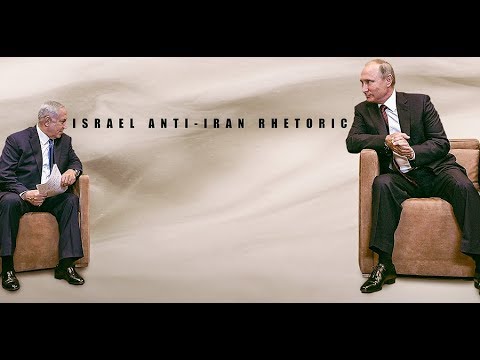
Prime Minister Benjamin Netanyahu has said that Israel felt threatened by Iran’s growing influence in the Middle East. Netanyahu expressed his Iranophobic view in a meeting with Russian President Vladimir Putin in Russia’s Black Sea resort of Sochi on Wednesday. Press TV has asked Scott Rickard, former American intelligence linguist from Tampa, Florida, and Brent Budowsky, a columnist at The Hill from Washington, to give their thoughts on the issue.
Rickard said Tel Aviv is concerned about the fact that the regime could not carry out its old project to spread sectarian divisions and pave the way for dismemberment of the countries in the Middle East region because of the Iranian-led resistance against Israeli policies, not only in the occupied territories of Palestine but also in the whole region.
“Iran is not a threat to Israel whatsoever. The threat that Israel sees is the fact that their Oded Yinon Plan is being put to a hold by Iran,” the intelligence linguist said on Thursday night.
“They (the Israelis) look at Iran as a threat only because they have no influence on their governments and Iran is autonomous and is not under the Zionist influence,” he added.
Since the victory of the Islamic Republic of Iran in 1979, Tehran has been critical of Israel’s policies in the region, whereas “no leaders [of other states] even dared to speak out against Zionism,” Rickard argued. … continue
Blog Roll
 Aletho News
- Iran declares ‘historic victory’ over US, says enemy forced to accept its proposal
- Trump Claims Ceasefire, Reopening of Strait of Hormuz Agreement with Iran
- Israeli tank fire killed UN peacekeeper in Lebanon, UNIFIL investigation finds
- Russia, China block Bahrain-sponsored UN resolution on Strait of Hormuz
- The US-Israeli War on Science is an Assault on our Future
- Trump’s Promise to Bomb Iran ‘Like Never Before’ Faces Brutal Logistics — Expert
- Germany seeks to restrict stays abroad for men of fighting age – Berliner Zeitung
- Evidence points to Ukraine being behind TurkStream attempted sabotage, but that should come as no surprise
- Sri Lanka secures supplies of Russia oil – minister
- Nations across Asia strike direct deals with Iran for Hormuz passage
- If Americans Knew
- Thousands dead and neighborhoods razed to the ground: Aid agencies fear southern Lebanon is becoming the new Gaza
- The war the US is fighting for Israel could cost trillions
- ‘Cigarette Burns, Nail Wounds’: Toddler Tortured in Gaza to Coerce Father
- Trump Says US Sent ‘a Lot of Guns’ to Protesters in Iran
- Israeli forces destroy 17 UN peacekeeper cameras in south Lebanon
- US-Israeli strikes ‘completely destroy’ synagogue in Tehran
- Archbishop for US Military Says Iran War Is Unjust Under Catholic Teaching
- Iranian leaders’ Open Letters to the American People
- Trump says Iranians appreciate bombs, WHO warns of nuclear risks – Daily Update
- U.N. experts demand Israel release prominent Gaza doctor after reports of ‘severe torture’
- No Tricks Zone
- An Inconvenient Tree: Uncovered In Alps… Europe Much Warmer Than Today 6000 Years Ago
- New Study Reports A 60% Slowdown In Greenland’s Ice Loss Rate In The Last Decade
- Low Intensity Tornado Wrecks Major Solar Farm, Creating A Potential Toxic Dump
- New Study Finds Warming Saves Lives…Cold Temperatures 12 Times More Deadly Than Excess Heat
- German Science Blog Accuses PIK Climate Institute Of Hallucinating Climate Tipping Points
- Devastating Assessment Of Comirnaty Vaccine By Former Senior Pfizer Europe Toxicologist
- New Study: CO2 Is ‘Effectively Negligible’ As An Explanatory Climate Change Factor Since 2000
- Former Pfizer Toxicologist Dr. Helmut Sterz Tells Bundestag Hearing Pfizer Vaccine Should Have Never Been Approved
- Energy Expert: Germany’s Nuclear Phaseout Was A “500 Billion Euro Mistake”
- New Research: South Australia’s Mid-Holocene Sea Surface Temperatures Were 4°C Warmer Than Today
 Aletho News