New York Times Manipulates NOAA’s Climate Science Scandal
By Marc Morano | Climate Depot | February 12, 2017
If you were only to read the New York Times’ latest article on the most recent Climate Change scandal first reported by the Mail and the Daily Mail, you would never know that there was any scandal to speak of in the first place.
Headline: “No Data Manipulation in 2015 Climate Study, Researchers Say.” Well, not all researchers. The background of the data manipulation story revolves around accusations made by David Bates, a recently retired scientist at the National Oceanic and Atmospheric Administration (NOAA). Among his several accusations is that NOAA “rushed to publish a landmark paper that exaggerated global warming and was timed to influence the historic Paris agreement on climate change,” a paper which would have been welcomed with open arms by the Obama administration. On February 4, Bates wrote a lengthy blog post at his website detailing the accusations. Here is a brief list of some of the charges:
1. Climate scientist, Tom Karl, failed to archive the land temperature data set and thus also failed to “follow the policy of his own Agency [and] the guidelines in Science magazine for dataset archival and documentation.”
2. The authors also chose to “use a 90% confidence threshold for evaluating the statistical significance of surface temperature trends, instead of the standard for significance of 95%,” and according to Bates, the authors failed to give a justification for this when pressed.
3. Karl routinely “had his ‘thumb on the scale’ — in the documentation, scientific choices, and release of datasets — in an effort to discredit the notion of a global warming hiatus and rush to time the publication of the paper to influence national and international deliberations on climate policy.” Bates adds, “[a] NOAA NCEI supervisor remarked how it was eye-opening to watch Karl work the co-authors, mostly subtly but sometimes not, pushing choices to emphasize warming.”
4. Experimental datasets were used that were not run through operational readiness review (ORR) and were not archived.
To sum up, the “data manipulation,” as characterize by the Mail, consisted in not following proper protocols, selecting certain data sets which had not been properly analyzed, and manipulating scientific methodology with a political and not purely scientific end.
US to Adhere to Deterrence Strategy Toward North Korea – Trump Adviser
Sputnik – 12.02.2017
The United States will build its strategy concerning North Korea based on the principles of deterrence, US President Donald Trump’s adviser Stephen Miller said on Sunday.
“We will reinforce and strengthen our vital alliances in the Pacific region as part of our strategy to deter and prevent the increasing hostility that we’ve seen in recent years from the North Korean regime,” Miller said in an interview with the Fox News channel.
Earlier in the day, North Korea launched a ballistic missile from the country’s North Pyongan province. The missile plunged into the Sea of Japan after flying some 310 miles. Japan said that the missile fell outside of the country’s exclusive economic zone and did not inflict any damages.
Following the launch, South Korea and Japan held emergency meetings of the countries’ National Security Councils and both called the launch a provocative action threatening international security. Other countries, as well as the United States and the European Union, have condemned the launch.
UN offers Israel’s Livni under-secretary-general post: Report
Press TV – February 12, 2017
United Nations Secretary General Antonio Guterres has reportedly offered Israeli lawmaker, Tzipi Livni, a senior post at the world body, shortly after Washington, in a controversial move, blocked the appointment of a former Palestinian premier as the UN special envoy to Libya.
According to a report published by the Israeli daily, Haaretz, on Sunday, Livni, who represents the center-left Zionist Union political alliance at the Knesset (Israeli parliament), has been offered the position of under-secretary-general in what has been seen as a measure to boost Tel Aviv’s influence within the world body.
From 2001 to 2009, the 58-year-old legislator served in the cabinets of Israel’s former prime ministers, Ariel Sharon and Ehud Olmert, most notably as the regime’s foreign minister in the latter’s administration, during which she got acquainted with Guterres, who was Portugal’s prime minister at the time.
Some two weeks ago, Livni made a one-day trip to New York aimed at having a personal meeting with the UN chief. Haaretz’ report further said that the pair, among other issues, had discussed the possibility of Livni’s appointment. It added that during the tenure of former UN Secretary General Ban Ki-moon, she had also shown an interest in a top post at the UN.
If the Israeli lawmaker accepts the offer, she will become the first Israeli to serve as the UN under-secretary-general. The UN Security Council, however, will ultimately decide whether she gets the position.
The new development comes after US Ambassador to the UN Nikki Haley, on Friday night, blocked the designation of former Palestinian Prime Minister Salam Fayyad to lead the UN mission in Libya, saying that the administration of US President Donald Trump “was disappointed” to learn that Guterres had proposed him for the job.
The Haaretz report, citing some unnamed UN officials, added that Guterres was allegedly trying to forge a deal with Washington, under which the US would take back its fierce opposition to Fayyad, Guterres’ favorite pick for the position, and in return, US-backed Livni would attain the senior post at the world body.
The developments come as the Tel Aviv regime is under fire for its settlement activities in the occupied Palestinian territories.
The international community, including Tel Aviv’s own allies, view the Israeli settlements as illegal under the Geneva Conventions, which forbid construction on occupied territory.
Since January 20, when Trump, an ardent supporter of Israel, took office, Tel Aviv has launched a major land grab drive in defiance of global calls for the regime to stop its settlement activities on the occupied Palestinian lands.
Syria settlement delayed due to Obama’s team, with Trump things might change – FM Lavrov
RT | February 12, 2017
The situation with peace talks on Syria is currently “more favorable” for things to really get better in the war-torn country, Russia’s FM Sergey Lavrov has said. Obama’s team slowed down the process, but under Trump things might improve, according to the diplomat.
“We are currently in the situation… that is much more favorable to start working on a real settlement of the crisis. We were close to it in September last year, but the Americans failed to implement an agreement which had been coordinated with us earlier, which once more confirmed the Obama’s administration inability to negotiate on many issues,” Russia’s foreign minister said in an interview with Russian television channel NTV.
“They took an agreement, and then couldn’t do anything [within it],” Sergey Lavrov said, adding that “largely because of Obama’s reluctance to have an argument with some countries in the region,” a settlement through the UN’s participation “turned to [result in] zero progress.”
Moscow could no longer rely on such dragging partnerships, Russia’s top diplomat said, adding that a decision has been made to take action in other ways, such as through Russian-Turkish relations.
“We know that Turkey has influenced and continues to influence a very considerable number of field commanders,” Lavrov said, noting that Moscow’s cooperation with Ankara resulted in a ceasefire agreement in Syria in late December last year.
“I want to make it clear: we’ve already said on different levels that we are not trying to undermine UN’s efforts [in resolving the Syrian crisis]. Although our initiative was largely based on [others’] inaction, we understand that many more sides should be involved in peace talks than those currently working on Astana [negotiations],” Lavrov told NTV. There should be more participants both from Syria and “players from the outside,” he added.
Parallel to the Astana peace process, Moscow is preparing for talks under the auspices of the United Nations, the minister said, adding that so far such a meeting has been confirmed for February 20.
Talking of Moscow’s expectations of those talks, Lavrov said that the “whims” of some Syrian opposition groups’ leaders, “especially of those who have long been living outside Syria,” should not be taken into consideration. “If it once again becomes a hindrance to hold UN talks, then the organization’s reputation will be seriously damaged,” Lavrov said.
Meanwhile, Russia has been actively involved in meetings on Syria in Astana, where talks with the participation of Ankara and Tehran have recently finished. The sides have generally agreed details on cease fire monitoring, the minister said, adding that the agreements reached “will soon be implemented.” Efforts to summon more fighting groups in Syria to join in talks with the Syrian government are also in the works, he added.
Saying that US representatives were present at the first meeting in Astana as monitors, Lavrov confirmed that an invitation has been sent to Washington to take part in the talks once a new team on the Middle East and Syria is formed under the incoming Trump administration.
Moscow is fully aware that relations between the US and Iran have deteriorated with Trump’s arrival in the White House, Lavrov said, but added that Russia “stands for common sense.”
“If US President Trump’s main priority on the international arena is fighting terrorism, then it should be admitted that in Syria not only the Syrian army supported by Russian Air Force are fighting ISIL [Islamic State terrorist group, IS, formerly ISIS/ISIL], but also Hezbollah groups supported by Iran [are involved in the anti-terrorist fight],” Lavrov said. “There’s a choice of priorities here.”
The minister added that while Americans are known for their “pragmatic” policies, it “wouldn’t be pragmatic to just precariously exclude Iran from the anti-terrorist coalition.” Russia, on its side, “always treats any country’s stance with respect,” he said, having expressed Moscow’s willingness to discuss any ways to solve the crisis, “even those that absolutely contradict” Russia’s views.
“I am sure that Donald Trump is absolutely sincere when he every time confirms his determination to defeat IS. We are ready to cooperate with him,” Lavrov said, having expressed hopes that cooperation between the Russian and American military in Syria “will soon start to form again.”
READ MORE:
Moscow mediates talks between Assad & Syrian Kurds – Russian FM
‘US-Iran tensions could be defused during Putin-Trump meeting’
Russian FM Lavrov expects to talk to US counterpart Tillerson soon on Ukraine & bilateral relations
Israeli man stabs, injures two Palestinian street cleaners
Press TV – February 12, 2017
At least two Palestinians have sustained injuries when a young Israeli man carried out a stabbing attack in southern Israeli-occupied territories amid violent attacks by Israeli military forces against Palestinian protesters.
Israeli police spokeswoman, Luba al-Samri, said in a written Arabic statement that the assailant, thought to be in his twenties, was detained after committing the attack in the city of Beersheba, located 115 kilometers southeast of Tel Aviv, early on Sunday.
The two injured men were transported to a hospital in the area.
Samri identified the unnamed attacker as a local resident of Beersheba, adding that initial investigations point to a “criminal” motive behind the incident.
30 Israeli settlers break into al-Aqsa Mosque
Meanwhile, more than two dozen Israeli settlers have once again stormed the al-Aqsa Mosque compound in the Old City of Jerusalem al-Quds.
Local sources, speaking on condition of anonymity, said 30 settlers, escorted by several groups of Israeli troops and led by a number of guides and rabbis, entered the site through the Bab al-Maghariba on Sunday morning.
The settlers reportedly staged lengthy stopovers in various parts of the al-Aqsa Mosque courtyard during the incursion.
Israeli soldiers were heavily present at the entrance gates to the mosque and thoroughly checked the identity cards of arriving worshipers.
The occupied Palestinian territories have witnessed tensions ever since Israel imposed restrictions on the entry of Palestinian worshipers into the al-Aqsa Mosque compound in East Jerusalem al-Quds in August 2015.
Nearly 280 Palestinians have lost their lives at the hands of Israeli forces since the beginning of October that year.
Italian Populists Lead Parliamentary Push to Alter NATO Ties
Sputnik – February 12, 2017
Italy’s Five Star Movement party has proposed a way of altering how the country participates in NATO, party member Manlio Di Stefano told Sputnik Italy.
In an interview with Sputnik Italy, Manlio Di Stefano, a parliamentary deputy from the country’s populist Five Star Movement, said that the party has proposed a bill which would alter the way in which Italy participates in NATO. The interview came amid the Italian government efforts to prevent the country’s parliament from altering Italy’s relationship with NATO.
In 2008, 600,000 people signed a petition to review Rome’s stance on the alliance, but the government still refuses to heed their demands.
Di Stefano said that the Five Star Movement’s proposal urges the parliament to once again vote on all decisions related to the use of military bases or transportation of weapons within Italy.
“We want all this regulated by parliament, not just the government alone. It is very important to move in this direction in order to ensure the protection of the environment and the health of citizens, first of all in areas where a NATO contingent is based. They include Sardinia, Sicily, Dal Molin base, Camp Darby and others,” he said.
Apart from risks related to health and the environment, there is also a nuclear threat, Di Stefano said, adding that many non-NATO members have already sent their response systems to the Aviano and Ghedi bases, where 90 nuclear bombs are deployed.
“It seems obvious that Russia may also have a similar response system aimed at Italy, and I think that it is normal. But we do not need these risks. Even one B61-12 bomb dropped on our territory will be enough to destroy the whole country,” he added.
Di Stefano said that it’s necessary to clarify that Italy withdrawing from NATO is out of question because it could “destabilize the entire European system.”
“We only call for a change in the format of our participation in NATO, and it is quite another thing. Article 12 of the North Atlantic Treaty Organization stipulates that any NATO member can demand the review of the contract,” he said.
He added that the Five Star Movement’s bill would “normalize the decision-making procedures, as well as to introduce a vote on these decisions.”
Late last month, about 1,000 protesters participated in a demonstration against NATO bases in the Italian city of Vicenza.
“We are standing against the continued existence of the Dal Molin NATO base, we want to use the territory for the construction of the so-called Peace Park,” one of the organizers said.
The march was headed by the No Dal Molin Movement, which opposes US airbases located in the north of the city. The protesters carried a huge banner, saying “Protection of land for a future without military bases.”
The demonstration was sanctioned by local authorities and was accompanied by a police escort. Italy has been a member of NATO since April 4, 1949.
Italy’s attitude toward NATO airbases soured in 1998, when a US Marine Corps prowler aircraft clipped the cable of a cable car at a ski resort in the Italian Alps, resulting in 20 deaths. Although Italian prosecutors initially demanded that the four crew members stand trial for involuntary manslaughter and negligent homicide in Italy, an Italian court recognized that NATO treaties gave jurisdiction to US military courts.
The four were acquitted after a brief trial in North Carolina, according to The Independent, outraging the European public.
See also:
How Italy Became a ‘US, NATO Military Laboratory’
Italy ‘No Longer Sovereign State, It is on NATO’s, US’ Tight Military Leash’
Reports that Moscow is to ‘gift’ Snowden to Trump meant to pressure new administration – Zakharova
RT | February 12, 2017
Recent reports that whistleblower Edward Snowden will be “gifted” to President Trump are meant to scandalize public opinion and show that the new administration continues to face pressure from opponents, said Russian Foreign Ministry spokeswoman.
“Today, US intelligence agencies have stepped up their work, updating two stale stories, ‘Russia can gift Snowden to Trump’ and ‘confirmation found on the details of the scandalous dossier on Trump allegedly collected by an ex-employee of British intelligence.’ But it may seem so only to those who do not understand the essence of the game,” Foreign Ministry spokeswoman Maria Zakharova wrote in a Facebook post on Sunday.
“None of these statements have been made by representatives of the special services, but is information coming from NBC and CNN, citing unnamed sources. The difference is obvious, but only to experts. Yet it is useful for scandalizing the public and maintaining a degree of [public outrage],” she said.
The official representative of the Russian Foreign Ministry said that the new administration’s foreign policy has still not been formed because political opponents in the US are hindering the White House’s efforts to begin proper work.
“It is evident that the pressure on the new administration on the part of political opponents within the United States continues, bargaining is going on. And that’s why the US foreign policy doctrine has not yet been formed,” she wrote.
“How Russia will work with the White House in the international arena is journalists’ main question. In an interview with Irada Zeynalova to be released on Sunday, Sergei Lavrov said: ‘we are waiting for the team to be formed. But what is more obvious: the delay is not due to the inertness of the new administration, but to the fact that it is simply not allowed to work,’” Zakharova said.
On Friday, NBC News reported that an unnamed “US senior official” had claimed that the Russian government was actively considering the possibility of handing over Snowden “to curry favor” with President Trump. The official said that he had drawn the conclusion upon studying a “series of highly sensitive intelligence reports.”
Another US intelligence source cited in the piece said that the intelligence, which was allegedly collected since Trump’s inauguration on January 20, contains the thoughts of Russian officials on how to get off on the right foot with the current administration. Yet, Snowden’s lawyer in Russia, Anatoly Kucherena, said he doesn’t believe Russia is prepared to hand over Snowden anytime soon, calling the article “speculation.” Snowden has been living in Russia since 2013 when he was granted asylum by the Russian government. It was subsequently extended for three years and was successfully renewed for two more in January. Trump is known to have an unforgiving opinion of Snowden, whom he has denounced as “a traitor and a disgrace.”
Zakharova mentioned another report, published on Saturday, which asserts that some of the details in the dodgy 35-page dossier that made so much noise last month are true. It apparently claims, above all, the allegations suggesting President Trump has ties with the Russian government have been confirmed. Zakharova pointed out that, although the report cites “multiple current and former US law enforcement and intelligence officials,” it gives no names or specific quotes from them.
The dossier, which was first published by BuzzFeed and CNN in early January, earned the two the title of “fake news,” which was even used by Trump himself to categorize the outlets. The release was followed by comments from the White House warning the media to stop trying to delegitimize the newly inaugurated president.
Trump Says US Embassy in Tel Aviv Is not Going Anywhere
Sputnik – 12.02.2017
Trump is not inclined to move the US embassy from Tel Aviv to Jerusalem, according to Israeli media reports, despite making several assertions on the topic during his campaign.
According to various Israeli media citing Palestinian media, Palestinian Authority leaders have received a “reassuring” message from the Trump administration. The reports also say US security officials spoke directly to Palestinian intelligence head Majid Faraj.
While these reports are yet to be confirmed, Trump had already been presenting a more moderate position, notably during an interview for Israeli newspaper Israel Hayom.
“I am thinking about the embassy, I am studying the embassy [issue], and we will see what happens,” Trump reportedly said earlier. “The embassy is not an easy decision. It has obviously been out there for many, many years, and nobody has wanted to make that decision. I’m thinking about it very seriously, and we will see what happens.”
The issue of relocating the US embassy was also raised during the visit of King Abdullah of Jordan, who said that preserving the multi-religious status of Jerusalem is very important.
“In our view, Jerusalem is extremely important. Our firm stance is that we reject any unilateral efforts that attempt to change the Arab, Muslim and Christian identity of the Holy City,” said Jordanian foreign minister Al Safadi.
Trump the president has been more critical of Israel’s policy towards Palestine than Trump the candidate. He recently criticized Israel’s policy of building settlements on Palestinian territory, saying this practice “doesn’t help the peace process.”
“We are looking at that, and we are looking at some other options we’ll see. But no, I am not somebody that believes that going forward with these settlements is a good thing for peace,” he said in an interview with an Israeli journalist.
He was, however, extremely critical of the December resolution by the UN Security Council that expressed the same sentiment: calling for an end to settlement building as detrimental to the peace process and illegal under international law.
Amnesty International Stokes Syrian War
By Rick Sterling | Consortium News | February 11, 2017
Amnesty International (AI) has done some good investigations and reports over the years, which has won the group widespread support. However, less well recognized, Amnesty International has also carried out faulty investigations with bloody and disastrous consequences.
One prominent example is in Iraq, where AI “corroborated” the false story that Iraqi soldiers were stealing incubators from Kuwait, leaving babies to die on the cold floor. The deception was planned and carried out in Washington to influence the U.S. public and Congress.
A more recent example is from 2011 where false accusations were being made about Libya and Muammar Gaddafi as Western and Gulf powers sought to overthrow his government. AI leaders joined the campaign claiming that Gaddafi was using “mercenaries” to threaten and kill peacefully protesting civilians. The propaganda was successful in muting criticism of what became an invasion and “regime change.”
Going far beyond a United Nations Security Council resolution to “protect civilians,” NATO launched sustained air attacks and toppled the Libyan government leading to chaos, violence and a flood of refugees. AI later refuted the “mercenary” accusations but the damage was done.
Now, on Feb. 7, Amnesty International released a new report titled “Human Slaughterhouse: Mass Hangings and Extermination at Saydnaya Prison,” which accuses the Syrian government of executing thousands of political prisoners, a set of accusations that has received uncritical treatment in the mainstream news media.
Like the Iraq/Kuwait incubator story and the Libyan “mercenary” story, the “Human Slaughterhouse” report is coming at a critical time. It accuses and convicts the Syrian government of horrible atrocities against civilians – and AI explicitly calls for the international community to take “action.” But the AI report is deeply biased and amounts to a kangaroo-court conviction of the Syrian government.
AI’s Standards Ignored
The Amnesty International report violates the organization’s own research standards. As documented by Professor Tim Hayward here, the Secretary General of Amnesty International, Salil Shetty, claims that Amnesty does its research “in a very systematic, primary, way where we collect evidence with our own staff on the ground. And every aspect of our data collection is based on corroboration and cross-checking from all parties, even if there are, you know, many parties in any situation because of all of the issues we deal with are quite contested. So it’s very important to get different points of view and constantly cross check and verify the facts.”
But the Amnesty report fails on all counts: it relies on third parties, it did not gather its information from different points of view, and it did not cross-check with all parties. The report’s conclusions are not based on primary sources, material evidence or AI’s own staff; the findings are solely based on the claims of anonymous individuals, mostly in southern Turkey from where the war on Syria is coordinated.
Amnesty gathered witnesses and testimonies from only one side of the conflict: the Western- and Gulf-supported opposition. For example, AI consulted with the Syrian Network for Human Rights, which is known to seek NATO intervention in Syria. AI “liased” with the Commission for International Justice and Accountability, an organization funded by the West to press criminal charges against the Syrian leadership. These are obviously not neutral, independent or nonpartisan organizations.
If AI were doing what its Secretary General claims the organization always does, AI would have consulted with organizations within or outside Syria to hear different accounts of life at Saydnaya Prison. Since the AI report has been released, the AngryArab has published the account of a Syrian dissident, Nizar Nayyouf, who was imprisoned at Saydnaya. He contradicts many statements in the Amnesty International report, the type of cross-checking that AI failed to do for this important study.
Amnesty’s accusation that executions were “extrajudicial” is exaggerated or false. By Amnesty’s own description, each prisoner appeared briefly before a judge and each execution was authorized by a high government leader. We do not know if the judge looked at documentation or other information regarding each prisoner. One could argue that the process as described was superficial, but it’s clear that even if AI’s allegations are true, there was some kind of judicial process.
Amnesty’s suggestion that all Saydnaya prisoners are convicted is false. Amnesty quotes one witness who says about the court: “The judge will ask the name of the detainee and whether he committed the crime. Whether the answer is yes or no, he will be convicted.” But this assertion is contradicted by a former Saydnaya prisoner who is now a refugee in Sweden. In this news report, the former prisoner says the judge “asked him how many soldiers he had killed. When he said none, the judge spared him.” This is evidence that there is a judicial process of some sort and there are acquittals.
The Amnesty report includes satellite photographs with captions which are meaningless or erroneous. For example, as pointed out by Syrian dissident Nizar Nayyouf, the photo on page 30 showing a Martyrs Cemetery is “silly beyond silly.” The photo and caption show that the cemetery doubled in size. However, this does not prove hangings of prisoners who would never be buried in a “martyrs cemetery” reserved for Syrian army soldiers. On the contrary, it confirms the fact which Amnesty International otherwise ignores: Syrian soldiers have died in large numbers.
The Amnesty report falsely claims — based on data provided by one of the groups seeking NATO intervention — “The victims are overwhelmingly ordinary civilians who are thought to oppose the government.” While it’s surely true that innocent civilians are sometimes wrongly arrested, as happens in all countries, the suggestion that Saydnaya prison is filled with 95 percent “ordinary civilians” is preposterous. Amnesty International can only make this claim without facing ridicule because AI and other Western organizations have effectively “disappeared” the reality of Syria.
Missing Facts
Other essential facts, which are completely missing from the Amnesty report, include:
–Western powers and Gulf monarchies have spent billions of dollars annually since 2011 to recruit, fund, train, arm and support with sophisticated propaganda a violent campaign to overthrow the Syrian government;
–As part of this operation, tens of thousands of foreign fanatics have invaded Syria and tens of thousands of Syrians have been radicalized and paid by Wahhabi monarchies in the Gulf to overthrow the government;
–More than 100,000 Syrian Army and National Defense soldiers have been killed defending their country. Most of this is public information yet ignored by Amnesty International and other mainstream media in the West. This “regime change” operation has been accompanied by a massive distortion and cover-up of reality.
–Without providing evidence, Amnesty International accuses the highest Sunni religious leader in Syria, Grand Mufti Ahmad Badreddin Hassoun, of authorizing the execution of “ordinary civilians.” While the Grand Mufti is a personal victim of the war’s violence – his son was murdered by terrorists near Aleppo – he has consistently called for reconciliation. Following the assassination of his son, Grand Mufti Hassoun gave an eloquent speech expressing forgiveness for the murderers and calling for an end to the violence.
What does it say about Amnesty International that it makes specific personal accusations, against people who have personally suffered, yet provides no evidence of guilt?
In the report, Amnesty uses sensational and emotional accusations in place of factual evidence. The title of the report is “Human Slaughterhouse.” And what goes with a “slaughterhouse”? A “meat fridge.” So, the report uses the expression “meat fridge” seven separate times, presumably in an attempt to strengthen the central metaphor of a slaughterhouse.
Even the report’s opening quotation is hyperbolic: “Saydnaya is the end of life – the end of humanity.” The report is in sharp contrast with fact-based objective research and investigation; it appears designed to manipulate emotions and thus create new public support in the West for another escalation of the war.
Yet, Amnesty International’s accusations that the Syrian government is carrying out a policy of “extermination” are contradicted by the fact that the vast majority of Syrians prefer to live in government-controlled areas. When the “rebels” were finally driven out of East Aleppo in December 2016, 90 percent of civilians rushed into areas under government control.
In recent days, civilians from Latakia province who had been imprisoned by terrorists for the past three years have been liberated in a prisoner exchange. [This video shows Syrian President Bashar al-Assad and his wife meeting with some of the civilians.]
A Video
The Amnesty report is accompanied by a three-minute propaganda cartoon that reinforces the narrative that Syrian civilians who protest peacefully are imprisoned and executed. Echoing the theme of the report, the animation is titled “Saydnaya Prison: Human Slaughterhouse.” Amnesty International appears to be in denial that there are tens of thousands of violent extremists in Syria, setting off car bombs, launching mortars and otherwise attacking civilian areas every day.
Given the national crisis – with so many violent jihadists to confront – it makes little sense that Syrian security or prison authorities would waste resources on non-violent civilians although that does not mean that the Syrian government has clean hands either. Mistakes and abuses surely happen in this war like all wars.
But the AI report is more like the propaganda that has surrounded the Syrian conflict from the beginning, lacking in balance and reminiscent of the “perception management” used to justify the U.S. invasion of Iraq in 2003 and the West’s assault on Libya in 2011. AI’s hyperbole is also contradicted by the fact that Syria has many opposition parties that compete for seats in the National Assembly and campaign openly for public support from both the right and left of the Baath Party.
AI’s claim that Syrian authorities brutally repress peaceful protests further ignores the Syrian reconciliation process. For the past several years, armed opposition militants have been encouraged to lay down their weapons and peacefully rejoin society, a program largely unreported in Western media because it contradicts the “black hat” narrative of the Syrian government. [A recent example is reported here.]
The Amnesty report cites the “Caesar” photographs as supporting evidence for its “slaughterhouse” accusations but ignores the fact that nearly half those photographs show the opposite of what was claimed. The widely publicized “Caesar photographs” was a Qatari-funded hoax designed to sabotage the 2014 Geneva negotiations as documented here.
While the Amnesty report makes many accusations against the Syrian government, AI ignores the violation of Syrian sovereignty being committed by Western and Gulf countries. It is a curious fact that big NGOs such as Amnesty International focus on violations of “human rights law” and “humanitarian law” but ignore the crime of aggression, also called the crime against peace.
According to the Nuremberg Tribunal, aggression is “the supreme international crime, differing only from other war crimes in that it contains within itself the accumulated evil of the whole.” Former Nicaraguan Foreign Minister and former President of the U.N. General Assembly, Father Miguel D’Escoto, is someone who should know. He says, “What the U.S. government is doing in Syria is tantamount to a war of aggression, which, according to the Nuremberg Tribunal, is the worst possible crime a State can commit against another State.” Amnesty International ignores this reality.
Background and Context
The co-author of this Amnesty International report is Nicolette Waldman (Boehland), who was uncritically interviewed on DemocracyNow! on Feb. 9. The background and previous work of Waldman shows the inter-connections between influential Washington “think tanks” and the billionaires’ foundations that fund “non-governmental organizations” – NGOs – that claim to be independent but are clearly not.
Waldman previously worked for the “Center for Civilians in Conflict,” which is directed by leaders from George Soros’s Open Society, the Soros-funded Human Rights Watch, Blackrock Solutions and the Center for a New American Security (CNAS).
CNAS may be the most significant indication of political orientation since it is led by Michele Flournoy, who was expected to become Secretary of Defense if Hillary Clinton had won the election. CNAS has been a leading force behind neoconservative and liberal-interventionist plans to escalate the war in Syria. While past work or associations do not always define new or future work, in this case the sensational and dubious accusations seem to align with those political goals. [Soros’s Open Society has also provided funds to Amnesty International.]
So what to make of Amnesty International’s new report? The once widely respected human rights organization has, in the recent past, let itself be used as a propaganda tool to justify Western aggression against Iraq and Libya, which seems to be the role that AI is playing now in Syria.
The Amnesty International report is a mix of hearsay accusations and sensationalism that tracks with the Western propaganda themes that have surrounded the Syrian war from the start. Because of Amnesty’s undeserved reputation for independence and accuracy, the report has been picked up and broadcast widely. Liberal and supposedly progressive media outlets have joined in dutifully echoing the questionable accusations.
Little or no skepticism is applied when the target is the Syrian government, which has faced years of foreign-sponsored aggression. If this report justifies another escalation of the conflict, as Amnesty International seems to want, the group will again be serving as a rationalizer for Western aggression against Syria, just like it did in Iraq and Libya.
Rick Sterling is an investigative journalist based in the San Francisco Bay Area. He can be reached at rsterling1@gmail.com
Europe’s United Market is a ‘Project for the Business Establishment’
Sputnik – February 11, 2017
The euro currency is a major factor accelerating the process of economic and political disintegration within the European Union, according to Belgian left politician Peter Mertens.
The European Union is now “disintegrating,” Paul Magnette, Minister-President of the Belgian French-speaking region of Wallonia, said in a recent interview with L’Echo.
“We are nearing a process of political disintegration, with some countries becoming ungovernable,” the politician said.
Magnette also criticized the euro currency as poorly thought-out, which accelerated “social and financial deregulation.”
Magnette has been known as a vocal critic of the Comprehensive Economic and Trade Agreement (CETA), a free trade deal between the EU and Canada. In the interview, he also spoke out for withdrawal from the bloc of such countries as Romania, Bulgaria, Poland and Hungary, following the Brexit example.
Magnette’s remarks are especially surprising, taking into account the fact that such criticism came from a left-wing and pro-European politician.
Peter Mertens, the leader of the Workers’ Party of Belgium, underscored that in Belgium criticism of the current state of European integration comes from left-wing political forces, not from the right, like in France or in the Netherlands.
“From the very beginning, the euro has been a problem. The currency was designed to serve the interests of Germany, Europe’s strongest economy. It was clear that the European united market was not people’s will. It was a project for the business establishment,” Mertens said in an interview with Sputnik French.
The politician shared Magnette’s suggestion that the eastward expansion of the European Union was not conducted properly.
“In 2007-2008, several Eastern European countries joined the EU. The main reason was that German companies were looking for a cheap labor force. At the same time, it was clear that such countries as Bulgaria and Romania were not as economically developed as Central Europe. As a result, now there are two polarities in the EU, between the north and the south and between the west and the east,” Mertens pointed out.
He also agreed with Magnette that the introduction of the euro only deepened the social and economic divisions within the EU.
“In my opinion, the euro currency system was built under Germany’s surveillance. And I think that to a certain extent the current EU is autocratic and authoritarian,” he said.
Nevertheless, Mertens warned that a withdrawal of Eastern European countries from the EU would not resolve the crisis.
“We should not forget that we need to protect those countries. Now, some political forces call for cooperation only with economically developed countries. But we should continue our cooperation with Poland and other Eastern European countries,” he said.
Mertens also said that criticism of the European Union should not be monopolized by right-wing political movements.
“These concerns [about the crisis in the EU] can be expressed in many ways. For example, criticism can be expressed by the nationalists or the far-rights, like in France and the Netherlands. But it can also come from the left, like in Spain or Wallonia. The common idea is that the current political elites do not represent their people anymore,” Mertens concluded.
Featured Video
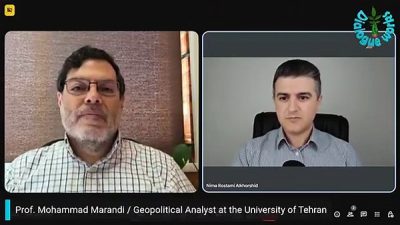
Seyed M. Marandi: U.S. Military DIVIDED? Iran’s Secret Defense EXPOSED
or go to
Aletho News Archives – Video-Images
From the Archives
‘Israel sees Iran as obstacle to its policies’
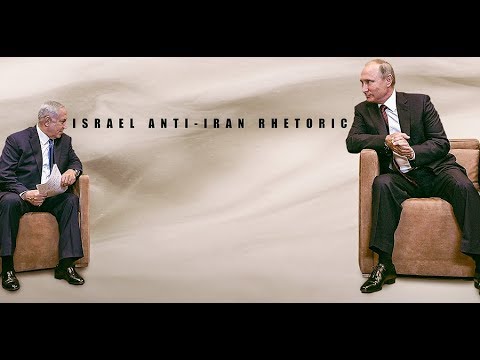
Press TV – August 25, 2017
Prime Minister Benjamin Netanyahu has said that Israel felt threatened by Iran’s growing influence in the Middle East. Netanyahu expressed his Iranophobic view in a meeting with Russian President Vladimir Putin in Russia’s Black Sea resort of Sochi on Wednesday. Press TV has asked Scott Rickard, former American intelligence linguist from Tampa, Florida, and Brent Budowsky, a columnist at The Hill from Washington, to give their thoughts on the issue.
Rickard said Tel Aviv is concerned about the fact that the regime could not carry out its old project to spread sectarian divisions and pave the way for dismemberment of the countries in the Middle East region because of the Iranian-led resistance against Israeli policies, not only in the occupied territories of Palestine but also in the whole region.
“Iran is not a threat to Israel whatsoever. The threat that Israel sees is the fact that their Oded Yinon Plan is being put to a hold by Iran,” the intelligence linguist said on Thursday night.
“They (the Israelis) look at Iran as a threat only because they have no influence on their governments and Iran is autonomous and is not under the Zionist influence,” he added.
Since the victory of the Islamic Republic of Iran in 1979, Tehran has been critical of Israel’s policies in the region, whereas “no leaders [of other states] even dared to speak out against Zionism,” Rickard argued. … continue
Blog Roll
 Aletho News
- Iran declares ‘historic victory’ over US, says enemy forced to accept its proposal
- Trump Claims Ceasefire, Reopening of Strait of Hormuz Agreement with Iran
- Israeli tank fire killed UN peacekeeper in Lebanon, UNIFIL investigation finds
- Russia, China block Bahrain-sponsored UN resolution on Strait of Hormuz
- The US-Israeli War on Science is an Assault on our Future
- Trump’s Promise to Bomb Iran ‘Like Never Before’ Faces Brutal Logistics — Expert
- Germany seeks to restrict stays abroad for men of fighting age – Berliner Zeitung
- Evidence points to Ukraine being behind TurkStream attempted sabotage, but that should come as no surprise
- Sri Lanka secures supplies of Russia oil – minister
- Nations across Asia strike direct deals with Iran for Hormuz passage
- If Americans Knew
- Thousands dead and neighborhoods razed to the ground: Aid agencies fear southern Lebanon is becoming the new Gaza
- The war the US is fighting for Israel could cost trillions
- ‘Cigarette Burns, Nail Wounds’: Toddler Tortured in Gaza to Coerce Father
- Trump Says US Sent ‘a Lot of Guns’ to Protesters in Iran
- Israeli forces destroy 17 UN peacekeeper cameras in south Lebanon
- US-Israeli strikes ‘completely destroy’ synagogue in Tehran
- Archbishop for US Military Says Iran War Is Unjust Under Catholic Teaching
- Iranian leaders’ Open Letters to the American People
- Trump says Iranians appreciate bombs, WHO warns of nuclear risks – Daily Update
- U.N. experts demand Israel release prominent Gaza doctor after reports of ‘severe torture’
- No Tricks Zone
- An Inconvenient Tree: Uncovered In Alps… Europe Much Warmer Than Today 6000 Years Ago
- New Study Reports A 60% Slowdown In Greenland’s Ice Loss Rate In The Last Decade
- Low Intensity Tornado Wrecks Major Solar Farm, Creating A Potential Toxic Dump
- New Study Finds Warming Saves Lives…Cold Temperatures 12 Times More Deadly Than Excess Heat
- German Science Blog Accuses PIK Climate Institute Of Hallucinating Climate Tipping Points
- Devastating Assessment Of Comirnaty Vaccine By Former Senior Pfizer Europe Toxicologist
- New Study: CO2 Is ‘Effectively Negligible’ As An Explanatory Climate Change Factor Since 2000
- Former Pfizer Toxicologist Dr. Helmut Sterz Tells Bundestag Hearing Pfizer Vaccine Should Have Never Been Approved
- Energy Expert: Germany’s Nuclear Phaseout Was A “500 Billion Euro Mistake”
- New Research: South Australia’s Mid-Holocene Sea Surface Temperatures Were 4°C Warmer Than Today
 Aletho News