The West’s Moral Hypocrisy on Yemen
By Jonathan Marshall | Consortium News | February 21, 2017
Only a few months ago, interventionists were demanding a militant response by Washington to what George Soros branded “a humanitarian catastrophe of historic proportions” — the killing of “hundreds of people” by Russian and Syrian government bombing of rebel-held neighborhoods in the city of Aleppo.
Leon Wieseltier, a senior fellow at the Brookings Institution and former New Republic editor, was denouncing the Obama administration as “a bystander to the greatest atrocity of our time,” asserting that its failure to “act against evil in Aleppo” was like tolerating “the evil in Auschwitz.”
How strange, then, that so many of the same “humanitarian” voices have been so quiet of late about the continued killing of many more innocent people in Yemen, where tens of thousands of civilians have died and 12 million people face famine. More than a thousand children die each week from preventable diseases related to malnutrition and systematic attacks on the country’s food infrastructure by a Saudi-led military coalition, which aims to impose a regime friendly to Riyadh over the whole country.
“The U.S. silence has been deafening,” said Philippe Bolopion, deputy director for global advocacy at Human Rights Watch, last summer. “This blatant double standard deeply undermines U.S. efforts to address human rights violations whether in Syria or elsewhere in the world.”
Official acquiescence — or worse — from Washington and other major capitals is encouraging the relentless killing of Yemen’s civilians by warplanes from Saudi Arabia and its allies. Last week, their bombs struck a funeral gathering north of Sanaa, Yemen’s capital, killing nine women and a child and injuring several dozen more people.
A day earlier, officials reported a deadly “double-tap” airstrike, first targeting women at a funeral in Sanaa, then aimed at medical responders who rushed in to save the wounded. A United Nations panel of experts condemned a similar double-tap attack by Saudi coalition forces in October, which killed or wounded hundreds of civilians, as a violation of international law.
The Tragedy of Mokha
On Feb. 12, an air strike on the Red Sea port city of Mokha killed all six members of a family headed by the director of a maternal and childhood center. Coalition ground forces had launched an attack on Mokha two weeks earlier.
Xinhua news agency reported, “the battles have since intensified and trapped thousands of civilian residents in the city, as well as hampered the humanitarian operation to import vital food and fuel supplies . . . The Geneva-based UN human rights office said that it received extremely worrying reports suggesting civilians and civilian objects have been targeted over the past two weeks in the southwestern port city . . . Reports received by UN also show that more than 200 houses have been either partially damaged or completely destroyed by air strikes in the past two weeks.”
The U.N.’s humanitarian coordinator further reported that “scores of civilians” had been killed or wounded by the bombing and shelling of Mokha, and that residents were stranded without water or other basic life-supporting services.
That could be Aleppo, minus only the tear-jerking photos of dead and wounded children on American television. However, unlike Syria, Yemen’s rebels don’t have well-financed public relations offices in Western capitals. They pay no lip service to the United States, democracy, or international human rights. Their foe Saudi Arabia is a friend of Washington, not a long-time adversary. In consequence, few American pundits summon any moral outrage at the Saudi-led coalition, despite findings by a United National Panel of Experts that many of its airstrikes violate international law and, in some cases, represent “war crimes.”
Aiding and Abetting
The United States hasn’t simply turned a blind eye to such crimes; it has aided them by selling Saudi Arabia the warplanes it flies and the munitions it drops on Yemeni civilians. It has also siphoned 54 million pounds of jet fuel from U.S. tanker planes to refuel coalition aircraft on bombing runs. The pace of U.S. refueling operations has reportedly increased sharply in the last year.
The Obama administration initially supported the Saudi coalition in order to buy Riyadh’s reluctant support for the Iran nuclear deal. Over time, Saudi Arabia joined with anti-Iran hawks to portray Yemen’s rebels as pawns of Tehran to justify continued support for the war. Most experts — including U.S. intelligence officials — insist to the contrary that the rebels are a genuinely indigenous force that enjoys limited Iranian support at best.
As I have documented previously, all of the fighting in Yemen has damaged U.S. interests by creating anarchy conducive to the growth of Al Qaeda extremists. They have planned or inspired major acts of terrorism against the West, including an attempt to blow up a U.S. passenger plane in 2009 and a deadly attack on the Parisian newspaper Charlie Hebdo in January 2015. The Saudis tolerate them as Sunni allies against the rebels, in the name of curbing Iran.
Though the Obama administration is gone, the Trump administration is flush with ideologues who are eager to take a stand against Tehran through Yemen and look tough on “terrorism.” Within days of taking office, President Trump approved a commando raid targeting an alleged Al Qaeda compound in central Yemen that went awry, killing an estimated 10 women and children. The administration has also diverted a U.S. destroyer to patrol Yemen’s coast.
Secretary of State Rex Tillerson, to his credit, has cited “the urgent need for the unfettered delivery of humanitarian assistance throughout Yemen,” according to a department spokesman. But no amount of humanitarian aid will save Yemen’s tormented people from the bombs made in America and dropped from U.S.-made warplanes, with little protest from Washington’s so-called “humanitarian interventionists.”
Israel to Bulldoze Palestinian Homes to Build ‘Settlers Only’ Road
Sputnik – 22.02.2017
As Israel begins work on its “American road” project in East Jerusalem’s Jabal al-Mukaber area, hundred of Palestinians are on edge, as their homes lie directly in its path.
Part of the larger al-Touq Highway, the road is ostensibly being constructed to connect Israeli settlements north, south, and east of East Jerusalem, and cuts through sections of Jerusalem, joining the Maale Adumim and Har Homa settlements on the West Bank.
The al-Touq Highway, proposed ten years ago by Israel’s municipality planning and construction committee, will, once completed, be 230-feet wide and over 7-miles long.
Roughly 300 acres, encompassing 12 Palestinian neighborhoods in Jabal al-Mukaber, will be confiscated to build the road, which has alarmed residents of Salaa, where construction has already begun.
Salaa resident Mohammad al-Sawahra told Al Jazeera, “We are living in a state of perpetual fear…It’s as if we are living in [two different worlds]. In Palestinian areas, it is like living in the third world, while those living in settlements built on the land of Jabal al-Mukaber are offered a life of comfort like first world countries.”
Al-Sawahra received a demolition notice for his home last month, adding that, “Now, they want to build a road on the ruins of my home for themselves, as well.”
He will be one of some 500 Palestinians living in 57 homes set to be demolished for the ‘American Road’ project. Raed Basheer, with the Committee of Defence for Jabal al-Mukaber properties, told Al Jazeera, “We were surprised to hear about the project, which will be 32 metres wide, with an additional 32 metres on the sides to allow for the light rail. All of the homes, both old and new, standing in the way of the road, will be demolished.”
“In response to this plan,” Basheer said, “we reached out to the Israeli municipality in Jerusalem and managed, with difficulty, to obtain an extension on the house demolition orders for five years, provided that we submit a request every year to extend the demolition orders. But, still, we do not know whether we will be allowed to remain in our homes over the next five years.”
The project map reportedly shows the disconnection of roads that link Jerusalem’s Palestinian neighborhoods, cutting residents off from health care facilities and schools, leaving a road only to be used by Israelis.
The plan comes on the heels of a recently-passed and hotly-debated bill that retroactively legalizes thousands of Israeli homes on privately-owned Palestinian land. The “regulation” law has been called “theft’ and a “land grab” by the opposition.
About 48,000 Palestinian homes have been demolished since Israel first seized the territories in 1967.
Film about Israeli imprisonment of Palestinians wins top award in Berlin
By Celine Hagbard | IMEMC | February 21, 2017
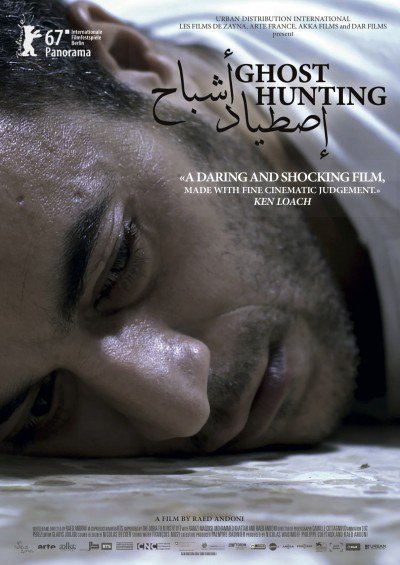 A film depicting the torture, humiliation and violence experienced by Palestinians imprisoned by Israel won the first ever “Silver Bear” award at the Berlinale international film festival.
The film, “Istiyad Ashbah” (Ghost Hunting), was produced by Palestinian filmmaker Raed Andoni.
It was one of 18 finalists competing for the top honor at the Berlinale film festival this year. The ‘Golden Bear’ award was won by Hungarian filmmaker Ildiko Enyedi for the film “Testrol es lelekrol” (On Body and Soul).
Andoni’s film “Ghost Hunting” involves a powerful re-enactment of interrogation rooms and prison facilities in the infamous ‘Russian Compound’ prison run by Israel.
According to journalist Rene Windangel, who spoke with Andoni about the creation of the film, the director began by confronting his own ghosts, having been imprisoned during the first intifada in the late 1980s. He then “turned to newspaper ads as he set out to find a group of former inmates able to work as set designers and craftsmen in recreating a prison on the film set. He also sought out ex-detainees willing to play the roles of prison wardens and prisoners. And so this group of people, who had themselves experienced imprisonment, began to meticulously build their own prison.”
German commentator Rene Windangel wrote in the paper ‘Qantara’, in a review of the film, “By giving the actors and crew room to express themselves, Andoni’s film manages to avoid cliches. In no way is the film limited to the observation of suffering or the re-enactment of victimisation. Raed Andoni’s film functions as both trauma therapy and as an opportunity to discuss the political problem of prisoners. First and foremost, though, the film works as an impressive piece of cinematography dealing with the basic questions of the human condition.”
Currently there are around 7000 Palestinian men and women imprisoned by Israel. Over 750,000 Palestinians have been imprisoned since 1967 and the start of the Israeli occupation of Gaza, the West Bank and East Jerusalem. Most were sentenced by military courts, while others were held without any charges in so-called “administrative detention”. There are practically no Palestinian families that have been spared the experience of prison.
All aboard reckless bandwagon blaming Russian subversion
By Finian Cunningham | RT | February 21, 2017
Russia is being blamed for interfering in elections across the globe, from the US, Britain, Germany to Estonia and others. Now the tiny Balkan state of Montenegro has jumped on the bandwagon, with an even more reckless version of the ‘Russia-did-it’ trope.
This week Montenegro’s state prosecutor concluded Russian state agents were not only trying to subvert elections, but the alleged plot also involved the attempted assassination of the former prime minister, to prevent it becoming a member of NATO.
With suspiciously good timing, the far-fetched story was given dubious credibility by Britain’s Telegraph newspaper. The day before the Montenegrin prosecutor made the announcement, the Telegraph published an article in which anonymous “Whitehall sources” issued the same claims of a Russian-sponsored coup attempt in Montenegro during the country’s parliamentary elections last October.
The fact the Telegraph is a well-worn conduit for British military intelligence disinformation is relevant.
Moscow lambasted the accusations as “absurd.” Kremlin spokesman Dmitry Peskov said the claims were “irresponsible,” having been leveled without any supporting evidence.
Russian Foreign Minister Sergey Lavrov noted the Montenegro scenario of alleged Russian interference “is just another one in a series of groundless assertions blaming our country for carrying out cyberattacks against the entire West, interfering in election campaigns in the bulk of Western countries, as well as allegations pointing to the Trump administration’s ties with Russian secret services, among other things”.
“Not one iota of evidence has been brought forward about these groundless accusations,” added Lavrov.
The Montenegrin authorities are indeed just the latest to finger Russia as a convenient scapegoat to distract from what appears to be their own internal political problems.
The canard was perhaps given away when Montenegro’s Foreign Minister Srdjan Darmanovic commented this week: “In today’s world, such interference is not specific only for Montenegro.” The minister is clearly trying to wrap Montenegro up in the same cloth of victimhood claimed by others who are impugning Russian malfeasance.
More plausibly, the real story here is Montenegro’s controversial plans to join the US-led NATO military alliance. NATO’s civilian chief Jens Stoltenberg formally invited the country to become the 29th member of the Alliance last May.
However, that move which has been pushed by former premier Milo Djukanovic and his ruling party is widely opposed among Montenegro’s population of 620,000, with polls showing public opinion edging against membership. This public opposition partly stems from the recent history of NATO bombing former Yugoslavia and the subsequent break-up of the state which led to Montenegro’s independence in 2006.
To be sure, Russia is staunchly against Montenegro joining NATO, viewing it as another provocative eastward expansion of the military pact toward its borders. Moscow is supportive of Montenegrin political parties opposed to NATO membership but denies any underhand interference in the country’s internal affairs.
The supposed plot by Moscow to overthrow the Montenegrin government in last year’s parliamentary elections to scuttle plans to join NATO is much more likely to be a ruse by the authorities to drum up anti-Russian public sentiment – with the aim of promoting its pro-NATO cause.
What Russia is accused of hatching in Montenegro – an armed takeover of parliament and trying to assassinate the premier – is so outlandish it can hardly be taken seriously. But the far-fetched allegations are being swept along in the slipstream of a much bigger propaganda drive in the West to blame Russia for everything.
German news outlet Deutsche Welle published an article last week with the headline: “Is Moscow meddling in everything?” It goes on to ask with insinuating tone: “Does Putin decide who wins elections in the West? Many believe that he cost Clinton the US presidency; now Macron is next [in] France, and then Merkel will be in the line of fire.”
In the US, the Senate Intelligence Committee is stepping up its probe into allegations Russian cyber hackers helped Donald Trump win the presidential election on November 8. No evidence has ever been provided by US intelligence agencies to support these claims. But the allegations have taken on a life of their own, becoming coined as “fact” in the media and among Republican and Democratic politicians alike.
In Britain, parliamentarians have retrospectively cited the unproven Russian “influence campaign” for Trump to claim that Russian interference was a factor in why Britons voted unexpectedly in the referendum last June to leave the European Union.
According to American intelligence claims reported last month, Russia has interfered in the electoral process of several other European countries, including Austria, Germany, France, Bulgaria, Estonia, and Poland, as well as Ukraine.
This is in spite of the findings by German intelligence which concluded that there was no evidence that Russia hackers had targeted the country.
In the torrid climate of fake news and “fact-free” narratives, arguably the most egregious exemplar of this are the repeated claims of Russian interference in other nations’ elections. Western news media and governments have abdicated any modicum of responsible conduct to push this inflammatory narrative.
In recent days, French Foreign Minister Jean-Marc Ayrault issued a warning to Russia after he accused Moscow of interfering in the country’s forthcoming presidential elections. France’s top diplomat apparently based his condemnation against Russia on partisan claims made by presidential contender Emmanuel Macron that his campaign was being targeted by Russia. Macron claims his team’s computers were being attacked by hackers. Again, no evidence was provided. He also pointed to an unfavorable article in Russian news outlet Sputnik as grounds for claiming the Kremlin was out to spoil his campaign.
As in the heyday of the Cold War, and its countless Red Scare stories to keep Western populations cowering in fear, Russia has again emerged as the ultimate scapegoat.
Western states are wobbling from a lack of authority perceived by the public in governing institutions. Decades of economic and social inequality and overseas illegal wars have eroded the legitimacy of established political parties and mechanisms of governance. Western countries are groaning from discontent toward elitist, effete rulers.
The rise of populist figures, including Donald Trump in the US and anti-EU, anti-NATO parties in Europe, is symptomatic of this historical movement of mass protest.
Rather than the establishment parties and institutions, including the mainstream media, accepting that there is a popular revolt underway against a corrupt system, the convenient “explanation” is to blame the decline on Russia. The old Western order is falling apart it seems, from its own internal decay and misrule. But unable to face the truth, the ruling parties and system are desperately looking for a culprit. Russia and its alleged fiendish designs to destroy the Western order is the convenient scapegoat.
The propaganda delirium of blaming Russia for everything has become so fevered that even Montenegro’s ruling clique is emboldened to come up with the preposterous claim that Moscow is trying to assassinate its leaders.
This bandwagon of blaming Russia is prone to its wheels coming off – so ridiculous is it. But there’s also a danger that the anti-Russia vehicle pushed too far could explode into a full-scale war between NATO powers and Russia.
READ MORE:
‘Fake news recycling’: Russian Embassy calls out UK media over ‘Montenegro coup plot’ report
4 dead Russian Diplomats in 3 months
By Adam Garrie | The Duran | February 20, 2017
Vitaly Churkin was one of the wisest voices in international diplomacy. His voice will no longer echo in the halls of the United Nations. Articulate, polite yet commanding, wise yet affable, he oversaw some of Russia’s and the world’s most important events in a position he occupied since 2006.
Churkin had to face a great deal of hostile criticism from both the Bush and Obama administrations during his time at the UN, but he always did so with grace. He never failed to explain the Russian position with the utmost clarity.
Standing next to some of his colleagues, he often looked like a titan in a room full of school children.
His death, a day before his 65th birthday, is a tragedy first and foremost for his family, friends and colleagues. It is also a deeply sad day for the cause of justice, international law and all of the principles of the UN Charter which Churkin admirably upheld in the face of great obstacles.
His death however raises many uncomfortable questions…
Here are 5 things that must be considered:
1. A Macabre Pattern Has Emerged
Beginning in 2015, there were several deaths within the Russian Diplomatic corps and a special Russian Presidential adviser.
–LESIN
First there was Russia’s RT founder and special adviser to President Putin, Mikhail Lesin. He died in November of 2015 in his hotel room. Reports said that he appeared discombobulated during his last sighting before he died. Later it emerged that he died of a blunt head trauma. Drinking was blamed, but many questions were left unanswered.
–MALANIN
Earlier last month, Andrei Malanin, a Senior Russian Diplomat to Greece was found dead in his bathroom. The causes of death remain unknown.
–KADAKIN
Just last month, Russia’s Ambassador to India, Alexander Kadakin, an always prestigious role, died of a heart attack, although no one was aware of any previous health issues.
–KARLOV
In December of last year Russia’s Ambassador to Turkey was assassinated by a lone jihadi gunmen in an art gallery. There was no effective security as the killer simply walked up to Ambassador Andrei Karlov and shot him multiple times in the back.
–CHURKIN
Vitaly Chirkin is the highest profile member of Russia’s diplomatic corps to die in recent years.
2. A Motive For Foul Play?
Each of the recently deceased Russian Ambassadors were high profile targets for miscreants and criminals, whether state actors, mercenaries or fanatics.
Lesin was instrumental in the creation of RT, a news outlet which has come under constant attack from the western establishment.
Malanin had overseen a period of warming fraternal relations between Greece and Russia at a time when Greece is feeling increasingly alienated from both the EU and NATO.
Karlov is said to be responsible for helping to facilitate the rapprochement between Presidents Erdogan and Putin.
Kadakin oversaw a period of renewed tensions between India and Pakistan at a time when Russia was trying to continue its good relations with India whilst building good relations with Pakistan.
On the 31st of December, 2016, Churkin’s resolution on a ceasefire in Syria passed in the UN Security Council after months of deadlock. The resolution is still in force.
Anyone who wanted to derail the diplomatic successes that the aforementioned men achieved for Russia would have a clear motive to extract vengeance.
3. Who Stands To Gain?
In the matter of Karlov, any derailment of restored Russo-Turkish relations would be good for those happy for Turkey to continue her support of jihadists in Syria rather than moving towards accepting a Russian and indeed Iranian brokered peace process which respects the sovereignty of Syria as Russia and Iran always have, but Turkey has not.
In the case of Lesin, anyone wanting ‘vengeance’ for RT’s popularity would be able to say that a kind of former media boss was taken down.
For Malanin, many fear that if ‘Grexit’ happens, Russia will become an increasingly important partner for Greece. The EU would not like one of its vassal states enjoying fruitful relations with Russia, a country still under sanctions from Brussels.
For Kadakin, it is a matter of interest for those wanting Pakistan to continue favouring western powers and not wanting Russia to be able to mediate in conflict resolutions between New Delhi and Islamabad.
Churkin had come to dominate the UN in ways that his counterparts on the Security Council simply could not. No one really stood a chance in a debate with Churkin. His absence leaves open the possibility for a power vacuum that would makes other peoples’ jobs easier.
4. Where The Deaths Took Place
Each death took place on foreign soil. Mr. Karlov’s killing in particular, exposed the weakness of his security contingent. If security was that weak in a comparatively volatile place like Turkey, it goes without saying that security in states considered more politically stable would be even more lax.
Again it must be said that a non-biased detective might say that the only pattern which has emerged is that many people in the Russian diplomatic corps and related institutions have heart attacks. Maybe they eat fatty foods every day and drink and smoke too much. But if this was this case, why are the heart attacks all on foreign soil?
If all of the former Ambassadors except Karlov were really in bad health, is it really just a coincidence that none of these men had a health scare on Russian soil? Again, a pattern has emerged.
5. The Ethics of Speculation?
Many will say that it is too early to suspect foul play. Indeed, I must make it clear that this is simply speculation based on a pattern of tragic and at times unexplained events, combined with the objective reality that because of Russia’s recently elevated profile as a born-again geopolitical superpower, Russia is a bigger target for international criminals than it was in the broken 1990s or the more quiet early 2000s.
When such events happen, one’s duty is to speculate so that better health and safety precautions are taken to ensure the well-being of Russia’s important diplomats. Furthermore, if foul play is a factor, it means that such seemingly unrelated events must be investigated more thoroughly.
Russia has historically suffered from invasion, revolution and more recently from immense international pressure. The Russian people, like Russia’s ambassadors are entitled to the peace and long lives deserved by any member of a country that has suffered for too long.
Clinton to Trump: Speak out against anti-Semitic attacks now
By Jennifer Calfas – The Hill – 02/21/17
Hillary Clinton is urging President Trump to speak out against the surge of anti-Semitic threats and attacks around the country.
“JCC threats, cemetery desecration & online attacks are troubling & they need to be stopped. Everyone must speak out, starting w/ @POTUS,” Clinton tweeted early Tuesday.
Vandals over the weekend destroyed about 100 headstones at a Jewish cemetery in St. Louis. Meanwhile, Jewish Community Centers, including centers in Chicago, Houston and Tampa, received an influx of bomb threats later determined to be hoaxes.
The White House released a statement on the bomb threats Monday, saying “hatred and hate-motivated violence of any kind have no place in a country founded on the promise of individual freedom.”
The comment, like the White House statement on Holocaust Remembrance Day, has been criticized by some for not specifically mentioning the Jewish community.
Ivanka Trump, the president’s daughter, denounced the threats against the Jewish Community Centers in a tweet Monday evening.
“America is a nation built on the principle of religious tolerance,” Trump tweeted Monday. “We must protect our houses of worship & religious centers. #JCC.”
US Confirms It Used Depleted Uranium in Syria

By Peter KORZUN | Strategic Culture Foundation | 21.02.2017
The US and its allies have many times attacked Russia for alleged «indiscriminate bombing» in support of the Syrian government, including cluster bombs. The accusations have been denied and never proven. Now the US military has confirmed it misinformed the public about its use of munitions in Syria which cause harm to civilians.
The US military has admitted using depleted uranium (DU) anti-tank rounds on two occasions in 2015 during devastating air strikes against convoys of Islamic State (IS) tanker trucks. Investigative reporter Samuel Oakford first brought up the use of DU ammunition by the coalition in October 2016. There have been questions raised ever since.
According to US Central Command spokesman Major Josh Jacques, a total of 5,265 depleted uranium rounds were fired in combination with other incendiary rounds in 2015. The US may use the munitions again. As the official put it, «We will continue to look at all options during operational planning to defeat ISIS, this includes DU rounds».
Earlier statements maintained that the coalition would not do so. In 2015, the US military Operation Inherent Resolve spokesman John Moore said that US and coalition aircraft have not been and will not be using depleted uranium munitions in Iraq or Syria during Operation Inherent Resolve. Now one can see the statements were not true.
Depleted uranium is the byproduct of the enriched uranium needed to power nuclear reactors. It is roughly 0.7 times as radioactive as natural uranium, and its high density makes it ideal for armor-piercing rounds such as the PGU-14 and certain tank shells.
The depleted uranium munitions are known for their enhanced armor-piercing capabilities. They have been criticized for posing health risks to soldiers who fire them and to civilian populations. Some scientists and Iraqi physicians blame depleted uranium weapons used by US forces for a major increase in cancer cases and birth defects in Iraq. The munitions have been suspected to be a possible cause of «Gulf War syndrome», the name given to a collection of debilitating maladies suffered by veterans of the 1990-91 Gulf War and the US invasion of Iraq in 2003.
Numerous studies affirm the use of the munitions in Iraq negatively affected the health of civilian population causing cancer and birth defects. When it was used during the 1999 NATO bombing campaign in Kosovo, the United Nations advised that children stay away from the impact zones. Recently published data from the 2003 Iraq War showed that A-10 attack aircraft used more DU against targets that were not tanks or armoured vehicles, questioning the current US justification that DU was needed in Syria. Historic data from the Gulf War also demonstrated that most armoured targets destroyed by A-10s were targeted by Maverick missiles, not DU munitions.
The UN Environment Program has conducted studies and clean-ups of areas affected by use of the munitions in conflicts in the former Yugoslavia and Iraq. It has described them as «chemically and radiologically toxic heavy metal». In 2014, a United Nations International Atomic Energy Agency report on depleted-uranium munitions said that direct contact with larger amounts of depleted uranium through the handling of scrap metal, for instance, could «result in exposures of radiological significance».
A University of Southern Maine study discovered that depleted uranium causes widespread damage to DNA, which could lead to lung cancer, according to a study of the metal’s effects on human lung cells. «Given the international opprobrium associated with the use of depleted uranium, we had been pretty astonished to hear that it had been used in operations in Syria», Doug Weir, the International Coordinator for the Coalition to Ban Uranium Weapons, told the Washington Post on February 16.
There is no international treaty or rule that explicitly bans the munitions’ use. Internationally, DU exists in a legal gray area. In 2012, 155 states have supported a resolution calling for a precautionary approach to depleted uranium weapons during voting at the UN General Assembly. Just four countries – the US, UK, France and Israel – voted against and 27 abstained. The resolution was informed by the UN Environment’s Program’s (UNEP) repeated calls for a precautionary approach to the use and post-conflict management of the controversial weapons. The passage of this fourth General Assembly resolution is a further challenge to the use of radioactive and chemically toxic conventional weapons that can lead to environmental contamination and humanitarian harm.
It is worth mentioning that the US has a long history of using the weapons of mass destruction (WMD) banned by international law. In 2013, Amnesty International said US drone strikes could be classified as war crimes. It is broadly believed the global use of unmanned aerial vehicles (UAVs) in such countries as Afghanistan, Pakistan, Yemen, Iraq, Somalia and Libya, constitutes a violation of international law.
Obviously, the US UAV warfare violates Article 51 of the UN Charter that defines the rules of self-defense because America is not attacked. International law limits self-defense against prospective threats to ones which are «imminent». The employed signature tactics are inherently in violation of the principle of distinction because it fails to identify civilian or militant. Drone attacks run against the principle of proportionality concerning unintentional civilian casualties in war. They violate Article 2 of the Geneva Convention (IV) Relative to the Protection of Civilian Persons in Time of War by disregarding the human rights of the innocent civilians killed in the strikes. Furthermore, the US UAV tactics conflict with International Covenant on Civil and Political Rights (ICCPR), which prohibits «arbitrary» killing even during an armed conflict. The US is not a signatory to the International Criminal Court (ICC) or many other international legal forums where legal action might be started. It is, however, part of the International Court of Justice (ICJ) where cases can be initiated by one state against another. Conducting drone strikes in a country against its will, like in Syria, for instance, could be seen as an act of war.
So, it’s double standards again while the acts of war continue. Their justice, legality and necessity are questioned but somehow their issues don’t hit headlines of US media, while Russia does. The US blaming Russia for «indiscriminate bombing», the use of cluster bombs and other misdeeds in Syria is like the pot calling the kettle black.
Russia NOT involved in ‘Montenegro coup’
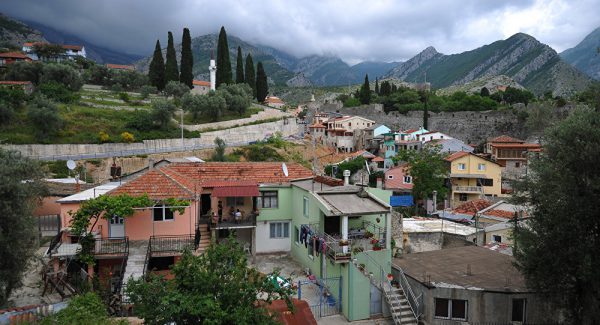
© Sputnik/ Ramil Sitdikov
By Alexander Mercouris | The Duran | February 21, 2017
As the hysteria over the wholly fictional links between the Trump administration and Russia continues unabated, claims have been circulating about a supposed Russian plot to overthrow the government of Montenegro so as to prevent that country from joining NATO.
To say that the ‘evidence’ for this is thin would be an understatement. The best summary is in the Guardian :
Montenegrin police arrested a group of Serbian nationals on the eve of the 16 October vote and two Russian suspects are wanted over the alleged plot to seize parliament and assassinate former president and prime minister Milo Đukanović.
Montenegrin authorities had previously said the conspiracy was orchestrated by “Russian nationalists” but special prosecutor Milivoje Katnić went a step further on Sunday evening, suggesting that Russian authorities were involved.
“So far we have had evidence that Russian nationalist structures were behind [the plot], but now also that Russian state bodies were involved at a certain level,” Katnić told local media. “The organs of the Russian state must investigate which bodies are involved and open a criminal trial over these acts.”
A spokesman for the Russian president, Vladimir, Putin, dismissed the allegations. “These (are) absurd accusations … We do not interfere in the internal affairs of other countries, including Montenegro,” Dmitry Peskov said on Monday.
According to Katnić, a key witness, Aleksandar Sinđelić, a nationalist Serb, was invited to Moscow by Eduard Sismakov, a member of “Russian military structures”, to be cleared for the mission. Sismakov, using the alias Shirakov, “asked him to work first to prevent Montenegro from entering Nato. That is the sole motivation of these structures,” Katnić said. Montenegrin prosecutors suspect 25 people, mostly Serbs, of links to the alleged coup, and are searching for two Russians, including Sismakov, who is believed to be the main organiser.
In other words the entire weight of the claim of Russian involvement in the supposed coup rests on the supposed connection between the plotters and an individual identified as “Eduard Sismakov”. As to who Eduard Sismakov is, he has been identified by the BBC as a former deputy military attache to Poland.
It is just about conceivable that some fiery people in this small but proud Balkan Slav country with its tradition of friendship towards Russia might have come up with some crackbrained plan to overthrow the government in order to prevent it joining NATO. Given the long history of close contacts between Montenegro and Russia it is also just possible that they might have met with some people in Russia and got support from them. To construct from these facts a wild theory of a Russian plot to overthrow the government of Montenegro is however little short of absurd. Yet as leaks from the usual ‘anonymous officials’ to the Daily Telegraph show, the British government is trying to give credence to the whole affair.
It is barely conceivable that anyone in any senior position in Moscow would seriously contemplate the idea of a coup in Montenegro. Though the Russians would obviously prefer that Montenegro did not join NATO, the country is too small and too distant from Russia for this to be a serious issue for them. It beggars belief that anyone in authority in Moscow would take the totally reckless and irresponsible step of ordering a coup in a traditionally friendly country in order to prevent something which for Russia ultimately does not matter.
Moreover for the Russians to plan a coup in another country would be for them an extraordinary step to say the least. Whilst the US has a long history of organising or backing coups in foreign states going all the way back to the coup in Iran in 1953, the Russians have not played any role in any coup in Europe since the Czech coup of 1948. Nor have they engaged in much coup making elsewhere. The coup in Afghanistan in 1978 which they were once widely believed to have organised is now known to have caught them by surprise.
Given their traditional aversion to organising coups in other countries – and their lack of know-how in how to do it – it is scarcely conceivable that the Russians would attempt such a thing in Montenegro where the benefits are small and the risks are so obviously great.
In Montenegro itself the government’s plan to join NATO has come in for a great deal of criticism, and there are reports that the opposition to the government is claiming that the whole coup plot is a fiction fabricated by the government in order to discredit it.
I do not know whether that is true or not. However it is altogether more likely than the farfetched claims about Russian involvement in the plot which the Montenegro authorities are making.
Featured Video
Prof. Ted Postol: Iran Already Achieved Nuclear Deterrence Against Israel
or go to
Aletho News Archives – Video-Images
From the Archives
How the occupied mentality syndrome works
Saudi Arabia on the American chessboard – Part 3
By B. J. Sabri | American Herald Tribune | June 27, 2016
Read part 2: “The occupied mentality Syndrome“
Previously I argued whether Saudi Arabia’s repeated involvements in U.S. interventions and wars stem from free national will or in response to a specific condition. For starters, in Saudi Arabia there is no national will. In Saudi Arabia, the national will is the will of the Al Saud clan. Still, when a major Arab state allies itself with a superpower that committed unspeakable crimes against humanity in almost every Arab country, then something is wrong. This fact alone should compel us to examine the U.S.-Saudi relation for one exceptional reason. As a result of the U.S.-Saudi wars, hundreds of thousands of people in Afghanistan, Iraq, Iran, Libya, Syria, Yemen, and Somalia have lost their lives. Millions became displaced in their own homelands. And millions more rendered refugees.
Attributing the Saudi policies to the bonds of “partnership” with the U.S. is frivolous. There are no bonds between these two thugs except those of business, military deals, secret plots, and wars. Proving this point, bonds such as these have no space for the American and Saudi peoples to share significant cultural or societal exchanges. If partnership is not the reason for the Saudi contribution to the U.S. strategy of empire and imperialism, then another reason must exist.
This leads to three possibilities. … continue
Blog Roll
 Aletho News
- NIAID/NIH and USDA Fund Bioengineered Chimeric Influenza Viruses Built Using Pandemic H1N1 Components: Journal ‘Science Advances’
- Hezbollah hits Israeli warship off Lebanon’s coast, sets it aflame
- Iran slams US strikes on B1 bridge, Mahshahr petrochemical plants as ‘blatant acts of state terrorism’
- In letter to UN chief, Araghchi warns of dire consequences of US-Israeli attacks on Iran’s nuclear facilities
- Why the CIA conspiracy to invade Iran with Kurdish militias failed
- Why Are Upbeat US Claims About Mission to Rescue Pilot ‘Highly Questionable’?
- Aircraft destroyed during US ‘rescue’ of downed F-15 pilot cost more than $100 million each
- Washington University removes professor who condemned US-Israeli war on Iran
- Russia Warns of Retaliation as UK Authorizes Seizure of Vessels
- Serbia thwarts plot to bomb Russia-Hungary gas pipeline – Vucic
- If Americans Knew
- In Iran, Israel-US take aim at “reason, research, and freedom of thought” – Daily Update
- US loses planes over Iran, Israel downgrades Lebanon war goals – Daily Update
- Israel Is Blocking Palestinians from Easter at Church Where Jesus Resurrected
- Plot to assassinate Palestinian activist follows harassment campaign promoted by Zionist groups and elected officials
- Prominent New York synagogue hosts presentation on why U.S. Jews should support the ethnic cleansing of Gaza
- Tapper vs. Piker: Is the CNN Anchor Auditioning for David Ellison?
- Shouldn’t Democrats Be Able to Condemn Genocide?
- Israel-US kill negotiators, destroy civilian structures, but Iran’s military capabilities still largely intact – Daily Update
- ‘War crime’: Global condemnation as Israeli ministers celebrate death penalty law targeting Palestinian prisoners
- 7 Ways Israel Is Turning Lebanon Into Gaza
- No Tricks Zone
- An Inconvenient Tree: Uncovered In Alps… Europe Much Warmer Than Today 6000 Years Ago
- New Study Reports A 60% Slowdown In Greenland’s Ice Loss Rate In The Last Decade
- Low Intensity Tornado Wrecks Major Solar Farm, Creating A Potential Toxic Dump
- New Study Finds Warming Saves Lives…Cold Temperatures 12 Times More Deadly Than Excess Heat
- German Science Blog Accuses PIK Climate Institute Of Hallucinating Climate Tipping Points
- Devastating Assessment Of Comirnaty Vaccine By Former Senior Pfizer Europe Toxicologist
- New Study: CO2 Is ‘Effectively Negligible’ As An Explanatory Climate Change Factor Since 2000
- Former Pfizer Toxicologist Dr. Helmut Sterz Tells Bundestag Hearing Pfizer Vaccine Should Have Never Been Approved
- Energy Expert: Germany’s Nuclear Phaseout Was A “500 Billion Euro Mistake”
- New Research: South Australia’s Mid-Holocene Sea Surface Temperatures Were 4°C Warmer Than Today
 Aletho News