New Cracks in Russia-gate ‘Assessment’
By Robert Parry | Consortium News | May 23, 2017
At the center of the Russia-gate scandal is a curious U.S. intelligence “assessment” that was pulled together in less than a month and excluded many of the agencies that would normally weigh in on such an important topic as whether Russia tried to influence the outcome of a U.S. presidential election.
The Jan. 6 report and its allegation that Russia “hacked” Democratic emails and publicized them through WikiLeaks have been treated as gospel by the mainstream U.S. media and many politicians of both parties, but two senior Obama administration intelligence officials have provided new information that raises fresh doubts about the findings.
On Tuesday, former CIA Director John Brennan told the House Intelligence Committee that only four of the 17 U.S. intelligence agencies took part in the assessment, relying on analysts from the Central Intelligence Agency, the National Security Agency and the Federal Bureau of Investigation, under the oversight of the Office of the Director of National Intelligence.
Brennan said the report “followed the general model of how you want to do something like this with some notable exceptions. It only involved the FBI, NSA and CIA as well as the Office of the Director of National Intelligence. It wasn’t a full inter-agency community assessment that was coordinated among the 17 agencies, and for good reason because of the nature and the sensitivity of the information trying, once again, to keep that tightly compartmented.”
But Brennan’s excuse about “tightly compartmented” information was somewhat disingenuous because other intelligence agencies, such as the State Department’s Bureau of Intelligence and Research (INR), could have been consulted in a limited fashion, based on their areas of expertise. For instance, INR could have weighed in on whether Russian President Vladimir Putin would have taken the risk of trying to sabotage Hillary Clinton’s campaign, knowing that – if she won as expected and learned of the operation – she might have sought revenge against him and his country.
The Jan. 6 report argued one side of the case – that Putin had a motive for undermining Clinton because he objected to her work as Secretary of State when she encouraged anti-Putin protests inside Russia – but the report ignored the counter-argument that the usually cautious Putin might well have feared infuriating the incoming U.S. President if the anti-Clinton ploy failed to block her election.
A balanced intelligence assessment would have included not just arguments for believing that the Russians did supply the Democratic emails to WikiLeaks but the reasons to doubt that they did.
Pre-Cooked Intelligence
However, the restricted nature of the Jan. 6 report – limiting it to analysts from CIA, NSA and FBI – blocked the kind of expertise that the State Department, the Defense Department, the Department of Homeland Security and other agencies might have provided. In other words, the Jan. 6 report has the look of pre-cooked intelligence.
That impression was further strengthened by the admission of former Director of National Intelligence James Clapper before a Senate Judiciary subcommittee on May 8 that “the two dozen or so analysts for this task were hand-picked, seasoned experts from each of the contributing agencies.”
Yet, as any intelligence expert will tell you, if you “hand-pick” the analysts, you are really hand-picking the conclusion. For instance, if the analysts were known to be hard-liners on Russia or supporters of Hillary Clinton, they could be expected to deliver the one-sided report that they did.
In the history of U.S. intelligence, we have seen how this approach has worked, such as the determination of the Reagan administration to pin the attempted assassination of Pope John Paul II and other acts of terror on the Soviet Union.
CIA Director William Casey and Deputy Director Robert Gates shepherded the desired findings through the process by putting the assessment under the control of pliable analysts and sidelining those who objected to this politicization of intelligence.
The point of enlisting the broader intelligence community – and incorporating dissents into a final report – is to guard against such “stove-piping” of intelligence that delivers the politically desired result but ultimately distorts reality.
Another painful example of politicized intelligence was President George W. Bush’s 2002 National Intelligence Estimate on Iraq’s WMD that removed INR’s and other dissents from the declassified version that was given to the public.
Lacking Evidence
The Jan. 6 report – technically called an Intelligence Community Assessment (or ICA) – avoided the need to remove any dissents by excluding the intelligence agencies that might have dissented and by hand-picking the analysts who compiled the report.
However, like the declassified version of the Iraq NIE, the Russia-gate ICA lacked any solid evidence to support the conclusions. The ICA basically demanded that the American public “trust us” and got away with that bluff because much of the mainstream U.S. news media wanted to believe anything negative about then-President-elect Trump.
Because of that, the American people were repeatedly – and falsely – informed that the findings about Russian “hacking” reflected the collective judgment of all 17 U.S. intelligence agencies, making anyone who dared question the conclusion seem like a crackpot or a “Russian apologist.”
Yet, based on the testimonies of Clapper and Brennan, we now know that the ICA represented only a hand-picked selection of the intelligence community – four, not 17, agencies.
There were other biases reflected in the ICA, such as a bizarre appendix that excoriated RT, the Russian television network, for supposedly undermining Americans’ confidence in their democratic process.
This seven-page appendix, dating from 2012, accused RT of portraying “the US electoral process as undemocratic” and offered such “proof” as RT’s staging of a debate among third-party presidential candidates who had been excluded from the Republican-Democratic debates between Mitt Romney and Barack Obama.
“RT broadcast, hosted and advertised third-party candidate debates,” the report said, as if allowing political figures in the United States who were not part of the two-party system to express their views, was somehow anti-democratic, when you might think that letting Americans hear alternatives was the essence of democracy.
“The RT hosts asserted that the US two-party system does not represent the views of at least one-third of the population and is a ‘sham,’” the report continued. Yet, polls have shown that large numbers of Americans would prefer more choices than the usual two candidates and, indeed, most Western democracies have multiple parties, So, the implicit RT criticism of the U.S. political process is certainly not out of the ordinary.
The report also took RT to task for covering the Occupy Wall Street movement and for reporting on the environmental dangers from “fracking,” topics cited as further proof that the Russian government was using RT to weaken U.S. public support for Washington’s policies (although, again, these are topics of genuine public interest).
Assessing or Guessing
But at least the appendix offered up some “evidence” – as silly as those examples might have been. The main body of the report amounted to one “assessment” after another with no verifiable evidence included, at least in the unclassified version that the American people were allowed to see.
The report also contained a warning about how unreliable these “assessments” could be: “Judgments are not intended to imply that we have proof that shows something to be a fact. Assessments are based on collected information, which is often incomplete or fragmentary, as well as logic, argumentation, and precedents.”
In other words, “assessing” in intelligence terms often equates with “guessing” – and if the guessers are hand-picked by political appointees – it shouldn’t be surprising that they would come up with an “assessment” that would please their bosses, in this case, President Obama and his appointees at CIA, NSA, FBI and ODNI.
The timing and speed of the Jan. 6 report also drew some attention at Tuesday’s House Intelligence Committee hearing, where Rep. Elise Stefanik, R-New York, noted that President Obama requested the ICA on Dec. 9 and the last entry was dated Dec. 29.
“This report was produced in just 20 days in December,” Stefanik said, adding: “It’s of concern to me that there was a two-month lag” between when Obama’s intelligence agencies first alleged Russian “hacking” of Democratic emails and when Obama ordered the ICA.
Of course, the ICA’s flaws do not mean that Russia is innocent or that WikiLeaks is telling the truth when it asserts that the two batches of Democratic emails – one from the Democratic National Committee and the other from Clinton campaign chairman John Podesta – did not come from the Russians.
But the Jan. 6 report has served as the foundation for a series of investigations that have hobbled the Trump administration and could lead to the negation of a U.S. presidential election via the impeachment or forced resignation of President Trump.
The seriousness of that possibility would seem to demand the most thorough examination and the fullest vetting of the evidence. Even just the appearance that the ICA might be one more case of politicized intelligence would do more to destroy Americans’ faith in their democratic system than anything that Putin might dream up.
Investigative reporter Robert Parry broke many of the Iran-Contra stories for The Associated Press and Newsweek in the 1980s.
Canadian companies caught with hands in African colonial cookie jar
By Yves Engler · May 23, 2017
The recent seizure of phosphate from a Moroccan state company in South Africa and Panama is a blow to corporate Canada and a victory for national independence struggles. It should also embarrass the Canadian media.
This month courts in Port Elizabeth and Panama City okayed requests by the POLISARIO Front asking South Africa and Panama to seize two cargo ships with 100,000 tonnes of phosphate from Western Sahara, a sparsely populated territory in north-western Africa occupied by Morocco. Ruled by Spain until 1975, Moroccan troops moved in when the Spanish departed and a bloody 15-year war drove tens of thousands of Sahrawi into neighbouring Algeria, where they still live in camps.
No country officially recognizes Moroccan sovereignty over Western Sahara. The UN calls it “occupied” and the Fourth Geneva Convention as well as the Rome Statute prohibit an occupying power from exploiting the resources of territories they control unless it’s in the interest of, and according to, the wishes of the local population. In 2002 the UN Under-Secretary-General for Legal Affairs Hans Corell described the exploitation of Western Sahara’s natural resources as a “violation of the international law principles applicable to mineral resource activities in Non-Self-Governing Territories.”
Saskatoon’s PotashCorp and Calgary’s Agrium, which are merging, have a partnership with Moroccan King Mohammed VI’s OCP Group to export phosphate mined in Western Sahara. The two Canadian companies buy half of Western Sahara phosphates and it was an Agrium shipment that was seized in Panama.
To deflect from its complicity in violating international law, PotashCorp says OCP’s operations benefit the Sahrawi people. A 2014 PotashCorp statement claimed: “OCP has established a proactive affirmative action campaign to the benefit of the local people and, importantly, is making significant economic and social contributions to the entire region. As a result, we believe those who choose to make a political statement about OCP are effectively penalizing Saharawi workers, their families and communities.”
International solidarity activists have called on businesses to stop exploiting Western Sahara’s resources, which has led the Ethical Fund of Vancity credit union, four pension funds in Sweden and Norway’s $800 billion pension fund to divest from PotashCorp. A number of fertilizer companies have also severed ties to OCP, Morocco’s largest industrial company. The POLISARIO Front national liberation movement and African Union claim deals with OCP to export Western Sahara phosphate contravene international law and prop up Morocco’s control.
While only preliminary, the recent court decisions are important for national independence struggles. The South Africa case is thought to be the first time an independence movement has won legal action to intercept the export of state property.
Aside from a handful of stories in the business press, the Canadian media has basically ignored PotashCorp and Agrium’s role in violating international law. In the lead-up to the 2015 Saskatoon launch of Canada in Africa: 300 Years of Aid and Exploitation I submitted a piece about PotashCorp’s role in buying the non-renewable resources of Africa’s last remaining colony. The Saskatoon Star Phoenix opinion editor, who I’d communicated with on a few occasions when writing op-eds for a union, told me he was considering it and then responded a week later. “Hi Yves, Thanks, but I will pass on your op-ed. This issue has been on our pages in the past, with both sides of the debate making their points.” But when I searched the Star Phoenix database for articles on the largest publicly traded company in Saskatoon ties to Morocco’s occupation of Western Sahara there was a single 264-word letter to the editor criticizing PotashCorp’s policy two and a half years earlier (and a rebuttal from a company representative). Apparently, the Saskatoon business titan’s role in violating international law only warrants 264 words.
As part of writing this story, I searched Canadian Newsstream for coverage of PotashCorp and Agrium’s ties to Western Sahara. I found eight articles (a couple appeared in more than one paper) in major dailies on the subject, as well as three letters to the editor, over the past six years. Yet, as if violating international law is only of interest to those making investment decisions, all but one of the articles appeared in the business pages. When the Sisters of Mercy of Newfoundland brought a resolution to PotashCorp’s 2015 shareholder meeting about Western Sahara, the Canadian Press reported on it but only a few news outlets picked up the wire story.
While the Sahrawi struggle is unfamiliar to Canadians, it is widely known in African intellectual circles. An international solidarity campaign, with a group in Victoria, has long highlighted corporate Canada’s ties to the Moroccan occupation. I wrote about it briefly in my Canada in Africa and in an article for a number of left websites. In September 2015 Briarpatch did a cover story titled A Very Fertile Occupation: PotashCorp’s role in occupied Western Sahara and last week OurSask.ca published a long article titled Why a Segment of Saskatchewan’s Economy, and Our Ethical Compass, Hinges on an Undeveloped, War-Torn African Nation. An activist in Regina has been crowd funding for a documentary project titled Sirocco: Winds of Resistance: How the will to resist a brutal occupation has been passed on to two women by their grandmothers.
As my experience with the Star Phoenix suggest, the mainstream media is not unaware of the subject. Rather, there is a deeply held bias in favour of the corporate perspective and unless activists politicize the issue editors will ignore corporate Canada’s complicity in entrenching colonialism in Africa.
Tory Lead Tumbling
By Matthew JAMISON | Strategic Culture Foundation | 23.05.2017
It has been quite a few weeks in the latest British General Election. The really interesting story is how the Conservative Party’s lead in the opinion polls keeps dropping. At the outset of the announcement of a General Election in the middle of April the Tories stood atop what looked like an insurmountable opinion poll lead. The opinion poll companies put the lead at somewhere in the range of 18-22%. This would have given the Conservative Party its biggest landslide majority in the House of Commons since the 1980s. Even as matters stand now the Conservatives are still on course to win the election and with a larger majority than at the 2015 General Election.
Yet their opinion poll lead rather than holding up or growing ahead of Election Day set for Thursday June 8th is actually declining as the campaign wears on. With so much of the mainstream press in Britain backing Theresa May’s Tory Party and the overwhelmingly hostile campaign of nearly all the newspapers and members of his own Parliamentary Party, Mr. Corbyn, had been pronounced by many in the London media and indeed within his party in the House of Commons as a dead man walking with no hope of slashing the Tory lead let alone consistently week on week bring it down by 3-4%. Now the Tories once mighty lead has fallen by nearly 10% in the space of three weeks or so. At this rate come election day it may even be tied between Labour and the Conservatives or a few points separating them.
How has this happened. Well, it would appear that while most of Mr. Corbyn’s Parliamentary Party were plotting his downfall with various journalists he and the Labour Leadership have been developing rich policy work across a range of public policy areas in need of drastic reform. Since the formal launch of the campaign all we have had from Theresa May and her Conservatives is one vacuous slogan: «Strong and Stable leadership.» Nothing on the NHS and the funding crisis it and schools in Britain are facing. Nothing on plans to update and improve Britain’s appalling infrastructure; nothing to help bring down the cost of living holding shark landlords and extortionate rents to account. Nothing on the job creation of the future. Basically on all the important domestic policies which affect people’s lives, Theresa May and the Conservative Party have said and presented nothing.
When she and her colleagues have finally started discussing their actual policies and governing vision for Britain it actually started to frighten some of what were thought to be some of the most reliable of the Tory horses – Pensioners. Pensioners and those nearing retirement were greeted with the Tory prospect that a «dementia tax» would be introduced which would see elderly people receiving social care and having to fund the entire cost, until they reached their last £100,000 of assets. They are quite a large voting bloc and overwhelmingly backed Brexit against the wishes of future generations who will actually be alive when those who voted for Brexit are long gone.
The average UK house price stands at £215,847, so the «dementia tax» would affect many middle-class voters. It is being compared to Margaret Thatcher’s flagship policy of her third term – the «Community Charge» or Poll Tax which proved so unpopular in the country that it fuelled a massive rebellion that ended her near 16 year leadership of the Conservative Party. So, perhaps British voters are finally, finally just starting (and here I emphasize just starting) to finally wake up and realize that the Tories are a deeply divisive, sinister party who offer nothing for those who need it the most and are a tiny clique of a party that represents the interests a very privileged, powerful, wealthy minority whose number one political agenda is to protect and preserve their privileges and vested interests while ensuring the perpetuation of economic and social inequality which suits the preservation and enhancement of their established wealth and with it power to the detriment of the country as a whole. There have also been Mrs. May’s lukewarm attitude towards preserving the «triple lock» on pensions and the possibility that VAT already at a staggering 20% may go up after the next Parliament.
Meanwhile, the Labour Party have been rolling out what appear to be well thought out; costed and popular policies with key constituencies across the UK. Many people have started to say that Jeremy Corbyn’s message on the home front or his foreign policy views make a great deal of sense and he is not the Stalinist madman that the likes of the Daily Mail and the Sun have made him out to be while Mrs. May’s vacuous, meaningless slogan «strong and stable leadership» is starting to wear very thin with little policy meat on the bones to back it up and what there is such as the «dementia tax» are thoroughly nasty, horrible policies. Mrs. May; her inadequate team and the party she leads may find come polling day they squandered one of the largest opinion poll leads in the shortest space of time imaginable. If by June 9th we are back to the situation of 2010 where no one party commands an overall working majority in the House of Commons there could very well be the possibility of a Labour/Liberal/SNP alliance forming a Coalition Government with the Greens thrown in for good measure. What delicious irony it would be if the only exit Mrs. May gets to preside over is her own exit from No. 10 Downing Street in the days after June 8th.
EU ministers approve plans to force social media companies to tackle hate speech
RT | May 23, 2017
European Union ministers have approved plans to force social media companies to combat hate speech on their platforms. It comes a day after Facebook’s internal guide for tackling such behavior was leaked.
The proposals, approved by ministers on Tuesday, mark the first attempt at legislating at EU level on the issue of hate speech across social media, according to Reuters. However, the plans still need to be ratified by the European Parliament before becoming law.
If the proposals are passed, social media companies including Facebook, Twitter, and YouTube would be forced to take measures to prevent hate speech, incitement to hatred, and content justifying terrorism.
“We need to take into account new ways of watching videos, and find the right balance to encourage innovative services, promote European films, protect children and tackle hate speech in a better way,” Andrus Ansip, EU Commission Vice-President for the digital single market, said on Tuesday, as quoted by Reuters.
The move comes after Facebook’s internal guide for combating hate speech was leaked online with its rules baffling many over its seemingly inconsistent policy direction.
It’s not the first time that European countries have called on social media outlets to do more to combat hate speech.
Earlier this month, an Austrian court ruled that Facebook must delete hateful posts directed at the leader of the country’s Green Party, a move that was viewed as a landmark victory for anti-hate speech campaigners.
Germany approved a bill in April which would see social media sites fined up to 50 million euros ($55.9 million) for failing to remove hate speech and so-called fake news. Critics denounced it as a violation of free speech.
Opponents of the bill even tried to climb onto the roof of the country’s Justice Ministry last week in protest over the bill.
In December, the International Auschwitz Committee accused Facebook of “poisoning the societal climate” in Germany and overseas, saying, the social media site’s soft treatment and arrogance towards online hate speech was “increasingly intolerable and dangerous.”
It appears that hate speech and fake news aren’t the only problems facing Facebook. A high number of murder and suicide videos posted on the social media platform prompted the company to announce earlier this month that it will be hiring 3,000 people to monitor content including live videos.
No proof to back allegations Russia gave weapons to Taliban – US military intel chief
RT | May 23, 2017
The thinly-veiled accusations in the US that Russia supplied arms to Taliban militants were not based on any physical evidence of weapons or money transfers, a senior US military official told lawmakers.
“We have seen indication that they offered some level of support but I have not seen real physical evidence of weapons or money being transferred,” Marine Lieutenant General Vincent Stewart, who serves as director of the US Defense Intelligence Agency (DIA), said at a Senate hearing.
Last month allegations against Russia were voiced by some US officials, including US Army General Curtis Scaparrotti, military commander of alliance forces in Europe, and US Army General John W. Nicholson Jr., who commands US troops in Afghanistan.
The officials claimed that Russia was exerting influence on the Taliban and may be involved in supplying weapons to the militants.
The Russian Foreign Ministry dismissed the allegations as “fabrications designed to justify the failure of the US military and politicians in the Afghan campaign.”
Stewart was reporting to the Senate Arms Services Committee on the Pentagon’s view on global threats to the US and its allies.
Trump’s Saudi visit wasn’t about Islam or Iran. It’s about America First.
By M K Bhadrakumar | Indian Punchline | May 22, 2017
The Saudi Arabian government didn’t do well to schedule US President Donald Trump’s speech at the Arab-Islamic-American Summit at Riyadh for May 21. Just a day earlier, the headlines in the world media were all about a unique event in the Muslim Middle East – free and fair elections in Iran which enabled the moderate-reformist President Hassan Rouhani to secure a second term by beating an opponent who was widely seen as representing the religious establishment.
Trump would have understood the awkwardness of his position. He was obliged to show gratitude to his Saudi hosts who propose to spend $350 billion in the US economy that would create hundreds of thousands of new jobs for the American people. On the other hand, he was expected to condemn and pillory what is, arguably, the one and only democratic country in the Persian Gulf – Iran.
Trump ended up saying the irreducible minimum regarding Iran:
- But no discussion of stamping out this (terrorism) threat would be complete without mentioning the government that gives terrorists all three-safe harbor, financial backing, and the social standing needed for recruitment. It is a regime that is responsible for so much instability in the region. I am speaking of course of Iran. From Lebanon to Iraq to Yemen, Iran funds, arms, and trains terrorists, militias, and other extremist groups that spread destruction and chaos across the region. For decades, Iran has fueled the fires of sectarian conflict and terror.
- It is a government that speaks openly of mass murder, vowing the destruction of Israel, death to America, and ruin for many leaders and nations in this room. Among Iran’s most tragic and destabilizing interventions have been in Syria. Bolstered by Iran, Assad has committed unspeakable crimes…The Iranian regime’s longest-suffering victims are its own people. Iran has a rich history and culture, but the people of Iran have endured hardship and despair under their leaders’ reckless pursuit of conflict and terror.
- Until the Iranian regime is willing to be a partner for peace, all nations of conscience must work together to isolate Iran, deny it funding for terrorism, and pray for the day when the Iranian people have the just and righteous government they deserve. (Transcript)
At the end of the day, Trump settled for a policy to “isolate” Iran and to “pray for the day” when Iran will be an agreeable partner. There was no itch to confront Iran or attack Iran. If a benchmark is needed, go back to George W. Bush’s famous ‘axis of evil’ speech regarding Iran in January 2002. (Watch the YouTube here.)
Indeed, the so-called Riyadh Declaration issued after the Arab-Islamic-American summit of 50 countries on Sunday contained much harsher language regarding Iran, but then, it is essentially a Saudi document, which the regime drafted exercising its prerogative as the host country. By no means is it a statement reflecting the Iran policy of the US or of the other 48 statesmen who gathered in Riyadh, including from Egypt, Pakistan, Oman and so on.
Equally, it was also apparent from the noticeably restrained moderate remarks regarding Iran by the US Secretary of State Rex Tillerson in the two joint press conferences with Saudi FM Adel Al Jubeir that the Trump administration took care not to exacerbate tensions with Iran. Jubeir spewed venom, but Tillerson simply listened. In his prepared statements regarding terrorism, interestingly, Tillerson did not even mention Iran. The ‘operative’ part of Tillerson’s remarks during the Q&A can be reproduced as follows:
- We are closely coordinating our efforts in terms of how to counter Iran’s extremism… in particular its support for foreign fighters… its support of militia not just in Yemen but in Iraq and in Syria.
- We are coordinating carefully around how we view the nuclear agreement.
- What I would hope – is that Rouhani now has a new term, and that he use that term to begin a process of dismantling Iran’s network of terrorism, dismantling its financing of that terrorist network, dismantling the manning and the logistics and everything that they provide to these destabilizing forces that exist in this region. That’s what we hope he does. We also hope that he puts an end to [Iran’s] ballistic missile testing. We also hope that he restores the rights of Iranians to freedom… That’s what we hope this election will bring. I’m not going to comment on my expectation. But we hope that if Rouhani wanted to change Iran’s relationship with the rest of the world, those are the things he could do.
- So it is our hope that – and we have a new leadership or a renewed leadership beginning another term in Iran – that they will begin to examine what this behavior is gaining for them, and rather, they will find their way back to a place that Iran historically enjoyed: good relations with its neighbors. And that’s what we hope they find their way back to as well. In the meantime, we will continue to take action to make it clear to Iran when their behavior is unacceptable… we will continue to take action through sanctions and we will continue to encourage others in the global community to take action as well so that Iran understands this is not acceptable. So we will be dealing with Iran in the economic sanction front and we will be dealing with Iran in these countries where they have decided to put their presence militarily.
In sum, Tillerson recapitulated the Obama administration’s policies toward Iran. No threat of war – ‘all-options-are-on-the-table’, etc. – no threat of regime change, no containment strategy. On the contrary, the subtle emphasis has been on the terms of engagement with Iran someday in a conceivable future.
Thereupon, Tillerson dropped a bombshell. The following was his answer when he was asked by a journalist, “Will you ever pick up the phone and call Iran’s foreign minister? Have you ruled out diplomacy with Iran?” :
- Well, in terms of whether I’d ever pick the phone up, I’ve never shut off the phone to anyone that wants to talk or have a productive conversation. At this point, I have no plans to call my counterpart in Iran, although, in all likelihood, we will talk at the right time.
Tillerson said effectively that the US hopes to engage with Iran “in all likelihood”. It is no small matter that he said this from Riyadh, while summing up what has been an extraordinarily successful visit by Trump in pursuit of his ‘America First’ doctrine.
Of course, the US-Iranian relations will remain highly problematic. But then four years is a long time in politics – and both Trump and Rouhani have that much time in hand. One can anticipate that Tehran will be savvy enough to sense the vibes from Riyadh and accordingly plot the road map ahead in its dealings with the Trump administration.
Do not forget that Bush’s ‘axis of evil’ speech in 2002 notwithstanding, Washington and Tehran had already got into a waltz in Iraq circa 2005 in a coordinated enterprise to advance Shi’ite empowerment in that country. Both the US and Iran knew the ground rules and the ‘red lines’ in Iraq, and they largely respected them in a co-habitation in mutual interests that was truly exceptional in contemporary world politics.
The bottom line today is that without Iran’s cooperation, the US cannot get very far in the war against the ISIS, al-Qaeda and other extremist groups in Iraq and Syria. To be sure, there will be a lot of jostling for space and influence but a US-Iran confrontation is not on cards. Neither side is seeking it.
US attack kills 7 in central Yemen: Pentagon
Press TV – May 23, 2017
At least seven people have lost their lives in a US ground and aerial operation in Yemen’s central province of Ma’rib, the Pentagon says.
Centcom, the US military command in the Middle East, said in a statement that the Tuesday raid had been carried out with the support of the former Yemeni government and had targeted a compound belonging to the al-Qaeda militant group.
“During this operation, US forces killed seven AQAP (Al-Qaeda in the Arabian Peninsula) militants through a combination of small arms fire and precision airstrikes,” the statement read.
It said that such assaults “provide insight into AQAP’s disposition, capabilities and intentions,” apparently referring to intelligence that may be obtained as a result of the raids.
On January 29, a similar US attack was conducted in Yakla Village in Bayda Province, the first authorized by President Donald Trump. A $75-million US aircraft was destroyed while dozens of Yemeni civilians and a US Navy SEAL were killed in the ill-prepared commando raid.
The Pentagon claimed that the attack had produced intelligence about al-Qaeda. However, senior US officials rejected the claim, saying that they were not aware of any actionable intelligence.
Yemen has been under regular US drone strikes, with Washington claiming to be targeting al-Qaeda elements while local sources say civilians have been the main victims.
Yemen has also been under military strikes in a prolonged war by Saudi Arabia and a number of its client states since late March 2015. The US has been providing assistance to that war, too.
UN envoy seeks to prevent any attack on crucial port city
On Monday, the United Nations’ Special Envoy for Yemen Ismail Ould Cheikh Ahmed traveled to Yemen, where he said he wanted to prevent any attack on the western port city of Hudaydah, which is a major lifeline for imports into Yemen.
Saudi Arabia has threatened to attack the port city and retake it from the Houthi Ansarullah movement, a popular movement that has teamed up with the Yemeni army to defend the country against the Saudi-led war.
Cheikh Ahmed also stressed that Yemen’s central bank “must remain independent and must belong to all the Yemeni people.”
He further voiced concern about the dire humanitarian situation, saying, “You all know that the cholera epidemic has increased, reaching more than 25,000 cases and there have been many deaths in less than two weeks.”
The UN envoy’s visit to Yemen was met with protests as some 200 people marched from the UN headquarters in Sana’a to the city’s airport.
The demonstrators pelted Ahmed’s motorcade with rocks, shoes, and eggs as the Mauritanian diplomat was leaving the Sana’a Airport. His bodyguards fired into the air to disperse the crowd.
The Yemeni protesters carried banners, reading “Lift the blockade of Sana’a Airport.” The airport has been closed to commercial flights since August 2016, after the Riyadh regime imposed an air embargo on it.
Hunger Striking for Palestinian Rights
Take the Salt Water Challenge

By Philip Giraldi • Unz Review • May 23, 2017
Marwan Barghouti has stopped drinking water. He started his hunger strike thirty-six days ago, together with 1,500 other Palestinians who are being held in Israeli prisons. Each day the strikers have been drinking water mixed with salt, the salt needed to keep their electrolytes functioning to stay alive, but their health has reached a critical phase in which they are experiencing vomiting, fainting and loss of vision. Barghouti, who has been in Israeli prisons for 15 years, is wagering with his own life in a bid to obtain better conditions for the 6,500 Palestinians in Israeli detention, most of whom have been imprisoned on faux terrorism related charges by military tribunals that have a 90% conviction rate. Nearly 500 children are among the prisoners, some of whom are only 12 years old, and there are also an estimated 500 Palestinians held in administrative detention, which permits the Israeli authorities to confine them indefinitely without any charges or any trial.
The Israeli authorities describe the hunger strike as a “violation of prison rules.” In the past, they have responded to such protests by bringing in doctors to help restrain and supervise force feeding of the strikers, but the practice proved very controversial among members of the medical profession and has been suspended, though there have been suggestions that “foreign” doctors might be brought in to do the dirty work. So it is to be presumed that the strike will continue until the protesters either win, begin to die or choose to cease and desist.
I have had the pleasure of speaking recently with Marwan’s youngest son Arab, a graduate of St. Mary’s College of California with a master’s degree in financial analysis, who has begun a campaign to publicize his father’s resistance against the Israeli prison authorities. He has been asking supporters to themselves drink salt water as a sign of solidarity with the hunger strikers. Many prominent Palestinians have done so publicly and the practice has become widespread both in Gaza and on the West Bank as well as among activists in Europe and the United States. It is also gaining strength on the social media, most particularly on Facebook, with videos of supporters of the Salt Water Challenge Salt Water Challenge inviting their friends to join the movement. Hunger striking is the ultimate personal statement, a peaceful form of protest that can only be effective if it helps to mobilize other forces to bring about change. With that in mind, the account of the suffering of Marwan Barghouti and his comrades in prison deserves the widest possible dissemination worldwide.
Marwan Barghouti is, not surprisingly, a controversial figure. His resistance to the Israeli occupation of his homeland began early at age 15 when he joined Fatah and eventually went on to co-found the organization’s youth movement. He later assumed leadership of its paramilitary wing Tanzim, though he eventually distanced himself from Fatah due to its corruption and for a short time headed his own reform party. He subsequently rejoined Fatah in 2006 and is now a member of the Palestinian Parliament. He is widely regarded as the most popular of Palestinian leaders even though he is in prison, or perhaps in part because of that.
Barghouti’s biography reads like a work of fiction. One of seven children, his father was a migrant worker. He completed high school while in an Israeli prison, where he learned Hebrew, and then went on to complete a BA in history and political science followed by an MA in international relations, both at the Palestinian Birzeit University. It required 15 years to complete his degrees because he was exiled to Jordan by the Israelis from 1987 to 1994 for his involvement in the First Intifada after being charged with “incitement,” a favorite catch-all phrase frequently used by Israel to indict anyone who is perceived as an opponent or critic when no actual charges can be plausibly supported by evidence.
Marwan Barghouti was indeed prominent in both the First and Second Intifadas due to his undoubtedly correct belief that a powerful Israel had no interest in any peaceful accommodation with the beleaguered Palestinians. He supported sometimes violent resistance and provocations directed at Israeli soldiers and settlers on the West Bank, though he did not consider Israeli citizens inside Israel legitimate targets. In 2002, he was arrested in Ramallah by the Israelis during the Second Intifada and eventually convicted of five counts of murder plus additional charges. He was given the maximum sentence of five cumulative life sentences for the alleged murders plus forty additional years for attempted murder and membership in an illegal organization.
In his trial Barghouti denied everything but refused to defend himself, claiming that the court had no jurisdiction and that he was legitimately resisting the Israeli occupation of his home. No one was able to demonstrate that he had actually killed anyone but the prosecution insisted that he had given the orders to do so. It should be noted that it was a political rather than a criminal event and completely illegal as he was a Palestinian living in Ramallah who was being tried in an Israeli court and sentenced to prison in Israel. The Inter-Parliamentary union subsequently reviewed the case and found that it had violated the accused’s rights and that numerous international legal agreements and norms were contravened.
Since 2002, there have been growing demands for Marwan Barghouti’s release, including from some Israeli politicians and peace groups, based on his relative moderation and desire to see a peaceful transition into a two-state solution for Israel and Palestine. He has sometimes been likened to Nelson Mandela as someone who could potentially bring order and justice to an apparently intractable situation. Barghouti is undeniably more popular than either Mahmoud Abbas of Fatah or Ismail Haniya of Hamas. If he were free and an election were held today, he would undoubtedly be elected Palestinian president.
It is important to understand the context of the plight of the Palestinian prisoners to appreciate where Barghouti’s struggle for Palestinian rights derives from. Israel shoots to kill Arab demonstrators, including children, who throw stones. It engages in illegal mass, arbitrary arrests of Palestinians who do not reside in Israel but are nevertheless subject to control by the Israeli military authorities who have a relatively free hand on the West Bank. Once convicted by a military court, which is almost always the case, the prisoners are then held in Israel, a violation of international law, while their homes back in the Palestinian territories are frequently demolished to collectively punish the families. The trip through Israeli security barriers from the West Bank to the prisons requires 20 hours travel each way, leading to a 45 minute visit with a barrier in between so no one can actually see anyone else. A one visit per year limit for anyone over 16 is part of a process intended to further punish the families. Prisoners are routinely tortured by Israel, including the “Palestinian Chair”, an excruciating procedure which was developed by the Israel Defense Force’s interrogators and later taught to Americans and used at Abu Ghraib. Hundreds of Arabs have also been killed while in custody and reports of organ harvesting have surfaced in the international media.
Over the past fifty years, an estimated 800,000 Palestinians have been imprisoned by Israel at one time or another, fully 40% of the adult male population. Meanwhile, Israeli settlers run amok on the West Bank, protected by the police and army as they attack Palestinians at random and systematically destroy their livelihoods. They are rarely arrested and, if they are, they are tried in Israeli civil courts where they are nearly always acquitted. It is a situation that would be unimaginable nearly anywhere else in the world but Israel gets away with it due to a sympathetic Jewish dominated media in the U.S. and lickspittle politicians worldwide who can easily be bought or coerced.
Numerous international laws and the Geneva Conventions have been violated in the horrific treatment of the Palestinians but Israel continues to act with impunity. Israel’s colonial occupation and theft of Palestinian land are illegal and have been frequently condemned by world bodies like the United Nations. The United States agrees that the settlements are illegal, though it avoids the word, but it balks at calling out the brutal Israeli military occupation for what it is. The U.S. has also served as Israel’s protector in the U.N. and elsewhere, meaning that there is no pushback against Israeli actions that is in any way commensurate to the crimes that its government commits.
The current American Ambassador to the U.N. Nikki Haley is a virtual echo chamber for Israel’s Foreign Ministry. She sells out U.S. interests to pander to the powerful domestic Israel Lobby which uses its money and political access to corrupt American politicians as well as judicial processes worldwide, as Alison Weir has recently demonstrated with her brilliant analysis of how any criticism of Israel is now being conflated with anti-Semitism and increasingly regarded as a universal “hate crime.”
Israeli apologists like to frame the Palestinian “problem” as a group of unredeemable terrorists who have to be dealt with harshly, a narrative that portrays all Arabs as a threat. But the reality is that Israel has overwhelming power and exercises brutal control over the Palestinian population, which is treated as if it were subhuman. Indeed, many Israelis believe that Arabs are subhuman and deserve to be “ethnically cleansed.” But a people under occupation, even if relatively powerless, has a right to resist under international law, to include the use of violence, which is what the two Intifadas were all about.
One has to hope that Marwan Barghouti succeeds in his resistance and that his son Arab will be able to reach the widest possible audience to publicize what exactly is going on in Israel’s prisons and by extension in its cruel occupation and settlement of what remains of Palestine. And we should not forget other prisoners of conscience like Israeli nuclear whistleblower Moredechai Vanunu, who has yet again had his liberty restricted by the country’s Supreme Court. Israel is an essentially racist police state in spite of its frequent boasts about its alleged democracy but the important message for us Americans is that we have unfortunately served as Benjamin Netanyahu’s enablers. The Palestinians deserve a state of their own and the time has come for the United States to demand that Israel free all political prisoners like Marwan Barghouti and allow that to happen.
All Power to the Banks! The Winners-Take-All Regime of Emmanuel Macron

Photo by Blandine Le Cain | CC BY 2.0
By Diana Johnstone | CounterPunch | May 22, 2017
A ghost of the past was the real winner of the French presidential election. Emmanuel Macron won only because a majority felt they had to vote against the ghost of “fascism” allegedly embodied by his opponent, Marine Le Pen. Whether out of panic or out of the need to feel respectable, the French voted two to one in favor of a man whose program most of them either ignored or disliked. Now they are stuck with him for five years.
If people had voted on the issues, the majority would never have elected a man representing the trans-Atlantic elite totally committed to “globalization”, using whatever is left of the power of national governments to weaken them still further, turning over decision-making to “the markets” – that is, to international capital, managed by the major banks and financial institutions, notably those located in the United States, such as Goldman-Sachs.
The significance of this election is so widely misrepresented that clarification requires a fairly thorough explanation, not only of the Macron project, but also of what the (impossible) election of Marine Le Pen would have meant.
From a Two Party to a Single Party System
Despite the multiparty nature of French elections, for the past generation France has been essentially ruled by a two-party system, with government power alternating between the Socialist Party, roughly the equivalent of the U.S. Democratic Party, and a party inherited from the Gaullist tradition which has gone through various name changes before recently settling on calling itself Les Républicains (LR), in obvious imitation of the United States. For decades, there has been nothing “socialist” about the Socialist Party and nothing Gaullist about The Republicans. In reality, both have adopted neoliberal economic policies, or more precisely, they have followed European Union directives requiring member states to adopt neoliberal economic policies. Especially since the adoption of the common currency, the euro, a little over fifteen years ago, those economic policies have become tangibly harmful to France, hastening its deindustrialization, the ruin of its farmers and the growing indebtedness of the State to private banks.
This has had inevitable political repercussions. The simplest reaction has been widespread reaction against both parties for continuing to pursue the same unpopular policies. The most thoughtful reaction has been to start realizing that it is the European Union itself that imposes this unpopular economic conformism.
To quell growing criticism of the European Union, the well-oiled Macron machine, labeled “En Marche!” has exploited the popular reaction against both governing parties. It has broken and absorbed large parts of both, in an obvious move to turn En Marche! into a single catch-all party loyal to Macron.
The destruction of the Socialist Party was easy. Since the “Socialist” government was so unpopular that it could not hope to win, it was easy to lure prominent members of that party to jump the sinking ship and rally to Macron, who had been economics minister in that unpopular government, but who was advertised by all the media as “new” and “anti-system”.
Weakening the Republicans was trickier. Thanks to the deep unpopularity of the outgoing Socialist government, the Republican candidate, François Fillon, looked like a shoo-in. But despite his pro-business economic policies, Fillon still cared about preserving France, and favored an independent foreign policy including good relations with Russia. It is unknown who dug into old records to come up with information about the allegedly fake jobs Fillon gave to his wife and children in past years, and how they were passed on to the weekly Canard Enchainé to be revealed at a critical moment in the campaign. The uproar drowned out the issues. To an electorate already wary of “establishment politicians”, these revelations were fatal. The impression that “politicians are all corrupt” played into the hands of Emmanuel Macron, too young to have done anything worse than make a few quick millions during his passage through the Rothschild Bank, and there’s nothing illegal about that.
In France, the presidential election is followed by parliamentary elections, which normally give a majority to the party of the newly elected president. But Macron had no party, so he is creating one for the occasion, made up of defectors from the major defeated parties as well as his own innovation, candidates from “civil society”, with no political experience, but loyal to him personally. These “civil society” newcomers tend to be successful individuals, winners in the game of globalized competition, who will have no trouble voting for anti-labor measures. Macron is thus confirming Marine Le Pen’s longstanding assertion that the two main parties were really one big single party, whose rhetorical differences masked their political convergence.
The Macron victory demoralized Republicans. Weakening them further, Macron named a Republican, Edouard Philippe, as his Prime Minister, in a government with four Socialist and two Republican, alongside his own selections from “civil society”.
Transforming France
Macron won in part because older voters in particular were frightened by his opponents’ hints at leaving the European Union, which they have been indoctrinated to consider necessary to prevent renewal of Europe’s old wars. But only the hysterical anti-fascist scare can explain why self-styled leftist “revolutionaries” such as François Ruffin, known for his successful anti-capitalist movie “Merci Patron”, could join the stampede to vote for Macron – promising to “oppose him later”. But how?
Later, after five years of Macron, opposition may be harder than ever. In recent decades, as manufacturing moves to low wage countries, including EU members such as Poland and Rumania, France has lost 40% of its industry. Loss of industry means loss of jobs and fewer workers. When industry is no longer essential, workers have lost their key power: striking to shut down industry. Currently the desperate workers in a failing auto-works factory in central France are threatening to blow it up unless the government takes measures to save their jobs. But violence is powerless when it has no price tag.
Emmanuel Macron has said that he wants to spend only a short time in political life, before getting back to business. He has a mission, and he is in a hurry. If he gains an absolute majority in the June parliamentary elections, he has a free hand to govern for five years. He means to use this period not to “reform” the country, as his predecessors put it, but to “transform” France into a different sort of country. If he has his way, in five years France will no longer be a sovereign nation, but a reliable region in a federalized European Union, following a rigorous economic policy made in Germany by bankers and a bellicose foreign policy made in Washington by neocons.
As usual, the newly elected French president’s first move was to rush to Berlin to assert loyalty to the increasingly lopsided “Franco-German partnership”. He was most warmly welcomed by Chancellor Angela Merkel, thanks to his clear determination to force through the austerity measures demanded by the Frankfurt budget masters. Macron hopes that his fiscal obedience will be rewarded by German consent to a European investment fund for stimulating economic growth, but this implies a degree of federalism that the pfennig-pinching Germans show little sign of accepting.
First of all, he has promised to complete the dismantling of the French labor code, which offers various protections to workers. This should save money for employers and the government. For Macron, the ruin of French industry and French farming seem to be welcome steps toward an economy of individual initiative, symbolized by startups.
The Macron program amounts to a profound ideological transformation of the French ideal of égalité, equality, from a horizontal concept, meaning equal benefits for all, to the vertical ideal of “equality of opportunity”, meaning the theoretical chance of every individual to rise above the others. This is an ideal easily accepted in the United States with its longstanding myth of the self-made man. The French have traditionally been logical enough to understand that everyone can’t rise above the others.
Horizontal equality in France has primarily meant institutional redistribution of wealth via universal access to benefits such as health care, pensions, communications and transportation facilities, allocations for families raising children, unemployment insurance, free education at all levels. These are the benefits that are under threat from the European Union in various ways. One way is the imposition of “competition” rules that impose privatization and favor foreign takeovers that transform public services into profit-seekers. Another is the imposition of public budget restrictions, along with the obligation of the State to seek private loans, increasing its debt, and the loss of tax revenue that all end up up making the State too poor to continue providing such services.
Very few French people would want to give up such horizontal equality for the privilege of hoping to become a billionaire.
Macron is sufficiently Americanized, or, to be more precise, globalized, to have declared that “there is no such thing as French culture”. From this viewpoint, France is just a place open to diverse cultures, as well as to immigrants and of course foreign capital. He has clearly signaled his rejection of French independence in the foreign policy field. Unlike his leading rivals, who all called for improved relations with Russia, Macron echoes the Russophobic line of the neocons. He broke tradition on his inauguration by riding down the Champs-Elysées in a military vehicle. A change of tone is indicated by his cabinet nominations. The title of the new foreign minister, Jean-Yves Le Drian, who served as defense minister in the Hollande government, is “Minister of Europe and of Foreign Affairs”, clearly giving Europe preference in the matter. Sylvie Goulard, an ardent Europeist who has remarked that “she does not feel French”, has been named Minister of Armies and Minister of Defense. Clearly national defense is an afterthought, when the main idea is to deploy the armed forces in various joint Western interventions.
The Divided Opposition
Unless the June parliamentary elections produce stunning surprises, the opposition to Macron’s catch-all governance party appears weak and fatally divided. The Socialist Party is almost wiped out. The Republicans are profoundly destabilized. Genuine opposition to the Macron regime can only be based on defense of French interests against EU economic dictates, starting with the euro, which prevents the country from pursuing an independent economic and foreign policy. In short, the genuine opposition must be “souverainiste”, concerned with preserving French sovereignty.
Two strong personalities emerged from the presidential election as potential leaders of that opposition: Jean-Luc Mélenchon and Marine Le Pen. But they are drastically divided.
Mélenchon ran a spectacularly popular campaign, leaving the Socialist Party far behind (the party he personally left behind years ago). Initially, as he seemed to be taking votes away from Le Pen as well as from the Socialists, he got friendly media coverage, but as he came closer to making it to the decisive second round, the tone started to change. Just as Le Pen was finally knocked out as a “fascist”, there is little doubt that had Mélenchon been Macron’s challenger, he would have been increasingly denounced as “communist”.
Mélenchon is intelligent enough to have realized that the social policies he advocates cannot be achieved unless France recovers control of its currency. He therefore took a stand against both NATO and the euro. So did Marine Le Pen. Mélenchon was embarrassed by the resemblance between their two programs, and contrary to other eliminated candidates, refrained from endorsing Macron, instead calling on his movement, La France Insoumise, to choose between Macron and abstention. Finally, 25% of Mélenchon voters abstained in the second round, but 62% voted for Macron – almost exclusively motivated by the alleged need to “stop fascism”. That compares with the final total results of 66% for Macron and 34 % for Le Pen.
That vote confirmed the impossibility of forming a unified souverainiste opposition and allows Marine Le Pen to strengthen her claim to be the leader of a genuine opposition to Macron. She has admitted her own mistakes in the campaign, particularly in her debate with Macron, who beat her hands down with his arrogant performance as the economic expert. But despite her mere 34%, she retains the most loyal base of supporters in a changing scene. The problem for Mélenchon is that his electorate is more versatile.
Despite his loud appeal to “youth”, Macron was elected by France’s huge population of old people. Among voters over 65, he won 80% against 20% for Le Pen. Marine Le Pen did best with the youngest age group, 18 to 24, winning 44% against Macron’s 56%[1].
The differences were also significant between socio-professional categories. Macron won a whopping 83% of the votes coming from the “superior socio-professional categories” – categories where the “winners” in competitive society are largely ensconced. But in what are described as “categories populaires”, a French term for ordinary folk, with less education, the vote was 53% in favor of Le Pen. And she confirmed her position as favorite candidate of the working class, winning 63% of workers’ votes.
Note that the “superior socio-professional categories” are where the significance of these results will be defined. Individuals from that category – journalists, commentators and show business personalities – are all in a position to spread the word that this vote indicates that the workers must be “racist”, and therefore that we have narrowly escaped being taken over by “fascism”.
One of the many odd things about the latest French presidential election is the rejoicing among foreign “leftists” over the fact that the candidate of the rich roundly defeated the candidate of the poor. It used to be the other way around, but that was long ago. These days, the winners in the competitive game comfort themselves that they morally deserve their success, because they are in favor of diversity and against racism, whereas the less fortunate, the rural people and the working class, don’t deserve much of anything, because they must be “racist” to be wary of globalization.
The fact that Paris voted 90% for Macron is natural, considering that real estate prices have pushed the working class out of the capital, whose population is now overwhelmingly what is called “bobo” – the bohemian bourgeoisie, many of whom are employed in various branches of the dominant human rights ideology fabrication business: journalists, professors, teachers, consultants, the entertainment industry. In these milieux, hardly anyone would even dare speak a positive word about Marine Le Pen.
What if Marine Le Pen had won?
Since politics is largely fantasy, we may as well try to imagine the unimaginable: what if Marine Le Pen had won the election? This was never a realistic possibility, but it is worth imagining.
It could have had one, perhaps only one, extremely positive result: it could have freed France from its paralyzing obsession with the nonexistent “fascist threat”. The ghost would be exorcised. If the word has any meaning, “fascism” implies single party rule, whereas Marine Le Pen made clear her desire to govern by coalition, and selected the leader of a small Gaullist party, Nicolas Dupont-Aignan, as her prospective prime minister. Poof! No fascism. That would have been an immeasurable benefit for political debate in France. At last genuine issues might matter. Real threats could be confronted.
Another advantage would have been the demise of the National Front. Since Marine Le Pen took over the notorious party founded by her reactionary father, it has kept a precarious balance between two opposing wings. There is the right wing in the southeast, along the Riviera, the bastion of the party’s founder, Jean-Marie Le Pen, a region represented in the outgoing parliament by his conservative granddaughter Marion Maréchal Le Pen. In the old industrial northeast region, between Arras and Lille, Marine Le Pen has built her own bastion, as champion of ordinary working people, where she won a majority of votes in the presidential election.
This is not the only time in history when an heiress has gone away with the heritage to join someone of whom her father disapproves. All those who want to cling to their comforting hatred of the left’s official Satan have trouble believing that Marine Le Pen broke with her reactionary father to go her own way (just as U.S. hawks couldn’t believe in Gorbachev). This change owes everything to her encounter with Florian Philippot, an intellectual who gave up on the ability of the Socialists to face the real issues. Marine has the personal qualities of a leader, and Philippot provided the intellectual substance she needed. Marine has decisively chosen Philippot as her advisor and co-leader, despite grumblings by Jean-Marie that she has been led astray by a gay Marxist. Had Marine won, her left wing would have been strengthened enough to enable her and Philippot to scrap the National Front and found a new “Patriot Party”. However, by scoring below 40%, she has weakened her authority and must try to hold the troublesome party together in order to win seats in the new parliament – which will not be easy.
Marine Le Pen would have tried to enact measures to save French industry and the jobs it provides, provide various benefits for low-income people, withdraw from NATO, and even promote a peaceful world, starting with friendly relations with Russia. She would even have begun to prepare her compatriots for escape from the euro.
But not to worry, none of this “fascist” program would ever have come to pass. If she had won, bands of protesting “antifascists” would have invaded the streets, smashing windows and attacking police. The outgoing Socialist government was preparing to use the resulting chaos as a pretext to stay in power long enough to manage the parliamentary elections[2], ensuring that President Marine Le Pen would be held in check. A “color revolution” was ready to be stirred up. The deep state is vigilant in NATOland.
Diana Johnstone is co-author of “From MAD to Madness: Inside Pentagon Nuclear War Planning”, by Paul H. Johnstone, her father. She can be reached at diana.johnstone@wanadoo.fr
Notes
[1] According to poll of 7,752 representative voters by Le Figaro/LCI,
[2] “Si Le Pen avait été élue… le plan secret pour ‘protéger la République’”, Le Nouvel Observateur, May 17, 2017
Diana Johnstone is the author of Fools’ Crusade: Yugoslavia, NATO, and Western Delusions. Her new book is Queen of Chaos: the Misadventures of Hillary Clinton. She can be reached at diana.johnstone@wanadoo.fr
Featured Video
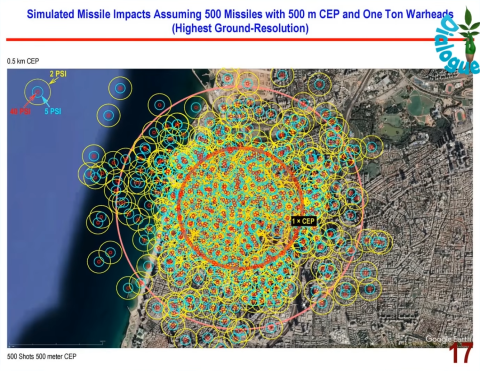
Prof. Ted Postol: US–Iran War? Israel’s Fatal Gamble
or go to
Aletho News Archives – Video-Images
From the Archives
Neocon Max Boot: Legal and illegal aliens need to enlist in the US army and die for Israel

By Jonas E. Alexis | Veterans Today | October 16, 2107
In 1973 Irving Kristol, the godfather of the Neoconservative movement, made a stunning statement which is still relevant to understanding the Israeli influence in US foreign policy. Kristol said:
“Senator McGovern is very sincere when he says that he will try to cut the military budget by 30%. And this is to drive a knife in the heart of Israel… Jews don’t like big military budgets. But it is now an interest of the Jews to have a large and powerful military establishment in the United States…
“American Jews who care about the survival of the state of Israel have to say, no, we don’t want to cut the military budget, it is important to keep that military budget big, so that we can defend Israel.”
Read the statement again very carefully. A big military budget, said Kristol, is only good for Israel, not America or much of the Western World. In other words, precious American soldiers who go to the Middle East to fight so-called terrorism are just working for Israel, not for America.
So, whenever the Neocons use words such as “democracy” or “freedom,” they are essentially conning decent Americans to support Israel’s perpetual wars. … continue
Blog Roll
 Aletho News
- Macron: French citizens fighting for Israel cannot be labeled ‘genociders’
- US eyes Gaza security force drawn from armed gangs
- The Only Motive Behind The ‘Imminent’ U.S. War With Iran Is The Zionist Lobby
- Trump eyes 350-acre US military base housing 5,000 troops in Gaza
- Israel Pushing US Toward a Big and Damaging War With Iran – Ex-Pentagon Analyst
- Meet The Liberal Zionist And Ukraine War Supporter Advising AOC On Foreign Policy
- Buck Dancing for Zion: Kenya’s and Nigeria’s Growing Love Affair With Israel
- Israel installed, oversaw security system at Barak-Epstein residence in New York: Report
- ‘Britain’s Index of Repression’ documents 964 incidents of anti-Palestinian crackdown
- Prof. Ted Postol: US–Iran War? Israel’s Fatal Gamble
- If Americans Knew
- Tucker Carlson interrogated in Israel, has passport seized after interviewing US ambassador
- 6,000 Amputees in Gaza Face Impossible Recovery amid Israeli War Ultimatum
- The Lancet: Gaza death toll far higher than reported – Not a ceasefire Day 132
- Compliant aid: Who are the Israel-approved NGOs scaling up in Gaza?
- Why won’t Trump’s “Board of Peace” bring peace? – Not a ceasefire Day 131
- Help end the injustice against Shadi
- Israel’s Favorite American President
- Israel’s “Yellow Line” Is a Death Trap for Palestinians. We Drove Into It.
- Why Israel’s expanding occupation in Syria presents a critical legal test
- Gaza is not a natural disaster. It is the victim of genocide enabled by global inaction
- No Tricks Zone
- Coal Power Back In Trend As Globe Tries To Keep Pace With Growing Demand For Power
- New Study: A 4°C Warmer Beaufort Sea Had ‘No Sea Ice’ 11,700 – 8200 Years Ago
- Unfudging The Data: Dutch Meteorological Institute Reinstates Early 20th Centruy Heat Waves It Had Erased Earlier
- German Gas Crisis…Chancellor Merz Allegedly Bans Gas Debate Ahead of Elections!
- Pollen Reconstructions Show The Last Glacial’s Warming Events Were Global, 10x Greater Than Modern
- Germany’s Natural Gas Storage Level Dwindles To Just 28%… Increasingly Critical
- New Study Rebuts The Assumption That Anthropogenic CO2 Molecules Have ‘Special’ Properties
- Climate Scientist Who Predicted End Of “Heavy Frost And Snow” Now Refuses Media Inquiries
- Polar Bear Numbers Rising And Health Improving In Areas With The Most Rapid Sea Ice Decline
- One Reason Only For Germany’s Heating Gas Crisis: Its Hardcore-Dumbass Energy Policy
 Aletho News