Syria, Iran and N. Korea: Will Trump Attempt to Finish the Neocon Hitlist?
By Steven MacMillan – New Eastern Outlook – 16.06.2017
In Donald Trump’s short time in office, he has already shown his propensity to use military force. From dropping the largest non-nuclear bomb ever used on Afghanistan, to launching 59 Tomahawk cruise missiles at Iraq (oh wait, Syria), there is no doubt that the Trump administration has a prominent militaristic streak.
But is this just for starters? If Trump stays in power for the duration of his term, is there a major war, or even multiple wars, on the horizon? Judging by the rhetoric and actions already taken by the Trump administration, it will be a miracle if the US does not start a major war in the near future. Coincidentally, the main countries in the sights of the Trump administration just happen to be the three countries that the neoconservatives pinpointed for regime change 17 years ago, but have not yet been dealt with.
1997 marked the birth of the Project for the New American Century (PNAC), a neoconservative think tank of catastrophic proportions. It was founded by William Kristol, the longtime editor of the Weekly Standard, who also served as the chief of staff to Vice President Dan Quayle, and Robert Kagan, a former State Department official who is now a Senior Fellow at the Brookings Institute. A long list of neocons belonged to the group, including Dick Cheney, Donald Rumsfeld and Paul Wolfowitz.
PNAC’s stated objectives included the desire to “shape a new century favourable to American principles and interests,” “increase defense spending significantly,” and challenge “regimes hostile to US interests and values.” In September 2000, the PNAC group released a report titled: ‘Rebuilding America’s Defenses – Strategy, Forces and Resources for a New Century.’ The introduction to the report clearly expressed PNAC’s desire to maintain US supremacy in the world:
“At present, the United States faces no global rival. America’s grand strategy should aim to preserve and extend this advantageous position as far into the future as possible…Preserving the desirable strategic situation in which the United States now finds itself requires a globally preeminent military capability both today and in the future.”
In order to maintain this supremacy, the report called for the Defense Department to be at the forefront of experimenting with transformative technologies, a move that would require a dramatic increase in defense spending.
Curiously, the report – published one year prior to 9/11 – argued that this transformation would likely be a “long one” unless an event on the scale of “Pearl Harbor” occurred:
“To preserve American military preeminence in the coming decades, the Department of Defense must move more aggressively to experiment with new technologies and operational concepts, and seek to exploit the emerging revolution in military affairs… The effects of this military transformation will have profound implications for how wars are fought, what kinds of weapons will dominate the battlefield and, inevitably, which nations enjoy military preeminence…
The Pentagon [however], constrained by limited budgets and pressing current missions, has seen funding for experimentation and transformation crowded out in recent years. Spending on military research and development has been reduced dramatically over the past decade… Any serious effort at transformation must occur within the larger framework of U.S. national security strategy, military missions and defense budgets… The process of transformation, even if it brings revolutionary change, is likely to be a long one, absent some catastrophic and catalyzing event – like a new Pearl Harbor” (p.50-p.51).
Under the guise of missile capability, the report then pinpointed five countries that the neocons, in conjunction with the CIA, considered “deeply hostile” to the US:
“Ever since the Persian Gulf War of 1991… the value of the ballistic missile has been clear to America’s adversaries. When their missiles are tipped with warheads carrying nuclear, biological, or chemical weapons, even weak regional powers have a credible deterrent, regardless of the balance of conventional forces. That is why, according to the CIA, a number of regimes deeply hostile to America – North Korea, Iraq, Iran, Libya and Syria – ‘already have or are developing ballistic missiles’ that could threaten U.S allies and forces abroad. And one, North Korea, is on the verge of deploying missiles that can hit the American homeland. Such capabilities pose a grave challenge to the American peace and the military power that preserves that peace” (p.51-p.52).
This report was published approximately three years prior to the invasion of Iraq, and approximately 11 years prior to both the war in Libya and the start of the proxy war in Syria. The central point I am getting at here is that the wars we have seen unfold, and the wars to come, are not just short-term actions taken by the administration who happens to be in power at that particular time. They are planned years and sometimes decades prior to the first shot being fired. Regardless of which party the President belongs to – George Bush invaded Iraq with a blue tie on, whilst Barack Obama bombed Libya with a red one on – the same regime-change-agenda continues.
Two Down, Three to Go
Although there were other reports that marked more countries that the neocons considered ‘hostile’ to the US, or more accurately, hostile to US (Western) imperial ambitions, the September 2000 report focused on five countries. With Iraq and Libya already ‘liberated,’ three countries are still on the hitlist: Syria, Iran and North Korea. Coincidentally (or not), these are some of the main countries that the Trump administration is targeting, and we are only a few months into Trump’s reign.
Syria: Trump has already bombed Syrian government forces – or forces fighting on the side of the Syrian government – on multiple occasions since being elected. After Trump bombed Syria back in April, both Kagan and Kristol praised him, yet demanded more blood. Even though they claimed not to be major supporters of Trump during the campaign, many Bush-era hawks were – including Rumsfeld, the former Defense Secretary. The Trump administration has also admitted sending hundreds of US troops – which includes Marines – into Syria, officially in order to fight against ISIS (through training and advising rebel forces), yet it’s clear the move has as much to do with the Syrian and Iranian governments than anything else.
Iran: Throughout Trump’s campaign for the White House, he repeatedly criticized both Iran and North Korea. Trump has always been a severe critic of the Iranian nuclear deal, and a loyal supporter of the state of Israel, meaning war with Iran seems more probable that not. In fact, Iran has claimed that Trump and Saudi Arabia are behind the recent terror attacks in Tehran, which ISIS has claimed responsibility for.
During his trip to Saudi Arabia last month, Trump took the opportunity to take another jab at Iran. In February, the US Defence Secretary, James “Mad Dog” Mattis, called Iran the “biggest state sponsor of terrorism in the world,” completely ignoring the role Saudi Arabia plays in exporting terrorism. It appears as though the Trump administration is in the process of deciding which path to Persia it thinks is going to be the most effective.
North Korea: In relation to North Korea, the Trump administration has essentially backed the country into a corner, producing the obvious response from North Korea: an (attempted) show of strength. A country that the US carpet bombed during the Korean war – which included using napalm – it hardly seems likely that North Korea is just going to give in to US threats, considering the resentment many in the country still feel towards America.
This is not a defense of North Korea, but the Trump administration making one provocative statement after another has hardly reduced tensions in the region. In March, Mattissaid that “reckless” North Korea has “got to be stopped.” The following month, Trump said North Korea is a problem that “will be taken care of.” Although Mattis has acknowledged that a conflict with North Korea would be “catastrophic,” the Trump administration appears to be willing to ratchet up tensions regardless.
In contrast, both Russia and China have emphasised that dialogue and diplomacy trump threats. Speaking in May, the Russian President, Vladimir Putin, said that “we have to stop intimidating North Korea” and “return to dialogue” with them, after affirming that Russia “is against expanding the pool of nuclear powers, including North Korea.” Also in May, the Chinese Foreign Ministry called for the US and North Korea to “stop irritating each other,” and advocated “dialogue and negotiation.”
It also important to note that the North Korean issue is really about a lot more than just North Korea. As Paul Craig Roberts has highlighted, the North Korean ‘crisis’ has everything to do with Russia and China. Similar to how the US used the Iranian ‘threat’ to put anti-ballistic missile systems close to Russia’s borders, the North Korean crisis can be used to deploy anti-ballistic missiles systems next to the eastern borders of Russia and China. In a positive development however, the South Korean government has just announced (at the time of writing anyway) that it will halt the deployment of the US anti-ballistic missile system – known as the Terminal High Altitude Area Defense (THAAD) – on its territory for potentially up to a year, citing environmental concerns.
If the Trump administration and the neocons are actually reckless enough to try and force regime change in all three countries in the near future, this brings the US into direct confrontation with both Russia and China. And if a hot war between these three nuclear powers erupts, this would mark the end of human civilization as we know it.
‘US House & Senate at war with President Trump over foreign policy’
RT | June 15, 2017
Trump needs to sit down with House Republicans and get them to stop delegitimizing his power by conceding to Democrats that the Russians somehow put him in office, Daniel McAdams, executive director of the Ron Paul Institute, told RT America.
New anti-Russian sanctions were approved by the US Senate in a 97-2 vote on Tuesday. The measures target Russia’s energy sector, individuals accused of cyberattacks, and companies supplying arms to the Assad government in Syria.
The bill also turns Obama-era sanctions against Russia into law. That means President Trump will not be able to rescind them without a vote in Congress.
RT: These sanctions would restrict the White House from easing sanctions without congressional approval. Do you see this as ironic, since Obama passed so many executive orders?
DM: I certainly think it is an attempt to strip the president of his legitimate constitutional foreign-policy making powers. I am certainly not one to cheer the executive branch practice of hogging power from the rest of the other two branches. But this is a case of a brazen grab. What is amazing, this is not a divided government. These are a Republican-controlled House and Senate at war with their own president, attacking his stated foreign policy, the centerpiece of his own policy as a candidate, i.e. improving relations with Russia. There is a deep, deep problem with the congressional Republicans on this.
RT: These sanctions are in relation to Moscow’s so-called interference in the 2016 US elections. Do we have any substantial to prove to back up these allegations?
DM: That is the amazing thing – if you say something, if you repeat a lie, or at least something non-proven often enough, apparently it’s supposed to become conventional wisdom, but nobody has yet said what the Russians actually did. Did they monitor the elections? Well every country monitors the elections of other countries. Did they actually do something to affect the results, or attempt to affect the results? Nobody has said that. The supposed 17 intelligence agencies that came to that conclusion – it is an absolute canard. It was at most – and [former CIA chief] John Brennan admitted this in May – at most it was three agencies, and it was not an international agency, intelligence community full assessment. It was, as he put it, ‘handpicked analysts’ who went through some of the data. And where does some of this data come from? It came from CrowdStrike – a discredited company with ties to the very biased anti-Russian Atlantic Council. They are the only organization that did the forensic analysis of the DNC computers. The FBI didn’t even have a chain of evidence control; they never even looked at the computers. So where is the evidence? I am willing to accept it, if there is some, but there hasn’t been any presented.
RT: Is this due to bipartisanship in Congress? It seems we have the NeverTrumpers, like Lindsey Graham, threatening the president basically to pass this or he’ll be ‘betraying democracy.’ What are your thoughts, shouldn’t we be focused more on fixing healthcare and passing tax reform at this point?
DM: This is certainly not what he [Trump] ran on. He almost ran on a non-interventionist foreign policy. At least he certainly seems to have borrowed some points form Ron Paul even. But the thing is now that he is in power – he has got to go down; he has got to go to the House, where these measures are slightly less popular than in the Senate. That is where sanctions will go to next. He needs to sit down with House Republicans and he needs to set them straight on this. They have to stop conceding this point of the Democrats that the Russians somehow put him into office, completely delegitimizing his presidency. He needs to find a way through the strength of his ability to persuade people to end this Republican-led congressional war on his foreign policy.
Daesh Absent in Area of US’ HIMARS Artillery Deployment in Syria – Lavrov
Sputnik – June 16, 2017
Russian Foreign Minister Sergei Lavrov, commenting on the US military moves, pointed to the near absence of Daesh or other terrorist groups in the vicinity of the HIMARS’ staging area.
The United States transferred on Wednesday two High Mobility Artillery Rocket System (HIMARS) multiple-launch rocket systems from Jordan. The systems were deployed at the US special operations forces base near al-Tanf located 11 miles from the Jordanian border.The Russian military is analyzing the US deployment of artillery systems in southern Syria where terrorist groups are said to be virtually absent, Lavrov said Friday.
“The Russian military is naturally analyzing everything that is happening in this country, including taking into account the channel that we have with the US to prevent unintentional incidents,” Lavrov said at a briefing.
“In this area, there are practically no Daesh units and the deployment there of such serious weapons, which are not particularly suitable to combat Daesh… will not ensure the stability of communication channels between government and pro-government forces in Syria and their partners in neighboring Iraq,” he said.
US repeatedly interfered in Russian elections – Putin
RT | June 16, 2017
The US has repeatedly meddled in Russian politics, “especially aggressively” in the 2012 presidential elections, President Vladimir Putin told Oliver Stone, while dismissing allegations that Moscow hacked the US elections as lies from Trump’s opponents.
In the final part of US filmmaker Oliver Stone’s documentary series, Putin Interviews, which was aired on Showtime on Thursday night, the Russian leader told the Oscar-winning director about how Washington has attempted to interfere in the Russian electoral process through US diplomatic staff and by pouring money into NGOs.
“[They did it] in 2000, and in 2012, this always happened. But especially aggressively in 2012. I will not go into details,” Putin said, adding that all of the other post-Soviet republics have also been subject to US meddling.
As one of the most glaring examples, Putin pointed out that US diplomatic workers had actually campaigned for the Russian opposition.
“They gathered opposition forces and financed them, went to opposition rallies,” the Russia leader noted, adding that he had broached this issue with members of the past administration, including former US President Barack Obama and former Secretary of State John Kerry.
Engaging in the power struggle within Russia runs contrary to the role of diplomats, which is to “establish interstate relations,” Putin argued. Another tool the US uses to project influence is NGOs, which “are frequently financed through a number of layers and structures either from the State Department or some other quasi-governmental sources,” he said, adding that Washington employs the same interference strategy all over the world.
Dismissing the allegations that Russia meddled in the November presidential elections as a “lie,” Putin said that US-Russia relations are being held hostage to US domestic squabbles and used as “a tool in the intra-political fight in the United States.”
Putin said he had read the US intelligence report alleging Russia’s involvement in the US elections and found it superficial, as it lacks concrete details and is based on speculation rather than hard facts.
Putin stressed that Russia has not carried out cyberattacks targeting the infrastructure of other countries.
“We have not engaged in any cyberattacks. It is hard to imagine that any country, including a country like Russia, could seriously influence the electoral campaign and its results,” he said.
When asked whether a “secret war” was underway between Russia and the US in the cybersphere, the Russian president simply said that for every action, there is always an equal and opposite reaction.
The Russian president admitted that it had taken some time for Russia to grasp the threat to its cybersecurity that had come with the hardware and software it procured from Europe and the US soon after the collapse of the Soviet Union.
“Since the early 1990s, we assumed that the Cold War was over. We thought there was no need to take any extra security measures because we were an organic part of the world community,” Putin said, adding that now Russia is “taking certain steps” to reclaim its technological independence.
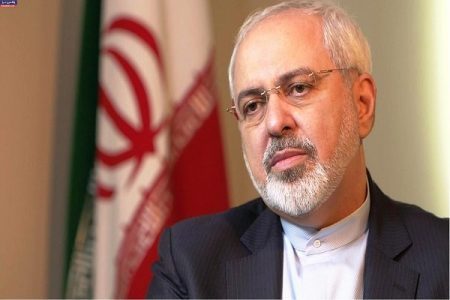
Zarif advises US counterpart to worry about his own country
Mehr News Agency | June 16, 2017
TEHRAN – In reaction to the latest remarks of US secretary of state at a US House Committee on Foreign Affairs hearing, Iranian FM Zarif posted some tweets late on Thursday.
“The 1953 coup debacle and the 1979 Revolution proved that Iranian people are impervious to outside attempts to decide their destiny,” Mohammad Javad Zarif, the Foreign Minister of Iran, posted on his Twitter account on Thursday.
Zarif’s post came after Wednesday remarks by Rex Tillerson, the United States Secretary of State, at a US House Committee on Foreign Affairs hearing on Wednesday.
The Iranian top diplomat advises US officials to be concerned about their own country where elections turnout are significantly lower than Iran, “For their own sake, US officials should worry more about saving their own regime than changing Iran’s, where 75% of people just voted.”
Mr. Zarif also calls for US apology for all the interventions by the US in Iran’s domestic affairs referring and the support by the US for the former shah of Iran during the uprising of the nation in favor of the then PM Mohammad Mosaddegh; “after decades of failed regime change and sanctions, US had to apologize for ‘1953 coup, and acknowledge diplomacy as the only option.”
Zarif advises the US administration to study and learn from history instead of trying to follow unlawful policy of changing regimes in other countries.
The Forward publishes criticism of Alison Weir, but refuses to publish response
If Americans Knew | June 15, 2017
The website of the Forward newspaper recently published an opinion piece by political hitman Spencer Sunshine, in which he slammed the American Left and specific individuals for alleged antisemitism, including Alison Weir.
Sunshine is a writer/activist who focuses on antisemitism, and specifically on seeking it out — or inventing it — among leftists and supporters of Palestinian rights. (More on Sunshine below.)
While slurring those he disagrees with is Sunshine’s modus operandi (he throws around accusations of bigotry with the abandon of a spoiled schoolboy), we expect better of the Forward. Journalistic ethics require that media allow people to respond when they’ve been criticized, yet the Forward has failed to publish Weir’s response. (More on the Forward below.)
(The right of response is affirmed by the Society of Professional Journalists, the International Principles of Professional Ethics in Journalism, the BBC, MediaWise, the National Conference of Editorial Writers, and many, many others. The American Society of Newspaper Editors states: “Persons publicly accused should be given the earliest opportunity to respond.”)
Below is Weir’s letter responding to Sunshine’s piece:
To the Editor,
I was disappointed to see the Forward chose to publish Spencer Sunshine’s recent reactionary screed “The Left Must Root Out Anti-Semitism In Its Ranks.” However, that Sunshine should attempt to dismiss me as an “anti-Semitic conspiracy theorist” did not surprise me, as Sunshine has a long history of working to silence criticism of Israel and Zionism. At a talk in Portland, Oregon he described virtually every form of Palestine solidarity as anti-Semitic.
Accusations of “left anti-Semitism” have long been used to undermine solidarity with marginalized people, a population Sunshine often seems to ignore. His article about the history of anti-racism in the United States, for example, almost entirely omitted the efforts of communities of color, focusing instead on mostly-white “antifascist” groups.
Of Sunshine’s work, the pieces I’m familiar with are hatchet jobs, misrepresenting his subjects to suit his goals and exploit his audience’s fears and gullibility.
Sunshine seems to operate according to an all-too-often successful principle: if you accuse someone of something bad enough, it doesn’t matter how wrong, sloppy, or biased you are. Certain accusations tend to be show-stoppers, tainting by default–and he employs these with shameless abandon.
Sunshine clearly hopes that simply saying the magic words “conspiracy theory” will prevent others from listening to me directly or examining my work. In fact, my book and multitude of articles and speeches are exhaustively researched and based on serious sources. All of my work is transparent, with sources clearly cited or linked, so others can read more and decide for themselves. While I’m only human and certainly not infallible, I strive to use reliable sources and be as transparent as possible about my sources and the evidence supporting my work.
Sunshine refers to a JVP statement critical of me, but fails to mention that the statement does not claim that I am anti-Semitic. More important, he fails to make any reference to two open letters rejecting the criticism of me, signed by some incredibly prominent and principled academics, humanitarians, and thousands of activists, including many members of JVP itself. Indeed, I continue to work with many JVP chapters and individuals, who have brought me to speak in their areas and who are accomplishing important work.
Sunshine operates as a hitman for the reactionary forces who would have us never stand up against oppression for fear of not speaking carefully enough and unintentionally giving unfair offense. It is important to try to speak accurately and fairly, but when people are dying and the prospect of peace is rapidly receding for two populations (and everyone else affected by the violence and instability that radiate from the conflict), perfection is no longer the enemy of good but the enemy of peace and life itself.
Let us act, debate and try to solve this tragedy, not police each other’s words to the point of utter inaction. And let us not attack those working for justice, peace and human rights with false and malicious accusations.
If Sunshine showed half the enthusiasm for opposing atrocities and championing human rights for all humans–even Muslims, Palestinians, and people of color–that he shows for thought policing activists, he could make a positive difference In our shared world.
Sincerely,
Alison Weir
More information:
Spencer Sunshine is an early instigator and enthusiastic champion of the campaign to silence Weir, which has been roundly rejected by numerous prominent humanitarians, academics and activists in two open letters (here and here; see also this article on CounterPunch ). He identifies himself as an “anti-fascist writer” and is close to antifa groups, a movement known for celebrating and perpetrating violence (he was apparently unfazed when violence occurred a few months ago at a protest he organized).
The Forward is a venerable newspaper founded towards the end of the 19th Century. It is a leading, or perhaps the leading, publication serving the American Jewish community. It operates as a nonprofit and appears to have assets of over $50 million. The paper leans heavily towards an Israel-centric viewpoint when reporting on Palestine and Israel. Nevertheless, it is a professional publication which should hold itself to the highest journalistic standards.
The Breaking Of The Corporate Media Monopoly

Media Lens | June 15, 2017
Last week, Jeremy Corbyn humbled the entire political and corporate media commentariat. With a little help from Britain’s student population. And with a little help from thousands of media activists.
Without doubt this was one of the most astonishing results in UK political history. Dismissed by all corporate political pundits, including the clutch of withered fig leaves at the Guardian, reviled by scores of his own Blairite MPs (see here), Corbyn ‘increased Labour’s share of the vote by more than any other of the party’s election leaders since 1945′ with ‘the biggest swing since… shortly after the Second World War’. He won a larger share of the vote than Tony Blair in 2005.
Corbyn achieved this without resorting to angry lefty ranting. His focus was on kindness, compassion, sharing, inclusivity and forgiveness. This approach held up a crystal-clear mirror to the ugly, self-interested cynicism of the Tory party, and transformed the endless brickbats into flowers of praise.
On Twitter, John Prescott disclosed that when Rupert Murdoch saw the exit poll ‘he stormed out of the room’.
As ever, while the generals made good their escape, front-line troops were less fortunate. Outfought by Team Corbyn, out-thought by social media activists, outnumbered in the polls, many commentators had no option but to fall on their microphones and keyboards. LBC radio presenter Iain Dale led the way:
‘Let me be the first to say, I got it wrong, wholly wrong. I should have listened more to my callers who have been phoning into my show day after day, week after week.’
The Guardian’s Gaby Hinsliff, who had written in January, ‘This isn’t going to be yet another critique of Corbyn, by the way, because there is no point. The evidence is there for anyone with eyes’, tweeted:
‘This is why I trust @iaindale’s judgement; he admits when it was way off. (As mine was. As god knows how many of ours was)’
Hinsliff promised:
‘Like everyone else who didn’t foresee the result, I’ll be asking myself hard questions & trying to work out what changed…’
Annoying as ever, we asked:
‘But will you be asking yourself about the structural forces, within and outside Guardian and corporate media generally, shaping performance?’
And:
‘Is a corporate journalist free to analyse the influence of owners, profit-orientation, ad-dependence, state-subsidised news? Taboo subjects.’
Presumably engrossed in introspection, Hinsliff did not reply.
Right-winger John Rentoul, who insisted four weeks ago in the Independent that, ‘we are moving towards the end of the Corbynite experiment’, appeared to be writing lines in detention:
‘I was wrong about Jeremy Corbyn – The Labour leader did much better in the election than I expected. I need to understand and learn from my mistakes’
Channel 4 News presenter and Telegraph blogger, Cathy Newman tweeted:
‘Ok let’s be honest, until the last few weeks many of us under-estimated @jeremycorbyn’
Translating from the ‘newspeak’: many corporate journalists waged a relentless campaign over two years to persuade the public to ‘underestimate’ Corbyn, but were wrong about the public’s ability to see through the propaganda.
Piers Morgan, who predicted the Conservatives would win a ’90-100 seat majority’, wrote:
‘I think Mr Corbyn has proved a lot of people, including me, completely wrong.’
In a typically dramatic flourish, Channel 4’s Jon Snow’s summation was harsh but fair:
‘I know nothing. We the media, the pundits, the experts, know nothing.’
Guardian columnist Rafael Behr, who wrote in February, ‘Jeremy Corbyn is running out of excuses’, also ate humble pie:
‘Fair play to Jeremy Corbyn and his team. They have done a lot of things I confidently thought they – he – could not do. I was wrong.’
In March, Observer columnist Nick Cohen graphically predicted that ‘Corbyn’s Labour won’t just lose. It’ll be slaughtered.’ In an article titled, ‘Don’t tell me you weren’t warned about Corbyn’, Cohen indicated the words that would ‘be flung’ at Corbynites ‘by everyone who warned that Corbyn’s victory would lead to a historic defeat’:
‘I Told You So You Fucking Fools!’
Apparently frothing at the mouth, Cohen concluded by advising the idiots reading his column that, following the predicted electoral disaster, ‘your only honourable response will be to stop being a fucking fool by changing your fucking mind’.
Awkward, then, for Cohen to now ‘apologise to affronted Corbyn supporters… I was wrong’; presumably feeling like a fucking fool, having changed his fucking mind.
Tragicomically, Cohen then proceeded to be exactly as ‘wrong’ all over again:
‘The links between the Corbyn camp and a Putin regime that persecutes genuine radicals. Corbyn’s paid propaganda for an Iranian state that hounds gays, subjugates women and tortures prisoners. Corbyn and the wider left’s indulgence of real antisemites (not just critics of Israel). They are all on the record. That Tory newspapers used them against the Labour leadership changes nothing.’
Former Guardian comment editor and senior columnist Jonathan Freedland spent two years writing a series of anti-Corbyn hit pieces (see our media alert for discussion). Last month, Freedland wrote under the title, ‘No more excuses: Jeremy Corbyn is to blame for this meltdown’, lamenting:
‘What more evidence do they need? What more proof do the Labour leadership and its supporters require?’
Freedland helpfully relayed focus group opinion to the effect that Corbyn was a ‘dope’, ‘living in the past’, ‘a joke’, ‘looking as if he knows less about it than I do’. Freedland has also, now, had no choice but to back down:
‘Credit where it’s due. Jeremy Corbyn defied those – including me – who thought he could not win seats for Lab. I was wrong.’
Like Freedland, senior Guardian columnist Polly Toynbee has relentlessly attacked Corbyn. On April 19, she wrote of how ‘Corbyn is rushing to embrace Labour’s annihilation’:
‘Wrong, wrong and wrong again. Was ever there a more crassly inept politician than Jeremy Corbyn, whose every impulse is to make the wrong call on everything?’
This week, Toynbee’s tune had changed:
‘Nothing succeeds like success. Jeremy Corbyn looks like a new man, beaming with confidence, benevolence and forgiveness to erstwhile doubters…’
Apparently channelling David Brent of The Office, Toynbee added:
‘When I met him on Sunday he clasped my hand and, with a twinkle and a wink, thanked me for things I had written.’
With zero self-awareness, Toynbee noted that the Mail and Sun had helped Corbyn: ‘by dredging up every accusation against him yet failing to frighten voters away, they have demolished their own power’.
Former Guardian political editor Michael White, yet another regular anti-Corbyn commentator, admitted:
‘I was badly wrong. JC had much wider voter appeal than I realised’
Former Guardian journalist, Jonathan Cook, replied:
‘Problem is you *all* got it wrong. That fact alone exposes structural flaw of corporate media. You don’t represent us, you represent power’
White responded:
‘You’re not still banging on, are you Jonathan. You do talk some bollocks’
Guardian, Telegraph, Independent and New Statesman contributor Abi Wilkinson tweeted:
‘Don’t think some of people making demands about who Corbyn puts in shadow cabinet have particularly earned the right to be listened to…’
We paired this with Wilkinson’s comment from June 2016:
‘Any hope I once held about Corbyn’s ability to steer the party in a more positive direction has been well and truly extinguished’
Wilkinson replied: ‘oh fuck off’, before concluding that we are ‘two misogynistic cranks in a basement’, and ‘just some dickheads who aren’t actually fit’ to hold the media to account.
When a tweeter suggested that Corbyn’s result was ‘brilliant’, New Statesman editor Jason Cowley replied: ‘Yes, I agree.’ Just three days earlier, Cowley had written under the ominous title:
‘The Labour reckoning – Corbyn has fought a spirited campaign but is he leading the party to worst defeat since 1935?’
In March, Cowley opined:
‘The stench of decay and failure coming from the Labour Party is now overwhelming – Speak to any Conservative MP and they will say that there is no opposition. Period.’
Like everyone else at the Guardian, columnist Owen Jones’ initial instinct was to tweet away from his own viewspaper’s ferocious anti-Corbyn campaign:
‘The British right wing press led a vicious campaign of lies, smears, hatred and bigotry. And millions told them where to stick it’
And yet, as recently as April 18, Jones had depicted Corbyn as a pathetic figure:
‘A man who stood only out of a sense of duty, to put policies on the agenda, and who certainly had no ambition to be leader, will now take Labour into a general election, against all his original expectations. My suggestion that Corbyn stand down in favour of another candidate was driven by a desire to save his policies…’
Jones has now also issued a mea culpa:
‘I owe Corbyn, John McDonnell, Seumas Milne, his policy chief Andrew Fisher, and others, an unreserved, and heartfelt apology…
‘I wasn’t a bit wrong, or slightly wrong, or mostly wrong, but totally wrong. Having one foot in the Labour movement and one in the mainstream media undoubtedly left me more susceptible to their groupthink. Never again.’
We will see!
To his credit, Jones managed to criticise his own employer (something he had previously told us was unthinkable and absurd):
‘Now that I’ve said I’m wrong… so the rest of the mainstream commentariat, including in this newspaper, must confess they were wrong, too.’
Despite the blizzard of mea culpas from colleagues, George Monbiot also initially pointed well away from his employer:
‘The biggest losers today are the billionaires who own the Mail, Sun, Times and Telegraph. And thought they owned the nation.’
And: ‘It was The Sun wot got properly Cor-Binned’. And: ‘By throwing every brick in the house at Corbyn, and still failing to knock him over, the billionaire press lost much of its power.’
After receiving criticism, and having of course seen Jones’ mea culpa, Monbiot subsequently admitted that anti-Corbyn bias is found ‘even in the media that’s not owned by billionaires’:
‘This problem also affects the Guardian… Only the Guardian and the Mirror enthusiastically supported both Labour and Corbyn in election editorials.
‘But the scales still didn’t balance.’
This is a change from Monbiot’s declared position of three years ago, when he rejected the idea that the Guardian was part of the problem. This week, he recalled his own dumping of Corbyn in a tweet from January: ‘I have now lost all faith.’ The full tweet read:
‘I was thrilled when Jeremy Corbyn became leader of the Labour Party, but it has been one fiasco after another. I have now lost all faith.’
Monbiot blamed media bias on the way journalists are selected – ‘We should actively recruit people from poorer backgrounds’ – and wrote, curiously, ‘the biggest problem, I believe, is that we spend too much time in each other’s company’.
We suggested to Monbiot that this was not at all ‘the biggest problem’ with ‘mainstream’ media, and pointed instead to elite ownership, profit-orientation, advertiser dependence and use of state-subsidised ‘news’, as discussed by Edward Herman and Noam Chomsky in their ‘propaganda model’.
Jonathan Cook responded to Monbiot, describing the limits of free speech with searing honesty:
‘This blindness even by a “radical” like Monbiot to structural problems in the media is not accidental either. Realistically, the furthest he can go is where he went today in his column: suggesting organisational flaws in the corporate media, ones that can be fixed, rather than structural ones that cannot without rethinking entirely how the media functions. Monbiot will not – and cannot – use the pages of the Guardian to argue that his employer is structurally incapable of providing diverse and representative coverage.
‘Nor can he admit that his own paper polices its pages to limit what can be said on the left, to demarcate whole areas of reasonable thought as off-limits. To do so would be to end his Guardian career and consign him to the outer reaches of social media.’
The same, of course, applies to Jones, who made no attempt at all to account for corporate media bias.
Media grandee Will Hutton, former editor-in-chief of the Observer, now Principal of Hertford College, Oxford, wrote of ‘How the rightwing tabloids got it wrong – It was the Sun wot hung it’. On Twitter, we reminded Hutton of his own article, one month earlier:
‘Er, excuse us..! Will Hutton, May 7: “Never before in my adult life has the future seemed so bleak for progressives”‘
Tragicomically, given the awesome extent of his employer’s anti-Corbyn bias, John Cody Fidler-Simpson CBE, BBC World Affairs Editor, tweeted:
‘I suspect we’ve seen the end of the tabloids as arbiters of UK politics. Sun, Mail & Express threw all they had into backing May, & failed.’
We replied:
‘Likewise the “quality” press and the BBC, which has been so biased even a former chair of the BBC Trust spoke out’
Sir Michael Lyons, who chaired the BBC trust from 2007 to 2011, commented on the BBC’s ‘quite extraordinary attacks on the elected leader of the Labour party’:
‘I can understand why people are worried about whether some of the most senior editorial voices in the BBC have lost their impartiality on this.’
Conclusion – The Corporate Media Monopoly Is Broken
One week before the election, the Guardian reported that ‘a new force is shaping the general election debate’:
‘Alternative news sites are run from laptops and bedrooms miles from the much-derided “Westminster bubble” and have emerged as one of the most potent forces in election news sharing, according to research conducted for the Guardian by the web analytics company Kaleida.’
These alternative articles were ‘being shared more widely online than the views of mainstream newspaper commentators’. Remarkably, ‘Nothing from the BBC, the Guardian or the Daily Mail comes close’ to the most-shared alternative media pieces. The Canary reported that it had doubled the number of visitors to its site to six million in May. A story by Evolve Politics, run by just two people, was shared 55,000 times on Facebook and was read at least 200,000 times. These websites ‘explicitly offer a counter-narrative to what they deride as the “MSM” or mainstream media’.
Indeed, the evidence is now simply overwhelming – the 100-year big business monopoly of the mass media has been broken.
It is obvious that the right-wing press – the Daily Mail, the Sun, The Times and Telegraph – play a toxic role in manipulating the public to favour elite interests. But many people are now realising that the liberal press is actually the most potent opponent of progressive change. Journalist Matt Kennard commented:
‘The Guardian didn’t get it “wrong”. It is the mouthpiece of a liberal elite that is financially endangered by a socialist program.’
In truth, the Guardian sought to destroy Corbyn long before he became Labour leader (see here and here). This means that it did not target him because he was an ineffective leader imperilling Labour. And this hostility was no aberration, not a well-intentioned mistake that they got ‘wrong’. To this day, the Guardian remains Blair’s great cheerleader, despite his awesome crimes, just as it was Hillary Clinton and Obama’s cheerleader, and just as it was Bill Clinton’s before them.
While employing a handful of compromised fig leaves, the Guardian has ruthlessly smeared anyone who has sought to challenge the status quo: Julian Assange, Russell Brand, Hugo Chavez, Noam Chomsky, Edward Herman, John Pilger, George Galloway and many others. It has also been complicit in the great war crimes of Iraq, Libya and Syria – accepting fake government justifications for war at face value, ignoring expert sources who made a nonsense of the claims, and propagandising hard for the West’s supposed ‘responsibility to protect’ the nations it so obviously seeks to destabilise and exploit.
In our view, the corporate journalists who should be treated with most caution are precisely those celebrated as ‘dissidents’. Corporate media give Owen Jones, George Monbiot, Paul Mason and others immense outreach to draw 100,000s of progressives back to a filtered, corporate version of the world that favours established power and stifles progressive change. Above all, as Jonathan Cook says, the unwritten rule is that they will not speak out on the inherent structural corruption of a corporate media system reporting on a world dominated by corporations.
This is crucial, because, as last week confirms, and as we have been arguing for 16 years, if change begins anywhere, it begins with the public challenging, exposing and rejecting, not just the right-wing press, but the corporate media as a whole, the ‘liberal-left’ very much included.
In the last month, we witnessed astonishing numbers of people challenging all media, all the time on every bias – we have never seen anything like it. The young, in particular, are learning that they do not need highly-paid, privileged corporate employees to tell them what to think.
We don’t need to tolerate a corporate-filtered view of the world. We can inform ourselves and each other, and we can do so with very much more honesty, courage and compassion than any corporate journalist. If there is one message from last week, it’s a simple one – dump the corporate media; all of it.
Newly-deployed US rocket launchers may target Syrian army: Russia
Press TV – June 15, 2017
Russia says the US has deployed the M142 High Mobility Artillery Rocket System (HIMARS) launchers from Jordan to its base in southern Syria, warning that the equipment could be used against Syrian government forces.
“The United States has moved two HIMARS multiple rocket launchers from Jordan to the At-Tanf US special forces base,” the Russian Defense Ministry said in a statement released on Thursday.
It also accused the US, which is purportedly fighting terrorists, of having “repeatedly issued strikes on Syrian government forces fighting Daesh near the Jordanian border.”
Thus, the ministry said, “it’s not hard to guess that similar strikes will be continued against contingents of the Syrian army in the future using HIMARS.”
The deployment of any type of foreign weaponry on Syrian soil “must be approved by the government of the sovereign country,” it pointed out.
The statement further said Moscow is closely monitoring the situation on the Syrian-Jordanian border.
On Wednesday, an intelligence source first reported the US relocation of the HIMARS from Jordan to Syria.
The town of At-Tanf, home to a US base, is located in Syria’s Homs Province near a Syria-Iraq border crossing on the main Baghdad-Damascus highway.
On June 6, US warplanes attacked a Syrian military position on the road to At-Tanf, killing an unspecified number of people and causing some material damage.
The US claimed that the Syrian forces who came under the attack posed a threat to its forces and their terrorist allies in Syria.
On May 18, the US carried out a similar strike on a Syrian military convoy near At-Tanf.
The Syrian army has denounced the attacks, saying they demonstrate US support for terrorism, at a time when the Syrian army and its allies are making gains against Daesh militants.
The US and its allies have been bombarding what they call Daesh positions inside Syria since September 2014 without any authorization from the Damascus government or a UN mandate.
They have been accused of targeting and killing civilians, while failing to fulfill their pronounced goal of destroying Daesh.
Featured Video

Theodore Postol: Iran’s Missiles & Drones Were Underestimated
or go to
Aletho News Archives – Video-Images
From the Archives
What is the Israeli Lobby in Australia Doing in Interfaith Dialogue?
By Ali Kazak | Dissident Voice | October 11, 2015
For years Israel and its lobby around the world have been trying to normalise their relations with Arabs and Muslims without solving the Palestine Question.
One of the methods they resorted to in the last few years is using human rights and community organizations such as interfaith dialogue and Multiculturalism to achieve this objective and to: isolate the Palestinians, marginalise the Palestine question, end Israel’s isolation, and prevent criticism of Israel, knowing that these organisations will be the first to stand against Israel’s violations, racial and religious discrimination.
The group responsible for this task in Australia is The Australia/Israel & Jewish Affairs Council (AIJAC); its Director of International & Community Affairs, Jeremy Jones is in charge of lobbying religious community organizations, specifically Muslims and Christians. Consequently he convened the Faith Communities for Reconciliation, founding participant in the Australian Partnership of Religious Organisations and the Australian National Dialogue of Christians, Muslims & Jews.
AIJAC is a private political propaganda group. It is recognised as the main Israeli lobby in Australia. It coordinates its activities and works intimately with the Israeli embassy in Canberra and different institutions in Israel. It is privately funded by some Jewish businessmen. It monitors closely Australian politicians, the media, ethnic and religious groups, (especially Arabs and Muslims), unions and academics on their stands towards Israel and the Palestine question. … continue
Blog Roll
 Aletho News
- The killing of three Indonesian soldiers in Lebanon should remind Jakarta that Israel does not want peace
- Defeated and delusional: Netanyahu’s remarks reveal $80bn war failure, says analyst
- Iran’s friends are about to make life much more difficult for Israel and the US
- The war of liberation of the Arab and Islamic peoples expands across the Gulf
- Envoy warns UN on Trump’s threat to ‘obliterate’ Iran’s civilian infrastructure
- The Larak Corridor: Iran’s Rial Gate With No US, No Israel, and No Way Around
- ‘Economic terrorism’: Steel facilities hit again in US-Israeli strike
- ‘War Crime’: Iran condemns attacks on Arak, Ardakan nuclear sites
- Two-thirds of Americans want quick end to Iran war even if goals unmet
- Trump to Give “Important Update on Iran” Wednesday in Prime-Time Speech
- If Americans Knew
- Gaza families reunite years after babies evacuated amid Israel’s war
- International Rescue Committee warns Gaza’s children face grave protection risks
- Iran’s Alleged 47-Year War on America: Debunking the 1,050 American Deaths Canard
- Israel wants US to bomb more of Iran’s civilian structures (113,000 is not enough) – Not a ceasefire Day 173
- Ann Coulter Rips Into Fox News for Iran War Coverage
- Joe Kent Urges Americans To Call White House and Congress To Object To Sending Troops Into Iran
- DNC Resolution to Reject AIPAC Funding Puts Democratic Leaders in the Hot Seat
- Swedish foundation to build 400 schools as over 650,000 Gaza children remain without education for 2 years
- Israeli army admits photshopping image of slain Lebanese journalist
- This is how Israel is systematically killing health workers under the cover of war in Lebanon
- No Tricks Zone
- New Study Finds Warming Saves Lives…Cold Temperatures 12 Times More Deadly Than Excess Heat
- German Science Blog Accuses PIK Climate Institute Of Hallucinating Climate Tipping Points
- Devastating Assessment Of Comirnaty Vaccine By Former Senior Pfizer Europe Toxicologist
- New Study: CO2 Is ‘Effectively Negligible’ As An Explanatory Climate Change Factor Since 2000
- Former Pfizer Toxicologist Dr. Helmut Sterz Tells Bundestag Hearing Pfizer Vaccine Should Have Never Been Approved
- Energy Expert: Germany’s Nuclear Phaseout Was A “500 Billion Euro Mistake”
- New Research: South Australia’s Mid-Holocene Sea Surface Temperatures Were 4°C Warmer Than Today
- Storing Green Energy To Last Germany 10 Days Would Require A 60-Million Tonne Battery
- New Studies: UK Sea Levels Were 4 Meters Higher Than Today During The Mid-Holocene
- Destructive Green New Deal: German Energy And Metal Group Warns Of Drastic Crisis
 Aletho News