Moscow warns Washington against ‘incendiary, provocative action’ in Syria
RT | June 28, 2017
Moscow has warned the US against taking unilateral action in Syria, as there is no threat from the Syrian military, Russia’s Foreign Ministry said. The statement comes after the US accused Syria of preparing for a chemical attack, without giving any evidence.
Asked if Russia had warned the US administration against any unilateral action in Syria, Russia’s deputy foreign minister, Gennady Gatilov, replied that Russian officials have “always spoken about that, including in relation to their [US] latest strikes on Syrian armed forces.”
“We believe that it’s unacceptable and breaches Syria’s sovereignty, isn’t caused by any military need, and there is no threat to the US specialists from the Syrian Army. So it’s incendiary, provocative action,” Gatilov said, as cited by RIA Novosti.
On Monday evening, the White House claimed that Syrian President Bashar Assad was preparing a chemical attack and warned that the Syrian government would “pay a heavy price” if the attack was carried out, as cited by AP.
Hours later, the Pentagon said it had detected activity by the Syrian authorities in preparation for the attack. Pentagon spokesman Navy Captain Jeff Davis said that the US had seen “activity” at Shayrat airfield that showed “active preparations for chemical weapons use.”
The US government failed to provide any further details or proof of such claims, while the State Department’s spokesperson, Heather Nauert, said it was “an intelligence matter.”
When confronted by a journalist that Washington uses the phrase to justify anything that suits it, Nauert answered: “I’m not going to get into that one with you, but this is a very serious and great matter.”
On Wednesday, though, the US suggested that the Syrian leadership had swiftly changed its mind about planning an alleged attack. Defense Secretary Jim Mattis, as cited by Reuters, said: “it appears that they [Syria’s authorities] took the warning seriously. They didn’t do it.”
The Syrian government, as well as Russian authorities, have denied any allegations against them, with Russian President Vladimir Putin’s spokesman Dmitry Peskov saying that “such threats to Syria’s legitimate leaders are unacceptable.”
In the latest statement, Deputy Foreign Minister Gatilov said that Russia doesn’t rule out that “there may be provocations” following the announcement from Washington.
The statements by the US administration complicate the [peace] negotiations in Astana and Geneva, and Moscow believes such attempts to boost the tensions around Syria are unacceptable.
“The statements on Syrian armed forces getting ready to use chemical weapons is complete nonsense… These assumptions aren’t based on anything, no one provides any facts,” the Russian diplomat said.
“If the aim is to ramp up the spiral of tension, we think it’s unacceptable. It complicates the process of negotiations undertaken in Astana and Geneva,” Gatilov underlined.
“We’ve seen this in the past. Of course there are many ill-wishers, who want to undermine the process [of negotiations]. So any provocations are possible,” the deputy foreign minister added.
Earlier, Russia’s Foreign Ministry issued another official statement, saying: “We consider all these insinuations about chemical weapons which are being carried out in the worst traditions of the 2003 NATO intervention in Iraq as an ‘invitation’ for terrorists, extremists, and the armed opposition in Syria to carry out another large-scale provocation, which will result in the ‘unavoidable punishment’ of President Assad, according to Washington’s plans.”
In April, US President Donald Trump launched an attack on Syria with 59 Tomahawk missiles, which targeted Shayrat Airbase near the city of Homs. The strike was in response to what the US claimed was a chemical weapons attack in Khan Shaykhun, orchestrated by Syria’s government – something Damascus repeatedly denied.
Macron’s Mission: Save the European Union From Itself

Photo by OFFICIAL LEWEB PHOTOS | CC BY 2.0
By Diana Johnstone | CounterPunch | June 28, 2017
The French capitalist elite that sponsored Macron’s meteoric rise is acutely aware that the European Union is in serious trouble. They chose Emmanuel Macron to save it. His success or failure depends on whether he can persuade the rest of the EU, notably Germany, to let it be saved.
In Trouble Politically
The EU is in serious trouble politically, because the elites love it, and ordinary people do not. A poll published June 20 by the Chatham House Royal Institute of international affairs found a “simmering discontent” with the EU among ordinary Europeans. Over 70% of people classified as decision-makers and opinion influencers – leading politicians, journalists, CEOs and leaders of major civil society organizations such as university presidents – welcomed European integration as beneficial, whereas only 34% of ordinary citizens agreed. On immigration, 57% of the elite consider immigration good for their country compared to 34% of the rest of the population. In short, the “decision-makers and opinion influencers” agree with the decisions they have been making and the opinions they have been advocating, while most other people are not convinced.
This is scarcely surprising since for over half a century the elites “who know what is best for the people” have been forcing European integration down their throats, with massive propaganda to justify major binding decisions taken without consulting the people (or, when the people are consulted, the result is ignored). Member States’ democratic procedures were essentially nullified over half a century ago by the unelected European Court of Justice when it ruled that European laws prevailed over national laws. The vast majority of Europeans were not even aware of how their democracy was being overruled and made obsolete. “Europe” meant escape from the bad past and the promise of a beautiful future of peace and prosperity. The elites saw to it that the real existing “Europe” is based on two principles: “free movement” of everything and absolute respect for “competition”. Presented as the apex of European values, these principles are neither moral nor democratic. They simply give all power to international financial capital.
In Trouble Economically
The elites have long been able to live comfortably with popular discontent. But economic troubles threaten to wreck the whole setup. Throwing together countries with deeply rooted differences in social philosophy and practice, binding them together with a common currency and rules that prohibit adaptation, does not work. As the spearhead of globalization, Europe’s dogmatic enforcement of both competition and “free movement” of goods and capital is enabling foreign capital – Chinese, Qatari, U.S., etc. – to buy up much of its productive resources piece by piece. Instead of growth, the euro has brought stagnation. The reign of unlimited “competition” promotes beggar-thy-neighbor practices rather than solidarity. Germany has lowered its labor costs, and continues to maintain large export surpluses with its neighbors, whose own budgets are broken by the trade imbalance. Concentration of wealth and lowered income decreases consumption and causes businesses to fail and tax revenues to shrink. The European Union finds itself on the edge of a perilous downward spiral.
France’s position in the troubled European Union was the overriding issue in recent French presidential elections. The issue was obscured by trivialities, such as media-inflated “scandals” over politicians hiring their wives and children, or non-issues such as “the fascist threat”. Yet the issue was there. Among leading candidates, both Jean-Luc Mélenchon and Marine Le Pen flirted with the notion of leaving the euro, or even the EU itself, but neither had a clear handle on the issue. In her decisive final debate with Macron, Marine Le Pen proved incapable of clarifying her own position on the euro. In the absence of any clear alternative to EU membership, voters were more frightened than seduced by the notion of getting out. Seeing no clear choice, voters massively abstained.
As a result, the European Union won the French election, in the person of Emmanuel Macron.
Macron’s mission is to bring the alienated couple, the EU and the French people, together – by persuading both to do what they don’t want to do.
Macron’s Protection Strategy
Macron’s June 21 interview with the French daily Figaro and seven other major European newspapers clarified his salvage strategy. The key word is “protection”. The idea is that people can develop loyalty toward institutions that protect them, and people do not feel protected by the EU.
This interview included significant foreign policy statements, notably a change in France’s policy toward Syria. Macron announced that “imported neoconservatism” is no longer welcome in France.
In all our EU societies, “the middle classes have begun to doubt”, Macron observed. “They have the impression that Europe is being built in spite of themselves. This Europe is dragging itself down.” Thus Europe must be made to provide both physical and economic security in order to reassure the citizens and regain their support. The physical protection involves controlling migration and cooperating in eradicating terrorism. The political impact of recent terrorist attacks ensured that any new French government would have to take moves to secure borders and control immigration, but Macron chooses to try to accomplish this at the European level. So far, disagreements between Member States have prevented effective measures from being taken.
Economic Protection
As a slight dissonant note in the usual rhapsody praising unspecified “Western values”, Macron made a subtle distinction between European and American “values”, implying a special European identity. “Americas love freedom as much as we do. But they do not have our taste for justice. Europe is the only place in the world where individual freedoms, the democratic spirit and social justice have been wedded to such a point.”
This implies that there must be limits to demolishing French social benefits in order to satisfy German demands for lower labor costs and a balanced budget. Meeting those demands is seen as the necessary condition for gaining German confidence in order to shift from austerity to prosperity programs. But it requires a quid pro quo. “The strength of some cannot feed for long on the weakness of the others.” In other words, German political leaders need to accept the fact that an EU which benefits Germany at the expense of other member States cannot last forever.
Specifically, Macron denounced the rules on “detached workers” which enable employers to evade the social costs of labor in countries like France by hiring foreign workers from countries like Romania under the rules of their own country. “Detached labor leads to ridiculous situations. Do you think I can explain to the French middle classes that businesses shut down in France in order to go to Poland because it’s cheaper there, and that the construction industry hires Poles because they are paid less? This system is not fair.” (Such observations were denounced as “racist” when made by Marine Le Pen or Jean-Luc Mélenchon, but are in fact totally consensual.)
Macron’s Foreign Policy
Macron’s statements on foreign policy could be seen as hints of a possible joint European foreign policy, partially independent of the United States, at a time when Washington appears to be paralyzed by deep state efforts to overthrow the President.
For the last six years, Paris has been at the forefront of the get-rid-of-Assad propaganda. Former foreign minister Laurent Fabius notoriously declared that Bachar al Assad “has no right to be alive on earth”. In a clear break, Macron said that trying to settle the Syrian problem militarily was “a collective mistake” and stressed his aggiornamento: “I do not proclaim that the destitution of Bachar al Assad is the precondition for everything. For nobody has shown me his legitimate successor!”
His first priority is fighting terrorist groups, with the cooperation of everybody, “particularly Russia”. His second is “Syria’s stability, as I don’t want to see another failed State. With me, there will be an end to the sort of neoconservatism imported into France for the last ten years. Democracy cannot be imposed on people from outside. France did not take part in the Iraq war and was right not to. France was wrong to wage that sort of war in Libya.” The result was failed states where terrorist groups prosper.
Somewhat ambiguously, Macron professed to be “aligned with the United States” on setting a “red line” against use of chemical weapons in Syria. “If it turns out that chemical weapons are used and we know how to trace where they came from, then France will proceed to carry out air strikes to destroy the identified stocks of chemical weapons.” Yet this statement is not precisely aligned with U.S. practice, which has always automatically blamed Assad for chemical weapons attacks, without ever bothering to “trace where they came from” or to limit retaliation to the arms stocks themselves.
Understanding Putin
As for Russia, Macron was also ambiguous, stressing unspecified “disagreements” with Vladimir Putin over Ukraine, while distancing himself from current anti-Putin hysteria in Washington by observing that Putin’s objective is to ensure the survival of his country, not to weaken the West.
Any one of the other leading candidates for the French presidency would almost certainly have gone farther toward rapprochement with Russia. While neoconservative influence has permeated French media and the Socialist Party, it does not control the French establishment as in the United States. Macron’s statements are a long overdue recognition of reality in harmony with informed opinion in France, notably in the diplomatic, military and business communities, which see the U.S.-induced Russian bashing as unjustified, contrary to French interests, and dangerous. These shifts in foreign policy were probably an inevitable reaction against the past ten years of Sarkozy-Hollande’s absurd role as puppy dog running ahead of its American master, yapping at Washinton’s chosen enemy.
Such concessions to reality could contribute to working out a common foreign policy with Germany, which has tended to keep its distance from certain U.S.-led military adventures. However, they are accompanied by urgent appeals to Germany to increase its military spending, at a time when the United States is making similar demands, in order to strengthen NATO against the Russian “threat”. Macron in contrast seems to have in mind the prospect of strengthening Europe by providing it with a strong military defense of its own, presumably not totally under U.S. command. The current struggle for power in Washington favors moves toward European independence. This can sound good if indeed it allows Europe to bow out of various U.S.-incited wars in the Middle East and elsewhere. But military buildups are costly and dangerous in themselves, and not the appropriate way to promote peace in Europe and beyond. The arms race that United States threats have incited in Russia and China shows signs of spreading. There are forces in Germany all too willing to seize any pretext to revive German military strength.
Resistance To Macron
Macron’s efforts to save the EU marriage will encounter stiff resistance from both sides – and not least from the European side.
The resistance in France will be minimal in a parliament entirely under his control. The largest “opposition” party, the Republicans, are moving toward supporting him. The Socialist Party is decomposing rapidly, and the rest of the opposition is tiny and divided. Opposition in the streets sounds revolutionary, but it is not favored by the current relationship of forces, notably the weakness of the unions and the strategic disadvantages of a diminished industrial working class.
The resistance to Macron’s projects in Europe stems from the mere fact that the EU includes too many nations with conflicting interests and cultures. On the issue of control of migration, for example, German Chancellor Angelo Merkel has opened wide the gates to refugees, whereas Hungary is intent on keeping them out. Germans, or at least some of them, consider mass migration good for a country with a low birthrate. Hungarians, in contrast, want above all to preserve their cultural identity. The Baltic States, many of whose current leaders were nurtured in Cold War America, as well as Poland, with its bitter historic rivalry with Russia, support U.S. demands for a defensive/aggressive military posture against Russia. This has virtually no support in France, Italy or Spain. As for economic interests, they are widely contradictory, with important differences between North and South, East and West, that cannot easily be unified. And finally, except for the mobile, multilingual elite, people in Europe do not feel European: they feel French, or Italian, or whatever. Macron’s mission is clear, but it might turn out to be mission impossible.
Diana Johnstone is the author of Fools’ Crusade: Yugoslavia, NATO, and Western Delusions. Her new book is Queen of Chaos: the Misadventures of Hillary Clinton. She can be reached at diana.johnstone@wanadoo.fr
Venezuela: Soldier Killed, Three More Burned Alive
By Lucas Koerner | Venezuelanalysis | June 27, 2017
Caracas – One National Guardsman has been killed and three people set on fire across Venezuela as violent anti-government protests continue for a 13th week.
In Aragua, National Guard Sergeant Ronny Alberto Parra Araujo (27) died Tuesday of wounds sustained during what the Public Prosecution (MP) has described as an “irregular situation” the day before.
Journalist Ramón Camacho has reported that Parra was shot while attempting to prevent a looting at the Walio Supermarket in Maracay on Monday evening. The Araguan capital was the scene of widespread unrest following the opposition’s call to block roads nationwide earlier that day. Sixty-eight business were looted and several public institutions were attacked, including a fire station, a national telephone company switchboard, and a national tax administration office.
The MP has dispatched a state district attorney to investigate the sergeant’s death. The Public Prosecution has also opened an inquiry into the non-fatal shooting of three other National Guard soldiers in another incident in Miranda state on Monday.
In Lara state, two residents of a government-built Great Venezuelan Housing Mission (GMVV) apartment complex were attacked and burned alive by opposition militants late Friday evening.
According to testimony by the local communal council, Henry Escalona (21) and Wladimir Peña (27) were returning from a nearby party at 11:45pm when they were accosted by a group of eight masked men, who demanded to know if they were “Chavistas”. When the youths replied that they were government supporters, the assailants pulled out firearms and ordered them to kneel.
As one of the young men attempted to escape, the masked militants doused them both in gasoline and set the men ablaze.
“Simply for living in Residencias Larenses, an apartment complex built under the revolution, these youths were burned,” affirmed community council spokesman Luis Rodriguez.
Escalona and Peña are currently in critical condition, undergoing treatment for third degree burns in the local Maria Pineda Central Hospital. The community is requesting that both men be transferred to a burn unit operated by the oil industry in the western city of Maracaibo.
Meanwhile, in the upscale eastern Caracas neighborhood of La Castellana, another man was stabbed and set on fire by masked individuals who reportedly accused her of being a Chavista.
“A young man identified as Giovanny Gonzalez (24) was burned and stabbed by masked men en La Castellana, who mistook him for a Chavista,” declared Interior Minister Nestor Reverol via Twitter on Monday.
The minister indicated that Gonzalez had been “transported to a healthcare center and is in a stable state”, but offered no further details.
During a public event on Tuesday, Venezuelan President Nicolas Maduro condemned the aggressions, calling for the “unity of the people in the face of fascist violence”.
The attacks are the latest in a series of opposition lynchings of persons accused of being Chavista “infiltrators” or thieves. On June 3, 21-year-old Orlando Figuera died in the hospital after being stabbed and burned alive by a mob of anti-government protesters in Altamira. The Public Prosecution has yet to issue a statement on the latest lynchings.
In another incident in eastern Caracas, a woman was accosted in a shopping mall by scores of opposition supporters Saturday who mistook her for the wife of a state television show host.
In a widely circulated video, the woman is seen being verbally and physically assaulted by more than a hundred protesters screaming “murderer”.
National Ombudsman Tarek William Saab denounced the incident as a “hate crime”, which he warned could, if left unchecked, be the “prologue to a civil war”.
“To pursue and attack a human being with intention to hurt or kill them for their ideological position is repugnant,” he tweeted on Sunday.
Likewise, in another mall in Chacao, representatives of a communal council were harassed Saturday when they arrived to make a bank deposit for the sale of government-sponsored Local Production and Supply Committee (CLAP) food bags. The grassroots leaders from the nearby town of Galipan had to be escorted by National Guard personnel to safeguard their security.
70,000 Tonnes of Hubris
By Craig Murray | June 27, 2017
There is no defensive purpose to an aircraft carrier. Its entire purpose is to move aircraft to a position where they can attack other countries. As soon as they are equipped with attack aircraft, these carriers will spend most of their time around the Middle East, including at the UK’s brand new naval base in the vicious despotism of Bahrain. Having spent £7 billion on these behemoths, politicians will seek to enhance their prestige and demonstrate that they control a nation which is a “major power”, by using them. The very fact of their existence will make bombing attacks such as those we saw on Syria, Libya and Iraq more likely.
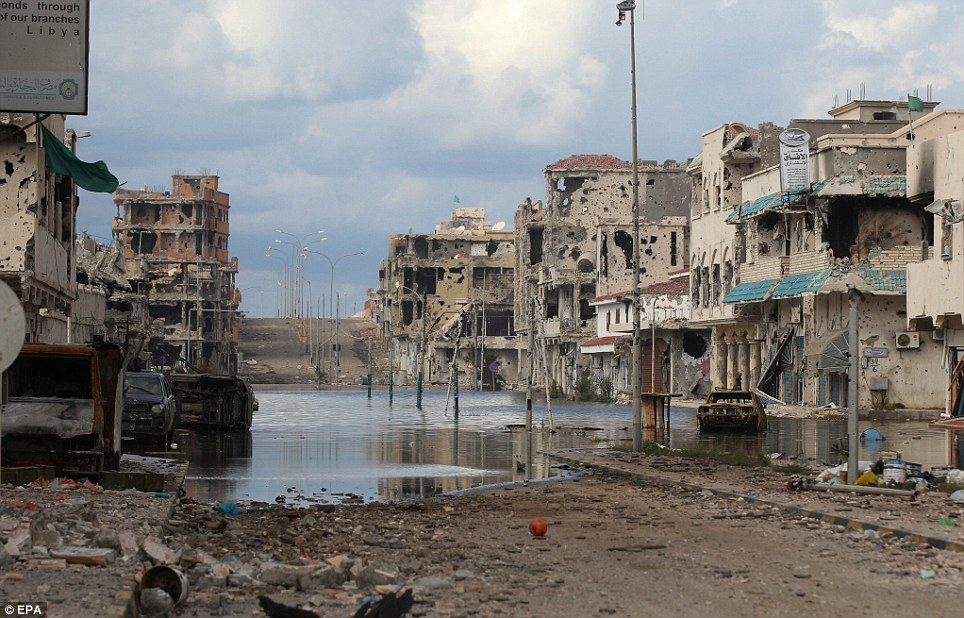
Sirte, Libya, after NATO bombing
That further twist in the cycle of violence will lead to more terrorist attacks in the UK. There is no sense in which this aircraft carrier is anything to do with defending the United Kingdom. It is a device to attack foreign countries. The result is it makes us a lot less safe at home.
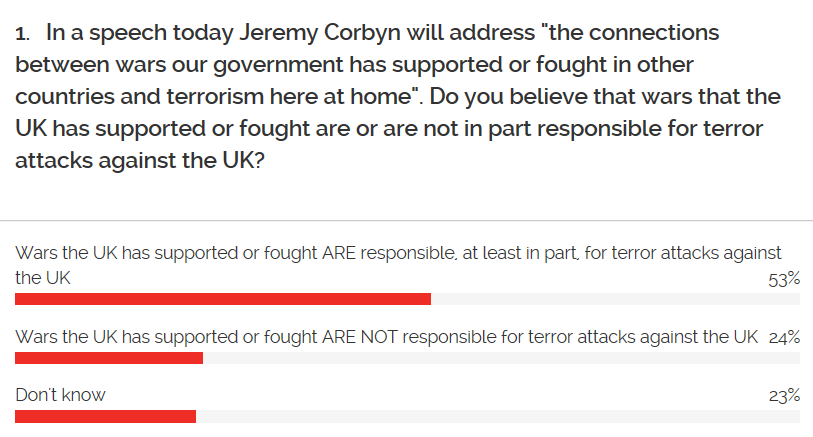
When they think about it, people understand that, as YouGov demonstrated during the recent election campaign. The politicians will be trying to whip up feelings of jingoism and national pride around this huge hunk of floating hubris, to stop us thinking about that.
There is no money for our schools and hospitals, but unlimited sums for the armaments industry. The United Kingdom is not just a dysfunctional state, it is a rogue state and a danger to the peace of the world.
INF Treaty Withdrawal Debated in US: Does Arms Control Have a Chance to Survive?
By Alex GORKA | Strategic Culture Foundation | 26.06.2017
According to POLITICO, the US administration is considering the possibility of withdrawing from the 1987 Intermediate-Range Nuclear Forces Treaty (INF Treaty). The INF Treaty is a bedrock arms control agreement banning an entire class of nuclear missiles with ranges of 500 to 5,500 kilometers. It has removed thousands of nuclear weapons from the European continent and marked the first time the superpowers agreed to actually eliminate nuclear weapons and utilize extensive on-site inspections for verification. Now the landmark Treaty is teetering on the brink.
Russia and the US have exchanged accusations of violating the Treaty recently. The Trump administration is under pressure from some Republicans trying to compel President Trump to take steps to develop new missiles in response.
Rep. Mike Rogers of Alabama, who chairs a key oversight panel on nuclear weapons, told POLITICO he thinks it is «irresponsible for us to continue to adhere to a treaty when the only other participant has long moved on from it».
Indeed, many lawmakers and pundits are wondering if the US should abandon the landmark agreement altogether. Mark Gunzinger of the Center for Strategic and Budgetary Assessments (CSBA) believes that walking away is an option. According to him, future ground-based strike systems could help the US suppress Russia’s advanced integrated air defense systems and freedom of action in the event of a conflict. The same weapons could also help the Pentagon overcome some of the military roadblocks put up by China and North Korea in the Western Pacific. «Perhaps the time is right for a serious debate over the US withdrawing from the INF Treaty», Gunzinger says.
Michaela Dodge of the Heritage Foundation says that after 30 years, the Treaty is no longer strategically relevant, and the US should withdraw. In February, Sen. Tom Cotton (R-Ark.), along with Senators Ron Johnson (R-Wisconsin) and Marco Rubio (R-Florida), introduced the Intermediate-Range Forces Treaty (INF) Preservation Act to declare Russia in material breach of the Treaty — the first step to withdrawing. The legislation would also authorize transferring intermediate-range systems to allied countries, establish a new program for ground-launched missiles within the banned ranges, and provide $500 million to fund countervailing-strike options. Congressmen Ted Poe (R-Texas) and Mike Rogers (R-Alabama) introduced companion legislation in the House of Representatives.
The discussions on INF take place at a time the future for US-Russian arms control looks dim at best.
The extension of the New Strategic Arms Reduction Treaty (New START) due to expire in February 2021 is in question. There are still no talks on the issue but when the treaty reaches its end date there will no strategic nuclear arms agreement at all for the first time since SALT I Treaty was signed in 1972. The two sides are not currently engaged in talks on further strategic nuclear reductions beyond New START. Negotiations of arms control have never been stalled since the 1963 Partial Test Ban Treaty.
Does the idea to tear up the Treaty really meet the interests of the United States? The only reason to warrant such a decision is development and deployment of a new intermediate range missile in Europe. Will it be a popular move at the time the US DoD budget is already stretched in an effort to meet many competing demands? Would Europeans agree to have nuclear weapons on their soil? It makes the 1983 protests leap to memory.
From the point of view of military superiority, the US will not make great gains if it withdraws. It does not have intermediate-range ballistic missiles, and developing a Pershing III system will take time and effort, while land-based cruise missiles would not tip the balance into US and NATO favor because they are too slow to effectively knock out critical infrastructure sites in a first unexpected strike. At present, only ballistic missiles with short flight times and hair-trigger alert can deliver a decapitating attack.
If Europe-based cruise missiles are fired, Russia will have enough time for a launch-upon-attack against those European states which host the weapons and the United States. With the INF Treaty effective no more, Russia will be free to deploy intermediate-range missiles without restriction. In theory, its Iskander-M systems could be armed with ballistic and cruise missiles with extended range, while the American military has nothing to respond with.
The US move would not be a great setback for Russia. From Moscow’s perspective, the development by the United States of air- and sea-based, long-range precision strike capabilities has reduced the value it derived from the INF Treaty. With other countries developing their own INF arsenals, there are no prospects for globalization of the Treaty to greatly reduce its value. This is a potential threat for Russia due to its geographic position. America is under no threat from intermediate-range missiles of any other state in the world, while Russia is within range of such missiles of all states that possess them. Moreover, Russia may need ground-based intermediate weapons to counter the US ballistic defense sites in Europe and Asia.
The US and Russia have not used opportunities to discuss all the INF-related the problems within the Special Verification Commission (SVC) – the implementing body of the Treaty. There are technical issues giving rise to controversy that could be tackled at the experts’ level. The potential of NATO-Russia Council has not been exhausted. It’s a pity that the attempt to launch arms control talks proposed by the German Foreign Minister Steinmeier in 2016 has made little progress. If talks to discuss the proposal were launched, the agenda could be extended to include intermediate-range nuclear weapons.
There are only two options. One is to apply efforts to save the arms control and non-proliferation regime that served the two countries so well during so many years and which is disintegrating at present. The other is to do what some US lawmakers and pundits are calling for – to walk away from the INF Treaty. It will make impossible achieving progress on the New START and ultimately leave the sides without any arms control agreement in force at all. Whatever has been achieved during all these years as a result of the hard efforts will go down the drain to push the world to the brink of nuclear abyss. That’s what is actually being debated in the United States. President Trump has to make his choice.
Time for Another False Flag Chemical Weapons Attack in Syria
By Paul Larudee | Dissident Voice | June 27, 2017
The United States has identified potential preparations for another chemical weapons attack by the Assad regime.
— Sean Spicer, White House Press Secretary, June 26, 2017
Fool me once, shame on you. Fool me, you can’t get fooled again.
— George Bush, September 17, 2002
The White House statement raises a number of questions. Who has identified the “potential preparations”? No reference is given, not even a source agency. Does the information come from intelligence sources? Apparently the Pentagon had not even been informed. What is “potential information” and how does it compare with real information?
Of course, the White House has its own direct sources. The Syrian opposition groups who met with John Kerry, Michael Ratney and Jon Finer at the UN in September, 2016 are tight with al-Nusra and other terrorist groups, and would be happy to provide a pretext for another US strike on Syria. No real evidence is required, but they would be happy to fabricate it nonetheless.
Can anyone cite a case of the use, or even the alleged use, of chemical weapons in Syria that has been to the strategic advantage of the Syrian government or its forces? The fact is that every incident has been to their disadvantage, and invariably a pretext for US intervention. Why then, would they use it, especially when they hadn’t done so before Obama drew his famous “red line”?
To the contrary, when British intelligence analyzed traces of the gas, they found it to be inconsistent with samples of Syrian government stocks. Furthermore, Turkish sources have reported the delivery of chemical weapons to opposition fighters. Distinguished MIT researchers Lloyd and Postol demonstrated definitively that the 2013 CW attack in Ghouta could not have come from Syrian government forces.
Similarly, Postol demonstrated multiple inconsistencies in the reports of the April 4, 2017 Khan Sheikhoun attack. More recently, investigative journalist Seymour Hersh uncovered the inside story on that attack, to the effect that US Defense Department sources knew that there were no chemical weapons used in the Syrian Air Force bombing attack on Khan Sheikhoun, and that to the extent that toxic gases caused casualties in that attack, it was the result of what the al-Nusra and Ahrar al-Sham fighters had stored at the site or had deployed as a false flag event, for the purpose of precipitating US intervention.
Postol warned at the time that without proper corroboration of Syrian government culpability, a US attack would motivate the terrorist constructors of the false flag to replicate more such incidents. In this context, the White House statement, based solely on vague allegations, can be interpreted as the start to a manipulation of public perception, so that an upcoming false flag event can appear to be a corroboration of the initial suspicions.
Such are the workings of what military and security forces call “securocratic wars” and specifically “security-based framing”. This is jargon for what used to be called propaganda, but which is now an integrated part of military and security planning for the control of public perception.1
There is plenty of reason for the White House to welcome such a pretext to attack Syria again. The approval ratings for the Trump Administration have never been higher, nor the press more approving, than when US warships fired 59 Tomahawk missiles at Syria’s Shu’ayrat Air Field two days after the Khan Sheikhoun attack. Given the unpopularity and failure of Trump’s domestic initiatives, it is easy to see how he might be tempted to employ similar death and destruction to boost his image again.
Of course, such actions risk a dangerous confrontation with Russia on the Syrian battlefield. Russia has already threatened to target US aircraft and has suspended coordination of flights over the shooting down of a Syrian jet fighter. But Trump is not averse to risk. We should therefore not be surprised to see another false flag killing of innocents blamed on the Syrian military in order to embroil the US further in an illegal war where we don’t belong.
- Halper, War Against the People, chapter 3.
Paul Larudee is one of the founders of the Free Gaza and Free Palestine Movements and an organizer in the International Solidarity Movement.
Crimea, Afghanistan and Libya
By Brian CLOUGHLEY | Strategic Culture Foundation | 27.06.2017
On June 20 the United States Treasury Department stated that economic sanctions against Russia «would not be lifted until Russia leaves Crimea». In that case, sanctions will remain forever, because ten days after the democratically elected Crimean parliament voted to accede to Russia on 6 March 2014, a referendum was held which confirmed its decision — and the citizens of Crimea intend to remain with Russia.
At that time «Mr Obama said that the referendum was illegal and would never be accepted» and the European Union proclaimed that the vote was ‘illegitimate and its outcome will not be recognised’». This was an interesting political signal, because it was obvious the objectors knew that the citizens of Crimea would vote to rejoin Russia. The hopes and desires of ordinary citizens didn’t matter, because the US and the EU had already made up their minds to ignore a democratic vote.
Predictably, the Secretary General of NATO, Jens Stoltenberg, continues to declare that «NATO Allies do not and will not recognise Russia’s illegal and illegitimate annexation of Crimea».
Time magazine was realistic in recording on March 16, 2014, that the citizens of Crimea «voted overwhelmingly on Sunday to secede from their country and join Russia, in a major victory for Moscow that followed days of international condemnation that the referendum itself was illegitimate». Of course they voted to accede to Russia. They would have been insane to do otherwise. The thought of being ruled by xenophobic bigots who had just mounted a US-assisted coup in Ukraine was appalling. Since the accession to Russia there hasn’t been a single instance of civil disturbance in Crimea — and be assured that if there was the slightest possibility of any such disorder, then US and British intelligence agencies would have informed their media.
The reason for the West’s condemnation of a democratic vote to belong to Russia by Russian-cultured, Russian-speaking citizens of Crimea is not difficult to determine. Since the end of the Soviet Union the US-NATO military alliance has been desperate to justify its existence, and there is no more convenient enemy to be conjured up than Russia. Until that could be arranged, excursions into wider war by NATO provided excuses for survival and expansion.
NATO’s total failure in the war in Afghanistan has further detracted from its miniscule credibility, and its 2011 blitz on Libya was a war crime. Both countries are now in chaos.
After fifteen years of US-NATO war in Afghanistan, as admitted on June 13 by the US Secretary for Defence, General Mattis, the place is a shambles, and «we are not winning in Afghanistan right now».
Amazingly, Mattis added «and we will correct this as soon as possible». What is he going to do? Wave a magic wand and eradicate corruption and install a democratic government and give equal rights to women and destroy the drug industry that accounts for 15 percent of Afghanistan’s GDP and disband the savage militias which have been so well-armed and funded by the CIA? Is he going to defeat the militants who have fought the US-NATO military alliance to a standstill over 15 years?
Mattis is the gallant intellectual general who boasted in a CNN interview in 2005 that «You go into Afghanistan, you got guys who slap women around for five years because they didn’t wear a veil. You know, guys like that ain’t got no manhood left anyway. So it is a hell of a lot of fun to shoot them». — He is exactly the sort of rabid military maniac whose bash and crash tactics over the years have caused so many Afghans to loathe and despise the foreigners who invaded their country. Mattis declares that «NATO has always stood for military strength and protection of the democracies and the freedoms we intend to pass on to our children», but the Mattis-NATO concept of freedom is at variance with reality.
In Afghanistan, as recorded by Human Rights Watch, «Early on February 18, Afghan police special forces raided a clinic run by the humanitarian organization Swedish Committee for Afghanistan, assaulted medical staff, and shot dead two patients, including a 16-year-old, and a 15-year-old caregiver. Witnesses reported that international military forces accompanied the Afghan forces, although they did not enter the clinic». No prizes for guessing which country provided these «international military forces,» under NATO auspices. Freedom, anyone?
Then on 12 June 2017 US troops killed three civilians, a man and his two sons. The soldiers were in a vehicle convoy that was struck by a bomb, and opened fire, spraying bullets round the countryside in the cause of freedom. Now: nobody should denounce these young soldiers for panicking and blasting anyone they thought was a threat. It is only too easy for commentators and politicians to aim the blame in such circumstances — without reflecting that they themselves might not have been exactly cool, calm and collected when the bomb blast went off. Certainly the man and his kids should not have been killed — but the US soldiers shouldn’t have been in Afghanistan in the first place.
And while all this carnage is going on, the West’s sanctions on Russia continue to be aimed at the innocent citizens of Crimea in the hope that they will revolt against Russia and embrace what General Mattis calls the freedom-loving US-NATO military alliance.
In 2011 this freedom-loving military alliance destroyed Libya in an aerial blitz that began by US and British warships firing 110 Tomahawk missiles and continued with NATO’s air forces pulverising the place for seven months, during which their aircraft carried out 14,202 bomb and rocket airstrikes in the cause of freedom. As noted by one commentator, Human Rights Watch «released a report into the deaths of at least 72 Libyan civilians, a third of them children, killed in eight separate bombing raids (seven on non-military targets) – and denounced NATO for still refusing to investigate or even acknowledge civilian deaths that were always denied at the time».
Libya is now a catastrophic shambles, with armed groups fighting each other and Islamic State terrorists finding willing recruits for their savagery. The results of the US-NATO war that supported rebels against the Libyan government include «Shortages of food, fuel, water, medical supplies and electricity, as well as reduced access to health care and public services. Care for patients with chronic diseases, disabilities and mental health disorders is compromised by restricted access to the few functioning health facilities. The situation of women and children has become particularly vulnerable, since the hospitals are overwhelmed with trauma patients».
Before the US-NATO destruction of Libya the World Health Organisation recorded that «the country is providing comprehensive health care including promotive, preventive, curative and rehabilitative services to all citizens free of charge through primary health care units, health centres and district hospitals». The CIA Factbook noted that Gaddafi’s Libya had a literacy rate of 94.2% which was higher than in Malaysia, Mexico and Saudi Arabia. According to WHO, life expectancy was 75 years, as against 66 in India, 71 in Egypt, 59 in South Africa.
Forgotten are the wise words of Brazil, China, India, Russia and NATO-member Germany (which refused to join the Libya bombing spree), who warned against «unintended consequences of armed intervention» concerning which Mr Putin (then prime minister) observed that it was regrettable when the «so-called civilized community, with all its might, pounces on a small country, and ruins infrastructure that has been built over generations».
The question is, where would you prefer to live? — In Afghanistan, after 15 years of US-NATO war, where barbaric violence rules, the lives of women are obscenely degrading, corruption is terminal and illegal drug production is the highest in the world? Or Libya, destroyed by a US-NATO blitzkrieg, where there are now «two rival parliaments and three governments» and even the New York Times admits that it is «a violent and divided nation rife with independent militias, flooded with arms and lacking legitimate governance and political unity»?
Or might you not prefer Crimea, where infrastructure is being improved and the people do not fear being sprayed with bullets by foreign soldiers; where every effort is being made to improve the living conditions of its inhabitants who are the targets of spiteful western sanctions?
British government ‘content’ to let Palestine Expo proceed
MEMO | June 27, 2107
Despite the best efforts of Britain’s pro-Israel lobby, the organisers of the biggest-ever Palestine event in Europe have been told by the British government that it is “content to let the event proceed.” A spokesperson for the Department for Communities and Local Government (DCLG) advised the chairman of Friends of Al-Aqsa of the decision this morning.
Palestine Expo will be held at the Queen Elizabeth II Conference Centre in Westminster on 8 and 9 July. The organisers promise to provide a Palestinian social, cultural and entertainment event of a kind not seen before. Palestinians and their supporters from Jewish, Christian and Muslim faith backgrounds, as well as varied political perspectives, will be taking part.
The venue, which is on parliament’s doorstep in Westminster, comes under the remit of an agency within the DCLG. Pro-Israel lobbyists have been trying to have Palestine Expo 2017 cancelled, making what Ismail Patel of the organising group called “false and baseless allegations” against Friends of Al-Aqsa. The Secretary of State at the DCLG, Sajid Javid MP, had made it known to the organisers that he was “minded” to cancel the event, but representations by Friends of Al-Aqsa appear to have persuaded him otherwise.
Describing the government’s decision as “very good news indeed” for freedom of speech in Britain, Mr Patel said that this should enable people to book their tickets for the event with more confidence. “Advance ticket sales are already very healthy,” he explained, “but the DCLG decision will give them a welcome boost.”
Friends of Al-Aqsa’s chairman is confident that the British public will not be disappointed by the programme on offer. Speaking to MEMO, he emphasised the intention to foster good community relations and promote democratic means to end the occupation of Palestine. “We invite everyone who wishes to see peace in Palestine and champion freedom of speech to attend Palestine Expo,” he added.
Featured Video

No Threat Can Force Iran’s Surrender /Trita Parsi & Lt Cl Daniel Davis
or go to
Aletho News Archives – Video-Images
From the Archives
What is the Israeli Lobby in Australia Doing in Interfaith Dialogue?
By Ali Kazak | Dissident Voice | October 11, 2015
For years Israel and its lobby around the world have been trying to normalise their relations with Arabs and Muslims without solving the Palestine Question.
One of the methods they resorted to in the last few years is using human rights and community organizations such as interfaith dialogue and Multiculturalism to achieve this objective and to: isolate the Palestinians, marginalise the Palestine question, end Israel’s isolation, and prevent criticism of Israel, knowing that these organisations will be the first to stand against Israel’s violations, racial and religious discrimination.
The group responsible for this task in Australia is The Australia/Israel & Jewish Affairs Council (AIJAC); its Director of International & Community Affairs, Jeremy Jones is in charge of lobbying religious community organizations, specifically Muslims and Christians. Consequently he convened the Faith Communities for Reconciliation, founding participant in the Australian Partnership of Religious Organisations and the Australian National Dialogue of Christians, Muslims & Jews.
AIJAC is a private political propaganda group. It is recognised as the main Israeli lobby in Australia. It coordinates its activities and works intimately with the Israeli embassy in Canberra and different institutions in Israel. It is privately funded by some Jewish businessmen. It monitors closely Australian politicians, the media, ethnic and religious groups, (especially Arabs and Muslims), unions and academics on their stands towards Israel and the Palestine question. … continue
Blog Roll
 Aletho News
- Theodore Postol: Iran’s Missiles & Drones Were Underestimated
- Iran To Target Military Industrial-Tech Complex That Facilitated Gaza Genocide
- Collapsing Empire: The Resistance Disarms ‘Israel’
- Suicide Should Not Be a Government Service
- Rethinking America’s greatest threat: Iran vs. Israel-Firsters
- Iran accuses adversaries of false flags to strain Turkey ties
- Poland rules out sending Patriot missiles to US/Israel amid war on Iran
- Tehran approves new Hormuz plan with major restrictions
- No Threat Can Force Iran’s Surrender /Trita Parsi & Lt Cl Daniel Davis
- UK’s New Pandemic Plan Would Turn Big Tech Into a Mass Location Tracking Network
- If Americans Knew
- Ann Coulter Rips Into Fox News for Iran War Coverage, Compares to False Rigged 2020 Election Reporting
- Joe Kent Urges Americans To Call White House and Congress To Object To Sending Troops Into Iran
- DNC Resolution to Reject AIPAC Funding Puts Democratic Leaders in the Hot Seat
- Swedish foundation to build 400 schools as over 650,000 Gaza children remain without education for 2 years
- Israeli army admits photshopping image of slain Lebanese journalist
- This is how Israel is systematically killing health workers under the cover of war in Lebanon
- Carrying life under fire: Israeli invasion of Lebanon leaves pregnant women facing deadly risks
- Champagne all around for the new death penalty (for Palestinians) law – Not a ceasefire Day 172
- Why are Palestinian books struggling to be seen on Amazon?
- The Line Between Affinity and Conspiracy
- No Tricks Zone
- New Study Finds Warming Saves Lives…Cold Temperatures 12 Times More Deadly Than Excess Heat
- German Science Blog Accuses PIK Climate Institute Of Hallucinating Climate Tipping Points
- Devastating Assessment Of Comirnaty Vaccine By Former Senior Pfizer Europe Toxicologist
- New Study: CO2 Is ‘Effectively Negligible’ As An Explanatory Climate Change Factor Since 2000
- Former Pfizer Toxicologist Dr. Helmut Sterz Tells Bundestag Hearing Pfizer Vaccine Should Have Never Been Approved
- Energy Expert: Germany’s Nuclear Phaseout Was A “500 Billion Euro Mistake”
- New Research: South Australia’s Mid-Holocene Sea Surface Temperatures Were 4°C Warmer Than Today
- Storing Green Energy To Last Germany 10 Days Would Require A 60-Million Tonne Battery
- New Studies: UK Sea Levels Were 4 Meters Higher Than Today During The Mid-Holocene
- Destructive Green New Deal: German Energy And Metal Group Warns Of Drastic Crisis
 Aletho News