Online Petition Forces Review of Dilma Rouseff’s Impeachment

teleSUR | July 29, 2017
Brazilian senators will have to review the controversial procedure that led to the former president Dilma Rousseff’s impeachment last year, after an online citizens’ petition gathered more than 46,000 signatures in less than 24 hours.
The survey is being carried out on the Senate’s online platform E-Cidadania, and required a minimum of 20,000 signatures by November before it could be formally converted into a “legislative suggestion” to be considered in the higher house.
It poses two questions: firstly, that the loss of her mandate as the constitutional president was the consequence of a coup d’état.
And secondly, that the ‘failure’ of her successor Michel Terner’s government means that the only solution is to reinstate Rouseff into her elected post which should never have been taken away from her.
Last August, Brazil’s Senate voted to remove her from office for manipulating the budget.
Rouseff protested her innocence and promised not to give up the political struggle against poverty and inequality.
The petition is similar to another one which has been drawn up by the National Movement for the Anullment of the Impeachment, MNAI.
It’s supporters include the former president Luiz Inacio Lula da Silva, the national president of the Workers’ Party, Gleisi Hoffmann and the singer and composer Chico Buarque.
The MNAI hopes to gather 1.3 million signatures in order to pressure the Federal Supreme Court to revoke the result of the trial against Rousseff.
The Brazilian President Michel Temer’s approval ratings have plummeted to less than five percent as the corruption allegations against him and other politicians refuse to go away.
While opponents of his government’s controversial labor and pension reforms are still demanding his resignation.
Global Warming Blamed For EU Wildfires
By Paul Homewood | Not A Lot Of People Know That | July 28, 2017
Now why am I not surprised?
Exclusive: The number of forest fires in the EU has trebled so far this year, according to figures obtained by Euronews, affecting an area nearly the size of Luxembourg.
There have been 677 blazes in 2017 – a huge increase on the 215 the bloc saw annually on average over the previous eight years.
Experts have blamed climate change for the rise, saying it has extended the traditional wildfire season and increased the frequency of blazes.
They have warned Europe’s forest fires will rage more often in the future and engulf new areas.
Portugal, Italy and Croatia have battled blazes in recent days amid high temperatures and lower-than-normal rainfall.
It comes less than a month since 64 people died in a forest fire in Portugal, with many victims caught in their cars as they tried to flee.
http://www.euronews.com/2017/07/26/how-europe-s-wildfires-have-more-than-trebled-in-2017

Now you’re no doubt way ahead of me here!
Apparently, the last eight years is the “normal climate”, and 2017 is the new.
Joe, being a suspicious little devil, thought he would check why they used the last eight years as a baseline, and discovered why.
This is the official data from the European Environment Agency, published last November:
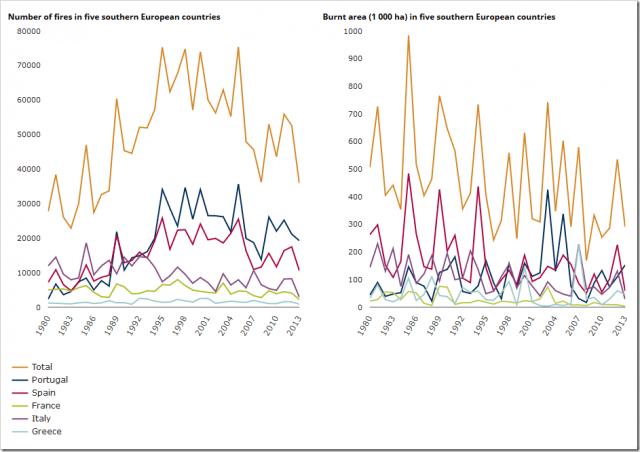
https://www.eea.europa.eu/data-and-maps/daviz/burnt-forest-area-in-five-1#tab-dashboard-01
The number of fires since 1980 peaked in the 1990s, and have been relatively low in the last few years.
The trend on burnt acreage is even more stark, showing consistent decline since the 1980s.
I wonder what they’ll blame on global warming next?
German States Take Trumpian Climate U-Turn
The Global Warming Policy Forum – 26/07/17
Germany is at risk of tacitly joining Donald Trump in turning its back on the Paris climate change deal. Two of the country’s regional governments have decided to put preserving jobs in coal mines and power plants ahead of cutting carbon emissions.
If Europe’s largest economy misses its targets, Chancellor Angela Merkel’s environmental credentials – and the global accord itself – would suffer a big setback.
Officially, Germany is fully committed to the Paris accord. At the G20 summit in Hamburg earlier this month, Merkel said she “deplored” Trump’s decision to withdraw the United States from the treaty. She led an alliance of world leaders who unsuccessfully tried to persuade the U.S. President to reconsider.
Yet two important German states are undermining Merkel’s position. North Rhine-Westphalia (NRW) and Brandenburg are home to many mines which extract brown coal and power plants that burn the carbon-intensive fuel. Their governments have vowed to protect an industry that provides more than 70,000 jobs, many of them in economically deprived regions in the country’s east.
That’s bad news for Germany’s promise to reduce overall emissions by at least 55 percent, relative to 1990, by 2030. Per unit of electricity generated, brown coal produces twice as much carbon as gas-fired power plants. In 2016, the fuel accounted for 23 percent of Germany’s electricity but emitted 50 percent of the sector’s carbon dioxide. Brown coal reserves are expected to last for several decades, and utilities even have permission to open several new mines.
NRW’s new government, which is led by Merkel’s conservative Christian Democratic Union, in late June decided to stick to the current mining plans in the region. In mid-June, Brandenburg’s government said it wanted to soften its 2030 reduction targets. A study commissioned by the World Wildlife Fund environmental group shows that NRW’s plans alone would bust Germany’s Paris targets.
Unless Merkel can rein in the brown coal enthusiasts at home, she risks sending a devastating message to the world. If a country as rich and ecologically conscious as Germany prioritises coal mining jobs over the fight against global warming, others will also find it easier to turn their back on the treaty.
US Oil Industry Warns Washington Over Venezuela Sanctions
teleSUR | July 28, 2017
U.S. oil and petrochemicals makers are warning President Donald Trump that proposed oil sanctions against Venezuela could hurt domestic companies and consumers.
In a letter sent to Trump and published in La Tabla.com, the head of the American Fuel and Petrochemical Manufacturers, Chet Thompson, wrote that the measures would not help to solve the problems in the South American nation.
Venezuela now sells more than 700,000 barrels of oil a day to the U.S. out of a total production of roughly two million barrels a day, or just over 2 percent of world production.
The document indicates that some 20 U.S. refineries are supplied with heavy Venezuelan crude, for which they have made substantial processing adjustments.
It says there are practically no other sources of supply for this type of oil.
So a suspension of purchases to Venezuela, would destabilize the world market for hydrocarbons.
The manufacturers estimate that the search for additional quotas of heavy crude would be extremely complicated and could increase costs, resulting in higher prices for consumers.
The two countries’ economies are tightly bound by the oil that Venezuela sells to the United States: It accounts for roughly 10 percent of the oil imported by the U.S.
In Washington, U.S. Vice President Mike Pence has reiterated the White House’s threat to impose “strong and swift economic actions” if Sunday’s National Constituent Assembly vote goes ahead.
While Republican U.S. Senator Marco Rubio noted that the Trump administration had announced sanctions this week, and added, “You can expect more.”
Trump targeted 13 senior Venezuelan officials on Wednesday, including the Vice President of the state-owned Petroleos de Venezuela SA, Simon Zerpa.
Other oil industry experts have also expressed concerns about the possible consequences of more sanctions.
Patrick DeHaan, a senior petroleum analyst for price-tracker GasBuddy, and Phil Flynn, a senior market analyst for the PRICE Futures Group in Chicago, both told UPI this week a potential ban on Venezuelan oil might have unintended consequences.
“A cut of Venezuelan exports would add about 15 to 25 cents a gallon to U.S. gasoline prices,” Flynn said.
Platts added that, for the refiners concentrated on the U.S. Gulf Coast, Venezuela is the largest source of crude oil, ahead of Saudi Arabia, noting those reviewing sanctions in the Trump administration recognize the potential for repercussions.
The administration source told Platts that “many within the Trump administration view sanctions on Venezuelan crude imports as having a more devastating effect on the U.S. refining sector than on Venezuela’s economy.”
Israeli forces shoot, injure Palestinian in Salfit tending to his land near separation wall
Ma’an – July 29, 2017
 SALFIT – Israeli forces shot and injured a Palestinian on Friday while he was tending to his land near Israel’s separation wall in the village of Deir Ballut in the western part of Salfit district in the occupied West Bank.
Medical sources at the Palestinian Red Crescent told Ma’an that Faed Saleh Odeh Moussa, 33, was injured with a live bullet in his left hand after Israeli forces opened fire on him while he was on his land watering trees.
The sources added that he was transferred to the Yasser Arafat Hospital in Salfit, where doctors reported his injury as moderate.
Saed, Moussa’s brother, told Ma’an that they were caring for their land near Israel’s separation wall, like every Friday, when Israeli forces arrived in the area at 7:30 p.m. and randomly opened live ammunition on them.
Saed said that they quickly hid behind rocks before his brother was injured. He added that their children were also with them at the time and two men from Qalqiliya city in the northern West Bank who were en route to Israel.
Israeli forces remained in the area for some time before leaving following the incident, Saed noted. He added that he had called the Deir Ballut municipality to inform them of the incident, who said that they would notify the Palestinian liaison of the incident.
An Israeli army spokesperson told Ma’an she would look into reports on the incident.
According to the Bethlehem-based Applied Research Institute — Jerusalem, the village of Deir Ballut has had thousands of dunams of land confiscated for the purpose of illegal Israeli settlement building, while Israel’s separation wall — deemed illegal by the International Court of Justice in 2004 — is expected to swallow up at least 35 percent of the village’s lands.
Such Israeli activities in Palestinian villages coincide with upticks of Israeli violence against Palestinians — both by Israeli forces and settlers, as Palestinians are stripped of their lands and often barred from entering Israel’s so-called security “buffer zones” on the Palestinian side of the separation wall.
The UN has reported that at least 92 Palestinians are injured by Israeli forces every two weeks, while 1,444 Palestinians were injured by Israeli forces this year, as of July 17. However, this data does not include the hundreds of Palestinians who were injured during Al-Aqsa protests post-July 17.
‘An attempt to drown out Palestinian voices’: RT’s office building raided in Ramallah
RT | July 29, 2017
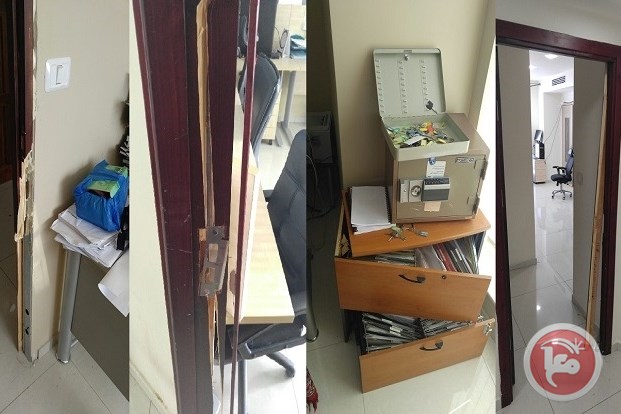
The Israeli military raided the PalMedia building in Ramallah on the West Bank early Saturday morning. It is home to a number of international media organizations, including RT’s regional office. Property belonging to other media channels was either damaged or seized.
No RT employees were harmed during the raid on the PalMedia building which also houses the offices of Al-Quds, Al-Mayadeen, France 24 and Al-Manar.
Witnesses told the Ma’an News Agency that 10 Israeli army vehicles had surrounded the building before carrying out the search.
Several doors and editing rooms were damaged while some computers and other property were taken away.
An Israeli army spokesperson told Ma’an that Israeli forces had “seized media equipment and documents used for incitement” from a media office in Ramallah, though did not say which agency they were specifically targeting.
The satellite channel Al-Quds said the search was directed at them.
The Palestinian Union of Journalists condemned the raid, which it said had led to “the destruction of property and the theft of equipment, computers and archival materials belonging to the satellite channel Al-Quds,” adding, that it was “an obvious attempt to drown out the voice of the Palestinians and make the Palestinian narrative invisible.”
The Palestinian Ministry of Information also released a statement denouncing the raid, saying, that targeting the media “proves Israel’s intentions to prevent the guardians of truth from continuing their media, national, and ethical role of transferring the message of our people’s desired freedom.”
This is not the first time Israeli authorities have mounted a search of the building, having done so in June 2014. At the time, Reporters Without Borders said the raid “joined the long list of violations of Palestinian news media rights by the Israeli security forces, with never-ending threats, arrests and military operations.”
RT’s offices in the Gaza Strip were also hit by an airstrike during Operation Pillar of Defense in November 2012. Though the building was severely damaged, none of RT’s employees were hurt.
Israeli authorities have long restricted Palestinian freedom of expression through censoring social media activity and imprisoning journalists, activists, poets, and novelists.
Collateral Damage: U.S. Sanctions Aimed at Russia Strike Western European Allies
By Diana Johnstone | CounterPunch | July 28, 2017
Do they know what they are doing? When the U.S. Congress adopts draconian sanctions aimed mainly at disempowering President Trump and ruling out any move to improve relations with Russia, do they realize that the measures amount to a declaration of economic war against their dear European “friends”?
Whether they know or not, they obviously don’t care. U.S. politicians view the rest of the world as America’s hinterland, to be exploited, abused and ignored with impunity.
The Bill H.R. 3364 “Countering America’s Adversaries Through Sanctions Act” was adopted on July 25 by all but three members of the House of Representatives. An earlier version was adopted by all but two Senators. Final passage at veto-overturning proportions is a certainty.
This congressional temper tantrum flails in all directions. The main casualties are likely to be America’s dear beloved European allies, notably Germany and France. Who also sometimes happen to be competitors, but such crass considerations don’t matter in the sacred halls of the U.S. Congress, totally devoted to upholding universal morality.
Economic “Soft Power” Hits Hard
Under U.S. sanctions, any EU nation doing business with Russia may find itself in deep trouble. In particular, the latest bill targets companies involved in financing Nord Stream 2, a pipeline designed to provide Germany with much needed natural gas from Russia.
By the way, just to help out, American companies will gladly sell their own fracked natural gas to their German friends, at much higher prices.
That is only one way in which the bill would subject European banks and enterprises to crippling restrictions, lawsuits and gigantic fines.
While the U.S. preaches “free competition”, it constantly takes measures to prevent free competition at the international level.
Following the July 2015 deal ensuring that Iran could not develop nuclear weapons, international sanctions were lifted, but the United States retained its own previous ones. Since then, any foreign bank or enterprise contemplating trade with Iran is apt to receive a letter from a New York group calling itself “United Against Nuclear Iran” which warns that “there remain serious legal, political, financial and reputational risks associated with doing business in Iran, particularly in sectors of the Iranian economy such as oil and gas”. The risks cited include billions of dollars of (U.S.) fines, surveillance by “a myriad of regulatory agencies”, personal danger, deficiency of insurance coverage, cyber insecurity, loss of more lucrative business, harm to corporate reputation and a drop in shareholder value.
The United States gets away with this gangster behavior because over the years it has developed a vast, obscure legalistic maze, able to impose its will on the “free world” economy thanks to the omnipresence of the dollar, unrivaled intelligence gathering and just plain intimidation.
European leaders reacted indignantly to the latest sanctions. The German foreign ministry said it was “unacceptable for the United States to use possible sanctions as an instrument to serve the interest of U.S. industry”. The French foreign ministry denounced the “extraterritoriality” of the U.S. legislation as unlawful, and announced that “To protect ourselves against the extraterritorial effects of US legislation, we will have to work on adjusting our French and European laws”.
In fact, bitter resentment of arrogant U.S. imposition of its own laws on others has been growing in France, and was the object of a serious parliamentary report delivered to the French National Assembly foreign affairs and finance committees last October 5, on the subject of “the extraterritoriality of American legislation”.
Extraterritoriality
The chairman of the commission of enquiry, long-time Paris representative Pierre Lellouche, summed up the situation as follows:
“The facts are very simple. We are confronted with an extremely dense wall of American legislation whose precise intention is to use the law to serve the purposes of the economic and political imperium with the idea of gaining economic and strategic advantages. As always in the United States, that imperium, that normative bulldozer operates in the name of the best intentions in the world since the United States considers itself a ‘benevolent power’, that is a country that can only do good.”
Always in the name of “the fight against corruption” or “the fight against terrorism”, the United States righteously pursues anything legally called a “U.S. person”, which under strange American law can refer to any entity doing business in the land of the free, whether by having an American subsidiary, or being listed on the New York stock exchange, or using a U.S.-based server, or even by simply trading in dollars, which is something that no large international enterprise can avoid.
In 2014, France’s leading bank, BNP-Paribas, agreed to pay a whopping fine of nearly nine billion dollars, basically for having used dollar transfers in deals with countries under U.S. sanctions. The transactions were perfectly legal under French law. But because they dealt in dollars, payments transited by way of the United States, where diligent computer experts could find the needle in the haystack. European banks are faced with the choice between prosecution, which entails all sorts of restrictions and punishments before a verdict is reached, or else, counseled by expensive U.S. corporate lawyers, and entering into the obscure “plea bargain” culture of the U.S. judicial system, unfamiliar to Europeans. Just like the poor wretch accused of robbing a convenience store, the lawyers urge the huge European enterprises to plead guilty in order to escape much worse consequences.
Alstom, a major multinational corporation whose railroad section produces France’s high speed trains, is a jewel of French industry. In 2014, under pressure from U.S. accusations of corruption (probably bribes to officials in a few developing countries), Alstom sold off its electricity branch to General Electric.
The underlying accusation is that such alleged “corruption” by foreign firms causes U.S. firms to lose markets. That is possible, but there is no practical reciprocity here. A whole range of U.S. intelligence agencies, able to spy on everyone’s private communications, are engaged in commercial espionage around the world. As an example, the Office of Foreign Assets Control, devoted to this task, operates with 200 employees on an annual budget of over $30 million. The comparable office in Paris employs five people.
This was the situation as of last October. The latest round of sanctions can only expose European banks and enterprises to even more severe consequences, especially concerning investments in the vital Nord Stream natural gas pipeline.
This bill is just the latest in a series of U.S. legislative measures tending to break down national legal sovereignty and create a globalized jurisdiction in which anyone can sue anyone else for anything, with ultimate investigative capacity and enforcement power held by the United States.
Wrecking the European Economy
Over a dozen European Banks (British, German, French, Dutch, Swiss) have run afoul of U.S. judicial moralizing, compared to only one U.S. bank: JP Morgan Chase.
The U.S. targets the European core countries, while its overwhelming influence in the northern rim – Poland, the Baltic States and Sweden – prevents the European Union from taking any measures (necessarily unanimous) contrary to U.S. interests.
By far the biggest catch in Uncle Sam’s financial fishing expedition is Deutsche Bank. As Pierre Lellouche warned during the final hearing of the extraterritorial hearings last October, U.S. pursuits against Deutsche Bank risk bringing down the whole European banking system. Although it had already paid hundreds of millions of dollars to the State of New York, Deutsche Bank was faced with a “fine of 14 billion dollars whereas it is worth only five and a half. … In other words, if this is carried out, we risk a domino effect, a major financial crisis in Europe.”
In short, U.S. sanctions amount to a sword of Damocles threatening the economies of the country’s main trading partners. This could be a Pyrrhic victory, or more simply, the blow that kills the goose that lays the golden eggs. But hurrah, America would be the winner in a field of ruins.
Former justice minister Elisabeth Guigou called the situation shocking, and noted that France had told the U.S. Embassy that the situation is “insupportable” and insisted that “we must be firm”.
Jacques Myard said that “American law is being used to gain markets and eliminate competitors. We should not be naïve and wake up to what is happening.”
This enquiry marked a step ahead in French awareness and resistance to a new form of “taxation without representation” exercised by the United States against its European satellites. The committee members all agreed that something must be done.
That was last October. In June, France held parliamentary elections. The commission chairman, Pierre Lellouche (Republican), the rapporteur Karine Berger (Socialist), Elisabeth Guigou (a leading Socialist) and Jacques Myard (Republican) all lost their seats to inexperienced newcomers recruited into President Emmanuel Macron’s République en marche party. The newcomers are having a hard time finding their way in parliamentary life and have no political memory, for instance of the Rapport on Extraterritoriality.
As for Macron, as minister of economics, in 2014 he went against earlier government rulings by approving the GE purchase of Alstom. He does not appear eager to do anything to anger the United States.
However, there are some things that are so blatantly unfair that they cannot go on forever.
Diana Johnstone is the author of Fools’ Crusade: Yugoslavia, NATO, and Western Delusions. Her new book is Queen of Chaos: the Misadventures of Hillary Clinton. She can be reached at diana.johnstone@wanadoo.fr
Hate PLC
By Gilad Atzmon | July 27, 2017
In March 2016, the British government pledged 13.4 million pounds to the Community Security Trust (CST), a Jewish body that is committed to fighting hatred against one group only. One would expect that with all that money, the CST would do its job and curb anti Semitism. But the miracle is that the opposite has occurred. Just two weeks later, according to the CST’s statistics, anti Semitism went through the roof. The Daily Mail reports today that 767 anti Semitic hate crimes were logged by the CST in the first six months of 2017, a 30 per cent rise over 2016. It is the highest figure since statistics were first kept 33 years ago. The CST reports an “unprecedented run of over 100 incidents each month back to April 2016.”
A mere few days after the British government vowed to wire millions of pounds to the CST, the number of ‘anti Semitic incidents’ rose by 30% to over 100 incidents a month. The results, at least according to the CST’s statistics, are that the more public money is allocated to fight anti Semitism, the more anti Semitic the Brits become.
If this is the case, the cure for British anti Semitism may be within reach – to fight anti Semitism, deprive the CST and similar organisations of taxpayers’ money!
Anti Semitism is not really a social phenomenon, it is instead a multi million pound industry. The more we spend on the fight against it, the more incidents are ‘recorded’ to justify further spending.
If the British government genuinely wants to fight anti Semitism it would do better to reinstate British liberal values of universalism and tolerance that go beyond the interests of one group. If British Jews feel unsafe, they should insure that they are stripped of their exceptional status. They should insist that they are Brits like all other Britons: protected by the same laws as their neighbours.
In December 2016, the British Government decided to step up the battle against anti Semitism by adopting the International Holocaust Remembrance Alliance’s (IHRA) working definition of anti-Semitism. The IHRA’s definition was designed to suppress any criticism of Jewish politics, Zionism or Israel. Its intent was to make impossible the utterance of any criticism of anything in any way Jewish related. Yet, according to the new CST statistics, even this drastic measure didn’t reduce anti Semitism at all. If anything, anti Semitism increased sharply since the British Government adopted the new definition.
I would advise both Jews and the British authorities that it is the exceptional treatment of one group that contributes to the growing animosity towards Jewish politics and Jewish lobbying.
But there is another problem that must be addressed. Though it is not clear whether anti Semitism is actually on the rise, it is certain that a growing number of Brits have been subjected to an orchestrated slanderous campaign run by Zionist institutions that are funded by British taxpayer money such as CST and CAA. These organisations attack Jeremy Corbyn, the Labour party, venues, intellectuals, artists, musicians, authors and anyone else they decide has dared to point at Israeli brutality and extensive Jewish political lobbying in Britain.
If Britain still cares for values of tolerance and intellectual exchange, it better spend some taxpayer money defending its citizens, gentiles as well as Jews, from these foreign bodies. And if Britain truly cares for its Jews, it should protect them from the unfortunate consequences of the CST, CAA and other Israeli lobbies operating in our midst.
Featured Video

America Racing to Strategic Defeat in Iran
or go to
Aletho News Archives – Video-Images
From the Archives
An Expert Military Analysis of War with China
Actually, None is Necessary
By Fred Reed • Unz Review • December 13, 2020
The Correlation of Armed Forces: U.S. goods and services trade with China totaled an estimated $634.8 billion in 2019. Exports were $163.0 billion; imports were $471.8 billion. The U.S. goods and services trade deficit with China was $308.8 billion in 2019. Trade in services with China (exports and imports) totaled an estimated $76.7 billion in 2019. Services exports were $56.5 billion; services imports were $20.1 billion. The U.S. services trade surplus with China was $36.4 billion in 2019.
There is talk within the Washingtoniat of a possible war with China. Steve Bannon, who apparently was dropped on his head as a child, actually favors such a war. We hear the usual shoo-the-boobs alarm about how the Chinese are doing something terrible and we must gird our loins and American values and show them what for, bow wow, woof. The danger is that the current game of who-blinks-first in Asian waters might actually provoke a shooting war. You know the kind of thing: One warship refuses to get out of the way of another, a collision ensues, some retard lieutenant who signed up on waivers opens fire, and we’re off and running. It is not a good idea to let children play with matches.
The said war is discussed either in emotional terms by idiots or in purely naval terms by those familiar with such things, so we hear of the First Island Chain and the Second Island Chain and whose missiles against the other’s missiles and so on. This would be appropriate if we were fighting World War Two again. Which we aren’t. Let’s take a quick-and-dirty look at how such a war might go.
To begin the war, America would overestimate itself and underestimate China. This is doctrine in the Pentagon. … continue
Blog Roll
 Aletho News
- Suicide Should Not Be a Government Service
- Rethinking America’s greatest threat: Iran vs. Israel-Firsters
- Iran accuses adversaries of false flags to strain Turkey ties
- Poland rules out sending Patriot missiles to US/Israel amid war on Iran
- Tehran approves new Hormuz plan with major restrictions
- No Threat Can Force Iran’s Surrender /Trita Parsi & Lt Cl Daniel Davis
- UK’s New Pandemic Plan Would Turn Big Tech Into a Mass Location Tracking Network
- Growing insecurity, soaring prices fuel protests in north as regime bans evacuation: Sources
- Iran denies responsibility for ‘depraved’ attack on Kuwait desalination plant
- Bring The Troops Back. End This War Now!
- If Americans Knew
- Carrying life under fire: Israeli invasion of Lebanon leaves pregnant women facing deadly risks
- Champagne all around for the new death penalty (for Palestinians) law – Not a ceasefire Day 172
- Why are Palestinian books struggling to be seen on Amazon?
- The Line Between Affinity and Conspiracy
- As Iran targets US military bases, will they be relocated to Israel? Not a ceasefire Day 171
- Will Trump Go Kamikaze?
- Is the University of Florida Shutting Down College Republicans over Israel Criticism?
- Jewish extremist arrested over alleged plot to firebomb Palestinian activist Nerdeen Kiswani’s home
- More than half of Palestinian child detainees have no charges
- The More Murderous Israel Gets, The More We Hear About “Antisemitism”
- No Tricks Zone
- New Study Finds Warming Saves Lives…Cold Temperatures 12 Times More Deadly Than Excess Heat
- German Science Blog Accuses PIK Climate Institute Of Hallucinating Climate Tipping Points
- Devastating Assessment Of Comirnaty Vaccine By Former Senior Pfizer Europe Toxicologist
- New Study: CO2 Is ‘Effectively Negligible’ As An Explanatory Climate Change Factor Since 2000
- Former Pfizer Toxicologist Dr. Helmut Sterz Tells Bundestag Hearing Pfizer Vaccine Should Have Never Been Approved
- Energy Expert: Germany’s Nuclear Phaseout Was A “500 Billion Euro Mistake”
- New Research: South Australia’s Mid-Holocene Sea Surface Temperatures Were 4°C Warmer Than Today
- Storing Green Energy To Last Germany 10 Days Would Require A 60-Million Tonne Battery
- New Studies: UK Sea Levels Were 4 Meters Higher Than Today During The Mid-Holocene
- Destructive Green New Deal: German Energy And Metal Group Warns Of Drastic Crisis
 Aletho News