US systematically targeting residential areas: Syria to UN
Press TV – July 31, 2017
Damascus has called on the UN to end the Washington’s crimes against Syrian civilians, while stressing that the US is systematically targeting residential areas.
On Sunday, the Syrian foreign ministry sent two letters to UN Secretary General Antonio Guterres and the chairman of the UN Security Council, calling for the dissolving of the US-led coalition in Syria which is operating in the country without permission from Damascus.
“The US-led international coalition continues to commit massacres against Syrian innocent civilians through conducting systematic airstrikes on the provinces of Raqqah, Hasakah, Aleppo and Dayr al-Zawr on a daily basis,” reads the letter.
The letters were sent after at least six civilians lost their lives and nearly a dozen others sustained injuries when the US-led coalition, purportedly fighting the Daesh Takfiri terrorist group, conducted a series of airstrikes in Syria’s eastern province of Dayr al-Zawr.
The letters noted that the coalition’s member states continue to support terrorist groups such as Daesh and Jabhat al-Nusra.
The military alliance has repeatedly been accused of targeting and killing civilians. It has also been largely incapable of fulfilling its declared aim of destroying Daesh.
“Those attacks contributed to the spread of creative chaos, the killing and destruction which fulfill goals of the coalition and the terrorist organizations in destabilizing security in the region, destroying Syria’s capabilities and prolonging the crisis in a way that serves the interests of the Israeli entity,” it adds.
Syria has been has been fighting different foreign-sponsored militant and terrorist groups since March 2011. UN Special Envoy for Syria Staffan de Mistura estimated last August that more than 400,000 people had been killed in the crisis until then.
In the fight between Rick Perry and climate scientists — He’s winning
By Ross McKitrick – The Hill – 07/27/17
Policy makers and the public need to understand the extent to which major scientific institutions like the American Meteorological Society have become biased and politicized on the climate issue. Convincing them of this becomes much easier when the organizations themselves supply the evidence.
This happened recently in response to a CNBC interview with Energy Secretary Rick Perry. He was asked “Do you believe CO2 [carbon dioxide] is the primary control knob for the temperature of the Earth and for climate?”
It was an ambiguous question that defies a simple yes or no answer. Perry thought for moment then said, “No, most likely the primary control knob is the ocean waters and this environment we live in.” He then went on to acknowledge the climate is changing and CO2 is having a role, but the issue is how much, and being skeptical about some of these things is “quite all right.”
Perry’s response prompted a letter of protest from Keith Seitter, executive director of the American Meteorological Society. The letter admonished him for supposedly contradicting “indisputable findings” that emissions of CO2 and other greenhouse gases are the primary cause of recent global warming, a topic for which Seitter insists there is no room for debate.
It is noteworthy that the meteorological society remained completely silent over the years when senior Democratic administration officials made multiple exaggerated and untrue statements in service of global warming alarmism.
When Secretary of State John Kerry falsely claimed in 2016 that “storms that used to happen once every 500 years are becoming relatively normal,” or when Environmental Protection Agency Administrator Gina McCarthy claimed in 2015 that green house gases are behind upward trends in “extreme heat, cold, storms, fires and floods,” the meteorological society said nothing, even though the evidence clearly contradicts these positions.
When President Obama tweeted in 2013 that “97 percent of scientists agree that climate change is real, man-made and dangerous” the meteorological society said nothing, even though no such survey existed and the meteorological society’s own membership survey the next year showed nearly half of its members doubted either that climate change was even happening or that CO2 played a dominant role.
But the meteorological society leapt to condemn Perry for a cautious response to an awkward question. Perry could not reasonably have agreed with the interviewer since the concept of a “control knob” for the Earth’s temperature wasn’t defined. Doubling CO2 might, according to models, cause a few degrees of warming. Doubling the size of the sun would burn up the planet. Doubling cloud cover might trigger an ice age. So which is the “primary control knob”? The meteorological society letter ignored the odd wording of the question, misrepresented Perry’s response and then summarily declared their position on climate “indisputable.” Perry’s cautious answer, by contrast, was perfectly reasonable in the context of a confusing question in a fast-moving TV interview.
Furthermore, Seitter’s letter invites skepticism. It pronounces confidently on causes of global warming “in recent decades” even though this is where the literature is most disputed and uncertain. Climate models have overestimated warming in recent decades for reasons that are not yet known. Key mechanisms of natural variability are not well understood, and measured climate sensitivity to CO2 appears to be lower than modelers assumed. Climate models tweaked to get recent Arctic sea ice changes right get overall warming even more wrong, adding to the list of puzzles. But to the meteorological society, the fact that these and many other questions are unresolved does not prevent them from insisting on uniformity of opinion.
The meteorological society letter is all about enforcing orthodoxy, which speaks ill of the leadership’s overall views on open scientific debate.
In an Orwellian twist, in 2015 the meteorological society commissioned Edward Maibach of George Mason University to undertake a new survey of its members’ views on climate, just after Maibach had helped organize a letter to President Obama and Attorney-General Loretta Lynch calling for a criminal racketeering investigation into climate skeptics. Even still, notwithstanding the potential risks of revealing one’s views on climate to Maibach, a third of respondents still indicated that they did not view CO2 and green house gases as dominant influences on climate.
On that point, it is ironic that Seitter tells Perry that American Meteorological Society members “stand ready” to help him. He meant it in a condescending way, but clearly there are many members who side with Perry. And by reminding these scientists that a little skepticism is “quite all right” perhaps it is Perry who will end up helping the meteorologists.
Ross McKitrick is a professor of economics at the University of Guelph and an Adjunct Scholar at the Cato Institute.
Can Trump Find the ‘Great’ Path?
By Robert Parry | Consortium News | July 30, 2017
On June 29, when CNN’s Wolf Blitzer asked John Podesta, the chairman of Hillary Clinton’s failed presidential campaign, how they had lost to Donald Trump, I expected the usual excuse – “Russia! Russia! Russia!” – but was surprised when Podesta spoke truthfully:
“Even though 20 percent of his voters believed he was unfit to be president, they wanted radical change, they wanted to blow the system up. And that’s what he’s given them, I guess.”
For those millions of Americans who had watched their jobs vanish and their communities decay, it was a bit like prisoners being loaded onto a truck for transport to a killing field. As dangerous and deadly as a desperate uprising might be, what did they have to lose?
In 2008, some of those same Americans had voted for an unlikely candidate, first-term Sen. Barack Obama, hoping for his promised “change you can believe in,” but then saw Obama sucked into Official Washington’s Establishment with its benign – if not malign – neglect for the average Joe and Jane.
In 2016, the Democratic Party brushed aside the left-wing populist Sen. Bernie Sanders, who might have retained the support of many blue-collar Americans. The party instead delivered the Democratic nomination to the quintessential insider candidate – former First Lady, former Senator and former Secretary of State Hillary Clinton.
Though coming from a modest background, Clinton had grabbed onto the privileges of power with both hands. She haughtily set up a private email server for her official State Department business; she joined with neocons and liberal interventionists in pushing for “regime change” wars fought primarily by young working-class men and women; and after leaving government, she greedily took millions of dollars in speaking fees from Wall Street and other special interests.
Clinton’s contempt for many American commoners spilled out when she labeled half of Trump’s supporters “deplorables,” though she later lowered her percentage estimate.
So, enough blue-collar voters in Michigan, Wisconsin and Pennsylvania rebelled against the prospect of more of the same and took a risk on the disruptive real-estate mogul and reality-TV star Donald Trump, a guy who knew little about government and boasted of his crude sexual practices.
Hobbling Trump
However, after Trump’s shocking victory last November, two new problems emerged. First, Hillary Clinton and the national Democrats – unwilling to recognize their own culpability for Trump’s victory – blamed their fiasco on Russia, touching off a New Cold War hysteria and using that frenzy to hobble, if not destroy, Trump’s presidency.
Second, Trump lacked any coherent governing philosophy or a clear-eyed understanding of global conflicts. On foreign policy, most prospective Republican advisers came from a poisoned well contaminated by neocon groupthinks about war and “regime change.”
Looking for alternatives, Trump turned to some fellow neophytes, such as his son-in-law Jared Kushner and alt-right guru Steve Bannon, as well as to a few Washington outsiders, such as former Defense Intelligence Agency director Michael Flynn and Exxon-Mobil chief executive officer Rex Tillerson. But all had serious limitations.
For instance, Kushner fancied himself the genius who could achieve Israeli-Palestinian peace by applying the so-called “outside/in strategy,” i.e., getting the Saudis and Gulf States to put their boots on the necks of the Palestinians until they agreed to whatever land-grabbing terms Israeli Prime Minister Benjamin Netanyahu dictated.
Flynn, who served briefly as Trump’s National Security Adviser, had led the DIA when it correctly warned President Obama about the jihadist risks posed by supporting the “regime change” project in Syria, even predicting the rise of the Islamic State.
But Flynn, like many on the Right, bought into Official Washington’s false groupthink that Iran was the principal sponsor of terrorism and needed to be bomb-bomb-bombed, not dealt with diplomatically as Obama did in negotiating tight constraints on Iran’s nuclear program. The bomb-bomb-bomb approach fit with the desires of the Israeli and Saudi governments, which viewed Iran as a rival and wanted the American military to do the dirty work in shattering the so-called “Shiite crescent.”
So, because of Kushner’s views on Israel-Palestine and because of the Flynn/Right-Wing hostility toward Iran, Trump fell in line with much of the neocon consensus on the Middle East, demonstrated by Trump’s choice of Saudi Arabia and Israel for his first high-profile foreign trip.
But obeisance to Israel and Saudi Arabia – and inside Washington to the neocons – is what created the catastrophe that has devastated U.S. foreign policy and has wasted trillions of dollars that otherwise could have been invested in the decaying American infrastructure and in making the U.S. economy more competitive.
In other words, if Trump had any hope of “making America great again,” he needed to break with the Israeli/Saudi/neocon/liberal-hawk groupthinks, rather than bow to them. Yet, Trump now finds himself hemmed in by Official Washington’s Russia-gate obsession, including near-unanimous congressional demands for more sanctions against Moscow over the still-unproven charges that Russia interfered with the U.S. election to help Trump and hurt Clinton. (The White House has indicated that Trump will consent to his own handcuffing on Russia.)
A Daunting Task
Even if Trump had the knowledge and experience to understand what it would take to resist the powerful foreign-policy establishment, he would face a hard battle that could only be fought and won with savvy and skill.
A narrow path toward a transformational presidency still remains for Trump, but he would have to travel in some very different directions than he has chosen during his first six months.
For one, Trump would have to go against type and become an unlikely champion for truth by correcting much of the recent historical record about current global hot spots.
On Syria, for instance, Trump could open up the CIA’s books on key events, including the truth about Obama’s “regime change” scheme and the alleged sarin gas attack outside Damascus on Aug. 21, 2013. Though the Obama administration blamed the Assad government, other evidence pointed to a provocation by radical jihadists trying to trick the U.S. military into intervening on their side.
Similarly, on the Ukraine crisis, Trump could order the CIA to reveal the truth about the U.S. role in fomenting the violent coup that ousted elected President Viktor Yanukovych and touched off a bloody civil war, which saw the U.S.-backed regime in Kiev dispatch neo-Nazi militias to kill ethnic Russians in the east.
In other words, facts could be deployed to counter the propaganda theme of a “Russian invasion” of Ukraine, another one of Official Washington’s beloved groupthinks that has become the foundation for a dangerous New Cold War.
As part of the truth-telling, Trump could disclose the CIA’s full knowledge about who shot down Malaysia Airlines Flight 17 over eastern Ukraine on July 17, 2014, an atrocity killing 298 people that was pinned on the Russians although other evidence points to a rogue element of the Ukrainian military. [See here and here.]
Further going against type, Trump also might admit that he rushed to judgment following the April 4, 2017, chemical-weapons incident in Khan Sheikhoun, Syria, by ordering a retaliatory missile strike against the Syrian military on April 6 when the whodunit evidence was unclear.
By sharing knowledge with the American people – rather than keeping them in the dark and feeding them a steady diet of propaganda – Trump could enlist popular support for pragmatic shifts in U.S. foreign policy.
Those changes could include a historic break from the Israeli-Saudi stranglehold on U.S. policy in the Middle East – and could make way for cooperation with Russia and Iran in stabilizing and rebuilding Syria so millions of displaced Syrians could return to their homes and reduce social pressures that the refugees have created in Europe.
A Populist Party
On the domestic front, if Trump really wants to replace Obama’s Affordable Care Act with something better, he could propose the one logical alternative that would both help his blue-collar supporters and make American companies more competitive – a single-payer system that uses higher taxes on the rich and some more broad-based taxes to finance health-care for all.
That way U.S. corporations would no longer be burdened with high costs for health insurance and could raise wages for workers and/or lower prices for American products on the global market. Trump could do something similar regarding universal college education, which would further boost American productivity.
By taking this unorthodox approach, Trump could reorient American politics for a generation, with Republicans emerging as a populist party focused on the needs of the country’s forgotten citizens, on rebuilding the nation’s physical and economic infrastructure, and on genuine U.S. security requirements abroad, not the desires of “allies” with powerful lobbies in Washington.
To follow such a course would, of course, put Trump at odds with much of the Republican Party’s establishment and its longstanding priorities of “tax cuts for the rich” and more militarism abroad.
A populist strategy also would leave the national Democrats with a stark choice, either continue sidling up to Official Washington’s neoconservatives on foreign policy and to Wall Street’s wheelers and dealers on the economy – or return to the party’s roots as the political voice for the common man and woman.
But do I think any of this will happen? Not really. Far more likely, the Trump presidency will remain mired in its “reality-TV” squabbles with the sort of coarse language that would normally be bleeped out of network TV; the Democrats will continue substituting the Russia-gate blame-game for any serious soul-searching; the Republicans will press on with more tax cuts for the rich; and the Great American Experiment with Democracy will continue to flounder into chaos.
Investigative reporter Robert Parry broke many of the Iran-Contra stories for The Associated Press and Newsweek in the 1980s.
How Prison Labor is the New American Slavery and Most of Us Unknowingly Support it
If you buy products or services from any of the 50 companies listed below (and you likely do), you are supporting modern American slavery

Return to Now | June 13, 2016
American slavery was technically abolished in 1865, but a loophole in the 13th Amendment has allowed it to continue “as a punishment for crimes” well into the 21st century. Not surprisingly, corporations have lobbied for a broader and broader definition of “crime” in the last 150 years. As a result, there are more (mostly dark-skinned) people performing mandatory, essentially unpaid, hard labor in America today than there were in 1830.
With 5 percent of the world’s population and 25 percent of the world’s prison population, the United States has the largest incarcerated population in the world. No other society in history has imprisoned more of its own citizens. There are half a million more prisoners in the U.S. than in China, which has five times our population. Approximately 1 in 100 adults in America were incarcerated in 2014. Out of an adult population of 245 million that year, there were 2.4 million people in prison, jail or some form of detention center.
The vast majority – 86 percent – of prisoners have been locked up for non-violent, victimless crimes, many of them drug-related.
Big Business is making big bucks off of prison labor:

While prison labor helps produce goods and services for almost every big business in America, here are a few examples from an article that highlights the epidemic:
Whole Foods – You ever wonder how Whole Foods can afford to keep their prices so low (sarcasm)? Whole Foods’ coffee, chocolate and bananas might be “fair trade,” but the corporation has been offsetting the “high wages” paid to third-world producers with not-so-fair-wages here in America.
The corporation, famous for it’s animal welfare rating system, apparently was not as concerned about the welfare of the human “animals” working for them in Colorado prisons until April of this year.
You know that $12-a-pound tilapia you thought you were buying from “sustainable, American family farms?” It was raised by prisoners in Colorado, who were paid as little as 74 cents a day. And that fancy goat cheese? The goats were raised and milked by prisoners too.
McDonald’s – The world’s most successful fast food franchise purchases a plethora of goods manufactured in prisons, including plastic cutlery, containers, and uniforms. The inmates who sew McDonald’s uniforms make even less money by the hour than the people who wear them.

Wal-Mart – Although their company policy clearly states that “forced or prison labor will not be tolerated by Wal-Mart,” basically every item in their store has been supplied by third-party prison labor factories. Wal-Mart purchases its produce from prison farms, where laborers are often subjected to long hours in the blazing heat without adequate food or water.
Victoria’s Secret – Female inmates in South Carolina sew undergarments and casual-wear for the pricey lingerie company. In the late 1990’s, two prisoners were placed in solitary confinement for telling journalists that they were hired to replace “Made in Honduras” garment tags with “Made in USA” tags.
AT&T – In 1993, the massive phone company laid off thousands of telephone operators—all union members—in order to increase their profits. Even though AT&T’s company policy regarding prison labor reads eerily like Wal-Mart’s, they have consistently used inmates to work in their call centers since ’93, barely paying them $2 a day.

BP (British Petroleum) – When BP spilled 4.2 million barrels of oil into the Gulf coast, the company sent a workforce of almost exclusively African-American inmates to clean up the toxic spill while community members, many of whom were out-of-work fisherman, struggled to make ends meet. BP’s decision to use prisoners instead of hiring displaced workers outraged the Gulf community, but the oil company did nothing to reconcile the situation.

The full list of companies implicated in exploiting prison labor includes:
Bank of America
Bayer
Cargill
Caterpillar
Chevron
Chrysler
Costco
John Deere
Eli Lilly and Company
Exxon Mobil
GlaxoSmithKline
Johnson and Johnson
K-Mart
Koch Industries
McDonald’s
Merck
Microsoft
Motorola
Nintendo
Pfizer
Procter & Gamble
Pepsi
ConAgra Foods
Shell
Starbucks
UPS
Verizon
WalMart
Wendy’s
While not all prisoners are “forced” to work, most “opt” to because life would be even more miserable if they didn’t, as they have to purchase pretty much everything above the barest necessities (and sometimes those too) with their hard-earned pennies. Some of them have legal fines to pay off and families to support on the outside. Often they come out more indebted than when they went in.
“Prison farms” aka “modern plantations”

In places like Texas, however, prison work is mandatory and unpaid – the literal definition of slave labor.
According the Texas Department of Criminal Justice, prisoners start their day with a 3:30 a.m. wake-up call and are served breakfast at 4:30 a.m. All prisoners who are physically able are required to report to their work assignments by 6 a.m.
“Offenders are not paid for their work, but they can earn privileges as a result of good work habits,” the website says.
Most prisoners work in prison support jobs, like cooking, cleaning, laundry, and maintenance, but about 2,500 of them work in the Texas prison system’s own “agribusiness department,” where they factory-farm 10,000 beef cattle, 20,000 pigs and a quarter million egg-laying hens. The prisoners also produce 74 million pounds of livestock feed per year, 300,000 cases of canned vegetables, and enough cotton to clothe themselves (and presumably others). They also work at meat packaging plants, where they process 14 million pounds of beef and 10 million pounds of pork per year.

While one of the department’s stated goals is to reduce operational costs by having prisoners produce their own food, the prison system admittedly earns revenue from “sales of surplus agricultural production.”

Prisoners who refuse to work – again, unpaid – are placed in solitary confinement. When asked if Texas prisons still employ “chain gangs” in the FAQ section, the department responds:

“No, Texas does not use chain gangs. However, offenders working outside the perimeter fence are supervised by armed correctional officers on horseback.”
Similar “prison farms” exist in Arizona, Alabama, Alaska, Arkansas, California, Colorado, Florida, Georgia, Hawaii, Louisiana, Mississippi, Ohio and other states, where prisoners are forced to work in agriculture, logging, quarrying and mining. Wikipedia says while the agricultural goods produced on prison farms is generally used to feed prisoners and other wards of the state (orphanages and asylums) they are also sold for profit.
In addition to being forced to labor directly for the profit of the government, inmates may be “farmed out” to private enterprises, through the practice of convict leasing, to work on private agricultural lands or related industries (fishing, lumbering, etc.). The party purchasing their labor from the government generally does so at a steep discount from the cost of free labor.
US-Russia ties going south
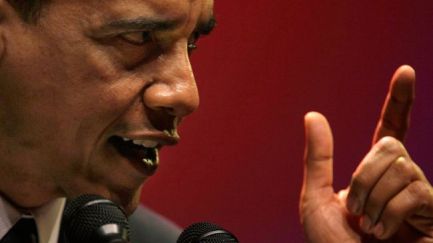
By M K Bhadrakumar | Indian Punchline | July 30, 2017
Russia and the United States could be hurtling toward a showdown following Moscow’s decision on Friday to retaliate, finally, against President Barack Obama’s expulsion of 35 Russian diplomats in the US and the impounding of two Russian compounds on December 30 last year.
Consular issues usually signal the real state of play in inter-state relations – and often provide a litmus test. Obama’s intention was most certainly to complicate the Russian-American relationship to a point of no return by the time his successor Donald Trump moved into the White House. Obama expected his Russian counterpart Vladimir Putin to react strongly, which in turn would have triggered a first-rate crisis in the relationship. But Putin saw through Obama’s game.
He opted instead to tackle President Donald Trump on a pleasant note. But then, Russia eventually became such a toxic subject in the Washington circuit that Trump was put on the defensive when it came to restoring the confiscated Russian properties or granting visas to Russian diplomats newly assigned to the US.
Nonetheless, Moscow waited patiently for over six months before concluding that enough is enough. And it has now hit Washington very hard, as the Foreign Ministry statement on Friday suggests. Moscow had the option to expel 35 American diplomats, but instead chose to apply the principle of parity by demanding that the number of personnel posted in the Moscow embassy and in the 3 American consulates (St. Petersburg, Yekaterinburg and Vladivostok) should not exceed 455 (which is the current strength of Russian personnel in the US.)
The Americans are shell-shocked because, in effect, hundreds of personnel will now have to be called back to Washington. Of course, Moscow has graciously left it to Washington to shuffle the personnel but the ceiling will be at 455, exactly on par with the slots Washington has provided for Russia. Unlike Obama’s decision to order the expelled Russian diplomats to leave the US within 72 hours, Moscow is allowing a month’s time for the excess US personnel to leave Russia.
Meanwhile, Russians also impounded 2 American compounds – a dacha in the bucolic environs of Moscow, which American diplomats and families use for R&R, and a warehouse where they store their supplies imported duty-free from abroad.
The catch is that Americans cannot complain, because parity and reciprocity are universally accepted principles in inter-state relations and Moscow is only demanding what it is entitled to – an equal relationship based on reciprocity. But in reality, the US embassy in Moscow is going to be crippled.
It is an ugly situation for Washington but entirely self-invited, thanks to Obama’s petulance and his ignorance of the Russian grit if challenged. The ‘Deep State’ in the US will cry for Russian blood because the bulk of American personnel to be recalled are most certainly spooks. The CIA station in Russia runs a big show and its undercover operations will be seriously affected.
Moscow has forewarned that there will be a ‘tit-for-tat’ response to any further moves against Russian diplomats in the US. The strong possibility is that a further round of expulsions of diplomats is just round the corner. There is always an option for Washington to discuss and resolve the differences to mutual satisfaction, but the political climate in Washington is not conducive for that.
Interestingly, Moscow has further clarified that Friday’s announcement is only by way of retaliation against Obama’s ill-advised move last December and Moscow reserves the right to react separately apropos the latest US sanctions.
The Russians have taken a tough line, no doubt, based on the estimation that a significant improvement in relations need not be expected for the foreseeable future. This is also evident from an interview with ABC News by Russian Deputy Foreign Minister Sergey Ryabkov on Sunday.
Embraer still waiting US approval for Iran plane sales
Press TV – July 30, 2017
Brazil’s regional jet maker Embraer says it is still waiting for an approval by the US Treasury Department for sales of aircraft to Iran.
The company was quoted by the media as saying that it remained “active and optimistic” with regards to its plans to sell planes to the Islamic Republic.
It added that providing the required funds for the planned sales to Iran was not so much the issue as gaining licenses from the Office of Foreign Assets Control (OFAC) of the US Treasury, the Aviation Week news website reported.
Iran in February 2016 confirmed that it had ordered 50 planes from Brazil’s Embraer, the world’s third biggest commercial aircraft manufacturer.
The confirmation was made by Mohammad Bagher Nobakht, the country’s government spokesman who emphasized that the deal with Embraer will be a hire purchase contract.
Reports later said the Brazilian company was considering a plan to sell its E-195 jets to Iran through a deal which would be worth above $1 billion.
The company requires an OFAC license for the sale to Iran of sensitive jet engine technology in its planes.
Sales of Embraer planes to Iran featured in trade talks between the Islamic Republic and Brazil during a visit to Tehran by Trade Minister Armando Monteiro.
Two major Iranian carriers – ATA and Kish Air – have already announced plans to purchase planes from the Brazilian company.
Apart from selling planes, Minister Monteiro also discussed potential sales of taxis, buses and trucks with Iranian officials during his visit to Tehran, the media reported.
World’s Richest Person Escapes Scrutiny From His Own Paper—and Its Rivals
By Adam Johnson | FAIR | July 28, 2017
The three most prominent US newspapers haven’t run a critical investigative piece on Jeff Bezos’ company Amazon in almost two years, a FAIR survey finds.
A review of 190 articles from the New York Times, Wall Street Journal and the Bezos-owned Washington Post over the past year paints a picture of almost uniformly uncritical–ofttimes boosterish–coverage. None of the articles were investigative exposes, 6 percent leaned negative, 54 percent were straight reporting or neutral in tone, and 40 percent were positive, mostly with a fawning or even press release–like tone.
The last major investigative piece we found in any of these three publications was a 4,500-word critique of Amazon’s labor practices in the New York Times (8/16/15) almost two years ago. Considering that Amazon is the fourth-most-valuable company in the world, with a 43 percent (and growing) share of all US online commerce, it’s a striking absence of journalistic scrutiny.
The line between straight reporting and fawning coverage wasn’t always clear, given the nature of technology journalism, but, in general, a distinction was drawn when reporting on Amazon’s latest moves featured no criticism or contrary third-party input, and the article was mostly indistinguishable from a press release.
Examples of this type of breathless corporate coverage, from a one-week span in 2016, included “Amazon’s Latest Weapon in the E-Commerce Wars: Its Own Air Force” (Washington Post, 8/6/16), “Amazon Reveals ‘Prime Air’ Cargo Jet” (Wall Street Journal, 8/5/16) and “Think Amazon’s Drone Delivery Idea Is a Gimmick? Think Again” (New York Times, 8/10/16). The most embarrassing example of outright PR pablum was this Washington Post “exclusive look,” based primarily on futurist porn speculation (3/2/17):

Amazing how a Bezos-owned paper got an “exclusive” on Jeff Bezos!
One can review the list and determinations here. We included articles about Amazon.com, Inc. (reviews of Amazon TV shows or stories about Amazon bestsellers, for example, were not included) that were significant enough for the outlets’ respective Twitter accounts to post the stories.
One might expect the Washington Post—the personal property of Bezos—to provide more favorable coverage of its owner’s company, but the Post’s level of uncritical praise, though very high, was roughly par for the course. About 95 percent of Post coverage ranged from neutral (43 percent) to positive/fawning (48 percent) in tone.
Ninety-three percent of New York Times coverage of Amazon and 94 percent of the Wall Street Journal’s ranged from straight news to press release. Fifty-seven percent of the Times‘ coverage and 31 percent of the Journal‘s could be characterized as somewhat to extremely flattering. (Note that the Post‘s level of positive coverage fell in between the two other papers’.)
One of the major reasons Amazon gets such glowing coverage is that tech journalism is traditionally not a very critical vertical. Tech company X reveals it’s doing Y or will do Z—that is, by the beat’s definition, newsworthy, and the press release is rewritten, with some added commentary from friendly talking heads and market analysts. Because it’s “tech,” the political or labor implications come in a distant second to the shiny-object quality of the beat.
Occasionally issues such as privacy or anti-trust or union unrest will be touched on, but this is usually in response to legal action taken by the state or by activists, not as a topic raised by reporters themselves. On a case by case basis, this is understandable (clearly not every tech write-up has to be an exposé), but on the whole, tech journalism is a media landscape dominated by corporate stenography.
With Amazon’s stock surging to well over $1,000 a share, and its head recently crowned the richest person in the world, the stakes for putting Amazon and Bezos in a critical light couldn’t be higher. Yet time and again, the pillars of US media provide them all the critical rigor a high school paper typically provides the spring dance committee.
Featured Video

US JET SHOT DOWN OVER IRAN /Lt Col Daniel Davis & Nima Alkhorshid
or go to
Aletho News Archives – Video-Images
From the Archives
Experts Warned For Years That A War With Iran Would Happen This Way
By Caitlin Johnstone | April 3, 2026
… It’s so wild how we keep seeing reports that Iran’s retaliation caught the US off guard. For all the years I’ve been paying attention to this issue I’ve been reading experts and analysts saying if the US attacks Iran, Iran can close the Strait of Hormuz and strike US bases and the energy infrastructure of US allies in the region.
A few examples:
A 2006 Oxford Research Group paper titled “Iran: Consequences of a War” warned that Iran has numerous options at its disposal in the event of a US attack, and that the “most significant of these would be any possible retaliatory Iranian action to affect the transport of oil and liquefied natural gas through the Straits of Hormuz,” adding that stopping Iran from doing this “would be difficult if not impossible to achieve, leading to a fear of attack which alone would have a formidable impact on oil markets.”
A 2007 Cato Institute paper titled “The Iraq War and Iranian Power” warns that “Iran possesses the largest ballistic-missile inventory in the Persian Gulf — missiles which can reach Israel, Saudi Arabia and US military bases in Iraq,” and that “experts argue Iran could also use the ’oil weapon’: blocking the 34km-wide Strait of Hormuz and conducting submarine and anti-ship missile attacks against ports and oil facilities in Saudi Arabia, Kuwait and other Gulf Cooperation Council states.”
A 2012 NPR article titled “Can Iran Close The World’s Most Important Oil Route?” features then-chairman of the Joint Chiefs of Staff acknowledging that Iran absolutely can block the Strait of Hormuz, saying Tehran has “invested in capabilities” which specifically enable them to do so.
A paper from the Columbia Center on Global Energy Policy and the Center for a New American Security titled “IN DIRE STRAITS? IMPLICATIONS OF US-IRAN TENSIONS FOR THE GLOBAL OIL MARKET” warns of a potential scenario “that includes damage to Gulf oil infrastructure and a temporary closure of the Strait of Hormuz.”
These weren’t a bunch of keffiyeh-wearing peaceniks making these assessments, they were deeply entrenched swamp monsters entirely loyal to the US empire. They opposed war with Iran not because it would be an evil act of unforgivable mass murder, but because it would be bad for the imperial power structure. … Full article
Blog Roll
 Aletho News
- Al Mayadeen voices solidarity with Dr. Marandi amid death threats
- US dismantling international law in its war against Iran while claiming ‘false’ victory: Legal scholar
- One martyr, 5 injuries in US attack on Iraqi border crossing with Iran
- ‘This war is Israel’s war’: World facing ‘security breakdown’, says Qalibaf
- IRGC decries attack on US embassy in Riyadh, says executed by ‘Israel’
- Iran blasts EU hypocrisy as EU invokes international law over Hormuz
- There is no military solution to Strait of Hormuz
- NATO’s structural collapse – the outcome of deviation from reality
- Poll finds world views China better than US
- One Of America’s Leading Neo-Cons Has Turned Against The Iran War And Israel
- If Americans Knew
- US loses planes over Iran, Israel downgrades Lebanon war goals – Daily Update
- Israel Is Blocking Palestinians from Easter at Church Where Jesus Resurrected
- Plot to assassinate Palestinian activist follows harassment campaign promoted by Zionist groups and elected officials
- Prominent New York synagogue hosts presentation on why U.S. Jews should support the ethnic cleansing of Gaza
- Tapper vs. Piker: Is the CNN Anchor Auditioning for David Ellison?
- Shouldn’t Democrats Be Able to Condemn Genocide?
- Israel-US kill negotiators, destroy civilian structures, but Iran’s military capabilities still largely intact – Daily Update
- ‘War crime’: Global condemnation as Israeli ministers celebrate death penalty law targeting Palestinian prisoners
- 7 Ways Israel Is Turning Lebanon Into Gaza
- World’s Leading Football Bodies Under Fire Over Israel Policies
- No Tricks Zone
- New Study Reports A 60% Slowdown In Greenland’s Ice Loss Rate In The Last Decade
- Low Intensity Tornado Wrecks Major Solar Farm, Creating A Potential Toxic Dump
- New Study Finds Warming Saves Lives…Cold Temperatures 12 Times More Deadly Than Excess Heat
- German Science Blog Accuses PIK Climate Institute Of Hallucinating Climate Tipping Points
- Devastating Assessment Of Comirnaty Vaccine By Former Senior Pfizer Europe Toxicologist
- New Study: CO2 Is ‘Effectively Negligible’ As An Explanatory Climate Change Factor Since 2000
- Former Pfizer Toxicologist Dr. Helmut Sterz Tells Bundestag Hearing Pfizer Vaccine Should Have Never Been Approved
- Energy Expert: Germany’s Nuclear Phaseout Was A “500 Billion Euro Mistake”
- New Research: South Australia’s Mid-Holocene Sea Surface Temperatures Were 4°C Warmer Than Today
- Storing Green Energy To Last Germany 10 Days Would Require A 60-Million Tonne Battery
 Aletho News