Over 100 Trucks With US Supplies Cross Into Kurdish-Controlled Syrian Territory
Sputnik – 08.08.2017
The United States delivered 112 trucks with supplies, including military equipment, to the Kurdish-controlled areas of northeastern Syria, Turkish media reported Tuesday.
The Anadolu news agency reported that the media outlet’s correspondent had seen the convoy crossing into the territory of the Syrian Hasakah province on Monday night.
The news outlet added that the convoy included trucks, fuel tankers and low-loaders transporting Humvee vehicles and aimed to support the Syrian Kurdish Democratic Union Party (PYD), which Ankara considers to be a branch of the Kurdistan Workers’ Party (PKK), outlawed in Turkey.
This is not the first batch of US aid to the Kurdish groups, as over 900 trucks were already sent to the Kurdish-held areas of Syria on Monday, the news agency added.
Within the framework of the Syrian civil war, the Kurdish groups have been controlling vast parts of Syria in such provinces as Hasakah and Raqqa, after driving jihadists from those areas.
On May 9, US President Donald Trump approved a plan to arm Kurdish groups fighting the Daesh (outlawed in Russia). The Turkish government has protested the move as Ankara believes the Kurdish fighters can use the weapons against Turkey.
‘Doing Nothing is Not an Option:’ Congress Demands Anti-Russian Propaganda Plan
Sputnik – 07.08.2017
Posing an ultimatum to Secretary of State Rex Tillerson, US lawmakers are hinting that Congress will create a specific strategy to combat “Russian propaganda campaigns” if the State Department fails to do so.
“I urge you to come up with a strategy and work with Congress to implement it at once,” New York Representative Eliot Engel, ranking member of the Foreign Affairs Committee, wrote to Tillerson. “Otherwise, the House and Senate will look for legislative alternatives to direct the administration to treat the threats of Russia and [Daesh] with the seriousness they deserve.”
Sent on Friday but revealed to the public Monday, Engel’s letter was prompted by reports that Tillerson was uneasy about using the nearly $80 million Congress has allocated to fight alleged misinformation from Moscow, instead opting to make amends.
Currently, $60 million earmarked for the State Department’s Global Engagement Center is at the Pentagon and another $19.8 million has been left untouched at the State Department, Politico reports. The Global Engagement Center is a unit that replaced the Center for Strategic Counterterrorism Communication in 2016, and is “charged with coordinating US counterterrorism messaging to foreign audiences,” according to its site. Though Tillerson’s team has indicated they want to avoid spending money wastefully, the $60 million will be reabsorbed on September 30 if it isn’t transferred, officials told Politico.
“It seems again that this Administration just isn’t getting the message about Russia, so let me put it plainly: Russia is not America’s friend,” Engel stressed. “President Putin attacked American democracy.”
“Doing nothing is not an option,” the congressman warned.
If Tillerson fails to respond, lawmakers may once again take it upon themselves to tie US President Donald Trump’s hands on foreign policy, according to reports, as they did with the most recent sanctions bill, which put restrictions on the president’s ability to modify sanctions against Russia.
“While we, too, would ultimately like to see better relations with Russia, the Kremlin’s actions simply do not permit such improvement,” Engel noted.
The Unsung Summit of Putin and Trump
From Hiroshima To Hamburg
By John V. Walsh | Dissident Voice | August 8, 2017
This week marks the 72nd anniversary of the criminal US bombing of Hiroshima and Nagasaki. And as is the case each year, there is much discussion and lamenting over this atrocity, as there well should be. For the bombing of Hiroshima and Nagasaki was not necessary for victory; Japan had already sued for peace. It was the opening salvo, a brutal one, in the first Cold War in which the world was nearly incinerated during the Cuban missile crisis.
This week is also the one month anniversary of the first in-person meeting of Presidents Trump and Putin at Hamburg on July 7 in the shadow of the G20 meetings. This comes at a time when we find ourselves years into a New Cold War. Given the tensions between Russia and the US, the leading nuclear powers, one would think that there would be rejoicing over the prospect of relieving the tensions between the nuclear superpowers. For that was the agenda of the Trump-Putin summit, as such meetings were called during the first Cold War. Unfortunately, such rejoicing was not to be heard, quite the opposite – with a few rare exceptions
This is lamentable, to say the least, because as tensions grow between the superpowers, the chance for nuclear war increases. During his lengthy interviews with Vladimir Putin, Oliver Stone showed him the movie “Dr. Strangelove” which Putin had never before seen. Putin commented that the movie captured, among other things, a technical truth with its depiction of the Doomsday Machine. That is, said Putin, nuclear weapons grow increasingly harder to control with every passing day. Given this, the failure to applaud the Trump-Putin on the part of those who were full of praise for the UN vote on denuclearization made me wonder whether there was any thought behind their chatter. Hatred of Trump and Putin seemed to blot out a rational concern for human survival. Are we living in a mad house? Did we not learn our lesson when we narrowly escaped Armageddon in Cold War 1?
In the face of such madness, let us take the time to offer full-throated, unmistakable praise for the Trump-Putin summit meeting. The parley was a long time coming because of the relentless attack on Trump over Russiagate, a Big Lie blared out relentlessly these many months and only now collapsing for want of so much as a smidgen of evidence. Although Trump had promised to hold this summit with Putin even before he was inaugurated, he could not do so because of the intense Russia-gate related pressure against it – from the Elite of both Parties but with the Democrats far in the lead. But Trump pushed ahead with the meeting anyway; as we learned during the 2016 campaign, this is not a guy who gives up despite the odds.
To begin, the summit was undeniably a success with solid achievements and follow-ups. Stephen F. Cohen, Professor Emeritus of Russian History at Princeton and NYU, and one of the few to offer praise for the meeting, summed up the meeting’s four main accomplishments thus:
… formalizing and symbolizing the new détente partnership* between the American and Russian presidents; agreement to cooperate in Syria against terrorist forces there, not only in the limited ways announced, but in more expansive ways, which meant agreeing with Moscow that Syrian President Assad must remain at least until ISIS is fully defeated; creating a bilateral US-Russian channel for negotiating a settlement of the Ukrainian civil and proxy war, thereby bypassing, or reducing, the role played thus far by Germany and France, which has largely failed; and agreeing to discuss ways to limit the dangers of cyber technology in international affairs. Though Trump was forced to talk back this agenda item, no doubt it remains on the US-Russian agenda, a subject of negotiation, as it should be, considering the ways in which cyber attacks could undermine nuclear security on both sides.
To these I would add the cease-fire in southwest Syria which was arranged in the run-up to the meeting and announced there. This cease-fire is still holding, and Russian FM Lavrov has announced that more ceasefire zones are in the works in Syria. Any time that the guns fall silent, the killing stops and people can return to their homes, there should be jubilation – especially in the outlets devoted to peace. Sadly that has been far from the case in the progressive press or the MSM.
The cooperation on Syria continued with a thunderbolt in the form of a Trumpian tweet on Monday night, July 24:
“The Amazon Washington Post fabricated the facts on my ending massive, dangerous, and wasteful payments to Syrian rebels fighting Assad…..”
A superb assessment of this tweet marking Trump’s order to end the CIA’s regime change op and its de facto support for jihadis in Syria comes from David Stockman here:
Occasionally one of Trump’s tweets slices through Imperial Washington’s sanctimonious cant. Indeed, Monday evening’s 140 characters cut right to the bone. Needless to say, we are referencing not the dig at the empire of Bezos, but the characterization of Washington’s anti-Assad policy as “massive, dangerous and wasteful”.
No stouter blow to the neocon/Deep State “regime change” folly has ever been issued by an elected public official. Yet there it is – the self-composed words of the man in the Oval Office.
Stockman follows with a brief history of the U.S.’s covert war on Syria and Syria’s historical mistreatment at the hands of earlier Western Empires. (It is to the credit of Antiwar.com for publishing Stockman’s piece – in contrast to the far more widely published feverish denunciation by John McCain: “If these reports are true, the administration is playing right into the hands of Vladimir Putin.” Thus, is any initiative for peace greeted from the two wings of the War Party.)
On top of this there is Secretary Tillerson’s statement that cooperation on Syria is continuing and developing, mirroring the statement of FM Lavrov.
I fully expect that this evaluation will bring a storm of condemnation. Some will accuse the author of parroting the “Kremlin line,” or being a Putin puppet, dead giveaways for the old Cold War mindset. But I would offer one word of advice to such naysayers. Support the good in what Trump does and oppose the bad. Very simple. And certainly, the good includes New Détente with Russia since it may well mean the survival of humanity. We might not get another shot at it. No other major national political figure, other than Rand Paul, is calling for it, which means we are in very deep trouble, perhaps mortal trouble.
* The symbolism of the two Presidents meeting, shaking hands and “getting along,” to use a phrase often invoked by Trump in the 2016 campaign, should not be underestimated. It can have a great effect on public opinion and show people that to feel friendly toward Russia and Putin is legit. After all the President feels that way. jw
John V. Walsh can be reached at john.endwar@gmail.com.
Dozens Reported Killed in US Airstrike on Iraqi Paramilitary Anti-Terror Force
Sputnik – August 8, 2017
The US air force has carried out an airstrike on an Iraqi militia unit called Seyid Suheda, which belongs to Iraq’s Popular Mobilization Units (PMU). The airstrike took place in Anbar province, close to Iraq’s border with Syria, Rudaw reports.
According to reports, 35 fighters were killed and 25 were injured in the airstrike on Monday night. PMU commanders are reportedly among the dead.
PMU commander Ali Hasim Huseyni confirmed the incident in conversation with Sputnik Turkiye.
“US planes bombed fighters of the Seyid Suheda unit. The wounded have been taken to various hospitals in Iraq for treatment. Some of them are in a serious condition. The region in which they were attacked is located on the Iraqi-Syrian border, 20 km from the city of El Baac. We strongly condemn this deliberate attack.”
The recent airstrike is not the first time that US forces have bombed pro-government fighters in Iraq. In October, an airstrike conducted by the US-led coalition in Iraq “most likely” killed around 20 pro-government Sunni tribal fighters south of Mosul, a defense official told AFP.
Iraq’s Popular Mobilization Units, or Hashd al Sha’ abi, comprise approximately 100,000 fighters who are mostly Shia. They have played a vital role in anti-terrorist operations in Mosul and elsewhere.
In November 2016, the Iraqi parliament gave the PMU the power of law enforcement agencies, which basically provides the militia with the same powers as the government army and police.
Last week, the PMU assisted the Iraqi army in launching an operation to retake the northwestern city of Tal Afar. Mostly populated by Sunni Turkmen, the city is the Daesh terrorist group’s last remaining stronghold in the country.
The US has also bombed militia fighting Daesh in neighboring Syria. On June 8, the US-led coalition bombed pro-Assad militia near al-Tanf in the area of a deconfliction zone following an alleged attack by a combat drone resulting in no coalition forces’ casualties. It was the third attack by the coalition on Damascus’ allies in the area. The coalition targeted a drone and trucks with weapons.
‘The Palestine Exception’: War on BDS is now a war on American democracy
By Ramzy Baroud | MEMO | August 7, 2017
There is something immoral in Washington D.C., and its consequences can be dire for many people, particularly for the health of US democracy.
The US government is declaring war on the Palestinian Boycott, Divestment and Sanctions (BDS) movement. The fight to defeat BDS has been ongoing for several years, but most notably since 2014.
Since then, 11 US states have passed and enacted legislation to criminalise the movement, backed by civil society, which aims to put pressure on Israel to end its occupation of Palestine.
Washington is now leading the fight, thus legitimising the anti-democratic behaviour of individual states. If the efforts of the US government are successful, an already struggling US democracy will take yet another step back, and many good people could potentially be punished for behaving in accordance with their political and moral values.
Senate Bill 720 (S.720), also known as the “Anti-Israel Boycott Act”, was largely drafted by the notorious and powerful Israel lobby in Washington, the American Israel Public Affairs Committee (AIPAC).
According to its own “2017 Lobbying Agenda”, AIPAC has made the passing of the bill its top priority.
The US Congress is beholden by Israel’s interests and by the “stranglehold” of AIPAC over the elected representatives of the American people.
Thus, it was no surprise to see 43 senators and 234 House representatives backing the bill, which was first introduced in March.
Although the Congress has habitually backed Israel and condemned Palestinians – and any politician or entity that dared recognise Palestinian rights – this time, the Congress is going too far and is jeopardising the very basic rights of its own constituencies.
The First Amendment to the US Constitution has been the pillar in defense of people’s right to free speech, freedom of the press, “the right of the people peaceably to assemble, and to petition the Government for a redress of grievances.” This right, however, has often been curtailed when it applies to Israel. The Centre for Constitutional Rights refers to this fact as “The Palestine Exception”.
S.720, however, if it passes, will cement the new US status, that of “flawed democracy” as opposed to a full democratic nation that legislates and applies all laws fairly and equally to all of its citizens. The law would make it a “felony” for Americans to support the boycott of Israel.
Punishment of those who violate the proposed law ranges from $250,000 to $1 million, and/or 20 years in prison.
The bill has already had chilling effects on many groups in the country, especially among African American activists, who are fighting institutionalised racism. If the bill becomes law, the precedent will become the norm, and dissidents will find themselves standing trial for their mere opinions.
With regard to Israel, the US Congress is united. Both Republican and Democratic lawmakers often act in ways contrary to the interests of their own country, just to appease the Israeli government. This is no secret.
However, the real danger is that such laws go beyond the traditional blind allegiance to Israel – into a whole level of acquiescence, where the government punishes people and organisations for the choices they make, the values they hold dear or the mere inquiry of information about an issue that they may find compelling.
On 17 July, the American Civil Liberties Union (ACLU) issued a letter calling on lawmakers who signed the Senate version of the bill to reconsider. The bill would punish businesses and individuals, based solely on their point of view. Such a penalty is in direct violation of the First Amendment ACLU stated.
Only one person, thus far, has reportedly reconsidered her support, junior Democratic Senator from New York, Kirsten Gillibrand. She requested for her name to be removed from the list of co-signatories.
AIPAC’s reaction was immediate, calling on its army of supporters to pressure the Senator to reinstate her name on the list and to “reaffirm her commitment to fighting the international de-legitimisation of Israel.”
Dire as it may seem, there is something positive in this. For many years, it has been wrongly perceived that Israel’s solicitation of American support against Palestinians and Arabs is, by no means, a foreign country meddling or interfering in the US political system or undermining US democracy.
The “Israel Anti-Boycott Act”, however, is the most egregious of such interventions, for it strikes down the First Amendment, the very foundation of American democracy, by using America’s own lawmakers to carry out the terrible deed.
This bill exposes Israel, as well as its hordes of supporters, in Congress. Moreover, it presents human rights defenders with the opportunity to champion BDS, thus the rights of the Palestinian people and also the rights of all Americans. It would be the first time in many years that the battle for Palestinian rights can be openly discussed and contextualised in a way that most Americans find relevant to their everyday life.
Actually, this was one of the aims of BDS, from the start. While the boycott and de-legitimisation of the Israeli military occupation of the Palestinians is at the core of the civil society-backed movement, BDS also aims at generating an urgent discussion on Israel and Palestine.
Although inadvertently, the Congress is now making this very much possible.
The bill, and the larger legislative efforts across the US – and Europe – are also a source of hope in the sense that it is recreating the very events that preceded the demise of the apartheid regime in South Africa.
The US and British governments, in particular, opposed the South African liberation movement, condemned the boycott and backed the racist authoritarian role of P. W. Botha to the very end. Former President, Ronald Reagan, perceived Nelson Mandela to be a terrorist. Mandela was not removed from the US terror list until 2008.
It is quite telling that the US, UK and Israel were the most ardent supporters of South Africa’s apartheid.
Now, it is as if history is repeating itself. The Israeli version of apartheid is fighting for legitimacy and refuses to concede. It wants to colonise all of Palestine, mistreat its people and violate international law without a mere word of censure from an individual or an organisation.
The US government has not changed much, either. It carries on supporting the Israeli form of apartheid, while shamelessly paying lip service to the legacy of Mandela and his anti-apartheid struggle.
Although the new chapter of the anti-apartheid struggle is called “Palestine”, the US and its western backers continue to repeat the same costly policies they committed against the South African people.
As for true champions of human rights, regardless of their race, religion or citizenship, this is their moment. No meaningful change ever occurs without people being united in struggle and sacrifice.
In one of his speeches, an American abolitionist and former slave, Frederick Douglass said: “Power concedes nothing without a demand. It never did and it never will.”
The US Congress, with the help of AIPAC, is criminalising this very demand of justice.
Americans should not stand for this, if not for the sake of Palestinians, then for their own sake.
The NYT’s Grim Depiction of Russian Life

Sakhalin, Russia: photo by Lesya Kim, 19 August 2016
By Gilbert Doctorow | Consortium News | August 7, 2017
Our five-week stay at our home in the Russian countryside was approaching its conclusion when I got an email from a friend in France asking me to comment on an article in The New York Times entitled “Russia’s Villages, and Their Way of Life, Are ‘Melting Away’.”
The article surely met the expectations of its editors by painting a grim picture of decline and fall of the Russian countryside in line with what the author sees as very unfavorable demographic trends in the Russian Federation as a whole. The fact that his own statistics do not justify the generalization (a net population loss of a few thousand deaths over live births in 2016 for a population of 146 million) does not get in the way of the paint-by-color canvas. Nor does the author explain why what he has observed in a village off the beaten track in Northwest Russia, in precisely the still poor region of Pskov, gives an accurate account of country life across the vast territory of Russia, the world’s largest nation-state.
As the author notes, the main source of income from the land of the town he visited was – in the past – linen. That cultivation turned unprofitable and was discontinued. Consequently, the able-bodied part of the population has been looking for employment and making their lives elsewhere (a process of internal migration common all over the world, including the United States).
The author fails to mention that linen production is not a major agricultural indicator in Russia today, whereas many other crops are booming. Linen goes into the lovely traditional handicraft tablecloths and napkins sold to tourists at riverboat landings, and that is the extent of demand.
I could respond to the overriding portrait of countryside decay in the Times article by drawing on my observations a year ago from the deck of one of those riverboats navigating the canals and rivers connecting St. Petersburg and Moscow. From that deck and from the experience of walking around the little picturesque towns where we made stops, I understand that growing domestic Russian tourism has pumped financial resources into historic centers, like Uglich. They are coming alive, with infrastructure improvements and reviving trade.
But tourist sites are not going to be representative of the country at large, either. So I will instead use two sources of information that I am confident have greater relevance to the issue at hand. The first, and surely the most politically significant, comes from a couple of family friends who for nearly 50 years have spent summers at a parcel of land deep in the hinterland, 280 kilometers southeast of St. Petersburg, close to regional industrial center of Pikalyovo, (Leningradskaya Oblast) with its train station along the line linking the northern capital to Vologda.
My Own Eyes
The second source is my own experience in and around our property in Orlino, a hamlet numbering 300 inhabitants in the Gatchina district, also Leningradskaya Oblast, but 80 kilometers due south of St. Petersburg.
The homesteads around Pikalyovo were always hard to get to, with very poor local roads. There was no commercial infrastructure, so the bold and determined vacationers coming here had to bring most provisions for their stay with them. They were rewarded for their efforts by the produce grown in their gardens and by foraging for berries and highly desirable boletes and other wild mushrooms in the surrounding forests.
When the Soviet Union collapsed and the Russian economy followed suit in the 1990s, the Pikalyovo region suffered the kind of economic misery and population loss that the Times describes today in the Pskov region. Our friends saw that normal folks left, and the concentration of drunkards and thieves rose proportionately. The theft of anything of value in common space became acute when scrap metal scavengers pulled up kilometers of electrical cables for their copper content, leaving swathes of the district temporarily without electricity.
Pikalyovo came to the attention of national news during the 2008-2009 financial crisis when its three main industrial enterprises shut down, causing widespread misery. The best known of these enterprises, a clay processing plant owned by the oligarch Oleg Derispaska’s conglomerate Basic Element, caused a major scandal when state television carried reports on how the factory had not paid its employees for months while the boss was seeking and obtaining government assistance with repayment and rescheduling of his foreign loans. In the spring of 2009, there were protest demonstrations in Pikalyovo that resulted in both Dmitry Medvedev and Vladimir Putin personally entering the dispute to pressure Deripaska to do the right thing.
The economic woes of the regional economic hub did nothing to improve the living conditions in nearby hamlets like the one where our friends have their parcel. Our friends started cutting back on their visits and missed a year or two altogether. All of this would seem to confirm the storyline of the Times reporter, but the latest word from Volodya and Tamara overturns the storyline completely.
A Revival
A few weeks ago, our friends decided to go back to the property to prepare it for sale. They had had enough, they thought. However, once there, they discovered things were definitely looking up. A newly completed 35 kilometer highway makes their settlement much more accessible.
But, more importantly, the neighbors have changed – for the better. A retired colonel moved in a couple of years ago and started raising pigs, cows and chickens, offering meat, eggs and dairy products for sale, thereby ending our friends’ need for brought-in provisions. His example attracted others. New and dynamic settlers are putting into practice the “return to the land” trend that is an undeniable feature of current Russian social life. Our friends have decided not to sell, and to spend more time on their property.
In legal terms, the parcel of land my wife owns in the hamlet of Orlino (population 300) is categorized as a “subsistence farm.” The nature of the farming to be done there even features in the plan attached to the cadastral registry: the 700 square meters where the house was built facing the “Central Street” can be used for fruit trees and vegetable garden; the back field of another 700 square meters is allocated for potatoes, cabbage and similar crops.
In the vernacular, however, together with the two-story planed log house we built here five years ago, the property is considered a “dacha,” a summer residence. Nearly one in two urban Russian households has a dacha.
Young people think of dachas as weekend getaway locations to hold a barbecue for friends and family. If they have a feeling for Russian traditions, it is where they take their Saturday banya, or sauna in dedicated outhouses heated by wood burning stoves and then socialize over a beer. Older folks and pensioners find this frivolous. In their view, the dacha is not so much a place to idle time away as it is a place of honest toil, working the land and communing with nature. And even some of the younger generation buys into the concept of growing their own organic foods on their land, thus getting along without industrially farmed supermarket produce, whether domestic or imported.
One hundred years ago, Orlino was populated mostly by wealthy merchants whose businesses were in the extended district. They lived here year-round in substantial houses, some of which have survived to this day. To the back of the houses, what were essentially barns were built on, and there they kept some small livestock. No one in Orlino today keeps chickens, pigs, goats, not to mention cows. But they do till the land with great enthusiasm and look after their fruit trees and red berry shrubs.
The notion of subsistence farming suggests border-line poverty. But Orlino was never poor, and its residents are not indigent today. Oldsters whose pensions are inadequate are supported by their children or nephews/nieces’ families living in the local towns, in the district capital of Gatchina 50 kilometers away, or even in St. Petersburg. In return, these relatives visit in the summer to spend some days of vacation and take advantage of the large lake on the edge of the hamlet, which is lovely for swimming or boating when the weather is cooperative.
Good Use of Land
The notion of subsistence farming also suggests tough practicality. But making good use of the land does not exclude aesthetic pleasures, and every parcel of land in the hamlet is decorated by flower beds showing great ingenuity and effort.
Similarly, in the last year the Orlino farmers have all gone the way of their brethren across Russia and invested in greenhouses made of pre-formed polycarbonate walls, most commonly resembling hoops in profile. Here they put in tomatoes, cucumbers and other highly prized vegetables for their dining table which do not do well in the short growing season of the North, and in the very adverse climatic conditions which were exemplary this year in terms of cool temperatures and incessant rains. Given the expense of these greenhouses, the investment is not so much economically justified as it is a point of pride in self-sufficiency and green-thumb skills.
Electricity is the only utility that spells dependency for Orlino residents. Otherwise, each household has its own well, its own septic tank system, its own gas cylinder for the cooking stove and its own supply of birch logs for a wood-burning stove that is the mainstay of heating.
Many households have cars. The most recent arrivals, being by far the most prosperous, often have four-wheel-drive utility vehicles. This is a valuable benefit given the deplorable condition of many local roads. But then there is a significant minority who depend on the local bus system to get around. It is cheap, runs to schedule and gets you from point A to point B without fuss. The hamlet has a couple of grocery stores, so that staples are always available within easy walking distance.
An Economic Hub
For luxuries, there is the town of Siversk 10 kilometers away. Numbering perhaps 10,000 people, it is the local economic hub, with several factories, including a manufacturer of good quality upholstered furniture.
Siversk has a train station with hourly connections to Gatchina and St. Petersburg. It also has several supermarkets run by major national retail chains, so that you will find exactly the same product assortment as in St. Petersburg or Moscow. And there are a number of high quality specialty food stores and at least one bakery which is indistinguishable from what you might find in Vienna or Frankfurt.
In the not so distant past, even urban Russians had not much interest in salads or in fish. Chicken legs or sausages or pork cutlets for the barbecue were what folks shopped for as main courses. Now even our Siversk stores offer pre-packaged mixed lettuce salads or rucola coming from greenhouse complexes in Greater St. Petersburg.
And the leading fish store offers not only salmon steaks from Scandinavian producers, but several varieties of delicacy fish from Europe’s largest fresh water lake, situated 50 kilometers to the east of St. Petersburg. Still more impressive is the assortment of fish coming down each day from Murmansk: excellent flounder and superb gorbusha, a wild salmon usually considered to be a Pacific Ocean variety but also available in the waters north and west of Siberia. For those with deeper pockets, the fish vendor in little Siversk occasionally offers a fresh sterlet, the magnificent 1 kilogram-size representative of the sturgeon family that is farmed on the Volga in Astrakhan, far to the South.
I offer these observations from shopping to make the following point about the Russian country life as I see it: a lively economy with a population growing ever more sophisticated and aspiring to the good life.
The Lower Strata
When I shared these thoughts with my friend in France, he shot back: what about the lower strata of society? How are they faring?
My ready response draws on my five-year acquaintance with our “average Joe” neighbor in Orlino, Sergei. When we settled here five years ago, he drilled our artesian well, installed the electric pump and all sanitary plumbing in our house. Now he winterizes the house each year and keeps an eye on the property when we are away, for compensation to be sure, but more out of friendship, because he has other, more lucrative sources of income as a subcontractor or day worker on local construction projects. There is a lot of work of this kind now that Orlino’s fallow fields are slowly being converted into housing estates.
Sergei is a master of several building trades. He also drives a tractor. He is mechanically gifted.
Sergei is about 55, the father of a grown son and daughter, the grandfather of two. When we first met, he was living in an apartment in a multi-unit wooden house dating back 60 or 70 years that was neither comfortable nor attractive. In the past three years he has realized a long time dream and built for himself a two-story cement block house, now clad in siding. The interior space is perhaps 250 square meters. When you pass it from the road, in a row of several other very substantial recent houses, you would place it as solidly upper-middle class. And next to his house Sergei has put up a very fine and large greenhouse. Beyond that is an extensive field of splendid potatoes and vegetables.
To be sure, the second story of Sergei’s house still needs work and he and his wife live now only on the ground floor. Moreover, the investment of all spare cash into the house has scuttled other needs. When Sergei’s ancient Toyota pick-up finally rusted into irreparable condition, he found himself without motorized transport. Until further notice, until he can put together the down payment for a new vehicle, he gets around town on a bicycle.
Sergei is no fool. He gripes about local corruption and terrible roads. But on the whole he is satisfied with his lot and optimistic about the future. Any belt-tightening that has been made necessary by Western sanctions he takes in his stride. He is resolutely patriotic.
I realize full well that the observations taken from my personal experience of the Russian countryside and from the experience of close friends is anecdotal and so not statistically significant. But then neither are the observations of The New York Times reporter.
Russia is a vast land and you can pretty much find what you are looking for there. Nonetheless, the gross economic statistics published by Rosstat are upbeat and fully contradict the notion of a country in decline, including its rural component.
Gilbert Doctorow is an independent political analyst based in Brussels. His latest book Does Russia Have a Future? was published in August 2015. His forthcoming book is Does the United States Have a Future?
Jeff Sessions Endorses Theft
By Ron Paul | August 7, 2017
Attorney General Jeff Sessions recently ordered the Justice Department to increase the use of civil asset forfeiture, thus once again endorsing an unconstitutional, authoritarian, and increasingly unpopular policy.
Civil asset forfeiture, which should be called civil asset theft, is the practice of seizing property believed to be involved in a crime. The government keeps the property even if it never convicts, or even charges, the owner of the property.
Police can even use civil asset theft to steal from people whose property was used in criminal activity without the owners’ knowledge. Some have even lost their homes because a renter or houseguest was dealing drugs on the premises behind the owners’ backs.
Civil asset theft is a multi-billion dollar a year moneymaker for all levels of government. Police and prosecutors receive more than their “fair share” of the loot. According to a 2016 study by the Institute for Justice, 43 states allow police and prosecutors to keep at least half of the loot they got from civil asset theft.
Obviously, this gives police an incentive to aggressively use civil asset theft, even against those who are not even tangentially involved in a crime. For example, police in Tenaha, Texas literally engaged in highway robbery — seizing cash and other items from innocent motorists — while police in Detroit once seized every car in an art institute’s parking lot. The official justification for that seizure was that the cars belonged to attendees at an event for which the institute had failed to get a liquor license.
The Tenaha police are not the only ones targeting those carrying large sums of cash. Anyone traveling with “too much” cash runs the risk of having it stolen by a police officer, since carrying large amounts of cash is treated as evidence of involvement in criminal activity.
Civil asset theft also provides an easy way for the IRS to squeeze more money from the American taxpayer. As the growing federal debt increases the pressure to increase tax collections without raising tax rates, the IRS will likely ramp up its use of civil asset forfeiture.
Growing opposition to the legalized theft called civil asset forfeiture has led 24 states to pass laws limiting its use. Sadly, but not surprisingly, Attorney General Jeff Sessions is out of step with this growing consensus. After all, Sessions is a cheerleader for the drug war, and civil asset theft came into common usage as a tool in the drug war.
President Trump could do the American people a favor by naming a new attorney general who opposes police state policies like the drug war and police state tactics like civil asset theft.
Kenya deports 1 American and 1 Canadian for election meddling
By Ricky Twisdale | The Duran | August 6, 2017
Kenya has decided it doesn’t need western assistance to ensure it has “free and fair” elections.
The African country is holding a national vote for president, deputy president, and parliament on 8 August.
But the election will have to go forward without the help of two foreign advisors.
John Phillips, a US citizen and chief executive of political consultancy Aristotle, and Canadian citizen Andreas Katsouris, a senior executive at the same firm, were arrested on Friday and deported from Kenya on Saturday, according to Reuters.
The two men were providing political consulting services to opposition presidential candidate Raila Odinga and his National Super Alliance party. Polls show Odinga and incumbent president Uhuru Kenyatta neck-in-neck in the race for the Kenya State House.
Kenya’s last two presidential elections were marred by violence and charges from the losing side of vote rigging. Unrest following the 2007 vote left hundreds dead.
Here’s more from the Reuters report regarding the arrests of Phillips and Katsouris:
“They handcuffed me and put me in the hatchback of a car,” Phillips said by phone from Frankfurt.
Katsouris said they were manhandled after the police arrived.
“One man had a picture of me on his mobile phone,” he said, speaking by phone from Delft, the Netherlands. “Another guy grabbed me by the arm and grabbed my glasses from my face.”
After being bundled into separate cars they were driven around for several hours, while being questioned, and then taken to holding cells at the airport, they said…
Phillips said one of Aristotle’s jobs was to monitor the transparency of the election. The two had been in Kenya for around two months and were doing polling, data analysis and monitoring the election process…
Interior ministry spokesman Mwenda Njoka said via a text message on Sunday that Phillips and Katsouris had “contradicted the terms of their visa”. When asked how, he replied “ask them”.
Whatever Kenya’s political problems, it appears Nairobi doesn’t believe US-Canadian meddling in their elections is the way to solve them.
US-led coalition used banned white phosphorus on civilians in Syria – Damascus to UN
RT | August 6, 2017
The Syrian foreign ministry has, in correspondence to the United Nations, accused the US-led coalition of new atrocities against its civilians. It includes an attack on hospital in Raqqa and the use of “internationally banned white phosphorus munitions” against the Syrian people.
Renewing its calls to “immediately dissolve” the coalition which Damascus considers illegitimate, the ministry wrote two letters; one addressed to the UN Secretary General and the other to the Chairman of the UN Security Council, Syria’s state news agency SANA reported Sunday.
Citing the ministry statement, the report said the military alliance led by Washington had bombed residential neighborhoods and civilian houses, as well as destroying a national hospital in Raqqa, where the coalition is extensively backing the fight against the Islamic State (IS, formerly ISIS/ISIL) terrorist group.
Damascus also claimed the coalition had violated international humanitarian law by deploying white phosphorus munitions in its attacks which targeted “innocent Syrian people in the provinces of Raqqa, Hasaka, Aleppo, Deir Ezzor and other Syrian cities,” SANA reported.
Such actions represent war crimes and crimes against humanity, the agency cited the ministry as saying in its communication to the UN.
“Syria renews its call to immediately dissolve the coalition which was established outside the framework of the UN and without requesting permission from the Syrian government,” the statement added.
Responding to the allegations, the coalition said it “routinely conducts strikes” on IS terrorists in Raqqa and also uses white phosphorus in its operations, the US Combined Joint Task Force Operation Inherent Resolve (CJTF–OIR) acknowledged in an emailed statement to RT.
However, its deployment of the weapons is not against international norms, the joint task force claimed.
“In accordance with the law of armed conflict white phosphorus rounds are used for screening, obscuring, and marking in a way that fully considers the possible incidental effects on civilians and civilian structures,” the CJTF–OIR statement read.
It added that allegations of civilian casualties are being assessed and will be published in a monthly civilian casualty report.
On Saturday, a new series of attacks by the US-led coalition resulted in more civilian deaths in Raqqa, SANA reported. At least 43 civilians were reportedly killed and dozens more injured after airstrikes hit residential neighborhoods in the Syrian city, the news agency said. Mostly women, children and the elderly were among the victims, SANA added.
In its latest assessment of civilian casualties from airstrikes in Iraq and Syria released earlier this week, the US-led coalition claimed 624 people were “unintentionally killed” since the start of the campaign against IS in the region in 2014.
However, the UK-based Airwars group which monitors airstrikes and civilian casualties in Iraq, Libya and Syria based on open-source reports and military figures, contradict this claim. It suggests the civilian death toll in the bombing campaign is much higher. Data collated by the group indicates that more than 4,350 civilians have been killed in US-led military operations since June 2014.
US Push for Scrapping Nuclear Forces Treaty With Russia ‘Menace for Europe’
Sputnik – August 6, 2107
US media reported that Congress is preparing several bills, the provisions of which would require the Pentagon to violate the 1987 Intermediate-Range Nuclear Forces (INF) Treaty between the United States and Russia.
According to Politico, the Senate will soon debate a provision in its version of the defense policy bill, which would set aside $65 million and also require the military to reintroduce a missile with a range of between 500 and 5,500 kilometers.
The bill in the House of Representatives will point out that while the new missiles would be conventional, they, along with nuclear missiles, would still be considered banned under the nuclear disarmament agreement.
“Encouraged by the signing of the new anti-Russian sanctions, American lawmakers are going straight ahead. It was earlier reported that the State Department and the Pentagon are planning to supply Kiev with lethal arms. But the new initiative [concerning the INF Treaty] is going to have record-breaking negative consequences,” political commentator and analyst Ilya Kharlamov wrote in an op-ed for RIA Novosti.
The INF Treaty is an unlimited duration agreement signed between the US and the Soviet Union. It was signed by US President Ronald Raegan and Soviet leader Mikhail Gorbachev in December 1987 and came into effect on June 1, 1988.
The treaty prohibits the production, tests and deployment of ground-based ballistic and cruise missiles, with ranges of 500-1,000 km (short-range) and 1,000-5,000 (medium-range). It also eliminated all launchers and ground-based missiles with a range of 500-5,500 km. By summer 1991, the USSR eliminated 1,846 missiles systems while the US – 846 systems. The treaty was implemented in 1991 with inspections carrying on until 2001.
According to Kharlamov, the agreement marked the first real disarmament step by the two powers and contributed a lot to global stability and security. But now the US establishment wants to jeopardize this milestone achievement for the sake of immediate political gains and in the interests of the American defense industry.
“If this is aimed at making America great again then it looks menacing for the whole world, especially for Washington’s allies in Europe. The White House has not endorsed the initiative so far. But Congress will push Trump to take new measures to ‘deter’ Russia. If he refuses to do so this may be interpreted as evidence of Trump’s alleged ties to the Russian government,” Kharlamov suggested.
Meanwhile, commenting on the report, the Kremlin said that Russia remains committed to the INF Treaty and expects the same from its partner.
“Russia remains committed to its obligations under this treaty, despite some claims which were voiced before. Of course, we expect that our partners under this agreement will adhere to their international obligations in this context,” Kremlin Spokesperson Dmitry Peskov told journalist, adding that the president of the two countries did not discuss the issue.
The US announced an initiative on revising the INF Treaty for the first time in February in order to stop alleged Russian violations of the agreement. The Intermediate-Range Forces Treaty Preservation Act was proposed by Republican Senators Tom Cotton, Ron Johnson and Marco Rubio and supported by Republican members of the House of Representatives, Ted Poe and Mike Rogers, who introduced the bill to the lower chamber.
In turn, Russia has repeatedly said that Moscow remains committed to the deal and that Moscow has never violated the agreement.
Moreover, in February, Trump expressed doubt that the key strategic deals between the US and Russia, including the INF Treaty and the New Strategic Arms Reduction Treaty (START), are profitable for Washington.
In an interview with Reuters, Trump said, “I am the first one that would like to see everybody – nobody have nukes, but we’re going to fall behind any country even if it’s friendly country, we’re never going to fall behind on nuclear power.”
According to Politico, advocates of the new bill believe that the move would be a response to Russia’s alleged violations of the bilateral accord. At the same time, opponents say that it could increase the chance of a nuclear confrontation at a time when relations between Washington and Moscow are at their lowest level since the end of the Cold War.
Plekhanov suggested that despite the opposition to the initiative in Washington the majority of US lawmakers advocate for a more hardline approach on Russia.
In addition, the US eyes developing a next-generation intercontinental ballistic missile (ICBM), which costs an estimated $85 billion.
“Of course, this would be a honeypot for American defense companies. The current geopolitical situation also favors this idea. The defense industry would have lucrative contracts while Washington policymakers would have the chance to drag Russia into a new arms race,” Kharlamov concluded.
READ ALSO:
Killing INF Treaty to Unleash New Nuclear Arms Race – Ex-Pentagon Official
Trump Would Engage With Russia on Arms Control, Maintain Nuclear Superiority – Adviser
Israel to expel Al Jazeera, block broadcasts & revoke journalists’ credentials
RT | August 6, 2017
Israel has announced plans to effectively expel the Al Jazeera network from the country, revoking journalists’ credentials, shutting the company’s bureau in Jerusalem and pulling its broadcasts from national cable and satellite television networks.
Israeli Communications Minister Ayoub Kara announced the measures Sunday at a news conference. Journalists and representatives from Al Jazeera were not permitted to attend.
“We are going to set measures in order to illustrate our war on terrorism, on radical Islam and our solidarity with the sane Arab world,” Kara stated.
While the proposal will not take immediate effect, Kara confirmed that both the Arabic and English versions of the news channel will be shuttered once the proposal is passed in the Knesset (Israel’s parliament).
“I am the only one [in government] who is an Arabic speaker, who understands Arabic and my native language is Arabic. You cannot fool me with Al Jazeera English and Al Jazeera Arabic. I know how to identify how disturbing reporting becomes incitement instead of being free speech,” he added.
Kara claimed that such extreme measures are ostensibly intended to improve journalistic practice in the country by creating “a situation that channels based in Israel will report objectively.”
“We have based our decision on the move by Sunni Arab states to close the Al Jazeera offices and prohibiting their work.”
“I congratulate the Minister of communications, Ayoob for my guidance took today in line with practical steps to stop the activity of incitement in Israel,” Israel’s Prime Minister Benjamin Netanyahu said of Kara’s proposal on Twitter.
In July, Netanyahu announced that he was working to shut down the network which he accuses of stoking tensions and inciting violence in Israel, particularly at the al-Aqsa mosque where six Palestinians and five Israelis, including two police officers, have been killed in recent clashes.
“This attack on Al Jazeera is really an attack on all critical independent journalism.” Aidan White, director of the London-based Ethical Journalism Network told Al Jazeera.
The network’s offices in the Palestinian territories of Gaza and the West Bank city of Ramallah would not be affected.
The network will not give up its Jerusalem bureau without a fight, however.
“Al Jazeera deplores this action from a state that is called the only democratic state in the Middle East and considers what it has done is dangerous,” an unnamed official with Al Jazeera told the AFP.
The broadcaster “will follow up the subject through appropriate legal and judicial procedures,” he added.
Saudi Arabia and Jordan have both shut Al Jazeera bureaux this year as part of the ongoing ‘cold war’ playing out in the Gulf, which culminated in the full blockade of Qatar.
Egypt banned the Al Jazeera network and several other websites that were critical of the government in May and broadcasts have also been blocked in the UAE.
Featured Video
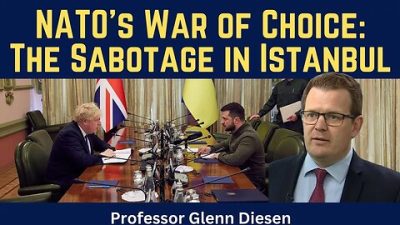
NATO’s War of Choice – The Sabotage of the Istanbul Negotiations
or go to
Aletho News Archives – Video-Images
From the Archives
National Security Archive Publishes Key Records on Infamous MKULTRA Program
Agency Sought Drugs and Behavior Control Techniques to Use in “Special Interrogations” and Offensive Operations
Edited by Michael Evans | National Security Archive | December 23, 2024
Washington, D.C. – Today, the National Security Archive and ProQuest (part of Clarivate) celebrate the publication of a new scholarly document collection many years in the making on the shocking secret history of the CIA’s mind control research programs. The new collection, CIA and the Behavioral Sciences: Mind Control, Drug Experiments and MKULTRA, brings together more than 1,200 essential records on one of the most infamous and abusive programs in CIA history.
Under code names that included MKULTRA, BLUEBIRD and ARTICHOKE, the CIA conducted terrifying experiments using drugs, hypnosis, isolation, sensory deprivation, and other extreme techniques on human subjects, often U.S. citizens, who frequently had no idea what was being done to them or that they were part of a CIA test.
Today’s announcement comes 50 years after a New York Times investigation by Seymour Hersh touched off probes that would bring MKULTRA abuses to light. The new collection also comes 70 years since U.S. pharmaceutical giant Eli Lilly & Company first developed a process to streamline the manufacture of LSD in late 1954, becoming the CIA’s chief supplier of the newly discovered psychoactive chemical central to many of the Agency’s behavior control efforts.
Highlights of the new MKULTRA collection include… continue
Blog Roll
 Aletho News
- The Founder Who Turned Against Root Canals
- Israel displaces last two families from Al Khalayel valley, Al Mughayyir
- Israeli Opposition Leader Endorses Greater Israel
- Islamic Jihad: Trump’s peace board is a “theatrical stunt detached from reality”
- The Head Of A CIA Cutout Admits To Meddling In Iran To Fuel Unrest
- Iran warns Trump against decisions based on false information
- Pentagon sets deadline for Anthropic to lift AI restrictions on autonomous weapons systems, mass domestic surveillance
- Trump’s military buildup against Iran on Netanyahu’s behalf is a gambit doomed to fail
- Big League War
- Zelensky sells false illusion of building powerful air force capable of overcoming Russia
- If Americans Knew
- Are the Jews indigenous to Palestine?
- AIPAC Wants to Kill a Bill that would Ensure Israel Complies with Ceasefire
- Former Israeli PM, in Epstein Files, Dreamed of Israeli Eugenics and Pretty Converts
- Israeli settlers join ‘safari’ tour of Palestinian prisoners
- Flooding in Gaza amid rumors of war; fire in West Bank – Not a ceasefire Day 138
- Fourteen Countries Condemn Huckabee’s Support for Israel Taking Over Most of the Middle East
- Israeli Soldiers Killed Gaza Aid Workers at Point Blank Range in 2025 Massacre: Report
- Israel’s insidious network to propagandize American Christians
- Israel’s Best-Kept Secret: Palestinian Resistance Never Agreed to Disarm
- Trump officials plan to build 5,000-person military base in Gaza, files show
- No Tricks Zone
- Surprising Discovery: Sahara Is Greening…Billions Of Trees Where Once Thought To Be Barren
- New Research Reaffirms Clouds, Aerosols, And Surface Solar Radiation Are ‘Driving The Climate System’
- Germany: Electric Car Catches Fire At Charging Station, Sets Off Local “Inferno”, Widespread Damage
- New Study: Canada’s New Brunswick Was 1°C Warmer Than Today During The Medieval Warm Period
- Coal Power Back In Trend As Globe Tries To Keep Pace With Growing Demand For Power
- New Study: A 4°C Warmer Beaufort Sea Had ‘No Sea Ice’ 11,700 – 8200 Years Ago
- Unfudging The Data: Dutch Meteorological Institute Reinstates Early 20th Centruy Heat Waves It Had Erased Earlier
- German Gas Crisis…Chancellor Merz Allegedly Bans Gas Debate Ahead of Elections!
- Pollen Reconstructions Show The Last Glacial’s Warming Events Were Global, 10x Greater Than Modern
- Germany’s Natural Gas Storage Level Dwindles To Just 28%… Increasingly Critical
 Aletho News