The New York Times Pushes Propaganda War Against Russia
By Sic Semper Tyrannis | Turcopelier | August 1, 2017
There is no longer any doubt that the New York Times is nothing more than a willing cog in the establishment war machine and is happy to serve as a propaganda platform. While there are times that newspapers and electronic media outlets are unwitting dupes for propaganda, the article penned by Michael Gordon and Eric Schmitt (published on 31 July 2017) is the work of willing puppets masquerading as journalists:
Russia’s Military Drills Near NATO Border Raise Fears of Aggression
This screed starts with this piece of artful dishonesty:
Russia is preparing to send as many as 100,000 troops to the eastern edge of NATO territory at the end of the summer, one of the biggest steps yet in the military buildup undertaken by President Vladimir V. Putin and an exercise in intimidation that recalls the most ominous days of the Cold War.
Since when is it an act of “aggression” for a country–Russia in this case–to conduct military exercises in its own territory? Gordon and Schmitt also conveniently omit the facts that the United States has been engaged in a variety of military exercises on the border of Russia for the last year. Yet, rather than acknowledge that truth, Gordon and Schmitt push the lie that this is an unprovoked action by a militaristic Russia hell bent on conquering the world.
How else is one to interpret the following quotes:
The military exercise . . . .is part of a larger effort by Mr. Putin to shore up Russia’s military prowess, and comes against the backdrop of an increasingly assertive Russia. Beyond Russia’s interference in the 2016 presidential election in support of the Trump campaign, which has seized attention in the United States, its military has in recent years deployed forces to Syria, seized Crimea and intervened in eastern Ukraine, rattled the Baltic States with snap exercises and buzzed NATO planes and ships. . . .
“There is only one reason you would create a Guards Tank Army, and that is as an offensive striking force,” General Hodges said. “This is not something for homeland security. That does not mean that they are automatically going to do it, but in terms of intimidation it is a means of putting pressure on allies.”
If you read only this article you would be excused for assuming that Russia is on the prowl for no good reason. Fortunately, our media is not totally subservient to the war machine. NPR reported last week that the United States is actually carrying out the largest military operations on Russia’s border in 27 years:
The U.S. and NATO are staging their largest military exercises since the end of the Cold War, and they’re doing it in countries of 3 former members of the Warsaw Pact: Romania, Bulgaria and Hungary.
DAVID WELNA, BYLINE: Yes, I did. This is all part of what’s been called the European Deterrence Initiative, and it’s a reinforcement of U.S. forces that had been depleted in Eastern Europe before Russia annexed Crimea three years ago. And as part of this sort of hardening of the U.S. presence here, there was an armored combat brigade team of about 4,000 Army troops from Fort Carson, Colo., that arrived here in Eastern Europe early this year. And they’re here in Romania, and they’re taking part in military exercises along with about 20,000 other troops.
On Saturday, I was in the Carpathian Mountains, and I watched a pretty impressive live fire, land and air assault there on an imagined enemy. And then yesterday, along the banks of the Danube River here, there was another assault staged to retake the other side of the river from another imagined enemy.
GREENE: You keep saying imagined enemy. Who is the imagined enemy?
WELNA: Well, no doubt it’s Russia. And, you know, while this wasn’t really a D-Day invasion along the Danube – there was no fire return from the other side – there was a lot of sound and fury. And here’s a bit of what it sounded like.
The US military exercise is dubbed Saber Guardian:
Exercise Saber Guardian 17 is a U.S. European Command, U.S. Army Europe-led annual exercise taking place in Hungary, Romania and Bulgaria in the summer of 2017. This exercise involves more than 25,000 service members from over 20 ally and partner nations. The largest of the Black Sea Region exercises, Saber Guardian 17 is a premier training event for U.S. Army Europe and participating nations that will build readiness and improve interoperability under a unified command, executing a full range of military missions to support the security and stability of the Black Sea Region. It is deterrence in action.
Some of the more notable aspects of SG17 include: the massing of 3rd Armored Brigade Combat Team, 4th Infantry Division (3/4ID) from several locations across the Operation Atlantic Resolve area of operation to the exercise joint operations area (JOA) in Hungary, Romania and Bulgaria; and the movement of 2nd Cavalry Regiment (2CR) from Vilseck, Germany, to numerous locations throughout the JOA.
But that’s not all. The United States also has been busy in the Baltics in early June 2017:
The U.S.’s European Command, which is based in Germany, said Thursday it had deployed an unspecified number of F-16 Fighting Falcons from Aviano Air Base in Italy to the Krzesiny Air Base in Poland in support of Baltic Operations (BALTOPS) and Saber Strike, two massive annual drills intended to boost the U.S.’s military presence in Europe and to support regional allies. European Command’s statement came a day after it said a number of B-1B Lancers had been sent from Ellsworth Air Force Base in South Dakota to join three B-52H Stratofortresses at the Royal Air Force base in Fairford, U.K. Meanwhile, 800 U.S. airmen in Europe were poised to train with NATO allies this month as the Western military alliance escalates its rivalry with Russia.
And there was US activity in Poland in January:
U.S. troops arrived in the small town of Drawsko Pomorskie, Poland, as part of the largest armed military brigade deployed in Europe since the end of the Cold War.
The U.S. troops, along with 53 track vehicles, including the M109 Paladin self-propelled howitzer, reached Poland after a three-day journey through Germany. The show of force falls under Operation Atlantic Resolve, designed to show the United States’ commitment to its European allies in the face of what NATO sees as Russian aggression.
This is not a comprehensive list. If you take time to do further research you will discover that the United States military in tandem with other countries has carried out several military exercises from the Black Sea in the south, all along the western border of Russia and in the Baltic Sea in the north.
If you are Russia and you are witnessing repeated deployments of U.S. infantry, armor, air and naval units on the frontier that produced that last military invasion of Russia (which left at least 20 million dead) would you sit back and do nothing?
What would the United States do if Russia managed to convince Mexico to sign a mutual defense treaty and then proceeded to conduct tank and military air exercises along our southern border? Would we do nothing?
Gordon and Schmitt are an embarrassment to the profession of journalism. Rather than actually report facts and place them in their proper context, they chose instead to push lies as truth and try to help shape public opinion into believing that Russia poses an imminent threat to the west.
One other point worth remembering–Russia spends $60 billion annually on defense spending while the United States is slated for $650 billion. How much is the US spending on just EUCOM exercises targeted at Russia? Sadly, there is bipartisan stupidity and ignorance when it comes to the issue of properly assessing Russia and the threat it does (or does not) pose to the United States. My cynical conclusion is that as long as Russia is portrayed as the great Red menace bent on world domination we can justify spending $650 billion dollars to thwart an invasion that is not coming.
Playing Politics with the World’s Future
By Alastair Crooke | Consortium News | August 6, 2017
Finally … the U.S. Congress has produced a piece of legislation. And it passed with quasi-unanimous, bi-partisan support. Only its substance is not so much a deep reflection on the foreign policy interests of America, but rather, the desire to hurt, and incapacitate the U.S. President in any future dealings with Russia. (And never mind the worrying impulse towards conflict with Russia this entails, or its collateral damage on others).
The aim has been to see President Trump hog-tied, and “tarred and feathered” for his “risky behavior” on Russia. This aim simply has overpowered any other considerations – such as likelihood that the outside world will conclude that America’s ability to pursue or even to have a foreign policy is non-existent in the face of its internal civil war. It is a key juncture. For an overwhelming majority of Democratic and Republican Senators and Congressmen, bringing down “The Donald” is all – and the devil take the consequences for America, in the world.
Senator Dianne Feinstein, D-California, blandly stated that the concerns of U.S. allies come second to the need to punish Russia for its election interference. When asked whether the bill took account of European Union’s interests, one of the main authors, Senator John McCain, R-Arizona, said simply: “Not that I know of. Certainly not in the portion of the bill I was responsible for.”
Another of the bill’s author, Bob Menendez, D-New Jersey, laconically replied to the same question: “Not much, to be honest with you.”
McCain carelessly then quipped that essentially that it was “the job of the E.U. to come around to the legislation, not for the legislation to be brought around to them.”
The U.S. President had little option but to sign the legislation, but that does not mean that diplomacy is completely blocked. As expected, he issued a Signing Statement (see here), in which, while accepting the mandate of Congress, Trump took issue with the new Congressional encroachments into his prerogatives (Article Two of the Constitution) in terms of foreign policy, and he reserved the right to decide on how the Congressional mandate might be implemented (i.e. in respect to the quadrilateral negotiations over Ukraine). He has some wriggle room, especially in terms of how the legislation is enforced (or not, as the case might be), but certainly not enough wriggle room to mollify Europe – or, more pertinently, to persuade Russia that America now has anything, substantive to offer; or were it offered, able to be delivered. In other words, for Russia, the U.S., effectively, is severely agreement-incapacitated.
Medvedev’s Assessment
Russian Prime Minister Dmitry Medvedev wrote in response:
“The signing of new sanctions against Russia into law by the U.S. president leads to several consequences. First, any hope of improving our relations with the new U.S. administration is over. Second, the U.S. just declared a full-scale trade war on Russia. Third, the Trump administration demonstrated it is utterly powerless, and in the most humiliating manner, transferred executive powers to Congress. This shifts the alignment of forces in U.S. political circles.
“What does this mean for the U.S.? The American establishment completely outplayed Trump. The President is not happy with the new sanctions, but he could not avoid signing the new law. The purpose of the new sanctions was to put Trump in his place. Their ultimate goal is to remove Trump from power.” (Emphasis added).
The key new provision in law is dubbed The Russia Sanctions Review Act of 2017. It codifies into law past sanctions on Russia imposed by previous Administrations, and prohibits the President from lifting any existing sanction against Russia without the prior permission of Congress. The law states that the process of securing such consent requires that the President send to Congress a (prior) report stating and arguing the presumed benefit that would accrue to the U.S. through the lifting of any sanction. The Congress then may institute hearings on the President’s report, and on the merit of his argument about the potential quid pro quo – justifying his proposed action. In the light of these hearings, Congress may then consider a resolution of approval or disapproval (within 30 days of receiving the President’s statement).
The influential Lawfare site points out, however, that:
“the provision is drafted quite broadly to cover actions that have any ameliorative effect despite falling short of formally lifting sanctions. For example, congressional review is required for a waiver, “a licensing action that significantly alters United States’ foreign policy with regard to the Russian Federation,” and any action which would allow Russia to regain access to properties in Maryland and New York” (Emphasis added).
In short, Congress gave itself a 30-day review period to vote down any changes Trump tries to make in terms of America’s foreign relations with Russia.
Offending Europe
These are the teeth, but the Act has other little flourishes: The legislation targets the Russian energy sector, allowing the U.S. to sanction companies involved in developing Russian oil pipelines. It “would almost surely affect a controversial pipeline project between Russia and Germany known as Nord Stream 2, which is owned by Gazprom but includes financial stakes from European companies. The project aims to carry Russian natural gas under the Baltic Sea, bypassing countries like Ukraine, Poland and the Baltic States,” as the New York Times reports.
Some may see these events simply as the riposte to alleged Russian intervention in America’s internal affairs (as Feinstein has argued), but polls (even CNN polls) suggest that there are very obvious political limits to the Establishment (in both parties) using “Russia-gate” as a mechanism to mobilize and widen public support for removing President Trump. Polls indicate that 79 percent of Republicans are “not at all” or “not very” concerned about Trump’s alleged links with Russia, and that inversely, precisely the same proportion, 79 percent, of Democrats precisely are “very” or “somewhat” concerned. (55 percent of Independents side with Republicans with 37 percent “not at all” and 18 percent “not very” concerned). The point here is that the Republican support for Trump’s desire for détente with Russia has not eroded one jot, whereas the “concern” of the Independents and even among Democrats is eroding somewhat.
This is the crux: the clique around former CIA head John Brennan et al have put their shirt on “Russia-gate” to bring down Trump – claiming scandal. But what goes around – quite often – comes around. Unless the Establishment can keep up the tempo of innuendo or produce new revelations, “Russia-gate” may just become a stale narrative – or a butt of satire. Worse, the meme could turn and bite the hand of those who have been feeding it. There may too be other skeletons in the cupboard, but belonging to the other party: like who paid Fusion GPS (who were commissioned to produce the “dirty dossier” on Trump)? Might the murdered Seth Rich story take another turn? Or, the fugitive former DNC Chairwoman’s IT staffer, Imran Awan, give the narrative a different twist? Or something as yet unknown.
Vague Sanctions
How far will the anti-Russian attrition go? The Ron Paul Institute sees in one section of the Act, the possibility that websites which take a line in opposition to Russia sanctions could be held to be doing the work of Russian intelligence – by seeking to influence readers in a manner that Russian intelligence would want. Might this be interpreted as “engaging in transactions” – albeit, over the internet? (The Act specifies punishment for “persons” who are “engaging in transactions with the intelligence or defense sectors of the Government of the Russian Federation.”)
The author writes, [that] at first sight, one might think he is reading too much into the text, “however as a twelve-year Capitol Hill veteran bill-reader, I can assure you that these bills are never written in a simple, expository manner. There is always a subtext, and in this case we must consider the numerous instances where the Director of Central Intelligence and other senior leadership in the US intelligence community have attempted to establish the idea that foreign news channels such as RT or Sputnik News, are not First Amendment protected press, but rather tools of a foreign intelligence organization.”
So, are Trump’s hopes for détente with Russia all done? Too early to say, I suggest. Medvedev seems categoric, but maybe his dark prognostication is intended more to underline to Americans that their relations with Russia are not some domestic “game show” – but rather, are profoundly serious. For the time being, substantive U.S. politics with Russia will be on “a long vacation.”
The deeper question is whether the U.S. Deep State is overreaching itself. First, we have this sanctions bill, and then the news that special counsel Robert Mueller, as part of his investigation into the Trump campaign’s potential dealings with the Kremlin, is using a Grand Jury to issue subpoenas. While the use of a Grand Jury does not necessarily mean an indictment is imminent, it is a tool to compel witnesses to testify or force people to turn over sensitive documents that may aid investigators in their probe.
It is a sign of a yet more aggressive approach to gathering “Russia-gate” evidence – a search that will now encompass all the Trump family’s financial affairs. Overreach? (So far, evidence of misdeed, is missing.)
As indicated earlier, Trump’s Republican base (unlike support from the Republican establishment) is not eroding, but rather is becoming angered and resentful. The more the MSM and the East Coast élites attack the deplorables’ “alt” news and websites – the greater the pushback, it seems. The divisions in America are too embittered now, for any thought that America can somehow re-wind the tape, and just start again with Obama having left office – as though Trump never had happened.
Strategic Incoherence
Whereas, America’s Russia foreign policy clearly has been zombie-fied for now, the policy dysfunction goes much wider than Russia (and this cannot be laid at the feet of the Deep State). The policy in the Middle East simply, is strategically incoherent:
Last Tuesday, President Trump, standing beside Lebanese Prime Minister Saad Hariri heaped Lebanon with praise: “Lebanon is on the front lines in the fight against ISIS, al-Qaeda and Hezbollah,” Trump said. Hariri had – delicately – to correct the President: Hizbullah is a member of his governing coalition, and is a part of his government, and is his ally in parliament. Actually, Lebanon is fighting ISIS and al-Qaeda in Syria, precisely via Hezbollah.
But this trivial incident should not be written off as some distracted President “mis-speaking”: rather it is symptomatic of how dysfunctional the West Wing has become in respect to the Middle East. There seems to be no adult in the team – just jaundiced ignorance that does not bother to try to understand Middle East complexities.
Joe Scarborough sums this condition well in an article which – whilst highly complimentary to the personal qualities of Trump’s family – also warns against “the stubborn arrogance that often infects the winning side of Presidential campaigns.” Trump’s victory led his son-in-law to believe “he could reinvent government like Al Gore, micromanage the White House like James Baker, and restructure the Middle East like Moses. Kushner’s confidence seemed to reach its apex,” Scarborough continues, “whenever the subject turned to Middle East peace. His bizarre belief that the world began anew the day Trump was inaugurated was exposed again this week when a leaked audiotape caught Kushner telling White House interns: “We don’t want a history lesson. We’ve read enough books.””
Well perhaps he needs to read some books on Iran, before deciding to call Iran in default on JCPOA (the accord that tightly restricts Iran’s nuclear program). He does not need to like Iran, but merely to understand that it is a major regional power (with real “battalions” at its command), and, unlike most in the Middle East, is capable of acting shrewdly, effectively and forcefully – if needs be.
Mishandling a Crisis
The sense of an absence of strategic knowledge in the West Wing is not confined to Trump’s adversaries, by the way. Iran sees the U.S. calling “Iran in default of JCPOA” as merely serving to cement its fast growing alliance with Russia and China – but the complaint has also found an (unexpected) home in Israel, too – for example, see this, from one of Israel’s most well-connected journalists, Ben Caspit:
“The story that best illustrates this situation occurred last week when the Temple Mount crisis threatened to ignite the entire Middle East in a global conflagration originating in the Al-Aqsa Mosque. Throughout that entire crisis, the US administration was effectively AWOL. Although they attempted to take credit for some deep involvement in efforts to reach a solution, the truth is that the Americans were not a significant factor during the harshest days of the crisis, when it looked like the entire Middle East would spiral downward into a new round of violence.
“President Trump himself was not involved in events as they unfolded. His special envoy, Jason Greenblatt, lost his standing as an ‘impartial mediator’ in the very first days of the crisis. One senior Palestinian source told Al-Monitor on condition of anonymity that ‘Greenblatt picked a side and represented Netanyahu throughout the crisis … the Americans’ behaviour throughout the crisis only furthered the feeling prevalent in Ramallah over the past few weeks that Greenblatt and Jared Kushner are irrelevant.”
“ ‘They are completely unfamiliar with the other side,’ [another Palestinian source told Caspit] ‘they don’t understand the region, and they don’t understand the material. You can’t learn about what is happening here in a seminar lasting just a few weeks…’
“A senior Israeli minister speaking on condition of anonymity added, ‘The Americans aren’t really a presence here. They let us do whatever we want. They don’t set the tone, and they don’t dictate the agenda.’
“Ostensibly, this near freedom of action should be the dream of the Israeli right. But even among them, people are beginning to express their concern about how things are unfolding. ‘This was as clear as can be during the Temple Mount crisis. There was no responsible adult in the mix.’ ”
Alastair Crooke is a former British diplomat who was a senior figure in British intelligence and in European Union diplomacy. He is the founder and director of the Conflicts Forum.
Modi revisits Iran ties
By M K Bhadrakumar | Indian Punchline | August 6, 2017
The decision by Prime Minister Narendra Modi to depute the minister of transport Nitin Gadkari to represent India at the inaugural ceremony of Iran’s president Hassan Rouhani on his second term is a most appropriate, timely and thoughtful decision. ‘Appropriate’ – because it is a signal that India attaches high importance to relations with Iran. Gadkari is a senior figure in the cabinet – all but prime ministerial material, one might say. ‘Thoughtful’ – because of two reasons. One, Gadkari is also the government’s point person with regard to the strategic Indian project to develop a transit route to Afghanistan and Central Asia via Iran’s Chabahar Port.
Two, it is an assertive statement that India’s cooperation with Iran will not be buffeted by ‘Trumpspeak’. This is timely because the Iran-US engagement has run into difficulties and US officials have spoken of a preposterous ‘regime change’ agenda vis-à-vis Iran. A confrontation seems improbable but a showdown cannot be ruled out, either. If there is a confrontation / showdown, Modi government will come under pressure not only from the US but also from Israel, and India will be in the unhappy position of having to stand up and be counted. Strategic ambivalence, which comes easy to the Indian DNA, may no longer be an option. The previous UPA government of course simply opted to pull down the shutter and fall in line with the US diktat. It will be interesting to see how much spunk the present nationalist government would show to resist pressure on its regional policies, if push comes to shove.
However, India is in good company if it views Iran as a major partner. The presence of the European Union Foreign Policy chief Federica Mogherni at Rouhani’s inaugural underscored that EU does not go along with the US’ sanctions bill against Iran. So, indeed, the presence of Russia’s Deputy Prime Minister Dmitry Rogozin, a close aide confidante of President Vladimir Putin, signals that Moscow has a big agenda to expand and deepen the cooperation with Iran. The Chinese President Xi Jinping deputed He Lifeng, head of China’s National Development and Reform Commission, to represent China. Of course, He is the principal driver of the Belt and Road Initiative in the Chinese government.
Indeed, if the inaugural ceremony was a litmus test of Iran’s integration with the international community, the result is positive and impressive. Nineteen presidents, vice-presidents and prime ministers as well as 18 heads of parliaments attended the ceremony. It is virtually impossible for the Trump administration to ‘isolate’ Iran over its missile development programme or its regional policies. By the way, the participants at the ceremony in Tehran included a high-powered delegation from Hamas and a cabinet minister from Qatar.
Gadkari has promised that the Chabahar transit route will be operational by next year. The country must hold the government to its word. There shouldn’t be any slip-ups. This can be the first significant footfall in an Indian variant of ‘Belt and Road’ initiative. More importantly, perhaps, India must now resuscitate the plans of investments in the Chabahar region for industrial collaboration. The enthusiasm with which we spoke about it two years ago has petered out. Again, a major push is needed to realise the much-talked about North-South Corridor via Iran.
In political terms, a visit by Rouhani to India is overdue. The visit will give an overall verve to the relationship and add momentum to the bilateral cooperation. The Farzad-B gas field project has proved elusive. The revised $11 billion investment offer by ONGC Videsh is pending for a decision in Tehran. The Iranian side has driven a hard bargain, which is understandable since oil is a major source of income for its economy. But then, Tehran must also realize that Farzad-B will be a ‘game-changer’ for the entire relationship with India. Perhaps, this is the single biggest investment offer India has ever made to a foreign country. The business spin-off in the downstream, if the Farzad-B project takes off, will be massive.
Russia, China call for freeze on both N. Korea launches & South’s drills with US – Lavrov
RT | August 6, 2017
Moscow and Beijing are against any missile launches carried out by North Korea and are at the same time calling on the US to halt military drills in the region, Russian Foreign Minister Sergey Lavrov says.
The statement comes following Lavrov’s meeting with his Chinese counterpart, Wang Yi, in the Philippines capital, Manila on Sunday. The ministers discussed the situation in the Korean Peninsula following the adoption of new sanctions on North Korea by the UN Security Council.
Lavrov said Russia and China have already suggested a roadmap to resolve the Korean crisis.
“Our joint initiative includes support of Russia’s proposal to create a roadmap for gradual restoration of trust and provide conditions for the resumption of the Six-Party talks. We have agreed to promote this concept in practice, including in the UN,” Lavrov said after the meeting with US Secretary of State Rex Tillerson in Manila.
Previously, Wang called the new restrictive measures against Pyongyang “a necessary response” aimed at “blocking North Korea’s nuclear missile development,” as cited by the South China Morning Post. He added that sanctions are not the “ultimate goal” and called for the resumption the so-called six party talks, as the situation on the Korean Peninsula “has come to a very critical juncture.”
“Sanctions are needed but are not the ultimate goal. The purpose is to pull the peninsula nuclear issue back to the negotiating table, and seek a final solution to realize the peninsula’s denuclearization and long-term stability,” Wang said.
Lavrov reiterated the joint Russian-Chinese initiative for “double freezing” which had previously been rejected by the US. The initiative, put forward by the Russian and Chinese foreign ministers on July 4, would freeze “any missile launches and any nuclear tests in North Korea,” as well as “large-scale military exercises by the United States and South Korea,” Lavrov said.
The Russian foreign minister also said that the new resolution seeks to bring the North Korean leadership to the negotiating table – the six-party talks – while the restrictive measures are designed to make Pyongyang curb its missile and nuclear programs in accordance with UN resolutions.
On Saturday night, the UN Security Council unanimously agreed to impose more restrictive measures on Pyongyang, banning exports of coal, iron, lead, and seafood. The move came in response to North Korea’s latest missile launches in July, which it, as well as South Korea and the US, claimed were intercontinental ballistic missile (ICBM) tests.
Hiroshima – A Criminal Enterprise From Which Nothing Has Been Learned
By Felicity Arbuthnot | Global Research | August 8, 2016
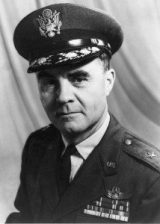 When Paul Tibbets was thirteen years old he flew a bi-plane over Florida’s Miami Beach dropping a promotional cargo of Babe Ruth Candy Bars directly on to the promotional target area, in an advertising stunt. It was his first solo flight and: “From that moment he became hooked on flying.”
He became a test pilot and: “one of the first Americans to fly in world War Two.” Seventeen years later he had graduated from dropping Candy Bars to dropping the world’s first atomic bomb on Hiroshima.
Thirty years later, the now retired Brigadier-General Paul Warfield Tibbets Junior (image right) told authors Gordon Thomas and Max Morgan-Witts, for their minutely detailed and definitive book (1) on one of the world’s greatest crimes, of the background to the venture. Most would surely conclude it was a criminal project from the start, on every level.
Tibbets told the authors:
“I got called on this bomb job … I was told I was going to destroy one city with one bomb. That was quite a thought … We had, working in my organization, a murderer, three men guilty of manslaughter and several felons; all of them had escaped from prison.
“The murderer was serving life; the manslaughter guys were doing ten to fifteen years; the felons three to five. After escaping they had enlisted under false names. They were all skilled technicians … They were all good, real good at their jobs and we needed ‘em. We told them that if they gave us no trouble, they would have no trouble from us.
“After it was over, we called each of them in and handed them their dossiers and a box of matches and said ‘Go burn ‘em.’ You see, I was not running a police department, I was running an outfit that was unique.”
The crime which the “oufit” committed was also unique, making the odd murder, manslaughter or felony on home soil pale in to insignificance in comparison.
In Hiroshima, a millisecond after 8.16 a.m., on 6th August 1945, the temperature at the core of the hundreds of feet wide fireball reached 50,000,000 degrees. Flesh burned two miles distant from it’s outer parameters.
80,000 people were killed or mortally injured instantly. The main area targeted was “the city’s principal residential, commercial and military quarters.”
The entrance to the Shima Clinic was flanked by great stone columns – “They were rammed straight down in to the ground.” The building was destroyed: “The occupants were vapourised.”
Just three of the city’s fifty five hospitals remained usable, one hundred and eighty of Hiroshima’s two hundred doctors were dead or injured and 1,654 of 1,780 nurses.
Sixty two thousand buildings were destroyed as all utilities and transportation systems. Just sixteen fire fighting vehicles remained workable.
People standing, walking, the schoolgirls manning the communications centre in Hiroshima Castle and ninety percent of the castle’s occupants, including American prisoners of war, were also vapourised. Gives a whole new meaning to the US military’s much vaunted “No soldier left behind.”
“The radiant heat set alight Radio Hiroshima, burnt out the tramcars, trucks, railway rolling stock.
“Stone walls, steel doors and asphalt pavement glowed red hot.” Clothing fused to skin. “More than a mile from the epicenter” mens’ caps fused to their scalps, womens’ kimonos to their bodies and childrens’ socks to their legs. All the above decimations happened in the time a crew member of the US bomber, “Enola Gay”, took to blink from the flash behind his goggles. What he saw when he opened them and looked down was, he said : “a peep in to hell.”
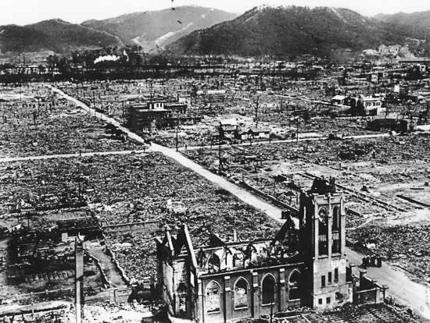
At home base, as Hiroshima was incinerated, a party was being prepared to welcome the arsonists. ”The biggest blow out” with free beer, all star soft ball game, a jitter bug contest, prizes, star attractions, a movie and the cooks working overtime to prepare a sumptuous fare.
Hiroshima’s destruction had a uranium-based detonation. Three days later on 9th August, Nagasaki was destroyed by a plutonium-based detonation to ascertain which would be the most “effective” in the new nuclear age warfare.
Not even a nod or thought had been given to the Hague Convention which had very specific legal guidelines to protection of civilians in war. One might speculate that Hiroshima also vapourised any pretention of such considerations for all time, in spite the subsequent Geneva Convention and it’s additional protocols.
In May this year, President Obama visited Hiroshima, he said (2): “Seventy-one years ago, on a bright cloudless morning, death fell from the sky and the world was changed. A flash of light and a wall of fire destroyed a city and demonstrated that mankind possessed the means to destroy itself.
“Why do we come to this place, to Hiroshima? We come to ponder a terrible force unleashed in a not-so-distant past. We come to mourn the dead, including over 100,000 Japanese men, women and children, thousands of Koreans, a dozen Americans held prisoner.
“Their souls speak to us. They ask us to look inward, to take stock of who we are and what we might become.”
Obama ended his Hiroshima address with: “Those who died, they are like us. Ordinary people understand this, I think. They do not want more war. They would rather that the wonders of science be focused on improving life and not eliminating it. When the choices made by nations, when the choices made by leaders, reflect this simple wisdom, then the lesson of Hiroshima is done.”
For a Nobel Peace Prize Laureate and a constitutional law expert, his words are especially cheap. The man who began his Presidency with a public commitment to build a nuclear weapons free world (speech in Czech Republic, 5th April 2009) has, mind bendingly, committed to a thirty year, one Trillion $ nuclear arsenal upgrade. (3)
The epitaph at Hiroshima was written by Tadayoshi Saika, Professor of English Literature at Hiroshima University. He also provided the English translation, “Let all the souls here rest in peace for we shall not repeat the evil.”
On November 3, 1983, an explanation plaque in English was added in order to convey Professor Saika’s intent that “we” refers to “all humanity”, not specifically the Japanese or Americans, and that the “error” is the “evil of war”:
“The inscription on the front panel offers a prayer for the peaceful repose of the victims and a pledge on behalf of all humanity never to repeat the evil of war. It expresses the spirit of Hiroshima – enduring grief, transcending hatred, pursuing harmony … and yearning for genuine, lasting world peace.” (Wikipedia.)
Did President Obama have a twinge of conscience as he read it? Or did he even bother? He is surely amongst the most unworthy of Nobel Peace Prize Laureates. And will the rest of the world heed the words, the pledge and the spirit, before it is too late?
Notes
- Ruin From The Air, The Atomic Mission to Hiroshima: ISBN 0-586-06705-1
- http://www.nytimes.com/2016/05/28/world/asia/text-of-president-obamas-speech-in-hiroshima-japan.html?_r=0
- http://historynewsnetwork.org/article/162279
US court overturns prison sentences of Blackwater mercs in 2007 Baghdad killing
Press TV – August 5, 2017
A federal appeals court in the United States has overturned lengthy prison sentences for three former Blackwater Worldwide mercenaries and ordered a new trial for a fourth involved in the 2007 killings of more than a dozen of unarmed Iraqi civilians, including women and children.
The Blackwater employees had been charged with killing 14 Iraqi civilians and wounding 18 others using gunfire and grenades at a busy Baghdad intersection on September 16, 2007. An FBI agent once described the atrocity as the “My Lai massacre of Iraq.”
Three mercenaries Dustin L. Heard, Evan S. Liberty and Paul A. Slough were convicted in 2014 of manslaughter and attempted manslaughter and using a machine gun – a military weapon — to carry out an atrocity.
They were sentenced to 30 years in prison. They received the enhanced penalty because they were also convicted of using military firearms while committing a felony.
A fourth mercenary, Nicholas A. Slatten, was convicted of murder and received a life sentence.
On Friday, the three-judge panel of the US Court of Appeals for the District of Columbia Circuit ruled that the trial court “abused its discretion” in not allowing Slatten to be tried separately from his three co-defendants, despite the fact that Slatten fired the first shots in the massacre.
The court also found that the 30-year terms of the three other convicts violated the constitutional prohibition against “cruel and unusual punishment.”
“We are gratified that the Court recognized the gross injustice of the 30-year mandatory minimum sentences,” Heard’s attorney, David Schertler, said in a statement. Attorneys for the three other men refused to respond to the ruling.
A large number of Iraqi witnesses had testified in the case in what the Justice Department said was likely to be “the largest group of foreign witnesses ever to travel to the United States for a criminal trial.”
Blackwater Worldwide, which is now known as Academi and is based in McLean, Virginia, is the most notorious private security firm that had operated in Iraq.
Many Iraqis believe the US military allowed Blackwater mercenaries to commit numerous war crimes against their compatriots with impunity.
Global ‘False’ Witness Targets Nicaragua
By Tortilla con Sal | teleSUR | August 4, 2017
Global Witness is a well-established environmental and human rights non-governmental organization based in Britain.
As with many other similar organizations, its reports often figure in news media as authoritative sources on international issues. Ever since the 1980s and, increasingly so, after the turn of the century, the status of NGOs as trustworthy information sources on foreign affairs has become increasingly untenable as they have been more and more co-opted by corporate interests and governments to promote the Western elites’ neocolonial global policy agenda.
In the case of Nicaragua, in 2016 Global Witness produced a brief, flawed and unreliable account of land conflicts in Nicaragua’s Northern Caribbean Autonomous Region in a report called “On Dangerous Ground”. In June 2017, they produced a report called “Defenders of the Earth”, with a section on Nicaragua even more poorly researched and false than the previous one. Three main reasons stand out to dismiss the latest Global Witness report on Nicaragua as unreliable and in bad faith.
Firstly, the report itself is clearly biased and flawed, from even a cursory analysis of its references and their sources by anyone familiar with Nicaragua. Secondly, the organization’s human and material resources all come from a very narrow managerial class and corporate funding base, overwhelmingly advocating the foreign policy positions of the United States government and its allies. Thirdly, the history of Global Witness clearly indicates its categorical bias in favor of NATO country governments’ policy positions in the countries that figure in its reports and too its systemic defense of the very corporate capitalism whose destructive effects Global Witness superficially and selectively criticizes.
Global Witness sources on Nicaragua
Before looking at the text of the false Global Witness attack on Nicaragua, it is worth looking at the sources they identify in their footnotes, of which there are 23, composed of a total of 44 references. For anyone familiar with Nicaraguan politics and society since the war of the 1980s many of the sources are wearily familiar and readily identifiable as anti-Sandinista, for example, the virulently anti-Sandinista La Prensa newspaper. Some of the references are duplicates and some disguise the fact that while apparently distinct, ultimately the information they provide comes from one single source. (Here’s a link to the relevant spreadsheet for anyone interested in a more detailed analysis.)
Of the 44 references, some of which are duplicates, not one represents the view of the Nicaraguan authorities or others criticized in the report or any source sympathetic to them. 16 references are to sources inside Nicaragua politically opposed to the Nicaragua’s Sandinista government. 25 of the sources are external to Nicaragua but with a long record identifying them as ideologically opposed to the Sandinista government. Of those 25 sources, one might argue that the Washington-based Interamerican Commission for Human Rights or the EFE Spanish language news agency are impartial, but their record is indisputably biased against Nicaragua’s Sandinista authorities.
For all but imperialist ideologues, the Paris based International Federation for Human Rights (FIDH) has been discredited in particular, most recently, by its flagrant partisan bias in favor of NATO country government policies attacking the populations of Libya and Syria. One source, a reference to the law authorizing Nicaragua’s Canal, is completely neutral. Only one media source, El Nuevo Diario, is generally independent. Two references are to sources within the Western environmental scientific lobby, which has its own set of highly questionable biases, prejudices and neocolonial hypocrisy.
“Methodology”
As if by way of justifying this desperately unfair selection of sources, Global Witness also offer an account of what they call their “methodology”. They aver, “We have recorded data about the cases using the HURIDOCS Event Standard Formats and Micro-Thesauri, an approach which is widely used to manage and analyse material of this nature.”
That Global Witness claim is demonstrably untrue. Whatever their aspirations they certainly did not use the HURIDOCS approach.
HURIDOCS (Human Rights Information and Documentation Systems, International) is a European NGO established in 1982 to facilitate networking between human rights organizations around the world. HURIDOCS says its ‟specific role in this capacity-building process lies in improving access to and the dissemination of human rights information through more effective, appropriate and compatible methods and techniques of information handling. HURIDOCS recognises that we live in an age of tremendous advances in information and communication technologies. There is the need to master these technologies to aid us in our human rights work. At the same time, we must be conscious of the fact that the technologies to be applied should be appropriate and responsive to the main focus of the mandates of human rights organisation.”
HURIDOCS exposition of their approach includes the following definitions:
Fact-finding is the process of identifying the violations in one event, and establishing the facts relevant to these violations. Fact-finding and investigation are terms that are used interchangeably.
Documentation is the process of systematically recording the results of an investigation or fact-finding in relation to an event or number of events. Fact-finding and documentation are organically related and should not be viewed as separate processes.
Monitoring is closely observing a given situation in society over a long period of time to see whether human rights standards are met. To carry out monitoring, investigation and documentation of a large and/or representative number of events are conducted.”
Global Witness are not in compliance with the HURIDOCS approach because their practice in their reporting on Nicaragua demonstrably violates all of these definitions.
Their fact-finding or investigation is so heavily biased as to make it impossible for them to establish the facts. Consequently, thanks to this gross fact finding bias, their documentation is partial, often inaccurate and categorically incomplete. Nor do they show any sign of having done due diligence in monitoring consistently over time via ” investigation and documentation of a large and/or representative number of events” or the context of those events in Nicaragua.
Other theoretical considerations
Apart from these chronic procedural failures, other theoretical considerations cry out for clarification.
Global Witness say, “This report is based on research on killings and enforced disappearances of land and environmental defenders, who we define as people who take peaceful action to protect land or environmental rights”.
But in a bitter property dispute between competing communities, clarifying who is defending whose rights becomes a fundamentally important question. Certainly in Nicaragua’s northern Caribbean Coast, unscrupulous Miskito community leaders are themselves involved in provoking these property disputes by illegally selling land to rural families migrating in search of a better life. Miskito gangs have attacked and murdered many such people, a factor not even mentioned by Global Witness. They completely evade the issue of identifying in a responsible, proportionate way whose rights are being violated.
Similarly, Global Witness state, “cases were identified by searching and reviewing reliable sources of publicly online information”. But Global Witness obviously used heavily politicized criteria for deciding what is a reliable source, because not one single reference in their report on Nicaragua gives the Nicaraguan authorities’ side of the story and only one reference can fairly be described as ideologically independent. That renders completely incredible the phony Global Witness claim to systematic research.
They claim their investigation is systematic because “We set up search engine alerts using keywords and conducted other searches online to identify relevant cases across the world.” However, in the case of a small country like Nicaragua, a genuinely systematic search can readily be done covering a much wider range of sources than those accessed by Global Witness without recourse to modish, geeky “search engine alerts”. The poverty of sources evident in the report’s footnotes make Global Witness’s procedure look ridiculous.
Global Witness claim they “verify” the results of their investigation because “Where possible, we checked with in-country or regional partners to gather further information”. But they only cross-checked with ideologically and politically biased organizations, apparently using the same highly questionable, politically compromised sources they cite in their report.
Karl Popper, philosophical darling of the Open Society ideology embraced by Global Witness, explained over 50 years ago in “Conjectures and Refutations” that verification is essentially authoritarian. He argued that a truly scientific investigation requires conjecture and falsification, a search for errors rather than for justification.
If one goes along with Popper, it should surprise no one that Global Witness uses an essentially authoritarian methodology. Self-evidently, their job is not to discover the facts or to impartially establish the truth via a hypothetic-deductive Popper-style process , but to project a manipulative version of events justifying ideologically loaded interpretations favored by their corporate funders, an inherent bias understandably unacknowledged by Global Witness.
Nor is it surprising to learn from their account of their methodology, “While we have made every effort to identify and investigate cases in line with the methodology and criteria, it is important to add that our research mostly relies on public information and that we have not been able to conduct detailed national-level searches in all countries.”
That is not true either. Gobal Witness did not make “every effort” to investigate cases in line with their alleged methodology and criteria because they are flagrantly out of compliance with the definitions advanced by HURIDOCS.
A broader range of sources
Nor is is true that they were unable to conduct a detailed national-level search in the case of Nicaragua, because they could easily have included references from sources that contradict much of the information in the Global Witness report. The following is a brief sample of many other relevant sources, gleaned in a few hours searching on the Internet :
– Indigenous group splits from Miskito party in support of Sandinista government
– Attacks by indigenous gangs on settlers, killing nine
– Miskitos claim their own leaders illegally sold over 3000 acres of communal lands to outsiders
– Historic lease agreement between Canal Authority and indigenous people along the canal route
– Interview with HKND’s Bill Wild about the benefits of the Interoceanic Canal
– HKND’s Bill Wild on the Environmental and Social Impact Study
– Environmentalist Kamilo Lara explains why he believes in Nicaragua’s Interoceanic Canal
– Nicaragua’s Canal – the environmental and economic arguments
– Public Consultation on Lake Nicaragua for the Interoceanic Canal project
– Environmental and Social Impact Assessment of Nicaragua’s Interoceanic Canal – Conclusions and Recommendations
– Bishop accuses political opposition of manipulating canal protests
– Canal protestors attack and injure six police officers
Even this very limited sample of sources, put together from just a few hours searching on the Internet, gives a very different picture to the one presented by Global Witness. So it is false of Global Witness to suggest they lack the resources to be able to stress test and falsify the version of events they have published in their report. Given the tremendous resources and the numerous skilled, experienced, talented people working at Global Witness, only abject intellectual dishonesty explains their failure to report faithfully on Nicaragua
Incoherent claims
Be that as it may, based on their cynically biased sources and their absurdly deficient methodology, Global Witness proceed in their report to make the following claims:
11 defenders killed in 2016 – making Nicaragua the most dangerous country in the world per capita
But, as independent journalist John Perry and others have pointed out, none of those people killed can fairly be described as having being killed for defending the environment. They were in property disputes and all of them were killed either directly or indirectly in the course of those property conflicts. This is true in particular of the case cited by the Inter-American Commission for Human Rights (CIDH) , that of Bernicia Dixon Peralta, her husband Feliciano Benlis Flores and their 11 year old son Feliciano Benlis Dixon. Perry mentions some of the context. More context of the property disputes in the RAAN can be found here, here and here. Not a single person mentioned by Global Witness died in Nicaragua for defending the environment in the way that someone like Berta Cáceres did. Even so Global Witness have tended disingenuously to implicitly compare the situation in Nicaragua with that in Honduras, in particular with Berta’s murder.
The bad faith with which they do so is clear from the second claim in their report on Nicaragua:
10 of those murdered were indigenous people, with most killed in conflicts with settler communities over land. Meanwhile rural ‘campesino’ defenders faced threats, harassment and attacks, including for opposing the construction of an inter-oceanic canal.
Global Witness fails to make clear that groups from the indigenous Miskito people, whom Global Witness inaccurately portray as defenseless environmental defenders, are themselves guilty of murderous attacks against migrants settling land which in many cases the migrants apparently believed they had bought legitimately. Furthermore, the Global Witness report deliberately and falsely confuses the very specific situation of these property conflicts in Nicaragua’s northern Caribbean Coast with protests over the possible displacement of communities along the still to be exactly defined route of the proposed Inter-oceanic Canal 300 kilometers to the south. Global Witness unscrupulously frame their distorted version of events in the two regions to give the impression that in both cases the Nicaraguan authorities may in some way be directly or indirectly responsible for the violence.
In fact, even the New York Times has acknowledged in their otherwise generally hostile anti-Sandinista reporting that the Nicaraguan authorities do what they can with limited resources to protect the rights of indigenous peoples in the Northern Carribean Autonomous Region.
The situation along the route of the Canal is very different from that in the RAAN. Protests against the Canal are exploited by Nicaragua’s political opposition and groups participating in the protest demonstrations have damaged property and attacked police officers. In relation to this situation, completely separate from the property disputes more than 300km to the north, Global Witness claims:
Activists were increasingly criminalized: foreign environmentalists were expelled, community leaders arrested and legislation passed restricting freedoms of speech and association.
However in the very next paragraph, the report quotes anti-Canal activist Francisca Ramirez saying, ““We have carried out 87 marches, demanding that they respect our rights and we have had no response. The only response we have had is the bullet.”
Thus, the Global Witness allegation that rights to freedom of association are restricted is immediately contradicted by Francisca Ramirez declaring her group has organized over 80 public demonstrations to express their views.
Similarly, Ramirez claims “The only response we have had is the bullet.” But, in the next paragraph, we learn “a member of her community lost an eye and another was shot in the stomach”.
Thus, after 87 demonstrations, some of which supposedly involved many thousands of participants and in which “The only response we have had is the bullet”, Ramirez cites precisely two people suffering serious injury and only one of them with a gunshot wound. Ramirez omits that the protesters on the marches she organizes go armed with machetes and home-made mortars. They block highways, intimidate ordinary people going about their business, damage property and attack police officers.
In no Western country would that be tolerated without, to put it mildly, a robust response from the police and security forces. Even so, Global Witness promote Francisca Ramirez’s account as if she and her movement were non-political and non-violent, which they are not. But Global Witness excludes those facts.
Likewise, as John Perry has pointed out, the foreign environmentalists expelled from Nicaragua were involved in a suspicious incident involving a small explosion. Again, a reasonable question to Global Witness is why they excluded this highly relevant information given that in Britain or the United States any foreigner, especially any non-white foreigner, involved in such a suspicious incident would face prosecution and a potential jail term under those countries wide-ranging anti-terrorist laws.
Inaccuracies and falsehoods
Mixed in with these disingenuous, incoherent claims, Global Witness also allege, presumably as supporting context, that the proposed Canal “would force up to 120,000 indigenous people from their land”. This outrageous falsehood is sourced from the pro-NATO, right-wing dominated European Parliament, but is categorically contradicted by the relevant multi-million dollar Environmental and Social Impact report by the extremely prestigious ERM company based in the UK. The falsity of that claim is further confirmed by the Canal concessionary HKND company’s representative Bill Wild who argues that the route of the Canal has been altered to take local concerns into account in such a way that fewer than thirty indigenous families will be directly affected.
Overall, ERM reckons that up to 7210 families or around 30,000 people are likely to be displaced along the whole route of the Canal, over 270 kilometres. The scandalously untrue figure quoted by Global Witness is propaganda from Nicaragua’s political opposition who are exploiting Ramirez’s quasi-celebrity status among Western environmentalists to amplify overseas the marginal support for their unpopular position against the Canal in Nicaragua. That fact is reflected in the incoherence of the arguments set out by Ramirez and her backers in Nicaragua’s political opposition.
If 120,000 people were really going to be displaced by the proposed Canal then the figure of 30,000 protestors from around the country the same political opposition regularly quote to describe national opposition to the Canal just does not add up. Quoting that same opposition figure, Global Witness state, “Francisca has rallied campesino groups from around the country who will be adversely affected by the canal to call for a meaningful say in its development. In June 2015, 30,000 people gathered for an anti-canal protest – Francisca organized 40 trucks so her community could attend.”
In Nicaragua, the cost of hiring a truck or a bus to carry 60 people or a similar amount of material goods on a round trip of 100km is around US$120, while a round trip of 300km costs about US$175. So hiring 40 diesel-guzzling trucks and buses with their drivers will have cost a minimum of US$4000. But Ramirez is an impoverished mother of five from a similarly impoverished community.
Even if only one quarter of the more than 80 protests Ramirez says she has helped organized involved similar costs, the total amount involved runs into tens of thousands of dollars just for Ramirez’s community. Whatever the exact financial accounting, Ramirez is clearly supported by a great deal more than her own resources and those of her community.
Even so, Global Witness completely evade the obvious conclusion to be drawn from that incoherence implicit in their report. Namely, that Francisca Ramirez, far from being a simple altruistic community organizer defending her home is in fact a savvy political opposition activist promoting an inaccurate image of herself as well as concealing her real political agenda. Ramirez alleges that she and her family have been attacked and harassed. Supposing those accusations are true, no convincing evidence points to involvement of the government or the security forces and certainly not the HKND company in charge of planning and building the Canal. That contrasts with the situation of activists in Honduras or Guatemala who can in most cases offer reliable details with corroboration from witnesses to identify their assailants.
The press report cited by Gobal Witness contains no credible evidence from Ramirez except her say so, no corroborating evidence, no witnesses. Likwise the report’s reference to Frontline Defenders’ advocacy for Ramirez links to a summary profile including the false opposition propaganda, repeated by Global Witness, that the proposed inter-oceanic Canal has been imposed without consultation. But in fact preliminary consultations took place in July 2014 and subsequently a continuing consultative process has developed both before and after the publication of ERM’s Environmental and Social Impact Study, which recommended improvements to the consultation process which both HKND and the government accepted.
The Study did also criticize the handling of the expropriation issue and recommended that international standards be applied to any expropriation of land (reckoned to total 1359km2 of dry land out of Nicaragua’s total area of 139,375km2) that may eventully be decided. Those ERM recommendations were accepted by the government and HKND, and the subsequent consultative process has led to several important changes in the precise route of the Canal and to more detailed environmental studies which have been one reason for the delay in the Canal’s construction.
Frontline Defenders’ advocacy of Ramirez, cited by Global Witness, is based on her own account of events with no apparent attempt at corroboration despite the role of Ramirez as a front person for an anti-government campaign openly supported and facilitated by Nicaragua’s political opposition. In the course of framing their benign, heroic account of Francisca Ramirez, Global Witness present an account of the Canal’s origins and procedural progress which repeats virtually word for word the extremely hostile and systematically disingenuous interpretation of Nicaragua’s political opposition.
Garbage in – Garbage out
Winding up their version of the falsehoods, disinformation and propaganda copied from Nicaragua’s political opposition, Global Witness assert, “Resistance to the canal takes place against a terrifying backdrop of multiple murders in indigenous communities elsewhere in the country which have stood up against the arrival of agricultural settlers and demanded the government guarantee their land rights. Even requests by the Inter-American human rights system haven’t spurred the government into protecting community activists from being disappeared, mutilated and murdered.”
But, as is clear from reviewing a wider selection of sources of information in relation to the complicated land situation in Nicaragua’s northern Caribbean Coast, indigenous people themselves are responsible for murderous violence and their own leaders are implicated in corrupt land dealings. It is simply untrue to label the murders as being generically the result of attacks on community activists in the sense in which that term is commonly understood. The general consensus is that the Nicaraguan government has done more than any government in the region, with the possible exception of Venezuela, to protect indigenous people’s land rights with almost a third of the national territory designated as indigenous peoples’ communal land. Global Witness’s allegations on that score are demonstrably inaccurate and grossly unfair.
Similarly, the suggestion that the Canal protest movement is vulnerable to the kind of murderous violence prevalent in Nicaragua’s Northern Caribbean Autonomous Region is egregiously false. The protesters themselves have used violence and intimidation against the general population to carry out their protest actions, so far, thankfully, with no fatalities.
In summary, the Global Witness report in its section on Nicaragua uses politically and ideologically prejudiced sources which could readily have been supplemented with sources offering a contradictory account. The sources used themselves do not always corroborate the claims made in the report. Apart from the ideological bias, various substantive inaccuracies render the report extremey unreliable. The report’s conclusions are flawed because its initial premises are false – Garbage In, Garbage Out.
It remains true that there are serious property conflicts in Nicaragua’s Northern Caribbean Autonomous Region which the government is attempting to address despite a lack of administrative, judicial and security resources, against an intricate social, economic and political context and also the constantly changing opportunistic interaction of corrupt business interests with local indigenous peoples’ leaders, and unscrupulous local officials.
In the case of Nicaragua’s proposed Interoceanic Canal, it is true various issues, including the issue of expropriation, have to be clarified. Protestors claim they want dialog, but Francisca Ramirez sets the precondition that the Canal be scrapped.
The Canal’s critics never acknowledge that Nicaragua is already suffering chronic environmental degradation. The government and many environmentalists argue that the Canal will provide Nicaragua with the resources it needs to reforest deforested areas, better manage its water resources and reverse the current deterioration in Lake Nicaragua, while at the same time helping to reduce poverty.
Foreign and national environmentalists offer no viable proposals to enable Nicaragua to reverse the socio-economic and climate processes already driving accelerating environmental degradation in the country.
Protestors against the Canal exaggerate the number of people likely to be displaced by its construction and often dishonestly claim people affected by displacement will not be compensated. Meanwhile, they themselves are among those responsible for the environmental degradation that will definitely get progressively worse without the resources the Canal is projected to provide.
Corporate funders and the elite NGO revolving door
Few plausible explanations except intellectual dishonesty offer themselves for the desperate failure of Global Witness, firstly to adequately research the issues involved or, secondly, supposing they in fact did so, to acknowledge the complexity of the issues they examine. Global Witness frankly explain in their financial statement for 2016, they had income of over US$13 million. So they do not lack resources. Similarly, their Board, their Advisory Board and their CEO are all very experienced, smart, talented people. So even if they depend on younger inexperienced staff to do the research, their senior staff presumably review the product before publication. Lack of experience is not a reasonable explanation for the report’s glib dishonesty and inaccuracy.
A review of Global Witness funders reveals that for 2016 the two biggest funders were the Open Society Foundation of George Soros associated with the numerous so-called color revolutions in support of NATO country government foreign policy objectives and the Omidyar Network of Pierre Omidyar whose links with US intelligence contractor Booz Allen Hamilton are well known. Less well known is Omidyar’s support for NGOs that fomented the successful right wing coup in Ukraine. The complete list of Global Witness funders is available in the financial statement for 2016 on their web site. That document reports that in 2016 Global Witness received US$3.4 million from the George Soros Open Society Foundation, US$1.5 million from Pierre Omidyar’s Omidyar Network, US$840,000 from the Ford Foundation and over US$3 million from various European NATO governments plus Sweden.
All of these funding sources are unrelenting ideological opponents of Nicaragua’s Sandinista government. A broad pro-NATO bias is very clear in the composition of the Global Witness Board and Advisory Board and CEO. Their profiles make clear they are almost all luminaries from the Western elite neocolonial non governmental sector, while many have a strong corporate business background as well. Just as there is a revolving door between government and corporate business and finance in North America and Europe, so too there is also a revolving door within that region’s elite NGO sector, a sector very clearly serving NATO country foreign policy goals.
 Cory Morningstar has exposed the pro-NATO global political agenda of organizations like US based organizations like Avaaz and Purpose. In the case of Global Witness, their Board member Jessie Tolka is also a board member of Purpose and too of 350.org: Current Global Witness CEO Gillian Caldwell was also a very successful Campaigns Director of Sky1, now merged into 350.0rg. Cory Morningstar argues, “the most vital purpose of the non-profit industrial complex (NPIC) has not been to destroy the ecocidal economic system that enslaves us while perpetuating and ensuring infinite wars. Rather, the key purpose of the NPIC is and has always been to protect this very system it purports to oppose from being dismantled. Hence the trillions of dollars pumped into the NPIC by the establishment.”
Confirmation of Cory Morningstar’s argument can be found in the history of Global Witness itself. For example on Libya, despite their superficial anti-corporate gloss, Global Witness relentlessly apply NATO country government criteria here and here. Also on Ukraine, Global Witness project the same anti-corporate message while simultaneously reinforcing NATO country government propaganda. Global Witness has also received US National Endowment for Democracy grants in Cambodia and in Liberia.
Also, a decade ago, writers Keith Harmon Snow and Rick Hines questioned Global Witness’ corporate links in relation to the “Blood Diamonds” controversy and the organization’s role in relation to De Beers and also Maurice Templesman’s diamond companies. No doubt more thorough research would reveal information casting similar doubt on Global Witness’s integrity and independence.
Conclusion
This latest Global Witness report in relation to Nicaragua is important because it is so readily falsifiable. It thus presents a clear litmus test: no news and information media can use the Global Witness report’s material in relation to Nicaragua without compromising their credibility.
The bias and inaccuracies in the section on Nicaragua in the Global Witness 2017 report call into doubt the integrity of the whole report. No news or information media interested in accuracy or honest reporting can conscientiously rely on Global Witness as a source without thorough cross checking and systematically comparing, contrasting and evaluating information from sources giving a different account of the events and issues in question.
Global Witness is neither independent nor trustworthy. It clearly has a strong but unacknowledged neocolonial political agenda promoting the regional policy goals of NATO country governments, while, conversely, attacking governments and other regional actors opposed to those goals.
NGOs like Global Witness, International Crisis Group, Human Rights Watch, Transparency International and so many others, self-evidently fabricate psychological warfare inputs serving NATO country government policy, itself shaped by the same corporate elites that fund the class of NGOS of which Global Witness is a part.
They operate as the soft, extramural arm of NATO country governments’ foreign policy psychological warfare offensives, targeting liberal and progressive audiences to ensure their acquiescence in overseas aggression and intimidation against governments and movements targeted by NATO. To that end, they deceitfully exploit liberal and progressive susceptibilities in relation to environmental, humanitarian and human rights issues.
Their psychological warfare role supporting the NATO government’s aggressive destabilization of Ivory Coast, Libya and Syria in 2011, of Ukraine in 2014, and the NATO country government’s low intensity war against Venezuela ever since 2013, as well as the campaign against Cuba over five decades, has been unmistakable.
More broadly their systemic ideological role is very obviously to protect and defend global corporate capitalism while superficially and selectively questioning and criticizing some of its worst abuses. Cory Morningstar’s insight bears repeating “the key purpose of the non-profit industrial complex is and has always been to protect this very system it purports to oppose”.
The coverage of Nicaragua in the latest 2017 Global Witness report is a text book example of that sinister fact.
ON THE BEACH 2017. THE BECKONING OF NUCLEAR WAR.

Gregory Peck in a scene from the 1959 movie, “On the Beach,” showing how a nuclear war ends life on the planet.
By John Pilger | August 4, 2017
The U.S. submarine captain says, “We’ve all got to die one day, some sooner and some later. The trouble always has been that you’re never ready, because you don’t know when it’s coming. Well, now we do know and there’s nothing to be done about it.”
He says he will be dead by September. It will take about a week to die, though no one can be sure. Animals live the longest.
The war was over in a month. The United States, Russia and China were the protagonists. It is not clear if it was started by accident or mistake. There was no victor. The Northern Hemisphere is contaminated and lifeless now.
A curtain of radioactivity is moving south towards Australia and New Zealand, southern Africa and South America. By September, the last cities, towns and villages will succumb. As in the north, most buildings will remain untouched, some illuminated by the last flickers of electric light.
This is the way the world ends
Not with a bang but a whimper
These lines from T.S. Eliot’s poem The Hollow Men appear at the beginning of Nevil Shute’s novel On the Beach, which left me close to tears. The endorsements on the cover said the same.
Published in 1957 at the height of the Cold War when too many writers were silent or cowed, it is a masterpiece. At first the language suggests a genteel relic; yet nothing I have read on nuclear war is as unyielding in its warning. No book is more urgent.
Some readers will remember the black and white Hollywood film starring Gregory Peck as the U.S. Navy commander who takes his submarine to Australia to await the silent, formless specter descending on the last of the living world.
I read On the Beach for the first time the other day, finishing it as the U.S. Congress passed a law to wage economic war on Russia, the world’s second most lethal nuclear power. There was no justification for this insane vote, except the promise of plunder.
Aiming Toward a Hot War
The “sanctions” are aimed at Europe, too, mainly Germany, which depends on Russian natural gas and on European companies that do legitimate business with Russia. In what passed for debate on Capitol Hill, the more garrulous senators left no doubt that the embargo was designed to force Europe to import expensive American gas.
Their main aim seems to be war – real war. No provocation as extreme can suggest anything else. They seem to crave it, even though Americans have little idea what war is. The Civil War of 1861-65 was the last on their mainland. War is what the United States does to others.
The only nation to have used nuclear weapons against human beings, they have since destroyed scores of governments, many of them democracies, and laid to waste whole societies – the million deaths in Iraq were a fraction of the carnage in Indochina, which President Reagan called “a noble cause” and President Obama revised as the tragedy of an “exceptional people.” He was not referring to the Vietnamese.
Filming last year at the Lincoln Memorial in Washington, I overheard a National Parks Service guide lecturing a school party of young teenagers. “Listen up,” he said. “We lost 58,000 young soldiers in Vietnam, and they died defending your freedom.”
At a stroke, the truth was inverted. No freedom was defended. Freedom was destroyed. A peasant country was invaded and millions of its people were killed, maimed, dispossessed, poisoned; 60,000 of the invaders took their own lives. Listen up, indeed.
A lobotomy is performed on each generation. Facts are removed. History is excised and replaced by what Time magazine calls “an eternal present.” Harold Pinter described this as “manipulation of power worldwide, while masquerading as a force for universal good, a brilliant, even witty, highly successful act of hypnosis [which meant] that it never happened. Nothing ever happened. Even while it was happening it wasn’t happening. It didn’t matter. It was of no interest.”
Those who call themselves liberals or tendentiously “the left” are eager participants in this manipulation, and its brainwashing, which today revert to one name: Trump.
Trump is mad, a fascist, a dupe of Russia. He is also a gift for “liberal brains pickled in the formaldehyde of identity politics,” wrote Luciana Bohne memorably. The obsession with Trump the man – not Trump as a symptom and caricature of an enduring system – beckons great danger for all of us.
A Narcissistic Media
While they pursue their fossilized anti-Russia agendas, narcissistic media such as the Washington Post, the BBC and the Guardian suppress the essence of the most important political story of our time as they warmonger on a scale I cannot remember in my lifetime.
On 3 Aug., in contrast to the acreage the Guardian has given to drivel that the Russians conspired with Trump (reminiscent of the far-right smearing of John Kennedy as a “Soviet agent”), the paper buried, on page 16, news that the President of the United States was forced to sign a Congressional bill declaring economic war on Russia.
Unlike every other Trump signing, this was conducted in virtual secrecy and attached with a caveat from Trump himself that it was “clearly unconstitutional.”
A coup against the man in the White House is under way. This is not because he is an odious human being, but because he has consistently made clear he does not want war with Russia.
This glimpse of sanity, or simple pragmatism, is anathema to the “national security” managers who guard a system based on war, surveillance, armaments, threats and extreme capitalism. Martin Luther King called them “the greatest purveyors of violence in the world today.”
They have encircled Russia and China with missiles and a nuclear arsenal. They have used neo-Nazis to install an unstable, aggressive regime on Russia’s “borderland” – the way through which Hitler invaded, causing the deaths of 27 million people. Their goal is to dismember the modern Russian Federation.
In response, “partnership” is a word used incessantly by Vladimir Putin – anything, it seems, that might halt an evangelical drive to war in the United States. Incredulity in Russia may have now turned to fear and perhaps a certain resolution. The Russians almost certainly have war-gamed nuclear counter strikes. Air-raid drills are not uncommon. Their history tells them to get ready.
The threat is simultaneous. Russia is first, China is next. The U.S. has just completed a huge military exercise with Australia known as Talisman Sabre. They rehearsed a blockade of the Malacca Straits and the South China Sea, through which pass China’s economic lifelines.
The admiral commanding the U.S. Pacific fleet said that, “if required,” he would nuke China. That he would say such a thing publicly in the current perfidious atmosphere begins to make fact of Nevil Shute’s fiction.
Silencing Dissenting Journalists
None of this is considered news. No connection is made as the bloodfest of Passchendaele a century ago is remembered. Honest reporting is no longer welcome in much of the media. Windbags, known as pundits, dominate: editors are infotainment or party-line managers. Where there was once sub-editing, there is the liberation of axe-grinding clichés. Those journalists who do not comply are defenestrated.
The urgency has plenty of precedents. In my film, The Coming War on China, John Bordne, a member of a U.S. Air Force missile combat crew based in Okinawa, Japan, describes how in 1962 – during the Cuban missile crisis – he and his colleagues were “told to launch all the missiles” from their silos.
Nuclear armed, the missiles were aimed at both China and Russia. A junior officer questioned this, and the order was eventually rescinded – but only after they were issued with service revolvers and ordered to shoot at others in a missile crew if they did not “stand down.”
At the height of the Cold War, the anti-communist hysteria in the United States was such that U.S. officials who were on official business in China were accused of treason and sacked. In 1957 – the year Shute wrote On the Beach – no official in the State Department could speak the language of the world’s most populous nation. Mandarin speakers were purged under strictures now echoed in the Congressional bill that has just passed, aimed at Russia.
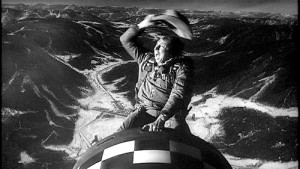 The bill was bipartisan. There is no fundamental difference between Democrats and Republicans. The terms “left” and “right” are meaningless. Most of America’s modern wars were started not by conservatives, but by liberal Democrats.
When Obama left office, he presided over a record seven wars, including America’s longest war and an unprecedented campaign of extrajudicial killings – murder – by drones.
In his last year, according to a Council on Foreign Relations study, Obama, the “reluctant liberal warrior,” dropped 26,171 bombs – three bombs every hour, 24 hours a day. Having pledged to help “rid the world” of nuclear weapons, the Nobel Peace Laureate built more nuclear warheads than any president since the Cold War.
Trump is a wimp by comparison. It was Obama – with his Secretary of State Hillary Clinton at his side – who destroyed Libya as a modern state and launched the human stampede to Europe. At home, immigration groups knew him as the “deporter-in-chief.”
One of Obama’s last acts as president was to sign a bill that handed a record $618 billion to the Pentagon, reflecting the soaring ascendancy of fascist militarism in the governance of the United States. Trump has endorsed this.
Buried in the detail was the establishment of a “Center for Information Analysis and Response.” This is a ministry of truth. It is tasked with providing an “official narrative of facts” that will prepare us for the real possibility of nuclear war – if we allow it.
Follow John Pilger on twitter @johnpilger
US Congress to Undermine INF Treaty and Entire Existing Arms Control Architecture
By Andrei AKULOV | Strategic Culture Foundation | 05.08.2017
The House and Senate are currently considering defense authorization legislation which, if passed into law, would start dismantling some of the bedrock agreements of US-Russian arms control – the 1987 Intermediate-Range Nuclear Forces Treaty (INF Treaty), as well as longstanding US–Russia arms control efforts. The treaty eliminated all ground-based nuclear and conventional missiles, as well as their launchers, with ranges of 500–1,000 kilometers (310–620 mi) (short-range) and 1,000–5,500 km (620–3,420 mi) (intermediate-range). Signed in December 1987 by President Ronald Reagan and Soviet leader Mikhail Gorbachev, the INF deal is accredited with significantly reducing the threat of nuclear confrontation and accelerating the end of the Cold War.
The landmark deal for the first time eliminated an entire class of missiles in Europe and set up a new framework for verifying compliance. Russia and the US have recently exchanged accusations of breaching the treaty but there have been no substantive talks on the issue.
Both versions of the National Defense Authorization Act for 2018 require the development of medium-range missiles the INF Treaty bans. They authorize programs of development on a new US mobile ground-based cruise missile (GLCM) with a range of between 500 and 5,500 kilometers.
Politico cites the Office of Management and Budget, saying it «unhelpfully ties the Administration to a specific missile system, which would limit potential military response options». Legal experts are also criticizing the legislation as congressional overreach, saying the Senate can only ratify treaties and the president alone can negotiate or pull out of them. The House has no role whatsoever in approving treaties, Politico notes.
The House version states that if Russia failed to comply with the INF terms within 15 months of the bill’s enactment, the US would no longer be legally bound by the treaty as a matter of domestic law. A similar provision could be inserted into the Senate version of the bill.
Russia’s alleged violations serve as a pretext for deploying shorter and intermediate range weapons to strike other countries, like North Korea. The US Army is believed to lack sufficient firepower in a large-scale conflict, such as missiles that can hit targets hundreds of miles away. David Johnson, a military analyst at the Center for Strategic and Budgetary Assessment, believes that «the lack of long-range firepower in the Army [is] a problem that could haunt land forces in a war in Eastern Europe».
Army Deputy Chief of Staff Lt. Gen. John Murray told lawmakers about the need for a «long-range precision fires» program to develop a powerful new missile that can reach targets 499 kilometers out, or about 310 miles. The range has to stay below 500 kilometers to comply with the INF treaty. If it’s not in force anymore, then the Army will get what it wants.
Mark Gunzinger of the Center for Strategic and Budgetary Assessments (CSBA) thinks that pulling out from the treaty is the right thing to do. He believes that future ground-based strike systems could help the US suppress Russia’s advanced integrated air defense systems and freedom of action in the event of a conflict. The intermediate range missiles could help the American military gain more advantage over China and North Korea. «Perhaps the time is right for a serious debate over the US withdrawing from the INF Treaty», Gunzinger says. Michaela Dodge of the Heritage Foundation affirms that, the Treaty is no longer relevant, and the US should withdraw.
Launching a program to develop a new ground-based cruise missile would add to the fact that some missiles to be eliminated under the terms of the INF Treaty are used as targets for ballistic missile defense tests, while Aegis Ashore systems use the launching pads that can be used to fire medium range Tomahawks. The Senate version of the bill says the US has no intention to tear up the treaty but the need to close the capability gap opened by Russia is given as a reason for launching the program. The two things contradict each other. The sum of these factors make the US actually abandon the agreement while not leaving it officially.
The same thing applies to Iran. Formally, the United States has not torn up the Joint Comprehensive Plan of Action (JCPOA) with Iran. At the same time, imposing sanctions on Tehran over its ballistic missile program makes the agreement deprived of any substance. No matter what pretext is used, the fact is that punitive measures against Iran are in place. It makes Iranians put into doubt the need to further comply with the JCPOA.
The US-Russian relations under ex-President Obama left much to be desired but the issue of violating the INF Treaty was not on the agenda. If the medium-range missile development program had been launched, the Congress would have been in violation of the international agreement. It did not occur then, but it is happening now under President Trump.
This would put into doubt the reputation of the United States as a reliable partner. If one international agreement is breached by the Congress, any other treaty can be abrogated, too.
Other defense programs would suffer, with money directed to implement the program in violation of the INF. The defense budget already includes funding to develop a fleet of nuclear air-launched cruise missiles. The more, the better?
No European ally has given consent to have the weapon on its soil. Would Europeans agree to have nuclear weapons on their soil? It makes the 1983 protests leap to memory.
The US will not benefit greatly if it withdraws from the treaty. It does not have an intermediate-range ballistic missile, and developing a new one will take time and effort. The bill does not mention intermediate ballistic capability anyway. Land-based cruise missiles would not tip the balance into US favor because they are too slow to effectively knock out critical infrastructure sites in a first unexpected strike. The US military need ballistic missiles with short flight times to decapitate the enemy but the Congress wants a cruise, not a ballistic, missile.
If Europe-based cruise missiles are fired, Russia will have enough time for a launch-upon-attack against those European states, which host the weapons, and the United States.
With the INF Treaty effective no more, Moscow will be free to deploy intermediate-range missiles without restriction. In theory, its Iskander-M systems could be armed with ballistic and cruise missiles with extended range, while the American military has nothing to respond with.
The House version has a provision that would prohibit the use of funds to extend New START until Russia complies with the INF treaty. But the conclusion, whoever makes it, about Russia’s compliance can be biased or outright wrong. Signed into law, the bill would undermine the whole architecture of arms control. The New START and the INF are the only two treaties still in place. Without them, the way to uncontrolled arms race would be unhindered.
The Congress would exceed its authority. It actually forces the administration to abandon an international treaty. The Senate can ratify international treaties, not abrogate them. The House does not vote on them. Both versions of the bill encroach on the president’s foreign policy prerogatives the same way the Countering America’s Adversaries through Sanctions Act does.
The bill includes provisions to undermine the treaty while the opportunities offered by the Special Verification Commission (SVC) envisioned by the INF treaty are far from being exhausted. The parties could use the SVC venue to consider additional confidence-building measures and information exchanges that take into account technological and political developments that have occurred recently.
The bill wants the Open Skies Treaty that could be used for INF verification to be deprived of funds. The observation capabilities could be upgraded. The NATO-Russia Council could serve as another mechanism to address specific security concerns. A lot of things could be done to preserve arms control regime and prevent its crisis. The world is facing the most serious and comprehensive crisis in the fifty-year history of nuclear arms control with almost every channel of negotiation deadlocked and the entire system of existing arms control agreements in jeopardy. The US Congress appears to be adamant in its desire to make things even worse.
US ‘Constitutional Shift’: Powerless President and Omnipotent Congress
Sputnik – August 4, 2017
What the international community is observing now in Washington could be called a sluggish constitutional shift, Russian political analyst Andrei Suzdaltsev told RIA Novosti in a reference to Congress twisting Donald Trump’s arm. Meanwhile, Congress is about to stir up new frictions with Trump over the INF Treaty with Russia.
The world is witnessing what could be called a constitutional shift with Congress de facto obtaining more power than the US president, Moscow-based political analyst and academic Andrei Suzdaltsev told RIA Novosti.
On Wednesday US President Donald Trump signed into law a US sanctions bill aimed against Russia, Iran and North Korea. The sanctions target Russia’s defense, intelligence, mining, shipping and railway industries and restrict dealings with Russian banks and energy companies.
To make matters even more complicated, the new law limits the US president’s ability to lift or ease sanctions on Russia, as Congress’s approval to reconsider the restrictions will now be required.
In an apparent reference to the bill, Trump tweeted Thursday that the US-Russian relationship is at a “very dangerous” low.
”Our relationship with Russia is at an all-time & very dangerous low. You can thank Congress, the same people that can’t even give us HCare!” Trump wrote.
Incredible as it may seem, the president of the country has turned out to be powerless, Suzdaltsev said, adding that one now has to hold a dialogue with Congressional representatives.
“In fact, we are witnessing a sluggish constitutional shift in the US political system. Being a presidential republic where the head of executive power had a solid mandate America always looked at the reaction of Congress. But there was a counterweight system. Now the American elite is divided,” Suzdaltsev told RIA Novosti.
The Russian academic drew attention to the fact that the internal political crisis, which started during the election campaign in autumn 2016, is still raging on.”By forcing Trump into signing a new sanctions bill into law Congress… implemented a constitutional shift,” Suzdaltsev stressed.
“Trump is now a powerless figure incapable of conducting a political dialogue,” he said. “If one wants to hold negotiations, one needs to do this with congressmen in both houses. Actually, there is no president.”
“We are entering a period that may even be harder than the years of the Cold War,” the academic remarked.
Meanwhile, Politico reported Thursday that the US Congress continues to discuss the bill which implies America’s de facto withdrawal from the INF Treaty by suggesting developing medium-range missiles banned by the document.
The INF Treaty, concluded in 1987, envisaged the reduction of non-strategic weapons by prohibiting all nuclear and conventional missiles and their launchers with a range between 310 and 3,420 miles.
“Congress is moving to force the Pentagon to violate a nuclear arms treaty with Russia — in yet another effort to box in President Donald Trump on relations with Moscow,” the media outlet noted, adding that “the legislation is also likely to stir up new friction between lawmakers and Trump, who has already accused Congress of illegally meddling in his dealings with Russia.”
Commenting on the matter, Kremlin spokesman Dmitry Peskov highlighted that Russian President Vladimir Putin and US President Donald Trump did not discuss the issue of the INF Treaty during their meeting. He stressed that Moscow remains committed to its obligations under the agreement and expects the same from its partners.
“Russia remains committed to its obligations under this treaty, despite some claims which were voiced before. Of course, we expect that our partners under this agreement will adhere to their international obligations in this context,” Peskov told reporters.
Citing legal experts Politico remarked that the proposed legislation could be regarded as congressional overreach. “The Senate can only ratify treaties and the president alone can negotiate or pull out of them,” it argues.
Coalition hits Raqqah hospital with white phosphorus: Red Crescent official
Press TV – August 5, 2017
The US-led coalition purporting to be targeting Daesh in Syria is said to have hit the National Hospital in the northern city of Raqqah with internationally-banned white phosphorus bombs.
Dina al-Asa’ad, who is the deputy director of the Syrian Arab Red Crescent’s branch in the city, said coalition warplanes had struck the hospital on Thursday, the country’s official Syrian Arab News Agency said.
She said the aircraft also released more than 20 apparently conventional shells against the facility, which hit its interior, electricity generators, and ambulances.
The facility, she said, catered to the needs of more than 100,000 patients.
Al-Asa’ad also blamed the coalition, which has been bombing Syria-based targets since 2014, and the US-backed anti-Damascus so-called Syrian Democratic Forces (SDF) for leading a “scorched earth” policy against the city, rather than trying to liberate it.
She said the coalition and the SDF had laid waste to all of the city’s schools, mosques, bakeries, its sugar factory, and governmental buildings.
‘Coalition kills 30 civilians’
Meanwhile, Syrian government sources said at least 30 people had been killed in the latest attacks by the coalition in Raqqah.
The latest toll brought to over 65 the total number of civilians killed by US aerial raids on Raqqah since the beginning of the week.
Army gains
Separately, the Syrian army took control of the al-Madkhal neighborhood and Tantor Mountain in the city of al-Sukhnah in the central Syria Homs Province.
Backed by civil defense fighters, the army also made fresh gains in the southeastern Syria al-Suwayda Province near the Jordan-Syria borders, where it recaptured the al-Dhubi’aiyah, Ber al-Rafa’a, al-Hardiyah, and Wadi al-Sawt areas from the US-backed forces, a military source said.
Featured Video
NATO’s War of Choice – The Sabotage of the Istanbul Negotiations
or go to
Aletho News Archives – Video-Images
From the Archives
National Security Archive Publishes Key Records on Infamous MKULTRA Program
Agency Sought Drugs and Behavior Control Techniques to Use in “Special Interrogations” and Offensive Operations
Edited by Michael Evans | National Security Archive | December 23, 2024
Washington, D.C. – Today, the National Security Archive and ProQuest (part of Clarivate) celebrate the publication of a new scholarly document collection many years in the making on the shocking secret history of the CIA’s mind control research programs. The new collection, CIA and the Behavioral Sciences: Mind Control, Drug Experiments and MKULTRA, brings together more than 1,200 essential records on one of the most infamous and abusive programs in CIA history.
Under code names that included MKULTRA, BLUEBIRD and ARTICHOKE, the CIA conducted terrifying experiments using drugs, hypnosis, isolation, sensory deprivation, and other extreme techniques on human subjects, often U.S. citizens, who frequently had no idea what was being done to them or that they were part of a CIA test.
Today’s announcement comes 50 years after a New York Times investigation by Seymour Hersh touched off probes that would bring MKULTRA abuses to light. The new collection also comes 70 years since U.S. pharmaceutical giant Eli Lilly & Company first developed a process to streamline the manufacture of LSD in late 1954, becoming the CIA’s chief supplier of the newly discovered psychoactive chemical central to many of the Agency’s behavior control efforts.
Highlights of the new MKULTRA collection include… continue
Blog Roll
 Aletho News
- The Founder Who Turned Against Root Canals
- Israel displaces last two families from Al Khalayel valley, Al Mughayyir
- Israeli Opposition Leader Endorses Greater Israel
- Islamic Jihad: Trump’s peace board is a “theatrical stunt detached from reality”
- The Head Of A CIA Cutout Admits To Meddling In Iran To Fuel Unrest
- Iran warns Trump against decisions based on false information
- Pentagon sets deadline for Anthropic to lift AI restrictions on autonomous weapons systems, mass domestic surveillance
- Trump’s military buildup against Iran on Netanyahu’s behalf is a gambit doomed to fail
- Big League War
- Zelensky sells false illusion of building powerful air force capable of overcoming Russia
- If Americans Knew
- Are the Jews indigenous to Palestine?
- AIPAC Wants to Kill a Bill that would Ensure Israel Complies with Ceasefire
- Former Israeli PM, in Epstein Files, Dreamed of Israeli Eugenics and Pretty Converts
- Israeli settlers join ‘safari’ tour of Palestinian prisoners
- Flooding in Gaza amid rumors of war; fire in West Bank – Not a ceasefire Day 138
- Fourteen Countries Condemn Huckabee’s Support for Israel Taking Over Most of the Middle East
- Israeli Soldiers Killed Gaza Aid Workers at Point Blank Range in 2025 Massacre: Report
- Israel’s insidious network to propagandize American Christians
- Israel’s Best-Kept Secret: Palestinian Resistance Never Agreed to Disarm
- Trump officials plan to build 5,000-person military base in Gaza, files show
- No Tricks Zone
- Surprising Discovery: Sahara Is Greening…Billions Of Trees Where Once Thought To Be Barren
- New Research Reaffirms Clouds, Aerosols, And Surface Solar Radiation Are ‘Driving The Climate System’
- Germany: Electric Car Catches Fire At Charging Station, Sets Off Local “Inferno”, Widespread Damage
- New Study: Canada’s New Brunswick Was 1°C Warmer Than Today During The Medieval Warm Period
- Coal Power Back In Trend As Globe Tries To Keep Pace With Growing Demand For Power
- New Study: A 4°C Warmer Beaufort Sea Had ‘No Sea Ice’ 11,700 – 8200 Years Ago
- Unfudging The Data: Dutch Meteorological Institute Reinstates Early 20th Centruy Heat Waves It Had Erased Earlier
- German Gas Crisis…Chancellor Merz Allegedly Bans Gas Debate Ahead of Elections!
- Pollen Reconstructions Show The Last Glacial’s Warming Events Were Global, 10x Greater Than Modern
- Germany’s Natural Gas Storage Level Dwindles To Just 28%… Increasingly Critical
 Aletho News