Kurdistan – what the referendum is hiding

On this electoral poster, the map of « independent Kurdistan » overflows from the autonomous Iraqi region onto Iraqi and Syrian territory.
By Thierry Meyssan | Voltairenet | September 26, 2017
The referendum for the independence of Kurdistan is a fool’s game. The United States, which secretly supports it, claims in public to oppose it. France and the United Kingdom are doing the same, hoping that Washington will make their old dreams come true. Not to be outdone, Russia is hinting that although it is against any unilateral change, it might support independence… as long as everyone accepts the independence of Crimea, which means accepting its attachment to Moscow.
The degree of hypocrisy of the permanent members of the UN Security Council is such that they have so far been unable to give a ruling on this question, despite their apparent unanimity. They have not adopted any resolution (in other words, a text with international force of law), nor Presidential declaration (in other words a position common to the members of the Council) – nothing except an insipid Press release during their meeting on 19 September [1].
Currently, there exist eight non-recognised States – Abkhazia, North Cyprus, Nagorno-Karabagh, Kosovo, Ossetia, Western Sahara, Somaliland and Trasnistria. Two European regions are also hoping for independence – Catalonia and Scotland. Any modification of the status of Iraqi Kurdistan will have consequences for these ten countries.
The independence of Iraqi Kurdistan would be a tour de force, insofar as it would mean displacing Kurdistan, as it was recognised by the Sèvres Conference in 1920, from its current location on Turkish territory to Iraqi territory. Of course, everyone has become used to using the title Kurdistan to indicate this region, which, since 1991, has been subject to a slow and continual ethnic cleansing by London and Washington.
During « Desert Storm », this region was mainly inhabited by Iraqi Kurds. London and Washington made it a no-fly zone against President Hussein. They forced into power one of their collaborators from the Cold War, Massoud Barzani, who initiated the displacement of the non-Kurdish populations. The same Barzani, although he was twice re-elected since then, has maintained his grip on power for more than two years without a mandate. The National Assembly, which demanded his departure, has met only once since the end of his mandate to vote the principle of the referendum, but in the absence of Goran – a party which has continually denounced the feudal system of the Barzanis and the Talabanis, and the nepotism and the corruption which are the direct result. In fact, Massoud Barzani has been in power, without interruption, for the last 26 years.
From 1991 to 2003, the non-Kurds progressively left the no-fly zone, so that the region was proclaimed, with the defeat of President Hussein, as Iraqi Kurdistan.
On 1 June 2014, the secret services of Saudia Arabia, the United States, Israël, Jordan, the autonomous region of Iraqi Kurdistan, Qatar, the United Kingdom and Turkey organised, in Amman, (Jordan) a preparatory meeting for the invasion of Iraq by Daesh. We know of the existence of this meeting by the Turkish document that Özgür Gündem published immediately [2]. This daily newspaper – with whom I collaborated – has since been shut down by the « sultan » Recep Tayyip Erdoğan [3].
According to this document, it was agreed to coordinate Daesh and the region of Iraqi Kurdistan. The former launched a lightning offensive to capture Mosul, while the latter grabbed Kirkuk. Four days earlier, President Massoud Barzani had travelled to Jordan to talk to the participants of this meeting. He was careful not to take part in the meeting himself, but was represented by his son Masrour, the head of his own Intelligence services.
When Daesh invaded the part of Iraq that the United States had previously attributed to him, they profited from the occasion to imprison the Yezedis and bind them into slavery. Most of the Yezedis are Kurdish, but in conformity with the Amman agreement, the neighbouring Barzanis did not intervene, even when some of them fled into the Sinjar mountains. Those who fled were finally saved by the commandos of the Turkish PKK. The Turkish Kurds saved them all, whether they were Kurds or not. They used this victory to demand their recognition from the Western powers (who, since the Cold War, has viewed them as terrorists). The current revision of this affair by the Barzanis cannot erase their crime against their own people [4].
Another famous Kurd took part in the meeting in Amman – the Islamist Mullah Krekar. He was imprisoned in Norway, where he was serving a five-year sentence for having threatened, on TV, to kill Prime Minister Erna Solberg. He travelled to the Amman meeting in a NATO plane, and was taken back to his cell in the days that followed. He then revealed his allegiance to Daesh. He was not condemned for belonging to a terrorist organisation, but was offered a two-year remission of sentence and was freed. He then went on to direct Daesh in Europe, from Oslo, under the protection of NATO. Clearly, the Stay-behind network of the Atlantic Alliance is still operational [5]
Having annexed Kirkuk, the regional government of Iraqi Kurdistan extended to their zone the ethnic cleansing that its members had been perpetrating in the no-fly zone between 1991 and 2003.

We can relax – the immovable Barzani has assured that he will not implement measures of retaliation against those who vote “No”.
The non-constitutional President Barzani has announced that all the populations of Iraqi Kurdistan and the annexed territories may participate in the referendum. Together, all these regions housed more than twelve million citizens in 2013. But today, three million non-Kurdish citizens have been forced to flee. So only a chosen number of electors are called to vote on the future not only of the place of the expelled legitimate inhabitants, but also that of all other Iraqis.
- In order to participate in the referendum, one must –
- live in Kurdistan or the annexed regions ;
- be over 18 years old ;
- have been registered before 7 September on the electoral lists ;
- and for those who are refugees abroad, one must have been registered for the electronic vote … which supposes that they must first present their papers to the electoral authority of Kurdistan, from which they have been expelled.
As it happens, the Barzanis have a particular conception of the populations who are called to vote. In 1992, there were no more than 971,953 voters, but a decade later, in 2014, they suddenly numbered 2,129,846, and now 3,305,925, on September 25, 2017.
Independence will give the Barzani and Talabani clans further means with which to pursue their affairs. It will also offer Israël the possibility of implementing certain of its military objectives. Since the end of the 1990’s and the development of missile weaponry, Tsahal has abandoned its strategy of occupying the « border regions », meaning the territories just outside its frontiers (Sinaï, Golan, South Lebanon). On the contrary, it intends to neutralise Egypt, Syria and Lebanon by taking them from behind. This is why Tel-Aviv supported the creation of South Sudan, in 2011, in order to place missiles pointed at Egypt, and is today supporting the creation of Kurdistan in order to place missiles pointed at Syria.
According to Israel-Kurd, which is widely quoted by the Turkish Press, Israëli Prime Minister Benjamin Netanyahu promised Massoud Barzani to transfer 200,000 Israëlis to the new state to « help » with its administration [6].
According to this logic, the ideal for Tsahal would be to extend the territory of Iraqi Kurdistan not only to Kirkuk, but to Northern Syria. This is the purpose of the YPG and its « Rojava ». This self-proclaimed autonomous state is a long corridor which links Iraqi Kurdistan to the Mediterranean, and is occupied by US troops who are illegally installed in several military bases.
Eight months before the Amman meeting, a Pentagon researcher, Robin Wright, confirmed her country’s agreement with this project [7]. At that time, the Barzanis were still claiming that they defended all Kurds, including those who were living in Turkey and Iran. Mrs. Wright carefully explained that such a project was impossible, but published her map of « Sunnistan », attributed to Daesh, and « Kurdistan » attributed to the Barzanis in Iraq and Syria.
Incidentally, in August, the Pentagon published a call for tender for the buying and transfer of 500 million weapons and ammunition, mainly ex-Soviet [8]. The 200 first trucks were delivered to the YPG at Hasakah, on 11 and 19 September, via Iraqi Kurdistan, without being attacked by the jihadistes [9]. The Russian Minister for Defence has just made public satellite photos of a camp of US special forces in the middle of Daesh territory, living quite comfortably with the Kurds and the jihadists [10].
So since we are told that this « independent Kurdistan » is a democratic Kurdish project, why would we doubt it?
Translation by Pete Kimberley
Notes
[1] “UN Security Council Press Statement on Iraqi Kurdistan”, Voltaire Network, 21 September 2017.
[2] « Yer : Amman, Tarih : 1, Konu : Musul », Akif Serhat, Özgür Gündem, 6 juillet 2014.
[3] Those journalists who escaped the purge and managed to flee, created the electronic daily Özgürlükçü Demokrasi outside of Turkey.
[4] “Rewriting the massacre at Sinjar”, Translation Anoosha Boralessa, Voltaire Network, 12 September 2017.
[5] NATO’s Secret Armies: Operation GLADIO and Terrorism in Western Europe, Daniele Ganser, Routledge, 2004.
[6] “200,000 Israelis expected in “Kurdistan” once independence is declared”, Translation Anoosha Boralessa, Voltaire Network, 20 September 2017.
[7] “Imagining a Remapped Middle East”, Robin Wright, The New York Times Sunday Review, September 28, 2013.
[8] “Heikle Fracht aus Ramstein”, “Millionen Schuss Munition für Kalaschnikows”, Frederik Obermaier & Paul-Anton Krüger, Süddeutsche Zeitung, 12. & 20. September 2017.
[9] “200 lorries of arms and ammunition: delivery by the Pentagon to the YPG”, Translation Anoosha Boralessa, Voltaire Network, 23 September 2017.
[10] « Le ministère russe de la Défense diffuse des photos des Forces US stationnées chez Daesh », Réseau Voltaire, 24 septembre 2017.
Footfall in the attic of Europe’s geopolitics
By M K Bhadrakumar |Indian Punchline | September 27, 2017
The German Question has been at the very core of geopolitics in Europe at least since 1453, a poignant year in world history signifying the notional end of the Middle Ages. Ottoman Sultan Mehmed the Conqueror put an end to the Byzantine Empire by capturing Constantinople (present day Istanbul); France recaptured Bordeaux, marking the end of the Hundred Years’ War. For the next four centuries, the German Nation lurked as a fragmented space in the heart of the Holy Roman Empire, sucking instability from outside, until late 19th century when a re-united Germany began ‘exporting’ instability.
The European Union project aimed at containing German revanchism following World War II by diverting its energies and attention to the Cold War struggle. But with the end of the eighties, things began changing dramatically with the unexpected unification of Germany and the unforeseen disbandment of the Soviet Union. The EU has since proved incapable of managing the re-emergence of German power and itself increasingly resembles the old Holy Roman Empire. (“I speak Spanish to God, Italian to women, French to men, and German to my horse,” Emperor Charles V once said.)
Against the above backdrop, Sunday’s election to the German Bundestag assumes great significance. The importance of Germany in terms of its location, size, population, economy and military strength add up to immense potential. To what extent is Germany going to ‘pull its weight’; the likely elements of continuity and change in the German Question; how the emergent internal order of Germany is going to impact European (as well as Eurasian and Euro-Atlantic) balance of power – these are big questions.
The reactions of the US, Russia and France to the election victory of Chancellor Angela Merkel provide insight into the power dynamic. The US President Donald Trump phoned up Merkel on September 23 “to wish her country a successful election” on the next day “when Germans go to the polls” and to underscore “the steadfast bond between the United States and Germany.”
Trump hasn’t spoken to Merkel after she won the election on Sunday. When asked about it on Tuesday, the White House Press Secretary Sarah Sanders said that “they’re working on timing for a second call of congratulations. But I don’t believe that’s taken place yet today… No, I think they’re just working on the logistics piece of both leaders coordinating.”
The Russian President Vladimir Putin called up Merkel on Tuesday and congratulated her “on CDU/CSU’s success”. The crisply worded Kremlin readout said that they “reaffirmed their readiness to carry on with business-like, mutually beneficial cooperation” between the two countries.
The French President Emmanuel Macron, on the other hand, made a major speech on Tuesday at the Sorbonne, hot on the heels of Merkel’s victory, on the future of Europe. Macron reiterated his proposals for the eurozone having its own budget and finance minister to ensure the stability of the single currency union and “to weather economic shocks”.
Macron also proposed a shared European military intervention force and a shared defense budget and a European defense strategy to be defined by the early 2020s. He offered to open the French military to European soldiers and proposed other EU member states do the same on a voluntary basis. He suggested the creation of a European intelligence academy to better fight against terrorism, and a shared civil protection force. He said that a European asylum agency and standard EU identity documents could better handle migration flows and harmonize migration procedures.
It is no secret that Merkel has had difficult relationships with both Putin and Trump. Indeed, Merkel has little in common with their ‘world view’ and they are far from enamored of her being a flag carrier of western liberalism. Merkel’s foreign policy is very much centered on supporting global institutions and she has also remained at the forefront of defining a common European response to geopolitical challenges.
Merkel’s diplomatic relations with Trump have been reserved at best and their stances on trade, climate change and immigration are poles apart. Trump has been a trenchant critic of Merkel’s move to allow over one million refugees to enter Germany in 2015. When it comes to Putin, Merkel is unforgiving on Russia’s annexation of Crimea and its alleged intervention in Donbas. At the bottom of it all, the fact remains that the ‘regime change’ in Ukraine has been Merkel’s botched up project, thanks to Russia’s counter-offensive. The bitterness and mutual suspicions cannot easily dissipate.
What salvages the German-American relationship is that ultimately it is also a close institutional relationship (which is not the case with Russia.) In the final analysis, Germany remains dependent on the US military and economic leadership.
The Russian commentaries have caricatured that Merkel won a hollow victory. An acerbic commentary carried by RT is titled Merkel’s days as German Chancellor are probably now numbered. Disarray in German politics suits Russia, since Merkel has been the main exponent of the EU sanctions against Russia. And disunity within the EU in turn shifts the balance in favor of Moscow, which will be far more comfortable dealing with European countries at the bilateral level, none of them individually being a match for Russia.
The alacrity with which Macron has spoken goes to show France’s keenness to preserve its axis with Germany. Merkel is Macron’s best bet in Berlin. Despite her election losses, she intends to remain at the helm of European affairs. The EU is at a historic crossroads, with Brexit and Trump’s ‘America First’ changing the alchemy of European integration. Macron’s speech aims at strengthening Merkel’s hands as she begins the painful process of cobbling together a new coalition government in Berlin with partners who have divergent views on European integration.
Macron is due to meet Merkel on Thursday at the EU summit in Tallinn, Estonia. Read an analysis by Spiegel entitled Uncertainty Dogs Europe After German Election.
Referendum Blues: The Issue of an Independent Kurdistan
By Dr Can Erimtan | 21st Century Wire | September 26, 2017
Recep Tayyip Erdoğan (aka the Prez) and his Justice and Development Party (or AKP) have been steering the state founded by Mustafa Kemal [Atatürk] (1881-1938) into distinctly Islamic waters for quite some time now… and as Turkey houses the largest percentage of Kurds in the region (14.7 million according to the CIA), solving Turkey’s Kurdish issue had been part and parcel of the AKP’s policy of Sunnification.
The Prez and his AKP henchmen had namely devised a plan to transform the country into a nation of believers, firmly dedicated to Sunni Islam and moving away from Turkish nationalism.
A Nation of Muslim Immigrants versus an independent Kurdistan
But the Iraqi Kurdish leader Masoud Barzani now seems to have thrown a spanner in the works, as he told the international press in 2014 that “We [referring to the Kurdish population of Iraq living in the north of the country] will hold a referendum in [the KRG or Kurdish Regional Government] and we will respect and be bound by the decision of our people and hope that others will do likewise.” In this way, one of Turkey’s deepest fears is finally about to become a reality now – the formation of an independent nation state called Kurdistan in the wake of a popular referendum to be held on Monday, 25 September 2017. Somewhat fortunate for Ankara, though, not quite on Turkish soil, but nevertheless directly adjacent to Turkey’s south-eastern region, which many Kurds as well as their sympathisers refer to as Northern Kurdistan these days. And thus, AKP-led Ankara is now up in arms as the rather natural expectation is that a so-called domino effect will take place and that Turkey’s Kurds might very well want to join their southern brethren in an independent nation state possessing underground hydrocarbon reserves or a coveted natural source of income, if you will.
The Turkish nation state established by, Mustafa Kemal, and his followers developed its own brand of nationalism, its own brand of Turkish nationalism which was meant to transform the ethnically diverse inhabitants of Anatolia and Eastern Thrace into a homogeneous body of Turks (or Turkish citizens). Throughout most of its existence, the ideological construct of Turkish nationalism adhered to the politcal precepts of the state carrying the name Kemalism, in reference to the nation state’s founding father and, as I explained nearly four years ago: “the idea of the Anatolian population as a Turkish entity was first proposed as early as 1922, the year prior to the official proclamation of the republic. And in 1924, the first Turkish constitution proclaimed that the ‘name Turk, as a political term, shall be understood to include all citizens of the Turkish Republic, without distinction of, or reference to, race or religion.’ A policy of ‘Turkification’ carried out in the first decades of the republican existence has meant that these various ethnic subgroups have in time merged with the Turkish mainstream.” This Kemalist exercise in social engineering worked well for the majority of ‘Turks,’ whose ethnic identities became submerged in a superstructure of Turkishness that came to replace the previously employed social construct of Ottomanism, that had been in place in the period 1876-1918. The only notable exception to this narrative were the Kurds, whose tribal organisation at the fringes of both the Ottoman and Turkish state structures basically meant that they were able to continue their lives beyond the strictures of the state and its bureaucratic framework and control.
Prior to the foundation of the Republic in 1923, “Anatolia was . . . home to ethnically heterogeneous Muslim groups: in addition to a large majority of Turkish Muslims, there were Kurds, Arabs, Lazes, Muslim Georgians, Greek-speaking Muslims, Albanians, Macedonian Muslims, Pomaks, Serbian Muslims, Bosnian Muslims, Tatars, Circassians, Abkhazians and Dagestanis among others. Prior to the formulation of Turkish nationalism as an ideological binding-force, the diverse ethnic groups in Anatolia were united by their common identity as Muslims and their allegiance to the Ottoman Caliphate, abolished in 1924 . . . Anatolia has always been home to a wide variety of ethnic and religious groups and sub-groups, and today, the makeup Turkey’s population is the result of Ottoman government policies carried out in the late 19th and early 20th centuries. These policies were aimed at transforming Anatolia (the heartland of the Ottoman Empire and the Turkish Republic’s geo-body, using Thongchai Winichakul’s coinage denoting the territory of a nation as expressed on a map and inscribed on the people’s consciousness) into a Muslim homeland where refugees from the Russian Empire and the Balkans were settled.” And in the 21st century, the Prez and his AKP henchmen are bent to return Turkey’s state-of-affairs to this pre-nationalist reality, dismantling “the nation state Turkey into an Anatolian federation of Muslim ethnicities,” beholden to the Prophet’s example, the strictures of the Shariah and possibly even to a revived Caliphate. As a result, the expectation was that the Prez and his henchmen would be able “to unite and pacify the country as a nation of believers, firmly dedicated to Sunni Islam able to supersede mere ethnic or national ties and solidarity.” And in this way, the issues of Turkish and Kurdish nationalism that had in the Kemalist past (1923-2002) caused major unrest in the country would have been replaced by the common cause of Islam and Muslim solidarity. But events in the real world were such that developments in neighbouring Syria and Iraq have led to a strengthened sense of Kurdish nationalism, not just in Turkey. First in northern Iraq where the KRG emerged on the scene in the aftermath of the first and second Gulf Wars led by Bush, Senior and Junior respectively. As well as in Syria where the “three autonomous cantons of Kobani, Afrin, and Cizre, making up the district of Rojava, are under the control of the PYD (or the Kurdish Democratic Union Party) that is arguably attempting to put into practice precepts and ideas of ‘libertarian municipalism’ developed by the libertarian socialist thinker Murray Bookchin (1921-2006).” This last aspect is particularly troubling for Turkey, as its homegrown Kurdish terror group PKK (or the Kurdistan Workers’ Party) equally espouses these ideals which were popularised by its imprisoned leader Abdullah Öçalan, thereby attesting to the organic ties between the PKK and the PYD, and its military wings the YPG (People’s Protection Units) and YPJ (Women’s Protection Units).
And finally, there is also a notable Kurdish presence in Iran, supporting its own separatist terror group, known as PJAK and which Turkey also sees as being organically linked to the PKK.

The Spectre of a Greater Kurdistan: 25 September 2017
The fact that the Kurds, arguably much like the Palestinians or even the Rohingya, are a social group consisting of Muslims that lack a proper homeland or nation state means that they can easily garner major support around the world, particularly in the West where the cult of the underdog has transformed the Kurds into a perennial favourite amongst human rights’ supporters all around. And as such, the Kurds and the goal of an independent Kurdistan have now also found major backers in the somewhat unlikely duo of Israel and Saudi Arabia, as I explained in the summer of 2015.
The spectre of “an independent Kurdistan in Northern Iraq could very well be the opening move for redrawing the mapped heritage of Sykes-Picot by means of consolidating Kurdish unity – stretching from Syria in the West (Rojava), over Turkey in the North (South-Eastern Anatolia) and Iraq in the South (KRG) to Iran in the East (Rojhilate Kurdistane).” As such, on the sidelines of the U.N. General Assembly meetings in New York City (19 – 25 September 2017), Iranian Foreign Minister Javad Zarif, Iraqi Foreign Minister Ibrahim Jaferi, and Turkish Foreign Minister Mevlüt Çavuşoğlu got together to discuss this thorny issue (20 September 2017)… even managing to publish a joint communiqué afterwards: “In the meeting, the three Ministers, reaffirmed their strong commitment to the territorial integrity and political unity of Iraq, welcomed the recent liberation of the Nineveh Governorate, which constituted a major victory against DEASH [or the Islamic State or ISIS]… acknowledged the perseverance, commitment and resolve of the people of Iraq as a whole in fighting DEASH . . . . . . Expressed their concern that the planned referendum by the KRG, which is scheduled for September 25, 2017, puts Iraq’s hard-earned gains against DEASH under great risk, [f]urther expressed their concern that the planned KRG referendum is unconstitutional and runs the risk of provoking new conflicts in the region, that will prove difficult to contain.” As a result, the Kurds managed to do the impossible – to unite the governments of Turkey, Iraq and Iran. Or, as put by the communiqué: the assembled foreign ministers “… registered their unequivocal opposition to the referendum, decided to urge the leadership of the KRG to refrain from holding the referendum, emphasized that the referendum will not be beneficial for the Kurds and [the] KRG, [and a]greed, in this regard, to consider taking counter-measures in coordination,” adding that there is a “need for concerted international efforts to convince the KRG on calling off the referendum,“ while renewing “their call on the international community to remain engaged on the issue.“
Turkish Reactions: War in the Offing?!??
With the fateful date fast approaching, and the Prez also having had his last minute tête-à-tête with the current Leader of the Free World in New York City (21 September 2017), while his proxy the hapless PM Binali Yıldırım spoke to the Turkish press invoking the Treaty of Lausanne (24 July 1923) in his argumentation against the possible outcome of the upcoming referendum (22 September 1922): “This referendum is an issue of Turkey’s national security. Turkey is determined to use its natural rights originating from international and bilateral conventions and will not hesitate in this.” Hapless Yıldırım referred particularly to articles 3 and 16 of the cited document.
The Lausanne Treaty basically functions as the Turkish Republic’s founding document in the aftermath of the Great War (1914-18), the Turkish War of Independence (1919-22) and the abolition of the Ottoman Sultanate (1922). Its third article holds that the “Turkish and British Governments reciprocally undertake that . . . no military or other movement shall take place which might modify in any way the present state of the territories“ of the Republic of Turkey and Iraq, which was then known as the Kingdom of Iraq under British Administration (1920-32) or simply a British protectorate under the sway of Westminster and nominally ruled by George V (1910-36). Article 16, on the other hand, simply clarifies that “Turkey hereby renounces all rights and title whatsoever over or respecting the territories outside the frontiers laid down in the present Treaty,“ which is basically quite beyond the present scope of Turkey’s foreign policy. But Yıldırım citing the article clearly signifies that Turkey’s Kurds should not harbour any desires of joining their southern ethnic brethren, given the finality of Turkey’s borders. The fact that Yıldırım, representing his boss and the AKP establishment, is now quoting Lausanne to sway the Iraqi Kurds from holding a referendum indicates that AKP-led Ankara is really grasping at straws. Turkish Islamists and the AKP nomenklatura, in particular, have in the past always attacked the Treaty of Lausanne as a document of surrender, signing the death of the Ottoman enterprise and forcing Turkey to renege on much-coveted territories. In fact, but last year the Prez himself referred to the Kemalist ‘National Pact’ or Misak-ı Millî (originally drafted by Mustafa Kemal during the Erzurum Congress, 23 July-5 August 1919, and accepted by the last Ottoman parliament on 28 January 1920) to argue that Aleppo, Kerkük and Mosul are “ours” (23 October 2016) – areas also inhabited by Iraqi Turkmen as well as harbouring underground hydrocarbon reserves.
And now, with the hours counting down and everyone’s nerves on end, “the Turkish government will seek a mandate from the Parliament [or TBMM, in acronymized Turkish] to send troops to Iraq and Syria after consecutive security meetings where measures to be taken against the Erbil administration have been decided. The Turkish Parliament is set to hold an extraordinary session on Sept 23 to vote on a mandate that permits the government to deploy troops to its southern neighboring countries, Iraq and Syria, just two days before the scheduled referendum to be held by the Iraqi Kurdistan Regional Government (KRG),“ as reported by the Turkish press.
As it happens, Turkey’s National Security Council, which was supposed to convene on Wednesday, 27 September 2017, was also been brought forward to coincide with the extraordinary parliamentary session. Tayyip Erdoğan told the Turkish press on Friday (22 September) that “[w]e will initiate another step in conjunction [with the already agreed upon measures]. This step will consist of deciding upon what kind of sanctions will be imposed, we will discuss all these matters in great detail during the National Security Council meeting. It would not be right for me to say anything about that now. The timing of the sanctions, what the road map will be like, all these things will be discussed in the National Security Council meeting and if necessary in the Council of Ministers meeting, and our government shall announce the decisions following the Council of Ministers meeting.” As it turns out, when it comes to the Kurds, the post-Kemalist state (2002-) turns out to be as firm and ruthless as its Kemalist predecessor (1923-2002).
The extraordinary parliamentary session on Saturday approved a motion to extend a mandate permitting the AKP government to deploy its armed forces (or TSK, in acronymized Turkish) to Iraq and Syria for another year. In spite of the extreme political polarisation present in post-Kemalist Turkey, the said motion received the approval of a large majority in the TBMM with deputies from the main opposition CHP (or Republican People’s Party) and the opposition fascist MHP (or Nationalist Movement Party) easily joining the nationalist cause spearheaded by the Prez and his AKP henchmen. The mainly Kurdish opposition HDP (or Peoples’ Democratic Party) quite naturally did not join the nationalist and Islamofascist throng in the Turkish Parliament. During the proceedings, Defense Minister Nurettin Canikli made the following remarks: “Pulling out just a brick from a structure based on very sensitive and fragile balances [which is the territorial status quo that emerged in the wake of the Sykes-Picot agreement, ratified on 16 May 1916] will sow the seeds for new hatred, enmity and clashes . . . Th[is] pirate referendum which is illegal and unacceptable should be cancelled before it is too late,” making plain how the Turkish political establishment is unable to countenance the merest hint of Kurdish independence or even the noun Kurdistan, for that matter.
The opposition CHP MP Öztürk Yılmaz promptly echoed the Defense Minister’s words, declaring somewhat disingenuously that “[w]e want the referendum to be cancelled and support the motion not for war but for peace in the region.” In fact, the rather surreal concordance between government and opposition was all but underlined by a surprise meeting between the hapless PM and the CHP leader Kemal Kılıçdaroğlu and the MHP leader Devlet Bahçeli during a break at the session. The HDP MP Osman Baydemir, on the other hand, simply and matter-of-factly called the session’s predictable outcome a “war mandate . . . [and] a proclamation of enmity towards 40 million Kurds.” Meanwhile, on the same day. south of the border, in the sovereign state that is the as-yet unitary Republic of Iraq, where Kurds constitute about 17% of the population, the KRG’s ruling bloc sent a delegation to the central government in Baghdad, a Shi‘ite Arab coalition led by the PM Haider al-Abadi and ceremonially presided over by the ethnically Kurdish politician Fuad Masum. Kurdish leader Massoud Barzani’s top adviser Hoshiyar Zebari told the Reuters news agency that the “delegation will discuss the referendum but the referendum is still happening . . . We said we would talk to Baghdad before, during and after the referendum.” And then, there is the U.S., the main culprit behind the current predicament as the KRG was set up in 1992 (with first elections organised on 19 May), in the wake of the first Gulf War (2 August 1990–28 February 1991), led by Bush, Senior, the 41st President of the United States of America (1989-93). The current Trump administration has now vocally urged the Kurds to cancel the referendum, while the U.N. Security Council, for good measure, issued a warning calling the vote “potentially destabilizing” for Iraq and the region.
In other words, another frontline in the Middle East’s ongoing military conflict could very well be added to the conflagrations in Syria, Iraq and Yemen . . . another front that might or might not include the south-eastern part of Anatolia, nowadays more commonly referred to as Northern Kurdistan and an integral part of the territories of the Republic of Turkey, albeit largely inhabited by Kurds-carrying-Turkish-passports and ID cards. And this “potentially destabilizing” military action would come to sit on top of the ongoing fight against the Islamic State (or ISIS or Daesh) and pit Turkish soldiers against Kurdish Peshmerga and civilians . . . and northern Iraq as well as the whole of Turkey – as Kurds live dispersed thoughout the whole of the country and not just the South East – might very well join the lands where death and destruction have come to dominate daily life and have turned the solid and stable structures of men into sheer rubble and junk. At the moment, such alarmist words are merely hovering in the air, as on the appointed day, “Kurds voted in large numbers in an independence referendum in northern Iraq” (voter turnout of aproximately 78%), as explained by Reuters. While simultaneously, Turkey and Iran engaged in war games on the Iraqi border. Iraq’s PM al-Abadi, for his part, ordered the Iraqi army to “protect citizens being threatened and coerced” by triumphant Kurds.
Now that the long-awaited and much-feared day of reckoning has come and gone, “Tehran and Ankara fear the spread of separatism to their own Kurdish populations,” as expressed by Reuters, and the Baghdad government is all but fearful of maintaining Iraq’s territorial integrity… and all-out ethnic war could just be around the corner now.
***
21WIRE special contributor Dr. Can Erimtan is an independent scholar who was living in Istanbul for some time, with a wide interest in the politics, history and culture of the Balkans and the Greater Middle East. He attended the VUB in Brussels and did his graduate work at the universities of Essex and Oxford. In Oxford, Erimtan was a member of Lady Margaret Hall and he obtained his doctorate in Modern History in 2002. His publications include the book “Ottomans Looking West?” as well as numerous scholarly articles. In the period 2010-11, he wrote op-eds for Today’s Zaman and in the further course of 2011 he also published a number of pieces in Hürriyet Daily News. In 2013, he was the Turkey Editor of the İstanbul Gazette. He is on Twitter at @theerimtanangle
The Rise of the New McCarthyism
By Robert Parry | Consortium News | September 26, 2107
Make no mistake about it: the United States has entered an era of a New McCarthyism that blames nearly every political problem on Russia and has begun targeting American citizens who don’t go along with this New Cold War propaganda.
A difference, however, from the McCarthyism of the 1950s is that this New McCarthyism has enlisted Democrats, liberals and even progressives in the cause because of their disgust with President Trump; the 1950s version was driven by Republicans and the Right with much of the Left on the receiving end, maligned by the likes of Sen. Joe McCarthy as “un-American” and as Communism’s “fellow travelers.”
The real winners in this New McCarthyism appear to be the neoconservatives who have leveraged the Democratic/liberal hatred of Trump to draw much of the Left into the political hysteria that sees the controversy over alleged Russian political “meddling” as an opportunity to “get Trump.”
Already, the neocons and their allies have exploited the anti-Russian frenzy to extract tens of millions of dollars more from the taxpayers for programs to “combat Russian propaganda,” i.e., funding of non-governmental organizations and “scholars” who target dissident Americans for challenging the justifications for this New Cold War.
The Washington Post, which for years has served as the flagship for neocon propaganda, is again charting the new course for America, much as it did in rallying U.S. public backing for the 2003 invasion of Iraq and in building sympathy for abortive “regime change” projects aimed at Syria and Iran. The Post has begun blaming almost every unpleasant development in the world on Russia! Russia! Russia!
For instance, a Post editorial on Tuesday shifted the blame for the anemic victory of German Chancellor Angela Merkel and the surprising strength of the far-right Alternative for Germany (AfD) from Merkel’s austerity policies, which have caused hardship for much of the working class, or from her open door for Mideast refugees, which has destabilized some working-class neighborhoods, to – you guessed it – Russia!
The evidence, as usual, is vague and self-interested, but sure to be swallowed by many Democrats and liberals, who hate Russia because they blame it for Trump, and by lots of Republicans and conservatives, who have a residual hatred for Russia left over from the Old Cold War.
The Post cited the Atlantic Council’s Digital Forensic Research Lab, which has been pushing much of the hysteria about alleged Russian activities on the Internet. The Atlantic Council essentially is NATO’s think tank and is financed with money from the U.S. government, Gulf oil states, military contractors, global financial institutions and many other sources which stand to gain directly or indirectly from the expanding U.S. military budget and NATO interventions.
Blaming Russia
In this New Cold War, the Russians get blamed for not only disrupting some neocon “regime change” projects, such as the proxy war in Syria, but also political developments in the West, such as Donald Trump’s election and AfD’s rise in Germany.
The Atlantic Council’s digital lab claimed, according to the Post editorial, that “In the final hours of the [German] campaign, online supporters of the AfD began warning their base of possible election fraud, and the online alarms were ‘driven by anonymous troll accounts and boosted by a Russian-language bot-net.’”
Of course, the Post evinces no evidence tying any of this to the Russian government or to President Vladimir Putin. It is the nature of McCarthyism that actual evidence is not required, just heavy breathing and dark suspicions. For those of us who operate Web sites, “trolls” – some volunteers and some professionals – have become a common annoyance and they represent many political outlooks, not just Russian.
Plus, it is standard procedure these days for campaigns to issue last-minute alarms to their supporters about possible election fraud to raise doubts about the results should the outcome be disappointing.
The U.S. government has engaged in precisely this strategy around the world, having pro-U.S. parties not only complain about election fraud but to take to the streets in violent protests to impugn the legitimacy of election outcomes. That U.S. strategy has been applied to places such as Ukraine (the Orange Revolution in 2004); Iran (the Green Revolution in 2009); Russia (the Snow Revolution in 2011); and many other locations.
Pre-election alerts also have become a feature in U.S. elections, even in 2016 when both Donald Trump and Hillary Clinton raised questions about the legitimacy of the balloting, albeit for different reasons.
Yet, instead of seeing the AfD maneuver as a typical ploy by a relatively minor party – and the German election outcome as an understandable reflection of voter discontent and weariness over Merkel’s three terms as Chancellor – the Atlantic Council and the Post see Russians under every bed and particularly Putin.
Loving to Hate Putin
In the world of neocon propaganda, Putin has become the great bête noire, since he has frustrated a variety of neocon schemes. He helped head off a major U.S. military strike against Syria in 2013; he aided President Obama in achieving the Iran nuclear agreement in 2014-15; Putin opposed and – to a degree – frustrated the neocon-supported coup in Ukraine in 2014; and he ultimately supplied the air power that defeated neocon-backed “rebel” forces in Syria in 2015-17.
So, the Post and the neocons want Putin gone – and they have used gauzy allegations about “Russian meddling” in the U.S. and other elections as the new propaganda theme to justify destabilizing Russia with economic sanctions and, if possible, engineering another “regime change” project in Moscow.
None of this is even secret. Carl Gershman, the neocon president of the U.S.-government-funded National Endowment for Democracy, publicly proclaimed the goal of ousting Putin in an op-ed in The Washington Post, writing: “The United States has the power to contain and defeat this danger. The issue is whether we can summon the will to do so.”
But the way neocon propaganda works is that the U.S. and its allies are always the victims of some nefarious enemy who must be thwarted to protect all that is good in the world. In other words, even as NED and other U.S.-funded operations take aim at Putin and Russia, Russia and Putin must be transformed into the aggressors.
“Mr. Putin would like nothing better than to generate doubts, fog, cracks and uncertainty around the German pillar of Europe,” the Post editorial said. “He relishes infiltrating chaos and mischief into open societies. In this case, supporting the far-right AfD is extraordinarily cynical, given how many millions of Russians died to defeat the fascists seven decades ago.”
Not to belabor the point but there is no credible evidence that Putin did any of this. There is a claim by the virulently anti-Russian Atlantic Council that some “anonymous troll accounts” promoted some AfD complaint about possible voter fraud and that it was picked up by “a Russian-language bot-net.” Even if that is true – and the Atlantic Council is far from an objective source – where is the link to Putin?
Not everything that happens in Russia, a nation of 144 million people, is ordered by Putin. But the Post would have you believe that it is. It is the centerpiece of this neocon conspiracy theory.
Silencing Dissent
Similarly, any American who questions this propaganda immediately is dismissed as a “Kremlin stooge” or a “Russian propagandist,” another ugly campaign spearheaded by the Post and the neocons. Again, no evidence is required, just some analysis that what you’re saying somehow parallels something Putin has said.
On Tuesday, in what amounted to a companion piece for the editorial, a Post article again pushed the unproven suspicions about “Russian operatives” buying $100,000 in Facebook ads from 2015 into 2017 to supposedly influence U.S. politics. Once again, no evidence required.
In the article, the Post also reminds its readers that Moscow has a history of focusing on social inequities in the U.S., which gets us back to the comparisons between the Old McCarthyism and the new.
Yes, it’s true that the Soviet Union denounced America’s racial segregation and cited that ugly feature of U.S. society in expressing solidarity with the American civil rights movement and national liberation struggles in Africa. It’s also true that American Communists collaborated with the domestic civil rights movement to promote racial integration.
That was a key reason why J. Edgar Hoover’s FBI targeted Martin Luther King Jr. and other African-American leaders – because of their association with known or suspected Communists. (Similarly, the Reagan administration resisted support for Nelson Mandela because his African National Congress accepted Communist support in its battle against South Africa’s Apartheid white-supremacist regime.)
Interestingly, one of the arguments from liberal national Democrats in opposing segregation in the 1960s was that the repression of American blacks undercut U.S. diplomatic efforts to develop allies in Africa. In other words, Soviet and Communist criticism of America’s segregation actually helped bring about the demise of that offensive system.
Yet, King’s association with alleged Communists remained a talking point of die-hard segregationists even after his assassination when they opposed creating a national holiday in his honor in the 1980s.
These parallels between the Old McCarthyism and the New McCarthyism are implicitly acknowledged in the Post’s news article on Tuesday, which cites Putin’s criticism of police killings of unarmed American blacks as evidence that he is meddling in U.S. politics.
“Since taking office, Putin has on occasion sought to spotlight racial tensions in the United States as a means of shaping perceptions of American society,” the article states. “Putin injected himself in 2014 into the race debate after protests broke out in Ferguson, Mo., over the fatal shooting of Michael Brown, an African American, by a white police officer.
“‘Do you believe that everything is perfect now from the point of view of democracy in the United States?’ Putin told CBS’s ’60 Minutes’ program. ‘If everything was perfect, there wouldn’t be the problem of Ferguson. There would be no abuse by the police. But our task is to see all these problems and respond properly.’”
The Post’s speculative point seems to be that Putin’s response included having “Russian operatives” buy some ads on Facebook to exploit these racial tensions, but there is no evidence to support that conspiracy theory.
However, as this anti-Russia hysteria spreads, we may soon see Americans who also protest the police killing of unarmed black men denounced as “Putin’s fellow-travelers,” much as King and other civil rights leaders were smeared as “Communist dupes.”
Ignoring Reality
So, instead of Democrats and Chancellor Merkel looking in the mirror and seeing the real reasons why many white working-class voters are turning toward “populist” and “extremist” alternatives, they can simply blame Putin and continue a crackdown on Internet-based dissent as the work of “Russian operatives.”
Already, under the guise of combating “Russian propaganda” and “fake news,” Google, Facebook and other tech giants have begun introducing algorithms to hunt down and marginalize news that challenges official U.S. government narratives on hot-button issues such as Ukraine and Syria. Again, no evidence is required, just the fact that Putin may have said something similar.
As Democrats, liberals and even some progressives join in this Russia-gate hysteria – driven by their hatred of Donald Trump and his supposedly “fascistic” tendencies – they might want to consider whom they’ve climbed into bed with and what these neocons have in mind for the future.
Arguably, if fascism or totalitarianism comes to the United States, it is more likely to arrive in the guise of “protecting democracy” from Russia or another foreign adversary than from a reality-TV clown like Donald Trump.
The New McCarthyism with its Orwellian-style algorithms might seem like a clever way to neutralize (or maybe even help oust) Trump but – long after Trump is gone – a structure for letting the neocons and the mainstream media monopolize American political debate might be a far greater threat to both democracy and peace.
Investigative reporter Robert Parry broke many of the Iran-Contra stories for The Associated Press and Newsweek in the 1980s.
Syria prepared to discuss post-war autonomy with Kurds in geo-strategic blow to the US and Israel
By Adam Garrie | The Duran | September 26, 2017
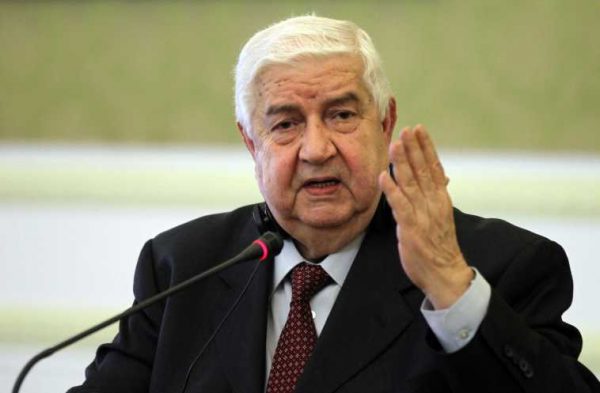
Syria’s Deputy Prime Minister and Foreign Minister Walid Muallem has stated that once the conflict against terrorist groups is finished in Syria, Damascus will be willing to politically negotiate internal autonomy for Syrian Kurds.
Reuters quotes Muallem, who delivered Syria’s address to the United Nations, as stating,
“This topic (Kurdish autonomy) is open to negotiation and discussion and when we are done eliminating Daesh (aka ISIS), we can sit with our Kurdish sons and reach an understanding on a formula for the future”.
There are several geo-political implications to this statement.
1. Seizing the initiative from the US occupiers
First and foremost, Muallem’s proposals take the wind out of the sails of the United States. As I wrote previously in The Duran, with Syria and Russia quickly securing control over areas east of the River Euphrates, the US is being squeezed out of Syria.
Bearing these realities in mind, one of the only options the US has left is to use the Kurdish national cause in order to foment either a new puppet state in the region that is built on stolen Syrian territory or else create a permanently occupied entity similar to the Serbian Autonomous Province of Kosovo and Metohija. Apart from this, the US will have no choice but to either leave Syria or directly confront the Syrian Arab Army and most likely, also its Russia ally. Presently, the US seems unwilling to confront Russia by any means other than through the US of proxy/terrorist forces and this is unlikely to change.
However, given the extreme backlash against Kurdish separatism in Iraq, the US would not only retain old enemies but gain new ones, particularly in the form of Turkey. Ankara is vocally opposed to Kurdish separatism in Iraq and has threatened to take all measures necessary to stop moves in this direction. Turkey has an even worse relationship with Syrian Kurds. This would automatically mean that the US would be in for a very difficult ride if they backed Kurdish separatism in Syria.
With Turkey’s President Erdogan specifically telling Iraqi Kurds “The Israel flag will not save you”, Syria’s proposals would be a geo-strategic blow not only to the US but also to Israel.
2. Separating SDF terrorists from civilian Kurds with Syrian citizenship
The Arab Socialist Ba’ath party has already given Syrian Kurds full citizenship rights which means that they are co-equals to Arabs as well as to other minorities including Assyrians and Armenians, both of whom are grateful to the pluralistic Ba’athist government for protecting them from foreign funded Sunni supremacist terrorism.
While it is clear that the Kurdish fronted SDF proxy militia is operating as a terrorist force in Syria, the old line about separating terrorists from moderates could work in a post-war scenario where the SDF has been defeated in certain regions and rendered irrelevant in others.
In exchange for negotiated autonomy, one which would clearly have to protect the rights of Arabs in ‘Kurdish regions’ of an Arab Republic, Syria could force Kurdish leaders to weed out those who have collaborated with foreign powers and create a new political paradigm for Kurds in Syria.
This would give the moderate Kurds what they want, it would protect the human rights of Arabs and Syrian minorities and it would allow Syria to further purge her soil of terrorists and enemy collaborators.
3. Leverage with Turkey
Unlike Iraq which is currently collaborating with Turkey in military drills bordering separatist regions of Iraq, Syria has no plans to engage with Turkey after years of Turkey’s participation in the pro-jihadist war against Syria.
However, in actively preventing the formation of a Kurdish state in Syria through a negotiated settlement which Turkey’s new found partner Russia could possibly help to broker, Syria could effectively end the current ‘Kurdish excuse’ which is being subtly invoked by Turkey to justify its continued presence in Syria.
Furthermore, Syria could, possibly again via Russia, offer Turkey assurances that Syria will not allow for PKK activity directed against Turkey to foment on Syrian soil. This would be in the best interests of peace in the region as Turkey and Syria both need to eventually come to terms with the fact that they are neighbours.
Historically, Syria’s traditional regional adversaries have been Israel and Jordan and more recently the extremist Arab states of the Persian Gulf. These are the states Syria must be on guard against when looking to the wider future. Because of this, Syria and Turkey will and should slowly but surely normalise relations.
4. Containing Iraqi Kurds
While Iraqi Kurds are politically at odds with their Kurdish counterparts, there exists a fear that the menacing separatist movement in Iraq could lead towards a greater Kurdish push for a multi-state land grab which would be supported by Israel, especially where Syria and Iran are concerned.
If, as is expected, Turkey sends its troops into northern Iraq, it would send a message to the wider Kurdish movement that Kurdish independence equals creating not a greater Kurdistan but a greater Turkey.
Thus, the example of Iraq when viewed simultaneously with the generous offer from Syria, may lead to moderate elements within the Syrian Kurdish movement making the pragmatic choice for guaranteed autonomy versus the prospect of Turkish domination.
Conclusion
Far from being a concession, it was always expected that after the present conflict against imperialism and imperialist funded jihad, Syria would happily engage in a political process with various parts of the Syrian population, including Kurds, in order to develop a settled internal peace.
Syria, in announcing this now however, sends a strong message to radical Kurds and the United States. The message is clear, Syria is a sovereign country and the Kurdish issue is a purely internal matter.
653,249 people were arrested in the US last year for breaking marijuana laws
By Mark Frauenfelder – Boing Boing – September 25, 2017
One person gets arrested for marijuana possession every 71 seconds in the United States, according to the Federal Bureau of Investigation’s annual Crime In the United States (CIUS) report. This is great news to drug cartels, police departments, racists, corrupt politicians, the prison industry, and the involuntary rehab clinic racket. It’s bad news for everybody else.
“Arresting and citing nearly half a million people a year for a substance that is objectively safer than alcohol is a travesty,” said Morgan Fox, director of communications for the Marijuana Policy Project. “Despite a steady shift in public opinion away from marijuana prohibition, and the growing number of states that are regulating marijuana like alcohol, marijuana consumers continue to be treated like criminals throughout the country. This is a shameful waste of resources and can create lifelong consequences for the people arrested.”
There are currently eight states that regulate marijuana similarly to alcohol for adults, four of which voted to do so in November 2016. Marijuana possession is also legal for adults in the District of Columbia. Twenty-three states and D.C. considered legislation in 2017 to regulate marijuana, including in Vermont where the legislature approved such a measure before the governor vetoed it. “Regulating marijuana for adults creates jobs, generates tax revenue, protects consumers, and takes money away from criminals,” Fox continued. “It is time for the federal government and the rest of the states to stop ruining peoples’ lives and enact sensible marijuana policies.”
UPDATE: Data omitted from original analysis shows 653,249 marijuana arrests in 2016. Some reporting law enforcement agencies do not distinguish between types of drug arrests or possession and distribution violations.
No place for Ukraine in EU, Hungary says after Kiev outlaws education in minority languages
RT | September 26, 2017
Hungary has pledged to obstruct Ukraine’s EU integration at every step after Kiev adopted a new education law which bans teaching children in any language other than Ukrainian. Ukraine’s neighbors call it a form of persecution of minorities.
“Hungary will block all steps within the European Union that would represent a step forward in Ukraine’s European integration process in the spirit of the Eastern Partnership program,” Hungarian Minister of Foreign Affairs and Trade Péter Szijjártó said in a statement on Tuesday.
The statement came after Ukrainian President Petro Poroshenko signed into law a controversial bill which in essence bans state schools in Ukraine from teaching children in any language other than Ukrainian. Under the law, next year only children in grades 1-4 would be allowed to learn the curriculum in their native tongues in Ukraine, and by 2020 even that will no longer be legal.
The law is expected to affect at least 400,000 children studying in 735 state schools which offer instruction in minority languages. The majority of these children are ethnic Russians, but other minorities in Ukraine include Romanians, Hungarians, Moldovans, and Poles. The law provides minor concessions for “EU languages,” English, and some minorities that have no national states of their own.
Poroshenko claimed that the new law “strengthens the role of the Ukrainian language in education” while protecting the rights of all minorities. But some nations, like Hungary, do not seem to be convinced, with Budapest calling the move “a stab in the back” from Ukraine after the bill was adopted by the Ukrainian parliament earlier in September.
Romania made a similarly critical statement and cancelled a state visit to Ukraine by President Klaus Werner Iohannis in protest last week. Bucharest also refused to host a parliamentary delegation from Ukraine, saying the visit no longer had any purpose.
Moldova’s maverick President Igor Dodon said Ukraine’s Moldovan and Romanian minorities risked “denationalization” under the new law and called on Kiev to block it.
The Russian Foreign Ministry said in a statement that the new law is unconstitutional and violates the rights of millions of ethnic Russians living in the country.
The language issue is highly political in Ukraine. After a violent coup in Kiev replaced its elected government in 2014, one of the first acts of the new government was to scrap a law which allowed regions to adopt Russian as a second official language. The decision was later overturned, but by that time it had already triggered an uprising in the predominantly Russian eastern regions of Ukraine, leading to a bloody military crackdown by Kiev.
While the language provisions of the new law gained the most publicity, critics of the legislation complain about other parts, as well. The law reduces the number of obligatory subjects in Ukrainian state schools from 22 to 9. Among other things, physics, chemistry, biology, geography, and astronomy will be combined into one subject. Critics fear these changes will negatively affect the level of education in the country.
Inquiry Into Death of Russian Lt. Gen. Asapov Shows Data Leaks to Daesh – Source
Sputnik – September 26, 2017
The preliminary investigation into the death of Russian Lieutenant-General Asapov near Syrian Deir ez-Zor has shown data leaks to Daesh, a source in the Syrian security forces told Sputnik.
“The results of a preliminary investigation into the death of general Asapov in Deir ez-Zor evidences a leak of information on his location to the side that carried out the attack,” the source said.
Lieutenant-General Valery Asapov died on Sunday after sustaining a “fatal injury” in a Daesh shelling near Deir ez-Zor, according to the Russian Defense Ministry.
Asapov was a member of the group of Russian military advisers providing Syrian commanders with assistance during the operation aimed at the liberation of the city of Deir ez-Zor.
Commenting on the incident, Russian Deputy Foreign Minister Sergei Ryabkov on Monday that the death of Asapov is the price that Russia paid for the “duplicity” of the United States in actions aimed at resolving the crisis in the region.
Meanwhile, the Russian Defense Ministry circulated an aerial footage of the areas where Daesh militants were stationed near Deir ez-Zor, clearly showing US special forces’ military vehicles at strongholds previously fortified by terrorists.
Leaked Descriptions Of Infamous “Russia Ads” Derail Collusion Narrative “They Showed Support For Clinton”
By Tyler Durden | Zero Hedge | September 25, 2017
That was quick.
Less than a week after Facebook agreed to turn over to Congressional investigators copies of the 3,000-odd political advertisements that the company said it had inadvertently sold to a Russia-linked group intent on meddling in the 2016 presidential election, the contents of the ads have – unsurprisingly – leaked, just as we had expected them to.
Congressional investigators shared the information with Special Counsel Robert Mueller’s team, which has repeatedly allowed information about its investigation into whether members of the Trump campaign actively colluded with Russian operatives to leak to the press. Once this happened, we knew it was only a matter of time before the ads became part of the public record.
And, shockingly, descriptions of the ads provided to the Washington Post hardly fit the narrative that Democratic lawmakers have spun in recent weeks, claiming the ads – which didn’t advocate on behalf of a specific candidate, but rather hewed to political issues like abortion rights – were instrumental in securing Trump’s victory.
After initially denying the story this spring, Facebook came clean earlier this month, saying its investigators had discovered that the company sold at least $100,000 worth of ads – and possibly as much as $150,000 – to a Russia-linked group that bought the ads through 470 phony Facebook pages and accounts.
WaPo reports that the ads represented issues on both sides of the ideological spectrum, which would suggest that the buyers didn’t intend to support a specific candidate, but rather their own unique agenda.
The batch of more than 3,000 Russian-bought ads that Facebook is preparing to turn over to Congress shows a deep understanding of social divides in American society, with some ads promoting African-American rights groups including Black Lives Matter and others suggesting that these same groups pose a rising political threat, say people familiar with the covert influence campaign.
The Russian campaign — taking advantage of Facebook’s ability to simultaneously send contrary messages to different groups of users based on their political and demographic characteristics – also sought to sow discord among religious groups. Other ads highlighted support for Democrat Hillary Clinton among Muslim women.
Of course, support for Hillary Clinton among minority groups was less enthusiastic than it was for Barack Obama, suggesting that the ads perhaps weren’t as effective as some Democratic lawmakers would have voters believe. Despite the innocuous description, WaPo insisted on reporting that the ads were meant to “sow discord” among different voting blocs that supported Clinton. The paper of record also reported that the targeted messages “highlight the sophistication of an influence campaign slickly crafted to mimic and infiltrate US political discourse”… again without explaining exactly how they accomplished this.
These targeted messages, along with others that have surfaced in recent days, highlight the sophistication of an influence campaign slickly crafted to mimic and infiltrate U.S. political discourse while also seeking to heighten tensions between groups already wary of one another.
Yet, WaPo reports that the “nature and detail” of the ads has bothered investigators at Facebook and the Justice Department, as well as those working on behalf of the Congressional committees that are conducting independent investigations. The House and Senate Intelligence committees plan to begin reviewing the Facebook ads in the coming weeks.
Furthermore, the paper ran quotes from Sen. Mark Warner and Rep. Adam Schiff, two of the most vocal proponents of the Russia election-hacking conspiracy theory (it is only a theory, after all), describing the ads as part of a sinister effort to undermine the democratic process.
“Their aim was to sow chaos,” said Sen. Mark R. Warner (D-Va.), vice-chairman of the Senate Intelligence Committee. “In many cases, it was more about voter suppression rather than increasing turnout.”
The top Democrat on the House Intelligence Committee, Rep. Adam Schiff of California, said he hoped the public would be able to review the ad campaign.
“I think the American people should see a representative sample of these ads to see how cynical the Russian were using these ads to sow division within our society,” he said, noting that he had not yet seen the ads but had been briefed on them, including the ones mentioning “things like Black Lives Matter.”
For a story that’s supposed to be about the content of political advertisements that are now at the center of a widely followed investigation (much like Don Jr.’s meeting with a Russian lawyer and her entourage in Trump Tower was just a month ago), the WaPo story includes scant details about their contents. For whatever reason, the paper neglected to publish photos of the ads.
We imagine that whoever leaked the story probably figured that once readers see the ads and realize they’re indistinguishable from the rest of the political ad copy running on Facebook, voters will quickly lose interest.
However, that didn’t stop one expert from offering some helpful “context” meant to feed the hysteria without saying anything conclusive. As the paper notes, the expert quoted hasn’t even seen the ads.
While Facebook has downplayed the impact of the Russian ads on the election, Dennis Yu, chief technology officer for BlitzMetrics, a digital marketing company that focuses on Facebook ads, said that $100,000 worth of Facebook ads could have been viewed hundreds of millions of times.
“$100,000 worth of very concentrated posts is very, very powerful,” he said. “When you have a really hot post, you often get this viral multiplier. So when you buy this one ad impression, you can get an extra 20- to 40-times multiplier because those people comment and share it.”
Watts, the Foreign Policy Research Institute fellow, has not seen the Facebook ads promised to Congress, but he and his team saw similar tactics playing out on Twitter and other platforms during the campaign.
With little else to cling to, it appears that investigators – not to mention Trump’s critics – have invested so much in the Facebook interference narrative (not to mention Paul Manafort’s dealings with pro-Russian oligarchs), that admitting they were wrong would just be too damaging.
Featured Video
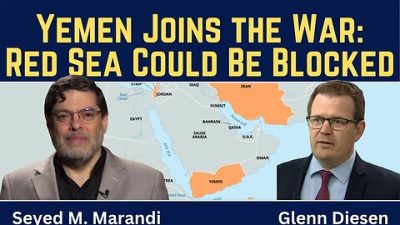
Yemen joins the war – Red Sea could be blocked next – Saudi regime at risk
or go to
Aletho News Archives – Video-Images
From the Archives
Should Europeans ‘Thank’ the Americans for Destroying Nord Stream?
By Robert Bridge | Strategic Culture Foundation | September 29, 2022
With an investigation continuing into the destruction of the Nord Stream gas pipeline that provided energy supplies to Europe from Russia, there appears to be just one prime suspect, and that should surprise nobody.
Following the sabotage of the Nord Stream 1 and 2 gas pipelines, former Polish Foreign Minister Radoslaw Sikorski already seemed to know the identity of the perpetrator when he tweeted out: “Thank you, USA.”
At first glance, it seemed that Sikorski was speaking sarcastically, berating Washington for carrying out an attack that will have severe repercussions for the people of Europe. After all, how could anyone see any good coming from the termination of Europe’s primary source of gas reserves with winter just around the corner? It was Sikorski’s homeland of Poland, after all, that urged its citizens to collect firewood in the face of dwindling gas reserves.
In fact, the Polish diplomat was speaking one-hundred percent literally… continue
Blog Roll
 Aletho News
- US should start removing its troops for Germany, proposes AfD co-leader Chrupalla
- Iran Red Crescent: 600 educational centers attacked in US-Israeli ‘war crimes’
- Russian Oil Tanker Arrives in Cuba Amid U.S. Blockade
- America Racing to Strategic Defeat in Iran: Lt Col Daniel Davis
- FTC Warns Visa, Mastercard, PayPal, Stripe Over Political Debanking
- Russian tanker approaches Cuba despite US oil blockade
- Marandi: Yemen joins the war – Red Sea could be blocked next – Saudi regime at risk
- Pro-Palestinian French member of European Parliament denied entry to Canada
- Pakistan to Host US-Iran Talks
- How Indonesia’s tilt toward the US left it stranded in the Strait of Hormuz
- If Americans Knew
- Israeli police block Catholic cardinal from entering Church of the Holy Sepulchre on Palm Sunday
- Israel is assassinating journalists again, more than any other nation, anywhere, ever – Not a ceasefire Day 170
- Over 300 US service members wounded, majority have brain injuries – Not a ceasefire Day 169
- Researchers at Human Rights Watch Resign Over Blocked Report on Palestinian Refugee Return
- Jewish Groups Are Backing a War Americans Don’t Want
- Eric Fingerhut Thinks He’s the President of the Jews
- Top Jewish Philanthropists, Rabbis Urge Israeli President to Take Action Against ‘Jewish Extremists’
- Don’t Be Fooled. Zionist Leaders Have Always Wanted to Control Southern Lebanon
- Israel’s widespread use of torture is a core element of its genocide against the Palestinian people
- In Israel’s War on Iran, Many Middle East US Bases Rendered “All But Uninhabitable”
- No Tricks Zone
- New Study Finds Warming Saves Lives…Cold Temperatures 12 Times More Deadly Than Excess Heat
- German Science Blog Accuses PIK Climate Institute Of Hallucinating Climate Tipping Points
- Devastating Assessment Of Comirnaty Vaccine By Former Senior Pfizer Europe Toxicologist
- New Study: CO2 Is ‘Effectively Negligible’ As An Explanatory Climate Change Factor Since 2000
- Former Pfizer Toxicologist Dr. Helmut Sterz Tells Bundestag Hearing Pfizer Vaccine Should Have Never Been Approved
- Energy Expert: Germany’s Nuclear Phaseout Was A “500 Billion Euro Mistake”
- New Research: South Australia’s Mid-Holocene Sea Surface Temperatures Were 4°C Warmer Than Today
- Storing Green Energy To Last Germany 10 Days Would Require A 60-Million Tonne Battery
- New Studies: UK Sea Levels Were 4 Meters Higher Than Today During The Mid-Holocene
- Destructive Green New Deal: German Energy And Metal Group Warns Of Drastic Crisis
 Aletho News