More on Imran Awan
Where are all those congressional emails?
By Philip Giraldi • Unz Review • September 26, 2017
I wrote an article on the strange case of Imran Awan about two months ago. To summarize it briefly, Awan, his two brothers and wife, naturalized U.S. citizens born in Pakistan living in the Washington DC area, found employment as IT administrators in the House of Representatives working for as many as 80 Democratic Party congressmen. Even though they may have had little actual training in IT, they insinuated themselves into the system and were paid in excess of $5 million over the course of ten years, chief-of-staff level pay, while frequently not even showing up for work. They even brought into the arrangement a frequent no-show Pakistani friend whose prior work history consisted of getting recently fired by McDonald’s.
Along the way, their security files were never reviewed. They were involved in bankruptcies, bank fraud and other criminal activity, but their troublesome behavior was never noticed. They were on bad terms with their father and step-mother, which including forging a document to cheat their step-mother of an insurance payment and even holding her “captive” so she could not see their dying father. Their father even changed his last name to dissociate himself from them.
Imran Awan, the leader of the group, worked particularly for Congresswoman Debbie Wasserman-Schultz, who was, at the time, also the Chairman of the Democratic National Committee. Though he had no clearance and was not supposed to work with classified material, he and his family obtained password access to congressional files and Imran himself was able to enter Wasserman-Schultz’s own personal iPad computer which linked to the server used by the Democratic National Committee.
As of February 2016, the Awans came under suspicion by the Capitol Hill Police for having set up an operation involving double billing as well as the possible theft and reselling of government owned computer equipment. It was also believed that they had somehow obtained entry to much of the House of Representatives’ computer network as well as to other information in the individual offices’ separate computer systems that they were in theory not allowed to access. It was also believed that Imran sent “massive” quantities of stolen government files to a remote personal server. It may have been located in his former residence in Lorton, Virginia. The police began an investigation and quietly alerted the congressmen involved that there might be a problem. Most stopped employing the Awan family members and associates, but Wasserman-Schultz kept Imran on the payroll until the day after he was actually arrested.
Imran was arrested on July 25th at Dulles Airport as he was flying to Pakistan to join his wife Alvi, who had left the country with their children and many of their possessions in March. In January, they had also wired to Pakistan $283,000 that they had obtained fraudulently from the Congressional credit union. After his arrest, Imran was defended by lawyer Chris Gowen, a high-priced $1,000 an hour Washington attorney who has worked for the Clintons personally, the Clinton Foundation and the Clinton Global Initiative.
There are many questions regarding the Awan case. One might reasonably ask how foreign-born IT specialists are selected and vetted prior to being significantly overpaid and allowed to work on computers in congressional offices. And the ability of those same individuals to keep working even after the relevant congressmen have been warned that their employee was under investigation has to be explained beyond Wasserman-Schultz’s comment that Awan had not committed any crime, which may have been true but one would expect congressmen to err on the side of caution over an issue that could easily have national security ramifications. And how does a recently bankrupt and unemployed Imran Awan wind up with a high-priced Clinton-connected lawyer to defend himself?
As the story involves possible espionage, fraud and even something new to consider regarding the theft of information from the DNC server, one might have expected the Fourth Estate to wake from its slumber and take notice. But perhaps not surprisingly there has been astonishingly little follow-up in the mainstream media about the Awan family, possibly because it involves some leading Democrats, though the Daily Caller and some other conservative sites have stayed on top of developments.
Since his arrest Imran Awan has had his passports confiscated by the court and has been released on bail on condition that he wear an ankle monitor at all times and not travel more than 50 miles from the Virginia home where he is staying with a relative. In early September, he sought to have the monitor removed and his passports returned so he could travel to Pakistan and visit his children. His plea was rejected. He is not yet scheduled for trial on the allegations of bank fraud and is apparently still under investigation by the Bureau relating to other possible charges, including possible espionage. His four accomplices are also still under investigation but have not been charged. They are on a watch list and will not be allowed to leave the United States while the inquiry is continuing.
It has also been learned that Imran had been on the receiving end of complaints filed with the Fairfax County Virginia police in 2015-6 by two women who resided in separate apartments in Alexandria that are reportedly paid for by Imran Awan. Both of the women complained of abuse and one is believed to be a “second wife” for Imran Awan, legal in Pakistan but illegal in the United States. Imran reportedly divorced his second wife shortly after his arrest.
In a surprise development, investigative journalists have also determined that Imran Awan retained as of the end of August a still-active secret, numeric email account on the House of Representatives server. E-mail accounts in Congress normally are labeled using the holder’s name, so all active accounts are identity-linked as a security measure. In this case the numeric account was linked to the actual account of a House staffer who works on national security issues for Andre Carson, a Democrat from Indiana. Imran Awan clearly has been using the anonymous House of Representatives address as it was cited in a suit filed by a landlord seeking unpaid rent on an apartment rented for his second wife in Alexandria.
The most significant recent development in the Awan case is, however, the decision made by Imran’s wife Alvi to return to the United States at the end of this month. She has been charged as a co-conspirator relating to the bank fraud that her husband was also involved in, which potentially could result in some jail time. There are, however, reports that she has been interviewed several times in Pakistan by FBI agents and has apparently agreed to a plea bargain to tell all she knows about what went on with the Awan family. Some on Capitol Hill believe that what she knows could prove to be explosive, not only regarding the lax security practices in Congress but also in terms of Debbie Wasserman-Schultz’s negligence in providing access to the DNC server. The actual whereabouts of the large quantity of stolen government documents might also be resolved.
This story, which is still unfolding, continues to have the potential to blow wide open the complacent culture on Capitol Hill and it also might ruin the reputations of a number of leading Democrats. Stay tuned!
Russian MoD Refutes Reports About Strikes on Settlements in Idlib Province
Sputnik – September 26, 2017
MOSCOW – Russian Defense Ministry spokesman Maj. Gen. Igor Konashenkov denied on Tuesday the claims of the UK-based Syrian Observatory for Human Rights about alleged strikes of the Russian Aerospace Forces on settlements in Syria’s Idlib province.
“The aircraft of Russian Aerospace Forces do not strike settlements in the Syrian Arab Republic. The statements of the Observatory citing unnamed ‘witnesses’ and ‘volunteers’ are unsubstantiated as usual and serve as ‘information cover-up’ for actions of Al Nusra Front [a terrorist group] militants,” Konashenkov said.
He said that over the past 24 hours, the Russian jets carried 10 strikes on terrorists positions in the Idlib province following reconnaissance sorties of drones and additional confirmation through other channels.
Konashenkov explained that the targets included underground bases of militants, located far from residential neighborhoods, field ammunition depots, armored vehicles, multiple launch rocket systems and sweatshops for loading guns on cars which were used during both preparations and offensive of the terrorists against positions of the Russian military police in the north of Hama province in order to take Russian servicemen hostage. He noted that the ministry had the objective monitoring data for all the strikes.On Wednesday, the Russian General Staff said that Nusra Front launched the attack with support of artillery, tanks and infantry fighting vehicles on September 19 and managed to penetrate Syrian army defenses to the depth of some 7.5 miles. The General Staff added that the offensive was initiated by US special services to stop the Syrian Army advance east to Deir Ez-Zor.
Washington Post Pushes More Dubious Russia-bashing
By Robert Parry | Consortium News | September 25, 2017
Some people are calling the anti-Russian hysteria being whipped up across the U.S. mainstream news media a new “golden age of American journalism,” although it looks to me more like a new age of yellow journalism, prepping the people for more military spending, more “information warfare” and more actual war.
Yes, without doubt, President Trump is a boorish and dangerous demagogue, now highlighted by his reckless speech before the United Nations last week, his schoolyard Tweet taunts toward North Korean leader Kim Jong Un, and his ugly denunciation of black athletes for protesting against police killings of often unarmed African-Americans.
And, yes, I know that some people feel that the evidence-lite and/or false allegations about “Russian meddling” are the golden ticket to Trump’s impeachment. But the unprofessional behavior of The New York Times, The Washington Post and pretty much the entire mainstream media regarding Russia-gate cannot be properly justified by the goal of removing Trump from office.
Ethically in journalism, the ends – however much you might wish them to succeed – cannot justify the means, if those means involve violating rules of evidence and principles of fairness. Journalism should be a place where all sides get a fair shake, not where some get a bum’s rush.
But the U.S. mainstream media has clearly joined the anti-Trump Resistance and hates Russian President Vladimir Putin, too. So, we are given such travesties of journalism as appeared as a banner headline across the front page of Monday’s Washington Post, another screed about how Russia supposedly used Facebook ads to flip last November’s election for Trump.
The article purports to give the inside story of how Facebook belatedly came to grips with how the “company’s social network played a key role in the U.S. election,” but actually it is a story about how powerful politicians bullied Facebook into coming up with something – anything – to support the narrative of “Russian meddling,” including direct interventions by President Obama and Sen. Mark Warner of Virginia, the ranking Democrat on the Senate Intelligence Committee and a key legislator regarding regulation of high-tech industries.
Finding the ‘Evidence’
In other words, Facebook was sent back again and again to find what Obama and Warner wanted the social media company to find. Eventually, Facebook turned up $100,000 in ads from 2015 into 2017 that supposedly were traced somehow to Russia. These ads apparently addressed political issues in America although Facebook has said most did not pertain directly to the presidential election and some ads were purchased after the election.
Left out of the Post’s latest opus is what a very small pebble these ads were – even assuming that Russians did toss the $100,000 or so in ad buys into the very large lake of billions of dollars in U.S. political spending for the 2016 election cycle. It also amounts to a miniscule fraction of Facebook’s $27 billion in annual revenue.
So the assertion that this alleged “meddling” – and we’ve yet to see any evidence connecting these ads to the Russian government – “played a key role in the U.S. election” is both silly and outrageous, especially given the risks involved in stoking animosities between nuclear-armed Russia and nuclear-armed America.
Even the Post’s alarmist article briefly acknowledges that it is still unclear who bought the ads, referring to the purchasers as “suspected Russian operatives.” In other words, we don’t even know that the $100,000 in ads over three years came from Russians seeking to influence the U.S. election. (By comparison, many Facebook advertisers – even some small businesses – spend $100,000 per day on their ads, not $100,000 over three years.)
But this diminutive effort by “suspected Russian operatives” doesn’t stop the Post from going on and on about “fake news” and “disinformation,” albeit again without offering evidence or specifics of any Russian “fake news” or “disinformation.”
It has simply become Official Washington’s new groupthink to say that everything linked to Russia or its international TV network RT is “fake news” or “disinformation” even though examples are lacking or often turn out to be false accusations themselves.
For instance, there is nothing in the Post’s article acknowledging that nothing from the various Democratic email disclosures, which have been blamed on Russia (again without real evidence), has been identified as untrue. So, how can truthful information, whether you like how it was obtained or not, be “fake news” or “disinformation”?
Falsehood as Fact
But Monday’s Post exposé simply asserts the claim as flat fact. Or as the article asserts: “what Russian operatives posted on Facebook was, for the most part, indistinguishable from legitimate political speech. The difference was the accounts that were set up to spread the misinformation and hate were illegitimate.”
In responsible journalism, such an accusation would be followed by a for-instance, giving an example of “the misinformation and hate” that the “Russian operatives” – note how they have been magically transformed from “suspected Russian operatives” to simply “Russian operatives” – were disseminating.
But there is no example of the Russian “misinformation and hate,” a classic violation of the reporting principle of “show, don’t tell.” In this story, it’s all tell and no show.
Indeed, what is shown in the article is often contradictory to the story’s conclusion. The article says, for instance, “A review by the company found that most of the groups behind the problematic pages had clear financial motives, which suggested that they weren’t working for a foreign government. But amid the mass of data the company was analyzing, the security team did not find clear evidence of Russian disinformation or ad purchases by Russian-linked accounts.”
So, Facebook initially – after extensive searching – did not find evidence of a Russian operation. Then, after continued pressure from high-level Democrats, Facebook continued to scour its system and again found nothing, or as the Post article acknowledged, Facebook “had searched extensively for evidence of foreign purchases of political advertising but had come up short.”
That prompted Warner to fly out to Silicon Valley to personally press Facebook executives to come up with the evidence to support the Democrats’ theory about Russia paying for carefully targeted anti-Clinton ads in key districts.
The Post’s article reported that “Finally, [Facebook Chief Security Officer Alex] Stamos appealed to Warner for help: If U.S. intelligence agencies had any information about the Russian operation or the troll farms it used to disseminate misinformation, they should share it with Facebook. The company is still waiting, people involved in the matter said.”
Under Pressure
Still, faced with extraordinary pressure from senior Democrats, Facebook finally delivered the desired results, or as the Post reported, “By early August, Facebook had identified more than 3,000 ads addressing social and political issues that ran in the United States between 2015 and 2017 and that appear to have come from accounts associated with the [St. Petersburg, Russia-based] Internet Research Agency.”
So, the ads covering three years, including post-election 2017, only “appear” to be “associated” with some private Russian operation that only allegedly has ties to the Kremlin. And the total sums of the ad buys are infinitesimal compared to what it actually takes to have any real impact on Facebook or in a U.S. presidential election.
If the context of this story were changed slightly – say, it was about the U.S. government trying to influence public opinion in another country (which actually does happen quite a bit) – the Post would be among the first news outlets to laugh off such allegations or dismiss the vague accusations as a conspiracy theory, but since these allegations fit with the prejudices of the Post’s editors, an entirely different set of journalistic standards is applied.
What the article also ignores is the extraordinary degree of coercion that such high-level political pressure can put on a company that recognizes its vulnerability to government regulation.
As Facebook has acknowledged in corporate filings, “Action by governments to restrict access to Facebook in their countries could substantially harm our business and financial results. It is possible that governments of one or more countries may seek to censor content available on Facebook in their country, restrict access to Facebook from their country entirely, or impose other restrictions that may affect the accessibility of Facebook in their country for an extended period of time or indefinitely. …
“In the event that access to Facebook is restricted, in whole or in part, in one or more countries or our competitors are able to successfully penetrate geographic markets that we cannot access, our ability to retain or increase our user base and user engagement may be adversely affected, we may not be able to maintain or grow our revenue as anticipated, and our financial results could be adversely affected.”
Avoiding Reality
In other words, another way to have framed this story is that powerful politicians who could severely harm Facebook’s business model were getting in the face of Facebook executives and essentially demanding that they come up with something to support the Democratic Party’s theory of “Russian meddling.”
The Democratic leaders wanted this finding as an explanation for Hillary Clinton’s stunning defeat, rather than going through the painful process of examining why the party has steadily lost ground in white working-class areas across the country.
What is missed in these Russia-bashing articles is that the Democratic brand has been sinking for years, including massive losses in statehouses across the country as well as in Congress. The party’s decline was not a one-off event with Donald Trump suddenly snaking away with significant parts of the white working class because the Russians bought some Facebook ads.
However, instead of looking in the mirror, national Democrats demanded that Facebook executives ferret out whatever tiny or imaginary information there might be about some Russians buying Facebook ads – and then allow those coerced findings to be fed into the excuse industry for why Hillary Clinton lost.
And, what about the Post’s repeated accusations about Russia engaging in “disinformation” and “fake news” without offering a single example? Apparently, these assertions have become such articles of faith in the U.S. mainstream media that they don’t require any proof.
However, honest journalism demands examples and evidence, not just vague accusations. The reality is that the U.S. government has stumbled again and again when seeking to paint RT as a disinformation outlet or a vehicle for undermining American democracy.
For instance, the Jan. 6 report on alleged Russian “cyber operations,” released by Obama’s Director of National Intelligence James Clapper, included a lengthy appendix, dated from 2012, which decried RT for such offenses as allowing a debate among third-party presidential candidates who had been excluded from the Republican-Democratic debates; covering the Occupy Wall Street protests; and citing the environmental dangers from “fracking.”
The idea that American democracy is threatened by allowing third-party candidates or other American dissidents to have a voice is at best an upside-down understanding of democracy and, more likely, an exercise in hypocritical propaganda.
False Accusations
Another misfired attempt to discredit RT came from Obama’s Under Secretary of State for Public Diplomacy Richard Stengel, who issued a “Dipnote” in April 2014, which helped establish the narrative of RT as a source of Russian disinformation.
For instance, Stengel claimed that RT reported a “ludicrous assertion” that the United States had spent $5 billion to produce Ukraine’s “regime change” in February 2014.
But what Stengel, a former managing editor of Time magazine, apparently failed to understand was that RT was referring to a public speech by Assistant Secretary of State for European Affairs Victoria Nuland to U.S. and Ukrainian business leaders on Dec. 13, 2013, in which she told them that “we have invested more than $5 billion” in what was needed for Ukraine to achieve its “European aspirations.” In other words, the RT report wasn’t “ludicrous” at all.
Nuland also was a leading proponent of “regime change” in Ukraine who personally cheered on the Maidan demonstrators, even passing out cookies. In an intercepted pre-coup phone call with U.S. Ambassador to Ukraine Geoffrey Pyatt, Nuland discussed who should run the new government and pondered with Pyatt how to “glue” or “midwife this thing.”
So, Stengel was the one disseminating false information, not RT.
Similarly, senior U.S. politicians, including Hillary Clinton, and the U.S. mainstream media have falsely asserted that all 17 U.S. intelligence agencies signed off on the Russia-did-it hacking claims.
For months, that canard was used to silence skepticism. After all, how could you question something that all 17 U.S. intelligence agencies confirmed to be true?
But it turned out that – as DNI Clapper, himself a hardline Russia-basher, belatedly acknowledged – the Jan. 6 report on the alleged Russian hacking was the work of “hand-picked” analysts from only three agencies, the CIA, FBI and NSA, and the “assessment” itself admitted that it was not asserting the Russian conclusion as fact, only the analysts’ opinion.
The New York Times finally retracted its use of the fake claim about “all 17 U.S. intelligence agencies” in late June 2017 although it wouldn’t let the lie lie, so instead the Times made misleading references to a “consensus” among U.S. intelligence agencies without using the number.
Recent studies by former U.S. intelligence experts have punched more holes in the certainty by raising doubts that the email downloads could have been accomplished over the Internet at the recorded speeds and more likely were achieved by an insider downloading onto a thumb drive.
Deciding What’s Real
So who is guilty of “fake news” and “disinformation”?
One positive from the current PBS series, “The Vietnam War,” is that despite its bend-over-backwards attempts to make excuses for the “good faith” decisions by U.S. politicians, no one can watch the series without encountering the chasm between the upbeat Official Story being peddled by the U.S. government and the ghastly on-the-ground reality.
Yet, given how little accountability was meted out then for journalists who served as conveyor belts for pro-war propaganda in Vietnam – or more recently over the fraudulent reporting that rationalized the U.S. aggressive war against Iraq – it is perhaps not surprising that similar false group thinks would coalesce around Russia now.
Careerist journalists understand that there is no danger in running with the pack – indeed, there is safety in numbers – but there are extraordinary risks to your career if you challenge the conventional wisdom even if you turn out to be right. As one establishment journalist once told me, “there’s no honor in being right too soon.”
So, for the Post reporters responsible for the latest journalistic violation of standards – Adam Entous, Elizabeth Dwoskin and Craig Timberg – there will be no penalty for the offense of telling about Russia’s alleged “disinformation” and “fake news” – rather than showing, i.e., providing actual examples. When it comes to Russia these days – as with the Vietcong in the 1960s or Iraq in 2002-03 – you can pretty much write whatever you want. All journalistic standards are gone.
Yet, what is perhaps most insidious about what we are seeing is that – in the name of defending democracy – the U.S. mainstream media is trampling a chief principle of the Enlightenment, the belief that the marketplace of ideas is the best way to determine the truth and to create an informed populace.
The new U.S. mainstream media paradigm is that only establishment-approved views can be expressed; everything else must be suppressed, purged and punished.
For instance, if you question the State Department’s narrative on alleged Syrian government sarin attacks – by noting contrary evidence that points to staged incidents by Al Qaeda’s Syrian affiliate – you are called an “apologist” for Syrian President Bashar al-Assad.
If you question the one-sided State Department narrative regarding the Ukraine coup in 2014 – indeed even if you use the word “coup” – you are denounced as a “Kremlin stooge.”
No ‘Other’ Side
It is now not okay to even consider the other side of these stories, just as it was anathema to suggest that Saddam Hussein’s Iraqi government may have been telling the truth in 2002-03 when it declared repeatedly that it had destroyed its WMDs. That made you a “Saddam apologist.”
The hostility toward Americans who dare question the current anti-Russian hysteria was highlighted by an article last Thanksgiving Day by one of the authors of the new Post article, Craig Timberg.
In another front-page Post story, Timberg allowed an anonymous group called PropOrNot to malign the professionalism and patriotism of 200 Web sites, including our own Consortiumnews, that were lumped together in a McCarthyistic smear that they were somehow guilty of disseminating “Russian propaganda.”
The unnamed accusers – granted anonymity by the Post – acknowledged that they had no evidence that the sites were part of some grand Russian conspiracy but made the judgment based on PropOrNot’s analysis of the Web sites’ content.
In other words, if you questioned the State Department’s narratives on Ukraine or Syria – regardless of how well-supported those critiques were – you got smeared as a “Russian propagandist” – and the Post, which didn’t even bother to contact the accused, considered that sort of analysis to be worthy of its front page.
The story fed into another frenzy about the need to use algorithms and artificial intelligence to hunt down and suppress or purge such dissenting views from the Internet, supposedly to protect the sanctity of American democracy and spare Americans from exposure to “fake news.”
So, well-meaning Americans who may hope that Russia-gate will somehow bring down Trump are getting recruited into a movement that intends to silence dissent and allow the U.S. establishment to dictate what information you will get to see and hear.
And that officially approved “information” will surely lead to new global tensions, more military spending. and additional warfare up to and possibly including nuclear war with Russia.
Investigative reporter Robert Parry broke many of the Iran-Contra stories for The Associated Press and Newsweek in the 1980s.
Majority of Brits think UK should recognise Palestine as a state

MEMO | September 25, 2017
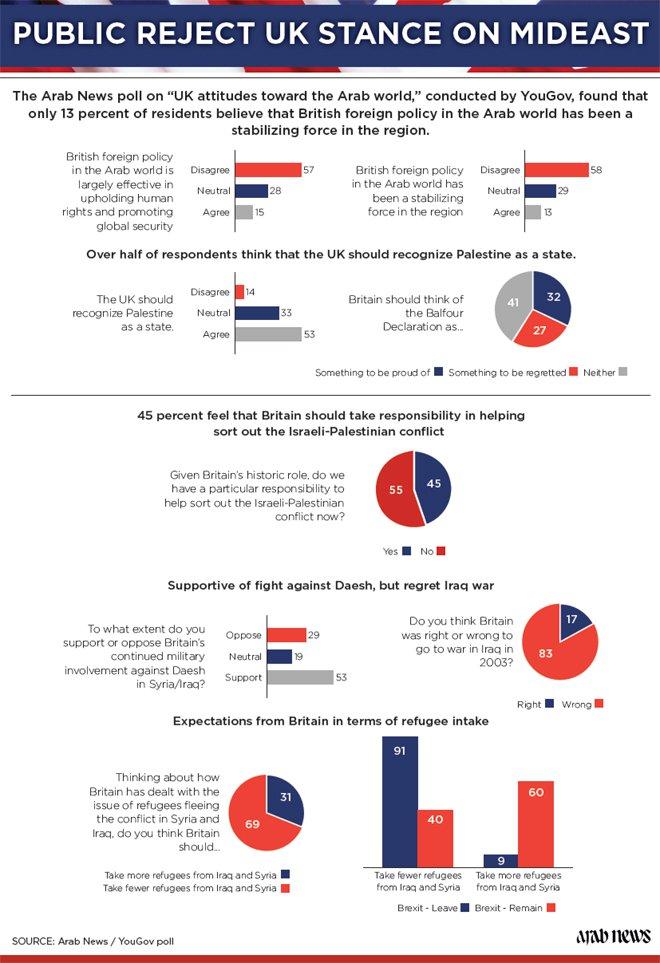
A majority of the British public believe the UK should recognise Palestine as a state, according to the results of a new YouGov poll published Monday.
53 percent of respondents said they agree with such a step, as opposed to just 14 percent who disagreed (33 percent said they were ‘neutral’).
Responding to the poll, Manuel Hassassian, Palestinian ambassador to the UK, said public opinion has been shifting. “I have been here for 11 years and have noticed dramatic changes in the British public’s views on Palestine”, he said.
“That only 14 percent say they wouldn’t want the Palestinian state to receive recognition is an indication of the Palestinian cause worldwide being accepted”, he added.
The poll also addressed views amongst the British public towards the Balfour Declaration, whose centenary will be marked in November.
According to the poll, opinion is deeply divided over the Balfour Declaration: 32 percent of Brits think it is something to be proud of, while 27 percent consider it “something to be regretted” (and 41 percent selected ‘Neither’).
The poll also revealed a partisan divide, with a striking plurality (32 percent) of those who voted Labour in the last election viewing the Balfour Declaration as something to be regretted. Among Conservative voters, on the other hand, 40 percent view the historical document with pride, and only 21 percent with regret.
The poll also asked whether, “given Britain’s historic role”, the country has “a particular responsibility to help sort out the Israeli-Palestinian conflict now”, to which 55 percent responded ‘No’, and 45 percent answered ‘Yes’.
How to End the Korea Crisis
By Ron Paul | September 25, 2017
The descent of US/North Korea “crisis” to the level of schoolyard taunts should be remembered as one of the most bizarre, dangerous, and disgraceful chapters in US foreign policy history.
President Trump, who holds the lives of millions of Koreans and Americans in his hands, has taken to calling the North Korean dictator “rocket man on a suicide mission.” Why? To goad him into launching some sort of action to provoke an American response? Maybe the US president is not even going to wait for that. We remember from the Tonkin Gulf false flag that the provocation doesn’t even need to be real. We are in extremely dangerous territory and Congress for the most part either remains asleep or is cheering on the sabre-rattling.
Now we have North Korean threats to detonate hydrogen bombs over the Pacific Ocean and US threats to “totally destroy” the country.
We are told that North Korean leader Kim Jong-Un is a “madman.” That’s just what they said about Saddam, Gaddafi, Assad, and everyone else the neocons target for US military action. We don’t need to be fans of North Korea to be skeptical of the war propaganda delivered by the mainstream media to the benefit of the neocons and the military industrial complex.
Where are the cooler heads in Washington to tone down this war footing?
Making matters worse, there is very little understanding of the history of the conflict. The US spends more on its military than the next ten or so countries combined, with thousands of nuclear weapons that can destroy the world many times over. Nearly 70 years ago a US-led attack on Korea led to mass destruction and the death of nearly 30 percent of the North Korean population. That war has not yet ended.
Why hasn’t a peace treaty been signed? Newly-elected South Korean president Moon Jae-in has proposed direct negotiations with North Korea leading to a peace treaty. The US does not favor such a bilateral process. In fact, the US laughed off a perfectly sensible offer made by the Russians and Chinese, with the agreement of the North Koreans, for a “double freeze” – the North Koreans would suspend missile launches if the US and South Korea suspend military exercises aimed at the overthrow of the North Korean government.
So where are there cooler heads? Encouragingly, they are to be found in South Korea, which would surely suffer massively should a war break out. While US Ambassador to the United Nations, Nikki Haley, was bragging that the new UN sanctions against North Korea would result in a near-complete blockade of the country (an act of war), the South Korean government did something last week that shocked the world: it announced an eight million dollar humanitarian aid package for pregnant mothers and infant children in North Korea. The US and its allies are furious over the move, but how could anyone claim the mantle of “humanitarianism” while imposing sanctions that aim at starving civilians until they attempt an overthrow of their government?
Here’s how to solve the seven-decade old crisis: pull all US troops out of [South] Korea; end all military exercises on the North Korean border; encourage direct talks between the North and South and offer to host or observe them with an international delegation including the Russians and Chinese, which are after all Korea’s neighbors.
The schoolyard insults back and forth between Donald Trump and Kim Jong-Un are not funny. They are in fact an insult to all of the rest of us!
Germany at a turning point
By M K Bhadrakumar | Indian Punchline | September 25, 2017
The elections to the German Bundestag on Sunday throw up big surprises. Chancellor Angela Merkel will lead the next coalition government, too – her fourth successive win – but in all other respects, the results signify that Germany’s post-World War II politics is at a turning point.
First and foremost, the two mainstream parties that have dominated German politics have now come to represent only 53% of the electorate. The level of fragmentation is stunning for a country that is synonymous with the ‘middle path’. Second, Merkel’s CDU (Christian democrats) has lost support and her coalition partner SPD (social democrats) suffered a humiliating defeat. Third, the right-wing nationalist AfP – reviled as ‘neo-Nazis’ – won over 13% votes and secured 94 seats in the 709-member Bundestag, the first time such a thing is happening in Germany’s post-World War II political history.
Then, there are the sub-plots. The SPD has vowed to sit in the opposition, which means Merkel may have to form the next government with the rightist CSU (Christian socialists) and leftist Green Party as coalition partners, which makes an improbable alliance of convenience. The CDU-led government’s economic policies are likely to be subjected to pulls and counter-pulls from the two coalition partners CSU and Green Party, which are at loggerheads ideologically.
Interestingly, AfP’s main support base happens to be the former communist East Germany and, thus, an ‘East-West’ divide is surfacing after the German unification a quarter century ago.
Again, CDU lost popular support for the wrong reasons. Under the CDU-led government, the German economy did remarkably well. What cost Merkel heavily has been her refugee policies, which have been perceived as appeasement of Muslims opening the door to an influx of Islam in Germany. Merkel eventually took a tougher line on deportations but it was too little, too late. The issues of asylum, integration and deportation and the perceived ‘Islamisation’ of Germany dogged Merkel’s entire election campaign.
The ultra-nationalist AfD framed its campaign on the provocative platform, “Islam does not belong to Germany.” The party’s program calls for a ban on minarets and considers Islam to be incompatible with German culture.
The AfD leader Alexander Gauland has openly called for Germans to reclaim their history: “We have the right to be proud of the achievements of the German soldiers in two world wars.” The outgoing foreign Minister and SPD leader Sigmar Gabriel warned voters ahead of the poll against having “real Nazis in the German Reichstag for the first time since the end of World War Two”. Germany’s Central Council of Jews said its worst fears had come true in Sunday’s election.
The German policies are almost certain to be affected. Merkel will be under pressure to step up deportation of refugees. The AfD has tasted blood and sensing the national mood, it will surely intensify the ultra-nationalist campaign. Surely, the German discourse is poised to become much more homophobic, much more anti-migrant, much more-anti-Muslim. This will cast shadows on Germany’s relations with Turkey.
Again, Merkel’s approach to Russia will be keenly watched. The AfD – like most ultra-nationalists in Europe, is, ironically, “pro-Russia”. If the Russian strategy has been to discredit western democracies and break them into shambles, there ought to be quiet satisfaction in Moscow over what is unfolding in Germany.
At any rate, a weakened Merkel is not a bad thing for Moscow. (President Vladimir Putin and Merkel had an uneasy personal relationship.) Merkel will now be more susceptible from pressures from the German industry, where Russia has influential lobbyists, for normalization of business ties with Moscow.
The biggest impact of the German election will be felt on European integration processes. Merkel has been out on the back foot and she was a flag-carrier EU integration. Germany’s influence within the EU weakens in the period ahead. And, without a strong axis with Germany, France alone cannot lead European integration. In sum, coming on top of Brexit, EU will be rudderless without Germany’s leadership under an assertive Merkel.
Kurdish PKK and YPG’s Hidden Notorious Crimes
By Sarah Abed | American Herald Tribune | September 25, 2107
The Kurdistan Workers’ Party, or PKK, and its Syrian spinoff, the YPG, are cult-like radical movements that intertwine Marxism, feminism, Leninism and Kurdish nationalism into a hodge-podge of ideology, drawing members through the extensive use of propaganda that appeals to these modes of thought.

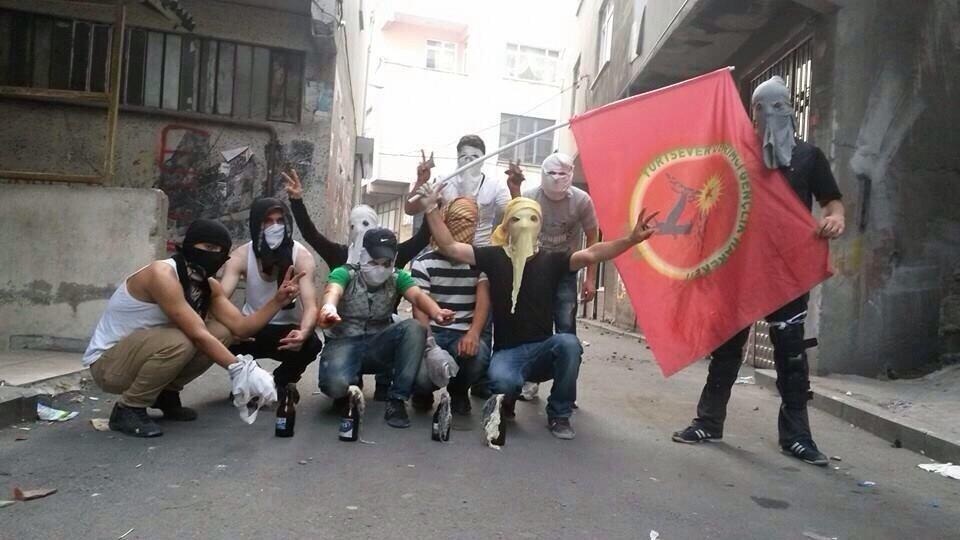
*(PKK Propaganda. Image Credit)
Abdullah Ocalan, the leader of the PKK, took inspiration from American anarchist Murray Bookchin in creating his philosophy, which he calls “Democratic Confederalism.”
The PKK spin-off group YPG represents most of the Syrian Democratic Forces (SDF) in Syria. With Western political support, they have gained popularity and garnered an impressive amount of support from anarchists and military veterans in the West, some of whom have left the comfort of their home countries to fight with the group.
One of their most productive marketing tools has been to use young, attractive female fighters as the face of the guerrillas. During their fight against Daesh, the PKK has saturated the media with images of these young female “freedom fighters,” using them as a marketing tool to take their cause from obscurity to fame. These female fighters in the YPJ are fighting alongside their male counterparts under the direction of the U.S. in the SDF.
Stephen Gowans writes more about this topic in his superb article titled: The Myth of the Kurdish YPG’s Moral Excellence. Here is an excerpt:
In Syria, the PKK’s goal “is to establish a self-ruled region in northern Syria,” [8] an area with a significant Arab population.
When PKK fighters cross the border into Turkey, they become ‘terrorists’, according to the United States and European Union, but when they cross back into Syria they are miraculously transformed into ‘guerrilla” fighters waging a war for democracy as the principal component of the Syrian Democratic Force. The reality is, however, that whether on the Turkish or Syrian side of the border, the PKK uses the same methods, pursues the same goals, and relies largely on the same personnel. The YPG is the PKK.
Child Soldiers forced recruitment, kidnapping, and murder by the PKK and YPG
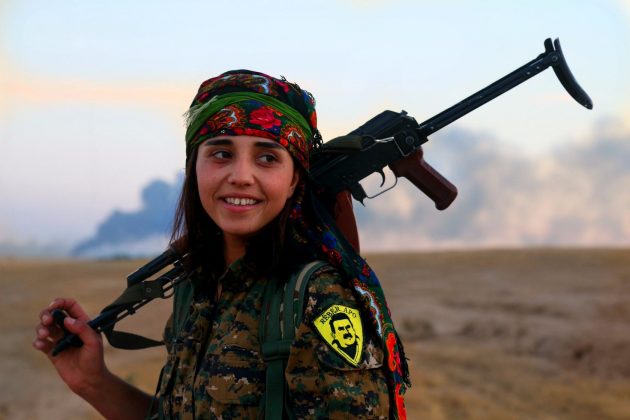
*(Young YPJ Kurdish fighter. Image Credit)
Within the past few years Kurds have gone from almost total obscurity to front page news. What doesn’t get reported however is how these terrorist groups under the guise of being a revolutionary movement for independence have carried out numerous atrocities including kidnappings and murder – not to mention their involvement in trafficking narcotics.
Kurdish families are demanding that the PKK stop kidnapping minors. It started on April 23, the day Turkey marked its 91st National Sovereignty and Children’s Day. While children celebrated the holiday in western Turkey, the Kurdistan Workers Party (PKK) kidnapped 25 students between the ages of 14 and 16 on the east side of the country, in the Lice district of Diyarbakir.
Although the PKK has kidnapped more than 330 minors in the last six months, the Bockum family was the first in the region who put up a tent near their home to start a sit-in protest, challenging the PKK and demanding that it return their son. Sinan was returned to the family on May 4. Al-Monitor reported this incident from the beginning in great detail.
As Bebyin Somuk reported in her article, the PKK and PYD still kidnap children in Turkey and Syria. She states: “As I previously wrote for Kebab and Camel, the PKK commits war crimes by recruiting children as soldiers. Some of the PKK militants that surrendered yesterday were also the PKK’s child soldiers. The photos clearly show that these children are not more than sixteen years old. The Turkish army released video of the 25 PKK militants surrendering in Nusaybin.”
Thousands of children are serving as soldiers in armed conflicts around the world. In 1989, the United Nations Convention on the Rights of the Child, Article 38, proclaimed: “State parties shall take all feasible measures to ensure that persons who have not attained the age of 15 years do not take a direct part in hostilities.” Since then, UNICEF and the UN Security Council took steps to end the recruitment of children in conflict and war.

(Young Kurdish fighters. Image Credit)
The PKK, recognized as a terrorist organization by the U.S. , E.U. , and Turkey
The PKK often recruits children. In the past, the PKK even recruited children as young as 7-12 years. In 2010, a Danish national daily newspaper, Berlingske Tidende, published a story about the PKK’s child soldiers. According to that report, there were around 3,000 young militants in the PKK’s training camps. The youngest child at the PKK training camps was eight or nine years old. They were taught Abdullah Öcalan’s life story (the jailed leader of the PKK) and how to use weapons and explosives.

*(Martyrdom notice for a PYD/YPG child soldier Image Credit)
Despite the Deed of Commitment, the PKK continues to recruit minors.
After that story was published, the PKK encountered strong reactions from human rights organizations worldwide. The same year, UNICEF released a statement voicing its “profound concern” about the PKK’s recruitment of child soldiers. In October 2013, the PKK, represented by HPG (the PKK’s military wing) commander Ms. Delal Amed, signed the Deed of Commitment protecting children in armed conflict. This document, drawn up by the Geneva Call NGO, is dedicated to promoting respect by armed non-state actors for international humanitarian norms in armed conflict. Despite this commitment, the PKK continued to recruit minors.
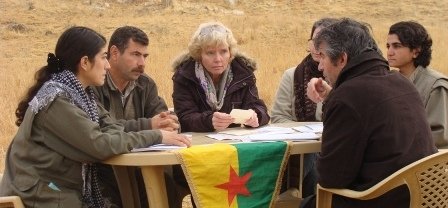
The People’s Defence Forces is the military wing of the Kurdistan Workers’ Party. Image Credit
The PKK abducted children while the peace process was continuing
On March 21, 2013, PKK leader Abdullah Öcalan called for a cease-fire that included the PKK’s withdrawal from Turkish soil and an eventual end to armed struggle. The PKK announced that they would obey, stating that 2013 would be the year of conclusion, either through war or through peace. But that did not happen. Instead, the PKK abducted 2,052 children aged between 12 and 17 while the peace process was still going on, according to Turkish security records. The PKK took these children and trained them. After that, because those childrenwere not involved in any criminal activities, when they were captured by, or surrendered to, Turkish security forces, Turkish courts did not prosecute them, so most of them were released. It was the Turkish state’s goodwill gesture for the sake of the peace process.
However, once released, most of these children joined the YDG-H, the PKK’s new youth wing, and began to perpetrate illegal and/or violent events in Kurdish populated cities and towns. The YDG-H began to emerge in early 2013 and spread rapidly after the peace process’ beginning. Then, after the 7 June 2015 election, the YDG-H began to attack security forces and civilians in cities and towns such as Cizre, or in Diyarbakır’s Sur neighborhood, with heavy weapons, and to dig trenches and erect barricades in side streets.
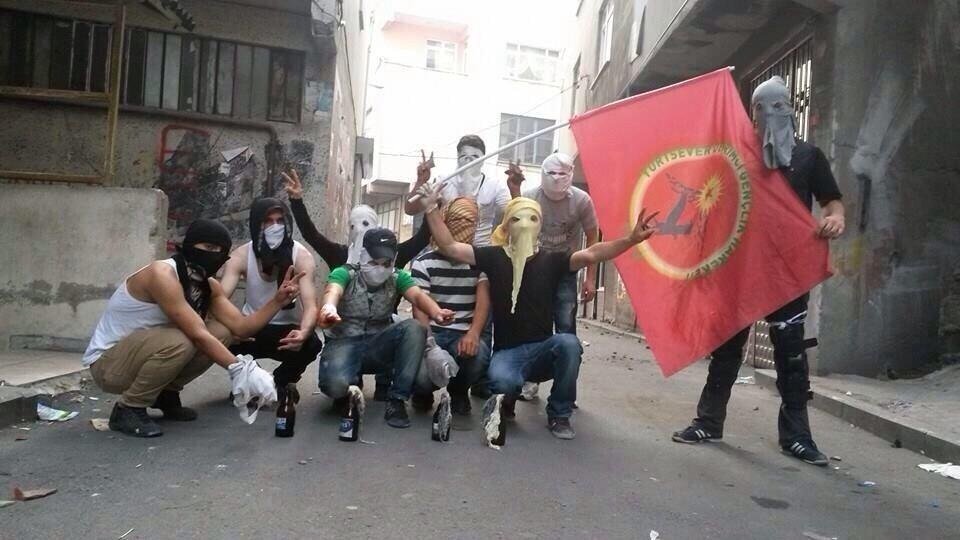
*(YDG H. Image Credit)
A growing number of Kurdish families in Turkey are calling for the return of their children, who they say have been abducted by the Kurdish rebel group, the PKK. The PKK denies the claim, but with the Turkish prime minister stepping in, the issue is putting pressure on an already stalled peace process. Dorian Jones reports from Diyarbakir, the main city in Turkey’s predominantly Kurdish southeast.
The HDP assaulted the mothers demanding their children
In May 2014, mothers from across Turkey whose children had been recruited by the PKK held a sit-in protest in front of the Diyarbakır Metropolitan Municipality building and called on the PKK to release their children. Their children were mostly 14-15 years old at that time. Some families claimed that their sons and daughters were kidnapped by the PKK against their will. The Diyarbakır Municipality, administered by the HDP, used water cannon to disperse the mothers. HDP Co-Chair Selahattin Demirtaş even claimed that these mothers were hired by the Turkish National Intelligence Organization. Despite the resistance coming from the PKK and the HDP, the families continued their protest, and some families’ children were released by the PKK.
The PKK established a child-wing called YPS-Zarok
Another photo from the Yüksekova district shows the child-wing recently established by the PKK called YPS-Zarok (Child) with the headline “YPS-Zarok announcement from the children of the resistance.” The PYD, the PKK’s Syria branch, is also known for its recruitment of child soldiers.
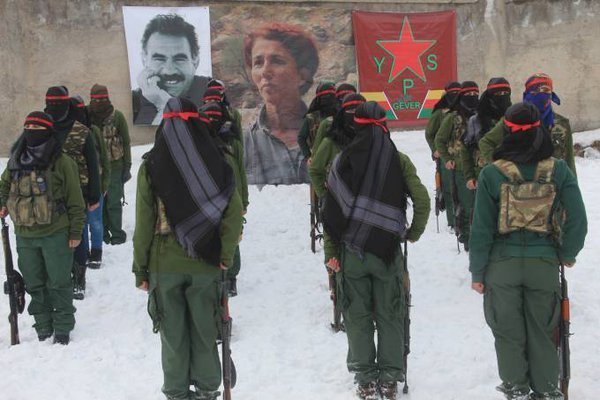
*(YPS. Image Credit)
U.S.’s “reliable partner” the YPG also recruits children
A Human Rights Watch report, “Syria: Kurdish Forces Violating Child Soldier Ban” provides a list of 59 children, ten of them under the age of fifteen, recruited for YPG or YPJ forces since July 2014. International humanitarian law and the Rome Statute that set up the International Criminal Court classify the recruitment of under-15-year-olds as a war crime. While the Obama Administration does not recognize the YPG as a terrorist organization, and supports them as a local partner in the region, the YPG continues to recruit child soldiers.
It’s clear that the U.S. sees the PYD as a “reliable partner” in the fight against ISIS. However, the Obama Administration should notice the fact that the PYD is not an independent organization. It is linked to the PKK and recruiting minors under 18. The decision to found the PYD was made in 2002 during a PKK congress in Qandil. The PYD also has a bylaw stating that “Abdullah Öcalan is the leader of the PYD.”US Special Forces Delta Force, training PYD (Image Credit)
In summary, the YPG is the Syrian wing of the PKK, and recruits children just like the PKK. Regardless of what acronym they go by, whether it be the YPG, PKK, PYD, YPJ or any of the other alphabet soup combinations, they commit crimes against civilians in both Syria and Turkey all with the arms, funds, and training received from the United States.
Female PKK Killing Turkish Soldiers
SouthFront reported on female PKK fighters who have killed Turkish soldiers. “The women fighters command of the Kurdistan Worker Party (PKK) have released a statement, claiming PKK female fighters killed 160 Turkish military servicemen in 2016. According to the statement, the women fighters command of the PKK carried out 115 operations against Turkish government forces in 2016. The group also vowed to ‘proceed the struggle during the new year for a life of freedom and until victory is achieved.’”
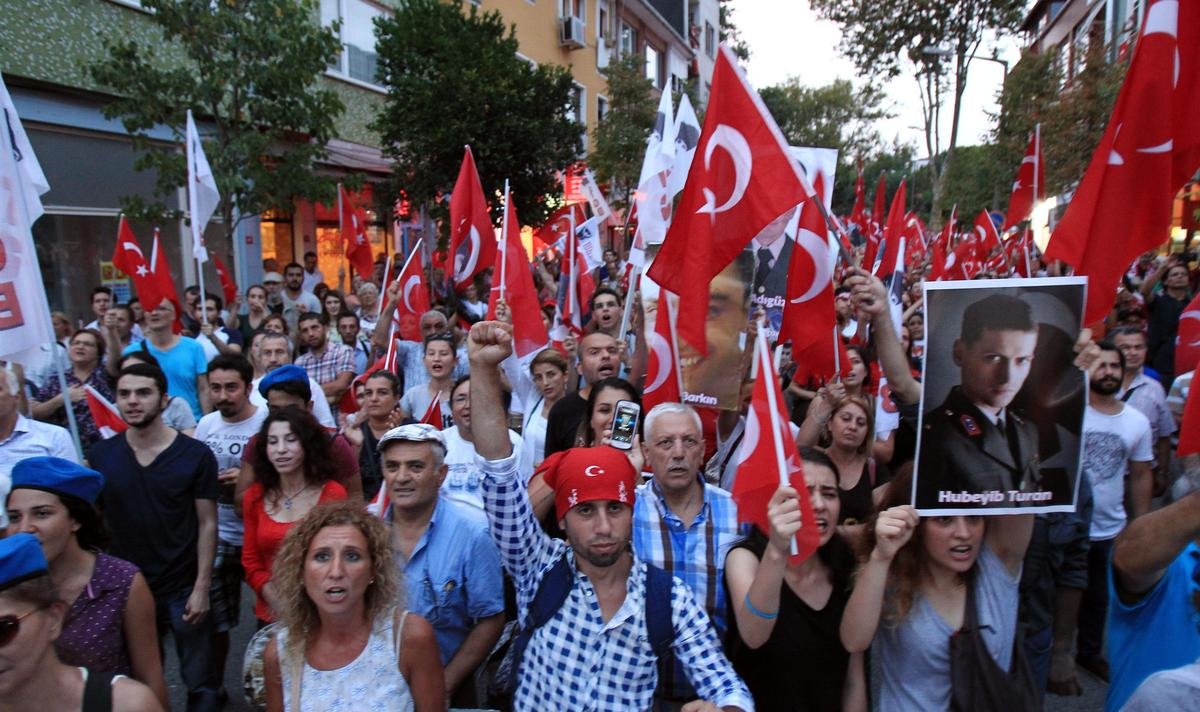
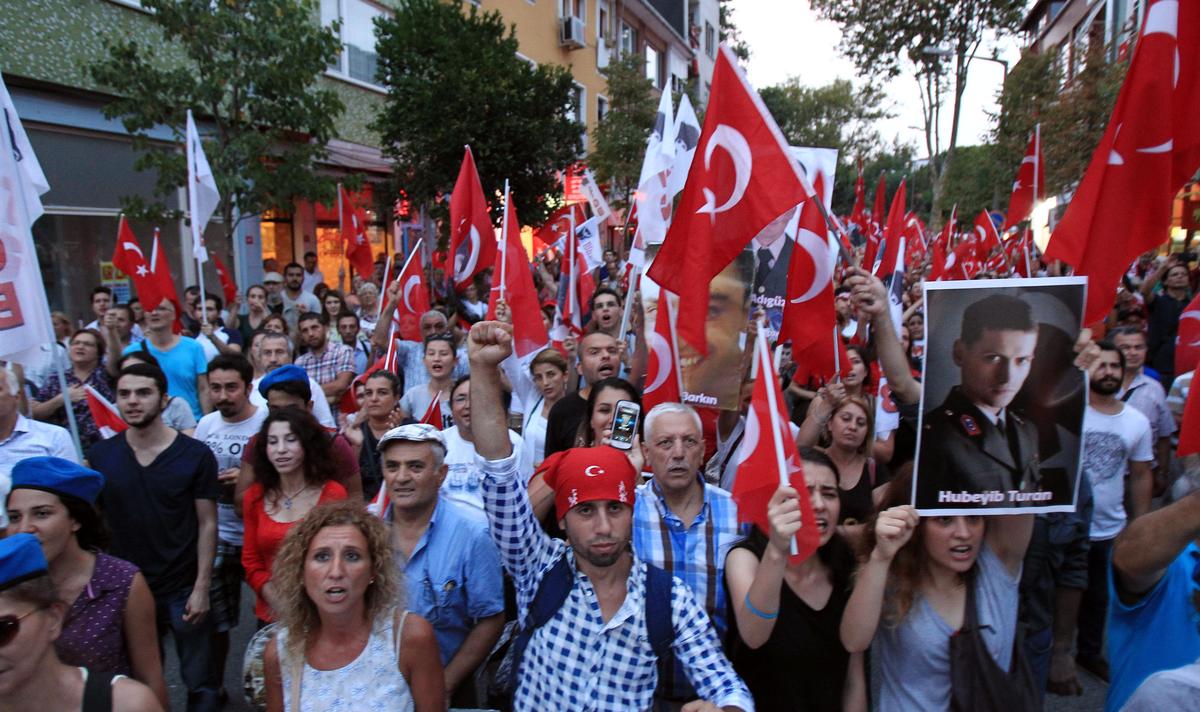
*(Hundreds of people protest against the PKK in Istanbul on 7 September after the PKK killed 16 soldiers and wounded six others in Daglica, Turkey. Image Credit)
The PKK is also killing Kurds under the guise of protecting their rights
“Senior PKK leader Cemil Bayık, in an interview with the Fırat News Agency (ANF) on Aug. 8, said, ‘Our war will not be confined to the mountains like it was before. It will be spread everywhere without making a distinction between mountains, plains or cities. It will spread to the metropolises.’ Terrorist Bayık’s statement signaled that the PKK would take increasing aim against civilians, targeting civilian areas more than ever. And it is happening.
Since July 15, the day when the Gülenist terror cult, FETÖ, launched its failed military coup attempt to topple the democratically-elected government, the PKK perpetrated dozens of terrorist attacks, killing 21 civilians and injuring 319 others – most of them Kurdish citizens.”
According to The Washington Institute:
On November 18, FBI Director Robert Mueller met with senior Turkish officials to address U.S.-Turkish efforts targeting the Kurdistan Workers Party (PKK), also known as Kongra-Gel. A press release from the U.S. embassy in Ankara following the meeting stressed that U.S. officials ‘strongly support Turkey’s efforts against the PKK terrorist organization’ and highlighted the two countries’ long history of working together in the fight against terrorism and transnational organized crime.
The PKK: Terrorist Organization and Foreign Narcotics Trafficker
These discussions are timely. Despite Ankara’s recent bid to alleviate the Kurdish issue — a bid referred to as the ‘democratic opening’ — the PKK is one of a growing number of terrorist organizations with significant stakes in the international drug trade.
In October, the U.S. Treasury Department added three PKK/Kongra-Gel senior leaders to its list of foreign narcotics traffickers. The PKK, along with the Revolutionary Armed Forces of Colombia (FARC), is one of only a few organizations worldwide designated by the U.S. government as both a terrorist organization and a significant foreign narcotics trafficker.” Drug smuggling is reported to be the main financial source of PKK terrorism, according to the organization International Strategic Research, whose detailed report can be seen here.
Western Veterans Blindly Supporting Kurdish Independence
Their exaggerated triumphs against Daesh have helped them evolve from a radical militia to an alleged regional power player. Have they been successful in fighting against Daesh in Syria? Yes – but while the Syrian Arab Army has been more effective, it does not receive a fraction of the praise or recognition that the PKK does.
Pato Rincon, a U.S. military veteran, recently wrote about his experience training with the YPG in Syria.
Although initially interested in their desire for autonomy, he soon got to know a different side of the group.
An Exclusive Eyewitness Account of an American who Trained with the Kurdish Syrian Rebels
Getting retired from the United States Marine Corps at age 23 with zero deployments under my belt was a huge blow to what I figured to be my destiny on this planet. That “retirement” came in 2010 after three years on convalescent leave, recovering from a traumatic brain injury sustained stateside. I got my chance to vindicate myself in 2015 by volunteering to fight in Syria with the Kurdish Yeni Parastina Gel (YPG), or the “People’s Protection Units” in Kurmanji (Northern Kurdish language).
The YPG is the military apparatus of the Partiya Yekitiya Democrat (PYD), the Democratic Union Party, and one of the main forces of the Syrian Democratic Forces fighting ISIS and Bashar al-Assad’s regime. While they are a direct ideological descendant of the Soviet Union, their take on Marxism has a much more nationalistic bent than that of their internationalist forebears. At their training camp that I attended, they constantly spoke of their right to a free and autonomous homeland–which I could support. On the other hand, they ludicrously claimed that all surrounding cultures from Arab to Turk to Persian descended from Kurdish culture. One should find this odd, considering that the Kurds have never had such autonomy as that which they struggle for. All of this puffed up nationalism masquerading as internationalism was easy to see through.
The Westerners were treated with respect by the “commanders” (they eschewed proper rank and billet, how bourgeoise!), but the rank and file YPGniks were more interested in what we could do for them and what they could steal from us (luckily, my luggage was still in storage at the Sulaymaniyah International Airport in Sulaymaniyah, Iraq). By “steal from us,” I mean they would walk up to a Westerner/American and grab their cap, glasses, scarf and whatever else they wanted and ask “Hevalti?” which is Kurmanji for “Comraderie?” and if you “agreed” or stalled (a non-verbal agreement) then they would take your gear and clothing. “Do not get your shit hevalti-ed,” the saying went.
Not only was their idea of Marxism fatuous, their version of feminism was even worse. We had to take mandatory “Female World History” classes in which some putrid fourth or even fifth wave feminist propaganda was espoused. Early on in my brief stay with this “military unit”, I was told not to ever brush my teeth in front of a woman as that might “sexualize” her… … something to do with preparing one’s self for sex or something.
They insisted that we chicken-wing our elbows while sighting in on targets–the same targets that were fired on by everybody in the class, thus making an assessment of individual strengths and weaknesses rather impossible. This was on the ONE day that we went to the range–one day with the AK-47 out of about a month of training. Another day was Some of these guys were straight from civilian life, with only their blood composition to act as a reason for them to be there. Little boys and little girls as young as 13 or 14 were there–reason enough for me to leave.
During one long “Female World History” class, we were taught that if a man had a Dragonov (sniper rifle) and he was elevated from his female comrade’s position and she had a Bixie, then the male in the scenario should not cover his female comrade, but instead should find something else to do lest she lose self esteem, not feeling capable of carrying out the task by herself.
When a student from Kentucky asked, “What if the situation is reversed–can a woman cover a man?” the female instructor smiled and said, “Yes, that’s okay.” I didn’t end up firing a shot in combat for the YPG. After seeing their half-baked ideology, poor level of training, and the child soldiers, I had had enough. They were nice enough to arrange for me to go back to Iraq where I could catch a ride to Turkey.
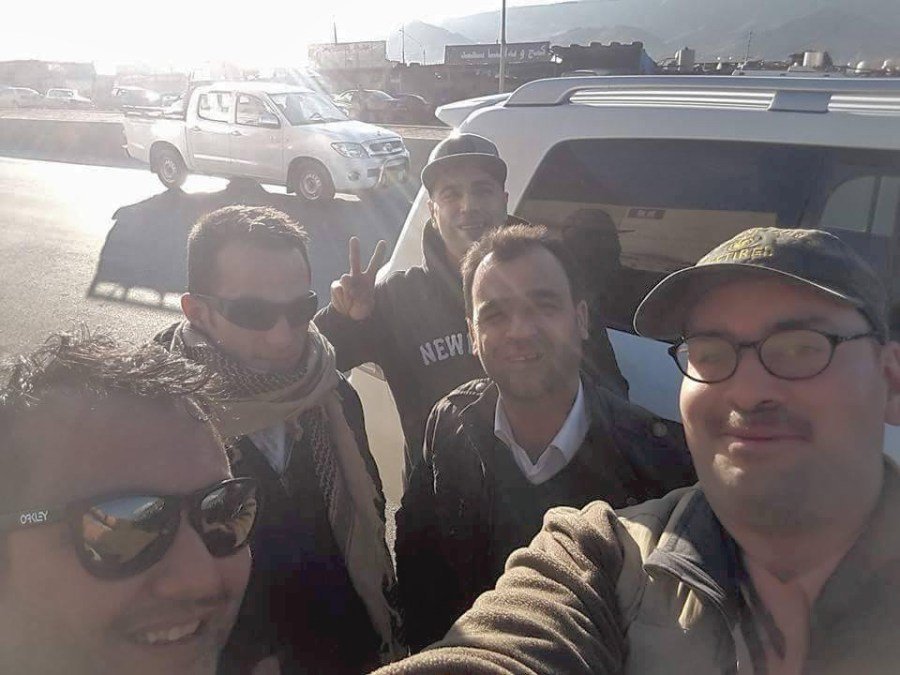
*(Pat Rincon with YPG fighters in Syria. Image Credit)
Accounts such as this will certainly not make it to mainstream media, as they do not fit the narrative that the Kurds and their sponsors promote.
In another example of Western support for the YPG, Joe Robinson, an ex-soldier and UK national, recently returned to the UK after spending five months in Syria fighting with the group. He was detained and arrested by Greater Manchester Police officers on suspicion of terrorism offenses as soon as he returned. He joined the British military when he was 18 and toured Afghanistan with the Duke of Lancaster’s Regiment in 2012.
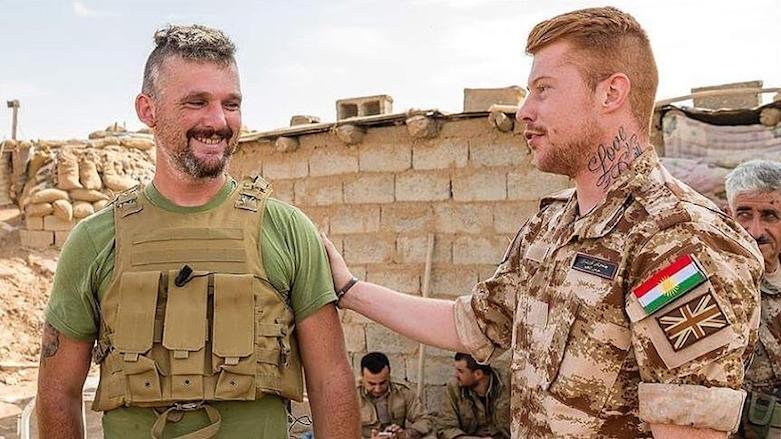
*(Joseph A. R. (right) in a military outfit with flag patches of Kurdistan and the UK, while men who appear to be Kurdistan Region’s Peshmerga forces are seen in the background in this undated social media picture. Picture Credit).
He left the UK when an arrest warrant was issued after he failed to appear in court. Robinson is pictured here in Syria with YPG fighters.
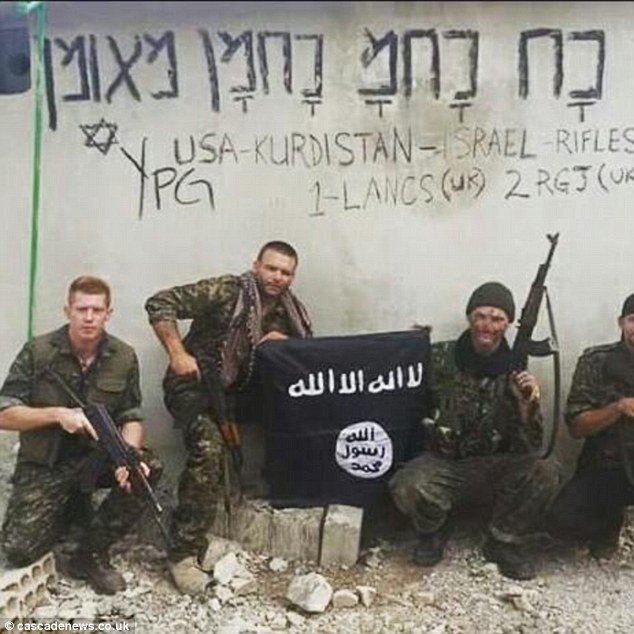
Robinson, at left, holding his weapon while fellow YPG comrades hold Daesh flag. The writing on the wall speaks volumes about the relationship between Israel, the Kurds and the US.
During a trip to Turkey Joe Robinson was arrested for having been part of the YPG.

*(Turkish police arrested Joesph A.R. (center) along with two Bulgarian women in the city of Aydin, July 28, 2017. Photo Credit)
“I received arms training from the YPG [People’s Protection Units] for three months but never engaged in combat,” said the foreign fighter during an interrogation.
The information contained in this article serves the purpose of balancing all of the propaganda and romanticization that these Kurdish terrorist groups have received in mainstream media. The bottom line is they are armed, dangerous, and committing crimes with international support. Support for these terrorist groups needs to end immediately before further division, chaos and death spreads in the region.
How the Democratic Party Has Incurred Major Electoral Losses by Its Mistaken Support for Climate Alarmism

Photo by Paul Morigi/Getty Images for Paramount Pictures
By Alan Carlin | Carlin Economics and Science | September 20, 2017
For inexplicable reasons the Democratic Party has in many ways made itself the “Green Party,” and thereby has incurred major electoral losses. Each time it loses as a result of its increasingly green ideology, it has responded by doubling down on its green bet. The underlying miscalculation they have made is a result of the fact that the presidency is decided by electoral votes, not popular votes. Most of the “environmentalists” live in strongly blue states and the red state “environmentalists” are widely scattered in the few large towns, particularly college towns. This was very evident in the 2016 election when Clinton won the popular vote but lost the electoral vote, with much of her surplus of popular votes coming from California. Hillary Clinton has now confirmed this view by writing that her statement on the loss of coal mining jobs was the single greatest mistake of her campaign.
In 2016 the Party went whole hog for climate alarmism by writing it into their party platform and even promising to end all use of fossil fuels by a date certain. Clinton also hurt her prospects in 2016 as a result of her remarks about the loss of coal mining jobs and her last minute endorsement of Al Gore and his strident climate alarmism. Yes, Clinton probably picked up some “environmentalist” votes, but most of them were in states that she was going to win anyway. And she probably lost votes in the states that Trump most needed to win for an electoral vote majority.
But a very good case can be made that the climate issue played a decisive role in the 2000 presidential election, the 2010 congressional election, as well as in the 2016 presidential election. Somehow the Party overlooked or misinterpreted what happened in 2000 and in 2010.
2000
Most people who remember the 2000 presidential election immediately think of the controversial outcome in Florida, which ultimately decided the election. But it would have had no influence if Al Gore had not lost West Virginia for the Democrats for one of the few times from 1932 to then. The deciding issue appears to have been climate and coal mining. In the end, Gore lost the presidential election by 3 electoral votes. West Virginia had 5 electoral votes that year. But all of them went to Bush primarily because of concerns about Gore’s views on climate and the likely effects of climate alarmism on coal mining, an important source of income in the State. West Virginia voted Republican in only three presidential elections from 1932 until 1996 but has become increasingly Republican in presidential voting since 2000. I believe most of that increase can be attributed to the Democratic Party’s increasing support for climate alarmism. If Gore had not pursued climate alarmism or had not been the nominee I believe that the Democrats would have won in 2000.
2010
The 2010 Congressional Election resulted in the Democratic Party’s loss of a majority in the House of Representatives. It appears that this loss was due to the loss of Democratic seats where Democratic incumbents had voted for the American Energy and Security Act of 2010 (the Waxman-Markey cap and trade bill). A number of Democrats who voted for the bill lost their seats in 2010 and the Democrats lost control of the House of Representatives and have not regained it as of 2017. This played an important role in their success or rather lack of it during the remainder of the Obama Presidency in passing legislation to implement the party’s platforms.
Conclusions
From a purely Democratic Party viewpoint, their unequivocal adoption of climate alarmism has been a very bad bet. And this week a number of prominent alarmist climate modelers have finally admitted (see here and here) that the alleged “consensus” has been wrong by exaggerating the global warming that would occur if carbon dioxide emissions are not reduced, just as many climate realists have long been saying. This leaves the Democratic Party with a greatly reduced basis for their extremist views on climate. So major electoral losses over an issue that has little, or more likely, no effect on anyone.
I even wonder if the modelers withheld their long needed revisions until after the Paris treaty was agreed to, but wanted to avoid the increasing criticism of the differences between their models and actual temperatures.
As readers of this blog know, I believe that the situation is even worse for climate alarmists and thereby for their Democratic Party supporters since carbon dioxide emissions and atmospheric levels have been shown to have no significant effects on global temperatures and because higher CO2 levels are good, not bad. So the Democratic Party has been backing the wrong horse and has paid dearly for it. They are not saving the world; they are pushing bad policy that hurts the Party’s electoral chances as well as the economy, green plants, and poor people.
The 11-Year Major Hurricane Drought: Much More Unusual than Two Cat 4 Strikes
By Roy W. Spencer, Ph. D. | September 21, 2017
Weather.com published an article noting that the two Cat 4 hurricane strikes this year (Harvey and Irma) is a new record. Here’s a nice graphic they used showing both storms at landfall.

Left: Hurricane Harvey makes landfall near Rockport, Texas, on Aug. 25, 2017 | Right: Hurricane Irma makes its first landfall at Cudjoe Key, Florida, 9-10-17 (graphic: Weather.com).
But the statistics of rare events (like hurricanes) are not very well behaved. Let’s look at this new record, and compare it to the 11+year period of no major hurricane strikes that ended when Harvey struck Texas.
The Probability of Two Cat 4 Strikes in One Year
By my count, we have had 24 Cat 4 or Cat 5 landfalls in the U.S. between 1851 and 2016. This gives a probability (prior to Harvey and Irma) of one Cat4+ strike every 7 years. It also leads to an average return period of two Cat4+ strikes of about 50 years (maybe one of you statisticians out there can correct me if I’m wrong).
So, since the average return period is once every 50 years, we were overdue for two Cat4+ strikes in the same year over the entire 166 period of record. (Again, for rare events, the statistics aren’t very well behaved.)
The Probability of the 11-Year “Drought” in Major Landfalling Hurricane
In 2015, a NASA study was published which calculated how unlikely the (then) 9-year stretch with no major hurricane landfalls was. They came up with a 177 year return period for such an event.
I used that statistic to estimate what eventually happened, which was 11 years with no major hurricane strikes.
I get a return period of 560 years!
Now, which seems more unusual and potentially due to climate change: something that should happen only once every 50 years, or every 560 years?
Maybe global warming causes fewer landfalling major hurricanes.
Featured Video

Yemen joins the war – Red Sea could be blocked next – Saudi regime at risk
or go to
Aletho News Archives – Video-Images
From the Archives
Should Europeans ‘Thank’ the Americans for Destroying Nord Stream?
By Robert Bridge | Strategic Culture Foundation | September 29, 2022
With an investigation continuing into the destruction of the Nord Stream gas pipeline that provided energy supplies to Europe from Russia, there appears to be just one prime suspect, and that should surprise nobody.
Following the sabotage of the Nord Stream 1 and 2 gas pipelines, former Polish Foreign Minister Radoslaw Sikorski already seemed to know the identity of the perpetrator when he tweeted out: “Thank you, USA.”
At first glance, it seemed that Sikorski was speaking sarcastically, berating Washington for carrying out an attack that will have severe repercussions for the people of Europe. After all, how could anyone see any good coming from the termination of Europe’s primary source of gas reserves with winter just around the corner? It was Sikorski’s homeland of Poland, after all, that urged its citizens to collect firewood in the face of dwindling gas reserves.
In fact, the Polish diplomat was speaking one-hundred percent literally… continue
Blog Roll
 Aletho News
- Bring The Troops Back. End This War Now!
- Can we please stop calling Israel the ‘only democracy in the Middle East’ now?
- US should start removing its troops for Germany, proposes AfD co-leader Chrupalla
- Iran Red Crescent: 600 educational centers attacked in US-Israeli ‘war crimes’
- Russian Oil Tanker Arrives in Cuba Amid U.S. Blockade
- America Racing to Strategic Defeat in Iran: Lt Col Daniel Davis
- FTC Warns Visa, Mastercard, PayPal, Stripe Over Political Debanking
- Russian tanker approaches Cuba despite US oil blockade
- Marandi: Yemen joins the war – Red Sea could be blocked next – Saudi regime at risk
- Pro-Palestinian French member of European Parliament denied entry to Canada
- If Americans Knew
- Israeli police block Catholic cardinal from entering Church of the Holy Sepulchre on Palm Sunday
- Israel is assassinating journalists again, more than any other nation, anywhere, ever – Not a ceasefire Day 170
- Over 300 US service members wounded, majority have brain injuries – Not a ceasefire Day 169
- Researchers at Human Rights Watch Resign Over Blocked Report on Palestinian Refugee Return
- Jewish Groups Are Backing a War Americans Don’t Want
- Eric Fingerhut Thinks He’s the President of the Jews
- Top Jewish Philanthropists, Rabbis Urge Israeli President to Take Action Against ‘Jewish Extremists’
- Don’t Be Fooled. Zionist Leaders Have Always Wanted to Control Southern Lebanon
- Israel’s widespread use of torture is a core element of its genocide against the Palestinian people
- In Israel’s War on Iran, Many Middle East US Bases Rendered “All But Uninhabitable”
- No Tricks Zone
- New Study Finds Warming Saves Lives…Cold Temperatures 12 Times More Deadly Than Excess Heat
- German Science Blog Accuses PIK Climate Institute Of Hallucinating Climate Tipping Points
- Devastating Assessment Of Comirnaty Vaccine By Former Senior Pfizer Europe Toxicologist
- New Study: CO2 Is ‘Effectively Negligible’ As An Explanatory Climate Change Factor Since 2000
- Former Pfizer Toxicologist Dr. Helmut Sterz Tells Bundestag Hearing Pfizer Vaccine Should Have Never Been Approved
- Energy Expert: Germany’s Nuclear Phaseout Was A “500 Billion Euro Mistake”
- New Research: South Australia’s Mid-Holocene Sea Surface Temperatures Were 4°C Warmer Than Today
- Storing Green Energy To Last Germany 10 Days Would Require A 60-Million Tonne Battery
- New Studies: UK Sea Levels Were 4 Meters Higher Than Today During The Mid-Holocene
- Destructive Green New Deal: German Energy And Metal Group Warns Of Drastic Crisis
 Aletho News