How Pseudo-leftists Explain the Failure of the ‘Syrian Revolution’
By Tim Anderson | Global Research | November 16, 2017
Some western “Liberals” and “Leftists” pay homage to Yassin al-Haj Saleh, an intellectual leftist of the ‘Syrian Revolution’. In fact Saleh represented only a tiny part of Syria’s left. He was ‘persecuted’ because he aligned himself with the 1980 and 2011 bloody uprisings by the sectarian Muslim Brotherhood, and their international Salafist (al Qaeda) supporters. In the end he had to flee for his life from those same sectarian terrorists.
With popular forces in Syria and Iraq destroying the globalised sectarian jihadist mercenaries – sponsored principally by Washington and the Saudis – some ideologues in colonial cultures still keep alive the romantic idea of a ‘Syrian Revolution’, that somehow tragically failed. This is also a myth propagated by the Muslim Brotherhood and their western sponsors, to cover an otherwise naked aggression against Syria.
It is a myth that matters much less now, as such propaganda no longer has the capacity to fuel deeper NATO intervention in Syria. Yet it seems important for the self-image of small groups of western pseudo-leftists, who committed themselves to the cause of ‘red-washing’ Washington’s latest war of aggression, backed by the most reactionary forces in the region.
By pseudo-leftist I mean those fanatic ideologues who cling to their fantasies, showing little interest in what the masses of ordinary people want. Those ‘Syrian Revolution’ fans betrayed the Syrian people, just as they betrayed the people of Libya, Cuba and many other small countries, when under attack from the big powers.
But imagine the western pseudo-leftist’s delight on meeting an apparently like-minded individual Syrian. Enter Yassin al-Haj Saleh, author and proud backer of what he imagined might be a socialist revolution in Syria. His aptly titled book ‘The Impossible Revolution’ (Haymarket Books September 2017) spells out his failed dream and angry disillusionment. He claims to have been caught between “the hammer of Bashar al Assad’s counter-revolution and the anvil of his reactionary Islamic fundamentalist opponents”. On closer examination, his personal dilemmas seem entirely of his own making.
Saleh was jailed for 16 years (1980-96) under Hafez al Assad, for what he and his fans and publisher call ‘activism’. Does this mean ‘dissident’ or ‘peaceful protestor? In fact his party had aligned itself to the bloody and sectarian Muslim Brotherhood insurrections of 1979-1982. In this article I will discuss the implications of that decision.
Conditions in prison were terrible he says, but adds that he read “hundreds of books [and] … I learned more there than at university”. Not all prisons allow for such study. He had been a member of the Syrian Communist Party (Political Bureau), and so boasts socialist credentials. In 2011 he joined the ‘revolution’, moving from East Ghouta to Raqqa. There, fearing DAESH in 2013 he left the country. He survived the ordeal and published his book in 2017.
His US publisher portrays Yassin Al-Haj Saleh as “the intellectual voice of the Syrian revolution”. In the book Saleh presents a bleak portrait – but one which will probably appeal to western cynicism – of “three monsters … treading on Syria’s corpse”:
(1) the Assad regime and its allies,
(2) DAESH/ISIS and the other jihadists, and
(3) the West (the USA, UK, France, etc).
In other words, a plague on all their houses. Such cynicism, if popular, is weak analysis.
We know from independent Turkish pollsters TESEV that, by the end of 2011, only 5% of Syrians supported ‘violent protest’, the lowest figure in the region (c.f. 33% in Tunisia and 31% in Palestine) (TESEV 2012: 15). The big influx of foreign jihadists in 2012 would have hardened views against jihadist violence. And we know that the Syrian Arab Army, after some relatively small defections in the first year, did not fracture on religious grounds, as the Salafists had hoped.
The key problems with promotion of a figure like Saleh, to keep afloat the romantic idea of a failed ‘revolution’, are these:
(a) the self-serving story hides who this new hero is and what forces in Syria he might represent;
(b) the idealistic narrative (for a ‘democratic and egalitarian Syria’, etc) hides the actual historical forces of the Syrian insurrections; and
(c) in particular, it whitewashes Saleh’s own foolish collaboration with sectarian Islamists.

You don’t have to buy Saleh’s book, as most of his arguments appear in an extended interview with Ashley Smith, in the US journal International Socialist Review. Smith is a member of the US International Socialist Organization, a Trotskyist group drawing on the ideas of the late Tony Cliff.
Prominent among those ideas is Cliff’s theory of ‘state capitalism’, which suggests that there has never been a true ‘socialist’ revolution and that all capitalist and ‘state capitalist’ nation-states must be smashed and rebuilt. That line is quite consistent with support for attacks on any state, progressive or otherwise, as also with alliance with imperialism and reactionary forces to do so. To what extent that sort of Trotskyism is consistent with Saleh’s view is another matter.
However we know these things about Saleh. First, his Communist Party (Political Bureau) faction was a tiny ‘Maoist’ splinter from Syria’s main Communist Party, back in the late 1970s. The main reason for this split was that Saleh’s faction wanted to ‘form an alliance’ with the Muslim Brotherhood, as they engaged in a series of sectarian attacks on the Syrian state (Gambill 2001). Most Syrian communists sided with the Ba’ath socialist state. However Saleh and his former leader, Riyad al Turk, persisted in their subordinate ‘alliance’ with the al Qaeda linked Muslim Brotherhood, into the 2000s (Pace 2005).
What precisely was Syria’s Muslim Brotherhood doing, back in 1979? Let’s read it from the late British writer Patrick Seale:
“The artillery school massacre of June 1979 marked the start of full-scale urban warfare against Alawis [and] against Ba’ath party officials … when cornered they often blew themselves up with grenades … In Aleppo between 1979 and 1981 terrorists killed over 300 people, mainly Baathists and Alawis but including a dozen Islamic clergy who had denounced the murders” (Seale 1988: 324-325).
All the other opposition parties, including most communists, rejected the Muslim Brotherhood’s sectarian terror; but not Saleh’s sect. Collaboration with the Muslim Brotherhood terrorists is why Saleh received a long jail term in 1980, not because he was simply an ‘activist’.
Muslim Brotherhood terror has been romanticised over the years. At the end of the 1979-1982 attacks a final Brotherhood insurrection at Hama city was put down by Hafez al Assad. Revisionist historians these days, including many western writers, claim there was a large ‘civilian massacre’ at Hama in May 1982. For example author Rafaël Lefèvre (2013: 77) credulously reports: “While initial reports suggested 10,000 civilians were killed, other reports put the number as high as 40,000”. This is poor revisionist history.
Seale (1988: 333-334) observes that Hama 1982 was a serious conflict, not a ‘civilian massacre’. The Hama insurrection “was a last ditch battle” for the Brotherhood and it “raged for three grim weeks … many civilians were slaughtered in the prolonged mopping up … in nearly a month of fighting about a third of the historic inner city was demolished”. On overall casualties he notes that “government forces too suffered heavy losses to snipers … and grenades”, while total losses of life were controversial even at the time, “with government sympathisers estimating a mere 3,000 and critics as many as 20,000”.
The ‘civilian massacre’ mythology tries to hide the Brotherhood’s hand in initiating the violence, as recurred in Daraa and Homs in 2011. US intelligence back in 1982 had no such illusions. Of course the US had quietly backed those who financed and armed the Brotherhood’s attacks on Syria (the Saudis, the King of Jordan, Saddam Hussein and others). But Washington’s intelligence was dry and pragmatic, in its final assessment of May 1982:
“the Islamic Revolution in Syria, the Nom de Guerre for the Muslim Brotherhood … [spoke of] the rebels’ seizure of the city and the execution of some 50 “spies and informers” … about 3,000 government forces had been killed, according to the communique … the total casualties for the Hama incident probably number about 2,000. This includes an estimated 300-400 members of the Muslim Brotherhood’s elite Special Apparatus … the Syrian Government defeated the fundamentalist[s] … most Syrians, regardless of their difference with the present government, do not want the Muslim Brotherhood in power … [but] their modus operandi will continue to be terrorism, particularly bombings and assassination” (DIA 1982: 6-7).
Even if Saleh was young in 1980, most of the political prisoners with whom he shared prison time would have been Muslim Brotherhood. He was certainly not unaware of their approach to ‘revolution’ when he joined their next major insurrection in 2011. Indeed he says,
“When the [2011] revolution broke out I went into hiding … [and] while I was writing I was directly involved in the struggle” (Smith 2017).
His greatest claim to fame was to be one of the founders of the ‘Local Coordinating Councils’ (LCCs), indeed he says he was “the main author of the first political statement LCCs issued in June 2011” (Smith 2017). This tells us that the apparently secular language of the LCCs masked the faces of Muslim Brotherhood collaborators.
In any case, we know that the LCCs were little more than a fig leaf on the thoroughly sectarian insurrection, dominated by Syrian Muslim Brotherhood groups until 2012. Then they were displaced from leadership by their international jihadist partners, in the form of Jabhat al Nusra (al Qaeda in Syria, set up as a support group for the Syrian Salafis) and DAESH / ISIS, an outreach of al Qaeda in Iraq (AQI). As I wrote in my book The Dirty War on Syria (Anderson 2016: 83-84), the LCCs were seen as having a mainly media or PR role in 2011 (Asi Abu Najm 2011) and, by 2013, they were embedded with the Islamist groups, mainly reporting on jihadist casualties (LCC 2013).
Yassin al-Haj Saleh says he fled from East Ghouta to Raqqa, before leaving the country. However his early presence in Douma (East Ghouta) demonstrates how reliant he had become on his Salafist partners. For many years Douma had been dominated by Jaysh al Islam, in alliance with Jabhat al Nusra. Although the civilian population there has been decimated, from many thousands fleeing the conflict, it remains one of the few areas in Syria with a social base for sectarian extremists. The same can be said about Raqqa. Both areas had a strong, reactionary culture, with women in burkas and families preferring to send their children to a Salafist-led mosque than to school.
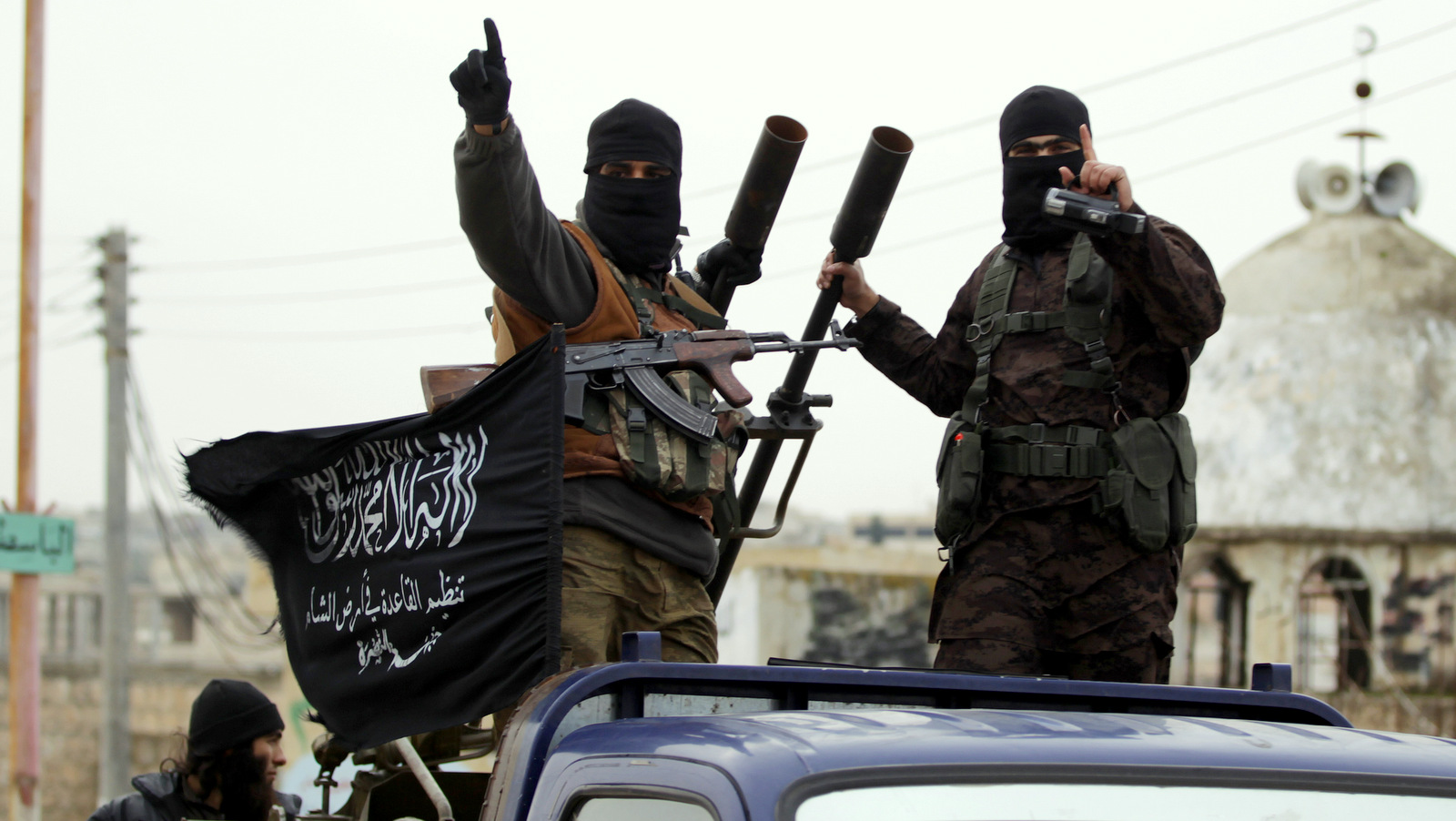
The US certainly knew from early days that this ‘revolution’ (1) was being led by extremists and (2) wanted to create a sectarian Islamic state in eastern Syria. US intelligence in August 2012 observed that “Internally, events are taking a clear sectarian direction. The Salafist, the Muslim Brotherhood and AQI are the major forces driving the insurgency in Syria … there is the possibility of establishing a declared or undeclared Salafist principality [i.e. Islamic State] in eastern Syria (Hasaka and Der Zor) and this is exactly what [the US and its allies] want, in order to isolate the Syrian regime” (DIA 2012 in Hoff 2015).
Washington knew it and most Syrians knew it. The head of the Syrian Brotherhood, Muhammad Riyad Al-Shaqfa, issued a statement on 28 March 2011, which left no doubt that the group’s aim was sectarian and their target was what they perceived as a secular state. The enemy was “the secular regime”, he said, and Brotherhood members “have to make sure that the revolution will be pure Islamic, and with that no other sect would have a share of the credit after its success” (Al-Shaqfa 2011).
International jihadists, in the form of Jabhat al Nusra (al Qaeda in Syria) appeared in Homs in early 2011, specifically to help the Farouq Brigade (then the largest ‘FSA’ group) with its infamous genocidal slogan ‘Alawis to the tomb, Christians to Beirut’ and genocidal practice: the sectarian murder of supposedly apostate Muslims and the ethnic cleaning of Christians. Those slogans and practice were reported as early as 5 April 2011 (Farrell 2011) and in the New York Times in May (Shadid and Kirkpatrick 2011).
Tens of thousands of Syrian Christians from Homs were indeed driven to Beirut (CNA 2012). Claims that the “Assad regime” was behind the sectarianism were simply dishonest. Whatever their views of the Ba’athist system, most Syrians, and particularly the minorities, swung behind the Syrian state and the Syrian army very quickly.
As international jihadists (mainly from the Arab world, North Africa, the Caucasus and Europe) joined the Syrian Salafis in large numbers in mid-2012, even the western media began reporting that these were fanatics, not revolutionaries.
Well before DAESH / ISIS came across from Iraq to Syria the ‘Free Army’ leaders were complaining that the Syrian President had at least “70 percent” support in Aleppo (Bayoumy 2013); that the local people,
“all of them, are loyal to the criminal Bashar, they inform on us” (Abouzeid 2012); and that the people are “all informers … they hate us. They blame us for the destruction” (Ghaith 2012).
But, they went on to say, they had God on their side. James Foley, himself subject to a theatrical style execution by DAESH in 2014, reported two years earlier that the FSA ‘rebels’ had little public support. Indeed one leader promised Aleppo ‘would burn’, because the people there did not support the ‘revolution’ (Foley 2012).
Unpopularity is fatal to a revolution; to a religious fanatic it is merely inconvenient.
It is impossible that Saleh – an ideological fanatic, but an educated fanatic – did not know all this. Even if he himself was not an sectarian Islamist, he knew that the extreme sectarians with whom he collaborated in 1979 and again in 2011 were leading his ‘revolution’.
Saleh maintains his own self-serving myths about the conflict: that the ‘Assad regime’ was the source of sectarian violence, that Sunni Muslims and Kurds were oppressed, and that the US and its minions really supported the Assad Government. Saleh claims that the Obama administration (despite its repetitive and imperious ‘Assad must go’ demands) really wanted “regime preservation not regime change” (Saleh in Smith 2017).
It is hard to see how any reasonable person can take this seriously. We even have admissions from senior US officials, including former Vice President Biden and former head of the US military Martin Dempsey, that the ‘Arab Allies’ of the US financed every jihadist group from the ‘Free Army’ to DAESH / ISIS, precisely to get rid of Assad. More recently, former Qatari Foreign Minister Hamad Bin Jassim admitted that his little petro-state coordinated with Saudis, Turkey and the US to support all anti-Government jihadist forces (Syriana Analysis 2017).
Saleh’s former mentor, Riyad al Turk (who “liked” Saudi-backed Lebanese Prime Minister Rafiq Hariri), was calling for US military assistance in 2005 to help “the opposition” get rid of the Assad Government (Pace 2005). Of course he did not represent the Syrian Opposition. In the Damascus Declaration (2005), while making harsh criticisms of the Baathist system, most Syrian opposition groups specifically renounced violent attacks on the state and outside intervention. The Muslim Brotherhood and its hangers on, in contrast, always wanted violence with US and/or NATO assistance.
Saleh’s claim to fame as a secular communist against ‘the regime’ is undermined by how unrepresentative his small group was of Syria’s communists. He, like al Turk, criticises most other communists who “supported the regime” (Smith 2017). So how much support did his faction have? Al Turk maintained “we don’t announce how many members we have” (Pace 2005), but Gambill (2001) suggests it was “very little”.
Syria’s main Communist Party split in the mid-1980s (over Gorbachev’s policies), into two groups. Both stood candidates in the Peoples’ Congress (Majlis al Shaab) elections of 2007, 2012 and 2016, gaining 8, 11 and 4 MPs out of 250, respectively. That indicates that Syria’s main communist parties had electoral support of between 80,000 and 140,000 Syrian voters (IDEA 2017; Syrian Parliament 2017). We have no way of knowing how much support there ever was for the Communist Party (Political Bureau), or its successor the ‘Syrian Peoples Democratic Party’. But ask yourself, how many genuinely secular Marxists would collaborate with sectarian, al Qaeda styled Islamists?
The inescapable conclusion is that Saleh’s romanticised ideas failed and he was lucky to escape with his life. He certainly would have been in danger from both the Syrian Army and DAESH. But he and his tiny faction did not represent any significant part of the Syrian left. They were distinguished mainly by their collaboration with the Brotherhood groups and their al Qaeda allies, before they disappeared entirely from the scene.
After his successive failures Saleh blames everyone (Bashar al Assad, alQaeda/ISIS, the West) but himself. Yet it seems he has become a useful figure for western pseudo-leftists (who never could identify an actual Syrian armed group that they supported) to point at and say “Look, there really was a left revolution in Syria! Here he is!”
Pseudo-leftists in western countries – who for years held on to the Washington-promoted fiction of a ‘Syrian Revolution’ – are desperate for token Syrian ‘hero’ on which to hang their fantasies. That could be an ex-Islamist or an ex-communist; they don’t look too closely to see where these people come from. This desperation highlights their failure to confront actual history, and to care about the things that matter to ordinary people.
Sources
Abouzeid, Rania (2012) ‘Aleppo’s Deadly Stalemate: A Visit to Syria’s Divided Metropolis’, Time, 14 November, online: http://world.time.com/2012/11/ 14/aleppos-deadly-stalemate-a- visit-to-syrias-divided- metropolis/
Al-Shaqfa, Muhammad Riyad (2011) ‘Muslim Brotherhood Statement about the so-called ‘Syrian Revolution’’, General supervisor for the Syrian Muslim Brotherhood, statement of 28 March, online at: http://truthsyria.wordpress. com/2012/02/12/muslim- brotherhood-statement-about- the-so-called-syrian- revolution/
Amazon (2017) Promotion and reviews of Saleh’s book ‘The Impossible Revolution’, online: https://www.amazon.com/ Impossible-Revolution-Yassin- al-Haj-Saleh/dp/160846850X
Anderson, Tim (2016) The Dirty War on Syria, Global Research, Montreal
Asi Abu Najm (2011) ‘Syria’s Coordination Committees: a Brief History’, Al Akhbar, 1 October, online: http://english.al-akhbar.com/ node/764
Bayoumy, Yara (2013) ‘Insight: Aleppo misery eats at Syrian rebel support’, Reuters, 9 January, online: http://www.reuters.com/ article/2013/01/09/us-syria- crisis-rebels- idUSBRE9070VV20130109
CNA (2012) ‘Syrian violence drives 50,000 Christians from homes’, Catholic News Agency, online: http://www.catholicnewsagency. com/news/syrian-violence- drives-50000-christians-from- homes/
Damascus Declaration (2005) ‘The Damascus Declaration for Democratic National Change’, English version in Joshua Landis blog Syria Comment, 1 November, online: http://faculty-staff.ou.edu/L/ Joshua.M.Landis-1/syriablog/ 2005/11/damascus-declaration- in-english.htm
DIA (1982) ‘Syria: Muslim Brotherhood pressure intensifies’, Syria360, May, online: https://syria360.files. wordpress.com/2013/11/dia- syria- muslimbrotherhoodpressureinten sifies-2.pdf
Farrell, Shane (2011) ‘Lebanese Christians react to regional instability’, Now Media, 5 April, online: https://now.mmedia.me/lb/en/ reportsfeatures/lebanese_ christians_react_to_regional_ instability
Foley, James (2012) ‘Syria: Rebels losing support among civilians in Aleppo’, PRI, 16 October, online: https://www.pri.org/stories/ 2012-10-16/syria-rebels- losing-support-among- civilians-aleppo
Gambill, Gary C. (2001) ‘Dossier: Riyad al Turk’, Middle East Intelligence Bulletin, Middle East Forum, Vol 3 No 9, September, online: https://www.meforum.org/meib/ articles/0109_sd1.htm
Ghaith, Abdul-Ahad (2012) ‘The people of Aleppo needed someone to drag them into the revolution’, The Guardian, 28 December, online: http://www.theguardian.com/ world/2012/dec/28/aleppo- revolution-abu-ali-sulaibi
Hoff, Brad (2015) ‘2012 Defense Intelligence Agency document: West will facilitate rise of Islamic State “in order to isolate the Syrian regime”’, Levant Report, 19 May, online: https://levantreport.com/2015/ 05/19/2012-defense- intelligence-agency-document- west-will-facilitate-rise-of- islamic-state-in-order-to- isolate-the-syrian-regime/
IDEA (2017) ‘Syrian Arab republic, Total vote, Parliamentary elections, 1994-2016, online: https://www.idea.int/data- tools/question-countries-view/ 437/274/ctr
LCC (2013) ‘Dignity Strike … We make our revolution by our own hands’, Local Coordination Committees of Syria, December, online: http://www.lccsyria.org/3528
Lefèvre, Rafaël (2013) Ashes of Hama: the Muslim Brotherhood in Syria, Hurst and Company, London
Pace, Joe (2005) ‘Riyad al Turk, interviewed by Joe Pace on Mehlis, the Opposition, Ghadry’, Joshua Landis Page, October 22, online: http://joshualandis.oucreate. com/syriablog/2005/10/riad-al- turk-interviewed-by-joe-pace. htm
Seale, Patrick (1988) Asad: the struggle for the Middle East, University of California Press, Berkeley
Shadid, Anthony and David D. Kirkpatrick (2011) ‘Promise of Arab Uprisings Is Threatened by Divisions’, New York Times, 21 May, online: http://www.nytimes.com/2011/ 05/22/world/middleeast/22arab. html?pagewanted=all
Smith, Ashley (2017) ‘Revolution, counterrevolution, and imperialism in Syria, Interview with Yassin al-Haj Saleh’, International Socialist Review, Issue #107 online: https://isreview.org/issue/ 107/revolution- counterrevolution-and- imperialism-syria
Syrian parliament (2017) Syrian Peoples’ Assembly, online: https://web.archive.org/web/ 20121008210031/http:// parliament.sy/forms/cms/ viewStatistics.php ; and Inter-Parliamentary Union (2016) ‘SYRIAN ARAB REPUBLIC: Majlis Al-Chaab (People’s Assembly)’, online: http://archive.ipu.org/ parline-e/reports/2307_E.htm; and as compiled in Wikipedia ‘Syrian parliamentary elections’ 2007 / 2012 / 2016, online: https://en.wikipedia.org/wiki/ Syrian_parliamentary_election, _2007
Syriana Analysis (2017) ‘Hamad Bin Jassim: We Supported Al-Qaeda in Syria’, online: https://www.youtube.com/watch? v=9f33l30kQxg
TESEV (2012) ‘The perception of Turkey in the Middle East 2011’, Türkiye Ekonomik ve Sosyal Etüdler Vakfi, Istanbul, February, online: http://tesev.org.tr/en/yayin/ the-perception-of-turkey-in- the-middle-east-2011/
Copyright © Prof. Tim Anderson, Global Research, 2017
No comments yet.
Featured Video

Meet The Ellisons: Zionists, Technocrats, Moguls
or go to
Aletho News Archives – Video-Images
Frlom the Archives
Who Rules America?
The Power Elite in the Time of Trump
By James Petras | Axis of Logic | September 6, 2017
Introduction
In the last few months, several competing political, economic and military sectors – linked to distinct ideological and ethnic groups – have clearly emerged at the centers of power.
We can identify some of the key competing and interlocking directorates of the power elite:
- Free marketers, with the ubiquitous presence of the ‘Israel First’ crowd.
- National capitalists, linked to rightwing ideologues.
- Generals, linked to the national security and the Pentagon apparatus, as well as defense industry.
- Business elites, linked to global capital.
This essay attempts to define the power wielders and evaluate their range of power and its impact. … continue
Blog Roll
 Aletho News
- The Strategic Folly of a (Serious) US Ground Invasion of Iran
- US-Israeli war of aggression on Iran meant to reshape region: Omani FM
- Iran Does Not Consider Israel Party to Talks to Need Mediators With It – Ambassador
- Macron’s aircraft carrier and warplanes to the Persian Gulf is a dangerous vanity project
- Meet The Ellisons: Zionists, Technocrats, Moguls
- US failures in Iran reveal Russia is key to South Korea’s strategic security
- ‘All ports in Persian Gulf will be legitimate targets if Iranian ports are attacked’
- 40 Years of Endless War, Data Point by Data Point
- Department of War Using Palantir AI to Pick Targets in Iran
- American bases do not protect – they attack the peoples of the Persian Gulf
- If Americans Knew
- The Unbelievable Madness of Our War With Iran
- World Council of Churches calls on govts to hold Israel accountable for violations of intl law
- How to end the war on Iran that costs US taxpayers $1M per minute – Not a ceasefire Day 153
- Israeli strategic plans to “remake the Middle East” from the 1950s and since
- Honoring Gaza’s women who refused to let the world look away
- 97% of victims of war on Iran are Iranian, 98% of victims in war on Gaza are Gazans – Not a ceasefire Day 152
- Early Iran strikes cost $5.6 billion in munitions, Pentagon estimates
- Israel Decided the War, But Trump’s America Fights and Pays the Bill
- Conscientious Objector Group: Phone ‘Ringing Off Hook’ As Huge Mobilization Underway
- U.S. support for Israel continues to plummet, despite media’s best efforts
- No Tricks Zone
- Destructive Green New Deal: German Energy And Metal Group Warns Of Drastic Crisis
- New Study Documents A 20-Year Pause In Arctic Sea Ice Decline – Driven By Internal Variability
- Wake-up Call: Survey Shows Majority Of Germans Now Favor Postponing Climate Targets!
- Televised! Leading German Political Candidate Tells Schoolchildren CO2 Makes Sun Hotter!
- New Study: A Century Warming Of 1.1°C Is ‘Commonplace’ And ‘Not Unusual’ During This Interglacial
- New Study: ‘Internal Noise’ And Volcanic Forcing Can Trigger 10-15°C Warming Within Decades
- Glaciers Worldwide Are Suddendly Surging, Experts Blame Warming!
- Surprising Discovery: Sahara Is Greening…Billions Of Trees Where Once Thought To Be Barren
- New Research Reaffirms Clouds, Aerosols, And Surface Solar Radiation Are ‘Driving The Climate System’
- Germany: Electric Car Catches Fire At Charging Station, Sets Off Local “Inferno”, Widespread Damage
 Aletho News
Leave a comment