Remembering Ishaq Maragha: Martyr of the battle of empty stomachs
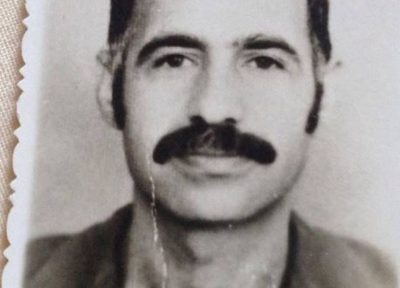
Ishaq Maragha
Samidoun Palestinian Prisoner Solidarity Network – November 19, 2107
16 November 2017 marks the 34th anniversary of the death of Palestinian prisoner Ishaq Maragha, one of four Palestinians whose lives were taken – three through forced-feeding – during a hunger strike for justice inside Israeli prisons. Maragha, who died in 1983, three years after he was grievously wounded by Israeli forced feeding, was not only a martyr but a longtime leader of the Palestinian prisoners’ movement and the Palestinian liberation struggle.
Along with Ali al-Jaafari and Rasim Halawa, he was martyred by Israeli force feeding aimed at breaking the hunger strike of Nafha prison in 1980. Fellow prisoner Anis al-Dawla also lost his life in 1980 from fatigue, malnutrition and disease caused by his solidarity strike in Ashkelon prison in support of the prisoners of Nafha.
Born in the town of Silwan near Jerusalem in 1942, he became a member of the Arab Nationalist Movement – the movement founded by George Habash, Wadie Haddad and other Arab and Palestinian young people looking towards liberation, unity and socialism – and was considered one of the first members of the movement in Palestine, joining in 1959 at the age of 17. He had four children, Jamal, Amal, Amina and Musa.
As a member of the ANM, he traveled to Egypt for military training in 1964. He joined the ranks of the Popular Front for the Liberation of Palestine from the very beginning of its foundation on December 11, 1967 from the Palestine Section of the ANM. Shortly over one year later, in February 1969, he was arrested by Israeli occupation forces on charges of being a leader in the PFLP in the Jerusalem area. After three years in Israeli prison including a period of intense torture under occupation, he was released from prison in August 1972.
As Abdel-Nasser Ferwana, Palestinian researcher on prisoners’ affairs notes, this was only a “fighter’s rest” for Maragha. In February 1975 he was once again seized by occupation forces and accused of participating in the resistance to occupation; he was sentenced to 20 years imprisonment.
Ferwana recalled meeting Maragha several times while visiting his imprisoned father, who would laer be released in the 1985 prisoner exchange with the Palestinian resistance. Maragha said to him as a young man, “The prisons will be destroyed and your father and I will be liberated.”
During his time in prison, he was transferred to Ramle, Beersheba and Nafha prisons; he was well-known among the prisoners as an example of a dedicated worker and a revolutionary leader. Ferwana caled him a “distinguished leader, loved by everyone, a brilliant instigator and a dedicated fighter…one of the pillars of the prisoners’ movement.” He became one of the leaders of the prison organization of the PFLP, responsible for international relations.
In 1980, Nafha prison was opened as an “exile and cemetery for the prisoners’ movement leaders;” Maragha was one of the first to be transferred there. The prisoners began their strike that year, on 14 July 1980. One of the hunger strikers, Abdel-Rahim al-Noubani, chronicled the development of the strike.
The prisoners demanded:
1. The prisoners demand the installation of beds
2. The prisoners demand access to a radio and television
3. The prisoners demand the improvement of the quality and quantity of food
4. The prisoners demand access to Arabic and Hebrew books and newspapers
5. The prisoners demand the expansion of windows, allowing more sun and air into the cell
6. The prisoners demand an end to the policy of collective and individual punishment, solitary confinement, depriving them food during their isolation, and only providing them with bread and water.
7. The prisoners demand the visiting allowance to be prolonged to one hour every two weeks
8. The prisoners demand access to winter and summer clothes, as well as blankets
9. The prisoners demand permission to buy food and vitamins from the prison canteen, which has been hitherto denied
10. The prisoners demand their walk allowance extend from 15 minutes to an hour
As Shahd Abusalama wrote chronicling her own father’s history in the Nafha strike, “Whenever Palestinian prisoners have gone on hunger strike, the Israeli authorities have responded by punishing them collectively. The Nafha hunger strike was no exception.”
After 10 days of hunger strike which drew growing international and Palestinian support, the Israeli occupation attempted a particularly cruel and dangerous form of force-feeding against 26 prisoners in which boiling water and salt were poured down tubes forced down the prisoners’ throats. In the case of Ishaq Maragha, Rasem Halawi and Ali al-Jaafari, the tube was not fully inserted and instead entered their lungs; the boiling water poured into the tube burned and destroyed their lungs. Halawi and Jaafari died almost immediately, killed by Israeli force feeding on their hunger strike.

Ishaq Maragha, Ali al-Jaafari, Rasem Halawa
Maragha later related the experience to al-Noubani:
“When we were put in the waiting room, the three of us collapsed onto a wooden bench, overcome with extreme exhaustion and fatigue. The pain was ripping our chest and gut apart. But it seemed that Ali Jaafari was the suffering the most; he grabbed the bars of the iron door, his drained voice shouting out to the section’s jailer and clinic doctor alternately, asking them to provide us with emergency assistance and treatment. He then turned to me suddenly and said, ‘Abu Jamal, I’m dying, I’m dying!’ I tried to calm him and raise his spirits, and boost his strength – for I had noticed something in him that I myself did not feel, despite the fact that we had both gone through the same torment.
Ali al-Jaafari started shouting again, ‘Abu Jamal, my legs have died, I can no longer feel them, they’re as cold as ice.’ I was helpless, and could do nothing but say to him, ‘Don’t be afraid, Ali, here comes the doctor, don’t worry.’ He suddenly shouted again, for the third and last time: ‘My arms have died, Abu Jamal.’ I was as drained as he was, and as he said this to me, my eyes filled with tears; I saw his last gasp escape from his deteriorated lung to his broken nose by the zonda hose; canals filled with blood and pain opened up inside him. His head was slightly bent over to his right shoulder and his cold hands were still holding onto the bar of that damned iron door. His gracious self slid away, and his pure soul left his body, and all the while he stood there, like a palm tree that had lasted a hundred years drying out. We rested the body of our martyr on the ground, shaking with sobs. In that moment, Rasem and I forgot we shared the same fate as he.”
Maragha also reported that the prison doctor swore that he would not let him die, not out of concern for his life, but because “I will not let them make you a national hero.”
The strike continued after the martyrdom of al-Jaafari and Halawa; Maragha became a key spokesperson for the strike to lawyers and before the world. After 33 days, the prisoners’ ended their strike with a victory in all of their demands.
Maragha was then transferred to Beersheba prison as his health deteriorated further and without the provision of any treatment until he died on 16 November 1983 of his ongoing injuries and wounds caused by his torture under forced feeding during the Nafha strike, leaving a legacy of struggle, sacrifice and commitment above all to the liberation of Palestine, his land and his people.
Ishaq Maragha was a beloved leader of the Palestinian prisoners’ movement and a symbol of the leading role of Palestinian prisoners in the struggle for the liberation of Palestine, whose bodies and lives are on the line on a daily basis in a direct confrontation with occupation. The hunger strikes of Palestinian prisoners are a collective means of struggle and immense self-sacrifice for dignity and freedom.
On the 34th anniversary of the passing of Ishaq Maragha, Samidoun Palestinian Prisoner Solidarity Network remembers him, Ali al-Jaafari, Rasim Halawa and the long legacy of the martyrs of the prisoners’ struggle – and their commitment to Palestinian and global liberation. Their deepest and most precious sacrifice must urge all of us around the world who stand with Palestinian rights, freedom and liberation to intensify and escalate our work for the freedom of the imprisoned leaders of the Palestinian people today. As plans for regional warfare and a so-called “deal of the century” promulgated by the United States and Israel with the backing of Saudi Arabia and reactionary forces threaten the Palestinian people, the people of the region and the world, the legacy of Ishaq Maragha and his fellow Palestinian prisoners can and must inspire us all to struggle at this critical moment to defend the Palestinian cause and struggle to achieve their goals of return and liberation.
Zionism’s Violent Legacy
By Donald Neff | Washington Report On Middle East Affairs | January 1996
On January 4, 1948, Jewish terrorists drove a truck loaded with explosives into the center of the all Arab city of Jaffa and detonated it, killing 26 and wounding around 100 Palestinian men, women and children.[1] The attack was the work of the Irgun Zvai Leumi – the “National Military Organization,” also known by the Hebrew letters Etzel – the largest Jewish terrorist group in Palestine. The Irgun was headed by Revisionist Zionist Menachem Begin and had been killing and maiming Arabs, Britons and even Jews for the previous ten years in its efforts to establish a Jewish state.
This terror campaign meant that at the core of Revisionist Zionism there existed a philosophical embrace of violence. It was this legacy of violence that contributed to the assassination of Israeli Prime Minister Yitzhak Rabin on November 4, 1995.
The Irgun was not the only Jewish terrorist group but it was the most active in causing indiscriminate terror in pre-Israel Palestine. Up to the time of the Jaffa attack, its most spectacular feat had been the July 22, 1946, blowing up of the King David Hotel in Jerusalem, with the killing of 91 people – 41 Arabs, 28 Britons and 17 Jews.[2]
The other major Jewish terrorist group operating in Palestine in the 1940s was the Lohamei Herut Israel – “Fighters for the Freedom of Israel,” Lehi in the Hebrew acronym – also known as the Stern Gang after its fanatical founder Avraham Stern. Two of its more spectacular outrages included the assassination of British Colonial Secretary Lord Moyne in Cairo on November 6, 1944, and the assassination of Count Folke Bernadotte of Sweden in Jerusalem on September 17, 1948.[3]
Both groups collaborated in the massacre at Deir Yassin, in which some 254 Palestinian men, women and children were slain on April 9, 1948. Palestinian survivors were driven like ancient slaves through the streets of Jerusalem by the celebrating terrorists.[4]
Yitzhak Shamir was one of the three leaders of Lehi who made the decision to assassinate Moyne and Bernadotte. Both he and Begin later became prime ministers and ruled Israel for a total of 13 years between 1977 and 1992. They were both leaders of Revisionist Zionism, that messianic group of ultranationalists founded by Vladimir Zeev Jabotinsky in the 1920s. He prophesied that it would take an “iron wall of Jewish bayonets” to gain a homeland among the Arabs in Palestine.[5] His followers took his slogan literally.
Begin and the Revisionists were heartily hated by the mainline Zionists led by David Ben-Gurion. He routinely referred to Begin as a Nazi and compared him to Hitler. In a famous letter to The New York Times in 1948, Albert Einstein called the Irgun “a terrorist, rightwing, chauvinist organization” that stood for “ultranationalism, religious mysticism and racial superiority.”[6] He opposed Begin’s visit to the United States in 1949 because Begin and his movement amounted to “a Fascist party for whom terrorism (against Jews, Arabs, and British alike), and misrepresentation are means, and a ‘leader state’ is the goal,” adding:
The IZL [Irgun] and Stern groups inaugurated a reign of terror in the Palestine Jewish community. Teachers were beaten up for speaking against them, adults were shot for not letting their children join them. By gangster methods, beatings, window smashing, and widespread robberies, the terrorists intimidated the population and exacted a heavy tribute.
Ben-Gurion considered the Revisionists so threatening that shortly after he proclaimed establishment of Israel on May 14, 1948, he demanded that the Jewish terrorist organizations disband. In defiance, Begin sought to import a huge shipment of weapons aboard a ship named Altalena, Jabotinsky’s nom de plume.[7]
The ship was a war surplus US tank landing craft and had been donated to the Irgun by Hillel Kook’s Hebrew Committee for National Liberation, an American organization made up of Jewish-American supporters of the Irgun.[8] Even in those days it was Jewish Americans who were the main source of funds for Zionism. While few of them emigrated to Israel, Jewish Americans were generous in financing the Zionist enterprise. As in Israel, they were split between mainstream Zionism and Revisionism. One of the best known Revisionists was Ben Hecht, the American newsman and playwright. After one of the Irgun’s terrorist acts, he wrote:[9]
The Jews of America are for you. You are their champions … Every time you blow up a British arsenal, or wreck a British jail, or send a British railroad train sky high, or rob a British bank, or let go with your guns and bombs at British betrayers and invaders of your homeland, the Jews of America make a little holiday in their hearts.
The Altalena was loaded with $5 million worth of arms, including 5,000 British Lee Enfield rifles, more than three million rounds of ammunition, 250 Bren guns, 250 Sten guns, 150 German Spandau machine guns, 50 mortars and 5,000 shells as well as 940 Jewish volunteers. Ben-Gurion reacted with fury, ordering the ship sunk in Tel Aviv harbor. Shell fire by the new nation’s armed forces set the Altalena afire, killing 14 Jews and wounding 69. Two regular army men were killed and six wounded during the fighting.[10] Begin had been aboard but escaped injury. Later that night he railed against Ben-Gurion as “a crazy dictator” and the cabinet as “a government of criminal tyrants, traitors and fratricides.”[11]
Ben-Gurion’s deputy commander in the Altalena affair was Yitzhak Rabin, the same man who as prime minister was assassinated by one of the spiritual heirs of Menachem Begin’s Irgun terrorist group. All his life, and especially in his last years, Rabin had opposed Jewish-Americans and their radical allies in Israel who continued to embrace the philosophy of the Irgun and who fought against the peace process, thereby earning their enduring hatred.
Thus at the heart of the Jewish state there has been a long and violent struggle between mainline Zionists and Revisionists that continues today. Despite cries after Rabin’s assassination that it was unknown for Jew to kill Jew, intramural hatred and occasional violence have marked relations between Zionism’s competing groups.
The core of that conflict, one that continues to divide Israel and its American supporters as well, lies in the different philosophies of David Ben-Gurion and Vladimir Jabotinsky. Both were from Eastern Europe, born in the 1880s, and both sought an exclusivist Jewish state. But while Ben-Gurion was pragmatic and secular, Jabotinsky was impatient and messianic, a leader who glorified in the heroic trappings of fascism. Ben-Gurion was usually willing to take less now to get more later, and thus he was content to accept partition of Palestine as a necessary stepping stone toward a larger Jewish state. Jabotinsky, on the other hand, impatiently preached the right of Jews not only to all of Palestine but to “both sides of the Jordan,” meaning the combined area of Jordan and Palestine, or as he called it, Eretz Yisrael, the ancient land of Israel.[12]
Ben-Gurion was a gruff realist who carefully calculated his moves with a wary eye toward the interests of the great European powers and the United States. Time magazine, in a profile of Ben-Gurion in August 1948, described him as “premier and defense minister, labor leader and philosopher, hardheaded, unsociable and abrupt politician, a prophet who carries a gun.[13] Wrote his biographer, Michael Bar-Zohar: “Obstinacy and total dedication to a single objective were the most characteristic traits of David Ben-Gurion.”[14]
Jabotinsky, by contrast, was flamboyant and a devoted admirer of Italy’s fascist leader Benito Mussolini. His disciple, Menachem Begin, described him as “a speaker, a writer, a philosopher, a statesman, a soldier, a linguist … But to those of us who were his pupils, he was not only their teacher, but also the bearer of their hope.” Begin’s biographer, Eric Silver, added: “There was a darker side to [Jabotinsky’s] philosophy: blood, fire and steel, the supremacy of the leader, discipline and ceremony, the manipulation of the masses, racial exclusivity as the heart of the nation.[15] One of Jabotinsky’s slogans was: “We shall create, with sweat and blood, a race of men, strong, brave and cruel.”[16]
Jabotinsky died in 1940, and it was Menachem Begin who refined his wild nationalism into practical political action. Begin concluded: “The world does not pity the slaughtered. It only respects those who fight.” He turned Descartes’ famous dictum around, saying: “We fight, therefore we exist.”[17] Central to Begin’s outlook was the concept of the “fighting Jew.” As he wrote:[18]
Out of blood and fire and tears and ashes, a new specimen of human being was born, a specimen completely unknown to the world for over 1,800 years, the “FIGHTING JEW.” It is axiomatic that those who fight have to hate …. We had to hate first and foremost, the horrifying, age-old, inexcusable utter defenselessness of our Jewish people, wandering through millennia, through a cruel world, to the majority of whose inhabitants the defenselessness of the Jews was a standing invitation to massacre them.
From these early leaders of Zionism (Ben-Gurion died in 1973 and Begin in 1992) have emerged their direct descendants in the Israeli political spectrum. Rabin and his successor, Shimon Peres, were both protégés of Ben-Gurion, and have carried on his mainstream secular Zionism. On Jabotinsky’s and Begin’s side, the followers have been Yitzhak Shamir, Ariel Sharon and, now, Benjamin Netanyahu, the current leader of the Likud.
Rabin’s Strategy
While the two major factions of Zionism disagree on tactics, their ultimate aim of maintaining a Jewish state free of non-Jews was the same. Rabin explained his strategy shortly before his death during an interview with Rowland Evans and Robert Novak:[19]
I believe that dreams of Jews for two thousand years to return to Zion were to build a Jewish state and not a binational state. Therefore I don’t want to annex the 2.2 million Palestinians who are a different entity from us – politically, religiously, nationally – against their will to become Israelis. Therefore I see peaceful coexistence between Israel as a Jewish state – not all over the land of Israel, on most of it, its capital the united Jerusalem, its security border the Jordan River – next to it a Palestinian entity, less than a state, that runs the life of the Palestinians. It is not ruled by Israel. It is ruled by the Palestinians. This is my goal not to return to the pre-Six-Day-War lines, but to create two entities. I want a separation between Israel and the Palestinians who reside in the West Bank and the Gaza Strip, and they will be a different entity that rules itself.
In the Revisionist’s vocabulary, the goal was the same, if more expansionist and expressed in more direct and pugnacious words. Former Defense Minister Ariel Sharon, a leading spokesman of Zionism’s right wing, commented in 1993: “Our forefathers did not come here in order to build a democracy but to build a Jewish state.”[20]
The occupation of all of Palestine, including Jerusalem, in the 1967 war and the coming to power a decade later of Menachem Begin gave a profound boost to Revisionism and its radical philosophy. During this period there arose the firebrand Meir Kahane, a Brooklyn-born rabbi who openly espoused the removal of the Palestinians from all of Palestine. Under the influence of his fiery rhetoric, thousands of Orthodox Jewish Americans were encouraged to emigrate to Israel as settlers on occupied Palestinian land, adding to the radicalization of Israeli politics. After Kahane’s assassination in New York in 1990 by an Arab, New York Times correspondent John Kifner reported that Kahane had been successful in the sense that many of his ideas “had crept into the mainstream” in Israel.
Dr. Ehud Sprinzak, an Israeli expert on the far right in Israel, observed: “Where [Kahane] has succeeded is in changing the thinking of many Israelis toward anti-Arab feelings and violence. He forced the more respectable parties to change. In the 1970s Kahane was in the political wilderness, but in the 1980s the center had moved toward Kahane.” Observed the Jewish Telegraph Agency : “Rabbi Kahane could die satisfied that his message has impacted deeply and widely throughout Israeli society.”[21]
By the mid-1990s, even Kahane’s violent ideas seemed somewhat mild in the context of the radicalized politics of Israel. A new strain of religious extremism has been added to the Revisionist ranks. This became obvious on February 25, 1994, when Brooklyn-born Dr. Baruch Goldstein, a Kahane disciple, walked into the Ibrahim mosque, called the Cave of Machpela by Jews, in Hebron and killed 29 and wounded upwards of 150 Palestinian worshippers.[22] While Rabin and labor Zionists condemned him, Goldstein became a hero for Revisionist Zionists. A shrine was made of his grave and a group of Revisionists grew up called “Goldsteiners.” They are dedicated to the “sublime ideals of Goldstein” and urge “all true Jews to follow his footsteps.”[23]

Baruch Goldstein wore a yellow Star of David with the German word for “Jew” to show his ardent concern for the “lessons of the Holocaust” and its meaning for all Jews. Today many hardline Zionists revere this mass murderer of Palestinians as a Jewish hero and martyr.
While the Revisionists had always had an element of religious messianism, the most radical of their current heirs come from ultrareligious Orthodox Jews who are less consumed by politics than religion.[24] They believe they are God’s messengers. Thus Rabin’s assassin, Yigal Amir, cited the authority of God to explain the murder.
This is a sea change in the mindset – if not the violence – of the traditional Revisionists. For instance, in 1943 Yitzhak Shamir ordered the assassination of one of his closest Sternist friends, but offered an entirely different rationale that had nothing to do with God. Mainly the motive stemmed from political and tactical reasons. Shamir wrote in his memoirs, In the Final Analysis, that Stern commander Eliyahu Giladi had become “strange and wild” and had wanted to shoot at crowds of Jews and urged the assassination of David Ben-Gurion, acts that would have been highly unpopular. Wrote Shamir: “I was afraid that he had gone completely crazy. I knew that I had to take a fateful decision, and I didn’t evade it.”[25] Giladi was fatally shot in the back on a beach south of Tel Aviv and his killer was never found.[26]
The new Revisionists have now expanded the right to kill claimed by the early Revisionists in the name of nationalism to include a divine right. In the end, they are less interested in foreign and domestic affairs than in justifying man’s acts to God. It is a powerful and inflammatory mix of nationalism and religion that is almost certain to lead to more violence unless Israel is able to look into its own soul.
Recommended Reading
- Bar-Zohar, Michael, Ben-Gurion: A Biography, New York: Delacorte, 1978. Begin, Menachem, The Revolt, Los Angeles: Nash, 1972. Bell, J. Bowyer, ‘/error Out of Zion, New York: St. Martin’s, 1977. Ben-Gurion, David, Israel: A Personal History, New York: Funk & Wagnalls, Inc., 1971.
- Bethell, Nicholas, The Palestine Triangle: The Struggle for the Holy Land, 1935-48, New York: G.P. Putnam’s Sons, 1979.
- Brenner, Lenni, Zionism in the Age of the Dictators, Westport, Conn.: Lawrence Hill, 1983.
- Brenner, Lenni, The Iron Wall: Zionist Revisionism from Jabotinsky to Shamir, London: Zed Books, 1984.
- Halsell, Grace, Prophesy and Politics: Militant Evangelists on the Road to Nuclear War, Westport, Conn.: Lawrence Hill, 1986.
- Khalidi, Walid (ed.), Before Their Diaspora: A Photographic History of the Palestinians 1876-1948, Washington, DC: Institute for Palestine Studies, 1984.
- Khalidi, Walid, From Haven to Conquest: Readings in Zionism and the Palestine Problem until 1948, Washington, DC: Institute for Palestine Studies, second printing, 1987.
- Marion, Kati, A Death in Jerusalem, New York: Pantheon, 1994.
- Nakhleh, Issa, Encyclopedia of the Palestine Problem (2 vols.), New York: Intercontinental, 1991.
- Palumbo, Michael, The Palestinian Catastrophe: The 1948 Expulsion of a People from their Homeland, Boston: Faber and Faber, 1987.
- Rubinstein, Ammon, The Zionist Dream Revisited, New York: Schocken, 1984.
- Sachar, Howard M., A History of Israel: From the Rise of Zionism to Our Time, Tel Aviv: Steimatzky’s Agency, 1976.
- Silver, Eric, Begin: The Haunted Prophet, New York: Random House, 1984.
- Tillman, Seth, The United States in the Middle East: Interests and Obstacles, Bloomington: Indiana Univ. Press, 1982.
Notes
[1] Sam Pope Brewer, New York Times, Jan. 5, 1948, and Khalidi, Before Their Diaspora, p. 316. Also see Palumbo, The Palestinian Catastrophe, pp. 83-4. Initial reports put the death toll at 34.
[2] Bethell, The Palestine Triangle, p. 263; Sachar, A History of Israel, p. 267. Details on the bombing and reaction of British officials are in Nakhleh, Encyclopedia of the Palestine Problem, pp. 269-70.
[3] Bethell, Palestine Triangle, pp. 181-87, 263; Sachar, A History of Israel, p. 267; Marion, A Death in Jerusalem, p. 208.
[4] Khalidi, From Haven to Conquest, pp. 761-78; Silver, Begin, pp. 88-96; Nakhleh, Encyclopedia of the Palestine Problem, pp. 271-72.
[5] Silver, Begin, p. 12.
[6] New York Times, Nov. 27, 1948.
[7] Bar-Zohar, Ben-Gurion, p. 175.
[8] Silver, Begin, p. 98.
[9] Bethell, The Palestine Triangle, pp. 308-9. An interview reflecting Hecht’s views appeared in The New York Times, May 28, 1947.
[10] Silver, Begin, p. 108.
[11] Silver, Begin, p. 108.
[12] In Hebrew, Eretz Yisrael means the “Land of Israel,” a phrase invested with strong nationalist feelings.
[13] Time, August 16, 1948.
[14] Bar-Zohar, Ben Gurian, pp. 77, xvii.
[15] Silver, Begin, p. 11.
[16] Elfi Pallis, “The Likud Party: A Primer,” Journal of Palestine Studies, Winter 1992, p. 45.
[17] Begin, The Revolt, pp. 36, 46. Also see Tillman, The United States in the Middle East, p. 20.
[18] Begin, The Revolt, pp. xi-xii. Also see Elfi Pallis, “The Likud Party: A Primer,” Journal of Palestine Studies, Winter 1992, p. 45.
[19] Evans and Novak, CNN, Oct. 1, 1995.
[20] Menachem Shalev, Forward, May 21, 1339.
[21] John Kifner, New York Times, Nov. 11, 1990.
[22] David Hoffman, Washington Post, Feb. 28, 1994.
[23] Khalid M. Amayreh, “Six Months On,” Middle East International, Sept. 9, 1994.
[24] Halsell, Prophecy and Politics, p. 75, provides an excellent analysis of the extremist beliefs of Jabotinsky and his followers and their alliance with American fundamentalist Christians such as Jerry Falwell, leader of the Moral Ml\iority.
[25] Clyde Haberman, New York Times, Jan. 15, 1994.
[26] Glenn Frankel, Washington Post, Nov. 6, 1995.
From The Journal of Historical Review, Jan.-Feb. 1996 (Vol. 16, No. 1), pages 42-45. This item is reprinted from the January 1996 issue of The Washington Report on Middle East Affairs (Washington, DC).
About the Author
Donald Neff is an American journalist and author. For 16 years he worked for Time magazine, including a period as its Bureau Chief in Israel. He also worked for the Washington Star daily newspaper. He is the author of Fallen Pillars: U.S. Policy Towards Palestine and Israel Since 1945 (1995), as well as of the 1988 trilogy, Warriors at Suez: Eisenhower Takes America Into the Middle East in 1956, Warriors for Jerusalem: The Six Days that Changed the Middle East, and Warriors Against Israel: America Comes to the Rescue.
Israel’s Ploy Selling a Syrian Nuke Strike
By Gareth Porter | Consortium News | November 18, 2017
In September 2007, Israeli warplanes bombed a building in eastern Syria that the Israelis claimed held a covert nuclear reactor that had been built with North Korean assistance. Seven months later, the CIA released an extraordinary 11-minute video and mounted press and Congressional briefings that supported that claim.
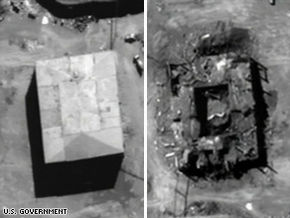
Supposed Syrian nuclear site before and after Israeli airstrike
But nothing about that alleged reactor in the Syrian desert turns out to be what it appeared at the time. The evidence now available shows that there was no such nuclear reactor, and that the Israelis had misled George W. Bush’s administration into believing that it was in order to draw the United States into bombing missile storage sites in Syria. Other evidence now suggests, moreover, that the Syrian government had led the Israelis to believe wrongly that it was a key storage site for Hezbollah missiles and rockets.
The International Atomic Agency’s top specialist on North Korean reactors, Egyptian national Yousry Abushady, warned top IAEA officials in 2008 that the published CIA claims about the alleged reactor in the Syrian desert could not possibly have been true. In a series of interviews in Vienna and by phone and e-mail exchanges over several months Abushady detailed the technical evidence that led him to issue that warning and to be even more confident about that judgment later on. And a retired nuclear engineer and research scientist with many years of experience at Oak Ridge National Laboratory has confirmed a crucial element of that technical evidence.
Published revelations by senior Bush administration officials show, moreover, that principal U.S. figures in the story all had their own political motives for supporting the Israeli claim of a Syrian reactor being built with North Korean help.
Vice President Dick Cheney hoped to use the alleged reactor to get President George W. Bush to initiate U.S. airstrikes in Syria in the hope of shaking the Syrian-Iranian alliance. And both Cheney and then CIA Director Michael Hayden also hoped to use the story of a North Korean-built nuclear reactor in Syria to kill a deal that Secretary of State Condoleezza Rice was negotiating with North Korea on its nuclear weapons program in 2007-08.
Mossad Chief’s Dramatic Evidence
In April 2007 the chief of Israel’s Mossad foreign intelligence agency, Meir Dagan, presented Cheney, Hayden and National Security Adviser Steven Hadley with evidence of what he said was a nuclear reactor being constructed in eastern Syria with the help of the North Koreans. Dagan showed them nearly a hundred hand-held photographs of the site revealing what he described as the preparation for the installation of a North Korean reactor and claimed that it was only a few months from being operational.
The Israelis made no secret of their desire to have a U.S. airstrike destroy the alleged nuclear facility. Prime Minister Ehud Olmert called President Bush immediately after that briefing and said, “George, I’m asking you to bomb the compound,” according to the account in Bush’s memoirs.
Cheney, who was known to be a personal friend of Olmert, wanted to go further. At White House meetings in subsequent weeks, Cheney argued forcefully for a U.S. attack not only on the purported reactor building but on Hezbollah weapons storage depots in Syria. Then-Secretary of Defense Robert Gates, who participated in those meetings, recalled in his own memoirs that Cheney, who was also looking for an opportunity to provoke a war with Iran, hoped to “rattle Assad sufficiently so as to end his close relationship with Iran” and “send a powerful warning to the Iranians to abandon their nuclear ambitions.”
CIA Director Hayden aligned the agency clearly with Cheney on the issue, not because of Syria or Iran but because of North Korea. In his book, Playing to the Edge, published last year, Hayden recalls that, at a White House meeting to brief President Bush the day after Dagan’s visit, he whispered in Cheney’s ear, “You were right, Mr. Vice-President.”
Hayden was referring to the fierce political struggle within the Bush administration over North Korea policy that had been underway ever since Condoleezza Rice had become Secretary of State in early 2005. Rice had argued that diplomacy was the only realistic way to get Pyongyang to retreat from its nuclear weapons program. But Cheney and his administration allies John Bolton and Robert Joseph (who succeeded Bolton as the key State Department policymaker on North Korea after Bolton became U.N. Ambassador in 2005) were determined to end the diplomatic engagement with Pyongyang.
Cheney was still maneuvering to find a way to prevent the successful completion of the negotiations, and he saw the story of a Syrian nuclear reactor built secretly in the desert with help from the North Koreans as bolstering his case. Cheney reveals in his own memoirs that in January 2008, he sought to sandbag Rice’s North Korea nuclear deal by getting her to agree that a failure by North Korea to “admit they’ve proliferating to the Syrians would be a deal killer.”
Three months later, the CIA released its unprecedented 11-minute video supporting the entire Israeli case for a North-Korean-style nuclear reactor that was nearly completed. Hayden recalls that his decision to release the video on the alleged Syrian nuclear reactor in April 2008 was “to avoid a North Korean nuclear deal being sold to a Congress and a public ignorant of this very pertinent and very recent episode.”
The video, complete with computer reconstructions of the building and photographs from the Israelis made a big splash in the news media. But one specialist on nuclear reactors who examined the video closely found abundant reason to conclude that the CIA’s case was not based on real evidence.
Technical Evidence against a Reactor
Egyptian national Yousry Abushady was a PhD in nuclear engineering and 23-year veteran of the IAEA who had been promoted to section head for Western Europe in the operations division of agency’s Safeguards Department, meaning that he was in charge of all inspections of nuclear facilities in the region. He had been a trusted adviser to Bruno Pellaud, IAEA Deputy Director General for Safeguards from 1993 to 1999, who told this writer in an interview that he had “relied on Abushady frequently.”
Abushady recalled in an interview that, after spending many hours reviewing the video released by the CIA in April 2008 frame by frame, he was certain that the CIA case for a nuclear reactor at al-Kibar in the desert in eastern Syria was not plausible for multiple technical reasons. The Israelis and the CIA had claimed the alleged reactor was modeled on the type of reactor the North Koreans had installed at Yongbyon called a gas-cooled graphite-moderated (GCGM) reactor.
But Abushady knew that kind of reactor better than anyone else at the IAEA. He had designed a GCGM reactor for his doctoral student in nuclear engineering, had begun evaluating the Yongbyon reactor in 1993, and from 1999 to 2003 had headed the Safeguards Department unit responsible for North Korea.
Abushady had traveled to North Korea 15 times and conducted extensive technical discussions with the North Korean nuclear engineers who had designed and operated the Yongbyon reactor. And the evidence he saw in the video convinced him that no such reactor could have been under construction at al-Kibar.
On April 26, 2008, Abushady sent a “preliminary technical assessment” of the video to IAEA Deputy Director General for Safeguards Olli Heinonen, with a copy to Director General Mohamed ElBaradei. Abushady observed in his memorandum that the person responsible for assembling the CIA video was obviously unfamiliar with either the North Korean reactor or with GCGM reactors in general.
The first thing that struck Abushady about the CIA’s claims was that the building was too short to hold a reactor like the one in Yongbyon, North Korea.
“It is obvious,” he wrote in his “technical assessment” memo to Heinonen, “that the Syrian building with no UG [underground] construction, can not hold a [reactor] similar [to] NK GCR [North Korean gas-cooled reactor].”
Abushady estimated the height of the North Korean reactor building in Yongbyon at a 50 meters (165 feet) and estimated that the building at al-Kibar at a little more than a third as tall.
Abushady also found the observable characteristics of the al-Kibar site inconsistent with the most basic technical requirements for a GCGM reactor. He pointed out that the Yongbyon reactor had no less than 20 supporting buildings on the site, whereas the satellite imagery shows that the Syrian site did not have a single significant supporting structure.
The most telling indication of all for Abushady that the building could not have been a GCGM reactor was the absence of a cooling tower to reduce the temperature of the carbon dioxide gas coolant in such a reactor.
“How can you work a gas-cooled reactor in a desert without a cooling tower?” Abushady asked in an interview.
IAEA Deputy Director Heinonen claimed in an IAEA report that the site had sufficient pumping power to get river water from a pump house on the nearby Euphrates River to the site. But Abushady recalls asking Heinonen, “How could this water be transferred for about 1,000 meters and continue to the heat exchangers for cooling with the same power?”
Robert Kelley, a former head of the U.S. Department of Energy’s Remote Sensing Laboratory and former senior IAEA inspector in Iraq, noticed another fundamental problem with Heinonen’s claim: the site had no facility for treating the river water before it reached the alleged reactor building.
“That river water would have been carrying debris and silt into the reactor heat exchangers,” Kelley said in an interview, making it highly questionable that a reactor could have operated there.
Yet another critical piece that Abushady found missing from the site was a cooling pond facility for spent fuel. The CIA had theorized that the reactor building itself contained a “spent fuel pond,” based on nothing more than an ambiguous shape in an aerial photograph of the bombed building.
But the North Korean reactor at Yongbyon and all 28 other GCGM reactors that had been built in the world all have the spent fuel pond in a separate building, Abushady said. The reason, he explained, was that the magnox cladding surrounding the fuel rods would react to any contact with moisture to produce hydrogen that could explode.
But the definitive and irrefutable proof that no GCGM reactor had been present at al-Kibar came from the environmental samples taken by the IAEA at the site in June 2008. Such a reactor would have contained nuclear-grade graphite, Abushady explained, and if the Israelis had actually bombed a GCGM reactor, it would have spread particles of nuclear-grade graphite all over the site.
Behrad Nakhai, a nuclear engineer at Oak Ridge National Laboratory for many years, confirmed Abshuady’s observation in an interview. “You would have had hundreds of tons of nuclear-grade graphite scattered around the site,” he said, “and it would have been impossible to clean it up.”
IAEA reports remained silent for more than two years about what the samples showed about nuclear-grade graphite, then claimed in a May 2011 report that the graphite particles were “too small to permit an analysis of the purity compared to that normally required for use in a reactor.” But given the tools available to laboratories, the IAEA claim that they couldn’t determine whether the particles were nuclear grade or not “doesn’t make sense,” Nakhai said.
Hayden acknowledged in his 2016 account that “key components” of a nuclear reactor site for nuclear weapons were “still missing.” The CIA had tried to find evidence of a reprocessing facility in Syria that could be used to obtain the plutonium for a nuclear bomb but had been unable to find any trace of one.
The CIA also had found no evidence of a fuel fabrication facility, without which a reactor could not have gotten the fuel rods to be reprocessed. Syria could not have gotten them from North Korea, because the fuel fabrication plant at Yongbyon had produced no fuel rods since 1994 and was known to have fallen into serious disrepair after the regime had agreed to scrap its own plutonium reactor program.
Manipulated and Misleading Photographs
Hayden’s account shows that he was ready to give the CIA’s stamp of approval to the Israeli photographs even before the agency’s analysts had even begun analyzing them. He admits that when he met Dagan face-to-face he didn’t ask how and when Mossad had obtained the photographs, citing “espionage protocol” among cooperating intelligence partners. Such a protocol would hardly apply, however, to a government sharing intelligence in order to get the United States to carry out an act of war on its behalf.
The CIA video relied heavily on the photographs that Mossad had given to Bush administration in making its case. Hayden writes that it was “pretty convincing stuff, if we could be confident that the pictures hadn’t been altered.”
But by his own account Hayden knew Mossad had engaged in at least one deception. He writes that when CIA experts reviewed the photographs from Mossad, they found that one of them had been photo-shopped to remove the writing on the side of a truck.
Hayden professes to have had no concern about that photo-shopped picture. But after this writer asked how CIA analysts interpreted Mossad’s photo shopping of the picture as one of the questions his staff requested in advance of a possible interview with Hayden, he declined the interview.
Abushady points out that the main issues with the photographs the CIA released publicly are whether they were actually taken at the al-Kibar site and whether they were consistent with a GCGM reactor. One of the photographs showed what the CIA video called “the steel liner for the reinforced-concrete reactor vessel before it was installed.” Abushady noticed immediately, however, that nothing in the picture links the steel liner to the al-Kibar site.
Both the video and CIA’s press briefing explained that the network of small pipes on the outside of the structure was for “cooling water to protect the concrete against the reactor’s intense heat and radiation.”
But Abushady, who specializes in such technology, pointed out that the structure in the picture bore no resemblance to a Gas-Cooled Reactor vessel. “This vessel cannot be for a Gas-Cooled Reactor,” Abushady explained, “based on its dimensions, it thickness and the pipes shown on the side of the vessel.”
The CIA video’s explanation that the network of pipes was necessary for “cooling water” made no sense, Abushady said, because gas-cooled reactors use only carbon dioxide gas — not water — as a coolant. Any contact between water and the Magnox-cladding used in that type of reactor, Abushady explained, could cause an explosion.
A second Mossad photograph showed what the CIA said were the “exit points” for the reactor’s control rods and fuel rods. The CIA juxtaposed that photograph with a photograph of the tops of the control rods and fuel rods of the North Korean reactor at Yongbyon and claimed a “very close resemblance” between the two.
Abushady found major differences between the two pictures, however. The North Korean reactor had a total of 97 ports, but the picture allegedly taken at al-Kibar shows only 52 ports. Abushady was certain that the reactor shown in the photograph could not have been based on the Yongbyon reactor. He also noted that the picture had a pronounced sepia tone, suggesting that it was taken quite a few years earlier.
Abushady warned Heinonen and ElBaradei in his initial assessment that the photo presented as taken from inside the reactor building appeared to an old photo of a small gas-cooled reactor, most likely an early such reactor built in the U.K.
A Double Deception
Many observers have suggested that Syria’s failure to protest the strike in the desert loudly suggests that it was indeed a reactor. Information provided by a former Syrian air force major who defected to an anti-Assad military command in Aleppo and by the head of Syria’s atomic energy program helps unlock the mystery of what was really in the building at al-Kibar.
The Syrian major, “Abu Mohammed,” told The Guardian in February 2013 that he was serving in the air defense station at Deir Azzor, the city nearest to al-Kibar, when he got a phone call from a Brigadier General at the Strategic Air Command in Damascus just after midnight on Sept. 6, 2007. Enemy planes were approaching his area, the general said, but “you are to do nothing.”
The major was confused. He wondered why the Syrian command would want to let Israeli fighter planes approach Deir Azzor unhindered. The only logical reason for such an otherwise inexplicable order would be that, instead of wanting to keep the Israelis away from the building at al-Kibar, the Syrian government actually wanted the Israelis to attack it. In the aftermath of the strike, the Damascus issued only an opaque statement claiming that the Israeli jets had been driven away and remaining silent on the airstrike at al-Kibar.
Abushady told this writer he learned from meetings with Syrian officials during his final year at the IAEA that the Syrian government had indeed originally built the structure at al-Kibar for the storage of missiles as well as for a fixed firing position for them. And he said Ibrahim Othman, the head of Syria’s Atomic Energy Commission, had confirmed that point in a private meeting with him in Vienna in September 2015.
Othman also confirmed Abushady’s suspicion from viewing satellite photographs that the roof over the central room in the building had been made with two movable light plates that could be opened to allow the firing of a missile. And he told Abushady that he had been correct in believing that what had appeared in a satellite image immediately after the bombing to be two semi-circular shapes was what had remained of the original concrete launching silo for missiles.
In the wake of the Israel’s 2006 invasion of Southern Lebanon, the Israelis were searching intensively for Hezbollah missiles and rockets that could reach Israel and they believed many of those Hezbollah weapons were being stored in Syria. If they wished to draw the attention of the Israelis away from actual missile storage sites, the Syrians would have had good reason to want to convince the Israelis that this was one of their major storage sites.
Othman told Abushady that the building had been abandoned in 2002, after the construction had been completed. The Israelis had acquired ground-level pictures from 2001-02 showing the construction of outer walls that would hide the central hall of the building. The Israelis and the CIA both insisted in 2007-08 that this new construction indicated that it had to be a reactor building, but it is equally consistent with a building designed to hide missile storage and a missile-firing position.
Although Mossad went to great lengths to convince the Bush administration that the site was a nuclear reactor, what the Israelis really wanted was for the Bush administration to launch U.S. airstrikes against Hezbollah and Syrian missile storage sites. Senior officials of the Bush administration didn’t buy the Israeli bid to get the United States to do the bombing, but none of them ever raised questions about the Israeli ruse.
So both the Assad regime and the Israeli government appear to have succeeded in carrying out their own parts in a double deception in the Syrian desert.
Gareth Porter is an independent investigative journalist and historian on U.S. national security policy and the recipient of the 2012 Gellhorn Prize for journalism.
Guardian, NYT Paint Power-Grabbing Saudi Dictator as Roguish, Visionary ‘Reformer’
By Adam Johnson | FAIR | November 17, 2017

The Guardian (11/5/17)
Two weeks ago, Saudi Crown Prince Mohammed bin Salman carried out a brutal crackdown on his political opponents, arresting dozens of high-ranking relatives, kidnapping the prime minister of Lebanon, and seeing eight of his political rivals die in a convenient helicopter crash. The “consolidation of power” by the de facto Saudi ruler comes as his government ramps up its siege of Yemen and gets even closer to its US sponsor, thanks to a Trump’s dopey love affair with—and direct assistance of—the regime.
The cynical plan has been met, in some media quarters, with condemnation, but for many in the Western press, Mohammed’s self-serving power grab is the action of a bold “reformer,” a roguish bad boy doing the messy but essential work of “reforming” the kingdom—the “anti-corruption” pretext of the purge largely repeated without qualification. The most prominent sources for this spin were two major newspapers, the New York Times and Guardian:
- Guardian (11/5/17): “Royal Purge Sends Shockwaves Through Saudi Arabia’s Elites: Move Consolidates Power of Prince Mohammed Bin Salman as He Attempts to Reform Kingdom’s Economy and Society”
- Guardian (11/5/17) : “Saudi Arrests Show Crown Prince Is a Risk-Taker With a Zeal for Reform: Mohammed Bin Salman Is Confronting Some of the Kingdom’s Richest and Most Powerful Men in His Anti-Corruption Drive—but Is He Taking on Too Much Too Fast?”
- Guardian (11/6/17): “Oil Price Rises to Two-Year High After Saudi Arabia Purge: Markets Push Price Up to $62 a Barrel After Anti-Corruption Purge by Billionaire Crown Prince Who Backs Prolonging Oil Production Curbs”
- Guardian (11/7/17): “‘This Is a Revolution’: Saudis Absorb Crown Prince’s Rush to Reform: Consolidation of Power in Mohammed Bin Salman’s Hands Has Upended All Aspects of Society, Including Previously Untouchable Ultra-Elite”
- New York Times (11/5/17): “Saudi Crown Prince’s Mass Purge Upends a Longstanding System”
- New York Times (11/14/17): “The Upstart Saudi Prince Who’s Throwing Caution to the Wind”
While the text of the Times articles was far more skeptical about Mohammed’s motives, the Guardian’s (11/5/17) initial coverage of the bloody purge—not just the headlines—was written in breathless press release tones:
Saudi Arabia’s leadership has pulled off its boldest move yet to consolidate power around its young crown prince, Mohammed bin Salman, arresting 11 senior princes, one of the country’s richest men and scores of former ministers in what it billed as a corruption purge.
The move sidelined at least 20 senior figures, among them outspoken billionaire, Prince Alwaleed bin Talal, sending shockwaves through the ranks of the kingdom’s elites, who had long viewed senior royals as immune.
Lots of glowing prose to unpack here. Longtime Mideast correspondent Martin Chulov began by referring to “Saudi Arabia’s leadership,” which is a nice, sterile way of referencing the country’s unelected hereditary king and crown prince. Then he pivoted into marketing pablum about “bold moves” and “consolidating power,” before unironically framing the purge as an “anti-corruption” gesture designed to stick it to the “kingdom’s elites.” One could come away from reading this lead with the impression that the billionaire aristocrat was a populist folk hero in the vein of Robin Hood or John Dillinger. The thrilling profile continued:
Prince Mohammed will oversee the corruption commission, adding to his already formidable list of responsibilities, including his role as Defense minister and champion of the economic transformation, dubbed Vision 2030, that aims to revolutionize most aspects of Saudi life within 12 years.
Prince Mohammed told the Guardian last month that the kingdom had been “not normal” for the past 30 years and pledged to return Saudi Arabia to moderate Islam.
While the author had a “to be sure” paragraph, citing “others” calling it a “naked attempt to weed out dissent,” the overall thrust of the article was that a roguish billionaire Boy King was earnestly seeking “reform” and opposing “elites.”
A follow-up piece (11/7/17) took flattering coverage to new extremes. The dispatch, again by Chulov, cited nothing but anonymous Saudi court hanger-ons and a Gulf-funded talking head from the NATO-aligned Atlantic Council think tank. The article, “‘This Is a Revolution’: Saudis Absorb Crown Prince’s Rush to Reform,” was populated with blind quotes from such adversarial voices as a “senior minister,” “a senior Saudi official,” a “senior figure,” a “senior Saudi businessman” and “veteran business leaders.” (Evidently no junior officials or rookie business leaders were available for comment.)
The article painted the “consolidation of power” by Mohammed as an inevitability with broad support—using the dubious “reform” narrative without irony. With Guardian editors again painting Mohammed as a populist hero by insisting he “upended” “previously untouchable ultra-elite,” one is left to wonder why they don’t consider the absolute-monarch-in-waiting—who just bought a $590 million yacht—part of the “ultra elite.” It’s a curious framing that reeks more of PR than journalism.

The New York Times (6/23/17)
This was a trope one could see emerging over the past few months. Similar “bold reformer” frames were used in New York Times editorials (“The Young and Brash Saudi Crown Prince,” 6/23/17) and straight reporting (“Saudi Arabia’s Grand Plan to Move Beyond Oil: Big Goals, Bigger Hurdles,” 10/24/17). Everything’s new and exciting. The brutal, routine functions of the Saudi state are seen as laws of nature—and those in charge of it are the reformers of the very oppression they initially authored.
A Guardian editorial on November 7 was critical of the government, calling it “regressive” and Mohammed “belligerent,” but ultimately rested on “both sides” framing of recent events. The only meaningfully critical coverage of Saudi Arabia coming from the Guardian since the purge has been in two articles (11/12/17, 11/16/17), both in the context of Saudi Arabia’s war on Yemen. Neither mentioned bin Salman, and both stressed how the Saudis are responding in earnest to international pleas to stop their mass-murdering blockade of the Arab world’s poorest country.
Per usual, the Guardian reserves the label “regime” for Official Enemies like Syria and North Korea; Saudi Arabia doesn’t have a regime, it has “leadership.” Unlike adversary governments, often seen in need of “regime change,” the Saudi government merely requires “reform”—and a bold new “reformer,” of the sort championed by the likes of the Guardian and New York Times.
You can send a message to the New York Times at letters@nytimes.com , and to the Guardian at guardian.letters@theguardian.com (Twitter: @NYTimes, @Guardian). Please remember that respectful communication is the most effective.
Security Council-appointed panel says no missiles sent to Houthis, refuting Saudi Arabia claim
Press TV – November 18, 2017
A United Nations Security Council-appointed panel has said in a confidential memo that it has seen no evidence to support Saudi Arabia’s claims that missiles have been transferred to Yemen’s Houthis fighters by external sources.
The panel made the conclusion in a confidential assessment sent to Security Council diplomats on November 10, The Intercept, a US-based investigative website, reported on Friday.
On November 4, a missile attack from Yemen targeted the King Khalid International Airport (KKIA) near the Saudi capital, Riyadh. It was the first missile from Yemen to have reached deep inside Saudi territory.
The Houthi movement, which has been fighting back a Saudi-led coalition with allied Yemeni army troops and tribal fighters, said it had fired the missile, which the Saudis said they had intercepted mid-air.
However, the Riyadh regime quickly blamed the Islamic Republic for the incident.
Heating up rhetoric against Iran, and then being proven wrong
In a November 7 letter to the Security Council, Saudi UN Ambassador Abdallah al-Mouallimi claimed that the debris of the missiles fired by the Houthis on July 22 and November 4 confirmed Iran’s role “in manufacturing these missiles.”
Following the attack, the Saudi-led coalition tightened a blockade that had already been imposed on Yemen in a bid to prevent “the smuggling of weapons, ammunitions, missile parts and cash that are regularly being supplied by Iran” to the Houthis.
It invoked Paragraph 14 of Security Council Resolution 2216, which was passed in April 2015, calling for measures to prevent the supply, sale, or transfer of military goods to Houthi fighters.
The coalition said the missile’s firing was “a blatant act of military aggression” by the Iranian government.
Crown Prince Mohammad bin Salman said it had been “a direct military aggression” by Iran against Saudi Arabia, while Foreign Minister Adel al-Jubeir stressed that his country reserved the right to “respond in the appropriate manner at the appropriate time.”
The belligerent Saudi posture toward Iran worked to significantly raise tensions.
Iran rejected the allegations as “provocative and baseless,” saying Yemenis had shown an “independent” reaction to the Saudi bombing campaign on their country.
Iran also said that it could not transfer any weapons to Yemen because of the Saudi-led blockade.
The Security Council-appointed panel said in its confidential assessment that it had seen no evidence to back up the Saudi claims that short-range ballistic missiles (SRBMs) had been transferred to Yemeni fighters in violation of the Resolution 2216.
It said the tightening of the blockade by the Saudi-led coalition and its invoking of Resolution 2216 had been an attempt to merely “obstruct” the delivery of civilian aid.
“The panel finds that imposition of access restrictions is another attempt by the Saudi Arabia-led coalition to use paragraph 14 of resolution 2216 as justification for obstructing the delivery of commodities that are essentially civilian in nature,” the assessment read.
Touching on the July 22 attack, it said, “The supporting evidence provided… is far below that required to attribute this attack to a Qiam-1 SRBM.”
Yemen has witnessed a deadly Saudi-led war since March 2015. The protracted Saudi offensive, which has been accompanied by the, land, naval, and aerial blockade on Yemen, has so far killed over 12,000 people and led to a humanitarian crisis.
The UN has listed Yemen as the world’s number one humanitarian crisis, with 17 million Yemenis in need of food and a cholera epidemic causing over 2,200 deaths so far.
How Pseudo-leftists Explain the Failure of the ‘Syrian Revolution’
By Tim Anderson | Global Research | November 16, 2017
Some western “Liberals” and “Leftists” pay homage to Yassin al-Haj Saleh, an intellectual leftist of the ‘Syrian Revolution’. In fact Saleh represented only a tiny part of Syria’s left. He was ‘persecuted’ because he aligned himself with the 1980 and 2011 bloody uprisings by the sectarian Muslim Brotherhood, and their international Salafist (al Qaeda) supporters. In the end he had to flee for his life from those same sectarian terrorists.
With popular forces in Syria and Iraq destroying the globalised sectarian jihadist mercenaries – sponsored principally by Washington and the Saudis – some ideologues in colonial cultures still keep alive the romantic idea of a ‘Syrian Revolution’, that somehow tragically failed. This is also a myth propagated by the Muslim Brotherhood and their western sponsors, to cover an otherwise naked aggression against Syria.
It is a myth that matters much less now, as such propaganda no longer has the capacity to fuel deeper NATO intervention in Syria. Yet it seems important for the self-image of small groups of western pseudo-leftists, who committed themselves to the cause of ‘red-washing’ Washington’s latest war of aggression, backed by the most reactionary forces in the region.
By pseudo-leftist I mean those fanatic ideologues who cling to their fantasies, showing little interest in what the masses of ordinary people want. Those ‘Syrian Revolution’ fans betrayed the Syrian people, just as they betrayed the people of Libya, Cuba and many other small countries, when under attack from the big powers.
But imagine the western pseudo-leftist’s delight on meeting an apparently like-minded individual Syrian. Enter Yassin al-Haj Saleh, author and proud backer of what he imagined might be a socialist revolution in Syria. His aptly titled book ‘The Impossible Revolution’ (Haymarket Books September 2017) spells out his failed dream and angry disillusionment. He claims to have been caught between “the hammer of Bashar al Assad’s counter-revolution and the anvil of his reactionary Islamic fundamentalist opponents”. On closer examination, his personal dilemmas seem entirely of his own making.
Saleh was jailed for 16 years (1980-96) under Hafez al Assad, for what he and his fans and publisher call ‘activism’. Does this mean ‘dissident’ or ‘peaceful protestor? In fact his party had aligned itself to the bloody and sectarian Muslim Brotherhood insurrections of 1979-1982. In this article I will discuss the implications of that decision.
Conditions in prison were terrible he says, but adds that he read “hundreds of books [and] … I learned more there than at university”. Not all prisons allow for such study. He had been a member of the Syrian Communist Party (Political Bureau), and so boasts socialist credentials. In 2011 he joined the ‘revolution’, moving from East Ghouta to Raqqa. There, fearing DAESH in 2013 he left the country. He survived the ordeal and published his book in 2017.
His US publisher portrays Yassin Al-Haj Saleh as “the intellectual voice of the Syrian revolution”. In the book Saleh presents a bleak portrait – but one which will probably appeal to western cynicism – of “three monsters … treading on Syria’s corpse”:
(1) the Assad regime and its allies,
(2) DAESH/ISIS and the other jihadists, and
(3) the West (the USA, UK, France, etc).
In other words, a plague on all their houses. Such cynicism, if popular, is weak analysis.
We know from independent Turkish pollsters TESEV that, by the end of 2011, only 5% of Syrians supported ‘violent protest’, the lowest figure in the region (c.f. 33% in Tunisia and 31% in Palestine) (TESEV 2012: 15). The big influx of foreign jihadists in 2012 would have hardened views against jihadist violence. And we know that the Syrian Arab Army, after some relatively small defections in the first year, did not fracture on religious grounds, as the Salafists had hoped.
The key problems with promotion of a figure like Saleh, to keep afloat the romantic idea of a failed ‘revolution’, are these:
(a) the self-serving story hides who this new hero is and what forces in Syria he might represent;
(b) the idealistic narrative (for a ‘democratic and egalitarian Syria’, etc) hides the actual historical forces of the Syrian insurrections; and
(c) in particular, it whitewashes Saleh’s own foolish collaboration with sectarian Islamists.

You don’t have to buy Saleh’s book, as most of his arguments appear in an extended interview with Ashley Smith, in the US journal International Socialist Review. Smith is a member of the US International Socialist Organization, a Trotskyist group drawing on the ideas of the late Tony Cliff.
Prominent among those ideas is Cliff’s theory of ‘state capitalism’, which suggests that there has never been a true ‘socialist’ revolution and that all capitalist and ‘state capitalist’ nation-states must be smashed and rebuilt. That line is quite consistent with support for attacks on any state, progressive or otherwise, as also with alliance with imperialism and reactionary forces to do so. To what extent that sort of Trotskyism is consistent with Saleh’s view is another matter.
However we know these things about Saleh. First, his Communist Party (Political Bureau) faction was a tiny ‘Maoist’ splinter from Syria’s main Communist Party, back in the late 1970s. The main reason for this split was that Saleh’s faction wanted to ‘form an alliance’ with the Muslim Brotherhood, as they engaged in a series of sectarian attacks on the Syrian state (Gambill 2001). Most Syrian communists sided with the Ba’ath socialist state. However Saleh and his former leader, Riyad al Turk, persisted in their subordinate ‘alliance’ with the al Qaeda linked Muslim Brotherhood, into the 2000s (Pace 2005).
What precisely was Syria’s Muslim Brotherhood doing, back in 1979? Let’s read it from the late British writer Patrick Seale:
“The artillery school massacre of June 1979 marked the start of full-scale urban warfare against Alawis [and] against Ba’ath party officials … when cornered they often blew themselves up with grenades … In Aleppo between 1979 and 1981 terrorists killed over 300 people, mainly Baathists and Alawis but including a dozen Islamic clergy who had denounced the murders” (Seale 1988: 324-325).
All the other opposition parties, including most communists, rejected the Muslim Brotherhood’s sectarian terror; but not Saleh’s sect. Collaboration with the Muslim Brotherhood terrorists is why Saleh received a long jail term in 1980, not because he was simply an ‘activist’.
Muslim Brotherhood terror has been romanticised over the years. At the end of the 1979-1982 attacks a final Brotherhood insurrection at Hama city was put down by Hafez al Assad. Revisionist historians these days, including many western writers, claim there was a large ‘civilian massacre’ at Hama in May 1982. For example author Rafaël Lefèvre (2013: 77) credulously reports: “While initial reports suggested 10,000 civilians were killed, other reports put the number as high as 40,000”. This is poor revisionist history.
Seale (1988: 333-334) observes that Hama 1982 was a serious conflict, not a ‘civilian massacre’. The Hama insurrection “was a last ditch battle” for the Brotherhood and it “raged for three grim weeks … many civilians were slaughtered in the prolonged mopping up … in nearly a month of fighting about a third of the historic inner city was demolished”. On overall casualties he notes that “government forces too suffered heavy losses to snipers … and grenades”, while total losses of life were controversial even at the time, “with government sympathisers estimating a mere 3,000 and critics as many as 20,000”.
The ‘civilian massacre’ mythology tries to hide the Brotherhood’s hand in initiating the violence, as recurred in Daraa and Homs in 2011. US intelligence back in 1982 had no such illusions. Of course the US had quietly backed those who financed and armed the Brotherhood’s attacks on Syria (the Saudis, the King of Jordan, Saddam Hussein and others). But Washington’s intelligence was dry and pragmatic, in its final assessment of May 1982:
“the Islamic Revolution in Syria, the Nom de Guerre for the Muslim Brotherhood … [spoke of] the rebels’ seizure of the city and the execution of some 50 “spies and informers” … about 3,000 government forces had been killed, according to the communique … the total casualties for the Hama incident probably number about 2,000. This includes an estimated 300-400 members of the Muslim Brotherhood’s elite Special Apparatus … the Syrian Government defeated the fundamentalist[s] … most Syrians, regardless of their difference with the present government, do not want the Muslim Brotherhood in power … [but] their modus operandi will continue to be terrorism, particularly bombings and assassination” (DIA 1982: 6-7).
Even if Saleh was young in 1980, most of the political prisoners with whom he shared prison time would have been Muslim Brotherhood. He was certainly not unaware of their approach to ‘revolution’ when he joined their next major insurrection in 2011. Indeed he says,
“When the [2011] revolution broke out I went into hiding … [and] while I was writing I was directly involved in the struggle” (Smith 2017).
His greatest claim to fame was to be one of the founders of the ‘Local Coordinating Councils’ (LCCs), indeed he says he was “the main author of the first political statement LCCs issued in June 2011” (Smith 2017). This tells us that the apparently secular language of the LCCs masked the faces of Muslim Brotherhood collaborators.
In any case, we know that the LCCs were little more than a fig leaf on the thoroughly sectarian insurrection, dominated by Syrian Muslim Brotherhood groups until 2012. Then they were displaced from leadership by their international jihadist partners, in the form of Jabhat al Nusra (al Qaeda in Syria, set up as a support group for the Syrian Salafis) and DAESH / ISIS, an outreach of al Qaeda in Iraq (AQI). As I wrote in my book The Dirty War on Syria (Anderson 2016: 83-84), the LCCs were seen as having a mainly media or PR role in 2011 (Asi Abu Najm 2011) and, by 2013, they were embedded with the Islamist groups, mainly reporting on jihadist casualties (LCC 2013).
Yassin al-Haj Saleh says he fled from East Ghouta to Raqqa, before leaving the country. However his early presence in Douma (East Ghouta) demonstrates how reliant he had become on his Salafist partners. For many years Douma had been dominated by Jaysh al Islam, in alliance with Jabhat al Nusra. Although the civilian population there has been decimated, from many thousands fleeing the conflict, it remains one of the few areas in Syria with a social base for sectarian extremists. The same can be said about Raqqa. Both areas had a strong, reactionary culture, with women in burkas and families preferring to send their children to a Salafist-led mosque than to school.
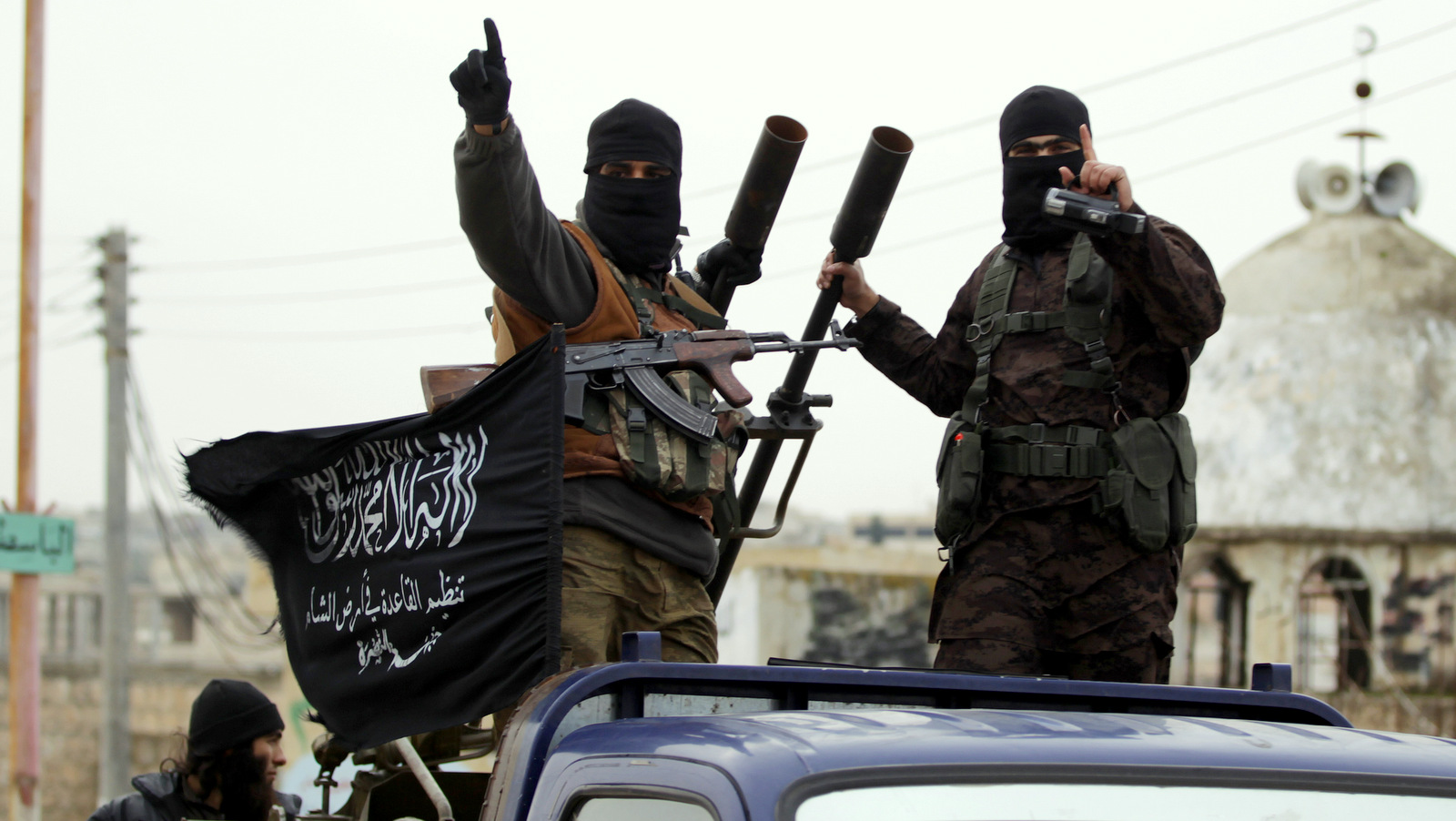
The US certainly knew from early days that this ‘revolution’ (1) was being led by extremists and (2) wanted to create a sectarian Islamic state in eastern Syria. US intelligence in August 2012 observed that “Internally, events are taking a clear sectarian direction. The Salafist, the Muslim Brotherhood and AQI are the major forces driving the insurgency in Syria … there is the possibility of establishing a declared or undeclared Salafist principality [i.e. Islamic State] in eastern Syria (Hasaka and Der Zor) and this is exactly what [the US and its allies] want, in order to isolate the Syrian regime” (DIA 2012 in Hoff 2015).
Washington knew it and most Syrians knew it. The head of the Syrian Brotherhood, Muhammad Riyad Al-Shaqfa, issued a statement on 28 March 2011, which left no doubt that the group’s aim was sectarian and their target was what they perceived as a secular state. The enemy was “the secular regime”, he said, and Brotherhood members “have to make sure that the revolution will be pure Islamic, and with that no other sect would have a share of the credit after its success” (Al-Shaqfa 2011).
International jihadists, in the form of Jabhat al Nusra (al Qaeda in Syria) appeared in Homs in early 2011, specifically to help the Farouq Brigade (then the largest ‘FSA’ group) with its infamous genocidal slogan ‘Alawis to the tomb, Christians to Beirut’ and genocidal practice: the sectarian murder of supposedly apostate Muslims and the ethnic cleaning of Christians. Those slogans and practice were reported as early as 5 April 2011 (Farrell 2011) and in the New York Times in May (Shadid and Kirkpatrick 2011).
Tens of thousands of Syrian Christians from Homs were indeed driven to Beirut (CNA 2012). Claims that the “Assad regime” was behind the sectarianism were simply dishonest. Whatever their views of the Ba’athist system, most Syrians, and particularly the minorities, swung behind the Syrian state and the Syrian army very quickly.
As international jihadists (mainly from the Arab world, North Africa, the Caucasus and Europe) joined the Syrian Salafis in large numbers in mid-2012, even the western media began reporting that these were fanatics, not revolutionaries.
Well before DAESH / ISIS came across from Iraq to Syria the ‘Free Army’ leaders were complaining that the Syrian President had at least “70 percent” support in Aleppo (Bayoumy 2013); that the local people,
“all of them, are loyal to the criminal Bashar, they inform on us” (Abouzeid 2012); and that the people are “all informers … they hate us. They blame us for the destruction” (Ghaith 2012).
But, they went on to say, they had God on their side. James Foley, himself subject to a theatrical style execution by DAESH in 2014, reported two years earlier that the FSA ‘rebels’ had little public support. Indeed one leader promised Aleppo ‘would burn’, because the people there did not support the ‘revolution’ (Foley 2012).
Unpopularity is fatal to a revolution; to a religious fanatic it is merely inconvenient.
It is impossible that Saleh – an ideological fanatic, but an educated fanatic – did not know all this. Even if he himself was not an sectarian Islamist, he knew that the extreme sectarians with whom he collaborated in 1979 and again in 2011 were leading his ‘revolution’.
Saleh maintains his own self-serving myths about the conflict: that the ‘Assad regime’ was the source of sectarian violence, that Sunni Muslims and Kurds were oppressed, and that the US and its minions really supported the Assad Government. Saleh claims that the Obama administration (despite its repetitive and imperious ‘Assad must go’ demands) really wanted “regime preservation not regime change” (Saleh in Smith 2017).
It is hard to see how any reasonable person can take this seriously. We even have admissions from senior US officials, including former Vice President Biden and former head of the US military Martin Dempsey, that the ‘Arab Allies’ of the US financed every jihadist group from the ‘Free Army’ to DAESH / ISIS, precisely to get rid of Assad. More recently, former Qatari Foreign Minister Hamad Bin Jassim admitted that his little petro-state coordinated with Saudis, Turkey and the US to support all anti-Government jihadist forces (Syriana Analysis 2017).
Saleh’s former mentor, Riyad al Turk (who “liked” Saudi-backed Lebanese Prime Minister Rafiq Hariri), was calling for US military assistance in 2005 to help “the opposition” get rid of the Assad Government (Pace 2005). Of course he did not represent the Syrian Opposition. In the Damascus Declaration (2005), while making harsh criticisms of the Baathist system, most Syrian opposition groups specifically renounced violent attacks on the state and outside intervention. The Muslim Brotherhood and its hangers on, in contrast, always wanted violence with US and/or NATO assistance.
Saleh’s claim to fame as a secular communist against ‘the regime’ is undermined by how unrepresentative his small group was of Syria’s communists. He, like al Turk, criticises most other communists who “supported the regime” (Smith 2017). So how much support did his faction have? Al Turk maintained “we don’t announce how many members we have” (Pace 2005), but Gambill (2001) suggests it was “very little”.
Syria’s main Communist Party split in the mid-1980s (over Gorbachev’s policies), into two groups. Both stood candidates in the Peoples’ Congress (Majlis al Shaab) elections of 2007, 2012 and 2016, gaining 8, 11 and 4 MPs out of 250, respectively. That indicates that Syria’s main communist parties had electoral support of between 80,000 and 140,000 Syrian voters (IDEA 2017; Syrian Parliament 2017). We have no way of knowing how much support there ever was for the Communist Party (Political Bureau), or its successor the ‘Syrian Peoples Democratic Party’. But ask yourself, how many genuinely secular Marxists would collaborate with sectarian, al Qaeda styled Islamists?
The inescapable conclusion is that Saleh’s romanticised ideas failed and he was lucky to escape with his life. He certainly would have been in danger from both the Syrian Army and DAESH. But he and his tiny faction did not represent any significant part of the Syrian left. They were distinguished mainly by their collaboration with the Brotherhood groups and their al Qaeda allies, before they disappeared entirely from the scene.
After his successive failures Saleh blames everyone (Bashar al Assad, alQaeda/ISIS, the West) but himself. Yet it seems he has become a useful figure for western pseudo-leftists (who never could identify an actual Syrian armed group that they supported) to point at and say “Look, there really was a left revolution in Syria! Here he is!”
Pseudo-leftists in western countries – who for years held on to the Washington-promoted fiction of a ‘Syrian Revolution’ – are desperate for token Syrian ‘hero’ on which to hang their fantasies. That could be an ex-Islamist or an ex-communist; they don’t look too closely to see where these people come from. This desperation highlights their failure to confront actual history, and to care about the things that matter to ordinary people.
Sources
Abouzeid, Rania (2012) ‘Aleppo’s Deadly Stalemate: A Visit to Syria’s Divided Metropolis’, Time, 14 November, online: http://world.time.com/2012/11/ 14/aleppos-deadly-stalemate-a- visit-to-syrias-divided- metropolis/
Al-Shaqfa, Muhammad Riyad (2011) ‘Muslim Brotherhood Statement about the so-called ‘Syrian Revolution’’, General supervisor for the Syrian Muslim Brotherhood, statement of 28 March, online at: http://truthsyria.wordpress. com/2012/02/12/muslim- brotherhood-statement-about- the-so-called-syrian- revolution/
Amazon (2017) Promotion and reviews of Saleh’s book ‘The Impossible Revolution’, online: https://www.amazon.com/ Impossible-Revolution-Yassin- al-Haj-Saleh/dp/160846850X
Anderson, Tim (2016) The Dirty War on Syria, Global Research, Montreal
Asi Abu Najm (2011) ‘Syria’s Coordination Committees: a Brief History’, Al Akhbar, 1 October, online: http://english.al-akhbar.com/ node/764
Bayoumy, Yara (2013) ‘Insight: Aleppo misery eats at Syrian rebel support’, Reuters, 9 January, online: http://www.reuters.com/ article/2013/01/09/us-syria- crisis-rebels- idUSBRE9070VV20130109
CNA (2012) ‘Syrian violence drives 50,000 Christians from homes’, Catholic News Agency, online: http://www.catholicnewsagency. com/news/syrian-violence- drives-50000-christians-from- homes/
Damascus Declaration (2005) ‘The Damascus Declaration for Democratic National Change’, English version in Joshua Landis blog Syria Comment, 1 November, online: http://faculty-staff.ou.edu/L/ Joshua.M.Landis-1/syriablog/ 2005/11/damascus-declaration- in-english.htm
DIA (1982) ‘Syria: Muslim Brotherhood pressure intensifies’, Syria360, May, online: https://syria360.files. wordpress.com/2013/11/dia- syria- muslimbrotherhoodpressureinten sifies-2.pdf
Farrell, Shane (2011) ‘Lebanese Christians react to regional instability’, Now Media, 5 April, online: https://now.mmedia.me/lb/en/ reportsfeatures/lebanese_ christians_react_to_regional_ instability
Foley, James (2012) ‘Syria: Rebels losing support among civilians in Aleppo’, PRI, 16 October, online: https://www.pri.org/stories/ 2012-10-16/syria-rebels- losing-support-among- civilians-aleppo
Gambill, Gary C. (2001) ‘Dossier: Riyad al Turk’, Middle East Intelligence Bulletin, Middle East Forum, Vol 3 No 9, September, online: https://www.meforum.org/meib/ articles/0109_sd1.htm
Ghaith, Abdul-Ahad (2012) ‘The people of Aleppo needed someone to drag them into the revolution’, The Guardian, 28 December, online: http://www.theguardian.com/ world/2012/dec/28/aleppo- revolution-abu-ali-sulaibi
Hoff, Brad (2015) ‘2012 Defense Intelligence Agency document: West will facilitate rise of Islamic State “in order to isolate the Syrian regime”’, Levant Report, 19 May, online: https://levantreport.com/2015/ 05/19/2012-defense- intelligence-agency-document- west-will-facilitate-rise-of- islamic-state-in-order-to- isolate-the-syrian-regime/
IDEA (2017) ‘Syrian Arab republic, Total vote, Parliamentary elections, 1994-2016, online: https://www.idea.int/data- tools/question-countries-view/ 437/274/ctr
LCC (2013) ‘Dignity Strike … We make our revolution by our own hands’, Local Coordination Committees of Syria, December, online: http://www.lccsyria.org/3528
Lefèvre, Rafaël (2013) Ashes of Hama: the Muslim Brotherhood in Syria, Hurst and Company, London
Pace, Joe (2005) ‘Riyad al Turk, interviewed by Joe Pace on Mehlis, the Opposition, Ghadry’, Joshua Landis Page, October 22, online: http://joshualandis.oucreate. com/syriablog/2005/10/riad-al- turk-interviewed-by-joe-pace. htm
Seale, Patrick (1988) Asad: the struggle for the Middle East, University of California Press, Berkeley
Shadid, Anthony and David D. Kirkpatrick (2011) ‘Promise of Arab Uprisings Is Threatened by Divisions’, New York Times, 21 May, online: http://www.nytimes.com/2011/ 05/22/world/middleeast/22arab. html?pagewanted=all
Smith, Ashley (2017) ‘Revolution, counterrevolution, and imperialism in Syria, Interview with Yassin al-Haj Saleh’, International Socialist Review, Issue #107 online: https://isreview.org/issue/ 107/revolution- counterrevolution-and- imperialism-syria
Syrian parliament (2017) Syrian Peoples’ Assembly, online: https://web.archive.org/web/ 20121008210031/http:// parliament.sy/forms/cms/ viewStatistics.php ; and Inter-Parliamentary Union (2016) ‘SYRIAN ARAB REPUBLIC: Majlis Al-Chaab (People’s Assembly)’, online: http://archive.ipu.org/ parline-e/reports/2307_E.htm; and as compiled in Wikipedia ‘Syrian parliamentary elections’ 2007 / 2012 / 2016, online: https://en.wikipedia.org/wiki/ Syrian_parliamentary_election, _2007
Syriana Analysis (2017) ‘Hamad Bin Jassim: We Supported Al-Qaeda in Syria’, online: https://www.youtube.com/watch? v=9f33l30kQxg
TESEV (2012) ‘The perception of Turkey in the Middle East 2011’, Türkiye Ekonomik ve Sosyal Etüdler Vakfi, Istanbul, February, online: http://tesev.org.tr/en/yayin/ the-perception-of-turkey-in- the-middle-east-2011/
Copyright © Prof. Tim Anderson, Global Research, 2017
Featured Video
Prof. Ted Postol: Iran Already Achieved Nuclear Deterrence Against Israel
or go to
Aletho News Archives – Video-Images
From the Archives
How the occupied mentality syndrome works
Saudi Arabia on the American chessboard – Part 3
By B. J. Sabri | American Herald Tribune | June 27, 2016
Read part 2: “The occupied mentality Syndrome“
Previously I argued whether Saudi Arabia’s repeated involvements in U.S. interventions and wars stem from free national will or in response to a specific condition. For starters, in Saudi Arabia there is no national will. In Saudi Arabia, the national will is the will of the Al Saud clan. Still, when a major Arab state allies itself with a superpower that committed unspeakable crimes against humanity in almost every Arab country, then something is wrong. This fact alone should compel us to examine the U.S.-Saudi relation for one exceptional reason. As a result of the U.S.-Saudi wars, hundreds of thousands of people in Afghanistan, Iraq, Iran, Libya, Syria, Yemen, and Somalia have lost their lives. Millions became displaced in their own homelands. And millions more rendered refugees.
Attributing the Saudi policies to the bonds of “partnership” with the U.S. is frivolous. There are no bonds between these two thugs except those of business, military deals, secret plots, and wars. Proving this point, bonds such as these have no space for the American and Saudi peoples to share significant cultural or societal exchanges. If partnership is not the reason for the Saudi contribution to the U.S. strategy of empire and imperialism, then another reason must exist.
This leads to three possibilities. … continue
Blog Roll
 Aletho News
- REWRITING THE RISK? INSIDE THE GOVERNMENT’S VACCINE SAFETY MESSAGING
- “Davos Can Really Replace the UN”
- NIAID/NIH and USDA Fund Bioengineered Chimeric Influenza Viruses Built Using Pandemic H1N1 Components: Journal ‘Science Advances’
- Hezbollah hits Israeli warship off Lebanon’s coast, sets it aflame
- Iran slams US strikes on B1 bridge, Mahshahr petrochemical plants as ‘blatant acts of state terrorism’
- In letter to UN chief, Araghchi warns of dire consequences of US-Israeli attacks on Iran’s nuclear facilities
- Why the CIA conspiracy to invade Iran with Kurdish militias failed
- Why Are Upbeat US Claims About Mission to Rescue Pilot ‘Highly Questionable’?
- Aircraft destroyed during US ‘rescue’ of downed F-15 pilot cost more than $100 million each
- Washington University removes professor who condemned US-Israeli war on Iran
- If Americans Knew
- In Iran, Israel-US take aim at “reason, research, and freedom of thought” – Daily Update
- US loses planes over Iran, Israel downgrades Lebanon war goals – Daily Update
- Israel Is Blocking Palestinians from Easter at Church Where Jesus Resurrected
- Plot to assassinate Palestinian activist follows harassment campaign promoted by Zionist groups and elected officials
- Prominent New York synagogue hosts presentation on why U.S. Jews should support the ethnic cleansing of Gaza
- Tapper vs. Piker: Is the CNN Anchor Auditioning for David Ellison?
- Shouldn’t Democrats Be Able to Condemn Genocide?
- Israel-US kill negotiators, destroy civilian structures, but Iran’s military capabilities still largely intact – Daily Update
- ‘War crime’: Global condemnation as Israeli ministers celebrate death penalty law targeting Palestinian prisoners
- 7 Ways Israel Is Turning Lebanon Into Gaza
- No Tricks Zone
- An Inconvenient Tree: Uncovered In Alps… Europe Much Warmer Than Today 6000 Years Ago
- New Study Reports A 60% Slowdown In Greenland’s Ice Loss Rate In The Last Decade
- Low Intensity Tornado Wrecks Major Solar Farm, Creating A Potential Toxic Dump
- New Study Finds Warming Saves Lives…Cold Temperatures 12 Times More Deadly Than Excess Heat
- German Science Blog Accuses PIK Climate Institute Of Hallucinating Climate Tipping Points
- Devastating Assessment Of Comirnaty Vaccine By Former Senior Pfizer Europe Toxicologist
- New Study: CO2 Is ‘Effectively Negligible’ As An Explanatory Climate Change Factor Since 2000
- Former Pfizer Toxicologist Dr. Helmut Sterz Tells Bundestag Hearing Pfizer Vaccine Should Have Never Been Approved
- Energy Expert: Germany’s Nuclear Phaseout Was A “500 Billion Euro Mistake”
- New Research: South Australia’s Mid-Holocene Sea Surface Temperatures Were 4°C Warmer Than Today
 Aletho News