Neocons Panic As Trump-Putin Meeting Could Mark Close Of Syrian Proxy War
By Tyler Durden | Zero Hedge | July 13, 2018
When multiple op-ed pieces appear in the pages of the New York Times, Washington Post, and the CFR-owned Foreign Affairs authored by neocons simultaneously pleading with Trump Don’t Get Out of Syria(!) all within the same week, this is typically an indicator that the president is about to do something good.
Trump is set to meet with Putin one-on-one this coming Monday in Helsinki after a contentious NATO summit and a sufficiently awkward visit with Theresa May, and mainstream pundits’ heads are exploding.
The Post’s Josh Rogin warns, Trump and Putin may be about to make a terrible deal on Syria, and Susan Rice suddenly emerges from obscurity and irrelevance to say in the Times that Trump Must Not Capitulate to Putin while urging the administration not to “prematurely withdraw United States forces [from Syria], thus ceding total victory to Russia, Mr. Assad and Iran.” From North Korea to Afghanistan to Syria to Ukraine, Rice advises the typical regime change script of “harsh additional sanctions” anywhere the dictates of Washington are not strictly adhered to.
Similarly, Eli Lake links together the main regime change wars begun under Obama while lamenting their potential winding down as a result of Putin and Trump meeting as indicative of living in “some alternate universe.” “The price of Russian cooperation in Syria cannot be U.S. capitulation on Crimea,” Lake writes, and further calls such a possibility “the most dangerous possible outcome.”
The Kagan-led neocon think tank ISW, meanwhile, is outraged(!) the administration appears to lack “the will to use” America’s military might to counter Assad, Iran, and Russia, saying “the United States should invest now in building leverage for future decisive action.”
And then there’s Senator Lindsey Graham’s meltdown on Twitter this week in reaction to both the Syrian Army victoriously raising the national flag over Daraa and Israeli Prime Minister Benjamin Netanyahu telling President Vladimir Putin during a summit that Israel has no problem with Assad staying, so long as Israel can preserve “freedom of action” if attacked.
In a significant change of posture toward Damascus, Netanyahu told reporters in Moscow, “We haven’t had a problem with the Assad regime, for 40 years not a single bullet was fired on the Golan Heights.”
This was enough to send Graham’s head spinning: “Radical Sunni groups will say – correctly – that Assad is a proxy of Iran and the Ayatollah. It means the Syrian war never ends and ISIS comes back,” he said in a strange twist of logic that gives credence to the arguments of terror groups.
Israel’s Haaretz newspaper featured Sen. Graham’s reaction:
‘Without Assad’s blessing, the flags of Hezbollah and the Iranian Revolutionary Guard would not be on Israel’s front door,’ Graham tweets in response to Netanyahu claiming Israel has no problem with Assad.
As Trump readies for Putin summit, saying “He’s not my enemy,” interventionistas are raging:
Senator @LindseyGrahamSC continues his Twitter storm against the Netanyahu-Putin meeting https://t.co/MAjs8VA30Y
— Barak Ravid (@BarakRavid) July 12, 2018
#Putin is not our friend nor merely a competitor. Putin is our enemy—not b/c we wish it so, but b/c he has chosen to be. He chose to invade Ukraine & annex Crimea. He chose to help Assad slaughter Syrians. He chose to attack our election & undermine democracies around the world.
— John McCain (@SenJohnMcCain) July 12, 2018
In the past months there’s been widespread reporting on a “secret” deal brokered between Russia, Israel, and Syria, which reportedly involves the Syrian Army agreeing to keep Iranian forces away from the ongoing successful campaign along the Israeli and Jordanian borders, especially the contested Golan Heights.
Netanyahu now says, fresh off his Moscow visit, that Putin agreed to restrain Iran in Syria, but that ultimately Assad will take back all of Syria.
The New York Times reports this hugely significant acknowledgement and surprising change of tune from the Israeli PM:
Israel, he said, did not object to President Bashar al-Assad’s regaining control over all of Syria, a vital Russian objective, and Russia had pushed Iranian and allied Shiite forces “tens of kilometers” away from the Israeli border.
The NYT continues:
But a commitment to keep Iranian forces tens of kilometers from Israel was a far cry from ejecting them completely from Syria, which Mr. Netanyahu has been lobbying Mr. Putin to do. And even that commitment was not confirmed by Russian officials.
… So a willingness to accept Mr. Assad’s resumption of control over all of Syria is no small concession, said Amos Yadlin, a former chief of Israeli military intelligence who now heads the Institute for National Security Studies in Tel Aviv.
“Nobody can these days destabilize the Assad regime,” he said. “The only one who can do it is Israel. And the Russians know that very well. So to get a commitment from Israel not to destabilize Syria is something that Russia will value very much.”
The neocon pundits’ last hope for military intervention in Syria has remained Netanyahu, and to see him fold must feel like a swift unexpected punch in the stomach, but more crucially the Syrian diplomatic cards have fallen in place just days before Monday’s Trump-Putin meeting.
President Assad has long vowed to liberate “every inch” of sovereign Syrian territory, something which but two years ago appeared impossible, yet which now looks increasingly inevitable. Should the Trump-Putin summit result in a green light that ensures Moscow and Damascus remain in the driver’s seat and set the terms for Syria’s stabilization, we could be witnessing the final diplomatic chapter in this dark seven-year long proxy war.
However, Trump continues to be urged from various corners of the beltway foreign policy establishment to salvage and preserve what he can of the open-ended US troop presence in eastern Syria: the US must “preserve its interests in the conflict, namely… constraining Iranian influence in the country” as one Foreign Policy essay argues.
For months now, Trump has talked of US military withdrawal from the country — which the Pentagon in public statements has put at over some 2,000 troops — a proposal which hawks within his administration have pushed back against every time.
And then there’s the clearly observable pattern that seems to repeat whenever the administration announces it is poised to pull out of Syria. Indeed it seems to occur every time the Syrian Army is on a trajectory of overwhelming victory: an ill-timed and strategically nonsensical mass chemical attack on civilians supposedly ordered by Assad — inevitably giving the West an open door for military intervention, new rounds of crippling sanctions, and yet more international media condemnation heaped on Damascus.
Precisely this scenario occurred just days after President Trump declared in the last week of March of this year that he wanted a complete US military pullout from Syria. What then immediately followed was the April 7 “chemical attack” provocation in Douma — just the thing that brought Trump’s planned pullout to a grinding halt, instead resulting tomahawk missiles unleashed on Damascus.
Should Trump and Putin ultimately come to a lasting settlement on the Syria issue which results in US troop withdrawal from Syria, will the international proxy war come to a close?
Or will we witness yet another last minute “mass casualty event” or other other provocation that pulls the US, Israel, and Russia into yet deeper direct military confrontation?
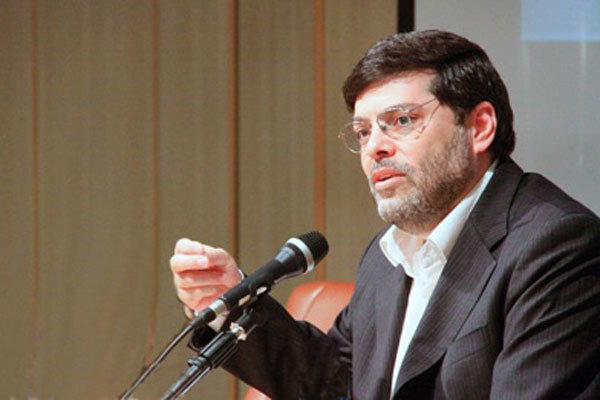
Dr. Mohammad Marandi: Israel, Saudi Arabia and the UAE Have Been Cooperating Closely for Many Decades Now
American Herald Tribune | July 13, 2018
Mohsen Abdelmoumen: What is the immediate impact on the Iranian people of the Trump administration’s exit from the Iran nuclear deal?
Dr. Mohammad Marandi: Obviously, it is going to have a short term negative impact. People are concerned about the effect it will have on the economy and Iranian currency has dropped significantly. However, I believe that in the midterm the economy will stabilize, and as Iran reorientates its economy, trading partners and strategic partnerships things will stabilize. In the long term, I think Iran will probably even benefit because the US will no longer have any leverage that it can use against the country and its people.
Are not the economic sanctions imposed by the Trump administration intended to provoke disturbances within the Iranian population in order to change the power in Iran?
Without a doubt. Actually, just recently in a speech in France to the MEK terrorist organization, a cult group which has killed 17 thousand Iranians through assassinations and bomb attacks and has also fought for Saddam Hussein, Rudy Giuliani, Trump’s lawyer and close friend, admitted that the disturbances in Iran are not spontaneous and that they are carried out by their people. That does not mean there are no ordinary people who protest here and there, but the foreign role is obvious and we can see it through the western, Israeli, and Saudi, funded Persian media outlets like BBC Persian and VOA among others that attempt to create tensions and fear among Iranians.
Do you think there is a special program to assassinate Iranian scientists as was the case with Iraqi scientists where some sources have spoken of the existence of a special CIA unit responsible for assassinating scientists?
I have no idea about that, but we do know that Mohammad bin Salman has said in public that he wants to take the war into Iran and after that we saw the terrorist attacks on Tehran and an increased number of attacks alongside the Pakistani-Iranian border as well as the border between Iran and Iraq Kurdistan.
What is the exact role of the Zionist entity of Israel and its services in the assassination of Iranian scientists?
Israeli intelligence and the MEK terrorist organization worked together in this regard. In addition, Western intelligence agencies have in the past passed on IAEA information on Iranian scientists to the Israelis thus helping them carry out a number of murders.
What do you think of the alliance between the Saudis and the Israelis? In your opinion, is it tactical or strategic?
The alliance between Israel, Saudi Arabia and the UAE among others is not new at all. They have been cooperating closely for many decades now, but these Arab regimes have always been afraid to make this alliance public. However, Trump is putting a lot of pressure on these regimes to come out of the closet, especially because he wants to impose his so called deal of the century on the Palestinian people in order to destroy the Palestinian nation.
In your opinion, can Europe play a role in maintaining the nuclear agreement?
It’s possible. However, I am skeptical about the EU’s intentions and I am even more skeptical about their ability to grow a backbone in face of persistent American violations of their sovereignty and threats against their businesses and citizens.
In your opinion, why is it that Israel that massacres the Palestinian people has never been subjected to sanctions?
I think it is widely known that the Israeli regime is allowed to implement apartheid policies, carry out ethnic cleansing and colonization, the bombing of neighboring countries, the killing of civilians, the arrest children, and the confiscation of land.Western countries will give them blanket support no matter what the regime does.
What is your analysis of the situation in Syria? Can we say that Daesh is defeated definitively or is it moving towards reorganization?
The extremist groups including Daesh that were supported by western intelligence services and regional client regimes have been severely weakened and the Syrian Arab army and government have gained the upper hand. But the war is not over, al-Qaeda and other extremist groups continue to get foreign support and Western countries and media outlets have been trying to give cover to these extremist groups by calling them “moderates” and “rebels”, whereas in reality their ideologies are very similar to ISIS.
What do you think of the position of Morocco that has just cut off its relations with Iran by accusing Hezbollah of having armed the Polisario Front? Don’t you think that this maneuver bears the signature of the Saudis, Israelis and Americans?
I think it is quite clear especially taking into account the timing of the accusations that the Saudis and probably countries like the US and the UAE are behind this. But I do not have any specific information.
Why do you think Westerners are silent, both the media and the political institutions, in the face of the carnage that Saudi Arabia is committing in Yemen?
It is because of Saudi oil wealth, and because the destruction of Yemen is in the interest of the Saudi and Israeli regimes. Therefore, Western governments and western media outlets will not do anything meaningful to prevent the massacres or starvation. This is just one example of many. They did the same thing in Libya, Syria, Iraq, Bahrain, and Afghanistan.
Interview realized by Mohsen Abdelmoumen
Who is Dr. Mohammad Marandi?
Born in 1966 in Richmond, Virginia, Mohammad Marandi is the son of Professor Alireza Marandi, a former Iranian Minister of Health and a former member of the Iranian Parliament. Mohammad Marandi lived until he was 13 in the United States before joining Iran. He is a political analyst and expert on American studies and postcolonial literature. Dr. Marandi is a graduate of the University of Tehran and the University of Birmingham where he received a PhD in English Literature. He teaches English Literature and Orientalism at the University of Tehran where he is head of the graduate program in North American Studies.
Five Things That Would Make The CIA/CNN Russia Narrative More Believable

By Caitlin Johnstone | Medium | July 14, 2018
As we just discussed, some major news stories have recently dropped about what a horrible horrifying menace the Russian Federation is to the world, and as always I have nothing to offer the breathless pundits on CNN and MSNBC but my completely unsatisfied skepticism. My skepticism of the official Russia narrative remains so completely unsatisfied that if mainstream media were my husband I would already be cheating on it with my yoga instructor.
I do not believe the establishment Russia narrative. I do not believe that Donald Trump colluded with the Russian government to rig the 2016 election. I do not believe the Russian government did any election rigging for Trump to collude with. This is not because I believe Vladimir Putin is some kind of blueberry-picking girl scout, and it certainly isn’t because I think the Russian government is unwilling or incapable of meddling in the affairs of other nations to some extent when it suits them. It is simply because I am aware that the US intelligence community lies constantly as a matter of policy, and because I understand how the burden of proof works.
At this time, I see no reason to espouse any belief system which embraces as true the assertion that Russia meddled in the 2016 elections in any meaningful way, or that it presents a unique and urgent threat to the world which must be aggressively dealt with. But all the establishment mouthpieces tell me that I must necessarily embrace these assertions as known, irrefutable fact. Here are five things that would have to change in order for that to happen:
1. Proof of a hacking conspiracy to elect Trump.
The first step to getting a heretic like myself aboard the Russia hysteria train would be the existence of publicly available evidence of the claims made about election meddling in 2016, which rises to the level required in a post-Iraq invasion world. So far, that burden of proof for Russian hacking allegations has not come anywhere remotely close to being met.
How much proof would I need to lend my voice to the escalation of tensions between two nuclear superpowers? Mountains. I personally would settle for nothing less than hard proof which can be independently verified by trusted experts like the Veteran Intelligence Professionals for Sanity.
Is that a big ask? Yes. Yes it is. That’s what happens when government institutions completely discredit themselves as they did with the false narratives advanced in the manufacturing of support for the Iraq invasion. You don’t get to butcher a million Iraqis in a war based on lies, turn around a few years later and say “We need new cold war escalations with a nuclear superpower but we can’t prove it because the evidence is secret.” That’s not a thing. Copious amounts of hard, verifiable proof or GTFO. So far we have no evidence besides the confident-sounding assertions of government insiders and their mass media mouthpieces, which is the same as no evidence.
2. Proof that election meddling actually influenced the election in a meaningful way.
Even if Russian hackers did exfiltrate Democratic party emails and give them to WikiLeaks, if it didn’t affect the election, who cares? That’s a single-day, second-page story at best, meriting nothing beyond a “Hmm, interesting, turns out Russia tried and failed to influence the US election,” followed by a shrug and moving on to something that actually matters.
After it has been thoroughly proven that Russia meddled in the elections in a meaningful way, it must then be established that that meddling had an actual impact on the election results.
3. Some reason to believe Russian election meddling was unwarranted and unacceptable.
The US government, by a very wide margin, interferes in the elections of other countries far, far more than any other government on earth does. The US government’s own data shows that it has deliberately meddled in the elections of 81 foreign governments between 1946 and 2000, including Russia in the nineties. This is public knowledge. A former CIA Director cracked jokes about it on Fox News earlier this year.
If I’m going to abandon my skepticism and accept the Gospel According to Maddow, after meaningful, concrete election interference has been clearly established I’m going to need a very convincing reason to believe that it is somehow wrong or improper for a government to attempt to respond in kind to the undisputed single worst offender of this exact offense. It makes no sense for the United States to actively create an environment in which election interference is something that governments do to one another, and then cry like a spanked child when its election is interfered with by one of the very governments whose elections the US recently meddled in.
This is nonsense. America being far and away the worst election meddler on the planet makes it a fair target for election meddling by not just Russia, but every country in the world. It is very obviously moral and acceptable for any government on earth to interfere in America’s elections as long as it remains the world’s worst offender in that area. In order for Russia to be in the wrong if it interfered in America’s elections, some very convincing argument I’ve not yet heard will have to be made to support that case.
4. Proof that the election meddling went beyond simply giving Americans access to information about their government.
If all the Russians did was simply show Americans emails of Democratic Party officials talking to one another and circulate some MSM articles as claimed in the ridiculous Russian troll farm allegations, that’s nothing to get upset about. If anything, Americans should be upset that they had to hear about Democratic Party corruption through the grapevine instead of having light shed on it by the American officials whose job it is to do so. Complaints about election meddling is only valid if that election meddling isn’t comprised of truth and facts.
5. A valid reason to believe escalated tensions between two nuclear superpowers are worthwhile.
After it has been proven beyond a reasonable doubt that Russia did indeed meddle in the US elections in a meaningful way, and after it has then been proven beyond a reasonable doubt that Russia actually influenced election results in a significant way, and after the case has been clearly made that it was bad and wrong for Russia to do this instead of fair and reasonable, and after it has been clearly proven that the election meddling went beyond simply telling Americans the truth about their government, the question then becomes what, if anything, should be done about it?
If you look at the actions that this administration has taken over the last year and a half, the answer to that question appears to be harsh sanctions, NATO expansionism, selling arms to Ukraine, throwing out diplomats, increasing military presence along Russia’s border, a Nuclear Posture Review which is much more aggressive toward Russia, repeatedly bombing Syria, and just generally creating more and more opportunities for something to go catastrophically wrong with one of the two nations’ aging, outdated nuclear arsenals, setting off a chain of events from which there is no turning back and no surviving.
And the pundits and politicians keep pushing for more and more escalations, at this very moment braying with one voice that Trump must aggressively confront Putin about Mueller’s indictments or withdraw from the peace talks. But is it worth it? Is it worth risking the life of every terrestrial organism to, what? What specifically would be gained that makes increasing the risk of nuclear catastrophe worthwhile? Making sure nobody interferes in America’s fake elections? I’d need to see a very clear and specific case made, with a ‘pros’ and ‘cons’ list and “THE POTENTIAL DEATH OF LITERALLY EVERYTHING” written in big red letters at the top of the ‘cons’ column.
Rallying the world to cut off Russia from the world stage and cripple its economy has been been a goal of the US power establishment since the collapse of the Soviet Union, so there’s no reason to believe that even the people who are making the claims against Russia actually believe them. The goal is crippling Russia to handicap China, and ultimately to shore up global hegemony for the US-centralized empire by preventing the rise of any rival superpowers. The sociopathic alliance of plutocrats and intelligence/defense agencies who control that empire are willing to threaten nuclear confrontation in order to ensure their continued dominance. All of their actions against Russia since 2016 have had everything to do with establishing long-term planetary dominance and nothing whatsoever to do with election meddling.
Those five things would need to happen before I’d be willing to jump aboard the “Russia! Russia!” train. Until then I’ll just keep pointing to the total lack of evidence and how very, very far the CIA/CNN Russia narrative is from credibility.
Evidence Will Probably Never Be Produced in Indictments of ‘Russian Agents’
By Joe Lauria | Consortium News | July 14, 2018
Charges against 12 Russian intelligence agents for allegedly hacking emails from the Democratic Party during the 2016 presidential election were announced by the U.S. Justice Department on Friday at the very moment President Donald Trump was meeting Queen Elizabeth II at Windsor Castle and just days before a summit between Trump and Russian President Vladimir Putin in Helsinki.
A central claim of Russia-gate has been that the Russian government with help from the Trump campaign stole emails from the Democratic Party and the Hillary Clinton campaign and then gave those emails to WikiLeaks for publication to damage Clinton’s quest for the White House.
Until Friday however, the investigation into the allegations had produced no formal indictment of Russian government interference in the election. Like previous U.S. government accusations against Russia for alleged election meddling, the indictment makes assertions without providing evidence. Under U.S. law, indictments are not considered evidence. And it is highly unlikely that the government will ever have to produce any evidence in court.
Friday’s indictments do not include any charges against Trump campaign members for allegedly colluding with the Russian government to carry out the hacks. That has been at the core of allegations swirling in U.S. media for two years. If the alleged co-conspirators “known” to the DOJ were on the Trump team, the indictments do not say. There is only a hint that “unknown” persons might be.
In announcing the indictments at a press conference Friday, Deputy Attorney General Rod Rosenstein said: “The conspirators corresponded with several Americans during the course of the conspiracy through the internet. There’s no allegation in this indictment that the Americans knew they were corresponding with Russian intelligence officers.”
The indictment alleges that Russian agents, posing as Guccifer 2.0, communicated on Aug. 15, 2016 with “a person who was in regular contact with senior members” of the Trump campaign, mostly like advisor Roger Stone, who has spoken about communicating with Guccifer 2.0. The indictment says Guccifer offered to “help u anyhow,” apparently indicating that Stone did want Guccifer 2.0’s help.
Clinging to ‘Collusion’
The lack of evidence that the Trump campaign was colluding with Russia has never stopped Democrats and their media outlets from believing unnamed U.S. intelligence sources for two years about such collusion. “Collusion” is the title of a best-selling book about the supposed Trump-Russia conspiracy to steal the election, but such a charge is not to be found.
The indictment excluding collusion also undermines the so-called Steele dossier, a work of opposition research paid for by the DNC and Clinton campaign masquerading as an intelligence document because it was compiled by a former MI6 agent. The memos falsely claimed, it turns out, that Trump’s people started colluding with Russia years before he became a candidate.
But even after Friday’s indictments failed to charge anyone from Trump’s team, the Democratic media continued to insist there was collusion. A New York Times story, headlined, “Trump Invited the Russians to Hack Clinton. Were They Listening?,” said Russia may have absurdly responded to Trump’s call at 10:30 a.m. on July 27, 2016 to hack Clinton’s private email server because it was “on or about” that day that Russia allegedly first made an attempt to hack Clinton’s personal emails, according to the indictment, which makes no connection between the two events.
If Russia is indeed guilty of remotely hacking the emails it would have had no evident need of assistance from anyone on the Trump team, let alone a public call from Trump on national TV to commence the operation.
Instead of Trump operatives, the indictments name 12 Russians, allegedly agents from the GRU, the Russian military intelligence agency. The agents “knowingly and intentionally conspired with each other, and with persons known and unknown to the Grand Jury (collectively the ‘Conspirators’), to gain unauthorized access (to ‘hack’) into the computers of U.S. persons and entities involved in the 2016 U.S. presidential election, steal documents from those computers, and stage releases of the stolen documents to interfere with the 2016 U.S. presidential election,” the 29-page indictment says.
“Starting in at least March 2016, the Conspirators used a variety of means to hack the email accounts of volunteers and employees of the U.S. presidential campaign of Hillary Clinton (the ‘Clinton Campaign’), including the email account of the Clinton Campaign’s chairman,” the indictment says.
Obvious Timing
The timing of the announcement was clearly intended to embarrass Trump as he was meeting the Queen and to undermine his upcoming meeting with Putin on July 16. The indictments may also have been meant to embarrass Russia two days before the World Cup final to be held in Moscow.
Pressure was immediately brought on Trump to cancel the summit in light of the indictments, which may have been the main aim in the timing of their announcement. “Glad-handing with Vladimir Putin on the heels of these indictments would be an insult to our democracy,” Senator Chuck Schumer (D-NY) said in a statement less than an hour after the indictments were announced. “President Trump should cancel his meeting with Vladimir Putin until Russia takes demonstrable and transparent steps to prove that they won’t interfere in future elections,” Schumer said.
With no apparent irony, The New York Times reported, “The timing of the indictment … added a jolt of tension to the already freighted atmosphere surrounding Mr. Trump’s meeting with Mr. Putin. It is all but certain to feed into the conspiratorial views held by the president and some of his allies that Mr. Mueller’s prosecutors are determined to undermine Mr. Trump’s designs for a rapprochement with Russia.”
Russia Denies
The Russian government on Friday strongly denied the charges. In a statement, the Foreign Ministry called the indictments “a shameful farce” that was not backed up by any evidence. “Obviously, the goal of this ‘mud-slinging’ is to spoil the atmosphere before the Russian-American summit,” the statement said.
The Ministry added that the 12 named Russians were not agents of the GRU.
“When you dig into this indictment … there are huge problems, starting with how in the world did they identify 12 Russian intelligence officers with the GRU,” said former CIA analyst Larry Johnson in an interview with Consortium News. Johnson pointed out that the U.S. Defense Intelligence Agency was not allowed to take part in the January 2017 Intelligence Community Assessment on alleged interference by the GRU. Only hand-picked analysts from the FBI, the NSA and the CIA were involved.
“The experts in the intelligence community on the GRU … is the Defense Intelligence Agency and they were not allowed to clear on that document,” Johnson said.
“When you look at the level of detail about what [the indictment is] claiming, there is no other public source of information on this ,and it was not obtained through U.S. law enforcement submitting warrants and getting affidavits to conduct research in Russia, so it’s clearly intelligence information from the NSA, most likely,” Johnson said.
CrowdStrike’s Role
The indictment makes clear the evidence of an alleged hack of the DNC and DCCC computers did not come from the FBI, which was never given access to the computers by the DNC, but instead from the private firm CrowdStrike, which was hired by the DNC. It is referred to as Company 1 in the indictment.
“Despite the Conspirators’ efforts to hide their activity, beginning in or around May 2016, both the DCCC and DNC became aware that they had been hacked and hired a security company (“Company 1”) to identify the extent of the intrusions,” the indictment says.
The indictment doesn’t mention it, but within a day, CrowdStrike claimed to find Russian “fingerprints” in the metadata of a DNC opposition research document, which had been revealed by DCLeaks, showing Cyrillic letters and the name of the first Soviet intelligence chief. That supposedly implicated Russia in the hack.
CrowdStrike claimed the alleged Russian intelligence operation was extremely sophisticated and skilled in concealing its external penetration of the server. But CrowdStrike’s conclusion about Russian “fingerprints” resulted from clues that would have been left behind by extremely sloppy or amateur hackers–or inserted intentionally to implicate the Russians.
One of CrowdStrike’s founders has ties to the anti-Russian Atlantic Council raising questions of political bias. And the software it used to determine Russia’s alleged involvement in the DNC hack, was later proved to be faulty in a high-profile case in Ukraine, reported by the Voice of America.
The indictment then is based at least partially on evidence produced by an interested private company, rather than the FBI.
Evidence Likely Never to be Seen
Other apparent sources for information in the indictment are intelligence agencies, which normally create hurdles in a criminal prosecution.
“In this indictment there is detail after detail whose only source could be intelligence, yet you don’t use intelligence in documents like this because if these defendants decide to challenge this in court, it opens the U.S. to having to expose sources and methods,” Johnson said.
If the U.S. invoked the states secret privilege so that classified evidence could not be revealed in court a conviction before a civilian jury would be jeopardized.
Such a trial is extremely unlikely however. That makes the indictment essentially a political and not a legal document because it is almost inconceivable that the U.S. government will have to present any evidence in court to back up its charges. This is simply because of the extreme unlikelihood that arrests of Russians living in Russia will ever be made.
In this way it is similar to the indictment earlier this year of the Internet Research Agency of St. Petersburg, Russia, a private click bait company that was alleged to have interfered in the 2016 election by buying social media ads and staging political rallies for both Clinton and Trump. It seemed that no evidence would ever have to back up the indictment because there would never be arrests in the case.
But Special Counsel Robert Mueller was stunned when lawyers for the internet company showed up in Washington demanding discovery in the case. That caused Mueller to scramble and demand a delay in the first hearing, which was rejected by a federal judge. Mueller is now battling to keep so-called sensitive material out of court.
In both the IRA case and Friday’s indictments, the extremely remote possibility of convictions were not what Mueller was apparently after, but rather the public perception of Russia’s guilt resulting from fevered media coverage of what are after all only accusations, presented as though it is established fact. Once that impression is settled into the public consciousness, Mueller’s mission would appear to be accomplished.
For instance, the Times routinely dispenses with the adjective “alleged” and reports the matter as though it is already established fact. It called Friday’s indictments, which are only unproven charges, as “the most detailed accusation by the American government to date of the [not alleged] Russian government’s interference in the 2016 election, and it includes a litany of [not alleged] brazen Russian subterfuge operations meant to foment chaos in the months before Election Day.”
GRU Named as WikiLeak’s Source
The indictment claims that GRU agents, posing as Guccifer 2.0, (who says he is a Romanian hacker) stole the Democratic documents and later emailed them to WikiLeaks, named as “Organization 1.” No charges were brought against WikiLeaks on Friday.
“After failed attempts to transfer the stolen documents starting in late June 2016, on or about July 14, 2016, the Conspirators, posing as Guccifer 2.0, sent Organization 1 an email with an attachment titled ‘wk dnc linkl.txt.gpg,’” the indictment says. “The Conspirators explained to Organization 1 that the encrypted file contained instructions on how to access an online archive of stolen DNC documents. On or about July 18, 2016, Organization 1 confirmed it had ‘the 1Gb or so archive’ and would make a release of the stolen documents ‘this week.’”
WikiLeaks founder and editor Julian Assange, who is in exile in the Ecuador embassy in London, has long denied that he got the emails from any government. Instead Assange has suggested that his source was a disgruntled Democratic Party worker, Seth Rich, whose murder on the streets of Washington in July 2016 has never been solved.
On Friday, WikiLeaks did not repeat the denial that a government was its source. Instead it tweeted: “Interesting timing choice by DoJ today (right before Trump-Putin meet), announcing indictments against 12 alleged Russian intelligence officers for allegedly releasing info through DCLeaks and Guccifer 2.0.”
Assange has had all communication with the outside world shut off by the Ecuadorian government two months ago.
Since the indictments were announced, WikiLeaks has not addressed the charge that GRU agents, posing as Guccifer 2.0, were its source. WikiLeaks’ policy is to refuse to disclose any information about its sources. WikiLeaks’ denial that the Russian government gave them the emails could be based on its belief that Guccifer 2.0 was who he said he was, and not what the U.S. indictments allege.
Those indictments claim that the Russian military intelligence agents adopted the personas of both Guccifer 2.0 and DCLeaks to publish the Democratic Party documents online, before the Russian agents, posing as Guccifer 2.0, allegedly supplied WikiLeaks.
The emails, which the indictment does not say are untrue, damaged the Clinton campaign. They revealed, for instance, that the campaign and the Democratic Party worked to deny the nomination to Clinton’s Democratic Party primary challenger Bernie Sanders.
The indictments also say that the Russian agents purchased the use of a computer server in Arizona, using bitcoin to hide their financial transactions. The Arizona server was used to receive the hacked emails from the servers of the Democratic Party and the chairman of Clinton’s campaign, the indictment alleges. If true it would mean the transfer of the emails within the United States, rather than overseas, presumably to Russia.
Some members of the Veterans’ Intelligence Professionals for Sanity argue that metadata evidence points to a local download from the Democratic computers, in other words a leak, rather than a hack. They write the NSA would have evidence of a hack and, unlike this indictment, could make the evidence public: “Given NSA’s extensive trace capability, we conclude that DNC and HRC servers alleged to have been hacked were, in fact, not hacked. The evidence that should be there is absent; otherwise, it would surely be brought forward, since this could be done without any danger to sources and methods.”
That argument was either ignored or dismissed by Mueller’s team.
The Geopolitical Context
It is not only allies of Trump, as the Times thinks, who believe the timing of the indictments, indeed the entire Russia-gate scandal, is intended to prevent Trump from pursuing detente with nuclear-armed Russia. Trump said of the indictments that, “I think that really hurts our country and it really hurts our relationship with Russia. I think that we would have a chance to have a very good relationship with Russia and a very good chance — a very good relationship with President Putin.”
There certainly appear to be powerful forces in the U.S. that want to stop that.
After the collapse of the Soviet Union in 1991, Wall Street rushed in behind Boris Yeltsin and Russian oligarchs to asset strip virtually the entire country, impoverishing the population. Amid widespread accounts of this grotesque corruption, Washington intervened in Russian politics to help get Yeltsin re-elected in 1996. The political rise of Vladimir Putin after Yeltsin resigned on New Year’s Eve 1999 reversed this course, restoring Russian sovereignty over its economy and politics.
That inflamed American hawks whose desire is to install another Yeltsin-like figure and resume U.S. exploitation of Russia’s vast natural and financial resources. To advance that cause, U.S. presidents have supported the eastward expansion of NATO and have deployed 30,000 troops on Russia’s border.
In 2014, the Obama administration helped orchestrate a coup that toppled the elected government of Ukraine and installed a fiercely anti-Russian regime. The U.S. also undertook the risky policy of aiding jihadists to overthrow a secular Russian ally in Syria. The consequences have brought the world closer to nuclear annihilation than at any time since the Cuban missile crisis in 1962.
In this context, the Democratic Party-led Russia-gate appears to have been used not only to explain away Clinton’s defeat but to stop Trump — possibly via impeachment or by inflicting severe political damage — because he talks about cooperation with Russia.
Joe Lauria is editor-in-chief of Consortium News and a former correspondent for The Wall Street Journal, Boston Globe, Sunday Times of London and numerous other newspapers. He can be reached at joelauria@consortiumnews.com and followed on Twitter @unjoe .
Strzok Hoisted on His Own Petard

By Ray McGovern | Consortium News | July 13, 2018
If FBI agent Peter Strzok were not so glib, it would have been easier to feel some sympathy for him during his tough grilling at the House oversight hearing on Thursday, even though his wounds are self-inflicted. The wounds, of course, ooze from the content of his own text message exchange with his lover and alleged co-conspirator, Lisa Page.
Strzok was a top FBI counterintelligence official and Page an attorney working for then-FBI Deputy Director Andrew McCabe. The Attorney General fired McCabe in March and DOJ has criminally referred McCabe to federal prosecutors for lying to Justice Department investigators.
On Thursday members of the House Judiciary and Oversight/Government Reform Committees questioned Strzok for eight hours on how he led the investigations of Hillary Clinton’s unauthorized emails and Donald Trump’s campaign’s ties with Russia, if any.
Strzok did his best to be sincerely slick. Even so, he seemed to feel beleaguered — even ambushed — by the questions of Republicans using his own words against him. “Disingenuous” is the word a Republican Congresswoman used to describe his performance. Nonetheless, he won consistent plaudits from the Democrats. He showed zero regret for the predicament he put himself into, except for regret at his royal screw-up in thinking he and Lisa could “talk about Hillary” (see below) on their FBI cellphones and no one would ever know. One wag has suggested that Strzok may have been surreptitiously texting, when he should have been listening to the briefing on “Cellphone Security 101.”
In any case, the chickens have now come home to roost. Most of those chickens, and Strzok’s predicament in general, are demonstrably the result of his own incompetence. Indeed, Strzok seems the very embodiment of the “Peter Principle.” FBI agents down the line — that is, the non-peter-principle people — are painfully aware of this, and resent the discredit that Strzok and his bosses have brought on the Bureau. Many are reportedly lining up to testify against what has been going on at the top.
It is always necessary at this point to note that the heads of the FBI, CIA, NSA and even the Department of Justice were operating, as former FBI Director James Comey later put it, in an environment “where Hillary Clinton was going to beat Donald Trump.” Most of them expected to be able to stay in their key positions and were confident they would receive plaudits — not indictments — for the liberties that they, the most senior U.S. law enforcement officials, took with the law. In other words, once the reality that Mrs. Clinton was seen by virtually everyone to be a shoo-in is taken into account, the mind boggles a lot less.
Peter Principle
In a text sent to Page on April 2, 2016, Strzok assured her that it was safe to use official cellphones. Page: “So look, you say we text on that phone when we talk about Hillary because it can’t be traced.” It goes downhill from there for the star-crossed lovers.
Pity Page, who asked for more time to answer a subpoena to testify to the same joint-committee. It is understandable that she would have trusted Strzok on this. After all, he was not only her lover, but also one of the FBI’s top counterintelligence officials.
How could she ever have expected to taste the bitter irony that the above text exchange could be retrieved, find its way to the Department of Justice Inspector General, to Congress, and then to the rest of us, not to mention far more incriminating exchanges.
The ‘Hillary Dispensation’
There were moments of high irony at Thursday’s hearing. For example, under questioning by Darrell Issa (R-CA), Strzok appealed, in essence, for the same kid-gloves treatment that his FBI and DOJ associates afforded Mrs. Clinton during the Strzok-led investigation of her emails.
Issa: Mr. Strozk, you were part of the Hillary Clinton email investigation, that’s correct?
Strzok: Yes.
Issa: And in that investigation, uh, you were part of the decision for her to, uh, and her lawyers, to go through emails that were produced during, uh, you, if you will, during her time as Secretary, go through and determine which ones were Government, and which ones were not, both the classified and unclassified, is that correct?
Strzok: I was not.
Issa: You were not involved at all.
Strzok: That’s correct.
Issa: But you’re aware of it.
Strzok: I.. I’m aware of their statements to us about how they did it.
Issa: And do you think it was ok, uh, for Secretary Clinton to determine what could or couldn’t, uh, uh, qualify for her to turn in under the Federal Records Act?
Strzok: I, I can’t speak to that. That was a decision, my understanding between her and her attorneys, and…
Issa: Ok, but you were aware that in her production she failed to deliver some items that’ve now been ruled were classified, is that correct?
Strzok: I’m aware that we recovered information that was not in the material that she turned over. I don’t know if it was her failure, the failure of the attorneys conducting that sort, or simply because she didn’t have it. I, I don’t know the answer to that question.
Issa: So, I bring up something that came up in the previous round. So far, only you have determined what should be turned over from your private emails, that, or your non-government emails and texts, what should be delivered because it was government in nature. You’ve made that decision.
Strzok: That’s right.
Issa: And it’s your position that nobody else in the way of a government entity should be able to look over your shoulder, so to speak, and make that decision.
Strzok: That, that’s right.
Issa: So you think it’s ok for the target — and you are a target — of an investigation to determine what should be delivered rather than, if you will, the government, right?
Strzok: Sir, I am not aware of any investigation of which I am a target, not aware I’m a target of any investigation.
At this point Issa tells Strzok he is indeed a target of investigation by Congress. More importantly, Issa makes the point that the content of the texts exchanged on the FBI phones contained a mixture of official business and personal matters.
So why, asks Issa, should we not ask you to provide similar texts from your personal exchanges, since there is likely to be a similar mixture of official and personal matters in those texts? Issa suggests they likely “would be similar.”
Strzok asks if, by “similar,” Issa means “commenting on Mr. Trump or Hillary Clinton or anything else political in nature.” Strzok then adds, “I don’t specifically recall but it is probably a safe assumption.”
Uh oh.
Strzok: No Good Options
If Strzok was distracted by texting during the standard briefing on “NSA Capabilities:101,” he may have missed the part about NSA collecting and storing everything that goes over the Internet. That would include, of course, his private text messages with Page on private phones.
There is, admittedly, a very slim chance Strzok is unaware of this. But, given his naiveté about how well protected the texts on his FBI cellphone were, that possibility cannot be ruled out. In any case, given the high stakes involved, there seems a chance he might be tempted to follow Mrs. Clinton’s example with her emails and try to delete or destroy texts that provide additional incriminating evidence — or get someone else to do so.
More probably, after Thursday’s hearing, Strzok will see it as too late for him to try to cash in on the “Hillary Exemption.” Strzok, after all, is not Hillary Clinton. In addition, it has probably long since dawned on him that his FBI and DOJ co-conspirators may well decide to “throw him under the bus,” one of those delicate expressions we use in Washington. In this connection, Strzok will have noted that last month McCabe asked the Senate Judiciary Committee to give him immunity from prosecution in return for his testimony on how senior officials at the FBI and Justice Department handled the investigation of Mrs. Clinton’s private email server.
If McCabe knows FBI history, he is aware that one of his predecessors as acting director, L. Patrick Gray, famously was left to “twist slowly in the wind” per the instructions of President Richard Nixon’s aide John Ehrlichman, when the Senate Judiciary Committee could not get satisfactory answers from Gray.
Nixon had nominated Gray to lead the FBI after J. Edgar Hoover died in May 1972, but he could never get confirmed by the Senate. Worse still, Gray was forced to resign after less than a year as acting FBI director, after he admitted to having destroyed Watergate-related documents.
Predictable Media Spin
The “mainstream media” remain the main obstacle to understanding what is going on behind the scenes. It would be easier to forgive them, were not a full-blown Constitutional crisis brewing the Executive and Legislature branches, as the DOJ and FBI continue to resist Congress’s requests for original documents. Former CIA chief John Brennan is also being given space to indulge in pre-emptive rhetoric that he apparently thinks will help when they get to him.
The New York Times reported Friday that “Peter Strzok … was hauled before the House but came out swinging. … The embattled F.B.I. agent who oversaw the opening of the Russia investigation mounted an aggressive defense of himself and the F.B.I. on Thursday, rejecting accusations that he let his private political views bias his official actions and labeling Republicans’ preoccupation with him ‘another victory notch in Putin’s belt.’”
The Potomac Times (aka The Washington Post) ran similarly laudatory coverage of Strzok — “Strzok testifies amid partisan fury: heated hearing sheds little light as agent fumes at accusations of FBI bias” — and laced its coverage with a defamatory article about Rep. Jim Jordan (R-OH), who led the most aggressive Republican questioning of Strzok.
According to the Times, Jordan is “under withering scrutiny as he faces numerous accusations that he knew or should have known about the alleged sexual misconduct of a doctor who worked with the Ohio State wrestling team when Jordan was an assistant coach there between 1986 and 1995.” The Times goes on to quote House Minority Leader Nancy Pelosi (D-CA): “Well, many people say that he did know and by his own standard, he should have known.”
And, sadly, do not look to so-called progressive media for more balanced reporting. For example, Democracy Now! Friday morning chose to highlight Strzok’s tortured explanation of what he really meant when he told Page, “We will stop” Trump. Strzok says the “we” he referred to was “the American population [which] would not elect somebody” who behaves like Trump. The context of that text exchange, however, makes it clear who the “we” is — or was.
Finally, for those with the courage to dissect and explain Strzok’s testimony to neighbors still drinking Russia-gate Kool-Aid, please note that Strzok’s name is easier to say, than to spell. It is pronounced “struck” like “dumbstruck,” or — equally applicable in Strzok’s circumstances — “Moonstruck.” Those watching Thursday’s hearing will have noticed that not all members of the House Judiciary and Oversight/Government Reform Committees had gotten the word on how to pronounce what may now become a household word.
Ray McGovern works with Tell the Word, a publishing arm of the ecumenical Church of the Saviour in inner-city Washington. A former U.S. Army officer and CIA analyst, he has closely watched Washington goings-on like this for five decades. Ray co-created Veteran Intelligence Professionals for Sanity (VIPS).
Mueller indictment ‘aims to spoil’ Trump-Putin summit – Russian Foreign Ministry
RT | July 13, 2018
The indictment of 12 Russians for allegedly hacking the Democratic Party in 2016 appear to be politically motivated, with the goal of spoiling the upcoming Helsinki summit, the Russian Foreign Ministry said.
“It is regrettable that spreading false information has become the norm in Washington, and [the] indictments are based on openly political motives,” the ministry said on Friday, responding to the announcement by Deputy Attorney General Rod Rosenstein. “The question is for how long will they continue to flog this shameful comedy that disgraces the US.”
Claiming that the people indicted are intelligence officers and hackers does not make them either, the ministry said, adding that the allegation of illegal entry into Democratic Party computers is not backed by any factual evidence.
“The goal of this ‘information attack’ is obviously to spoil the atmosphere prior to the Russian-American summit,” the ministry said in a statement, referring to the forthcoming meeting between Russian President Vladimir Putin and US leader Donald Trump. “The influential political forces in the US, that are opposed to the normalization of relations between our countries and have spread open slander for the past two years, are desperately trying to make the best use of yet another fake,” it added.
The ministry also warned that “sooner or later, the initiators of these lies will have to answer for the damage they have done to American democracy, undermining trust in it for their own personal gains.”
Earlier on Friday, the US Department of Justice announced that 12 people, whom it identified as “Russian intelligence officers,” had been indicted for hacking the Democratic Party and the Hillary Clinton campaign. At the same time, it admitted that the alleged hacking attack in fact did not eventually affect any votes.
The suspects, named as members of the GRU (Russian military intelligence), are alleged to have hacked into the Democratic Congressional Campaign Committee (DCCC), the Democratic National Committee (DNC), and the Clinton campaign during the 2016 presidential election. Left out from the indictment is how the federal investigators obtained any evidence of this, given that the FBI never got access to the DNC servers.
The announcement comes just days before the summit between Trump and his Russian counterpart Putin in Finland on Monday. Ahead of the meeting, which has already provoked concerns among US, UK and Germany’s officials, Trump called Putin a “competitor.” He also said during a joint press conference with the British Prime Minister Theresa May that his administration was “tougher on Russia than anybody.”
At the same time, he also admitted that getting along with Moscow would actually still be “a good thing.” Moscow said it sees the US as “partners” and hopes to use the summit to improve bilateral relations with Washington.
Mueller was appointed special counsel in May last year, to investigate allegations of Trump’s collusion with Russia during the 2016 US presidential election. In February, his prosecutors indicted 13 Russian nationals associated with the Internet Research Agency and Concord Management, accusing them of conducting “information warfare” against the US on social media. Attorneys for Concord challenged the charges in US court, however, saying they amounted to a “make-believe crime” and that Mueller was trying to “justify his own existence” and “indict a Russian ‒ any Russian” for political reasons.
Read more:
NATO Is the Model Entangling Alliance
By Jacob G. Hornberger | FFF | July 13, 2018
Suppose I had an unlimited power of attorney to sign your name as a co-signer on any loan I made with the bank. Every time I went to the bank and borrowed money, I could legally obligate you to pay my loan if I defaulted.
How would you like that? My hunch is that you wouldn’t be too excited about that arrangement.
That is precisely the authority that NATO has over the American people, only the obligation is much worse than a financial one. The obligation involves killing and dying. That is, NATO has the authority to obligate young Americans, both men and women, to kill and die for whatever overseas regime that NATO decides to admit as a member of the organization.
How does NATO work? If another nation attacks any member of NATO, the United States is automatically bound to come to its defense.
That is not the type of system on which the United States was founded when the U.S. Constitution called the federal government into existence. The founding principle was that it would be up to Congress to decide whether the country would, in fact, go to war against another nation. There would be nothing automatic about it. If Congress declared war, then it would be the president’s responsibility to wage war. But if Congress failed to declare war, the government could not legally go to war.
Unfortunately, the Constitution did not limit war to the defense of the United States. That means that if Congress decided to declare war against, say, Uruguay, simply because they didn’t like that country’s ruler, there was nothing in the Constitution that would preclude such a war.
However, as a practical matter, a founding principle was that the United States did not involve itself in wars in faraway countries. That foreign policy of “non-interventionism” was encapsulated in John Quincy Adams’s Fourth of July address in 1821, where he observed that America does not go abroad in “search of monsters to destroy.”
U.S. membership in NATO nullifies those founding principles. NATO now decides when the United States goes to war and, equally important, decides which countries the American people are obligated to defend. No congressional declaration of war is required. If, say, Russia were to invade Latvia, the American people, thanks to NATO’s decision to admit Latvia as a member, would be automatically bound to go to war against Russia.
NATO is a blank, signed check which the American people have handed to NATO bureaucrats, a check by which they have obligated the lives of American youth and America’s money in the defense of some faraway nation that NATO has decided to admit as a member.
Of course, it’s easy for people to say, “Jacob, this doesn’t really involve my children, my siblings, or me. We have a professional army.”
But let’s not forget something: Mandatory draft registration. The Pentagon requires every man to register for the draft when he reaches the age of 18. That’s not just some esoteric exercise. It is a very real, practical device that enables the Pentagon to seize millions of young men, if necessary, to wage a NATO war (or any other war that the Pentagon deems is important to get involved in).
Moreover, even though young American women are not forced to register for the draft, there is no doubt that they are as subject to being drafted to go fight, kill, and die in the defense of Latvia, Montenegro, Turkey, and every other member of NATO as young American men are.
Isn’t it amazing that Americans would object to granting someone a power of attorney to obligate them on loans but have no reservations about giving the president, the Pentagon, and NATO bureaucrats the unfettered power to seize their children, spouses, brothers and sisters, and even themselves and the authority to force them to kill and die in the defense of faraway nations, some of which, by the way, are quite autocratic and dictatorial?
Of course, it hasn’t always been that way. George Washington, the father of our country and the first U.S. president, declared “It is our true policy to steer clear of permanent alliance with any portion of the foreign world.” Thomas Jefferson, the author of the Declaration of Independence and America’s third president, echoed Washington’s sentiments: “Peace, commerce, and honest friendship with all nations — entangling alliances with none.”
Challenging Chait’s Paradigm
By Hunter DeRensis • Unz Review • July 12, 2018
An article written by Jonathan Chait of New York Magazine has been making the rounds of the Twitterverse since its publication Monday. Described by former CIA officer and anti-Trump 2016 presidential candidate Evan McMullin as “the best summary and assessment of publicly known facts regarding the nature of President Trump’s relationship with Moscow so far,” the article seeks to lay out in systematic fashion the allegation that Donald Trump is a compromised Russian asset, since as early as 1987.
Blasted by many as kooky and unfit for a mainstream publication, Chait is clear in explaining that he does not accept the ‘Trump as Russian Asset’ story as conclusive. The opening of the article is written as an analogy comparing the whole collusion allegation as “like walking into a dark cavern.” Chait wishes to hold up a lantern and peer deeper into the cave for what might be there. On Twitter he concedes that the whole story could “go nowhere” and Trump’s professed innocence “might well be true.” He only wants to “explore the unlikely scenario on the other side.” In a separate tweet, Chait calls the accusations that Intercept journalist Glenn Greenwald is on the financial take from Russia “totally nuts.” Taking Chait at his word, his article can be taken as unsubstantiated hypothesizing from a viewpoint of honest commentary, separate from the peanut gallery of cranks like Louise Mensch and Seth Abramson. At the same time, he pegs the odds that “the president of the United States has been covertly influenced or personally compromised by a hostile foreign power for decades” at 10 to 20%—higher than the odds many publications gave Trump of even winning the presidency.
While others may combat specific factoids and details in Chait’s unverified theory, it is equally important to address the point of view it is written from. All commentary is inherently biased, but too often in the modern age journalists attempt to write as objective beings without presuppositions. Chait’s commentary is typical of liberal, mainstream elites. It has a deep deference for established institutions (no matter their track records), an acceptance that America has a duty (or even a right) to global hegemony, and that the foreign policy of military empire used to uphold this hegemony is fundamentally good. When you are writing from the top of the world, you are going to be hostile to any view that is more earthbound.
While still writing the introduction, Chait makes two points that are worth expanding before moving on to the body of the article. In the very first paragraph, Chait mentions that in the midst of the 2016 presidential campaign “Russia was already broadcasting its strong preference for Trump through the media.” He links to a Politico Europe article that cites RT programing hosts like the recently-deceased Ed Shultz and television staple Larry King, along with online articles published at RT that were sympathetic to Trump’s campaign. This proposition that Russian media was in the bag for Trump is contradicted by the media actually in Russia, which both adheres closer to the official Kremlin line and has a much more influential following than RT’s foreign broadcasts. The positions expressed here, on Russia’s No. 1 talk show for instance, were much more skeptical of both Donald Trump’s sincerity and governing ability.
Secondly, he makes an all-too-true observation that is ignored all-too-often. “Conspiracy theories tend to attract people far from the corridors of power, and they often hypothesize vast connections within or between governments and especially intelligence agencies. One of the oddities of the Russia scandal is that many of the most exotic and sinister theories have come from people within government and especially within the intelligence field.” Whether or not someone has legitimacy as an intrepid investigator of dominant narratives or is viewed as a baseless theorizer of nonexistent conspiracies does not depend on their honesty or how many facts they can document. If a conspiracy theory originates from within the political center as a defense of the status quo, none dare call it conspiracy. Perhaps this is a legacy of the term’s underhanded creation. Chait’s unintentional acknowledgement of this double standard is helpful in identifying “Russiagate” as uniquely separate from theories generating on the fringe. Not due to any factual basis, but because of narrative difference.
The former intelligence official Chait trots out as an example is John O. Brennan, who has gone on the record saying there is something fishy about the Trump-Russia relationship that might even breach on treasonous. “While the fact that the former CIA director has espoused this theory hardly proves it, perhaps we should give more credence to the possibility that Brennan is making these extraordinary charges of treason and blackmail at the highest levels of government because he knows something we don’t.” Contrary to that impression, Brennan’s statements should make one very skeptical. Or at least that’s the logical conclusion of anyone outside the establishment groupthink previously described. If the former CIA director knows something the public doesn’t, why has no action been taken? If there is solid, irrefutable evidence that Donald Trump has been compromised by a foreign power, why is John Brennan keeping it secret? Congress should be alerted, and Vice President Pence sworn in under the Twenty-fifth Amendment. But in two years since the original start of the investigation, Brennan has presented no such evidence. In fact, using Brennan as the example shows how blind one can be when only seeing life through the establishment paradigm. As CIA director, John Brennan not only provided a real-guard defense of torture, but oversaw U.S. military aid to Syrian jihadists allied with Al-Qaeda. If Donald Trump is a traitor to his country, what does that make Brennan and his aiding and abetting of America’s sworn enemy? The actions of the Obama administration are widely sourced and admitted by public officials, but Chait pays no mind. That’s because people like Chait don’t see crimes committed in defense of the empire as real crimes.
Chait opens his chronology in the year 1987, when Donald Trump both visited Moscow on a business trip and began voicing open political sentiments. Trump’s comments focused on the United States’ relationship with its allies, saying Americans were getting a raw deal. “The safest assumption is that it’s entirely coincidental that Trump launched a national campaign, with himself as spokesman, built around themes that dovetailed closely with Soviet foreign-policy goals shortly after his Moscow stay.” Chait is nothing short of duplicitous here, admitting that the whole premise reaches nothing above coincidental while simultaneously trying to poison the waters. As Trump said, why shouldn’t countries that can afford to defend themselves do so? Why does the burden fall on the American taxpayer to defend the economically rich people of Germany and Japan? The answer, Chait says, is to defend the “liberal international order” of the postwar era. An order that requires U.S. military domination of the planet. Having other countries defend themselves would take away from U.S. preeminence, and most importantly, U.S. power. The idea of Americans protecting America only would at first glance to be the logical, even pro-American answer. But it is certainly the anti-hegemony answer, and to Chait that puts it in the category of a pro-Soviet goal.
In a single sentence, Chait tries to both summarize and dismiss the downturn in Russian-American relations that accelerated during Barack Obama’s second term. “During the Obama administration, Russia grew more estranged from the United States as its aggressive behavior toward its neighbors triggered hostile responses from NATO.” Perhaps it would be unreasonable to expect Chait to detail Russian relations with the West over the past 25 years, such as NATO expansion eastward in contradiction to previous promises, the U.S. withdraw from the Anti-Ballistic Missile Treaty in 2002, or the 2008 Russo-Georgian War with violence initiated by the latter. But to not only ignore the February 2014 coup in Ukraine that initiated recent hostilities between the U.S. and Russia, but to also put the blame on the latter’s “aggressive behavior,” is at best laughable and at worst dishonest. In February of 2014 the democratically elected government of Ukraine was overthrown in a coup orchestrated by the United States government, an event Chait and his peers do their best to forget. Russia’s subsequent annexation of the Crimean Peninsula (containing the Russian naval base at Sevastopol) was a wholly reactive measure. To say the recent estrangement was triggered by anything else than western aggressive behavior is factually inaccurate.
A deep-dive into Paul Manafort’s past relationships fills the middle of the article, along with Chait’s biased perceptions. “This much was clear in March 2016: The person [Manafort] who managed the campaign of a pro-Russian candidate in Ukraine was now also managing the campaign of a pro-Russian candidate in the United States.” What makes Donald Trump pro-Russian? “Well I hope that we do have good relations with Russia. I say it loud and clear, I’ve been saying it for years. I think it’s a good thing if we have great relationships, or at least good relationships with Russia. That’s very important,” says the President. Donald Trump has not proposed any kind of military alliance with Russia, giving it financial aid of any kind, or granting it favored-nation status. Simply to want “good” relations with a country is enough to be pro-Russian, in Chait’s characterization. Does that make Trump pro-any country he doesn’t wish to bomb? Is Donald Trump equally pro-Peruvian, pro-Nepalese, and pro-Tanzanian as he is pro-Russian? Shouldn’t it be the proper view of the United States to try to have good working relations with all foreign powers, especially if that power has thousands of stockpiled nuclear weapons? A better description of that view would be pro-American.
It is important to emphasize and explain these seemingly small choices of language because of how much they reveal of Chait’s worldview. When one believes that patriotism and defense of empire must be synonymous, and that skepticism of international conflict implies sympathy with a foreign power, it is easy to see why someone would seek out the most nefarious answer. Chait is willing to overlook obvious, mundane explanations to imply Trump has committed wrong because to Chait, he already has by opposing the international order’s chosen script. “It is possible to construct an innocent explanation for all the lying and skulduggery [sic], but it is not the most obvious explanation. More likely, collusion between the Russians and the Trump administration has continued beyond the campaign.” Or, perhaps, politics is naturally a game for liars and the political world is specially made to house them. “Why would Manafort, who has a law degree from Georgetown and years of experience around white-collar crime, behave like this? Of all those in Trump’s camp, he is the furthest thing from a true believer, and he lacks any long-standing personal ties to the president or his family, so what incentive does he have to spend most or all of his remaining years in prison rather than betray Trump?” The most obvious answer would seem to be that there is nothing to betray; if there is no grand conspiracy of Russian collusion, Manafort has not spilled the beans for any reason more inexplicable than there is nothing to spill. Or if that’s too boring, there’s always the answer Chait is giddy to suggest. “One way to make sense of his behavior is the possibility that Manafort is keeping his mouth shut because he’s afraid of being killed.” Creativity knows no bounds.
Chait seeks comfort in those who might be even further down the establishment paradigm than he is. He describes an exchange between House Speaker Paul Ryan and House Majority Leader Kevin McCarthy in the summer of 2016 where they joke about Trump and California Congressman Dana Rohrabacher being on Russian President Vladimir Putin’s payroll. While criticizing the GOP leaders’ joke as in bad taste, he describes the foreign policy positions taken by Rohrabacher. He once again uses the phrase “pro-Russian” to describe them, falling into the same verbal trap as before. Of interest, Chait mentions Rohrabacher’s denouncement of U.S. opposition to the Crimean annexation as “hypocrisy” considering America’s foreign policy. The implication is that this is some sort of hokum, but it is nothing more than showing American self-awareness. Verbal reproaches to Russia by the U.S. government are drown out by the facts, including the overthrow of the Ukrainian government just days before Russian actions in Crimea, and the 2003 invasion of Iraq which stands to this day as the biggest crime of the 21st century. But when one is an empire, the indispensable nation, rules just don’t apply to it like they do to other, lesser countries. “He [Rohrabacher] is widely suspected of having an ulterior motive.” What Chait means is his cocktail party peers widely suspect it.
What follows is a description of Trump’s actions as President regarding Russia, which seem to belie Chait’s point of a special closeness. Trump was apparently “apoplectic” when political realities compelled him to sign new sanctions on Russia in the summer of 2017. Since those sanctions ran counter to the explicit platform Trump campaigned and won on, that would seem to be a normal reaction to any policy reversal. Trump says he thinks Russia should be allowed back into the G7. The idea that a geopolitical power player that approaches nuclear parity with the United States should be involved in such a global forum doesn’t require further explanation. During that G7 conference Trump expressed the belief that Crimea rightfully belongs to Russia because the people there speak Russian. He’s not wrong; the people of Crimea are ethnically Russian, speak the language, and culturally identify with Russia proper. The people of Crimea should have the right to vote in a fair, internationally monitored referendum on whether to be a part of Ukraine or Russia. That’s the right of self-determination, an American goal if there ever was one. Chait says Putin engineered the end of the U.S.-South Korea military exercises during the recent negotiations with North Korea. Such an insinuation, outright ignoring the months of talks that have been taking place between North and South Korea, the stated goals of the Moon Jae-in administration, and South Korean public opinion, is naïve to the highest degree. That sort of western-centric view, that the United States is always the decision maker, is further proof of the establishment imperialistic mindset Chait has written his entire article from. He concludes with the foreboding note that Trump is about to meet with Putin in a special summit next month. Somehow Trump meeting with Putin 19 months into his presidential term is scandalous, while George Bush meeting Putin 5 months into his term, and Barack Obama 6 months into his term (in Moscow no less!) garnered so such suspicious coverage.
Chait, to his credit, almost makes it through the entire article without pulling out one of the most overused, most debunked storylines of “Russiagate.” The storyline that anyone who says Russia was not behind the 2016 Democratic National Committee hack (or leak) is “… contradicting the conclusion of every U.S. intelligence agency.” That conclusion was reached not by the U.S. intelligence community but handpicked analysts from only four of seventeen agencies. “But who is bending the president’s ear to split the Western alliance and placate Russia?… His motive for these foreign-policy moves is obviously strong enough in his mind to be worth prolonging an investigation he is desperate to terminate.” It cannot be that good relations with Russia is self-evidently beneficial to the United States, or that Donald Trump is a genuine believer in that policy. Jonathan Chait is so enamored with established Washington foreign policy that no disagreement can be anything other than odious.
To reiterate, Jonathan Chait is not convinced that what he wrote is the truth. He admits that there is no conclusive evidence that Donald Trump was a Russian intelligence asset in 1987 or any other year. But what he is convinced about is the utility of the U.S. led liberal world order imposed at the point of a gun. The biases of his language towards permanent military hegemony run through his writing. This leads to the discoloring or even misrepresentation of the facts.
Hunter DeRensis is a senior at George Mason University majoring in History and minoring in Public Policy & Administration. You can follow him on Twitter [@HunterDeRensis]
Ireland’s Intellectuals Bow to the Queen of Chaos

By Aidan O’Brien | CounterPunch |July 13, 2018
Ireland’s oldest university – Trinity College Dublin – gave Hillary Clinton an honorary doctorate in late June. It was one big love in. Clinton was paraded and praised like a people’s champion. And in return Clinton fawned over Dublin’s cutting edge liberal politics.
A Trinity College professor orated about Clinton: “Almost sixty-six million people have given her their vote of confidence, sharing her belief that a true democracy is a society in which everyone is equally valued as a human being.”
And Clinton’s response: “These last few years in Ireland have been a testament to the power of young people to shape the future – from the 2015 marriage equality referendum, which saw historic youth turnout, to this year’s abortion referendum…. No demographic is better positioned to be a force on the side of democracy, progress and equality.”
Behind these delusions, platitudes and lies there is a logic. A disturbing one – one that actually built Trinity College Dublin way back in 1592. And one that sustains the same College today in 2018. It sustains Clinton too. It’s the logic of imperialism. And the shameless culture of empire worship that goes with it.
Hillary Clinton personifies the last thirty years of US imperialism. And so by honoring her, Trinity College honors three decades of US savagery across the planet. Firstly, during Hillary’s “reign”, there were the wars which the US orchestrated – for example, in Rwanda, Yugoslavia, Iraq, Libya, Syria, Ukraine and Yemen. And secondly, there’s the neoliberal wars against the global working class which Bill and Hillary Clinton have sold nonstop – from NAFTA (1994) to the repeal of Glass-Steagall (1999) and onto the bailout of the banks (2008 – to the present). The resulting social chaos across the world is a testament to Hillary Clinton’s politics. She more than Donald Trump is the face of the corrupt American Empire.
Her contempt for America, democracy and the world is no secret. The Podesta emails (released by WikiLeaks in 2016) – for example – reveal a two faced politician: a Wall Street Clinton and a Main Street Clinton. For $225,000 a speech Clinton tells the banksters the truth. And for votes she tells the American people fairytales. In her own words: “But if everybody’s watching, you know, all of the back room discussions and the deals, you know, then people get a little nervous, to say the least. So, you need both a public and a private position.”
Referring to the Podesta emails in October 2016, the New York Times noted that: “Mrs. Clinton describes herself as “far removed” from average Americans and their finances.” The reason? “The Clintons have made more than $120 million in speeches to Wall Street and special interests since Bill Clinton left the White House in 2001.” These facts sum up the deep politics of Clinton. To say the least, she represents America’s 1%.
And so she had no problem dismissing half of America’s 99% as “a basket of deplorables”. And no problem either conspiring against the other half of America’s 99% – those who vote Democrat. In November, 2017 CNN reported: “Sen. Elizabeth Warren [Massachusetts] said she believes that the Democratic National Committee [DNC] was “rigged” in favor of former Democratic presidential nominee Hillary Clinton during the 2016 primary. Asked…… by CNN’s Jake Tapper whether she believes that the Democratic campaign organization was tipped in favor of Clinton over her primary opponent, independent Vermont Sen. Bernie Sanders, Warren responded without hesitation: “Yes.””
Because Clinton’s political machine had all the corporate money – she or her handlers got to pick the members of the DNC. Therefore in key Democratic primaries the superdelegates, which decided the vote, were her puppets. Such are Clinton’s democratic credentials.
Clinton’s real heart of darkness, however, is found in the bowels of US foreign policy. The key to understanding Hillary Clinton’s view of the world and humanity is Madeleine Albright (Bill Clinton’s Secretary of State). And the key to understanding Albright’s dark heart is her infamous words on CBS television in 1996. Asked about the death of 500,000 children – caused by the US / UK sanctions against Iraq – Madeleine Albright said that “we think the price is worth it”.
This barbaric sentiment reflects the soul of Hillary Clinton’s Weltanschauung because it was Hillary who prompted Bill Clinton to appoint Madeleine Albright as Secretary of State. Hillary clearly identified herself with Albright’s take on the world. Writing in popsugar.com in 2016, Lisette Mejia quotes Albright as saying: “I would not have been secretary of state if it had not been for Hillary Clinton….. She would go to [Bill] and say,…. ’Why wouldn’t you name Madeleine? She is more in tune with your views than anyone else and she expresses them better than anyone else.”
The fact that Hillary Clinton tried to quickly follow in the footsteps of Bill Clinton (she twice attempted to be the US President – in 2008 and 2016), indeed suggests that Madeleine Albright was “more in tune with [her own] views than anyone else”. And expressed “them better than anyone else”. And the fact that Hillary actually ended up following in the footsteps of Albright in the US Department of State (she was Obama’s first Secretary of State, 2009-13), points to a startling parallel between these two female imperialists. One that eerily manifested itself in another blunt barbaric remark caught on camera. When asked in a 2011 television interview to comment on the murder of Muammar al-Gaddafi (and indirectly on the murder of Libya – a clear case of genocide), Hillary casually said “we came, we saw, he [and Libya] died”. And then she laughed.
No one has expressed the horrors of US imperialism in the last three decades better than Hillary Clinton (in one guise or the other). And no one has supported them more than Hillary Clinton.
So why did Trinity College Dublin celebrate her? Firstly: as Edward Said wrote in a 2003 preface to his book Orientalism (1978), “there always is a chorus of willing intellectuals to say calming words about benign or altruistic empires, as if one shouldn’t trust the evidence of one’s eyes watching the destruction and misery and death brought by the latest mission civilizatrice.” Trinity College Dublin is the embodiment of this chorus.
And secondly: Trinity College Dublin was built in 1592 by the first queen of chaos (Britain’s Queen Elizabeth I), so it only makes sense that it celebrates the latest queen of chaos – Hillary Clinton (the image is Diana Johnstone’s). The chaos theory of Empire is in the DNA of Ireland’s model university. Trinity College might reject the chaos of revolution (a statue of Edmund Burke – the critic of the French Revolution – guards the entrance of the university), but it has always defended the chaos of imperialism.
When Britain’s Tudor Queen built Trinity College in Dublin – the Irish were like the Iraqis and Libyans of today. They were fair game, thrash, expendable, a price worth paying and a laugh. And Trinity College rationalized it for the imperialists. That was it’s raison d’être.
Edward Said explains, in his book Culture And Imperialism (1993), the Irish situation back then as follows: “In Ireland, [Angus] Calder says, the idea of murdering Gaels was from the start ‘as part of a royal army or with royal approval, [considered] patriotic, heroic and just.’ The idea of English racial superiority became ingrained; so humane a poet and gentleman as Edmund Spenser in his View of the Present State of Ireland (1596) was boldly proposing that since the Irish were barbarian Scythians, most of them should be exterminated.”
The idea of Irish inferiority and the inferiority of colonized people’s everywhere ‘became ingrained’ in places like Trinity College Dublin. How else could the Empire have survived?
Today the American establishment continues what the British establishment started way back in the 16th century. And so places like Trinity College Dublin continue to dress up barbarism in the clothes of civilization – yesterday they did it for Britain, today for America. As Noam Chomsky has insinuated so often – the general rule is that intellectuals lie for a living. Ireland’s intellectual-class have just proved the point.
Aidan O’Brien lives in Dublin, Ireland.
The Globalist Elite Fears Peace, Wants War
By Federico PIERACCINI | Strategic Culture Foundation | 13.07.2018
The announced meeting between Trump and Putin has already produced a good result by revealing the hypocrisy of the media and politicians. The meeting has been branded as the greatest danger to humanity, according to the Western globalist elite, because of the danger that “peace could break out between Russia and the United States”.
Sometimes reality is stranger than fiction. The following so stretches credulity that sources will have to be cited and exact quotations given to be believed.
A case in point is the following title: “Fears growing over the prospect of Trump ‘peace deal’ with Putin.” The Times does not here fear a military escalation in Ukraine, an armed clash in Syria, a false-flag poisoning in England, or a new Cold War. The Times does not fear a nuclear apocalypse, the end of humanity, the suffering of hundreds of millions of people. No, one of the most authoritative and respected broadsheets in the world is fearful of the prospect of peace! The Times is afraid that the heads of two nuclear-armed superpowers are able to talk to each other. The Times fears that Putin and Trump will be able to come to some kind of agreement that can help avert the danger of a global catastrophe. These are the times in which we live. And this is the type of media we deal with. The problem with The Times is that it forms public opinion in the worst possible way, confusing, deceiving, and disorienting its readers. It is not by accident the world in which we live is increasingly divorced from logic and rationality.
Even if the outcome of this meeting does not see any substantial progress, the most important thing to be achieved will be the dialogue between the two leaders and the opening of negotiation channels for both sides.
In The Times article, it is assumed that Trump and Putin want to reach an agreement regarding Europe. The insinuation is that Putin is manipulating Trump in order to destabilize Europe. For years now we have been inundated with such fabrications by the media on behalf of their editors and shareholders, all part of the deep state conglomerate. Facts have in fact proven that Putin has always desired a strong and united Europe, looking to integrate Europe into the Eurasian dream. Putin and Xi Jinping would like to see a European Union more resistant to American pressure and able to gain greater independence. The combination of mass migration and sanctions against Russia and Iran, which end up hurting Europeans, opens the way for alternative parties that are not necessarily willing to [obey] Washington’s marching orders.
Trump’s focus for the meeting will be to convince Putin to put even more pressure on Europe and Iran, perhaps in exchange for the recognition of Crimea and the ending of sanctions. For Putin and for Russia it is a strategic issue. While sanctions are bad, the top priority for Moscow remains the alliance with Iran, the need to further strengthen relations with European countries, and to defeat terrorism in Syria. Perhaps only a revision of the ABM treaty and the withdrawal of these weapons from Europe would be an interesting offer for Putin. However, reality shows us that the ABM treaty is a pillar of Washington’s military-industrial complex, and that it is also Eastern European countries that want such offensive and defensive systems in their own countries, seeing them as a deterrents against Russia. Are they victims of their own propaganda, or are billions of dollars pouring into their pockets? Either way, it does not really matter. The most important point for Moscow will be the withdrawal of the Aegis Ashore ABM systems as well as military ships with the same Aegis system. But this is not something that Trump will be able to negotiate with his military leaders. For the military-industrial complex, the ABM system, thanks to maintenance, innovation and direct or indirect commissions, is a gravy train that too many interests intend to keep riding.
From the Kremlin’s point of view, the removal of sanctions remains necessary for the restoration of normal relations with the West. But this would be difficult to achieve, given that Moscow would have little to offer Washington in exchange. The strategists at the Pentagon demand a withdrawal from Syria, an end to support for Donbass, and a cessation of relations with Iran. There is simply too much divergence to reach a common position. Moreover, Europe’s sanctions against Russia benefit Washington, as they hurt the Europeans and thereby undermine what is a major trading competitor to the US. The US withdrawal from the Joint Comprehensive Plan of Action (JCPOA) can be looked at in the same light, blocking US allies from doing business with Iran.
Putin will keep faith with his commitments to Syria and with his allies, unwilling to betray his word even for the recognition of Crimea. On the other hand, as already mentioned, the priority remains the removal of the ABM; and while Crimea is already under the control of the Russian Federation, Syria remains an unstable territory that risks propelling Islamist terrorism to Russia’s soft underbelly in the Caucasus. For Moscow, involvement in Syria has always been a matter of national security, and this certainly remains the same now, even with Donald Trump’s unrealistic offers.
It should be kept in mind that Putin is aiming for a medium- to long-term strategy in the Middle East, where Iran, Syria and the entire Shiite arc serves to counter Saudi and Israeli aggression and hegemony. This strange alliance has emerged as the only way to deter war and dial down the heat in the region, because the crazy actions from Netanyahu or Mohammad bin Salman are deterred by a strong Iranian military. Preventing a confrontation between Iran and Saudis/Israelis also means not making Tehran appear weak or isolated. Such considerations seem beyond the strategists in Washington, let alone in Tel Aviv or Riyadh.
While it is difficult to achieve a positive outcome from the meeting between Trump and Putin, it is important that there is a meeting in the first place, contrary to what The Times thinks. The media and the conglomerate of power that revolves around the US deep state fear diplomacy in particular. The same narrative that was proclaimed weeks before and after the meeting between Trump and Kim Jong-un is being repeated with regard to Trump’s meeting with Putin.
Washington bases its power on force, both economic and military. But this power also rests on the posture assumed and image projected. The United States and its deep state considers negotiating with opponents to be wrong and counterproductive. They consider dialogue to be synonymous with weakness, and any concession is interpreted as surrender. This result of 70 years of American exceptionalism and 30 years of Unipolarity, has allowed the US the ability to decide unilaterally the fate of others.
Today, in a multipolar world, the dynamics are different and therefore more complex. You cannot always employ a zero-sum mentality, as The Times does. The rest of the world recognizes that a dialogue between Putin and Trump is something positive, but we must not forget that, as in Korea, if diplomacy does not bring significant progress, then the hawks surrounding Trump will again be in the ascendant. The tasks for Rouhani, Putin and Kim Jong-un are complex and quite different from each other, but they share in common the belief that dialogue is the only way to avoid a catastrophic war. But apparently, peace is not the best possible result for everyone.
Featured Video
Prof. Ted Postol: Iran Already Achieved Nuclear Deterrence Against Israel
or go to
Aletho News Archives – Video-Images
From the Archives
How the occupied mentality syndrome works
Saudi Arabia on the American chessboard – Part 3
By B. J. Sabri | American Herald Tribune | June 27, 2016
Read part 2: “The occupied mentality Syndrome“
Previously I argued whether Saudi Arabia’s repeated involvements in U.S. interventions and wars stem from free national will or in response to a specific condition. For starters, in Saudi Arabia there is no national will. In Saudi Arabia, the national will is the will of the Al Saud clan. Still, when a major Arab state allies itself with a superpower that committed unspeakable crimes against humanity in almost every Arab country, then something is wrong. This fact alone should compel us to examine the U.S.-Saudi relation for one exceptional reason. As a result of the U.S.-Saudi wars, hundreds of thousands of people in Afghanistan, Iraq, Iran, Libya, Syria, Yemen, and Somalia have lost their lives. Millions became displaced in their own homelands. And millions more rendered refugees.
Attributing the Saudi policies to the bonds of “partnership” with the U.S. is frivolous. There are no bonds between these two thugs except those of business, military deals, secret plots, and wars. Proving this point, bonds such as these have no space for the American and Saudi peoples to share significant cultural or societal exchanges. If partnership is not the reason for the Saudi contribution to the U.S. strategy of empire and imperialism, then another reason must exist.
This leads to three possibilities. … continue
Blog Roll
 Aletho News
- NIAID/NIH and USDA Fund Bioengineered Chimeric Influenza Viruses Built Using Pandemic H1N1 Components: Journal ‘Science Advances’
- Hezbollah hits Israeli warship off Lebanon’s coast, sets it aflame
- Iran slams US strikes on B1 bridge, Mahshahr petrochemical plants as ‘blatant acts of state terrorism’
- In letter to UN chief, Araghchi warns of dire consequences of US-Israeli attacks on Iran’s nuclear facilities
- Why the CIA conspiracy to invade Iran with Kurdish militias failed
- Why Are Upbeat US Claims About Mission to Rescue Pilot ‘Highly Questionable’?
- Aircraft destroyed during US ‘rescue’ of downed F-15 pilot cost more than $100 million each
- Washington University removes professor who condemned US-Israeli war on Iran
- Russia Warns of Retaliation as UK Authorizes Seizure of Vessels
- Serbia thwarts plot to bomb Russia-Hungary gas pipeline – Vucic
- If Americans Knew
- In Iran, Israel-US take aim at “reason, research, and freedom of thought” – Daily Update
- US loses planes over Iran, Israel downgrades Lebanon war goals – Daily Update
- Israel Is Blocking Palestinians from Easter at Church Where Jesus Resurrected
- Plot to assassinate Palestinian activist follows harassment campaign promoted by Zionist groups and elected officials
- Prominent New York synagogue hosts presentation on why U.S. Jews should support the ethnic cleansing of Gaza
- Tapper vs. Piker: Is the CNN Anchor Auditioning for David Ellison?
- Shouldn’t Democrats Be Able to Condemn Genocide?
- Israel-US kill negotiators, destroy civilian structures, but Iran’s military capabilities still largely intact – Daily Update
- ‘War crime’: Global condemnation as Israeli ministers celebrate death penalty law targeting Palestinian prisoners
- 7 Ways Israel Is Turning Lebanon Into Gaza
- No Tricks Zone
- An Inconvenient Tree: Uncovered In Alps… Europe Much Warmer Than Today 6000 Years Ago
- New Study Reports A 60% Slowdown In Greenland’s Ice Loss Rate In The Last Decade
- Low Intensity Tornado Wrecks Major Solar Farm, Creating A Potential Toxic Dump
- New Study Finds Warming Saves Lives…Cold Temperatures 12 Times More Deadly Than Excess Heat
- German Science Blog Accuses PIK Climate Institute Of Hallucinating Climate Tipping Points
- Devastating Assessment Of Comirnaty Vaccine By Former Senior Pfizer Europe Toxicologist
- New Study: CO2 Is ‘Effectively Negligible’ As An Explanatory Climate Change Factor Since 2000
- Former Pfizer Toxicologist Dr. Helmut Sterz Tells Bundestag Hearing Pfizer Vaccine Should Have Never Been Approved
- Energy Expert: Germany’s Nuclear Phaseout Was A “500 Billion Euro Mistake”
- New Research: South Australia’s Mid-Holocene Sea Surface Temperatures Were 4°C Warmer Than Today
 Aletho News