NATO’s Greatest Enemy is Itself
By Ulson Gunnar – New Eastern Outlook – 18.11.2018
Accidents happen. For Norway at the conclusion of NATO’s Trident Juncture 2018 military exercises, such an accident occurred with its Lockheed Martin Aegis-equipped frigate, HNoMS Helge Ingstad.
After a collision with an oil tanker, the frigate’s captain ordered the ship aground to prevent a total loss. The quick thinking may have saved the lives of Norwegian sailors and made salvaging operations easier. Thankfully no lives were lost and only eight injuries are being reported by the Western media.
The NATO exercises the Helge Ingstad was participating in simulated an invasion of Norway. As the Council on Foreign Relations made clear in their article, “NATO’s Trident Juncture Exercises: What to Know,” the imaginary invaders were obvious stand-ins for Russia.
The CFR piece would claim:
The aggressor in the simulation is fictitious, but the setting and the scale of the exercises point clearly in one direction. Tensions between NATO and Russia, which shares an Arctic border with Norway, are running high. In the last five years, Russia has annexed Crimea, destabilized eastern Ukraine, provided military aid to a brutal regime in Syria, meddled in Western elections, and either walked away from or allegedly violated major multilateral security treaties.
Of course none of what the CFR alleges is true and many of the accusations leveled against Russia by the article have long been abandoned by even most in the Western media.
The fact that Norway lost an expensive ship in the middle of this NATO exercise to prepare for a Russian invasion that will never happen suggests that the greatest threat much of Europe faces is from NATO itself, not Moscow.
NATO is a Cancer, Not a Shield
The amount of money required to host NATO members in Norway to prepare for a Russian invasion that will never happen would seem detrimental to Norwegians as well as other European nations spending money to move their forces and their equipment (40,000 personnel, 120 aircraft and 70 ships) to and from the exercise areas.
Training is important and maintaining a strong military as well as a credible deterrence is also important for all nations, both Western Europe and Russia included. But such preparations should be proportional to the prospective threats any nation or bloc of nations face. Such preparations should also clearly be made to create a deterrence rather than a provocation.
NATO’s Trident Juncture appears to be more of an exercise to enforce NATO expansion eastward toward Russia’s borders than any genuine preparation for a “Russian invasion” that even Norway’s leadership says is highly unlikely.
Such exercises and the agenda they serve benefits a handful of special interests, primarily in Washington (Lockheed Martin included), at the expense of NATO’s European members.
NATO, driven primarily by Washington and immense corporate interests who hold sway over it, has become a tool used to extend American ambitions around the globe. Few could provide a credible explanation as to what NATO’s nearly two decade-long occupation of Afghanistan has to do with defending Europe.
For Norway specifically, Afghanistan has become the grave for at least 10 of its service members and a blackhole that has swallowed several billion dollars in Norwegian expenditures.
Likewise, it was US-led NATO that destroyed the North African nation of Libya (with Norwegian assistance), transforming it into a hotbed of terrorism and triggering a refugee crisis that flooded European territory and continues to be a source of socioeconomic tension today.
In this instance, NATO directly compromised European security, and Norway’s taxpayers helped underwrite the disaster.
It is clear that NATO is not protecting Europe. It is using Europe to advance American ambitions around the globe, far beyond any reasonable jurisdiction a defense alliance aimed at protecting Europe should have. As NATO uses Europe, it is consuming funds that could be better used domestically for the European people. The net result of NATO’s activities undermine rather than uphold European security.
NATO’s Trident Juncture is simply an extension of this process, aimed at ratcheting up tensions with Russia and only further undermining European peace and stability in the process.
Other Ways NATO Undermines European Peace and Prosperity
Beyond military alliances and defense preparations, there are also alternatives for creating a deterrence to war and military aggression. These alternatives include economic cooperation. Here, such cooperation between Europe and Russia is complicated by US-led efforts to economically isolate Russia and sabotage trade and investment between Russia and its neighbors to the west.
By conducting provocative exercises aimed at Russia, tensions are only further encouraged and US efforts to place a wedge deeper between Russia and the rest of Europe further advanced.
What we’re left with is a Europe compelled to view its neighbor to the east as an enemy for lack of any viable alternative not met with Washington’s ire.
NATO, a supposed defense alliance, instead promotes tensions, exports wars and consumes the blood and treasure of member-states for foreign military adventures thousands of miles from European shores. Considering this, NATO, not Russia, seems to be the greatest threat facing Europe today.
Iran, Iraq Can Ramp up Trade to $20bn: Rouhani
Al-Manar | November 17, 2018
Iranian President Rouhani said Saturday that the current economic transactions between Iran and Iraq stands at about $12 billion, which can be boosted to $20 billion with further cooperation.
President Rouhani made the remarks in a press conference with his Iraqi counterpart Barham Salih on Saturday in Tehran, which was held after their bilateral meeting earlier that day.
The Iranian president maintained that the two sides held talks on electricity and gas swap, as well as cooperation on petroleum products and oilfield exploration and extraction.
The Shalamcheh-Basra railway is ready to come on stream, and the Iranian side is ready to carry out its side of the project together with the help of measures taken by Iraq’s Ministry of Finance, said Rouhani, adding that the 35km-railway will facilitate transport for the people of both countries.
Rouhani said the two sides also talked about environmental issues, noting the dust storms in western and eastern borders that need joint cooperation to be resolved. He added that Iraqi President Barham Salih has vowed to follow up on those environmental issues.
We reached an agreement to establish a free trade zone between the two countries, Rouhani added.
He further maintained that the two sides conferred on regional issues, saying the two believed that stability and security in the region will benefit all people, and there is no need for foreign interference in regional affairs.
The Iraqi president, for his part, highlighted that Iraq would never forget Iran’s support in defeating terrorism in the country.
After the military defeat of ISIL, Iraq has ahead of itself the two important objectives of ‘reconstruction’ and ‘strengthening of political stability’, he added.
President Salih maintained that the realization of these two goals requires political and economic measures and reforms, as well as stable conditions in the region.
It is time for the formation of a new regional order which can be in the interest of all regional states, President Salih stressed, adding that Iraq attaches high significance to Iran’s role and place in this new regional order.
He further voiced hope that the implementation of joint projects such as railway connections between Iran and Iraq could provide the necessary condition for Iraq to play a more active role in the region, and allow other countries in the region to form relations based on mutual interests.
Israeli Government Targets Educational Institutions, Escalate Settlements Activities

Israeli settler violence – with IDF complicity – is becoming more and more commonplace, even targeting elementary schools. The government has also approved extensive Israeli settlement expansions and Jewish-only roads to be built on Palestinian land, which will result in isolation of Palestinian communities and loss of olive trees.
In addition, Jerusalem has seen an increase in extremist Jewish visits to the Al-Aqsa mosque.
By Madeeha Araj, The National Bureau for Defending Land and Resisting Settlements
Translation by If Americans Knew | November 14, 2018
School attacks and demolitions
In a clear violation of all laws and human rights principles, including the right to education and access to educational institutions, many Palestinian schools in the countryside and Bedouin communities were attacked by Israeli soldiers and settlers.
The Oref and Luban Sharqeia schools south of Nablus were attacked. 7 students were injured during the attack.
There were also shooting attacks by settlers and the Israeli occupation forces in the yard of Al-Tahadi 5 Elementary School in the village of Beit Ta’mir, east of Bethlehem, and the Tahadi 10 School in the Ibzik area in the occupied Northern Valleys. A number of caravans used as classrooms were destroyed.
The Israeli occupation forces handed down notices to demolish the Dabba Elementary school in Mafasser Yatta, south of Hebron, and to expel its teachers and students. They also hindered access to a school on Ramallah’s main Nablus Street.
Within the context, the racist “Rajavim Institution” filed a case in an Israeli court to demolish the Tahadi school in the area of Beit Ta’mir, east of Bethlehem, which has been subjected to demolition since it was demolished on the first day of the scholastic year of 2016-2017. This racist institution is responsible for monitoring Palestinian homes in Area C, and it is always directing the Israeli Civil Administration to demolish houses and stop construction there.
Settlement expansions
At the same time, the Israeli occupation government escalated the open war against the Palestinian people. The Jerusalem District Planning and Building Committee approved the construction of 640 new settlement units in the Ramat Shlomo settlement on Palestinian land in Shufat. It is located between Ramat Shlomo and Beit Hanina in Jerusalem.
Some of these lands were expropriated from the Palestinians under the pretext of using them as public areas.
The construction of those new settlement units will lead to the encirclement of the Palestinian neighborhoods adjacent to the settlement and their isolation from any natural demographic expansion or growth.
The administrative committee of the settlement of Ramat Shlomo said that the decision to establish 1,500 settlement units includes two entrances to the south and east of the settlement, in addition to expanding the northern road with St. 443, and the tendering of 640 settlement units,
The so-called Appeals Committee of the Israeli Planning Council in Jerusalem rejected projects submitted by Palestinian Human Rights organizations aimed at stopping excavations and digging tunnels in Silwan, while approving settlement projects that penetrate Palestinian neighborhoods.
During a closed discussion and without prior announcement, the committee responded to the Silwan “alternative project” As an alternative structural plan for the municipality of the occupation after an objection by the Alad settlement association. Alad oversees the so-called King’s Garden, and rejected the request to reveal the level of excavations under the town of Silwan – Wadi Hilweh and Al-Ain area, and considered that as out of its jurisdiction.
The committee also approved the linking of the settlement of Ramat Shlomo with bypass road 443 Modi’in – Tel Aviv, Jerusalem, on Route 21, which runs through the village of Shu’fat and isolates it from the thousands of dunums between St. 21 and 443 on the Jerusalem – Tel Aviv road.
Land seizure
In the Ramallah Governorate, the Israeli occupation forces seized 155 dunums of land in the western village of Laban to expand the settlement of Beit Aryeh, and open settlement roads to connect the settlements northwest of Ramallah into the settlement of Ariel in the West Bank Occupied West Bank.
There was also a decision to seize 2 dunum from Khallet al-Shamiya, 141 dunums from the village of Al Asfoura and 12 dunums from Masodiya area, with the aim of constructing the aforementioned bypass road to the settlement of Beit Aryeh.
In the Jordan Valley, the Israeli occupation forces seized 356 dunums of land near the village of Makhoul in the northern Jordan Valley, where one of the shepherds found the notification when he had his livestock in the area. Hr poinyrf out that the occupation placed the notification days ago at an electric columns feeding the army camps. The lands are located in four numbered basins 223, 224, 221 and 226.
The Israeli occupation forces have also put a number of notices at the olive farms that stated the uprooting trees within 45 days.
The lands belong to citizens Izat Ahmed Rashaida – 40 trees, Amer Hamil – 45 trees, Hassan Mahmoud Humil – 25 trees, Omar and Mah’d Saleh Sawafta – 150 trees. The trees are between 2-20 years old.
Settlers and Knesset members in Al-Aqsa mosque
Part of the occupation policy is aimed at providing personal security to the religious settler groups, who have been recently roaming the Old City, especially the roads leading to the Al-Aqsa Mosque. Moreover, the Israeli authorities have begun to expand the monitoring network around Al-Aqsa Mosque and the surrounding areas.
The agreement includes the planting of more than 500 smart monitoring cameras in a project called the “Kikra 2000.” Meanwhile the Israeli police allowed a number of Knesset members to visit the Al-Aqsa Mosque. Police in Jerusalem, Major General Yoram Halevy, have quoted as saying: “If the situation continues the same in Al-Aqsa, restrictions on visits by members of the Knesset will be removed”.
In an attempt to legitimize the daily incursions of settlers by the Israeli government’s into the Al-Aqsa Mosque, PM Netanyahu allows Israeli right-wing members to break into the Aqsa once a month instead of one per 3 months. Thus Netanyahu allowed MK Shuli Maallem Raafaili of the far-right Jewish party to storm the Al-Aqsa Mosque, which the Israeli-Yemeni parties call it the Temple Mount.
This decision reflects the adoption of the recommendation of the Jerusalem District Commander, Yoram Halevy, to allow Knesset members to visit the area without any restrictions. For his part, Shuli Maalem, a member of the Israeli Knesset led a provocative incursion into the Al-Aqsa Mosque, and toured it. It is said that a similar storm led by the extremist rabbi, MK, Yehuda Glick of the blessed mosque and carried out tours throughout the mosque.
The National Bureau said that “the continued violation of the sanctity of the Al-Aqsa Mosque requires the intervention of the international community to pressure the occupation authorities to stop such acts and to abide by the provisions of international humanitarian law.”
The Cost of American Militarism and an Absence of Debate

By Adeyinka Makinde | November 16, 2018
A recent report by Brown University’s Watson Institute of International and Public Affairs on the cost of America’s wars in the aftermath of 9/11 estimates a sum totalling $5.9 Trillion. It is a figure virtually identical to the $6 Trillion figure projected by Harvard University’s Kennedy School of Government in 2013 to be the eventual cost of waging wars in Afghanistan and Iraq. Yet, as with the case of the increased danger of a nuclear war that could be the fruit of strained relations developed over the past decade with the Russian Federation, there has been no public debate in the United States about why America embarked on a programme of militarism predicated on the waging of a so-called War on Terror.
Such debate would necessarily have to centre on the three following areas:
- The “hijacking” (to use the term chosen by retired US Four Star General Wesley Clark) of American foreign policy in the aftermath of the September attacks by a group of neoconservatives operating within the administration of President George W. Bush who drew up a ‘hit-list’ of seven countries intended to be destroyed over a five year period.
It would have been expected that all such countries earmarked for destruction would have had a connection to the planning of the September attacks, or, at least, have been sympathetic to the values guiding the alleged perpetrators of the deadliest attack on American soil since Pearl Harbor in 1941. Yet Iraq, Libya and Syria were all secular Arab states implacably opposed to the Sunni Islamist ideology of al-Qaeda, and Iran is a Shia nation. The common denominator among these states including Lebanon, or more accurately, Hezbollah, the Iranian-backed Lebanese Shia militia, was an enmity with the State of Israel.
As Clark stated during a speech given in October 2007 at the Commonwealth Club of California in San Francisco, there was never a public debate on a policy which commenced with the invasion of Iraq and was intended to be completed with an attack on Iran.
- The unchanging policy from the administrations led by Bush Jr to Barack Obama and now Donald Trump due to ‘Deep State’ actors wielding power outside of the separated organs of government. In a scholarly paper-turned-book entitled National Security and Double Government, Michael J. Glennon, a professor of international law at Tufts University, has referred to the power usurping “Trumanite” institutions in contrast to the troika of “Madisonian” institutions of state, which he persuasively argues are no longer accountable in the way people think they are.
- The corporate welfare culture surrounding the military industry as composed of the Pentagon and corporations such as Lockheed Martin, Boeing, Raytheon and others. The exorbitant costs involved with the development of the F-35 fighter plane which according to a number of US generals is pretty much “useless”, is emblematic of the inefficient weapons development regime that is more concerned with lining the pockets of corporations than with efficiency and cost-effectiveness.
The aforementioned, of course, do not mention the human cost: that of innocent civilian lives destroyed by military invasions, drone attacks and covert wars initiated by the United States. It also does not include the number of US service personnel killed, maimed and suffering from mental traumas.
All need to be factored into a comprehensive debate on why America’s sovereign debt has spiralled to uncontrollable levels, and also, why the moral standing of the United States among the international community of nations has been brought down to an all-time low.
© Adeyinka Makinde (2018)
US Budgetary Costs of the Post-9/11 Wars: $5.9 Trillion Spent and Obligated
Through FY2019
By Prof. Neta C. Crawford | Watson Institute, Brown University | November 14, 2018
The United States has appropriated and is obligated to spend an estimated $5.9 trillion (in current dollars) on the war on terror through Fiscal Year 2019, including direct war and war-related spending and obligations for future spending on post-9/11 war veterans (see Table 1).
This number differs substantially from the Pentagon’s estimates of the costs of the post-9/11 wars because it includes not only war appropriations made to the Department of Defense – spending in the war zones of Iraq, Syria, Afghanistan, Pakistan, and in other places the government designates as sites of “overseas contingency operations,” – but also includes spending across the federal government that is a consequence of these wars. Specifically, this is war-related spending by the Department of State, past and obligated spending for war veterans’ care, interest on the debt incurred to pay for the wars, and the prevention of and response to terrorism by the Department of Homeland Security.
If the US continues on its current path, war spending will continue to grow. The Pentagon currently projects $80 billion in Overseas Contingency Operations (OCO) spending through FY2023. Even if the wars are ended by 2023, the US would still be on track to spend an additional $808 billion (see Table 2) to total at least $6.7 trillion, not including future interest costs. Moreover, the costs of war will likely be greater than this because, unless the US immediately ends its deployments, the number of veterans associated with the post-9/11 wars will also grow. Veterans benefits and disability spending, and the cost of interest on borrowing to pay for the wars, will comprise an increasingly large share of the costs of the US post-9/11 wars.
Table 1, below, summarizes the direct war costs – the OCO budget – and war-related costs through FY2019. These include war-related increases in overall military spending, care for veterans, Homeland Security spending, and interest payments on borrowing for the wars. Including the other areas of war-related spending, the estimate for total US war-related spending allocated through FY2019 is $4.9 trillion.[3] But because the US is contractually and morally obligated to pay for the care of the post-9/11 veterans through their lifetimes, it is prudent to include the costs of care for existing post-9/11 veterans through the next several decades. This means that the US has spent or is obligated to spend $5.9 trillion in current dollars through FY2019.[4] Table 1 represents this bottom-line breakdown for spent and obligated costs.
Table 1. Summary of War Related Spending, in Billions of Current Dollars, Rounded to the Nearest Billion, FY2001- FY2019[5]

Figure 1. US Costs of War: $5.9 Trillions of Current Dollars Spent and Obligated, through FY2019[10]
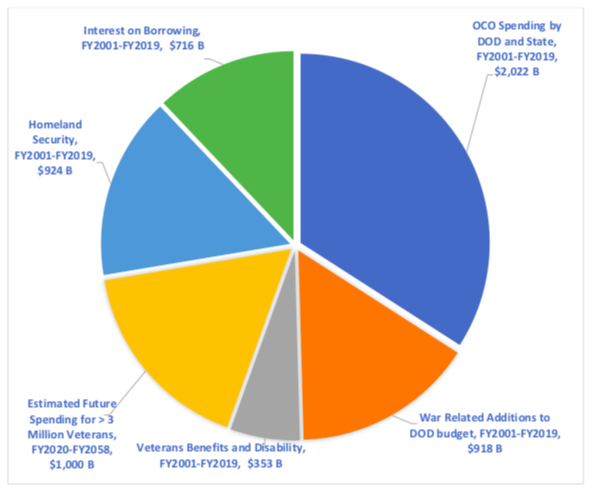
Further, the US military has no plans to end the post-9/11 wars in this fiscal year or the next. Rather, as the inclusion of future years spending estimates in the Pentagon’s budget indicates, the DOD anticipates military operations in Afghanistan, Pakistan, Iraq and Syria necessitating funding through at least FY2023. Thus, including anticipated OCO and other war-related spending, and the fact that the post-9/11 veterans will require care for the next several decades, I estimate that through FY2023, the US will spend and take on obligations to spend more than $6.7 trillion.
To read the full PDF report by Professor Neta C. Crawford, click here.
We Don’t Need EU Army, We Need a ‘European Home’ With Russia: Die Linke
Sputnik – November 17, 2018
Following years of floating within the bloc, the idea of Europe creating joint military forces is on the agenda after the French President and German Chancellor called on their EU allies to unite. While the EU leadership backed the initiative, it got a mixed response among European politicians.
Deputy Chair of left-wing Die Linke’s parliamentary group Heike Haensel has lambasted the idea of creating a European army, which was backed by French President Emmanuel Macron and German Chancellor Angela Merkel. In her article for the German outlet Der Tagesspiegel, the left-wing politician insists that European policy needs a radical new beginning.
“People in Germany and Europe do not need armoured roads, weapons and armies, but crisis-proof jobs, stable social systems and decent pensions. Instead of a “European army” we need a common “European home” with Russia. That would be a true vision of a peaceful union,” she wrote.
She stated that the EU and its members have more acute challenges to spend the taxpayers’ money resolving, which “will have catastrophic consequences, not only for Europeans.” The politician pointed at problems within the Union and its member states, including growing employment and utter futility, child poverty, housing shortages and welfare problems, which are successfully exploited. She lambasted the EU leadership for focusing on more deregulation, welfare cuts and militarization instead of solving these issues.
According to her, the militarization is prompting the EU states to increase their military spending. In addition to the NATO-prescribed target of 2 percent of GDP for military budgets, up to 5.5 billion euros of taxpayers’ money is to be spent annually by the “European Defence Fund” for arms technology.
“As if this was not enough, French President Emmanuel Macron, Chancellor Angela Merkel and German coalition politicians are pushing the creation of an EU army. According to Macron, the project is to withstand Russia, China and the United States. But it must be clear that military Eurochauvinism is not an alternative, or a reforming force in the existing world order. On the contrary, the upgrade of a “military-centred EU” around France and Germany wastes resources and increases the danger of conflict,” Haensel says.
She insists that billions of euros have flown into a senseless and dangerous arms race, and should be spent on social and ecological investments as well as fighting the causes of mass migration.
In early November, French President Emmanuel Macron called for creating a European army that would be independent of the US. The German Chancellor has backed his proposal, stressing recently that “Europe must take its fate in its own hands.” She also proposed the establishment of a “European security council” in order to coordinate the process. According to her, it could be a “good supplement to NATO.” Supported by the European Commission, the idea was branded “insulting” by Donald Trump.
However, the idea of a single EU army has been floated for at least several years. Since 2013, Berlin has overseen efforts towards closer EU defence integration through the Framework Nations Concept, which envisages that Germany should share its troops and capabilities with other European countries.
Iran Ready to Mount Coordinated Anti-Terrorism Operation on Pakistani Soil
Al-Manar | November 17, 2018
Iranian Interior Minister Abdolreza Rahmani Fazli highlighted the insecurity of borders between the Islamic Republic and Pakistan, and voiced Tehran’s readiness to carry out counterterrorism operations on Pakistani soil.
Rahmani Fazli remarks were during a press conference on Saturday, as part of efforts to free 14 abducted borders guards by Takfiri terrorists.
The Iranian minister said following the efforts by various security and diplomatic organizations, the Foreign Ministry in particular, the terrorists handed over five of the 14 Iranian border guards to the Pakistani side.
“We are pursuing (the issue) so that all of the beloved ones taken hostage by the criminals, would return to us,” he said.
Iran expects that the Pakistani government to boost security cooperation along the common borders, the minister stressed.
If Pakistan cannot act against the terrorists for any reason, Iran is ready to carry out operations on Pakistani soil, where the terrorists are present, with Islamabad’s permission, Rahmani Fazli added.
Speaking to reporters at a press conference in the northern city of Qazvin on Thursday, IRGC Commander Major General Jafari also said the abducted border guards will be freed but it will take time.
Iranian Foreign Minister Mohammad Javad Zarif and Commander of the IRGC Ground Force Brigadier General Mohammad Pakpour recently traveled to Pakistan as part of efforts to secure their release.
Pakistani-based terrorists kidnapped 14 Iranian forces at a border post in Mirjaveh region in Sistan and Balouchestan province on October 15.
Brexit Means Fudge
By Rob Slane | The Blog Mire | November 16, 2018
I’m thinking of starting a new line of sweets called Brexit Fudge. It will of course be inedible and no-one in their right mind will buy it, but I’m convinced that there may be a market for it in Westminster and at the BBC. If only I can get the marketing right.
My interest in Brexit waned fairly soon after 23rd June 2016, partly on account of becoming tired listening to the Downing Street Parrot hoodwinking people into thinking she actually believed in removing the UK from the EU, by the repeated squawking of the phrase “Brexit means Brexit”. But even more so was I numbed to the whole thing, since I was quite convinced from the morning of 24th June that the powers that be had no intention of actually honouring the votes of the 17 million+ plebeians who dared to vote in a way that they apparently ought not to have done.
As I wrote back here on 29th June 2016:
“I don’t usually like to indulge in prophetic utterances, and I’m not sure I would describe this as such an attempt – more an informed hunch – but I believe that the 17,410,742 people who just expressed their opinion in a democratic vote to leave the European Union are about to find themselves involved in what can only be described as the mother of all stitch ups. Brexit just isn’t going to happen!!!”
And this:
“Curiously, Brexit doesn’t seem to have brought forth the same gushing praise from these people for the wonders of people exercising their democratic rights. Instead, the talk is about “walking back” the result. Should this happen, and the democratic result be overturned by technique, obfuscation, delaying tactics, propaganda and sheer manipulation, then this time we will have ourselves another coup. Only this time it will be a coup on behalf of the regime against the people. I hate to say it, but be prepared for the mother of all stitch ups. Better trust in God and keep your powder dry.”
And so it is. After two years of “Brexit means Brexit”, we find out that “Brexit means Fudge”. But actually it’s much worse than that. I mean, fudge is normally very good and who could possibly be against it? But the draft Withdrawal Agreement? Who could possibly be in favour of it, except the woman who is determined to hang onto power by her fingernails, Mrs Theresa May (or John Major in a power-suit as I like to think of her), and some sad individuals who are more worried about their place in Parliament than the future of their country.
For those who are interested, there is a good summary here of the major problems with the deal, including:
- Being locked into the European Court of Human Rights
- Being bound to a Customs Union, the rules of which would be set by the EU, but over which we would have no say
- Being left without control of our fisheries, and only able to comment on (but not affect change) of the management of the Common Fisheries Policy.
But the biggie is this:
“Article 132: Notwithstanding Article 126, the Joint Committee may, before 1 July 2020, adopt a single decision extending the transition period up to [31 December 20XX].”
“It’s what you might call the Odysseus Clause. It’s Article 132 – where the drafters can barely commit to finally fully leaving the EU this century …
The drafters have not even bothered to put in 202X to make a point that they expect transition to take a decade or so at most. So all the problems with the transitional deal, accepted because they are seen as transitional, could quite plausibly turn out to be permanent — or at least, long lasting enough to cause serious damage to our economy, to our democracy, and to our national credibility.”
This is clearly not what 17,410,742 people thought they were voting for on 23rd June 2016. But just as crucially, it’s not even what the 16,141,241 who voted Remain thought they were voting against. The former voted to become an independent, sovereign state once again. The later voted to remain part of the European Union. Mrs John Major’s Withdrawal Agreement formally takes us out of the EU, but essentially leaves us in, only without any say, without any end in sight, and unable to decide when that end should be. If it’s Fudge, it’s Impotent Fudge.
The situation is pretty much what Peter Hitchens predicted back here:
“It seems to me that when you have a country where the political establishment, the legal profession and most of the media, particularly the BBC, is in favour of staying, it’d be very difficult to actually leave. That’s what’s now happening. The Leave vote is being frustrated. We will formally leave the EU but we go from being half-in the EU, which we are now, to half-out the EU.”
The problem, as he correctly identified it, was always that we had a political decision taken by the majority of people, but no political party to implement that decision, not to mention an entire establishment that, by and large, was and is and will continue to be against that decision. The spectacle of a pro-Remain Prime Minister charged with implementing a decision which she didn’t support, is one of the wonders of our time, and is a bit like a builder being asked to build a house that he hates and doesn’t actually want to build.
What happens next? Very difficult to say. But I imagine there will be a General Election fairly soon. But the question is, what would you actually be voting for? You’d have two parties who actively loathe the idea of actually carrying out the result of the referendum, and another party the majority of whose MPs also loathe the idea, but who would be asking you to vote for them as they are “the only ones who can be trusted to fulfil the result of the referendum.” Except that they’ve just proven that they can’t be trusted.
It’s an almighty mess and there’s a huge constitutional crisis brewing. I assume that if Mrs May fails to get this agreement passed, at some point the establishment will simply say we need a second referendum (which in itself will teach us all we need to know about the laughable claims that we are a democracy). But what would the question be? Could you even have the same binary question as in 2016? It would be a bit of a joke, wouldn’t it?
“Should the United Kingdom remain a member of the European Union?”
Sorry, we answered that back in 2016, didn’t we, but then there was no-one amongst the elite willing or competent enough to honour it. So my answer remains the same, which was no, but do I believe that any of the current political establishment actually has the desire, the ability and the savvy to achieve this? Nay, nay and thrice nay. Needless to say, it doesn’t bode well for the future of the country when so many people find themselves entirely unrepresented.
Perhaps we do need another referendum, but with an entirely different question:
“Do you believe the current political establishment has proven that it is unfit for purpose and needs replacing?”
Both Leavers and Remainers ought to be able to agree on that.
In first, US endorses Israeli occupation of Golan, votes against 9 anti-Israel resolutions

Press TV – November 16, 2018
The US has, for the first time, endorsed the Israeli occupation of the Golan Heights by voting against an annual UN resolution that condemned the occupation and was unanimously approved along with several other resolutions against Tel Aviv.
The resolution titled “The occupied Syrian Golan,” adopted on Friday with 151 votes in favor, two against (Israel and the US), and 14 abstentions, condemns Israel for “repressive measures” against Syrian citizens in the Golan Heights.
The resolution, which was adopted during the 73rd session of the UN General Assembly’s Special Political and Decolonization Committee (Fourth Committee), expresses deep concern that the Syrian Golan, occupied since 1967, has been under continued Israeli military occupation.
The non-binding annual resolution takes issue with the “illegality of the decision” taken by Israel “to impose its laws, jurisdiction and administration on the occupied Syrian Golan,” which is illegal under international law.
The US’ vote against the annual resolution signaled a dramatic shift in Washington’s policy toward the territory, as it used to abstain in previous cases. The administration of Donald Trump had announced its changed policy ahead of the vote.
“If this resolution ever made sense, it surely does not today. The resolution is plainly biased against Israel,” outgoing US Ambassador to the UN Nikki Haley said in a statement.
During the debate, Syrian envoy Bashar al-Jafari vowed that Damascus would recapture the heights by peace or by war.
Israel seized the Golan Heights from Syria during the 1967 Six-Day War and has continued to occupy two-thirds of the strategically-important territory ever since, in a move that has never been recognized by the international community.
The Tel Aviv regime has built dozens of illegal settlements in the area since its occupation and has used the region to carry out a number of military operations against the Syrian government
Tel Aviv has also been pressing the US administration under Israel-friendly President Trump to recognize its claim to sovereignty over the occupied territory in defiance of international law.
Syria has repeatedly reaffirmed its sovereignty over the Golan Heights, saying the territory must be completely restored to its control.
Eight other resolutions against Israel
The resolution on the occupied Syrian Golan was one of the nine separate resolutions which condemned the Israeli regime.
Through these resolutions, the UN reinforced the mandate of its Relief and Works Agency (UNRWA), and renewed the mandate of its “special committee to investigate Israeli practices affecting the human rights of the Palestinian people and other Arabs of the Occupied Territories.”
Other resolutions included “Palestine refugees’ properties and their revenues”, “Persons displaced as a result of the June 1967 and subsequent hostilities”, “Applicability of the Geneva Convention… to the Occupied Palestinian Territory…”, and “Operations of the United Nations Relief and Works Agency for Palestine Refugees in the Near East”.
The member states also unanimously voted for a resolution titled “Assistance to Palestine refugees”.
Apart from the US, which voted against all the nine resolutions, only a few member states – including Canada and Australia – cast nay votes. The majority of member states voted for the resolutions.
View the resolutions and voting results here: https://t.co/WlLL5EBZ4q
— UN Watch (@UNWatch) November 16, 2018
Former Sen. Barbara Boxer’s Son and California Powerbroker Found Bilking Indian Tribe
Judges Find Breach of Contract and Trust
By Peter Byrne | Consortium News | November 16, 2018
Darius Anderson is one of California’s most powerful men. He promotes himself as a champion of liberal social causes, a philanthropist, a public servant, a man of integrity who cares about his community—especially racial minorities.
That image has not survived judicial scrutiny. A panel of arbitration judges has found that a company controlled by Anderson and his partner, Douglas Boxer, the son of former Senator Barbara Boxer, defrauded its Native American clients in a Bay Area casino deal. The partners convinced the Federated Indians of the Graton Rancheria to buy undevelopable swamp land in which they themselves held a large interest. They then made a secret deal with a Las Vegas gambling corporation in which they benefited at the Graton tribe’s expense.
The two-month long judicial proceeding took place behind closed doors at the San Francisco office of JAMS, a high-profile group of legal mediators formerly known as Judicial Arbitration and Mediation Services. A final binding arbitration award issued in April by the judging panel was confirmed by Superior Court Judge Richard Ulmer on June 1. That outcome has drawn almost no publicity. The only media to report on the findings of fraud against Anderson and Boxer is the North Bay Bohemian, a local alternative weekly newspaper.
For decades Anderson has advised and raised campaign funds for prominent state Democrats, including Nancy Pelosi, leader of the Democrats in the U.S. House of Representatives, and Jerry Brown, governor of the west coast state.
Another of his high-profile clients is Barbara Boxer, the longtime U.S. senator from California who retired in 2017. Her son Douglas partnered with Anderson in what judges found to be acts of fraud and deception against the Federated Indians of Graton Rancheria that began after Sen. Boxer pushed through legislation restoring the tribe’s sovereignty and granting it the right to run a casino.
The case raises comparisons with the 2005 Jack Abramoff Indian lobbying scandal, in which powerful consultants charged exorbitant fees to Indian clients seeking to develop casinos on their reservations. As such it adds another installment to the history of white men breaching trust with Native Americans for economic gain that began with European settlement of this continent. This case has a happier ending than is usual.
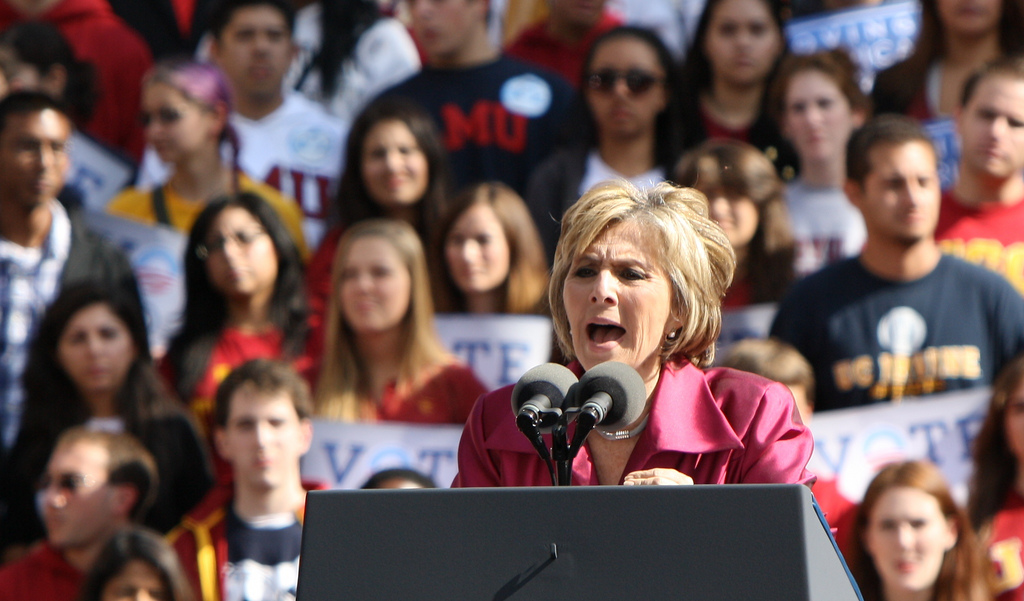
Sen. Boxer: Pushed bill to give tribe sovereignty. (Flicker: Shotgun Spratling)
Local Empire
Anderson, 53, oversees a restaurant and media empire in Napa and Sonoma Counties, 40 miles north of San Francisco. He owns a culinary school called Ramekins and he is the managing member and chairman of Sonoma Media Investments, which owns the Santa Rosa Press Democrat and its affiliate publications, which includes most of the newsprint media in the two-county region. In September, the Press Democrat reported a 900-word story about the arbitration findings that portrayed the tribe and Anderson as having settled a contractual “dispute”—the “fraud” word was not mentioned and the details of the deceptions were not exposed.
Anderson is much more that a restaurateur and newspaper publisher. His California-based lobbying firm, Platinum Advisors, advertises that it generates “billions of dollars in work for our clients” by navigating their deals through mazes of local, state, and federal government bureaucracies. Another of his companies, Kenwood Investments, is developing upscale housing and yacht havens on Treasure Island, a fabulously valuable island in the San Francisco bay built in 1939 as a World’s Fair site.
The business name that is key to this story is Kenwood Investments No. 2. Three retired state judges in the arbitration process declared in April that Anderson and his partners in “Kenwood No. 2” defrauded the Federated Indians of Graton Rancheria of millions of dollars between 2002–03 and committed many acts of deception. They ordered Anderson’s investment firm to pay three quarters of a million dollars to the tribe to cover its lawyer’s fees and arbitration costs.
According to the judges, Anderson breached his consulting contract with the tribe, which now owns the Graton Resort & Casino in Rohnert Park. The judges found that Anderson and his associates “fraudulently induced” and “breached” an agreement to assist the tribe in developing a Las Vegas-style casino business.
The ruling, by retired Superior Court judges William Cahill, Read Ambler and Richard A. Kramer, concludes a long legal battle that was instigated not by the wronged party, but by Anderson, as he sought to further enrich his business at the tribe’s expense.
In a settlement arrangement, Kenwood No. 2 agreed not to appeal the judges’ findings. Anderson’s firm will pay less than the dollar amount of the award, says Joel Zeldin, the tribe’s arbitration counsel. There are no charges of criminal fraud pending against Kenwood No. 2, but the three judges, one of whom was chosen by Anderson’s firm, did their best to restore justice: “Even if the Tribe was willing to overlook Kenwood No. 2’s unethical behavior, the courts and these arbitrators will not.”
Summary of Violations
The 53-page arbitration report details how Darius Anderson and the senator’s son, Douglas Boxer, harmed the Federated Indians of Graton Rancheria over the course of several years. In summing up their findings, the judges’ panel found that Anderson and Boxer had violated their duty to be loyal to the tribe in the following ways:
• Anderson and Boxer represented that Kenwood No. 2 had experience and abilities that it in fact lacked.
• Kenwood No. 2 breached its contract when it bought an option on wetlands without telling the tribe, and then promoted the land to the tribe for the casino site despite its unsuitability for development.
• Anderson and Boxer sent out bid solicitations for a casino manager that benefited Kenwood No. 2 at the expense of the tribe and without telling the tribe of the existence of the “requests for proposals” or RFPs.
• They rejected a proposal that was the most favorable to the tribe without telling the tribe or informing it of that bidder’s reservations about irregularities in the contractual terms proposed by Kenwood No. 2.
• They entered into undisclosed consulting agreements “to the detriment” of the tribe, some of which involved conflicts of interest.
• “Despite causing major problems and providing virtually no effective assistance to the Tribe,” Anderson claimed that it was the tribe that had breached the consulting agreement with Kenwood No. 2. Anderson’s pursuit of his “unmerited” claim against the tribe caused it to spend significant amounts of money and to “suffer business risks and distractions.”
The judges ordered Kenwood No. 2 to pay the tribe’s attorney fees and costs of $725,657.48, and to receive nothing for itself.
Anderson did not respond to multiple requests for comment.
Boxer’s Role
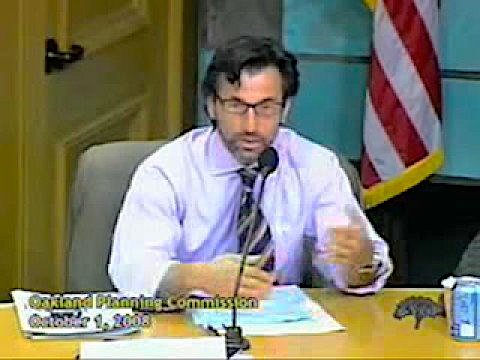
Douglas Boxer: In on deal with Anderson. (YouTube)
Boxer was involved as a lobbyist for Platinum Advisors and as Anderson’s partner in Kenwood Investments No. 2. His mother, the now-retired U.S. senator, in 2000, wrote federal legislation that restored the national sovereignty of the Federated Indians of Graton Rancheria and authorized the tribe to establish a casino business.
In early 2002, Anderson and Boxer approached the tribe’s chairman, Greg Sarris, a novelist and professor of creative writing and Native American studies at Sonoma State University. They proposed that the newly empowered tribal nation hire Platinum Advisors to help it acquire reservation land and start a business to make it self-sufficient. Anderson and Boxer told Sarris that Platinum Advisors had “significant real estate development experience and connections with local, state and federal politicians,” according to the arbitration award. They proffered a platform of consulting services for a monthly retainer of $1,000, with payment deferred and contingent upon success.
Sarris trusted Boxer because the lobbyist’s mother had sponsored the legislation that re-established the tribe’s sovereignty. After Anderson presented a promise-filled PowerPoint to the tribal council, it voted to hire Platinum Advisors, ultimately paying it $1.2 million.
Fifteen years later, arbitrators declared that Anderson and Boxer had breached their contract to deliver adequate professional services in the tribe’s interest, damaging the casino project’s prospects. According to the arbitration document, the Graton Rancheria was afraid to expose these actions when it discovered what Anderson was doing in 2003, fearing political retaliation by the consultants.
The story only came to light because in November 2013, Anderson demanded that the Graton Rancheria pay Kenwood No. 2 a percentage of the projected revenue from its recently opened casino. Anderson insisted that the tribe pay his firm $43 million; he threatened to compel arbitration if it refused.
The tribe refused. It sued Kenwood No. 2 in state superior court, claiming that its sovereign immunity prohibited Anderson from compelling arbitration of his claim.
In November 2015, the court ruled that the tribe had waived its sovereign immunity defense in its contract with Anderson. In 2017, that judgment was affirmed by the appellate court, and the JAMS arbitration commenced.
Anderson claimed 2.5 percent of the Graton Resort & Casino’s net revenue for the first seven years of its operation, despite the fact that after 2005, the tribe had ceased doing business with his company. Insisting that the Graton Rancheria had “unjustly enriched” itself at the expense of his firm, Anderson demanded that it pay his attorney fees, too.
But it was the tribe, not Anderson, that had been wronged, the retired judges ruled. After months of sworn testimony, the panel ordered Kenwood No. 2 to pay the tribe’s attorney fees because it was Kenwood No. 2 that had breached the consulting contract, and Anderson’s claims to the contrary “lacked merit.”
The two trials generated thousands of pages of testimony, depositions and exhibits. The court record of the arbitration award was partly redacted and relabeled at Anderson’s request, according to Zeldin, the tribe’s arbitration counsel.
Anderson’s and Boxer’s names are replaced by “Person A” and “Person B,” respectively. “Platinum Advisors” is replaced with “Company 1.” “Kenwood No. 2” replaced “Kenwood.” The names of politicians and descriptions of their actions are blacked out. But who they are and what they did is clear from the narrative context and from contemporaneous news reports.
How It Began
In March 2002, the Graton Rancheria signed a contract with Platinum Advisors as its “exclusive agent” to provide it with “strategic advice and consultation” and to develop “political visibility.” The contract granted Platinum a right of first refusal to “partner with the tribe in any business opportunity it pursued.” The idea was to attract investors.
From the get-go, Boxer worked to convince the tribe how “‘much of a home run a casino would be’ rather than organic food processing, grape growing, strip mall, or senior assisted living facility,” according to the arbitration award. It did not take much convincing. Casinos are famous magnets for cash. Even as Anderson and Boxer worked with the tribe on a public relations campaign to further a casino project, they were making secret deals to benefit themselves, the arbitrators found.
According to a declaration filed by Anderson in 2015, he, Boxer, Jay Wallace of Platinum Advisors and Stuart Sunshine, a San Francisco city official, created Kenwood Investments No. 2 LLC in January 2003.
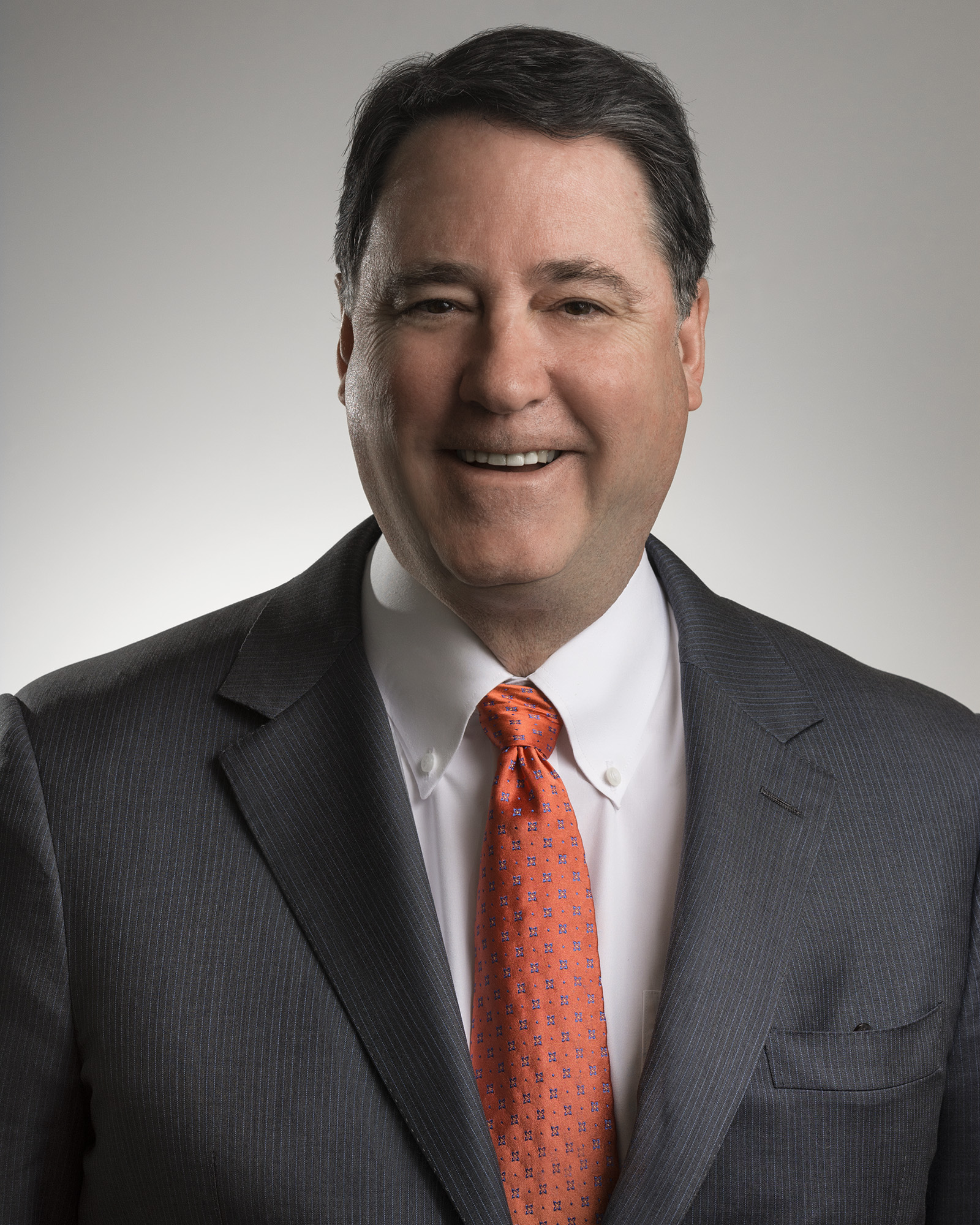
Anderson. (Platinum Advisors)
The arbitration judges ruled that Anderson’s new company shadowed Platinum Advisors’ tribal consulting activities, while serving a hidden agenda to make money for its principals—at the tribe’s expense.
Without informing Sarris or the tribe, Anderson and Boxer struck a deal to buy 1,736 acres of tidal wetlands near Highway 37, a major road connecting San Francisco to the nearby city of Oakland.
Kenwood No. 2 paid $100,000 for an option to purchase the swampy property, eventually billing the tribe $750,000 for it.
As Kenwood No. 2 was secretly securing the option, Platinum Advisors was advising the tribe to select the Highway 37 site for its casino, even though it was a politically impossible place to pour acres of concrete.
“The site was part of 50,000 acres of tidal wetlands that conservationists had been trying to protect and restore since the 1970s,” noted the arbitration judges, who were incredulous that Anderson had suggested it. The attempt to locate the casino on the wetlands site proved to be a public relations and monetary disaster for the tribe.
As Anderson and Boxer were negotiating to buy the swampy land in late 2002, they were also negotiating casino-management deals with several Las Vegas–based casino operators, including Station Casinos, Harrah’s, Maloof and MGM, without telling the tribe.
In February 2003, Anderson sent a request for proposals to potential casino operators. The proposal represented Kenwood No. 2 as the “exclusive development partner” and “financial advisor” for the tribe. The RFP stated that Kenwood No. 2 would evaluate the bid proposals and select the casino manager for the tribe.
Kenwood No. 2 had no contractual relationship with the Graton Rancheria when it issued the RFP. The tribe’s contract was with Platinum Advisors.
According to the arbitration award, “the evidence established that the Tribe was unaware that Kenwood No. 2 had sent an RFP to operators and had not approved the contents of the RFP drafted by Kenwood No. 2.”
Strange Bidding Terms
The trial revealed that Anderson’s RFP instructed potential casino operators to bid their services on the basis of several unusual assumptions:
• The operator would commit to buying Kenwood No. 2’s option to purchase the Highway 37 land and then buy the land from the seller on behalf of Kenwood No. 2, which would be the “titleholder.” The RFP assumed that the casino would be built on the Highway 37 site controlled by Kenwood No. 2 and that there were no other possibilities.
• The operators could charge the tribe 20 percent of the casino’s net revenues and were to “assume a management fee to Kenwood No. 2 of 10 percent of net gaming revenues.”
• The operators would pay Kenwood No. 2 “development fees” of $2.5 million up front to purchase the option on the Highway 37 site, and another $2.5 million when the tribe took over the site—$5 million total.
• “Lastly, operators were required to pay Kenwood No. 2 ‘pre-development fees’ of $8.4 million ($200,000 per month) for advisory and consulting services.”
The operators were not required by the RFP to make upfront cash payments to the tribe, or to provide any specific amounts of money for the tribe’s maintenance costs (i.e., its ability to maintain its existence until the casino began generating revenue).
Anderson received and evaluated four responses to the RFP, which he did not share with the tribe. Notably, Harrah’s proposed to take up to 24 percent of the net gaming revenue as its management fee. Improving on the terms of the RFP itself, Harrah’s offered to pay $100,000 a month to the tribe for its operating expenses, along with a $4 million pre-development fee. Harrah’s also offered to donate $100,000 per year to set up an educational scholarship fund for tribal members. And it offered to make a one-time $25 million “quality of life” loan to address tribal citizen’s needs for housing and medical care.
Harrah’s declined to pay a percentage of net revenues to Kenwood No. 2, although it offered to pay Anderson $50,000 a month in consulting fees, if the tribe approved of the arrangement. Harrah’s pointed out that such an arrangement with a consultant was not a normal business practice; it would have to be approved by the National Indian Gaming Commission.
Harrah’s expressed concern about the legitimacy of Anderson’s claim to be representing the tribe’s interests. It asked to be put directly in touch with the tribal council before proceeding further. Anderson rejected Harrah’s proposal without consulting with Sarris and the tribal council or informing them of the proposal’s existence.
Watch Peter B. Collins interview Peter Byrne on Boxer, Anderson fraud (Article continues below):
A Better Deal—For Anderson
Station Casinos’ response to the RFP was far more favorable toward Anderson. It suggested that Kenwood No. 2 and Station Casinos partner to manage the casino. It proposed divvying up 30 percent of the casino revenues—20 percent to Anderson’s firm, 80 percent to Station.
The Las Vegas–based corporation offered to pay Anderson $10 million cash up front and $15,000 a month for consulting services. It offered $100,000 a month for tribal operations, but it did not offer the tribe any pre-development fees, scholarships or loans.
On March 7, 2003 Anderson and Boxer asked the Graton Rancheria to assign the Platinum Advisors contract to Kenwood No. 2, and claimed it would not change the terms of the agreement.
But the assignation did change the terms of the agreement. The new arrangement gave Kenwood No. 2 new authority to act as the tribe’s exclusive agent. Kenwood No. 2 was allowed to negotiate a cut of the casino operator’s management fee for itself. And, importantly, the tribe agreed to waive its sovereign-immunity defense in the case of a contract dispute—a concession it later regretted.
Anderson and Boxer had been negotiating with gaming corporations since the fall of 2002. They first told Sarris and the tribe that they had issued RFPs on March 11, 2003.
Brian Campbell, a tribal member doing legal work for the tribe, got wind of the RFP and asked Boxer for a copy. Boxer gave Campbell a copy but did not tell him about the responses that had been received.
Boxer later testified under oath that he had given drafts of the RFP to the tribe before it was sent out in 2002. The tribe’s witnesses testified that Boxer did not do that. Campbell testified that he was surprised that Anderson had asked for 10 percent of the gaming revenues and $5 million in upfront fees in the RFP.
On March 14, 2003, Anderson told the tribal council about the existence of RFP responses. He did not disclose Harrah’s offer to the tribe of tens of millions of dollars in cash.
Anderson told the tribe that Station Casinos had made the best proposal for “superior overall economics.”
Even as members expressed outrage at Anderson’s self-dealing behavior, the tribal council accepted his recommendation that Station Casinos be selected as its casino operator.
Time to Hire Lawyers
Suspecting that Anderson was more motivated to benefit himself than the tribe, the Graton Rancheria hired attorneys from California Indian Legal Services to watch over its interests. These lawyers noted that it was a conflict of interest for Anderson to negotiate with Station on behalf of the tribe while he was also negotiating with Station on his own behalf for a cut of the management fees. Anderson agreed that he would not negotiate a separate deal.
On April 22, 2003, the tribe signed the revised agreement with Kenwood No. 2. It provided that Anderson’s company would receive 4 percent of the net gaming revenues for seven years (later reduced to 2.5 percent). Anderson agreed to donate $25,000 annually to the UCLA College of Indian Law Program. (UCLA declined to confirm if the donations were made.)
The next day, according to trial exhibits, Anderson secretly made a separate consulting agreement with Station Casinos, despite his promise that he wouldn’t.

The Graton Resort Casino. (gratonresortcasino.com)
Kenwood No. 2 contracted to assist Station Casinos “maintain its relationship” with the tribe. Station Casinos agreed to pay Anderson $20,000 per month and it bought the option on the Highway 37 site for $750,000, netting Kenwood No. 2 a $650,000 profit. (The tribe later reimbursed Station for the option payment).
Station Casinos agreed to pay Anderson a total of $9.5 million for achieving various “milestones” as it helped the tribe to navigate the bureaucracy of getting its casino up and running.
Anderson did not tell the tribe about his side deal with Station Casinos. “The evidence indicates that Kenwood No. 2 intentionally kept information regarding the Station/Kenwood No. 2 agreement secret from the Tribe,” the arbitrators found. “[Exhibit] 490 [Douglas Boxer] notation: ‘don’t tell Sarris: negotiation.’”
Boxer did not respond to multiple requests for comment.
In fact, the tribe did not learn of the secret side agreement’s existence until June 2003, when Station Casinos included a copy of the side agreement in the paperwork accompanying its negotiations with the tribe, the arbitrators found. Station Casinos declined to comment.
Picking on the Wrong Wetland
On the same day they signed the side agreement, Station Casinos and Anderson announced that the Graton Rancheria planned to develop the Highway 37 site for a casino. A coalition of environmental groups that supported the Bay Delta Restoration Plan to restore local wetland habitats enlisted local, state and federally elected officials to vehemently oppose erecting the casino.
The tribe’s attempt to “appease these groups by offering to restore hundreds of acres of wetlands on the property” was a non-starter. After Diane Feinstein, a U.S. senator from California, “threatened to redraft the Tribe’s restoration language to obstruct the Tribe’s ability to open a casino anywhere,” the Graton Rancheria backed down and nixed the wetlands as a possibility.
The tribe ended up paying for and donating the Highway 37 wetlands to the Sonoma County Land Trust, which has restored it. The wetlands debacle ended up costing the tribe about $5 million, which included paying for the unusable land and for Kenwood No. 2’s profit on the land-purchase option.
Without Anderson’s assistance, Sarris and the tribe went looking for an alternative site to build their casino, and eventually bought 270 acres in Rohnert Park for $100 million, which it borrowed from Station Casinos. The tribe had little or no contact with Anderson and Boxer after 2005, when it stopped using their services.
Boxer testified that Kenwood No. 2 did significant work for the tribe prior to 2006. The trial record reports that in 2004 Boxer “‘killed’ a bill” in the state assembly that would “require gaming tribes to negotiate with local governments to mitigate the impact of casinos.”
Boxer said at trial that he had designed publicity and lobbying campaigns for the tribe; helped it to create a financial budget and to find office space; and “assisted tribal members in securing personal loans.”
The arbitrators determined that lobbying on the tribe’s behalf violated California law because Kenwood No. 2 was not a registered lobbying firm. Regardless, the judges found that Anderson and Boxer did not materially assist the tribe in jumping through the complicated governmental, environmental and financing procedures necessary to obtain a gaming compact and open the casino.
Sarris testified that the tribe felt that “Kenwood No. 2 was providing little or no value . . . and the Tribe wanted to sever its relationship with [Anderson and Boxer] but was afraid that if it did so, [they] might retaliate and use [their] political connections against the Tribe.”
The tribe estimated that it ended up paying Kenwood No. 2 $10,000 an hour for the services it did receive before the contract ended.
Nonetheless, the tribe invited Anderson and Boxer to attend the opening party for the Graton Resort and Casino on Nov. 5, 2014. That same day, Anderson demanded that the Federated Indians of Graton Rancheria wire a payment of $43 million to his bank account.
A version of this story was first published on Bohemian.com as “Graton Expectations.”
Northern California-based journalist Peter Byrne combines investigative reporting with science writing. In 2017, Peter’s 11-part series in the Point Reyes Light “Busted: Breast Cancer Money and the Media” won the top science writing award from the American Association for the Advancement of Science. He has received national, regional, and local recognition for investigative work, writing style, and in-depth profiles of politicians and scientists. Peter reports on terrorism and its twin, counter terrorism, from epicenters of violence such as Mosul, Iraq and Orange County, California. He has written highly regarded books on quantum physics and writes for many publications, including Scientific American, New Scientist, Quanta, American Consequences, Mother Jones, and the North Bay Bohemian. He can be found at www.peterbyrne.info.
If click-bait headlines were an art, NYT’s op-ed would be a masterpiece
RT – November 16, 2018
Russia has been scheming for decades to splinter the West with civilization-shattering fake news, claims a shocking three-part film series published by the New York Times. The series was filed under ‘op-ed’ for a reason, however.
READ MORE: https://on.rt.com/9ipe
Featured Video
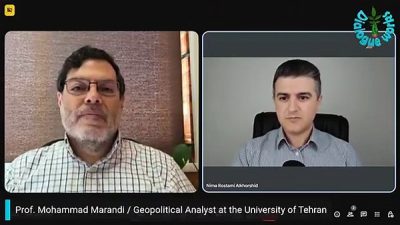
Seyed M. Marandi: U.S. Military DIVIDED? Iran’s Secret Defense EXPOSED
or go to
Aletho News Archives – Video-Images
From the Archives
‘Israel sees Iran as obstacle to its policies’
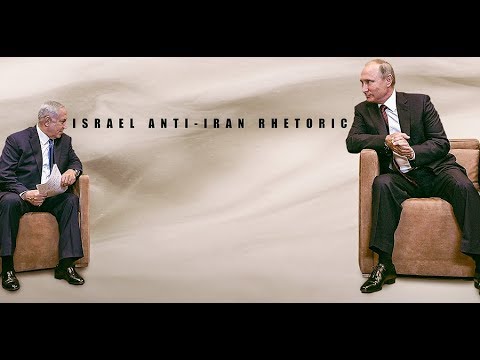
Press TV – August 25, 2017
Prime Minister Benjamin Netanyahu has said that Israel felt threatened by Iran’s growing influence in the Middle East. Netanyahu expressed his Iranophobic view in a meeting with Russian President Vladimir Putin in Russia’s Black Sea resort of Sochi on Wednesday. Press TV has asked Scott Rickard, former American intelligence linguist from Tampa, Florida, and Brent Budowsky, a columnist at The Hill from Washington, to give their thoughts on the issue.
Rickard said Tel Aviv is concerned about the fact that the regime could not carry out its old project to spread sectarian divisions and pave the way for dismemberment of the countries in the Middle East region because of the Iranian-led resistance against Israeli policies, not only in the occupied territories of Palestine but also in the whole region.
“Iran is not a threat to Israel whatsoever. The threat that Israel sees is the fact that their Oded Yinon Plan is being put to a hold by Iran,” the intelligence linguist said on Thursday night.
“They (the Israelis) look at Iran as a threat only because they have no influence on their governments and Iran is autonomous and is not under the Zionist influence,” he added.
Since the victory of the Islamic Republic of Iran in 1979, Tehran has been critical of Israel’s policies in the region, whereas “no leaders [of other states] even dared to speak out against Zionism,” Rickard argued. … continue
Blog Roll
 Aletho News
- What’s Behind U.S./Israeli Strikes On Iranian Pistachio Factories?
- Seyed M. Marandi: U.S. Military DIVIDED? Iran’s Secret Defense EXPOSED
- How I fell foul of the BBC thought police
- The End of NATO
- 37 days of war on Iran cost US staggering $42bln, tracker shows
- Baghdad tells Asian refiners, traders to begin loading Iraqi crude amid Iranian exemption
- Under fire, Moscow and Tehran close ranks
- Iran, US receive Pakistan-mediated plan for ceasefire then final deal
- Iran submits demands for end to war as mediators scramble ahead of Trump deadline
- Iran Threatens Retaliatory Strike on Stargate AI Project in UAE
- If Americans Knew
- U.N. experts demand Israel release prominent Gaza doctor after reports of ‘severe torture’
- Israel’s Latest Genocide Is Against the Shias of Lebanon. Why Is the World Silent?
- How Eliot Cohen’s influence over U.S. war-making paved the way for Trump’s war crimes in Iran
- Israelis don’t pay for the weapons we ‘sell’ to them — US taxpayers do
- While Distancing from AIPAC, Most 2028 Democratic Hopefuls Are Still Embracing Israel
- A brief history of the Israeli nuclear program, the open secret at the heart of the Iran war
- Israeli Settlers Killed a Palestinian Farmer on His Own Land, in Front of His Father. Yes, Again
- The US-Israeli War on Science is an Assault on our Future
- 100+ International Law Experts Say US Strikes on Iran Violate UN Charter, Could Be War Crimes
- ‘Vile, Horrifying, Evil’: Trump Threatens to Bomb Nation of 90 Million People ‘Back to the Stone Ages’
- No Tricks Zone
- An Inconvenient Tree: Uncovered In Alps… Europe Much Warmer Than Today 6000 Years Ago
- New Study Reports A 60% Slowdown In Greenland’s Ice Loss Rate In The Last Decade
- Low Intensity Tornado Wrecks Major Solar Farm, Creating A Potential Toxic Dump
- New Study Finds Warming Saves Lives…Cold Temperatures 12 Times More Deadly Than Excess Heat
- German Science Blog Accuses PIK Climate Institute Of Hallucinating Climate Tipping Points
- Devastating Assessment Of Comirnaty Vaccine By Former Senior Pfizer Europe Toxicologist
- New Study: CO2 Is ‘Effectively Negligible’ As An Explanatory Climate Change Factor Since 2000
- Former Pfizer Toxicologist Dr. Helmut Sterz Tells Bundestag Hearing Pfizer Vaccine Should Have Never Been Approved
- Energy Expert: Germany’s Nuclear Phaseout Was A “500 Billion Euro Mistake”
- New Research: South Australia’s Mid-Holocene Sea Surface Temperatures Were 4°C Warmer Than Today
 Aletho News