It truly is phenomenal. The massive death and destruction from U.S. interventionism in Iraq, Afghanistan, Syria, and the rest of the Middle East isn’t even over with, and yet interventionist dead-enders are now shifting their sights to Venezuela. One almost gets the impression that the dead-enders are saying to America, “Please, give us one more chance. We promise we’ll get it right this time.”
Obviously, the dead-enders are hoping that Americans forget the unmitigated disasters that interventionism has produced on this side of the world, such as in Guatemala, Nicaragua, Cuba, Chile, and others.
The time has come for the American people to raise their sights to a higher level, one that involves not only rejecting more interventionism in Venezuela but one that rejects interventionism entirely. It is the only solution to the foreign policy-woes in which interventionist dead-enders have mired our nation.
That necessarily means the following:
Bring home all U.S. troops from everywhere and discharge them into the private sector, since they will no longer be needed.
Abandon all U.S. military bases in foreign countries, including the Pentagon’s and CIA’s torture and prison center in Cuba.
End all foreign aid, including to pro-U.S. dictatorial regimes.
Restore a limited-government republic to our land, which necessarily means the dismantling of the national-security state branch of the federal government (i.e., the Pentagon, military-industrial complex, CIA, and NSA).
If Americans were to do those four things, the United States would be well on its way toward achieving a peaceful, prosperous, harmonious, and free society, which, needless to say, would be completely different from the type of society in which we live today, thanks to those interventionist dead-enders.
Think Switzerland. Unlike the U.S. government, the Swiss government is based on the concept of non-interventionism, which, by the way, was the founding foreign policy of the United States. Unlike the U.S. government, the Swiss government hasn’t been imposing sanctions on the Venezuelan people in the hopes of starting a violent revolution that has the potential of killing and injuring untold numbers of people, like in Syria. The Swiss government also hasn’t recognized an alternative president in Venezuela, like the U.S. government has, again in the hopes of inciting a violent revolution.
Instead, the Swiss government takes the position that Venezuela is none of Switzerland’s business. Venezuela is the business of the Venezuelan people. If they wish to start a revolution knowing that there will likely be a high toll in terms of death and destruction, that’s their decision, not that of the Swiss government.
Thus, Switzerland butts out of Venezuela’s turmoil. The Swiss government limits itself to defending Switzerland. And no one, not even the U.S. government, jacks with the Swiss.
That’s the model for the United States. Stop being the world’s buttinski, invader, occupier, assassin, torturer, sanctioner, embargoer, kidnapper, dictator-aider, and regime-changer. Just butt out of everyone else’s wars, problems, conflicts, and hostilities. Instead, restore America’s founding principle of non-interventionism and lead the world to peace, prosperity, harmony, and liberty.
Self-proclaimed Venezuelan interim president Juan Guaido has praised the Bank of England’s reported refusal to allow Caracas to repatriate $1.2 billion worth of gold bullion, branding the move a “protection of assets.” Sputnik looks at a few other times Western governments and banks froze, or outright stole, the sovereign wealth of other countries.
Caracas has been waging a losing battle to get its gold back from the UK since late last year, with the Bank of England repeatedly refusing its repatriation requests, according to media reports. Last week, British Foreign Secretary Jeremy Hunt joined Britain’s US allies in backing Juan Guaido, calling him “the right person to take Venezuela forward” and making the return of Venezuela’s gold all the more unlikely. Over the weekend, as if on cue, Guaido praised London’s decision not to return the gold.
All Part of the Job
The practice of freezing or seizing the assets of countries which somehow find themselves on the wrong side of US and European policymakers and financial interests is anything but new. A 1992 review of US extraterritorial asset freeze orders by legal scholar Rachel Gerstenhaber recounted well over a dozen cases of the US freezing or confiscating assets of countries including the likes of Iraq, Panama, Libya, Iran, South Vietnam, Cuba, Nicaragua and a bevy of former Eastern Bloc states. The list doesn’t include similar moves by US allies in Western Europe, which similarly deprived countries of tens of billions of dollars in sovereign assets. For the sake of brevity, Sputnik focuses on three such cases.
Iran
The 40-year-old saga of Iran’s frozen assets goes back to the 1979 Iranian Revolution, which saw revolutionaries overthrow US-backed dictator Mohammad Reza Shah Pahlavi and the establishment of an Islamic republic. The upheaval, which included the taking of hostages at the US Embassy in Tehran, prompted Washington to cut off diplomatic relations, ban Iranian oil imports and freeze some $11 billion in assets ($35.35 billion today, accounting for inflation).On the eve of the signing of the landmark Joint Comprehensive Plan of Action (JCPOA), widely known as the Iran nuclear deal, in 2015, Tehran’s frozen assets, including those stemming from the 1979 Revolution, as well as international nuclear-related restrictions, were estimated to amount to at least $100 billion. The chief of Iran’s central bank said that only about $32 billion, a third of the total, could be released in connection with the nuclear deal.
Over three years after the JCPOA’s signature, the fate of much of the wealth remains unclear. What is known is that US courts have heard multiple cases demanding the outright seizure of the Islamic Republic’s wealth. This includes a 2016 ruling ordering Iranian cash to be paid to the families of US servicemen killed in the 23 October, 1983 truck bombings in Beirut, Lebanon. Tehran maintains that it had nothing to do with the act of terrorism, and has challenged the ruling with the International Court of Justice, so far unsuccessfully.
In a separate, even more outrageous ruling from 2018, a New York court ordered frozen Iranian assets to be used to compensate the victims of 9/11, despite the fact that Iran had nothing to do with the terrorist attacks and that 15 of the 19 hijackers were Saudi nationals.
Iraq
In the run-up to the US invasion of Iraq in 2003, the military planning to seize the country’s strategic assets was accompanied by economic calculations to seize some $1.75 billion in Iraqi assets already frozen in US accounts.
The seizure was just the tip of the iceberg in what would become what seems like a bottomless pit of asset pilfering in the chaos which followed the invasion. In 2010, a Pentagon audit concluded that it couldn’t account for some $8.7 billion in missing Iraqi oil and gas money meant for reconstruction.
Earlier, US media sporadically reported on the enthralling case of some $10-$20 billion in cash, most of it consisting of Iraqi state assets, which was shipped into Iraq in 2004 for reconstruction efforts before seemingly vanishing into thin air.In a 2005 audit, US inspector general for Iraq reconstruction Stuart W. Bowen Jr. reported that over $8.8 billion in the funds could not be accounted for. Six years later, Bowen told Congress that US officials still hadn’t accounted for some $6.6 billion in funds, and said the case could very well be “the largest theft of funds in national history.”
Libya
The details of the suspected plundering of a major chunk of Libya’s vast sovereign wealth fund in the aftermath of the NATO intervention to overthrow Libyan leader Muammar Gaddafi remain shrouded in mystery, close to eight years after the attack. In late 2018, officials from one of Libya’s warring factions called on the UN Security Council to safeguard what’s left of the Libyan assets still frozen in foreign accounts.
The concerns came following reports last March that some 10 billion euros (approximately $11.4 billion US) in Libyan sovereign wealth had disappeared from a Belgian bank, with just 5 billion euros of the original 16 billion euro fund remaining. Last September, a UN panel found Belgium to be in breach of asset freeze restrictions, with interest payments on some of the Libyan funds feared to have been transferred to accounts belonging to warring militias, including Islamists. Authorities from the Tripoli-based government later alleged that the United Arab Emirates were “almost certainly” behind the pilfering, saying the funds were used to support the Tobruk-based government in eastern Libya.
The scandal is just one of numerous major asset freezes and seizures by Western powers in the aftermath of Gaddafi’s demise. In 2012, over a billion euros in assets belonging to Gaddafi’s family and senior members of his government were seized in Italy at the request of the International Criminal Court, including stakes in major Italian companies, as well as property.
A year before that, the Obama administration froze $29.8 billion in Libyan wealth held in US banks including Goldman Sachs, Citigroup, JPMorgan Chase and the Carlyle Group.
The assets, along with $40 billion more in funds held elsewhere, were reported to have been unfrozen in December of 2011. However, UN officials later said that only about $3 billion of that had actually reached the country “due to concerns over who the money should be released to and other diplomatic problems.” In late 2018, the head of Libya’s sovereign wealth fund told Reuters that the fund was planning to appoint auditors to carry out a system-wide audit of its assets in 2019 to try to unfreeze some of the billions in assets still frozen. As of late last year, an estimated 70 percent of the Libyan Investment Authority’s $67 billion in assets abroad remain frozen by the UN.
Also in 2018, British lawmakers mulled pulling a US courts-style seizure of part of Libya’s sovereign wealth fund to compensate victims of the Irish Republican Army, which Gaddafi is thought to have sponsored in the 1980s.
An estimated 9.5 billion pounds ($12.5 billion US) of Libya’s wealth is still believed to be held in British banks. Tripoli has urged London not to go ahead with the seizure. “There is no lawful basis for the United Kingdom to seize or change ownership of the frozen LIA assets. These belong to the Libyan people,” Libyan Investment Authority chief Ali Mahmoud Hassan Mohamed said in a letter addressed to the UK’s Junior Foreign Minister Alistair Burt last October.
The unscrupulous use of Libyan national wealth hasn’t been limited to post-Gaddafi Libya, either. Last year, former French President Nicolas Sarkozy was charged with bribery and accepting some 50 million euros in illegal campaign contributions from Libya ahead of the 2007 presidential election in France. Sarkozy repaid this generosity by being one of the key advocates of the 2011 NATO attack on Libya.
Caracas’s Bullion
On Sunday, Argentinian newspaper Ambito Financieroreported that Venezuelan national assembly head Juan Guaido had asked Prime Minister May and Bank of England governor Mark Carney not to return the estimated $1.2 billion in gold bullion to Caracas, despite President Maduro’s requests. Earlier, in a Saturday tweet, Guaido praised the Bank’s alleged refusal to allow the gold to be repatriated, writing that “the process of protecting the assets of Venezuela has begun,” and saying that the opposition would “not allow more abuse and theft of money intended for food, medicine and the future of our children.”
If the stories of asset freezes and seizures outlined above are anything to go by, it doesn’t seem like it’s going to be up to the Venezuelans to decide what Western governments and central banks do with their country’s wealth.
Washington has imposed sanctions against the Venezuelan state oil company PDVSA, seizing $7 billion in assets, Treasury Secretary Steven Mnuchin said. The US is trying to force recognition of Juan Guaido as president in Caracas.
Munchin said that the move is to “to help prevent the further diversion” of assets by “former president Maduro.”
Sanctions will be lifted upon the “expeditious transfer of control to the interim president, or the subsequently democratically elected interim government,” he added.
“We know what the legitimate government of Venezuela is, and it is our mission to make reality what the people of Venezuela want,” National Security Adviser John Bolton chimed in, standing next to Mnuchin during the briefing at the White House on Monday.
Washington immediately recognized Guaido as the head of the state after he declared himself interim president last week. US allies in the region and in Europe supported him as well.
The US buys a significant amount of Venezuelan oil, but Mnuchin said the sanctions would have “modest effect” on American refineries.
Citgo will continue operating in the US, but all profits from its sales will have to go into a blocked account, which will only be made available to Guaido’s government, the Treasury secretary explained.
“These are valuable assets we’re protecting for the benefit of the Venezuelan people,” Mnuchin argued.
Asked what the US options were if the Venezuelan military remains loyal to Maduro, Bolton said that a number of high-ranking officers, as well as rank and file, are in “significant contacts” with the US-backed regime of Juan Guaido.
The Canadian BDS Coalition sent an Open Letter to the Government of Canada, regarding their involvement in the upcoming CanaDanse Festival in Israel. (Photo: via Social Media)
On January 15, 2019, Canadian PM Justin Trudeau further embellished his “trash talk” on BDS by responding to a questioner at a town hall meeting with announcing he will “continue to condemn the BDS movement”. The prime minister also repeated the claim that BDS is “anti-Semitic” and alleged that Jewish students are fearful and targeted on campuses “because of their religion” due to BDS-linked intimidation.
Trudeau is now fully exposed to all, especially those who might have been previously swayed by his slick image and marketing; the lines are clear, if you support Palestinian rights, you can no longer pretend that Trudeau is anything but a continuation of the Stephen Harper legacy.
He does not represent the majority of people in Canada on BDS or Palestine, or on any indigenous issues for that matter. A national survey done almost two years ago in Canada as to how people felt about boycotts found that seventy-eight percent of Canadians said they believe the Palestinians’ call for a boycott is “reasonable”. The disconnect by Trudeau and his government on this issue is intentional and politically motivated. His collaboration with the Zionist lobby is well-documented but let’s suffice by saying that none other than Gilan Erdan, the Israeli BDS-busting cabinet minister, personally congratulated Trudeau on his most recent condemnations of BDS.
Against this backdrop, you might think that BDS activism in Canada would suffer a setback. Not so! In the last 3 months, activists in Vancouver and across the country have been engaged in a campaign against 3 different ballet companies, as well as several levels of government, that were involved in the CanaDanse Festival in Israel.
The initiators of the campaign, BDS Vancouver, were truly inspired by the immediate and overwhelming public reaction and the sense of outrage at the involvement of Ballet BC (and the other participants/sponsors) in this art-washing of Israeli war crimes. It clearly showed that people both within Canada (and globally as the campaign spread) are more than ready to embrace BDS and have strong feelings about why Israeli government policies require sanctions from all sectors of society, both institutional and civic.
The first focal point of the campaign was the petition to Ballet BC, which has now gotten more than 10,300 signatures. However, the campaign went far beyond just the petition and emphasized gathering support from activist groups across Canada as well as from within Israel itself (Boycott from Within). It also included leafleting Ballet BC performances, and extensive outreach through social media and other avenues.
Why did Ballet BC make this first ever trip to perform in Israel? Why now, with all the horrific things happening on the ground? Was it just part of the increasing moves by the Israeli government to emphasize cultural ties to whitewash its image?
Curiously, Ballet BC lists 11 choreographers for its 2018-19 season, and 4 of those 11 are Israeli, with 3 of them citing strong ties with the Israeli Batsheva dance company on their public profiles. Batsheva has a long history of flaunting the BDS call and is often touted as a cultural ambassador for Israel.
Activists were also shocked to find that the Israeli consulate in Canada back in May 2017 was a sponsor for one of Ballet BC’s performances by Ohad Naharin, probably the best known of the 4 mentioned choreographers. They had hoped that Naharin, who recently stepped down as Artistic Director at Batsheva after 30 years, might seize this moment and this change of company to act upon his professed support for Palestinians. They were disappointed.
As they were disappointed by the Georgia Straight, Vancouver’s leading “progressive” newspaper and also one of Ballet BC’s most ardent media supporters. Despite many attempts to contact Georgia Straight with press releases and other information, the paper never covered the campaign calling out Ballet BC for performing in Israel. In contrast, one of the 2 corporate media sponsors of Ballet BC, City (CityNews ), ran an extensive article early in the campaign presenting both the activists’ demands and Ballet BC’s response. Given the Georgia Straight’s history as an “anti-establishment alternative to Vancouver’s conservative daily newspapers”, and some good coverage in the past of Palestinian events, activists were baffled (and still are) as to why this story was so “off bounds”.
Despite the herculean efforts of the Israeli government to tarnish and smear the Boycott, Divestment and Sanctions movement as “racist and divisive”, even “terrorist”, BDS campaigns continue to increase in popularity with an expanding breadth of support. And the Ballet BC campaign is just one example of that. The more the Israeli government rants about BDS, the more it seems to grow in strength. 2018 was a pivotal year in exposing the brutality of the Israeli government towards Palestinians, especially in the Great Return March, and we may have reached a watershed moment for BDS that can only intensify.
– Marion Kawas is a member of the Canada Palestine Association and co-host of Voice of Palestine. Visit: www.cpavancouver.org.
On January 17, IRmep filed a 59-page brief (PDFHTML) in a lawsuit demanding release of a series of secret presidential letters promising not to force Israel to sign the Treaty on the Non-Proliferation of Nuclear Weapons (NPT) or publicly discuss Israel’s nuclear weapons program.
The brief contextualizes a formerly top-secret 1969 cross-agency study about what U.S. policy toward Israel’s nuclear weapons should be. Unanimous consensus between the Departments of Defense, State and intelligence community was that Israel should be compelled to sign the NPT in order to be allowed to purchase conventional U.S. military weapons. Government agencies correctly believed that if Israel was allowed to possess nuclear weapons there would never be peace in the Middle East. National security adviser Henry Kissinger also grudgingly revealed intelligence in the summary that Israelis had stolen U.S. government nuclear material to build their arsenal atomic weapons. (1969 NSC papers on the Israeli nuclear weapons program filed as Exhibit A PDF)
Going against the consensus advice, on September 26, 1969, President Nixon adopted the Israeli policy of “ambiguity” (never confirming or denying Israel’s nuclear weapons program) in a meeting with Israeli Prime Minister Golda Meir. US presidents through Donald Trump have continued the Israeli “ambiguity” policy in a series of letters written under intense lobbying by the Israeli government.
According to the IRmep legal filing, this policy has perpetuated a $222.8 billion dollar fraud against U.S. taxpayers through non-enforcement of Arms Export Control Act bans on U.S. foreign aid—absent specific waivers—to known foreign nuclear powers that have not signed the NPT. The IRmep filing also debunks a series of assertions and disinformation filed in an affidavit by the National Security Council
On January 18, 2019 the Department of Justice filed a motion to indefinitely stop the lawsuit from proceeding until the end of the government shutdown, citing lack of funds to mount a legal defense. (PDF)
Listen to a discussion about next steps for this critical IRmep litigation and our other lawsuits on the Scott Horton Show (MP3).
With April’s elections looming, Benjamin Netanyahu has good reason to fear Benny Gantz, his former army chief. Gantz has launched a new party, named Israeli Resilience, just as the net of corruption indictments is closing around the prime minister.
Already, at this early stage of campaigning, some 31 per cent of the Israeli public prefer Gantz to head the next government over Netanyahu, who is only months away from becoming the longest-serving leader in Israel’s history.
Gantz is being feted as the new hope, a chance to change direction after a series of governments under Netanyahu’s leadership have over the past decade shifted Israel ever further to the right.
Like Israel’s former politician generals, from Yitzhak Rabin to Ehud Barak and Ariel Sharon, Gantz is being portrayed – and portraying himself – as a battle-hardened warrior, able to make peace from a position of strength.
Before he had issued a single policy statement, polls showed him winning 15 of the 120 parliamentary seats, a welcome sign for those hoping that a centre-left coalition can triumph this time.
But the reality of what Gantz stands for – revealed this week in his first election videos – is far from reassuring.
In 2014, he led Israel into its longest and most savage military operation in living memory: 50 days in which the tiny coastal enclave of Gaza was bombarded relentlessly.
By the end, one of the most densely populated areas on earth – its two million inhabitants already trapped by a lengthy Israeli blockade – lay in ruins. More than 2,200 Palestinians were killed in the onslaught, a quarter of them children, while tens of thousands were left homeless.
The world watched, appalled. Investigations by human rights groups such as Amnesty International concluded that Israel had committed war crimes.
One might have assumed that during the election campaign Gantz would wish to draw a veil over this troubling period in his military career. Not a bit of it.
One of his campaign videos soars over the rubble of Gaza, proudly declaring that Gantz was responsible for destroying many thousands of buildings. “Parts of Gaza have been returned to the Stone Age,” the video boasts.
This is a reference to the Dahiya doctrine, a strategy devised by the Israeli military command of which Gantz was a core member. The aim is to lay waste to the modern infrastructure of Israel’s neighbours, forcing survivors to eke out a bare existence rather than resist Israel.
The collective punishment inherent in the apocalyptic Dahiya doctrine is an undoubted war crime.
More particularly, the video exults in the destruction of Rafah, a city in Gaza that suffered the most intense bout of bombing after an Israeli soldier was seized by Hamas. In minutes, Israel’s indiscriminate bombardment killed at least 135 Palestinian civilians and wrecked a hospital.
According to investigations, Israel had invoked the Hannibal Procedure, the code name for an order allowing the army to use any means to stop one of its soldiers being taken. That includes killing civilians as “collateral damage” and, more controversially for Israelis, the soldier himself.
Gantz’s video flashes up a grand total of “1,364 terrorists killed”, in return for “three-and-a-half years of quiet”. As Israel’s liberal Haaretz daily observed, the video “celebrates a body count as if this were just some computer game”.
But the casualty figure cited by Gantz exceeds even the Israel army’s self-serving assessment – as well, of course, as dehumanising those “terrorists” fighting for their freedom.
A more impartial observer, Israeli human rights group B’Tselem, estimates that the Palestinian fighters killed by Israel amounted to 765. By their reckoning, and that of other bodies such as the United Nations, almost two-thirds of Gazans killed in Israel’s 2014 operation were civilians.
Further, the “quiet” Gantz credits himself with was enjoyed chiefly by Israel.
In Gaza, Palestinians faced regular military attacks, a continuing siege choking off essential supplies and destroying their export industries, and a policy of executions by Israeli snipers firing on unarmed demonstrators at the perimeter fence imprisoning the enclave.
Gantz’s campaign slogans “Only the Strong Wins” and “Israel Before Everything” are telling. Everything, for Gantz, clearly includes human rights.
It is shameful enough that he believes his track record of war crimes will win over voters. But the same approach has been voiced by Israel’s new military chief of staff.
Aviv Kochavi, nicknamed the Philosopher Officer for his university studies, was inaugurated this month as the army’s latest head. In a major speech, he promised to reinvent the fabled “most moral army in the world” into a “deadly, efficient” one.
In Kochavi’s view, the rampaging military once overseen by Gantz needs to step up its game. And he is a proven expert in destruction.
In the early stages of the Palestinian uprising that erupted in 2000, the Israeli army struggled to find a way to crush Palestinian fighters concealed in densely crowded cities under occupation.
Kochavi came up with an ingenious solution in Nablus, where he was brigade commander. The army would invade a Palestinian home, then smash through its walls, moving from house to house, burrowing through the city unseen. Palestinian space was not only usurped, but destroyed inside-out.
Gantz, the former general hoping to lead the government, and Kochavi, the general leading its army, are symptoms of just how complete the militaristic logic that has overtaken Israel really is. An Israel determined to become a modern-day Sparta.
Should he bring about Netanyahu’s downfall, Gantz, like his predecessor politician-generals, will turn out to be a hollow peace-maker. He was trained to understand only strength, zero-sum strategies, conquest and destruction, not compassion or compromise.
More dangerously, Gantz’s glorification of his military past is likely to reinforce in Israelis’ minds the need not for peace but for more of the same: support for an ultranationalist right that bathes itself in an ethnic supremacist philosophy and dismisses any recognition of the Palestinians as human beings with rights.
Kabul – A large number of prisoners, all of them senior members of Daesh (also ISIS or ISIL) terrorist group, broke out of a Taliban prison in northwest Afghanistan after US troops helped them escape through a covert operation.
According to Tasnim dispatches, American forces operating in Afghanistan carried out a secret military operation in the northwestern province of Badghis two weeks ago and helped the Daesh inmates escape the prison.
The report added that 40 Daesh ringleaders, all of them foreigners, were transferred by helicopters after American troops raided the prison and killed all its security guards.
Abdullah Afzali, deputy head of Badghis provincial council, confirmed the news.
Informed sources have given a detailed account of the US operation to rescue the Daesh forces and the developments that helped Americans pinpoint the location of the prison in the mountainous areas.
Aminullah, a man from Uzbekistan, was one of the Daesh commanders held captive in the Taliban prison. His success to escape from the prison led to the dismissal of the Taliban prison guard and his punishment.
Unidentified helicopters transported a large number of Daesh terrorists from Pakistan to the border with Tajikistan, close to Russia’s southern borders, Russian Deputy Interior Minister Igor Zubov said on Monday. Pakistan and Tajikistan are separated by Afghanistan’s Wakhan Corridor region.
According to the Russian minister, there may be some preparations for a provocation that may affect Russia.
“Daesh fighters in massive quantities were transported from Pakistani territory to the border with Tajikistan. In that area, perhaps, the militants might stage massive provocations that would result in huge amounts of refugees fleeing the territory. This would have an impact on Russia,” Zubov said.
This comes after earlier Col. Gen. Andrey Novikov, the head of the Commonwealth of Independent States Anti-Terrorism Centre, stated that Daesh terrorists were being transported to Afghanistan and Pakistan after facing defeat in Syria and Iraq.
Last year, the Syrian Arab News Agency reported that US helicopters evacuated Daesh leaders from several areas across the Syrian province of Deir ez-Zor to the country’s northeast. The US-led coalition, in turn, denied all accusations.
French Polynesia comprises a multitude of islands in the center of the Pacific Ocean, which are a part of France. The biggest and the most famous of these is the island of Tahiti. As in other “overseas” territories that remain under France’s dominion since colonial times, there is a powerful movement for independence in French Polynesia. Islanders take special issue with their parent country when it comes to numerous nuclear tests, which France conducted in the region in the second half of the 20th century.
Based on available data, during the period from 1966 to 1998, the French military performed 193 tests of nuclear weaponry in the atolls of Moruroa and Fangataufa, which comprise the Tuamotu Archipelago. It is public knowledge that 46 tests, conducted from 1966 to 1974, were atmospheric in nature, i.e. nuclear warheads were positioned in special towers on the Earth’s surface, on barges in lagoons, on aerostats in the air, and were also dropped from planes and detonated in the air. It is noteworthy that in 1963, the USSR, the USA and Great Britain signed the Treaty of Moscow, which banned nuclear weapon tests in the atmosphere, under water and in outer space, but France chose not to participate in this agreement.
The other 147 tests were performed underground from 1975 to 1998, with detonations taking place in 500 to 1,100-meter-deep closed vertical shafts.
It is worth mentioning that both atmospheric and underground nuclear tests were conducted on the two atolls of Moruroa and Fangataufa.
It is difficult to say which approach is more harmful to the environment and population’s health. A nuclear detonation in the atmosphere causes a rapid dispersion of radioactive substances over a large area, which soon have an effect on well-being of residents living in this area. After an underground test, a lot of harmful compounds could remain in a shaft, where the detonation took place, for quite a number of years. However with time, these substances, via various routes, such as underground waters, could pollute the surrounding area, and their effect may be more long-lasting and permanent than after-effects following a detonation in the atmosphere, which gradually subside with the help of winds and rains.
Either way, for a long time the French leadership asserted that the tests conducted in the Tuamotu Archipelago had no effect on either the environment or the residents of French Polynesia. However, even in the 1960s, many did not believe this to be true. For decades, the media have published increasingly frightening data about the state of the atoll environment and the fate of people who were in surrounding areas during nuclear testing. It was reported that French politicians and high-ranking military personnel often ignored warnings made by scientists about consequences of nuclear detonations. As a result, residents of near by areas were not evacuated, while French servicemen, who carried out these tests, did not have access to protective gear. In the 1980s the French military leadership attempted to convince the public that it possessed technology of a “clean bomb”, but few believed such statements. Even a stage-managed swim, taken by the French Defence Minister, Paul Quilès, in the lagoon of the Moruroa atoll 5 hours after yet another scheduled test in 1985 did not help matters (interestingly, he is alive and well at present).
In the end, the French Polynesian government managed to receive financial compensation from France, which makes annual payments for damage caused by nuclear testing. This money is a significant contribution to French Polynesia’s budget.
In addition, in 2001 two organizations were established in France. Their aims are to prove that the French government caused harm to a large number of people with its testing and to secure compensation for these people. These organizations are Association des vétérans des essais nucléaires (AVEN, Nuclear Test Veterans Association), which comprises French service personnel who took part in the testing, and Moruroa e tatou (Moruroa and us), which united workers from Moruroa testing sites together. For a number of years these bodies waged an information war against the French government, who continued to assert that the explosions in French Polynesia did not have any serious consequences.
In the end, France was forced to officially admit that thousands of people, including military personnel involved in nuclear testing as well as local residents, contracted serious diseases, including oncological, due to exposure to radiation.
In March 2009, France’s Minister of Defence, Hervé Morin, stated that overall, 150,000 residents of French Polynesia and France were affected by the French nuclear tests. In addition, he informed the public that the French Parliament was in the process of reviewing legislation on making annual targeted compensation payments to people who suffered from radiation exposure. France allocated 10 million euros for these disbursements per year. And individuals who happened to be near a nuclear testing site during detonations were no longer obliged to prove that their health problems stemmed from effects of radiation. The law was approved in 2010, however, according to data as of the end of 2018, only few people have been able to receive this compensation due to red tape. Based on some sources, in French Polynesia the number of such individuals is equivalent to dozens. Hence, the previously mentioned organizations with active support from the Assembly of French Polynesia (AFP, the local parliament) continued waging their battle.
As for the AFP, many of its members are supporters of independence of French Polynesia from France, and the damage sustained by the islands as a result of nuclear testing, is yet another trump card for them. The AFP organized numerous protests and information campaigns which demanded an admission that French Polynesia suffered from the actions taken by French military personnel. One of the key figures in this struggle became Oscar Temaru, a former President of French Polynesia, who held this post on five occasions and was the founder and leader of the party, the Front for the Liberation of Polynesia (FLP), currently known as Tavini Huiraatira (People’s Servant).
In 2013, France’s Ministry of Defence was forced to declassify a number of documents, which were immediately publicized by the media. These reports provide detailed descriptions of the effects of nuclear testing on the environment of the entire French Polynesia. For instance, the documents mention that after a series of nuclear tests, increased radiation levels exceeding safety limits were reported in Tahiti, an island in the center of French Polynesia, which is located more than 1,000 km from Moruroa and happens to be a popular international resort. Other islands of French Polynesia were reported to be in a similar situation. Furthermore, witnesses recall that there were instances when French authorities refused to evacuate residents from some French Polynesian islands that were within the fallout zone.
In November 2014, the AFP announced that it was determined to demand compensation from France for damage caused to the environment of French Polynesia, which it estimated to amount to more than 1 billion US dollars.
In October 2018, at the session of the UN Committee on Decolonization in New York, the previously mentioned politician, Oscar Temaru, affirmed that he and his allies had begun legal proceedings against France at the International Court of Justice in The Hague. France has been accused of crimes against humanity.
The same month, a court ruled to suspend Oscar Temaru from his duties within the AFP for a year as unexpectedly, fraudulent financial irregularities were uncovered during his election campaign. In November 2018, Oscar Temaru was detained for 12 hours in the course of an investigation on fund embezzlement from a local company that sponsored an opposition-friendly radio station. Now, the famous politician is awaiting trial, which will begin in June 2019. Members of the Front for the Liberation of Polynesia assert that evidence against Oscar Temaru was fabricated by the French authorities in order to ruin his reputation as a politician.
Regardless of whether these accusations are true or not, any focus on issues connected to nuclear testing in French Polynesia hurts France. As new facts about the events that transpired emerge, France’s actions in French Polynesia begin to look more and more unsightly. Environment-related crimes are among the most condemned in modern liberal European society. And the fact that France chose its “overseas” territory in the Pacific Ocean for its nuclear testing and failed to take necessary safety measures to protect local residents may be tied to even more deplorable acts, such as colonialism and racism.
Hence, France, long considered to be a bastion of European values, such as tolerance and multiculturalism, will most likely do everything in its power to reduce tensions surrounding Moruroa, Fangataufa and its nuclear program by, among other means, sidelining politicians such as Oscar Temaru.
In addition, it is important for France to dampen the separatist mood in French Polynesia so as not to lose dominion over the atolls of Moruroa and Fangataufa. After all, in order to accurately assess the environmental consequences of French nuclear testing in French Polynesia, and the potential threat to future generations of Polynesians, scientists need to conduct research in the cursed atolls. They need to determine quantities of harmful substances which remain underground, and to find possible routes that these compounds could use to spread from these two atolls to the rest of the region. Some also think that underground detonations could have resulted in appearance of cracks, which could connect the shafts where the tests were conducted with the ocean. However, scientists have not been able to access Moruroa and Fangataufa since France ratified the Comprehensive Nuclear Test Ban Treaty (CTBT) in 1998. Nuclear test sites have thus been sealed and are protected by armed security personnel who do not allow scientists and employees of environmental organizations to reach these areas.
Various experts have, on numerous occasions, expressed an opinion that France’s unwillingness to allow researchers to access these closed off testing sites is one of the reasons why France is trying to keep French Polynesia in its dominion.
It is well known that keeping these islands under France’s control is a significant expense for the French budget. The region is incapable of supporting itself even through tourism, which accounts for 25% of French Polynesia’s GDP and is a key economic sector for the nation. Paris is compelled to spend billions of euros on French Polynesia, which is why calls for its independence are even periodically echoed in France itself.
In addition, independence supporters who live in French Polynesia think that France is responsible for the region’s economic woes, as it prevents development of local businesses and sets high tariffs on imported and exported goods. Members of forces, opposing French rule, believe that the parent nation uses such means to artificially slow down economic development of French Polynesia for fear that, on gaining financial independence, the region will immediately attain political freedom. Then France will lose control over Moruroa and Fangataufa, and whatever secrets are hidden in these atolls will be revealed by the world media.
Now that the case has been taken to the International Court of Justice, France will need to do its best to maintain control of French Polynesia. If the AFP estimates damages, caused by nuclear testing, at 1 billion US dollars, then, most likely, France will pay this sum out. From now onwards, France will probably start making compensation payments due to veterans, affected by nuclear testing, and to common residents of French Polynesia, in accordance with the 2010 law, with much more effort. However, it is uncertain whether these measures will help France’s case, as this issue has already gained notoriety world-wide. For far too long, France ignored demands from people who suffered from consequences of nuclear tests. Perhaps if it had started making generous compensation payments to these individuals several years earlier, there would not be a court case against France at The Hague. As things stand now, the global community will have to make a legal and environmental assessment of the actions taken by France from 1966 to 1998. And it can not be ruled out that soon France will not only lose control over French Polynesia but its reputation as well.
Sofia Pale, PhD, Research Fellow of the Center for South-East Asia, Australia and Oceania of the Institute of Oriental Studies of the Russian Academy of Sciences.
“Settled science” and BuzzFeed share a fatal commonality. Both are driven by an agenda rather than facts. BuzzFeed learned that lesson yet another time last week. Two years ago, the publication pushed the Clinton-bought phony and unverified Trump Russia dossier, which launched stories of collusion, FISA warrants, and the ongoing Mueller investigation.
In a bit of irony, it was the Mueller team that slapped down BuzzFeed’s latest story accusing President Trump of asking Michael Cohen to lie to Congress. Imagine the fake news media being fact-checked by their hero, Robert Mueller.
So-called settled science faces similar collisions with reality. Driven by a particular agenda, whether financial or political, science becomes blinded to any contrarian views, insisting that the issue is “settled,” shutting off any further inquiry, debate, or honest disagreement. In some areas of science, dissenters are labeled as “deniers” with threats of violence, loss of job, or even imprisonment.
The most prevalent example is climate. From global cooling in the 1970s to global warming in the 2000s, the names have changed, but not the agenda. Since climate models are misbehaving, not providing the desired predictions, the names have morphed into “climate change” or “extreme weather.” But still the science is considered “settled.”
Barack Obama in 2014 told Congress, “The debate is settled, climate change is a fact.”
Someone with a bit more science knowledge than the community organizer from Chicago, physician and author Michael Crichton, said this about settled science: “There is no such thing as consensus science. If it’s consensus, it isn’t science. If it’s science, it isn’t consensus. Period.”
The latest bit of unsettled science is something few of us are thinking about in the midst of global warming-induced winter storms and piles of snow – namely, sunscreen.
A recent article in Outside magazine sums it up: “Current guidelines for sun exposure are unhealthy and unscientific, controversial new research suggests – and quite possibly even racist. How did we get it so wrong?”
It started with vitamin D.
People with low levels of vitamin D in their blood have significantly higher rates of virtually every disease and disorder you can think of: cancer, diabetes, obesity, osteoporosis, heart attack, stroke, depression, cognitive impairment, autoimmune conditions, and more. The vitamin is required for calcium absorption and is thus essential for bone health, but as evidence mounted that lower levels of vitamin D were associated with so many diseases, health experts began suspecting that it was involved in many other biological processes as well.
Why were so many of us low in vitamin D? “Vitamin D is a hormone manufactured by the skin with the help of sunlight. It’s difficult to obtain in sufficient quantities through diet.”
Enter the settled science that sun exposure is bad. Excessive sun exposure, particularly sunburn, increases the risk of skin cancer. Dermatologists recommend absolute protection from the sun, even on cloudy days. Use sunscreen, the higher the SPF rating the better, and apply it multiple times a day, even if you are just going to work and back.
Easy enough. Just take a vitamin D supplement every day, stay out of the sun, and all will be well. Or will it?
“Vitamin D supplementation has failed spectacularly in clinical trials” according to the Outside article. Five years of high-dose vitamin D had “[n]o impact on cancer, heart disease, or stroke.”
Maybe simply taking vitamin D as a pill isn’t the same as getting it naturally from sun exposure. Perhaps the low blood levels of vitamin D in the unhealthy weren’t the actual cause of health problems, but instead just a marker.
This is the scientific conundrum of causation versus association. Does having blue hair cause elderly ladies to play bingo, or is this just an association?
The science of sunlight is a bit more complicated. The skin uses sunlight to make nitric oxide, a blood vessel-dilator that lowers blood pressure. This in turn reduces the risk of heart attack and stroke. Vitamin D is produced along the way but may not be preventing actual disease, instead serving as a marker that an individual is receiving enough sun exposure.
But too much sun, particularly sunburn, does increase the risk of skin cancer. Some types, like basal cells, are a cosmetic nuisance, whereas melanoma is deadly.
Much as with climate. One can argue that fossil fuel consumption is a threat to the climate. Yet the benefits of fossil fuel energy production have lifted millions out of poverty, prolonging life spans and quality of life.
A Swedish study tracked 30,000 women over 20 years and found that “[s]un avoiders were twice as likely to die as sun worshippers.”
What unsettled the science of lathering on sunscreen or avoiding the sun altogether was the finding that “[a]voidance of sun exposure is a risk factor of a similar magnitude as smoking, in terms of life expectancy.”
How else to explain our prehistoric ancestors, wearing minimal, if any, clothing, spending their days in the sun, without becoming extinct? Settled science looks simplistic, much in the way Al Gore’s insistence the CO2 controls the Earth’s thermostat looks simplistic when we consider that the upper Midwest was once covered in a mile-thick sheet of ice when the planet cooled but then melted when the planet warmed.
It seems that sun exposure, in moderation, may not be bad for you. In fact, it may be healthier than avoiding it. Does this sound familiar?
In the annals of settled science, we have heard this song before. Once upon a time, margarine was good and butter was bad. Margarine is a trans fat and now considered unhealthy compared to butter. Dietary fats in general were unhealthy, and people were told to eat carbohydrates instead. This ushered in an epidemic of Type 2 diabetes.
Same with coffee, at one time the cause of all types of nasty diseases, now providing numerous health benefits.
Don’t forget carbon dioxide, which, some say, is killing the planet. Constituting only 0.04% of the atmosphere, does a small increase in CO2 mean the planet is doomed? Or is it beneficial, since CO2 is plant food, necessary for photosynthesis, responsible for “greening” the planet – which in turn leads to more food production?
There’s temperature as well, which fluctuates on the Earth in varying cycles for unclear reasons. Warmer temperatures might raise the sea level a few inches but may also increase the amount of fertile land and provide a longer growing season.
Although we know much about the world, there is plenty we don’t yet understand. It’s the height of hubris to assume we have all the answers and that the science is settled. The sunscreen about-face is just the latest example.
Brian C Joondeph, M.D., MPS is a Denver-based physician and writer. Follow him on Facebook, LinkedIn, and Twitter.
Most Canadians think of their country as a force for good in the world, but recent efforts by Justin Trudeau’s government to overthrow Venezuela’s elected government have once again revealed the ugly truth about the Great White North. We are an important partner in imperialism, willing to interfere in the internal affairs of other countries, up to and including the use of military force, to benefit the perceived self-interest of our elites.
Over the past two years Canadian officials have campaigned aggressively against President Nicolás Maduro. Foreign Minister Chrystia Freeland has repeatedly criticized Caracas’ democratic legitimacy and human rights record. Recently she said, “the Maduro regime is now fully entrenched as a dictatorship” while in September Ottawa asked (with five South American nations) the International Criminal Court to investigate the Venezuelan government, which is the first time a government has been formally brought before the tribunal by another member.
In recent weeks Canadian diplomats have played an important role in uniting large swaths of the Venezuelan opposition behind a US-backed plan to ratchet up tensions by proclaiming the new head of the opposition-dominated National Assembly, Juan Guaido, president. The Canadian Press quoted a Canadian diplomat saying they helped Guaido “facilitate conversations with people that were out of the country and inside the country” while the Globe and Mail reported that “Freeland spoke with Juan Guaido to congratulate him on unifying opposition forces in Venezuela, two weeks before he declared himself interim president.” Alongside Washington and a number of right-leaning Latin American governments, Ottawa immediately recognized Guaido after he proclaimed himself president on Wednesday. Canadian officials are lobbying European leaders to recognize Guaido as president as well.
Ottawa has long provided various other forms of direct support to an often-violent opposition. In recent years Canada channelled millions of dollars to opposition groups in Venezuela and 18 months ago outgoing Canadian ambassador, Ben Rowswell, told the Ottawa Citizen that “we became one of the most vocal embassies in speaking out on human rights issues and encouraging Venezuelans to speak out.”
Alongside its support for the opposition, Ottawa expelled Venezuela’s top diplomat in 2017 and has imposed three rounds of sanctions on Venezuelan officials. In March the United Nations Human Rights Council condemned the economic sanctions the US, Canada and EU have adopted against Venezuela while Caracas called Canada’s move a “blatant violation of the most fundamental rules of International Law.”
Since its August 2017 founding Canada has been one of the most active members of the “Lima Group” of governments opposed to Venezuela’s elected government. Canada is hosting the next meeting of the “Lima Group”. Freeland has repeatedly prodded Caribbean and Central American countries to join the Lima Group’s anti-Maduro efforts.
In September, 11 of the 14 member states of the “Lima Group” backed a statement distancing the anti-Venezuelan alliance from “any type of action or declaration that implies military intervention” after Organization of American States chief Luis Almagro stated: “As for military intervention to overthrow the Nicolas Maduro regime, I think we should not rule out any option … diplomacy remains the first option but we can’t exclude any action.” Canada, Guyana and Colombia refused to criticize the head of the OAS’ musings about an invasion of Venezuela.
Alongside the head of the OAS, US president Donald Trump has publically discussed invading Venezuela. To the best of my knowledge Ottawa has stayed mum on Trump’s threats, which violate international law.
Why? Why is Canada so eager to overthrow an elected government? Recent headlines in the Globe and Mail (“Venezuelan crisis buoys prospects for Canadian heavy crude oil producers”) and Wall Street Journal (“Bond Prices in Venezuela Jump on Prospect of Regime Change”) suggest some short term reasons. But looking at the situation from a historical perspective confirms Noam Chomsky’s claim that international affairs is run like the Mafia. The godfather cannot accept disobedience.
Thus, while the scope of the Trudeau government’s current campaign against Venezuela is noteworthy, it’s not the first time Ottawa has supported the overthrow of an elected, left leaning, government in the hemisphere. Canada passively supported military coups against Guatemalan President Jacobo Arbenz in 1954 and Brazilian President João Goulart in 1964 as well as ‘parliamentary coups’ against Paraguayan president Fernando Lugo in 2012 and Brazilian President Dilma Rousseff in 2016. Ottawa played a slightly more active role in the removal of Dominican Republic president Juan Bosch in 1965 and Chilean president Salvador Allende in 1973. In a more substantial contribution to undermining electoral democracy, Ottawa backed the Honduran military’s removal of Manuel Zelaya in 2009.
Canada played its most forceful role in the removal of a progressive, elected, president in the hemisphere’s most impoverished nation. Thirteen months before Jean-Bertrand Aristide was, in his words, “kidnapped” by US Marines on February 29, 2004, Jean Chrétien’s Liberal government organized an international gathering to discuss overthrowing the Haitian president. JTF2 special forces secured the Port-au-Prince airport the night Aristide was ousted and 500 Canadian troops were part of the US-led invasion to consolidate the coup.
With regards to Venezuela it’s unclear just how far Ottawa is prepared to go in its bid to oust Maduro. But, it is hard to imagine that the path Canada and the US have chosen can succeed without Venezuela being plunged into significant violence.
The religion of “the Holocaust” is a secular one: it belongs to the lay world; it is profane; in actuality, it has at its disposal the secular arm, that is a temporal authority with dreaded power. It has its dogma, its commandments, its decrees, its prophets and its high priests. As one revisionist has observed, it has its circle of saints, male and female, amongst whom, for example, Saint Anne (Frank), Saint Simon (Wiesenthal) and Saint Elie (Wiesel). It has its holy places, its rituals and its pilgrimages. It has its sacred (and macabre) buildings and its relics (in the form of cakes of soap, shoes, toothbrushes, …). It has its martyrs, its heroes, its miracles and its miraculous survivors (in the millions), its golden legend and its righteous ones. Auschwitz is its Golgotha. For it, God is called Yahweh, protector of his chosen people, who, as said in one of the psalms of David (number 120), recently invoked by a female public prosecutor, Anne de Fontette, during the trial in Paris of a French revisionist, punishes “lying lips” (by, incidentally, sending them the “sharp arrows of the mighty, with coals of juniper”). For this religion, Satan is called Hitler, condemned, like Jesus in the Talmud, to boil for eternity in excrement. It knows neither mercy, nor forgiveness, nor clemency but only the duty of vengeance. It amasses fortunes through blackmail and extortion and acquires unheard-of privileges. It dictates its law to the nations. Its heart beats in Jerusalem, at the Yad Vashem monument, in a land taken over from the natives; in the shelter of a 26-foot high wall built to protect a people who are the salt of the earth, the companions of the “Holocaust” faith rule over the goy with a system that is the purest expression of militarism, racism and colonialism.
A quite recent religion whose growth has been meteoric
Although it is largely an avatar of the Hebraic religion, the new religion is quite recent and has exhibited meteoric growth. For the historian, the phenomenon is exceptional. Most often a religion of universal scope has its origins in remote and obscure times, a fact that makes the task of historians of religious ideas and institutions rather arduous. However, as luck would have it for that type of historian, in the space of fifty-odd years (1945-2000), right before our eyes, a new religion, that of “the Holocaust”, has suddenly come into being and proceeded to develop with astonishing speed, spreading nearly everywhere. It has conquered the West and intends to impose itself on the rest of the world. Any researcher interested in the historical phenomenon made up by the birth, life and death of religions ought therefore to seize the occasion, never so much as hoped for, thus offered to study from up close the birth and life of this new religion, then calculate its chances of survival and the possibility of its demise. Any specialist of war watching out for indications of a coming conflagration would owe it to himself to survey the risks of a warlike crusade such as the one into which this conquering religion may take us.
A religion that embraces consumerism
As a rule, consumer society places religions and ideologies in difficulty or danger. Each year, growth in both industrial production and business activity creates in peoples’ minds new needs and desires, truly concrete ones, lessening their thirst for the absolute or their aspiration towards an ideal, factors that religions and ideologies feed on. Besides, the progress of scientific thinking makes people more and more sceptical as to the truth of religion’s stories and the promises it gives them. Paradoxically, the only religion to prosper today is the “Holocaust” religion, ruling, so to speak, supreme and having those sceptics who are openly active cast out from the rest of mankind: it labels them “deniers”, whilst they call themselves “revisionists”.
These days the ideas of homeland, nationalism or race, as well as those of communism or even socialism, are in crisis or even on their way to extinction. Equally in crisis are the religions of the Western world, including the Jewish religion, and in their turn but in a less visible manner, so are the non-Western religions, themselves confronted by consumerism’s force of attraction; whatever one may think, the Moslem religion is no exception: the bazaar attracts bigger crowds than the mosque and, in certain oil-rich kingdoms, consumerism in its most outlandish forms poses an ever more insolent challenge to the rules for living laid down by Islam.
Roman Catholicism, for its part, is stricken with anaemia: to use Céline’s phrase, it has become “christianaemic”. Amongst the Catholics whom Benedict XVI addresses, how many still believe in the virginity of Mary, the miracles of Jesus, the physical resurrection of the dead, everlasting life, in heaven, purgatory and hell? The churchmen’s talk is usually limited to trotting out the word that “God is love”. The Protestant religions and those akin to them are diluted, along with their doctrines, in an infinity of sects and variants. The Jewish religion sees its members, more and more reluctant to observe so many peculiar rules and prohibitions, deserting the synagogue and, in ever greater numbers, marrying outside the community.
But whereas Western beliefs or convictions have lost much of their substance, faith in “the Holocaust” has strengthened; it has ended up creating a link – a religion, according to standard etymology at any rate, is a link (religat religio) – that enables disparate sets of communities and nations to share a common faith. All in all, Christians and Jews today cooperate heartily in propagating the holocaustic faith. Even a fair number of agnostics or atheists can be seen lining up with enthusiasm under the “Holocaust” banner. “Auschwitz” is achieving the union of all.
The fact is that this new religion, born in the era where consumerism expanded so rapidly, bears all the hallmarks of consumerism. It has its vigour, cleverness and inventiveness. It exploits all the resources of marketing and communication. The vilest products of Shoah Business are but the secondary effects of a religion that, intrinsically, is itself a sheer fabrication. From a few scraps of a given historical reality, things that were, after all, commonplace in wartime (like the internment of a good part of the European Jews in ghettos or camps), its promoters have built a gigantic historical imposture: the imposture, all at once, of the alleged extermination of the Jews of Europe, of camps allegedly equipped with homicidal gas chambers and, finally, of an alleged six million Jewish victims.
A religion that seems to have found the solution to the Jewish question
Throughout the millennia, the Jews, at first generally well received in the lands that have taken them in, have ended up arousing a phenomenon of rejection leading to their expulsion but, quite often, after leaving through one door, they have re-entered through another door. In several nations of continental Europe, in the late 19th and early 20th century, the phenomenon appeared once more. “The Jewish question” was especially put in Russia, Poland, Romania, Austria-Hungary, Germany and France. Everyone, beginning with the Jews themselves, then set about looking for “a solution” to this “Jewish question”. For the Zionists, long a minority amongst their coreligionists, the solution could only be territorial. The thing to do was to find, with the accord of the imperial powers, a territory that Jewish colonists could settle. This colony might be located, for example, in Palestine, Madagascar, Uganda, South America, Siberia, … Poland and France envisaged the Madagascar solution whilst the Soviet Union created in southern Siberia the autonomous Jewish sector of Birobijan. As for National Socialist Germany, she was to study the possibility of settling the Jews in Palestine but wound up realising, from 1937, the unrealistic nature of the idea and the great wrong to the Palestinians that such a project would entail. Subsequently the 3rd Reich wanted to create a Jewish colony in a part of Poland (the Judenreservat of Nisko, south of Lublin), then in its turn, in 1940, it seriously considered creating a colony in Madagascar (the Madagascar Projekt). Two years later, beset by the necessities of a war to wage on land, sea and in the air and taken up with the more and more distressing concerns of having to save German cities from a deluge of fire, to safeguard the very life of his people, to keep the economy of a whole continent running, a continent so poor in raw materials, Chancellor Hitler made it known to his entourage, notably in the presence of Reichsminister and head of the Reichskanzlerei Hans-Heinrich Lammers, that he intended to “put off solving the Jewish question till after the war”. Constituting within her a population necessarily hostile to a Germany at war, the Jews – in any case a large portion of them – had to be deported and interned. Those able to work were made to do so, the others were confined in concentration camps or transit camps. Never did Hitler either desire or authorise the massacre of Jews and his courts martial went so far as to order the death penalty, even in Soviet territory, for soldiers found guilty of excesses against Jews. Never did the German State envisage anything else, as concerned the Jews, than “a final territorial solution of the Jewish question” (eine territoriale Endlösung der Judenfrage) and it takes all the dishonesty of our orthodox historians to evoke incessantly “the final solution of the Jewish question” and deliberately evade the adjective “territorial”, so important here. Up to the end of the war, Germany kept on offering to deliver interned Jews to the western Allies, but on condition that they then stay in Britain, for example, and not go and invade Palestine to torment “the noble and valiant Arab people”. There was nothing exceptional about the fate of Europe’s Jews in the general blaze of war. It would have deserved just a mention in the great book of Second World War history. One may therefore quite rightly be astonished that today the fate of the Jews should be considered the essential feature of that war.
After the war it was in the land of Palestine and to the detriment of the Palestinians that the upholders of the “Holocaust” religion found – or believed they’d found – the final territorial solution to the Jewish question.
A religion that, previously, groped along with its sales methods
(Raul Hilberg’s recantation)
I suggest that sociologists undertake a history of the new religion by examining the extremely varied techniques in line with which this “product” was created, launched and sold over the years 1945-2000. They can thus measure the distance between the often clumsy procedures of the beginning and the sophistication, at the end, of the packagings designed by our present-day spin doctors (crooked “com” experts) for their presentations of “the Holocaust”, henceforth a compulsory and kosher mass-consumer product.
In 1961, Raul Hilberg, first of the “Holocaust” historians, “the pope” of exterminationist science, published the first version of his major work, The Destruction of the European Jews. He expressed in doctoral manner the following thesis: Hitler had given orders for an organised massacre of the Jews and all was explained as somehow coming of those orders. This way of displaying the merchandise was to end in a fiasco. With the revisionists asking to see the Hitler orders, Hilberg was compelled to admit that they had never existed. From 1982 to 1985, under the pressure of the same revisionists asking to see just what the magical homicidal gas chambers, in technical reality, looked like, he was led to revise his presentation of the holocaustic product. In 1985, in the “revised and definitive” edition of the same book, instead of taking an assertive, curt stance with the reader-customer, he sought to get round him with all sorts of convoluted phrases, appealing to a supposed taste for the mysteries of parapsychology or the paranormal. He expounded on the history of the destruction of the European Jews without in the least bringing up any order, from Hitler or anyone else, to exterminate the said Jews. He explained everything by a kind of diabolical mystery through which, spontaneously, the German bureaucrats told themselves to kill the Jews to the very last.“Countless decision makers in a far-flung bureaucratic machine” took part in the extermination enterprise by virtue of a “mechanism”, and did so without any “basic plan” (p. 53); these bureaucrats “created an atmosphere in which the formal, written word could gradually be abandoned as a modus operandi” (p. 54); there were “basic understandings of officials resulting in decisions not requiring orders or explanations”; “it was a matter of spirit, of shared comprehension, of consonance and synchronization”; “no one agency was charged with the whole operation”; “no single organization directed or coordinated the entire process” (p. 55). In short, according to Hilberg, this concerted extermination had indeed taken place but there was no possibility of actually demonstrating it with the aid of specific documents. Two years previously, in February 1983, during a conference at Avery Fischer Hall in New York, he had presented this strange and woolly thesis as follows: “What began in 1941 was a process of destruction not planned in advance, not organized centrally by any agency. There was no blueprint and there was no budget for destructive measures. They were taken step by step, one step at a time. Thus came about not so much a plan being carried out, but an incredible meeting of minds, a consensus-mind reading by a far-flung bureaucracy”. To sum up, that vast project of destruction was executed, magically, by telepathy and by the diabolical workings of the “Nazi” bureaucratic genius. It can be said that with Hilberg, historical science has thus turned cabalistic or religious.
Serge and Beate Klarsfeld, at their end, wanted to set off on the same road of fake science when they called upon French pharmacist Jean-Claude Pressac for assistance. For several years the poor Pressac strove to sell the tainted product in a pseudo-scientific form but, realising the imposture, in 1995 he did a complete turnaround and admitted that, all things considered, the dossier of “the Holocaust” was “rotten” and fit only “for the rubbish bins of history”; such were his own words. The news of his change of heart was to be kept hidden for five years, emerging only in 2000 at the end of a long book by Valérie Igounet, another Shoah peddler, entitled Histoire du négationnisme en France (Seuil, p. 652).
A religion that has at last discovered the up to date sales techniques
It was then that the spin doctors came onto the scene. What with the product having become suspect and potential customers starting to ask questions, the “Holocaust” religion’s management had to steer an altogether different course and give up defending the merchandise with ostensibly scientific arguments: their new approach would be a resolutely “modern” one. It was decided to set only the very least store by efforts at logical argumentation and to replace serious research with appeals to sentiment and emotion, in other words with art: the cinema, theatre, historical novels, shows, story telling (the contemporary art of throwing together an account or framing a “testimony”), the media circus, stage designs in museums, public ceremonies, pilgrimages, worshiping of (false) relics and (false) symbols (symbolic gas chambers, symbolic numbers, symbolic witnesses), incantations, music and even kitsch, the whole thing matched with assorted ways of forcing people to buy it, including various kinds of threats. The filmmaker Steven Spielberg, a specialist in dishevelled and extraterrestrial fiction, has become the leading instigator for holocaustic films as well as for the casting of 50,000 witnesses. In order to sell their tainted product better in the long term, our fake historians and real junk dealers have sought and obtained the primary school “franchise”, with which they instil a taste for “the Holocaust” in the very youngest clientele: for it’s in the earliest years that appetites are acquired, making so that, later on, the customer need hardly be enticed: he’ll demand on his own what he enjoyed as a child, be it sweets or poison. Thus has it come to be that no one involved could care less about history: all serve the sole cause of a certain Remembrance, that is a jumble of legends and slanders that give the public the pleasure of feeling good andrighteous, ready tosing the virtues of the poor Jew and curse the intrinsically wicked “Nazis”, to call for vengeance and spit on the graves of the defeated. At the end it only remains to collect a flood of cold hard cash and receive new privileges. Pierre Vidal-Naquet was but an amateur: in 1979, he had shown himself from the outset to be too basic, too rough in his “Holocaust” promotion. For example, when asked by the revisionists to explain how in blazes, after a gassing operation with hydrogen cyanide (the active ingredient in the insecticide “Zyklon B”), a squad of Jews (Sonderkommando) could enter unharmed into a room still full of that terrible gas, then handle and remove up to a few thousand corpses infused with poison, he, along with 33 other academics, replied that he simply need not provide any explanation. Spielberg, a more skilful man, was to show in a screen drama a “gas chamber” wherein, for once, “by a miracle”, the showerheads sprayed… water and not gas. Subsequently, in his turn, Vidal-Naquet had, quite awkwardly, attempted to answer the revisionists on the scientific level and made a fool of himself. Claude Lanzmann, for his part, in the film Shoah, sought to produce testimonies or confessions, but his result was clumsy, inept and hardly convincing; that said, at least he’d grasped that the main point was to “make movies” and occupy the public forum. Today there is no longer a single “historian” of “the Holocaust” who makes it his business to prove the reality of “the Holocaust” and its magical gas chambers. All of them do like Saul Friedländer in his latest book (L’Allemagne nazie et les juifs / Les années d’extermination, Seuil, 2008): they leave it as understood that it all existed. With them history becomes axiomatic, although their axioms aren’t even drawn up. These new historians proceed with such self-assurance that the reader, taken aback, doesn’t realise the trick being played on him: the smooth talkers go on endlessly about an event whose reality they haven’t established in the first place. And so it is that the customer, believing that he’s bought some goods, has actually bought the smooth talk of the one giving him the sales pitch. Today’s world champion of holocaustic bluff is a shabbos goy, Father Patrick Desbois, one hell of a trickster whose various productions dedicated to “the Holocaust by bullets”, notably in the Ukraine, seem to have reached the very peaks of Judeo-Christian media hype.
A success story of the great powers
A veritable success story in the art of selling, the holocaustic enterprise has acquired the status of an international lobby. This lobby has blended with the American Jewish lobby (whose flagship organisation is the AIPAC) which itself defends, tooth and nail, the interests of the State of Israel, of which “the Holocaust” is the sword and shield. The mightiest nations in the world can hardly allow themselves to annoy such a network of pressure groups which, under a religious veneer, was at first a commercial concern only to become later on military-commercial, constantly pushing for new military adventures. It follows that if other countries, called “emerging”, want to be in good graces with a certain more powerful one, then they would be well advised to bend to its wishes. Without necessarily professing their faith in “the Holocaust”, they will contribute, if need be, to the propagation of “the Holocaust” and to the repression of those who dispute its reality. The Chinese, for example, although they have no use at all for such nonsense themselves, keep well away from any calling into question of the “Jewish Holocaust”; this enables them to pose as the “Jews” of the Japanese during the last war and so point out that they too have been victims of genocide, a formula which, they think, may open the way to financial reparations and political profits, as it has done for the Jews.
A particularly mortal religion
The future trouble for the religion of “the Holocaust” lies in the fact that it is too secular. Here one may well think of the Papacy, which, in centuries past, drew its political and military strength from a temporal power that, in the final analysis, ended up causing its downfall. The new religion is hand in glove with, all together, the State of Israel, the United States, the European Union, NATO, Russia, the big banks (which, as in the case of the Swiss banks, it can force to knuckle under if they show unwillingness to pay out), international racketeering and the arms merchants’ lobbies. This being the case, who can guarantee it a solid base in the future? It has made itself vulnerable by endorsing, de facto, the policies of nations or groups with inordinate appetites, whose spirit of worldwide crusade, as may be particularly noted in the Near and Middle East, has become adventurist.
It has come to pass that religions disappear with the empires where they used to reign. This is because religions, like civilisations, are mortal. That of “the Holocaust” is doubly mortal: it spurs countries to go on warlike crusades and it is rushing to its doom. It will rush to its doom even if, in the last instance, the Jewish State vanishes from the land of Palestine. The Jews then dispersed throughout the world will have only one last resort, that of bewailing this “Second Holocaust”.
***
Translator’s note: The italicised English words are in English in the original.
NB: Already in 1980, in my book Mémoire en défense contre ceux qui m’accusent de falsifier l’histoire (“Statement of case against those who accuse me of falsifying history”, La Vieille Taupe, Paris), I dealt with “the new religion” of “the Holocaust” (p. 261-263). In 2006 I wrote two articles on the subject: “La ‘Mémoire juive’ contre l’Histoire ou l’aversion juive pour toute recherche approfondie sur la Shoah” (“‘Jewish Remembrance’ versus History, or the Jewish aversion to any thorough research on the Shoah”) and “Le prétendu ‘Holocauste’ des juifs se révèle de plus en plus dangereux” (“The Alleged ‘Holocaust’ of the Jews is proving ever more dangerous”).
The second may be found here in English translation.
The Correlation of Armed Forces: U.S. goods and services trade with China totaled an estimated $634.8 billion in 2019. Exports were $163.0 billion; imports were $471.8 billion. The U.S. goods and services trade deficit with China was $308.8 billion in 2019. Trade in services with China (exports and imports) totaled an estimated $76.7 billion in 2019. Services exports were $56.5 billion; services imports were $20.1 billion. The U.S. services trade surplus with China was $36.4 billion in 2019.
There is talk within the Washingtoniat of a possible war with China. Steve Bannon, who apparently was dropped on his head as a child, actually favors such a war. We hear the usual shoo-the-boobs alarm about how the Chinese are doing something terrible and we must gird our loins and American values and show them what for, bow wow, woof. The danger is that the current game of who-blinks-first in Asian waters might actually provoke a shooting war. You know the kind of thing: One warship refuses to get out of the way of another, a collision ensues, some retard lieutenant who signed up on waivers opens fire, and we’re off and running. It is not a good idea to let children play with matches.
The said war is discussed either in emotional terms by idiots or in purely naval terms by those familiar with such things, so we hear of the First Island Chain and the Second Island Chain and whose missiles against the other’s missiles and so on. This would be appropriate if we were fighting World War Two again. Which we aren’t. Let’s take a quick-and-dirty look at how such a war might go.
To begin the war, America would overestimate itself and underestimate China. This is doctrine in the Pentagon. … continue
This site is provided as a research and reference tool. Although we make every reasonable effort to ensure that the information and data provided at this site are useful, accurate, and current, we cannot guarantee that the information and data provided here will be error-free. By using this site, you assume all responsibility for and risk arising from your use of and reliance upon the contents of this site.
This site and the information available through it do not, and are not intended to constitute legal advice. Should you require legal advice, you should consult your own attorney.
Nothing within this site or linked to by this site constitutes investment advice or medical advice.
Materials accessible from or added to this site by third parties, such as comments posted, are strictly the responsibility of the third party who added such materials or made them accessible and we neither endorse nor undertake to control, monitor, edit or assume responsibility for any such third-party material.
The posting of stories, commentaries, reports, documents and links (embedded or otherwise) on this site does not in any way, shape or form, implied or otherwise, necessarily express or suggest endorsement or support of any of such posted material or parts therein.
The word “alleged” is deemed to occur before the word “fraud.” Since the rule of law still applies. To peasants, at least.
Fair Use
This site contains copyrighted material the use of which has not always been specifically authorized by the copyright owner. We are making such material available in our efforts to advance understanding of environmental, political, human rights, economic, democracy, scientific, and social justice issues, etc. We believe this constitutes a ‘fair use’ of any such copyrighted material as provided for in section 107 of the US Copyright Law. In accordance with Title 17 U.S.C. Section 107, the material on this site is distributed without profit to those who have expressed a prior interest in receiving the included information for research and educational purposes. For more info go to: http://www.law.cornell.edu/uscode/17/107.shtml. If you wish to use copyrighted material from this site for purposes of your own that go beyond ‘fair use’, you must obtain permission from the copyright owner.
DMCA Contact
This is information for anyone that wishes to challenge our “fair use” of copyrighted material.
If you are a legal copyright holder or a designated agent for such and you believe that content residing on or accessible through our website infringes a copyright and falls outside the boundaries of “Fair Use”, please send a notice of infringement by contacting atheonews@gmail.com.
We will respond and take necessary action immediately.
If notice is given of an alleged copyright violation we will act expeditiously to remove or disable access to the material(s) in question.
All 3rd party material posted on this website is copyright the respective owners / authors. Aletho News makes no claim of copyright on such material.
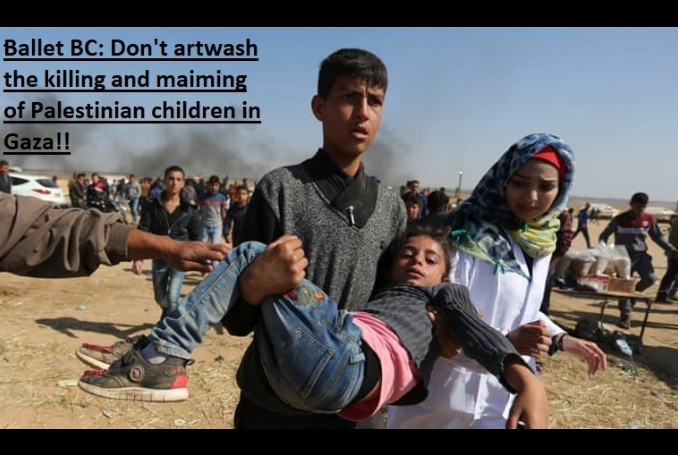
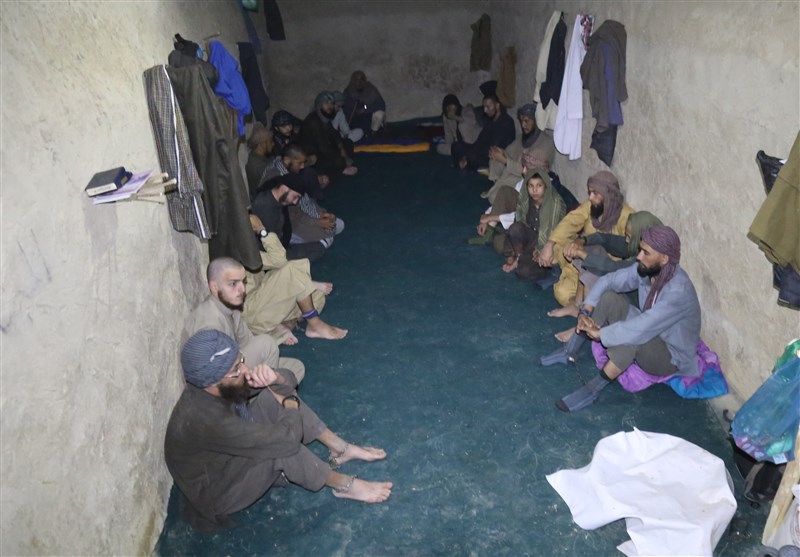
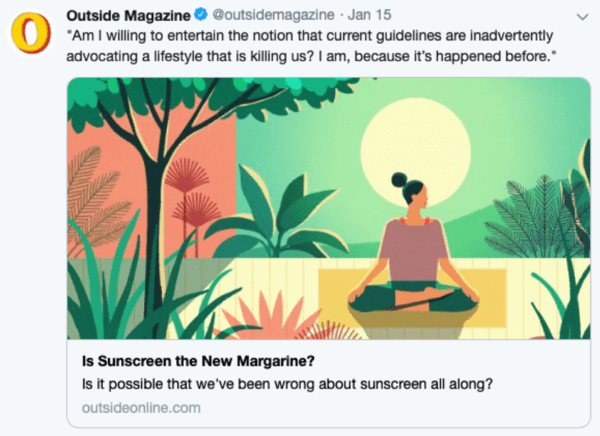
 Aletho News
 Aletho News