How the Latest Iran Sanctions Could Impact Central Asia
The US Iran strategy is working against its Central Asia strategy; Secondary sanctions may push the region closer to China and Russia.
By James D. Durso | The National Interest | September 8, 2026
On August 19, US President Donald Trump announced an “ECONOMIC D-DAY” against the Islamic Republic of Iran, warning of “tremendous economic consequences” for any country allowing its financial institutions, businesses, airports, or government entities to provide Iran a “lifeline.” On August 24, Treasury Secretary Scott Bessent announced “Operation Economic Outcast,” which sanctions Iran and its facilitators in third countries (but no major Chinese banks), and declared, “you are either with us or against us.”
Potential secondary sanctions threaten Central Asia’s developing trade, energy, and transport links with Iran, raising costs, disruption risks, and pressure to diversify routes. The Central Asian republics are not major supporters of Iran, but Iran is becoming an increasingly important southern outlet for their trade and connectivity. The biggest risk is therefore collateral damage to legitimate commerce and transportation, rather than a confrontation over Iran policy.
The Effect of Secondary Sanctions on Central Asia’s Economy
Banking and financial services could become the most immediate problem. Central Asian banks and companies may decide that even legitimate transactions involving Iran are not worth the compliance risk. If a Kazakh or Uzbek bank processes an Iranian payment and Washington later determines the transaction constitutes a prohibited “lifeline,” the bank could lose access to the US financial system.
That creates a powerful chilling effect: the US threatens sanctions, banks become risk-averse, Iranian transactions become difficult, and Central Asia-Iran trade declines as the republics lose access to a market of over 90 million people.
Washington is already targeting Iranian shadow-banking networks and foreign facilitators for enabling Iran’s rahbar banking system. The Treasury Department said its August 7 action involved networks spanning several countries and hundreds of millions of dollars in Iranian transactions.
The result could be over-compliance: Central Asian banks might stop handling perfectly legal Iran-related transactions simply because determining what Washington will regard as a “lifeline” is too difficult. Secondary sanctions can dampen commerce even without formal designations, as private actors withdraw to avoid US financial-system exclusion or penalties.
Transportation and logistics corridors could become economically unattractive, potentially with greater strategic consequences than the direct loss of trade. A container originating in Uzbekistan or Kazakhstan and traveling through Iran to a Persian Gulf port might have nothing to do with Iran politically. Still, it could require an Iranian trucking company, an Iranian railway, an Iranian port, Iranian customs services, Iranian insurance, an Iranian bank, and fuel purchased in Iran. As the Islamic Revolutionary Guard Corps (IRGC) is a major player in Iran’s economy, it will be tough not to deal with an IRGC-affiliated business.
If Washington interprets normal business activity as supporting the Iranian government, the entire corridor could become commercially radioactive. Iran offers a continuous land route southward and onward to the Persian Gulf petrostates, South Asia, East Asia, and East Africa.
The Central Asian republics are landlocked and have pursued pragmatic economic ties with Iran primarily for southern access to the Persian Gulf and Indian Ocean via ports such as Bandar Abbas and Chabahar. These routes form part of the International North-South Transport Corridor (INSTC) and related rail and road networks, offering alternatives or complements to routes that transit Russia, China, or Afghanistan.
Energy relationships are another vulnerability, particularly for Turkmenistan and Tajikistan. Energy swaps, fuel purchases, and other transactions involving Iranian counterparties could become more expensive or difficult if banks, insurers, shippers, or trading companies conclude that they face sanctions exposure.
A prior Turkmen gas-swap arrangement involving Iran was disrupted by US sanctions, illustrating how sanctions can affect nonmilitary transactions. Tajikistan has also sought large preferential fuel supplies from Iran amid unreliable Russian supplies.
Central Asian governments may therefore face higher freight and insurance rates, longer transit times, additional compliance costs, and pressure to use alternative corridors. They may also see greater use of barter or non-US Dollar settlement mechanisms where feasible.
Trade and regional connectivity. The economic effect is likely to be less a complete collapse of trade than higher prices and greater complexity of using Iran. The region may accelerate diversification toward the Trans-Caspian International Transport Route (the “Middle Corridor”), Pakistani ports, or Chinese routes, although each has capacity, cost, or security limitations.
Kazakhstan is probably the most exposed, given its long-term connectivity strategy and interest in an outlet to the Persian Gulf. It has been developing multiple routes to diversify its export geography, including the Middle Corridor through the Caspian and South Caucasus, as well as routes through Iran. Its development of port infrastructure in Iran illustrates that Astana sees Iranian territory as part of its long-term connectivity portfolio.
Bilateral trade rose 26.4 percent in 2025 to about $430 million, with ambitions to reach $3 billion, supported by the Eurasian Economic Union-Iran free trade agreement. Rail freight with Iran increased 69 percent, while INSTC freight overall grew 12 percent to 3.5 million tons. In June 2026, Kazakhstan signed a 27-year Build-Operate-Transfer (BOT) deal for its own logistics terminal at Bandar Abbas, aimed at Persian Gulf, South Asian, Southeast Asian, and East African markets. Secondary sanctions could delay or derail the terminal project and raise logistics costs; banks and carriers could also self-sanction and chill transactions even without formal government action.
Washington now faces a dilemma: the more aggressively it sanctions Iranian transit infrastructure, the harder it becomes for Central Asian states to build the independent trade routes Washington claims it wants them to develop.
Uzbekistan has an especially strong reason to maintain multiple southern options. Tashkent has pursued routes through Turkmenistan and Iran toward the Persian Gulf while also developing routes westward via the Middle Corridor and eastward (the China-Kyrgyzstan-Uzbekistan Railway).
Roughly 9 percent of imports and 10 percent of non-gold exports transited Iran in 2025. Officials have estimated potential losses from Middle East logistics disruptions at $1–$1.5 billion (0.7–1 percent of GDP). Sanctions pressure could force costly rerouting toward the Middle Corridor or other paths, raise freight rates, and reduce competitiveness.
In June, Tashkent concluded a successful investment forum that saw interest from 193 American companies and investors, and where Washington and Tashkent launched a joint investment platform to “identify strategic investments in Uzbekistan for the US and US allies in key sectors.” In February 2026, the United States and Uzbekistan established a critical-minerals partnership, including a framework for up to $400 million in investment in the two countries.
Uzbekistan’s president, Shavkat Mirziyoyev, visited the White House in February 2026, and the leaders concluded agreements in critical minerals, energy and petrochemicals, agriculture and poultry, and irrigation and water-saving technology, the latter a critical issue in the water-stressed country. They also announced a three-year, $35 billion Economic Cooperation Program. Uzbekistan’s World Trade Organization accession got a boost, and the Board of Peace gave Uzbekistan a role in Trump’s Middle East initiative.
The Uzbek leader has made a substantial personal investment in the relationship with the United States, and Uzbekistan has an incentive to comply with US sanctions on prohibited Iranian entities while preserving legitimate transit and commercial relationships wherever possible. That said, Trump must ensure his attack on Iran’s economy doesn’t damage the economies of countries that want a serious relationship with America, as future leaders will not again expose themselves politically if the Americans are careless.
Turkmenistan could face a somewhat different problem. It has extensive energy and transportation ties with Iran and depends on its neighbors for alternative routes. At the same time, Ashgabat traditionally values neutrality (and it is official state policy) and is unlikely to want to become involved in a US-Iran confrontation.
Turkmenistan is expanding cooperation with Iran in transport, energy, communications, and construction. US sanctions disrupted a prior gas-swap arrangement, so secondary measures could freeze or raise the cost of energy swaps and transit.
If Washington begins sanctioning Iranian transportation or energy counterparties broadly, Turkmenistan could be forced to choose between maintaining economically useful relationships with Iran and avoiding exposure to the US financial system, an uncomfortable choice for a country that works not to take sides.
Tajikistan’s direct trade with Iran is smaller, but its exposure is growing. Freight with Iran rose 17.5 percent in the first half of 2026 to 433,000 tons, mostly by rail. Tajikistan has sought large preferential fuel supplies from Iran—2.55 million tons of crude and products, including 2 million tons of crude plus diesel, gasoline, and aviation fuel—amid unreliable Russian supplies. It has also discussed joint road corridors with Iran and Afghanistan, potentially extendable regionally and toward China.
Disruptions could therefore hit fuel access, raise costs, and complicate logistics. Tajikistan may seek alternative suppliers and routes, but those alternatives could be more expensive or less reliable.
Kyrgyzstan is less directly tied to Iran than the other republics, so immediate sanctions exposure should be lower. Nevertheless, it could feel the effects indirectly through higher regional freight costs, fuel prices, insurance costs, banking restrictions, and shared corridor dependencies.
The Strategic Consequences of US Secondary Sanctions in Central Asia
The Central Asian governments pursue multi-vector policies and generally avoid open confrontation with Washington. They are unlikely to disregard US pressure or politically champion Iran, but will manage exposure carefully, possibly scaling back high-visibility projects while seeking workarounds.
Their most likely strategy is: comply with US sanctions on prohibited Iranian entities while preserving legitimate transit and commercial relationships wherever possible. They may also seek explicit US assurances or exemptions for infrastructure projects, but that may dissuade US investors if multiple approvals are needed over a project’s lifetime. And US policy can change overnight.
Washington says it wants Central Asia to become less dependent on Russia and China, and Central Asian governments want that too; one way to do it is by developing connectivity through Iran.
Kazakhstan and Uzbekistan joined Trump’s Board of Peace, but that may not protect them if Trump decides “all hands” must support America’s crusade against Iran. The point of maximum danger for the two republics may come if Trump can’t force China to isolate Iran and tries to punish Beijing by punishing Astana and Tashkent for trans-shipping Chinese goods while allegedly concealing their true origin to take advantage of lower tariffs. There is always the chance a Trump-affiliated investor may ask the White House to attack Tashkent’s trade with Iran, $578 million in 2025, if it doesn’t like Tashkent’s terms and conditions for a deal.
Consequently, an overly broad sanctions campaign could produce greater dependence on China and Russia, the opposite of the strategic objective Washington often advocates for Central Asia, consequences that probably weren’t considered before Trump and Bessent took to social media. Russian State Railways is sanctioned by the United States and the European Union, so Central Asian businesses may be stuck between two transport options, both sanctioned by the West.
The consequences will depend on how Washington defines a “lifeline.” If “lifeline” means financing Iran’s military or IRGC, oil exports, weapons procurement, or sanctions-evasion networks, the Central Asian impact could be manageable. If it means ordinary transportation, banking, aviation, port services, and non-military government-to-government commerce involving Iran, the consequences could be much larger.
The American administration has already demonstrated that it is willing to sanction foreign transport and financial networks supporting Iran’s military and procurement activities. That distinction is central to the policy question. If Washington wants Central Asia to have “connectivity without dependence,” it may need to distinguish carefully between Iranian military lifelines and Iranian transportation infrastructure that Central Asian states use simply to reach global markets.
Central Asia probably will not be the principal target of the new sanctions, but it could be the sanctions’ most significant collateral damage. The danger is not that the republics will support Iran, but that Washington could make legitimate Iranian transit so financially risky and demand that Iran’s neighbors help quarantine the Islamic Republic, undermining Central Asia’s effort to develop alternative routes to the world to the benefit of China and Russia.
James Durso is a regular commentator on foreign policy and national security matters. Mr. Durso served in the US Navy for 20 years and has worked in Kuwait, Saudi Arabia, and Iraq. His writing has appeared in The Hill, The National Interest, Defense News, and Responsible Statecraft. Follow him on X: @james_durso
SCO leaders sign Bishkek Declaration against ‘western unilateralism’
The Eurasian bloc condemned the US war on Iran as Washington widens secondary sanctions on Tehran’s trading partners
The Cradle | September 1, 2026
Leaders of the Shanghai Cooperation Organization (SCO) adopted the Bishkek Declaration on 1 September, marking the organization’s 25th anniversary and setting out a joint position on West Asia, global security, and economic cooperation.
The 10-member Eurasian bloc used the anniversary text to press for a “representative, democratic, and equitable multipolar world order,” rejecting bloc-based and confrontational approaches to international affairs.
Member states opposed unilateral coercive measures, such as banking restrictions, asset freezes, and secondary sanctions on third-country firms, that contradict the UN Charter and World Trade Organization (WTO) rules. They also condemned the unlimited buildup of global missile defense systems, calling attempts to secure one state at the expense of others unacceptable.
The declaration reiterated the bloc’s condemnation of the unprovoked US-Israeli attacks on Iranian territory, which have stretched on for 6 months and caused significant economic damage and disruption to global energy and shipping markets.
Member states called the attacks a violation of international law and the UN Charter that created “serious risks to international peace, security and stability.”
On Palestine, the declaration stated that a comprehensive and just settlement of the Palestinian question is the only possible route to peace and stability in the region.
Member states committed to expanding the use of national currencies in mutual settlements and backed reforms of the International Monetary Fund (IMF) and the World Bank to increase developing-country representation.
The declaration noted progress toward establishing an SCO Development Bank during Kyrgyzstan’s chairmanship, with leaders also supporting Iran’s expedited entry into the SCO Interbank Consortium.
Eight of the 10 SCO member states – Belarus, Iran, Kazakhstan, Kyrgyzstan, Pakistan, Russia, Tajikistan, and Uzbekistan – reaffirmed support for China’s Belt and Road Initiative (BRI), while India declined to join the statement.
Chinese President Xi Jinping called on members to build “universal security” and prevent external interference in the internal affairs of states.
Meeting Russian President Vladimir Putin on the sidelines, Xi said unpredictability in the international situation had risen sharply and that Beijing was ready to work with Moscow to advance a multipolar order and reform of global governance.
Putin told the summit that national currencies now account for more than 98 percent of Russia’s trade payments with SCO partners, and named expanded intra-bloc trade as a priority.
Kyrgyz President Sadyr Japarov opened the meeting, saying member states account for over 40 percent of the world’s population and about a quarter of global GDP, and that the organization had grown from a border security mechanism into a global actor.
The summit convened six months into the US war on Iran, and four and a half years into the war in Ukraine, with Washington also pursuing trade disputes with China and India, and threatening to impose secondary sanctions on any country or company trading with Tehran.
Beijing, the main purchaser of Iranian crude, said it would firmly defend its interests.
Pakistan Throws Open Its Gates for Iran’s Transit Trade to Third Countries
Sputnik – 27.04.2026
Iran and any other nation can now ship transit goods via Pakistan — as long as they provide a cashable bank guarantee equal to Pakistan’s import charges.
Pakistan has officially opened six land routes for the transit of goods to Iran. The “Transit of Goods through Territory of Pakistan Order 2026” came into force on April 25.
Essence of the Decision
Iran—and any third country—may now transport transit goods through Pakistan, subject to one key condition: the provision of a cashable bank guarantee equivalent to Pakistan’s applicable import levies.
Six Approved Routes:
1. Gwadar–Gabd
2. Karachi/Port Qasim–Lyari–Ormara–Pasni–Gabd
3. Karachi/Port Qasim–Khuzdar–Dalbandin–Taftan
4. Gwadar–Turbat–Hoshab–Panjgur–Nagg–Besima–Khuzdar–Quetta/Lakpass–Dalbandin–Nokundi–Taftan
5. Gwadar–Liari–Khuzdar–Quetta/Lakpass–Dalbandin–Nokundi–Taftan
6. Karachi/Port Qasim–Gwadar–Gabd
Why Now?
Amid the US-Iran conflict, over 3,000 containers bound for Iran are stuck at Karachi port following the blockade of the Strait of Hormuz.
“The fact that Iran enabled the Gabd Reemdam crossing for transport under the TIR convention led to this measure,” explains Tariq Rangoonwala, Chair of Pakistan National Committee of the International Chamber of Commerce.
Located 87.5 km from Gwadar Port, the Gabd–Reemdam crossing saw Pakistan activate its side three years ago.
What Does This Mean?
This facilitates land transport — not only for the 3,000 stranded containers but also for future needs, Rangoonwala says.
“Already this route is being used for exports from Pakistan to Uzbekistan and Tajikistan as an alternate to the Sost-Khunjerab route in the north and we hope to see this remain an ongoing feature,” the expert says.
Washington’s ‘Waiver On, Waiver Off’ Game at Chabahar
By Salman Rafi Sheikh – New Eastern Outlook – December 9, 2025
In recent months, Washington has swung from revoking to restoring India’s sanctions waiver for operating Iran’s Chabahar port. The ‘waiver on, waiver off’ routine, however, comes with a clear strategic intent.
The move is not just leverage over New Delhi as trade talks loom; it’s also a signal to Central Asian states that their economic futures — including access to Chabahar — depend on aligning their foreign policies with US preferences.
In September 2025, the United States pulled the rug out from under one of India’s most carefully nurtured strategic ventures: the Chabahar Port in Iran. Long viewed by New Delhi as a critical gateway to Afghanistan and Central Asia, Chabahar suddenly became a high-stakes chess piece in Washington’s policy game. On September 16, the US Department of State announced it would revoke the special exemption granted in 2018 under the Iran Freedom and Counter-Proliferation Act (IFCA), with the revocation taking effect September 29. Overnight, Indian companies, shippers, insurers, and banks involved in the port’s operations were cast into uncertainty: their assets could be frozen, their access to the US financial system curtailed, and their commercial contracts imperilled.
This move did not occur in isolation. At the same time, New Delhi was itself involved in a high-stakes game with the US over bilateral trade. Specifically, it is resisting US pressure to halt oil imports from Russia. By targeting Chabahar, Washington signaled that it was willing to leverage unrelated strategic projects to enforce compliance elsewhere, effectively turning Indian economic and geopolitical interests into bargaining chips. Yet the situation shifted quickly: reports emerged on October 28 that Indian firms had halted Russian oil imports, and the very next day, the US issued a fresh six-month waiver, allowing Chabahar operations to continue without immediate penalty.
The rapid “waiver on, waiver off” cycle exposes the transactional and unpredictable logic of US sanction policy. A project that represents over $120 million in Indian investment, long-term regional connectivity, and painstaking diplomacy is reduced to a geopolitical pawn, its fate dictated less by commercial or developmental imperatives and more by Washington’s strategic calculus. This particular calculus, however, is not meant for India only. The politics of granting and restricting waivers is also tied very closely to Washington’s relationship with Central Asia.
The Central Asian gamble
Chabahar port is important not only for India but also for the landlocked states of Central Asia, offering a rare direct link to the Indian Ocean and a potential route to India that bypasses Pakistan. Several Central Asian states have expressed interest in using Chabahar Port for this purpose. Tajikistan has emerged as the most active player, signing a formal cooperation agreement with Iran in early 2025 and committing to developing a logistics hub with terminals and storage facilities. Uzbekistan has held discussions about utilising the port for trade and storage. While a lot of this is still far from being fully operational, there is little denying that a major roadblock has been the US sanctions.
In the same vein, the waiver also signals to Afghanistan, where India has recently become very active. The Taliban regime is currently involved in a border standoff with Pakistan. Kabul has suspended its trade with Pakistan, and the reopening of this route remains highly uncertain. At the same time, Washington has been pressuring the Taliban to come to terms with handing over the Bagram airbase to the US military for its potential operations against China. In this context, if Afghanistan wants to continue—and even expand—its trade with Central Asia and other countries beyond the region, i.e., with India itself, as an alternative to Pakistan, its best route goes through the Chabahar Port.
Beyond this, the US decision to grant the waiver—and unless it restricts it again in the future—also puts it in a position where it can influence several other regional trade and connectivity projects, including the Trans‑Caspian and broader International North-South Transport Corridor (INSTC) projects. By granting or revoking waivers, the US is signalling that it can create opportunities and or introduce uncertainty for companies and governments contemplating investment or trade through corridors that touch Iran.
For example, Central Asian states considering cargo flows via Chabahar—or via the Caspian Sea to Azerbaijan and beyond—must now weigh the risk that US sanctions could suddenly be applied, making insurance, financing, or banking services problematic and/or unavailable. Even if the Trans‑Caspian route itself does not pass through Iran, the interconnected nature of regional logistics networks means that a disruption at Chabahar could ripple across supply chains, raising costs or forcing alternative routing through Russia, Turkey, or China.
In essence, the waiver policy acts as a geopolitical lever. Its application is meant to put pressure on countries and companies so that they align their foreign and trade policies with US preferences, discouraging full exploitation of alternatives like the Trans‑Caspian corridor that could reduce American influence. The US has, for some time, been trying to expand its geopolitical footprint in Central Asia. Its ability to strangulate or allow Chabahar helps it signal its continued relevance. On the whole, the uncertainty imposed by such sanctions creates a risk premium, slows governmental and private investment, and subtly nudges regional actors toward pathways that the US finds strategically acceptable, even if they are less efficient or commercially less viable.
Salman Rafi Sheikh, research analyst of international relations and Pakistan’s foreign and domestic affairs
The Hidden Renewable Energy in Central Asia
By Brenda Shaffer and Svante Cornell | Real Clear Energy | January 22, 2025
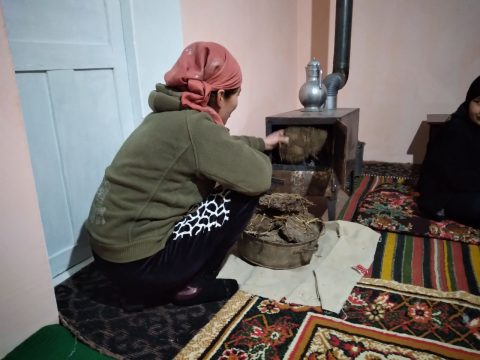
One of the biggest threats to human health, and a major source of air pollution, is regularly hidden in statistical reports as “renewable energy:” the burning of dung, wood, and lump coal. While most of the world receives its energy from fossil fuels, over two billion people on the globe do not have regular access to modern energy and rely on traditional burning of gathered materials. The great majority of the people without access to regular energy live in sub-Saharan Africa. However, in many states, the access to energy is highly differentiated between the main urban centers and the rural population. Central Asia is a region with such a split: it has a high level of human development and electricity access is universal in major cities, but up to a third of the population continues to rely on traditional energy, due either to a lack of reliable access to heat and electricity or due to the latter’s prohibitive cost. One of the top development priorities in Central Asia and globally should be enabling access to modern energy, specifically natural gas, which will in turn vastly improve human health and lower air pollution.
All humans need energy to perform basic functions. Without access to modern energy sources, people burn biomass and other materials they can gather for free or very cheaply. For the first time since World War II, global access to electricity declined in 2022, and likely remained flat in 2023. This left more people relying on traditional energy sources, which leads to increased health threats and rising air pollution.
The extent of people relying on traditional energy is often hidden in the formal statistics on energy use, or goes underreported. Some organizations, such as the International Energy Agency, have begun to categorize traditional burning as renewable energy. The IEA has been able to show an increase in renewable energy consumption by this reporting and an increase in “women in the energy workforce” by classifying women who gather dung and sticks as “energy workers.” In some places, there is general underreporting of traditional energy use, since most of it does not involve traded or taxed goods or formal employment.
Central Asia is a case where despite high or very high levels of human development in all but one of the states of the region, and widespread electricity access, rates of traditional energy use are still very high. In Kazakhstan, 30% of households reported burning coal or wood for heat. Residential burning of coal is one of the main sources of air pollution in Kazakhstan, especially in the winter. The situation in Kyrgyzstan is even worse, with half of the country’s households burning lump coal or dung for winter heat. Due to this indoor air pollution, mortality rates from lung diseases are the highest in the world in Kyrgyzstan. In Tajikistan, many households rely on burning coal, dung and wood for winter heating, albeit precise data on the percentage of households is lacking.
While funding is available from the World Bank and foreign aid donors for renewable energy, few funds are offered to help countries move from health threatening energy use to cleaner fuels, such as natural gas. This is because the World Bank and the G-7 countries in 2021 stopped all funding for fossil fuel energy. Other sources of renewable energy are not a realistic option to provide a serious portion of the energy needs of Central Asia, due to the extreme cold climate of most parts of the region. Kazakhstan is among the world’s coldest countries, with winters lasting for six months. In Kazakhstan and most of Central Asia, reliable and affordable access to heat is necessary for basic survival.
The wealthy countries in the West believe that by denying access to fossil fuels, they can force people to adopt renewable energy. However, the case of Central Asia shows that people will expose themselves to the dangers of traditional energy, without access to safer forms of energy, when renewable energy is expensive, unreliable or not able to meet their geographic needs, such as for heat in the winter.
An IEA report on traditional heating in Kazakhstan suggested that heat pumps could help the population access cleaner energy. This illustrates the disconnect of many of these First World energy institutions from the real life of people. Many people in Central Asia that have access to electricity continue to burn lump coal or wood in their homes, despite the health risks, because it is cheaper and more reliable than electricity. While people in wealthy countries like the United States and the UK have installed heat pumps at a very low rate, poor people in Central Asia can’t even dream of expenses of this nature.
Yet Central Asia has significant resources of natural gas, which Western well-wishers would rather leave in the ground. But increased utilization of natural gas is the only practical option that can help Central Asians lower their dependency on traditional energy. Natural gas supplies have the potential of being both reliable and affordable. Access to new gas supplies will contribute significantly to improving public health and reducing pollution in Central Asia.
The Central Asian example illustrates the unintended consequences of the West’s blanket ban on supporting fossil fuel development, and its lumping together of cleaner natural gas with more polluting fuels like coal and oil. It also serves as a reminder that “renewable” energy does not always mean healthy energy. For many, such as in Central Asia, lack of funding for gas will not drive people to a world powered by wind or solar, but will leave them dependent on burning coal and dung.
Brenda Shaffer is a faculty member of the U.S. Naval Postgraduate School.
Svante E. Cornell is a co-founder and Director of the Institute for Security and Development Policy. He is the Director of the Central Asia-Caucasus Institute & Silk Road Studies Program, the Joint Center operated by ISDP in cooperation with the American Foreign Policy Council (AFPC).
Kremlin comments on Türkiye’s SCO bid
Türkiye’s obligations to the US-led military bloc are not consistent with the Eurasian organization’s values, Moscow has said.
RT | July 12, 2024
Türkiye’s bid to become a full member of the Shanghai Cooperation Organization (SCO) is not compatible with its membership in NATO, Kremlin spokesman Dmitry Peskov said on Friday.
Last week, Turkish President Recep Tayyip Erdogan attended a summit of the Eurasian mutual defense group, in which his nation has observer status. While returning home from Kazakhstan, he told journalists that Ankara wants to “further develop” ties with the SCO and its founding members Russia and China. During the NATO leaders’ summit in the US this week, he said Türkiye wants to join the SCO as a permanent member.
Asked by journalists when Turkish accession could be expected, Peskov said there was a problem with such a proposal.
“There are certain contradictions between Turkish commitments and [its] position on fundamental issues as a NATO member and the worldview formulated in the founding documents of the SCO,” he explained.
The expansion of the SCO is of interest to many nations and remains on its agenda, but there is no specific timeline for accepting new members, he added. Commenting later during a press call on bilateral relations with Türkiye, Peskov said Russia was “open for attempts to reach agreements based on a certain worldview.”
Moscow perceives NATO as a hostile, aggressive military organization, which serves US geopolitical interests and is currently conducting a proxy war against Russia in Ukraine.
Despite being a NATO member state, Türkiye has maintained a neutral stance on the Ukraine conflict, refusing to impose economic sanctions on Russia and serving as an intermediary between Moscow and Kiev on several occasions. Ankara helped to mediate a nascent peace deal in the early months of the hostilities, which Kiev eventually ditched in favor of continued fighting. The Russian government believes that the US and its allies, particularly the UK, forced Ukraine to reject the proposal.
The SCO was founded in 2001 and currently has ten full members: Russia, China, India, Iran, Kazakhstan, Kyrgyzstan, Pakistan, Tajikistan, Uzbekistan, and Belarus. Kazakhstan holds the rotating presidency this year and hosted the leaders of member states on July 3 and 4 in Astana.
One of the key pledges to which SCO members subscribe is not to seek the improvement of their own national security at the expense of the national security of other parties. NATO policy does exactly that, according to its critics, including Russia.
Iran given roadmap for joining Russia and China in major bloc
Samizdat | September 15, 2022
Iran has signed a memorandum paving the way to transition from its current observer status to full membership of the Shanghai Cooperation Organization (SCO).
The Middle-Eastern nation, which the US has long sought to undermine with diplomatic isolation and economic sanctions, made a formal step on Thursday to become the ninth member of the organization. Among the SCO’s heavyweights are Russia and China, two major powers that are on Washington’s list of geopolitical opponents.
The SCO was created in 2001 as an intragovernmental forum aimed at fostering trust and developing economic and humanitarian ties in Asia.
It currently has eight permanent members: China, India, Kazakhstan, Kyrgyzstan, Russia, Pakistan, Tajikistan, and Uzbekistan. The last is currently hosting the annual summit of the leaders of the member states in the city of Samarkand.
Iran has been an SCO observer since 2005. Its delegation to the summit is headed by President Ebrahim Raisi, who met with senior Uzbek officials on Wednesday.
The memorandum, which spells the commitments that Tehran will undertake to become an SCO member, was signed by Iranian Foreign Minister Hossein Amir-Abdollahian and SCO Secretary-General Zhang Ming, the host country’s foreign ministry reported.
Yury Ushakov, a foreign affairs advisor to Russian President Vladimir Putin, said earlier this week that Iran could qualify for being upgraded to full membership before next year’s SCO summit in India.
Uzbek President Shavkat Mirziyoyev touted this year’s event as a turning point for the organization. He cited the rapidly growing interest of nations in closer involvement with the SCO and said that it served as an example of how a “deep crisis of trust at the global level” can be overcome by parties willing to do so. He also stressed the scale of the group, which accounts for roughly half of the world’s population and a quarter of global GDP.
Belarus, also an SCO observer, is set to start the formal process for full membership this year. Egypt and Qatar formally joined the organization as dialogue partners on Wednesday. Saudi Arabia is scheduled to do the same, while Bahrain, Kuwait, the UAE, Myanmar, and the Maldives are expected to begin their respective paths to receiving the same status.
World order looks different from Moscow, Beijing
BY M. K. BHADRAKUMAR | INDIAN PUNCHLINE | AUGUST 17, 2022
The Chinese Defence Ministry announced today its participation in the Vostok 2022 strategic command and staff exercise in Russia, which is slated for August 30-September 5. The low-key statement in Beijing said China will send some troops and the participation is within the framework of the two countries’ annual cooperation plan.
The statement mentioned that “India, Belarus, Tajikistan, Mongolia and other countries will also participate.” It said the Chinese participation “aims to deepen pragmatic and friendly cooperation with the militaries of the participating countries, enhance the level of strategic coordination among all participating parties, and enhance the ability to deal with various security threats.”
In what can be construed as an oblique reference to the conflict in Ukraine and the big power tensions in general, Beijing stated that the exercise is “unrelated to the current international and regional situation.”
Vostok is one of the capstone events of the Russian Armed Forces’ annual training cycle to test national preparedness for large-scale, high-intensity warfare against a technologically advanced peer adversary in a multidirectional, theatre-level conflict.
Vostok 2018 involved approximately 300,000 troops –- as well as 1,000 fixed-wing aircraft and helicopters, 80 ships, and 36,000 tanks, armoured and other vehicles — and was unprecedented in scale. And Russian, Chinese and Mongolian forces were the sole participants and was hyped up as a carefully orchestrated Russian-Chinese military demonstration.
It seems the Chinese participation will be scaled down, notwithstanding the gathering storms on the horizon for both Russia and China. The Chinese announcement comes a day after Russian President Vladimir Putin used exceptionally harsh language to condemn the “Western globalist elites,” accusing them of provoking chaos, “fanning long-standing and new conflicts and pursuing the so-called containment policy” in the pursuit of an agenda “to keep hold onto the hegemony and power that are slipping from their hands.” Putin alleged, “They need conflicts to retain their hegemony.”
The speech while addressing the 10th Moscow Conference on International Security in Moscow on Tuesday, also contained some pointed references to the Asia-Pacific region. Putin said:
“NATO is crawling east and building up its military infrastructure… US has recently made another deliberate attempt to fuel the flames and stir up trouble in the Asia-Pacific. The US escapade towards Taiwan is not just a voyage by an irresponsible politician, but part of the purpose-oriented and deliberate US strategy designed to destabilise the situation and sow chaos in the region and the world. It is a brazen demonstration of disrespect for other countries and their own international commitments. We regard this as a thoroughly planned provocation.
“They want to shift the blame for their own failures to other countries, namely Russia and China, which are defending their point of view and designing a sovereign development policy without submitting to the diktat of the supranational elites.
“We also see that the collective West is striving to expand its bloc-based system to the Asia-Pacific region, like it did with NATO in Europe. To this end, they are creating aggressive military-political unions such as AUKUS and others.”
Significantly, Putin called for “a radical strengthening of the contemporary system of a multipolar world.” He said, “ All these challenges are global, and therefore it would be impossible to overcome them without combining the efforts and potentials of all states…
“Russia will actively and assertively participate in such coordinated joint efforts; together with its allies, partners and fellow thinkers, it will improve the existing mechanisms of of international security and create new ones, as well as consistently strengthen the national armed forces and other security structures by providing them with advanced weapons and military equipment. Russia will secure its national interests, as well as the protection of its allies.”
Notably, however, the Chinese commentaries generally steer clear of bracketing the Taiwan question and the conflict in Ukraine as analogous, as symptomatic of the birth throes of a multipolar world. In a commentary today, the senior editor with People’s Daily, Ding Yang once again flagged that the real danger is that the US and China may “sleepwalk into conflict.”
He wrote that the US is “like a runaway horse running wildly to the precipice of war,” but the aim is how to profit from a war, or rather “how to profit from someone else’s war.” Ding took a Marxian perspective that the US policy is driven by the interests of US capital and “Washington sees China as an enemy because it has moved the US cheese.”
As he sees it, at its core the US strategy is “to squeeze China out of the global market and manufacturing chain.” Thus, even with regard to Taiwan, “One of the main aims is to create tensions and further pulling Taiwan Semiconductor Manufacturing Company into the US chip siege against China.”
Ideology, human rights, etc., are only alibis for the capital competition for markets. Plainly put, it unnerves the US that “Chinese capital is also starting to go global.”
Deng is confident that “If we follow the logic of capital development as they see it, what matters is that Chinese manufacturing will eventually push them out of the global industrial chain, leaving them with no money to make and no work to do. So the first thing they want to do is to maximise their share of the Chinese market.”
“Then the next thing to do is inevitably to implement a global stranglehold on Chinese capital and Chinese manufacturing.” This is where the danger lies, as “the option of war is an inherent part of US capital export and expansion.”
But China’s advantage is that “in contrast to the historical path of Western capital’s global expansion, there is a logic of “common development” behind Chinese capital going abroad.”
Interestingly, the government newspaper China Daily reported today that China’s holdings of US Treasuries have been further reduced through July, but China is only one of many other countries doing so, including Japan, reacting to the Fed’s tightening cycle.
But “the decline may gradually decelerate.” The point is, it is “unrealistic” for China to give up on US debt holdings so long as the US Treasuries remain a critical international reserve asset! This is diametrically opposite the revisionist path Russia took.
US Considering Letting Tajikistan Keep Abandoned Afghan Aircraft, Increasing Special Operation Ties
By Kyle Anzalone | The Libertarian Institute | June 20, 2022
US Central Command commander Gen. Michael Kurilla said the US is considering transferring aircraft that once belonged to the Afghan Army to the Armed Forces of the Republic of Tajikistan. The aircraft was flown to Tajikistan by Afghan soldiers during the fall of the US-backed government in Kabul.
Over the weekend, Kurilla traveled to the Central Asian country for a high-level summit with President Rahmon, Minister of Defense General Colonel Sherali Mirzo. At the meeting, Kurilla said, “I came here to reaffirm our commitment to the independence, sovereignty, and territorial integrity of Tajikistan. Strong Tajikistan borders are critical to security of the entire Central Asia region.”
A statement relayed through the US embassy reported that Kurilla thanked Tajikistan for maintaining the defunct Afghan Army’s aircraft. “The United States is working with the Tajik government to determine the best way to effectively use and maintain the aircraft.” He continued, “Our hope is to be able to hand over some or all of the aircraft to the Tajik government.”
Kurilla said he could not offer a timeline and that the military equipment could not be returned to Afghanistan “because they do not belong to the Taliban.”
A CENTCOM press release on the meeting said, “security cooperation with Tajikistan security forces focuses primarily on counterterrorism and border security operations. CENTCOM provides Tajikistan training, equipment, and infrastructure to defend its border with Afghanistan.”
Kurilla offered increased training ties between US and Tajik special forces. “Partnered special operations force training represents an area in which we can work together to beat back extremist groups and defend your border,” he said.
Aiding the Tajik military appears out of line with President Joe Biden’s stated foreign policy of diving the world into autocracy versus democracy. The State Department Human Rights report from 2021 says, “Tajikistan is an authoritarian state dominated politically since 1992 by President Emomali Rahmon… Significant human rights issues included credible reports of: forced disappearances on behalf of the government; torture and abuse of detainees by security forces; harsh and life-threatening prison conditions; arbitrary arrest and detention; political prisoners; politically motivated reprisals against individuals in another country, including kidnappings or violence; serious problems with the independence of the judiciary; arbitrary or unlawful interference with privacy; punishment of family members for offenses allegedly committed by an individual; serious restrictions on free expression and media, including violence or threats of violence against journalists.”
Iran and SCO sign protocol to start accession process for Tehran
Press TV – March 12, 2022
Iran and the Shanghai Cooperation Organization (SCO) have started a formal process for Tehran’s accession to the major economic bloc.
A Saturday report by Iran’s IRIB News said that a document had been signed a day earlier in the Uzbek capital of Tashkent between representatives of the eight-member SCO and Iran to allow the organization to consider Iran’s accession bid.
Uzbekistan’s Foreign Ministry said in a statement that the signing of the protocol would practically allow the implementation of decision by SCO heads of state in Tajikistan last year to provide membership to Iran.
The next step in the process will be for Iran to sign a memorandum of commitment at an SCO summit in Uzbekistan’s Samarkand in September 2022, said the statement, adding that SCO heads of states will then decide to include Iran in the bloc.
Iran was an observer member of the SCO before applying to join the bloc that includes Russia, China, India, Kazakhstan, Kyrgyzstan, Pakistan, Tajikistan and Uzbekistan.
Experts says Iran’s accession to the SCO will be a major boost to the bloc’s influence in the region mainly because Iran’s massive transportation network can facilitate regional and international trade.
Iran is also expected to benefit economically from membership in the bloc. The Iranian customs office (IRICA) said on Saturday that Iranian exports to SCO members had increased by 41% year on year in the 11 months to late February to reach nearly $18.3 billion.
IRICA figures showed that Iran had imported $14.4 billion worth of goods from the SCO countries between March 2021 and February 2022, an increase of 31% against the previous similar period.
Imran Khan hits out at West for treating Pakistanis like ‘slaves’

Russian President Vladimir Putin and Pakistani Prime Minister Imran Khan in Moscow, February 24, 2022 © Mikhail Klimentyev / Sputnik
RT | March 7, 2022
Prime Minister Imran Khan lashed out at foreign diplomats who pressured Pakistan to join a UN resolution condemning Russia over its military attack on Ukraine, accusing the envoys of treating Pakistan like “slaves.”
At a rally on Sunday, Khan shot back at a March 1 letter from diplomats representing 22 missions, including countries in the European Union along with Japan, Switzerland, Canada, the UK, and Australia, which called on Pakistan to drop its neutrality and join them in condemning Moscow.
“What do you think of us? Are we your slaves… that whatever you say, we will do?” questioned Khan, before asking EU ambassadors whether they wrote “such a letter to India,” which also remains neutral.
Khan claimed that Pakistan had suffered for previously supporting NATO’s military action in Afghanistan and declared, “We are friends with Russia, and we are also friends with America; we are friends with China and with Europe; we are not in any camp.”
Pakistan, along with 34 other countries, abstained from voting on the UN’s resolution condemning Russian “aggression against Ukraine” last week. Pakistan’s neighbors India, Bangladesh, China, Iran, Sri Lanka, Tajikistan, Kyrgyzstan, and Kazakhstan also abstained.
Khan met with Russian President Vladimir Putin in the Kremlin on February 24, the day Moscow launched its military operation in Ukraine, to discuss bilateral ties and regional issues.
Moscow maintains that the attack was launched with the purpose of “demilitarization” and “denazification” of Ukraine, and that it was the only possible option left to protect the people of eastern Ukraine following years of a grueling blockade that claimed thousands of lives. Kiev insists the invasion was unprovoked, saying it had no plans to retake the breakaway Donetsk and Lugansk republics by force.
Is The TAPI Pipeline Finally Ready To Go?
Zero Hedge | January 19, 2022
Submitted by James Durso, Managing Director of Corsair LLC, a supply chain consultancy.
The Turkmenistan–Afghanistan–Pakistan–India (TAPI) natural gas pipeline has been long aborning, but its prospects recently got a shot in the arm.
The 1100-mile, $10 billion project has seen numerous delays since the pipeline consortium was announced in late 2014, though the project was first mooted in 1991. Construction started in early 2018 with a projected in-service date of 2021, but halted later that year after workers clearing the route were killed by unknown assailants. Also, the project’s $10 billion cost estimate is a decade old, and an update may cause further delay to the Asian Development Bank-funded effort that is now slated to resume work in September 2022. Turkmenistan will loan Afghanistan the funds for its share of the project, to be repaid from gas transit revenues.
Representatives of the government of Tajikistan recently met officials in Afghanistan, and the Taliban announcement that it will dedicate 30,000 troops to pipeline security may motivate the parties to start construction.
The completed pipeline will allow Turkmenistan to reduce its reliance on its biggest gas customer, China, which has recently taken most of Turkmenistan’s gas exports, though in 2021 the country doubled its gas exports to Russia, which used to be the biggest importer of Turkmen gas until it was displaced by China in 2010. The pipeline will generate additional income that Ashgabat can use to improve services to citizens, a priority after the recent unrest in neighboring Kazakhstan.
But there may be competing opportunities. For example, Iran, Azerbaijan, and Turkmenistan recently signed a trilateral gas swap deal for up to 2 billion cubic meters (bcm) per year. It’s not a large amount – Turkmenistan exports about 40bcm to China every year – but it’s another income stream that should be managed with an eye to future growth. Then there’s the possibility of a connection to the proposed Trans-Caspian Pipeline (TCP) to supply Europe via the Southern Gas Corridor (SGC). Connecting to the SGC would require a 200-mile subsea pipe between Baku and Türkmenba?y, but may face opposition from Iran and Russia on (probably spurious) environmental grounds. Once the politics are resolved, the project would likely be cheaper and carry less of a security burden than the overland TAPI route, and build on the January 2021 agreement between Baku and Ashgabat to jointly develop the Dostluq (“friendship”) oil and natural gas field in the Caspian Sea.
For Afghanistan, the project would provide transit fees of about $500 million per year, along with an annual share of 500 million cubic meters of gas for the first ten years, ultimately increasing to 1.5 bcm per year.
For the Taliban government, a successful project would: demonstrate it can be a reliable partner in a major infrastructure project, employ demobilized Taliban troops so they don’t defect to the Islamic State or Al-Qaeda, earn revenue to pay for electricity imports (the country relies on imports for 78% of its power), demonstrate to China it is safe to invest in Afghanistan, and be an opportunity for cooperation with Pakistan despite the dispute over their shared border.
Of course, Kabul will have to figure out what to do with that natural gas, in addition to its one trillion cubic feet of reserves. The U.S.-driven development plan for the country emphasized renewables, like solar and wind, and the U.S.-funded $335 million Tarakhil Power Plant near Kabul, which relied on expensive, imported diesel fuel, is now used as a back-up facility when hydropower and imported power aren’t available. An International Finance Corporation-sponsored 59-megawatt gas-to-power plant in Mazar-i-Sharif would have boosted the country’s current total domestic generation by up to 30 percent, but can it be revived under the Taliban?
And time is of the essence as Uzbekistan recently reduced its power exports by 60%, possibly due to increased domestic demand as winter sets in, possibly to nudge Kabul (or the UN) to start paying the $90 million owed to power suppliers in Uzbekistan, Tajikistan, Turkmenistan, and Iran.
For Pakistan, the pipeline would help solve the country’s persistent energy shortfalls, such as the deficit between current gas production of 4 Billion Cubic Feet per Day (BCFD) against demand of 6 BCFD. By 2025, gas production is expected to fall to less 1 BCFD due to depletion of gas reserves while demand increases to 8 BCFD.
And Pakistan won’t have to wait to 2025 for an economic impact: Between 2008 and 2012, 40 percent of Pakistan’s textile sector moved to Bangladesh, one reason being the uneven supply of gas and electricity.
Then there’s Pakistan’s view of its regional interests and its endless search for “strategic depth.” The pipeline would be an independent source of revenue for Afghanistan, just when Pakistan feels the Taliban government should be beholden to it. And India would be able to increase the share of gas in its energy mix from 6.5% to 15%, possibly encouraging more trade between Kabul and New Delhi. To Islamabad, it will add to an already bad outcome: the ungrateful Taliban still aren’t helping Pakistan isolate the Tehreek-e-Taliban Pakistan, while India is expected to be the world’s fastest growing economy in 2022, according to the World Bank.
They say “all politics is local” and that may be the case here. One Pakistani observer, Hina Mahar Nadeem, noted the country’s gas shortfalls have a silver lining – for the interests that control the import of expensive liquefied natural gas (LNG). Accordingly, TAPI and the much-delayed (mostly by U.S. sanctions on Iran) Iran-Pakistan gas pipeline are a threat to their economic and political power.
In late 2020, Pakistan and Russia signed a deal to complete the 700-mile Pakistan Stream Gas Pipeline, to move LNG from Port Qasim (Karachi) to Kasur, in the Punjab. Pakistan may be treating with Russia to balance against China, or maybe the deal was decided on strictly dollars-and-cents terms. Regardless, this project may crowd out attention and funding for Pakistan’s phase of TAPI.
A richer energy mix and pipeline transit revenues would strengthen Pakistan as it negotiates new efforts with China under the umbrella of the China–Pakistan Economic Corridor. Pakistan’s leaders will need to strengthen their position vis-à-vis China while demonstrating to Beijing they are a reliable partner that will develop energy resources that can accommodate China’s projects. But first, those leaders must take on entrenched business and national security interests to successfully support TAPI, despite the economic benefits to its neighbors. But this assumes the country’s leaders aren’t captive (willing or otherwise) to their business confederates and the securicrats.
For India, TAPI would add to the country’s energy mix, propelling its impressive economic growth. India is the world’s third-largest energy consuming country, and has doubled energy use since 2000, with 80% of demand still being met by coal, oil and solid biomass. TAPI gas would allow India to use less coal, helping it meet its COP26 carbon emission goal, and satisfy increased energy demand by 2030 of 25% to 35% according to the International Energy Agency.
India has built a connection for TAPI at Fazilka at the Indo-Pakistan border in the Punjab region, a location on the border with Pakistan that may be subject to cross-border attacks by Pakistan-affiliated groups. Will Pakistan or its proxies be able to resist attacking such a key piece of infrastructure if India-Pakistan relations fail to improve?
For India, the best approach may be “wait and see” if the U.S. threatens sanctions against TAPI partners, whether the Taliban can prove they know how to govern and secure the country against the Islamic State and Al-Qaeda, and how serious is the announced Russia-Pakistan pipeline deal.
Where does this leave Turkmenistan?
It, too, should take it slow. It is no longer 2014, and it now has opportunities for increased swaps with Iran and Azerbaijan, and further opportunities with Iran may blossom if Tehran and Washington can secure a nuclear deal. The opportunity to connect to Europe via the TCP/SGC may present more revenue with fewer security concerns, or iffy partners like Pakistan and Afghanistan. Also, Washington needs to clear the way regarding sanctioned officials in Kabul, though the acting minister of defense, Mullah Muhammad Yaqub, who declared “I am directly responsible for and overseeing the security of the TAPI project” hasn’t been sanctioned by Washington… yet.
Washington might get behind TAPI in the wake of the recent deployment of Collective Security Treaty Organization peacekeeping troops to Kazakhstan, which has increased Russia’s clout in Central Asia. Increased revenue for Ashgabat that can be directed to services for its citizens may prevent the public unrest that gave Moscow an opening to intervene, and Turkmen leader Gurbanguly Berdimuhamedow may not need much convincing in this regard.
But it may serve Ashgabat well to ask Washington for a blanket sanctions exemption for all project principals and suppliers, and any government officials in the mix, to make it clear who bears responsibility if the project again fails to launch. If this happens, it will be a shabby way to treat ally India, and in Pakistan it will be interpreted as U.S. revenge against the country for supporting the Taliban.
The “push” of increased regional influence for Moscow and the “pull” of clean energy for ally India will hopefully make Washington green-light (or get out of the way of) the long-delayed project.
Featured Video
Why the U.S. Should Pull Back From the First Island Chain
or go to
Aletho News Archives – Video-Images
From the Archives
Only 19.7% of Americans agree with US State Dept on Israeli settlements
… Most American adults of voting age don’t appear willing to reject the applicability of international law to Israel’s ongoing colonization of occupied territories in East Jerusalem, the West Bank and Golan Heights. … Full article
Blog Roll
 Aletho News
- British Government Employees Were Fact-Checking the News at the BBC. Nobody Told You.
- Albania on fire: who’s behind the riots?
- Egypt’s Civil Democratic Movement rejects involvement in regional war
- Egypt collaborates with Israel to build ‘Green Rafah’ project over erased Palestinian city
- Rising fuel prices and shortages have helped drive ongoing protests and rioting in France
- Tokyo protests demand Takaichi’s resignation over support for ‘Israel’
- Jennifer Kavanagh: Why the U.S. Should Pull Back From the First Island Chain
- Yemen denounces international community’s silence on Saudi aggression, siege
- UAE and Saudi Arabia move toward renewed coordination against Sanaa
- How Iran’s two-week retaliatory strikes exposed cracks in US military architecture in Persian Gulf
- If Americans Knew
- More on how Bari Weiss is using CBS on behalf of Israel
- What the UK Is Doing to Pro-Palestine Novelist Sally Rooney Is an Act of Orwellian Villainy
- ‘We will build palaces for Jews in Gaza’: Right-wing activists establish new outpost near border
- ‘You see us burning, you stay silent’: Family’s agony over mother and sons burned to death in Gaza tent
- Israel keeps Palestinian journalist Bushra al-Tawil in isolation for 46 days
- US-Israel integration plan puts US military tech in Israel’s hands
- Israeli Strike Burns Gaza Mother Alive in Front of Toddler, ‘Without Generating Any Headlines’
- ‘The Israel Experience with Mike Huckabee’: The Ambassador’s Family Sells Trips to Israel
- As Gazans carry out mass burial, food insecurity is getting worse – Daily Update
- Israeli rabbi permits occupiers to steal Palestinian olive harvest in West Bank
- No Tricks Zone
- Predictions Made By Renowned Climate Proifessor Over Past Decades Have Been Proven To Be Poor
- New Study Suggests Large Regions Of The Pacific Ocean Have Been Cooling For The Last 80 Years
- Germany’s Green Energy Debacle: High Energy Costs Force Kahla Porzellan to Close After 182 Years!
- New Study: 50 Years Of The Most Aggressive ‘Net Zero’ Policies Can Only Affect The Global Climate By 0.03°C
- US September “Heat” Was No Record…Many Records Set Decades Ago
- Latest European Green Energy Debacle; Portugal’s Largest Flagship Solar Park Insolvent!
- Green Energy Debacle: German Expert Professor Fritz Vahrenholt Warns Of Severe Economic And Social Consequences
- Two More Paleo Reconstructions Affirm Meters-Higher Sea Levels Across Ireland, Brazil 7000-6000 Years Ago
- New Study: Earth And Venus Surface Warmth Largely Explained By Convection And Lapse Rate, Not CO2 Or Radiation
- 2025 Nature Paper Claiming Worsening Global Drought Gets RETRACTED …Heavily Flawed

