Palestine: A Four Thousand Year History – Book Review

‘Palestine – A Four Thousand Year History’ by Nur Masalha. (Book Cover)
Review by Jim Miles | Palestine Chronicle | February 4, 2019
The Israeli narrative of a nation/state returning to its homeland after a fifteen hundred year exile required deft work by the David Ben-Gurion initiated Governmental Names Committee (Va’adat Hashemot Hamimshaltit, 1949). The Hebraization of Palestine is described in Nur Masalha’s “Palestine – A Four Thousand Year History” a strong scholarly academic addition to the subject of delegitimization of an indigenous people.
The first part of the book covers the era from the Bronze Age – roughly 2,500 years ago – to the mid-Ottoman era and the autonomous governance of al-’Umar and Ahmad Pasha al-Jazzar. It concentrates its analysis mostly on the name Palestine and its historical precedents in other languages from ancient maps and historical writings. It does provide a few glimpses into the kind of society represented by the name but is mostly concerned with the philology of the name itself.
As the work reaches the Ottoman empire, many more sources are used for reference and provide a much stronger perspective on the lifestyles of the indigenous Palestinian people and a split between the urban elites and the majority living in smaller villages and working the land. In the late Ottoman empire, the early years of Christian Zionism/Orientalism/Biblicism, and in the early years of European based secular nationalist Zionism, more diverse sources are used to emphasize the denial of the indigenous Palestinians through language usage.
Masalha’s theme is simple: to demonstrate the existence of Palestine through the centuries by studying the language used, its reference in historical works, and how the modern Hebraization brought on by the western Christian Biblical traditions combined with the Zionist enterprise attempts to deny the existence of Palestine and its people. From that thesis he succeeds remarkably well, providing strong references of the use of the word Palestine up to and including Israeli usage after the 1948 Nakba. But well before that, the Orientalist Christian perspective had already begun the assault on Arabic/Palestinian historical geographic names previously supported by earlier works.
As the study continues into the modern era, many devices are used to erase and cover over any sign of Palestinian geographic inheritance. Much of the initial changes in western knowledge were brought about by various biblical study groups searching for archeological evidence for their story. When not finding much of that evidence, biblical names were simply appropriated and used for different regions, down to specific geographic features. This latter methodology was continued by the early Jewish settlers and strongly reinforced after the creation of Israel.
Appropriation of Arabic names occurred through the process of alliteration, finding – or even inventing – a Hebraic word resembling the Arabic word. A similar process was used for personal names of the Jewish European settlers by choosing a Hebrew word or as frequently an appropriated Arabic word to create a new patronymic.
One of the strongest methods is simply erasure. This occurred before, during and after the Nakba as many villages were physically destroyed, many others expropriated, and most being renamed using some form of Biblical/Hebraic names. Erasure continues both geographically and culturally ranging from street signs to educational texts and instructions.
From the general trend of Masalha’s presentation, modern Hebrew is a contrived language, based on a confined liturgical element incorporating by necessity many modern terms, many Arabic/Palestinian terms, and many biblical terms rendered into a semblance of an ancient Hebraic language. It also clearly demonstrates a history of a region called Palestine at the geographical crossroads of ancient and modern history, surviving under various rulers, some with more autonomy than others, but distinctly Palestinian.
Further, while not denying the existence of an Israeli entity, it is seen as an ongoing part of many different peoples and cultures that inhabited the area at one time or another. The Israeli myth of a sudden influx of Arabs during the Muslim conquests is compared to the historical record of a gradual introduction of Arabic ideas and peoples into the region before the conquest. Of note as well are the frequent references to the peaceful mixing and coexistence of the three major religions in the more modern landscape before the advent of the Orientalist Christian Zionism began to usurp the region.
Unfortunately for all that, “Palestine – A Four Thousand Year History” has a problem that does not deny its academic argument. The work for the purpose of spreading this information to the general public is far too scholarly and academic, something I can work through because of my background reading and my intentions as a reviewer, but would prove very difficult to attract attention to a general reader.
The first section in particular, while referencing many maps using the word Palestine or its linguistic equivalents, does not provide any visuals – no maps. A reference section with some plates showing the range of maps from ancient histories through to the British maps of Mandatory Palestine would be a valuable addition to the work.
Having said that, I must reiterate that his arguments support the main thesis very well. The latter half of the book both instructs this thesis and at the same time provides a more reader-friendly discussion of not only the geography but the essence of the people of Palestine.
(Palestine – A Four Thousand Year History. Nur Masalha. Zec Books, London, 2018.)
– Jim Miles is a Canadian educator and a regular contributor/columnist of opinion pieces and book reviews to Palestine Chronicles. His interest in this topic stems originally from an environmental perspective, which encompasses the militarization and economic subjugation of the global community and its commodification by corporate governance and by the American government.
Pentagon resists US withdrawal from Syria, claims ISIS might rise again
RT | February 5, 2019
The newest report on US-led operations against Islamic State in Iraq and Syria admits the terrorist group is down to some 2,000 fighters, but argues continued US presence in the region is needed to prevent its resurgence.
Published on Monday, the report authored by the Pentagon and State Department inspectors-general also blamed Turkey for spoiling the US-backed Kurdish militia’s operations against Islamic State (IS, formerly ISIS/ISIL), and predicts no end to strife in the region, going against President Donald Trump’s order to withdraw US troops from Syria.
The report debunked the widely circulated estimate – from June 2018 – that IS had up to 17,000 fighters in Iraq and up to 14,000 in Syria, calling it questionable even at the time. The US-led coalition, known as the Combined Joint Task Force – Operation Inherent Resolve (CJTF-OIR) had “low confidence” in those estimates as of last July, the report said. As of January, CJTF-OIR estimated only 2,000 IS fighters remaining in the group’s last remaining bastion – known at the Pentagon as the Middle Euphrates River Valley (MERV) and located in eastern Syria near the Iraqi border.
The coalition gave conflicting assessments of IS strength and capabilities, reporting at the end of December that it “remains a battle-hardened and well-disciplined force,” with high morale and “unfazed by Coalition airstrikes,” only to say its morale was “trending downward” in January.
Since December, IS has killed several coalition soldiers in ambushes and with roadside bombs. According to CENTCOM, these are “opportunistic attacks” that will allow the militants to claim a propaganda victory.
‘We have to protect Israel’
Even as US troops are pulling out of Syria, President Trump has said he wants to keep some forces in the region “to protect Israel” and “watch Iran.”
“We have to protect other things that we have,” Trump told CBS on Sunday, but said the troops will be “coming back in a matter of time.”
Monday’s report, on the other hand, matches the reasoning of US intelligence chiefs last week that IS will rise again in the absence of US troops – although only in the limited area near its current holdout, rather than Syria and Iraq as a whole.
“You’ve got these divergent narratives,” security analyst Charles Shoebridge told RT. “Trump is speaking from the hip, if you like, he is speaking off the cuff, and it might be what he’s saying is actually a little bit closer to the truth of where the American strategy actually lies.”
The US ‘deep state’ is firmly against withdrawal from Syria, Shoebridge noted.
Turkey blamed for failure of US-backed offensive against ISIS
One of the things the report revealed is that the US-backed militia was presumably on the brink of crushing the last IS holdout in the Euphrates Valley, but had to halt their operation when Turkey threatened to intervene against the Kurdish fighters.
The Kurdish YPG militia makes up more than two thirds of the US-backed Syrian Democratic Forces (SDF), which the US have used as the main proxy against IS in northeastern Syria. With the YPG busy against the Turks, the Arab component of the SDF was “unable to conduct” offensive operations, and actually lost ground to IS in late October and November, when bad weather prevented coalition airplanes from flying.
It was only in mid-November, when the YPG was back in the fight, that the SDF was able to roll back IS gains, the report said, describing the YPG “paramount to stability and efforts to defeat ISIS.”
The report was also skeptical of Turkey’s offer to take over the battle against IS, noting that with the exception of the 2016 Al-Bab operation, “Turkey has not participated in ground operations against ISIS in Syria since 2017, nor have Turkish forces participated in the fight against ISIS in the MERV, which is approximately 230 miles away from al Bab and the Turkish border.”
Let Syria finish the job?
IS will remain an issue unless Sunni “socio-economic, political, and sectarian grievances are not adequately addressed by the national and local governments of Iraq and Syria,” the soldiers and diplomats argue. Left unsaid is that these grievances are a product of upheaval caused by the 2003 US invasion of Iraq and the US support for sectarian rebels in Syria starting in 2011.
Conspicuously absent from the report is the Syrian government, which has fought IS successfully with the support of Hezbollah, Iran and Russia, Shoebridge told RT.
If the SDF strikes a deal with Damascus following the US withdrawal, Shoebridge said, “the Syrian government could fill that vacuum, and continue with their very successful campaign against ISIS themselves.”
US: Tasers Claimed 49 Lives in 2018 Through Police Violence
teleSUR | February 4, 2019
Taser death is a form of police violence that is claiming lives in the United States despite being called non-lethal, a recent Reuters report revealed.
Warren Ragudo died after two Taser shocks by police intervening in a family altercation. Ramzi Saad died after a Taser shock by police during a dispute between Saad and his mother. Chinedu Okobi died after police used a Taser to subdue him in a confrontation they blamed on his refusal to stop walking in traffic.
All three were unarmed. All three had histories of mental illness. And all three died last year in a single northern California county, San Mateo.
They were among at least 49 people who died in 2018 after being shocked by police with a Taser, a similar number as in the previous two years, according to a Reuters review of police records, news reports, and court documents.
The deaths typically draw little public scrutiny – no government agency tracks how often Tasers are used or how many of those deployments prove fatal, and coroners and medical examiners use varying standards to assess a Taser’s role in the death. But some communities now are considering more restrictive Taser policies following allegations that the weapons were used excessively or deployed against people with physical or mental conditions that put them at higher risk of death or injury.
Among 14 police departments, five are reviewing their Taser policies; three had conducted reviews and made no changes, and five declined to comment because investigations into the incidents were still ongoing.
A total of at least 1,081 U.S. deaths following the use of Tasers, almost all since the weapons began coming into widespread use in the early 2000s have been documented. In many of those cases, the Taser, which fires a pair of barbed darts that deliver a paralyzing electrical charge, was combined with other force, such as hand strikes or restraint holds.
The California county board of supervisors and the district attorney launched ongoing reviews of the use and safety of Tasers, which were touted by police and the weapon’s manufacturer as a near-perfect, “non-lethal” weapon when they began coming into widespread use more than a decade ago.
There is a need to reevaluate “the proper role for Tasers and how and when they are engaged,” Dave Pine, a member of the Board of Supervisors said. Until then, “I personally think it would be appropriate to have a moratorium on their use.”
Most independent researchers who have studied Tasers say deaths are rare when they are used properly, but in a series of reports in 2017, it was found that many police officers are not trained properly on the risks and weapons are often misused.
Axon Enterprise Inc., the Taser’s manufacturer argues that most cause-of-death rulings implicating its weapons are misinformed and said that Tasers, while “not risk-free,” are “the most safe and effective less-lethal use of force tool available to law enforcement.”
Many cases involved high-risk subjects, such as people agitated by drugs or mental illness, people with heart problems, people who are very young or very old or very frail.
At least half those who died after Taser shocks last year fell into one or more of those categories. As in previous years, about 90 percent were unarmed and nearly a quarter had a history of mental illness.
As police departments have become more aware of Tasers’ risks and limitations, a growing number have restricted their use, said Chuck Wexler, executive director of the Police Executive Research Forum (PERF) think tank. Still, many officers remain unaware of the hazards when they encounter those vulnerable to a Taser’s shock, Wexler warns.
12 minutes to understand the Yellow Vests Movement in France
Romain Majou | January 26, 2019
A video to make you understand what’s presently going on in France. 12 minutes to understand who are the Yellow Vests, what they are fighting for and if they really are violent.
Send me a message on my profile: https://www.facebook.com/romain.majou
Guaido Says All Opportunities for Dialogue With Maduro Government Exhausted
Sputnik – 04.02.2019
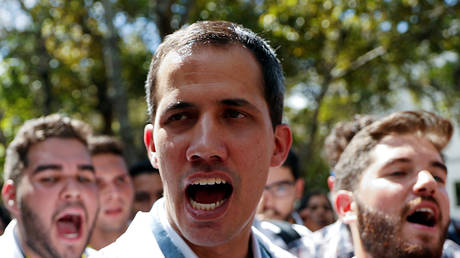 All opportunities for dialogue with Venezuelan President Nicolas Maduro have been exhausted, Venezuelan opposition parliament speaker Juan Guaido, who has proclaimed himself the country’s interim president, said on Monday, after declining Mexico and Uruguay’s offer to mediate a dialogue with Maduro.
“As for the initiative of Mexico and Uruguay, I must be sincere by telling you that all of Venezuela’s democratic forces believe that the opportunities for dialogue with Maduro government have been exhausted… The [Maduro] regime has rejected any chance to reach a political agreement within the framework of our constitution,” Guaido told Italy’s Corriere della Sera newspaper.
On January 31, the European Union and a number of Latin American countries decided to set up an international contact group “to create conditions for a political and peaceful process to emerge” in Venezuela.
China, Mexico, Russia, Turkey and Uruguay are among the countries that have voiced their support for Maduro.
Russian Foreign Minister Sergei Lavrov said earlier in the day that the European Union was giving an ultimatum to Caracas rather than mediating the Venezuelan crisis, and called for settlement talks that would include all relevant parties.
The Chinese Foreign Ministry said last month that Beijing was against any meddling in Venezuela’s internal affairs and supportive of the country’s government in its efforts to maintain stability.
Canada Doubles Down on Media Censorship of Lima Group Meeting
teleSUR | February 24, 2019
The Foreign Ministry of Canada has denied access to several media outlets to cover the Lima Group meeting taking place in Ottawa Monday. At that meeting, countries who are currently allied against Venezuela are expected to discuss further steps associated with their actions against the Bolivarian nation.
Canada’s foreign ministry issued the same terse response to Russian media outlets Sputnik News as it did Ria Novosti’s bid for press credentials for the meeting: “Thank you for your interest in the 10th ministerial meeting of the Lima Group in Ottawa. This letter is to inform you you have not been accredited as media.”
As with Canada’s rejection of teleSUR for media credentials as reported Feb. 3., the response provided no reason for the rejection, however, Canadian spokesperson for the Lima Group responded to Sputnik by saying that the news outlet was rejected for a “lack of respect to the Canadian Foreign Minister.”
This Russian agency has also not received credentials for the meeting in Canada. Arbitrary decisions. It’s not new, but we won’t stop calling it out.
The predominantly right-wing Lima Group which supports the coup attempt by self-proclaimed president Juan Guaido backed by the United States, has said they would not condone a military intervention to depose President Nicolas Maduro.
The group was created in 2017 at the behest of Peru. Recently, it has been highly engaged in promoting regime change in Venezuela with the backing of the United States and the European Union.
It is composed of Argentina, Brazil, Canada, Chile, Colombia, Costa Rica, Guatemala, Honduras, Mexico, Panama, Paraguay, Peru, Santa Lucia, and Guyana. All of its members, except for Mexico, Guyana, and Santa Lucia, have backed Guiado’s coup attempt. Ecuador — not a party to the association — has also backed the group’s stance on Venezuela.
Iran not accepting EU’s humiliating conditions on INSTEX: Judiciary chief
Press TV – February 4, 2019
Iran’s Judiciary Chief Ayatollah Sadeq Amoli Larijani says the Islamic Republic will never give in to humiliating conditions set by Europe for the enforcement of its new non-dollar mechanism aimed at facilitating trade with the Islamic Republic.
Addressing a meeting of high-ranking judicial officials on Monday, Iran’s top judge said, “After nine months of dawdling and negotiations, European countries have come up with a limited-capacity mechanism not for exchange of money with Iran, but to supply food and medicine.”
The European signatories to the 2015 nuclear agreement, officially known as the Joint Comprehensive Plan of Action (JCPOA), issued a joint statement on Thursday, announcing the launch of a long-awaited direct non-dollar payment mechanism meant to safeguard their trade ties with Tehran following Washington’s withdrawal from the nuclear deal and in the face of the “toughest ever” sanctions imposed by the United States against the Islamic Republic.
Following months-long preparations, the foreign ministers of France, Germany and Britain finally unveiled the mechanism, officially called the Instrument in Support of Trade Exchanges (INSTEX), after a summit in Bucharest, Romania.
Iran’s Judiciary chief further said, “European countries, which had promised to remain committed to Iran’s nuclear deal after the US withdrawal from it, have now restricted their efforts to INSTEX and have reportedly set two strange conditions for it to become effective.”
They have asked “Iran to join the FATF (the Financial Action Task Force) and start negotiations over its missile program,” before INSTEX enters into force, he added.
“These [European] countries must know that the Islamic Republic of Iran will by no means accept these humiliating conditions and will not give in to any demand in return for a small opening [in sanctions] like INSTEX,” Amoli Larijani emphasized.
He noted that today, European countries are moving in the same direction that the US had moved before “and we [the Iranian nation] must continue to stand fast as [we have] always [done].”
President Donald Trump withdrew the US in May from the landmark Iran nuclear agreement, reached between the Islamic Republic and the P5+1 group of countries in 2015, and decided to re-impose unilateral sanctions against Tehran.
Under the deal, Iran undertook to put limits on its nuclear program in exchange for the removal of nuclear-related sanctions.
Trump’s administration announced the re-imposition of the “toughest” sanctions ever against Iran’s banking and energy sectors with the aim of cutting off the country’s oil sales and crucial exports.
Iran’s nuclear chief said on Saturday that the establishment of the new mechanism to ease trade with Iran is a promising step, but noted the Europeans must act more swiftly and adopt final measures in this regard.
“The Europeans took a promising step in terms of economy and we hope that they will keep racing ahead on the same path,” the head of the Atomic Energy Organization of Iran (AEOI), Ali Akbar Salehi, told reporters.
Despite Washington’s withdrawal, Iran has not left the deal yet, but stressed that the remaining signatories to the agreement have to work to offset the negative impacts of the US pullout for Iran if they want Tehran to remain in it.
On Friday, China’s Foreign Ministry spokesman, Geng Shuang, appreciated the efforts made by European countries to uphold the JCPOA after the US withdrawal from the agreement.
“It (INSTEX) fully demonstrated the EU’s determination to uphold multilateralism. China firmly supports the continued cooperation between the EU and Iran to put the mechanism into operation as soon as possible and open it to third parties so as to promote normal economic and trade cooperation between the international community and Iran,” he said.
Tulsi Gabbard Slams “Neocon/Neolib Warmongers” After NBC Propaganda Exposed
By Tyler Durden – Zero Hedge – 02/04/2019
Tulsi Gabbard lashed out at “neocon” and “neolib warmongers” after NBC News was exposed trying to smear her as a Kremlin stooge. The network was called out over the weekend for relying on a Democrat-run firm that created fake Russian twitter bots to stage a “false flag” campaign against Republic Roy Moore in the 2017 Alabama special election – New Knowledge.
To justify its claim that Tulsi Gabbard is the Kremlin’s candidate, NBC writes:
“analysts at New Knowledge, the company the Senate Intelligence Committee used to track Russian activities in the 2016 election, told NBC News they’ve spotted ‘chatter’ related to Gabbard in anonymous online message boards, including those known for fomenting right-wing troll campaigns.”
Only to be called out hard by journalist Glenn Greenwald:
This NBC News report is a total disgrace from top to bottom. It’s a joke using the most minimal journalistic standards. But that’s because NBC is in partnership with the Democratic Party (and intel community) to smear any Dem adversary, on the left or right, as a Kremlin tool: pic.twitter.com/1jUhJQuhJu
— Glenn Greenwald (@ggreenwald) February 3, 2019
After Greenwald fingered NBC for relying on New Knowledge – run by Jonathan Morgan (who also developed the technology behind “Hamilton 68” Russian bot-tracking propaganda website that refuses to disclose its methods) – Gabbard chimed in, tweeting:
“@ggreenwald exposes that @NBC used journalistic fraud to discredit our campaign. But more important is their motive: “to smear any adversary of the establishment wing of the Democratic Party – whether on the left or the right – as a stooge or asset of the Kremlin.”
She later added:
“As commander-in-chief, I will work to end the new cold war, nuclear arms race and slide into nuclear war. That is why the neocon/neolib warmongers will do anything to stop me.
As commander-in-chief, I will work to end the new cold war, nuclear arms race and slide into nuclear war. That is why the neocon/neolib warmongers will do anything to stop me. https://t.co/MPybv8AZ5p
— Tulsi Gabbard (@TulsiGabbard) February 4, 2019
The term “neoliberal warmongers” is thus bornhttps://t.co/xiB7qkkao9
— zerohedge (@zerohedge) February 4, 2019
Disturbingly, the Senate Intelligence Committee has relied on a report by New Knowledge on Russian social media election interference, while the firm has created a “Hamilton 68” offshoot, “Disinfo2018” referenced in the NBC article, which claims that three of the top URLs propagated throughout social media by Kremlin bots were about Gabbard.
Three of the top 15 URL’s shared over the past 24 hours by 800 Russian-linked disinformation accounts tracked by Disinfo2018 are about Tulsi Gabbard, the pro-Putin, pro-Assad congresswoman who just announced she’s running for POTUS in 2020. (One URL is an article; 2 are tweets). pic.twitter.com/SG43IGt9ZV
— Caroline Orr (@RVAwonk) January 15, 2019
In short; NBC relied on a known propagandist who created a Russian bot “false flag” to meddle in an election, who claims to track pro-Kremlin Twitter activity, in order to smear Tulsi Gabbard as a Putin puppet.
That’s a lot of hot talk, Mike.
— Ben Popken (@bpopken) February 4, 2019
And your article is one of the hottest piles of garbage masquerading as “journalism” that I’ve ever seen, so congratulations on that. You’re a pathetic joke
— Michael Tracey (@mtracey) February 4, 2019
Except they’re not “experts” NBC–they’re admitted forgers. You’re a rabble NBC. A complete rabble. Go back to school: https://t.co/e9KJU2oisv … pic.twitter.com/1XnfMmjqgh
— WikiLeaks (@wikileaks) February 3, 2019
It’s uncanny what lengths the establishment will go to in order to eliminate threats. For example, take a look at this Vanity Fair hit piece from Jan 30, which uses perhaps the most unflattering photo Gabbard has ever taken and starts off (emphasis not ours):
The presidential campaign of Rep. Tulsi Gabbard, the renegade Democrat known as much for her chummy relationship with Bashar al-Assad as for supporting Bernie Sanders, is beginning to resemble the candidate herself: confusing, disorganized, and, according to Politico, falling apart. –Vanity Fair
If you squint hard, you can almost tell they don’t like her. Very subtle pic.twitter.com/duwKhrrUd1
— Michael Tracey (@mtracey) February 2, 2019
One question remains; will Gabbard become a Democrat puppet like Bernie Sanders if the DNC colludes with their chosen candidate to cheat against her?
Death Knell For Syria Pullout: “We Have To Protect Israel” Says Trump
By Tyler Durden – Zero Hedge – 02/03/2019
After approaching two months of talk of a “full” and “immediate” US troop withdrawal from Syria, first ordered by President Trump on December 19 — which was predictably met with swift and fierce pushback from beltway hawks including in some cases his own advisers — it now appears the death knell has sounded on the prior “complete” and “rapid” draw down order.
Trump said in a CBS “Face the Nation” interview this weekend that some unspecified number of US troops will remain in the region, mostly in Iraq, with possibly some still in Syria, in order “to protect Israel” in what appears a significant backtrack from his prior insistence on an absolute withdrawal.
“We’re going to be there and we’re going to be staying. We have to protect Israel,” he replied when pressed by CBS reporter Margaret Brennan. “We have to protect other things that we have. But we’re – yeah, they’ll be coming back in a matter of time.” He did note that “ultimately some will be coming home.”
“Look, we’re protecting the world,” he added. “We’re spending more money than anybody’s ever spent in history, by a lot.” Trump’s slow drift and change in tune on the subject of a promised “rapid” exit comes after Israeli officials led by Prime Minister Netanyahu alongside neocon allies in Washington argued that some 200 US troops in Syria’s southeast desert along the Iraqi border and its 55-kilometer “deconfliction zone” at al-Tanf are the last line of defense against Iranian expansion in Syria, and therefore must stay indefinitely.
“I want to be able to watch Iran,” Trump said further during the CBS interview. “Iran is a real problem.” He explained that “99%” of ISIS’s territory had been liberated but that a contingency of US troops must remain to prevent a resurgent Islamic State as well as to counter Iranian influence, for which American forces must remain in Iraq as well.
“When I took over, Syria was infested with ISIS. It was all over the place. And now you have very little ISIS, and you have the caliphate almost knocked out,” the president said. “We will be announcing in the not too distant future 100% of the caliphate, which is the area – the land – the area – 100. We’re at 99% right now. We’ll be at 100.”
However Trump’s invoking Iranian influence as a rationale for staying further contradicts his prior December statement that the defeat of ISIS was “the only reason” he was in Syria in the first place.
MARGARET BRENNAN: How many troops are still in Syria? When are they coming home?
PRESIDENT DONALD TRUMP: 2,000 troops.
MARGARET BRENNAN: When are they coming home?
PRESIDENT DONALD TRUMP: They’re starting to, as we gain the remainder, the final remainder of the caliphate of the area, they’ll be going to our base in Iraq, and ultimately some will be coming home. But we’re going to be there and we’re going to be staying—
MARGARET BRENNAN: So that’s a matter of months?
PRESIDENT DONALD TRUMP: We have to protect Israel. We have to protect other things that we have. But we’re- yeah, they’ll be coming back in a matter of time. Look, we’re protecting the world. We’re spending more money than anybody’s ever spent in history, by a lot. We spent, over the last five years, close to 50 billion dollars a year in Afghanistan. That’s more than most countries spend for everything including education, medical, and everything else, other than a few countries. — CBS “Face the Nation” Feb.3 interview transcript
The Pentagon in recent weeks has reportedly been putting logistics in place for a troop draw down from northern and eastern Syria.
Though it remains unclear just how many troops could remain as the majority possibly begin to pullout toward US bases in Iraq, the Tanf base could remain Washington’s last remote outpost disrupting what US defense officials see as a strategic Baghdad-Damascus corridor and highway, and potential key “link” in the Tehran-to-Beirut so-called Shia land bridge.
Foreign Policy magazine has identified this argument as the final card the hawks opposing Trump’s draw down had to play in order to hinder to an actual complete US exit:
“Al-Tanf is a critical element in the effort to prevent Iran from establishing a ground line of communications from Iran through Iraq through Syria to southern Lebanon in support of Lebanese Hezbollah,” an unnamed senior US military source told the magazine.
The Israeli prime minister has pushed hard against the White House pullout plan, and “has repeatedly urged the U.S. to keep troops at Al-Tanf, according to several senior Israeli officials, who also asked not to be identified discussing private talks,” per Bloomberg. The Israelis have reportedly argued “the mere presence of American troops will act as a deterrent to Iran” even if in small numbers as a kind of symbolic threat.
The internal administration debate, following incredible push back against Trump’s withdrawal decision, has made entirely visible the national security deep state’s attempt to check the Commander-in-Chief’s power. And now US presence at al-Tanf represents the last hope of salvaging the hawks’ desire for permanent proxy war against Iran inside Syria.
It appears the deep state has won out over Trump’s initial policy decision once again; but it remains to be seen if, however slowly on what’s clearly a delayed timetable departing from his original plans, all US troops ultimately exit Syria. Until then there’ll be more time and perhaps more provocations the hawks can rely on to effectively ensure full circle return to indefinite occupation in Syria.
President Salih: Trump did not ask Iraq permission to watch Iran
Press TV – February 4, 2019
Iraqi leaders have hit back at Donald Trump after the US president said he plans to keep troops in the country to spy on Iran, with President Barham Salih saying the mission does not have Baghdad’s permission.
Their reaction on Monday came a day after Trump told CBS that US troops would leave Syria and Afghanistan but stay on in Iraq, partly “to be looking a little bit at Iran.”
Trump admitted that staying in Iraq is a “mistake” and that attacking Iran is not an option, but the remarks sparked a new round of demands in Baghdad for US forces to leave the country.
“The Iraqi constitution rejects the use of Iraq as a base for hitting or attacking a neighboring country,” President Salih said Monday.
Salih said US forces were in the country under an agreement between the two countries, but that “any action taken outside this framework is unacceptable.”
The Iraqi president insisted that Trump had not asked Baghdad’s permission for US troops in Iraq to “watch Iran.”
“Don’t overburden Iraq with your own issues,” Salih said. “The US is a major power … but do not pursue your own policy priorities, we live here.”
“It is of fundamental interest for Iraq to have good relations with Iran” and other neighboring countries, Saleh said.
He said US forces were in Iraq to fight terrorism and that he looked forward to hearing Washington’s clarification on the number of troops who were going to stay as well as their mission.
In his interview aired on Sunday, Trump defended his decision to end “endless wars” in Syria and Afghanistan by pulling out US troops from those countries.
However, he said not all of thousands of American forces stationed in Iraq, specially at the Ain al-Asad Air Base in the western Anbar Province, were going to return home.
“And one of the reasons I want to keep it (the base) is because I want to be looking a little bit at Iran because Iran is a real problem,” said the American president.
Asked whether he wanted the troops there to “strike” Iran at a later time, Trump responded: “No… All I want to do is be able to watch.”
“We have an unbelievable and expensive military base built in Iraq. It’s perfectly situated for looking at all over different parts of the troubled Middle East rather than pulling up,” he added.
Trump announced in December that all US military troops in Syria would return home in the coming months while the number of US forces in Afghanistan would also be reduced drastically.
Trump made an unannounced stop at Ain al-Asad base on Christmas, in a visit that drew fire from Iraqi officials and their counterparts in Iran and other neighboring countries.
Sabah al-Saadi, a member of parliament in the bloc led by influential anti-American cleric Moqtada Sadr, has proposed a bill demanding a US pullout.
Deputy speaker of parliament Hassan Karim al-Kaabi, also close to Sadr, said Monday Trump’s latest remarks have made passing such a law “a national duty” because they are a violation of Iraq’s sovereignty and constitution.
The remarks, he said, are a “new provocation,” weeks after the US president sparked outrage in Iraq by visiting US troops without meeting a single Iraqi official.
The Iraqi parliament, he said, will soon pass a bill that will end the ongoing security agreement with Washington as well as the presence of all foreign forces in Iraq.
Kaabi asserted that his country would never become a launchpad for attacks or a US backyard for intelligence gathering against other countries.
Iraqi leaders say there are no American bases on its soil, stressing that only instructors are deployed at Iraqi bases.
Kurdish MP Sarkawt Shams tweeted that the mission of US troops in Iraq was “to help Iraqi security forces against terrorism, not ‘watching’ others.”
“We are expecting the United States to respect our mutual interests and avoid pushing Iraq into a regional conflict,” he said.
Trump’s comments ‘embarrassing’ for Baghdad
Iraq’s former foreign minister Hoshyar Zebari also condemned Trump’s remarks, saying they were embarrassing for Baghdad.
The veteran Kurdish politician warned Iraqi officials that the country would face difficult choices in future following Trump’s controversial statements.
Jaafar al-Husseini, a spokesman for the Iraqi pro-government Kata’ib Hezbollah voluntary forces, warned the Trump administration against mounting offensives against Iran and Syria from Iraq.
He also called on parliament to speed up legislation to drive out foreign forces, warning that the anti-terror force won’t wait long.
The spokesman noted that Iraq’s security agencies should deem American military forces as “appropriate targets” as Iraqi resistance groups already do.
‘Greatest mistake US ever made’
In his interview on Sunday, Trump once again called the US war on Iraq as “one of the greatest mistakes” the United States had ever made.
He also defended his attacks on US intelligence assessments on Iran, saying they tend to miscalculate as they led former President George W. Bush into attacking Iraq by claiming that Baghdad had weapons of mass destruction (WMDs).
“President Bush had intel people that said Saddam Hussein in Iraq had nuclear weapons- had all sorts of weapons of mass destruction. Guess what? Those intel people didn’t know what the hell they were doing, and they got us tied up in a war that we should have never been in,” he said.
Last Wednesday, Trump went on a twitter rant to attack his intelligence chiefs’ assessments on Iran’s growing power despite Washington’s pressure campaign following his pullout from the 2015 Iran nuclear deal.
The tweets came in response to Tuesday statements by CIA Director Gina Haspel and Director of National Intelligence Dan Coats before the US Senate Intelligence Committee.
Haspel told the panel that despite Trump’s decision last May to withdraw from the nuclear deal, the Islamic Republic had been “making some preparations that would increase their ability to take a step back.”
Coats also acknowledged that Tehran was not seeking to develop nuclear weapons capabilities.
Featured Video
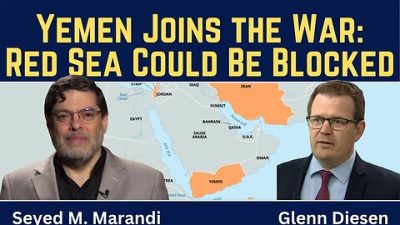
Yemen joins the war – Red Sea could be blocked next – Saudi regime at risk
or go to
Aletho News Archives – Video-Images
From the Archives
A superpower and “the world’s sickest warrior state”
By Paul J. Balles | March 8, 2010
Living through five or six major wars has hardened me to what I thought were the extremes of inhuman cruelty and brutality.
Two things made those extremes almost bearable: the brutality always revealed – at least according to the media coverage – the viciousness of the enemy. It was therefore quite understandable when our “brave men and women” pulverized the enemy.
Films of Japanese torturing captive Americans somehow justified holding Japanese Americans in internment camps during World War II; and only a small percentage of Americans found the bombing of Hiroshima and Nagasaki unreasonably vengeful at best, at worst, depraved.
The media giants in America portrayed the North Koreans as barbaric beasts with their captives, quite unlike their southern counterpoints – our allies during the Korean War. No one ever felt the need to explain how the South Koreans were a civilized breed while the North Koreans were absolute savages, at least according to the official line.
In Vietnam, our warriors justifiably (or so the media made us believe) dropped napalm on the North Vietnamese who had the gall to hide in villages and tunnels to ravage our invaders. At least it was accepted practice until some rogue photojournalist filmed a young girl screaming down a Vietnamese road in flames. … continue
Blog Roll
 Aletho News
- Russian tanker approaches Cuba despite US oil blockade
- Marandi: Yemen joins the war – Red Sea could be blocked next – Saudi regime at risk
- Pro-Palestinian French member of European Parliament denied entry to Canada
- Pakistan to Host US-Iran Talks
- How Indonesia’s tilt toward the US left it stranded in the Strait of Hormuz
- US has no choice but to retreat from Iranian borders: Top commander
- Iran Retaliation Strikes Chemical Plant Near Dimona
- AWACS’ Destruction is a Major Loss for US Military – Ex-DoW Analyst
- Israel’s Iran Strategy Uses US Military & Gulf States as Its Pawns
- Iran: Trump wanted regime change, now just begging for Hormuz to open
- If Americans Knew
- Israeli police block Catholic cardinal from entering Church of the Holy Sepulchre on Palm Sunday
- Israel is assassinating journalists again, more than any other nation, anywhere, ever – Not a ceasefire Day 170
- Over 300 US service members wounded, majority have brain injuries – Not a ceasefire Day 169
- Researchers at Human Rights Watch Resign Over Blocked Report on Palestinian Refugee Return
- Jewish Groups Are Backing a War Americans Don’t Want
- Eric Fingerhut Thinks He’s the President of the Jews
- Top Jewish Philanthropists, Rabbis Urge Israeli President to Take Action Against ‘Jewish Extremists’
- Don’t Be Fooled. Zionist Leaders Have Always Wanted to Control Southern Lebanon
- Israel’s widespread use of torture is a core element of its genocide against the Palestinian people
- In Israel’s War on Iran, Many Middle East US Bases Rendered “All But Uninhabitable”
- No Tricks Zone
- German Science Blog Accuses PIK Climate Institute Of Hallucinating Climate Tipping Points
- Devastating Assessment Of Comirnaty Vaccine By Former Senior Pfizer Europe Toxicologist
- New Study: CO2 Is ‘Effectively Negligible’ As An Explanatory Climate Change Factor Since 2000
- Former Pfizer Toxicologist Dr. Helmut Sterz Tells Bundestag Hearing Pfizer Vaccine Should Have Never Been Approved
- Energy Expert: Germany’s Nuclear Phaseout Was A “500 Billion Euro Mistake”
- New Research: South Australia’s Mid-Holocene Sea Surface Temperatures Were 4°C Warmer Than Today
- Storing Green Energy To Last Germany 10 Days Would Require A 60-Million Tonne Battery
- New Studies: UK Sea Levels Were 4 Meters Higher Than Today During The Mid-Holocene
- Destructive Green New Deal: German Energy And Metal Group Warns Of Drastic Crisis
- New Study Documents A 20-Year Pause In Arctic Sea Ice Decline – Driven By Internal Variability
 Aletho News