
By Gregory Elich | Global Research | May 13, 2019
Twenty years have passed since the U.S.-orchestrated NATO attack on Yugoslavia. As the United States readied its forces for war in 1999, it organized a peace conference that was ostensibly intended to resolve differences between the Yugoslav government and secessionist ethnic Albanians in Kosovo on the future status of the province. A different scenario was being played out behind the scenes, however. U.S. officials wanted war and deliberately set up the process to fail, which they planned to use as a pretext for war.
The talks opened on February 6, 1999, in Rambouillet, France. Officially, the negotiations were led by a Contact Group comprised of U.S. Ambassador to Macedonia Christopher Hill, European Union envoy Wolfgang Petritsch, and Russian diplomat Boris Mayorsky. All decisions were supposed to be jointly agreed upon by all three members of the Contact Group. In actual practice, the U.S. ran the show all the way and routinely bypassed Petritsch and Mayorsky on essential matters.
Ibrahim Rugova, an ethnic Albanian activist who advocated nonviolence, was expected to play a major role in the Albanian secessionist delegation. Joining him at Rambouillet was Fehmi Agani, a fellow member of Rugova’s Democratic League of Kosovo.
U.S. Secretary of State Madeleine Albright regularly sidelined Rugova, however, preferring to rely on delegation members from the hardline Kosovo Liberation Army (KLA), which had routinely murdered Serbs, Roma, and Albanians in Kosovo who worked for the government or opposed separatism. Only a few months before the conference, KLA spokesman Bardhyl Mahmuti spelled out his organization’s vision of a future Kosovo as separate and ethnically pure: “The independence of Kosovo is the only solution… We cannot live together. That is excluded.” [1]
Rugova had at one time engaged in fairly productive talks with Yugoslav officials, and his willingness to negotiate was no doubt precisely the reason Albright relegated him to a background role. Yugoslav Minister of Information Milan Komnenić accompanied the Yugoslav delegation to Rambouillet. He recalls, “With Rugova and Fehmi Agani it was possible to talk; they were flexible. In Rambouillet, [KLA leader Hashim] Thaçi appears instead of Rugova. A beast.” [2] There was no love between Thaçi and Rugova, whose party members were the targets of threats and assassination attempts at the hands of the KLA. Rugova himself would survive an assassination attempt six years later.
The composition of the Yugoslav delegation reflected its position that many ethnic groups resided in Kosovo, and any agreement arrived at should take into account the interests of all parties. All of Kosovo’s major ethnic groups were represented in the delegation. Faik Jashari, one of the Albanian members in the Yugoslav delegation, was president of the Kosovo Democratic Initiative and an official in the Provisional Executive Council, which was Yugoslavia’s government in Kosovo. Jashari observed that Albright was startled when she saw the composition of the Yugoslav delegation, apparently because it went against the U.S. propaganda narrative. [3] Throughout the talks, Albright displayed a dismissive attitude towards the delegation’s Albanian, Roma, Egyptian, Goran, Turkish, and Slavic Muslim members.
U.S. mediators habitually referred to the Yugoslav delegation as “the Serbs,” even though they constituted a minority of the members. The Americans persisted in trying to cast events in Kosovo as a simplistic binary relationship of Serb versus Albanian, disregarding the presence of other ethnic groups in the province, and ignoring the fact that while some ethnic Albanians favored separation, others wished to remain in multiethnic Yugoslavia.
After arriving at Rambouillet, the secessionist Albanian delegation informed U.S. diplomats that it did not want to meet with the Yugoslav side. Aside from a brief ceremonial meeting, there was no direct contact between the two groups. The Yugoslav and Albanian delegations were placed on two different floors to eliminate nearly all contact. U.S. mediators Richard Holbrooke and Christopher Hill ran from one delegation to the other, conveying notes and verbal messages between the two sides but mostly trying to coerce the Yugoslav delegation. [4]
Luan Koka, a Roma member of the Yugoslav delegation, noted that the U.S. was operating an electronic jamming device. “We knew exactly when Madeleine Albright was coming. Connections on our mobile phones were breaking up and going crazy.” [5] It is probable that the U.S. was also operating electronic listening equipment and that U.S. mediators knew everything the delegations were saying in private.
Albright, Jashari said, would not listen to anyone. “She had her task, and she saw only that task. You couldn’t say anything to her. She didn’t want to talk with us and didn’t want to listen to our arguments.” [6]
One day it was Koka’s birthday, and the Yugoslav delegation wanted to encourage a more relaxed atmosphere with U.S. mediators, inviting them to a cocktail party to mark the occasion. “It was a slightly more pleasant atmosphere, and I was singing,” Koka recalled. “I remember Madeleine Albright saying: ‘I really like partisan songs. But if you don’t accept this, the bombs will fall.’” [7] According to delegation member Nikola Šainović, “Madeleine Albright told us all the time: ‘If the Yugoslav delegation does not accept what we offer, you will be bombed.’” Šainović added, “We agreed in Rambouillet to any form of autonomy for Kosovo,” but sovereignty remained the red line. [8]
From the beginning of the conference, U.S. mediator Christopher Hill “decided that what we really needed was an Albanian approval of a document, and a Serb refusal. If both refused, there could be no further action by NATO or any other organization for that matter.” [9] It was not peace that the U.S. team was seeking, but war.
As the conference progressed, U.S. negotiators were faced with an alarming problem, in that the Yugoslav delegation had accepted all of the Contact Group’s fundamental political principles for an agreement, balking only at a NATO presence in Kosovo. On the other hand, the secessionist delegation rejected the Contact Group’s political principles. Something had to be done to reverse this pattern.
On the second day of the conference, U.S. officials presented the Yugoslav delegation with the framework text of a provisional agreement for peace and self-rule in Kosovo, but it was missing some of the annexes. The Yugoslavs requested a copy of the complete document. As delegation head Ratko Marković pointed out, “Any objections to the text of the agreement could be made only after an insight into the text as a whole had been obtained.” Nearly one week passed before the group received one of the missing annexes. That came on the day the conference had originally been set to end. The deadline was extended, and two days later a second missing annex was provided to the Yugoslav delegation.[10]
When the Yugoslavs next met with the Contact Group, they were assured that all elements of the text had now been given to them. Several more days passed and at 7:00 PM on February 22, the penultimate day of the conference, the Contact Group presented three new annexes, which the Yugoslavs had never seen before. According to Marković, “Russian Ambassador Boris Mayorsky informed our delegation that Annexes 2 and 7 had not been discussed or approved by the Contact Group and that they were not the texts drafted by the Contact Group but by certain Contact Group members, while Annex 5 was discussed, but no decision was made on it at the Contact Group meeting.” The Yugoslav delegation refused to accept the new annexes, as their introduction had violated the process whereby all proposals had to be agreed upon by the three Contact Group members. [11]
At 9:30 AM on February 23, the final day of the conference, U.S. officials presented the full text of the proposal, containing yet more provisions that were being communicated for the first time. The accompanying note identified the package as the definitive text while adding that Russia did not support two of the articles. The letter demanded the Yugoslav delegation’s decision by 1:00 PM that same day.[12] There was barely time enough to carefully read the text, let alone negotiate. In essence, it was an ultimatum.
Quite intentionally, U.S. mediators included provisions in the final version of the text that no sovereign nation could be expected to accept. Neoliberal economic interests are always front and center when U.S. officials are involved, and they surely were not unaware of Kosovo’s abundant reserves of mineral resources, ripe for exploitation. The first point in Article 1 of the Economic Issues section of the text states: “The economy of Kosovo shall function in accordance with free market principles.” Western investors were favored with a provision stating that authorities shall “ensure the free movement of persons, goods, services, and capital to Kosovo, including from international sources.” [13] One may wonder what these stipulations had to do with peace negotiations, but then the talks had far more to do with U.S. interests than anything to do with the needs of the people in the region.
The document called for a Western-led Joint Commission including local representatives to monitor and coordinate the implementation of the plan. However, if commission members failed to reach consensus on a matter, the Western-appointed Chair would have the power to impose his decision unilaterally. [14] Local representatives would serve as little more than window-dressing for Western dictate, as they could adopt no measure that went against the Chair’s wishes.
The Chair of the Implementation Mission was authorized to “recommend” the “removal and appointment of officials and the curtailment of operations of existing institutions in Kosovo.” If the Chair’s command was not obeyed “in the time requested, the Joint Commission may decide to take the recommended action,” and since the Chair had the authority to impose his will on the Joint Commission, there was no check on his power. He could remove elected and appointed officials at will and replace them with handpicked lackeys. The Chair was also authorized to order the “curtailment of operations of existing institutions.” [15] Any organization that failed to bend to U.S. demands could be shut down.
Chapter 7 of the plan called for the parties to “invite NATO to constitute and lead a military force” in Kosovo. [16] The choice of words was interesting. In language reminiscent of gangsters, Yugoslavia was told to “invite” NATO to take over the province of Kosovo or suffer the consequences.
Yugoslavia was required “to provide, at no cost, the use of all facilities and services required” by NATO. [17] Within six months, Yugoslavia would have to withdraw all of its military forces from Kosovo, other than a small number of border guards. [18]
The plan granted NATO “unrestricted use of the entire electromagnetic spectrum” to “communicate.” Although the document indicated NATO would make “reasonable efforts to coordinate,” there were no constraints on its power. [19] Yugoslav officials, “upon simple request,” would be required to grant NATO “all telecommunication services, including broadcast services…free of cost.” [20] NATO could take over any radio and television facilities and transmission wavelengths it chose, knocking local stations off the air.
The plan did not restrict NATO’s presence to Kosovo. It granted NATO, with its “vehicles, vessels, aircraft, and equipment, free and unrestricted passage and unimpeded access throughout the FRY [Federal Republic of Yugoslavia].” [21] NATO would be “granted the use of airports, roads, rails, and ports without payment of fees, duties, dues, tools, or charges.” [22]
The agreement guaranteed that NATO would have “complete and unimpeded freedom of movement by ground, air, and water into and throughout Kosovo.” Furthermore, NATO personnel could not be held “liable for any damages to public or private property.” [23] NATO as a whole would also be “immune from all legal process, whether civil, administrative, or criminal,” regardless of its actions anywhere on the territory of Yugoslavia. [24] Nor could NATO personnel be arrested, detained, or investigated. [25]
Acceptance of the plan would have brought NATO troops swarming throughout Yugoslavia and interfering in every institution.
There were several other objectionable elements in the plan, but one that stood out was the call for an “international” (meaning, Western-led) meeting to be held after three years “to determine a mechanism for a final settlement for Kosovo.” [26] It was no mystery to the Yugoslav delegation what conclusion Western officials would arrive at in that meeting. The intent was clearly to redraw Yugoslavia’s borders to further break apart the nation.
U.S. officials knew the Yugoslav delegation could not possibly accept such a plan. “We deliberately set the bar higher than the Serbs could accept,” Madeleine Albright confided to a group of journalists, “because they needed a little bombing.” [27]
At a meeting in Belgrade on March 5, the Yugoslav delegation issued a statement which declared: “A great deceit was looming, orchestrated by the United States. They demanded that the agreement be signed, even though much of this agreement, that is, over 56 pages, had never been discussed, either within the Contact Group or during the negotiations.” [28]
Serbian President Milan Milutinović announced at a press conference that in Rambouillet the Yugoslav delegation had “proposed solutions meeting the demands of the Contact Group for broad autonomy within Serbia, advocating full equality of all national communities.” But “agreement was not what they were after.” Instead, Western officials engaged in “open aggression,” and this was a game “about troops and troops alone.” [29]
While U.S. officials were working assiduously to avoid a peaceful resolution, they needed the Albanians to agree to the plan so that they could accuse the Yugoslav delegation of being the stumbling block to peace. U.S. mainstream media could be counted on to unquestioningly repeat the government’s line and overlook who the real architects of failure were. U.S. officials knew the media would act in their customary role as cheerleaders for war, which indeed, they did.
British Foreign Secretary Robin Cook revealed the nature of the message Western officials were conveying to the Albanian delegation when he said, “We are certainly saying to the Kosovo Albanians that if you don’t sign up to these texts, it’s extremely difficult to see how NATO could then take action against Belgrade.” [30] Western officials were practically begging the secessionists to sign the plan. According to inside sources, the Americans assured the Albanian delegation that disarmament of the KLA would be merely symbolic and that it could keep the bulk of its weaponry so long as it was concealed. [31]
Albright spent hours trying to convince Thaçi to change his mind, telling him: “If you say yes and the Serbs say no, NATO will strike and go on striking until the Serb forces are out and NATO can go in. You will have security. And you will be able to govern yourselves.” [32] That was a clear enough signal that the intent was to rip the province away from Yugoslavia and create an artificial state. Despite such assurances, Thaçi feared the wrath of fellow KLA members if he were to sign a document that did not explicitly call for separation. When U.S. negotiators asked Thaçi why he would not sign, he responded: “If I agree to this, I will go home and they will kill me.” [33] This was not hyperbole. The KLA had threatened and murdered a great many Albanians who in its eyes fell short of full-throated support for its policy of violent secession and ethnic exclusion.
Even NATO Commander Wesley Clark, who flew in from Belgium, was unable to change Thaçi’s mind. [34] U.S. officials were exasperated with the Albanian delegation, and its recalcitrance threatened to capsize plans for war. “Rambouillet was supposed to be about putting the screws to Belgrade,” a senior U.S. official said. “But it went off the rails because of the miscalculation we made about the Albanians.” [35]
On the last day at Rambouillet, it was agreed that the Albanian delegation would return to Kosovo for discussions with fellow KLA leaders on the need to sign the document. In the days that followed, Western officials paid repeated visits to Kosovo to encourage the Albanians to sign.
So-called “negotiations” reconvened in Paris on March 15. Upon its arrival, the Yugoslav delegation objected that it was “incomprehensible” that “no direct talks between the two delegations had been facilitated.” In response to the Yugoslavs’ proposal for modifications to the plan, the Contact Group informed them that no changes would be accepted. The document must be accepted as a whole. [36]
The Yugoslav position, delegation head Ratko Marković maintained, was that “first one needs to determine what is to be implemented, and only then to determine the methods of implementation.” [37] The delegation asked the Americans what there was to talk about regarding implementation “when there was no agreement because the Albanians did not accept anything.” U.S. officials responded that the Yugoslav delegation “cannot negotiate,” adding that it would only be allowed to make grammatical changes to the text. [38]
From the U.S. perspective, the presence of the Yugoslav delegation in Paris was irrelevant other than to maintain the pretense that negotiations were taking place. Not permitted to negotiate, there was little the Yugoslavs could do but await the inevitable result, which soon came. The moment U.S. officials obtained the Albanian delegation’s signatures to the plan on March 18, they aborted the Paris Conference. There was no reason to continue engaging with the Yugoslav delegation, as the U.S. had what it needed: a pretext for war.
On the day after the U.S. pulled the plug on the Paris talks, Milan Milutinović held a press conference in the Yugoslav embassy, condemning the Paris meeting as “a kind of show,” which was meant “to deceive public opinion in the whole world.” [39]
While the United States and its NATO allies prepared for war, Yugoslavia was making last-ditch efforts to stave off attack, including reaching out to intermediaries. Greek Foreign Minister Theodoros Pangalos contacted Madeleine Albright and told her that Yugoslav President Slobodan Milošević had offered to engage in further negotiations. But Albright told him that the decision to bomb had already been made. “In fact,” Pangalos reported, “she told me to ‘desist, you’re just being a nuisance.’” [40] In a final act of desperation to save the people from bombing, Milutinović contacted Christopher Hill and made an extraordinary offer: Yugoslavia would join NATO if the United States would allow Yugoslavia to remain whole, including the province of Kosovo. Hill responded that this was not a topic for discussion and he would not talk about it. [41]
Madeleine Albright got her war, which brought death, destruction, and misery to Yugoslavia. But NATO had a new role, and the United States further extended its hegemony over the Balkans.
In the years following the demise of the Warsaw Pact and the Soviet Union, NATO was intent on redefining its mission. The absence of the socialist bloc presented NATO not only with the need to construct a new rationale for existence but also with the opportunity to expand Western domination over other nations.
Bosnia offered the first opportunity for NATO to begin its transformation, as it took part in a war that presented no threat to member nations.
Bombing Yugoslavia was meant to solidify the new role for NATO as an offensive military force, acting on behalf of U.S. imperial interests. Since that time, NATO has attacked Libya, and engaged in military operations in Afghanistan, Iraq, and a variety of nations in Africa. Despite NATO’s claim that it is “committed to the peaceful resolution of disputes,” the record shows otherwise.
May 13, 2019
Posted by aletho |
Timeless or most popular, War Crimes | NATO, United States |
Leave a comment
BETHLEHEM – An American author and Fox News contributor called for Palestine to be “flattened” on Twitter after Israeli warplanes carried out over 300 airstrikes across the Gaza Strip, claiming the lives of 27 Palestinians, including an infant and a toddler.
Last week, Janie Johnson, posted a tweet on her personal Twitter account, in which she advocated for the complete destruction of Palestine and genocide of its people, suggesting no one “would miss it.”
Johnson’s tweet that has since been deleted, read, “Can we flatten Palestine already? Who would miss it?”
Johnson was responding to a tweet by an Israeli journalist, who was describing how “fearful” the situation was during the escalation between Israel and the Palestinian factions in Gaza.
Although Johnson removed the tweet, social media users condemned her genocidal rhetoric, with many mentioning they reported it on Twitter.
One social media user posted, “What type of person do you have to be to straight up advocate for genocide?,” while another wrote, “Fox News contributor deleted this tweet calling for literal genocide.”
Another user responded, “Ms. Johnson, with her 208K followers, calls for genocide against the defenseless Palestinians. It is deeply disappointing how well hate and racism sells in America.”
Fox News has not yet commented on the matter.
Johnson’s tweet came after Israeli warplanes carried out 340 airstrikes across the besieged Gaza Strip, killing a total of 27 Palestinians, including a four-month-old infant, 14-month-old toddler, and two pregnant mothers, and at least 154 others were injured, while the Hamas movement launched over 600 rockets into southern Israel.
May 13, 2019
Posted by aletho |
Ethnic Cleansing, Racism, Zionism, War Crimes | Gaza, Israel, Palestine, United States, Zionism |
Leave a comment
On May 4, Israel launched a series of deadly airstrikes on the besieged Gaza Strip, prompting a response from various resistance groups. At least 25 Palestinians were killed and nearly 200 people wounded in the Israeli attacks. Four Israelis were also killed by Palestinian rockets.
The clashes were instigated by Israel, when the Israeli military killed four Palestinians in Gaza on May 3. Two were killed while protesting along the fence separating Gaza from Israel. They were participating in the Great March of Return, a protracted Palestinian non-violent protest demanding an end to the Israeli siege. The other two were killed in an Israeli airstrike that targeted a Hamas post in the central Gaza Strip.
Why did Netanyahu choose such timing to bomb Gaza? It would have made more sense to attack Gaza in the run-up to the general elections. For months before the April 9 elections, Netanyahu was repeatedly accused of being soft on Hamas.
Although desperate for votes, Netanyahu refrained from a major operation against Gaza, because of the inherent risk in such attacks, as seen in the botched Israeli incursion into Khan Younis on November 11. Netanyahu could have lost a highly contested election, had he failed.
Following a victory, the soon-to-be longest-serving Israeli Prime Minister has the necessary political capital to launch wars at whim.
Israeli politics featured heavily in the latest Gaza onslaught.
Netanyahu is in the final stages of forming a new coalition, yet another government of the like-minded far right, religious zealots and ultra-nationalist politicians which, he admits, is not easy.
“It’s not a simple job, and there are different aspects – giving out portfolios, control over the state budget and many other challenges,” Netanyahu said at a Likud party meeting on April 30.
If Netanyahu succeeds, he will form his fifth government – 4 of them consecutively. However, his main challenge is to reconcile among the various potential coalition partners.
Netanyahu wishes to include six parties in his new government: his own, the Likud, with 35 seats in the Israeli Knesset (parliament); religious extremist parties: Shas (8 places), United Torah Judaism (8), Yisrael Beiteinu of ultra-nationalist, Avigdor Lieberman (5), the newly-formed Union of Right-wing Parties (5) and the centrist Kulanu with 4 seats.
“Netanyahu is keen to include all six parties in his government to provide a semblance of stability and prevent a narrow majority that will be at the mercy of a single disgruntled party threatening to quit,” reported the Israeli daily Jerusalem Post newspaper.
But how is Netanyahu to maintain peace among vastly different allies and how is that relevant to the bombing of Gaza?
Netanyahu bombed Gaza because it is the only unifying demand among all of his allies. He needed to assure them of his commitment to keeping the pressure on Palestinian Resistance, of maintaining the siege on Gaza and ensuring the safety of Israel’s southern towns and settlements.
Barring that, there is little that these groups have in common. Lieberman’s Yisrael Beiteinu and the ultra-Orthodox parties barely agree on some fundamental issues. For example, Lieberman has been pushing for a draft law requiring ultra-Orthodox conscription in the Israeli army, vehemently rejected by Netanyahu’s religious allies.
Although the election performance of Lieberman’s party was hardly impressive, his influence goes beyond numbers. Lieberman had resigned his post as a Defense Minister last November in protest of Netanyahu’s supposed “capitulation to terror”, but he has formed a strong alliance with Israel’s southern towns bordering the besieged Gaza Strip.
For years, Lieberman has expressed solidarity with them and, in return, has manipulated this whenever he wishes to pressure or challenge the Prime Minister.
Lieberman has exploited the notion among residents and settlers in southern Israel and the Occupied West Bank that they are being mistreated compared to their compatriots elsewhere.
![Gaza after Israeli strikes on 5 May, 2019 [Mohammed Asad/Middle East Monitor]](https://i2.wp.com/www.middleeastmonitor.com/wp-content/uploads/2019/05/IMG_9022.jpg?resize=933%2C622&quality=75&strip=all&ssl=1)
Gaza after Israeli strikes on 5 May, 2019 [Mohammed Asad/Middle East Monitor]
Following a truce between Israel and Gaza factions last November, for example, hundreds of settlers protested their “second class status”, demanding greater government support to protect their “security” against Gaza. Interestingly, these border towns have been at the centre of a significant economic and demographic growth over the last few years, which has been stimulated by the Israeli government’s investments in the area.
Seeing themselves as the heirs to the Zionist founders of Israel, residents of these towns believe that they are the defenders of the Zionist vision.
Despite their continuous complaints, southern Israeli communities have seen constant growth in economic opportunity, thus population. This fact has placed these areas at the centre of Israeli politicians’ radar, all trying to win favour with their leaders and obtain the support of their vastly expanding economic sectors.
This recent electoral strength has made the demands and expectations of Israeli southern community leaders a focal point in mainstream Israeli politics.
Therefore, it is unsurprising that one of the conditions placed by Lieberman to join Netanyahu’s coalition is the intensification of the Israeli siege on Gaza and the liquidation of the Gaza resistance.
Although Benny Gantz, the leader of the centrist Blue and White Party, has lost the elections, he wishes to stay relevant in mainstream politics by appeasing to Jewish settlers and residents of southern Israel. During the Israeli army’s attack on Gaza on 4 May, Gantz joined the chorus calling for more Palestinian blood.
“We must strike hard, in an uncompromising manner, in any way the army will recommend, with military and intelligence considerations,” he told Israeli Channel 13. “We must restore the deterrence that has been eroded catastrophically for more than a year.”
Following the death of 4 Israelis as a result of Gaza rockets, Israeli politicians jockeyed to show support for southern residents, demanding yet more violence. The euphoria of support inspired the mayor of Sderot, Alon Davidi, to call for the invasion of Gaza.
The latest attack on Gaza was meant to serve the interests of all of Netanyahu’s possible coalition partners. Alas, although a truce has been declared, more Israeli violence should be expected once the coalition is formed because, for Netanyahu to keep his partners happy, he would need to keep pounding Gaza persistently.
May 13, 2019
Posted by aletho |
Ethnic Cleansing, Racism, Zionism, Militarism, War Crimes | Gaza, Israel, Palestine, Zionism |
Leave a comment
It seems as if British Jewish pressure groups have achieved their goal: anti-Semitism is now a mass movement in the UK. The rabid Zionist Algemeiner reports that “Antisemitism and virulent Israel-hatred were rife on Saturday at a pro-Palestinian demonstration in London.”
The Jewish press seems to be upset by a pro-Palestinian march that assembled at the offices of the BBC, not too far from a synagogue. I guess that the rationale is simple: once London is dotted with synagogues, human rights enthusiasts will be pushed out of the city. They will have to gather somewhere out of the green belt.
Jewish outlets complain that participants brandished ‘antisemitic badges and placards,’ such as “Israel provokes anti-Semitism.” I am puzzled. Is this really an anti-Semitic statement? If anything, it is an attempt to identify the cause of anti-Semitism.
Jewish outlets are also upset by images of the Star of David crossed with a swastika. To start with, those who equate Israel with Nazi Germany actually contemplate the memory of the Holocaust and are by no means ‘deniers.’ I guess that the time is ripe for Zionists and supporters of Israel to accept that in consideration of the ongoing Israeli racist crime in Palestine, the Star of David has become a symbol of evil in the eyes of many.
The Jewish press is upset by the slogan “from the river to the sea, Palestine will be free” that calls for Israel’s destruction. I would actually expect Jews who seem to be upset by the Hitlerian concept of an ‘Aryans-only state’ to accept that the concept of a ‘Jews-only state’ is equally disturbing.’ They should support Israel becoming ‘a state of its citizens’ and accept that sooner or later this state will evolve into Palestine, from the river to the sea.
The Jewish press is totally irritated by Jewish Voice for Labour’s Secretary Glyn Secker, who claimed that pro-Israel Labour officials were a “fifth column” in the party and asked, “What on earth are Jews doing in the gutter with these rats?” I would remind my readers that Jewish Voice for Labour (JVL) is itself a Jewish racist exclusive political body that wouldn’t accept non-Jews into its ranks. I have wondered more than once how it is possible that the anti-racist Jeremy Corbyn is willing to be associated with such a body. However, in his statement (if quoted correctly by the Jewish press), secretary Glyn Secker actually expresses the most disturbing tribal supremacist view. He looks down at a bunch of labour MPs whom he labels ‘rats’ and call for his Jewish brethren to disassociate from these low creatures. Glyn, in practice, sustains the Jew/Goy binary divide. He should actually receive the Kosher weekly award rather than be abused by the Zionist league.
But we can be reassured. Campaign Against Antisemitism has already confirmed that they are “reviewing the evidence that we gathered today. Where crimes have been committed, we will work with the authorities to ensure that there are arrests and prosecutions.”
The facts on the ground are undeniable. The more Jewish bodies campaign against anti-Semitism the more opposition to Jewish politics is detected. The relentless Zionist campaign against Corbyn didn’t hurt him, as he is still leading in most national election polls. Branding Nigel Farage as an anti-Semite didn’t touch the man whose party is polling higher than the Tories and Labour combined in the coming European Parliament election. One way to look at it is to argue that Brits are not moved by the Jewish anti-Semitism hysteria. Another way to look at it is to conclude that Brits are actually grossly disturbed by the anti-Semitism frenzy. Being hated by the Zionist lobby has become a badge of honour, an entry ticket to Britain’s political premiership.
May 13, 2019
Posted by aletho |
Ethnic Cleansing, Racism, Zionism | UK, Zionism |
Leave a comment
Introduction
In our Briefing note on the Final Report of the OPCW Fact-Finding Mission on the Douma incident, we noted that the FFM had sought assessments in October 2018 from unidentified engineering experts on the “the trajectory and damage to the cylinders found at Locations 2 and 4”. The Final Report provided no explanation for why the FFM had not sought engineering assessments in April 2018, when the experts could have inspected the sites with cylinders in position, rather than six months later when inspection of the sites with cylinders in position was no longer possible and the assessments had to rely on images and measurements obtained by others. We raised this as an obvious anomaly.
OPCW staff members have communicated with the Working Group. We have learned that an investigation was undertaken by an engineering sub-team of the FFM, beginning with on-site inspections in April-May 2018, followed by a detailed engineering analysis including collaboration on computer modelling studies with two European universities. The report of this investigation was excluded from the published Final Report of the Fact-Finding Mission, which referred only to assessments sought from unidentified “engineering experts” commissioned in October 2018 and obtained in December 2018.
A copy of a 15-page Executive Summary of this report with the title “Engineering Assessment of two cylinders observed at the Douma incident” has been passed to us and we have posted it here. Please download and share this document via your own server if you link to it, so as not to overload our server.
We are studying this document, and encourage others with relevant expertise to contribute. We provide some initial comments below:
Implications of the Engineering Assessment combined with other findings
The conclusion of the Engineering Assessment is unequivocal: the alternative hypothesis that the cylinders were manually placed in position is “the only plausible explanation for observations at the scene”.
Our last Briefing Note listed two other key findings:
- It is no longer seriously disputed that the hospital scene was staged: there are multiple eyewitness reports supported by video evidence
- The case fatality rate of 100%, with no attempt by the victims to escape, is unlike any recorded chlorine attack.
Taken together, these findings establish beyond reasonable doubt that the alleged chemical attack in Douma on 7 April 2018 was staged.
This raises the question of where and how did the 35 victims seen in the images recorded at location 2 die? The images show signs of acute inhalation injury with blood and mucus flowing from the nose and mouth of most victims. Even though faces had apparently been washed to remove most of the mucus, yellow staining of the skin remained.
A few weeks before the release of the Final Report, two journalists appeared to suggest that there had been an earlier chemical attack somewhere else in Douma, perhaps attempting to prepare a fallback position in case the Final Report were to indicate that the scenes at Location 2 and 4 had been staged. This is to say the least an implausible explanation of the staging at Locations 2 and 4 – why move the bodies of the victims to Location 2 for a staged scene, rather than show the real chemical attack scene if there was one?
As emphasized above, in a real chemical attack with chlorine or any other irritant gas, most victims would try to escape and non-fatal cases requiring prolonged hospital treatment would far outnumber fatal cases. The images of the victims seen at Location 2 show that they were evidently exposed to an irritant gas but were unable to escape. A careful examination of these images leaves little doubt that the victims were murdered as captives. The staining of the victims’ faces by mucus flowing from their noses and mouths shows in at least some cases the mucus flowed up their faces towards the eyes. This implies that they were hung upside down while exposed to the agent. Bizarrely, the eyes of most victims appear to have been masked so that the eyes were not affected by gas or mucus. In a few victims there are visible strap marks suggesting that the eyes were protected by something like swimming goggles. A possible motive for masking the eyes may have been to make it less obvious that the victims had suffered prolonged exposure to an irritant gas.
We conclude that the staging of the Douma incident entailed mass murder of at least 35 civilians to provide the bodies at Location 2. It follows from this that people dressed as White Helmets and endorsed by the leadership of that organization had a key role in this murder.
We note that the Douma incident was the first alleged chemical attack in Syria where OPCW investigators were able to carry out an unimpeded on-site inspection. Since 2014, OPCW Fact-Finding Missions investigating alleged chemical attacks in opposition-held territory have relied for evidence on witnesses and materials collected by opposition-linked NGOs of doubtful provenance, including the CBRN Task Force, the Chemical Violations Documentation Centre Syria, and the White Helmets. Even for the investigation of the Ghouta incident in 2013, the OPCW-WHO mission was able to visit the the alleged attack sites for only a few hours, and was under the close supervision of the armed opposition. For those who until now have been prepared to accept the findings of OPCW Fact-Finding Missions that did not include on-site inspections, the finding that the Douma incident was staged, based on a careful on-site inspection, should cast doubt on the findings of these earlier Missions.
The hijacking of OPCW
In our last Briefing Note, we concluded by asserting that “It is doubtful whether [OPCW’s] reputation as an impartial monitor of compliance with the Chemical Weapons Convention can be restored without radical reform of its governance and working practices”. The new information we have removes all doubt that the organization has been hijacked at the top by France, UK and the US. We have no doubt that most OPCW staff continue to do their jobs professionally, and that some who are uneasy about the direction that the organization has taken nevertheless wish to protect its reputation. However what is at stake here is more than the reputation of the organization: the staged incident in Douma provoked a missile attack by the US, UK and France on 14 April 2018 that could have led to all-out war.
The cover-up of evidence that the Douma incident was staged is not merely misconduct. As the staging of the Douma incident entailed mass murder of civilians, those in OPCW who have suppressed the evidence of staging are, unwittingly or otherwise, colluding with mass murder. We think that in most jurisdictions the legal duty to disclose the cover-up of such a crime would override any confidentiality agreement with an employer. We would welcome legal opinions on this, given publicly, by those with relevant expertise. OPCW employees have to sign a strict confidentiality agreement, and face instant dismissal and loss of pension rights if they breach this agreement. We would welcome any initiative to set up a legal defence fund for OPCW staff members who come forward publicly as whistleblowers.
Acknowledgements
We thank the OPCW staff members who have communicated with us at considerable personal risk. We undertake to protect the identities of any sources who communicate with us. Emails to our protonmail addresses, if sent from another protonmail account (free to set up), are secure. We thank also the other open-source investigators and journalists who publicly questioned the official line on the Douma incident and thus created the climate for OPCW staff members to come forward.
May 13, 2019
Posted by aletho |
Deception, False Flag Terrorism | OPCW, Syria |
Leave a comment
Bernard Lewis, a British-American historian of the Middle East, has been formidably influential in America – his policy ideas have towered over Presidents, policy-makers and think-tanks, and they still do. Though he died last year, his baleful views still shape America’s thinking about Iran. Mike Pompeo, for example, has written: “I met him only once, but read much of what he wrote. I owe a great deal of my understanding of the Middle East to his work … He was also a man who believed, as I do, that Americans must be more confident in the greatness of our country, not less”.
The “Bernard Lewis plan”, as it came to be known, was a design to fracture all the countries in the region – from the Middle East to India – along ethnic, sectarian and linguistic lines. A radical Balkanisation of the region. A retired US Army officer, Ralph Peters, followed up by producing the map of how a ‘Balkanised’ Middle East would look. Ben Gurion too had a similar strategic ambition for Israeli interests.
Lewis’s influence however, went right to the top: President Bush was seen carrying articles by Lewis to a meeting in the Oval Office soon after September 11, and only eight days after the attacks on the World Trade Center and the Pentagon, Lewis was briefing Richard Perle’s Defence Policy Board, sitting next to his friend Ahmed Chalabi, the leader of the Iraqi National Congress. At that key meeting of a board highly influential with the Defence Secretary Donald Rumsfeld, the two called for an invasion of Iraq.
Lewis seeded too the broader idea of a backwards-looking Muslim world, seething with hatred against a modernising and virtuous West. It was him, and not Samuel Huntington, who coined the phrase ‘clash of civilisations’ – implying further, that Islam and the West are embroiled in an existential battle for survival.
Through the Evangelical prism of today’s policy-makers, such as Pompeo and Mike Pence, this dark prognostication has metamorphosed from a civilisational ‘clash’ into the cosmic battle of good and evil (with Iran particularly pinpointed as the source of cosmic evil in today’s world).
This is the key point: Bringing regime change to Iran – the primordial threat, in Lewis terms – was always a Lewis fantasy. “Should we negotiate with Iran’s ayatollahs?” Henry Kissinger asked him on one occasion; “Certainly not!” came Lewis’ uncompromising retort. The overall stance that America should adopt to the region was presented in a nutshell to Dick Cheney: “I believe that one of the things you’ve got to do to Arabs is hit them between the eyes with a big stick. They respect power”. This Orientalist advice naturally applied ‘in spades’ to Iran and its ‘Ayatollahs’, Lewis held: “The question we should be asking is why do they neither fear nor respect us?”.
Well, now, inspired by his intellectual hero (Lewis), Pompeo, together with Richard Perle’s PNAC colleague, John Bolton, seem to be itching to try it, using the Lewis recipe of ‘hitting Iran between the eyes with a big (sanctions) stick’.
We have been here before. The US did not just leaf through Lewis’ books, as it were; it has been acting on it for decades. As early as the 1960s, Lewis had published a book which picked up on the potential vulnerabilities, and therefore the potential use, of religious, class, and ethnic differences as the means to bring an end to Middle Eastern states.
Seymour Hersh, writing in 2008, reported that:
“Late last year [2007], Congress agreed to a request from President Bush to fund a major escalation of covert operations against Iran, according to current and former military, intelligence, and congressional sources. These operations, for which the President sought up to four hundred million dollars, were described in a Presidential Finding signed by Bush, and are designed to destabilize the country’s religious leadership. The covert activities involve support of the minority Ahwazi Arab and Baluchi groups and other dissident organizations …
“Clandestine operations against Iran are not new. United States Special Operations Forces have been conducting cross-border operations from southern Iraq … since last year. But the scale and the scope of the operations in Iran, which involve the CIA, and the Joint Special Operations Command (JSOC), have now been significantly expanded, according to the current and former officials. Many of these activities are not specified in the new Finding, and some congressional leaders have had serious questions about their nature”.
And such operations just expanded further – as the present head of CIA, Gina Haspel, has confirmed, she is shifting Agency resources to focus on Russia and Iran. And the US has been assiduously planting its military bases at points that abut on Iran’s ethnic minorities.
So what is the ‘end game’? Is it US election hype, and intended principally for domestic consumption? Is it just to contain and weaken Iran? Is it to force Iran to negotiate a ‘better’ JCPOA? Or is it to trigger regime change?
Well, it looks like this: Pompeo has refused to renew two key US sanctions waivers (besides the various oil waivers). These two waiver-refusals look very much like the veritable ‘smoking gun’ – pointing to Pompeo and Bolton’s true intent. One withdrawn waiver is for Iran’s export of low enriched uranium, and the other retraction is for the export of ‘heavy water’ from the Arak reactor.
The point is that under the JCPOA, Iran is not permitted to accumulate either substance beyond 300 Kilos and 300 litres, respectively. So Iran is compelled by the Accord to export any potential surplus which might breach these limits. The former goes to Russia (in return for raw yellow-cake), and the latter is stored in Oman.
Let us be very clear: There is absolutely no nuclear benefit to Iran from these exports. They serve only the interests of those who are signatories to the JCPOA. They are JCPOA ‘housekeeping’ items – i.e. they serve only those who advocate non-proliferation of nuclear-related materials. The export is envisaged by the Accord, and is demanded of Iran.
If these exports represent precisely the working of the nuclear agreement, why then would Pompeo refuse to renew the waivers to such a structural component to non-proliferation? They are of no economic significance per se.
The only answer must be that Pompeo and Bolton are trying to corner Iran into a breach of the JCPOA: They are deliberately trying to provoke non-compliance by Iran, and are effectively forcing Iran to proliferate. For, if these substances cannot be exported, Iran will be obliged to accumulate them, in breach of the JCPOA (unless the UNSC dispute procedure embedded in the JCPOA, rules otherwise).
But pushing Iran into a formal breach opens many possibilities for Bolton to provoke Iran further, and perhaps even to taunt it into providing the US with its casas belli for flattening Iran’s enrichment facilities. Who knows?
So how do Iran’s ethnic minorities fit into the picture? (The majority of the Iranian population is Persian, estimated at between 51% and 65%. The largest other ethno-linguistic groups are: Azerbaijanis (16–25+ %), Kurds (7–10%), Lurs (c. 7%), Mazandaranis and Gilakis (c. 7%), Arabs (2–3), Balochi (c. 2%) and Turkmens (c. 2%)). These groups are ‘the material’ that the US hopes to turn into armed secessionists and anti-Iranian insurgents, under the CIA ‘train and assist programmes’. When this programme was mooted in 2007, there was considerable dissent both within the US Administration (including coming from Secretary Gates and General Fallon, who both rejected the questioned the merit of such thinking). As Seymour Hersh noted:
“A strategy of using ethnic minorities to undermine Iran is flawed, according to Vali Nasr, who teaches international politics at Tufts University and is also a senior fellow at the Council on Foreign Relations. “Just because Lebanon, Iraq, and Pakistan have ethnic problems, it does not mean that Iran is suffering from the same issue,” Nasr said. “Iran is an old country—like France and Germany—and its citizens are just as nationalistic.
“The US is overestimating ethnic tension in Iran.” The minority groups that the US is reaching out to are either well integrated or small and marginal, without much influence on the government or much ability to present a political challenge, Nasr said.
“[However], you can always find some activist groups that will go and kill a policeman, but working with the minorities will backfire, and alienate the majority of the population”.
And as Professor Salehi-Isfahani at Brookings has shown, the poorest elements of Iranian society have been somewhat protected from the harsh economic impact of sanctions (more than the middle class), so that one might rightly conclude that Iran can weather the economic siege.
Yes … but … ‘We have been here before’, in another important way:
Iraq and ‘Curveball’ (the codename for the Iraqi agent of German intelligence, who provided false intelligence on Iraq’s weapons of mass destruction); the Iraqi exiles who assured the Americans they would be welcomed in Baghdad as ‘liberators’ with their path strewn with flowers and rise; and ‘Team B’ (the alt-intelligence unit, established by then Vice-President Cheney to provide ‘like-minded’ intelligence reporting that countered that of the CIA, and supported Cheney’s world view). The outcome from America’s disconnect to the realities of Iraq was, of course, a disaster.
Here we are again, with history seemingly repeating itself: The former ‘Team B’ is now no longer a unit implanted in the DOD, but is a network of former intelligence officials of some sort, acting together with embittered Iranian exiles – fishing within the MEK and the jaundiced exile community, and then ‘stove-piping’ their findings into the Foundation for the Defense of Democracies think-tank, and into the White House – shades of Chalabi and the Iraq Saga, all over again.
It is the old, old intelligence story: Start with deep orientalist prejudices and pre-conceived opinions about the nature of ‘the other’; Convince yourself that no ‘modern’ man or woman would support the ‘Ayatollahs’; And guess what? You find what you wanted to see: That Iran is on the brink of “immanent collapse”; that the minorities are poised to rise up against the overbearing Persian élite; and that American intervention to remove this hated ‘regime’ would be welcomed ‘with flowers and rice’.
It is nonsense, of course. But the capacity to self-delude is sufficient, in itself, to start wars.
The US history of the original ‘Team B’ serves as a grim warning: Cheney did not like, or trust, what the formal Intelligence services were saying. So he set up an ‘Alt-Intelligence Service’ (Team B) of ‘like-minded’ analysts who ‘found’ what he wanted to see about Iraq (and Russia).
Trump, precisely because of his experience with the Deep State, does not trust the top echelon of US services – and hence, is known to read little of what they produce. He too, does not see them as ‘like-minded’ for their globalist outlook on the world, and generally disdains their opinions (preferring those with a more like-minded zeitgeist). There is real vulnerability here.
Whilst it is true that Trump in the past days has acknowledged that Bolton wants to get him “into a war”, and has expressed concern that, as the Washington Post notes, “Bolton has boxed him into a corner, and gone beyond where he [Trump] is comfortable”, Trump’s prejudices on Iran run deep, and are being continually fed by others – including family – and not just by Bolton.
Mostly, Trump acts in foreign policy as a New York real-estate mogul, with care only for ‘the deal’ and his image, and with zero emotional or moral engagement. This is probably true too, for US involvement in Syria and Afghanistan. But is this so for Iran? Might Iran be the exception – precisely because it stands in the way of Trump’s ‘legacy project’ – of actuating ‘Greater Israel’ (otherwise known as the Deal of the Century)?
Bolton may have been mildly rebuked by Trump over getting it wrong on Venezuela, but it might be that Pompeo and Bolton are pushing at a half-open door when it comes to Iran.
May 13, 2019
Posted by aletho |
Ethnic Cleansing, Racism, Zionism, Timeless or most popular, Wars for Israel | Iran, Israel, Middle East, Sanctions against Iran, United States, Zionism |
Leave a comment
Iran’s Foreign Ministry Spokesman Abbas Mousavi has expressed concerns over a “sabotage” attack on several merchant ships off the UAE coast on Sunday, calling the incident “worrisome and dreadful”, and has urged an investigation into the matter, ISNA reported.
Mousavi was cited as saying that “such incidents have a negative impact on maritime transportation security”, cautioning against any “conspiracy orchestrated by ill-wishers” as well as “adventurism by foreigners” to undermine the region’s stability.
The comments followed a reported remark by Saudi Arabia’s Energy Minister Khalid al-Falih, who said that two Saudi vessels were among those targeted near the UAE.
One of the two ships in question was attacked on its way to be loaded with Saudi crude at the port of Ras Tanura for delivery to Saudi Aramco in the US, Reuters reported.
The suspected attack didn’t lead to any casualties or oil spill, but is said to have caused significant damage to the structures of the two vessels.
“The international community has a joint responsibility to protect the safety of maritime navigation and the security of oil tankers, to mitigate against the adverse consequences of such incidents on energy markets and the danger they pose to the global economy”, al-Falih said in a statement, as quoted by Reuters.
As reports of the alleged sabotage attack kept flooding in, the Cooperation Council for the Arab States in the Gulf (GCC) issued a statement to condemn the incident:
“It is a dangerous development and escalation that reflects the evil intentions of those who planned and carried out these operations that endanger the safety of maritime navigation in the region and threaten the lives of the ships’ civilian crews”, the statement read.
On Sunday, the UAE said that four merchant vessels had been targeted in “acts of sabotage” in its territorial waters, thus brushing off previous reports by the Lebanon-based broadcaster al-Mayadeen, which said that several large blasts had occurred in the port of Fujairah. Reacting to the reports about explosions, authorities in Fujairah refuted the claims, stressing that the port was functioning as usual.
May 13, 2019
Posted by aletho |
False Flag Terrorism | Iran, Middle East, Saudi Arabia |
Leave a comment
A couple of years ago I happened to be reading the World War II memoirs of Sisley Huddleston, an American journalist living in France. Although long since forgotten, Huddleston had spent decades as one of our most prominent foreign correspondents, and dozens of his major articles had appeared in The Atlantic Monthly, The New Republic, and Harpers, while he had authored some nineteen books. Given such eminence, his personal relationships reached far into elite circles, with one of his oldest and closest friends being William Bullitt, the American ambassador to France, who had previously opened our first Soviet embassy under FDR.
Huddleston’s credibility seemed impeccable, which is why I was so shocked at his firsthand account of wartime Vichy, totally contrary to what I had absorbed from my introductory history textbooks. While I had always had the impression that Petain’s collaborationist regime possessed little legitimacy, this was not at all the case. Near unanimous majorities of both houses of the duly-elected French parliament had voted the elderly field marshal into office despite his own deep personal misgivings, regarding him as France’s only hope of a unifying national savior following the country’s crushing 1940 defeat at Hitler’s hands.

Although Huddleston’s sympathies were hardly with the Germans, he noted the scrupulous correctness they exhibited following their overwhelming victory, policies that continued throughout the early years of the Occupation. And although he had on a couple of occasions performed minor services for the nascent Resistance movement, when the 1944 Normandy landings and the subsequent German withdrawal suddenly opened the doors of power to the anti-Petain forces, they engaged in an orgy of ideological bloodletting probably without precedent in French history, far surpassing the infamous Reign of Terror of the French Revolution, with perhaps 100,000 or more civilians being summarily butchered on the basis of little or no evidence, often just to settle personal scores. Some of the worst of the bloodshed came at the hands of the Communist exiles of the Spanish Civil War, who had found shelter in France after their defeat and now eagerly took an opportunity to turn the tables and massacre the same sort of “bourgeois” class-enemies who had defeated them in that previous conflict just a few years earlier.
As I sought to weigh Huddleston’s testimony against the traditional narrative of wartime France I had always fully accepted, most of the factors seemed to point in his favor. After all, his journalistic credentials were impeccable and as a very well-connected direct observer of the events he reported, his statements surely counted for a great deal. Meanwhile, it appeared that most of the standard narrative dominating our history books had been constructed a generation or so later by writers living on the other side of the Atlantic ocean, whose conclusions may have been substantially influenced by the black-and-white ideological framework that had become rigidly enshrined at elite American universities.
However, I couldn’t help noticing one huge, gaping flaw in Huddleston’s account, an error so serious that it cast grave doubts upon his entire credibility as a journalist. Towards the beginning of his book, he devotes a page or so to casually mentioning that in the early months of 1940, the French and British were preparing to launch an attack against the neutral Soviet Union, using their bases in Syria and Iraq for a strategic bombing offensive meant to destroy Stalin’s Baku oil fields of the Caucasus, one of the world’s leading sources of that vital commodity.
Obviously, all military organizations produce a wealth of hypothetical contingency plans covering all possible situations and opponents, but Huddleston had somehow misunderstood such possibilities or rumors as outright fact. According to him, the Allied bombing of the Soviet Union had been scheduled to begin March 15th, but was initially delayed and rescheduled for various political reasons. Then a few weeks later, the German panzer divisions swept through the Ardennes forest, surrounded the French armies, and captured Paris, aborting the planned Allied bombardment of Russia.
Given that the USSR played the leading role in Germany’s eventual defeat, an early Allied attack upon the Soviet homeland would surely have changed the outcome of the war. Although Huddleston’s bizarre fantasies had somehow gotten the best of him, he was hardly incorrect in exclaiming “What a narrow escape!”
The notion that the Allies were preparing to launch a major bombing offensive against the Soviet Union just a few months after the outbreak of World War II was obviously absurd, so ridiculous a notion that not a hint of that long-debunked rumor had ever gotten into the standard history texts I had read on the European conflict. But for Huddleston to have still clung to such nonsensical beliefs even several years after the end of the war raised large questions about his gullibility or even his sanity. I wondered whether I could trust even a single word he said about anything else.
However, not long afterward I encountered quite a surprise in a 2017 article published in The National Interest, an eminently respectable periodical. The short piece carried the descriptive headline “In the Early Days of World War II, Britain and France Planned to Bomb Russia.” The contents absolutely flabbergasted me, and with Huddleston’s credibility now fully established—and the credibility of my standard history textbooks equally demolished—I went ahead and substantially drew upon his account for my long article “American Pravda: Post-War France and Post-War Germany.”
Ron Unz • July 9, 2018 • 6,600 Words
I hardly regard myself as a specialist on the history of World War II, but I initially felt deeply embarrassed to have spent my entire life completely ignorant of that crucial early turning-point in the huge conflict. However, once I had carefully read that National Interest article, my shame quickly dissipated, for it was obvious that the author, Michael Peck, along with his editors and readers had been equally unaware of those long-buried facts. Indeed, the article had originally run in 2015, but was republished a couple of years later due to enormous reader demand. As near as I can tell, that single 1100 word essay constituted the first and only time the momentous events described had received significant public attention in the seventy years since the end of the war.
Peck’s discussion greatly fleshed out Huddleston’s brief, offhand remarks. The French and British high commands had prepared their enormous bomber offensive, Operation Pike, in hopes of destroying Russia’s oil resources, and their unmarked reconnaissance flights had already overflown Baku, photographing the locations of the intended targets. The Allies were convinced that the best strategy for defeating Germany was to eliminate its sources of oil and other vital raw materials, and with Russia being Hitler’s leading supplier, they decided that destroying the Soviet oil fields seemed a logical strategy.
However, Peck emphasized the severe errors in this reasoning. In actual fact, only a small fraction of Hitler’s oil came from Russia, so the true impact of even an entirely successful campaign would have been low. And although the Allied commanders were convinced that weeks of continuous bombardment—apparently representing the world’s largest strategic-bombing campaign to that date—would quickly eliminate all Soviet oil production, later events in the war suggested that those projections were wildly optimistic, with vastly larger and more powerful aerial attacks generally inflicting far less permanent destruction than expected. So the damage to the Soviets would probably not have been great, and the resulting full military alliance between Hitler and Stalin would surely have reversed the outcome of the war. This was reflected in the original 2015 title of the same article “Operation Pike: How a Crazy Plan to Bomb Russia Almost Lost World War II.”
But although hindsight allows us to recognize the disastrous consequences of that ill-fated bombing plan, we should not be overly harsh upon the political leaders and strategists of the time. Military technology was in tremendous flux, and facts that seemed obvious by 1943 or 1944 were far less clear at the beginning of the conflict. Based upon their World War I experience, most analysts believed that neither the Germans nor the Allies had any hope of achieving an early breakthrough on the Western front, while the Soviets were suspected of being a feeble military power, perhaps constituting the “soft underbelly” of the German war machine.
Also, some of the most far-reaching political consequences of an Allied attack upon the Soviet Union would have been totally unknown to the French and British leaders then considering it. Although they were certainly aware of the powerful Communist movements in their own countries, all closely aligned with the USSR, only many years later did it become clear that the top leadership of the Roosevelt Administration was honeycombed by numerous agents fully loyal to Stalin, with the final proof awaiting the release of the Venona Decrypts in the 1990s. So if the Allied forces had suddenly gone to war against the Soviets, the total hostility of those influential individuals would have greatly reduced any future prospects of substantial American military assistance, let alone eventual intervention in the European conflict.
Thus, if the Germans had for any reason delayed their 1940 assault on France for a few weeks, the pending Allied attack would have brought the Soviets into the war on the other side, ensuring their defeat. It seems undeniable that Hitler’s fortuitous action inadvertently saved the Allies from the disastrous consequences of their foolish plans.
Although exploring the dramatic implications of the 1940 outbreak of an Allied-Soviet war may be an intriguing instance of alternative history, as an intellectual exercise it has little relevance to our present-day world. Far more important is what the account reveals about the reliability of the standard historical narrative that most of us have always accepted as real.
The first matter to explore was whether the evidence for the planned Allied attack on the Soviets was actually as strong as was suggested by the National Interest article. The underlying information came from Operation Pike, published in 2000 by Patrick R. Osborn in an academic series entitled Contributions in Military Studies, so I recently ordered the book and read it to evaluate the remarkable claims being made.
Although rather dry, the 300 page monograph meticulously documents its case, with the overwhelming bulk of the material being drawn from official archives and other government records. There seems not the slightest doubt about the reality of the events being described, and the Allied leaders even made extensive diplomatic efforts to enlist Turkey and Iran in their planned attack against the Soviet Union.
While the primary Allied motive was to eliminate the flow of necessary raw materials to Germany, there were broader goals as well. Forced collectivization of Soviet agriculture during the 1930s had led to the widespread slaughter of farm animals, which were then replaced by tractors requiring gasoline. The Allied leadership believed that if they succeeded in eliminating the Soviet oil supply, the resulting fuel shortage would lead to a collapse in agricultural production, probably producing a famine that might sweep the Communist regime from power. The Allies had always been intensely hostile to the Soviets, and the planned operation was actually named for a certain Col. Pike, a British officer who had died at Bolshevik hands in the Caucuses during a previous military intervention twenty years earlier.
This anti-Soviet planning rapidly accelerated after Stalin’s brutal attack upon tiny Finland in late 1939. The unexpectedly fierce Finnish resistance led the Western powers to expel the USSR from the League of Nations as a blatant aggressor, and inspired widespread demands for military intervention among both the political elites and the general public, with serious proposals being considered to send several Allied divisions to Scandinavia to fight the Russians on behalf of the Finns. Indeed, during much of this period Allied hostility seems to have been far greater towards the Soviets than towards Germany, despite the nominal state of war against the latter, with French sentiments being particularly strong. As one British elected official remarked, “One has the impression that France is at war with Russia and merely on very unfriendly terms with Germany.”
The Allies intended to use Polish exile forces in their ground combat against the Soviets, perhaps even sparking a Polish uprising against the hated Communist occupiers of their homeland. Osborn notes that if word of this plan had leaked to Stalin, that might explain why it was at this time that he signed the official orders directing the NKVD to immediately execute the 15,000 Polish officers and police whom he already held as POWs, an incident eventually known as the Katyn Forest Massacre, which ranks as one of the world’s worst wartime atrocities.
All of these military plans and internal discussions by the British and French were kept entirely secret at the time, and their archives remained sealed to historians for many decades. But in the opening of his fascinating account, Osborn explains that after the victorious German armies moved towards Paris in 1940, the French government attempted to destroy or evacuate all its secret diplomatic files, and a trainload of this very sensitive material was captured by German forces 100 miles from Paris, including the complete record of the plans to attack the USSR. In hopes of scoring an international propaganda coup, Germany soon published these crucial documents, providing both English translations and facsimile copies of the originals. Although it is unclear whether these disclosures received any significant Western media coverage at the time, Stalin surely became aware of this detailed confirmation of the information he had already gotten in bits and pieces from his network of well-placed Communist spies, and it must have deepened his distrust of the West. The story would also have quickly become known to all well-informed observers, explaining why Huddleston was so confident in casually mentioning the planned Allied attack in his 1952 memoirs.
After Hitler’s Barbarossa invasion of the USSR in June 1941 suddenly brought the Soviets into the war on the Allied side, these highly-embarrassing facts would have naturally dropped into obscurity. But it seems quite astonishing that such “politically correct” amnesia became so deeply entrenched within the academic research community that virtually all traces of the remarkable story disappeared for the six decades that preceded the publication of Osborn’s book. More English-language books may have been published on World War II during those years than on any other subject, yet it seems possible that those many tens of millions of pages contained not a single paragraph describing the momentous Allied plans to attack Russia in the early days of the war, perhaps even leaving Huddleston’s brief, offhand remarks in 1952 as the most comprehensive account. Osborn himself notes the “precious little attention” given this matter by scholars of the Second World War, citing a 1973 academic journal article as one of the very few notable exceptions. We should be seriously concerned that events of such monumental importance spent more than two generations almost totally excluded from our historical records.
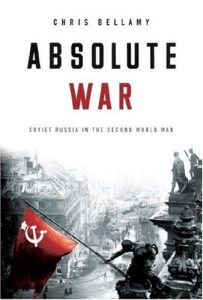
Moreover, even the release of Osborn’s massively-documented academic study in 2000 seems to have been almost completely ignored by World War II historians. Consider, for example, Absolute War published in 2007 by acclaimed military historian Chris Bellamy, an 800 page work whose glowing cover-blurbs characterize it as the “authoritative” account of the role of Soviet Russia in the Second World War. The detailed 25 page index contains no listing for “Baku” and the only glancing reference to the indisputable Allied preparations to attack the USSR in early 1940 is a single obscure sentence appearing 15 months and 150 pages later in the aftermath of Barbarossa: “But on 23 June the NKGB reported that the Chief of the British Air Staff, Sir Charles Portal, had suggested cabling the commands in India and the Middle East ordering them to stop planning to bomb the Baku oilfields, which, it had been feared, might be used to supply the Germans.” Osborn’s revelations seem to have vanished without a trace until they were finally noticed and publicized 15 years later in The National Interest.
While it is quite easy to understand why historians avoided the subject for the first couple of decades following the end of the Second World War, once a generation or two had passed, one might reasonably expect to see some reassertion of scholarly objectivity. Operation Pike was of the greatest possible importance to the course of the war, so how could it have been almost totally ignored by virtually every writer on the subject? Allied preparations in early 1940 to unleash the largest strategic bombing offensive in world history against the Soviet Union hardly seems the sort of boring, obscure detail that would be quickly forgotten.
Even if the first generation of war chroniclers carefully excluded it from their narratives to avoid ideological embarrassment, they must surely have been aware of the facts given German publication of the documents. And although their younger successors had seen no mention of it in the books they studied, one would expect that their mentors had occasionally whispered to them about some of the “hidden wartime secrets” left out of the standard narrative. Moreover, Osborn notes that discussion of the facts did very occasionally appear in professional academic journals, and one might assume that a single such instance would have spread like wildfire within the entire academic community. Yet even after Osborn’s massively documented volume appeared in a respectable academic series, the silence remained absolutely deafening. The case of Operation Pike demonstrates that we must exercise extreme caution in accepting the accuracy and completeness of what we have been told.
Such conclusions have obvious consequences. My website tends to attract a large number of commenters, of widely varying quality. One of them, an immigrant from Soviet Armenia calling himself “Avery” seems quite knowledgeable and level-headed, though intensely hostile to Turks and Turkey. A couple of years ago, one of my articles on World War II provoked an intriguing comment from him:
During the Battle of Stalingrad, Turkey, which was officially neutral but was secretly cooperating with Nazi Germany, had assembled a huge invasion force at the border of USSR (Armenia SSR). If Germans had won at Stalingrad, Turks were going to invade, race to Baku and link up with the German forces there, coming down from Stalingrad to grab the oilfields.
When Paulus’s army was surrounded and annihilated, Turks quickly left the border for their barracks.
Stalin never forgot the Turk treachery and never forgave.
When Germany surrendered, Stalin assembled huge armies in Armenia SSR and Georgia SSR. The plan was to invade and throw the Turks out of East Turkey/West Armenia.
The detonation of two American atomic bombs convinced Stalin to stand down. Some believe US detonated the two bombs not to force Japan’s surrender, but as a message to Stalin.
When questioned, he admitted he was unaware of any reference in a Western source, but added:
It was common knowledge in Armenia SSR, where I am originally from.
WW2 war vets, old timers, discussed it all the time…..seeing more Red Army troops and military hardware assembling near the borders of Armenia SSR and Georgia SSR than they’d ever seen before. Then, they were all gone….
Under normal circumstances, weighing the universal silence of all Western historians against the informal claims of an anonymous commenter who was relying upon the stories he’d heard from old veterans would hardly be a difficult choice. But I wonder…
The official documents discussed by Osborn demonstrate that the British made considerable efforts to enlist Turkish forces in their planned attack upon the USSR, with the Turks going back and forth on the matter until Britain finally abandoned the project following the Fall of France. But if the Turks had strongly considered such a military adventure in 1940, it seems quite plausible that they would have been far more eager to do so 1942, given the huge losses the Soviets had already suffered at German hands, and with a very formidable German army approaching the Caucasus.
Soon after the war, Turkey became one of America’s most crucial Cold War allies against the Soviets, given a central role in the establishment of the Truman Doctrine and the creation of NATO. Any hint that the same Turkish government had come very close to joining Hitler’s Axis and attacking Russia as a Nazi ally just a few years earlier would have been extremely damaging to US interests. Such facts would have been scrupulously excluded from all our histories of the war.
Until a couple of weeks ago, I still probably would have leaned towards favoring the united front of all Western historians against the casual remarks of a single anonymous commenter on my website. But after reading Osborn’s book, I now think the anonymous commenter is more likely correct. This is a rather sad personal verdict upon the current credibility of our historical profession.
These important considerations become particularly relevant when we attempt to understand the circumstances surrounding Operation Barbarossa, Germany’s 1941 attack upon the Soviet Union, which constituted the central turning point of the war. Both at the time and during the half-century which followed, Western historians uniformly claimed that the surprise assault had caught an overly-trusting Stalin completely unaware, with Hitler’s motive being his dream of creating the huge German land-empire that he had hinted at in the pages of Mein Kampf, published sixteen years earlier.
But in 1990 a former Soviet military intelligence officer who had defected to the West and was living in Britain dropped a major bombshell. Writing under the pen-name Viktor Suvorov, he had already published a number of highly-regarded books on the armed forces of the USSR, but in Icebreaker he now claimed that his extensive past research in the Soviet archives had revealed that by 1941 Stalin had amassed enormous offensive military forces and positioned them all along the border, preparing to attack and easily overwhelm the greatly outnumbered and outgunned forces of the Wehrmacht, quickly conquering all of Europe.
As I summarized the Suvorov Hypothesis in an article last year:
And so, just as in our traditional narrative, we see that in the weeks and months leading up to Barbarossa, the most powerful offensive military force in the history of the world was quietly assembled in secret along the German-Russian border, preparing for the order that would unleash their surprise attack. The enemy’s unprepared airforce was to be destroyed on the ground in the first days of the battle, and enormous tank columns would begin deep penetration thrusts, surrounding and trapping the opposing forces, achieving a classic blitzkrieg victory, and ensuring the rapid occupation of vast territories. But the forces preparing this unprecedented war of conquest were Stalin’s, and his military juggernaut would surely have seized all of Europe, probably soon followed by the remainder of the Eurasian landmass.
Then at almost the last moment, Hitler suddenly realized the strategic trap into which he had fallen, and ordered his heavily outnumbered and outgunned troops into a desperate surprise attack of their own on the assembling Soviets, fortuitously catching them at the very point at which their own final preparations for sudden attack had left them most vulnerable, and thereby snatching a major initial victory from the jaws of certain defeat. Huge stockpiles of Soviet ammunition and weaponry had been positioned close to the border to supply the army of invasion into Germany, and these quickly fell into German hands, providing an important addition to their own woefully inadequate resources.
Although almost totally ignored in the English-language world, Suvorov’s seminal book soon became an unprecedented bestseller in Russia, Germany, and many other parts of the world, and together with several follow-up volumes, his five million copies in print established him as the most widely-read military historian in the history of the world. Meanwhile, the English-language media and academic communities scrupulously maintained their complete blackout of the ongoing worldwide debate, with no publishing house even willing to produce an English edition of Suvorov’s books until an editor at the prestigious Naval Academy Press finally broke the embargo nearly two decades later. Such near-total censorship of the massive planned Soviet attack in 1941 seems quite similar to the near-total censorship of the undeniable reality of the massive planned Allied attack on the Soviets in the preceding year.
Although the Suvorov Hypothesis has inspired decades of fierce academic debate and been the subject of international conferences, it has been scrupulously ignored by our Anglophone authors, who have made no serious attempt to defend their traditional narrative and refute the vast accumulation of persuasive evidence upon which it is based. This leads me to believe that Suvorov’s analysis is probably correct.
A decade ago, a solitary writer first drew my attention to Suvorov’s ground-breaking research, and as an emigrant Russian Slav living in the West, he was hardly favorable to the German dictator. But he closed his review with a remarkable statement:
Therefore, if any of us is free to write, publish, and read this today, it follows that in some not inconsequential part our gratitude for this must go to Hitler. And if someone wants to arrest me for saying what I have just said, I make no secret of where I live.
Ron Unz • June 4, 2018 • 4,200 Words
For almost thirty years, our English-language media has almost entirely suppressed any serious discussion of the Suvorov Hypothesis, and this is hardly the only important aspect of Soviet history that has remained hidden from public scrutiny. Indeed, on some crucial matters, the falsehoods and distortions have greatly increased rather than diminished over the decades. No example is more obvious than in the ongoing attempts to conceal the enormous role played by Jews in the Bolshevik Revolution and worldwide Communism generally. As I wrote last year:
In the early years of the Bolshevik Revolution, almost no one questioned the overwhelming role of Jews in that event, nor their similar preponderance in the ultimately unsuccessful Bolshevik takeovers in Hungary and parts of Germany. For example, former British Minister Winston Churchill in 1920 denounced the “terrorist Jews” who had seized control of Russia and other parts of Europe, noting that “the majority of the leading figures are Jews” and stating that “In the Soviet institutions the predominance of Jews is even more astonishing,” while lamenting the horrors these Jews had inflicted upon the suffering Germans and Hungarians.
Similarly, journalist Robert Wilton, former Russia correspondent of the Times of London, provided a very detailed summary of the enormous Jewish role in his 1918 book Russia’s Agony and 1920 book The Last Days of the Romanovs, although one of the most explicit chapters of the latter was apparently excluded from the English language edition. Not long afterward, the facts regarding the enormous financial support provided to the Bolsheviks by international Jewish bankers such as Schiff and Aschberg were widely reported in the mainstream media.
Jews and Communism were just as strongly tied together in America, and for years the largest circulation Communist newspaper in our country was published in Yiddish. When they were finally released, the Venona Decrypts demonstrated that even as late as the 1930s and 1940s, a remarkable fraction of America’s Communist spies came from that ethnic background.
A personal anecdote tends to confirm these dry historical records. During the early 2000s I once had lunch with an elderly and very eminent computer scientist, with whom I’d become a little friendly. While talking about this and that, he happened to mention that both his parents had been zealous Communists, and given his obvious Irish name, I expressed my surprise, saying that I’d thought almost all the Communists of that era were Jewish. He said that was indeed the case, but although his mother had such an ethnic background, his father did not, which made him a very rare exception in their political circles. As a consequence, the Party had always sought to place him in as prominent a public role as possible just to prove that not all Communists were Jews, and although he obeyed Party discipline, he was always irritated at being used as such a “token.”
However, once Communism sharply fell out of favor in 1950s America, nearly all of the leading “Red Baiters” such as Sen. Joseph McCarthy went to enormous lengths to obscure the ethnic dimension of the movement they were combatting. Indeed, many years later Richard Nixon casually spoke in private of the difficulty he and other anti-Communist investigators had faced in trying to focus on Gentile targets since nearly all of the suspected Soviet spies were Jewish, and when this tape became public, his alleged anti-Semitism provoked a media firestorm even though his remarks were obviously implying the exact opposite.
This last point is an important one, since once the historical record has been sufficiently whitewashed or rewritten, any lingering strands of the original reality that survive are often perceived as bizarre delusions or denounced as “conspiracy theories.” Indeed, even today the ever-amusing pages of Wikipedia provides an entire 3,500 word article attacking the notion of “Jewish Bolshevism” as an “antisemitic canard.”
In a subsequent article, I summarized several of the numerous sources describing this obvious reality:
Meanwhile, all historians know perfectly well that the Bolshevik leaders were overwhelmingly Jewish, with three of the five revolutionaries Lenin named as his plausible successors coming from that background. Although only around 4% of Russia’s population was Jewish, a few years ago Vladimir Putin stated that Jews constituted perhaps 80-85% of the early Soviet government, an estimate fully consistent with the contemporaneous claims of Winston Churchill, Times of London correspondent Robert Wilton, and the officers of American Military Intelligence. Recent books by Alexander Solzhenitsyn, Yuri Slezkine, and others have all painted a very similar picture. And prior to World War II, Jews remained enormously over-represented in the Communist leadership, especially dominating the Gulag administration and the top ranks of the dreaded NKVD.
Perhaps the most utterly explosive and totally suppressed aspect of the close relationship between Jews and Communism regards the claims that Jacob Schiff and other top international Jewish bankers were among the leading financial backers of the Bolshevik Revolution. I spent nearly all of my life regarding these vague rumors as such obvious absurdities that they merely demonstrated the lunatic anti-Semitism infesting the nether-regions of Far Right anti-Communist movements, thereby fully confirming the theme of Richard Hofstadter’s famous book The Paranoid Style in American Politics. Indeed, the Schiff accusations were so totally ridiculous that they were never even once mentioned in the hundred-odd books on the history of the Bolshevik Revolution and Soviet Communism that I read during the 1970s and 1980s.
Therefore, it came as an enormous shock when I discovered that the claims were not only probably correct, but had been almost universally accepted as true throughout the first half of the twentieth century.
For example, The “Jewish Threat” by Joseph W. Bendersky summarizes his years of archival research and he documents that Schiff’s financial support for the Bolsheviks was widely reported in the American Military Intelligence files of the period, with British Intelligence taking the same position. Kenneth D. Ackerman’s 2016 study Trotsky in New York, 1917 describes much the same material. In 1925, the British Guardian published this information and it was soon widely discussed and accepted throughout the 1920s and 1930s by numerous major international media outlets. Naomi W. Cohen’s 1991 hagiographic volume Jacob Schiff devotes several pages to summarizing the various stories of Schiff’s strong Bolshevik ties that had earlier been published in leading American periodicals.
Writing nearly a century after the events under discussion, these three Jewish authors casually dismiss all the numerous accounts they provide by highly-credible observers—American and British Intelligence officers and prominent international journalists—as merely demonstrating the delusional nature of the extreme anti-Semitism that had infected so much of the world in those bygone days. Yet most serious historians would surely place far greater weight upon contemporaneous evidence than upon the personal opinions of those writers who happen to gather together that material evidence generations afterward.
Henry Wickham Steed was one of the foremost journalists of his era, and he had served as editor of the Times of London, the world’s most authoritative newspaper. A couple of years after his retirement, he published his lengthy personal memoirs, now conveniently online, which contain the following very intriguing passages:
Potent international financial interests were at work in favour of the immediate recognition of the Bolshevists. Those influences had been largely responsible for the Anglo-American proposal in January to call Bolshevist representatives to Paris at the beginning of the Peace Conference — a proposal which had failed after having been transformed into a suggestion for a Conference with the Bolshevists at Prinkipo. The well-known American Jewish banker, Mr. Jacob Schiff, was known to be anxious to secure recognition for the Bolshevists…
… the prime movers were Jacob Schiff, Warburg, and other international financiers, who wished above all to bolster up the Jewish Bolshevists in order to secure a field for German and Jewish exploitation of Russia.
Schiff’s own family later confirmed this widely-accepted history. The February 3, 1949 Knickerbocker column of the New York Journal-American, then one of the city’s leading newspapers, reported the account: “Today it is estimated by Jacob’s grandson, John Schiff, that the old man sank about 20,000,000 dollars for the final triumph of Bolshevism in Russia.” The present-day value of the figure quoted is probably some $2 billion, a very substantial sum.
Despite this enormous volume of convincing evidence, for the next half-century or more, Schiff’s name almost entirely vanished from all mainstream texts on Soviet Communism. As I wrote last year:
In 1999, Harvard University published the English edition of The Black Book of Communism, whose six co-authors devoted 850 pages to documenting the horrors inflicted upon the world by that defunct system, which had produced a total death toll they reckoned at 100 million. I have never read that book and I have often heard that the alleged body-count has been widely disputed. But for me the most remarkable detail is that when I examine the 35 page index, I see a vast profusion of entries for totally obscure individuals whose names are surely unknown to all but the most erudite specialist. But there is no entry for Jacob Schiff, the world-famous Jewish banker who apparently financed the creation of the whole system in the first place. Nor one for Olaf Aschberg, the powerful Jewish banker in Sweden, who played such an important role in providing the Bolsheviks a financial life-line during the early years of their threatened regime, and even founded the first Soviet international bank.
Ron Unz • July 23, 2018 • 6,900 Words
Perhaps the extreme caution and timorous silence exhibited by nearly all Western historians on these sensitive elements of World War II and the Bolshevik Revolution should not entirely surprise us given the professional and personal risks they might face if they strayed from orthodoxy.
Consider the very telling example of David Irving. During the first half of his professional career, his string of widely-translated best-sellers and his millions of books in print probably established him as the most internationally successful British historian of the last one hundred years, with his remarkable archival research frequently revolutionizing our understanding of the European conflict and the political forces behind it. But as he repeatedly demonstrated his lack of regard for official orthodoxy, he attracted many powerful enemies, who eventually ruined his reputation, drove him into personal bankruptcy, and even arranged his imprisonment. Over the last quarter-century, he has increasingly become an un-person, with the few occasional mentions of his name in the media invoked in the same talismanic manner as references to Lucifer or Beelzebub.
If a historian of such towering stature and success could be brought so low, what ordinary academic scholar would dare risk a similar fate? Voltaire famously observed that shooting an admiral every now and then is an excellent way to encourage the others.
Ron Unz • June 4, 2018 • 1,700 Words
The destruction of Irving’s stellar career came at the hands of Jewish activists, who were outraged at his balanced treatment of Hitler and his ongoing commitment to investigating many of the widely-accepted wartime myths, which he hoped to replace with what he called “real history.” In the introduction to his new edition of Hitler’s War, he recounts how a journalist for Time magazine was having dinner with him in New York in 1988 and remarked “Before coming over I read the clippings files on you. Until Hitler’s War you couldn’t put a foot wrong, you were the darling of the media; after it, they heaped slime on you.”
As Irving was certainly aware, the unreasonably harsh vilification of enemy leaders during wartime is hardly an uncommon occurrence. Although it has largely been forgotten today, during much of the First World War and for years afterward, Germany’s reigning monarch, Kaiser Wilhelm, was widely portrayed in the Allied countries as a bloodthirsty monster, one of the most evil men who had ever lived. This vilification came despite Wilhelm having been the beloved eldest grandchild of Britain’s own Queen Victoria, who according to some accounts died in his arms.
Moreover, although Allied propaganda routinely portrayed Wilhelm as a relentless warmonger, he had actually avoided involving Germany in a single major military conflict during the first twenty-five years of his reign, while most of the other leading world powers had fought one or more wars during that same period. Indeed, I recently discovered that only a year before the Guns of August began firing, The New York Times had published a lengthy profile marking the first quarter-century of his reign and lauded him as one of the world’s foremost peacemakers:
Now … he is acclaimed everywhere as the greatest factor for peace that our time can show. It was he, we hear, who again and again threw the weight of his dominating personality, backed by the greatest military organisation in the world – an organisation built up by himself – into the balance for peace wherever war clouds gathered over Europe. ‘(‘William II, King of Prussia and German Emperor, Kaiser 25 years a ruler, hailed as chief peacemaker,’ New York Times, 8 June, 1913)
That brief excerpt from the Times encomium points to another matter than I have never seen mentioned. I devoted much of the 2000s to digitizing and making available the complete archives of hundreds of America’s leading publications of the last 150 years, and when I occasionally glanced at the contents, I gradually noticed something odd. Although the English-language world today invariably refers to Germany’s wartime ruler as “Kaiser Wilhelm,” that was only rarely the case prior to the outbreak of war, when he was generally known as “Emperor William.” The latter nomenclature is hardly surprising since we always speak of “Frederick the Great” rather than “Friedrich der Grosse.”
But it is obviously much easier to mobilize millions of citizens to die in muddy trenches to defeat a monstrously alien “Kaiser” than “Good Emperor William,” first cousin to the British and Russian monarchs. The NGram viewer in Google Books shows the timing of the change quite clearly, with the Anglophone practice shifting as Britain became increasingly hostile toward Germany, especially after the outbreak of war. But “Emperor William” was only permanently eclipsed by “Kaiser Wilhelm” after Germany once again became a likely enemy in the years immediately preceding World War II.
Actual publications of the period also reveal numerous discordant facts about the First World War, matters certainly known to academic specialists but which rarely receive much coverage in our standard textbooks, being relegated to a casual sentence or two if even that. For example, despite its considerable military successes, Germany launched a major peace effort in late 1916 to end the stalemated war by negotiations and thereby avert oceans of additional bloodshed. However, this proposal was fiercely rejected by the Allied powers and their advocates in the pages of the world’s leading periodicals since they remained firmly committed to an ultimate military victory.
War fever was certainly still very strong that same year in Britain, the leading Allied power. When prominent peace-advocates such as Bertrand Russell and Lord Loreborn urged a negotiated end to the fighting, and were strongly backed by the editor of the influential London Economist, they were harshly vilified and the latter was forced to resign his position. E.D. Morel, another committed peace advocate, was imprisoned for his activism under such harsh conditions that it permanently broke his health and led to his death at age 51 a few years after his release.
As an excellent antidote to our severely distorted understanding of both wartime sentiments and the domestic European politics that had produced the conflict, I would strongly recommend the text of Present Day Europe by Lothrop Stoddard, then one of America’s most influential public intellectuals. Written prior to America’s own entry into the conflict, the work provides the sort of remarkable scholarly detachment which would soon became almost impossible.
Its National States of Mind
Although the demonic portrayal of the German Kaiser was already being replaced by a more balanced treatment within a few years of the Armistice and had disappeared after a generation, no such similar process has occurred in the case of his World War II successor. Indeed, Adolf Hitler and the Nazis seem to loom far larger in our cultural and ideological landscape today than they even did in the immediate aftermath of the war, with their visibility growing even as they become more distant in time, a strange violation of the normal laws of perspective. I suspect that the casual dinner-table conversations on World War II issues that I used to enjoy with my Harvard College classmates during the early 1980s would be completely impossible today.
To some extent, the transformation of “the Good War” into a secular religion, with its designated monsters and martyrs may be analogous to what occurred during the final decay of the Soviet Union, when the obvious failure of its economic system forced the government to increasingly turn to endless celebrations of its victory in the Great Patriotic War as the primary source of its legitimacy. The real wages of ordinary American workers have been stagnant for fifty years and most adults have less than $500 in available savings, so this widespread impoverishment may be forcing our own leaders into adopting a similar strategy.
But I think that a far greater factor has been the astonishing growth of Jewish power in America, which was already quite substantial even four or five decades ago but has now become absolutely overwhelming, whether in foreign policy, finance, or the media, with our 2% minority exercising unprecedented control over most aspects of our society and political system. Only a fraction of American Jews hold traditional religious beliefs, so the twin worship of the State of Israel and the Holocaust has served to fill that void, with the individuals and events of World War II constituting many of the central elements of the mythos that serves to unify the Jewish community. And as an obvious consequence, no historical figure ranks higher in the demonology of this secular religion than the storied Fuhrer and his Nazi regime.
However, beliefs based upon religious dogma often sharply diverge from empirical reality. Pagan Druids may worship a particular sacred oak tree and claim that it contains the soul of their tutelary dryad; but if an arborist taps the tree, its sap may seem like that of any other.
Our current official doctrine portrays Adolf Hitler’s Nazi Germany as one of the cruelest and most relentlessly aggressive regimes in the history of the world, but at the time these salient facts apparently escaped the leaders of the nations with which it was at war. Operation Pike provides an enormous wealth of archival material regarding the secret internal discussions of the British and French governmental and military leadership, and all of it tends to suggest that they regarded their German adversary as a perfectly normal country, and perhaps occasionally regretted that they had somehow gotten themselves involved a major war over what amounted to a small Polish border dispute.
Although our standard histories would never admit this, the actual path toward war appears to have been quite different than most Americans believe. Extensive documentary evidence from knowledgeable Polish, American, and British officials demonstrates that pressure from Washington was the key factor behind the outbreak of the European conflict. Indeed, leading American journalists and public intellectuals of the day such as John T. Flynn and Harry Elmer Barnes had publicly declared that they feared Franklin Roosevelt was seeking to foment a major European war in hopes that it would rescue him from the apparent economic failure of his New Deal reforms and perhaps even provide him an excuse to run for an unprecedented third term. Since this is exactly what ultimately transpired, such accusations would hardly seem totally unreasonable.
And in an ironic contrast with FDR’s domestic failures, Hitler’s own economic successes had been enormous, a striking comparison since the two leaders had come to power within a few weeks of each other in early 1933. As iconoclastic leftist Alexander Cockburn once noted in a 2004 Counterpunch column:
When [Hitler] came to power in 1933 unemployment stood at 40 per cent. Economic recovery came without the stimulus of arms spending…There were vast public works such as the autobahns. He paid little attention to the deficit or to the protests of the bankers about his policies. Interest rates were kept low and though wages were pegged, family income increased by reason of full employment. By 1936 unemployment had sunk to one per cent. German military spending remained low until 1939.
Not just Bush but Howard Dean and the Democrats could learn a few lessons in economic policy from that early, Keynesian Hitler.
By resurrecting a prosperous Germany while nearly all other countries remained mired in the worldwide Great Depression, Hitler drew glowing accolades from individuals all across the ideological spectrum. After an extended 1936 visit, David Lloyd George, Britain’s former wartime prime minister, fulsomely praised the chancellor as “the George Washington of Germany,” a national hero of the greatest stature. Over the years, I’ve seen plausible claims here and there that during the 1930s Hitler was widely acknowledged as the world’s most popular and successful national leader, and the fact that he was selected as Time Magazine’s Man of the Year for 1938 tends to support this belief.
Only International Jewry had remained intensely hostile to Hitler, outraged over his successful efforts to dislodge Germany’s 1% Jewish population from the stranglehold they had gained over German media and finance, and instead run the country in the best interests of the 99% German majority. A striking recent parallel has been the enormous hostility that Vladimir Putin incurred after he ousted the handful of Jewish Oligarchs who had seized control of Russian society and impoverished the bulk of the population. Putin has attempted to mitigate this difficulty by allying himself with certain Jewish elements, and Hitler seems to have done the same by endorsing the Nazi-Zionist economic partnership, which lay the basis for the creation of the State of Israel and thereby brought on board the small, but growing Jewish Zionist faction.
In the wake of the 9/11 Attacks, the Jewish Neocons stampeded America towards the disastrous Iraq War and the resulting destruction of the Middle East, with the talking heads on our television sets endlessly claiming that “Saddam Hussein is another Hitler.” Since then, we have regularly heard the same tag-line repeated in various modified versions, being told that “Muammar Gaddafi is another Hitler” or “Mahmoud Ahmadinejad is another Hitler” or “Vladimir Putin is another Hitler” or even “Hugo Chavez is another Hitler.” For the last couple of years, our American media has been relentlessly filled with the claim that “Donald Trump is another Hitler.”
During the early 2000s, I obviously recognized that Iraq’s ruler was a harsh tyrant, but snickered at the absurd media propaganda, knowing perfectly well that Saddam Hussein was no Adolf Hitler. But with the steady growth of the Internet and the availability of the millions of pages of periodicals provided by my digitization project, I’ve been quite surprised to gradually also discover that Adolf Hitler was no Adolf Hitler.
It might not be entirely correct to claim that the story of World War II was that Franklin Roosevelt sought to escape his domestic difficulties by orchestrating a major European war against the prosperous, peace-loving Nazi Germany of Adolf Hitler. But I do think that picture is probably somewhat closer to the actual historical reality than the inverted image more commonly found in our textbooks.
Ron Unz • June 11, 2018 • 5,400 Words
Related Reading:
May 12, 2019
Posted by aletho |
Deception, Full Spectrum Dominance, Timeless or most popular |
Leave a comment
The National Lawyers Guild International Committee unequivocally condemns the threats posed by the government of the United States and Washington D.C. Police Department to the Embassy of the Bolivarian Republic of Venezuela. We also condemn the unilateral financial sanctions imposed by the U.S. government intended to force “regime change” in Venezuela by limiting people’s access to basic goods necessary for survival.
As a legal organization committed to the promotion and defense of international law and human rights, the NLG demands that federal and local law enforcement abide by all applicable legal standards governing diplomatic protections, sovereignty and freedom of assembly. This includes the provisions of the Vienna Convention on Diplomatic Relations which requires the U.S. to recognize the inviolability of embassies and to “take all appropriate steps to protect the premises of the mission against any intrusion.” The Vienna Convention was ratified by the United States in 1972 and thus is a part of federal law.
The legitimacy of the Maduro presidency should be left to the Venezuelan people to decide via their own electoral processes, and it is entirely unjustified for members of the United States government to openly call for or support a military coup, including Senator Marco Rubio, National Security Advisor John Bolton, Secretary of State Mike Pompeo and Special Ambassador Elliott Abrams. Self-proclaimed president Juan Guaidó has no legitimate claim under the Bolivarian Constitution (Sections 233 and 234).
Since 2006, the NLG has sent multiple delegations to observe local and national Venezuelan elections. We have observed the process noted by the Carter Center as one of the best electoral processes in the world, with its paper receipts, open source software and the public audit to compare paper and digital votes at close of polls. Even the opposition has admitted the Venezuelan election system is “fraud-proof.”
Both the proposed takeover of the Venezuelan Embassy by the Guaidó agents and the criminal unilateral economic sanctions imposed on Venezuela by the U.S. to bring about regime change by crippling the Venezuelan economy and thwarting the basic needs of the Venezuelan people constitute a clear violation of international law.
The National Lawyers Guild condemns the on-going attempted coup d’etat organized by the United States and evocation of the ignominious Monroe Doctrine in clear violation of the basic sovereignty provisions of the UN and OAS Charters.
May 12, 2019
Posted by aletho |
Solidarity and Activism, War Crimes | United States, Venezuela |
Leave a comment
The United Arab Emirates (UAE) has confirmed, after initial denial, that a number of commercial ships have been targeted by “sabotage” attack near its territorial waters.
The Foreign Ministry of the United Arab Emirates issued a statement, saying that four commercial vessels have been targeted by “sabotage operations” near its territorial waters.
The statement added that there were no victims, but fell short of giving any details on possible damage to commercial vessels, their nationally and possible casualties.
The ministry statement was tweeted by the official news agency WAM.
According to the statement, the incident occurred near the UAE emirate of Fujairah, one of the world’s largest bunkering hubs that lies just outside the Strait of Hormuz, which is a vital oil and natural gas corridor for the global energy market.
“Subjecting commercial vessels to sabotage operations and threatening the lives of their crew is considered a dangerous development,” the statement added.
The statement claimed that despite the attack, routine port operations at Fujairah port were going on without interruption.
Earlier in the day, the Lebanon-based Al Mayadeen television channel reported that as many as seven tankers had been hit by a massive fire at the al-Fujairah oil tanker terminal.
The report stated that several powerful explosions were also heard at the port.
Later, the media office of the government of Fujairah denied the report of the explosions altogether, saying that transit and other activities at the port were underway as usual. Additionally, Brigadier Ali Obaid al-Taniji, the director of the department of civil defense in Fujairah, told the Emarat al-Youm daily that there had been no fire or explosion at the port.
Despite the UAE government’s denial, witnesses have emphasized that the blasts have taken place and some media sources have even went further, identifying a number of oil tankers hit by the explosions by their hull numbers as follows:
AMJAD tanker
No.: 9779800
Al Marzouqah tanker
No.: 9165762
Miraj oil tanker
No.: 9394741
A.MICHEL oil tanker
No.: 9177674
FNSA10 oil tanker
No.: 9432074
Earlier this week, a number of powerful explosions rocked Saudi Arabia’s port city of Yanbu’, an important petroleum shipping terminal for the kingdom. Reports, however, fell short of giving any reason for the blasts or possible casualties.
No further details have been made available up to this moment and no group or individual has assumed responsibility for the blasts.
Yanbu’ is an important petroleum shipping terminal for Saudi Arabia and home to three oil refineries, a plastics facility and several other petrochemical plants.
May 12, 2019
Posted by aletho |
Deception, Economics | Middle East |
Leave a comment
Those dastardly Russian hackers are alive and well and meddling in the upcoming European Parliament elections, warned the New York Times. Just don’t expect to see any proof, because the paper offers none.
Fresh from interfering in seemingly everything wrong in America, unidentified Russian hackers have shifted their attention to Europe, deploying information warfare tactics to give a boost to populist and right-wing parties ahead of next month’s European Parliament elections. At least according to a New York Times article, given the front-page treatment on Sunday.
The story is heavy with accusation. The Russians, it states, are busy “spreading disinformation, encouraging discord and amplifying distrust in the centrist parties that have governed for decades.” Among their tools are news websites that “bear the same electronic signatures as pro-Kremlin websites,” Twitter accounts, Facebook profiles, and WhatsApp groups.
Although the Times article claimed that “intelligence officials,” and “security experts” back up its theories, it quotes only one: Former FBI analyst Daniel Jones, who now runs a nonprofit entitled Advance Democracy.
“They’re working to destroy everything that was built post-World War II,” Jones said, an explanation rivaling George W. Bush’s “they hate our freedom” for its nonsensical reductionism.
Is it possible that Jones might have an agenda? Most definitely. The former intelligence analyst runs a second nonprofit, The Democracy Integrity Project, from his home in Virginia. TDIP spent much of the last two years emailing a daily “collusion”newsletter to journalists, including those at the New York Times.
Jones’ ties to the Democratic party machine are also extensive. A former staffer for California Senator Dianne Feinstein (D), Jones reportedly worked with opposition research firm Fusion GPS to continue to search for evidence of collusion between the Trump campaign and Russia even after Trump’s election. The uncorroborated claims made in the so-called ‘Steele Dossier’ often featured prominently in TDIP’s daily memos to reporters, and leaked text messages to Democrat Senate Intelligence Committee member Mark Warner revealed Jones to be an associate of Christopher Steele, the former British spy who compiled the dossier.
With the Steele Dossier deemed unfit to print by every single mainstream media outlet (except, of course, Buzzfeed ), and with the “collusion” narrative completely dismantled by Special Counsel Robert Mueller’s final report, who else can the New York Times bring in to back up their Russian meddling expose?
Enter Ben Nimmo, who claims at the end of the article that Europe is a “test bed” for Russian interference efforts. Again, Nimmo offers no proof, but a glimpse at his resume gives an idea of what his motivations might be. A senior fellow at NATO-sponsored think tank the Atlantic Council, Nimmo has emerged in recent years as a reliable Russia-basher, always ready to give a juicy soundbite to the media. He’s also identified thousands of ‘Russian-linked’ Twitter accounts, based on some thoroughly dodgy methodology.
With two ‘experts’ down, what has the Times got left? Not much. The article notes that “a definitive attribution would require the kind of tools that the American government used to reveal the 2016 interference.” Of course, none is provided.
Even if the Russians aren’t involved, the article claims that populist and right-wing groups in Europe are “adopting many of the Kremlin’s tactics.” In practice, this means that the nasties on the right side of the political spectrum make funny memes and videos to support their candidates of choice.
Running through the article is a palpable fear that the centrism that has dominated European politics for more than half a century is now under threat. “False and divisive stories about the European Union, NATO, immigrants and more,” amplify the threat, driving voters into the embrace of populist parties, “many of them sympathetic to Russia.”
However, never once does it occur to the authors that perhaps Europeans are simply tiring of the consensus. Perhaps they disagree with mass immigration, especially at a time of slow economic recovery from the Great Recession. Perhaps they disagree with the often unaccountable bureaucracy of Brussels, and their membership in a military alliance that they have personally never felt a connection with. After all, populism is called populism because its positions are popular ones.
But nope, it’s all a sinister Russian plot to undermine democracy. Let’s go with that one.
May 12, 2019
Posted by aletho |
Mainstream Media, Warmongering, Russophobia | European Union, New York Times |
Leave a comment
Kremlin spokesman Dmitry Peskov remarked last Thursday in Moscow that no contacts between Russian President Vladimir Putin and US President Donald Trump are expected at the G20 summit in Japan on June 28-29. “An encounter is not planned so far and there is no talk about a meeting,” Peskov said.
This remark was made in the run-up to US Secretary of State Mike Pompeo’s forthcoming visit to Russia on April 12-14. There has been much speculation in the US media that a summit meeting between Trump and Putin was likely among Pompeo’s talking points with the Russian leadership.
The ‘pull asides’ that Trump has been resorting to on the sidelines of international events to have a quick word with Putin have fallen into a pattern. Firstly, things remained strictly between the two statesmen at a personal level and secondly, Trump had to take care no feathers were ruffled back home while the Robert Mueller inquiry on ‘Russia collusion’ was going on. The arrangement left the Russian side unhappy, since the unstructured informal conversations eventually led to nothing. Russian-American relations continued to deteriorate.
Unsurprisingly, it has taken over one year for Pompeo to schedule his first visit to Moscow after he took over as state secretary in April 2018. (No US secretary of defence has yet visited Russia during the Trump presidency, either.) The proposal on Pompeo’s visit was hurriedly mooted by Washington just a few days ago, earlier this month. Therefore, if Pompeo’s visit is being treated on a low key, it could be that Moscow doesn’t expect anything much to come out of it.
The point is, although the Mueller inquiry could not prove any ‘collusion’ between Trump and the Kremlin, Russia still remains a toxic subject domestically in the US. For Trump’s detractors, he and Russia are often synonymous. The narrative that Trump and people around him were engaged in improper activities with Russia is not about to wither away and there are further moves likely in the Washington Beltway to find out about any other possible links between the Trump organisation and even his family and Russian entities or oligarchs.
Then, there is the vexed issue of the US sanctions against Russia, which inherently curb the scope for any meaningful expansion of ties. The post-2016 sanctions do not stem from executive orders but emanate out of laws passed by the US Congress, which takes away from Trump’s hands the powers to remove them — and, equally, they are not even tied to specific Russian behaviours. The Russians understand well enough that the sanctions won’t be lifted for a long time.
Within such constraints, what is it that Pompeo’s visit hopes to achieve? At a state department briefing on May 10, an unnamed senior US official disclosed that arms control will top Pompeo’s agenda during the Russia visit. He said Trump seeks new agreements with Russia “that reflect modern reality. These agreements must include a broader range of countries and account for a broader range of weapon systems than our current bilateral treaties with Russia.” Besides, he said, “There will be a full range of global challenges to discuss, including Ukraine, Venezuela, Iran, Syria, and North Korea.”
However, there are enough signs that the main thing to watch could be whether a US-Russia deal on Venezuela becomes possible. Three weeks back, Fiona Hill, senior director for European and Russian affairs on the National Security Council in the White House, had visited Moscow for consultations. Amongst others, she met Putin’s foreign policy advisor Yuri Ushakov. According to media reports, Hill prioritised Venezuela as the most important topic in the US-Russia relations at the moment.
Arguably, more than oil or the Monroe Doctrine, what motivates Trump could be the impact of a regime change in Venezuela on the Hispanic voters in the 2020 presidential race in Florida. This impression would only have been reinforced last week when Pompeo met Lavrov on the sidelines of the Arctic Council meeting in Helsinki when, again, Venezuela figured prominently in their discussion.
With the recent US-backed coup attempt in Venezuela on April 30 having failed spectacularly, the probability of an outright US intervention is low — almost non-existent. Trump would be reaching out for Russian help for a constitutional transition in Caracas that he could project as a ‘win’. Both Washington and Moscow are highly experienced in adopting a transactional approach to their relationship.
For Russia, on the other hand, its support for the Maduro government in Caracas is driven as much by financial and energy interests as by Moscow’s vision of a multipolar world order that is based on international law. As the Moscow-based analyst Fred Weir wrote recently, “while it may look and sound like a Cold War standoff, for Russia it is really about the simpler issue of establishing rules for competing big powers in a post-Cold War world. In Venezuela, and between the US and Russia generally, there is no sharp ideological divide over world-shaping doctrines like communism versus capitalism.”
Simply put, the Russian-American discord over Venezuela boils down to this: Washington wants Russia to stop ‘meddling’ in the Western Hemisphere, while Moscow would expect that the US also should stop fomenting anti-Moscow revolutions in Russia’s backyard. Otherwise, Russian experts acknowledge, it matters little to Moscow who rules in Caracas.
The influential strategic thinker in Moscow Fyodor Lukyanov told Weir, “The relationship that emerged between Russia and Venezuela was an accident. It was mainly the initiative of Hugo Chávez, who was seeking counterbalances to his country’s dependence on the US. Of course this was enthusiastically supported in Moscow. But it should be pointed out that at that time, the early 2000s, Chávez was rich and could pay for Russian arms and advice. Since Chávez died, and his successor has not proven so adept or popular, many in Moscow have been worried about our heavy investments in a potentially unstable regime.”
It is entirely conceivable that this complicated Russian-American tango of ‘meddling’ in the other side’s region could be in the first instance what prompted Washington to schedule Pompeo’s hurried visit to Russia to meet Lavrov and Putin in Sochi on April 14. Evidently, the Trump administration’s resuscitation of the Monroe Doctrine provides a diplomatic opening to Moscow, which of course continues to cherish the territories of the former Soviet republics as its own ‘sphere of influence’, too.
To quote Lukyanov again, “This citing of the Monroe Doctrine is something quite intriguing, and it would be warmly welcomed in Moscow if we thought the Americans took it seriously.” Indeed, some reports on Fiona Hill’s talks in Moscow last month hinted that she made a proposal to what roughly involved Russia letting up on Venezuela in exchange for some US concessions on Ukraine.
Be that as it may, significantly, Russian and Venezuelan foreign ministers met in Moscow on the eve of Lavrov’s meeting with Pompeo in Helsinki last week. What needs to be factored in is that although the coup attempt of April 30 failed, the situation in Venezuela is fluid. According to the Russian media, President Maduro has expelled dozens of army officers for their involvement in the coup, including high ranking officers.
To be sure, Moscow would know that a political solution is needed. The good part is that regime change is off the table as of now, which gives the respite to negotiate. After the meeting with Pompeo in Helsinki, Lavrov told the media that he’d rule out any foreign military intervention in Venezuela.
But the problem is that trust is lacking between Washington and Moscow. Russia cannot be sure that the American side will keep its side of the bargain — that is, assuming there is a will to negotiate at all. Again, there is the issue of US sanctions, which has crippled the Venezuelan economy over recent years. This is important because Russia’s exposure to Venezuela is huge. At the very least, Russian investments (loans) to Venezuela since 2005 amount to $17 billion.
May 12, 2019
Posted by aletho |
Russophobia | Russia, Ukraine, United States, Venezuela |
Leave a comment





 Aletho News