DAMASCUS – The Syrian Democratic Forces (SDF) have detained a correspondent of Syria’s Ikhbariya state TV channel, Muhammad as-Saghir, and moved him to an unknown location, the TV channel said.
“Muhammad as-Saghir was detained by the SDF at a checkpoint while returning from Al Hasakah to Qamishli and was moved to an unknown location”, his colleague told the TV channel on Tuesday.
According to the journalist, the detained correspondent filmed wheat field fires in Al Hasakah province and had evidence that the SDF was “in no hurry to put out the fires.”
He noted that the channel currently had no contact with the correspondent, thereby being unable to establish his exact location.
The journalist also argued that the Kurdish-led SDF were seeking to destroy Syrian authorities’ wheat stocks, with their actions being “one of the means of the US economic war” against Damascus.
The US-backed Syrian Democratic Forces retain control over the northeast of Syria. The cities of Al Hasakah and Qamishli are, however, under the Syrian government’s control.
The armed conflict in Syria has been ongoing since 2011. A victory over the Daesh terrorist group in Iraq and Syria was announced in late 2017. Government forces, led by President Bashar Assad, have regained control over most of the country’s territories. Operations against militants continue in some parts of Syria, but their focus has largely shifted toward political settlement and creating favourable conditions for the repatriation of refugees Moscow supports Damascus in this process by providing humanitarian aid and acting as a ceasefire guarantor.
Over half of the 2020 presidential candidates recorded videos of themselves for this year’s American Jewish Committee Global Forum.
The videos are posted on the AJC website and below.
All the candidates except two spoke in support of Israel, many claiming it is an important American ally. All ignored Israel’s pattern of spying on the US and stealing American technology, attacking a US Navy ship, the cost of Israel to Americans, and the role of Israel partisans in pushing the US into disastrous wars.
The only candidates who did not mention Israel were Tulsi Gabbard (D – HI) and Corey Booker (D-NJ), whose videos focused on opposition to antisemitism. (In the past, Booker has been extremely outspoken in his support for Israel.)
Bernie Sanders (D-VT) went into the greatest detail on the issue, emphasizing his support for Israel while also discussing Palestinian suffering.
Sanders spoke of his Jewish ethnicity and pointed out that as a young man he had lived in Israel for a number of months. He emphasized that he “believes absolutely and unequivocally in Israel’s right to exist in peace and security” and said, “to oppose the reactionary policies of Prime Minister Netanyahu does not make anyone anti-Israel.”
At the same time, Sanders spoke of the “Palestinian people crushed underneath a military occupation now over a half century old, creating a daily reality of pain humiliation and resentment.” [Note: Israel’s expulsion of Palestinians began 72 years ago.] He said: “I do not know how peace can be achieved in that region when in the Gaza Strip poverty is rampant – 53 percent of the people are unemployed….”
Kamala Harris pledges support for Israel
California Senator Kamala Harris and many others emphasized their strong support for Israel. In Harris’s video she mentioned both her past record of working for Israel and her plans to continue this in the future:
“As a member of both the Senate Intelligence Committee and the Senate Homeland Security Committee I am deeply involved in ensuring the American-Israeli relationship remains strong.”
Harris promised: “I will do everything in my power to ensure broad and bipartisan support for Israel’s security and right to self-defense, that is why I strongly support America’s security assistance to Israel and I am committed to strengthening the American Israeli security and defense relationship.”
The U.S. currently gives Israel over $10 million per day. A bill before the Senate, favored by Harris, proposes to give Israel a 10-year package in which it will receive a minimum of $38 billion ($7,000 per minute) – approximately $20,000 per each Israeli family of four.
This is expected to pass easily despite the fact that most Americans feel the US already gives Israel too much money.
AJC advocates for Israel, opposes BDS
Founded over 100 years ago, the AJC says it has “more than 30 offices worldwide, plus partnerships with 34 international Jewish community organizations.” The organization, headquartered in New York City, has net assets of approximately $160 million.
According to its website: “Around the world—from the hallways of the UN in New York, to the corridors of the European Union in Brussels, and to the countries of Asia—AJC advocates for Israel at the highest levels. ”
One of the AJC’s priorities is to oppose the international movement to boycott Israel over its human rights abuses against Palestinians. The AJC website says: “We spearhead anti-BDS legislation at all levels of government and rally elected officials to reject the boycott movement.”
AJC states: “We convinced the governors of all 50 states to declare their opposition to BDS. We were also a driving force behind anti-BDS legislation in California and Illinois.
“As the BDS movement has surged on campus, we have brought dozens of university presidents to Israel and trained hundreds of students as advocates for Israel… we have marshalled our allies in the Christian world to oppose such efforts.”
According to AJC, more than 2,500 people from 70+ countries attend the Global Forum. This reportedly includes hundreds of students brought from more than 40 countries. The event is at the Washington Hilton in Washington D.C. from June 2-4. The schedule is here.
It appears that the only prominent candidates that did not provide videos were Beto O’Rourke and Sen. Amy Klobuchar. Jewish Insider reports: “Inquiries to the campaigns of Beto O’Rourke and Sen. Amy Klobuchar about why they didn’t participate went unanswered.”
In the videos below, a number of candidates say they support a “two-state solution,” but do not mention, or are unaware, that this refers to a division in which Israel would get at least 80 percent of the territory, and Palestinians would be left with 20 percent, at most.
The candidates’ messages to AJC
Below are the videos. Underneath each video is an excerpt containing some of the candidate’s statements about Israel from the video.
“… Israel is a strong ally and an important friend to the United States. Good friends can disagree and a candid expression of concerns does not diminish our friendship…”
“… If I’m ever in that exalted place [president] I intend to speak out every chance I get… to speak in favor of a strong democratic Israel and a two-state solution and I hope that people will recognize the contributions of your organization to make sure both of those things happen…”
“… I want to be very clear here at the outset about my position: I will stand shoulder to shoulder with Israel as our strongest ally in the Middle East….. I also reject boycotts, disinvestment, or sanctions on Israel. In 2016 I not only signed on to the American Jewish committees governors United against BDS campaign but also signed into law legislation that mandates Colorado’s retirement program divest from firms that boycott Israel….. I will use America’s leadership to push for a resumption of direct negotiations for a just and lasting peace between Israel and the Palestinians. While we do not know what the exact details of such an agreement will look like, we do know that without such an agreement there will be no assurance of peace and stability for this or future generations of Israelis or Palestinians. I have called on both parties to avoid undertaking unilateral actions which threaten such a long-term agreement and to respect the fundamental human rights of Israelis and Palestinians….”
“… As a member of both the Senate Intelligence Committee and the Senate Homeland Security Committee I am deeply involved in ensuring the American-Israeli relationship remains strong….. I will do everything in my power to ensure broad and bipartisan support for Israel’s security and right to self-defense. That is why I strongly support America’s security assistance to Israel and I am committed to strengthening the American Israeli security and defense relationship…. The first resolution I sponsored as a United States Senator was to combat ‘anti Israeli bias’ at the United Nations and affirm and reaffirm that the United States seeks a just, secure and sustainable two-state solution….. the only way Israel can remain a Jewish and democratic state is two states for two peoples living side by side. Palestinians should be able to govern themselves in their own state in peace and dignity, just as Israelis deserve a secure homeland for the Jewish people. I believe that a resolution to this conflict cannot be imposed by outside parties. It must be agreed upon by the parties themselves….”
“… I’ve always worked hard to protect the u.s. Israel Alliance, to make sure it is strong. Our nations have intertwined national security issues, which is why I made sure we fund David sling, Aero, and Iron Dome and to make sure Israel always has a qualitative military edge … I’ve always appreciated AJC’s leadership in being the leading voice for our US-Israel relationship… Thank you, AJC, for the wonderful work you do…”
Tulsi did not mention Israel, instead focusing only on opposition to religious bigotry. “… AJC has contributed so much to the advancement of religious tolerance. For years you’ve been on the front lines of breaking stereotypes and harmful assumptions…. I went specifically to visit two extremely important locations: one was Chernobyl and the other was Auschwitz. It was an experience that I will never ever forget, and the world must never forget…”
“… I value our nation’s longstanding friendship and partnership with Israel. I am completely committed to the security of Israel and recognize them as one of the most important and enduring allies to the United States. I am firmly against effort to delegitimize Israel, such as BDS…”
“… it’s almost exactly a year since I had the eye-opening experience of an AJC Project Interchange visit to Israel and the West Bank with a number of my fellow mayors. It was extraordinary to see firsthand the achievements of what’s taking place in Israel….. We need to make sure that we are steadfast in our support for Israel and for the U.S.-Israel alliance, while also continuing to advance a policy direction that is going to lead to peace and security for the Israeli and Palestinian people…. the need for a two-state solution… need to make sure that the U.S.-Israel Alliance is pointing in a direction that is going to be beneficial for Israeli, Palestinian, and American well-being….”
Booker was the one other candidate who did not mention Israel. His one-minute video focused on opposition to antisemitism: “…I want to thank the American Jewish Committee for the work you are doing to combat anti-semitism, to fight for justice, for light, for love in the face of hate and darkness. We know what Hillel said: ‘If I am not for myself who will be for me…”
“… support for Israel is too important to be a political football or a partisan issue. It’s about all that unites us as a people – our shared democratic values, our spirit of innovation and entrepreneurship, our determination to overcome every obstacle and endure. You know I’ll never forget my first visit to Israel as a young senator in 1973… I had a great opportunity to meet Golda Meir… she told me Israel had a secret weapon for her survival. She said, ‘Senator, we have nowhere else to go.’ That’s why I’ve been so adamant that Israel be able to defend itself by itself, but we come to its aid…. I’m proud that an Obama-Biden administration demonstrated unprecedented support for Israel, including… signing a new record-setting 10-year security agreement with with Israel [$38 billion to Israel]… ”
“… let me start by thanking each of you for the work you do to advance the U.S.-Israel relationship….. Israel is a stalwart ally…. it is essential to maintain strong, bipartisan support for our ally….. We must maintain a robust MoU on security assistance to ensure Israel has the tools she needs to prepare for and defend against threats, and our long-standing bond must continue to be bipartisan…”
Sander’s speech was the longest video and the only one to mention Palestinian suffering.”…. [I believe] absolutely and unequivocally in Israel’s right to exist in peace and security…. as a young man lived in Israel for a number of months…to oppose the reactionary policies of Prime Minister Netanyahu does not make anyone anti-Israel.”…..I see a Palestinian people crushed underneath a military occupation now over a half century old, creating a daily reality of pain humiliation and resentment… I do not know how peace can be achieved in that region when in the Gaza Strip poverty is rampant – 53 percent of the people are unemployed… 99 percent of the residents cannot leave that area…. the parameters of a solution are well known. They are based in international law. They are based in multiple United Nations Security Council resolutions…… two states based on the 1967 lines with Jerusalem as the capital of both states……” [Note: Israel’s expulsion of Palestinians began 72 years ago.]
“… We need to recognize…. the very special us-israel relationship and how important it’s been to global security – how important it’s been to both countries. And we need to continue to support that relationship in a variety of different ways – culturally, spiritually, militarily, through soft power and all the rest. It’s a special relationship and Israel is a special country…”
Newly-released figures show that France increased its weapons sales to Saudi Arabia by 50 percent last year despite growing international concern about the atrocities committed in a Saudi-led war on Yemen.
On Tuesday, an annual report by the French government showed that the country sold 1 billion euros’ worth of arms to Saudi Arabia in 2018, with the main item being patrol boats.
Saudi Arabia and a number of its allies — mainly the United Arab Emirates (UAE) — invaded Yemen in March 2015, with the goal of bringing a former Yemeni client regime back to power. The ongoing war has killed tens of thousands and disrupted the lives of millions by causing widespread famine as well as epidemics.
France, the third-biggest arms exporter in the world, is also among the top weapons exporters to Riyadh and Abu Dhabi.
The Saudi-led coalition has widely used French boats and at least two ships in placing a tight siege on Yemeni ports, particularly Hudaydah, a lifeline for the war-ravaged country’s crippled economy.
The French government has faced massive criticism for complicity in the war but has so far resisted pressure from rights groups to stop the lucrative arms trade with the two Persian Gulf countries, denying that the weapons are being used against the Yemenis. Paris claims that the arms are being deployed in “self defense.”
This is while in mid-April, a classified note from the French military intelligence service (DRM) estimated that over 430,000 Yemenis lived within the range of French artillery weapons on the Saudi-Yemeni border. It further estimated that French weapons had resulted in civilian casualties.
The revelation about the increased sales last year is expected to deepen mistrust in France’s position on the war.
“With such transfers revealing a geopolitical alliance with these regimes and total violation of international commitments, one can only expect worsening conflicts in Yemen or the Horn of Africa, where the United Arab Emirates and Saudi Arabia are beginning to redeploy in partnership with France,” said Tony Fortin, with the Paris-based Observatory for Armament.
The French government report is also likely to draw a sharper contrast between Paris’ public stance versus its actual one.
Late last month, Foreign Minister Jean-Yves Le Drian described the war on Yemen as a “dirty war” and said that it “has to be stopped,” even as his country continued to mostly quietly sell weapons to both Riyadh and Abu Dhabi on a large scale.
Last month, Saudi cargo ship the Bahri-Yanbu, sent to France to pick up purchased French arms, triggered a protest rally by humanitarian groups.
Apart from Paris, the United States, Britain, and other Western countries have faced criticism over arms sales to the Saudi regime and its partners over the consequences for a war that has affected 28 million Yemenis and caused what the United Nations (UN) calls “one of the worst humanitarian crises in the world.”
The war has also taken a heavy toll on the country’s infrastructure, destroying hospitals, schools, and factories. The UN has said that a record 22.2 million Yemenis are in dire need of food, including 8.4 million threatened by severe hunger. According to the world body, Yemen is suffering from the most severe famine in more than 100 years.
The Tuesday report also revealed that France’s total arms sales rose 30 percent to 9.1 billion euros in 2018, driven by a jump in sales to European countries. Its arms exports to the Middle East also rose to four billion euros from 3.9 billion the year before.
Australian federal police officers are raiding the home of News Corp Australia journalist Annika Smethurst over an April, 2018 story accusing the government of radical new espionage powersallowing the Australian Signals Directorate (ASD) to monitor citizens for the first time, according to the Daily Telegraph (via the Herald Sun).
Ms Smethurst, the political editor for News Corp Sunday titles including The Sunday Telegraph, was at home preparing to leave for work this morning when several Australian Federal Police officers arrived with a warrant from an ACT magistrate giving them authority to search her home, computer and mobile phone.
Ms Smethurst complied with the warrant and is presently waiting for the raid to be completed. She has declined to answer questions apart from confirming her identity. –Herald Sun
Smethurst’s article revealed that the emails, bank accounts and text messages of Australian citizens could be secretly accessedby government spies without a trace under the proposal, as long as the Defense and Home Affairs ministers approved the plan.
The raid comes three weeks after the federal election returned the Morrison government to power, leaving Home Affairs minister Peter Dutton at the helm.
Ms Smethurst’s original story included images of top-secret letters between the secretary of Home Affairs, Mike Pezzullo, and his counterpart in Defence, Greg Moriarty, outlining a plan to potentially allow government hackers to “proactively disrupt and covertly remove” onshore cyber threats by “hacking into critical infrastructure.” –Herald Sun
Current Australian law prohibits the ASD from spying on citizens – a power left to the Australian Federal Police (AFP) and the Australian Security Intelligence Organization, the country’s domestic spy agency.
Smethhurt revealed that Dutton and former Defense Minister Marise Payne had reviewed the proposal, however it had not moved beyond that stage to be formally presented to the government.
The Center for International and Strategic Studies (CSIS, its acronym in English) on May 26 in Washington DC presented a report entitled The Last Defense of Maduro: The Survival of Venezuela through the Bolivarian Joint Criminal Enterprise, written by Douglas Farah and Caitlyn Yates, who are part of IBI Consultants, LLC and are “visiting fellows” of the National Defense University (INSS).
The event consisted in the presentation of the document and in a subsequent discussion with a panel composed of Farah himself, José Cárdenas (former assistant secretary for Latin America and the Caribbean of USAID and director of think tank Vision Americas), among others, and moderated by Venezuelan Moisés Rendón (Associate Director for CSIS Americas), known for his active role in the siege of the Venezuelan embassy in Washington, between April and May.
The CSIS, of unquestionable neo-conservative tendency can be remembered in recent times for hosting a discussion and round table (in Washington DC a few weeks ago) evaluating the possibility of an invasion of Venezuela.
There are clear indications to consider the entire performance (the preparation of the report and its institutional presentation) as a new information operation, a multipurpose intelligence action.
DETAILS AND SHADOWS OF THE REPORT
According to a review by IBI Consultants, Farah is a national security consultant and analyst who worked for nine months with the Intelligence Study Consortium, studying armed groups and intelligence reform, during the past two decades, a foreign correspondent and investigative journalist for the Washington Post and other publications, covering Latin America and West Africa.”
He is also one of the “specialists” consulted to highlight trends around the link between Hezbollah and Latin America or why Bolivia is supposedly a narco-state.
IBI Consultants is what is known as a private intelligence firm, which contracts directly or indirectly with governments and corporations linked to armed or political conflicts of medium and high intensity.
This purported investigation, although in its initial statement reaffirms that “it does not necessarily represent the position of the National Defense University, the Department of Defense, or any other body of the US government,” it is logical to think that the Trump Administration has used this firm to justify the next step of the sanctions cycle of 2019: designate the government of Nicolás Maduro as a “transnational criminal organization” or the inclusion of the country in the list of states that sponsor terrorism. Two turns of the screw.
Farah and Yates affirm that “the alliance of the Bolivarian states (ALBA) together with the FARC has merged into what we define as the Bolivarian Joint Criminal Enterprise.”
In this endeavor they unite several actors who are linked by the confrontation with the United States, specifically the guerrillas (inspired by the Cuban doctrine of asymmetric warfare) of the Farabundo Martí Front and the Sandinista Front, which later came to power in El Salvador and Nicaragua respectively, the former guerrilla of FARC (accused of drug trafficking since the 1980s by the US and Colombian authorities) and Venezuela under the governments of Hugo Chávez and Nicolás Maduro.
The report classifies as “criminal acts” actions that have not been proven and that in the first phase of the text does not lead to any specific fact. They take as a basis, for example, an accusation about PDVSA’s diversion of money by the District Attorney’s Office of the Southern District of Florida, in an attempt to project that this accusation corresponds to a plot related to terrorist acts and other crimes that place at risk the security of the Western Hemisphere. A propaganda maneuver consisting of half-truths, deceptive links and misinformation about the scope of the investigation of the Prosecutor’s Office of the Southern District of Florida.
Elsewhere it says that “the financial sum of these criminal acts is not known exactly, but a recent investigation conducted by a consortium of Latin American journalists found that Venezuela diverted US $ 28 billion from PDVSA, we have located at least US $ 10 billion in funds linked to Venezuela that moved between 2007 and 2018. ”
On the one hand, IBI Consultants affirms that it has made findings of funds, without any evidence, but on the other, it establishes a justification base for the United States government to extend the radius of confiscations and looting against Venezuelan assets.
Similarly, they try to convince that “in several oil subsidiaries of the region, through its branch PDV Caribe”, and the legitimate movements of funds made by PDVSA through that subsidiary, constitute an illegality. They condemn the agreements of PDVSA with the ALBA organization (specifically with the governments of Nicaragua and El Salvador) and show that the profits that come from this agreement represent “illicit funds”. Again, the report does not show evidence to support this claim.
Relying on press reports and interviews that can not be verified or contrasted through public sources, the report argues that from the company Alba Petróleo and Albanisa (Nicaragua) resources were diverted to tax havens, generating facade companies through frontmen in these countries
In this way, Douglas Farrah and Caitlyn Yates bet on the credibility of IBI Consultants to lie about Venezuela. They pay themselves and pocket the change.
Likewise, they center their accusations on the ALBA agreement and Nicaragua, countries that were declared by John Bolton as the “troika of evil”, specifically on Venezuela, Cuba and Nicaragua as targets of the unconventional international war being carried out by the Trump Administration, with the purpose of undermining the ALBA alternative within the framework of international relations in the Western Hemisphere.
The report places special emphasis on the figure of the Venezuelan businessman in the media and insurance branch, Raúl Gorrín. According to the text, “it is estimated that this scheme would have laundered between US $ 1.2 and 2.4 billion, using the US financial system, over four years”. Gorrín’s participation in this scheme would total approximately US $ 159 million”.
Farrah and Yates are not only (deliberately) inaccurate when it comes to handling data and accusations, but they also try to link Raúl Gorrín with the Venezuelan government. The report does not show this relationship that it insists on projecting, but only in the reference and the aprioristic sentence.
In addition, the authors use press reports and Bloomberg reports to construct a plot where, supposedly, the Venezuelan government would be in a relationship with the Kaloti Suriname Mint House company, in which not only does it not prove that this is true, but it also endorses criminal charges for the president of Suriname, Desi Bouterse, relying on biased reports from digital media.
On that same topic, “given that Venezuelan Central Bank gold reserves grew by 11 tons in 2018, despite the massive sale underway, everything suggests that a significant amount of merchandise was obtained illegally by the dissident groups of the FARC and the ELN”. Although there is no proof that this is the case, or that the aforementioned Colombian guerrilla groups are linked to the country’s gold activities, the report passes as unobjectionable truth what is a partial and biased opinion, impossible to verify or contrast, on the part of the “researchers“.
They accuse the Venezuelan government of laundering funds through “banco a banco” and with “fake infrastructure projects.” However, they emphasize, in the first part, that they do not have consistent information that supports their complaints.
Finally, the report attempts to link the deprivation of Venezuelan society in access to medicines, among other variables that affect the full development of their human rights, with the set of data and biased information they present throughout the purported investigation. In this sense, it tries to project the Venezuelan government as a “criminal state”, while it whitens and omits the blockade via sanctions as the most important factor in the violation of the human rights of the Venezuelan population.
In this sense, the positioning of the Venezuelan government as a “criminal state” or “joint criminal enterprise” is inconsistent. Venezuela is the victim of a high voltage operation against its economy, political system and national stability, so it seems illogical that a state victim of these hybrid war operations can be classified as a “criminal state”.
The report concludes that the result of this process of structuring the Bolivarian Joint Criminal Enterprise “is a complex criminal operation that undermines the rule of law, democratic governance and US alliances throughout the Western Hemisphere.”
It is worth mentioning and highlighting in extenso the second paragraph of the three that make up the conclusion:
“The Bolivarian structure has proven to be adaptable and resilient, with multiple redundant capacities, operatively, when one of the facets of the criminal network is under pressure, the Bolivarian Joint Criminal Enterprise is able to move its operations to new areas or find new allies, in general, by nurturing different strengths and connections of the shared history and the common objectives of the Enterprise, the US government has recently made a more unified and holistic effort to confront these criminal actors, offering significant results. The efforts to channel the funds that flow from PDVSA and the Bolivarian banking structure to the legitimately recognized Guaidó government – and out of the hands of the Maduro regime – are innovative and necessary as the former head of the Southern Command, Admiral James Stavridis, said: ‘A network is needed to fight a network’ “.
The report ends highlighting the need to confront the “Bolivarian structure” in a joint manner combining “resources and authorities … to face the multiple nodes of the Enterprise”.
But these combined actions between Defense, Treasury and State, for example, have already become evident in the maneuvers against Venezuela. However, the authors insist: “Now that the ideological impulses of the Bolivarian Revolution have been widely contested, this is an opportunity for the United States to boldly confront the region and confront the scope and complexity that this criminal enterprise encompasses.”
FINAL CONSIDERATIONS
The multi-purpose: the structure of the report seeks to justify some categories that cover the criminal / judicial as the moral / informative. In the first case it offers an express characterization that would seek to move the next steps of the US power to fulfill the objective of “resolving the Venezuelan issue”, no longer as a problem within the framework of international legislation, forcing its discussion and resolution as something of an ordinary legal case (within the US system) closing the treatment of Venezuela as a domestic issue, returning to track the “unusual and extraordinary threat.” The Noriega method.
In the plane here called “moral / informative” the distribution apparatus of the fake news against Venezuela is oxygenated, now moving the justification of the intervention and control over the story (which has suffered notable blows especially after 30A, preventing consolidation of the informational fence) to a moral issue. From the same logic, morality would also supplant the mediocre success of the attempt to sustain sanctions and the blockade as something legitimate and protected in a high cause. In that direction, it also works as a damage control.
To exhibit the method more than the content: these kind of information aggressions are designed fundamentally so that it is difficult to take them to argumentation, of the ideas and their sustenance. Technically, it recalls the Gish Galop a lot, a specific tactic of debate that seeks to saturate the debate space with seemingly related particles of discourse that prevent a direct confrontation, and that, in the arena of discussion, seeks to win by attrition. Therefore, rather than focusing directly on the content, it is convenient to approach it from the use of the forms: how it is put together, what is the benefit in saying it (sources, data treatment, political orientation and / or interested in them), at what time it is said, who reacts and finally who wins with this operation. It can not be lost to sight, already under the reflexive logic of the intelligence services, that this set of elements produces the effect of plausible denial, the CIA’s motto: “We can not deny or confirm this information”.
Deactivate the sources of enunciation: along with what was said about the meeting in early April promoted by the CSIS on a possible military invasion in Venezuela, we suggest evaluating the possibility of legal actions against these entities and their authors, which establish a line of defense elementary in the matter of false and delicate accusations made by private entities. This, within the American justice system itself, could have a precedent among its main variables.
This type of accusation is not new, made, in addition, by the usual [actors]. If we take the case of Senator Marco Rubio, his marked insistence on the hashtag #MaduroCrimeFamily to refer to the president and the government in general, especially as of January 23 of the current year and the Guaidó cycle, is best seen in context from where it is coming to give form to the concept, and how now it aspires to fill the void that, by itself, represents the verbiage tweeted by Rubio.
This maneuver reveals two elements to consider: 1) the degree of proactivity of a specific ideological sector with projections within the executive and operational power regarding the case of Venezuela (the Bolton-Pompeo-Pence-Rubio quartet) that needs to further accentuate the imperative of direct and expeditious intervention (pressing against the inertia and the vagaries of its president?), and 2) in addition to that process, the establishment of a new category at the same time “judicial” and “moral” (in the neoconservative key) to move, as we said, the penal institutions against a “mafia and corrupt” structure, and in its media projection to insert the concept as a “mobilizing” idea that provides another degree of encouragement to a regime change operation that has not reached its objectives in the short and medium term.
Merida – Canadian Foreign Minister Chrystia Freeland has announced the “temporary” closure of her country’s embassy and the withdrawal of diplomatic personnel from Venezuela, claiming Ottawa had “no choice.”
In a Sunday press statement, Freeland accused the Maduro government of having “taken steps to limit the ability of foreign embassies to function” by failing to renew visas for diplomatic personnel. No evidence was provided to support the claim. She additionally claimed that that the Caribbean country is “slid[ing] deeper into dictatorship.”
The measure is to take immediate effect, with diplomatic visas reportedly due to expire at the end of June. All embassy and consular services are to be transferred to the Colombian capital of Bogota over 1,500 kilometers away.
Freeland also indicated that Ottawa will “evaluate” the status of Venezuelan diplomats in Canada “appointed by Maduro.”
Canada was the second country to recognise Juan Guaido after he swore himself in as “interim president” on January 23. It has since continued to back Guaido’s attempts to oust the Maduro government and has begun to forge diplomatic relations with the opposition leader’s representative in Canada, Orlando Viera Blanco, who has held a number of meetings with government representatives and members of parliament in Ottawa and Vancouver. The Trudeau administration has also followed US President Donald Trump in imposing several rounds of sanctions on Venezuela.
It is unknown how many Canadian citizens in Venezuela this measure will affect, but recent opposition-led estimates suggest that there are up to 50,000 Venezuelans living in Canada.
The latest diplomatic spat follows a similar confrontation in March, when the United States and Venezuela both withdrew their diplomatic teams, severed diplomatic relations and vacated the embassies. The United States had likewise recognised Guaido envoy Carlos Vecchio as Venezuela’s representative in the country.
The diplomatic scuffle comes as Guaido’s team faces a setback in its efforts to replace Maduro’s diplomatic representation in Brazil.
The far-right Bolsonaro government, which similarly recognises Guaido as the legitimate Venezuelan president, had previously invited his envoy, Maria Teresa Belandria, to present her credentials at the Presidential Palace last Tuesday, only to later inform that the invitation had been withdrawn.
“I was uninvited,” she told Reuters, downplaying the political impact of the news.
Oliver Stuenkel, a professor of foreign relations at the Getulio Vargas Foundation in São Paulo, suggests, however, that the move may suggest Brasilia is losing faith in Guaido’s efforts to oust Maduro.
“[The government] realize[s] Brazil has to deal with the reality that Maduro is not going anywhere right now,” he explained.
Brazilian diplomat Paulo Roberto de Almeida also shares this idea, claiming that the snub shows increasing friction between Brazil’s civilian and military leaders.
“Recognition of Guaido’s envoy was never agreed to by the military,” he said.
Guaido promises Maduro will go this year
Guaido, for his part, told supporters in Venezuela that he will achieve his objective to seize power by the end of the year.
Speaking at a small gathering in Barinas State, Guaido proclaimed, “We are in times of definitions, of advances, of actions (…) This didn’t start in 2019, but I’ll tell you something, it will end in 2019.”
Taking to Twitter Monday, Guaido further reiterated his pledge to do “what is needed” to oust Maduro, echoing Washington’s statements that “all options are on the table” regarding Venezuela.
Guaido has openly called for a foreign intervention into Venezuela, and is currently calling for Venezuela’s reincorporation into the Inter-American Treaty of Reciprocal Assistance (TIAR), a mutual defense pact involving sixteen countries in the hemisphere which has been cited as a possible legal justification for US military action.
Not only has Canada financed and otherwise supported opposition parties in Venezuela, Ottawa has allied itself with some of its most anti-democratic, hardline elements. While the Liberal government has openly backed Voluntad Popular’s bid to seize power since January, Ottawa has supported the electorally marginal party for years.
Juan Guaidó’s VP (Popular Will in English) party has repeatedly instigated violent protests. Not long after the Democratic Unity Roundtable opposition coalition presidential candidate Henrique Capriles effectively conceded defeat in January 2014, VP leader Leopoldo López launched La Salida (exit/departure) in a bid to oust Nicolas Maduro. VP activists formed the shock troops of “guarimbas” protests that left forty-three Venezuelans dead, 800 hurt and a great deal of property damaged in 2014. Dozens more were killed in a new wave of VP backed protests in 2017.
Effective at stoking violence, VP has failed to win many votes. It took 8% of the seats in the 2015 elections that saw the opposition win control of the National Assembly. With 14 out of 167 deputies in the Assembly, it won the fourth most seats in the Democratic Unity Roundtable coalition. In the December 2012 regional elections VP was the sixth most successful party and did little better in the next year’s municipal elections. More recently, in the October 2017 regional elections the party failed to secure a single governorship.
VP was founded at the end of 2009 by Leopoldo López who “has long had close contact with American diplomats”, reported the Wall Street Journal. A great-great-grand nephew of independence leader Simón Bolívar, grandson of a former cabinet member and great-grandson of a president, López was schooled at Harvard’s Kennedy School of Government. Between 2000 and 2008, López was the relatively successful and popular mayor of the affluent 65,000 person municipality of Chacao in eastern Caracas.
During the 2002 military coup, López “orchestrated the public protests against [President Hugo] Chávez and he played a central role in the citizen’s arrest of Chavez’s interior minister.” He was given a 13-year jail sentence for inciting and planning violence during the 2014 “guarimbas” protests.
Canadian officials have had significant contact with López’s emissaries and party. In November 2014, Lilian Tintori visited Ottawa to meet Foreign Minister John Baird, Conservative cabinet colleague Jason Kenney and opposition MPs. After meeting López’s wife, Baird called for his release and other “political prisoners,” which referred to a number of other VP representatives.
Three months later, VP National Political Coordinator Carlos Vecchio visited Ottawa with Leopoldo López’s sister, Diana López, and Orlando Viera-Blanco to speak to the Subcommittee on International Human Rights of the Standing Committee on Foreign Affairs and International Development. At a press conference, “Popular Will’s international wing” denounced the Venezuelan government and spoke at a McGill University forum on “Venezuela in Crisis: The Decline of Democracy and the Repression of Human Rights.”
Vecchio was appointed as the Guaidó phantom government’s “ambassador” to the US and Orlando Viera-Blanco was named its “ambassador” to Canada. In October 2017, Vecchio and VP deputy Bibiana Lucas attended the anti-Maduro Lima Group meeting in Toronto.
In June 2015, VP councillor of Sucre, Dario Eduardo Ramirez, spoke to the Standing Senate Committee on Foreign Affairs and International Trade. In May 2016, VP Assistant National Political Coordinator Freddy Guevara and VP founding member Luis Germán Florido met Foreign Minister Stéphane Dion and members of the Senate’s Foreign Relations Committee to denounce Maduro’s government. During the trip, VP’s Coordinator of International Relations Manuel Avendaño and an aide Abraham Valencia published an opinion in the Hill Times titled, “Venezuela is on the brink of disaster. Here’s how Canada can help.”
The Canadian embassy in Caracas and former Ambassador Ben Rowswell worked with VP officials pushing for the overthrow of the elected government. The runner-up for the embassy’s 2012 “Human Rights Prize,” Tamara Adrián, represents VP in the National Assembly. At the embassy during the presentation of the 2014 human rights award to anti-government groups were López’s lawyers and wife. In response, then President of the National Assembly Diosdado Cabello accused Rowswell of supporting coup plotters.
The leader of VP in Yaracuy State, Gabriel Gallo, was runner-up for the embassy’s 2015 human rights award. A coordinator of the Foro Penal NGO, Gallo was also photographed with Rowswell at the embassy’s 2017 human rights prize ceremony.
The Montreal-based Canadian Venezuelan Engagement Foundation is closely aligned with VP. Its president is Guaidó’s “ambassador” to Canada — Viera-Blanco — and its founding director is Alessa Polga whose LinkedIn page describes her as VP Canada’s Subcoordinator and Intergovernmental Relations. Polga has been invited to speak before the House of Commons and in 2017 demanded Canada follow the US in adopting sanctions on Venezuela. Justin Trudeau offered words of solidarity for a recent Canadian Venezuelan Engagement Foundation “Gala for Venezuela” in Toronto.
In 2014, 2016, 2017 and 2018, VP youth outreach leader and former Mayor David Smolansky spoke at the Halifax International Security Conference. During his 2018 trip to Nova Scotia, Smolansky published an opinion piece in the Halifax Chronicle Herald claiming, “more than just a failed state, Venezuela is a criminal state.”
In May 2017, Tintori met Prime Minister Justin Trudeau and the leaders of the opposition parties. In response, Venezuela’s Foreign Affairs Minister Delcy Rodríguez described Lopez’s wife as an “agent of intervention” who claims the “false position of victim” while she’s aligned with “fascist” forces in Venezuela.
Three months earlier, Tintori met US President Donald Trump and The Guardian reported on her role in building international support for the plan to anoint VP deputy Guaidó interim president. According to the Canadian press, Canadian diplomats spent “months” working on that effort and the Associated Press described Canada’s “key role” in building international support for claiming a relatively marginal National Assembly member was Venezuela’s president. Presumably, Canada’s “special coordinator for Venezuela” organized these efforts which included foreign minister Chrystia Freeland speaking to Guaidó “the night before Maduro’s swearing-in ceremony to offer her government’s support should he confront the socialist leader.” Prime Minister Justin Trudeau has spoken with Guaidó at least twice since.
Canada has strengthened VP’s hardline position within the opposition. A February Wall Street Journalarticle noted that leading opposition figures on stage with Guaidó when he declared himself interim president had no idea of his plan despite it being reliant on the Democratic Unity Roundtable’s agreement to rotate the National Assembly presidency within the coalition. (VP’s turn came due in January).
Venezuelans require a vibrant opposition that challenges the government. They don’t need Canada to boost an electorally marginal party that drives the country into increasing conflict.
Yves Engler is the author of 10 books including his latest, Left, Right — Marching to the Beat of Imperial Canada.
Reports of a mass exodus of Russian military and technical specialists from Venezuela are not true, Russian officials have said. Cooperation with Caracas is going on as usual and is set to expand, they said.
In a Sunday story, the Wall Street Journal reported that Russian military and technical personnel had left Venezuela en-masse, with the numbers diminishing from some 1,000 to several dozens. The newspaper explained the alleged exodus with a lack of contracts and the fact that Moscow supposedly realized that Caracas lacks any funds to pay for the services of the Russian hi-tech and military hardware corporation Rostec.
On Monday, the corporation itself dismissed the report.
“The figures provided in the piece by the Wall Street Journal have been exaggerated tens of times. The numbers of our staff there has remained the same for many years,” the press service of Rostec stated.
The corporation explained that aside from having a permanent representation, it sends groups of technical specialists “from time to time” to Venezuela to perform maintenance and repairs of equipment supplied by Russia. “Just recently, the maintenance of a batch of aircraft was completed,” the press service added.
Russia’s state military hardware exporter, Rosoboronexport, on its part, said that Moscow and Caracas are actually planning to increase cooperation. Russian companies “remain committed to deepening cooperation with the Ministry of Defense and other departments of the Venezuelan government,” the exporter stated.
Shortly after the dismissal, US President Donald Trump announced on Twitter that Russia had “removed most of their people” from Venezuela. It was not immediately clear what he meant, since apart from the Russian companies’ denial, there has been no official word from Moscow so far.
While military and technical cooperation between Russia and Venezuela has been going on for years, it made a lot of fuss lately amid the US-backed attempt to oust country’s President Nicolas Maduro and install self-styled ‘interim-president’ Juan Guaido instead. Russia’s modest military activity in Venezuela caught the eye of American politicians and media, sparking demands to Moscow to “get out” of what Washington believes to be its own “backyard.”
Portrait of Edmund Burke (1729-97); Anglo-Irish politician, orator and political thinker; anti-French Revolution; by Northcote, James; Royal Albert Memorial Museum
A new pro-Israel group that is pretending to be a standard bearer for conservative opinion in the United States was founded in January, a fortuitous bit of timing as it will not have to reveal its sources of income until next year. The Edmund Burke Foundation describes itself as “a new public affairs institute” having “the aim of strengthening the principles of national conservatism in Western and other democratic countries. The Foundation will pursue research, educational and publishing ventures directed toward this end.”
The Foundation’s launch will be at an open-to-the-public conference that will be held at Washington’s Ritz-Carlton on July 14-16, 2019. So as not to confuse the possible audience unduly over who Edmund Burke was or what he stood for, the conference is being advertised somewhat lamely as “National Conservatism: A Conference in Washington D.C.” on its website nationalconservatism.org. Note that neither the name of the foundation nor the promotion of its stellar cast of speakers includes the word “Israel,” but the Jewish state is really what it is all about.
The conference website explains that
“Politics in America, Britain, and other Western nations have taken a sharp turn toward nationalism—a commitment to a world of independent nations. This has been disorienting to many, not least the American conservative movement, which has, since the fall of the Berlin Wall in 1989, grown increasingly attached to a vision of a global ‘rules-based liberal order’ that would bring peace and prosperity to the entire world while attenuating the independence of nations.
“The return of nationalism has created a much-discussed ‘crisis of conservatism’ that may be unprecedented…The conference on ‘National Conservatism’ will bring together public figures, journalists, scholars, and students who understand that the past and future of conservatism are inextricably tied to the idea of the nation, to the principle of national independence, and to the revival of the unique national traditions that alone have the power to bind a people together and bring about their flourishing.”
It is obvious to most actual conservatives that nationalism has never really gone away, but what the conference organizers are really getting at is a revival of unabashed nationalism as the excuse for countries when they behave badly while promoting their own interests without regard for the interests of others. Israel and the United States are the prime examples of such behavior and the argument that they have a special entitlement to justify their actions is frequently made, most notably by other Israel-firster groups like the Foundation for Defense of Democracies (FDD). FDD argues that democracy promotion by force is a legitimate foreign policy of powerful countries like the United States, while threatened democracies like Israel must be protected. That, of course, is a complete misrepresentation regarding just how democratic the two countries actually are and the idea that being democratic empowers some sort of leadership role or exempt status is in itself ridiculous.
Why do I suggest that the Edmund Burke Foundation is just another pro-Israel puppet? Look at the people running it. Its President is David Brog, who is also the executive director of the Maccabee Task Force, “an effort launched in 2015 to combat the anti-Israel BDS movement. He also sits on the Board of Directors of Christians United for Israel (CUFI), where he served as executive director for its first ten years. Before CUFI, Brog worked in the United States Senate for seven years, rising to be chief of staff to Senator Arlen Specter and staff director of the Senate Judiciary Committee. He has also worked as an executive at America Online and practiced corporate law in Tel Aviv, Israel and Philadelphia, PA. Brog is the author of Standing with Israel: Why Christians Support the Jewish State (2006) and In Defense of Faith: the Judeo-Christian Idea and the Struggle for Humanity (2010). In 2007, the Forward newspaper listed Brog in its ‘Forward 50’ most influential Jews in America.”
The Edmund Burke Foundation’s Chairman is an Israeli Yoram Hazony, who describes himself as a “Jewish philosopher.” He resides in the Jewish state and is a well-known Israeli nationalist, having written that nationalism empowers “the collective right of a free people to rule themselves.” He declares that “We should not let a hairbreadth of our freedom be given over to foreign bodies under any name whatsoever, or to foreign systems of law that are not determined by our own nations.” He adds “My first concern is for Israel.”
In other words, for Hazony all external criticism of what Israel is and does is illegitimate while Brog is what might be described as someone who has made a career out of being Jewish, along the way advancing what he perceives as Israeli interests. So why are they heading an ostensibly American foundation?
Indeed, it doesn’t require a Trumpean level of genius to see what this is all about and where it is going. If there is an unfortunate development arising from the National Conservative conference it is the inclusion as speakers of some genuine conservatives among the crowd of usual Zionist hacks, with National Security Bloviator John Bolton leading the dark side of the list. The real conservatives, who are invited to give the event credibility, should know better and ought to avoid the Edmund Burke Foundation like the plague. I will not call them out by name here and now but they can be identified from the speakers’ list. One has to wonder if they are being paid for their services…
In fact, new organizations dedicated to defending and promoting Israel are not exactly unusual. They tend to pop up in the United States and Western Europe like wild mushrooms in the spring time. By one estimate, there are 600 such organizations in the U.S. alone, running the gamut from the liberal left to the conservative right. They exist because there is a certain paranoia on the part of prominent Jews and leading Jewish organizations due to fear that the American people are finally waking up to the fact that they have been getting used and abused by a vast Zionist conspiracy for the past 70-plus years.
Why do some American Jews betray the interests of their own country to support another nation that is manifestly a pariah due to its own behavior? It might just be because to do so is painless and can, on the contrary, lead to personal advancement. Brog’s career demonstrates how it works, particularly if one can latch on to a Jewish Zionist Senator like Arlen Specter along the way. And the benefits for Israel are enormous, amounting to hundreds of billions of U.S. Treasury dollars as well as a de facto commitment for American soldiers to fight and die for Israel even if Israeli Prime Minister Netanyahu starts a war for no reason whatsoever.
Taken together, all of the pro-Israel groups constitute a veritable political juggernaut that seeks to advantage Israel and benefit it directly without regard for the damage done to American democracy and to actual U.S. interests. They should rightly be seen as organizations that regard their loyalty to the United States as negotiable, but they try to obfuscate the issue by claiming, wrongly, that there exist compelling reasons why Israel and the U.S. should continue to be best friends due to “shared values.” And, as self-defined leading democracies, the Israel-apologists argue that both are immune to criticism because they are acting on the basis of legitimate nationalist interests. It is a compelling argument for some, but ultimately false in that it suggests that there are no restraints on the behavior of either government. The Israelis have, for example, used the argument to justify the killing by army sniper fire hundreds of unarmed Palestinian demonstrators.
Promoting “democratic nationalism” to pander to Israel without any real understanding of actual interests has led the United States into a seemingly bottomless Middle Eastern quagmire. And, the sense of invulnerability that America’s uncritical support has encouraged among some Israelis also will not benefit the Jewish state in the long term. The creation of the Edmund Burke Foundation is just one more card in a losing hand and it hopefully will run out of steam as abruptly as it was created.
Philip M. Giraldi, Ph.D., is Executive Director of the Council for the National Interest, a 501(c)3 tax deductible educational foundation (Federal ID Number #52-1739023) that seeks a more interests-based U.S. foreign policy in the Middle East. Website is councilforthenationalinterest.org, address is P.O. Box 2157, Purcellville VA 20134 and its email is inform@cnionline.org.
On April 22, 1991, I was only 18 years old; I was out with some of my comrades planning to conduct a march and rally in the streets of our town, Beit Sahour, against the Israeli occupation of our land. This march was one of many peaceful protests held as part of what had become known as the ‘first Intifada’ (popular uprising), which had begun in 1987.
That particular day seemed somehow strange to me, and different from previous marches – usually the Israeli army filled the streets of our town during protests, occupying every corner, but on this day the army remained in their camp, and did not show any presence.
Something felt wrong. Deep inside of me I felt that there was something that did not feel right. Where was the army? What I did not realize was that the army was in fact already present, but in a different shape and form.
On that particular day, it was “the death squads” (as they were known to us), known in Israel as the Dovadim, the Israeli special forces, who were policing and patrolling our demonstration. These are forces which are specially trained for assassinations and are well known for their brutality and their ‘shoot to kill’ orders.
Apparently, after the Israeli prisons were filled with Palestinians, and after the Israeli policies of ‘bone breaking’ and long imprisonment failed to stop the uprising, the army decided on a new policy, a policy of ‘assassinating’ the youth, or at least severely injuring and disabling them.
During the first Intifada, an Israeli high official was quoted as saying that the army should not kill the Palestinian youth, because a youth killed by the army would then be honored as a martyr and thousands would follow their lead. He said that it is better to paralyze and disable the youth, knowing the way society looks down on disabled people.
This official decided that the army, especially the well trained ‘death squads’ should ‘give their utmost effort’ to paralyze the youth of the Intifada.
As for me, on that fateful April morning in 1991, I discovered at one point during the demonstration that I was surrounded by a group of masked men who pretended they were also Palestinian protesters. They tried to talk to me in Arabic and ask me about “the location of the soldiers” in an attempt to fool me, but the man who spoke to me didn’t pronounce the Arabic words correctly. It was at that moment I realized that I was actually surrounded by a death squad.
When the man noticed that I had realized their true identify he pulled a small automatic gun from under his shirt, and I ran away knowing that even if I surrendered to him then, I would have been immediately assassinated, as had happened to so many Palestinian martyrs before me.
The man ran after me, along with the other undercover death squad members, until I came to an area were he was standing above me on a hill, just five meters away from me. When he shouted at me again, I began to turn, and I could see his eyes, or at least, what was visible of them from under his mask. It was at that moment that he started to shoot.
After five or six rounds penetrated my chest and back, I fell to the ground, motionless, soaked with my own blood. I could not feel anything, I could not see clearly, and I could not hear anything.
I fell down face first, injuring my face and breaking my teeth on the ground. Then the man approached me and kicked me in my chest, breaking four ribs, in order to flip me over onto my back.
The last thing I heard before I passed out was that man who shot me saying, “After all that, and you’re still alive!?”
Those are words I can never forget, for they revealed to me at that moment the true identity of the Israeli army, the army of criminals and murderers.
In spite of the fact that the Israeli military ambulance was already present in my town when I was shot, apparently they believed that if the death squad was in town, that meant that death was there too, and they didn’t show up until 30 minutes after I was shot.
When the Israeli ambulance crew finally arrived (no Palestinian ambulance was allowed in to take me), the medics told the soldiers that they should impose curfew because “I was dead”. They thought there was no way I could survive such serious wounds – they were sure I would be dead within hours. During the first Intifada the army would impose a curfew every time they killed someone, thus punishing all the Palestinians in the area for the army’s own misdeed.
Military medics tried to give me first aid there on the ground, I was bleeding so much it was flooding the area were I fell.
After the ‘first aid’ they gave me, they drove the ambulance to a military base in Bethlehem – as my body was fighting to stay alive, they went through their procedures, handing over my identity card to the military, filling out forms and filing their report before they even brought me to the hospital. I was driven out of Bethlehem (where there are two hospitals), and all the way to an Israeli hospital in Jerusalem, where it would be difficult or even impossible for my family to come see me due to the Israeli-imposed closure and checkpoints.
Meanwhile, a military commander in Bethlehem phoned my father at home, and told him that I was mildly injured in my face, leaving out the five bullets which were lodged in my lung and spine – apparently these bullets did not count as injuries.
When they finally transferred me to the Israeli hospital I was operated on for the entire night. The surgeon who operated on me decided that it was easier to cut off one third of my lung and throw it away with the bullets than to take the care needed to extract the bullets from the lung (a move which led a Palestinian reporter to editorialize that my ‘surgeon had been a butcher in his past profession’ in an article he wrote about my injury).
One of the bullets penetrated my spine – it went through my chest and lodged in my spine, causing paralysis. That fateful bullet has led to me being paralyzed from the waist down, for life.
In the morning, one of the doctors told my mother, “You have a new born baby for a son” – that was me, paralyzed, unconscious and half dead.
I woke up for a few minutes three days after my injury. I did not know anything, did not remember anything, I saw my mother next to me, I tried to speak but that was useless, she was tortured to see me there, I could feel it, and could easily notice her health had deteriorated fearing that I would die at any moment.
I tried to ask her what I was doing there, and she said, “Relax my son, you are alright”, so I did, and “relaxed” for an additional seven days in another coma.
After those seven days, I was transferred out of the intensive care unit to another branch of the hospital, even though I still felt lost and unconscious even when I was awake.
Then, the hospital administration, after failing to make the army pay for my expenses, decided that I should leave, and told my father he must pay for the expenses. When they realized he could not pay, that he was without money, they told my father, “send him to an Arabic hospital, we saved his life, and he must go”.
But I was in no condition to be moved at all. Out of intensive care, my condition deteriorated rapidly, and I had to go back to intensive care for another ten days. When they decided I was “ok” I had to leave, even though I was nowhere near the condition that would normally be acceptable for releasing a patient with such severe injuries – but after all, I was “just a Palestinian”, and didn’t seem to count for much in the Israeli hospital. In fact, the hospital even insisted that a Palestinian ambulance come to fetch me, for they could not bear the expense of using one of their own ambulances to transport me to a Palestinian hospital. So I was transferred (by a Palestinian ambulance) to Al-Makessed hospital in Jerusalem.
I was hospitalized for three months, during which time I kept losing a lot of blood, internally and externally, due to my injuries (and the part of my lung that had been completely cut out). I still couldn’t think straight, couldn’t figure out why I was there – I had only visions spinning in my head, and vague memories.
After that time, I was transferred to Abu Raya Rehabilitation center in Ramallah. By then I started to realize that my life had changed forever.
I received rehabilitation for several months. I can still remember the first time I could dress alone, it felt good to be able to dress or bathe alone after a lot of work and effort – something that, previously, I would never have thought difficult had become such a challenge in my new body.
Ten months after my injury I enrolled as a student at Bethlehem University, and I studied four years, receiving my B.A degree in English and translation.
Now, many years later, am still paralyzed of course, but my life is a clear proof of the failure of the Israeli vision that paralyzing, injuring and killing us will make us give up. I have learned that the bullet which does not kill us makes us stronger.
So I am in a wheelchair, facing difficulties in life, facing repeated infections and bad health, but I am still the man who stood up to the Israeli occupation day after day and said NO to the occupiers.
One day I saw a program on Israeli TV about the special forces, the so-called ‘death squads’ which shot me. They showed scrambled pictures of soldiers talking about the attacks they carried out in Palestinian areas. Most of them are receiving psychological help now, and therapy. At that moment I felt victorious, after all they failed to kill my will and my internal strength, while these men who shoot unarmed youth with impunity are suffering internal torment and anguish for the crimes they have committed. I sit with my full mind, in honor, knowing I have done no wrong, and even after all they have done to me, I am still here willing to liberate my country, even while sitting on my wheelchair.
Its true, I will live my life on this wheelchair, paralyzed, and that is difficult sometimes to accept. They may have been able to take my mobility away, they may have been able to take my life as a completely healthy young man, but what they could not take, and will never be able to take away is my internal strength, my will and my love of my country.
The spirit of revolution, the path of freedom requires sacrifices we need to be ready and willing to make, until we reach our legitimate goal of freedom and liberation.
After the thousands of sacrifices of the Palestinian people, the thousands of martyrs, and tens of thousands of injured and disabled, we know that there can be no solution without liberation. The revolution will resume, even if it pauses for a while.
Palestine is our dream, our heart and life, the spirit of revolution and the longing for freedom can never die. Their tanks, apaches, shells, and bullets of hatred can never win.
The Judaization of Jerusalem. It used to work under cover of darkness, at least in the mainstream media, but now it’s out in the open with official recognition of Israeli sovereignty in Jerusalem from the United States.
Israel implements its Judaization of Jerusalem by directly undermining the sanctity of both Muslim (the Haram al-Sharif) and Christian (the Via Dolorosa) holy sites in al-Quds and by continuing to establish irreversible and exclusive control over the holy city as an Israeli-Jewish city.
Israel implements strategies that ensure its physical domination of the city. Since it illegally annexed East Jerusalem after the 1967 war, it has devised numerous policies to create geographic integrity and demographic superiority in favor of a Jewish Jerusalem.
But this strategy did not begin in 1967. In the wake of the 1948 war, the newly-minted Israeli government quickly rejected all calls for internationalizing the city and declared that “Arab aggression” invalidated Israel’s obligation to implement the partition plan, and specifically the UN-sanctioned corpus separatum of Jerusalem — Resolution 181 recommended the creation of independent Palestinian and Jewish States and a Special International Regime for the city of Jerusalem.
Today Israel’s hasbara machine falsely declares that Palestinian “terrorism” invalidated Israel’s obligation to implement final status negotiations for an independent Palestinian state in the Oslo process, when, in fact, it has been busy leaving nothing for the negotiators to decide upon.
Ironically, on 2 Feb 1949, Ben Gurion magnanimously expressed willingness to establish corpus separatum over the Old City, primarily in order to delegitimize Jordan’s hold over the Old City while removing Israel’s own territorial gains from the equation.
Today, unsurprisingly, we hear that Israel’s exclusive control of the Old City is part of the “New Palestine” Deal. At the same time, on June 01, 2019 the Euro-Mediterranean Human Rights Monitor (Euro-Med) released a report that documented 130 violations by Israel against Palestinians in occupied East Jerusalem during April.
It was the Labor government of Levi Eshkol which set the precedents for complete Israeli sovereignty over a “united” Jerusalem in 1967, with a flurry of Israeli legislative maneuvering that echoed the 1949 frenzy, immediately according Jerusalem a status different than that of the rest of the occupied territories.
Jewish colonization efforts were to emphasize security in the Jordan Valley and in “Greater Jerusalem” as well as the high ground along the western portion of the West Bank. In other words, preserve the Jewish demographic majority won as a result of the ethnic cleansing of Palestinians in 1948 in the Palestinian lands already grabbed.
Likud’s obsession, an obsession which today has the political upper hand, was/is on creating a Jewish demographic majority in the occupied Palestinian territories with the purpose of acquiring more Palestinian territory for the Jewish state.
Israel’s strategies re Jerusalem implemented at the municipal level (with full backing of the Israeli government) have been the most devastating for Palestinian Jerusalemites. The architect of the Israeli master plan for Jerusalem, as many know, was former mayor Teddy Kollek, who pursued plans to cut “Greater Jerusalem” from the rest of the West Bank and facilitated its annexation with the stated objective of ensuring Jewish demographic superiority as well as geographic integrity.
Here are a few of his words from 1984 regarding what he considered to be the premature establishment of the now vast Jewish colony of Ma’aleh Adumim ringing the city:
“I think it is a mistake to establish it before we have filled Jerusalem. In another five years, we will fill Jerusalem and then we will go there [Ma’aleh Adumim]. In Jerusalem, we took upon ourselves, as Jews, a very difficult urban task, in that we received distant neighborhoods, and we had to connect them …”
Note: Jerusalem was not empty and did not need to be “filled”!
The Jewish colonization of Jerusalem is in direct contravention of UN Security Council Resolution 465 Concerning the Application of the Fourth Geneva Convention and the Prohibition to Establish Settlements in the Territories, including Jerusalem, 1 March 1980.
Israel has forced a Jewish majority in all parts of Jerusalem and in the process brutally suffocated the legitimate rights and aspirations of Palestinian Jerusalemites, who, nevertheless, cling to their rights and identity in the holy city as Muslims, as Christians and as Palestinians.
Since 1967, successive Israeli governments have systematically eradicated all other visions of the holy city of Jerusalem except for the vision of Jerusalem as the “eternal, undivided capital of the Jewish State.”
Without question, Israel has always viewed the final status of Jerusalem as already settled. With Trump’s “Deal of the Century”, Israel believes it will finally secure unquestionable legitimacy for its exclusive rule over the holy city.
It’s up to the international community to stop it. In its report mentioned above, the Euro-Mediterranean Human Rights Monitor (Euro-Med) “urged the United Nations and its concerned bodies as well as the European Union to closely monitor the situation in Jerusalem and to condemn the harsh acts to which Palestinians are subjected and to shoulder their responsibilities towards the Palestinians under occupation.”
– Rima Najjar is a Palestinian whose father’s side of the family comes from the forcibly depopulated village of Lifta on the western outskirts of Jerusalem. She is an activist, researcher and retired professor of English literature, Al-Quds University, occupied West Bank.
In early May, MSNBC news host Rachel Maddow — known as one of the top promoters of the new Cold War and Russiagate in American media — emphatically endorsed regime change in Venezuela after she claimed that President Donald Trump’s hawkishness towards the South American country had changed, all because of a single phone call with his Russian counterpart Vladimir Putin.
Though Maddow’s claims were arguably the most extreme in suggesting that Trump was “taking orders” from Putin on Venezuela, she wasn’t alone in making them. For instance, Cenk Uygur of the Young Turks also made the claim that the Trump-Putin phone call on Venezuela was “direct evidence that he is literally taking orders from Putin.” In addition, several corporate media outletssupported this narrative by suggesting that Trump “echoed” Putin’s Venezuela stance after the phone call and directly contradicted his top staffers and even himself in doing so.
Yet now, strangely, those same corporate media voices remain silent on the Trump administration’s other regime-change project — in Iran — despite the fact that the Putin-led Russian government is set to be the biggest winner as tensions between the U.S. and the Islamic Republic boil over and threaten to send the Middle East into a fresh bout of destruction and chaos.
How Russia wins
As tensions between the U.S. and Iran have grown in recent months, analysts in both corporate and independent media have speculated about what country is set to benefit the most from the U.S.’ campaign of “maximum pressure” and regime change against the Islamic Republic. Of the many analyses, two countries have stood out as likely beneficiaries: Russia and China.
The cases for China and Russia’s benefit are somewhat similar given that the Trump administration’s focus on Iran results in less pressure on both Russia and China. This is despite the fact that, officially, the U.S.’ current National Defense Strategy explicitly calls for focusing attention on preparing for a “long war” against Russia and China to prevent either from superseding the U.S. as a global superpower. Yet, with the U.S. focused on regime change in Iran and Venezuela, Russia and China can avoid bearing the brunt of U.S. military adventurism, either directly or by proxy, while the U.S. wears itself thin by trying to do it all at once.
Several U.S. military analysts have been warning against war with Iran for precisely this reason. Nikolas Gvosdev, a professor of national security affairs at the U.S. Naval War College, recently wrote in The Hill that the U.S. faces a lose-lose scenario by pursuing a militaristic, aggressive Iran policy:
To gear up for a major conflict with Iran, the U.S. would be forced to de-emphasize Europe’s eastern flank, allowing Russia more time and breathing space to consolidate its position. On the other hand, a U.S. campaign that is defined more by bellicose rhetoric and less by action will buttress Russia’s claim, already seemingly validated in Syria and in Venezuela, that the U.S. talks a good game but has no real stomach for projecting its power.”
Both countries also stand to benefit from Iran’s increasing desperation for trading partners unwilling to bow to the U.S. Currently, China represents 30 percent of Iran’s international trade and the current U.S. sanctions on Iran have pushed Tehran to rely more heavily on Russia, especially for weapons purchases, than it had while the Iran nuclear deal (officially the Joint Comprehensive Plan of Action, JCPOA) was in force.
However, upon closer examination, it becomes clear that China, though it benefits to some degree, is not a clear winner amid current tensions, while Russia stands to gain the most. The reason for this is the effect of current and future U.S.-Iran tensions on the oil market. While China trusts Iran to be a key oil supplier even if there is a breach in U.S.-China relations, any shock to the oil market and any jump in oil prices — both of which are likely to occur if U.S.-Iran tensions continue to escalate — will spell disaster for the Chinese economy, given that China is now the world’s largest importer of oil.
Russia, on the other hand, stands to benefit massively from the chaos that U.S.-Iran tensions are set to unleash on the oil market and, by extension, oil prices. With the U.S. seeking to starve Iran of any and all oil export revenue, all countries that had been purchasing Iranian oil must seek new suppliers. Yet, with the prospect of a U.S-Iran conflict still ever-present, it will be those oil producers outside of the Middle East that will come out on top, since oil supply routes that do not pass through the Middle East do not risk supply disruptions that would be caused by a war in the region. Thus, Russia, owing to its location, will emerge as an oil producer of extreme importance. Furthermore, given that such instability in the Middle East will lead to a surge in global oil prices, Russia will be able to export more oil at a higher price and will see its economy and geopolitical clout benefit greatly as a result.
A potential geopolitical killing
In addition to a great boost to its oil sector, Russia also stands to make unique geopolitical gains, particularly in the Middle East and beyond. For instance, in Syria, Russia is increasingly seeking to use its pull with Syria’s government as a major bargaining chip with Israel and the U.S., as made clear by the upcoming trilateral summit on the Middle East between Russia, Israel and the U.S. The main focus of that summit will likely be the fate of the presence of foreign militaries in Syria, particularly Iranian and U.S. forces.
The summit will likely be dominated by Russia and Israel, given Israel’s influence over the U.S., and particularly over National Security Adviser John Bolton, who will represent the U.S. at the summit. Israel’s key interest in Syria at this stage of the conflict is the removal of Iranian forces from Syria. Russia is likely to oblige that request, as doing so would allow Russia to dominate a post-war Syria at Iran’s expense. This seems to be a current Russian objective in Syria, given recent reports of in-fighting among Russian and Iranian forces in Northern Syria.
However, Russia is unlikely to help reduce Iran’s Syria presence if doing so would favor the United States’ occupation of Syrian territory or threaten to upset Russia’s own interests in Syria. Thus, in this case, Russia is counting on Israel’s influence on the Trump administration to ensure that, if Iranian forces vacate Syria, it will be Russia that will dominate the country post-conflict.
Russia also stands to gain geopolitically from the isolationism being forced on Iran by the Trump administration. Indeed, U.S. pressure on Iran has already served Russian interests by pushing Iran further towards Russia, giving Moscow the status of an increasingly important economic partner of Tehran. While benefiting the Russian economy, closer economic ties between Moscow and Iran would also give Russia a leg up in discussions with the U.S., as Washington may then need to make concessions to or coordinate with Russia in future efforts to pressure Iran.
Meanwhile, Russia stands to reap major profits by selling more weapons to Iran, and to gain geopolitical clout by further cementing its role as a mediator of conflict by promoting compliance with the JCPOA and opposing regime change. Iran’s dwindling options for strategic alliances with non-U.S. aligned countries will make it difficult for Tehran to resist Russian demands on key issues, including the Syria conflict.
Another major geopolitical win for Russia that has resulted from the U.S.’ current Iran policy is the tension that that policy has engendered between the U.S. and its European allies. When the U.S. unilaterally withdrew from the JCPOA, it began the development of a rift between the U.S. and its key European allies who are also JCPOA signatories — particularly France, Germany and the United Kingdom. As a signatory, Russia’s stance on Iran has revolved around the JCPOA, with Russia having urged Iran to remain in the deal “no matter what,” advice that Iran does not now seem keen to follow.
Russia’s stance on JCPOA is likely aimed just as much at Europe as it is at Iran, since promoting the agreement amid the U.S. unilateral withdrawal paints Russia as more predictable and stable in terms of its political stances and diplomacy in comparison to the U.S. If nothing else, Putin is known for excelling at taking advantage of the missteps made by his geopolitical adversaries.
This is all part of a careful public image that Russia is seeking to cultivate with European countries as it hopes to attract them to do business with Russian oil and gas companies as the Middle East now seemingly approaches another era of extreme instability. By promoting the JCPOA alongside Europe, Russia makes increased Russo-European cooperation seem more attractive.
As U.S.-Iran tensions mount, particularly if armed conflict breaks out, importing goods from Russia, especially oil and gas, will appear more attractive and safer in comparison to goods that originate from or pass through the Middle East before arriving in Europe. Depending on how the situation plays out, Europe — driven by concerns about stability and reliability — may be willing to risk angering the U.S. to pursue increased economic cooperation with Russia, even though doing so would run counter to current U.S. and NATO objectives.
Putin plays Netanyahu
While it is often difficult to find accurate, honest reporting on Vladimir Putin –reporting that is neither too biased against him nor too much in his favor — it is generally acknowledged that Putin, above all else, is interested in advancing Russia’s national interest and is a cunning strategist who often thinks several steps ahead of both his allies and his adversaries.
In viewing the ratcheting up of tensions between the U.S. and Iran, Putin’s modus operandi remains unchanged and, upon closer examination, it is clear that he is giving the hotheads driving this still-escalating situation just enough rope to hang themselves. Meanwhile, Russia is waiting in the wings to pick up the pieces and further cement its already acknowledged role as the new foreign “peacemaker” in the Middle East while gaining economic and geopolitical clout in the process.
Prior to the Israeli election earlier this year, Israeli media noted on several occasions that Putin was backing the reelection of Israeli Prime Minister Benjamin Netanyahu, including when Putin hosted Netanyahu at a sudden pre-election summit. Israeli newspaper Haaretz described Putin’s decision to host Netanyahu at the time as aimed at helping Netanyahu secure the “crucial Russian vote” among Russian-Israeli Jews in order to “outflank” his competitors. In another instance, Putin was alleged to have further helped Netanyahu’s reelection odds by having Russian special forces find and deliver the remains of Zachary Baumel — an Israeli soldier who had gone missing in Lebanon in 1982 — to Israel just ahead of the election.
Putin’s direct support of Netanyahu may seem odd to observers of geopolitics, given that the two have often been at odds over Syria. However, Putin and Netanyahu have developed an effective working relationship and Russia and Israel enjoy relatively strong bilateral ties and economic agreements.
Yet, beyond the ties that have been forged between the two countries in recent years, Putin likely knows that he can play Netanyahu’s weaknesses to his advantage. For instance, Putin is acutely aware of the benefits to be reaped from increasing tensions between the U.S. and Iran and is also aware of the key role that Netanyahu has played and continues to play in driving the Trump administration’s Iran policy. Netanyahu’s near-obsession with regime change in Iran and the practical likelihood that a U.S.-Iran war would be “unwinnable” for the U.S. and would leave its military weakened and distracted are points that Putin is likely eager to exploit in pursuance of Russian geopolitical goals.
Russia seeks to play the role of mediator but only to a certain extent and has kept its attitude towards Iran intentionally vague when dealing with the Israeli government, so much so that Israeli officials have cited Russia’s unknown stance towards Iran as a major difficulty in negotiating the deconfliction of Russian and Israeli forces in Syria. This is likely because Russia doesn’t seek to aid either side amid escalating tensions, instead waiting for the current tensions to play out, as it stands to make gains in either case.
That Russia stands to gain from current U.S.-Iran tensions hasn’t been lost on all Israeli officials, however. Earlier this month, a former Israeli intelligence official, Yakkov Kedmi, openly stated that not only is a war against Iran “unwinnable” for the U.S. and its regional allies, but further that Russia would be the only major country to benefit from any military conflict pitting the Americans against the Iranians. Appearing on Russian television program Evening with Vladimir Solovyov, Kedmi stated that, if war does break out, the U.S. “won’t remain whole” after the conflict and that “if anyone wins, it’ll be Russia.”
“If the price of oil exceeds $100 per barrel, it hits the Chinese economy. Most of all, it hits the European and American economies,” Kedmi stated. “If you double the price,” he added, “[global] industry will be ruined. First of all, it will happen in the U.S.” To that, the program’s host, Vladimir Solovyov, asserted that “Their [American] industry will be [ruined]. It’ll be the opposite in our country. Our economy will begin to develop. We’ll feel like kings with golden diamond-studded wheels on our cars.”
Why the Russiagaters are silent on Iran
Given Russia — and Putin’s — clear benefit from the continuing U.S. escalation with Iran and a potential military conflict, it is striking that Putin’s fiercest critics in the American media have remained silent about this clear pay-off as the Trump administration continues to pursue an aggressive, hawkish Iran policy that hardly benefits the U.S. and instead benefits its supposed adversary. This is especially notable in light of the fact that these same American critics of Russia and Putin’s leadership were recently accusing Trump of “taking orders” from Putin by altering his Venezuela policy in a way that was perceived to benefit Russian over American interests.
This dichotomy is most easily deconstructed by noting that top promoters of Russiagate and news personalities known for their hyperfocus on Putin rarely call for any policy that would involve a reduction in tensions or less militarism abroad. Indeed, all too often, the “solutions” offered by these journalists involve sending weapons to U.S. proxy forces, shooting missiles at Russian allies, sanctioning Russia and its allies, and other “useful reminders of the military strength of the Western alliance” between the U.S. and NATO.
Without fail, the suggested solutions of how to counter Putin from the U.S. media and political establishment almost always involve “pushing back” with force equal to or greater than the perceived aggression. Rarely do they involve backing down or unwinding tensions, even in the cases where doing so would clearly challenge key geopolitical objectives of the Russian government.
In the case of Russia’s benefit from Trump’s Iran policy, the benefit is so clear that it has been voiced in several mainstream media outlets — including CNN, The Hill, Forbes and Bloomberg — with most of those reports focusing exclusively on the oil angle. However, while Russia’s advantage has been noted, it is also clear that Trump’s current Iran policy has avoided inflaming the Russiagate hysteria that has marked media coverage of other Trump policies and statements that were perceived as being “pro-Putin” for the past few years.
One reason that the media has skipped a prime opportunity for another Russiagate frenzy is the fact that many of the driving forces behind Russiagate are also supportive of regime change in Iran. Indeed, while Russiagate has recently been cast by Trump and prominent Republicans as a “hoax” narrative exclusive to Democrats, prominent neoconservatives have long been pivotal in creating and fomenting Russigate for over five years.
For instance, the origins of the infamous Steele dossier — which was used to assert that Russia’s government had a litany of salacious blackmail on Trump that it would use to manipulate him as president — trace back to top neoconservative Republican donor Paul Singer. That dossier was subsequently circulated within the Obama administration during the 2016 campaign by neoconservatives Victoria Nuland and the late Senator John McCain.
Many of the same neoconservative figures who have helped stoke Russiagate and pounced on the resulting climate of hysteria to promote increased militarism as the solution, also support regime change in Iran. Michael McFaul — U.S. Ambassador to Russia during the Obama administration — is both a strong advocate for aggressive U.S. measures to counter Putin and also a vocal proponent of U.S.-led regime change in Iran. Similarly, on the supposed other side of the political spectrum, Bill Kristol — well-known neoconservative writer, an icon of the establishment “resistance” to Trump, and a promoter of Russiagate — also strongly supports hawkish measures to contain Russia and is a long-time, vocal supporter of regime change in Iran.
While the tense situation between the U.S. and Iran is undeniably troubling, the relative silence among figures in U.S. media and politics who claim to be Putin’s fiercest critics with regard to Trump’s aggressive Iran policy reveals a stark truth about Russiagate. The goal of Russiagate is not actually about “countering” Putin or Russian geopolitical influence; it is about promoting the expansion and widespread adoption of hyper-militarism by both the establishment left and establishment right in the United States.
While Russia often serves as a useful “boogeyman” in service to this agenda of promoting militaristic policies, the odd moments when those same policies actually benefit Russia and do not run into hysterical opposition from the political and media establishment provide a rare glimpse into the real motivations behind Cold War 2.0 and the dubious validity of the media-driven narratives upon which current anti-Russian hysteria is based.
Whitney Webb is a MintPress News journalist based in Chile. She has contributed to several independent media outlets including Global Research, EcoWatch, the Ron Paul Institute and 21st Century Wire, among others. She has made several radio and television appearances and is the 2019 winner of the Serena Shim Award for Uncompromised Integrity in Journalism.
President Donald Trump scrapped the nuclear deal with Iran and continued to risk war with Iran based on Israeli Prime Minister Benjamin Netanyahu’s claim to have proven definitively that Iran was determined to manufacture nuclear weapons. Netanyahu not only spun Trump but much of the corporate media as well, duping them with the public unveiling of what he claimed was the entire secret Iranian “nuclear archive.”
In early April 2018, Netanyahu briefed Trump privately on the supposed Iranian nuclear archive and secured his promise to leave the Joint Comprehensive Plan of Action (JCPOA). That April 30, Netanyahu took the briefing to the public in a characteristically dramatic live performance in which he claimed Israel’s Mossad intelligence services had stolen Iran’s entire nuclear archive from Tehran. “You may well know that Iran’s leaders repeatedly deny ever pursuing nuclear weapons…” Netanyahu declared. “Well, tonight, I’m here to tell you one thing: Iran lied. Big time.”
However, an investigation of the supposed Iranian nuclear documents by The Grayzone reveals them to be the product of an Israeli disinformation operation that helped trigger the most serious threat of war since the conflict with Iran began nearly four decades ago. This investigation found multiple indications that the story of Mossad’s heist of 50,000 pages of secret nuclear files from Tehran was very likely an elaborate fiction and that the documents were fabricated by the Mossad itself. … continue
This site is provided as a research and reference tool. Although we make every reasonable effort to ensure that the information and data provided at this site are useful, accurate, and current, we cannot guarantee that the information and data provided here will be error-free. By using this site, you assume all responsibility for and risk arising from your use of and reliance upon the contents of this site.
This site and the information available through it do not, and are not intended to constitute legal advice. Should you require legal advice, you should consult your own attorney.
Nothing within this site or linked to by this site constitutes investment advice or medical advice.
Materials accessible from or added to this site by third parties, such as comments posted, are strictly the responsibility of the third party who added such materials or made them accessible and we neither endorse nor undertake to control, monitor, edit or assume responsibility for any such third-party material.
The posting of stories, commentaries, reports, documents and links (embedded or otherwise) on this site does not in any way, shape or form, implied or otherwise, necessarily express or suggest endorsement or support of any of such posted material or parts therein.
The word “alleged” is deemed to occur before the word “fraud.” Since the rule of law still applies. To peasants, at least.
Fair Use
This site contains copyrighted material the use of which has not always been specifically authorized by the copyright owner. We are making such material available in our efforts to advance understanding of environmental, political, human rights, economic, democracy, scientific, and social justice issues, etc. We believe this constitutes a ‘fair use’ of any such copyrighted material as provided for in section 107 of the US Copyright Law. In accordance with Title 17 U.S.C. Section 107, the material on this site is distributed without profit to those who have expressed a prior interest in receiving the included information for research and educational purposes. For more info go to: http://www.law.cornell.edu/uscode/17/107.shtml. If you wish to use copyrighted material from this site for purposes of your own that go beyond ‘fair use’, you must obtain permission from the copyright owner.
DMCA Contact
This is information for anyone that wishes to challenge our “fair use” of copyrighted material.
If you are a legal copyright holder or a designated agent for such and you believe that content residing on or accessible through our website infringes a copyright and falls outside the boundaries of “Fair Use”, please send a notice of infringement by contacting atheonews@gmail.com.
We will respond and take necessary action immediately.
If notice is given of an alleged copyright violation we will act expeditiously to remove or disable access to the material(s) in question.
All 3rd party material posted on this website is copyright the respective owners / authors. Aletho News makes no claim of copyright on such material.
 He noted that the channel currently had no contact with the correspondent, thereby being unable to establish his exact location.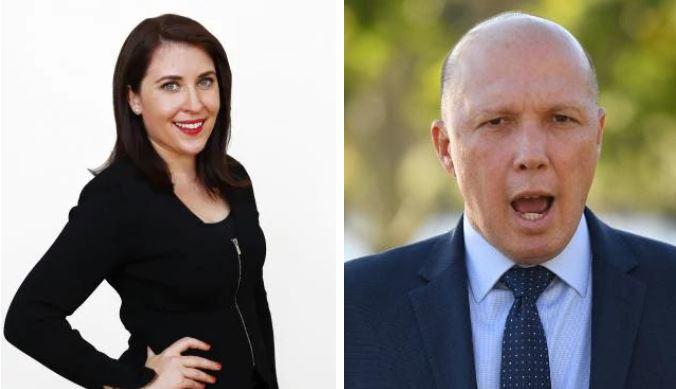

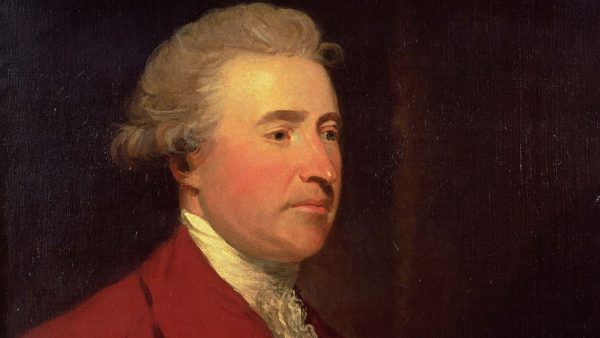
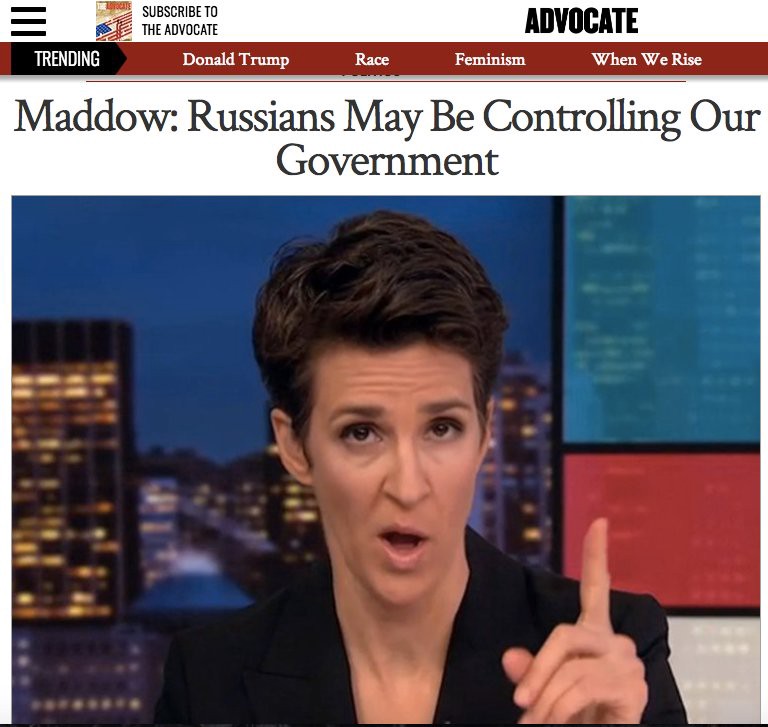

 Aletho News
