Weaponizing Space Is the New Bad Idea Coming From Washington D.C.
By Federico Pieraccini | Strategic Culture Foundation | July 29, 2019
When considering the possibility of great-power conflict in the near future, it is difficult to bypass space as one of the main areas of strategic focus for the major powers. The United States, Russia and China all have cutting-edge programs for the militarization of space, though with a big difference.
Donald Trump’s announcement of a “Space Force” is by no means a new idea. During the Reagan presidency, a similar idea was proposed in the form of the famous “Star Wars“ program, formally known as the Strategic Defense Initiative. It aimed to do away with the concept of mutually assured destruction (MAD) by positioning anti-ballistic-missile (ABM) interceptors in low-Earth orbit in order for them to be able to easily intercept ballistic missiles during their entry into orbit and before their re-entry phase. The costs and technology at the time proved prohibitive for the program, but military planners retained the dream of negating the concept of MAD in Washington’s favor, especially with the dawning of the unipolar era following the collapse of the Soviet Union.
The decisions taken in the years since, such as the US withdrawal from the ABM Treaty in 2002 during Bush’s presidency and from the INF Treaty during Trump’s, follows Reagan in trying to invalidate MAD, a balance of terror that has served to maintain a strategic stability.
This hope of doing away with MAD so that the unthinkable may become thinkable has guided the missile developments of Russia and China, which through the development of hypersonic missiles aim to nullify the US’s ABM systems and thereby make the thought of an unreciprocated nuclear first strike MAD again. With Russia’s recent successes in testing hypersoning technologies, and the fast-tracking of other new strategic weapons announced by Putin less than 12 months ago, strategic stability seems to have been restored through Russia’s strengthened deterrence posture.
The weaponization of space is a less known and talked about aspect of Washington’s mad attempts to make mutually assured destruction no longer mutual and therefore thinkable. During the peak of the unipolar moment, the idea of the Pentagon and the lobbyists of the military-industrial complex was to develop the so-called Prompt Global Strike system, which envisioned being able to deliver an air strike with conventional weapons anywhere in the world in the space of an hour. The dream (or delusion) of the US was to have the unique ability to determine the course of events around the globe within an hour. Such experimental craft as the Orbital Test Vehicle seem to confirm that serious efforts have been underway to realize this objective.
Neither China nor Russia has been sitting idly by waiting to be struck undefended. Russia’s development of its S-500 system has been quite timely. The S-500 system is often considered an upgrade to the better-known S-400 system, but these are in reality different systems with different aims and objectives. The main task of the S-500 is to engage long-distance targets in low-Earth orbit. We are therefore talking about the ability to take out military or any future ABM satellites as those originally conceived with Reagan’s “Star Wars” program.
Unlike Washington, Moscow and Beijing do not appear to be developing space-based weaponry; they are certainly not going to increase their military budgets to create a space force. On the contrary, both countries have been working for more than a decade on a proposed Prevention of an Arms Race in Outer Space (PAROS) treaty that seeks to ban the weaponization of space. The aims are summarized as follows:
“Under the draft treaty submitted to the [Conference on Disarmament] by Russia in 2008, State Parties would have to refrain from carrying out such weapons and threatening to use objects in outer space. State Parties would also agree to practice agreed confidence-building measures.
A PAROS treaty would complement and reaffirm the importance of the 1967 Outer Space Treaty, which aims to preserve space for peaceful uses by prohibiting the use of space weapons, and technology related to ‘missile defense’. The treaty would prevent any nation from gaining a military advantage in outer space.”
The intentions of the draft treaty clearly go against Washington’s plans. It is therefore not surprising that Washington has no intention of acceding to PAROS, and it is probably only a matter of time before Washington withdraws from the 1967 Outer Space Treaty.
Trump is looking at things from a practical point of view. He wants to give a major boost to the military-industrial complex, which is salivating at the prospect of being showered with tens or even hundreds of billions of US taxpayer dollars in a quest to weaponize space. But the policy makers in Washington and in think-tanks look at the weaponization of space from a different perspective. They look at it from the point of view of Washington as a superpower that must seek to prolong its unipolar moment through the use of force, even from space. While it is delusional nonsense, it has nevertheless been the prevailing outlook in Washington for at least the last 25 years.
The reason why China and Russia have proposed and continue to discuss the PAROS lies in their political and military philosophies that contrast with that of the US. As an imperial power bent on global domination, the US is always looking for ways to subjugate and dominate what it considers to be its underlings, while Russia and China act to hold back and counterbalance US aggression, in the process serving to enhance global stability.
The proposal for the non-militarization of space is the latest example of what unites and guides the Eurasian strategy of China and Russia without having any illusions about Washington’s intentions. The development of the SR-72 system seems to confirm that Washington wants to also bridge the gap with its Eurasian competitors in the field of hypersonic technology in addition to wishing to weaponize space.
Realistically, however, global powers in a multipolar context will seek to defend their territorial and economic sovereignty with every means at their disposal. Likewise, those seeking global hegemony will try to exploit any existing domain to gain an advantage over their rivals.
China and Russia seek to weaponize distance and speed to make any possible US attack on them impracticable, both in terms of the logistics required and the revivified cost-benefit calculus of MAD. The US, on the other hand, is trying to weaponize all conceivable domains of conflict by all means possible, hoping to be able to find a chink in its opponents’ armor.
Beijing and Moscow seem to have studied extensively how to respond. All the various defensive systems produced in recent years, from hypersonic anti-ship missiles to multi-layered defense systems like the S-400, S-500 and A-135/A-235, seem to meet the challenge.
Beijing fears US naval strength, and while seeking to achieve parity and surpass the US in the future, it aims above all to prevent the use of aircraft carriers as launching platforms through the employment of defensive area-denial weapons. In this sense, speed (Mach 10) and extending the range of Chinese anti-ship missiles (DF-21) are fundamental to the success of this strategy. Similarly, Moscow intends to seal Eurasia’s skies, and the S-500 seems to be the final flourish, able to protect up to 800 kilometers above sea level.
The weaponization of space is the latest issue that the US is exploiting for various political purposes. Be that as it may, this creates an adversarial environment that compels the US’s peer competitors to develop weapons capable of countering US belligerency. Instead of sitting down and defining the parameters of major-power interaction so as to reduce the likelihood of war, we are witnessing an intentional US policy of pursuing an arms race in every possible domain of warfare.
Talks only possible with ‘tangible results,’ but US does not ‘seek dialogue’ – Tehran
RT | July 29, 2019
There is no point in talking when no “practical results” can be achieved, and Washington is not interested in good-faith dialogue, the Iranian Foreign Ministry spokesperson said amid rising tensions with the US.
“Dialogue and negotiation can be held when we have a certain agenda in place, and when we could get some tangible and practical results out of it,” Abbas Mousavi said on Monday, as cited by Reuters.
The Americans “are not seeking dialogue,” he added.
Problems have been piling up between the US and Iran over the Iranian nuclear and ballistic missile programs, as well as attacks on oil tankers in the Gulf of Oman, which the US blames Tehran for. Iran denies any wrongdoing and urges Washington to stop meddling in regional affairs.
Earlier this week, US Secretary of State Mike Pompeo proposed traveling to Iran to “speak directly to the Iranian people.”
Mousavi rebuffed Pompeo’s offer as a step in “psychological warfare” and a “defensive move” by the US in response to Iranian Foreign Minister Mohammad Javad Zarif’s recent trip to New York. The official said Iran “sees no sincerity” in Pompeo’s suggestion and pointed out that Zarif travels to New York only to attend UN events, not for bilateral talks with the US.
Amid the standoff with Iran, US officials maintain that Washington is open and ready for dialogue, but not until the Islamic Republic fulfills a laundry list of demands. Tehran has also been saying that it is ready to negotiate, but only on an equal footing and without threats and ultimatums by the US.
Russia wades into oily waters of East Mediterranean
By M. K. BHADRAKUMAR | Indian Punchline | July 29, 2019
The cold war brewing in the East Mediterranean over the vast hydrocarbon reserves in the region is already ‘multipolar’. Egypt, Israel, Cyprus, Greece, the United States and Turkey figure as the main protagonists. Then, in mid-July, the European Union grew out of its observer status and joined as active participant. Furthermore, as July ends, Russia is tiptoeing toward the theatre — not quite an actor yet but willing to be one if a role becomes available.
Last weekend, in a seemingly innocuous remark, the Russian Energy Minister Alexander Novak dropped the hint that Russian oil companies can roll out exploration in offshore Mediterranean energy fields in cooperation with Turkey. As he put it, “Russian companies have successfully implemented energy projects in the Mediterranean Sea. For example, Rosneft is working at Zohr [gas field in Egypt]. If these projects benefit all the parties from the commercial point of view, Russian companies can decide on cooperation with Turkey in the East Mediterranean.”
Novak saw it as a business proposition but is certainly savvy enough to know, being an influential Kremlin politician, that the geopolitics of oil and gas, be it in the Arctic or the Black Sea or the Persian Gulf and East Mediterranean, is integral to his country’s foreign policy. What made Novak’s remark particularly significant is not only that he singled out Turkey as Russia’s potential partner in East Mediterranean, but also that he made the remark in an exclusive interview with the Turkish official news agency Anadolu, which the Russian state news agency Tass promptly featured as a news report.
Russia’s locus standii is not in doubt, being an energy superpower and Turkey’s number one energy supplier. Surely, a partnership in the East Mediterranean can only further consolidate the entente between Russia and Turkey, which only recently acquired a new template of defence cooperation following Turkey’s bold decision to press ahead with the purchase of the Russian S-400 missile defence system despite the threat of US sanctions and notwithstanding Turkey’s NATO membership.
Interestingly, Novak’s remark comes at a time when the multi-vectored regional rivalries in the East Mediterranean pit Turkey against Cyprus (which is backed by Greece and Israel and enjoys US support.) The fierce rivalries spawned by the discovery of massive offshore hydrocarbon reserves in the East Mediterranean by Israel and Cyprus are hopelessly intertwined today with Turkey’s traditionally adversarial relationships with Greece and Cyprus.
The unresolved Cyprus question lurks just below the surface, dating back to 1974 when the then military junta in Athens orchestrated a coup’ d’etat in Nicosia in a bid to unify the two countries and Turkey subsequently intervened in Cyrus militarily and occupied one-third of the island in the north inhabited by the ethnic Turkish Cypriots, which has since become a de facto Turkish protectorate.
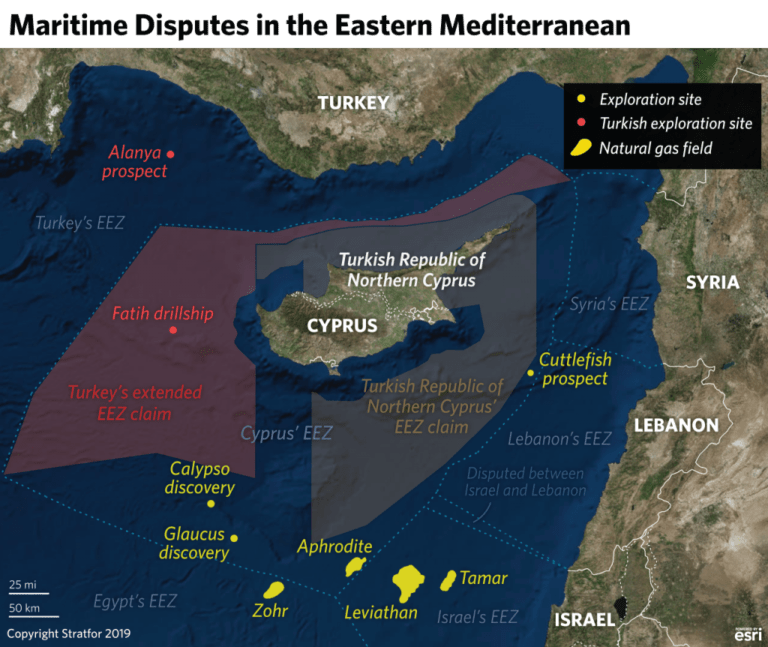
In sum, Turkey has a very serious territorial dispute with Cyprus and will not brook the latter’s unilateral moves to appropriate the massive hydrocarbon reserves in East Mediterranean in waters Ankara regards either belonging to the Turkish Cypriots as well or as falling within its exclusive economic zone (EEZ).
Suffice to say, a Cyprus settlement is the core issue here, but the Greek Cypriot opinion is disinterested in re-unification of the island. (The EU granted Cyprus full membership shortly after the ethnic Greek population voted against reunification, rejecting the settlement plan of then UN secretary general Kofi Annan.)
What complicates matters further is that Turkey has poor relations with Israel, which has banded together with Greece and Cyprus in a sort of tripartite alliance against Turkey lately (with Washington’s blessings.) The US resents Turkey’s independent foreign policies and American oil majors (ExxonMobil) are involved in prospecting / exploiting East Mediterranean’s oil and gas in the seas claimed by Cyprus.
ExxonMobil announced in February that it has made the world’s third-biggest natural gas discovery in two years off the coast of Cyprus in the Eastern Mediterranean at the Glaucus-1 well. The region is already known for some of the world’s largest such discoveries. The discovery could represent a natural gas resource of approximately 5 trillion to 8 trillion cubic feet.
Besides, the US geo-strategic objective is to market the energy supplies from East Mediterranean in Europe, which would erode Russia’s dominance as energy supplier while also enabling Israel to tap a big source of income.
Turkey is pretty much isolated today in the East Mediterranean rivalries, as Ankara intensifies its own exploration for natural gas in the region. After Cyprus after began its exploration (ExxonMobil) with the US ships providing security, Ankara despatched two drill ships to the seas and Turkey’s Naval Forces Command is providing “full and continuous protection” to the drilling vessels, with the help of unmanned aerial vehicles, watercraft, assault boats and submarines.
Turkey held a big naval exercise in in the eastern Mediterranean, Aegean and Black Sea in May asserting its rights not only in Cyprus, but also in Greece. Turkey claims its continental shelf not only takes in portions of Cyprus’s EEZ, but extends westwards to Crete in Greece’s EEZ. This in effect means that Turkey seeks to share the coastal energy resources of both Cyprus and Greece.
A time-bomb is ticking. Washington has repeatedly warned Turkey. In mid-July the EU foreign ministers also came down hard on Ankara, calling its actions “illegal”, punishing it by reducing EU’s assistance to Turkey for 2020 by €145.8 million, inviting European Investment Bank to review its lending activities in Turkey (€358.8 million last year) and threatening to “continue to work on options for targeted measures” (read sanctions.)
Turkey has defiantly rejected the EU intervention, but will feel its isolation mitigated if Russia stretches a helping hand at this juncture. The point is, the storm clouds gathering in East Mediterranean could have serious geopolitical ramifications. In a developing scenario of the West versus Turkey, which is already there, Moscow will be making a profound statement if Russian oil companies join hands with Turkey.
Any such Turkish-Russian collaboration will be a game changer for regional politics — in Syria, Levant, the Black Sea, etc. It coincides with a moment when the Pentagon just caricatured Russia in a strategy report last month as a “revitalised malign actor”, which, in league with China, “frequently jointly oppose US-sponsored measures at the United Nations Security Council” and works for a multipolar world order in which the US is “weaker and less influential.”
Indeed, any Turkish-Russian cooperation in the East Mediterranean will dovetail with global politics. Read a Xinhua report from the weekend titled China, Russia vow to strengthen cooperation, promote world stability.
US-trained ‘saboteurs’ sent from Al-Tanf to destabilize situation in other parts of Syria – Moscow
RT | July 29, 2019
US-trained saboteurs are being sent from Al-Tanf to other parts of Syria to try to destabilize the situation, Col. Gen. Sergey Rudskoy, chief of the Main Operational Directorate of the Russian General Staff, said on Monday. A ‘major armed unit’ of Jaish Magawir al-Saura militants is being trained in the 55km zone surrounding the Al-Tanf base, he said.
Almost 2,700 militants are being trained in the US-controlled Al-Tanf zone for activities including the destruction of the oil and gas infrastructure and conducting terrorist attacks against Syrian government forces, RIA Novosti quoted Rudskoy as saying at the Defense Ministry.
He said that some of these militants are being transferred by US Air Force helicopters to the trans-Euphrates region.
In November last year, spokesperson for the Russian Foreign Ministry Maria Zakharova said that Moscow has information about the US military training militants in the Al-Tanf region. The big US military base is adjacent to the borders of Syria, Iraq, and Jordan, and is close to the highway connecting Baghdad with Damascus.
Hoaxing Academic Journals Now Forbidden
Portland State University says submitting fake papers to journals explicitly to assess their rigour is an ethics violation.
By Donna Laframboise | Big Picture News | July 29, 2019
Peter Boghossian teaches critical thinking at Portland State University. Last October, he and two research colleagues revealed that seven satirical/hoax papers they’d authored had nevertheless been successfully published in peer-reviewed academic journals.
Concerned about “ideologically-motivated scholarship,” the trio set out to demonstrate that some academic fields utter gibberish can get published so long as it employs large amounts of identity politics jargon.
One paper is described by Boghossian as “a 3000 word excerpt of Adolf Hitler’s Mein Kampf…rewritten in the language of Intersectionality theory.” Another discusses dog parks, rape culture, and the patriarchy using “incredibly implausible statistics.”

This project intended to ring alarm bells, to call attention to what the researchers insist is a widespread problem:
Scholarship based less upon finding truth and more upon attending to social grievances has become firmly established, if not fully dominant, within these fields, and their scholars increasingly bully students, administrators, and other departments into adhering to their worldview.
Rather than celebrating the Boghossian team as satirists par excellence, since last October Portland State University has subjected Boghossian to three separate investigations. One determined that no animals were harmed. Another found “no implications of plagiarism, fabrication, and falsification.” A third, however, determined that he violated “human subjects’ rights.”
In the weirdo world of contemporary higher education, people who run journals, and individuals who perform peer-review are now considered human subjects. Secretly submitting fake papers in order to assess the rigour of those journals is now considered human experimentation.
Such experimentation isn’t allowed unless one first secures the approval of an internal Institutional Review Board, an often lengthy and cumbersome process that will almost certainly undermine the secrecy upon which such research depends.
A few years ago, I wrote a report titled Peer Review: Why skepticism is essential. It cites a wide body of research, extending back decades, that highlights the often arbitrary, biased nature of the peer review process.
For example, a famous 1982 study attached fictitious author names to 12 papers that had already been published during the previous 18-32 months. The duplication was noticed in three cases, but peer reviewers working for the same journals gave thumbs down to eight out of nine remaining papers the second time around.
A 1990 study found female reviewers significantly less likely to recommend publication of male-authored papers compared to female-authored papers. Other research determined that a manuscript’s fate depends a great deal on whether its conclusions confirm or challenge a reviewer’s own theoretical perspective.
All of these findings provide important insight into how ‘official’ knowledge gets created. But now that journal editors and reviewers are considered human subjects whose rights shall not be violated, it’s doubtful whether such important work could still be conducted.
American Pravda: John McCain, Jeffrey Epstein, and Pizzagate
Our Reigning Political Puppets, Jerked by Invisible Strings
By Ron Unz • Unz Review • July 29, 2019
The death of Sen. John McCain last August revealed some important truths about the nature of our establishment media.
McCain’s family had released word of his incurable brain cancer many months earlier and his passing at age 84 was long expected, so media outlets great and small had possessed all the time necessary for producing and polishing the packages they eventually published, and that was readily apparent from the voluminous nature of the tributes that they ran. The New York Times, still our national newspaper of record, allocated more than three full pages of its printed edition to the primary obituary, and this was supplemented by a considerable number of other articles and sidebars. I cannot recall any political figure other than an American president whose passing had ever received such an enormous wealth of coverage, and perhaps even some former residents of the Oval Office might have fallen short of that standard. Although I certainly didn’t bother reading all of the tens of thousands of words in the Times or my other newspapers, the coverage of McCain’s life and career seemed exceptionally laudatory across the mainstream media, liberal and conservative alike, with scarcely a negative word appearing anywhere outside the political fringe.
On the face of it, such undiluted political love for McCain might seem a bit odd to those who have followed his activities over the last couple of decades. After all, the Times and most of the other leading lights of our media firmament are purportedly liberal and claim to have become vehement critics of our disastrous Iraq War and other military adventures, let alone the calamitous possibility of an attack upon Iran. Meanwhile, McCain was universally regarded as the leading figure in America’s “War Party,” eagerly supporting all prospective and retrospective military endeavors with gleeful fury, and even making his chant of “Bomb, Bomb, Bomb Iran” the most widely remembered detail of his unsuccessful 2008 presidential campaign. So either our major media outlets somehow overlooked such striking differences on an absolutely central issue, or perhaps their true positions on certain matters are not exactly what they seem to be, and merely constitute elements of a Kabuki-performance aimed at deceiving their more naive readers.
Even more remarkable were the discordant facts airbrushed out of McCain’s history.
As the winner of the Pulitzer Prize and two George Polk awards, the late Sydney Schanberg was widely regarded as one of the greatest American war correspondents of the twentieth century. His exploits during our ill-fated Indo-Chinese War had become the basis of the Oscar-winning film The Killing Fields, which probably established him as the most famous journalist in America after Woodward and Bernstein of Watergate fame, and he had also served as a top editor at The New York Times. A decade ago, he published his greatest expose, providing a mountain of evidence that America had deliberately left behind hundreds of POWs in Vietnam and he fingered then-presidential candidate John McCain as the central figure in the later official cover-up of that monstrous betrayal. The Arizona senator had traded on his national reputation as our best-known former POW to bury the story of those abandoned prisoners, permitting America’s political establishment to escape serious embarrassment. As a result, Sen. McCain earned the lush rewards of our generous ruling elites, much like his own father Admiral John S. McCain, Sr., who had led the cover-up of the deliberate 1967 Israeli attack on the U.S.S. Liberty, which killed or wounded over 200 American servicemen.

As publisher of The American Conservative, I ran Schanberg’s remarkable piece as a cover story, and across several websites over the years it has surely been read many hundreds of thousands of times, including a huge spike around the time of McCain’s death. I therefore find it rather difficult to believe that the many journalists investigating McCain’s background might have remained unaware of this material. Yet not a hint of these facts were provided in any of the articles appearing in any remotely prominent media outlets as can be seen by searching for web pages containing “McCain and Schanberg” dated around the time of the Senator’s passing.
Schanberg’s journalistic stature had hardly been forgotten by his former colleagues. Upon his death a couple of years ago, the Times ran a very long and glowing obituary, and a few months later I attended the memorial tribute to his life and career held at the New York Times headquarters building, which drew a couple of hundred prominent journalists mostly from his same generation, including those of the highest rank. Times Publisher Arthur Sulzberger, Jr. gave a speech describing how as a young man he had always so greatly admired Schanberg and had been mortified by the unfortunate circumstances of his departure from the family’s newspaper. Former Executive Editor Joseph Lelyveld recounted the many years he had worked closely with the man he had long considered his closest friend and colleague, someone whom he almost seemed to regard as his older brother. But during the two hours of praise and remembrance scarcely a single word was uttered in public about the gigantic story that had occupied the last two decades of Schanberg’s celebrated career.
This same blanket of media silence also enveloped the very serious accusations regarding McCain’s own Vietnam War record. A few years ago, I drew upon the Times and other fully mainstream sources to strongly suggest that McCain’s stories of his torture as a POW were probably fictional, invented to serve as a cover and an excuse for the very real record of his wartime collaboration with his Communist captors. Indeed, at the time our American media reported his activities as one of the leading propagandists of our North Vietnamese foes, but these facts were later flushed down the memory-hole. McCain’s father was then ranked as one of America’s top military officers, and it seems likely that his personal political intervention ensured that the official narrative of his son’s wartime record was transmuted from traitor to war-hero, thereby allowing the younger McCain to later embark upon his celebrated political career.
The story of the abandoned Vietnam POWs and McCain’s own Communist propaganda broadcasts hardly exhaust the catalog of the major skeletons in the late Senator’s closet. McCain was regularly described by reporters as being remarkably hot-headed and having a violent temper, but the national press left it to the alternative media to investigate the real-life implications of those rather suggestive phrases.
In a September 1, 2008 Counterpunch expose later published online, Alexander Cockburn reported that interviews with two emergency room physicians in Phoenix revealed that around the time that McCain was sucked into the political maelstrom of the Keating Five Scandal, his wife Cindy was admitted to her local hospital suffering from a black eye, facial bruises, and scratches consistent with physical violence, and this same situation occurred two additional times over the next few years. Cockburn also noted several other highly suspicious marital incidents during the years that followed, including the Senator’s wife appearing with a bandaged wrist and her arm in a sling not long after she joined her husband on the 2008 campaign trail, an injury reported by our strangely incurious political journalists as being due to “excessive hand-shaking.” It’s an odd situation when a tiny leftist newsletter can easily uncover facts that so totally eluded the vast resources of our entire national press corps. If there were credible reports that Melania Trump had been repeatedly admitted to local emergency rooms suffering from black eyes and facial bruises, would our corporate media have remained so uninterested in any further investigation?
McCain had first won his Arizona Congressional seat in 1982, not long after he moved into the state, with his campaign bankrolled by his father-in-law’s beer-distributorship fortune, and that inheritance eventually elevated the McCain household into one of the wealthiest in the Senate. But although the Senator spent the next quarter-century in public life, even nearly upsetting George W. Bush for the 2000 Republican presidential nomination, only in late 2008 did I learn from the Times that the Phoenix beer-monopoly in question, then valued at around $200 million, had accrued to a man whose lifelong business partner Kemper Marley had long been deeply linked to organized crime. Indeed, close associates of that latter individual had been convicted by a jury of the car-bomb assassination of a Phoenix investigative crime reporter just a few years before McCain’s sudden triumphal entrance into Arizona politics. Perhaps such guilt-by-association is improper, but would our national press-corps have remained silent if the personal fortune of our current president were only a step or two removed from the car-bomb assassins of a nosy journalist who died while investigating mobsters.
As I gradually became aware of these enormities casually hidden in McCain’s background, my initial reaction was disbelief that someone whose record was so deeply tarnished in so many different ways could ever have reached such a pinnacle of American political power. But as the media continued to avert its eyes from these newly revealed facts, even those disclosed in the pages of the Times itself, I gradually began to consider matters in a different light. Perhaps McCain’s elevation to great American political power was not in spite of the devastating facts littering his personal past, but because of them. As I wrote a few years ago:
Today when we consider the major countries of the world we see that in many cases the official leaders are also the leaders in actuality: Vladimir Putin calls the shots in Russia, Xi Jinping and his top Politburo colleagues do the same in China, and so forth. However, in America and in some other Western countries, this seems to be less and less the case, with top national figures merely being attractive front-men selected for their popular appeal and their political malleability, a development that may eventually have dire consequences for the nations they lead. As an extreme example, a drunken Boris Yeltsin freely allowed the looting of Russia’s entire national wealth by the handful of oligarchs who pulled his strings, and the result was the total impoverishment of the Russian people and a demographic collapse almost unprecedented in modern peacetime history.
An obvious problem with installing puppet rulers is the risk that they will attempt to cut their strings, much like Putin soon outmaneuvered and exiled his oligarch patron Boris Berezovsky. One means of minimizing such risk is to select puppets who are so deeply compromised that they can never break free, knowing that the political self-destruct charges buried deep within their pasts could easily be triggered if they sought independence. I have sometimes joked with my friends that perhaps the best career move for an ambitious young politician would be to secretly commit some monstrous crime and then make sure that the hard evidence of his guilt ended up in the hands of certain powerful people, thereby assuring his rapid political rise.
In physics, when an object deviates from its expected trajectory for inexplicable reasons, we assume that some unknown force has been at work, and tracing the record of such deviations may help to determine the characteristic properties of the latter. Over the years, I’ve increasingly become aware of such strange ideological deviations in public policy, and although some are readily explained, others suggest the existence of hidden forces far beneath the surface of our regular political world. This same situation may have occurred throughout our history, and sometimes the political decisions that so baffled contemporaries eventually came to light decades later.

In The Dark Side of Camelot, famed investigative reporter Seymour Hersh claimed that secret blackmail evidence of JFK’s extra-marital affairs probably played a crucial role in having his administration overrule the unanimous verdict of all top Pentagon advisors and award the largest military procurement contract in U.S. history to General Dynamics instead of Boeing, thereby saving the former company from likely bankruptcy and its major organized-crime shareholders from devastating financial losses. Hersh also suggests that a similar factor likely explains JFK’s last-minute reversal in the choice of his Vice President, a decision that landed Lyndon Johnson on the 1960 ticket and placed him in the White House after Kennedy’s 1963 assassination.
As I recently mentioned, in the 1950s Sen. Estes Kefauver shifted the focus of his Organized Crime Hearings after the Chicago Syndicate confronted him with the photographs of his sexual encounter with two mob-supplied women. A decade later, California Attorney-General Stanley Mosk suffered much the same fate, with the facts remaining hidden for over twenty years.
Similar rumors swirl around events much farther back in history as well, sometimes with enormous consequences. Well-placed contemporary sources have claimed that Samuel Untermyer, a wealthy Jewish lawyer, purchased the secret correspondence between Woodrow Wilson and his longtime mistress, and that the existence of that powerful leverage may have been an important factor behind Wilson’s astonishingly rapid rise from president of Princeton in 1910 to governor of New Jersey in 1911 to president of the United States in 1912. Once in office, Wilson signed the controversial legislation establishing the Federal Reserve system in 1913 and also named Louis Brandeis as the first Jewish member of the U.S. Supreme Court despite the public opposition of nearly our entire legal establishment. Wilson’s swiftly changing views on American involvement in the First World War may also have been influenced by such personal pressures rather than solely determined by his perceptions of the national interest.
Without naming any names, since 2001 it has been difficult to avoid noticing that one of the most zealous and committed supporters of the Neocon party-line on all Middle Eastern foreign policy matters has been a leading Republican senator from one of the most socially-conservative Southern states, a man whose rumored personal inclinations have long circulated on the Internet. The strikingly-sudden reversal of this individual on a major policy question certainly supports these suspicions. There have also been several other such examples involving prominent Republicans.
But consider the far different situation of Rep. Barney Frank of Massachusetts, who in 1987 became the first member of the Congress to voluntarily admit that he was gay. Not long afterward, a notorious scandal erupted when it was revealed that his own DC townhouse had been used by a former boyfriend as headquarters for a male-prostitution ring. Frank claimed to have had no knowledge of that sordid situation, and his liberal Massachusetts constituents apparently accepted that, since he was resoundingly reelected and went on to serve another 24 years in Congress. But surely if Frank had been a Republican from a socially-conservative district, anyone possessing such evidence would have totally controlled his political survival, and with Frank spending several years as Chairman of the very powerful House Financial Services Committee, the value of such a powerful hold would have been enormous.
This demonstrates the undeniable reality that what constitutes effective blackmail material may vary tremendously across different eras and regions. Today, it is widely accepted that longtime FBI Director J. Edgar Hoover lived his life as a deeply-closeted homosexual and there seem to be serious claims that he also had some black ancestry, with the secret evidence of these facts probably helping to explain why for decades he stubbornly refused to admit the existence of American organized crime or focus his G-men on efforts to uproot it. But in today’s America, he would surely have proudly declared his sexuality and racial ancestry in an New York Times Magazine cover-story, rightly believing that they would have enhanced his political invulnerability on the national stage. There are lurid rumors that the Syndicate possessed secret photos of Hoover wearing a dress and high-heels, but just a few years ago Rep. Mike Honda of San Jose desperately placed his eight-year-old transgendered grand-daughter front-and-center in his unsuccessful attempt to win reelection.
The decades have certainly softened the effectiveness of many forms of blackmail, but pedophilia still ranks as an extremely powerful taboo. There seems to be a great deal of evidence that powerful organizations and individuals have successfully managed to suppress credible accusations of that practice for very long periods of time so long as no group with substantial media influence had chosen to target the offenders for unmasking.
The most obvious example is the Catholic Church, and the failings of its American and international hierarchy in that regard have regularly made the front pages of our leading newspapers. But until the early 2000s and the breakthrough reporting of the Boston Globe as recounted in the Oscar-winning film Spotlight, the Church had routinely fended off such scandals.
Consider also the remarkable case of British television personality Sir Jimmy Savile, one of his country’s most admired celebrities, eventually knighted for his public service. Only shortly after his death at age 84 did the press begin revealing that he had probably molested many hundreds of children during his long career. Accusations by his young victims had stretched back across forty years, but his criminal activities had seemingly been protected by his wealth and celebrity, along with his numerous supporters in the media.
There is also the intriguing example of Dennis Hastert. As the longest serving Republican Speaker of the House in U.S. history, holding office during 1999-2007, Hastert was third in line to the Presidency and even ranked as our nation’s top Republican elected official during some of that period. Based upon my newspaper readings, he had always struck me as a rather bland and ordinary individual, with journalists sometimes even strongly hinting at his mediocrity, so that I occasionally wondered just how someone so unimpressive could have risen to such extremely high national office.
Then a few years ago, he was suddenly thrust back into the headlines, arrested by the FBI and charged with financial crimes relating to what apparently had been his past history of abusing young boys, at least one of whom had committed suicide, with the federal judge who sent him to prison denouncing him as “a serial child molester” at sentencing. Perhaps I’ve led an overly sheltered life, but my impression is that only a tiny sliver of Americans have had a long record of child molestation, and all things being equal, it seems rather unlikely that someone of such a background but who possesses no other great talents or skills would rise to near the absolute top of our political heap. So perhaps not all things were otherwise equal. If some powerful elements possessed the hard evidence that placed a particular elected official under their total control, working very hard to elevate him to Speaker of the House would be a very shrewd investment.
At times the unwillingness of our national media to see major stories in front of their very noses reaches ridiculous extremes. During the summer of 2007, the Internet was ablaze with claims that Sen. John Edwards, a runner-up in the 2004 Democratic presidential primaries, had just fathered a child with his mistress, and those reports were backed by seemingly-credible visual evidence, including photos showing the married senator holding his new-born baby. Yet as the days and even the weeks went by, not a whiff of this salacious scandal ever reached the pages of any of my morning newspapers or the rest of the mainstream media although it was a top conversation topic everywhere else. Eventually, the National Enquirer, a notorious gossip tabloid, scored a journalistic first, receiving a Pulitzer Prize nomination for breaking the story that no other outlet seemed willing to cover. Would our media have similarly averted its eyes from a newborn baby Trump coming from the wrong side of the bed?
Over the years, it became increasingly obvious to me that nearly all elements of our national media were often quite willing to enlist in a “conspiracy of silence” to minimize or entirely ignore stories of tremendous potential interest to their readership and major public importance. I could easily have doubled or tripled the number of such notable examples I provided above without much effort. Moreover, it is quite intriguing that so many of these cases involve the sort of criminal or sexual misbehavior that would be ideally suited for blackmailing powerful individuals who are less likely to be vulnerable to other influences. So perhaps many of the elected officials situated at the top of our democratic system merely reign as political puppets, jerked by invisible strings.
Given my awareness of this remarkable track-record of major media cover-ups, I’m ashamed to admit that I had paid almost no attention to the Jeffrey Epstein case until it exploded across our national headlines earlier this month, suddenly becoming one of the biggest news stories in our country.
For many years, reports about Epstein and his illegal sex-ring had regularly circulated on the fringes of the Internet, with agitated commenters citing the case as proof of the dark and malevolent forces that secretly controlled our corrupted political system. But I almost entirely ignored these discussions, and I’m not sure that I ever once clicked on a single link.
Probably one reason I paid so little attention to the topic was the exceptionally lurid nature of the claims being made. Epstein was supposedly an enormously wealthy Wall Street financier of rather mysterious personal background and source of funds, who owned a private island and an immense New York City mansion, both regularly stocked with harems of underage girls provided for sexual purposes. He allegedly hobnobbed on a regular basis with Bill Clinton, Prince Andrew, Harvard’s Alan Dershowitz, and numerous other figures in the international elite, as well as a gaggle of ordinary billionaires, frequently transporting those individuals on his personal jet known as “the Lolita Express” for the role it played in facilitating illegal secret orgies with young girls. When right-wing bloggers on obscure websites claimed that former President Clinton and the British Royals were being sexually serviced by the underage girls of a James Bond super-villain brought to life, I just assumed those accusations were the wildest sort of Internet exaggeration.
Moreover, these angry writers did occasionally let slip that the fiendish target of their wrath had already been charged in a Florida courtroom, eventually pleading guilty to a single sexual offense and receiving a thirteen month jail sentence, mitigated by very generous work-release provisions. This hardly seemed like the sort of judicial punishment that would lend credence to the fantastical accusations against him. If Epstein had already been investigated by law enforcement authorities and given the sort of sentence one might expect for writing a bad check, I found it quite unlikely that he was actually the Goldfinger or Dr. No that deluded Internet activists made him out to be.
Then these same wild, implausible claims previously found only on anonymous comment-threads were suddenly repeated as solid fact on the front pages of the Times and all my other morning newspapers, and the former federal prosecutor who had signed off on Epstein’s legal slap-on-the-wrist was forced to resign from the Trump Cabinet. Epstein’s safe had been found to contain a huge cache of child-pornography and other highly suspicious material, and he was quickly rearrested on charges that could send him to federal prison for decades. Prestigious media outlets described Epstein as the mastermind of a huge sex-trafficking ring, and numerous underage victims began coming forward, telling their stories of how he had molested, raped, and pimped them. The author of a long 2003 Epstein profile that had appeared in Vanity Fair explained that she had personally spoken to some of his victims and included their highly-credible accounts in her article, but that those portions had been censored and removed by her timorous editors.
As presented by these media outlets, Epstein’s personal rise also seemed rather inexplicable unless he had benefited from some powerful network or similar organization. Lacking any college degree or credentials, he had somehow gotten a job teaching at one of New York City’s most elite prep schools, then quickly jumped to working at a top investment bank, rising to become partner with astonishing speed until he was fired a few years later for illegal activity. Despite such a scanty and doubtful record, he was soon managing money for some of America’s wealthiest individuals, and keeping so much of it for himself that he was regularly described as a billionaire. According to newspaper accounts, his great specialty was “making connections for people.”
Obviously, Epstein was a ruthlessly opportunistic financial hustler. But extremely wealthy individuals must surely be surrounded by great swarms of ruthlessly opportunistic financial hustlers, and why would he have been so much more successful than all those others? Perhaps a clue comes from the offhand remark of Epstein’s now-disgraced prosecutor, saying that he had been told to go very easy on the sex-trafficker because he “belonged to intelligence.” The vague phrasing of that statement raises questions about whether the intelligence service may not have been one controlled by the U.S. government.
Philip Giraldi, a highly-regarded former CIA officer, put things very plainly when he suggested that Epstein had probably been working for the Israeli Mossad, operating “honey traps” to obtain blackmail information on all the wealthy and powerful individuals whom he regularly plied with underage girls. Indeed, longtime Canadian journalist Eric Margolis recounted his early 1990s visit to Epstein’s enormous NYC mansion, in which he had barely crossed the threshold before he was offered an “intimate massage” by one of the many young girls there, presumably in a bedroom well-stocked with hidden cameras.
Given my personal lack of interest in the Epstein case, then or now, perhaps a few of these details may be garbled, but it seems undeniable that he was exactly the sort of remarkable renegade typically faced by Agent 007 of the movies, and the true facts will presumably come out at his trial. Or perhaps not. Whether he lives to see trial is not entirely clear given the considerable number of powerful individuals who might prefer that hidden facts remain hidden, and the Friday newspapers reported that Epstein had been found injured and unconscious in his prison cell.
When one seemingly implausible pedophilia scandal has suddenly jumped from obscure corners of the Internet to the front pages of our leading newspapers, we must naturally begin to wonder whether others might not eventually do the same. And a very likely candidate comes to mind, one that seemed to me far better documented than the vague accusations being thrown about over the last few years against a wealthy financier given a thirteen-month jail sentence in Florida a decade earlier.
I don’t use Social Media myself, but near the end of the 2016 presidential campaign, I gradually began seeing more and more Trump supporters referring to something called “Pizzagate,” a burgeoning sexual scandal that they claimed would bring down Hillary Clinton and many of the top leaders of her party, with the chatter actually increasing after Trump was elected. As near as I could tell, the whole bizarre theory had grown up on the far-right fringe of the Internet, with the utterly fantastical plot having something to do with stolen secret emails, DC pizza parlors, and a ring of pedophiles situated near the top of the Democratic Party. But given all the other strange and unlikely things I’d gradually discovered about our history, it didn’t seem like something I could necessarily dismiss out of hand.
At the beginning of December, a right-wing blogger produced a lengthy exposition of the Pizzagate charges, which finally gave me some understanding of what was actually under discussion, and I soon made arrangements to republish his article. It quickly attracted a great deal of interest, and some websites pointed to it as the best single introduction to the scandal for a general audience.
A couple of weeks later, I republished an additional article by the same writer, describing a long list of previous pedophilia scandals that had occurred in elite American and European political circles. Although many of these seemed to be solidly documented, nearly all of them had received minimal coverage by our mainstream media outlets. And if such political pedophile rings had existed in the relatively recent past, was it so totally implausible that there might be another one simmering beneath the surface of today’s Washington DC?
Those interested in the details of the Pizzagate Hypothesis are advised to read these articles, especially the first one, but I might was well provide a brief summary.
John Podesta had been a longtime fixture in DC political circles, becoming chief of staff to President Bill Clinton in 1998, and afterward remaining one of the most powerful figures in the Democratic Party establishment. While serving as as chairman of Hillary Clinton’s 2016 presidential campaign, his apparent carelessness with the password security of his Gmail account allowed it to easily be hacked, and tens of thousands of his personal emails were soon published on WikiLeaks. A swarm of young anti-Clinton activists began scouring this treasure-trove of semi-confidential information, seeking evidence of mundane bribery and corruption, but instead they came across some quite odd exchanges, seemingly written in coded language.
Now use of coded language in a supposedly secure private email account raises all sorts of natural suspicions regarding what might have been under discussion, with the most likely possibilities being illegal drugs or sex. But most of the references didn’t seem to fit the former category, and in our remarkably libertine era, in which political candidates compete for the right to be Grand Marshal at an annual Gay Pride Parade, one of the few sexual activities still discussed only in whispers would seem to be pedophilia, with some of the very strange remarks possibly hinting at this.
The researchers also soon discovered that his brother Tony Podesta, one of the wealthiest and most successful lobbyists in DC, had extremely odd taste in art. Major items of his very extensive personal collection seemed to represent tortured or murdered bodies, and one of his favorite artists was best known for paintings depicting young children being held captive, lying dead, or suffering under severe distress. Such peculiar artwork obviously isn’t illegal, but it might naturally arouse some suspicions. And oddly enough, arch-Democrat Podesta had long been a close personal friend of former Republican Speaker and convicted child-molester Dennis Hastert, welcoming him back into DC society after his release from prison.
Furthermore, some of the rather suspiciously-worded Podesta emails referred to events held at a local DC pizza parlor, greatly favored by the Democratic Party elite, whose owner was the gay former boyfriend of David Brock, a leading Democratic activist. The public Instagram account of that pizza-entrepreneur apparently contained numerous images of young children, sometimes tied or bound, with those images frequently labeled by hashtags using the traditional gay slang for underage sexual targets. Some photos showed the fellow wearing a tee-shirt bearing the statement “I Love Children” in French, and by a very odd coincidence, his possibly assumed name was phonetically identical to that very same French phrase, thus proclaiming to the world that he was “a lover of children.” Closely connected Instagram accounts also included pictures of young children, sometimes shown amid piles of high-value currency, with queries about how much those particular children might be worth. None of this seemed illegal, but surely any reasonable person would regard the material as extremely suspicious.
DC is sometimes described as “Powertown,” being the seat of the individuals who make America’s laws and govern our society, with local political journalists being closely attuned to the relative status of such individuals. And oddly enough, GQ Magazine had ranked that gay pizza parlor owner with a strange focus on young children as being one of the 50 most powerful people in our national capital, placing him far ahead of many Cabinet members, Senators, Congressional Chairmen, Supreme Court justices, and top lobbyists. Was his pizza really that delicious?
These few paragraphs provide merely a sliver of the large quantity of highly-suspicious material surrounding various powerful figures at the apex of the DC political world. A vast cloud of billowing smoke is certainly no proof of any fire, but only a fool would completely ignore it without attempting further investigation.
I usually regard videos as a poor means of imparting serious information, far less effective and meaningful than the simple printed word. But the overwhelming bulk of the evidence supporting the Pizzagate Hypothesis consists of visual images and screen shots, and these are naturally suited to a video presentation.
Some of the best summaries of the Pizzagate case were produced by a young British YouTuber named Tara McCarthy, whose work was published under the name of “Reality Calls,” and her videos were viewed hundreds of thousands of times. Although her channel was eventually banned and her videos purged, copies were later reloaded to other accounts, both on YouTube and BitChute. Some of the evidence she presents seemed rather innocuous or speculative to me and other elements were probably based upon her unfamiliarity with American society and culture. But a great deal of extremely suspicious material remains, and I would suggest that people watch the videos and decide for themselves.
See also instagram video at Unz Review [disturbing]
Around the same time that I first became familiar with the details of the Pizzagate controversy, the topic also started reaching the pages of my morning newspapers, but in an rather strange manner. Political stories began giving a sentence or two to the “Pizzagate hoax,” describing it as a ridiculous right-wing “conspiracy theory” but excluding all relevant details. I had an eerie feeling that some unseen hand had suddenly flipped a switch and caused the entire mainstream media to begin displaying identical signs reading “Pizzagate Is False—Nothing To See There!” in brightly flashing neon. I couldn’t recall any previous example of such a strange media reaction to some obscure controversy on the Internet.
Articles in the Washington Post and the Los Angeles Times also suddenly appeared denouncing the entirety of the alternative media—Left, Right, and Libertarian—as “fake news” websites promoting Russian propaganda, while urging that their content be blocked by all patriotic Internet giants such as Facebook, Twitter, and Google. Prior to that moment, I’d never even heard the term “fake news” but suddenly it was ubiquitous across the media, once again almost as if some unseen hand had suddenly flipped a switch.
I naturally began to wonder whether the timing of these two strange developments was entirely coincidental. Perhaps Pizzagate was indeed true and struck so deeply at the core of our hugely corrupted political system that the media efforts to suppress it were approaching the point of hysteria.
Not long afterward, Tara McCarthy’s fine Pizzagate videos were purged from YouTube. This was among the very first instances of video content being banned despite fully conforming to all existing YouTube guidelines, another deeply suspicious development.
I also noticed that mere mention of Pizzagate had become politically lethal. Donald Trump had selected Lt. Gen. Michael Flynn, former head of the Defense Intelligence Agency, as his National Security Advisor, and Flynn’s son served as the latter’s chief of staff. The younger Flynn happened to Tweet out a couple of links to Pizzagate stories, pointing out that the accusations hadn’t yet been actually investigated let alone disproven, and very soon afterward, he was purged from the Trump transition team, foreshadowing his father’s fall a few weeks later. It seemed astonishing to me that a few simple Tweets about an Internet controversy could have such huge real-life impact near the top of our government.
The media continued its uniform drumbeat of “Pizzagate Has Been Disproven!” but we were never explained how or by whom, and I was not the only individual to notice the hollowness of such denunciations. An award-winning investigative journalist named Ben Swann at a CBS station in Atlanta broadcast a short television segment summarizing the Pizzagate controversy and noting that contrary to widespread media claims, Pizzagate had neither been investigated nor debunked. Swann was almost immediately purged by CBS but a copy of his television segment remains available for viewing on the Internet.
There is an old wartime proverb that enemy flak is always heaviest over the most important target, and the remarkably ferocious wave of attacks and censorship against anyone broaching the subject of Pizzagate seems to raise all sorts of dark suspicions. Indeed, the simultaneous waves of attacks against all alternative media outlets as “Russian propaganda outlets” laid the basis for the continuing regime of Social Media censorship that has become a central aspect of today’s world.
Pizzagate may or may not turn out to be true, but the ongoing Internet crackdown has similarly engulfed topics of a somewhat similar nature but with vastly stronger documentation. Although I don’t use Twitter myself, I encountered the obvious implications of this new censorship policy following McCain’s death last August. The senator had died on a Saturday afternoon, and readership of Sydney Schanberg’s long 2008 expose quickly exploded, with numerous individuals Tweeting out the story and a large fraction of our incoming traffic therefore coming from Twitter. This continued until the following morning, at which point the huge flood of Tweets continued to grow, but all incoming Twitter traffic suddenly and permanently vanished, presumably because “shadow banning” had rendered all such Tweets invisible. My own article on McCain’s very doubtful war record simultaneously suffered the same fate, as did numerous other articles of a controversial nature that we published later that same week.
Perhaps that censorship decision was made by some ignorant young intern at Twitter, casually choosing to ban as “hate speech” or “fake news” a massively-documented 8,400 word expose by one of America’s most distinguished journalists, a Pulitzer-prize winning former top editor at The New York Times.
Or perhaps certain political-puppeteers who had spent decades controlling that late Arizona senator sought to ensure that their political puppet-strings remained invisible even after his death.
Related Reading:
- John McCain and the POW Cover-Up by Sydney Schanberg
- John McCain: When “Tokyo Rose” Ran for President
- Pizzagate by Aedon Cassiel
- What We Know About Pizzagate So Far by Tara McCarthy
- Precedents for Pizzagate by Aedon Cassiel
Study finds 50-year history of anti-Palestinian bias in mainstream news reporting

CONTEXT matters, and CONTEXT is often missing in news reports about Israel-Palestine
By Kathryn Shihadah – If Americans Knew – January 19, 2019
A recent media study based on analysis of 50 years of data found that major U.S. newspapers have provided consistently skewed, pro-Israel reporting on Israel-Palestine.
The study, conducted by 416Labs, a Toronto-based consulting and research firm, is the largest of its kind.
Using computer analysis, researchers evaluated the headlines of five influential U.S. newspapers: the Chicago Tribune, Los Angeles Times, New York Times, Washington Post, and Wall Street Journal from 1967 to 2017.
The study period begins in June 1967, the date when Israel began its military occupation of the West Bank and Gaza Strip – now officially termed the Occupied Palestinian Territories – following its Six Day War against Jordan, Egypt and Syria.
Methodology involved the use of Natural Language Processing (NLP), a type of computer analysis that sifts through large amounts of natural language data and investigates the vocabulary. NLP tabulated the most commonly used words and word pairs, as well as the positive or negative sentiment associated with the headlines.
Using NLP to analyze 100,000 headlines, the study revealed that the coverage favored Israel in the “sheer quantity of stories covered,” by presenting Palestinian-centric stories from a more negative point of view, as well as by grossly under-representing the Palestinian narrative, and by omitting or downplaying “key topics that help to identify the conflict in all its significance.”
Four times more headlines mentioned Israel than Palestine
The Fifty Years of Occupation study reveals a clear media bias first in the quantity of headlines: over the half-century period in question, headlines mentioned Israel 4 times more frequently than Palestine.
The study revealed other discrepancies in coverage of Israel and Palestine/Palestinians as well.
Sentiment
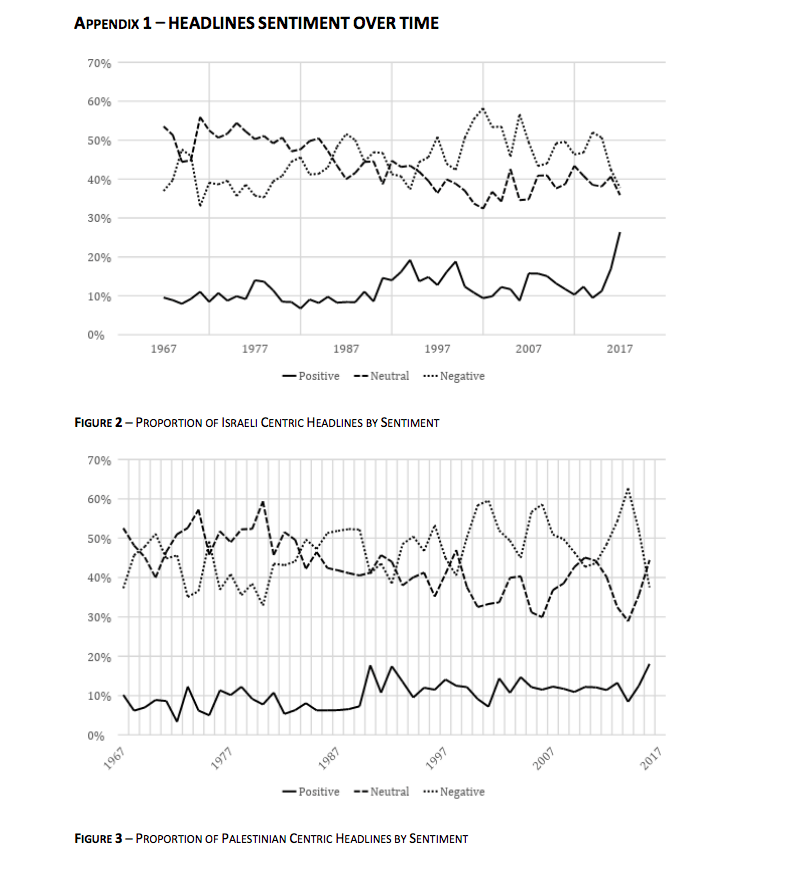
For all 5 newspapers studied, Israel-centric headlines were on average more positive than the Palestinian-centric headlines.
Sentiment analysis measures “the degree to which ideological loyalty colors analysis.”
In order to measure sentiment, the study employed a “dictionary” of words classified as either positive or negative; each headline was scored based on its use of these words.
The report explains that journalistic standards require news stories to be “neutral, objective, and derived from facts,” but the reports on Israel-Palestine “exhibit some form of institutionalized ideological posturing and reflect a slant.” [See graphs below post]
Under-representation of the Palestinian voice
The study also found Palestinians marginalized as sources of news and information.
A simple case in point: The fact-checking organization Pundit Fact examined CNN guests during a segment of the 2014 Israeli incursion into Gaza, Operation Protective Edge. Pundit Fact reported that during this time, 20 Israeli officials were interviewed, compared to only 4 Palestinians, although Palestinians were overwhelmingly victims of the incursion with 2,251 deaths vs. 73 Israeli deaths.
The study’s data reveal what it calls “the privileging of Israeli voices and, invariably, Israeli narratives”: the phrases “Israel Says” and “Says Israel” occurred at a higher frequency than any other bigram (2-word phrase) throughout the 50 years of headlines – in fact, at a rate 250% higher than “Palestinian Says” and similar phrases. This indicates that not only are Israeli perspectives covered more often, but Palestinians rarely have an opportunity to defend or explain their actions.
The report explains the significance of such asymmetry:
This imbalance matters, as official Israeli government policy is effectively made an intrinsic part of the discussion of the conflict, while the views of Palestinians living under occupation are subordinated to the margins.
Sins of omission and de-emphasis
The analysis turned up yet another significant problem with the newspapers’ coverage: failure to report, or to report adequately, on important aspects of the Palestine-Israel conflict.
The study found several critical topics that the 5 newspapers failed to cover adequately, resulting in reader misperceptions.
Peace process?
One misperception revolves around the alleged existence of an ongoing “peace process.”
The study points out the consistent use of bigrams such as “peace talks,” in spite of the fact that since 1993, peace talks have been essentially nonexistent. And,
A hallmark of the conflict has been the perception that there is an ongoing peace process which, from time to time, breaks down, thereby delaying resolution of the conflict…the dispute is effectively portrayed as being one between two equal warring sides, not one where one group is an occupier and the other the occupied.
Occupation
The researchers emphasize the fact that as the occupation of the West Bank (and de facto occupation of Gaza) drags on past 50 years, the brutality of the Israeli occupation is becoming normalized and its illegality forgotten.
They draw this conclusion from their analysis of the unigram “occupation,” which has appeared in headlines less and less frequently, dropping by 85% in Israel-centric headlines, and by 65% in Palestinian-centric headlines over the 50-year period.
Gaza
The blockade of Gaza, and the economic hardships of Gazans under the blockade, were mentioned in Palestine-centric headlines just 30 and 63 times respectively, in the 11 years since the blockade began.
In Covering Gaza: is the mainstream media discourse changing on Palestine-Israel?, Tamara Kharroub of the Arab Center in Washington DC censures mainstream media coverage of the Great Return March – a nonviolent demonstration by Palestinian Gazans for justice and the end of the blockade – for failing to report the names of Gazan civilians killed by Israeli snipers, “in stark contrast to the usual reporting on Israeli victims, in which their pictures, lives, and grieving families are repeatedly shown and discussed.”
… and more
As another example, Palestinian refugees – still waiting to be repatriated according to UN Resolution 242 of 1949 – have been forgotten as a group: the words “Palestine Refugee(s)” in headlines has declined by 93% over the last 50 years, reflecting a decline in concern from media.
The study reveals similar underreporting on topics including the illegality of Israeli settlements and Palestinians’ designation of East Jerusalem as the future capital of the future Palestinian state.
According to Siham Rashid, formerly of the Palestinian Counseling Center, these accumulated flaws characterize the Israel-Palestine issue as
a conflict revolving around security and terrorism, with Israel being the victim…So, for many people, the conflict is understood as a conflict of land and borders between two peoples who have equal claims, not as a conflict between an oppressed and oppressor and colonized and colonizer.
International consensus
As cited by the researchers, Marda Dunsky’s 2008 book, Pens and Swords: How the American Mainstream Media Report the Israeli-Palestinian Conflict, analyzed US media over a 4-year period. One of her most significant findings was the lack of coverage of the international consensus on important issues, for example the almost-universal conclusions that Israeli settlements are illegal, and that Palestinian refugees should be allowed to return to their homes.
Greg Shupak’s The Wrong Story: Palestine, Israel, and the Media offers an example from Operation Protective Edge, the Israeli aggression of 2014 into Gaza. He points out that the blockade of Gaza, a key antecedent to the violence, was mentioned only once in the many New York Times editorials on the conflict published just before and during the war.
Shupak’s work shows how NYT “frequently omits important details that would better contextualize the conflict.”
In More Bad News From Israel, Glasgow University researchers Greg Philo and Mike Berry examined British mainstream media coverage of Israel-Palestine. In a study of BBC coverage, the lack of adequate context resulted in
the failure to convey adequately the disparity in the Israeli and Palestinian experience, reflecting the fact that one side is in control and the other lives under occupation…BBC output does not consistently give a full and fair account of the conflict. In some ways the picture is incomplete and, in that sense, misleading.
Alison Weir of If Americans Knew has published extensive studies of American media coverage of Israel-Palestine which reveal “daily reporting [that is] profoundly skewed” and a “pervasive pattern of distortion” in which “[t]he favored population was the Israeli one.”
If Americans Knew has conducted six major studies and one shorter study on coverage of Israel-Palestine news and found that media had reported on Israeli deaths at far greater rates than they reported on Palestinian deaths. The studies also revealed the palpable pro-Israel bias, under-representation of the Palestinian voice and the omission or downplaying of critical topics.
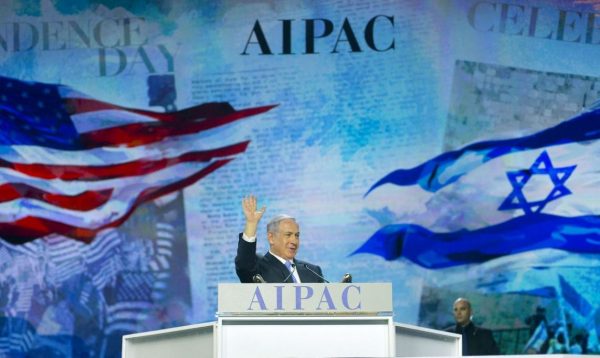
The American Israel Public Affairs Committee (AIPAC) is a lobbying group that advocates pro-Israel policies to the Congress and Executive Branch of the United States.
Causation?
The Canadian researchers found a “systemic problem in coverage,” but did not study the causation. Nevertheless, they excluded the possibility of “deliberate planned bias,” attributing the biased coverage to “the U.S. media’s affinity to broadly align and support their government’s foreign policy objectives.”
Some other researchers, however, report a wider range of factors, many connected to the pro-Israel lobby in the United States. For example, Alison Weir discovered deep links between US media and Israel (e.g. here, here, here, and here). Mearsheimer and Walt reported on the power of pro-Israel pressure in their book The Israel Lobby; Paul Findley in his book They Dare to Speak Out, and others report a wider range of factors, many connected to the pro-Israel lobby in the United States. In many cases, pressure from pro-Israel groups in the Israel lobby, contributed significantly to the consistent slant in mainstream media.
Conclusion
As the authors point out:
Whether online, television, or print, the mainstream media serves to provide most Americans with their daily news. How the media frames the news and presents it to viewers can profoundly shape their perception of current events.
Yet numerous analysts, across time and region, have established that this media consistently skews the news when it comes to Israel-Palestine. This results in nations and their governments upholding Israeli priorities rather than those of their own people, and perpetuating injustice toward Palestinians.
RELATED READING:
Why we urgently need alternative news sources
Mainstream media repeatedly shows its Israel bias
Keeping an eye on the curators of the news
Correcting a few distortions about Gaza
Associated Press Double Standard in Israel-Palestine Reporting
Media selectively report on Jerusalem unrest; the clock keeps ticking…
Vancouver City Council Won’t Set Precedent in Endorsing IHRA Definition
By Marion Kawas | Palestine Chronicle | July 28, 2019
The City of Vancouver, Canada might seem to be an odd place for a battle over the International Holocaust Remembrance Alliance (IHRA) definition of Anti-Semitism. But that is exactly what happened in the last week, and it all concluded with at least a temporary victory for free speech, human rights and common sense.
At the end of June, the federal government of Canada endorsed the IHRA definition as part of its new official “Anti-Racism Strategy” announced by minister Pablo Rodriguez. This was a unilateral move by the government which did not involve a vote in the House of Commons. The Israeli lobby, however, in their ecstatic gloating over the endorsement, made it clear they would be pushing to have the IHRA definition adopted at all levels of government, including provincial and municipal.
Which brings us to the Vancouver City Council, where one Non-Partisan Association (NPA) councilor introduced a motion to be heard at the last meeting before summer break. The motion contained the standard reasoning that one has come to expect from the Israeli lobby promoting the IHRA definition and concluded with adoption of the definition and its examples; it also explicitly instructed staff to share the definition with various city departments including the Police Department, School Board, Parks Board and the Public Library for “review and consideration as an additional practical tool.”
What the outcome would be of this “additional practical tool”, especially by the Police Department, one could only speculate. The history of what has transpired so far in other countries regarding the IHRA definition is extremely troubling and was called out a year ago by over 40 Jewish groups in an open letter. They noted that the definition is “intentionally worded such that it equates legitimate criticisms of Israel and advocacy for Palestinian rights with antisemitism, as a means to suppress the former.”
The IHRA definition includes several parts, two vaguely worded sentences that are accompanied by 11 illustrative examples; it is the examples and the way they have been applied that are the focus of most of the critique, including from one of the original authors of the document. As noted by Independent Jewish Voices Canada, the initial sentences fail to even clearly “identify antisemitism as a form of prejudice or racism, instead calling antisemitism ‘a certain perception of Jews, which may be expressed as hatred toward Jews’.” They add that “7 of the 11 examples refer not just to Jewish people, but to the state of Israel, a deliberate rhetorical strategy to label criticism of Israel and of Zionism antisemitic.”
In fact, some of these examples have been included almost verbatim in the justification for the anti-BDS bills that have been passed or are winding their way through several U.S. states, including Florida.
Passing this motion would have set a dangerous precedent as being the first municipal council in Canada to endorse the IHRA definition. Vancouver, however, has a long and proud tradition of being both anti-racist and defending free speech and Palestinian rights. A popular campaign was immediately launched to tell Vancouver City Council why this motion should not be adopted – letter writing, social media and articles in local papers all happened.
People from both within the Jewish community and other sectors were adamant in stating that this definition had more to do with squashing criticism of Israel than it did with contributing to the fight against racism.
The Palestinian community also pointed out that the definition actually promotes anti-Palestinian racism, as it severely limits and defines what the Palestinian narrative can be. The Vancouver & District Labour Council (VDLC), the BC Civil Liberties Association (BCCLA) and civic parties like the Coalition of Progressive Electors (COPE) all took the position that adopting the IHRA definition would be divisive and harmful.
It seems City Council heard the message. In a vote of 6-5 (the 5 were all NPA councilors), the Council decided to not proceed with the motion and instead referred it to committee for recommendations on how to combat ALL forms of racism.
“THAT Council refer this motion to the Racial and Ethno-Cultural Equity Advisory Committee to provide recommendations to Council on how the City of Vancouver can increase action to combat all forms of racism and hatred, including Antisemitism.”
Although referral to committee is often the bureaucratic tactic to not deal with issues, in this case, the instructions in the referral made it more meaningful. And most importantly, Vancouver City Council refused to set a precedent as the first Canadian city to endorse the IHRA definition.
Activists know that the struggle will continue at the committee level but the small amount of time they had to prepare for the council vote allowed them to educate many people on the dangers of the IHRA definition; they feel confident that more time is only to their advantage.
Canada’s main Israel lobby group, Centre for Israel and Jewish Affairs (CIJA), was not happy with the outcome. They had invested heavily in promoting the motion and one of their officials stated he would be at City Hall when it was introduced.
They issued a statement expressing their “disappointment”, claiming that this was a “setback in the struggle against racism and bigotry”.
They went on to allege that,
“By delaying the initiative to protect Jewish community members at a time of rising antisemitism, those councilors who voted against the motion are on the wrong side of history.”
Vancouver residents do not need these lectures by a lobby group that is more interested in punishing critics of Israel than it is in fighting racism. Members of the Jewish community in Vancouver made this exact point in their submissions to Council.
The active involvement of many progressive Jews against this motion endorsing the IHRA definition was one of the more uplifting aspects of this campaign, along with the support from broader sections of Vancouver society. This was also reflective of the majority of Canadians who support Palestinian human and national rights.
Palestinian activists have not had many occasions lately to be optimistic, especially in the Canadian political arena. Hopefully, what happened at Vancouver City Council is just the first step in pushing back against the censoring of free speech and the bullying of activists who support Palestinian rights.
– Marion Kawas is a member of the Canada Palestine Association and co-host of Voice of Palestine. Visit: www.cpavancouver.org.
Abbas must take practical measures concerning suspension of all deals with Israel: Hamas
Press TV – July 28, 2019
A senior official from the Palestinian Hamas resistance movement says the recent decision made by President of the Palestinian Authority (PA) Mahmoud Abbas to suspend all agreements signed with the Israeli regime needs practical steps.
Mousa Abu Marzouk, in a post published on his official Twitter page on Saturday, described the move as “a step reflecting the wishes of Palestinian people, who aspire for freedom and independence.”
He added that Abbas’s decision to stop implementing agreements signed with the Israeli regime needs practical steps, national unity and internal reconciliation in order to yield results, and to confront potential risks facing Palestinians.
On Thursday, the 84-year-old Palestinian president declared the suspension of all agreements with the Tel Aviv regime.
The measure came after an emergency meeting of the Palestine Liberation Organization in the wake of recent demolition of a cluster of Palestinian homes in Sur Baher neighborhood on the southeastern outskirts of occupied East Jerusalem al-Quds.
“We announce the leadership’s decision to stop implementing the agreements signed with the Israeli side,” Abbas said at a speech in the central occupied West Bank city of Ramallah.
He added that a committee would be formed in order to implement the decision, but did not provide further details.
“We will not bow to dictates and imposing a fait accompli by force in al-Quds (Jerusalem) and elsewhere,” Abbas stated.
Abbas said the move comes as Israeli authorities “ignore” all the signed agreements with the PA.
The Palestinian Authority and the Israeli regime work together on various matters, including water distribution, electricity, economic relations and security coordination.
Hundreds of Israeli troops with bulldozers tore down about 70 homes in 10 apartment buildings in Sur Baher on July 22, despite local protests and international criticism.
On Wednesday, the United States blocked the United Nations Security Council from passing a resolution condemning Israel’s demolitions.
Indonesia, Kuwait and South Africa had earlier circulated a draft statement, expressing grave concern over the demolitions. They stated that such practice would undermine the viability of the so-called two-state solution, and the prospect for a just and lasting resolution of the decades-long conflict between Israelis and Palestinians.
US, Pakistan move in tandem to end Afghan war
By M. K. BHADRAKUMAR | Indian Punchline | July 28, 2019
The US State Department chose Friday to announce the decision to approve a $125 million aid package providing technical support to Pakistan’s fleet of F-16 fighter aircraft. Ironically, the news reached Delhi on the 20th anniversary of the Kargil Vijay Diwas, which symbolises, as Prime Minister Narendra Modi put it on Saturday, “India’s might, determination, capability, discipline and patience” to thwart Pakistan’s hostile acts.
Clearly, Washington has begun to “incentivise” Pakistan, in the downstream of the talks between President Trump and Prime Minister Imran Khan at the White House on July 22.
Meanwhile, the Pentagon also notified on Friday about a proposed $670 million follow-on support programme for the eleven C-17 Globemaster-III air-lift aircraft sold by the US to India in the recent years. By holding out the carrot to India, Washington hopes to create the hype that it is also favouring Delhi.
The intention here is to finesse Delhi’s criticism over the revival of US military aid to Pakistan. Of course, it will be a delusional thought that the US is balancing India and Pakistan. In reality, the Pentagon’s India proposal is a purely commercial transaction — “after-sales service”, which will generate good business for the US vendors — while the military aid to Pakistan providing technical and logistics support for its F-16 fighter jets is on concessional terms and signifies a major political decision.
Delhi will take note that the proposed US military aid may significantly enhance Pakistan’s offensive capability insofar as some of the F-16 jets are capable of delivering nuclear weapons.
Indeed, the “big picture” emerging out of all this is that the US and Pakistan are marching ahead in tandem to implement the decisions taken by Trump and Imran Khan to swiftly end the Afghan war.
No sooner than Imran Khan left Washington on July 23, the chairman of the US Joint Chiefs of Staff General Joe Dunford traveled to Afghanistan’s capital of Kabul for consultations with American, NATO and Afghan officials.
Dunford said he wants to ensure Gen. Austin S. Miller, the US commander in Afghanistan, has all he needs. He added that he wanted to take the pulse of US military operations in the country. Indeed, the pulse rate is rather high, as the US withdrawal from Afghanistan looms large.
Dunford insisted that the negotiations have not changed the military mission in the country. “Day to day, the mission hasn’t changed for General Miller and the team, and they are still taking the fight to the Taliban and supporting the Afghan military,” he said.
But that’s putting on a brave face. Evidently, the US is pushing forward a “face-saving way out of Afghanistan,” as former CIA deputy director Michael Morell has told Axios. The message has gone down the line in the State Department and the Pentagon that Trump wants to move quickly toward a deal to end the war in Afghanistan. Morell is deeply sceptical whether a deal with the Taliban will secure peace.
He said, “I would bet that the US intelligence community and policymakers have a pretty good understanding of what the Taliban’s intentions are. So we’re making a deal that we know isn’t going to be kept just to save face, just to maintain honour.” Morell repeated his past warnings that the Taliban is “ideologically not disposed to sharing power.”
However, an apocalyptic scenario cannot deter Washington anymore. On a parallel mission, the US special representative on Afghanistan Zalmay Khalilzad also took off on July 23 from Washington to Kabul (where he is now speaking with members of the Afghan government as he works to encourage inter-Afghan conversations between the Taliban and the government.)
In immediate terms, Khalilzad expects Pakistan to deliver on the promise that Imran Khan made to Trump to the effect that he plans to meet with the Taliban to persuade them to hold negotiations with the government in Afghanistan. (Taliban has welcomed such a meeting.)
Imran Khan had said, “Now, when I go back after meeting President Trump … I will meet the Taliban and I will try my best to get them to talk to the Afghan government so that the elections in Afghanistan must be inclusive where the Taliban also participate in it.”
It may seem a tough call, but the news from Kabul on Saturday suggests that Pakistan may have made some headway already. The Afghan state minister for peace affairs Abdul Salam Rahimi announced on Saturday that “We (Afghan government) are preparing for direct talks (with the Taliban.) The government will be represented by a 15-member delegation. We are working with all sides and hope that in the next two weeks the first meeting will take place in a European country.”
The Norwegian capital Oslo is mentioned as the venue for the crucial meeting between the representatives of the Afghan government and the Taliban. The Taliban has not yet budged from its longstanding demand that a deal must be forged with the US first. Possibly, a deal may be announced after the 9th round of US-Taliban talks in Doha in the coming week.
Indeed, we are witnessing an utterly fascinating spectacle of diplomatic pirouette being played out between and amongst five main protagonists — Trump who is demanding an expeditious US withdrawal from Afghanistan, assuming Imran Khan will deliver on his promises; Imran Khan, in turn, going through the motions of persuading the Taliban to be reasonable while expecting generous US reciprocal moves to accommodate Pakistani interests; Ashraf Ghani, Afghan president, seeing the writing on the wall that US withdrawal is unstoppable, whilst still hoping to secure a second term in office; Khalilzad pushing the reluctant Afghan government to fall in line with a Taliban deal, while also negotiating with the Taliban for an orderly US withdrawal, albeit with a weak hand; and the Taliban on a roll, sensing victory. There are caveats galore. But the compass has been set.
Featured Video

Michael von der Schulenburg: Europe’s Self-Defeating Iran War Policy
or go to
Aletho News Archives – Video-Images
Frlom the Archives
Provoking a Path to Persia
The Saban Center’s prescient paper on war with Iran
By Maidhc Ó Cathail | October 20, 2011
In June 2009, the Saban Center for Middle East Policy published “Which Path to Persia?—Options for a New American Strategy toward Iran.” Writing in a tone strikingly reminiscent of the Project for a New American Century’s infamous pre-9/11 paper “Rebuilding America’s Defenses,” the six co-authors noted that, “It seems highly unlikely that the United States would mount an invasion without any provocation or other buildup.” For a think tank specifically established by media mogul Haim Saban to protect Israel, this could prove to be a formidable obstacle impeding their desired march—of U.S. troops—to Tehran.
“In fact, if the United States were to decide that to garner greater international support, galvanize U.S. domestic support, and/or provide a legal justification for an invasion, it would be best to wait for an Iranian provocation, then the time frame for an invasion might stretch out indefinitely,” Saban’s think-tankers ruefully observed.
“With only one real exception, since the 1978 revolution, the Islamic Republic has never willingly provoked an American military response, although it certainly has taken actions that could have done so if Washington had been looking for a fight. Thus it is not impossible that Tehran might take some action that would justify an American invasion. And it is certainly the case that if Washington sought such a provocation, it could take actions that might make it more likely that Tehran would do so (although being too obvious about this could nullify the provocation). However, since it would be up to Iran to make the provocative move, which Iran has been wary of doing most times in the past, the United States would never know for sure when it would get the requisite Iranian provocation. In fact, it might never come at all.”
Seemingly undeterred by Iran’s frustrating unwillingness to provide the requisite provocation, the analysts continued to examine this option… continue
Blog Roll
 Aletho News
- Is there even an off ramp?
- Michael von der Schulenburg: Europe’s Self-Defeating Iran War Policy
- Sorry, The New Republic, Climate Change Isn’t Causing Somali Migration. Blame Civil Strife and Poverty.
- Expert Guts Claims That HPV Vaccine Reduces Cancer Risk
- No evidence Russia sabotaged Baltic cables – Finnish intel
- The Strategic Folly of a (Serious) US Ground Invasion of Iran
- US-Israeli war of aggression on Iran meant to reshape region: Omani FM
- Iran Does Not Consider Israel Party to Talks to Need Mediators With It – Ambassador
- Macron’s aircraft carrier and warplanes to the Persian Gulf is a dangerous vanity project
- Meet The Ellisons: Zionists, Technocrats, Moguls
- If Americans Knew
- Are we on the precipice of World War III?
- ‘Catastrophic,’ Says UNICEF: 1,100+ Children Killed or Wounded in Mideast Since US-Israel Launched Iran War
- The Unbelievable Madness of Our War With Iran
- World Council of Churches calls on govts to hold Israel accountable for violations of intl law
- How to end the war on Iran that costs US taxpayers $1M per minute – Not a ceasefire Day 153
- Israeli strategic plans to “remake the Middle East” from the 1950s and since
- Honoring Gaza’s women who refused to let the world look away
- 97% of victims of war on Iran are Iranian, 98% of victims in war on Gaza are Gazans – Not a ceasefire Day 152
- Early Iran strikes cost $5.6 billion in munitions, Pentagon estimates
- Israel Decided the War, But Trump’s America Fights and Pays the Bill
- No Tricks Zone
- New Studies: UK Sea Levels Were 4 Meters Higher Than Today During The Mid-Holocene
- Destructive Green New Deal: German Energy And Metal Group Warns Of Drastic Crisis
- New Study Documents A 20-Year Pause In Arctic Sea Ice Decline – Driven By Internal Variability
- Wake-up Call: Survey Shows Majority Of Germans Now Favor Postponing Climate Targets!
- Televised! Leading German Political Candidate Tells Schoolchildren CO2 Makes Sun Hotter!
- New Study: A Century Warming Of 1.1°C Is ‘Commonplace’ And ‘Not Unusual’ During This Interglacial
- New Study: ‘Internal Noise’ And Volcanic Forcing Can Trigger 10-15°C Warming Within Decades
- Glaciers Worldwide Are Suddendly Surging, Experts Blame Warming!
- Surprising Discovery: Sahara Is Greening…Billions Of Trees Where Once Thought To Be Barren
- New Research Reaffirms Clouds, Aerosols, And Surface Solar Radiation Are ‘Driving The Climate System’
 Aletho News