Seizure of Iranian property to pay Americans another example of Canadian hypocrisy
By Yves Engler · September 19, 2019

While France, Germany, Russia and China seek detente, Canada is increasingly part of the US-Saudi Arabia-Israeli axis stoking conflict with Iran.
Canada recently seized and sold $30 million worth of Iranian properties in Ottawa and Toronto to compensate individuals in the US who had family members killed in a 2002 Hamas bombing in Israel and others who were held hostage by Hezbollah in 1986 and 1991. The Supreme Court of Canada and federal government sanctioned the seizure under the 2012 Justice for Victims of Terrorism Act, which lifts immunity for countries labeled “state sponsors of terrorism” to allow individuals to claim their non-diplomatic assets.
While not much discussed by Canadian media or politicians, this is a substantial development. Iranian Foreign Ministry Spokesman Seyyed Abbas Mousavi called the seizure “illegal” and in “direct contradiction with international law” while a spokesperson for Iran’s Guardian Council, Abbasali Kadkhodaei, accused Canada of “economic terrorism”. A senior member of Iran’s parliament said the country’s military should confiscate Canadian shipments crossing the Strait of Hormuz.
In a right side up world, the Iranian asset sale would lead to various more legitimate seizures. Relatives of the Lebanese Canadian el-Akhras family Israel wiped out, including four children aged 1 to 8, in 2006 are certainly at least as worthy of Canadian government-backed compensation. Ditto for Paeta Hess-Von Kruedener, a Canadian soldier part of a UN mission, killed by an Israeli fighter jet in Lebanon in 2006. Or Palestinian Canadian Ismail Zayid, who was driven from a West Bank village demolished to make way for the Jewish National Fund’s Canada Park.
In Haiti there are hundreds, maybe thousands, of individuals whose family members were killed at peaceful protests by a police force paid, trained and politically supported by Canada after US, French and Canadian troops overthrew the country’s elected president in 2004. Ten months after the coup I met a young man in Port-au-Prince who fled the country after armed thugs searching for him came to his house and killed his aunt. Before the coup Jeremy had been a journalist with the state television, which was identified with the ousted government. Should US or Canadian assets be seized to compensate him?
There are hundreds of Canadians and countless individuals elsewhere who have been victimized by Israeli, Canadian and US-backed terror more deserving of compensation than the Americans paid with Iranian assets for what Hamas and Hezbollah purportedly did decades ago. Should Israeli, US and Canadian government assets be seized to pay them?
It’s insightful to look at the double standard — approved by the Supreme Court — from another angle. In 2012 that court refused to hear a case against Anvil Mining for its direct role in Congolese troops killing 100, mostly unarmed civilians, near its Dikulushi mine in Katanga in October 2004. After a half-dozen members of the little-known Mouvement Revolutionnaire pour la Liberation du Katanga occupied the Canada-Australian company’s Kilwa concession, Anvil provided the trucks used to transport Congolese soldiers to the area and to dump the corpses of their victims into mass graves. The company also published a press release applauding the Congolese military’s dastardly deed. Though the company was managed from Montréal and its main shareholders were Vancouver’s First Quantum and the Canadian Pension Plan, the Québec Court of Appeal and Supreme Court concluded the survivors had to pursue remedies in either the Congo or Australia.
The Canadian media has devoted little attention to the seizure of Iranian assets. But, Forbes, Sputnik, Xinhua and a host of Iranian media have covered the story. At least three Iranian newspapers put it on their front page.
The Trudeau government’s failure to speak against the asset seizure, de-list Iran as a “state sponsor of terror” or repeal Stephen Harper’s Justice for Victims of Terrorism Act puts further lie to its commitment to a “rules based international order”. It is also another broken promise. Before the 2015 election Justin Trudeau told the CBC, “I would hope that Canada would be able to reopen its mission [in Tehran]. I’m fairly certain that there are ways to re-engage [Iran].”
But, don’t expect NDP foreign affairs critic Guy Caron or the media to ask why Canada hasn’t re-established relations with the nation of 80 million. By breaking his promise to restart diplomatic relations with Iran Trudeau has empowered those hurtling us towards a major conflict.
Spy vs Spy vs Spy: The Mysterious Mr. Smolenkov
By Philip Giraldi | Strategic Culture Foundation | September 19, 2019
A new spy story has been making the rounds in Washington, but this time it involved a brave Russian official who allegedly was allegedly recruited while in the Russian Embassy in Washington in 2007 and then worked secretly for the CIA until he was exfiltrated safely in 2017 lest he be discovered and caught. The tale was clearly leaked by the Agency itself to CNN by way of “multiple Trump administration officials.”
The CNN headline Exclusive: US extracted top spy from inside Russia in 2017 landed like a bombshell but then pretty much disappeared as journalists noted a number of inconsistencies in the government-produced account of what had taken place. Matt Taibbi observed succinctly that “Seldom has a news story been more transparently fraudulent…the tale of Oleg Smolenkov is just the latest load of high-level BS dumped on us by intelligence agencies.”
The account that appeared in the mainstream media went something like this: A midlevel Russian official named Oleg Smolenkov was recruited decades ago by the CIA. He eventually wound up in an important office in the Kremlin that gave him access to President Vladimir Putin. Smolenkov was the principal source of information confirming that Russia, acting on Putin’s instructions, was trying to interfere in the 2016 presidential election to defeat Hillary Clinton and elect Donald Trump. It was claimed that Smolenkov was actually able to photograph documents in Putin’s desk. CIA concerns that a mole hunt in the Kremlin resulting from the media revelations concerning Russian interference in the election might lead to Smolenkov resulted in a 2016 offer to extract him and his family from Russia. This was successfully executed during a Smolenkov family vacation trip to Montenegro in 2017. The family now resides in Virginia.
The CNN story and other mainstream media that picked up on the tale embroidered it somewhat, suggesting that although Smolenkov was the CIA’s crown jewel, the US has a number of “high level” spies in Moscow. It was also claimed that the timetable for the exfiltration was pushed forward by CIA in 2017 after it was noted that Donald Trump was particularly careless with classified information and might inadvertently reveal the existence of the source. The allegation about Trump carelessness came, according to CNN, after a May 2017 meeting between Trump and Russian Foreign Minister Sergei Lavrov in which the president reportedly shared sensitive information on Syria and ISIS that had been provided by Israel.
Variants of the CNN story appeared subsequently in the New York Times headlined C.I.A. Informant Extracted From Russia Had Sent Secrets to US for Decades, which confirmed that the extraction took place in 2017 though it also asserts that the decision to make the move came in 2016 when Barack Obama was still president.
Taibbi observes, correctly, that CNN and the other mainstream elements reporting the story elaborated on it through commentary coming from anonymous “former senior intelligence officials.” As the networks have all hired ex-spooks, it raises the interesting possibility that employees of the media are themselves providing comments on intelligence operations that they were personally involved in, meaning that they might deliberately promote a narrative that does not cast them in a bad light.
Next morning’s Washington Post story US got key asset out of Russia following election hacking touched all bases and also tried hard to implicate Trump. It confirmed 2016 as the time frame for the decision to carry out the exfiltration and also mentioned the president’s talk with Lavrov in May 2017, though the meeting itself was not cited as the reason for the move. As Taibbi observes, “So why mention it?”
The Russians have denied that Smolenkov was an important official and have insisted that the whole story might be something of a fabrication. And the alleged CIA handling of the claimed top-level defector somewhat bears out that conclusion. Normally, a former top spy is resettled in the US or somewhere overseas in a fake name to protect him or her from any possible attempt at revenge by their former countrymen. In Smolenkov’s case, easily public accessible online county real estate records indicate that he bought a $1 million house in Stafford Virginia in 2018 using his own true name.
If the Russians were truly conducting a mole hunt that endangered Smolenkov it may have been because the US media and their anonymous intelligence sources have been bragging about how they have “penetrated the Kremlin.” A Washington Post June 2017 articled called “Obama’s Secret Struggle to Punish Russia for Putin’s Election Assault is typical. In that article, the author describes how CIA Director John Brennan secured a “feat of espionage” by running spies “deep within the Russian government” that revealed Russia’s electoral interference.
So, the Smolenkov story has inconsistencies and one has to question why it was deliberately leaked at this time. The only constant in the media coverage is the repeated but completely evidence-free suggestion that the mole was endangered and had to be removed because of Donald Trump’s inability to keep a secret. One has to consider the possibility that the story has been leaked at least in part due to the continuing effort by the national security state to “get Trump.”
Highly recommended is former weapons inspector Scott Ritter’s fascinating detailed dissection of Smolenkov’s career as well as a history of the evolution of CIA spying against Russia. Scott speculates on why the leak of the story took place at all, examining a number of scenarios along the way. Smolenkov, who, according to former CIA officer Larry Johnson, has oddly never been polygraphed to establish his bona fides, might have been a double agent from the start, possibly a low level functionary allowed to work for the Americans so the Russian FSB intelligence service could feed low level information and control the narrative. It is a “dirty secret” within the Agency that many agents are recruited by case officers for no other reason than to enhance one’s career. Such agents normally have no real access and provide little reporting.
Or alternatively, Smolenkov might have been someone who was turned after recruitment or a genuine agent who was trying to respond to urgent demands from his controller in Washington, who was de facto John Brennan, by producing a dramatic report that was basically fabricated. Or the story itself might be completely false, an attempt by some former and current officials at CIA to demonstrate a great success at a time when the intelligence community is under considerable pressure.
Scott also believes, as do I, that the story was leaked because John Brennan and his associates knew that they were deliberately marketing phony intelligence on Russia to undermine Trump and are trying to preempt any investigation by Attorney General William Barr on the provenance of the Russiagate story. If it can be demonstrated somehow that the claims of Kremlin interference came from a highly regarded credible Russian source then Brennan and company can claim that they acted in good faith. Of course, that tale might break down if anyone bothers to interview Smolenkov.
Another theory that I tend to like is that the CIA might be making public the Smolenkov case in an attempt to lower the heat on another actual high-level source still operating in Moscow. If Russia can be convinced that Smolenkov was the only significant spy working in the Kremlin it might ratchet down efforts to find another mole. It is an interesting theory worthy of spy vs. spy, but one can be pretty sure that Russian counterintelligence has already thought of that possibility and will not be fooled.
The reality is that spying is a highly creative profession, with operational twists and turns limited only by one’s imagination. In this case, unless someone actually succeeds in interviewing Oleg Smolenkov and he decides to tell the complete truth as he sees it, the American public might never know the reality behind the latest spy story.
Iran vs Saudi Arabia: it’s game-over
By Ghassan Kadi | The Saker Blog | September 19, 2019
Is the attack on ARAMCO the first of a long war or is it game-over already? It seems like the latter and in more ways than one, the war between Iran and Saudi Arabia has ended before it even started. One single solitary Houthi attack on Aramco has sent Saudi oil exports tumbling down by half; not to mention a 20% hike on the price of crude.
Now, even though the Houthis have declared responsibility for the ARAMCO attack, the Trump administration wants the world to buy the idea that it was Iran who launched the attack, not the Houthis. Thus far, at least Japan seems unconvinced, and so is France.
In reality however, the resolve of Saudi Arabia and its capability to stand up and fight has little to do with the identity of the attacker, and this is because Saudi Arabia has demonstrated that it didn’t take much for it to suffer what it suffered. This begs the question; how many such similar attacks can Saudi Arabia weather before it totally capitulates? Seemingly, not many.
In a previous article, I anticipated such scenarios because the Saudi economy and infrastructure are highly vulnerable. A country that has virtually one major wealth-producing base (ie oil) and just a few desalination plants that pump fresh water into its major cities, is a very soft target indeed. After all, if those handful of vital targets are hit, not only will oil exports stop, but water will stop running in households. But the water desalination plants do not have to suffer a direct hit for them to stop running. They need power to run, and the power comes from fuel, and if the fuel supplies stop, so will they, and so will electricity-generating plants in a nation that cannot survive without air-conditioning.
Up until recently, people of Arabia were used to drought, brackish water and searing heat. They lived in and around oases and adopted a lifestyle that used little water. But, the new generation of Saudis and millions of expats are used to daily showers, potable water and climate control in their households. During wars, people normally go to nature to find food and water. They hunt, they fish, they collect local berries and edible wild plants, they fill jars from running rivers and streams, they grow their own vegetables in their backyards, but in Saudi Arabia, in the kingdom of sand, such alternatives do not exist at all.
Furthermore, with a population that has swelled from a few million in the 1950’s, the current population of Saudi Arabia stands at 33 million, and this includes the millions of expats who work and live there.
The limited supply of brackish water is not enough to get by until any damaged infrastructure is fixed, and it’s not even piped to begin with.
As the nation with the third highest global defence budget, higher than Russia’s, Saudi Arabia continues to import everything from Patriot Missiles all the way down to bullets.
This is in sharp contrast with Iran’s geography, natural assets and demography. Iran is a nation of mountains, valleys and rivers, meadows, thriving agriculture and 70 million citizens who have been taught to be innovative and self-sufficient; courtesy of US-imposed sanctions.
And to say that the ARAMCO target was hit by surprise would be quite absurd and inexcusable given that Saudi Arabia is already in a state of war with Yemen, and especially given that the Yemeni aerial strikes have been escalating in recent months. To make the situation even more embarrassing for the Saudis; the spectre of war with Iran is currently hot on the agenda, so how could key Saudi installations be unprotected?
But here’s the other thing, had it been truly Iran that was responsible for the attack as the Trump administration alleges and wants us to believe, America would then be admitting that Iranian missiles flew from mainland Iran, across the Gulf, managed to dodge American defences and state-of-the-art detection hardware and software, and effectively reached their target on Saudi soil. If this is the scenario Trump wants us to believe, what does this say about the capability of America to engage militarily with Iran? This is a much bigger farce than that of Russia-gate; a claim that Russia can indeed affect the outcome of the presidential elections of the allegedly “greatest and strongest nation on earth”. Do such claims mean that America’s adversaries are extremely organised, smart and strong or that America is in disarray, stupid and weak; or both? Either way, when such claims are perpetrated by none but America itself, they certainly do not put America in a good light.
The weaknesses and vulnerabilities of Saudi Arabia and Big Brother are only matched by the other ally, the UAE. As a matter of fact Houthis spokesperson Yahia Saria gave the Emirates a stern warning if they want to protect their glass skyscrapers. In his address, Saria is perhaps giving a tongue-in-cheek reference to the Arabic proverb which says that if one’s house is made of glass, he should not cast rocks at others. After years of indiscriminate shelling under the watchful and indifferent eyes of the world, after years of ruthlessly trying to starve the Yemenis into submission, why would one expect the Houthis to exercise any mercy towards their aggressors?
But let us face it, Dubai and other thriving metropolises of the UAE are predestined to morph into ghost towns. It is only a question of time before they run out of their current charm and their fake onion skin deep glitter. After all, there is nothing in those fantasy cities that is real, substantial and self-sustaining. If anything, a war with Iran has the potential to fast-track the decay process and leave foreign investors and expats exiting in droves; if not running for their lives.
Ironically, the American/Saudi/UAE alliance, if it is indeed an alliance, accuses Iran of spreading its dominion over the region; and perhaps there is evidence to support this accusation. However, the alliance seems to conveniently forget that it was its own orchestrated invasion of Iraq and toppling of Saddam that created a power vacuum in Iraq that was soon filled by Iran. And even though the eight-year long and bitter Iran-Iraq war ended up with no winners or losers, the fall of Saddam at the hands of the American/Arab alliance has turned Iran into the virtual winner that the same alliance is now trying to curb. How more ironic can this farcical situation be?
America plays down the strength of Iran’s Army, and Iran does the opposite. This is normal and part-and-parcel of the psychological warfare. In reality however, no one knows for certain what is Iran’s military capability. For this reason, any all-out confrontation with Iran may at least initially sway America to move its vessels out of the Gulf and further away from the reach of short-range Iranian missiles until and if they feel confident to move closer at a later stage. However, Saudi key and vital ground targets cannot be moved, and for Iran to only be able to hit a few that can be counted on the fingers of one hand, can lead to a total Saudi/UAE capitulation.
Whilst no one knows Iran’s real strength, what we do know is that Saudi Arabia has failed abysmally in defeating the much weaker, poorer, underprivileged starving people of Yemen.
America will not commit boots on the ground and, to this effect, has little to lose apart from risking naval vessels. The soft targets will be Saudi and UAE key infrastructures and no Patriot defence systems will be able to intercept all missiles poised to hit them. If the Houthis could do it, it is a given that Iran also can.
I have recently watched the series “The Vietnam War” on Netflix, and I remembered how back then when the truth about that war was exposed, I believed that American hawks would never get away with lying to their people and the rest of the world again, or ever invade another country in the way that they did with Vietnam. In less than two decades however, they moved full throttle into Iraq, and the masses believed their story. Perhaps some things will never change, and after the losses in Korea, Vietnam, Lebanon, Iraq, Afghanistan and Syria, America seems still determined to fight Iran. This time around, the biggest loser may not end up to be America itself, but its Arab allies; namely Saudi Arabia and the UAE, and the recent attack on ARAMCO is only a prelude to an inevitable outcome, because the writing is already on the wall and it clearly reads: GAME-OVER.
Over 80 percent of Americans won’t back war over attack on Saudi oil sites: Poll
Press TV – September 19, 2019
Most Americans are opposed to the idea of a new US military conflict over the recent attack on Saudi Arabia’s oil facilities, a new poll has found, amid reports that Washington is not ruling out a military response to the attack which slashed the close US ally’s oil output by more than half.
The survey by the Business Insider, released late Wednesday, found that only 13 percent of Americans would want to see a joint military response by the US and Saudi Arabia to the Saturday attack.
Asked what role they think the US should take on in case of a military response by Saudi Arabia, 25 percent of the participants in the survey said “the US should remove itself entirely from the affairs of the region and let Saudi Arabia handle the issue itself.”
Around 25 percent said the US should stay out of the conflict at any price and respond by condemning the attack and hit those responsible with sanctions or diplomatic criticism.
The poll found that 16 percent of Americans believe “the US should offer material support in the form of supplies and intelligence to Saudi Arabia for their military response, but no more,” while 22 percent said they “don’t know” what the US should do.
Only seven percent of those questioned said the US should support the Saudis with “a complete military assistance in whatever form may be required.”
And 6 percent said the US “should engage in air assaults or bombings as part of a Saudi military response but refrain from committing ground forces.”
The attack by Yemen’s Houthi Ansarullah movement forced the Saudi state oil company Aramco to halt operations at its al-Khurais and Buqayq facilities, some of the largest refineries in the world, disrupting the production of around 5.7 million barrels per day (5 percent of global demand).
According to data by the Organization of the Petroleum Exporting Countries (OPEC), that is more than half the kingdom’s overall output (9.3 million bpd), and more than the total production of most countries—aside from the US and Russia.
The surprise attack has already caused oil prices to jump, forcing both the US and Saudi Arabia to tap into their reserves to calm the market. The shortage is also expected to cause gas prices to jump across the US.
US President Donald Trump and senior officials from his administration have on several occasions accused Iran of having a role in the attack, but they have yet to directly pin it on Tehran.
Trump on Wednesday ordered sanctions against Iran to be “increased substantially,” in what observers argue is a response to such allegations.
US Secretary of State Mike Pompeo, who has called the attack an “act of war” and alleged that the attacks might have originated from Iran, traveled to Riyadh later in the day to discuss a possible response with Crown Prince Mohammed bin Salman.
Ahead of Pompeo’s arrival, Saudi officials put on display what they said were remains of the drones and the alleged missiles that were used in the attack, claiming they were Iranian-made. Both Iran and the Yemeni resistance forces have denied the allegations of Tehran’s involvement.
In an official note passed to the Swiss Embassy in Tehran, which represents American interests, the Iranian Foreign ministry condemned and rejected the claims and warned that any action taken against the country over the false accusations will be met with an immediate response.
On Criticism of Palestinian Resistance
By Eve Mykytyn | September 18, 2019
The Oxford definition of ‘terrorism’ is: “the unlawful use of violence and intimidation, especially against civilians, in the pursuit of political aims.” Although the term could apply to the belligerents in many wars, the term ‘terrorism’ takes on its everyday meaning when violence is perpetuated by the weak in resistance to the powerful.
What other form of resistance is available to an oppressed people? One does not have to search hard to find a Jewish source begging for the peaceful resistance of a Palestinian Gandhi or King.
The request itself is odd, it invites a comparison to the conditions Gandhi and King fought, and is an implicit, although perhaps unintended, admission that Israel represents another oppressive racist regime.
It takes chutzpah to complain about the form of resistance employed by the people you are oppressing. Why are the Palestinians obliged to meet violence with nonviolence? Certainly you have to take your victims as they are.
Gandhi wrote about the uses of nonviolent resistance and King referred to Gandhi’s writings. For Gandhi and King nonviolence was not an end in itself, it was a strategy, a means to achieve a goal. Despite later deifications, neither Gandhi nor King was a saint, they were leaders who employed non violent resistance because it was effective under their circumstances.
Both men were vastly outpowered by the brutal regimes they opposed. Nonviolence did not allow them or their followers to escape injury or death, their battles required at least as much physical bravery as for any soldiers.
Both Gandhi and King deliberately provoked their enemies and then refused either to back down or to physically fight back. The decision to meet violence with nonviolent resistance was a powerful tool used to expose the brutality of the regime. The march to Selma would have amounted to little without the press. What they ‘achieved’ was an unforgettably painful display of violence. To the extent nonviolence succeeded for King, it was because the ‘soldiers’ on the other side gave Americans a clear picture of the savagery to which blacks were subjected. It became increasingly difficult for those who had long averted their eyes to claim ignorance.
One reason the Palestinians are portrayed as ‘failing’ to meet the standard set by Gandhi or King is that their use of the tactic of nonviolence has not attracted sympathetic coverage, it has not been effective enough in exposing Israel’s brutality. There are, of course, numerous examples of peaceful Palestinian resistence. One example is commemorated on ‘Land Day’ remembering the day in 1976 that Israel killed peaceful Palestinian protestors. Another occurred during the first intifada, as Neve Gordon writes in 972, when the “Palestinians adopted massive civil disobedience strategies, including daily protests” against Israel’s occupation. Israel responded with violence and mass incarcerations. While they could easily provoke violence through peaceful protest, the Palestinians could not win the media nor shame the Israelis into change.
This, of course, begs the question of control of the media. King was extensively covered in the media. Do the Palestinians have access to the same? At best, Haaretz might decry the proportionality of Israel’s violence, but will it explore the true meaning of Palestinian protest, both the original and the ongoing taking of their property and destruction of their society? Would the international press do any better?
As I was writing this I realized that Palestinian nonviolent protests in Gaza have had perhaps a small effect on public opinion. The mainstream media in the US is universally favorable to Israel, but although they tried, the media was not entirely successful in creating sympathy for the Israeli snipers. For example, The Guardian, in reporting that one year into the protest, the Israelis had killed 190 and wounded 28,000, noted that, “Children, journalists and medics have been killed, even when they were standing far back from the fence.” Spin that one. Here’s an attempt by Eric Yoffe, a self-described ‘liberal’ American Jew, to justify killing protestors who had not killed a single Israeli. “If 100 Jewish bodies were strewn across southern Israel, would the American left more readily forgive Israel’s defensive actions against an angry mob of tens of thousands propelled by the murderous, anti-Semitic terrorists of Hamas?” This is simply a variation on the “I thought he was going to hit me so I hit him back first” defense. Perhaps the need to resort to such a feeble rationale helps explain why we finally have a tiny Congressional support group for the Palestinians. Seventeen were so daring as to vote against an anti BDS bill.
Further, Israel has shown little sign that it is willing to change its basic oppressive policies in response to any actions or restraint by the Palestinians. This is an interesting video in which Israeli ‘settlers’ are asked if they would move if told to do so by their government and knowing the move would mean peace in the region. Their responses are variations on “No, I would not, it is my land.” Perhaps they are merely following the lessons of their religion.
In the story of Exodus, recounted annually even by many secular Jews at Passover, Moses unsuccessfully begs the Pharaoh for his peoples’ freedom. The lesson to be learned: Jewish liberation comes only after Egyptian civilians are subjected to terrible brutality.
UAE Joins US-led Maritime Coalition in Middle East
Al-Manar | September 19, 2019
Following in the footsteps of Saudi Arabia, the United Arab Emirates has joined a US-led naval mission purportedly aimed at protecting shipping lanes in Middle Eastern waterways.
The official Emirates News Agency (WAM) reported the UAE’s decision to become a member of the so-called International Maritime Security Construct on Thursday, a day after Riyadh said it was joining the alliance.
It quoted Salem al-Zaabi of the Emirati Foreign Ministry as claiming that Abu Dhabi’s accession to the US-led coalition is meant to “to secure the flow of energy supplies to the global economy and contribute to the maintenance of international peace and security.”
The United States has been trying to persuade its allies to join the international coalition with the declared aim of providing “security” for merchant shipping in the Strait of Hormuz and other strategic shipping lanes in the Middle East.
Washington moved to set up the coalition after pinning the blame on Tehran for two attacks on oil tankers in the Persian Gulf and the Sea of Oman in May and June. Tehran rejected the claims, saying the attacks seemed more to be false-flag operations meant to exert pressure on Iran.
Riyadh and Abu Dhabi — key members of a coalition waging war on Yemen — decided to join the coalition in the wake of the Yemeni army’s massive retaliatory attacks on key Saudi oil facilities.
Saudi Arabia and the US pointed the finger at Tehran again, a claim rejected by Iran and Yemen.
On Wednesday, Saudi Defense Ministry spokesman Colonel Turki al-Malki claimed that the strikes were “unquestionably sponsored by Iran.”
During a press briefing, Maliki showed off wreckage of drones and missiles, which he claimed proved “Iranian” involvement in weekend attacks on two oil facilities.
At another presser in Sana’a, Yemeni army spokesman Brigadier General Yahya Saree rejected the claims of Iranian role in the drone raids, which he described as “an outstanding example of the military prowess.”
Saree also sternly warned the UAE against keeping up its acts of aggression against the Yemeni nation.
“To the Emirati regime we say only one operation (of ours) would cost you dearly,” he said. “Today and for the first time we announce that we have dozens of targets within our range in the UAE, some are in Abu Dhabi and can be attacked at any time.”
Iran condemns UAE, Israel’s ‘ridiculous’ claims at IAEA
Press TV – September 18, 2019
Iran has denounced “ridiculous” allegations raised at the recent general conference of the International Atomic Energy Agency (IAEA) by the UAE “nuclear newcomers” and the Israeli regime.
“It is quite ridiculous that a regime which has ignored all the non-proliferation and disarmament commitments and developed all kinds of weapons of mass destruction is preaching to a member of the Non-Proliferation Treaty (NPT) whose nuclear facilities and materials are under the IAEA’s safeguards,” Iran’s permanent representative to international organizations Kazem Gharibabadi said on Wednesday.
“The Zionist regime, with its long history of [adopting] opportunistic policies to deflect attentions from its brutal and inhumane measures against the people of Palestine and other countries in the Middle East, has been one of the main sources of crisis, instability, pain, and anger in the region’s recent history,” he noted on Wednesday.
He called on the international community not to be distracted from the Israeli regime’s atomic weapons program, and said that Tel Aviv must abandon its nukes and join the NPT immediately, putting all its nuclear facilities under the IAEA’s safeguards.
In an address to the 63rd IAEA general conference, the director general of Israel’s Atomic Energy Commission claimed that the IAEA needs to show “greater vigilance” considering what he called Iran’s “methods of deception and concealment in the nuclear realm.”
He also accused Iran of “concealing and removing nuclear materials and equipment from its clandestine sites” and undermining the IAEA’s “ability to conduct effective verification missions.”
The allegations come as Israel, the sole possessor of nuclear weapons in the Middle East, has a policy of deliberate ambiguity about its nuclear program.
In his Wednesday comments, Gharibabadi also downplayed the “irrelevant and groundless” accusations raised by the UAE envoy, and gave assurances that “Iran has utilized the highest standards in building and launching its nuclear facilities.”
He said adopting such safety standards requires domestic technical capacities, which “cannot be easily purchased and imported” along with certain equipment.
“While the peaceful use of nuclear energy is the undeniable right of all governments … we strongly advise that regional newcomers to the nuclear field, including the UAE, show maximum transparency and avoid any deviation in their peaceful nuclear program,” he added.
“Iran has transparently shown on many occasions, including in the fight against terrorism, that it is the main source of security and stability in the region,” Gharibabadi said.
He made the remarks in reaction to comments by Hamad Alkaabi, the permanent representative of the UAE to the IAEA, who called on “the international community to devise a new approach towards addressing concerns and threats of Iran’s nuclear and regional activities.”
“With regard to the JCPOA, my country calls on Iran to honor its obligations under the IAEA safeguards, the NPT and its commitments under the JCPOA and to fully cooperate with the IAEA to address all concerns related to its nuclear activities, as well as to refrain from actions that could undermine the nonproliferation regime,” he said, referring to the Iran nuclear agreement using its abbreviation.
Israelis Have Made their Verdict Clear: Benjamin Netanyahu’s Time is Up
There looms the possibility of weeks of horse-trading and the Joint List of Arab legislators becoming the official opposition
By Jonathan Cook | The National | September 18, 2019
For most Israelis, the general election on Tuesday was about one thing and one thing only. Not the economy, nor the occupation, nor even corruption scandals. It was about Benjamin Netanyahu. Should he head yet another far-right government, or should his 10-year divisive rule come to an end?
Barring a last-minute upset as the final ballot papers are counted, Israelis have made their verdict clear: Netanyahu’s time is up.
In April’s inconclusive election, which led to this re-run, Netanyahu’s Likud party tied with its main opponent in the Blue and White party, led by retired general Benny Gantz. This time Gantz appears to have nudged ahead, with 32 seats to Netanyahu’s 31 in the 120-member parliament. Both parties fared worse than they did in April, when they each secured 35 seats.
But much more significantly, Netanyahu appears to have fallen short of the 61-seat majority he needs to form yet another far-right government comprising settler and religious parties.
His failure is all the more glaring, given that he conducted by far the ugliest – and most reckless – campaign in Israeli history. That was because the stakes were sky-high.
Only a government of the far-right – one entirely beholden to Netanyahu – could be relied on to pass legislation guaranteeing him immunity from a legal process due to begin next month. Without it, he is likely to be indicted on multiple charges of fraud and breach of trust.
So desperate was Netanyahu to avoid that fate, according to reports published in the Israeli media on election day, that he was only a hair’s breadth away from launching a war on Gaza last week as a way to postpone the election.
Israel’s chief law officer, attorney general Avichai Mendelblit, stepped in to halt the attack when he discovered the security cabinet had approved it only after Netanyahu concealed the army command’s major reservations.
Netanyahu also tried to bribe right-wing voters by promising last week that he would annex much of the West Bank immediately after the election – a stunt that blatantly violated campaigning laws, according to Mendelblit.
Facebook was forced to shut down Netanyahu’s page on two occasions for hate speech – in one case after it sent out a message that “Arabs want to annihilate us all – women, children and men”. That sentiment appeared to include the 20 per cent of the Israeli population who are Palestinian citizens.
Netanyahu incited against the country’s Palestinian minority in other ways, not least by constantly suggesting that their votes constituted fraud and that they were trying to “steal the election”.
He even tried to force through a law allowing his Likud party activists to film in Arab polling stations – as they covertly did in April’s election – in an unconcealed attempt at voter intimidation.
The move appeared to have backfired, with Palestinian citizens turning out in larger numbers than they did in April.
US President Donald Trump, meanwhile, intervened on Netanyahu’s behalf by announcing the possibility of a defence pact requiring the US to come to Israel’s aid in the event of a regional confrontation.
None of it helped.
Netanayhu’s only hope of political survival – and possible avoidance of jail time – depends on his working the political magic he is famed for.
That may prove a tall order. To pass the 61-seat threshold, he must persuade Avigdor Lieberman and his ultra-nationalist Yisrael Beiteinu party to support him.
Netanyahu and Lieberman, who is a settler, are normally ideological allies. But these are not normal times. Netanyahu had to restage the election this week after Lieberman, sensing the prime minister’s weakness, refused in April to sit alongside religious parties in a Netanyahu-led government.
Netanyahu might try to lure the fickle Lieberman back with an irresistible offer, such as the two of them rotating the prime ministership.
But Lieberman risks huge public opprobrium if, after putting the country through a deeply unpopular re-run election, he now does what he refused on principle to do five months ago.
Lieberman has nearly doubled his party’s seats to nine, by insisting that he is the champion of the secular Israeli public.
Most importantly for Lieberman, he finds himself once again in the role of kingmaker. It is almost certain he will shape the character of the next government. And whoever he anoints as prime minister will be indebted to him.
The deadlock that blocked the formation of a government in April still stands. Israel faces the likelihood of weeks of frantic horse-trading and even the possibility of a third election.
Nonetheless, from the perspective of Palestinians – whether those under occupation or those living in Israel as third-class citizens – the next Israeli government is going to be a hardline right one.
On paper, Gantz is best placed to form a government of what is preposterously labelled the “centre-left”. But given that its backbone will comprise Blue and White, led by a bevy of hawkish generals, and Lieberman’s Yisrael Beiteinu, it would, in practice, be nearly as right wing as Netanyahu’s.
Gantz even accused Netanyahu of stealing his idea in announcing last week that he would annex large parts of the West Bank.
The difficulty is that such a coalition would depend on the support of the 13 Joint List legislators representing Israel’s large Palestinian minority. That is something Lieberman has rejected out of hand, calling the idea “absurd” early on Wednesday as results were filtering in. Gantz appears only a little more accommodating.
The solution could be a national unity government comprising much of the right: Gantz’s Blue and White teamed up with Likud and Lieberman. Both Gantz and Lieberman indicated that was their preferred choice on Wednesday.
The question then would be whether Netanyahu can worm his way into such a government, or whether Gantz demands his ousting as a price for Likud’s inclusion.
Netanyahu’s hand in such circumstances would not be strong, especially if he is immersed in a protracted legal battle on corruption charges. There are already rumblings of an uprising in Likud to depose him.
One interesting outcome of a unity government is that it could provoke a constitutional crisis by making the Joint List, the third-largest party, the official opposition. That is the same Joint List described by Netanyahu as a “dangerous anti-Zionist” party.
Ayman Odeh would become the first leader of the Palestinian minority to attend regular briefings by the prime minister and security chiefs.
Netanyahu will continue as caretaker prime minister for several more weeks – until a new government is formed. If he stays true to form, there is plenty of mischief he can instigate in the meantime.
UK minister vows to pressure councils and universities to adopt IHRA definition of anti-Semitism
MEMO | September 18, 2019
Prime Minister Boris Johnson’s newly appointed Communities and Local Government Secretary, Robert Jenrick, has pledged to come down hard on local councils and universities that fail to adopt the International Holocaust Remembrance Alliance (IHRA) definition of anti-Semitism.
Jenrick made the pledge in a speech to the British Board of Deputies on Sunday, while also promising over $100,000 from the government to tackle anti-Semitism on social media and to go after supporters of the Boycott, Divestment and Sanctions (BDS) movement.
He said he will come down heavily on both local councils and universities that did not adopt the IHRA definition, which has been the source of controversy in the UK. Critics say the definition conflates criticism of Israel with anti-Semitism and undermines free speech. Jenrick dismissed these concerns. He insisted that the “suggestions that the IHRA definition curtails legitimate criticism of the Israeli government is wrong and must be countered.”
The Representative for Newark said that he “will be writing to all councils insisting that they adopt the IHRA at the earliest opportunity and use it at all appropriate occasions — including in their disciplinary proceedings.”
In his comments regarding BDS, Jenrick alleged that the global non-violent movement was “divisive” and promised not to tolerate supporters of the movement on his watch. He expressed unease about the annual Israel Apartheid Week on campuses, and said he would look at the issue in his department.
Jenrick assured the Board of Deputies that he can be relied on to contact local councils as well as vice-chancellors of Britain’s universities who should expect to get a phone call from him to oblige them to adopt the IHRA definition.
Exhibition of Houthi military-industrial achievements
The Saker | July 8, 2019
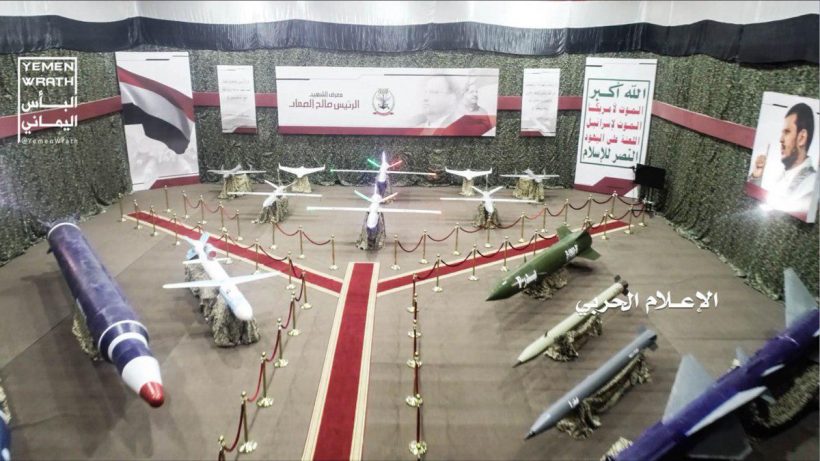
Exhibition of the achievements of the Houthi military industry (with a heavy Iranian accent).
New ballistic and cruise missiles, as well as new reconnaissance drones were presented.
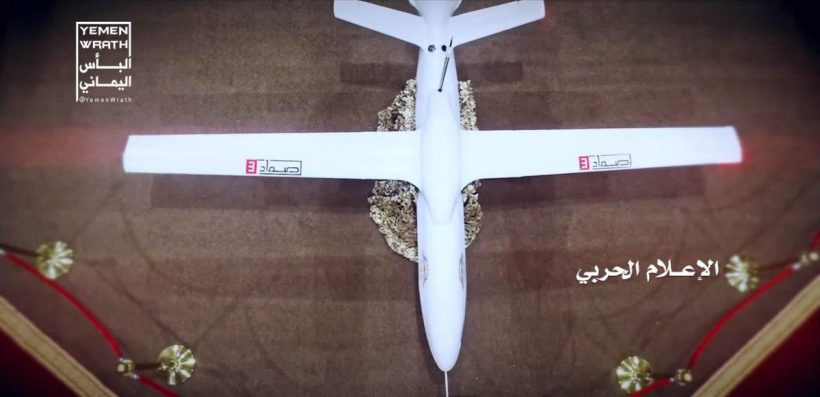
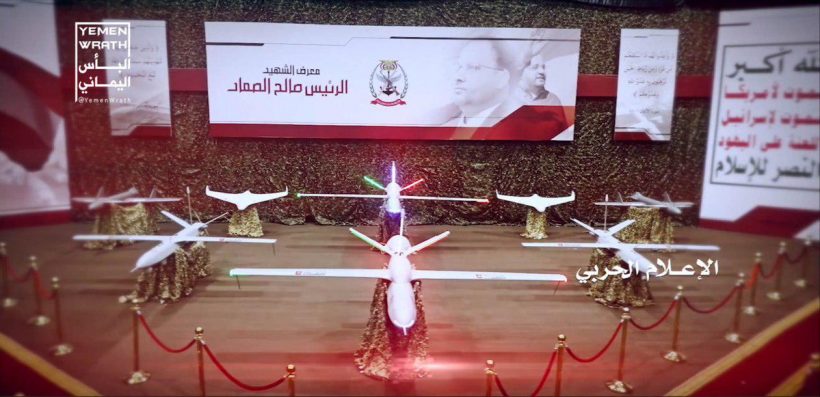
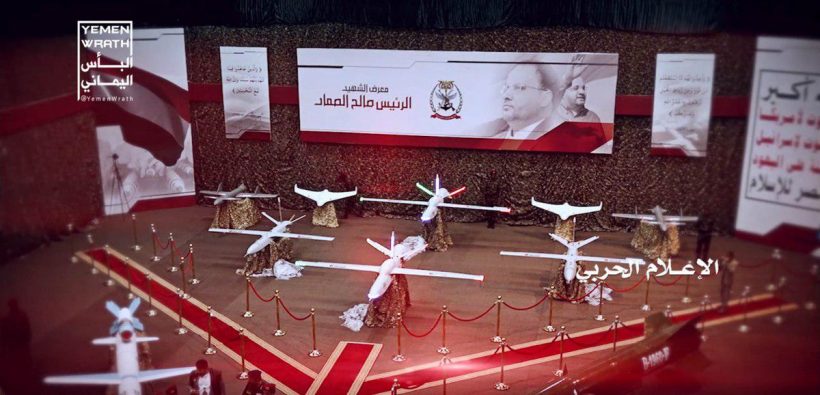
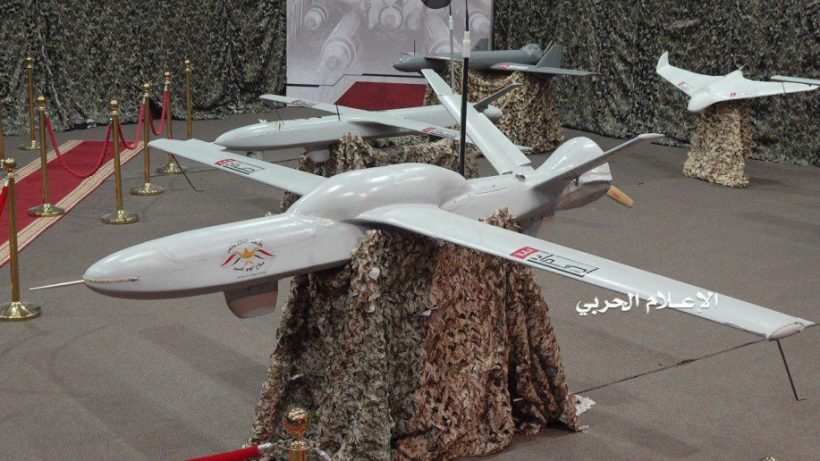
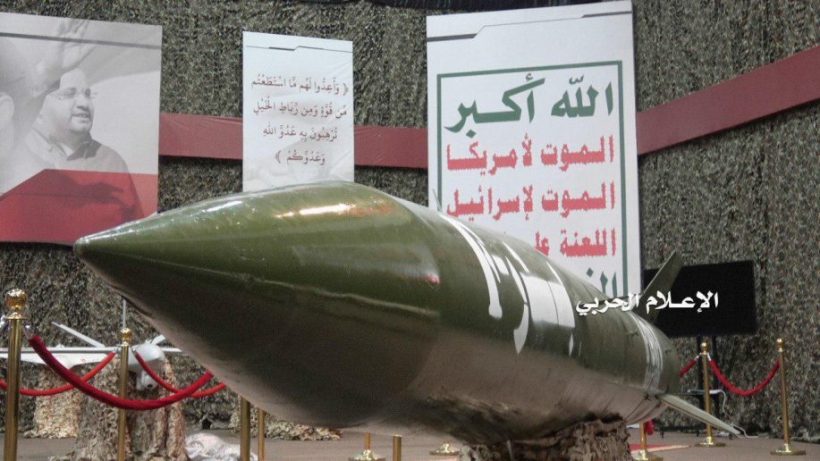
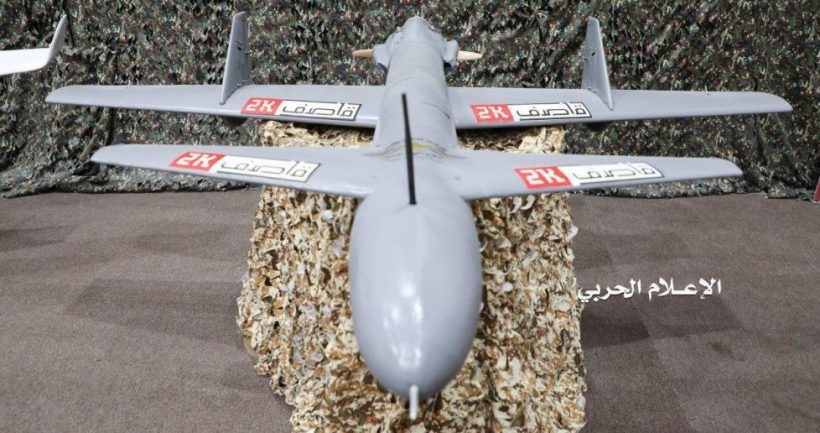
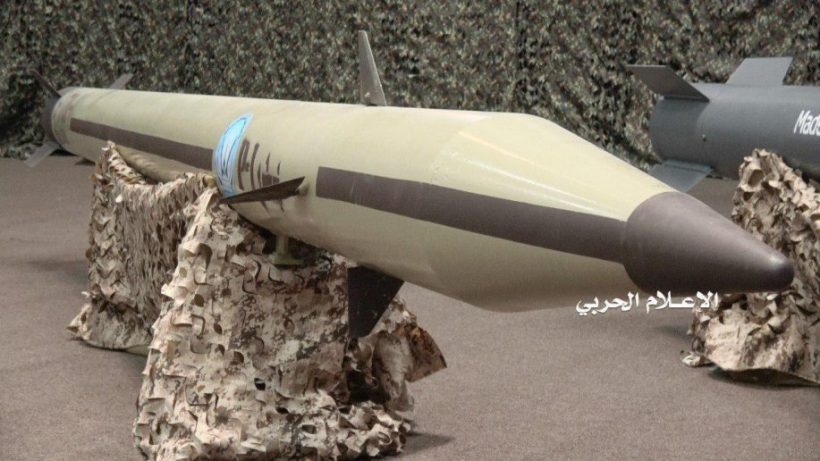
It is expected that these weapons, including new ones, will be used by the Houthis both on the territory of Yemen against the interventionist troops and local collaborators, as well as against infrastructure facilities in Saudi Arabia and the UAE (airports, military bases, ports, oil pipelines).
For Iran, the entire Yemeni war has become an excellent training ground, where in real combat conditions (via the hands of the Houthis) the latest samples of Iranian ballistic missiles, adjustable artillery shells, and reconnaissance and attack drone vehicles are being tested.
It is worth remembering that in the event of the start of a fully-fledged war against Iran, all of this can be used against tankers in the Red Sea in order to block oil exports through Jizan.
Translated by Ollie Richardson and Angelina Siard
Source: https://colonelcassad.livejournal.com/5118206.html
Featured Video

Michael von der Schulenburg: Europe’s Self-Defeating Iran War Policy
or go to
Aletho News Archives – Video-Images
Frlom the Archives
Provoking a Path to Persia
The Saban Center’s prescient paper on war with Iran
By Maidhc Ó Cathail | October 20, 2011
In June 2009, the Saban Center for Middle East Policy published “Which Path to Persia?—Options for a New American Strategy toward Iran.” Writing in a tone strikingly reminiscent of the Project for a New American Century’s infamous pre-9/11 paper “Rebuilding America’s Defenses,” the six co-authors noted that, “It seems highly unlikely that the United States would mount an invasion without any provocation or other buildup.” For a think tank specifically established by media mogul Haim Saban to protect Israel, this could prove to be a formidable obstacle impeding their desired march—of U.S. troops—to Tehran.
“In fact, if the United States were to decide that to garner greater international support, galvanize U.S. domestic support, and/or provide a legal justification for an invasion, it would be best to wait for an Iranian provocation, then the time frame for an invasion might stretch out indefinitely,” Saban’s think-tankers ruefully observed.
“With only one real exception, since the 1978 revolution, the Islamic Republic has never willingly provoked an American military response, although it certainly has taken actions that could have done so if Washington had been looking for a fight. Thus it is not impossible that Tehran might take some action that would justify an American invasion. And it is certainly the case that if Washington sought such a provocation, it could take actions that might make it more likely that Tehran would do so (although being too obvious about this could nullify the provocation). However, since it would be up to Iran to make the provocative move, which Iran has been wary of doing most times in the past, the United States would never know for sure when it would get the requisite Iranian provocation. In fact, it might never come at all.”
Seemingly undeterred by Iran’s frustrating unwillingness to provide the requisite provocation, the analysts continued to examine this option… continue
Blog Roll
 Aletho News
- The EU never learns – except for the wrong lessons
- Iran attacks on UAE leaves RSF militia high and dry
- Hosting Washington’s war: Bahrain faces the consequences
- The US fell for its own Iran propaganda
- Seyed M. Marandi: Threat of Seizing Kharg Island & the Use of Nuclear Weapons
- Is there even an off ramp?
- Michael von der Schulenburg: Europe’s Self-Defeating Iran War Policy
- Sorry, The New Republic, Climate Change Isn’t Causing Somali Migration. Blame Civil Strife and Poverty.
- Expert Guts Claims That HPV Vaccine Reduces Cancer Risk
- No evidence Russia sabotaged Baltic cables – Finnish intel
- If Americans Knew
- 6 more Americans killed, as Israel ‘mows the lawn’ in Iran – Not a ceasefire Day 154
- Are we on the precipice of World War III?
- ‘Catastrophic,’ Says UNICEF: 1,100+ Children Killed or Wounded in Mideast Since US-Israel Launched Iran War
- The Unbelievable Madness of Our War With Iran
- World Council of Churches calls on govts to hold Israel accountable for violations of intl law
- How to end the war on Iran that costs US taxpayers $1M per minute – Not a ceasefire Day 153
- Israeli strategic plans to “remake the Middle East” from the 1950s and since
- Honoring Gaza’s women who refused to let the world look away
- 97% of victims of war on Iran are Iranian, 98% of victims in war on Gaza are Gazans – Not a ceasefire Day 152
- Early Iran strikes cost $5.6 billion in munitions, Pentagon estimates
- No Tricks Zone
- New Studies: UK Sea Levels Were 4 Meters Higher Than Today During The Mid-Holocene
- Destructive Green New Deal: German Energy And Metal Group Warns Of Drastic Crisis
- New Study Documents A 20-Year Pause In Arctic Sea Ice Decline – Driven By Internal Variability
- Wake-up Call: Survey Shows Majority Of Germans Now Favor Postponing Climate Targets!
- Televised! Leading German Political Candidate Tells Schoolchildren CO2 Makes Sun Hotter!
- New Study: A Century Warming Of 1.1°C Is ‘Commonplace’ And ‘Not Unusual’ During This Interglacial
- New Study: ‘Internal Noise’ And Volcanic Forcing Can Trigger 10-15°C Warming Within Decades
- Glaciers Worldwide Are Suddendly Surging, Experts Blame Warming!
- Surprising Discovery: Sahara Is Greening…Billions Of Trees Where Once Thought To Be Barren
- New Research Reaffirms Clouds, Aerosols, And Surface Solar Radiation Are ‘Driving The Climate System’
 Aletho News