There are many reasons to think Prime Minister Justin Trudeau should not have gone to Costa Rica for a leisurely two-week Christmas break. Is there nowhere suitable in Canada? Might not some international crisis require his attention? But from the point of view of this newsletter the big question is the hypocrisy concerning his carbon footprint. At least the annoying Greta Thunberg takes sailboats, albeit with people flying hither and yon to make it happen. Trudeau traveled by private jet, or possibly two as on his election campaign, while even British PM Boris Johnson flew commercial to St. Lucia. Evidently the rest of us can eat cake.
While the details of the PM’s vacations are not made public for obvious security reasons (though he seems to have been sighted in Santa Teresa, a “quintessential surf town”) odds are he’s at a fancy resort and possibly, as in the Bahamas trip, there will be jet skis for his security detail and other carbon-unfriendly features like, well, his security detail, who probably didn’t paddle-board down to join him.
If it were an isolated incident it might be considered an isolated incident. But how about the fact that Canada sent 156 people to the latest UN climate-fest in Madrid? (After sending 283 to Paris in 2015.) It’s not to get things done. Everybody knows that, as Richard Nixon said, the real work at international conferences is done ahead of time to avoid embarrassing failure. And in this era of the Interwebs and cheap long-distance phone calls, whatever must be done last-minute can be done by 100 people in their offices back home as easily, or indeed more easily, than in hotel rooms.
As for what sort of hotels they were staying in, well, as with the PM in Costa Rica, not the kind you and I stay in. Because this conference was a junket. And a hypocritical one even by the standards of junkets. According to the Canadian Taxpayers’ Federation, the emissions for 156 flights to Madrid and back would be about 165 tonnes, more than 40 average Canadian households emit in a year. And for what?
How can you ask? Among those in attendance was Senator Rosa Galvez, “Vice-Chair of the Canadian Section of ParlAmericas and Vice President (North America) of ParlAmericas’ Parliamentary Network on Climate Change” who explained that “This was the first year that ParlAmericas’ International Secretariat has participated in the annual UN climate change conference as an official observer organization. Through the participation of the Canadian Section of ParlAmericas at COP 25, we were able to engage on the most pressing issue humanity faces today.” And no amount is too high for an observer you never heard of with a 19-word title in an outfit you never heard of to engage.
Certainly Sen. Galvez couldn’t be asked to engage on climate from dreary old Ottawa. Just as obviously Elizabeth May had to crisscross the country during the election, attending events in Toronto, Montreal, Vancouver and Saanich in the space of a single 24-hour period because otherwise her party might only have won a handful of seats. Whereas for you to heat your house or drive to work is a reckless extravagance.
In exposing the hypocrisy of delegates in Madrid munching away at Burger King, on real meat, while claiming the rest of us needed to stop eating it, Craig Rucker of CFACT also noted that those in attendance included Harrison Ford, who “bragged not long ago that he’s ‘so passionate about flying’ that he would often hop in one of his planes and ‘fly up the coast for a cheeseburger.’” Ford now claims to have given up meat. But not his private planes, of which he owns roughly 10.
The smell of cake is unmistakable, as with Microsoft co-founder Bill Gates and now-vegan Al Gore, both of whom frequently use private planes of which Gates owns at least one. Their work is so important that they just have to do stuff you mustn’t. “I am investing in climate change very broadly and substantial amounts of money,” says Gates, while one of Gore’s people charged with fending off pesky proles intones that “He recognizes how important these everyday choices are, while spending most of his time working to catalyze a global effort to change laws and policies.” Now go away, and no questions about his energy-gobbling mansion complete with heated outdoor pool.
Through a combination of myopic diplomacy and disastrous personnel picks, President Donald Trump has wasted a chance to fundamentally remake US relations with North Korea, throwing away a “Nixon goes to China” moment in exchange for a confused “maximum pressure” campaign that’s delivered the same failures of previous administrations. Having missed Pyongyang’s year-end deadline to revive stalled talks, the defects of Trump’s North Korea strategy are on full display.
Ditching Detente
On the campaign trail in 2016, then-candidate Trump took unusually dovish stances on North Korea for a Republican nominee. From openly considering whether to withdraw some of the 30,000 American troops stationed in South Korea, to even inviting North Korean leader Kim Jong-un for an unprecedented visit to the US, Trump at the very least appeared willing to talk – “an overture that would upend three decades of American diplomacy,” the Times told us.
Even after Trump took office, there were early plans for informal talks with North Korean officials, but the trend would soon die. The meetings were abruptly called off, and the president’s first Defense Secretary, James Mattis, was dispatched to Seoul to assure that no troop withdrawal would take place. Trump’s flirtation with detente was only momentary, but it panicked Washington zealots committed to endless hostility with North Korea, some of whom ended up with jobs in the new administration.
So began months of “fire and fury,” which saw the two sides trading threats, the Pentagon carrying out its regular joint war games with South Korea – rehearsing an invasion of the North – and Pyongyang responding with a variety of weapons tests. Casting aside the friendlier tack put forward on the campaign trail, Trump embarked on a “maximum pressure” campaign, leveraging sanctions and tough rhetoric to push North Korea to bow to the American diktat, disarm and effectively surrender.
Freeze for Freeze
While the corporate press was focused on the war of words between Trump and Kim, however, a true believer in Korean peace was elected president in South Korea: Moon Jae-in. The new leader would serve as a counterweight to the hawks in Trump’s ear, making for a convulsive US policy which shifted erratically between open hostility and willingness to talk.
Despite the rising tension at the time, President Moon led a successful effort to see the two Koreas compete under the same flag in the 2018 Winter Olympics, a significant step away from Trump’s tweets of “war and annihilation,” and one which was at least tacitly accepted by Washington.
The symbolic victory of the Olympic games created momentum for Trump’s first summit with Pyongyang – the first ever meeting between an American and North Korean leader – held in Singapore in June 2018.
The meeting was in many ways a success, resulting in a joint statement vowing to continue dialogue on a number of issues, though the North Koreans made it clear from the outset that they would only discuss denuclearization in exchange for trust-building measures from Washington, namely sanctions relief and a security guarantee.
While the summit didn’t result in full rapprochement, it wasn’t all for naught. The North Koreans returned the remains of American soldiers killed during the Korean War and dismantled a missile engine facility, important small steps toward a truce. Around the same time, a ‘freeze for freeze’ status was adopted, in which Washington would halt its military exercises with South Korea in exchange for a freeze on nuclear and missile tests in the North. Moon, meanwhile, was allowed a freer hand to improve inter-Korean relations.
The Libya Model
A countervailing force would soon challenge Moon’s drive for peace. Hired on as National Security Adviser (NSA) a few months prior to the Singapore Summit, infamous mad bomber and Iraq war devotee John Bolton was instrumental in keeping Trump from making good on his campaign rhetoric, doing his best to ensure US North Korea policy remained sufficiently bloodthirsty.
Bolton is despised in North Korea. He played a role in destroying the Agreed Framework – a Clinton era nuclear agreement later wrecked by the Bush administration – and has openly called for a “preemptive” attack on the Hermit Kingdom. Not long before landing the job as NSA, he penned an op-ed in the Wall Street Journal making the “legal case” for a first strike.
Weeks ahead of the Singapore summit, Bolton would also invoke Libya as the model for North Korean disarmament. Pyongyang could only take that as a moral threat, all too aware of the grisly fate of Libyan strongman Muammar Gaddafi, who gave up his rudimentary nuclear weapons program and was later murdered in US-led regime change plot.
By the time Singapore rolled around, however, Trump decided he could deal with Kim after all and the hawkish NSA was sidelined at the meeting, where he was seen sulking and sour-faced as diplomacy between Trump and Kim hit its peak – but it wouldn’t be Bolton’s final act.
Hawks Triumph in Hanoi
In the leadup to the next US-North Korean summit set for Hanoi in February 2019, a divide in the Trump administration deepened as hawks – led by Bolton – continued to push for the “Libya model.” Ignoring the North’s long-held position that its weapons are solely meant to deter an American invasion, Bolton pushed for rapid denuclearization as a condition for any further dialogue (the standard American poison pill), insisting Kim dismantle the country’s entire program in the space of a year. The demand set “absurd expectations” and amounted to a “deliberate attempt to sabotage all talks with North Korea,” observed Daniel Larison of the American Conservative magazine.
Despite the hawks’ push, there was a glimmer of hope that Hanoi could build on the progress of Singapore. US envoy Stephen Biegun had been put in charge of the talks at this stage, who advocated a step-by-step trust-building process that would see the US cautiously trade sanctions relief for a slow dismantling of North Korea’s nuclear arsenal.
The hope was short-lived. In what may have been the highlight of Bolton’s tenure on Trump’s national security team, he would steal the show in Hanoi, persuading the president to scrap Biegun’s more reasonable proposal in exchange for an offer Kim couldn’t possibly accept, once again demanding disarmament before Washington would make a single concession.
As expected, Kim rejected the “deal” outright, the summit abruptly ended and the nascent peace process cooled. The economic war against North Korea – which never ceased throughout the negotiations – marched on, prompting a few small retaliatory missile tests unrelated to Pyongyang’s nuclear program. While Trump downplayed the importance of the tests, it was a clear sign the ‘bad cop’ approach was doomed to fail.
Kim’s Deadline
With crippling sanctions continuing to grind down the North Korean economy and populace, and the post-Hanoi peace process stagnated, Kim issued an end-of-year deadline last April to revive the talks. The ultimatum called on the US to come to the table before the end of the year, or else Pyongyang would scrap all progress made since the 2018 Olympic Games, including any freeze for freeze commitments it agreed to during that time.
Seeing the bleak prospects for talks, President Moon soon traveled to Washington to plead with his American counterpart and was once again able to grease the wheels of stalled diplomacy. Less than two months after the visit, Trump would send an unprecedented tweet inviting Kim to a historic meeting at the Demilitarized Zone (DMZ), the physical embodiment of the intractable Korean conflict.
Moon’s hard-fought efforts appeared to finally pay off in the summer of 2019, when all three leaders – Trump, Moon and Kim – met for the first time.
The meeting produced mostly symbolic progress – including Trump becoming the first US president to cross the DMZ into North Korea proper – but it did end with an agreement to form teams for continued talks. Importantly, the American team would again be led by Beigun, not Bolton or Mike Pompeo, the bellicose secretary of state.
Biegun again looked to take a more flexible approach to negotiations, this time proposing a nuclear freeze deal in exchange for sanctions relief. Better yet, the renewed drive for dialogue occurred as Bolton’s influence seemed to be waning in the White House – he was exiled to Mongolia for a meeting during the DMZ-crossing – with expectations that he would soon get the pink slip.
Making Regress
While the DMZ meeting and Biegun’s new proposal appeared to put things back on track, a major obstacle was fast approaching: joint US-South Korean wargames set for August 2019, which the North had long complained were threatening and unnecessarily provocative. Though the US insisted the drills had been scaled down and were purely defensive, Pyongyang denounced them as a breach of the freeze for freeze status established in 2018, reacting with a series of short-range missile tests.
Rumors about a new round of talks swirled throughout the fall of 2019, but the North Koreans had grown increasingly doubtful of the Americans’ good faith, insisting there would only be another meeting if Washington fundamentally changed its attitude. As November rolled by with no new offer, Kim began referring to a “gift” he might send to the US for Christmas, a vague but ominous threat picked up and amplified in the establishment press.
Much of the progress made in Singapore and at the DMZ had effectively been reversed, leaving the US and North Korea close to where they began when Trump took office, returning to a familiar pattern of threats, military drills and missile tests.
A New Path
It was clear by December that the US and North Korea would not resume serious talks by Kim’s deadline. With Trump – and Washington – fully absorbed in endless impeachment drama, there was simply no time, leaving many to nervously speculate about what kind of “Christmas gift” Kim might have in store.
Jolly St. Kim didn’t even bother to deliver a lump of coal for his Christmas surprise, however, and the day came and went quietly, despite widespread press predictions of a major nuclear weapons test. In the week between Christmas and the New Year, Kim spent four days meeting with his inner circle, thinking long and hard about how to respond to Trump’s failure to meet his deadline.
With none of the theatrics anticipated in the US media, Kim soberly unveiled his “new way” for the new year, resigning himself to an immovable status quo in Washington:
“The present situation warning of long confrontation with the US urgently requires us to make it a fait accompli that we have to live under the sanctions by the hostile forces in the future,” Kim said, according to the KCNA.
Though still holding out for the possibility for a return to the freeze for freeze status, North Korea would no longer actively pursue peace talks. Kim had finally given up.
While the United States and North Korea have not yet returned to the height of enmity reached during Trump’s first year in office, it’s clear the strategy of “maximum pressure” has accomplished less than nothing, utterly failing to bring Kim to the table for a comprehensive peace deal, nor even a smaller preliminary one. Far from abandoning its arsenal, Pyongyang is now more confident than ever in its need for a nuclear deterrent – talking appears to get them nowhere. President Moon may now be the best hope for peace on the Korean Peninsula, but with forces in Washington arrayed against him, even he may not be up to the task.
Caretaker Prime Minister Adil Abdul-Mahdi has asked the United States to send a delegation to Iraq to begin preparing for a troop pullout, his office said on Friday.
In a phone call late on Thursday with US Secretary of State Mike Pompeo, Abdul-Mahdi “requested that delegates be sent to Iraq to set the mechanisms to implement parliament’s decision for the secure withdrawal of [foreign] forces from Iraq,” AFP reports.
Some 5,200 US soldiers are stationed at bases across Iraq to support local troops preventing a resurgence of Islamic State (IS, formerly ISIS). They make up the bulk of a broader US-led coalition, invited by the Iraqi government in 2014 to help combat the jihadists.
The deployment was based on an executive-to-executive agreement that was never ratified by Iraq’s parliament. On Sunday, the parliament voted in favor of rescinding the invitation and ousting all foreign troops.
The ambassador of any nation is not just the highest-ranking diplomatic representative of their country in a foreign state or an international organization, not simply a spokesperson of their country’s government and their interests, who is obliged to act in line with their diplomatic status. As a country representative, an ambassador is closely associated with their homeland in the eyes of foreigners. An ambassador’s conduct forms the impression of their country and its citizens, determining their level of prestige.
In recent years, international media outlets have shared countless stories about American ambassadors, who are, unfortunately, not usually praised for their humanitarian deeds. They are rather known for their true aggressive nature, which no diplomatic status can conceal.
Today, a number of circumstances contribute to the growing discontent in many parts of the world not only with Washington’s foreign policy, but with American ambassadors as well. The main reason for this is their blatant disregard for the citizens of the countries where they serve, coupled with their arrogance and unwillingness to take into account international norms of conduct, including those of diplomatic etiquette.
Thus, in South Korea, even among supporters of President Moon Jae-in, the US Ambassador Harry Harris has recently become the object of fierce hatred. As Japanese media say, ever since December 12, 2019 daily rallies against the American ambassador have been held near the US Embassy in Korea, the participants assimilating him to a ‘governor of a Japanese colony.’ Members of left-leaning political parties and civil society organizations who take part in the rallies even go as far as to stage overly extreme ‘contests’ to decapitate a stuffed puppet of the ambassador or burn his image and chant about torturing ‘him with chopsticks.’ According to reporters, Ambassador Harris is obediently pursuing his country’s political course with the straightforwardness typical for a former member of the armed forces. This is most likely the cause of the dislike South Korean political community harbors for him, the Japanese newspaper JB Press writes.
For months now, the German government and population have been openly expressing their disapproval of the actions of US ambassador to Germany, Richard Grenell. According to the Spiegel magazine, he has been politically isolated by Germany’s ruling elite since early 2019.
In January 2019, the German news outlet Bild published excerpts from Ambassador Richard Grenell’s notorious letters, in which he openly threatened a number of German companies with sanctions for their participation in the construction of the Nord Stream 2 gas pipeline, demanding that Germany withdraw from the project. This interference into the country’s affairs was considered by the German Foreign Office to be unacceptable. Wolfgang Kubicki, Vice-President of the Bundestag, called on the foreign minister to expel Grenell because of his intervention into ‘the political affairs of sovereign Germany.’
On June 6, Grennell was invited to the German Foreign Office for a lecture behind closed doors on what exactly appropriate conduct entails. His expulsion was once more openly demanded by the Bundestag, in particular, by the leader of the left-wing faction Sahra Wagenknecht. She was outraged by Ambassador Grenell’s public statement of support for conservative forces in Europe, which was perceived as meddling in Germany’s political life.
In August, yet again, Ambassador Grenell found himself at the center of another scandal after relaying and sharing his personal interpretation of yet another ‘anti-German’ statement of the American President.
After Washington had imposed broad sanctions against the gas pipeline Nord Stream 2, Ambassador Grenell had to face another wave of outrage on December, 22 as he declared to German media that these sanctions were allegedly adopted in the interests of Europe and in answer to the Europeans’ requests. Meanwhile, the ambassador completely ignored the German government’s official statement that the new US sanctions against Nord Stream 2 and the Turkish Stream pipelines are an unacceptable intrusion into European affairs.
Even Georgia, which is trying to demonstrate its commitment to the United States, criticized the ambassador of the ‘undemocratic state’ of America. Namely, Georgia’s former State Minister for Conflict Resolution and renowned film director Georgi Khaindrava called on Western politicians to treat his homeland with the utmost respect. He also advised them to deal with problems in their own nations first before railing at the missteps of Georgian democracy. He specifically emphasized that, “The international community must respect any nation, no matter its size. Some embassies here do not defend the interests of the countries they represent in Georgia, for example, the acting US envoy to Georgia, Elizabeth Rood.”
The US was forced to recall their ambassador to Zambia, Daniel Foote, on December, 23 after the southern African nation’s refusal to continue working with him due to his fairly active defense of members of the LGBT community. Zambia’s Foreign Minister Joseph Malanji said these actions amounted to an attack on the country’s constitution and were considered as ‘interference into Zambia’s domestic affairs.’ Earlier, Zambian President Edgar Lungu had declared the country’s citizens would not make concessions on homosexuality even in exchange for humanitarian aid: “If this is the way you wish to help, I’m afraid the West had better leave us in poverty. We’ll struggle and survive just like we used to.”
Criticism of US ambassadors is rife even within the US itself. For one, in an interview with the New York magazine on December 8, Trump’s personal attorney Rudy Giuliani criticized the flawed system of political lobbying used for appointing US envoys. He said that, for example, investor George Soros used the services of the FBI to appoint four US ambassadors to Ukraine.
Even these examples show that the decidedly undiplomatic behavior of several US ambassadors forms quite a negative perception of the ‘faces of Washington’. Consequently, considering the much-criticized foreign policy of the United States, this fuels the aversion to the USA itself.
Everyone has heard by now that Soleimani was responsible for 600 American deaths . . . but where does this oddly specific number come from? Today on “Questions For Corbett,” James finds the answer at the bottom of a barrel of neocon lies.
Iranian Defense Minister Brigadier General Amir Hatami says Washington’s “interventionist presence” in the region has to end as soon as possible for a de-escalation to take place after recent US provocations.
“Achieving de-escalation, stabilization and security in the region requires the immediate end of Washington’s occupation and interventionist presence,” Hatami said in a phone call with his Japanese counterpart Taro Kono on Thursday.
The talks between the two defense chiefs came after Tokyo announced last month that it has sought to send a warship and a number of patrol aircraft to the Middle East region in order to ensure security amid heightening tensions.
Tokyo receives nearly 90 percent of its oil imports from the Middle East.
Speaking on Thursday, Hatami said “those who seek to assist in de-escalation and achieving regional stability have to remind the Americans, which are a source of regional insecurity, to leave the region.”
The Iranian defense chief added that Iran, being the largest country with an access to the Persian Gulf and the Gulf of Oman, has always fulfilled its role in ensuring security in regional waterways.
Hatami’s call for the expulsion of US forces comes a week after Washington assassinated the Middle East’s most prominent anti-terror commander Lieutenant General Qassem Soleimani in Iraq.
Speaking to his Japanese counterpart, Hatami called on independent countries to condemn Washington’s “state terrorism”.
He described Soleimani’s assassination as an unprecedented and major crime where a foreign government has acted to kill a senior Iranian military officer in another country.
Speaking on his part, Kono stressed that Japan’s military deployment in the region seeks to ensure regional peace and that it does not intend to take part in a so-called US-led Persian Gulf coalition, which commenced its operations last November.
According to Japan’s public broadcaster NHK, Kono also gave out orders for the Japanese military deployments to begin on Friday.
Earlier last year, Washington called for the formation of the maritime coalition in response to a series of mysterious explosions targeting vessels in the Persian Gulf and the Sea of Oman.
US officials were quick to blame Iran for the incidents without providing conclusive evidence.
Iran has roundly rejected the accusations, describing the attacks as being part of “false flag operations” seeking to pressure Iran.
Following the tensions, Japan, which has sought to maintain positive ties with both Tehran and Washington, has stressed that it has opted to form its own maritime operation rather than join the US-led mission.
According to The Japan Times, the Japanese operation will operate in the Red Sea and the Gulf of Aden east of Saudi Arabia and will exclude the Strait of Hormuz and the Persian Gulf due to Iran’s concerns regarding the presence of the US-led initiative.
Are Russia’s Avangard and Sarmat missiles really the game-changers which they’re depicted to be?
Readers may recall President Putin’s unveiling of these weapons systems on May 1st 2018. His state of the union address to the federal assembly that day could certainly be described as provocative, perhaps inadvisably so. Ever since then, both Russian and western media have discussed at length the numerous reasons why these ICBM’s render all currently existent missile-defence systems obsolete.
First and foremost, these weapons are seen as invulnerable to all currently existent missile defence systems because of their hypersonic capabilities. Avangard can fly at about 33 thousand kilometres per hour, or 27 times the speed of sound. The RS-28 Sarmat can fly in excess of 25 thousand kilometres per hour.
Missile defence systems, fundamentally, work on the basis of the premise that if an interceptor missile can detonate its own nuclear warhead within a 10-kilometre radius of the flight-path of the missile which it is attempting to intercept, then the resulting shock-wave stands a pretty good chance of bringing the target down or otherwise knocking it out of its flight-path. So, in practical terms, “intercepting” a nuclear missile means getting an interceptor to within a 10-kilometre radius of its flight-path.
However, under actual battle-conditions, the chances of intercepting ICBM’s in this way would not be particularly good to start with. Therefore, a more effective missile defence methodology is simply to “intercept” them during their boost phases – that is to say, before they launch. Hit them before they leave the ground.
Both the Avangard and the Sarmat fly far, far too fast for aerial interception to be plausible.
Furthermore, both the Avangard and the Sarmat can be re-maneuvered in mid-flight, making it extremely difficult for missile defence systems to predict their trajectories. In the case of Sarmat, an added problem for currently existent missile defence systems is that it has an extremely short boost phase, making it difficult for spy-satellites to identify the imminent threat in time, and also making it more difficult to track once it has launched.
However, there is one solid counter-argument to the idea that, strategically, these new weapons-systems change everything.
Namely, Russia already had hypersonic ICBM capability 15 years ago. The Topol-M SS27 was and is hypersonic, capable of flying at about 14 thousand kilometres per hour. It’s not quite as fast as the Sarmat or Avangard, but it’s still far too fast for any interceptor to have a realistic chance to getting within the required 10-kilometre radius of its flight-path. Furthermore, the Topol-M SS27 could be re-maneuvered in mid-flight, just as Sarmat and Avangard can, and it releases a multiplicity of different warheads, each with a different trajectory, once it nears its target. Furthermore, the Topol-M SS27 could be launched from the back of a truck, making it almost impossible to pre-empt during its boost-phase.
In short, all of NATO’s currently existent missile defence infrastructure was already obsolete 15 years ago.
Scott Ritter is a former US intelligence officer and weapons inspector who participated in formal inspections-teams at the Votkinsk Machine-Building Plant, where the SS-27 and its predecessor the SS-25 were assembled. In January 2005, he argued that “to counter the SS-27 threat, the US will need to start from scratch… The US cannot afford to spend billions of dollars on a missile-defense system that will never achieve the level of defense envisioned. The Bush administration’s embrace of technology, and rejection of diplomacy, when it comes to arms control, has failed.”
Neither the Bush administration nor the Obama administration ever did start from scratch. They simply pressed ahead with the installation and deployment of missile defence systems which they knew were already obsolete. The Trump administration adheres to the same obtuse path.
The desire to protect the interests of the US corporations which contract for the Aegis missile defence project is only one of the motivations which drives this policy. In addition, the presence of Aegis missile defence installations in Poland and Romania economically incentivizes local elites within those countries to propagandize their own populations, to amplify fears of the Russian bear at the local level, thereby cementing ideological loyalty within the NATO defence-apparatus.
Furthermore, it should be noted that it has never been possible to test any missile defence system under anything even realistically simulating actual battle-conditions. Missile defence systems are tested one shot at a time, which is completely unrealistic. Under actual battle-conditions, they would be required to intercept several dozen ICBM’s in simultaneous flight, and there is absolutely no evidence whatsoever that more than a fraction of the ICBM’s would be successfully intercepted.
Therefore, we can say that the primary strategic purpose of a missile defence installation, as opposed to its economic purpose or ideological purpose, is simply to serve as a pretext for its adjoining radar-installation. Parked so close to Russia’s borders, these installations are elaborate pretexts for electronic espionage or signals-intelligence (SIGINT).
However, the Russian government is playing the same game – both sides have their own reasons for pretending that Sarmat and Avangard are “game-changers,” when in fact we know that the Topol-M SS27 was the real game-changer. While the nations within the western alliance maintain this pretense in order to justify increasingly gargantuan defence-budgets and to propagandize their own populations with Russophobic hysteria, the government of the Russian Federation does so in order to persuade Russia’s population that perpetual geo-strategic threats are being addressed. As with much content published in Russia’s media-space, the disproportionate focus on geo-strategy, external relations and external security issues occurs because these are the spheres in which the Russian government is at its most professionally competent. This disproportionate media-focus, therefore, is devised in order to detract attention from domestic issues wherein the government’s record of effective policy-implementation has not been quite so successful.
First, since we now have more reliable data about what happened, let me recap a few key points:
It is has now become pretty clear that Iran took several steps to make sure that the US would know when and where the strikes would happen. Specifically, Iran warned the Iraqi government and the Swiss diplomats who represent US interests in Iran.
Yet, at the same time, Iran issued the strongest threat it could possibly issue: it told the US that *any* counter-strike aimed at Iran would result in a strong Iranian attack on Israel.
The US quite clearly took the decision not to retaliate and to “forget” Trump’s promise to strike at 54 Iranian targets. I want to stress here that this was the correct decision under these circumstances.
It also appears that the Iranians were able to somehow retrofit some kind of terminal guidance capability on missiles which originally lacked it.
The level or precision of the strikes was absolutely superb and quite amazing.
Trump declared that Iran decided to stand down and that the US had prevailed. This notion is, of course, prima facie ridiculous, but not for folks getting their news from the corporate media.
The Iranians declared that this specific strike was now over, but immediately added that this was only a first measure and that others would follow.
Next, I want to share a few interesting photos with you.
First, here is a photo of the base following the strikes sent to me by a friend:
Here is what my friend added:
The key idea is really simple and understandable for anybody who has thought about statistics (even in an everyday context). In number terms, it’s almost like rolling dice and getting a 6 three times in a row, because the probability of rolling a 6 with an ideal dice is 16.67% (and the probability to roll 3 sixes in a row is less than 1%) as opposed to roughly 18% probability for a hit on a building within the map area in the CNN screenshot (if we assume the missiles to be unguided within this area). To be even more precise, the probability for hitting 3 *different* buildings 3 times in a row is actually even slightly lower than 0.62%, as one would have to substract the area being hit from the total area covered by buildings (I ignored that for simplicity). A less than 1% probability for a one-off event like this means that it is really highly UNlikely – to use the British Skripal case expression in its inverted state – to have happened randomly, as we assumed in our hypothesis. Which means that the missiles were, indeed, guided, and guided very accurately, striking targets of less than ~50m size with a high degree of reliability (in this particular area 3/3, in others probably 1/1 as in the runway case, etc). Perhaps, some of them, not covered by the satellite images, missed the target, but it does not substantially change the high degree of accuracy that potential Iranian opponents within reach of these missiles will have to assume from now on. The people most interested in this were probably the Israelis, as they are probably the main potential target for this type of missile in the case of a future escalation.
Please note that neither my friend nor I are professional imagery analysts and that this is just something my friend shared with me in a private email and which I now want to share with you.
If any professional imagery analyst could either confirm/refute my friend’s conclusions, I would be most grateful.
Next, I want to share with you the following image which shows Iranian IRGC General Ali Amir Hajizadeh reviewing results of recent Iranian missile strikes on Ain al-Assad airbase in Iraq during a press conference:
Clearly, the Iranians are very proud of their capability to conduct true precision strikes with an accuracy every bit as good as any Russian and/or US missile.
Finally, check out this image of the Iranian general making a press conference in front of a very interesting row of flags:
These flags include the following: The Iranian flag, the IRGC flag, the flag of IRGC’s Aerospace Force, the flag of the Lebanese Hezbollah, the Yemeni Houthi Ansarullah flag, the flag of the Iraqi Popular Mobilization Units (PMU), the Palestinian Hamas, the Afghan Liwa Fatemiyoun and the Pakistani Liwa Zainebiyoun
I find this very interesting: when Trump (or any other US politician) makes a solemn pronouncement, he typically has a number of aides, advisors, generals, Congressmen or Senators, etc. This is supposed the show the determination, resolve and unity of Uncle Shmuel, especially when Uncle Shmuel does something illegal or immoral.
The Iranian show of unity does not show more Iranians, they show the unity of all the forces in the Middle-East who have now officially united and whose goal is clear and very official: kick Uncle Shmuel out of the Middle-East.
You tell me which you find more impressive!
Next, the issue of casualties. Frankly, and while this is only my best guess, I do not believe the Iranian official casualty figures. Why? Well, first the Iranians did not try to maximize casualties (more about that option below), and they informed the US by several back-channels. But even if they had not, while the performance of the Patriot missile is pretty awful, the US does have a lot of top of the line technical intelligence means which would allow them to first detect the launch of the missiles from Iran and then to calculate their ballistic trajectory. As far as I know, now I might be wrong here, Iranian missiles do not have terminal maneuvering capability (which is different from terminal guidance). I can’t image why US commanders could not announce a incoming missile alert and then get all the local personnel into shelters. Again, I might be missing something, so if any reader can correct me, I would be grateful.
So what happened, really?
Here are a few of my current working hypotheses:
1) BOTH the USA and Iran don’t want a full-scale war. But for VERY different reasons:
The US probably understands that it cannot win a war against Iran.
The Iranians definitely understand that while the US cannot “win”, it most definitely can kill Iranians by the thousands and inflict immense damage upon the Iranian society.
2) What just took place was the single most dangerous moment since 14 April 2018 when Russia and the US came very, very close to a full-scale war. In the current situation, the US and Iran also came very, very close to a full scale war. The only reason I rank this latest crisis lower than the April 14th is that in one case we risked a planetary nuclear war whereas in this case we “only” risked a regional war which, by the way, could have seen nukes used by the US and Israel.
3) There STILL is a risk of full-scale war between the US and Iran, however, and barring a major unforeseen event, I will lower it now down from 80% to a much more tolerable 50%. Why 50%? Because Israel and the Israel Lobby will continue to push for a US attack on Iran and because while I trust the Iranians to keep their anti-US operations right below the threshold of “plausible deniability”, I cannot be sure that all Iranian allies will show similar restraint. Finally, the chances of an Israeli false flag as still sky high.
4) I expect anti-US operations to continue and even expand throughout the Middle-East. I don’t expect that these operations will be executed from Iran and I don’t expect Iranian forces to be involved, at least not officially. The Iranians know that the US has lost every single counter-insurgency war it was involved in and they know that their best chance is now to engage in all forms of asymmetrical operations.
Finally, I want to spell out what we could call the new Iranian threat.
We have to assume that Iran now has terminal guidance capability on many (most?) of its ballistic and cruise missiles and that they can destroy one specific building among many more buildings. Now, remember the Iranian reply that it had 35 US bases within missile range? Now imagine this first one:
Iran fires 10-12 missile on each and every one of the 35 US bases listed and targets barracks, fuel and ammo dumps, key command posts, etc. How many casualties do you think that such a strike would result in?
Next, let’s try the same thing with Israel:
Iran fires 2-3 missiles but carefully aims them as Israeli air force bases, personnel barracks, industrial sites (including chemical and nuclear sites, not even necessarily military ones! Dimona anybody?), the Knesset or even Bibi’s personal residence. Can you imagine the panic in Israel?
How about the KSA?
Iran fires a large amount of missiles aimed at *truly* crippling the Saudi oil installations, National Guard barracks, airfields, etc. We already know what the Houthis could do with their very limited resources. Just imagine what Iran could do to the KSA (or the UAE and Kuwait) if it wanted to!
I think that the bottom line is clear: Iran can inflict unacceptable damage upon any party attacking it. Furthermore, and unlike having “a few” nukes, Iran has hundreds (or even thousands) of cruise missile and ballistic missiles, and you can bet that they are well distributed and well protected, as shown by this short video released by the IRGC and posted by the FARS news agency:
and that means that a disarming first strike against Iran is not possible.
There are two basic ways to respond to an attack: denial and punishment. In the first case, you have the means to deny your enemy his attack, this is what happened when the Syrians intercepted almost all the cruise missiles fired by the US. Punishment is when you cannot prevent an enemy attack, but you do have the means to inflict unacceptable damage in retaliation.
The key notion here is “unacceptable damage”.
What do you think constitutes “unacceptable damage” to the (terminally hedonistic) Israelis?
What do you think would be “unacceptable damage” to the KSA, or the world markets (especially oil)?
What about “unacceptable damage” in terms of losses for CENTCOM?
And, finally, what do you think “unacceptable damage” means to the Iranians?
There is such a huge asymmetry in how the parties to this conflict see “unacceptable damage” that it largely compensates for the asymmetry in force. Yes, sure, the US+Israel are more powerful than Iran (well, not Israel really, but Israel hiding behind the back of the US forces) but Iran is far more capable of absorbing devastating attacks than either the US or Israel.
Finally, in my last post I offered a definition of what constitutes success or failure for Iran: “anything which makes it easier for the US to remain in the Middle-East is a victory for the Empire and anything which makes it harder for the US to remain in the Middle-East is a victory for the rest of the planet.”
At this point my personal opinion is that the way the Iranians conducted their first anti-Empire operation is nothing short of brilliant: they achieved a truly phenomenal result with very little means and, most importantly, without forcing the Empire to counter-attack.
Has the US-Iran war really begun? Yes, I think so. In fact, it began in 1979, but now it has reached a qualitatively new level. The outcome of that war is absolutely evident to me. The cost, however, is not.
This war has relatively cooled down, but that is an illusion and we should most definitely not take our eyes off the situation in the Middle-East: expect the initiation of asymmetrical anti-US operations very soon.
Surveillance footage from outside notorious pedophile Jeffrey Epstein’s jail cell during his first alleged suicide attempt in July has been deleted, concluding a comedy of errors that saw the video first lost, then found.
Video from outside the deceased financier’s cell, on the day he was found semi-conscious on the floor with marks on his neck, believed to have attempted suicide, has been permanently deleted by Metropolitan Correctional Center, according to a court filing. The jail allegedly saved video from the wrong tier of the facility. A backup system that should have retained the deleted footage stopped functioning in August, and the video no longer exists there either due to “technical errors,” prosecutors claimed. It is the latest in a long series of “mistakes” and anomalies surrounding the convicted sex offender’s death.
The footage had a complicated journey before its final meeting with oblivion, if media reports are to be believed. Prosecutors claimed to have “found” the video on December 19, a day after a prosecutor said it had gone missing during a hearing. When it was found, it was said to have been properly preserved by MCC staff. The footage had been requested by attorneys for Epstein’s former cellmate, a burly ex-cop named Nicholas Tartaglione, accused of killing four people in a drug deal gone bad and burying them in his backyard.
They asked to see the tape in the hope of obtaining a more lenient sentence for Tartaglione, after he claimed he had helped save Epstein’s life – only to be stonewalled for nearly five months.
Epstein allegedly attempted suicide on July 23, only to be saved by Tartaglione. Just two days later, Tartaglione’s attorneys asked to see the surveillance footage, only to be “told that it was not retained,” one lawyer recalled to CNBC. It’s not clear why this went unremarked-upon for five months or where the footage was ultimately found.
Crucially, it appears the footage was still in limbo when Epstein was found dead on the morning of August 10. His death was ruled a suicide, though a celebrity pathologist hired by his family claimed his body showed evidence of homicidal strangulation and witnesses heard “shrieking and yelling” coming from his cell that morning.
Also on rt.com Epstein autopsy photos add to murder speculation
Epstein’s death – the first ‘suicide’ inside the MCC in decades – remains shrouded in mystery. Two guards have been charged with negligence for failing to check on their infamous prisoner for hours, and surveillance video from that day was deemed “unusable.” Revelations that Epstein had compromising material on many of his powerful friends gave rise to numerous alternate theories about his death.
In the interest of understanding recent events, we have quickly put together a partial timeline of US-Iran relations, beginning in 1953 through the present. This is a quick, somewhat cursory timeline, but we feel it’s important that a general outline become available as soon as possible.
Many thousands of American families are heavily invested in the situation – according to U.S. Central Command, between 60,000 and 70,000 U.S. troops are currently in the Middle East and Afghanistan.
* 1800s to 1951: Relations between the US and Iran began in the mid-to-late nineteenth century. Initially, while Iran was very wary of British and Russian colonial interests, it viewed the United States as a more trustworthy great power.
During World War II Iran was invaded by Britain and the Soviet Union, both US allies, but relations with the US continued to be positive. This changed in 1953:
* 1953: UK and US orchestrated a coup to overthrow Iran’s democratically elected prime minister, Mohammad Mossadegh.
Mossadegh had denied the British further involvement in Iran’s oil industry. Britain then appealed to the US for help, which eventually led the CIA to orchestrate the overthrow of Mossadegh and restore power to Mohammad Reza Pahlavi, the last Shah of Iran.
The Shah became known for “his autocratic rule, corruption in his government, the unequal distribution of oil wealth, forced Westernization, and the activities of SAVAK (the secret police) in suppressing dissent and opposition to his rule.”
SAVAK had been formed in 1957 under the guidance of US and Israeli intelligence officers.
Today’s Iranian Supreme Leader was one of those tortured in a Savak prison.
* In 1979 the Shah was overthrown by a popular revolution. He then traveled to the US, which had supported him.
The rebels eventually converted the form of government from a monarchy to an elected government based on a strict interpretation of Islam: The Islamic Republic of Iran. This was a backlash against the authoritarian Shah’s forced westernization and denigration of the traditional religion (more on the revolution & aftermath here and here and here).
* The new Iranian government begins its support of Palestinian rights against Israel’s ethnic cleansing of Muslim and Christian inhabitants of what had originally been called Palestine.
* Iran also supports Hezbollah, armed resistance groups in Lebanon against Israel’s invasions of Lebanon.
Ha’aretz: Iran’s mentoring of Hezbollah’s insurgency of the 1980s and 1990s forced Israel’s unilateral withdrawal from Lebanon.
* Israel and the pro-Israel lobby in the US – which plays a major role in US Mideast policies – has opposed Iran ever since the new Iranian government was created.
The Oded Yinon plan (“Greater Israel”: The Zionist Plan for the Middle East) provides some information on the Israeli role through the years in destabilizing many countries in the Middle East.
* Since the Shah’s regime had tortured many dissidents, his victims wanted him to return to Iran to face justice, but the US would not extradite him. Iranian students then seized the U.S. embassy in Tehran and took hostage more than 50 Americans, demanding the extradition of the shah in return for the hostages’ release. Extradition was refused and the hostages were held for 444 days.
* Washington then froze about $12 billion in Iranian assets, including bank deposits, gold, and other properties. Most of those were released in 1981 as part of the Reagan release deal.
* Some assets—Iranian officials say $10 billion, but US officials say much less—remain frozen, pending resolution of legal claims arising from the Revolution. The money that the Obama administration returned to Iran as part of the JCPOA agreement was Iran’s own money.
* The next year, in September 1980, Iraq launched a war against Iran that lasted until 1988. The death toll was an estimated 1 million for Iran and 250,000-500,000 for Iraq.
U.S. officials later acknowledged that American arms, technology and intelligence helped Iraq kill Iranians and avert defeat and eventually grow, with much help from the Soviet Union later, into a major regional power.
* The administrations of Presidents Reagan and George H.W. Bush authorized the sale to Iraq of numerous “dual-use” items, including poisonous chemicals and deadly biological viruses, such as anthrax.
* In 1988 a US Navy ship shot down a commercial Iranian airliner, killing 290 men, women, and children. The Pentagon at first denied it was involved, and then said it was an accident.
* in 1992, Netanyahu told the Israeli Knesset that Iran was “three to five years” away from reaching nuclear weapons capability, and that this threat had to be “uprooted by an international front headed by the U.S.”
* In 1996 Israel’s Netanyahu addressed a joint session of Congress and claimed that Iran was getting “extremely close” to getting nuclear weapons.
Netanyahu makes this claim again and again in the coming years.
* After the World Trade Center attack on September 11, 2001, the US invaded Afghanistan and attacked the Taliban. Iran assisted the US in this fight against the Taliban and Al Qaeda, with Soleimani playing a major role.
Earlier, the U.S. had supported Islamic forces against the Soviet Union, which the Carter administration had drawn into invading Afghanistan.
* In 2002 Israel began a campaign claiming, falsely, that Iran was developing nuclear weapons.
This campaign has continued and escalated through the years, as documented here.
• In 2003 the US invaded Iraq based on what turned out to be a false claim that Iraq had “weapons of mass destruction.”
The invasion was promoted by Israel and its partisans. As a result, 5,000 Americans died and approximately 288,000 Iraqis, most of them civilians. The unprovoked invasion and occupation, including the Abu Ghraib atrocities, destabilized the region and fueled the rise of extremism that led to ISIS.
Iran has been in the forefront of fighting ISIS. General Soleimani led this. At times, the US and Iran cooperated in this fight.
* The US, under the influence of the Israel lobby, supports Israeli actions. Over the years, it labels resistance fighters “terrorists” and condemns Iran’s support of Palestinian rights.
The pro-Israel lobby in the US has long been working against Iran in order to improve Israel’s strategic position. In 2004 AIPAC officials stole US Defense Dept secrets, intending to channel them to the Washington Post to convince Americans that it was time for troops fighting in Iraq to pivot to Iran. (It is not rare for the Post to be used by Israel partisans.)
* In 2007, Iranian President Mahmud Ahmadinejad quoted an old saying of Ayatollah Khomeini calling for ‘this occupation regime over Jerusalem” – meaning Israel – to “vanish from the page of time.” (As Juan Cole explains, many mistranslated his words as “wiped off the face of the map.”)
* Israel and its partisans continue to claim (as they have since 1991) that Iran is developing nuclear weapons. US intelligence find no evidence for the claim.
One was the 32 year old deputy head of Iran’s uranium enrichment facility. He was in his car on his way to work when he was blown up by a magnetic bomb attached to his car door. He was married with a young son. He wasn’t armed, or anywhere near a battlefield.
Another was a 35-year-old electronics expert shot dead outside his daughter’s nursery.It appears that another had been murdered in 2007. A US Senator, Rick Santorum, called the murders “a wonderful thing.”
* February 2015 Supreme Leader Khamenei condemns ISIS beheading Christians, tweeting: “We don’t forget how much Iranian #Christians have taken pains to render services & some of them have martyred in Saddam’s war against #Iran.” He advised Muslims to help Christians in need while extolling what he said was the Islamic Republic of Iran’s equal treatment of people of different faiths.
* In January 2015 Khamenei publishes “Letter to Western Youth” on his official website. It is major news in Iran. In November he publishes a second one. They include the statement:
“… The pain of any human being anywhere in the world causes sorrow for a fellow human being. The sight of a child losing his life in the presence of his loved ones, a mother whose joy for her family turns into mourning…… Anyone who has benefited from affection and humanity is affected and disturbed by witnessing these scenes- whether it occurs in France or in Palestine or Iraq or Lebanon or Syria…. The issue, however, is that if today’s pain is not used to build a better and safer future, then it will just turn into bitter and fruitless memories…
U.S. media ignore the letters.
* In July 2015, the “Joint Comprehensive Plan of Action (JCPOA),” a detailed, 159-page agreement is reached by Iran and the P5+1 (China France, Germany, Russia, the United Kingdom, and the United States) aimed at halting Iran’s non-existent nuclear weapons program.
Nevertheless, Iran signs the agreement, giving up many rights in an attempt to diminish US-Israeli sanctions.
* Both Democrats and Republicans repeat the Israel-promoted false claim that Iran is the top sponsor of “terror.”
Recent events
Much of the following is excerpted from an Al Jazeera timeline, with a number of additions from diverse other sources (sources are provided in embedded links):
* Trump makes good on an election campaign promise, announcing on May 8, 2018 that the US is withdrawing from the Iran nuclear deal, formally known as the Joint Comprehensive Plan Of Action (JCPOA).
Trump’s action is influenced by pro-Israel multi-billionaire campaign donors Sheldon Adelson and Bernard Marcus.
Adelson once said he regretted that he had served in the US army instead of in the Israeli military.
* In response, Iran calls this “unacceptable” and says it will bypass Washington and negotiate with the deal’s other remaining signatories: France, Germany, the United Kingdom, Russia and China.
* May 21 Trump administration makes 12 demands, which Iran rejects.
* US on August 7 reimposes the first round of sanctions on Iran, originally lifted as part of the nuclear deal. They prohibit trade with a number of business sectors – from aviation and carpets to pistachios and gold.
* On November 5, the US announces a new round of sanctions, this time specifically targeting the key oil and banking sectors.
2019
* In March the US Treasury Department, under Israel partisan Steven Mnuchin, blacklisted 25 Iranian businesses and individuals.
[The individual under Mnuchin in charge of US actions regarding Iran is an Israeli citizen.]
Pro-Israel organizations had lobbied for the creation of this branch of the Treasury.
* On April 2, Special Representative for Iran Brian Hook said: “I can announce today, based on declassified US military reports, that Iran is responsible for the deaths of 608 American service members. This accounts for 17 percent of all deaths of US personnel in Iraq from 2003 to 2011.”
Navy Commander Sean Robertson followed up with an email to media outlets pushing that same line. When author Gareth Porter asked Robertson for further clarification of the origins of that figure, however, Robertson “acknowledged that the Pentagon doesn’t have any study, documentation, or data to provide journalists that would support such a figure.”
* On April 8, Trump announces he is designating a powerful arm of the Iranian military, the elite Islamic Revolutionary Guard Corps (IRGC) a foreign terrorist organization.
It is the first time Washington has formally labelled another country’s military a “terrorist group.” The designation imposes wide-ranging economic and travel sanctions on the IRGC that will go into effect on April 15.
* Responding to the move, Iran immediately declares the US a “state sponsor of terrorism” and calls Washington’s forces in the region “terrorist groups.”
* On May 5, Trump’s National Security Adviser John Bolton announces the US is sending an aircraft carrier strike group and Air Force bombers to the Middle East “in response to a number of troubling and escalatory indications and warnings”.
* On May 8, Iransays it is preparing to increase enriched uranium and heavy water production as part of its decision to stop certain commitments made under the nuclear deal. (Iran continues to emphasize that it is NOT developing nuclear weapons, which are banned by a religious edict from its Supreme Leader.)
* Trump announces new measures against Iran’s steel and mining sectors.
* On May 12, the United Arab Emirates says four commercial ships off the coast of Fujairah, one of the world’s largest bunkering hubs, “were subjected to sabotage operations”.
The UAE did not name a suspect and there were no claims of responsibility. Unnamed US officials identified Iran as a prime suspect. But the officials offered no proof to back the claim.
Iranian officials expressed concern, saying the alleged attacks could have been carried out by third parties to stir up conflict between Washington and Tehran during the heightened tensions.
The US’s “maximum pressure” campaign had triggered an economic crisis in Iran.
* Yemen’s Houthi rebels, who are locked in a long-running war with a Saudi-UAE-led military coalition, launch drone attacks on Saudi Arabia on May 14, striking a major oil pipeline and taking it out of service.
* Two days later, Riyadh, a key US ally, blames Iran for the attack.
* The US and Saudi Arabia accuse Iran of arming the Houthis.
* Tehran denies the claim.
* On May 19, a rocket lands near the US embassy in Baghdad. No one is harmed.
It is not clear who is behind the attack, but Trump tweets: “If Iran wants to fight, that will be the official end of Iran. Never threaten the United States again!”
Iranian Foreign Minister Mohammed Javad Zarif responds by tweeting that Trump had been “goaded” into “genocidal taunts”.
* After meeting Japanese Prime Minister Shinzo Abe, who offers to broker dialogue between Washington and Tehran, Trump says on May 27 the US is “not looking for regime change” in Iran.
* On June 12, Abe arrives in Tehran in a bid to mediate between the US and Iran.
* Iran’s Supreme Leader Ayatollah Ali Khamenei refuses to meet with him, saying: “I don’t consider Trump as a person worthy of exchanging messages with. I have no response for him and will not answer him.”
* On June 13, with Abe still in Iran, a Japanese and a Norwegian tanker come under “attack” in the Gulf of Oman, according to the Norwegian maritime authority and the Japanese shipowner.
Iran speaks initially of “accidents” and says it rescued 44 crew. Zarif calls tanker “attacks” during Abe’s visit “suspicious”.
* On June 17, the Pentagon authorizes the deployment of 1,000 additional troops to the Middle East.
* On the same date, Iran says it is 10 days away from surpassing the limits set by the nuclear deal on its stockpile of low-enriched uranium.
* Iran says it can reverse the move if the deal’s European signatories step in and make an effort to circumvent US sanctions.
* On June 20, Iranian forces shoot down a US military drone.
Both countries confirm the incident but offer diverging accounts about the location of the aircraft.
The US says it was flying above international waters, while Iran says the drone was flying in Iranian airspace.
* On June 21, Trump says he called off a military strike on Iran the night before, which was intended as retaliation against Tehran for the downing of the unmanned US drone.
Trump says he did so 10 minutes before the planned attack because of potential casualties, saying it was “not proportionate to shooting down an unmanned drone”.
Trump says a US strike could have killed 150 people, and signals he is open to talks with Tehran.
* On June 22, Iran says it is ready to respond firmly to any US threat against it.
“We will not allow any violation against Iran’s borders. Iran will firmly confront any aggression or threat by America,” Abbas Mousavi, foreign ministry spokesman, says.
* On the same day, Iran orders the execution of a “defence ministry contractor” convicted of spying for the US Central Intelligence Agency,
* The US vows to impose fresh sanctions, adding that military action was still “on the table.”
* On June 25, Trump signs an order targeting Khamenei, Iran’s supreme leader, and associates with additional financial sanctions
“Sanctions imposed through the executive order … will deny the supreme leader and the supreme leader’s office, and those closely affiliated with him and the office, access to key financial resources and support,” the US president says.
* Responding to the announcement, Zarif, the Iranian foreign minister, tweets that hawkish politicians close to Trump were thirsty for war rather than diplomacy.
Rouhani dismisses the sanctions as “outrageous and idiotic”, adding that Tehran’s “strategic patience” should not be mistaken for fear.
* On June 29, the US Air Forces Central Command says in a statement that F-22 Raptor stealth fighters are being deployed in the region “to defend American forces and interests”.
* On July 1, Iran exceeds the limit on the amount of enriched uranium in its stockpile set out in the nuclear deal.
Zarif says the accumulation of more enriched uranium than permitted under the deal is not a violation of the pact.
* On July 4, British Royal Marines, police and customs agents in Gibraltar seize a supertanker accused of carrying Iranian crude oil to Syria in breach of European Union sanctions.
The Grace 1 vessel was boarded on Thursday when it slowed down in a designated area used by shipping agencies to ferry goods to ships in the UK territory along Spain’s southern coast.
* On July 8, Iran passes the uranium enrichment cap set in the nuclear deal, the second time in a week that it makes good on a promise to reduce compliance with the accord.
* On July 12, police in Gilbraltar arrest the captain and chief officer of an Iranian tanker that was seized by British forces the previous week.
* On July 19, the IRGC says its forces have seized a British oil tanker in the Strait of Hormuz.
The Stena Impero tanker “was confiscated by the Revolutionary Guards at the request of Hormozgan Ports and Maritime Organisation when passing through the Strait of Hormuz, for failing to respect international maritime rules”, the force says in its official website.
* On July 25, the UK announces the country’s warships will escort all British-flagged vessels through the Strait of Hormuz, a change in policy that takes place amid rising tensions in the Gulf.
* On August 1, the US imposes sanctions on Zarif for acting on behalf of Ali Khamenei.
“Javad Zarif implements the reckless agenda of Iran’s Supreme Leader, and is the regime’s primary spokesperson around the world,” Treasury Secretary Steven Mnuchin says in a statement.
* Zarif brushes off the move on Twitter, saying it indicates Washington saw him as a “threat”.
“It has no effect on me or my family, as I have no property or interest outside of Iran,” he says.
* On August 23, Rouhani inducts a locally built air-defence system into the country’s missile defense network at an unveiling ceremony in Tehran.
Iran began production after the purchase of Russia’s S-300 system was suspended in 2010 due to international sanctions that have barred it from importing many weapons.
Speaking at the ceremony, Rouhani says the mobile surface-to-air system was “better than S-300 and close to [more advanced] S-400”.
* On August 26, Iran’s top diplomat holds talks with France’s President Emmanuel Macron at the sidelines of a G7 summit following a surprise invite to the gathering in Biarritz.
“Iran’s active diplomacy in pursuit of constructive engagement continues,” Zarif says. “Road ahead is difficult. But worth trying.”
On the same day, Iran says it has sold 2.1m barrels of crude oil on board the tanker that was seized in Gibraltar the previous month, adding that the vessel’s new owner will decide on its next destination.
* On August 30, the UN says Iran is still exceeding limitations set by its nuclear deal with world powers, increasing its stock of enriched uranium and refining it to a greater purity than allowed in the agreement.
The quarterly report from the UN’s International Atomic Energy Agency confirms Iran is progressively backing out of the pact in retaliation for the US’s withdrawal from the accord and the subsequent renewal of sanctions that have hit Iranian oil sales.
* On September 3, the US imposes sanctions on Iran’s civilian space agency and two research organizations, saying they were being used to advance Tehran’s ballistic missile program.
The measures imposed by the US Department of the Treasury target the Iran Space Agency, Iran Space Research Center and the Astronautics Research Institute.
* On September 4, the US turns up the economic pressure on Iran, blacklisting an oil shipping network that Washington alleges is directed by the IRGC.
The blacklisted group of firms, ships and individuals stands accused by the US Treasury of breaching sanctions by supplying Syria with oil worth hundreds of millions of dollars.
* The Trump administration, meanwhile, says it will not accommodate a proposal by France to throw a financial lifeline to Tehran.
* The US offers several million dollars to the Indian captain of an Iranian oil tanker suspected of heading to Syria, the State Department confirms.
The Financial Timesreportson September 5 that Brian Hook, the State Department point man on Iran, [who spoke at the 2019 AIPAC conference and the American Jewish Committee conference] has sent emails to captain Akhilesh Kumar in which he offered “good news” of millions in US cash to live comfortably if he steered the Adrian Darya 1, formerly known as Grace 1, to a country where it could be seized. (Captain Kumar rejected the offer.)
* On September 7, Iran starts injecting gas into advanced centrifuges to increase its stockpile of enriched uranium and warns time is running out for the nuclear deal’s other signatories to save the landmark pact.
Spokesman Behrouz Kamalvandi says Iran’s Atomic Energy Organisation has started up advanced centrifuges at the enrichment facility in Natanz, the third step by Tehran in scaling back its commitments under the crumbling pact following Washington’s withdrawal.
* Trump on September 10 announces via Twitter that he has fired Bolton, his national security adviser, saying he has “strongly disagreed” with many of his hawkish positions.
Bolton’s sacking is reportedly linked to a fundamental disagreement over the possible easing of US sanctions on Iran.
* On September 14, Yemen’s Houthi rebels claim responsibility for drone attacks on two major Saudi Aramco oil facilities: Abqaiq – the world’s largest oil processing plant – and the Khurais oilfield, in eastern Saudi Arabia. The pre-dawn strikes knock out more than half of crude output from the world’s top exporter.
* Pompeo swiftly blames Iran, saying it “has now launched an unprecedented attack on the world’s energy supply”.
* Iran dismisses the “meaningless” US allegations, saying they were meant to justify actions against the country.
* Addressing the UN General Assembly in New York, Trump on September 24 lashes out at Iran and calls countries around the world to tighten the economic noose around it.
“One of the greatest security threats facing peace-loving nations today is the repressive regime in Iran,” he says.
* Human Rights Watch finds that US sanctions are threatening Iranians’ health.
* In October Trump called the Iraq war “the single worst mistake this country has ever made” and said: “These wars, they never end. And we have to bring our great soldiers back from the never-ending wars.”
* The US on November 4 imposed new sanctions on the inner circle of Supreme Leader Ayatollah Ali Khamenei, including one of his sons.
The US Treasury said that the nine people sanctioned included Khamenei’s chief of staff, the head of the judiciary and senior military figures. It said it also blacklisted Iran’s Armed Forces General Staff.
* Iran’s foreign ministry spokesman Abbas Mousavi described the sanctions as “a sign of the desperation and inability of this regime in benefiting from a diplomatic and logical approach” to important international issues, according to the official IRNA news agency.
* Iran on November 6, began the process of injecting uranium gas into centrifuges at the underground Fordow facility.
* A US-led naval coalition officially launched operations in Bahrain on November 7 to protect shipping in the troubled waters of the Gulf, following a string of attacks that Washington and its allies blamed on Iran.
* Iran, which denied any responsibility for the mystery attacks, put forward its own proposals for boosting Gulf security that pointedly excluded outside powers.
* Iran’s state news agency IRNA says air defence forces shot down an “unknown” drone on November 8.
* The United States Central Command released a statement later that Friday saying that the downed drone was not one of theirs, and that all military drones were accounted for.
* Unrest in Iran erupted on November 15 after the government abruptly raised fuel prices by as much as 300 percent.
Iranian forces reportedly kill several hundred protestors. Iran denies this.
* The US on November 22 imposed sanctions on Iran’s communications minister Mohammad Javad Azari-Jahromi for his role in “widespread censorship”.
* Addressing thousands of demonstrators in the capital, General Hossein Salami on November 25 accused the US, the United Kingdom, Iraq and Saudi Arabia of stoking unrest in the country.
* The official news agency IRNA reported on November 27 that Iranian security agents arrested at least eight people linked to the CIA during deadly unrest over petrol price increases.
* The Pentagon on December 4 denied a report that the US was weighing sending up to 14,000 more troops to the Middle East to confront a perceived threat from Iran.
* A US Navy warship seized advanced missile parts on December 4 believed to be linked to Iran from a boat it had stopped in the Arabian Sea.
* In a rare act of cooperation, Iran and the US on December 7 exchanged prisoners.
Xiyue Wang, a Chinese-born US citizen held in Iran since 2016, was exchanged for Massoud Soleimani, an Iranian scientist detained in the US.
* On December 11, the US Treasury imposed new sanctions on Iran’s biggest airline and its shipping industry, accusing them of transporting lethal aid to Yemen.
* On December 19, the US announced that it would restrict visas for Iranian officials for their alleged roles in suppressing peaceful protests and imposed sanctions on two Iranian judges.
The sanctions imposed by the Treasury froze any assets the two judges have in the US, and barred US citizens from dealing with them.
* On December 27, a rocket attack on an Iraqi military base in Kirkuk killed a US contractor and wounded several US service members and Iraqi personnel.
In its statement confirming the attack, the US-led coalition against ISIL (the ISIS group) did not specify who might be responsible, but US officials later blamed Kataib Hezbollah, an Iran-backed militia, for the attack.
* Two days later – on December 29 – the US military carried out “defensive strikes” on sites in Iraq and Syria belonging to Kataib Hezbollah that Washington said were in retaliation for the killing of the US contractor.
* Iraqi security and militia sources said at least 25 fighters were killed and 55 others wounded following the air attacks in Iraq on Sunday.
* Iran strongly condemned the attacks, with a government spokesman saying: “America has shown its firm support for terrorism and its neglect for the independence and sovereignty of countries and it must accept consequences for its illegal act.”
* On December 31, enraged members and supporters of pro-Iranian paramilitary groups in Iraq broke into the heavily fortified US embassy compound in Baghdad, smashing a main door and setting parts of its perimeter on fire.
* On January 2, US Secretary of Defense Mark Esper said there were “some indications” that Iran or groups it supports “may be planning additional attacks” on US interests in the Middle East.
* On January 3, in a predawn air raid at Iraq’s Baghdad airport, the US struck and killed Qassem Soleimani, the head of Iran’s elite Quds Force, and Abu Mahdi al-Muhandis, the deputy commander of Iran-backed militias known as the Popular Mobilisation Forces, or PMF.
According to Iraq’s prime minister, Soleimani had arrived to ease tensions in the region, after Trump had asked the prime minister to help mediate.
Trump notified Israel ahead of time, but did not notify the US Congress. … Israeli security officials had recommended the assassination of Suleimani last year.
Former top US intelligence officials point out that Israel is the country that most benefits from hostilities between Iran and the US. Others, also, feel Israel was connected to why Trump, who had a few months ago opposed Mideast wars, authorized the assassination.
Pompeo said Soleimani was planning an “imminent” attack on Americans, but did not supply the evidence for this.
* The Iraqi prime minister and parliament condemn the attack and demand the US forces leave Iraq.
Trump threatens major sanctions against Iraq if that occurs. (Previous US sanctions against Iraq had cost the lives of a million Iraqis, half of them children.)
* On January 5th, Hezbollah Secretary General Hassan Nasrallah declared that the assassination of Soleimani was a “turning point in the history of the region,” and that the US would receive a “just punishment” for the crime. He specified that the target would not be American citizens, but the military.
*Iran threatens retaliation.
Soleimani had been widely respected throughout Iran; a million mourners turn out. Analysts around the world are concerned that this escalation will result in major violence.
President Trump tweets that if Iran harms any Americans, he will attack Iranian cultural sites.
While Secretary of State Pompeo had claimed the action would make Americans “safer,” on January 4th the government issued a security alert.
This reportedly marks the first time that today’s Iranian government has directly struck U.S. military or other state targets and acknowledged doing so.
Iranian Foreign Minister Javad Zarif tweeted: “Iran took & concluded proportionate measures in self-defense under Article 51 of U.N. Charter targeting base from which cowardly armed attack against our citizens & senior officials were launched.”
Baghdad has reached out to Moscow again after it suffered American bombings on its soil, a high-ranked lawmaker revealed, saying the resumed deal focuses on the time-tested S-300 air defense systems.
The US attacks on Popular Mobilization Units (PMU), known in Arabic as Hashd al-Shaabi, prompted the Iraqi government “to resume negotiations regarding the S-300 deal,” Mohammad Ridha, chairman of Iraqi parliament’s Security and Defense Committee, told Sputnik on Thursday.
The US military have launched the air strikes against the PMU units in late December, blaming them for an attack that killed an American civilian contractor. The Shia militia force, backed by Iran, later said it lost 25 fighters.
It started a vicious chain of events, beginning with fiery anti-American demonstrations near the US Embassy in Baghdad. Though no one from the US diplomatic staff was hurt, the Pentagon responded with brute force, killing a top Iranian general, who they said masterminded the unrest, and ratcheting up tensions around Iran.
Now, Ridha said he’s unaware of the stage the talks are currently in, but mentioned the deal was greenlighted by Iraqi leadership. In his view, the prospective purchase won’t sit well with the Americans: “We await US opposition on this issue.”
Washington has piled enormous pressure on nations that have bought Russian-made air defense systems, or considering buying them. Turkey has been targeted with an array of US penalties for procuring the S-400, while India, another prospective operator of the system, faces similar ramifications.
IRGC Aerospace Force Commander Brig. Gen. Amir Ali Hajizadeh Thursday briefed the media outlets on the Iranian missile strike on US military base in Iraq, stressing that it managed to undermine US awe.
General Hajizadeh stressed that since WWII there has not been any attack on a US target that keeps unanswered, adding that Iran managed to eradicate this horror formula.
General Hajizadeh pointed out that the Iranian forces fired 13 missiles at Ain Al-Asad base and had been able to fire hundreds of others had the US forces responded.
The Iranian missiles hit the command chamber and positions used to prepare the combat helicopters at the US base, according to General Hajizadeh, who added that Iran decided to strike the US base in Iraq that is the largest and the farthest from the Iranian border.
“Unlike the Americans, we are not criminals; we could have struck the dormitory areas of the US troops at Ain Al-Asad base and killed 500 of them had we decided that.”
General Hajizadeh stressed that the missile strike left US human losses, adding that nine jets moved the injured US soldiers to the Zionist entity.
General Hajizadeh emphasized that the US existence in the region is in danger, calling on Washington to learn from what happened and start a voluntarily withdrawal.
General Hajizadeh addressed the Gulf countries, reiterating that the US forces may never protect them.
“The Iranian forces planned to strike the US bases in the Gulf countries.”
General Hajizadeh stressed that the assassination of General Suleimani will cause a tsunami that will expel the US forces from the region.
On January 3, a US drone attack targeted a vehicular convoy for the head of the IRGC Al-Quds Force General Qassem Suleimani and the deputy chief of Hasd Shaabi Committee Abu Mahdi Al-Muhandis, claiming both of them in addition to a number of their companions.
On January 8, the Iranian rocketry forces responded by firing 13 ballistic missiles at the US military base of Ain Al-Asad in Iraq’s Anbar, causing heavy losses upon it.
Why must Jewish organizations be and be seen as the loudest drum-beaters of all? Why can we not bring ourselves to say that military intervention is not on the table at all? Why not stash it under the table, out of sight and mount instead a diplomatic assault? – Leonard Fein, Forward
Introduction
As the White House and Congress escalate their economic sanctions and military threats against Iran, top military commanders and Pentagon officials have launched a counter-offensive, opposing a new Middle East War. While some commentators and journalists, like Chris Hedges (Truthdig, November 13, 2007), privy to this high stakes inter-elite conflict, attribute this to a White House cabal led by Vice President Cheney, a more stringent and accurate assessment puts the Zionist Power Configuration (ZPC) in the center of the Iran war debate.
There is a great deal riding in this conflict – the future of the American empire as well as the balance of power in the Middle East. Equally important is the future of the US military and our already heavily constrained democratic freedoms. The outcome of the continuous and deepening confrontation between top US military officials and the Israel Firsters over US foreign policy in the Middle East has raised fundamental questions over self-determination, colonization, civilian primacy and military political intervention, empire or republic. These and related issues are far from being of academic interest only; they concern the future of the United States. … continue
This site is provided as a research and reference tool. Although we make every reasonable effort to ensure that the information and data provided at this site are useful, accurate, and current, we cannot guarantee that the information and data provided here will be error-free. By using this site, you assume all responsibility for and risk arising from your use of and reliance upon the contents of this site.
This site and the information available through it do not, and are not intended to constitute legal advice. Should you require legal advice, you should consult your own attorney.
Nothing within this site or linked to by this site constitutes investment advice or medical advice.
Materials accessible from or added to this site by third parties, such as comments posted, are strictly the responsibility of the third party who added such materials or made them accessible and we neither endorse nor undertake to control, monitor, edit or assume responsibility for any such third-party material.
The posting of stories, commentaries, reports, documents and links (embedded or otherwise) on this site does not in any way, shape or form, implied or otherwise, necessarily express or suggest endorsement or support of any of such posted material or parts therein.
The word “alleged” is deemed to occur before the word “fraud.” Since the rule of law still applies. To peasants, at least.
Fair Use
This site contains copyrighted material the use of which has not always been specifically authorized by the copyright owner. We are making such material available in our efforts to advance understanding of environmental, political, human rights, economic, democracy, scientific, and social justice issues, etc. We believe this constitutes a ‘fair use’ of any such copyrighted material as provided for in section 107 of the US Copyright Law. In accordance with Title 17 U.S.C. Section 107, the material on this site is distributed without profit to those who have expressed a prior interest in receiving the included information for research and educational purposes. For more info go to: http://www.law.cornell.edu/uscode/17/107.shtml. If you wish to use copyrighted material from this site for purposes of your own that go beyond ‘fair use’, you must obtain permission from the copyright owner.
DMCA Contact
This is information for anyone that wishes to challenge our “fair use” of copyrighted material.
If you are a legal copyright holder or a designated agent for such and you believe that content residing on or accessible through our website infringes a copyright and falls outside the boundaries of “Fair Use”, please send a notice of infringement by contacting atheonews@gmail.com.
We will respond and take necessary action immediately.
If notice is given of an alleged copyright violation we will act expeditiously to remove or disable access to the material(s) in question.
All 3rd party material posted on this website is copyright the respective owners / authors. Aletho News makes no claim of copyright on such material.
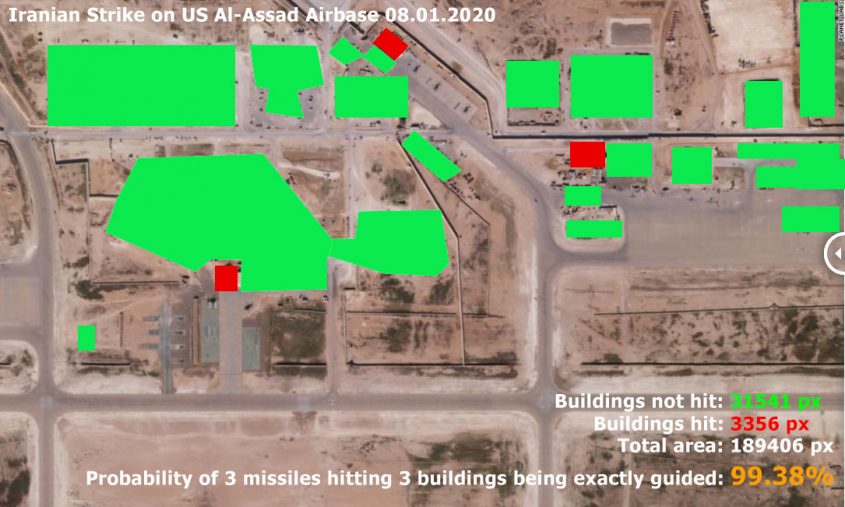
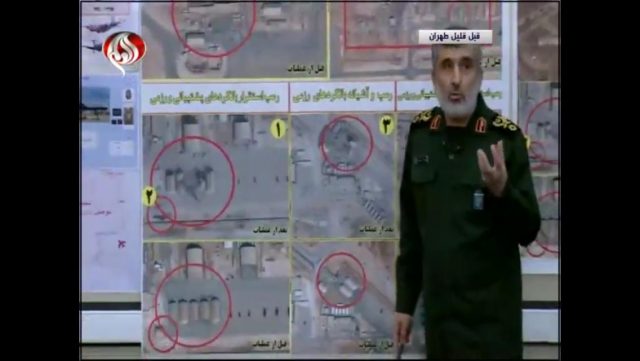
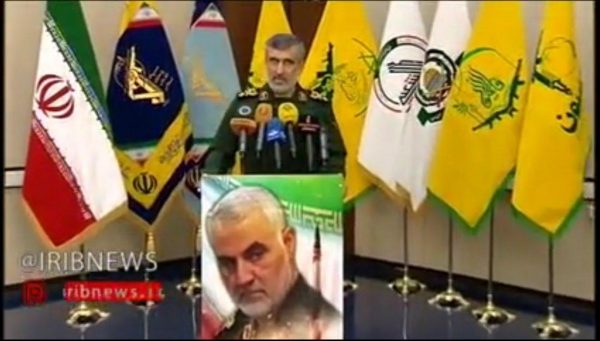
 Aletho News
 Aletho News