Iraqi Foreign Minister stresses need for withdrawal of foreign troops
Press TV – January 9, 2020
Iraqi Foreign Minister Mohammad Ali al-Hakim has stressed the need for US and other foreign troops to leave Iraq as a backlash grows over the recent American assassination of a top Iranian general in Baghdad.
The top Iraqi diplomat made the appeal during a joint press briefing with his Turkish counterpart Mevlut Cavusoglu in Baghdad on Thursday.
Hakim and Cavusoglu strongly condemned the US assassination of Iran’s Lt. Gen. Qassem Soleimani and senior Iraqi commander of the Popular Mobilization Units Abu Mahdi al-Muhandis, both key figures in the fight against Daesh and other Takfiri terrorists in the Middle East.
“Iraq insists on maintaining its sovereignty and territorial integrity and the complete withdrawal of foreign forces,” the top Iraqi diplomat said.
He added that talks with his Turkish counterpart focused on the need to respect Iraq’s sovereignty from all sides.
“Iraq condemns the attacks on Iraqi land, which harms the sovereignty of our country as well the security of Iraqi people. They are against the international law,” the Iraqi minister said.
Hakim added, “”We have discussed with the minister that Iraq wants all foreign forces are removed out of the country through dialogue. We also discussed with the minister on cooperation areas. We have agreed to alleviate the Iran-US tension in the region.”
The two sides also discussed bilateral relations at all levels, including cooperation on fighting terrorism, al-Hakim said.
The top Iraqi diplomat said any escalation of tensions in the region could result in the re-emergence of Takiri terrorist groups.
The Turkish foreign minister, for his part, said Ankara does not want Iraq to become a battleground for foreign forces.
Cavusoglu added that Iraq was not alone and Turkey was there to overcome difficult days together.
Turkish foreign minister also spoke with his Iranian counterpart Mohammad Javad Zarif Wednesday after Tehran fired dozens of missiles at two military bases hosting US troops in Iraq. The missiles were fired at the Ain al-Asad base in Anbar province and another base in Erbil.
PMU leader denies role in rocket attacks
In another development, Qais al-Khazali, the leader of Asa’ib Ahl al-Haq movement, a subdivision of Iraq’s Popular Mobilization Units, known by its Arabic name as Hashd al-Sha’abi, denied any involvement in the recent firing of rockets at Baghdad’s Green Zone where the US embassy is located.
Two Katyusha rockets struck Baghdad’s heavily fortified Green Zone on Wednesday, landing near the US embassy but causing no casualties, according to the Iraqi military.
Al-Khazali also said it was time for an Iraqi response to the recent US assassination, adding the reaction will be “no less in size” than Tehran’s missile strikes on two American bases in Iraq.
On Sunday, Iraqi Prime Minister Adel Abdul Mahdi called the US airstrike “a political assassination”. He also underlined the need for a timetable to withdraw all foreign troops “for the sake of our national sovereignty.”
Shell-shocked pundits come crawling back to Hillary over Trump’s Iran belligerence… forgetting she’d have started war sooner
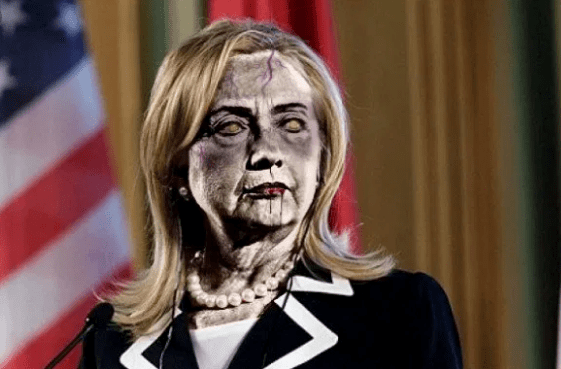
If you squint really hard, it’s ALMOST like she’s in the Oval Office…
RT | January 8, 2020
Social media sang praises of would-be US President Hillary Clinton as actual President Donald Trump seemed headed for all-out war with Iran – even though Clinton had been a much more enthusiastic participant in US wars.
After Iranian missiles struck several US bases Tuesday night, #Resistance twitter wasted no time disavowing the administration they blamed for the hostilities, running into the arms of his arch-rival with the #IVotedforHillaryClinton hashtag.
But claiming Clinton was the less warlike of the two candidates, or would have steered the country away from war with Iran, requires a serious divergence from history. The former Secretary of State once told an interviewer that “I want the Iranians to know that if I’m the president, we will attack Iran.”
That was during her 2008 campaign, and in the middle of a discussion about Iran possibly attacking Israel. Perhaps her stance on the Islamic republic had softened a bit by 2016, enough to justify viewing her as the lesser of two Iran hawks?
Nope. The months leading up to that election saw her parroting Israeli PM Benjamin Netanyahu’s decades-old talking points about Iran “racing toward a nuclear capability,” expanding “secret facilities,” and “defying their international obligations” before she swept in with the nuclear deal and solved all the problems.
Except the deal was negotiated after she was replaced as the top US diplomat by John Kerry. Clinton was on the same side as Trump, demanding ever more sanctions even as the nuclear deal took effect, this time as punishment for Iran’s ballistic missile program.
Beyond interventionist Democrats, she was courted by a bevy of neocons who couldn’t stomach Trump’s anti-interventionist rhetoric. Inveterate warmongers like Robert Kagan and Richard Armitage swooned over the ex-First Lady.
In short order, the infamous clip of Clinton mocking the brutal murder of Libyan leader Muammar Gaddafi – “we came, we saw, he died” – resurfaced on twitter. The so-called “humanitarian” intervention in Libya was largely a creation of Clinton’s State Department, complete with risible wartime propaganda about Gaddafi handing out Viagra so his soldiers could better commit mass rapes, and the continued chaos in that once-advanced state remains a testament to what the region (or world) might look like under her watch.
She wanted a repeat performance in Syria, calling for – and thankfully not getting – a no-fly zone, even while admitting it would “kill a lot of Syrians.”
While Trump lost the popular vote to Clinton, he handily beat her in the Electoral College, which ultimately decides who occupies the White House. Despite her massive advantage in political experience, his promises to bring US troops home attracted significant support. Nearly four years later, however, the US is poised on the brink of a catastrophic expansion of its Forever War.
Interpol Activates Arrest Warrant Against Morales at Bolivia’s Request – Interior Minister
Sputnik – 09.01.2020
The International Criminal Police Organization (Interpol) has activated an international arrest warrant for former Bolivian President Evo Morales per the Bolivian government’s request, according to the country’s interior minister, Arturo Murillo.
“I have given the order at 6:00 [10:00 GMT on Wednesday] to Interpol to activate the international order [against Morales]”, Bolivian President Evo Murillo said during a press conference on Wednesday, as quoted by the state Agencia Boliviana de Informacion.
He added that it was important for Morales be held to account for his actions in his own country.
In December, the Bolivian authorities issued an arrest order for ousted Morales, accusing him of sedition, terrorism, and sponsoring terrorism. Morales claimed he was not afraid of the warrant, calling it illegal and unconstitutional.
Late last year, Bolivia experienced a change in leadership following mass protests against the results of the October general election. Morales stepped down as president on November 10 and fled to Mexico. Most of Bolivia’s senior officials resigned in his wake. This resulted in the senate’s second vice speaker, opposition lawmaker Jeanine Anez, declaring herself interim president. Morales has characterized the situation as a coup.
MAS Can Get Over 40 Percent of Vote Even Without Morales as Its Candidate – Bolivian Journalist
By Ekaterina Blinova – Sputnik – 09.01.2020
Bolivia’s highest electoral body has set the date for the country’s general vote. Although Evo Morales’ Movement Towards Socialism (MAS) was eventually allowed to participate, the chances of the de facto government committing fraud to upend a MAS victory are high, says Alberto Echazu, a journalist from the media platform La Resistencia Bolivia.
On Sunday, the Supreme Electoral Tribunal of Bolivia declared that the country would hold a general vote on 3 May 2020 with the candidates having to be submitted to the electoral authority by 3 February.
The de facto government in La Paz, meanwhile, continues to crack down on Evo Morales’ supporters and leftist media sources.
Alberto Echazu, a journalist with the left-wing media outlet La Resistencia Bolivia, which has recently been subjected to arrests and intimidation, has described the unfolding situation as the country braces for new general elections.
Sputnik: The Supreme Electoral Tribunal (TSE) of Bolivia announced on 31 December that Evo Morales’ MAS will be able to participate in the 2020 general elections. Why did the de facto interim government request TSE to decide the fate of MAS? Did they hope to somehow weaken MAS’ positions or expel the party from the election race? What are MAS’ chances in the upcoming May 2020 elections and what obstacles could the party face, in your opinion?
Alberto Echazu: The de facto regime is trying to block and nullify MAS’ legal status as a national party so that it cannot be an electoral option in the upcoming elections. Using the false idea that MAS is the party of a government that committed fraud, the regime is trying to criminalise it and expel it from the election race. This is all because they are very aware of MAS’ strength, it being the only party that can obtain a vote higher than 40 percent even without Evo Morales as its candidate.
Some media sources have performed surveys of how residents intend to vote, and despite MAS’ candidate not having been decided yet, the party is leading in the polls against a group of right-wing candidates such as Fernando Camacho, Carlos Mesa, and others.
MAS has every chance of winning the elections as it is still the biggest and strongest party nationwide, however, the chances of the regime actually committing fraud in order to avoid a MAS victory are fairly high. The regime has not held back from using every resource at hand, regularly violating constitutional rights and even international treaties and international human rights.
Sputnik: Who are the most likely MAS presidential candidates to take part in the 2020 general elections? What’s your take on the candidacy of Andronico Rodriguez, named by some media outlets as Morales political heir? Is he charismatic enough to unify the Left?
Alberto Echazu: The most likely MAS’ pairing is Luis Arce as presidential candidate and Andronico Rodriguez as vice president. Luis Arce was Evo Morales’ minister of economy and is seen as the one responsible for the country’s economic stability and success in the last 14 years.
The economic model, labelled Modelo Económico Social Comunitario Productivo (Social Communal Productive Economic Model) was one of the most important reasons behind Bolivia’s economic miracle, giving Arce a great reputation and prestige among the urban middle class, him being the main thinker behind it. He is also highly respected among MAS’ supporters as he was not only a technical cadre in Morales’ government but also very committed politically, having been a member of the Socialist Party before joining Morales’ government.
Andronico Rodriguez has great charisma among MAS’ supporters as he was named Morales’ successor and is seen as an important young cadre. Because of his age he is not expected to be the presidential candidate (he is 30 years old).
This pairing has great acceptance among MAS’ supporters and could receive a large number of votes, both of them being very respected figures and having Morales’ trust and blessing.
Sputnik: Could you please shed light on the political persecution of leftist journalists, in particular, La Resistencia Bolivia, that provided the coverage of the Bolivian coup. Have any international human rights organisations or entities protecting journalists paid attention to these incidents so far?
Alberto Echazu: Political persecution against members of the alternative media platform La Resistencia Bolivia, of which I am a member, is due to our work broadcasting and informing about the coup in our country and all of the assassinations and violations of human rights during the coup and the de facto government.
The regime silenced the rest of the media that tried to inform with some kind of impartiality as soon as it took power and forced to halt the broadcast of any media outlet that refused to comply with the regime’s policies of legitimising the coup and the de facto government.
Two members of La Resistencia Bolivia were arrested on New Year’s Eve. The charges are “sedition” and “misuse of state assets”, even though the police have no evidence. They have been unjustly detained for a week and spent New Year in judicial cells. It is all clearly for political reasons.
The timing of the detentions was strategically planned so that there was not any social protest or support against this injustice, but in spite of that there has been a lot of support on social media, and as people go back to normality after the festive period the denouncing of this abuse has increased, given that La Resistencia has gained a lot of respect and followers for being almost the only media outlet left that informs about what is going on in Bolivia.
In that regard, different human rights organisations have expressed their solidarity towards our detained members and the persecution against the platform like Defensoría del Pueblo (People’s Defence), and Asociación de Madres de Plaza de Mayo from Argentina, but the police intimidation of society in general has stopped people from protesting, as happened in other cases of abuse and arrests as well.
Iran’s Strikes Against the U.S. Demonstrate the Unipolar System Is Truly Over
By Paul Antonopoulos | January 9, 2020
When U.S. President Donald Trump ordered the assassination of Iranian General Qassem Soleimani, he certainly had not expected that Iran would respond in the way it did by bombarding two U.S. military bases in Iraqi territory. It is likely that his advisers had convinced him that no country in the world had the courage to attack the U.S. so blatantly as no one else had since the Japanese attack on Pearl Harbor during World War II. The Iranians did of course, as was expected by those who understand the ideology of the Islamic Republic that has a deeply ingrained martyrdom complex that stretches back to 680AD when Imam Ali Ibn al-Husayn was killed in Karbala, Iraq.
Trump has claimed that there were no American casualties while Iran has claimed there were at least 80. With the Erbil and Ain al-Assad bases bombarded and several U.S. aircraft, drones and helicopters destroyed, it is unlikely that there were no U.S. casualties – however there is no way in knowing at this time whether there were 80. We can expect Washington to keep the true number of casualties a secret, in complete opposition to Iran who openly celebrate their martyrs.
The Ain al-Assad military base is the largest and most equipped U.S. base in the region, and one of a few U.S. special bases around the world, at the size of about half of Lebanon. The fact that the Americans have deployed their most sophisticated radar systems in Iraq, many of which have been destroyed, demonstrates the ineffectiveness of the Patriot missile defense system. This was despite U.S. forces in the region being put on high alert. This will only be in Russia’s favor as it continues to offer the S-400 system to potential buyers.
Not only did the attack on the Ain al-Assad military base expose the ineffectiveness of the Patriot system, Iran also targeted the Erbil base in Iraqi Kurdistan. This base was a center to try and encourage the Iraqi Kurds to rebel against the central government in order to put pressure on the central Iraqi government. The attack on the Erbil base was a warning that even a U.S. withdrawal into Kurdistan does not make them safe.
It was expected by most commentators that Iran’s retaliation for the martyrdom of Soleimani would be in the form of utilizing its regional paramilitary allies on U.S. positions. By directly attacking U.S. forces brazenly and openly, Tehran has demonstrated that the U.S. are not safe in any part of the region. However, Iran had no choice but to retaliate as not doing so would demonstrate the country’s leadership only had empty rhetoric in defending itself. The U.S. would certainly be more inclined to carry out further attacks against Iran and its allies if Tehran did not respond.
If there is a war going on in Iraq between the U.S. and Iran, it probably will not be limited to one country and will engulf the whole region, and potentially, across the world. Washington cannot be counted on to abide by international laws and regulations. The countries in the region, particularly the Gulf States, should also bear in mind that the presence of U.S. bases on their land will not only fail to provide security, but will also endanger their national security as all states who assist the U.S. in any aggression against Iran will become legitimate targets, as Tehran has already warned.
Rather, the murder of Soleimani has only united Iranians, including those who have been protesting across the country since November, blaming the government for the increased fuel prices and difficult economic situation, ignoring the crippling U.S. enforced sanctions. The major demands of the Iranian people are now for the expulsion of the U.S. military from the region, something that the Islamic Republic’s leadership has loudly and clearly demanded as well.
Since Iran has made its first response to the U.S. so directly, Trump for now is refusing to respond militarily and will impose greater sanctions against Iran. However, Iran has already made the demand that the U.S. withdraw from the region. To achieve this without directly provoking Trump again, Iran is likely to employ the militias it backs in Syria and Iraq to target U.S. military installations. With any Israeli involvement in this war effort, Iran can use Hezbollah and various Palestinian militias to pressure the Jewish state internally and externally.
Therefore, since Iran has already promised to expel the U.S. from the region, the next phase of the anti-U.S. war effort will be asymmetrical warfare by Iran. If Iran engages in asymmetrical warfare, the return of dead and wounded American soldiers will severely hamper Trump’s re-election campaign this year as he originally ran on the ticket of criticizing wars in West Asia when he was competing for the presidency against Hillary Clinton years earlier. The Iranian leadership are now in control of the future of the West Asia and have demonstrated they are willing to retaliate against the U.S. who is seeking to maintain the unipolar hegemonic world order that emerged with the collapse of the Soviet Union in 1991. Iran has once again shown that the 21st century is not one of unipolarity that Washington hopes to maintain, but rather multipolar with several strong middle and Great Powers.
Paul Antonopoulos is a Research Fellow at the Center for Syncretic Studies.
Twitter Shutters Dozens of Venezuelan Government-Linked Accounts
By Morgan Artyukhina | Sputnik | 08.01.2020
Dozens of Twitter accounts for figures and institutions related to the Venezuelan government, including military branches, political leaders and journalists, were suddenly suspended without explanation on Tuesday, a day after Washington condemned the National Assembly for failing to re-elect presidential claimant Juan Guaido.
The social media giant has suspended the accounts of numerous Venezuelan government institutions, including the country’s Army, Navy, National Guard, Air Force, Central Bank, Finance Ministry, Oil Ministry, National Center for Information Technology (CNTI) and National Commission for Information Technology.
The accounts of government figures like Victor Clark, the governor of Venezuela’s Falcon state; former Bolivarian National Army Forces General Commander Jesus Suarez; and Freddy Bernal, the coordinator of the country’s subsidized food distribution program, the Local Committees for Supply and Production (CLAP), were also shut down.
Still other accounts shuttered include Red Radio Venezuela, the presidential press office and the press office for the mayor of Caracas.
According to TeleSur, no explanation has been given for the suspensions, just a notice that the accounts had ostensibly violated Twitter’s terms of use.
While a few of the accounts have since been unlocked, such as Bernal’s and the Finance Ministry’s, most remain locked.
Toeing the State Department Line
TeleSur noted that according to Twitter’s rules, an account can be closed if it’s being used for spam, has been hacked, participates in abusive or bellicose behavior or impersonates another account – but the closed accounts haven’t violated any of these rules.
The crackdown mirrors one by the social media giant in September that targeted numerous Cuban news outlets and journalists. As Sputnik reported, dozens of Cuban accounts were shut down just moments before Cuban President Miguel Diaz-Canel addressed the nation about a chronic fuel shortage caused by US sanctions and collective methods of coping with the shortages.
Twitter has steadily treaded closer to the US State Department’s line in recent years, adopting the same bellicose stance against accounts associated with governments targeted by Washington, including those of Venezuela, Iran, Russia and China. Under the guise of combating disinformation, Twitter, along with Facebook and Google, have closed down accounts spreading information and news that run counter to the US government’s official line on events such as the Guaido’s declaration of his own interim presidency and the anti-Beijing protests in Hong Kong. However, in the recent crackdowns on Cuban and Venezuelan accounts, Twitter has not even attempted to offer a veil of justification.
Washington Decries Guaido’s Ouster
On Sunday, Guaido failed to secure re-election as the speaker of Venezuela’s National Assembly, a post he received in January 2019 amid rotating leadership of the legislature by the country’s opposition parties. Instead, 81 of the 150 lawmakers chose Luis Parra, an independent opposition member representing Yaracuy State.
Parra recently left the centrist opposition party Primero Justicia, the party of Henrique Capriles, who challenged Venezuelan President Nicolas Maduro in the 2013 presidential election.
Unsure if he would win re-election, Guaido postured as if he had been barred entry to the legislature, attempting to scale the fences outside on Sunday. However, there’s no evidence Guaido was actually prevented from entering the building in a normal way, especially since Guaido loyalists like William Davila entered without trouble.
Video footage later emerged showing Guaido refusing to enter unless in the company of several lawmakers whose parliamentary immunity has been revoked for alleged criminal offenses, Venezuelanalysis noted.
After opposition members failed to convince Guaido to enter, he and they later met at the headquarters of anti-government newspaper El Nacional, declaring the parliament’s vote void and re-electing Guaido as speaker, with several figures standing in for legislators who had left the country.
Washington quickly denounced the events in the National Assembly, with US Vice President Mike Pence declaring Guaido the country’s “only legitimate president” and US Special Envoy to Venezuela Elliot Abrams promising new sanctions against Maduro.
Guaido’s claim to be interim president is recognized by roughly 50 countries, mostly European and US-allied nations, while Maduro, who won reelection in 2018, remains recognized as the president of Venezuela by roughly 75% of the world’s nations. Since January 23, 2019, Guaido has launched four attempted coups d’etat, each of which has gained less traction than the last.
Israel confiscates sole medical vehicle serving 1,500 Palestinians
MEMO | January 8, 2020
Israeli occupation forces have confiscated the only vehicle available to a medical team serving the needs of some 1,500 Palestinians in an isolated region of the southern West Bank, reported Haaretz.
According to the paper, this is the second time that the vehicle – which serves the residents of Masafer Yatta in the south Hebron hills – has been seized within a year, “cutting off healthcare to an isolated and impoverished population” living inside an Israeli military firing zone.
The medical team make weekly visits to the area’s Palestinian communities, which lie roughly one hour’s drive on dirt roads from the nearest town of Yatta. The jeep in question “is the only vehicle available for providing medical services to these communities”.
Last Thursday, Haaretz reported, Israeli occupation forces intercepted the medical team at Khirbet Al-Majaz, claiming that they were not allowed there “without prior coordination”. The patrol then impounded the jeep and held the medics for half an hour.
In February 2019 the vehicle was confiscated “under similar circumstances”, stated the paper, and only returned six months later after the medical team paid a 3,000 shekel ($865) fine. On that occasion, the team were unable to provide medical care for the entire six months.
The Israeli military commented that “the vehicle was impounded by supervisors at the Civil Administration since it was traveling in a fire zone, a forbidden area for vehicles by law”.
The Israeli military’s “Firing zone 918” was established in the 1980s, and the army has repeatedly sought to remove Palestinians from the area.
Justice at Last? ‘Panic’ in Israel as the ICC Takes ‘Momentous Step’ in the Right Direction
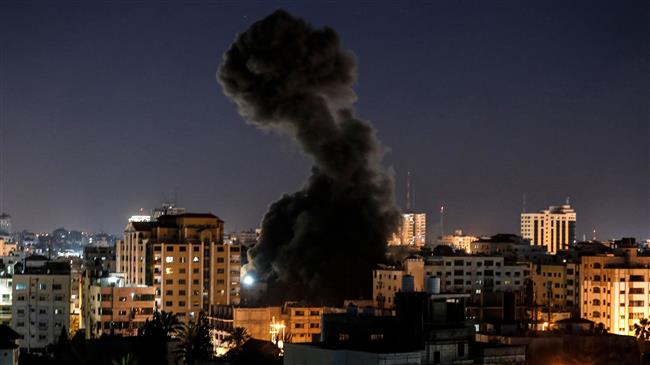
By Ramzy Baroud | Palestine Chronicle | January 8, 2020
At long last, Fatou Bensouda, the Chief Prosecutor of the International Criminal Court (ICC) has uttered the long-anticipated conclusion that “all the statutory criteria under the Rome statute for the opening of an investigation (into alleged war crimes in the Occupied Palestinian Territories) have been met”.
Bensouda’s verdict has been in the making for a long time and should, frankly, have arrived much earlier. The ICC preliminary investigations into Israeli war crimes began back in 2015. Since then, many more such war crimes have been committed, while the international community persisted in its moral inertia.
The ICC statement, issued on December 20, asserted that the court saw “no substantial reasons to believe that an investigation would not serve the interests of justice”.
But can the “interest of justice” be served while the United States government continues to wield a massive stick, using its diplomatic, political and financial clout to ensure Israel emerges unscathed from its latest legal scuffle?
There is little doubt that Michael Lynk, the United Nations Special Rapporteur for the situation of human rights in the Palestinian territory, is absolutely right: A formal ICC criminal investigation into war crimes in Palestine is a “momentous step forward in the quest for accountability”.
He is also correct in his assessment, published in the United Nations Human Rights Officer of the High Commissioner website, that “accountability has, until now, been largely missing in action throughout the 52-year-old occupation.”
I would go even further and expand the timeline of the missing accountability to include the two decades prior to the Israeli occupation of East Jerusalem, the West Bank and the Gaza Strip. Otherwise, how is one to account for the ethnic cleansing of Palestine in 1947-48, the numerous massacres and other wanton killings that accompanied and followed those defining years, or the fact that Israel was never held accountable for its violations of international and humanitarian laws between 1948 and 1967?
That issue notwithstanding, the Palestinian Authority and all political parties in Palestine should exploit this unprecedented opportunity of holding Israel accountable.
As soon as the ICC issued its statement, news reports surfaced conveying a sense of “panic” in Israel. The Times of Israel reported that an Israeli government meeting to discuss the ICC decision was held shortly after, with the aim of considering a proper response, including the possibility of preventing ICC investigators from reaching Israel.
This is eerily familiar. Israel has denied entry to – or refused to cooperate with – international investigators and observers on many occasions in the past.
Following a UN planned investigation into alleged Israeli war crimes in the Palestinian refugee camp of Jenin in 2002, the Israeli government quickly moved, and, sadly, succeeded in blocking the investigation altogether.
It has done so time and again, often demonizing the very individuals entrusted with the mission of examining the illegality of Israel’s behavior in the context of international law. Well-respected judges and international law experts, such as Richard Goldstone, Richard Falk, and John Dugard, were vehemently attacked by Israeli officials and media and, by extension, by the US government and media as well.
Israel has managed to survive dozens of United Nations Resolutions and countless legal reports and indictments by the UN and all UN-affiliated organizations, largely because of blind and unequivocal American support, which has shielded Israeli war criminals from ever answering to their horrific actions in Palestine.
“Remember, it was (then-Secretary of State) Hillary Clinton who took pride in the fact that she personally killed the Goldstone Report,” said US author, Norman Finkelstein, in a recent interview with the news website Mondoweiss.
The Goldstone report was issued in the wake of the Israeli war on Gaza in 2009, dubbed ‘Operation Cast Lead’. The campaign of intimidation and pressure on Goldstone, personally, has forced the once-respected judge to retract his accusations of Israeli war crimes and the deliberate targeting of civilians.
While Clinton did her part in torpedoing the Goldstone Report, former US President, Barack Obama, according to Finkelstein, went to great lengths to “neutralize international law against settlements and other Israeli crimes in the occupied territories”.
Worse still, on September 14, 2016, Obama handed Israeli Prime Minister, Benjamin Netanyahu, himself accused of carrying out numerous war crimes against Palestinians, the largest US aid package to a foreign country in modern history, a whopping $38 billion over the course of ten years.
This is not a new phenomenon, where the US enables Israeli crimes and simultaneously shields Tel Aviv from any accountability for these crimes before the international community. All US administrations, whether Republican or Democrat, have honored the same sinister maxim, thus ensuring Israel, literally, gets away with murder.
A particular case in point was in 2001, when 28 Palestinian and Lebanese survivors of the 1982 Sabra and Shatila massacre attempted to try, in a Belgian court, late Israeli leader and accused war criminal, Ariel Sharon. Intense American pressures and a brazen intimidation campaign, targeting the Belgian government and the judicial system, resulted in the dismissal of the case in 2003. To deny Israel’s victims the opportunity to seek justice everywhere in the country, Belgium revised its very law, to the satisfaction of Israel and the United States.
The high level of the ICC investigations places the legal push against Israel at a whole new level. This is uncharted territory for Israel, the United States, Palestine, the ICC and the international community as a whole. There is little doubt that some joint Israeli-American effort is already underway to develop strategies aimed at countering if not altogether dismissing, the ICC investigation.
It is clear that justice for Palestinians in the face of Israeli aggression, itself fueled by unconditional American support, is not at all possible if it is not accompanied by regional and international unity, and a clear and decisive decision by all parties concerned that Israel, once and for all, must pay for its military occupation, racist apartheid laws, protracted siege on Gaza, and the many massacres in between.
Without this kind of international will, the ICC investigation could become another sad case of justice denied, a non-acceptable option for any justice-seeking individual, organization, and government anywhere in the world.
– Ramzy Baroud is a journalist and the Editor of The Palestine Chronicle. He is the author of five books. His latest is “These Chains Will Be Broken: Palestinian Stories of Struggle and Defiance in Israeli Prisons” (Clarity Press, Atlanta). Dr. Baroud is a Non-resident Senior Research Fellow at the Center for Islam and Global Affairs (CIGA), Istanbul Zaim University (IZU).
Operation Kayfabe: How Trump and Iran avoided war while both claiming victory
By Nebojsa Malic | RT | January 8, 2020
For a moment there, as missiles were flying, it looked like a US-Iran war was inevitable. Then, just as suddenly, both sides walked away. What happened? The key to figuring it out might just lie in professional wrestling.
Last night, Iran launched two volleys of missiles at two bases in Iraq that house US troops and equipment, calling it revenge for the drone strike that killed General Qassem Soleimani, head of the Islamic Revolutionary Guard Corps (IRGC) Quds Force. US President Donald Trump called him a “terrorist” and a “monster,” but Iranians considered him a beloved war hero, and there was no way the IRGC could let his death go unavenged.
Trump, however, threatened to strike 52 targets in Iran – the same as the number of US embassy staff taken hostage after the 1979 revolution – if any “Americans or American assets” were harmed. Throughout Tuesday, the US president kept oddly quiet on Twitter, choosing only to amplify the anti-Iran messaging of the most hawkish senators, and let the Pentagon and State Department chiefs take the lead in saying there will be no withdrawal from Iraq. It seemed like any Iranian action would guarantee a war.
Democrats, media talking heads and antiwar activists alike were absolutely convinced that Trump was getting into a war with Iran. Everything pointed to it. Any hope that the situation could de-escalate seemed like wishful thinking. Some Hollywood celebs were even pleading with Tehran “please do not kill us,” and asking the Iranian government to hold out till November so Trump can be voted out of office.
So when the US president walked up to the White House podium and addressed the nation on Wednesday – only to announce that his response will be more sanctions and calling for greater NATO involvement, rather than unleash the might of the US military – a lot of people were were left confused, to say the least.
That’s because the American chattering classes forgot what in retrospect seems like a very important detail from Trump’s biography: before he ran for president, before he had a hit reality TV show… he was a superstar of professional wrestling. That’s not surprising, because they believe themselves too elite and too educated for that lowbrow form of entertainment – but Trump’s base does not.
Unlike the internationally known sport, professional wrestling is a specifically North American form of performance art, in which everything is staged but everyone pretends it is real and true. There is even a specific term for maintaining this pretense before the general public: kayfabe.
What if Trump’s threats of bombing Iranian heritage sites or refusing to withdraw from Iraq – even though he campaigned on doing just that – were all part of kayfabe, an act intended to gull the gullible into believing it was all real? Moreover, what if Iran was in on the act and chose to launch the missiles at largely empty warehouses, while giving Americans ample warning via the Iraqis ahead of time, so as to avoid any deaths?
It sounds unbelievable, right? Yet there is no denying that it is precisely how events played themselves out.
Speaking on Wednesday, Trump used standard rhetoric about Iran to bury two very important points that pundits largely missed. One is that the US is now energy independent and therefore far less vulnerable to events in the Middle East than in the 1970s, during the Arab Oil Embargo or the Iran hostage crisis. The other was his direct repudiation of the ‘Albright doctrine’ of US interventionism established in the 1990s with a glib remark.
“The fact that we have this great military and equipment, however, does not mean that we have to use it,” Trump declared.
Those two things, I am fairly confident, were not kayfabe. Expect both to be largely ignored by the chattering classes, though, as they focus on who “caved” first and slowly get back to routine.
What matters at this moment is that the war that seemed inevitable did not actually happen. The IRGC got to tell the Iranian people that their brave soldiers avenged “martyr Soleimani” by smiting the “Great Satan.” Trump got to tell the American people that, since no lives were lost, he could shrug it off as insignificant and walk away. Both of them ended up looking triumphant, while their hysterical critics and doomsayers ended up looking like fools. And let’s remember, in politics and pro wrestling alike, perception is everything.
Iran didn’t want to kill US troops with its strike, it wanted to make point to Trump about its missile tech & resolve. It did that.
By Scott Ritter | RT | January 8, 2020
Iran’s anticipated retaliation for the US assassination of Qassem Suleimani sent a clear signal to Donald Trump that while the current round of violence may be over, Iran stands ready to respond to any future US provocation.
Tehran warned Iraq to spare US soldiers
On Tuesday night, the Iranian nation buried the body of Qassem Soleimani, the charismatic senior Islamic Revolutionary Guard Corps (IRGC) officer assassinated by the US this past week. In the early hours of Wednesday morning, that task completed, Soleimani’s IRGC comrades, acting on the orders of Iran’s Supreme Leader, Ali Khamenei, launched some 22 ballistic missiles from Iranian territory into neighboring Iraq, targeting the huge US air base Al Asad, in western Iraq, and the US consulate in the city of Erbil, in Iraqi Kurdistan.
In the hours following the announcement of these attacks, which were broadcast on Iranian television for the Iranian people, the world held its breath, waiting for the results. Shortly after the missiles were launched, Iran signaled its desire for a diplomatic resolution to the crisis through a tweet sent out by its Foreign Minister, Javad Zarif, who described the attacks as “proportionate measures in self-defense under Article 51 of UN Charter.” Zarif concluded by noting that “We do not seek escalation or war, but will defend ourselves against any aggression.”
The ultimate decision to deescalate, however, was not Iran’s to make. War is not a one-way street, and the enemy always gets a vote. However, in launching its missile attack on US targets in Iraq, Iran appeared to go out of its way to signal that it considered the matter of retaliation for the assassination of Soleimani closed. First and foremost, Iran communicated its intent to strike US targets in Iraq directly to the Iraqi Prime Minister a full two hours prior to the missiles being launched; Iraq then shared this information with US military commanders, who were able to ensure all US troops were in hardened shelters at the time of the attack.
Showing off its new-gen ballistic missiles
But the most important aspect of Iran’s actions was the way its missiles were targeted. For years now, Iran has made significant strides in terms of the reliability, range and accuracy of its ballistic missile force. Gone are the days when Iran’s arsenal consisted solely of inaccurate Soviet-era SCUD missiles.
The missile attack on the US incorporated new, advanced missiles—the Qaim 1 and Fahad-110—possessing advanced guidance and control capable of pinpoint precision. Iran had used these weapons previously, striking targets inside Syria affiliated with the Islamic State. But this was the first time these weapons had been used against the US. From the US perspective, the results were sobering. The Iranian missile attacks resulted in no casualties among US, Iraqi or coalition forces stationed in either Al Asad or Erbil. But the lack of lethality, however, is actually Tehran’s way of proving the accuracy of its ballistic missiles.
Commercial satellite images of the Al Asad air base taken after the attack show that the Iranian missiles struck buildings containing equipment with a precision previously only thought possible by advanced powers such as the US, NATO, Russia and China. Iran fired 17 missiles at Al Asad, and 15 hit their targets (two missiles failed to detonate).
Iran also fired five additional missiles at the US consulate in Erbil; US commanders on the ground said that it appeared Iran deliberately avoided striking the consulate, but in doing so sent a clear signal that had it wanted, the consulate would have been destroyed.
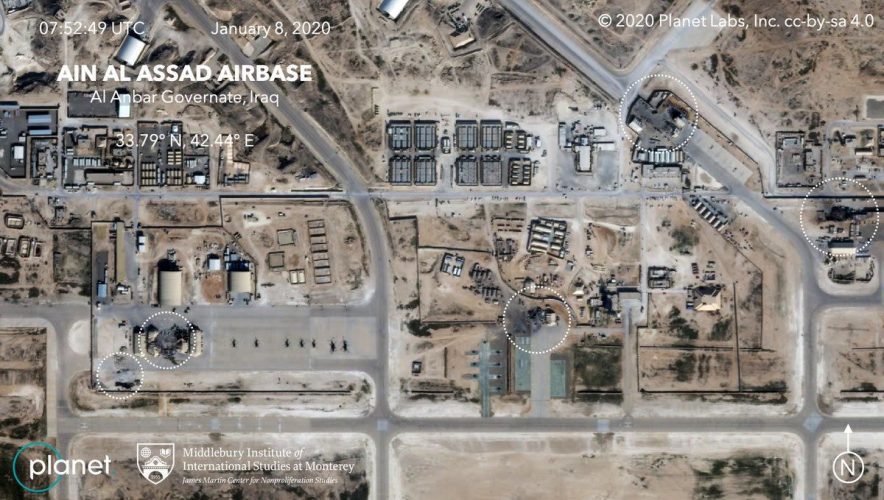
Trump had to back down
This was the reality that President Trump had to wrestle with when addressing the American people regarding the state of hostilities between the US and Iran.
Trump had previously promised a massive retaliation should Iran attack any US personnel or facilities. Surrounded by his national security team, Trump had to back down from that threat, knowing full well that if he were to attack Iran, the Iranian response would be devastating for both the US and its regional allies, including Israel, Saudi Arabia and the UAE. The US might be able to inflict unimaginable devastation on Iran, but the cost paid would be unacceptably high.
Trump’s rhetoric was aggressive, however, and his message made it clear that the US still considered Iran to be a rogue state whose pursuit of nuclear technology, ballistic missiles, and regional dominance would be opposed by the US, with force if necessary. But the Iranian missile attack drove home the new reality that, when it came to Iran’s actions in the Persian Gulf, American Presidential rhetoric no longer held sway as it once did.
Ali Khamenei, the Iranian Supreme Leader, drove this point home in a series of tweets claiming to have “slapped” the US in the face for its assassination of Soleimani, emphasizing that the policies pursued by Soleimani seeking the withdrawal of the US from the Persian Gulf region were becoming a reality, citing the recent vote by the Iraqi parliament to evict all foreign troops, including those of the US, from its soil.
President Trump, in his address to the American people, certainly talked the talk when it came to articulating a strong anti-Iranian policy. The real question is whether Trump and the American people are prepared to walk the walk, especially in a world where Iranian missiles are capable of dealing death and destruction on a scope and scale previously unimaginable.
Scott Ritter is a former US Marine Corps intelligence officer. He served in the Soviet Union as an inspector implementing the INF Treaty, in General Schwarzkopf’s staff during the Gulf War, and from 1991-1998 as a UN weapons inspector.
Featured Video
Dr. Tony Martin – The Jewish Role in the African Slave Trade
or go to
Aletho News Archives – Video-Images
In Memoriam
James Petras, In Memoriam
 02.13.2026
Professor James Petras, 89, world-renowned sociologist, public intellectual, and scholar of Latin American politics and global economics, died peacefully on January 17, 2026, in Seattle, WA, surrounded by family.
A prolific scholar and activist, he devoted his life to challenging power, imperialism, and inequality. … continue
Blog Roll
 Aletho News
- Travelers Take a Pass on Visiting America
- EU members divided on 20th Russia sanctions package – media
- Lawyers ask police to investigate Elbit Systems UK for alleged war crimes complicity
- Israel ready to strike Iran-backed armed groups – media
- Behind US war drums against Iran: No goals, no plan, no off-ramp
- With Ukraine blamed for cutting oil flows to Hungary, Croatia also refuses to transfer Russian oil in violation of EU law
- Friedrich Merz’s Push to End Online Anonymity Has a Troubling Subtext
- Macron: French citizens fighting for Israel cannot be labeled ‘genociders’
- US eyes Gaza security force drawn from armed gangs
- The Only Motive Behind The ‘Imminent’ U.S. War With Iran Is The Zionist Lobby
- If Americans Knew
- ‘Christians Out’: Jerusalem Church Tagged With Hate Graffiti, Police Investigating
- Israeli Settlers Kill American Teen
- ‘We returned from hell’: Palestinian journalists recount torture in Israeli prisons
- No mercy for Gaza in Ramadan – Not a ceasefire Day 133
- The Israeli Government Installed and Maintained Security System at Epstein Apartment
- Tucker Carlson interrogated in Israel, has passport seized after interviewing US ambassador
- 6,000 Amputees in Gaza Face Impossible Recovery amid Israeli War Ultimatum
- The Lancet: Gaza death toll far higher than reported – Not a ceasefire Day 132
- Compliant aid: Who are the Israel-approved NGOs scaling up in Gaza?
- Why won’t Trump’s “Board of Peace” bring peace? – Not a ceasefire Day 131
- No Tricks Zone
- New Study: Canada’s New Brunswick Was 1°C Warmer Than Today During The Medieval Warm Period
- Coal Power Back In Trend As Globe Tries To Keep Pace With Growing Demand For Power
- New Study: A 4°C Warmer Beaufort Sea Had ‘No Sea Ice’ 11,700 – 8200 Years Ago
- Unfudging The Data: Dutch Meteorological Institute Reinstates Early 20th Centruy Heat Waves It Had Erased Earlier
- German Gas Crisis…Chancellor Merz Allegedly Bans Gas Debate Ahead of Elections!
- Pollen Reconstructions Show The Last Glacial’s Warming Events Were Global, 10x Greater Than Modern
- Germany’s Natural Gas Storage Level Dwindles To Just 28%… Increasingly Critical
- New Study Rebuts The Assumption That Anthropogenic CO2 Molecules Have ‘Special’ Properties
- Climate Scientist Who Predicted End Of “Heavy Frost And Snow” Now Refuses Media Inquiries
- Polar Bear Numbers Rising And Health Improving In Areas With The Most Rapid Sea Ice Decline
 Aletho News