Almost from the beginning of the US-supported regime-change project in Syria, US policymakers have incorporated several kinds of planning for what is called “transitional justice” into their pursuit of the project. Transitional justice (TJ) is a field that came into great vogue in the mid-1990s, after two key developments in the post-Soviet world: (1) the UN Security Council’s creation of a special International Criminal Tribunal for the Former Yugoslavia (ICTY) and (2) the agreement of the African National Congress in South Africa to negotiate an end to the Apartheid system– but with the proviso that the most heinous of the rights violators of the Apartheid era all ‘fess up to all their actions in a specially created Truth and Reconciliation Commission (TRC); and if those confessions were deemed full and heartfelt, then the perpetrators could escape prosecution for their actions.
From the early 1990s, these two approaches to TJ were in tension with each other; and that tension has lain at the heart of the rapidly burgeoning field of TJ projects ever since.
For its part, the prosecutorial/criminal-justice approach claimed descent from, crucially, the two US-dominated international courts established immediately after WW-II, in Nuremberg, and Tokyo. (The above photo is of Herman Goering on the stand, in Nuremberg.) The creation of ICTY was followed, two years later, by the Security Council’s creation of a parallel special court for Rwanda; and meantime, a broad movement emerged to press for the establishment by treaty among nations of a permanent “International Criminal Court” (ICC) which could hold accountable perpetrators of the worst forms of atrocities– described as war crimes, crimes against humanity, and genocide– in a criminal proceeding. In 1998, 120 governments adopted the “Rome Treaty” that established and set the rules for this court. In 2002, the requisite 60 countries had ratified the Rome Treaty and the ICC came into existence, headquartered in The Hague.
I have reflected at length in many earlier writings (including this 2006 book and these earlier articles: 1, 2) on some of the shortcomings of the ICC and the criminal-justice approach it adopts to dealing with the aftermath of atrocities. Suffice it here to note the following:
The United States is not a member of the ICC; but all the presidents since 2002 have on occasion sought to use the investigative, international arrest, and prosecutorial powers of the ICC, or to threaten their use, against political figures around the world they are opposed to.
The whole prosecutions movement since the creation of ICTY has claimed descent (and therefore a strong degree of legitimacy) from the whole Nuremberg/Tokyo Trials legacy. But all the “modern” international courts have omitted from their actual charge-sheets one of the key acts– perhaps the key act– prosecuted at Nuremberg and Tokyo: the crime of aggression, that is, the act of launching an aggressive war. The Rome Treaty listed the crime of aggression as potentially on the ICC’s docket, but its signatories have failed to reach agreement on how to define it and thus it has not in practice been chargeable.
In March 2003, eight months after the ICC formally came into existence, the United States launched a massive, quite unjustified (and militarily successful) war of regime change in Iraq– a war that UN Secretary-General Kofi Annan later admitted lacked any legitimacy.
One of the early acts of the “Coalition Provisional Authority” through which the US military ruled Iraq after the invasion was to establish a special tribunal to try former president Saddam Hussein and his top associates. After the CPA set up an Iraqi government (though still under its own control), this government adopted the trial plan, renaming the body the Supreme Iraqi Criminal Tribunal. Saddam was captured by US soldiers in late 2003 and sent for trial by the SICT; in November 2006, it sentenced him to death. He was held in a prison inside the US military’s “Camp Justice.” On December 30, 2006 he was taken to a scaffold earlier than the Americans had planned by a group that included SICT officials and members of Shiite militias. There, he was hanged to the jubilation of many of the witnesses, who also circulated cellphone videos of the event. Saddam’s very unseemly execution capped off a trial that had been marred throughout by grave irregularities.
This political background should be borne in mind when considering the legitimacy (or even, the utility) of any plans to use prosecutorial TJ mechanisms in connection with US-led regime-change projects in the present era– in Syria, Venezuela, or anywhere else.
In June 2019, Max Blumenthal and Ben Norton published a broad and detailed description in The Grayzone of the work of several organizations that have as their mission the collection of evidence of war crimes and other atrocities committed in Syria and to some extent also Iraq, and the compilation of this evidence into forms that can help (or even spur) the prosecution of alleged perpetrators by international courts.
Most of these organizations are funded by Western governments. Most were also, like the Syrian Network for Human Rights, founded at, or shortly after, the time that Secretary of State Hillary of Clinton and Pres. Barack Obama committed Washington to full support of the regime-change project in Syria. Other such organizations include:
the “Commission for International Justice and Accountability”, an organization founded by an enterprising Canadian investigator called Bill Wiley, that has received funding from Canada, the EU, numerous European countries, and the United States. CIJA got a massive boost in visibility in the United States after the New Yorker published a serious of materials about it written by Ben Taub. In this one, Taub breathlessly described how, “At an undisclosed location in Western Europe, a group called the Commission for International Justice and Accountability (CIJA) is gathering evidence of war crimes perpetrated by the Syrian government… “
The Syria Justice and Accountability Center (SJAC), which states explicitly on its website that it was founded in 2012 by the “Group of Friends of the Syrian People”– that is, the coalition of governments united in their project to overthrow the Syruian government. On its website, SJAC states that it was founded in The Hague and moved in 2016 to Washington DC, where it “is currently registered as a nonprofit corporation.” However, no organization of its name comes up in standard searches of nonprofits, while SJAC is currently listed as a project of the old cold-war organization, IREX.
Chart from p.50 of the Day After Project’s report
During their early years in existence, these organizations had as their goal the collection, preservation, and organization of materials that could, after the opposition’s overthrow of the government, serve in a war-crimes court as evidence of the organization by Syrian government officials of broad patterns of gross abuse.
The work of these documentation organizations was also inspired by “The Day After Project”, a project the federally funded U.S. Institute of Peace launched in late 2011 to plan for what decisionmakers in Washington all confidently expected would be the imminent fall of the Assad government. The Day After Project’s final report (PDF) was launched in August 2012, ostensibly by the all-Syrian group of 45 individuals who co-authored it. It contained a lengthy section on “Transitional Justice”, complete with a complex organogram showing how all the proposed parts of this project should be managed.
That was still the heyday of the thinking in official Washington that “Assad will fall any day now!” Washington– like Paris, Ankara, Doha, and other anti-Assad capitals– was full of very busy, Ahmad Chalabi-style Syrian exiles (often being handsomely paid by their Qatari, Saudi, or Emirati backers) who had managed to persuade themselves and numerous “locals” in those Western countries that any day now they would be riding into Damascus to take over the whole Syrian government. Well, in March 2003, Ahmad Chalabi did at least manage to get back to Baghdad in the wake of the US invasion of the country– though once he arrived, it was patently clear he had never enjoyed anything like the degree of popular backing within Iraqi society that he had long claimed to have. Regarding Syria, the earnest bands of exiles who were making detailed plans for their own imminent return “home” never even made it. They were unable to persuade a US government and public that had already been badly duped once, back in 2003, that the claimed “sins” of the Syrian government were bad enough to warrant a full-scale U.S. invasion– especially one that this time around (unlike in 2003) threatened to trigger a serious global showdown with a now more confident and capable Russia.
Yes, under Obama and Clinton, Washington did give the anti-Assad fighters some serious shipments of arms, along with strong political backing; and they and the Israelis did from time to time launch one-off strikes against Syrian military bases. But Obama and Clinton never signed off on a full-throated military campaign against Assad; and the anti-Assad rebels proved quite incapable of actually persuading enough Syrians to come over to their side, to win. The sides settled into a very lengthy and draining stalemate, during which the government side slowly proved able– with the help from international allies on whom it was quite legitimately able to call– to retake parts of Syria that had earlier been taken over by the foreign-armed (and increasingly jihadi-controlled) rebels.
Today, nine years into the conflict in Syria, there is no hope at all of the opposition seizing Damascus. And within the anti-Assad camp itself, extremist jihadis affiliated with either ISIS or Al-Qaeda long ago took over control, snuffing out the hopes of the Washington establishment that “moderate rebels” of the kind now firmly ensconced in Western think-tanks can ever become a significant force inside Syria. All the plans that those “moderate rebels” had made for the imminent establishment of an anti-Assad “special war-crimes court” like the one that earlier tried Saddam Hussein, or for other mechanisms of post-victory “transitional justice”, have to them a quality that is either robotic or slightly other-worldly.
Last week I went to the launch at a Qatari-funded think-tank called the Arab Center of Washington of a book called Accountability in Syria: Achieving Transitional Justice in a Postconflict Society. I guess the Qatari funding has been running a bit low, because there were no free copies of the book being handed out, and only one sample copy that attendees could take a glance at. It costs $90. Rush right over to the link above to buy your copy!
The three panelists were: the book’s editor, Radwan Ziadeh, a longtime regime-change advocate whose only listed professional achievement is his longtime gig as a “Senior Fellow” at the Arab Center; Mai el-Saadany, a US-trained Syrian-American lawyer who now works at the Tahrir Institute for Middle East Policy; and Mohammed Alaa Ghanem, who until recently was Government Relations Director and Senior Political Adviser for the Syrian American Council, one of Washington DC’s principal regime-change organizations. Ghanem, who still has a (presumably nicely funded) affiliation with the UAE-funded Atlantic Council, is now doing a Master’s degree in international affairs at Columbia.
At one level, it was kind of a sad event. When Ziadeh started talking, he recounted that work on the book had started back in 2015– at a time when it may have been possible for regime-change advocates still to imagine that one day soon, just possibly, they could seize power in Damascus. (Hence, the reference in the book’s sub-title to a “Postconflict society.”) Poignantly, he spoke about how back then, “Aleppo”–actually, just that small portion of East Aleppo that the opposition still controlled– was becoming a center of evacuation, and how Ma’aret al-Numaan, in the opposition fighters’ Idlib redoubt, was a center of evacuation today.
In both instances, as the government regained control of terrain previously held by the jihadi extremists, the government allowed the opposition fighters and any civilians who chose to leave, to do so, and indeed, facilitated their departure. This is in notable contrast to the bloodthirsty actions the jihadi oppositionists have always taken toward the residents and defenders of areas that they’ve overtaken. But the video footage of desperate civilians fleeing in advance of the Syrian army’s arrival always looks pretty heart-wrenching.
(The videos widely circulated in the west notably do not depict the civilians who stay in the areas being brought back under Syrian government control– or, the earlier presence and activities of any of the jihadi fighters, some of whom who are Syrian and many of whom are not, who had controlled these areas so brutally over the preceding few years.)
When Mai el-Saadany spoke she stated confidently that, “The time for justice is now… We can’t afford to wait until the conflict ends.” She said that both the International Criminal Court and the UN’s doctrine of “Responsibility To Protect” (R2P) had proven useless in protecting Syria’s people; but that even without those tools there were three “accountability tools” the Syrian oppositionists could use: Documentation; a couple of different UN inquiry/documentation mechanisms; and prosecutions outside Syria, such as the one brought against two former Syrian officials by a court in Germany, last October.
When she talked about documentation, el-Saadany singled out for special praise the efforts of a group called Bellingcat–and of The New York Times.
For his part, Ghanem focused on the contribution he had made to the Accountability in Syria book, in which he looked at what he described as the “sectarian cleansing” that he saw the Syrian government as undertaking in formerly opposition-held areas over which it regained control. He accused “the Assad regime” of being dominated by Alawites and of engaging in “sectarian cleansing or demographic engineering” against “communities” in these areas, though he did not name these “communities.” He said he had been very proud to have gotten reference to this phenomenon included in the “Caesar Act”— a US sanctions measure against Syria that was signed into law in late December.
The most interesting part of this sad gathering came toward the end ( at 1h24m on the video.) A questioner had asked how the panelists thought that the kinds of “accountability”mechanisms they favored could be applied to other perpetrators of atrocities in Syria, “such as in the Turkish-controlled areas, or the SDF”, in addition to the government. At that point, Ziadeh almost completely lost it. The other two panelists, much better qualified and better prepared professionals than he, had both expressed their support for the idea that all accused perpetrators of significant atrocities, whatever their political alignment, should be subjected to the same accountability measures. (This is, after all, a key tenet to the whole field of transitional justice… Heck, in South Africa’s Truth and Reconciliation Commission, even some of the excesses of the ANC came under the same kind of scrutiny as the gross tortures of the Apartheid regime.)
Ziadeh argued that only the “Assad regime” should be addressed by any accountability mechanisms. “The Syrian government– it became not a rogue state, but deep sectarian militias, that has no regard for the life of any Syrian” he said. “It’s impossible to think of having a political settlement with this kind of militia in control of Syria… What’s the end answer? No Syrians nor anyone else have any answer for that… There is nothing to talk about! There is nothing to leverage or negotiate about. I am very pessimistic. There is no soon, any hope of a political settlement of the conflict.”
The other two panelists hewed more closely to the standard TJ script. Both argued that, while there is no “false equivalence” between the violations committed by the “Assad regime” and those committed by other parties, still, all violators should be held accountable.
Ghanem had earlier argued that accountability-seeking mechanisms could be used as “leverage” for the Syrian opposition in a future negotiated settlement. The relationship between pressure for “accountability” and momentum toward negotiations is a complex–and, as I demonstrated in this recent article, “Syria: Peacemaking or prosecutions?”, often an inverse–one. (When I wrote that piece, in early November, the prospects for reaching a negotiated political transition in Syria seemed greater than they do today.)
One misapprehension into which all three of the panelists at the Arab Center event seemed to have fallen was to conflate the idea of “accountability” almost completely with the path of criminal prosecutions. But as anyone who has studied the TJ field knows, there are numerous other mechanisms that have been used to enact accountability other than Western-style courts of law. South Africa’s TRC was one such mechanism. It was widely (and correctly) lauded for helping enable South Africans to make the transition from a deepseated system of colonial expropriation and Apartheid to a much more inclusive system that enabled the “White” colonists to remain in the country on a basis of political equality with its indigenes– and to achieve this without triggering a massive new race war between those two sides (though the transition was accompanied by very lethal fighting between the two major Black African political forces.)
The main premise of the TRC was that as part of the transition to political equality, it was necessary to draw a line under the violence of the past and to offer a full amnesty from prosecutions for all the perpetrators of that violence provided they (a) had stopped committing it; and (b) provided a full description of the violent acts they had committed, such as could help bring a degree of legal and emotional “closure” to survivors of the violence and others bereaved by it or otherwise affected by it.
The exact terms of the TRC’s “deal” with former perpetrators were painstakingly negotiated among the parties to the transition– principally, the Apartheid era’s ruling National Party and the anti-Apartheid African National Congress (ANC). The Apartheid government possessed overwhelming military and socioeconomic force throughout the whole of South Africa; and it would never have agreed to end Apartheid and transition to a one-person-one-vote system in South Africa if its leaders had not been offered an amnesty. If there had been no TRC, the whole of Southern Africa might still be riven with terrible conflicts, to this day. The “offer” of amnesty was backed up by the existence in the country of a fairly well-functioning judicial system. But the main factor motivating perpetrators to come forward and participate in the often riveting public hearings that the TRC held all around the country was the desire most of them felt to allow their families, their communities, and their country to move forward.
In my 2006 book, Amnesty After Atrocity? Healing Nations after Genocide and WarCrimes, I looked at the effectiveness of South Africa’s TRC and compared it with the very different post-conflict mechanisms that, in that same period of 1992-94, had been adopted by Mozambique and post-genocide Rwanda. Those two other cases effectively “bracketed” what the South Africans agreed to do. In Rwanda, the post-genocide government was heavily inclined towards prosecutorialism, supporting both the creation and work of a UN-established International Criminal Tribunal for Rwanda (ICTR) and the use of a very broad campaign of national-level prosecutions of suspected genocidaires. In Mozambique, by contrast, an extremely lengthy and ugly civil war was brought to an end in 1992 when the two main parties to it, the ruling Frelimo movement and the opposition Renamo, were brought together in a negotiation conducted by a Vatican-sponsored peace group and agreed to end their combat on the basis of a blanket amnesty for previous perpetrators of violence from both sides. The United Nations then stepped in with a broad program for demilitarization, demobilization, and reintegration into their home societies of the former fighters from both sides (DDR).
Intense inter-group conflict of any kind of course inflicts massive damage on a country’s economy, including its most basic infrastructure, so societies emerging from such conflicts have numerous, extremely pressing human and economic needs. In this context, the relative costs– and therefore, also opportunity costs– of the TJ mechanisms used are definitely a factor. I used public documentation to calculate the costs of these mechanisms as follows (p.209):
Each case completed at the ICTR : $42,300,000
Each amnesty application at the TRC: $4,290
Each case in Rwanda’s planned “local-style” gacaca courts (projected): $581
Mozambique: each former fighter demobilized/reintegrated: $1,075
South Africa: each former fighter demobilized/reintegrated: $1,066.
In that concluding chapter of the book, I presented (pp.212-13) a critique of the degree of “accountability” that advocates of prosecutorialism judge that their favored approach provides, noting that the kind of personal “accountability” required of perpetrators by a court of law is very thin indeed compared with, for example, that required in TRC or other similar mechanisms.
I also presented (p.241) a list of nine “meta-tasks” that, based on my previous analysis in the book– and on my own experience of having lived and worked in an area wracked by civil conflict, during the first six years of Lebanon’s civil war– I concluded that societies recovering from grave inter-group conflict need to undertake. It runs as follows:
Top rank (all of equal urgency):
Establish rigorous mechanisms to guard against any relapse back into conflict and violence.
Actively promote reconciliation across all inter-group divisions.
Build an equality-based domestic democratic order that allows for nonviolent resolution of internal differences and respects and enforces human rights.
Restore the moral systems appropriate to an era of peace.
Reintegrate former combatants from all the previously fighting parties into the new society.
Start restoring and upgrading the community’s physical and institutional infrastructure.
Start righting the distributional injustices of the past.
Second rank (of somewhat less urgency):
Promote psychological healing for all those affected by the violence and the atrocities, restoring dignity to them. (If the top-rank tasks are all addressed, those moves will anyway do much to achieve this; but it will probably need continuing attention.)
Establish such records of the facts as are needed to meet victims’ needs (death certificates; identification of the burial sites; etc) and to start to build a record for history.
In the real world, decisions on what to do with individuals accused of having committed grave infractions nearly always get made in the context of a negotiation over the nature and terms of a major societal transition to a new political order. “String ’em all up on the lamp-posts!” or “Line ’em all up and shoot them!” are versions of one notable, non-negotiated type of such decision– and a type that notably doesn’t augur well for the political tone of the new order. In Syria, the way that ISIS or the bunch of Al-Qaeda-affiliated jihadis who currently control Idlib treat accused government supporters who fall under their sway definitely falls into this category.
Negotiating an end to a conflict– or acting with restraint in the event no negotiation proves possible– nearly always augurs a better outcome. At the end of WW-II, in the Asian theater, the Japanese Emperor was able to negotiate surrender terms on fairly favorable terms that ensured his dynasty’s continuation in office (and his own exculpation from responsibility for any of Japan’s preceding war crimes)–but in return for allowing the Americans and their allies to set up an international criminal tribunal to try certain Japanese decisionmakers, and numerous other concessions. In Germany, there was no negotiated end to the fighting; and the Russian, French, and British leaders (whose peoples had suffered most gravely from the Nazis’ actions) were all baying for extreme retribution. But the US public was relatively distant from the battlefield. That allowed Secretary of War Henry Stimson and President Harry Truman– both of whom were also aware of the disastrous sequelae of the punitive approach the victorious Allies had imposed on post-WW-I Germany– to argue for, and implement, the much more restrained approach to post-war justice that the Nuremberg trials represented.
Recent developments in Syria make the prospect of a negotiated end to the country’s lengthy civil war seem more remote today than they did a few months ago. The country’s 22 million people have been held in the vice of this conflict, and victim to the wiles of numerous outside actors and interveners much more than to those of any domestic actors, for nine long years. (This was also, interestingly, the case in Mozambique. Much of the terrible violence that Renamo used in its campaign to control as many Mozambicans as possible as a way of pressuring and overthrowing the Frelimo government had been organized and underwritten by South Africa’s Apartheid. The intra-Mozambican negotiations that brought an end to the war only made progress after a weakened South Africa started to withdraw that support.)
Throughout the first six years of Syria’s civil war, the determination of the United States and several allied governments (Turkey, Qatar, the Saudis, the UAE) to accept nothing less than the complete overthrow of the Assad government stymied all attempts by the United Nations and others to attain a negotiated end to the war. After Pres. Trump assumed office, he was less devoted to total “regime change” than Pres. Obama had been… and since late 2018 or so, the UAE has pulled back from its focus on regime change. Turkey also, from the Astana Agreement of September 2018 on, was clearly exploring some kind of “regional super-powers mega-deal” with Russia and Iran, that could help ramp down, or even bring to a negotiated end, Syria’s civil war.
More recently, though, Trump has pulled back from his fondness for a pullback from Syria. And perhaps he has started to see US military involvement in Syria as helping to serve his broader campaign of “maximum pressure” against Iran? Turkey has also pulled back from its commitment to Astana and is currently squaring up for a possibly broader military clash with Syrian government forces?
So the prospect for a negotiated settlement to the Syrian civil war has receded some. But it has certainly not disappeared completely. If nine years of slogging fighting– accompanied by terrible, unspeakable atrocities being suffered by people from all “sides”–has not succeeded in bringing about a “decisive” victory for any side, then surely an end to this war that is negotiated in some way is the only reasonable path, and the only path that can draw a line under the suffering of the past nine years? A viable negotiating forum has already been established by the United Nations. Let us hope it can complete its work as soon as possible, and that as part of this process the negotiators can find a list of mutually acceptable ways to deal with the whole range of transitional justice issues. And these, as noted above, go considerably further than the kinds of war-crimes trials so beloved by the Western media.
The Russian Air Force launched strikes to repel a militant offensive against the Syrian Army in Idlib, which had sought to breach the government forces’ defensive lines, the Russian Defense Ministry said.
The militants, supported by Turkey, had shelled the Syrian Army’s positions in the region. However, the Turkish forces stopped the artillery barrage after Moscow contacted Ankara, the ministry added.
The militants had launched a “massive offensive” southeast of the city of Idlib, using many armored vehicles, the Russian Reconciliation Center in Syria said on Thursday, adding that it was Turkish artillery that helped them breach the Syrian Army’s defenses in some areas.
Aerial footage published by the Russian Defense Ministry shows a Turkish self-propelled howitzer battery shelling the Syrian Army positions.
At the request of Damascus, Russian Su-24 strike aircraft hit the advancing armed groups, helping Syrian forces to repel the offensive, destroying a tank and six infantry-fighting vehicles, among other hardware.
The reconciliation center also said that the Turkish shelling left four Syrian soldiers injured. Moscow also once again called on Ankara to cease its support for terrorists in Idlib, and stop handing over weapons to them.
Meanwhile, Turkey’s Defense Ministry said that two Turkish soldiers were killed and five others injured in the air strikes.
The incident comes amid a spike in tensions between Damascus and Ankara. Turkey has opposed the Syrian Army’s advances in the battle against extremists and militants entrenched in Idlib province for quite some time. On Wednesday, President Recep Tayyip Erdogan said that Turkey would not “leave Idlib to the Assad regime” and threatened to launch an incursion into the province.
Turkey had already reinforced its outposts in the area, which is the last remaining major militant stronghold on the Syrian territory. Russia repeatedly warned Turkey against attacking the Syrian Army and has continued diplomatic efforts to ease tensions around Idlib.
There is a lot of misinformation floating out there regarding my meeting with Julian Assange so let me provide some clarity on the matter:
At no time did I talk to President Trump about Julian Assange. Likewise, I was not directed by Trump or anyone else connected with him to meet with Julian Assange. I was on my own fact finding mission at personal expense to find out information I thought was important to our country. I was shocked to find out that no other member of Congress had taken the time in their official or unofficial capacity to interview Julian Assange. At no time did I offer Julian Assange anything from the President because I had not spoken with the President about this issue at all. However, when speaking with Julian Assange, I told him that if he could provide me information and evidence about who actually gave him the DNC emails, I would then call on President Trump to pardon him. At no time did I offer a deal made by the President, nor did I say I was representing the President. Upon my return, I spoke briefly with Gen. Kelly. I told him that Julian Assange would provide information about the purloined DNC emails in exchange for a pardon. No one followed up with me including Gen. Kelly and that was the last discussion I had on this subject with anyone representing Trump or in his Administration.
Even though I wasn’t successful in getting this message through to the President I still call on him to pardon Julian Assange, who is the true whistleblower of our time. Finally, we are all holding our breath waiting for an honest investigation into the murder of Seth Rich.
The Westminster Magistrates’ Court heard on Wednesday that evidence will be submitted in the extradition case of Julian Assange pertaining to an alleged “pardon offer” made by Donald Trump to the WikiLeaks founder, triggering speculations that it was in exchange for saying that Russia had no role in the DNC leaks.
“It is not outside the realm of possibility that a US Congressman allegedly speaking on behalf of the President offered Assange a Presidential Pardon in exchange of cooperation. If it did happen, it was surely not an offer to Assange to lie”, Former UN Independent Expert Alfred de Zayas believes. “Assange would not have needed to lie, because the evidence indicates that the DNC leaks did not come from Russian hackers. Assange himself said that the source was NOT the Russian government,” he said.
White House denied on Wednesday allegations that President Donald Trump directed former Congressman Dana Rohrabacher to offer WikiLeaks founder Julian Assange a pardon if he said Russia had no role in the DNC leaks.
“I do not like the talk of giving ‘pardon’ – because that implies that there has been a trial and a conviction. I do not think that Assange has committed any crime,” de Zayas says. “He is the victim of arbitrariness, irregularities, misuse of the administration of justice systems in the US, UK, Sweden and Ecuador. He is a victim of multiple crimes, including psychological torture, as documented by the UN Special Rapporteur on Torture, Professor Nils Melzer.”
Assange’s Case
Julian Assange was indicted on 18 charges in the United States, mostly espionage after he leaked classified documents revealing war crimes committed by US-led forces in Iraq and Afghanistan.
He also exposed a tranche of documents from the DNC and emails from Democratic candidate Hillary Clinton and her campaign leadership which reveal how the DNC rigged the primary elections in Clinton’s favour and obtained debate questions for the candidate before her televised arguments with Donald Trump.
Assange is currently being held at a high-security prison in London. Several medical experts have expressed concerns that Assange’s current health condition would prevent Assange from properly participating in his defence. If convicted, Assange could face up to 175 years in US prison.
Moscow has taken with a pinch of salt Turkish President Recep Erdogan’s statement on Wednesday that a Turkish incursion into the northwestern Syrian province of Idlib is imminent.
Objectively speaking, Erdogan should be out of his mind to order a military offensive against the Syrian and Russian forces in Idlib. A Russian military delegation, which visited Ankara last week, had advised the Turks to back down, but Erdogan instead beefed up the deployments in Idlib.
Again, the Russian side proposed to the Turkish delegation, which visited Moscow this week for further talks, that a new ceasefire is the best option, necessitated by the ground reality that Damascus will not vacate the strategic areas flanking the M4 and M5 highways.
The Turkish delegation not only disputed the Russian demarche that terrorist attacks from Idlib continue still against the Hmeimim airbase but Erdogan’s statement today goes a step further.
Clearly, Moscow cannot take chances. The Kremlin spokesmen Dmitry Peskov calmly shrugged off Erdogan’s threat by saying, “Let us not expect the worst scenario to become a reality.”
He added, “We are determined to continue to use our working contacts with our Turkish counterparts to prevent the situation in Idlib from escalating further.” Peskov stressed that “contacts with Turkey would continue at various levels.”
But the Russian intention is to forewarn Erdogan against making any rash moves. The point is, the Idlib situation evolved over a period of time since last summer when Russia and Syria reached an estimation that Turkey had no intentions of fulfilling its commitments to evict the al-Qaeda affiliates.
Turkey was instead utilising its 12 “observation posts” in Idlib to keep an eye on the Syrian and Russian forces beyond the ceasefire line.
When the Russian-Syrian offensive finally got under way, Turks could do nothing to stop it and very soon, these observation posts got surrounded by the Syrian army. Erdogan lost face. And he ordered a deployment of 5,000 troops to Idlib with heavy armour, tanks and artillery.
But the Syrian forces took on the challenge and13 Turkish soldiers were killed. Erdogan had probably thought that the Syrian forces would hesitate to take on a NATO power. Again, he lost face. And this time around, he threatened to attack the Syrian and Russian forces.
But the offensive rolled on and more towns and territories came under control of the Syrian government. As a commentary featured today in the Kremlin-funded RT puts it, “Erdogan’s bluff had been effectively called. The Turks now find themselves in an impossible situation.”
Erdogan has pulled back the rebel groups that are Turkey’s proxies and left the al-Qaeda groups to fend for themselves where they are being systematically decimated by the Syrian and Russian forces. The RT commentary concludes:
“For the Turkish troops still deployed inside Idlib, their situation has become increasingly perilous. Their numbers and dispositions preclude any chance of a meaningful defense of Idlib, even if the decision was made to engage the Russian Air Force and Syrian Army. The best that Turks can hope for at this juncture is a new ceasefire that allows its military forces in Idlib to be withdrawn safely with their honour intact… Turkey has made its position in Idlib unsustainable both militarily and politically.”
However, Russia won’t take chances. In a display of military superiority, two Russian Tupolev Tu-22M3 strategic bombers performed a scheduled flight over the Black Sea today, covering a distance of about 4,500 km and staying in the air for more than five hours, while fighter jets of Russia’s Southern Military District escorted the bombers.
Again, today, Foreign Minister Sergey Lavrov repeated Moscow’s full backing for the Syrian operations in Idlib. He said in a clear rebuff to Turkey, “It is only natural that the Syrian armed forces, reaffirming their commitment to the original agreements on Idlib, including an agreement on a ceasefire, respond to such inadmissible provocations. We support them in this.”
“The Syrian army’s actions are a response to a flagrant violation of the agreements on Idlib… Syrian troops are not pushing militants and terrorists back on a foreign territory but on their own soil, thereby reestablishing the legitimate Syrian government’s control over its territories.”
Although US President Trump keeps cheering Erdogan to buck up his spirits, the NATO as such is not getting involved in the Turkish adventure in Idlib. Tass quoted a NATO diplomatic source in Brussels that NATO countries will neither support the invocation of Article 5 over the death of Turkish troops in Idlib nor provide Turkey with military assistance in the event of a military operation in the region.
Moscow has been far too lenient toward Erdogan who has “significant challenges at home, where the Turkish economy is slowing down, and overseas, where Turkey’s military is over-stretched, from Syria to Libya,” as a scholar at the Washington Institute noted.
In a clear message warning Erdogan from punching so far above his weight, Haftar’s forces had fired shells at a Turkish ship at Tripoli harbour last week, which was carrying arms and supplies. Interestingly, Russian Defence Minister Sergei Shoigu met today with the Libyan commander Khalifa Haftar, who is Erdogan’s bête noire.
The astonishing part is that amidst all this cacophony, on Tuesday, the Turkish military quietly resumed joint patrols with Russian forces in northeastern Syria where both countries have a common interest in preventing a US return to the Turkish-Syrian border regions with their Kurdish allies. Certainly, as Peskov signalled today, the Kremlin has reason to hope that the better sense will prevail in Ankara.
In recent months, the US Air Force has issued calls for ethnic Russians to provide DNA samples for a mysterious “research” program. US Air Force Captain Beau Downey claimed that the samples were required for “locomotor studies to identify various biomarkers associated with trauma.”.
“The request (by the research centre) did not specify where the samples should be received from, but to continue the study, similar samples were required. Since the supplier originally provided samples from Russia, suitable for the initial group of diseases, the control group of the samples should also be of Russian origin.
The goal is the integrity of the study, not the origin (of the samples)”
However, given the fact that the US military has attempted to obtain Russian DNA samples without the permission of the Russian government and furthermore, given the low state of Russia-US relations, many are questioning whether the sought samples are intended to be part of a biogenetic weapons program.
Biogenetic weapons are defined as biological agents designed to inflict debilitating diseases or other internal bodily afflictions on a specific group of people, based on a shared genetic code.
While it is unclear if such a weapon has ever successfully been developed, the US and Israel have in the past, attempted to create such a devastating bio-genetic weapon.
In the late 1990s, it was reported that Israel had successfully created a biogenetic weapon which was specifically designed to target Arabs and only Arabs.
“According to a Jerusalem Post report quoting the London-based Foreign Report, Israel has successfully developed what is being called an ‘ethnic-bullet’, which will target only Arabs. The report quotes an ‘unconfirmed report’ which originated in South Africa, which details how Israeli scientists have made a biological weapon tailor made to attack targets with the Arab genetic system. Long-term studies of Iraqi Jews was credited with providing the genetic code needed to target Arabs. According to the report, the ethnic-bullet program was originally developed for use in Apartheid South Africa for use against blacks. Scientist in both countries worked together towards the development of the Israeli program. Israeli officials declined to confirm the existence of the ‘ethnic bullet,’ but one told the newsletter: ‘We have a basket full of strategic surprises which we will not hesitate to use if we feel that the State of Israel is under serious threat”.
The popular US based technology magazine Wired, also ran a story on Israel’s biogenetic weapons program in 1998. The story reads,
“ISRAEL IS REPORTEDLY developing a biological weapon that would harm Arabs while leaving Jews unaffected, according to a report in London’s Sunday Times. The report, citing Israeli military and western intelligence sources, says that scientists are trying to identify distinctive genes carried by Arabs to create a genetically modified bacterium or virus.
The ‘ethno-bomb’ is reportedly Israel’s response to the threat that Iraq may be just weeks away from completing its own biological weapons.
The ‘ethno-bomb’ program is based at Israel’s Nes Tziyona research facility. Scientists are trying to use viruses and bacteria to alter DNA inside living cells and attack only those cells bearing Arabic genes.
The task is very complex because both Arabs and Jews are Semitic peoples. But according to the report, the Israelis have succeeded in isolating particular characteristics of certain Arabs, ‘particularly the Iraqi people.’
Dedi Zucker, a member of the Israeli parliament, denounced the research in the Sunday Times. ‘Morally, based on our history, and our tradition and our experience, such a weapon is monstrous and should be denied.’
Last month, Foreign Report claimed that Israel was following in the ignominious footsteps of apartheid-era research, in their supposed efforts to develop an “ethnic bullet.”
A year later, a report from Reuters citing British scientists, confirmed that such a biogenetic weapon was possible given the advanced state of genetic mapping, although the report neither confirmed nor denied the existence of an Arab killing Israel biogenetic weapon.
Russians are therefore clearly worried that the US military intends to collect samples of Russian DNA in order to engineer a biogenetic weapon similar to the ones Israel is said to have created in the 1990s. The fact that genetic mapping technology has advanced even further since the 1990s, makes this fear all the more magnified.
In the 1980s, the Soviet Union feared that the AIDS virus was created in a US military bio-weapons lab in Fort Detrick, Maryland. While the story was dismissed by the US as geo-political propaganda, many black Africans and African-Americans continue to believe that the CIA had a hand in either creating or weaponising the AIDS virus. To this day, AIDS continues to disproportionately effect black men across the globe.
The notion that AIDS was part of a CIA experiment aimed at population modification, was spoken of widely in the 1980s. The American musician Frank Zappa even wrote a musical about the alleged phenomenon called ‘Thing Fish’.
In the year 2000, the neocon think-thank that would provide the George W. Bush administration with many important advisers, the Project for the New American Century published a report which spoke of the desirability of weaponising genetically mapped biological agents for use in 21st century warfare. This was one of the factors leading to Russia banning the export of domestic DNA samples in 2007, as was reported in Russian mainstream media at the time.
While exporting Russian DNA samples remains illegal in most circumstances, the US military is still keen on flaunting Russian law.
President Vladimir Putin has responded to the latest attempts by the US military to collect Russian DNA samples in the following way,
“Do you know that biological material is being collected all over the country, from different ethnic groups and people living in different geographical regions of the Russian Federation? The question is – why is it being done? It’s being done purposefully and professionally. We are a kind of object of great interest.
Let them do what they want, and we must do what we must”.
The latter part of Putin’s statement derives from the Melian Dialogue of the Athenian historian Thucydides. In his History of the Peloponnesian War, Thucydides recounts Athenian envoys trying to convince the small island of Melos to surrender its sovereignty or be destroyed. The dialogue includes a famous line which is usually translated as “The strong do as they will and the weak submit as they must”.
Putin therefore is suggesting that no matter what the US has in store for Russia, the leadership of the Russian Federation is able and willing to take defensive matters in any scenario. The seemingly cautious statement from Putin, is actually incredibly forceful when read carefully.
Based on past experiences, the US is not operating under innocent intentions and therefore, Russia should not take any chances.
“Elites” should get “a bigger say in choosing the president,” a Washington Post oped has declared, describing a system where regular voters just tell elites their pick and go home to let their betters work it all out.
The popular vote has been declared an anachronistic inconvenience in a WaPooped by Marquette University professor Julie Azari that bemoans the “rocky start” to the Democratic primaries. Vermont Senator Bernie Sanders is leading the popular vote in the first two states, but this doesn’t match the delegate count, which unsurprisingly favors establishment favorite Pete Buttigieg. It’s best, then — according to Azeri — to throw out the whole system.
Starting from the relatively uncontroversial principle that the current primary system is overly complex and sometimes coughs up unviable candidates, Azari takes a hard oligarchic turn. She calls for further disenfranchising ordinary voters by making their “vote” merely a suggestion given to an elected “intermediate representative,” who then “bargains” with the other representatives without being bound by the wishes of the voters who put them in place.
If that sounds like the nominating system already in place at the party conventions, you’re not wrong. Azeri, it seems, merely wants to extend the elites’ ability to pull the ripcord on populist drift down a step to make even the state primaries safe for her preferred, predetermined form of “democracy.” And if that sounds unfair — surely, she can’t be suggesting party elites rig the primaries — the whole point, in her mind, is to remove “uncertainty” from the nominating process, then allow a kayfabe (controlled, pro-wrestling-style theatre) version in the general contest:
“Democracy thrives on uncertainty — outcomes that are not known at the beginning of the process. But uncertainty doesn’t help parties strategize for the general election.”
But Azari would be hard-pressed to find any rank-and-file voter who would agree that the problem with American elections is “uncertainty” — or that the solution to the real problem is to give less power to the people. It’s not, after all, like the “elites” are underrepresented in circles of power. No one who has made it to the general election in the last 20 years has done so without an Ivy League pedigree, the ultimate elite signifier, and the journalists who write about them (and sell them to the voters) often move in the same elite social circles. A for-show “preference primary” in which the hoi polloi merely “inform elites about voter preferences,” which those elites are free to disregard, would forever seal off the process to genuine democracy, enshrining the “smoke-filled rooms” Democratic National Committee lawyers defended when they were sued over rigging the 2016 primary into procedure for the foreseeable future. At a time when exclusion mechanisms like superdelegates are less popular than ever, to try to shove this “reform” down voters’ throats is almost guaranteed to backfire.
This is, in a way, the point — both of the headline and of WaPo in general: to gaslight the reader into believing there is a national consensus behind the odious ideas it publishes, which are in reality the views of a moneyed oligarchy that feels only disdain for not only “flyover country,” but for the working-class denizens of the cities its members inhabit who keep the lights on and the shelves stocked. If the reader believes “superdelegates for primaries” are a done deal, they’re less likely to take to the streets and start breaking things.
If the response on social media was any indication, Azari’s “fake the consensus” model isn’t doing so hot these days — though it did inspire a bizarre consensus of its own between pro-Trump conservatives, #Resistance liberals, and progressives:
It’s still over a month until April Fool’s Day, and Azari at no point breaks character, so the reader can only assume the piece is meant in full seriousness.
Helen Buyniski is an American journalist and political commentator at RT. Follow her on Twitter @velocirapture23
Secretary-General of the Palestinian Islamic Jihad resistance movement Ziad al-Nakhala speaks during a televised speech broadcast live from Gaza City on February 19, 2020.
The secretary-general of the Palestinian Islamic Jihad resistance movement says the Tel Aviv regime’s plan to return to “the policy of assassinations” against distinguished figures of Palestinian resistance groups in the Gaza Strip cannot terrorize Palestinians to acknowledge US President Donald Trump’s so-called deal of the century on the decades-old Israeli-Palestinian conflict.
“The policy of assassinations will not make the Palestinian people give up their rights, nor will it manage to break up the resistance front. We will respond to any assassination in time, and any act of aggression against our people in the Gaza Strip will be met with resistance that the occupation [Israel] has not experienced before,” Ziad al-Nakhala said in a televised speech broadcast live from Gaza City on Wednesday afternoon.
He added, “The threats of enemy leaders will not intimidate us, nor will make us accept what they have crafted and called the deal of the century. They will not make us relinquish our historical rights in Palestinian lands and al-Quds (Jerusalem).”
‘Oslo Accords bore nothing for Palestinians other than humiliation’
Nakhala also censured the Oslo Accords signed between the Palestine Liberation Organization (PLO) and the Israeli regime more than two decades ago, stating that the set of agreements brought nothing for Palestinians other than humiliation, shame and delusions.
“We presented our history as well as our children, and sacrificed them on the altar of delusion of peace. We reaped nothing other than despair that was represented by the deal of the century,” he pointed out.
The Oslo Accords — consisting of Oslo I and Oslo II accords — were signed by the late chairman of the PLO, Yasser Arafat, and former Israeli Prime Minister Yitzhak Rabin, respectively in Washington DC, in 1993 and Egypt in 1995. The purported goal of the accords was to achieve peace based on the United Nations Security Council resolutions 242 and 338, and to realize the right of the Palestinian people to self-determination.
The senior Palestinian official also lambasted some Arab and Muslim countries for supporting and acknowledging Trump’s proposal in the eye of the international community.
Nakhala then called upon all Palestinian resistance movements to join forces, and tirelessly protect Jerusalem al-Quds and the Palestinian cause from liquidation.
‘The US decision to declare al-Quds as the capital of Israel was not surprising, given that America is the sponsor of the Zionist project ever since its inception (back in 1948). It is a full partner to this project, and is in fact spearheading the Western project in our region,” he underscored.
On January 28, Trump unveiled his so-called deal of the century, negotiated with Israel but without the Palestinians.
Palestinian leaders, who severed all ties with Washington in late 2017 after Trump controversially recognized Jerusalem al-Quds as the capital of the Israeli regime, immediately rejected the plan, with President Mahmoud Abbas saying it “belongs to the dustbin of history.”
Palestinian leaders say the deal is a colonial plan to unilaterally control historic Palestine in its entirety and remove Palestinians from their homeland, adding that it heavily favors Israel and would deny them a viable independent state.
The extent of the British government’s involvement in sophisticated propaganda campaigns in Syria appears to have been under-estimated.
In an exclusive report, the London-based Middle East Eye (MEE – a news and analysis outlet), has revealed that the UK covertly funded so-called “citizen journalists” inside Syria, often without the knowledge of the individuals affected, thus placing them in harm’s way.
The so-called citizen journalists who had been duped by British government officials were tasked to produce TV footage, radio programmes, social media, posters, magazines and in some cases even children’s comics.
FCO/MoD venture
The project was jointly masterminded by the Foreign and Commonwealth Office (FCO) and the Ministry of Defence (MoD), who used an anthropologist (with a counter-terrorism background) to supervise the operation.
The British military is known to make extensive use of anthropologists to supervise so-called “cultural” projects, which are in most cases barely concealed intelligence operations.
In that context, it is not altogether surprising that front companies run by former British military intelligence officers competed to win lucrative FCO-MoD contracts.
MEE reveals that “nine” companies bid for the contracts, most of which were run by former British “diplomats, intelligence officers and army officers”.
The division of labour between the FCO and the MoD appears to have been fairly simple: the FCO awarded the contracts whilst the MOD managed them, sometimes using serving (as opposed to former) military intelligence officers.
Turkish connection
The successful companies established offices in Istanbul and Reyhanli (Turkey) and Amman (Jordan), and set about employing local Syrians who in turn recruited Syrians inside Syria to act as “citizen journalists”, or more accurately propagandists, and in some cases spies.
People involved in the clandestine British-led operations have described it as a “shady shady business” and an extensive effort to “pump out propaganda, inside Syria and outside”.
For their part, British officials were understandably anxious to keep the operation a secret, forbidding managers and implementers to “speak publicly (to the media or at academic conferences) about their work without the explicit permission of HMG [Her Majesty’s Government]”.
MEE claims that two Syrian “citizen journalists” captured and murdered by militant groups on the suspicion of spying were connected to the British-led information manipulation operation.
In terms of funding, at the peak of the operation in 2015, the project was in receipt of £410,000 per month.
The operations were wound down once it became clear that the Syrian government – and its Iranian and Russian allies – were prevailing in the country’s complex proxy wars.
The real agenda
But chillingly, documents uncovered by MEE appear to indicate that the British government was using the propaganda operations to establish a foothold in Syria in anticipation of a military intervention involving British forces.
According to the core document (laying out the blueprint of the project), the operations should have “the capability to expand back into the strategic as and when the opportunity arises, to help build an effective opposition political-military interface.”
Those familiar with the British military’s idiosyncratic language would readily understand those words to mean that the UK was expecting to deploy a significant military force inside Syria with a view to shaping the country’s political future.
A failed project
This latest revelation comes in the wake of the suspicious death of the White Helmets founder, James Le Mesurier, in Istanbul last November.
Le Mesurier was a former British military intelligence officer who is alleged to have also acted as an MI6 agent.
The failure of the joint FCO-MoD propaganda project, in addition to the death of Le Mesurier (who is alleged to have been murdered to protect secrets), point to the collapse of Britain’s Syria policy, which for years banked on the flawed assumption that the Syrian government would fall.
Caracas – The US Treasury Department imposed sanctions against Russian state energy giant Rosneft on Tuesday for “operating in the oil sector of the Venezuelan economy.”
The measure targeted Rosneft Trading SA, the Swiss-based subsidiary of the Russian multinational, and its chairman Didier Casimiro.
“Rosneft Trading S.A. and its president brokered the sale and transport of Venezuelan crude oil,” Treasury Secretary Steven T. Mnuchin said in a statement.
The statement listed several alleged Rosneft dealings with Venezuelan state oil company PDVSA, including 55 million barrels transported between September and December 2019.
As a result, all US assets in which Rosneft Trading and Casimiro hold a larger than 50 percent stake are blocked. The Treasury’s Office of Foreign Assets Control (OFAC) granted a 90-day period for companies to wind down their dealings with Rosneft Trading.
White House Special Envoy for Venezuela Elliott Abrams later gave a press conference, referring to the latest measures as a “significant step.”
“I think you will see companies all over the world in the oil sector now move away from dealing with Rosneft Trading,” Abrams told reporters.
Washington has imposed several rounds of punishing sanctions targeting Venezuela’s oil sector, traditionally the source of over 90 percent of the country’s foreign currency income. Financial sanctions against PDVSA were first introduced in August 2017, before an oil embargo was imposed in January 2019. Venezuela’s oil output plummeted from an average of 1.911 million barrels per day in 2017 to 793,000 in 2019.
Following measures against other sectors of the Venezuelan economy, the Trump administration imposed a blanket ban on all dealings with Venezuelan state entities in August 2019, while also authorizing secondary sanctions against third party actors. US officials had repeatedly threatened to levy secondary sanctions against foreign companies buying Venezuelan crude.
With the US embargo driving away buyers in recent months, Rosneft had reportedly been carrying over 60 percent of Venezuela’s crude output before rerouting to other destinations. The company had denied violating US sanctions.
Other multinationals, including Spain’s Repsol and India’s Reliance Industries, have also been warned to “tread cautiously” by the Trump administration. Both companies have stated that they have not violated US sanctions, allegedly by exchanging crude for fuel or diluents.
Rosneft has yet to comment on Washington’s decision, with the company’s shares falling by as much as 5.2 percent in Moscow’s stock exchange. The Russian Foreign Ministry published a statement criticizing the US for “raising international tensions,” while vowing that relations with Venezuela would not be affected.
Venezuelan authorities likewise blasted the latest move, with Foreign Minister Jorge Arreaza stating that Caracas “firmly rejects” the measures against Rosneft Trading.
“The measures against Rosneft Trading are aimed against our oil industry […]. They keep attacking the people of Venezuela, trying to generate suffering and difficulties,” Arreaza wrote on Twitter.
The foreign minister added that the Venezuelan government would add the latest measures to a criminal complaint submitted before the International Criminal Court (ICC). Arreaza delivered a 60-page document to the ICC at The Hague last week, arguing that US sanctions represent “crimes against humanity” and can be equated to “weapons of mass destruction.”
I remember when censorship in America was a limited phemonenon. It applied during war time—“loose lips sink ships.” It applied to pornography. It applied to curse words on the public airwaves and in movies.It applied to violence in movies. There could be violence, but not the level that has become common.
Today censorship is ubiquitous. It is everywhere. In the United States censorship is both imposed from above and flows from the bottom up. Censorship is imposed from above by, for example, TV and print media, Google, Facebook, Twitter, and by laws in 28 states prohibiting criticism and participation in boycotts of Israel and by President Trump’s executive order preventing federal funding of educational institutions that permit criticisms of Israel. Censorship flows from the bottom up by, for example, people of protected races, genders, and sexual preference claiming to be offended.
The ubiquitous censorship that today is characteristic of the United States has shut down comedians. It has shut down criticism of non-whites, homosexuals, transgendered, feminists, and Israel. Official explanations are shielded by labeling skeptics “conspiracy theorists.” The ubiquitous censorship in the United States is an extraordinary development as the US Constitution guarantees freedom of expression and a free press.
We owe journalist Abby Martin appreciation for reminding us of our right to free speech. Abby is suing the state of Georgia, one of 28 states that have violated the Constitutional protection of free speech.
Abby was scheduleded to give the keynote speech at a conference at Georgia Southern Univeristy. She discovered that in order to speak publicly at a Georgia college she had to sign a pledge of allegiance not to criticize Israel. Her refusal to sign resulted in the conference being cancelled.
Think about this for a moment. More than half of the 50 states that comprise the United States have passed laws that are clear violations of the US Constitution. Moreover, these 28 states have imposed censorship in behalf of a foreign country. Americans have gags stuck in their mouths because 28 state governments put the interest of Israel higher than the First Amendment of the US Constitution. When government itself is opposed to free speech, what becomes of democracy and accountable government?
Why would 28 states legislate against the US Constitution? One explanation is that the state governments were bought by the Israel Lobby with money under the table, by promises of political campaign donations, or by threats of financing rival candidates. How else do we explain 28 state governments imposing censorship in behalf of a foreign country?
Abby Martin is one person who will not stand for it. She has brought a lawsuit that—if the US Supreme Court is still a protector of the First Amendment—will result in the 28 state laws and Trump’s executive order being overturned. The protection of Israel against boycotts parallels state laws passed in the 1950s that prevented Martin Luther King’s movement from boycotting businesses that practiced racial segregation. These laws were overturned by the Supreme Court.
The outcome of Abby Martin’s suit will tell us whether the US Constitution is still a living document.
The West is winning!” U.S. leaders proclaimed at the high-level Annual Security Conference held in Munich last weekend.
Not everybody was quite so sure.
There was a lot of insecurity displayed at a conference billed as “the West’s family meeting” – enlarged to 70 participating nations, including U.S. -designated “losers”.
Trump’s crude Secretary of State Mike Pompeo made nobody feel particularly secure by treating the world as a huge video game which “we are winning”. Thanks to our “values”, he proclaimed, the West is winning against the other players that Washington has forced into its zero-sum game: Russia and China, whose alleged desires for “empire” are being thwarted.
The Munich Security Conference (MSC) is a private gathering founded in 1963 by Ewald-Heinrich von Kleist-Schmenzin, a member of the aristocratic Wehrmacht officer class who plotted to get rid of Hitler when their estates in Eastern Germany were already being lost to the Red Army (to become part of Poland). The conference was evidently conceived as a means to enable Germans to get a word into strategic discussions from which they had been excluded by defeat in World War II.
The Munich conference knew its greatest hour of glory in February 2007, when Russian president Vladimir Putin shocked the assemblage by declaring his opposition to a “unipolar world” as “not only unacceptable but also impossible in today’s world.” Putin declared that NATO expansion up to Russian borders had nothing to do with ensuring security in Europe.
Russia, he said then, “would like to interact with responsible and independent partners with whom we could work together in constructing a fair and democratic world order that would ensure security and prosperity not only for a select few, but for all.”
This speech was taken as a major challenge, redefining capitalist Russia as the new enemy of the West and its “values”.
What is ‘The West?’
The term “the West” could mean a number of things. The conference organizers define it by “values” that are supposed to be essentially Western: democracy, human rights, a market-based economy and “international cooperation in international institutions”. In fact, what is meant is a particular interpretation of all those “values”, an interpretation based on Anglo-American history. And indeed, in historic terms, this particular “West” is essentially the heir and continuation of the British empire, centered in Washington after London was obliged to abdicate after World War II, while retaining its role as imperial tutor and closest partner.
It implies the worldwide hegemony of the English language and English ideas of “liberalism” and is “multicultural” as empires always are. While the United States is the power center, many of the most ardent subjects of this empire are not American but European, starting with the Norwegian secretary general of NATO. Its imperial power is expressed by military bases all around the world offering “protection” to its subjects.
As for protection, the United States is currently shipping 20,000 military personnel to reinvade Germany on their way to unprecedented military manoeuvers next month in ten countries right up to Russia’s borders. Some 40,000 troops will take part in this exercise, on the totally imaginary pretext of a “Russian threat” to invade neighboring countries.
This delights Washington’s enthusiastic vassals in Poland and the Baltic States but is making many people nervous in Germany itself and other core European Union countries, wondering where this provocation of Russia may lead. But they hardly dare say so in violation of “western solidarity”. The only complaint allowed is that the United States might not defend us enough, when the greater danger comes from being defended too much.
Opening this year’s conference, the President of the German Federal Republic Frank-Walter Steinmeier, expressed Germany’s strategic frustration more openly than usual. Steinmeier accused Washington, Beijing and Moscow of “great power competition” leading to more mistrust, more armament, more insecurity, leading “all the way to a new nuclear arms race.” He didn’t specify who started all that.
Overwhelming establishment distaste for Trump has provided a novel opportunity for leaders of U.S.-occupied countries to criticize Washington, or at least the White House. Steinmeier dared say that “our closest ally, the United States of America, under the present administration, rejects the idea of an international community.” But he made up for this by accusing Russia of “making military violence and the violent change of borders on the European continent a political tool once again” by annexing Crimea – forgetting the NATO violent detachment of Kosovo from Serbia and ignoring the referendum in which an overwhelming majority of Crimeans voted to return to Russia, without a shot fired.
French President Emmanuel Macron also expressed frustration at Europe’s dependence on Washington. He would like the European Union to develop its own military defense and security policy. “We cannot be the United States’ junior partner,” he said, although that is certainly what Europe is. While repeating the usual NATO line about the Russian threat, he noted that the policy of threats and sanctions against Russia had accomplished nothing and called for a “closer dialogue” to resolve problems. In that, he was surely echoing the consensus of the French elite which sees absolutely no French interest in the ongoing U.S.-inspired feud with Moscow.
Macron openly aspires to building a more independent EU military defense. The first obstacle lies in EU Treaties, which tie the Union to NATO. With the UK out of the EU, France is its strongest military power and its sole possessor of nuclear arms. There are indications that some German leaders might like to absorb France’s nuclear arsenal into a joint European force – which would surely arouse a “nationalist” uproar in France.
Playing the Game
Aside from providing protection, the Empire calls on everybody to play the game of international trade – so long as they consent to lose.
On Saturday in Munich, both Nancy Pelosi and Defense Secretary Mark Esper lit into China for daring to emerge as a trade giant and technological center. “China is seeking to export its digital autocracy through its telecommunication giant Huawei,” Pelosi warned.
Huawei has overtaken Russian natural gas as the export Washington condemns most vigorously as nefarious interference in the internal affairs of importers.
Esper gave a long speech damning Beijing’s “bad behavior”, “malign activity”, authoritarianism and, of course, Huawei. The Pentagon chief concluded his diatribe against America’s number one economic rival by a moralizing sermon on “our values, sense of fairness, and culture of opportunity,” which “unleash the very best of human intellect, spirit, and innovation.”
“Maybe, just maybe, we can get them on the right path,” Esper suggested benevolently. “Again, make no mistake, we do not seek conflict with China.”
In general, said Esper, “we simply ask of Beijing what we ask of every nation: to play by the rules, abide by international norms, and respect the rights and sovereignty of others.” (He could say, what we ask of every nation except our own.)
The Department of Defense, he said, is doing its share: “focused on deterring bad behavior, reassuring our friends and allies, and defending the global commons.” We want China to “behave like a normal country” but, said Esper, if it “will not change its ways”, then we must make “greater investments in our common defense; by making the hard economic and commercial choices needed to prioritize our shared security … prepared to deter any threat, defend any Ally, and defeat any foe.”
In short, China’s economic progress provides another excuse to increase the Pentagon budget and pressure European allies into more military spending. This could only please such major sponsors of this conference as Raytheon and Lockheed Martin (and probably did not displease Goldman Sachs and all the other major Western industries backing this get-together).
Chinese foreign minister Wang Yi replied to Esper’s harangue with some lessons of his own for the West, concerning “multilateralism”.
“It is not multilateralism if only the Western countries prosper while the non-Western countries lag behind forever. It would not achieve the common progress of mankind,” said Wang. “China’s modernization is the necessity of history.” China’s history and culture meant that it could not copy the Western pattern nor seek hegemony as major powers in the past.
Wang said the West should discard its subconscious mentality of civilization supremacy, give up its bias and anxiety over China, and accept and welcome the development and revitalization of a country from the East with a system different from that of the West.
The West at Munich did not appear particularly ready to follow this advice. Nor that of Russian Foreign Minister Sergei Lavrov who was also allowed his few minutes to address deaf ears. Lavrov lamented that “the structure of the Cold War rivalry is being recreated” as NATO continues to advance eastward, carrying on military exercises of unprecedented scope near the Russian borders, and inflating arms budgets. Lavrov invited the West to stop promoting the phantom of the Russian or any other “threat” and remember “what unites us all” before it’s too late.
But the self-appointed representatives of “the West” hadn’t come to hear that. They were much more ready to listen respectfully to representatives of such friendly arms purchasers as Qatar and Saudi Arabia whose acceptance of “Western values” was not called into question.
‘Westlessness’
It had evidently been decided who belongs to “the West” and who is threatening it: China and Russia. “China’s rapid ascent has stirred much debate over the primacy of the United States and the West in the 21st century,” Esper remarked. Indeed, the “Munich Security Report” published for the conference was devoted to the odd theme of “Westlessness”, lamenting a new “decline of the West” (in echo of Oswald Spengler’s famous Der Untergang des Abendlandes of a century ago). The world was becoming less Western – and even worse, so was the West itself.
This complaint had two sides, material and ideological. In material terms, the West feels challenged by foreign economic and technological development, especially in China. It is notable that, while Western powers vigorously promoted international trade-based economies, they seem unable to react to the results except in terms of power rivalry and ideological conflict.
As long as Western dominance was ensured, international trade was celebrated as the necessary basis for a peaceful world. But the moment a non-Western trader is doing too well, its exports are ominously denounced as means to exert malign influence over its customers. The prime example was Russian natural gas. Chinese technology is the next. Both are decried, especially by U.S. spokespeople, as treacherous means to make other countries “dependent”. <
Of course, trade does imply mutual dependence, and with it, a certain degree of political influence. Certainly, the overwhelming U.S. dominance of the entertainment industry (movies, TV series, popular music) exercises an enormous ideological influence on much of the world. The U.S. influence via Internet is also considerable.
But the avoidance of such nefarious foreign influence would call for precisely an “inward-looking” nationalism that the MSC denounced as destructive of our Western values.
The Western strategists see themselves threatened by too much globalization abroad, in the terms of China rising, and not enough enthusiasm for globalization at home. Enthusiasm is waning for foreign military expeditions to impose “values” – an essential aspect of Western identity.
The Report deplored the rise of “inward-looking” nationalism in Europe, which could be called patriotism, since it has none of the aggressive tendencies associated with nationalism. In fact, some of these European “nationalists” actually favor less intervention in the Middle East and would like to promote peaceful relations with Russia.
When the alleged threat to the West was “godless communism”, Western values were relatively conservative. Today, the liberal West is threatened by conservatism, by people who more or less want to preserve their traditional lifestyle.
Finally, the MSC acknowledged that “the defenders of an open, liberal West, … so far seem unable to find an adequate answer to the illiberal-nationalist challenge…”. Part of the reason “may be found in the long almost unshakable conviction that all obstacles to liberalization were only minor setbacks, as liberalism’s eventual triumph was seen as inevitable.” Politicians have presented their policies as without alternative. As a result, there is growing “resistance against a system allegedly run by liberal experts and international institutions, which in the eyes of some amounts to a ‘new authoritarianism’…”
Isn’t “liberal authoritarianism” an oxymoron? But what do you call it when Macron’s police enjoy impunity when they shoot out the eyes of Gilets Jaunes citizens peacefully protesting against massively unpopular social policies, when the UK holds Julian Assange in a dungeon despite denunciation of his cruel treatment by the UN Special Rapporteur on Torture? When the United States holds a record number of people in prison, including Chelsea Manning, simply to force her to testify against her will, and with no end in sight?
The day may come when it is accepted that the world is round, and “West” is only a relative geographic term, depending on where you are.
Diana Johnstone lives in Paris, France. Her latest book is Circle in the Darkness: Memoirs of a World Watcher (Clarity Press, 2020).
By B. J. Sabri | American Herald Tribune | April 19, 2016
Since the Korean War, but particularly since the Iranian Revolution of 1979 until today, the United States has been steadily escalating its military presence in the Persian Gulf. Taking advantage of many colossal events of the past 36 years, [1] the hyper-empire has institutionalized its massive presence on land and sea, and expanded its objectives to include the unambiguous physical control of the area, as well as the clear understanding that local Arab governments should abide by them. The pretext is always the same: in “defense” of the national interests and security of the United States. From observing how the United States has been interacting with the governments of the region, and by judging from the size of its expeditionary force, we could reach a basic conclusion. The United States is occupying, de facto, the entire Arabian Peninsula. (Yemen, devastated by Saudi and American jets is yet to be conquered. Oman? Britain returned not as colonial ruler but as a soft occupying power.)
Under this articulation, Saudi Arabia, Qatar, Kuwait, and the United Arab Emirates are virtually occupied countries. If we compare this type of occupation to the mandate and protectorate regimes of the past, the results might be identical—the nations affected by it lose sovereignty. When Arab governments comply with the objectives of a foreign power that station military forces on their national milieu, then that power controls them in multiple ways including how they react to policy deliberations and what decisions they intend to take on specific issues. A good method to verify the concept of effective occupation is this: take notice of what the United States says and wants, and then compare it to what the gulf rulers do in response. (I shall discuss this detail at some point in the upcoming parts.)
If the presence of US forces or other means of political pressure are a factor in Saudi Arabia’s interventionist Arab wars, then we need to debate this issue. However, from the history of resistance to colonialism, we learnt: if a powerful state imposes its order on a nation by military means or other forms of coercion, and if this nation does not resist that imposition, then a mental subordination to the powerful state will ensue. This is especially true in the case of Saudi Arabia. One single event, 9/11, has transformed it from a US “ally” into an instant political hostage of the American Empire. … continue
This site is provided as a research and reference tool. Although we make every reasonable effort to ensure that the information and data provided at this site are useful, accurate, and current, we cannot guarantee that the information and data provided here will be error-free. By using this site, you assume all responsibility for and risk arising from your use of and reliance upon the contents of this site.
This site and the information available through it do not, and are not intended to constitute legal advice. Should you require legal advice, you should consult your own attorney.
Nothing within this site or linked to by this site constitutes investment advice or medical advice.
Materials accessible from or added to this site by third parties, such as comments posted, are strictly the responsibility of the third party who added such materials or made them accessible and we neither endorse nor undertake to control, monitor, edit or assume responsibility for any such third-party material.
The posting of stories, commentaries, reports, documents and links (embedded or otherwise) on this site does not in any way, shape or form, implied or otherwise, necessarily express or suggest endorsement or support of any of such posted material or parts therein.
The word “alleged” is deemed to occur before the word “fraud.” Since the rule of law still applies. To peasants, at least.
Fair Use
This site contains copyrighted material the use of which has not always been specifically authorized by the copyright owner. We are making such material available in our efforts to advance understanding of environmental, political, human rights, economic, democracy, scientific, and social justice issues, etc. We believe this constitutes a ‘fair use’ of any such copyrighted material as provided for in section 107 of the US Copyright Law. In accordance with Title 17 U.S.C. Section 107, the material on this site is distributed without profit to those who have expressed a prior interest in receiving the included information for research and educational purposes. For more info go to: http://www.law.cornell.edu/uscode/17/107.shtml. If you wish to use copyrighted material from this site for purposes of your own that go beyond ‘fair use’, you must obtain permission from the copyright owner.
DMCA Contact
This is information for anyone that wishes to challenge our “fair use” of copyrighted material.
If you are a legal copyright holder or a designated agent for such and you believe that content residing on or accessible through our website infringes a copyright and falls outside the boundaries of “Fair Use”, please send a notice of infringement by contacting atheonews@gmail.com.
We will respond and take necessary action immediately.
If notice is given of an alleged copyright violation we will act expeditiously to remove or disable access to the material(s) in question.
All 3rd party material posted on this website is copyright the respective owners / authors. Aletho News makes no claim of copyright on such material.


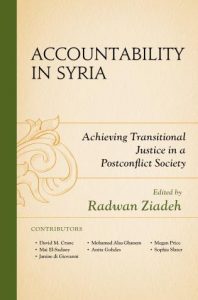 Last week I went to the
 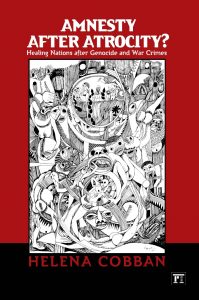 In my 2006 book,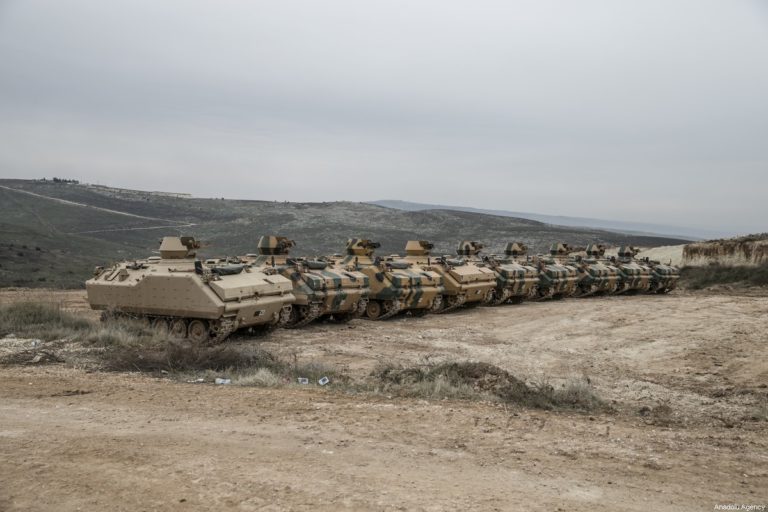


 A failed project

 Aletho News