Despite US Sanctions, Iran’s Revolutionary Public Health System Curbing COVID-19 Outbreak
Sputnik – April 3, 2020
Iran has managed to contain its coronavirus outbreak even under crippling US trade sanctions that have limited the country’s access to medical equipment and other resources, Sayyed Mohammad Marandi, an American studies and postcolonial literature professor who teaches at the University of Tehran, told Sputnik’s Loud & Clear Thursday.
Marandi told Sputnik the situation in Iran is “significantly better than in the US,” despite Washington’s adamant refusal to lower economic sanctions frustrating trade with Iran, which have made buying medicine and equipment for hospitals difficult.
“It has been managed, and that’s largely because – despite all the sanctions in the last four decades – after the [1979] revolution, Iran established a primary health care network across the country,” Marandi told host Brian Becker.
“It exists in villages, in towns, in cities, it’s a huge network. This is the foundation upon which the resistance or the fight against the coronavirus was based,” Marandi said, noting that “Iran had much less time” to prepare for the outbreak than did European countries or the US, being one of the first hit after the virus broke out of China’s Hubei Province.
“But since Iran had less time, Iran was obviously less prepared. And because of the sanctions, because the US government was trying to prevent Iran from being able to fight the virus by preventing Iran from purchasing [test] kits, by preventing Iran from purchasing masks, ventilators – the US government was doing everything it could, basically through the sanctions, to turn the coronavirus into a biological weapon to use against Iran. And they still do,” Marandi said.
“But despite all of that, and despite the hardship that the Iranians went through initially, not being able to purchase their needs, because of this very powerful and very extensive primary health care network that exists in the country, they were able to contain the virus. And now the situation in Iran, despite being hit very hard and being the first to be hit without knowing clearly what it was and how to deal with it – the situation in Iran is remarkably better than what we are seeing sadly in Europe and unfortunately in the US,” Marandi told Sputnik.
The latest data reveals that there are more than 50,000 cases of the virus in Iran, and more than 3,000 people have died as a result. The US has become the epicenter of the pandemic, with more than 242,000 cases and almost 6,000 deaths from the disease.
In a recent statement, Iranian Foreign Minister Javad Zarif referred to the US sanctions against Iran as “economic terrorism.”
“We had always said the sanctions are unjust, but coronavirus revealed this injustice to the world,” Zarif added.
In a Saturday tweet, US Secretary of State Mike Pompeo claimed that Iran’s “concerted effort to lift US sanctions isn’t about fighting the pandemic” but is rather about Iran’s leaders “trying to avoid responsibility for their grossly incompetent and deadly governance.”
Even though the US claims that its sanctions don’t prevent the sale of medicine and medical devices, the secondary sanctions on financial institutions and businesses have prevented Iran from buying necessary items like ventilators that could save the lives of coronavirus patients, the New York Times reported.
Renewed Tensions With Iran in Iraq
In the midst of the pandemic, US President Donald Trump on Wednesday took to Twitter to warn Iran against attempting to attack US troops or assets in Iraq after claiming that Iran or its proxies “are planning a sneak attack on US troops and/or assets in Iraq.”
One day later, Zarif tweeted: “Don’t be misled by usual warmongers,” adding that the US “surreptitiously lies, cheats & assassinates,” while Iran “only acts in self-defense.”
“Iran starts no wars, but teaches lessons to those who do,” the minister added.
According to Marandi, Trump may be threatening Iran in an attempt to distract American citizens from the catastrophic mismanagement of the coronavirus within US borders.
“Iran is an extremely powerful country. If the US carries out an attack on the country, it will have devastating consequences for the Americans, and I think the Americans know that. The Americans had to leave Iraq about a decade ago when the small resistance with light weapons put up a fight against an American force with all its allies that were well over 150,000 troops. Now, the Americans in Iraq have 5-6,000 troops. They’re all alone, almost. Almost all of their allies have left, and the Popular Mobilization Forces of the Iraqi Armed Forces is itself well over 100,000. So, I can’t see a situation where Trump can win in Iraq, win in Iran,” Marandi added.
Ansurullah calls on Saudi-led alliance to consider Yemen’s mediation proposal
Press TV – April 2, 2020
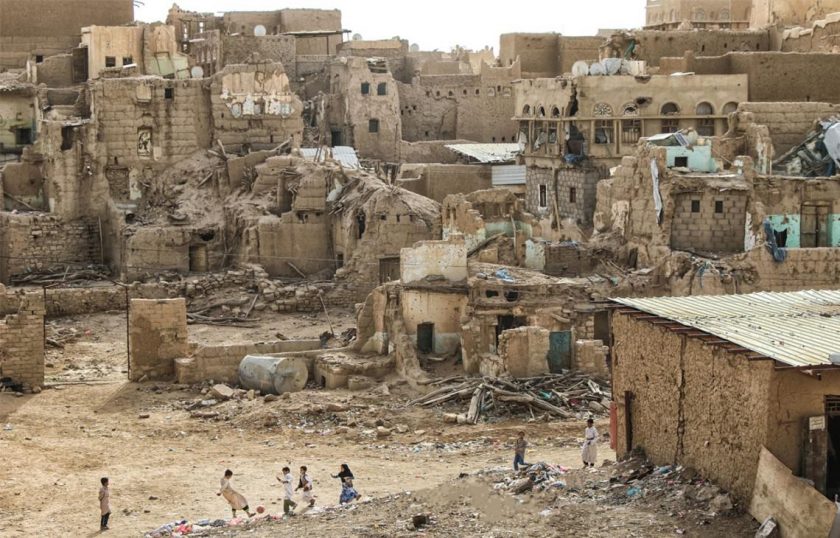
Yemen’s popular Houthi Ansarullah movement has called on the Saudi-led coalition of aggressors to consider its proposal for 12-party mediation aimed at ending the bloody war on the impoverished Arab state.
In a tweet on Wednesday, Mohammed Ali al-Houthi, the chairman of the Supreme Revolutionary Committee of Yemen, proposed that twelve countries, including Russia, as well as the United Nations mediate to end the Yemen conflict.
The top Houthi official suggested that four Arab countries, four Muslim countries, three Asian nations, Russia as well as the UN be included in the group of mediators.
He referred to Algeria, Tunisia, Egypt, Iraq, Pakistan, Malaysia, Indonesia, Sierra Leone, Russia, China, South Korea and Japan as his proposed countries.
The proposal comes a week after United Nations Secretary General Antonio Guterres called for a ceasefire in all conflicts worldwide amid a global fight against the coronavirus pandemic.
Guterres warned that in war-torn countries health systems have collapsed and the small number of health professionals left were often targeted in the fighting.
The world body has been trying to mediate an end to conflicts in countries including Syria, Yemen and Libya, while also providing humanitarian assistance to millions of civilians.
Ansarullah has welcomed the call, saying an aerial and maritime blockade imposed on Yemen by the Saudi regime and its coalition allies should be lifted to facilitate the adoption of preventive measures against the coronavirus outbreak.
While Yemen has not recorded any COVID-19 cases to date, the possibility of an outbreak threatens the war-ravaged country’s already fragile healthcare system.
Tens of thousands of Yemenis have died since the beginning of the war that Saudi Arabia and its allies launched in 2015 to restore power to Yemen’s former Riyadh-allied officials. The aggression has also brought entire Yemen to the edge of famine.
The United States and many of its allies have been providing political, military, logistical, and advisory support for the war.
“Business as Usual” Isn’t Even a Choice
By Anatoly Karlin • Unz Review • April 1, 2020
A few days ago, I joked on Twitter:
The choice isn’t between boomer genocide and an economic collapse.
The choice is between boomer genocide and economic collapse, or producing millions of 5 cent masks and making people wear them.
Reality is, it is only boomer genocide that isn’t a choice.
74% of Americans support a national quarantine, and that even includes 72% of Republicans. In France, there is a near consensus on lockdown at 96%. In Italy it is 94%.
In Brazil, Jair Bolsonaro – the only President of a major democratic polity who continues to insist on treating coronavirus as a nothingburger – has been made into a lame duck, his commands ignored by 24 out of Brazil’s 27 governors and even by his own Health Minister.
Meanwhile, as predicted by Ron Unz, Trump has performed a volte face, extending federal social distancing guidelines past Easter up to April 30 and now touts 100,000 deaths as a “good scenario.”
Which is just as well, because as we know see, modern democracies are simply incapable of “powering through” even through what is a fairly low-mortality pandemic in historical terms.
Consequently, the only choices are:
- Nip it in the bud early on through mass testing-tracing-treatment, border controls, and limited lockdowns, resulting in limited economic damage. [for example]
- Wait until later, necessitating progressively more massive, longer, and economically ruinous lockdowns. [for example]
So the only correct move is to clamp down close to the start, and to clamp down hard. This is what was done in all the East Asian polities, be they chaotic democracies, city-state technocracies, or Communist single-party states.
Because in the latter scenario, there will eventually come a time when you are simply sidelined by your own underlings and by regional authorities, adding a political crisis on top of a healthcare and economic one.
In my post on Trump’s initial decision, I speculated:
Far out scenario: Blue states may outright defy Trump on abandoning containment measures, in which case they too would be doing starkly better than Red states (unless it also sparks a Constitutional crisis into the bargain).
Well, on that note, here’s a Tweet from California governor Gavin Newsom today. That’s some interesting wording there:
California is an enterprising, modernizing, nation-state. 40 million strong. Together, we will get through this. pic.twitter.com/PBTc7ukmak
— Gavin Newsom (@GavinNewsom) April 1, 2020
So again, good on Donald Trump to have come to terms with Corona reality and averting what could have become a very dangerous experiment.
This brings us to another interesting question: Will we get a “clean” experiment anywhere?
As per above, I don’t think it’s going to happen in any democracy. Britain backed away from its “herd immunity” idea two weeks ago, on realizing that their models didn’t include a term for ventilator shortages. The Dutch followed soon afterwards. With Sweden’s coronavirus mortality trajectory beginning to radically diverge from those of its Nordic cousins, I believe it is only a matter of time before they go into lockdown as well.
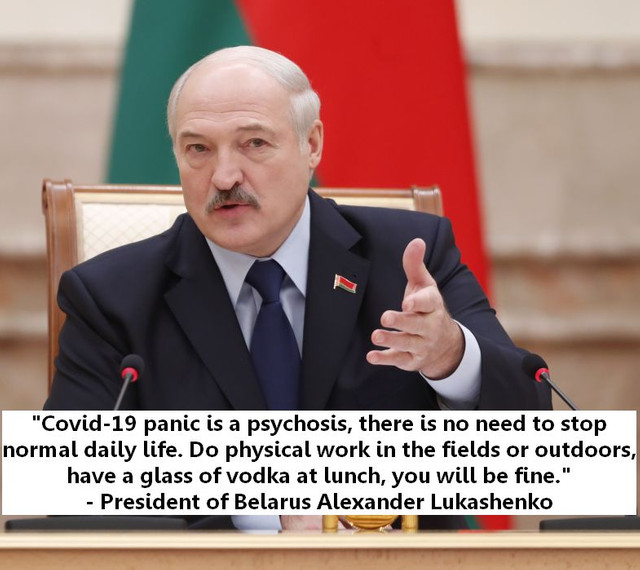
My guess is that our best “hope” – inappropriate as that expression may be – lies in Belarus, which is run by a decidedly non-coronapilled dictator.
EU Demands Serbia to Help Kosovo During Coronavirus But Restricts Assistance for Bosnian Serbs
By Paul Antonopoulos | April 2, 2020
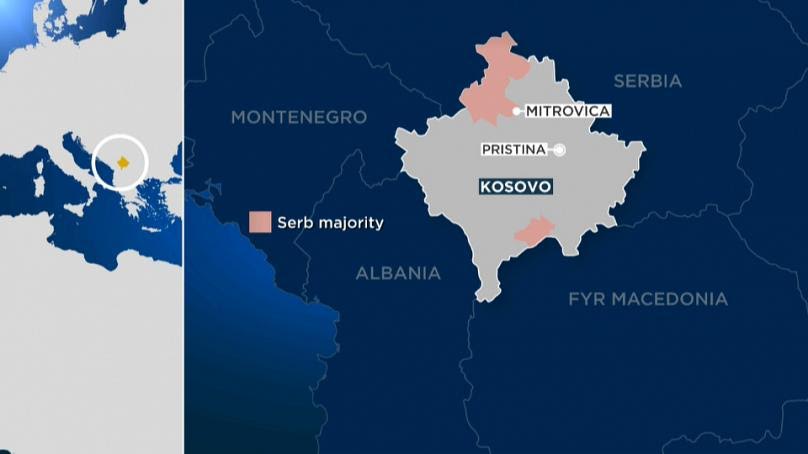
The Working Group for the Chapter 35 of the Serbian National Convention on the European Union (EU) has called for the authorities in Serbia and Kosovo to create a cooperation to reduce the spread of the coronavirus pandemic.
“We witness the coronavirus pandemic (COVID-19) representing a great danger everywhere in the world and the health systems increasingly burdened with the number of infected patients. The pandemic has shown that the spread of the disease goes beyond borders, national and ethnic origin or religion of the affected, and can only be combatted through joint action, cooperation and solidarity. Cooperation is necessary primarily for the sake of humanity and responsibility for human lives in these difficult times,” the press release reads.
In times of crisis, the EU proclaims that Kosovo is in fact Serbia’s responsibility. This unprincipled nature of the EU is solely guided by the interests of its major members and aims to palm off the medical responsibility of the illegal breakaway province of Kosovo back to Serbia. The EU did nothing to suppress Albanian separatism. In fact, the EU supports the illegality of Kosovo’s independence by deploying over 1,000 police officers under the European Union Rule of Law Mission in Kosovo mandate and all member states with the exception of Greece, Cyprus, Romania and Slovakia, recognizing Kosovo’s independence.
The EU Task Force on Chapter 35 calls for communication channels between medical staff in Serbia and Kosovo to be open as it would allow the exchange of information on the pandemic to be crossed over on a daily basis. This could also perhaps even contribute significantly to the reconciliation of the two entities. Even though Serbia is under EU pressure to help Kosovo, Belgrade should not give in to any concessions offered by Brussels on the Kosovo issue. The promise of EU membership will certainly be mentioned.
The EU is trying to force Serbia to expend their resources to send aid to Kosovo without expecting any acts of good will from the Albanian side. This is a policy that requires Serbia to treat Kosovo as its own territory while the EU still attempts to make Belgrade accept that Kosovo is an independent state. A similar appeal was sent to Serbia from the EU at the time of the migrant crisis when the EU also isolated itself from the problems in Kosovo and asked Belgrade to cooperate with Pristina in controlling migrant flows and make records of illegal immigrants traveling via Kosovo in 2015 and 2016.
While Serbia is expected to help Kosovo, despite the EU’s insistence that it is independent, Serbia is not able to assist the Republika Srpska in Bosnia. As part of Bosnia’s independence deal, two entities were formed, the Serbian-majority Republika Srpska and the Federation of Bosnia and Hezegovina, where the majority of Muslims and Croatians in Bosnia live. Sarajevo’s political leaders are vetoing the decision of the Republika Srpska National Assembly to introduce a state of emergency in its territory to stop the spread of the coronavirus. For political reasons, Muslim Bosnians are stopping life-saving security measures, which are supported by the international community, and while Serbia is expected to help Kosovo, it cannot help the Republika Srpska.
Bosnia blocked the Republika Srpska so that the borders between the two entities could not be closed as the Serbian entity wanted to do. However, if we look internationally to places like Australia, states in the same country have closed their own borders to those who do not live in a particular state. According to the laws of Bosnia, Republika Srpska cannot close their border without approval from Sarajevo.
Therefore, Sarajevo’s moves are about antagonism and political contradiction at a time when coronavirus can engulf both entities of the country. The Bosnian Muslims have no argument for denying measures to protect people from coronavirus and are using this situation to stir up ethnic tensions rather than seeing this as a medical issue. As already shown earlier, it is not a contradiction to close the borders of the entities as many states and regions around the world have closed their borders despite being the same country.
The Republika Srpska is trying to take the coronavirus pandemic seriously and its National Assembly even voted in a majority to declare a state of emergency. Even EU High Representative to Bosnia, Valentin Incko, welcomed the decision and the commitment of Republika Srpska President Željka Cvijanović to use extraordinary powers in the interest of public health. Incko also pointed out that stopping the spread of the coronavirus and saving the lives of citizens must be priorities for all Bosnian authorities. However, his recommendations did not go into the realm of pressuring Bosnian authorities, and so long as the borders remain open, the people of Republika Srpska remain susceptible to higher rates of infection.
While Serbia is expected to assist Kosovo on the behalf of the EU, despite not being an EU member and the EU insisting on Kosovo’s independence, Belgrade also cannot assist Republika Srpska without being accused of interfering in Bosnian affairs. It is little wonder then that Belgrade has lost interest in appeasing Brussels and no longer responds to promises of EU membership, and rather it continues to build its relations with traditional ally Russia as well as emerging superpower China.
Paul Antonopoulos is a Research Fellow at the Center for Syncretic Studies.
India introduces new Kashmir domicile law, raising fears of demographic manipulation
Press TV – April 2, 2020
India has introduced a new law that would make its citizens eligible to become permanent residents of the Indian-administered Kashmir, raising fears of demographic change in the Muslim-majority, Himalayan region.
The new law, which was announced by the Indian Ministry of Home Affairs on Wednesday and which reportedly is not subject to parliamentary review, will deem any person who has resided in the Indian-controlled Kashmir for a period of 15 years or studied at certain school grades there as “domicile” of the territory.
The new law will also provide domicile status to the children of central government officials who have served in the Indian-controlled Kashmir for a total period of 10 years.
It will also open local jobs to non-residents.
The introduction of the law comes almost eight months after the Indian government stripped the disputed region of its limited autonomy. On August 5 last year, New Delhi revoked Article 370, a constitutional provision that had come into effect in 1949 and had granted special status to Kashmir, allowing it to have its own flag and constitution, among other rights.
In the lead-up to the revocation, India sent thousands of additional troops to the disputed region, imposed a curfew, arrested political leaders, and shut down telecommunication lines.
The new law also comes as the country of 1.3 billion people is under a 21-day lockdown in an attempt to prevent the spread of the new coronavirus, raising speculation that the timing is intentional.
Legalizing settlements?
Residents in the Indian-controlled Kashmir fear that the new law would alter the demographic status of the region, with experts saying it will lead to “demographic flooding.”
“It is a lot to circumvent the law. I think it illustrates clearly that some will not stop from politicking during coronavirus [epidemic],” Siddiq Wahid, a political analyst based in the Indian-controlled Kashmir, said.
“Obviously it is an attempt to change the demographics, not only change but flood it. It will lead to demographic flooding,” Wahid said, according to Al Jazeera.
Sheikh Showkat Hussain, a professor of legal studies based in the region, said the move had already been in the offing.
“The whole purpose of revoking Article 370 was to settle outsiders here and change the demography of the [Jammu and Kashmir] state. Now this provides the modalities and entitles so many categories of Indians whose settlement will be legalized over here.”
India’s ruling Hindu-nationalist Bharatiya Janata Party (BJP) has denied that the new law is an attempt to change the demography of the region.
Kashmir has been split between India and Pakistan since partition in 1947. Both countries claim all of Kashmir and have fought three wars over the territory.
Meanwhile, Muslims elsewhere in India have also been facing abuse and violence.
West Trying to Take Advantage of Venezuela’s Coronavirus Woes to Topple Gov’t – Moscow
Sputnik – April 2, 2020
The West is trying to take advantage of Venezuela’s difficulties during the coronavirus outbreak to depose the Maduro government, Russian Foreign Minsitry said on Thursday.
“Unfortunately, we see that a number of countries are still guided by the desire to take advantage of the difficult situation in the world and the epidemiological situation in Venezuela in particular to achieve political goals”, spokeswoman for the Foreign Ministry Maria Zakharova said during a briefing on Thursday.
According to her, the idea of a coup that would lead to the ouster of the legitimately elected president of the country still remains in the minds of some political forces in the West.
“We object to the blocking of assistance to Caracas through the IMF. We condemn the US far-fetched drug-trafficking accusations against the head of a sovereign state”, she added.
Venezuela has so far registered 143 COVID-19 cases and three deaths. Last week, Russia delivered the first batch of 10,000 coronavirus test kits to the country and vowed to continue this assistance. China, in turn, sent a team to medical experts to help the sanctioned and the cash-strapped country. Both nations have called for lifting sanctions on Venezuela.
Amid these developments, Pompeo said on Tuesday that an interim government could be established in Venezuela, consisting of National Assembly members and accepted by both Caracas and the opposition, to serve until the next presidential and legislative elections. The US pledges to remove sanctions should the conditions of its plan, including “the departure of foreign security forces” and free elections, be met.
Venezuelan Foreign Minister Jorge Arreaza rejected firmly on Tuesday Washington’s crisis settlement plan, which envisions the creation of an interim government and elections within the next year.
Featured Video

Pax Judaica Explained | Prof. David Miller
or go to
Aletho News Archives – Video-Images
From the Archives
History and Biblical Scholarship: Al-Quds Is Not Jerusalem
By Dr. Elias Akleh | Global Research | July 3, 2018
The Zionist Israeli state calls on the Old Testament/Torah as a historical document to prove its legality to “re-claim” Palestine; their god’s promised land. To assert this legality and the myth of the promised land Zionist Organization, since its establishment, had recruited the science of archaeology, employing western Christian biblical archaeologists, to provide the required “historic” proof of the right of the Jews; alleged modern Israelites, to Palestine. This became very critical after Julius Wellhausen; the biblical scholar and Professor Ordinarius of Theology and head of the German School of Biblical Criticism, published his 1883 book “Geschichte Israels”, later titled as “Prolegomena zur Geschichte Israels” claiming that the Old Testament/Torah stories were invented during the Babylonian exile to serve certain theological and political purposes.
American biblical scholars and archaeologists, such as William Fox Albright, were recruited to refute Wellhausen’s claims. Albright was endorsed by covertly Zionist financed Biblical Colloquium; a scholarly society devoted to the analysis and discussions of biblical matters, and the preparations, publication, and distribution of biblical literature to brainwash readers and students with a specific theological ideology. Albright, as well as other biblical archaeologists like him, was also honored (bribed) by the American Friends of the Israel Exploration Society. His writings; such as “Why the Near East Needs the Jews”, are flagrant racist Zionist propaganda ignoring the vast archaeological history of the indigenous Palestinians while emphasizing the fake unproven Israelites’ narrative in Palestine. … continue
Blog Roll
 Aletho News
- Israeli FOIA Data Reveals Massive Heart Injury Spike in Children Immediately After mRNA Shot Rollout
- What is Zionism? And what is anti-Zionism?
- Hungary’s Blocking of EU Loan to Ukraine May Jeopardize IMF Funding – Reports
- Pax Judaica Explained | Prof. David Miller
- Was MAHA Too Good to Last in the Trump Administration?
- Vermont advances bill letting unelected Health Commissioner decide which vaccines ctizens should receive
- Why the US-Israeli alliance will lose against Iran
- US envoy Huckabee claims Israel has ‘biblical right’ to conquer all West Asia
- Testing the Alliance: Netanyahu’s Washington Visit
- Britain is once again poisoning peace diplomacy with Russia and fueling war in Europe
- If Americans Knew
- Palestinian church leaders admonish Christian Zionist Mike Huckabee – Not a ceasefire Day 135
- Ominous messaging from Trump’s “Board of Peace” – Not a ceasefire Day 134
- ‘Christians Out’: Jerusalem Church Tagged With Hate Graffiti, Police Investigating
- Israeli Settlers Kill American Teen
- ‘We returned from hell’: Palestinian journalists recount torture in Israeli prisons
- No mercy for Gaza in Ramadan – Not a ceasefire Day 133
- The Israeli Government Installed and Maintained Security System at Epstein Apartment
- Tucker Carlson interrogated in Israel, has passport seized after interviewing US ambassador
- 6,000 Amputees in Gaza Face Impossible Recovery amid Israeli War Ultimatum
- The Lancet: Gaza death toll far higher than reported – Not a ceasefire Day 132
- No Tricks Zone
- Germany: Electric Car Catches Fire At Charging Station, Sets Off Local “Inferno”, Widespread Damage
- New Study: Canada’s New Brunswick Was 1°C Warmer Than Today During The Medieval Warm Period
- Coal Power Back In Trend As Globe Tries To Keep Pace With Growing Demand For Power
- New Study: A 4°C Warmer Beaufort Sea Had ‘No Sea Ice’ 11,700 – 8200 Years Ago
- Unfudging The Data: Dutch Meteorological Institute Reinstates Early 20th Centruy Heat Waves It Had Erased Earlier
- German Gas Crisis…Chancellor Merz Allegedly Bans Gas Debate Ahead of Elections!
- Pollen Reconstructions Show The Last Glacial’s Warming Events Were Global, 10x Greater Than Modern
- Germany’s Natural Gas Storage Level Dwindles To Just 28%… Increasingly Critical
- New Study Rebuts The Assumption That Anthropogenic CO2 Molecules Have ‘Special’ Properties
- Climate Scientist Who Predicted End Of “Heavy Frost And Snow” Now Refuses Media Inquiries
 Aletho News