Bodies of Covid-19 victims pile up in streets of Ecuador as residents beg authorities for help

A vehicle carrying a coffin lined up to enter a cemetery, in Guayaquil, Ecuador April 2, 2020. © Reuters / Vicente Gaibor del Pino
RT | April 4, 2020
As the coronavirus pandemic rips through Ecuador, some cities are struggling to cope with a deluge of fatalities, pushing residents to make harrowing pleas for help as the bodies of loved ones accumulate in the streets.
The port city of Guayaquil, some 260 miles south of the capital of Quito, has been hit especially hard in the outbreak, leaving hospitals and morgues utterly overwhelmed in a flood of new patients and deaths. With local authorities unable to keep up with the influx of casualties, President Lenin Moreno has created a task force to tackle the problem, tapping Jorge Wated, board chairman at BanEcuador – a self-described “public development bank” – to lead the effort.
Seeking to ramp up the collection of bodies, Wated has allowed funeral homes to sidestep a nationwide curfew to work into the night to gather the deceased, and has dispatched teams of soldiers and police to pick up corpses from homes, hospitals and even streets around the city.
The efforts have still fallen short, however, sending countless citizens to social media to make desperate pleas for help, appealing directly to Wated through his Twitter account, where he shares frequent updates on the grim task at hand.
“Help me for the love of God,” one person said to Wated earlier this week, providing a home address and the name of a deceased man. “Nobody takes him … what do I do? I beg you.”
“Jorge. I have a case. Deceased going for 3 days. Already decomposed. Please … contact me,” another man wrote.
Left with few other options, social media appears to be the last recourse for many residents, with some of Wated’s tweets garnering dozens of similar urgent requests.
“On Monday my grandmother passed away, we do not know where else to call to remove the body and [need help] with the death certificate.”
Yet another appeal reads: “Dear Jorge Wated, a friend without Twitter asks for help, her brother died today 4 pm … and they still do not coordinate the removal of the corpse.”
Though Ecuador has reported only some 3,300 infections and 145 fatalities in its Covid-19 outbreak – over 100 of them in Guayaquil – the official disease and death tolls depend on the number of tests administered, and Ecuador has faced a shortage of test kits, leaving health officials unable to verify cases and add them to official tallies.
“The truth must be told. We know that both the number of infections and the official records fall short. Reality always exceeds the number of tests,” Ecuador’s president said in a recent address.
Well over 1 million cases of Covid-19 have been confirmed worldwide as of Friday, with the global death toll fast approaching 60,000. The United States remains the top hot spot for the illness, counting more than 266,000 cases – over twice that of the next largest outbreak, in Italy – and some 7,000 deaths. Still yet to reach the peak of its outbreak, the US has seen infections soar by the tens of thousands each day this week, breaking records for deaths and cases time and again.
Israel prevents Palestinians from combating COVID-19
By Robert Inlakesh | Press TV | April 3, 2020
As the COVID-19 pandemic death toll grows and the number of those infected creeps past one million confirmed cases, worldwide, the Palestinian health workers of Gaza and the West Bank try desperately to prevent the spread of the virus in the occupied territories. Unfortunately, however, this effort has been severely compromised by the Israeli occupation forces.
An issue almost completely overlooked by Western corporate media, is the issue of Israeli persecution of Palestinians during the ongoing pandemic. This major cover-up comes despite the fact that there is currently round the clock coverage of the impacts of the novel coronavirus.
Israel has continued its brutal policies of mistreatment of Palestinian political prisoners, massive arrest campaigns, break-ins, killings, bombings and even crimes specific to the pandemic, which we are currently living through, such as the destroying emergency clinics which have been set up to deal with the virus outbreak and also the dumping sick Palestinians outside of checkpoints.
If ever there was a time that the world would see unity between the oppressed and the oppressors, it would surely be at a time when the whole world is collectively under attack by an enemy of the collective which is not only infecting and killing people, but destroying the world economy. However, unfortunately, this has not been the case between Palestinians and the Israeli occupation.
Just in the past few weeks alone, Israeli occupation forces have continued arresting and detaining Palestinian minors in both the West Bank and East Jerusalem al-Quds. Also continuing to raid and attack Palestinians who are attempting to self isolate and practice social distancing in order to combat the spread of COVID-19.
On Sunday the 22nd of March, Israeli occupation forces killed a 32 year old Palestinian man, from the village of Nilin (near central Ramallah), in the West Bank. The 32 year old was shot in the head whilst driving his car and according to his family was simply running errands. Since then, dozens more have been shot and severely injured.
Palestinian political prisoners who are currently being held in Israeli prisoners are also fearful for their lives, some announcing hunger strikes over the lack of precautionary measures taken by the Israeli prisons. All Palestinian prisoners will now be essentially in the dark, as social distancing measures are in place, preventing any physical communication with loved ones. On top of this, a recently released Palestinian prisoner has, according to reports, tested positive for the novel coronavirus.
Israeli artillery strikes have also been reported as having hit three different areas inside of the illegally besieged Gaza Strip, just last week. Israel claimed this came after an unspecified number of rockets were fired, no damage was reported inside of Israel however. This bombardment of Gaza ignores the UN global call for ceasefire, which Israel has joined the likes of Saudi Arabia and the United States in already abandoning. Israel has continued running mock raids on Gaza since last week’s airstrikes.
Israel has also been documented as having dumped Palestinians who work in illegal settlements, randomly, outside checkpoints after the workers have displayed signs of sickness. One specific case gathering a lot of attention on social media, the Palestinian Health Ministry later confirmed that the man who had been featured in the video, did not test positive for the virus.
What Israel shows with its dealings with sick Palestinian workers, demonstrates its clearly racist views towards Palestinians, treating Palestinians as if they were animals that can be simply discarded of if they seem to pose a health risk.
According to Israeli Human Rights Organization BTselem, on the 26th of March, the Israeli military stormed the Palestinian village of Khirbet Ibziq, accompanied by a military escort with a bulldozer and two cranes, which they used to demolish an emergency clinic and community housing. The facilities were created to deal with the outbreak of the virus, which the Palestinian Authority, based in Ramallah, are ill-equipped to deal with in the event that the disease becomes more wide spread. The Israeli forces also confiscated equipment being used to combat the spread of COVID-19 on that day.
These are but only a sample of the problems faced by Palestinians under occupation, when it comes to dealing with the outbreak of COVID-19. But without using more examples of racist persecution, it is essential that we ask the question; that if Israel cannot put aside its dehumanizing tactics used against the Palestinian people now and cannot put aside its racism during a global pandemic, what will defeat this divisive mentality of the occupier?
China Produces Record Amount Of “Fire Ice”
By Irina Slav | Oilprice.com | March 30, 2020
In a world awash in oil and gas, you’d think it couldn’t get any worse. Well, it can: China just announced that it had extracted a record amount of what has been poetically called fire ice. It is, however, a form of natural gas trapped in frozen water.
At 861,400 cubic meters, this record might not be a whole lot of gas, but it may well be the start of something new, and gas producers may not like this ‘something’.
Gas hydrates don’t garner a lot of media attention as a rule, simply because they have yet to become an addition to the world’s energy mix. But when they do—if they do—they may change the international oil and gas market even more than the coronavirus outbreak has changed it now by decimating demand for hydrocarbons.
First, what are gas hydrates?
Gas hydrates are molecules of natural gas, most commonly methane, trapped in a “cage” made from water molecules. They exist in cold climates, such as beneath the Arctic permafrost and Antarctic ice, but also in sedimentary deposits–the same kind of deposits where oil and gas collect along the margins of continents and also under the seabed of specific basins such as the South China Sea.
Because they only exist in cold places, research on gas hydrates has been challenging. As geologist Hobart M. King explains in an article on hydrates for Geology.com, hydrates are only stable in the environment where they formed.
To study them, researchers need to remove the samples from their environment. The change in temperature in pressure, however, melts the water cage, and the methane escapes.
Why bother with hydrates at all, then? Because they may be more abundant than all other hydrocarbons taken together: oil, gas, and coal.
According to the U.S. Department of Energy, the world’s methane gas hydrates could be as vast as 250,000 to 700,000 trillion cu ft. According to the UN Environmental Programme, the world’s reserves of gas hydrates could be as large as 3,000 to 30,000 trillion cubic meters. But these are just enormous figures that are difficult to digest.
Here’s an estimate that might be more palatable: the world’s gas hydrate reserves could be between 100,000 and 1.1 million exajoules. For context, the world’s total annual energy consumption as of 2014 when the UNEP paper was written was about 500 exajoules.
This means we might be sitting on enough gas to power the world for hundreds, if not thousands, of years.
It’s packed tightly, too. According to the Department of Energy, a single cubic meter of hydrate can release as much as 164 cubic meters of natural gas. Talk about energy density.
China is among just a handful of countries pursuing research into gas hydrates with a focus on extraction. With its dependence on imported oil and gas, this is hardly surprising. The first extraction experiments in the South China Sea, in 2017, resulted in an output of 300,000 cubic meters extracted over a period of two months. Now, the Ministry of Natural Resources has reported an output of 287,000 cubic meters achieved in a single day. This is quite a significant progress in three years.
And that’s not all.
According to the ministry, the output achieved during this phase of the gas hydrate trials provided a “solid technical foundation for commercial exploitation.”
This is probably the last thing gas producers around the world want to hear right now, but it is what they need to hear. Full-scale commercial production may be years or even decades away, but China is getting there. It seems, however, that it is getting there in strides rather than baby steps. This could spur others into action or, as it were, faster action.
Back in 2012, the United States and Japan reported successful production of methane from gas hydrates in the Alaskan North Slope. Then, a year later, Japan reported successful production again, this time from an offshore deposit at home. Those tests ended sooner than expected because of technical problems. In 2017, Japan again announced the first successful longer-lasting extraction of methane from a gas hydrate deposit offshore.
Last year, the U.S. Geological Survey updated its estimate for gas hydrate reserves in Alaska to 53.8 trillion cu ft. While this is significantly lower than the initial estimate from 2008, which said there were 85 trillion cu ft of recoverable fire ice in the North Slope, it is still substantial enough to motivate exploration. Only perhaps not right now, given the price environment.
China’s announcement comes at a sensitive time for the world gas industry. Prices are severely depressed by a rare if not unprecedented combination of unusually low demand and excessive supply. Energy firms are retrenching and preparing to wait out the crisis. Exploration budgets are being slashed and plans are being revised. And now, China has announced that it is working on its self-sufficiency in gas. It is going to be an ugly year for the energy industry, but maybe a good year for research into what could be the world’s most abundant fossil fuel resource.
Egyptians call for presidential palaces to become coronavirus quarantine centres
![Egyptian President Abdel Fattah Al-Sisi attends a press conference in Cairo, Egypt on 12 April 2018 [Egyptian Presidency/Anadolu Agency]](https://i1.wp.com/www.middleeastmonitor.com/wp-content/uploads/2018/04/2018_4-19-sisi.jpg?resize=1200%2C800&quality=85&strip=all&ssl=1)
MEMO | April 3, 2020
Egyptians have called on President Abdel Fattah Al-Sisi to use the presidential palaces he had built for himself as quarantine centres for coronavirus patients.
The calls came in response to a Twitter campaign launched by opposition journalist, Moataz Matar, calling on Al-Sisi to stick to his word reminding him that he had claimed that he had built the places for the people and not for himself. This, activists said, is when Egyptians would benefit from the buildings.
Other Twitter users called for military hospitals to be converted into quarantine centres.
Yesterday evening, Prime Minister Mostafa Madbouly announced that 71 people have tested positive for the coronavirus bringing the country’s total cases to 850 cases.
However, Canadian researchers estimate there to be over 19,000 cases in Egypt amid allegations of a government cover-up.
Europe: Over 520,000 coronavirus cases and almost 38,000 deaths
By Robert Stevens | WSWS | April 3, 2020
European countries, including Spain and the UK, announced record-high daily coronavirus death tolls Thursday. With the 4,199 new deaths yesterday, 37,864 have already perished in Europe. There have been more than 521,000 cases of COVID-19 infections on the continent including 33,661 new cases.
In Spain, 950 died—the third consecutive day of a record high.
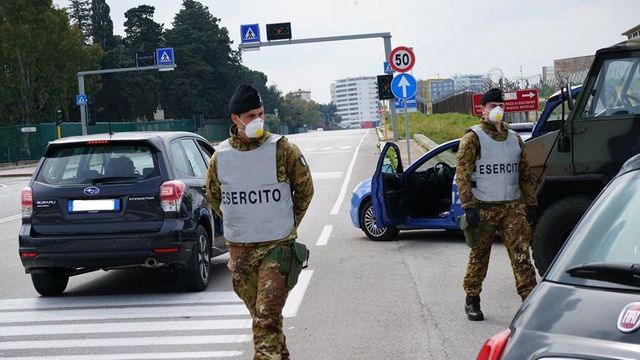
Italian Army soldiers monitoring cars and controlling the streets in Bari: (credit Twitter: Italian Army)
In the UK, the death rate has quadrupled in a week. In just four days since Monday, 1,693 coronavirus deaths have been announced—more than were recorded on all days up to March 29. The Department of Health and Social Care reported a record 569 deaths Thursday, taking the total to almost 3,000 (2,921). This was the second consecutive day Boris Johnson’s Conservative government announced over 500 deaths. Wednesday’s 563 fatalities were a 31 percent increase on the previous day.
With an age range of the latest deaths between 22 and 100 years old, nearly 8 percent (44 people) of yesterday’s victims had no known underlying health conditions.
Britain is now showing the terrible daily toll commonplace in Italy and Spain, with the pandemic taking over 13,000 and 10,000 lives in those countries.
The UK infection rate has also shot up, with 4,324 new cases announced Wednesday and 4,244 Thursday. Total infections in the UK stand at 33,718 but are in reality much higher. Hardly any tests were done when the outbreak began, despite months of warnings. Three weeks ago, Johnson announced—as part of attempting to enforce his “herd immunity” policy aimed at infecting everyone in the country with coronavirus—that no systematic testing would be done and that everyone who showed symptoms should self-isolate.
More than 1.7 million people in the UK have likely caught coronavirus over the past 15 days. Data from the NHS 111 online service revealed that web-based assessments flagged 1,496,651 people as potential carriers; a further 243,543 calls to 111 and the 999 emergency number concluded callers had signs of COVID-19.
It was only after widespread outrage at its social Darwinist policy that the government was forced to pledge that widespread testing would be done. Even now, just 163,194 tests have been completed with yet another promise yesterday of 100,000 a day for the end of April. Only 2,000 of 550,000 National Health Service frontline workers have been tested.
The BBC’s head of statistics, Robert Cuffe, commented Thursday, “if that [UK death rate] keeps up, we’d expect to see in the region of a thousand deaths a day by the weekend.” Sky News economist Ed Conway noted that “For the past week or so,” the UK’s death rate has “been doubling every three days” and “if the growth rate continued like that, in a week’s time there would be 10,000 people dead and the UK would be on a far worse trajectory than Italy.”
An explanation of this steeper curve emerged late yesterday, when NHS England reported that the earliest death in the UK had in fact occurred on February 28, one week earlier than previously reported. In total, six people had died in hospital prior to March 5.
In Italy, 760 died Thursday, taking the total to almost 13,915. Two new studies suggested the true death toll could be significantly higher than reported. The InTwig data analysis firm reveals that while there were 4,500 deaths in the hardest-hit city of Bergamo, the Civil Protection Agency only reported 2,060 deaths. The University of Bergamo, using historical data from the national statistics office compared to current hospital data, showed that deaths in the north of Italy doubled in the first three weeks of March, compared with the average number of deaths during the same period between 2015 and 2019. The uncounted deaths were mostly elderly victims who were not admitted to hospital and never tested for the virus.
The government welfare assistance website remains down, leaving Italy’s most vulnerable unable to receive any COVID-19 scheme for financial support. An estimated 3.3 million Italians work in the black economy and don’t qualify for welfare support schemes. Twenty thousand army soldiers are deployed in southern Campania, Puglia and Sicily to patrol the streets amid rising tensions as citizens run out of food and money.
Germany announced 168 new deaths, taking the total to 1,099. After Berlin approved its “coronavirus aid programme”—a bailout worth €600 billion for the banks, corporations and the super-rich—anger among workers is growing. In the past days, health employees in hospitals, nursing homes and workers in businesses vital to the supply of the population’s needs have criticised catastrophic and unsafe working conditions.
Truck drivers, airport workers, delivery workers and steelworkers are also voicing opposition. A worker at the Outokumpu stainless steel group in Krefeld, speaking anonymously to the WSWS, said, “We’re all angry, feeling betrayed. Even those in risk groups still have to work. An info sheet says they should talk to the company doctor. I did that. He advised me to wash my hands and disinfect myself. But we don’t have any disinfectant, or face masks. I use keyboards, telephones, etc.”
In a dramatic development, France’s death toll shot up by 1,355. Previously, Emmanuel Macron’s government had only released the deaths of those who had died in hospital of coronavirus. Yesterday, it announced that 884 people had also perished in retirement and care homes. On top of the 471 hospital fatalities, this takes total deaths to 5,387. Other countries, including until recently Britain, have also not included those who died outside hospital in their fatality announcements to play down the scale of the catastrophe they are responsible for.
Aware of explosive social anger in workplaces, the Stalinist General Confederation of Labour (CGT) has issued an authorization for public sector workers outside the hospitals to strike in April. The CGT is not calling for strike action or opposition to President Emmanuel Macron, but cynically authorizing isolated action by individual workers while the union bureaucracy keeps working with the government to slash wages and social benefits.
Workers have mounted strikes or walked off the job at Amazon, in supermarkets, in the auto industry and in aeronautics. One worker at an air conditioner manufacturing plant told the press, “This epidemic has woken up a lot of people…now the masks are falling. Usually management manages to calm them down, but today they are seeing that even when it is a matter of life and death, management has no concern for them.”
Lockdowns throughout the continent have led to staggering job losses. The Financial Times reported Wednesday, “Unemployment is growing much faster than in previous recessions because the measures taken to slow the spread of the virus are felt most severely in low-wage, labour-intensive sectors such as retail, hospitality and other consumer-facing services.”
In the UK, more than 1 million people have been forced onto the welfare rolls in just two weeks. Austria reported Wednesday that unemployment now stood at over 12 percent—the highest level since records began in 1946. In Spain, over 900,000 people have been made unemployed since the outbreak began there. In Norway, unemployment has risen from 2.3 percent to 10.4 percent in little over a month. The Financial Times noted the government’s Labour and Welfare Administration statement that a quarter of tourism and transport workers and almost a fifth of retail workers were now claiming unemployment insurance.
The newspaper reported that in Germany, “some 470,000 companies have applied for government wage subsidies through the ‘Kurzarbeit,’ or short-hours, programme—almost five times higher than the 100,000 people who used the scheme during the 2008-2009 recession.”
Another indication of the devastating impact of the coronavirus on the working class is seen in the map produced by the Catalan regional government in Spain, showing that the virus is six or seven times more prevalent in Barcelona’s poorer areas than in wealthier areas.
We need to cut around 10 mln barrels per day of oil production, Russia is ready to act with US on oil markets – Putin
RT | April 3, 2020
Russian President Vladimir Putin has said his country is ready to work with the Trump administration to halt the freefall of oil prices. His comments come after a phone call with President Trump earlier this week.
Putin also noted that the daily oil output should be cut by around 10 million barrels, as there is lower demand due to coronavirus. Oil prices started dwindling after OPEC+ countries disagreed on production cuts, with Saudi Arabia refusing to lower the output.
With an ongoing “price war” between Russia and Saudi Arabia driving prices even further down, US president Trump said on Thursday that “it would be great” if the two countries could make a deal to limit production.
Putin had already spoken to Trump by phone earlier this week, and on Friday announced that he is ready to cut production by 10 million barrels per day.
The Russian leader said that moving forward, Moscow would be comfortable with a price of $42 per barrel, roughly $10-15 higher than current levels.
Oil prices jumped prior to Putin’s Friday announcement, after Trump spoke of a pending deal.
No talks between Moscow and Riyadh have yet taken place, Kremlin spokesman Dmitry Peskov said on Friday. However, non-OPEC member Azerbaijan announced that the petroleum bloc and its allies will hold discussions on Monday aimed at restoring “balance to the oil market.”
Saudi Arabia, ramped up its production on Wednesday to a record high of more than 12 million barrels per day, after previous OPEC+ production cuts expired at the end of March.
During a televised meeting with Energy Minister Alexander Novak Putin said the Saudi crown is flooding the market to force competing shale oil producers out of business, among them the US and Russia.
Novak noted that he doesn’t know when the world’s plummeting demand for oil will finally bottom out.
US Sends Navy Ships to Caribbean in ‘Anti-Drug’ Mission Targeting Venezuela
By Ricardo Vaz and Lucas Koerner | Venezuelanalysis | April 2, 2020
Mérida – The Trump administration is dispatching US Navy warships to the Caribbean Sea in an effort to turn up the pressure on Venezuela.
The initiative was announced by President Donald Trump and other high ranking officials in a press conference Wednesday.
The move is allegedly part of a wider “anti-narcotics” operation in the region, which in addition to Navy destroyers will reportedly involve AWAC surveillance aircraft and on-ground special forces units. The Associated Press reported that the operation is one of the largest in the region since the 1989 invasion of Panama.
“We must not let malign actors exploit the [coronavirus] situation for their own gain,” Trump said.
The military deployment came on the heels of the Department of Justice (DoJ) levying “narco-terrorism” charges against top-ranking Venezuelan officials, as well as a “democratic transition” plan unveiled by the State Department.
On March 26, the DoJ accused President Nicolas Maduro, National Constituent Assembly Diosdado Cabello and several other officials of conspiring with FARC rebels to “flood” the US with cocaine.
Critics have pointed to the dearth of concrete evidence implicating top Venezuelan leaders and to the fact that data from US agencies shows that only a small fraction of drug routes pass through Venezuela, with most cocaine entering US territory via Central America and Mexico.
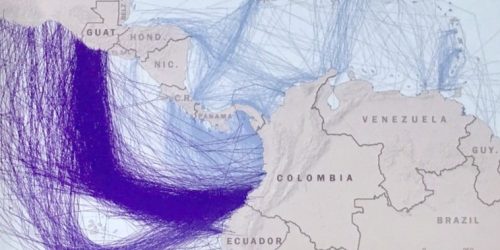
A map produced by the US Southern Command shows the main drug-smuggling routes connecting Colombia and Ecuador with Guatemala and Mexico via the Pacific Ocean.
On Tuesday, the State Department unveiled a “framework for a peaceful democratic transition in Venezuela,” calling for Maduro’s resignation and the establishment of a transition government headed by opposition and Chavista officials to oversee new elections.
The Trump administration pledged to lift sanctions against Venezuelan individuals and key economic sectors, but only after Maduro left office and all security agreements with Russia and Cuba were terminated.
The US has vowed to ramp up unilateral sanctions until the Maduro administration accepts the deal.
For its part, the Venezuelan government blasted the military deployment, with Communications Minister Jorge Rodriguez calling it “an attempt to attack Venezuela with lies and threats.”
Rodriguez added that Venezuela has “robust” anti-narcotics policies and would be ready to “coordinate” actions against drug trafficking in the region.
Washington’s naval operation comes days after the controversial sinking of a Venezuelan coast guard boat off the coast of the Caribbean island of La Tortuga.
According to the Venezuelan Ministry of Defense, the patrol ship “Naiguata” located a Portuguese cruise ship, the “RCGS Resolute,” in Venezuelan territorial waters and ordered the vessel to accompany it to port. The “Resolute” allegedly refused the instructions and proceeded to ram the “Naiguata,” which subsequently sank as a result of the impact.
The cruise ship owner, Columbia Cruise Services, has disputed this account, insisting that the “Resolute” was “subject to an act of aggression by the Venezuelan Navy in international waters,” while carrying no passengers.
On Wednesday, Venezuelan President Nicolas Maduro suggested the ship “was being used to transport mercenaries.” He also claimed that “someone from the north called” to prevent Dutch authorities from inspecting the “Resolute” at its current mooring in the Curacao port of Willemstad.
Portuguese Foreign Minister Augusto Santos Silva, for his part, has pledged to collaborate with Venezuela and Holland in the investigation of the “unfortunate” incident.
Crisis & Critique: US Ramps up Aggression amid Pandemic
By Ociel Alí López – Venezuelanalysis – April 1, 2020
Venezuela has been one of the countries least affected by the coronavirus pandemic in the region so far. Nevertheless, the US government is attempting to exploit the situation in order to force a violent outcome to the country’s political standoff, putting a price on the head of Maduro and other top functionaries as well as pushing a new “transition” plan to depose the government in exchange for sanctions relief. Meanwhile, Venezuela’s attorney general has summoned Guaido for questioning on April 2. Far from bringing about a truce, the coronavirus has raised tensions to new heights.
On the verge of a truce
The pandemic has caught Venezuela’s opposition in a rather uncomfortable position. Their strategy of not recognizing Maduro and the never ending simulacrum that is Guaido’s “interim presidency” is, fourteen months later, an abject failure in terms of concrete achievements. Guaido’s virtual staying power is owed almost exclusively to Donald Trump, who invited him to the White House at the close of his international tour in February.
But this strategy leaves a vacuum in the opposition. The existence of an “interim president” precludes that of an opposition leader who can channel requests, critiques, and demands toward the government. Guaido is instead forced to speak as a president but without any state resources at his disposal to confront the COVID-19 crisis. Some of Guaido’s spokespeople such as his foreign relations envoy, Julio Borges, issue statements that are woefully out of touch with the gravity of the international conjuncture: “The coronavirus is Maduro and there will be no cure until he leaves power.”
For his part, Maduro, comfortable and without internal resistance, rapidly implemented the World Health Organization’s guidelines, decreeing a national quarantine within days of the first case being reported on March 13. Maduro also managed to meet not only with the country’s principal chamber of commerce, FEDECAMARAS, but also with Colombia’s health authorities, a fact which Colombian President Ivan Duque publicly denied. He additionally secured aid from Cuba and China, which have emerged as global leaders in COVID-19 response. Meanwhile, the United States and Guaido’s other Western sponsors are mired in an unprecedented health crisis due to the number of dead and infected.
On March 23, the European Union publicly called for the International Monetary Fund to accept emergency loan requests from Venezuela and Iran and for relief from US sanctions, which according to EU foreign policy chief Josep Borrell, “block them from receiving income by selling oil.” UN Secretary General Antonio Guterres also urged the lifting of unilateral coercive measures in the face of the pandemic.
The situation seemed favorable for Maduro’s struggle against the US economic blockade.
In this context, the coronavirus was on the verge of bringing about the unthinkable: an agreement between the opposition and the government. Henry Ramos Allup, the president of Venezuela’s main opposition party, announced on March 10 that Democratic Action would abandon its prior abstentionism and compete in parliamentary elections scheduled for 2020. Amid the global COVID-19 hysteria, former presidential candidate Henrique Capriles opened the possibility for an agreement with Maduro when he stated on March 25:
This pandemic must create an opportunity to pursue some kind of agreement that looks after people’s wellbeing… Let’s work together: you have internal control, and I have international support. You are willing to come to an agreement to join hands. Could it be that difficult? I don’t think so.
That very night, there were two, almost parallel reactions. Maduro said, “I agree with Capriles’ proposal,” and asked the Vatican’s representative in the country to mediate and open its offices for a meeting with the different opposition factions as soon as possible.
Minutes later, Guaido stated, “we are willing to do everything we have to do,” implicitly recognizing the need for an agreement to address the health emergency. However, he did enumerate certain conditions regarding the distribution of humanitarian aid, which should be managed by multilateral organisms and not the Maduro government.
Venezuela’s dueling political factions appeared to be on the verge of engaging in substantive talks, but it was not to be.
Escalating US assault
The next day, on the morning of March 26, US Attorney General William Barr gave a press conference announcing “narco-terrorism” charges against Maduro and other senior government officials.
As expected, the charges were endorsed by Trump in the midst of the COVID-19 crisis, effectively torpedoing negotiation efforts and once again raising tensions to a boiling point.
This is hardly the first time that the US has blocked dialogue. When in early August 2019 rumors were circulating of something resembling an electoral pre-agreement emerging from Norway-brokered talks, the United States ramped up sanctions with an August 5 executive order banning all dealings with the Venezuelan state and freezing its assets in what some analysts have linked to the Cuba embargo. The next day, Maduro abandoned talks.
The government had also previously claimed in February 2018 that a last minute call by then US Secretary of State Rex Tillerson to the head of the opposition negotiating team, Julio Borges, led the opposition to walk out in lieu of signing a finalized electoral deal. This was the fruit of months of negotiations mediated by former Spanish President Jose Rodriguez Zapatero and the Dominican government, and the agreement concerned guarantees for the 2018 presidential elections, which the main opposition parties opted to boycott.
With this latest decision, Trump ups the ante. On top of punishing economic sanctions, the US now places a multi-million dollar bounty on the head of Maduro and other top officials, giving the green light to renewed violent actions aimed at killing or capturing them.
But the move also aborts the nascent negotiation efforts recently underway. Rather than paving the way for an invasion, indictments open the way for paramilitary operations of the sort one might find in a Hollywood movie. Recall that neighboring Colombia is a country littered with irregular armed outfits. Just a few days ago, following the seizure of an arms cache in northeastern Colombia, retired Major General Cliver Alcala confessed to a plot to overthrow Maduro in coordination with Guaido and US advisors. Paradoxically, the general confirmed the coup plan only after he was indicted by the US Justice Department, subsequently turning himself in to Drug Enforcement Agency officials and traveling from Colombia to the US.
Several days later, on March 31, US Secretary of State Mike Pompeo, in a more conciliatory but equally arrogant tone, unveiled a “transition” plan proposing the creation of a “council of state” comprised of opposition and Chavista representatives, with both Guaido and Maduro stepping aside and new elections called. The Venezuelan constitution contains no provisions permitting such an arrangement, which has already been rejected by Foreign Minister Jorge Arreaza.
The government did not delay in rolling out its response. The attorney general summoned Guaido to appear for questioning on April 2 and it is very possible that he could be taken into custody after Alcala publicly named him as responsible for terrorist actions to be carried out with the arms confiscated in Colombia. With Guaido behind bars, another scenario opens up, and all that is left is to await a more decisive response from the US.
Meanwhile, we must not forget the arena that has taken center stage at present: healthcare.
Coronavirus and the collapse of the health sector
This escalation of conflict comes not only in the context of coronavirus, but also at a moment of deep crisis in Venezuela’s healthcare system, which could be rapidly overwhelmed if Venezuela’s curve mirrors that of other countries.
In a November 2019 report, UN Under-Secretary-General for Humanitarian Affairs Mark Lowcock observed:
I have seen myself how the health system is on the verge of collapse, with many hospitals lacking the most basic water and electricity infrastructure. Hospital patients, many of whom are already critically ill, are at high risk of losing their lives from new infections they are acquiring while they are in hospital, because basic cleaning and disinfection cannot be done. This is exacerbated by a lack of medicines, and a shortage of doctors and nurses to administer them. Preventable diseases including malaria and diphtheria are back with a vengeance. People with chronic health conditions, pregnant and nursing women, infants and those living with disabilities are among the most vulnerable.
No matter how much the government emphasizes its strength in the health sector owing to the support of its allies, the reality is that the system has suffered severe deterioration. If we project an Italy or Spain-style curve in Venezuela, the result could be not just a health sector collapse, but a catastrophe in every arena of life.
For this very reason, Washington’s bellicose measures provoke widespread animosity among diverse national and international constituencies. On the one hand, Chavismo automatically closes ranks behind the government, which implements stronger security measures that block efforts to open up the political field. On the other, the opposition factions that were engaged in or calling for dialogue with the government are now shut out of the game because it will be very difficult for them to compete in parliamentary elections to be held later this year. And if the main opposition parties do not participate, like in the last few elections, they will lose the only real power they have left: the National Assembly. The majority of opposition political actors have reacted with caution and have not automatically supported the US’ actions.
Washington’s latest maneuvers also fly in the face of positions taken by US allies like the European Union, as well as other multilateral bodies, which have called for lifting sanctions on Venezuela and Iran. Washington’s “kick them while their down” approach may appear disproportionate in the face of the current crisis, but we must remember that the US presidential campaign looms large and the Venezuela issue is key to winning the critical state of Florida.
For his part, Guaido may try to dust off the “humanitarian aid” discourse that he had dropped from his political repertoire after the opposition’s US-backed effort to force food and other supplies across the Colombian border in February 2019 ended not only in failure but in a corruption scandal that has dogged the “interim president” ever since. The US, Colombia, and Guaido’s other allies could make a fresh attempt at “humanitarian intervention” amid the current situation of international panic. US Deputy Assistant Secretary of State for Cuba and Venezuela Carrie Filipetti recently prepared the ground for this possibility, stating that the COVID-19 contagion in Venezuela could pose a regional threat.
This discourse is illogical given that according to official figures Venezuela has far fewer cases than its neighbors, while the US is now the global epicenter of the coronavirus outbreak. But when it comes to US-Venezuela relations, official discourses have little concern for facts. Anything can happen, above all, if elections require putting a face on the “invisible enemy.”
Ociel Alí López is a Venezuelan researcher who has published numerous written and multimedia works. He is dedicated to analyzing Venezuelan society for several European and Latin American media outlets. He is a co-founder of alternative Venezuelan state television station Avila TV in 2006. He is the recipient of the CLACSO/ASDI researcher prize and the Britto Garcia literature award.
Brazil Slum Residents Organize Without State To Fight Virus
teleSUR | April 2, 2020
The packed living conditions, poor sanitation, lack of healthcare and flouting of lockdown measures make Brazil’s slums – home to around 11 million people or 6 percent of the population – particularly vulnerable to the virus.
Emerson Barata draws a circular map of Sao Paulo’s largest slum, Paraisopolis, and begins to mark confirmed coronavirus cases in blue ink. At the center of the favela of around 120,000 people, which crowds between luxury apartment blocks and high-walled mansions, he draws four dots.
“It’s going to get a lot worse,” the 34-year-old tells an assembled medical team, adding another two dots to the favela’s outer districts. “The surge hasn’t hit yet.”
Barata is leading the coronavirus response in this labyrinth of red cinder block homes where, beyond the six confirmed cases, his team suspects another 60.
He is not connected to the Brazilian state, and nor is the medical team around him. The former minor league soccer pro is part of an association of Paraisopolis residents whose deep distrust of government has led them to take things into their own hands.
The residents’ association has hired a round-the-clock private medical service including three ambulances, two doctors, and two nurses, as well as drivers and support staff.
While President Jair Bolsonaro has dismissed the virus as “a little flu” and told Brazilians to get back to work, Barata is sleep-deprived trying to get his favela ready for what he describes as a “war.”
Barata declined to say how much this would cost or how it was being funded, beyond saying some was covered by donations. Much of it still needs to be raised, he said. The medical team is on an initial 30-day contract, likely to be extended.
“Favelas are going to be hit the worst,” he said, standing in a parking lot outside a mechanic’s workshop that doubles as a base for the medical team. “The places that are already neglected by the state will be neglected even more.” Public health experts agree.
Paraisopolis is likely to be on the front line. Many of its residents work in the nearby wealthy neighborhood of Morumbi, ground zero for the outbreak in Brazil. Across Latin America, many of the first cases were diagnosed in those affluent enough to travel abroad, but the virus is expected to hit the poorest hardest.
Brazil is Latin America’s worst affected nation by the coronavirus so far, with nearly 7,000 confirmed cases and 240 deaths.
The Paraisopolis residents who have tested positive include two who work in the nearby Albert Einstein Hospital, a private medical facility that diagnosed the first case in Latin America. Another was a live-in nanny.
The population density in Paraisopolis is about the same as Manhattan, although most buildings are just two or three stories tall. Residents complain the water runs dry after 8 p.m. and rubbish piles up along the tight, damp alleyways that weave through the community.
“I think it’s going to get ugly… This is a ‘little flu’ that kills,” said Luiz Carlos, a short, grey-haired doctor who is part of the hired medical team.
Roberto de Souza, 41, believes he caught the virus through his job in a pharmacy – despite wearing disposable gloves and a facemask when serving customers. He developed terrible pain in his legs and a constant cough soon followed.
After testing positive he isolated himself in a cramped second-floor flat in Paraisopolis.
“What hurts the most is being locked away, alone,” he said through a facemask, in between coughing fits. “I have to worry, not just about myself but about not giving it to the next person.”
De Souza lives by himself. In Paraisopolis that puts him in the minority.
Reuters visited one cramped home where a woman was self-isolating, sick with coronavirus symptoms. But her three children, mother and brother had nowhere else to go, so continued to live with her.
To address that challenge, the residents’ association is looking to use two local schools – closed due to the outbreak – to house up to 500 suspected and confirmed cases without life-threatening symptoms, removing them from tight living quarters.
Despite all the preparations, Barata is worried residents are not taking the threat seriously enough. Unlike in the rest of Sao Paulo, where a lockdown is in place, most bars and shops remain open in Paraisopolis. The streets bustle. Parties pound.
Barata fears many will change their attitude only once a parent or a friend dies. By then it might be too late.
“We’re trying to get the message out: This is no joke,” he said.
Despite US Sanctions, Iran’s Revolutionary Public Health System Curbing COVID-19 Outbreak
Sputnik – April 3, 2020
Iran has managed to contain its coronavirus outbreak even under crippling US trade sanctions that have limited the country’s access to medical equipment and other resources, Sayyed Mohammad Marandi, an American studies and postcolonial literature professor who teaches at the University of Tehran, told Sputnik’s Loud & Clear Thursday.
Marandi told Sputnik the situation in Iran is “significantly better than in the US,” despite Washington’s adamant refusal to lower economic sanctions frustrating trade with Iran, which have made buying medicine and equipment for hospitals difficult.
“It has been managed, and that’s largely because – despite all the sanctions in the last four decades – after the [1979] revolution, Iran established a primary health care network across the country,” Marandi told host Brian Becker.
“It exists in villages, in towns, in cities, it’s a huge network. This is the foundation upon which the resistance or the fight against the coronavirus was based,” Marandi said, noting that “Iran had much less time” to prepare for the outbreak than did European countries or the US, being one of the first hit after the virus broke out of China’s Hubei Province.
“But since Iran had less time, Iran was obviously less prepared. And because of the sanctions, because the US government was trying to prevent Iran from being able to fight the virus by preventing Iran from purchasing [test] kits, by preventing Iran from purchasing masks, ventilators – the US government was doing everything it could, basically through the sanctions, to turn the coronavirus into a biological weapon to use against Iran. And they still do,” Marandi said.
“But despite all of that, and despite the hardship that the Iranians went through initially, not being able to purchase their needs, because of this very powerful and very extensive primary health care network that exists in the country, they were able to contain the virus. And now the situation in Iran, despite being hit very hard and being the first to be hit without knowing clearly what it was and how to deal with it – the situation in Iran is remarkably better than what we are seeing sadly in Europe and unfortunately in the US,” Marandi told Sputnik.
The latest data reveals that there are more than 50,000 cases of the virus in Iran, and more than 3,000 people have died as a result. The US has become the epicenter of the pandemic, with more than 242,000 cases and almost 6,000 deaths from the disease.
In a recent statement, Iranian Foreign Minister Javad Zarif referred to the US sanctions against Iran as “economic terrorism.”
“We had always said the sanctions are unjust, but coronavirus revealed this injustice to the world,” Zarif added.
In a Saturday tweet, US Secretary of State Mike Pompeo claimed that Iran’s “concerted effort to lift US sanctions isn’t about fighting the pandemic” but is rather about Iran’s leaders “trying to avoid responsibility for their grossly incompetent and deadly governance.”
Even though the US claims that its sanctions don’t prevent the sale of medicine and medical devices, the secondary sanctions on financial institutions and businesses have prevented Iran from buying necessary items like ventilators that could save the lives of coronavirus patients, the New York Times reported.
Renewed Tensions With Iran in Iraq
In the midst of the pandemic, US President Donald Trump on Wednesday took to Twitter to warn Iran against attempting to attack US troops or assets in Iraq after claiming that Iran or its proxies “are planning a sneak attack on US troops and/or assets in Iraq.”
One day later, Zarif tweeted: “Don’t be misled by usual warmongers,” adding that the US “surreptitiously lies, cheats & assassinates,” while Iran “only acts in self-defense.”
“Iran starts no wars, but teaches lessons to those who do,” the minister added.
According to Marandi, Trump may be threatening Iran in an attempt to distract American citizens from the catastrophic mismanagement of the coronavirus within US borders.
“Iran is an extremely powerful country. If the US carries out an attack on the country, it will have devastating consequences for the Americans, and I think the Americans know that. The Americans had to leave Iraq about a decade ago when the small resistance with light weapons put up a fight against an American force with all its allies that were well over 150,000 troops. Now, the Americans in Iraq have 5-6,000 troops. They’re all alone, almost. Almost all of their allies have left, and the Popular Mobilization Forces of the Iraqi Armed Forces is itself well over 100,000. So, I can’t see a situation where Trump can win in Iraq, win in Iran,” Marandi added.
Ansurullah calls on Saudi-led alliance to consider Yemen’s mediation proposal
Press TV – April 2, 2020
Yemen’s popular Houthi Ansarullah movement has called on the Saudi-led coalition of aggressors to consider its proposal for 12-party mediation aimed at ending the bloody war on the impoverished Arab state.
In a tweet on Wednesday, Mohammed Ali al-Houthi, the chairman of the Supreme Revolutionary Committee of Yemen, proposed that twelve countries, including Russia, as well as the United Nations mediate to end the Yemen conflict.
The top Houthi official suggested that four Arab countries, four Muslim countries, three Asian nations, Russia as well as the UN be included in the group of mediators.
He referred to Algeria, Tunisia, Egypt, Iraq, Pakistan, Malaysia, Indonesia, Sierra Leone, Russia, China, South Korea and Japan as his proposed countries.
The proposal comes a week after United Nations Secretary General Antonio Guterres called for a ceasefire in all conflicts worldwide amid a global fight against the coronavirus pandemic.
Guterres warned that in war-torn countries health systems have collapsed and the small number of health professionals left were often targeted in the fighting.
The world body has been trying to mediate an end to conflicts in countries including Syria, Yemen and Libya, while also providing humanitarian assistance to millions of civilians.
Ansarullah has welcomed the call, saying an aerial and maritime blockade imposed on Yemen by the Saudi regime and its coalition allies should be lifted to facilitate the adoption of preventive measures against the coronavirus outbreak.
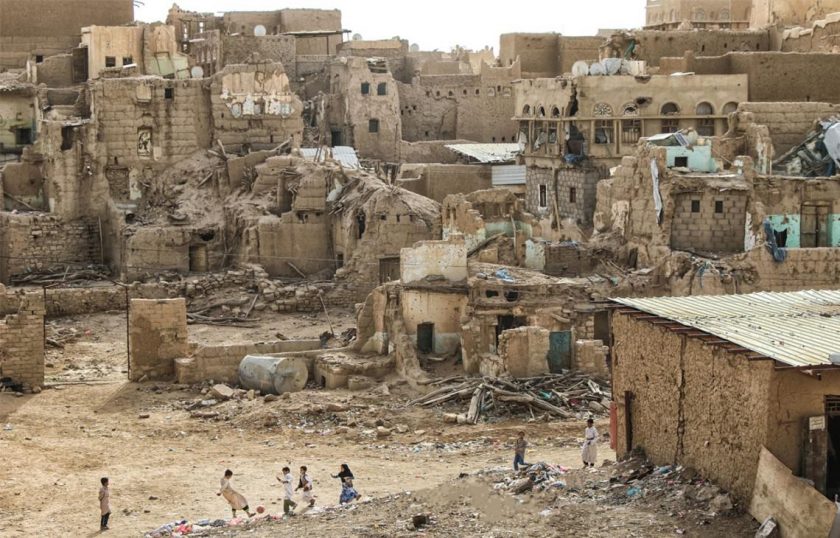
While Yemen has not recorded any COVID-19 cases to date, the possibility of an outbreak threatens the war-ravaged country’s already fragile healthcare system.
Tens of thousands of Yemenis have died since the beginning of the war that Saudi Arabia and its allies launched in 2015 to restore power to Yemen’s former Riyadh-allied officials. The aggression has also brought entire Yemen to the edge of famine.
The United States and many of its allies have been providing political, military, logistical, and advisory support for the war.
Featured Video
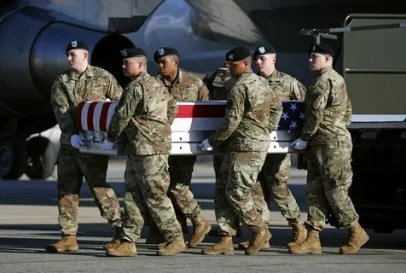
American Military Failure in Afghanistan
or go to
Aletho News Archives – Video-Images
Frlom the Archives
Iran War: United States Military Versus Israel Firsters
By James Petras | November 27, 2007
Why must Jewish organizations be and be seen as the loudest drum-beaters of all? Why can we not bring ourselves to say that military intervention is not on the table at all? Why not stash it under the table, out of sight and mount instead a diplomatic assault? – Leonard Fein, Forward
Introduction
As the White House and Congress escalate their economic sanctions and military threats against Iran, top military commanders and Pentagon officials have launched a counter-offensive, opposing a new Middle East War. While some commentators and journalists, like Chris Hedges (Truthdig, November 13, 2007), privy to this high stakes inter-elite conflict, attribute this to a White House cabal led by Vice President Cheney, a more stringent and accurate assessment puts the Zionist Power Configuration (ZPC) in the center of the Iran war debate.
There is a great deal riding in this conflict – the future of the American empire as well as the balance of power in the Middle East. Equally important is the future of the US military and our already heavily constrained democratic freedoms. The outcome of the continuous and deepening confrontation between top US military officials and the Israel Firsters over US foreign policy in the Middle East has raised fundamental questions over self-determination, colonization, civilian primacy and military political intervention, empire or republic. These and related issues are far from being of academic interest only; they concern the future of the United States. … continue
Blog Roll
 Aletho News
- Hezbollah Returns: It Didn’t Start a War, It Is Ending One
- EU states seek ‘talks’ with Iran for access to Strait of Hormuz: Report
- Trump on Hormuz: “Others must take care of it” after US falters
- Who Is closer to collapse?
- A War that Backfired: Why the US-Israeli Campaign Is Strengthening Iran
- How Zionist Control Is Hurting US Interests
- Iran warns it may target US missile launch sites in UAE cities
- American Military Failure in Afghanistan
- Friendly Skies of Georgia: Are Israeli-Linked Drones Launching False Flags from Georgian Territory?
- The Three Big Lies about Mammography Screening
- If Americans Knew
- No let-up in attacks on Gaza as Israel takes on Iran, Lebanon – Not a ceasefire Day 155
- ‘Of Course’: IDF Drops Case Against Soldiers Accused of Raping Palestinian Prisoner
- Don’t Fall for the Regime Change Talk. Israel Is ‘Mowing the Lawn’ in Iran
- Will Israel and the US wreck the Gulf States along with Iran?
- US so far burned through ‘years’ of munitions in Iran war: Report
- How the Israeli Tail Wags the American Dog
- Outdated intel likely led to deadly U.S. strike on Iranian elementary school, sources say
- Pentagon insider says high U.S official Douglas Feith reported to Netanyahu
- In fond memory of Walid Khalidi, the historian of Palestine
- 6 more Americans killed, as Israel ‘mows the lawn’ in Iran – Not a ceasefire Day 154
- No Tricks Zone
- Storing Green Energy To Last Germany 10 Days Would Require A 60-Million Tonne Battery
- New Studies: UK Sea Levels Were 4 Meters Higher Than Today During The Mid-Holocene
- Destructive Green New Deal: German Energy And Metal Group Warns Of Drastic Crisis
- New Study Documents A 20-Year Pause In Arctic Sea Ice Decline – Driven By Internal Variability
- Wake-up Call: Survey Shows Majority Of Germans Now Favor Postponing Climate Targets!
- Televised! Leading German Political Candidate Tells Schoolchildren CO2 Makes Sun Hotter!
- New Study: A Century Warming Of 1.1°C Is ‘Commonplace’ And ‘Not Unusual’ During This Interglacial
- New Study: ‘Internal Noise’ And Volcanic Forcing Can Trigger 10-15°C Warming Within Decades
- Glaciers Worldwide Are Suddendly Surging, Experts Blame Warming!
- Surprising Discovery: Sahara Is Greening…Billions Of Trees Where Once Thought To Be Barren
 Aletho News