Gardasil Lawsuit – Deaths and Serious Injuries Linked to HPV Vaccine
Baum Hedlund Aristei & Goldman Trial Lawyers
The Gardasil vaccine, manufactured by Merck & Co., was approved by the U.S. Food and Drug Administration (FDA) in 2006 for use in preventing infection from only a few of the hundreds of types of human papillomavirus (HPV). Since hitting the market, however, thousands of adolescents and adults have reported serious and disabling Gardasil side effects after receiving the HPV vaccine, including death.
Gardasil was fast-tracked to the market, achieving FDA approval in six months, which usually takes three years. Even one of the principal investigators of the Gardasil clinical trials (the human testing that precedes FDA approval) said the process “went too fast.”
The clinical trials for the Gardasil HPV vaccine reveal several disturbing side effects that were not disclosed on the package insert:
- The miscarriage rate for subjects who were injected with Gardasil was 25%. The miscarriage rate for women under 30 in the U.S. is 12.5%.
- In the Gardasil group, 5 babies were born with congenital abnormalities. There were none in the control group (the group that does not receive treatment).
- 10.9% of women who took Gardasil reported reproductive and breast disorders within 7 months. In the Protocol 18 placebo group, that figure was 1.2% (through 12 months).
- The rate of Gardasil deaths in the clinical trials was 8.5 per 10,000, nearly double the background U.S. death rate for young women ages 15 to 24.
There are more than 64,000 case reports of HPV vaccine adverse reactions in the Vaccine Adverse Events Reporting System database.
It is estimated that only 1% of serious adverse events are actually reported to VAERS.
Researcher Peter C. Gøtzsche in his book Vaccines: Truth, Lies, and Controversy noted some of the research inadequacies in the HPV vaccine clinical trials
“It is a requirement for registration of drugs that randomized trials have been carried out where one group received the drug and the control group received placebo or nothing. This allows assessment of both the benefits and harms of drugs. I have done research on non-vaccine drugs for decades and was shocked when I learned through my work with vaccines against human papilloma virus (HPV) that the regulatory requirements are much less for vaccines. Almost all the HPV vaccine trials have a control group receiving a hepatitis vaccine or a strongly immunogenic adjuvant, which makes it impossible to find out what the harms of the HPV vaccines are.”
Today, the Gardasil shot has left many young women and men suffering (FDA also approved Gardasil for boys), and it has been a living nightmare for parents whose children have experienced severe adverse reactions to the vaccine. They all trusted Gardasil, never suspecting the grave illnesses and disabilities that could follow. […]
What is the Gardasil Controversy?
Underlying the entire Gardasil controversy are clinical trials (human testing) that victims allege were fraudulently conducted and reported. Preliminary evidence compiled by a team of Gardasil attorneys and investigators suggests that the clinical trials Merck conducted for the Gardasil HPV vaccine were flagrantly deceptive and unscientific.
According to Mary Holland and Kim Mack Rosenberg, and Eileen Iorio, co-authors of the book, The HPV Vaccine On Trial: Seeking Justice For a Generation Betrayed, “none of the participants in the [Gardasil] clinical trials received a true saline placebo,” which means the clinical trials failed to measure the effects of Gardasil against a true control. Instead of receiving a placebo, some clinical trial subjects received aluminum-containing adjuvants, chemical mixtures, and other vaccines, which masked adverse events and made Gardasil seem safer than it would have otherwise.
According to Holland, Mack Rosenberg, and Iorio, “HPV vaccines have never been proven to prevent against cervical or other cancer.” … Full article
Modi uses Israel’s ‘settler’ tactics to change Kashmir
Press TV – August 29, 2020
Prime Minister Narendra Modi is changing Indian Kashmir’s residency laws for the first time since 1947, in a bid to snuff out any challenge to the disputed territory belonging to India.
Drawing comparisons with Israel’s “settler” tactics in the Palestinian Territories, Modi’s Hindu nationalist government aims to change the demographic makeup and identity of the Muslim-majority region, critics say.
AFP looks at the background, what the new rules are and their implications for the area’s 14 million population.
What has Modi done in Kashmir so far?
The Himalayan former princely state has been split between India and Pakistan since independence from Britain in 1947.
In the Indian-administered part a conflict between separatist rebels and government forces has killed tens of thousands since 1989, mostly civilians.
More than 65 percent of the population is Muslim. In the Kashmir Valley, the main center of the rebellion, it is close to 100 percent.
On August 5, 2019 Modi’s government revoked articles in the Indian constitution that guaranteed Kashmir’s partial autonomy and other rights including its own flag and constitution.
A huge accompanying security operation saw tens of thousands of extra troops — adding to 500,000 already there — enforce a siege-like curfew. Thousands were arrested and telecommunications were cut for months.
Jammu & Kashmir state was demoted to a union territory governed directly from New Delhi, while the Ladakh region was carved out into a separate administrative area.
Creating such new “facts on the ground” in Kashmir has long been advocated by the Rashtriya Swayamsevak Sangh, the hardline Hindu parent organisation to Modi’s BJP party.
The move sent a further shudder through India’s 200-million Muslim minority and defenders of its secular traditions, who fear Modi wants to create a Hindu nation — something he denies.
“What I see unfolding is a Hindu settler colonial project in the making,” Mona Bhan, associate professor of anthropology at Syracuse University who has long researched Kashmir, told AFP.
What happened to Kashmir’s special rules?
Modi’s government tore up Kashmir’s special residence rules dating back to 1927 which had ensured only permanent residents could own land and property, secure government jobs and university places and vote in local elections.
Now a raft of different categories of people from anywhere in India can apply for domicile certificates, giving them access to all the above.
These include those living in Kashmir for 15 years, who include around 28,000 refugees who fled Pakistan and as many as 1.75 million migrant laborers — most of whom are Hindus.
In addition, civil servants who have worked in Kashmir for seven years and their children, or students who have taken certain exams, also qualify for domicile status.
The changes are “the most drastic imposed since 1947,” Siddiq Wahid, a historian and political analyst, told AFP. “It was done with the intent to open the gates to demographic flooding.”
What do locals have to do?
Locals too now have to apply for the new “domicile certificates” in order to qualify for permanent resident rights.
To get this, they have to produce their Permanent Resident Certificates (PRC), cherished documents valid since 1927, which then become worthless.
Speaking to AFP on condition of anonymity, an engineering graduate said young Kashmiris were in effect being forced to give their political loyalty to India in exchange for a livelihood.
“They say, you want a job, OK, get the domicile document first,” he said.
Is anybody happy?
A few people. Bahadur Lal Prajapati, born in Indian Kashmir to Hindu refugees who fled Pakistan during its first war with India over Kashmir seven decades ago, is finally an official resident and has “never been so happy”.
“We got the right to live in this part of India as citizens after 72 years of struggle,” Prajapati, 55, told AFP from his home in Jammu, the Hindu-dominated district of the region.
One of the first people to receive the new domicile certificate was Navin Kumar Choudhary, a top bureaucrat from the Indian state of Bihar who worked in Kashmir for many years.
Photos on social media of Choudhary proudly holding the certificate sparked huge anger among Kashmiris but delight among Modi’s supporters.
What happens if people complain?
Some 430,000 new domicile certificates have been issued — despite the coronavirus pandemic. It is unclear how many of them are to people from outside and how many to locals.
Many locals are refusing to swap their old documents, even though this makes life harder. Some do it in secret for fear of censure from their neighbors.
Wary of being labelled “anti-national” by the authorities many Kashmiris are also scared to speak out openly. Some are deleting their Twitter accounts.
“It’s a travesty that I have to compete with outsiders for citizenship rights in my own homeland,” said a student — who also wished also to remain anonymous out of fear of problems with the authorities.
US charges three over collecting monetary aid for war-torn Yemen
Press TV – August 29, 2020
The US Justice Department has charged three people in connection with a campaign to collect monetary assistance for the oppressed Yemenis, who are suffering under the years-long Saudi war and blockade.
It claimed that Muzzamil Zaidi and Asim Naqvi, US citizens living in Iran’s holy city of Qom and the American city of Houston, respectively, and Ali Chawla, a Pakistani national residing in Qom, had violated the International Emergency Economic Powers Act.
Justice Department officials alleged that the defendants “have considerable operational links” to the Islamic Revolution Guards Corps (IRGC) and moved US currency from the United States to Iran.
They claimed that Zaidi, Chawla and other members of an organization, called Islamic Pulse, received permission from Leader of the Islamic Revolution Ayatollah Seyyed Ali Khamenei to collect a religious tax on his behalf and send half the money to Yemen.
“Zaidi, Naqvi, and Chawla allegedly raised money in the United States on behalf of Iran’s Supreme Leader, and illegally channeled these dollars to the government of Iran. As a result of today’s charges, their unlawful scheme has been exposed and brought to an end. The US Department of Justice and its National Security Division are committed to holding accountable individuals who operate covert networks within the United States in order to provide support and funds to hostile foreign governments like Iran in violation of US law,” said Assistant Attorney General for National Security John C. Demers.
The Justice Department also said Zaidi, 36, was charged with acting in the US as an agent of the Iranian government without first notifying the Attorney General.
The charges come at a time when the US has been continuing to supply weapons and military equipment to Saudi Arabia despite war crimes committed by the regime in Yemen.
The Yemeni army says Washington arms Saudi Arabia and its regional allies, defines goals for them and is involved in a political cover-up for their acts of aggression.
Saudi Arabia waged the devastating military aggression against its southern neighbor in March 2015 in collaboration with a number of its allied states.
The purported aim was to return to power a Riyadh-backed former regime and defeat the popular Houthi Ansarullah movement that took control of state matters after the resignation of the then president and his government.
The UN refers to the situation in Yemen as the world’s worst humanitarian crisis, with more than half of hospitals and clinics destroyed or closed.
Vote-by-Mail Issue Could Lead to Violence
By Philip Giraldi | American Herald Tribune | August 29, 2020
The debate over voting by mail in America in November generally is defined by the interests of the two major political parties. Democrats insist that such voting enfranchises large numbers of citizens who would not otherwise be able to vote and is also secure. The Republicans argue that a large volume of voting by mail will guarantee that the election results will not be known for some time after the election and also that casting a ballot without being physically present increases the possibility of fraud.
Beyond that, the recent use of large scale mail-in voting in New York State suggest that there can be considerable delays in the mechanics of actually counting the ballots, while many ballots were also completely invalidated for various reasons, but some states like Oregon and Utah have been successfully using mail-in for years. So essentially the argument is a political one. The Democrats are expecting that most voters who postal vote will vote for them while the Republicans would like to repress that type of voting precisely for the same reason, i.e. that it would likely benefit Joe Biden and other Democratic candidates. There will certainly be both detected and undetected fraud in the voting, but the questions are “How much?” and “Will it affect any results?” If the fraud is not significant many would argue that it is a price that should be paid to improve voter turnout.
Elections are run at the state and county level in the United States, not nationally. A recent review of procedures to register and vote in my home state of Virginia determined that one can both register and vote without any human contact at all. The registration process can be accomplished by filling out an online form, which is linked here. Note particularly the following: the form requires one to check the box indicating U.S. citizenship. It then asks for name and address as well as social security number, date of birth and whether one has a criminal record or is otherwise disqualified to vote. You then have to sign and date the document and mail it off. Within ten days, you should receive a voter’s registration card for Virginia which you can present if you vote in person, though even that is not required.
It is important to consider no documents have to be presented to support the application, which means that all the information can be false. You can even opt out of providing a social security number by indicating that you have never been issued one, even though the form indicates that you must have one to be registered, and you can also submit a temporary address by claiming you are “homeless.” Even date of birth information is useless as the form does not ask where you were born, which is how birth records are filed by state and local governments. Ultimately, it is only the social security number that validates the document and that is what also appears on the Voter’s ID Card, but even that can be false or completely fabricated, as many illegal immigrant workers in the U.S. have discovered.
In a state like Virginia, the actual mail-in ballot requires your signature and that of a witness, who can be anyone. That is also true in six other states. Thirty-one states require your own signature while only three states require that the document be notarized, a good safeguard since it requires the voter to actually produce some documentation. Seven states require your additional signature on the ballot envelope and two states require that a photocopy of the voter ID accompany the ballot. In other words, the safeguards in the system vary from state to state but in most cases, fraud would be relatively easy.
Possible fraud in the voting not to mention delays in post office delivery of the mail-in ballots, have, not surprisingly, political consequences that are beginning to surface in discussions of what might actually happen the night of the election. If the civil disturbances that have been occurring over the past three months continue and the Republicans are successful in hammering on the law-and-order theme, it is likely that the results of the presidential vote will be much tighter than some current polls seem to suggest.
So, what happens on the day after? Well, the elections in 2000 and 2016 suggest that there might be problems. In 2000, George W. Bush defeated Al Gore even though the latter had more votes nationally. There was considerable fear that violence might result, but the issue was resolved by a recount in Florida followed by a Supreme Court ruling and Bush’s legitimacy, though questioned, was conceded. In 2016, of course, Hillary Clinton had 3 million more votes than Donald Trump but his large majority in the Electoral College meant that the result was largely unchallenged, though it was soon to be attributed to “Russian help.”
This year might be different due to the simmering anger over coronavirus measures as well as the racial turmoil. That might not matter much but for the fact that President Donald Trump has opened the door to discussion of possible fraud in the election and has also suggested that the result might not be legitimate. He has particularly focused on mail-in voting and it has been conjectured that he might be deliberately taking steps to hinder post office ability to deliver the ballots on time. The viral badinage appears to be working for the GOP as a recent opinion poll suggests that only 45% of prospective voters are confident of the integrity of election results.
What might be coming, from one perspective, is suggested by a Trump tweet from the November 2018 election in Florida, in which he declared “The Florida Election should be called in favor of Rick Scott and Ron DeSantis in that large numbers of new ballots showed up out of nowhere, and many ballots are missing or forged. An honest vote count is no longer possible-ballots massively infected. Must go with Election Night!”
More recently, on July 30th, Trump tweeted “With Universal Mail-In Voting (not Absentee Voting, which is good), 2020 will be the most INACCURATE & FRAUDULENT Election in history. It will be a great embarrassment to the USA. Delay the Election until people can properly, securely and safely vote???” The president has also claimed repeatedly that the Democrats are trying to “steal the election.”
House of Representatives Speaker Nancy Pelosi has predictably made matters worse by asserting that “… sadly, the domestic enemies to our voting system and honoring our Constitution are right at 1600 Pennsylvania Avenue with their allies in the Congress of the United States… They’re doing everything they can [to] suppress the vote with [their] actions: scare people, intimidate by saying law enforcement will be there, diminish the role of the postal system in all of this. It’s really, actually shameful.” She called them “Enemies of the state,” a version of Hillary Clinton’s famous faux pas in declaring that Trump supporters in 2016 were “deplorables.”
Pelosi also has called for cancellation of the planned presidential debates between Trump and Biden, saying she does not want to legitimize any conversation with the president. She has also added fuel to the fire by claiming that Trump is “… welcom[ing], in fact, Russian intervention, letting Putin decide who will be President instead of the American people.” So, the stage is set for some very significant grievances to play out from either side. It is being suggested that Donald Trump might try to delay the election, which he does not have the power to do, or let it take place in expectation that he will have the lead in conventionally cast votes when the polls close and will be able to declare both victory and that the election is over without any further counting because of fraud on the mail-in ballots. If, on the other hand, Trump loses, the argument could be broadened, with the president calling the all of the voting invalid because of widespread mail-in fraud.
As more Americans than ever are frustrated and angry over the political system while also being ideologically divided into various camps characterized by hard core support of positions that are impossible to reconcile, the situation could explode. And, one must point out, more Americans are armed than ever before while they continue to buy weapons at a record rate. Throw into the mix a police force that is demoralized and evidently increasingly incapable of dealing with civil unrest and November 3rd’s election could well unleash forces that could make the rioting and violence that is sweeping across America currently look insignificant.
Fatal polar bear attack in Svalbard unfairly blamed on lack of sea ice
By Susan Crockford | Polar Bear Science | August 28, 2020
A fatal polar bear attack in Svalbard, in the early hours of 28 August 2020 just outside the main town of Longyearbyen, is being unreasonably blamed on lack of sea ice. Details of the attack show it was made by a three year old male: such subadult bears are historically responsible for most attacks on people and they are known to be especially dangerous. It looks to me like someone should have seen this tragedy coming and stepped in to prevent it.

I will update this story as more information comes in but see below for the details known so far.

The attack

Camping site across from the airport in Longyearbyen. IcePeople
Details of the attack, from the CBC (28 August 2020), my bold:
A polar bear attacked a camping site Friday in Norway’s remote Svalbard Islands, killing a 38-year-old Dutch man before being shot and killed by onlookers, authorities on the Arctic island said.
Johan Jacobus Kootte was in his tent when it was attacked by the bear that killed him, deputy governor Soelvi Elvedah said. He was an employee of the Longyearbyen Camping site, where the attack occurred, the newspaper Svalbardposten said.
Kootte was rushed to the hospital in Longyearbyen where he was declared dead, Elvedah said.
The attack occurred just before 4 a.m. local time and was being investigated. No one else was injured, but six people — three Germans, one Italian, one Norwegian and one Finn — were hospitalized for shock, authorities said.
The polar bear was found dead in a parking lot by the nearby airport after being shot by onlookers, the governor’s office said in a statement posted on its website.
And from Icepeople (28 August 2020):
There have been at least four polar bears seen near Longyearbyen during the past week.
The bear that killed Kootte is a three-year-old male that was chased away from Hiorthhamn, a cabin across the bay from Longyearbyen, earlier this week, the governor announced Friday evening.
It is also the son of a female bear that was tranquilize [sic], along with her newest cub, and flown by helicopter to the northern part of Isfjorden after also making multiple visits the same location. The mother bear may be the same one that has made annual visits to the area in late summer and early fall, often with cubs, as part of her annual migration.
No other people at the campsite, who were all staying in tents, were physically injured by the polar bear, according to the governor. But six people were taken to the hospital in Longyearbyen and are being cared for by health personnel and city crisis managers.
An autopsy of the bear at a facility used by the governor is scheduled today. Because the fatality of a person was involved, the governor is requesting no photos of the bear be published by the media at this time.
The people at the campsite will be interviewed throughout the day as part of the investigation. The governor is asking people to avoid the area.
The campsite, typically open through early- to mid-September, was closed during the first half of the summer due to the COVID-19 crisis. While it is staffed during that period, and a building with kitchen and other facilities available, the campsite’s policy states guests are responsible for their own safety.
Although the campsite’s website states no bears have been at the site since the service building opened in 1985, a bear visited the designated bird sanctuary on the opposite side of the entrance road literally meters away (see YouTube video of visit at right) on July 29, 2011, only days after a fatal bear attack at a camp site about 40 kilometers away that was the most recent involving a person’s death in Svalbard.
Campsite policy states guests are not allowed to have loaded firearms there.
…
Nearly 40 comments were posted on the governor’s Facebook page during the hours following the attack, many of them expressing sympathy for the bear as well as the victim and other people there. At the top of those considered “most relevant,” Arek Stryjski, an experienced marine expeditioner in Svalbard, responded to someone upset about the lack of flare-alarm system by noting the risks it might pose in an area where large numbers of people might be present nearby.
“The camping in Longyearbyen is 500 meters from the airport terminal, (and) 100 meters from the parking and bus station,” he wrote. “Putting any flare alarms there will be dangerous for humans. It is miracle someone had loaded gun and more people where not hurt. What if it had attacked people who were leaving airport building?”
Van Dijk told Svalbardposten an electric fence was scheduled to be built around the campsite this year, and supplies arrived in March, but it was delayed when the COVID-19 crisis resulted in the shutdown of all visitors to Svalbard that same month.
“I was going to set up a three-wire electric fence with 200 poles around the entire campsite,” she told the newspaper.
So, there was no protection at the camp site from polar bears. And not only was the bear who perpetrated the attack a young bear who had never been on his own before but authorities knew he was out there, having been abruptly separated from his mother just two days before. Who could possibly not have seen a disaster coming? Sadly, the victim of the attack was sleeping in a tent on an exposed shoreline without an electric fence or a gun: he didn’t have a chance.
The Guardian (28 August 2020) offered this bit of additional insight (my bold):
“According to the local paper Svalbardposten, researchers at the local university field centre, Unis, avoid spending the night in tents near the shoreline – where the campsite is located – because of a recent increase in the presence of polar bears. “
Yet the BBC made this claim in their story on the incident (28 August 2020) about what unidentified ‘experts’ say about polar bears in Svalbard (my bold):
“Experts say polar bears’ hunting grounds have diminished as the Arctic ice sheet melts because of climate change, forcing them into populated areas as they try to find food.“
At least the writers at IcePeople talked to an actual polar bear specialist and included this quote from Norwegian researcher Jon Aars (my bold), who seems to be commenting on the fact that there were bears around in the first place:
Jon Aars, a polar bear expert with the Norwegian Polar Institute who frequently conducts research and advises the governor on polar bear incidents near settlements, told NRK the most recent incident most likely is part of a long-term trend of increasing bear activity near settlements due to vanishing sea ice elsewhere keeping them from tradition hunting sources.
“At this time of year, polar bears have extra challenges in obtaining food,” he said. “It has been a long time since there has been ice in the main hunting area, so there is less access to seals. So, the polar bear spends more time on land to find alternative food.”
I challenge this statement, given the details of this attack: “It has been a long time since there has been ice in the main hunting area.” As I show below, there was ice in the area only a few weeks ago and most bears should have been in excellent condition (bears easily traverse the short overland distance from the east coast of Spitzbergen to the area around Longyearbyen on the west coast).
No mention from Aars about the inherent danger from young bears, the separation of this particular young bear from his mother, or about the higher than average ice levels around Svalbard this year in particular – see my comments below.
Sea ice Svalbard this year
Far from having ‘low’ sea ice, Svalbard ice conditions have been heavier since last fall than they have been in decades. In March this year, Svalbard had more polar bear habitat than it did two decades ago at the same date. By early April, the ice was the highest it had been since 1988 and by the end of April, Svalbard still had the 6th-7th highest ice extent since record began in the late 1960s. There was also exceptionally thick first year ice to the north.

In other words, Svalbard polar bears have had better sea ice conditions leading into the summer season than they have had in decades. And by early July (see below), there was still ice off the east coast of Spitzbergen… Full article
2020 Elections: Bourgeois Democracy Meets Global Governance
By Diana Johnstone – Consortium News – August 28, 2020
A small number of very rich men are quite sure they know what is best for the future of the world and have enough wealth and influence to believe they can make it happen. They can be called oligarchs, but the term is inadequate. They are a special category, the shapers of the Global Governance destined to replace bourgeois democracy. I can name two: one who is famous, notorious even, but very old, and another who is a generation younger, not yet so well known or so rich but probably even more influential.
The Global Governors
The old one is of course George Soros, who needs no introduction. He has no doubt that the world should be one big Open Society — in a word, globalization — in which borders and nation states dissolve into a kaleidoscopic mix of cultural identities in which major decisions are taken by brilliant financial oligarchs like himself.
The younger one is Nicolas Berggruen, the dashing 59-year-old Paris-born son of a leading art collector. Berggruen enjoys double U.S.-German citizenship and membership in the Council on Foreign Relations, the NYU Commission on Global Citizenship, the Brookings International Advisory Council, the Leadership Council at Harvard’s Kennedy School Center for Public Leadership, the World Economic Forum – and on and on. He helped get Emmanuel Macron elected president of France and has friendly relations with Ursula von der Leyen, head of the European Union Commission.
The billionaire has his own “think and action tank,” the Berggruen Institute, to promote his interests which center on “global governance.” He is particularly interested in technological ways to shape and guide the world of the future. The future for Berggruen belongs to digitalization and above all transhumanism. In a short video, he muses over whether or not the digital age makes us “less human.”

Nicolas Berggruen, center, in 2017. (Financial Times, Flicker, CC BY 2.0)
We are all connected and “less free” but we are all “part of something bigger — communities, families, friends” … The digital world “looks less human but it’s still being created by us.” (And who is “us” exactly?) Berggruen’s model of the future family may be seen in his own choice: two motherless children manufactured with donated ovules and born by two surrogate wombs.
Like European-born Soros and Berggruen, the United States is above all the current command and control center of the Western world still aspiring to be the nucleus of a global empire. U.S. elections are important to these world visionaries in staying the course of world transformation. For both of them, President Donald Trump can only be an intolerable glitch in the screen. This must be corrected in 2020. The entire liberal elite is in overwhelming agreement.
The Transition Integrity Project
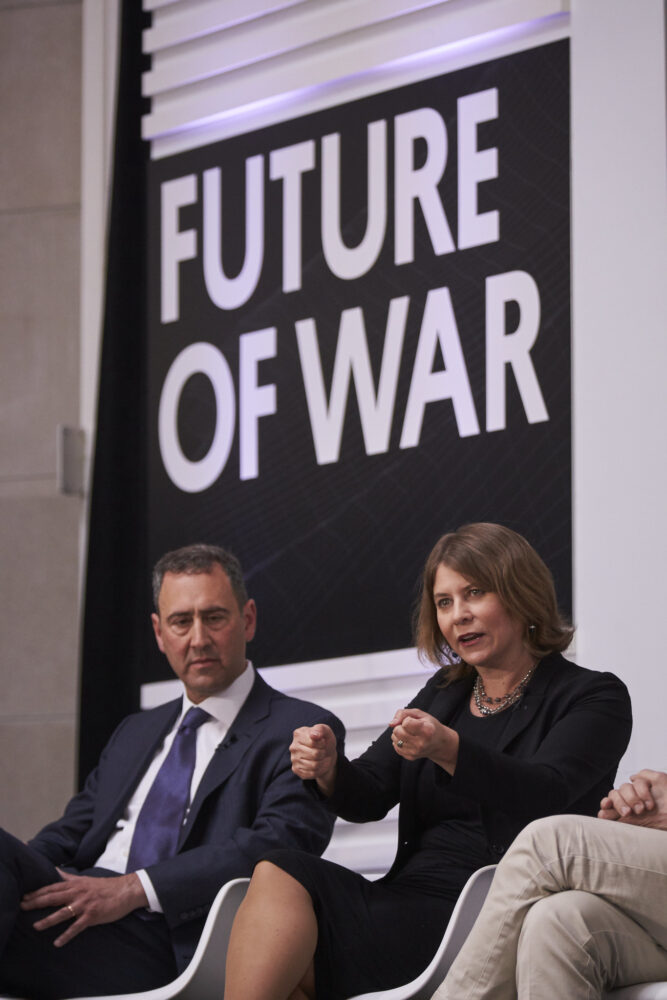
Rosa Brooks, in 2018, during a New America conference. (New America, Flickr, CC BY 2.0)
So, it has been easy to arouse near panic in the Washington Establishment and beyond over the notion that Trump might not be dislodged by the November 2020 election. Fear is being spread less that Trump might win the election (too unthinkable to think) than that he will lose the election but refuse to budge. This possibility received a big boost from a unique social event organized by Professor Rosa Brooks of Georgetown University, a leading champion of women’s participation in the National Security State, and historian Nils Gilman, a head researcher at the Berggruen Institute.
This well-connected pair easily enlisted dozens of power pointers to take part in what The Boston Globe called “a Washington version of Dungeons and Dragons,” on the model of Pentagon planners who form teams to imagine what the U.S. and Russia might do in a nuclear war confrontation. They named their fun and games the Transition Integrity Project (TIP), clearly suggesting that the “integrity” of the anticipated transition from Trump to Biden was their main concern.
Only a few of the 67 participants have been identified: anti-Trump Republican Michael Steele, former President Bill Clinton’s White House Chief of Staff John Podesta, David Frum (ghost writer of President George W. Bush’s “Axis of Evil” speech), and neoconservative political analyst William Kristol.
On Aug. 3, the Transition Integrity Project issued its report, entitled “Preventing a Disrupted Presidential Election and Transition.” This report gave the results of the make-believe gaming scenarios, which provided imaginary support to the growing liberal Democratic hypothesis that Trump is determined to steal the November election.
“Like many authoritarian leaders, President Trump has begun to lay the groundwork for potentially ignoring or disrupting the voting process, by claiming, for instance, that any mail-in ballots will be fraudulent and that his opponents will seek to have non-citizens vote through fraud.” It was taken for granted throughout that Trump’s fears and accusations are fake whereas his opponents’ fears and accusations are soundly based.
The Transition Integrity Project report made a feeble attempt to appear neutral: “TIP takes no position on how Americans should cast their votes, or on the likely winner of the upcoming election; either party could prevail at the polls in November without resorting to ‘dirty tricks’” — a neutrality consistently violated by the entire exercise.
The exercise comprised four scenarios: (1) an ambiguous voting result, (2) clear victory by the Democratic challenger, former Vice President Joe Biden, (3) clear Trump win, (4) narrow Biden win. The game was played by teams, primarily “Team Biden” and “Team Trump,” but it is pretty clear that none of the players were pro-Trump, including the players on “Team Trump.” But the games claimed to show how Trump supporters would react in these circumstances.
- “Team Trump was consistently more ruthless than Team Biden — more willing to ignore existing democratic norms, to make use of disinformation, to deploy federal agencies to promote Trump’s personal and electoral interests, and to engage in intimidation campaigns.”
But “Team Biden” was much nicer:
- “Team Biden generally felt constrained by a commitment to norms and a desire to tamp down violence and reduce instability.”
- “Team Biden often had the majority of the public on its side, and the ability to mobilize resentment about the structural disenfranchisement in the way we conduct presidential elections.”
Russiagate intruded into the gaming in an odd and even ludicrous way: “There was quite a bit of speculation that Trump might […] attempt to rally nationalist feelings to himself, or placate foreign leaders to whom he may feel beholden, such as Vladimir Putin.” Huh?
Nobody Dares Lose

Campaign image of Kamala Harris and Joe Biden. (2020DemConvention, Twitter)
A particularly alarming and disturbingly credible assumption of the Transition Integrity Project game is that in this election, neither side is prepared to accept defeat. The scenario exercises “revealed that for many Democrats and key Democratic constituencies, this election represents an existential crisis, the last chance to stop a rapid and potentially irreversible U.S. decline into authoritarianism and unbridled nativism.” So, as much as Trump, many Democrats are ready to stop at nothing to win this election – for the best of reasons, of course.
Trump is depicted as equally desperate to win in order to avoid being treated as a criminal. An underlying assumption of this story-telling is that once out of office, Trump will be arrested and tried for unspecified crimes. This would indeed be an incentive for him not to lose.
At this point, it is necessary to recall that democratic election of national leaders depends on a degree of mutual trust that is being lost in America. The United States regularly insists that all foreign countries should elect their leaders by “fair and free elections.” But there are many countries where, at some time of their historical development, this method is not advisable because one party, or tribe, fears for its very life if a rival party, or tribe, should take power.
In such states, peace depends on the rule of a king, a mediator, a dictator. The United States can currently be seen to be regressing to just such a degree of mutual hatred and distrust.
No Compromise
It seems to me that if the Democratic Establishment gave priority to a peaceful election and transition, against the possibility that Trump might reject the results, the smart and reasonable thing to do would be to reassure him on the two counts which they suggest might incite him to balk: postal vote fraud accusations and the threat of criminal charges against him.
As to the latter: “Participants in the scenario exercises universally believed that self-preservation for President Trump and his family will be Trump’s first and possibly only priority if he is forced to concede electoral defeat.” So, it is a bit odd that the Transition Integrity Project goes on to report that: “During several of the TIP exercises, Team Biden attempted to enter into negotiations with Team Trump about a pardon and graceful transition, but those overtures were consistently rejected.”
Since there were no Trump supporters on either team, these game results merely reflect the intention of the Democratic Establishment to assume that Trump will be charged with “state crimes,” as yet unspecified. No compromise deal is desired.
As for postal balloting, it should be conceivable that Trump’s misgivings are justified. Trump is not against absentee ballots, which require identification of the voter, comparable to going to the polls, but is suspicious of mass mailings of ballots back and forth.
In an age when anyone can photocopy any document, when mails are slow and when there are many ways in which ballots might be destroyed, such misgivings are not far-fetched. Indeed, in the course of Game No. 1, “a rogue individual destroyed a large number of ballots believed to have supported Biden.” Why could the gamers imagine Biden ballots being destroyed, but rule out destruction of ballots supporting Trump?

2000 presidential election recount underway in Palm Beach County, Florida, Nov. 18, 2000. (Dtobias, CC BY-SA 3.0, Wikimedia Commons)
For the sake of domestic peace, why not try to find a compromise? Democratic vice-presidential candidate Sen. Kamala Harris (D-CA) has introduced legislation to generalize postal balloting. Why not, instead, extend polling time, opening polls not only on the second Tuesday in November but on the preceding Saturday and Sunday? This would provide time to allow voters afraid of Covid-19 to keep distances from each other, as they do when they go to the supermarket. It would reduce the number of absentee ballots, the time needed for counting and above all the suspicions attached to postal voting. But the more wary Trump is of postal voting, the more Democrats insist on making it universal.
It becomes clearer and clearer that hatred of Trump has reached such a pitch, that for the Democratic Establishment and its hangers-on, defeating Trump at the polls is not enough. They are practically inciting him to contest the election. Then they can have something more exciting and decisive: a genuine regime change.
Preparing for Regime Change
The classic regime change scenario involves a contested election, mass street demonstrations including civil disobedience and finally, military intervention.
So, to start with, the gamers posit an authoritarian leader who won’t step down. That’s Trump.
Next, “a show of numbers in the streets – and actions in the streets – may be decisive factors in determining what the public perceives as a just and legitimate outcome.” In an interview
stressing “the flaws in our electoral system,” Transition Integrity Project organizer Gilman said that what we need “is for people to be prepared to take to the streets in nonviolent protest” if appeals to officials do not suffice.
“We’ve learned over the last couple of months, since the Movement for Black Lives protest really took off again in the wake of George Floyd’s murder, that taking to the streets and showing commitment to a democratic process beyond just the ballot box is a really important part of driving change.” The demonstrations must be nonviolent, Gilman stressed.
As the Transition Integrity Project report put it, “the scale of recent demonstrations has increased the stakes for the Democratic Party to build strong ties with grassroots organizations and be responsive to the movement’s demands.” Certain of these grassroots organizations – MoveOn and Black Lives Matter – have enjoyed financial support from Soros, as the Democratic Party clearly tries to co-opt the protests.

George Soros. (georgesoros.com)
According to the scenarios, such protests could arise not only in case Trump refused to recognize a Biden win, but also, in Game No. 3, in case of a “comfortable Electoral College victory for President Trump (286-to-252) but also a significant popular vote win (52 percent for Trump, 47 percent for Biden). The game play ended in a constitutional crisis, with threats of secession, and the potential for either a decline into authoritarianism or a radically revamped set of democratic rules that ensure the popular will prevails (abolishment of the Electoral College…)”
The Biden campaign retracted its initial concession, capitalizing “on the public’s outrage that for the third time in 20 years a candidate lost the popular vote but won the Electoral College.” The Biden campaign encouraged California, Oregon and Washington to secede “unless Congressional Republicans agreed to a set of structural reforms to fix our democratic system to ensure majority rule.” Congress supported Biden. “It was unclear what the military would do in this situation”.
In reality, Democrats know that they have managed to keep the Permanent State, including the military and intelligence agencies, on their side throughout Trump’s presidency. Where are the forces that could carry out a pro-Trump coup d’état?
Whose Coup?

Hillary Clinton addressing Democratic convention, July 2016. (Gage Skidmore, Flickr)
“During the exercises,” the report notes, “winning ‘the narrative’ emerged as a potentially decisive factor. Either side can expand or contract the ‘margin of contestation’ if they succeed in substantially changing how key decision makers and the public view the ‘facts,’ the risks of action or inaction, or external events such as civil unrest.”
Winning the narrative appears to be a main purpose of the Transition Integrity Project, and it was quickly seconded in its efforts by top Democrats.
“Joe Biden should not concede under any circumstances because I think this is going to drag out, and eventually I do believe he will win if we don’t give an inch and if we are as focused and relentless as the other side is,” Hillary Clinton said in an interview on Aug. 25.
A couple of days later, Al Gore, the former vice president and unsuccessful 2000 Democratic presidential candidate, chimed in. Trump, he said in a particularly loaded image, is “attempting to put his knee on the neck of democracy” by criticizing mail-in ballots. “He seems to have no compunctions at all about trying to rip apart the social fabric and the political equilibrium of the American people, and he’s strategically planting doubts in advance.”
People ask whether Trump will leave office next Jan. 20. “Well,” said Gore, “it doesn’t matter because it’s not up to him. Because at noon on January 20th, if a new president is elected… the police force, the Secret Service, the military, all of the executive branch officers, will respond to the command and the direction of the new president.”
The Bottom Line

Outside the World Economic Forum Annual Meeting 2020 in Davos-Klosters, Switzerland, Jan. 24. (World Economic Forum, Mattias Nutt, CC BY-NC-SA 2.0)
Meanwhile, Americans can listen to the extravagant rhetoric of the two enemy camps, calling on them to choose between “authoritarian white supremacy” and “radical Marxist socialism” while offering absolutely nothing in terms of coherent public policy of benefit to the American people and the world. The politicians cling to ineffective office, while the future is being planned elsewhere.
Policy will be designed by the Global Governors, for instance at the next meeting in Davos of the World Economic Forum which, according to its founder and chairman Klaus Schwab, will lay out the “Great Reset” agenda for the Fourth Industrial Revolution that is destined to reshape all our lives. Nicolas Berggruen will be there with his ideas. So will other billionaires.
They will not be “conspiring,” but rather laying plans for what they consider best for the world. There is no political system enabling us to influence or even fully understand the projects they will sponsor. Surely these projects deserve to be sharply debated. But the politicians supposedly representing us are somewhere else, fighting furiously with each other over contrived issues.
The Electoral College is not the most fatal flaw in American democracy. Rather, it’s the monopoly of political discourse by a two-party system fueled essentially by personal ambition, taking its cues from lobbies, the military industrial complex, Wall Street and the Global Governors.
Diana Johnstone lives in Paris. Her latest book is Circle in the Darkness: Memoirs of a World Watcher (Clarity Press, 2020).
Meet the IDF-Linked Cybersecurity Group “Protecting” US Hospitals ‘Pro Bono’

By Whitney Webb –
UNLIMITED HANGOUT– August 27, 2020
Since the Coronavirus crisis began in earnest earlier this year, the strain on hospitals in the US and around the world has been the subject of a considerable number of media reports. However, hardly any media attention has been given to the dramatic and unsettling changes that have been made to hospital and healthcare information technology (IT) systems and infrastructure under the guise of helping the US healthcare system “cope” with the surge in data as well as an unsettling uptick in cyberattacks.
Over the past several months, 80% of healthcare institutions in the US have reported being targeted by some sort of cyberattack, ranging from minor to severe, with an uptick in phishing attempts and spam specifically. Most of these attempts have been aimed at illegally acquiring troves of patient data, including the recent hacks of hospitals in Chicago and Utah. About 20% of the hacks and cyberattacks reported by hospitals and medical facilities since March directly affected the facilities’ capacity to function optimally, with a much smaller percentage of those including ransomware attacks.
One of the reasons for the increase in the success of these attacks has been the fact that more healthcare IT workers are working remotely as well as the fact that many IT staffers have been laid off or let go completely. In several recent instances, the removal of entire hospital system IT staffs have been tied to a larger effort by the Department of Health and Human Services (HHS) to consolidate control over patient data, including Coronavirus-related data, with the assistance of secretive government contractors with longstanding ties to HHS.
The surge of cyberattacks combined with major budget cuts has made hospitals even more vulnerable as many are compelled to do more with less. As a result, there has been a renewed push for the improvement of cybersecurity at hospitals, clinics and other healthcare institutions throughout the country over the course of the Coronavirus (Covid-19) crisis.
Amid this backdrop, an odd group of “cyber threat intelligence” analysts with ties to the US government, Israeli intelligence and tech giant Microsoft have “volunteered” to protect US healthcare institutions for free and have even directly partnered with US federal agencies to do so. They have also recently expanded to offer their services to governments and social media platforms to target, analyze and “neutralize” alleged “disinformation campaigns” related to the Coronavirus crisis.
While these analysts have claimed to have altruistic motives, its members who have identified themselves publicly have notably dedicated much of their private sector careers to blaming nation states, namely Iran but also China, for hacking and, most recently, for cyberattacks related to the Coronavirus crisis, as well as the 2020 presidential campaign. These individuals and their employers rarely, if ever, make their reasons for assigning blame to state actors available to public scrutiny and also have close ties to the very governments, namely the US and Israel, that have been attempting to gin up hostilities with those countries in recent years, particularly Iran, suggesting a potential conflict of interest.
The Cyber Justice League?
Calling themselves the cyber version of “Justice League,” the Covid-19 Cyber Threat Intelligence (CTI) League was created earlier this year in March and has described itself as “the first Global Volunteer Emergency Response Community, defending and neutralizing cybersecurity threats and vulnerabilities to the life-saving sectors related to the current Covid-19 pandemic.” They now claim to have over 1,400 members hailing from 76 different countries.
According to their website, they seek “to protect medical organizations, public healthcare facilities, and emergency organizations from threats from the cyber domain” and offer their services “pro-bono” to major hospitals, healthcare and pharmaceutical companies as well as U.S. law enforcement and federal agencies. Upon their creation, they sent an “open letter to the healthcare community,” offering to volunteer “their time and efforts to mitigate [cyber] threats and protect our healthcare system.”
However, since its creation, the CTI League has offered its services to sectors entirely unrelated to healthcare systems, companies and institutions. For instance, they now offer their services to critical infrastructure systems throughout the US, including dams, nuclear reactors, chemical plants and others, according to their inaugural report and their contact form. This is particularly concerning given that there is no oversight regarding who can become a member of the League, as one must merely be approved for entrance or “vetted” by the league’s four founding members, whose conflicts of interests and ties to the US and Israeli national security states are detailed later on in this report.
In addition, the league’s team of “expert” volunteers also tackle alleged disinformation campaigns related to Covid-19. Some examples of the “disinformation” campaigns the CTI league has been investigating on behalf of its private sector and federal partners include those that “associate Covid-19 spread with the distribution of 5G equipment,” “encourage citizens to break quarantine”, and one that “incited” a “1st and 2nd amendment rally” in Texas.
Regarding their disinformation “workstream,” the CTI league states the following:
“The CTI League neutralizes any threat in the cyber domain regarding the current pandemic, including disinformation. The mission of this effort is to find, analyze, and coordinate responses to the current pandemic disinformation incidents as they happen, and where our specialist skills and connections are most useful.”
The CTI League has offered its services “pro bono” to a variety of groups in the private and public sector, which has allowed the League’s members access to the critical systems of each. For instance, they work closely with the Health Information Sharing and Analysis Center (H-ISAC), whose members include Johnson & Johnson, Pfizer, Merck, Amgen, Blue Cross Blue Shield and Athenahealth, among others. H-ISAC’s president, Denise Anderson, works closely with the National Cybersecurity and Communications Integration Center, part of the Department of Homeland Security (DHS). According to H-ISAC’s Chief Security Officer (CSO), Errol Weiss, the organization has been partnered with the CTI League since “very early on” in the Coronavirus crisis.
The CTI League also works with unspecified law enforcement partners in the US and works particularly closely with the US Cybersecurity and Infrastructure Security Agency (CISA), an independent federal agency overseen by DHS. The current CISA director, Christopher Krebs – who was previously the Director of Cybersecurity for Microsoft, told CSO Online in April that “CISA is working around the clock with our public and private sector partners to combat this threat. This includes longstanding partnerships, as well as new ones that have formed as a direct result of Covid-19, including the Covid-19 Cyber Threat Intelligence (CTI) League.”
Since they began “working with US authorities,” the CTI League has increasingly taken to assigning blame to nation states, specifically Russia, China and Iran, for various cyber-intrusions just as the US federal authorities began to do the same. In late April, for instance, the Justice Department began claiming Chinese hackers planned to target “US hospitals and labs to steal research related to coronavirus” and anonymous US officials blamed China for a hack of the Department of Health and Human Services (HHS) and COVID-19 research. Yet, no evidence tying China to the hacks was provided and only anonymous government officials were willing to imply blame in statements given to the press, suggesting that there was not enough evidence to justify going public with the accusation or to even open an official investigation against specific foreign entities.
Notably, that same week in April, CTI League’s founder Ohad Zaidenberg claimed that China, Iran and Russia “are trying to steal everything,” telling CBS News that they “can steal information regarding the coronavirus information that they don’t have, (if) they believe someone is creating a vaccine and they want to steal information about it. Or they can use the pandemic as leverage so they (can) to steal any other type of information.”
Yet, upon looking more closely at the CTI league’s membership and co-founders, particularly Mr. Zaidenberg, much of the league’s leadership has a rather dubious track record regarding past claims linking state actors to cyberattacks. In addition, they also possess rather glaring conflicts of interests that undermine the CTI League’s professed desire to protect critical health and other infrastructure “free of charge” as well as ties to foreign governments with a history of espionage targeting the United States.
ClearSky and the manufactured Iranian threat
The public face of the CTI League and its original founder is a young Israeli named Ohad Zaidenberg, who was previously an “award-winning” commander in Israeli military intelligence’s Unit 8200, a key component of Israel’s military intelligence apparatus that is often compared to the U.S.’ National Security Agency (NSA). While serving in Unit 8200, Zaidenberg specialized in acts of cyberwarfare targeting the Iranian state, serving first as a Persian analyst in the Unit before becoming commander. His current biography states that he continues to remain “focused on Iran as a strategic intelligence target” and describes him as “an authority in the operations of key Iranian APTs [Advanced Persistent Threats].”
In addition to his leading role at the CTI League, Zaidenberg is also the lead cyber intelligence researcher at ClearSky Cybersecurity, an Israeli company directly partnered with the Unit 8200-linked Checkpoint and Verint Inc., formerly known as Comverse Infosys – a company with a long history of fraud and espionage targeting the US federal government. ClearSky also collaborates “daily” with Elta Systems, an Israeli state-owned subsidiary of Israel Aerospace Industries (IAI), and was founded by Boaz Dolev, the former head of the Israeli government’s “e-Government” platform.
Aside from his work at CTI League and ClearSky, Zaidenberg is also a researcher for Tel Aviv University’s Institute for National Security Studies (INSS). Zaidenberg is specifically affiliated with the INSS’ Lipkin-Shahak Program, which is named after the former head of Israeli military intelligence and which focuses on “national security and democracy in an era of Post-Truth and Fake News.” According to the INSS website, the program works directly with the Israeli government and the IDF and is currently headed by Brigadier General (Ret.) Itai Brun, the former head of the Israel Defense Intelligence (IDI) Analysis Division.
Prior to the creation of CTI League, ClearSky – and Zaidenberg, specifically – were often cited by US mainstream media outlets as the sole source for dubious claims that “Iranian hackers” were responsible for a series of high-profile hacks and “disinformation” campaigns. In every mainstream media report that has covered ClearSky’s and Zaidenberg’s claims regarding “Iranian hackers” to date, their connections to the Israeli government and Israeli intelligence services have been left unmentioned. Also unmentioned was the fact that the only state actor that ClearSky has ever blamed for hacks or other online attacks has been Iran, suggesting that the government-linked cybersecurity firm has a rather myopic focus on the Islamic Republic.
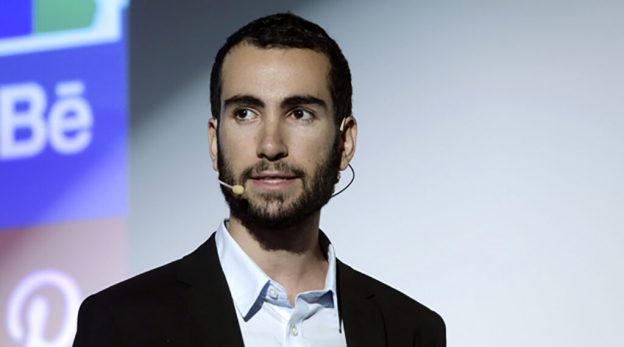
Ohad Zaidenberg
For instance, in February 2018, Forbes reported on ClearSky’s claim, citing only Zaidenberg by name, that an individual linked to Iran’s government had been responsible for an “Iranian propaganda machine” producing “fake news” and attempting to imitate BBC Persian. Zaidenberg claimed that the individual behind the three “fake news” websites, which largely published criticisms of the BBC as opposed to false news stories, is “believed to have worked for [Iran’s] National Ministry of Communications.” Based merely on the Iranian national’s “believed” (i.e. unconfirmed) work history, Zaidenberg then asserts with “medium-high certainty that the operation was funded by the Iranian government.” Zaidenberg’s history as a commander in Unit 8200 targeting Iran and his continued, self-admitted work in pursuing Iran as a “strategic intelligence target” while working at the Israeli government-affiliated ClearSky are left unmentioned by Forbes.
More recently, right before the founding of the CTI League, Zaidenberg and ClearSky were the sole source of claims that “Iranian hackers” were “exploiting VPN servers to plan backdoors” in companies around the world as well as targeting the networks of certain governments, mainly in the U.S. and Israel. ClearSky’s assertion that the hackers in question were tied to Iran’s government was solely based on their finding of “medium-high probability” that the hackers’ activities overlapped with the past “activity of an [unspecified] Iranian offensive group.” They declined to specify what the nature of the overlap was or its extent.
A clear conflict of interest
Notably, ClearSky’s February report on “Iranian hackers” targeting governments and major international companies in the US and elsewhere came right on the heels of speculation that Iran would target the US with a cyberattack following the US’ January assassination of Iranian general Qassem Soleimani, an act that was greatly influenced and allegedly prompted by Israeli intelligence. In the aftermath of the Soleimani assassination, mainstream media outlets in the US had heavily promoted the claim that Iran’s government would soon respond with a “cyberattack” as retaliation and that “financial institutions and major American corporations may be in the crosshairs.”
President Trump and Secretary of State Mike Pompeo had both threatened, at the time, to dramatically respond to any Iran-launched attack, including one launched in the cyber domain, presumably with military force. While Iran’s much-hyped “cyber retaliation” failed to materialize, ClearSky, with its dubious claims that “Iranian hackers” were targeting major corporations and governments, created the impression that Iran’s government was involved in cyberattacks against U.S. interests at this sensitive time.
ClearSky and Zaidenberg’s claims regarding Iran only intensified after the CTI League was founded, with ClearSky and Zaidenberg being the only source for the claim made earlier this year in May that Iran had been responsible for the hacking of US biopharmaceutical company Gilead (a company which boasts close links to the Pentagon). The hack itself, which was widely reported by US media, is said to have consisted of a Gilead executive receiving a single “fake email login page designed to steal passwords” and it is unknown if the attack was even successful, per Reuters, which first broke the story in May. ClearSky subsequently claimed to have single-handedly “foiled” the Gilead hack. Notably, Gilead is part of H-ISAC, which had been partnered with Zaidenberg’s CTI League weeks prior to the alleged hack.
The alleged Iranian-led hack received considerable media attention as the cyberattack was said to have targeted Gilead’s antiviral medication remdesivir, which had received a Covid-19-related emergency use authorization from the U.S. Food and Drug Administration (FDA) just a week before the hack allegedly took place. Only Zaidenberg is cited by name in the report on Iran’s alleged links to the Gilead hack, with Reuters citing two other, yet anonymous, cybersecurity researchers who told the outlet that they concurred with Zaidenberg’s assertion “that the web domains and hosting servers used in the hacking attempts were linked to Iran.”
Then, earlier this month, the FBI sent out a security alert claiming that Iranian government-aligned hackers were targeting F5 networking devices in the US public and private sector, with some media outlets citing anonymous sources tying the hackers in question to those previously identified by ClearSky. The FBI alert was issued right after an alert from CISA (which works directly with the CTI League and Zaidenberg) regarding vulnerabilities in F5 devices that did not mention the involvement of any state actors. Just a few days before the FBI alert, the director of the US intelligence community’s National Counterintelligence and Security Center, William Evanina, had alleged that Iran was “likely” to use online tactics to “discredit U.S. institutions” and “to stir up U.S. voters’ discontent.”
Aside from citing only ClearSky and Zaidenberg for claims linking Iran’s government to cyberattacks, it is also worth noting that the media reports that accused Iranian government-linked groups of committing those attacks declined to even mention the extreme extent to which Iran itself has been the subject of cyberattacks over the course of 2020. For instance, in February, a cyberattack took down an estimated 25% of Iran’s internet, with some alleging US involvement in a similar attack that had targeted Iran just months prior. More recently, a series of several mysterious fires and other acts of industrial sabotage across Iran over the past few months have been linked to Israeli intelligence operations. In some cases, Israeli officials have acknowledged the Zionist state’s role in these events.
In addition, there is the fact that top Israeli intelligence officials have attempted for years to goad the US into making the “first move” against Iran, both covertly and overtly. Indeed, for much of the last twenty years, Mossad has had access to “virtually unlimited funds and powers” for a “five-front strategy,” involving “political pressure, covert measures, proliferation, sanctions and regime change” in order to target Iran. Some Mossad officials have openly stated that part of this “five-front” strategy involves directly influencing the US’ Iran policy, including lobbying the U.S. to conduct a military strike on Iran. For instance, former Mossad director Meir Dagan, who pushed the US State Department to pursue “covert measures” and “urged more attention on regime change” in Iran while head of Mossad, is on record in 2012 stating that, in his view, the US needs to strike Iran first so Israel doesn’t have to.
Currently, Israeli officials have been relatively candid about their role in several of the recent cyberattacks that have befallen Iran as well as the fact that powerful elements of the Israeli state are trying to get the US to join a conflict against Iran before the 2020 presidential election while Trump remains in power. The effort has reportedly led to concern among EU officials that Israel’s government may be seeking to provoke an event whereby the US would engage Iran militarily.
This context highlights why solely citing a firm like ClearSky and an individual like Ohad Zaidenberg in linking a cyber attack to the Iranian government is dangerous, given that ClearSky and Zaidenberg’s ties to the Israeli national security state presents a conflict of interest. This is especially true given that Zaidenberg’s old unit in Unit 8200 is directly involved in conducting cyber attacks on Iran, like those that have been recently taking place as part of the strategy to provoke a military engagement between the US and Iran prior to the November elections.
While Iran’s government could have been involved in recent cyberattacks, especially considering the extent to which Iran has been recently targeted by cyberwarfare, using a firm tied to the very government and military intelligence apparatus actively seeking to embroil the US in a war with Iran as the sole source linking Iran to a cyberattack is not only ill advised, but dangerous and reckless.
Furthermore, given Zaidenberg’s key role in the CTI League, allowing faceless “volunteers” vetted by Zaidenberg and the league’s three other founding members (whose affiliations are discussed below) onto critical private and public networks under the guise of “aiding” their security amid the Covid-19 crisis is similarly reckless.
CTI, Microsoft & 2020
While Zaidenberg has made himself the public face and spokesperson of the CTI League, it is worth examining the other three individuals that are listed as founding members on the League’s website, if only because only these four individuals “vet” those who join the CTI League.
One of these other founding members is Marc Rogers, who began his career as a hacker and later “hacktivist” before deciding that “ethical hacking” was “more likely to have a positive outcome.” For Rogers, “ethical hacking” meant pursuing a cybersecurity career with multi-national corporations like Vodafone and Cloudfare as well as asset management firms like Asian Investment & Asset Management (AIAM).
Rogers is currently the Vice President of Cybersecurity Strategy at Okta, an enterprise identity solution platform, co-founded by former Salesforce executives and largely funded by venture capital firm Andreessen Horowitz. Andreessen Horowitz is advised by former Secretary of the Treasury and Jeffery Epstein friend Larry Summers and is also a major investor in Toka, a company closely tied to Israel’s military intelligence apparatus and led by former Israeli Prime Minister (and a close friend of Epstein’s), Ehud Barak.
Aside from Rogers and Zaidenberg, the other founding members of the CTI League are Nate Warfield and Chris Mills. Warfield is a former self-described “Grey Hat” hacker (defined as “a hacker or cybersecurity professional who violates laws or common ethical standards but without malicious intent”) who now works as a senior program manager for the Microsoft Security Response Center (MSRC). Mills also currently works for the MSRC as a senior program manager and he previously created the US Navy Computer Forensics Lab while serving in the Navy’s Cyber Defense Operations Command.
The MSRC “proactively builds a collective defense working with industry and government security organizations to fend off cyberattacks” and works within the Cyber Defense Operations Center and Microsoft’s other cybersecurity teams, including that previously overseen by Chris Krebs when he was in charge of “Microsoft’s US policy work on cybersecurity and technology issues.” Krebs, as previously mentioned, is now the head of the federal agency CISA, which oversees the protection of critical electronic infrastructure in the US, including the voting system. In addition to the above, MSRC is heavily focused on pursuing the cybersecurity needs of Microsoft customers, which includes the US government, specifically the US Department of Defense.
It is worth noting that the MSRC is also directly affiliated with Microsoft’s ElectionGuard, a voting machine software program that was developed by companies closely tied to the Pentagon’s infamous research branch DARPA and Israeli military intelligence Unit 8200 and creates several risks to voting security despite claiming to make it “safer.” The push for the adoption of ElectionGuard software in the US has been largely spearheaded by the Chris Krebs-led CISA.
Perhaps more telling, however, is that Microsoft and the MSRC have been at the center, alongside ClearSky, of claims linking Iran’s government to recent hacking events and assertions that Iranian government-linked hackers will soon target the US power grid and other critical infrastructure with cyberattacks. For instance, last year, Microsoft penned a blog post about a “threat group” it named Phosphorus, sometimes also called APT35 or “Charming Kitten”, and Microsoft claimed that they “believe [the group] originates from Iran and is linked to the Iranian government.” Microsoft did not provide more details as to why they hold that “belief,” despite the implications of the claim.
Microsoft went on to assert that the “Iranian” Phosphorus group attempted to target a US presidential campaign, which subsequent media reports revealed was President Trump’s re-election campaign. Microsoft concluded that the attempt was “not technically sophisticated” and was ultimately unsuccessful, but the company felt compelled, not only to disclose the event, but to attempt to link it to Iran’s government. Notably, the Trump campaign was later identified as the only major presidential campaign using Microsoft’s “AccountGuard” software, part of its suspect “Defending Democracy” program that also spawned NewsGuard and ElectionGuard. AccountGuard claims to protect campaign-linked emails and data from hackers.
Though it provided no evidence for the hack or its reasons for “believing” that the attack originated from Iran, media reports treated Microsoft’s declaration as proof that Iran had begun actively meddling in the US’ 2020 presidential election. Headlines such as “Iranian Hackers Target Trump Campaign as 2020 Threats Mount,” “Iran-linked Hackers Target Trump 2020 Campaign, Microsoft says”, “Microsoft: Iran government-linked hacker targeted 2020 presidential campaign” and “Microsoft Says Iranians Tried To Hack U.S. Presidential Campaign,” were commonplace following Microsoft’s statements. None of those reports scrutinized Microsoft’s claims or noted the clear conflict of interest Microsoft had in making such claims due to its efforts to see its own ElectionGuard Software adopted nationwide or the fact that the company has close ties to Israel’s Unit 8200 and 8200-linked Israeli tech start-ups.
Coincidentally, Phosphorus, as Microsoft calls them, is also the group at the center of the “Iranian hacker” allegations promoted by ClearSky and Zaidenberg, which refers to this same group by the name “Charming Kitten.” The overlap is not very surprising given Microsoft’s long-standing ties to Israel’s Unit 8200 as well as the fact that Microsoft as a company and its two co-founders, Paul Allen and Bill Gates, personally ensured the success of an Israeli intelligence-linked tech company then-led by Isabel Maxwell, Ghislaine Maxwell’s sister who boasts close ties to Israel’s national security state. It is certainly interesting that the four founding members of CTI League share ties to the same military intelligence agencies and associated corporations as well as an interest in the same group of alleged “Iranian hackers.”
While CTI League only publicly identifies the names of its four founding members, further investigation reveals that another member of the league is its program lead for combating Covid-19-related “disinformation” — Sara-Jayne Terp. Terp is a former computer scientist for the UK military and the United Nations and, in addition to her role at the CTI League, she currently co-leads the “misinfosec” (i.e. a combination of misinformation analysis and information security) working group for an organization known as the Credibility Coalition.
The Credibility Coalition describes itself as an effort to “address online misinformation by defining factors that communicate information reliability to readers” and is backed by Google’s News Lab, Facebook’s Journalism Project as well as Craig Newmark Philanthropies and the Knight Foundation. The latter two organizations also back the Orwellian anti-“fake news” initiatives called the Trust Project and the Microsoft-affiliated Newsguard, respectively.
Questionable access granted
Through claims of altruism and partnerships with powerful corporations and government agencies, the CTI League has been able to position itself within the critical infrastructure of hospitals and the U.S. healthcare system as well as attempting to expand into other key networks, such as those tied to dams and even nuclear reactors. It is truly stunning that a group whose unnamed members are “vetted” only by Zaidenberg, Warfield, Mills and Rogers, has been cleared to access critical private and public networks all because of the pandemonium caused by the Coronavirus crisis and the league’s offering of their services “pro bono.”
Notably, a considerable part of the strain that led hospitals and healthcare institutions to request the league’s services, such as budget cuts or the firings of IT staffers, were actually the result of government policy, either due to state or federal budget cuts for healthcare systems or HHS’ efforts to consolidate control over patient data flows into the hands of a few. In other words, these government policies directly led to a situation where hospitals and healthcare institutions would, out of desperation, be more likely to accept the “pro bono” offer of the CTI League than they otherwise would have been under more “normal” conditions.
Another critical fact worth pointing out is that the U.S. and Israeli intelligence communities have been seeding the narrative for over a year regarding the upcoming hacks of critical U.S. infrastructure on or around the US 2020 election, scheduled for November 3rd, by groups affiliated with the governments of Iran, Russia and/or China. As described above, many of the same groups and individuals behind the CTI League have played key roles in seeding aspects of that narrative.
Despite its massive conflict of interest, this opaque group is now nestled within much of the US’ critical infrastructure enjoying little, if any, oversight – ostensibly justified by the league’s “altruism.” As a consequence, the group’s opaqueness could easily lend itself to be used as the springboard for a “false flag” cyberattack to fit the very narrative pushed by Zaidenberg and his affiliates. From a national security perspective, allowing CTI League to operate in this capacity would normally be unthinkable. Yet, instead, this suspect organization is openly partnered with the US government and US law enforcement.
With US intelligence already having conducted such “false flag” cyberattacks through its UMBRAGE program, which allows them to place the “fingerprints” of Chinese, Russian and Iranian-affiliated hackers on cyberattacks that the U.S. actually conducts, any forthcoming cyberattack should be thoroughly investigated before blame is assigned to any state actor. Any such investigation would do well to first look at whether the CTI League was given access to the targets.
Iran calls for international pressure to force Israel to sign NPT
Press TV – August 28, 2020
Iran has urged the international community to pressure the Israeli regime into joining the Non-Proliferation Treaty (NPT).
Deputy Representative of the Islamic Republic to the United Nations Es’haq Al-e Habib says the international community must force Tel Aviv to join the NPT and allow the International Atomic Energy Agency (IAEA) to access its nuclear facilities considering the Israeli regime’s destructive role in the region.
Addressing a virtual meeting on the anniversary of the Comprehensive Nuclear-Test-Ban Treaty (CTBT) on Thursday, Al-e Habib stressed that the destructive role of the United States and Israel has prevented the realization of a Weapons of Mass Destruction (WMD) Free Zone in the Middle East.
He slammed the US’ negative role in preventing the proliferation of nuclear weapons and said with 1,054 nuclear tests, Washington has had the highest number of such tests in comparison to other countries.
He referred to the US as the possessor of the world’s largest nuclear arsenal and the only country to have used nuclear weapons, and said Washington not only has no intention to end testing nuclear weapons and join the Comprehensive Nuclear-Test-Ban Treaty (CTBT) but also continues to modernize and strengthen its nuclear arsenal.
Nuclear disarmament must remain at the top of the international community’s agenda, he said, adding that the nuclear tests must be stopped since they are against the soul of CTBT and commitment to nuclear disarmament as per the Article VI of the NPT.
Israel, which pursues a policy of deliberate ambiguity about its nuclear weapons, is estimated to have 200 to 400 nuclear warheads in its arsenal.
The regime has refused to allow inspections of its military nuclear facilities or sign the NPT.
Under Article VI of the NPT, all parties to the treaty undertake to pursue good-faith negotiations on effective measures related to nuclear disarmament and the cessation of nuclear arms race.
US Forced to Flee Afghanistan, Iraq and Now Syria
By Valery Kulikov – New Eastern Outlook – 28.08.2020
Multiple missile strikes carried out in recent weeks on American military facilities and overseas bases in Afghanistan, Iraq, and Syria indicate that a growing number of people living in countries that have endured American military invasions have had enough of America’s intervention and are fed up with Washington’s policy.
The level of dissatisfaction among the Afghan people with the US military presence in Afghanistan has already received extensive coverage in the media, and US Secretary of State Mike Pompeo has even been forced to declare that the US will pull all of its troops out of Afghanistan by May 2021.
Outside Afghanistan, anti-American sentiment has long prevailed among people living in Syria and Iraq, which has not only been voiced through peaceful means, such as holding anti-American protests or appealing to the UN to demand the American troops be withdrawn.
Powerful explosions sparked a raging fire in the late hours of July 28 at the Majid al Tamimi Airbase in Iraq, where both Iraqi and American soldiers are stationed. This was the second strike to be carried out within the space of the same day. In an attack earlier that day, three rockets were launched on the territory of the US Camp Taji base located north of Baghdad.
On August 10, an explosion near the Iraqi border with Kuwait hit convoys supplying US-led coalition forces with military equipment. On the same day, another rocket attack struck near the US Embassy in Baghdad. The actual territory of the American Embassy was hit by missiles on July 5, and after another attack on the embassy on June 11, Washington was forced to negotiate reducing the US military presence in Iraq with Baghdad.
The Iraqi media notes that attacks on American military facilities are carried out on almost a weekly basis in Iraq, and although there are no casualties or people left injured in many of these attacks according to official data, the infrastructure of the military facilities has suffered material damage. At the same time, the threat of far more serious attacks being carried out in the near future has not been dismissed by the US.
According to the al-Hadath TV channel based in Dubai, Iraq and the United States came to an agreement on August 22 in response to the significant increase in the number of protests being held in Iraq against the US military presence in the country, agreeing to relocate American troops and equipment from Camp Taji north of Baghdad to Erbil — the capital of the Kurdistan Region in northern Iraq. Almost all the troops are now known to have been moved to the military base in Erbil, in what was the largest withdrawal of US troops from an American military base in the Middle East.
There are also more and more reports coming from Syria about missile attacks on US military bases, especially in the northeast of the country in the al-Hasakah and Deir ez-Zor governorates. The Syrian Al-Watan newspaper reported that one of these attacks targeted a US military base in the town of al-Shaddadah, the administrative center of the al-Hasakah governorate in northeastern Syria, which was hit by rockets in early August. In May, the Syrian Arab News Agency (SANA) reported that another armed attack was carried out on the US military using machine guns and grenades, in which at least eight people were injured.
In some articles, observers claim that the American facilities targeted in these attacks are being used as infrastructure to protect oil fields and for the illegal production of Syrian oil. For instance, one of these attacks carried out in mid-August targeted an American military base near the Conoco gas field (north of the Deir ez-Zor governorate), which is controlled by the US and Kurdish armed groups. As anti-American sentiment gains momentum, and with periodic attacks being carried out on American targets in Syria, the United States has already begun drafting a special combat unit in Syria to protect oil fields east of the Euphrates. According to local sources, this special unit includes ethnic Arabs drafted from the ranks of the militia fighters in the Washington-backed Syrian Democratic Forces (SDF), which is militarily led by the People’s Protection Units (YPG), a mainly Kurdish militia which forms the backbone of the SDF. However, local tribes are increasingly taking a stand against the presence of American armed forces and their SDF henchmen in Syria. According to Al-Masdar News, one of these clashes took place on August 17, when fighters from the Al-Baggara tribe reportedly drove SDF forces out of the village of Jadid Baggara in a rural part of Deir ez-Zor governorate in eastern Syria. It is indeed the eastern regions of Syria where numerous protests are being held against military occupation and new US sanctions, which are trying to put the Syrian government in a difficult position to prevent Damascus and its allies from working together to rebuild their vision of Syria.
Given these circumstances, US President Donald Trump has been repeating his intention to withdraw troops from Afghanistan, Iraq and Syria more and more frequently. Donald Trump made another remark about withdrawing US troops from Iraq at a press briefing on August 19 that was streamed on the White House Twitter account. In Trump’s opinion, the US army should never have gone into the Middle East, and he recalled that the United States is continuing to reduce the number of American troops stationed in Afghanistan.
It should not be forgotten that during a speech Donald Trump gave on June 13, addressed to graduates of the United States Military Academy (USMA) in West Point, New York, he said: “We are restoring the fundamental principles that the job of the American soldier is not to rebuild foreign nations […].” In Trump’s own words, there is now “a renewed, clear-eyed focus on defending America’s vital interests.”
However, on June 9, Donald Trump informed members of Congress from both the Senate and the House of Representatives that Washington will continue operations against DAESH, al-Qaeda, the Taliban and other related groups listed as terrorist organizations and based in Afghanistan, Iraq, Syria, Yemen, Jordan, Lebanon, Turkey, Somalia, Kenya, Djibouti and Niger.
Yet considering how people living in Afghanistan, Iraq and Syria have railed against the presence of US troops and military bases in their countries, one could expect to see similar acts of protest in the very near future in other countries around the world where more than 600 US military bases are hosted.
I was set up by ‘MAFIA’ & media served up misleading tapes: Austria’s Russiagate victim, ex-vice-chancellor Strache
RT | August 28, 2020
It took one “leaked” tape of a right-wing politician’s meeting with a fake Russian oligarch’s niece to topple the Austrian government in 2019. Ex-vice-chancellor Heinz-Christian Strache now says it was a “criminal network” plot.
Austria’s right-wing government imploded in spectacular fashion last summer, after two German newspapers, Der Spiegel and the Suddeutsche Zeitung, published excerpts from a videotape of Vice-Chancellor Strache negotiating a ‘quid pro quo’ deal with the supposed “niece of a Russian oligarch” in Ibiza.
The woman was later revealed to be a Bosnian student, posing as a Russian femme fatale, and the tapes turned out to be from 2017, but that didn’t save Austria’s ruling coalition.
Strache resigned and snap elections were called. His ex-coalition partner, Chancellor Sebastian Kurz, eventually regained power, but this time partnered with the environmentalist Green Party, and not the right-wing Freedom Party (FPO).
Strache has been fighting a court battle against the media to clear his name, and his lawyers have apparently obtained the full contents of the tape. He now says the unabridged transcripts – partly published in the media this week – prove that he’s been framed and misrepresented in the “leaks.”
“It was a manipulative extermination campaign that was launched on several levels,” Strache told RT Deutsch in an interview.
Indeed, much of the so-called “Ibiza affair” is still shrouded in mystery. Strache initially accused unnamed “intelligence agencies” of orchestrating the recording, while Kurz pointed the finger at an Israeli spin doctor, Tal Silberstein. A newspaper report last May blamed an Iranian-born lawyer, Ramin Mirfakhrai, who admitted his involvement but described the sting as a “civil society” project.
“This group of perpetrators is likely to be a very large one; one could perhaps also speak of a criminal network,” Strache told RT. He then claimed that a member of his own security team was apparently working with this “mafia” for nearly a decade and that the male escort of the ‘oligarch’s niece’ was allegedly working with Strache’s companion on the night – FPO deputy leader Johann Gudenus – to entrap him.
Strache also alleges that he was drunk – or maybe even “drugged” – during the “illegal” recording.
It is not clear if Strache’s assessment matches that of the committee of inquiry, which has been investigating the affair since June. Strache has little confidence in the inquiry, though, and told RT that he expects it to be derailed by “political tactics.” However, prosecutors in Austria are currently investigating the woman’s male companion – identified as “private investigator” Julian H. – for entrapment, while the newly-surfaced tapes appear to paint a different picture of the night in Ibiza.
In these, Strache can be heard rejecting some of the corrupt offers from the “Russian oligarch’s niece.” When she lays out the deal – favorable press coverage in a newspaper owned by her family in exchange for lucrative construction contracts – Strache responds: “No way, I won’t do it.”
“I don’t want to be vulnerable,” he says. “I want to sleep peacefully. I want to get up in the morning and say: I’m clean.”
While some of these lines were mentioned during the 2019 coverage, they did not appear in the “leaked” video – and Strache suspects this is no coincidence. He claims the additional footage now proves he is “neither corrupt nor for sale,” even despite the fact that he was plied with alcohol. He said he’s unsure whether to blame the two German newspapers for airing the original, selectively-edited footage, or the masterminds of the sting operation who sold them this footage.
Some of the German-language media that previously reported on the “Ibiza affair” have been left unimpressed by the new transcripts, and it remains to be seen whether the investigation sides with the so-called “civil society” project or condemns what Strache likes to call the “Stasi methods,” in reference to the infamous East German secret police. But given the alleged scope of the operation, Strache says he’s happy that at least he got out of it alive.
“I’m glad I’m alive,” he told RT. “I have the opportunity every day to experience the sun rising again, and also to defend myself and to fight such mechanisms. Because I say that such methods have no place in political debate.”
FAIL: Despite Media Alarm, Back-to-Back Gulf Hurricanes Have Happened Before
By Anthony Watts | Watts Up With That? | August 26, 2020
Over the past few days, there’s been a persistent media buzz over the National Hurricane Center’s prediction of two hurricanes to hit New Orleans. Jason Dunning, a TV meteorologist at NBC2 WBBH-TV in Fort Meyers, Florida posted on Facebook: “… it would be the first time in recorded history with two hurricanes in the gulf at the same time.”

Needless to say, the post went viral. Now it appears his Facebook post has been removed.
And then there’s the ever-hyping CNN, which published the story ‘Unprecedented’ back-to-back hurricanes will target the same state, forcing evacuations in Louisiana. According to the article, the two storms, Marco and Laura, are forecast to arrive within two days of each other, making landfall somewhere between New Orleans and Mobile, Alabama as reason to say such an event is “unprecedented.”
Then there’s USA Today with this ridiculous guest commentary by opinion contributor Monica Medina:
How can Trump ignore climate crisis with twin hurricane-season storms barreling toward us?
Climate change is wreaking havoc on people’s lives right now. This month alone, not a section of the country has been spared a devastating event.
How can Trump ignore climate crisis with twin hurricane-season storms barreling toward us?
Climate change is wreaking havoc on people’s lives right now. This month alone, not a section of the country has been spared a devastating event.
Typical alarmist, confusing weather with climate for an agenda.
Dunning, CNN, and Medina are wrong, and badly so. All they had to do is look at the historical records of hurricanes to know this has happened before, and it is nothing new.
Climatologist Dr. Roy Spencer commented in a Facebook post:
“When I researched the 500-year history of hurricanes hitting the New World for my Amazon Kindle book Inevitable Disaster: Why Hurricanes Can’t Be Blamed On Global Warming, I was struck by the number of cases of back-to-back hurricanes.” Adding, “… when the Hurricane Center talks about records, they are generally referring to only the last 150 years. A little over 120 years ago, Miami didn’t even exist.”
For example, in his book, Spencer cites the Twin Mobile Hurricanes In late September of 1740; two separate hurricanes hit the Gulf Coast region around Mobile, Alabama within one week of each other. These two hurricanes, together with the hurricane of Sept. 23, 1740, caused major damage to the Louisiana colony.
Finding this information isn’t difficult, and you don’t need a degree in climatology; the Twin Mobile Hurricanes of 1740 are listed in Wikipedia and in Louisiana Cajun History.
There are many other instances of back to back hurricanes hitting near the same location within a few days of each other. Besides the 1740 event, in 1933 and 1959, two tropical storms entered the Gulf of Mexico at the same time. But they were not both hurricanes at those times.
Journalists and some meteorologists seem to have this conceit that if it isn’t recorded in the modern-day record of the past 150 years, it didn’t happen. The worse conceit is the fact that they ignore just how few records we have compared to how long nature has been launching hurricanes at the Gulf Coast. Literally this has been going on for millions of years, and somehow because we have the ability to observe, track, and predict hurricanes like never before in history, it’s “unprecedented”? How many times has it happened before we were around to observe it?
Of course the idea of labeling such things as “unprecedented” goes straight to the heart of climate alarmism, because they are already blaming it on “climate change.” In the story First ever double hurricane could hit the Gulf of Mexico, Space.com made this claim: “The National Oceanic and Atmospheric Administration says that as climate change warms the oceans, strong hurricanes are likely to become more frequent than they were in previous years.”
But that’s wrong too, and the data tells us so. In Climate-at-a-Glance: Hurricanes we find there has been no increase in hurricanes as the planet has modestly warmed. Even the UN climate body known as the Intergovernmental Panel on Climate Change agrees, finding no increase in the frequency or severity of hurricanes in their latest 2018 report.
What has increased is the hype over hurricanes, which started back in 2005 with former vice president turned climate activist Al Gore claiming events like Hurricane Katrina would be the new normal. Following that pronouncement, Gore’s predictions fell flat and there was an 11-year “drought” of major hurricanes hitting the United States. In fact, peer reviewed science shows hurricane activity has been decreasing since 1950.
So, don’t pay any attention to what the media says about the “unprecedented” nature of hurricanes this week. For years, the media and climate change zealots have pushed hype over facts. We would be better off ignoring the hype and focusing on facts.
Featured Video
John Mearsheimer: US Already lost Iran war – No off-ramp in sight
or go to
Aletho News Archives – Video-Images
Frlom the Archives
With apparently fabricated nuclear documents, Netanyahu pushed the US towards war with Iran
By Gareth Porter | The Grayzone | April 29, 2020
President Donald Trump scrapped the nuclear deal with Iran and continued to risk war with Iran based on Israeli Prime Minister Benjamin Netanyahu’s claim to have proven definitively that Iran was determined to manufacture nuclear weapons. Netanyahu not only spun Trump but much of the corporate media as well, duping them with the public unveiling of what he claimed was the entire secret Iranian “nuclear archive.”
In early April 2018, Netanyahu briefed Trump privately on the supposed Iranian nuclear archive and secured his promise to leave the Joint Comprehensive Plan of Action (JCPOA). That April 30, Netanyahu took the briefing to the public in a characteristically dramatic live performance in which he claimed Israel’s Mossad intelligence services had stolen Iran’s entire nuclear archive from Tehran. “You may well know that Iran’s leaders repeatedly deny ever pursuing nuclear weapons…” Netanyahu declared. “Well, tonight, I’m here to tell you one thing: Iran lied. Big time.”
However, an investigation of the supposed Iranian nuclear documents by The Grayzone reveals them to be the product of an Israeli disinformation operation that helped trigger the most serious threat of war since the conflict with Iran began nearly four decades ago. This investigation found multiple indications that the story of Mossad’s heist of 50,000 pages of secret nuclear files from Tehran was very likely an elaborate fiction and that the documents were fabricated by the Mossad itself. … continue
Blog Roll
 Aletho News
- ‘We’ve Obliterated Their Missiles’
- Syrian president vows ‘absolute support’ to disarm Hezbollah
- Ukraine attacking Russian gas pipeline to stop deliveries to Europe – Defense Ministry
- ‘Heinous crime’: Iran denounces Israeli assassination of 4 Iranian diplomats in Lebanon
- John Mearsheimer: U.S. Already Lost Iran War – No Off-Ramp in Sight
- UK Parliament Plans ISP Blocking and Age Verification Powers
- World cannot remain silent as US and Israel attack ‘heritage of humankind’: Iran
- Emirati billionaire rebukes US senator over call for Gulf states to join war with Iran
- Op. True Promise 4: Iran’s missile blitzkrieg dismantles US war machine in West Asia
- Aramco CEO warns ‘catastrophe’ imminent if Strait of Hormuz remains shut
- If Americans Knew
- 97% of victims of war on Iran are Iranian, 98% of victims in war on Gaza are Gazans – Not a ceasefire Day 152
- Early Iran strikes cost $5.6 billion in munitions, Pentagon estimates
- Israel Decided the War, But Trump’s America Fights and Pays the Bill
- Conscientious Objector Group: Phone ‘Ringing Off Hook’ As Huge Mobilization Underway
- U.S. support for Israel continues to plummet, despite media’s best efforts
- Threats and missiles fly, death tolls soar in Iran, Lebanon, Gaza – Not a ceasefire Day 151
- Lebanon: Israel’s White Phosphorous Use Risks Civilian Harm
- Corporate Media Go All Out To Support The US-Israeli War On Iran
- US-Israel war on Iran is creating a steady growing number of amputees
- Israel planned this war on Iran for 40 years. Everything else is a smoke screen
- No Tricks Zone
- New Study Documents A 20-Year Pause In Arctic Sea Ice Decline – Driven By Internal Variability
- Wake-up Call: Survey Shows Majority Of Germans Now Favor Postponing Climate Targets!
- Televised! Leading German Political Candidate Tells Schoolchildren CO2 Makes Sun Hotter!
- New Study: A Century Warming Of 1.1°C Is ‘Commonplace’ And ‘Not Unusual’ During This Interglacial
- New Study: ‘Internal Noise’ And Volcanic Forcing Can Trigger 10-15°C Warming Within Decades
- Glaciers Worldwide Are Suddendly Surging, Experts Blame Warming!
- Surprising Discovery: Sahara Is Greening…Billions Of Trees Where Once Thought To Be Barren
- New Research Reaffirms Clouds, Aerosols, And Surface Solar Radiation Are ‘Driving The Climate System’
- Germany: Electric Car Catches Fire At Charging Station, Sets Off Local “Inferno”, Widespread Damage
- New Study: Canada’s New Brunswick Was 1°C Warmer Than Today During The Medieval Warm Period
 Aletho News