Hezbollah shoots down intruding Israeli drone
Press TV – August 23, 2020
The Lebanese resistance group Hezbollah says it has shot down an Israeli drone that had violated the country’s airspace.
The drone was downed near the border town of Aita al-Shaab, Hezbollah said in a statement.
It also said that the drone is currently in the possession of the resistance group.
The Israeli military later confirmed that the drone fell in the Lebanese territory, but added that there was no concern of information being leaked.
The shoot-down of the Israeli drone came one day after Hezbollah Deputy Secretary General Sheikh Naim Qassem said the Lebanese resistance movement will neither allow Israel nor its sponsors the chance to launch an aggression against Lebanon, warning the Tel Aviv regime and its allies of a heavy price.
“We will neither give Israel nor anyone who recognizes it the opportunity to launch an attack without paying the price. We will not capitulate to those who wish to rob us of our honor and victory… We want to protect Lebanon, its sovereignty and independence, whereas they [those who recognize Israel] do not care if Israel is still occupying our lands,” Sheikh Qassem said during a ceremony in the Lebanese capital Beirut late on Friday.
Lebanon’s government, Hezbollah and the UN Interim Force in Lebanon (UNIFIL) have repeatedly condemned Israel’s overflights, saying they are in clear violation of UN Security Council Resolution 1701 and the country’s sovereignty.
UN Security Council Resolution 1701, which brokered a ceasefire in the war of aggression Israel launched against Lebanon in 2006, calls on Tel Aviv to respect Beirut’s sovereignty and territorial integrity.
In 2009, Lebanon filed a complaint with the UN, presenting over 7,000 documents pertaining to Israeli violations of Lebanese territory.
US-led Coalition Withdraws Troops From Iraq’s Taji Military Base Amid Constant Rocket Attacks
By Ilya Tsukanov – Sputnik – 23.08.2020
Iraq’s parliament ordered US forces to withdraw from the country in January, following the drone strike assassination of a senior Iranian commander in Baghdad. On Thursday, in a meeting with Iraqi Prime Minister Mustafa al-Kadhimi, US President Donald Trump promised that US forces would be leaving the country “shortly.”
US forces in Iraq have formally handed the Coalition-occupied area of Camp Taji, central Iraq back to Iraqi security forces, with the handover ceremony signed Sunday, the Coalition has said in a statement.
Describing the withdrawal from the facility as a move which allows the anti-Daesh Coalition to “shift its focus and role,” the Coalition said that “the movement of… military personnel is part of a long-range plan coordinated with the Government of Iraq.”
“This is truly a historic day,” Combined Joint Task Force-Operation Inherent Resolve deputy commander Maj. Gen. Kenneth Ekman said of the move. “For the past six years, Camp Taji has served as a primary installation for Coalition partners to train the Iraqi Army, Iraqi Air Force, and the Qwat al-Khasah. The Coalition’s efforts have enabled the Iraqis to train themselves. From this day forward, [the Iraqi Security Forces] will take full responsibilities for the facilities and programs at Taji and continue to use the site to lead and conduct training as part of the mission to defeat Daesh remnants.”
The withdrawal includes the exit of 300 US troops and contractors, and the handover of $347 million in structures and equipment to the Iraqi side, including over 90 million rounds of ammunition.
Sunday’s ceremony follows a string of rocket attacks against the Taji base in recent months, with projectiles repeatedly fired into the facility by Baghdad government-allied Shia militia forces in the wake of the January 3, 2020 assassination of Iranian Quds Force Commander Qasem Soleimani at Baghdad’s international airport.
This week, several militias within Iraq’s Popular Mobilization Units (PMU) threatened to attack US positions throughout Iraq should Baghdad fail to negotiate a withdrawal of the foreign forces. “If an agreement on the expulsion of US forces from Iraq is not concluded in Washington, we reserve the right to target America’s interests in Iraq,” the militias warned.
Roughly 47,000 Iraqi Security Forces personnel have been trained at the Taji base, with the facility situated about 30 km outside Baghdad. At one point, the base contained as many as 2,000 Coalition troops. The Camp Taji facility is the eighth Coalition base to be handed back to the Iraqi side in recent months.
On Thursday, in a meeting with the Iraqi Prime Minister, President Trump reiterated to reporters that the US would be leaving Iraq “shortly.”
“We have been taking our troops out of Iraq fairly rapidly, and we look forward to the day when we don’t have to be there,” Trump said, without giving an exact timetable on withdrawal.
An estimated 5,200 US troops remain in Iraq. The US invaded Iraq 2003 and briefly left in 2011 before returning in 2014 to help Baghdad fight Daesh. Tensions between Coalition forces and the PMU escalated dramatically after the assassination of Soleimani, who was responsible for coordinating Iranian assistance to the militias for their fight against the terrorists. Soon after the Iranian commander’s death, the Iraqi parliament ordered US forces to withdraw from the country.
Lancetgate: why was this “monumental fraud” not a huge scandal?
By Daniel Espinosa | Dissident Voice | August 20, 2020
A high-profile and highly influential scientific study regarding the potential of hydroxychloroquine (HCQ) to treat Covid-19 patients was retracted among suggestions of fraud back in June. The research in question was headed by a renowned Harvard professor called Mandeep Mehra and published by The Lancet, the most prestigious medical journal in the world.
It concluded that the antimalarial drug used since the 1950´s was actually killing Covid-19 patients by inducing heart failures. It caused quite a stir. (Brief historical fact: the Quina tree, the source of quinine and its family of medications, is also the “national tree” of Peru).
Soon after the publication of the study (22 May), the World Health Organization (WHO) halted all research being conducted on hydroxychloroquine, which included simultaneous testing in 17 countries. The worldwide influence of the scientific paper – and the fact that hundreds of doctors were already trying the drug in Covid-19 patients – led a lot of researchers to look closely into it, immediately finding an alarming level of incoherence.
In the meantime, the news was spread far and wide by the corporate media, many times in a highly politicized fashion. They swiftly convinced the world of the danger of treating the symptoms of Sars-Cov-2 with HCQ.
In the realm of social media, a wave of censorship against dissenting voices soon followed. A viral video showing a group of physicians called the Frontline Doctors, speaking publicly in favor of HCQ – by sharing their own clinical experience – was removed by most social media giants (but only after millions had already watched it). Could a testimony taken from a physician’s own experience be called “false”? Of course! Today a handful of social media corporations control what we can say or hear.
Instead of informing their audiences with a balanced discussion about all the scientific research conducted so far regarding the drug, both positive and negative, corporate media directed a barrage of ad-hominems and smear toward the mentioned doctors. An army of “fact-checkers” was opportunely deployed after that to police the web and reassure everyone that HCQ is both useless and dangerous. Everyone who said otherwise was snake oil peddler.
But regardless of its massive political effect, the study wasn’t a particularly well-crafted fraud to begin with. A couple of weeks after the publication, The Lancet received a letter from more than a hundred physicians and researchers, jointly demanding a review of the study and the disclosure of the raw data used in it. When the company providing such data – Surgisphere – refused to relinquish it for independent inquiry, three of its four authors retracted the paper.
Dr. Sapan Desai was the one who didn’t retract it, as he is (or was) the owner of Surgisphere and the provider of the data. It was allegedly obtained from 96,000 patients in hundreds of hospitals from five continents, a presumption that, according to many experts, should’ve immediately raised eyebrows. An expert in data integration projects told The Guardian that a database like the one Desai is said to own was “almost certainly a scam”.
Surgisphere’s website, just like Dr. Desai himself, vanished soon after the fraud was revealed, while its few employees, among them an adult content model and a sci-fi writer, appear to be no more than part of a façade.
Among the observations made to the retracted paper by the researchers were these pearls: “A range of gross deviations from standard research and clinical practices”; “gross misrepresentation of the numbers of (Covid-19) deaths in Australia”. The data was not only very hard to obtain, due to very different country laws and levels of development, it showed suspiciously similar tendencies despite focusing on very dissimilar regions of the Earth.
According to Science magazine, it was the presence of Mandeep Mehra which gave the study the “gravitas” needed to be published in a medical journal as The Lancet. He did retract it and apologize as soon as the news about the refusal to open the data was out. Mehra and Desai were introduced to one another by a third researcher, Dr. Amit Patel, who also participated in the retracted paper. Patel and Desai are also brothers-in-law.
Edward Horton, The Lancet’s editor in chief, said that the whole thing was a “monumental fraud”. A Bostonian research scientist writing for The Guardian, James Heathers, called it “the most important retraction in modern history”. Heathers correctly pointed out that “studies like this determine how people live or die tomorrow”. Sadly, “saving people’s lives” is also used as a justification for giving dubious science a free pass in times of emergency.
Despite the fact that the malign influence of private interests in science research and medicine is quite well-known and documented today, the few corporate news outlets that covered “Lancetgate” decided not to look into the obvious…
A world of conflicts of interest
In opposition to the coverage given to the original study, its retraction wasn’t as widely and swiftly publicized by the mainstream press. In fact, other than The Guardian, only a few news media covered this historic scientific embarrassment in any depth.
When they did, they rarely went beyond mentioning “data concerns”. But that could be understood as anything from a computer virus destroying part of the data to legitimate human error. Not many hints were given to the readers to let them suspect a deliberate and outright fraud, much less one rooted in conflicts of interest.
The spin given to the news was not much about why or how it happened – how reputed scientists and The Lancet were fooled by fake data – but mostly about how bad it looked for everyone and how the need for remedies for the pandemic was driving scientists and regulatory bodies to bypass important scrutiny.
A New York Times op-ed went deep into the problems in the peer review system, a process both “opaque and fallible”, going as far as to acknowledge a “politicization of the pandemic”, but it failed miserably by not informing its readers of one of the reasons why peer review might fail: conflicts of interest.
Where’s the relationship between this incident and the pervasive role of Big Pharma’s money in academia, science and politics?
The many flaws quickly pointed out by more than a hundred scientists didn’t make the press question how a reputed and seasoned researcher like Harvard’s Mehra was so easily fooled, and then The Lancet and its peer review system. The Guardian didn’t look deep, or at all, into potential conflicts of interests involving the researchers in question and Big Pharma.
As you probably know already, the way pharmaceutical giants make their money is through patents – the monopoly to market a certain drug for a certain time – and hydroxychloroquine lost any patent it had decades ago. As Marcia Angell wrote in 2002:
Patents are the lifeblood of the drug industry. Without a patent, a company has no incentive to bring a drug to market.
As the Alliance for Human Research Protection correctly pointed out, “… mainstream media carefully avoid asking the… overriding question, lest the magnitude of science fraud is laid bare”.
And the question regarded specific and flagrant conflicts of interest. The independent media didn’t miss it. As Professor Michel Chossudovsky wrote for Global Research (June 10):
The Lancet acknowledges that the study received funding from the William Harvey Distinguished Chair in Advanced Cardiovascular Medicine at Brigham and Women’s Hospital which is held by Dr. Mandeep Mehra. In this regard, it is worth noting that Brigham Health has a major contract with Big Pharma’s Gilead Sciences Inc., related to the development of the Remdesivir drug for the treatment of COVID-19. The Gilead-Brigham Health project was initiated in March 2020.
The mandatory question right after acknowledging Gilead’s relationship with said Hospital, one that the corporate media could never dare ask, also made by Prof. Chossudovsky, is if the fraudulent study was made “to provide a justification to block the use of HCQ”?
The reason behind this mainstream media omission could be found in the billions of dollars the pharma industry spends in advertising, the “lifeblood” of corporate news, which predisposes them to naivety and simple-mindedness regarding possible conflicts of interest. Seems logical, they are in the exact same spot as the researchers who take Big Pharma money and then are supposed to pass objective judgment about their products and questionable role in society.
Add to that the fact that media and pharmaceutical corporations share interlocking directorates. As FAIR.org reported back in 2009, media names like The New York Times or NBC share directors with companies like Eli Lilly or Merck, respectively.
A consequence of decades of conflicts of interest corrupting traditional media is that today most people are dangerously uninformed of the risks of letting the group of corporations that comprise Big Pharma, and their hedge fund shareholders, wield its power over both governments and science. Even today, many people are prone to call Big Pharma influence a “conspiracy theory”.
The mere idea that Big Pharma’ influence could be swaying what is being said and done politically and in the realm of corporate media, regarding the Cov-Sars-2 pandemic and potential remedies, is utterly outrageous! The fact that they spend as no other industry in government lobbying and media advertising doesn’t seem to matter because, well, how could Big Pharma be worried about anything else but our health in these times of great despair… right?
In fact, both Big Media and Big Pharma are motivated by profit, and they are partners in crime, as members of the latter have been “repeatedly convicted of marketing harmful—often fatal—drugs; substantial fraud; price manipulation; and concealment of evidence.”
Their managers are legally forced to enrich their shareholder masters without regards for “externalities”, like an opioid overdose crisis. A pandemic is seen by these huge psychopathic entities just as a once in a lifetime opportunity to plunder. A desperate consumer is a great costumer, especially when Gilead, Novartis, AstraZeneca and the rest of the bunch can spend his or her taxes in disproportionally expensive remedies because they own the government bodies made to regulate them.
Advertising money is the reason why a critical look into this world of conflicts of interests is completely absent from mainstream media, even if “progressive” as The Guardian.
In addition to this, you have probably heard a lot lately about how fake news and conspiracy theories are a “threat to democracy”, or how they “undermine traditional institutions”. Well, giving wide coverage to a fraud involving top Western scientists and doctors, using the most important medical journal ever known to the effect of discarding a cheap drug with no patents and a potential competitor for expensive pharma company products, can produce some serious “undermining” of public trust.
We should end this article by quoting some worried –and sometimes pessimistic– scientific authors. Among them the editors or former editors of The Lancet and The New England Journal of Medicine.
“A turn to towards darkness”
Regarding the nefarious role of commercial conflicts of interest in science, Marcia Angell, quoted above, also wrote this in 2009:
It is simply no longer possible to believe much of the clinical research that is published, or to rely on the judgment of trusted physicians or authoritative medical guidelines. I take no pleasure in this conclusion, which I reached slowly and reluctantly over my two decades as editor of The New England Journal of Medicine (NEJM).
Recently (not under Angell’s editorship), the NEJM –second in prestige only to The Lancet– also published and retracted research by Mehra and Desai.
The editor of The Lancet, Dr. Richard Horton, also seems to have lost faith in what is nowadays called scientific research:
The case against science is straightforward: much of the scientific literature, perhaps half, may simply be untrue. Afflicted by studies with small sample sizes, tiny effects, invalid exploratory analyses, and flagrant conflicts of interest, together with an obsession for pursuing fashionable trends of dubious importance, science has taken a turn towards darkness.
Are we going back to the Dark Ages, or are we there already? In France, the former Health Minister, Philippe Douste-Blazy, leaked an extraordinary anecdote from a private reunion he had with the editors of The Lancet, other journals and experts, to French news medium BFMtv.
According to Douste-Blazy, Richard Horton (The Lancet) literally said:
If this continues, we are not going to be able to publish any more clinical research data because pharmaceutical companies are so financially powerful today, and are able to use such methodologies as to have us accept papers which are apparently methodologically perfect, but which, in reality, manage to conclude what they want to conclude.
“When there is an outbreak like Covid, in reality, there are people like us – doctors – who see mortality and suffering… and there are people who see dollars. That’s it,” admitted the French physician.
Daniel Espinosa Winder lives in Arequipa, second largest city of Peru. He graduated in Communication Sciences in Lima and started researching propaganda and mainstream media. He writes for a peruvian in print weekly, “Hildebrandt en sus trece” since 2018. His writings are a critique of the role of mass media in society”.
Drug trafficking militias massacre social leaders in Colombia
By Lucas Leiroz | August 22, 2020
In Colombia, a terrible wave of violence affects the people and especially traditional indigenous communities. According to United Nations data, more than 40 murders of social leaders have occurred this year alone.
Last Tuesday, August 18, three Indians of the Awá people were murdered in the municipality of Ricaurte, department of Nariño, while two young men were tortured and murdered in El Patía, department of Cauca, and a social leader, Jaime Monge, was also murdered in Villacarmelo, a rural area of Cali. These deaths made newspapers’ headlines a few days after others that shocked the country. On Saturday, 15, eight young men were shot in the municipality of Samaniego; on the 11th, five teenagers were murdered in Llano Verde and an Afro-Colombian social leader was murdered in Chocó; and on the 8th, in the municipality of Leiva, Nariño, two students who were attending school were murdered.
Contrary to what was common in other times, there is no public claim of responsibility for the murders. The main reason for this is that currently there is no longer a monopoly on the attacks by the major illegal factions, but the simultaneous action of a wide variety of militias involved in drug trafficking networks. However, the Colombian State denies the existence of widespread paramilitarism in the country. Whenever a massacre occurs in the country, the official versions generally point to drug trafficking as the culprit, without further investigation, which is why the attacks remain unpunished.
Despite the denials of the authorities, the existence of multiple groups is evident and the phenomenon of paramilitarism can no longer be associated strictly with groups such as the FARC (Revolutionary Armed Forces of Colombia) and the ELN (National Liberation Army), being, currently, an extremely multifaceted and widespread phenomenon. For example, in three recent massacres in the Santander region, a paramilitary group known as “Los Rastrojos” was denounced as the perpetrator. According to local sources, this group has between 150 and 200 members and is advancing across the country.
This same armed group – “Los Rastrojos” – has an interesting history of links with drug trafficking in the neighboring country, Venezuela. The group was expelled from Venezuela due to the constant and incisive actions of Venezuelan security forces, which forced the migration of militia members to Colombia, where they are now spreading with great speed. However, “los Rastrojos” act not only in drug trafficking, but also in politics, apparently. It was this group that, in February 2019, accompanied Juan Guaidó’s flight to Colombia. Guaidó, moreover, has several records in photos and videos with members of the militia, which raises suspicions of links between the Venezuelan opposition and Colombian drug trafficking.
In fact, the peace agreement signed between the Colombian government and the FARC in 2016 did not end civil conflicts, but it did generate a reconfiguration of the actors in the fighting. Now legalized, the FARC is no longer the main belligerent group and new, lesser-known militias are taking on a greater role in drug trafficking. In practice, the power of these militias far outweighs the ability of state security forces to control and combat them, which spurs the creation of secret networks of cooperation between the state and organized crime to keep illegal activities “restricted” and avoid the liquidation of the social order. In this way, rises what we can call a narco-state – a phenomenon in which people and criminal organizations involved in drug trafficking start to occupy positions of relevance in the government and to influence state policies.
The existence of a Colombian Narco-State is almost undeniable and explains the inertia of state forces to investigate crimes committed by criminal organizations. Massacres occur freely across the country as social movements and communities of traditional peoples become an obstacle to the advancement of trafficking. The State remains silent and even collaborates with the actions of the militias and thus the interests of crime are realized without any impediment.
The situation in Colombia, however, is old and the country has been referred to as a Narco-State on several other occasions. What is really surprising is not the Colombian government’s attitude towards organized crime, but the inertia of international organizations and foreign powers in the case. Still, the role of the US in South America is curious. A few months ago, US President Donald Trump accused Venezuelan President Nicolás Maduro of being involved in drug trafficking and offered a millionaire reward for his “capture”. However, the main center of US operations against Venezuela is precisely Colombia, from where, on more than one occasion, mercenaries left and crossed the border into Venezuela trying to overthrow Maduro. In addition, Washington-backed Venezuelan opposition leader Guaidó has already demonstrated links to at least one criminal organization active in Colombia and involved in the murders of social leaders.
Why do Washington, the United Nations and all the Western powers that condemn Maduro remain silent in the face of these cases? Why is Colombia not being punished with international sanctions for its inertia in preventing the massacre of its own people? Perhaps drug trafficking is not really an enemy for Washington.
Lucas Leiroz is a research fellow in international law at the Federal University of Rio de Janeiro.
Hillary Clinton Gave Ghislaine Maxwell’s Nephew “Very Powerful” Position At State Department: Report
By Tyler Durden – Zero Hedge – 08/22/2020
Hillary Clinton “gifted” a prestigious job in the Obama State Department to the nephew of accused pedophile and sex trafficker Ghislaine Maxwell, according to OK! Magazine – and whose employment was confirmed by the Daily Beast.
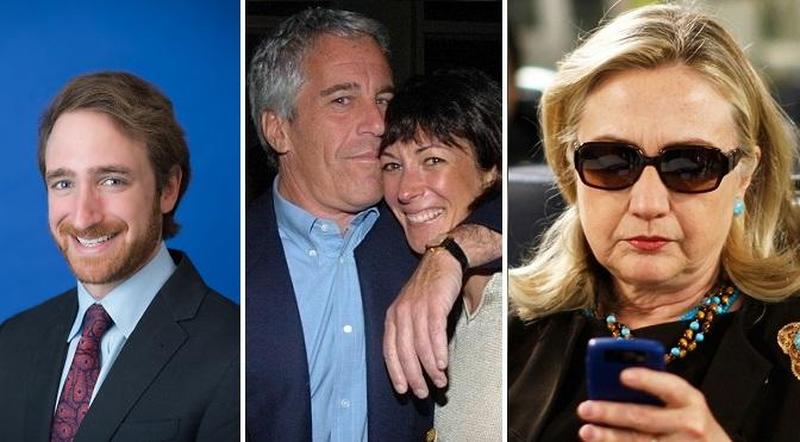
Alexander Djerassi, the son of Maxwell’s sister Isabel, went from working on Hillary Clinton’s 2008 Presidential campaign, to a “very powerful and prestigious position” within the state department, working under Clinton in charge of the Bureau of Near Eastern Affairs. He returned to Clinton’s 2016 campaign, according to the Beast.
“Secretary Clinton gave Alex a job in one of the most sensitive areas of Obama’s executive apparatus,” an anonymous source told OK!. “The fact Alex Djerassi, fresh out of college, was put in charge of the State Department’s Bureau of Near Eastern Affairs, covering the Middle East, was an interesting move.”
“He worked directly on the Arab Spring, and Hillary sent Alex as the US representative to the expatriate rebel groups Friends of Libya and Friends of the Syrian People,” the source continued, adding that Djerassi was given “special treatment.”
A State Department spokesperson confirmed Djerassi’s employment with The Daily Beast, though could not comment on whether the job was in fact “gifted” by Clinton.
A year before Mr. Djerassi’s appointment, his aunt’s ex-boyfriend, Epstein, pleaded guilty to a state charge (one of two) of procuring for prostitution a girl below age 18 and was sentenced to 18 months in prison.
Epstein served almost 13 months before being released for a year of probation on house arrest until August 2010.
What’s more, during his tenure at the State Dept., Maxwell attended Chelsea Clinton’s wedding to Marc Mezvinsky in July 2010. –OK! Magazine
According to Djerassi’s LinkedIn profile, “He worked on matters relating to democratization and civil society in the Arab world, the Arab uprisings, and Israeli-Palestinian peace. Djerassi has served as a U.S. representative to the Friends of Libya conferences, Friends of the Syrian People conferences, U.S.-GCC Strategic Coordination Forum, and several UN General Assemblies.”
Djerassi previously worked at the Carnegie Endowment for International Peace, focusing on Tunisia and US foreign policy towards the Middle East and North Africa.
Frequent WikiLeaks mentions
According to the Beast, Derjassi’s name appears in a ‘collection of Clinton’s emails’ published by WikiLeaks – with Assistant Secretary of State Jeffrey Feltman referring to his “special assistant, Alex Djerassi” in November of 2011 and January 2012.
Meanwhile, the Beast also notes his employment on Clinton’s campaign.
From September 2007 to June 2008, Djerassi was a policy associate for Hillary Clinton’s presidential campaign. He listed his job duties as such: “Researched and drafted memos, briefings, and policy papers for candidate, senior staff, and news media on wide range of domestic and foreign policy issues. Prepared for more than 20 debates.” (In late 2007, Epstein was under investigation for trafficking girls in Palm Beach and working on a secret plea deal with federal prosecutors. Maxwell is believed to be one accomplice who was protected under the controversial agreement.)
The Yale and Princeton alum—the son of Maxwell’s sister Isabel—apparently returned for Clinton’s 2016 presidential run. –Daily Beast
Bill Clinton notably flew 26 times on the infamous “Lolita Express” belonging to Maxwell associate and convicted pedophile Jeffrey Epstein. The former US President was notably fingered as having been seen on Epstein’s “pedo island” according to court documents released three weeks ago.
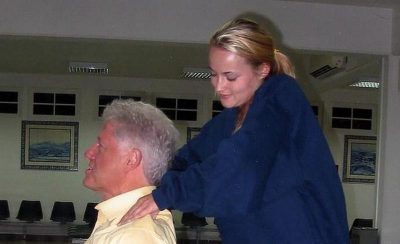
More recently, photos of Clinton receiving a neck rub from one of Epstein’s accusers (who said he was a perfect gentleman) surfaced in the Daily Mail.
How the UK Government Provides Cover for Israel’s Crimes
By Stuart Littlewood | American Herald Tribune | August 22, 2020
MP Alister Jack has finally replied to my question asking where he and the UK government stand on the threat by Israel to annex more Palestinian territory known as the West Bank. It seems the Government has urged them not to do it.
I doubt if his letter reproduced here, is his own work. It is sprinkled with the humbug and deceit repeated for decades by Tory and Labour governments and was likely penned at least 20 years ago by a Foreign Office scribbler vaccinated with an Israeli embassy gramophone needle. It is still used as a reply template by MPs and ministers who dare not speak their own minds or are plain clueless.
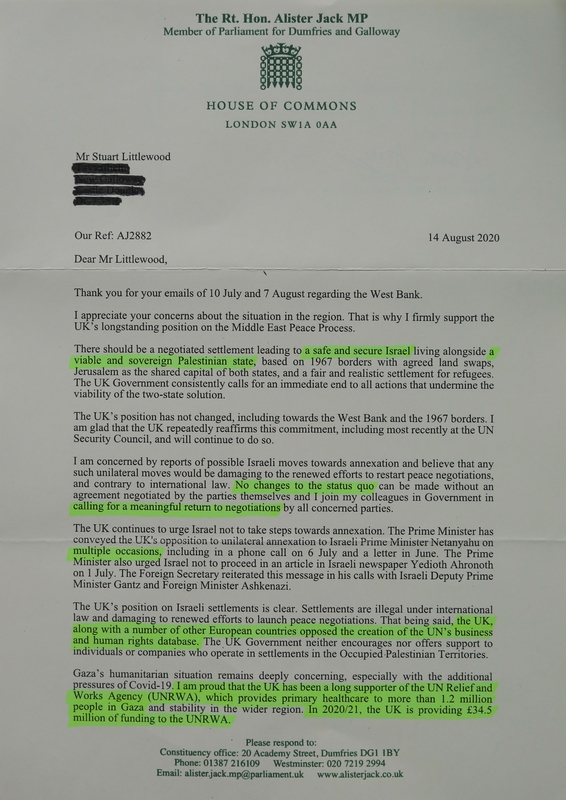
As usual, Her Majesty’s Government wants “a safe and secure Israel” but only “a viable and sovereign Palestinian state”. What a deplorable statement. Viable means workable in the most meagre sense. And when it comes to safety and security why can’t Mr. Jack be evenhanded? His words (if they are indeed his) express clear racial prejudice favouring the wellbeing and prosperity of one people at the expense of another which, I’d have thought, deserves a sharp rap on the knuckles.
He says there can be no changes to the status quo without a negotiated agreement between the parties. Mr Jack is surely aware that the status quo is itself illegal and breaches umpteen UN resolutions. And why does he feel the Palestinians must ‘negotiate’ their freedom? Picture the scene with the invader holding a gun to the head of the victim whose land the invader has occupied under brutal military control and in defiance of international law for 70+ years. Why is Mr Jack joining his colleagues in calling for more lopsided negotiations instead of pushing for law and justice?
‘Nothing shall be done to prejudice the rights of non-Jewish communities….’ Sorry, forget that.
So many experts are saying that a negotiated two-state solution is impossible. Does anyone seriously think the Israelis will voluntarily give up their ill-gotten territorial gains which are crucial to their Greater Israel dream? The only peaceable way to change their mind is through the persuasive power of BDS and other sanctions. For that reason BDS is under relentless Zionist attack and is fiercely opposed by the servile UK Government. The reason why the West endlessly woffles about ‘negotiations’ is their cowardly failure ever since 1948 to confront Israel’s greedy ambition for expansion and domination. That inconvenient bit in Britain’s 1917 pledge to Rothschild and the Zionist Federation about “it being clearly understood that nothing shall be done which may prejudice the civil and religious rights of existing non-Jewish communities in Palestine” is best forgotten. It’s so much easier for the UK Government to say and do nothing while their Zionist ‘friends’ surreptitiously complete their programme of creeping annexation. And never mind the 70+ years of grief this has caused innocent Palestinians.
Mr Jack refers to Boris Johnson’s article in Yedioth Ahronoth which appeared on the very day Netanyahu was supposed to be carrying out his crazed threat. “Annexation would represent a violation of international law…. I profoundly hope that annexation does not go ahead,” he wrote. “If it does, the UK will not recognize any changes to the 1967 lines, except those agreed between both parties.” But Israel has repeatedly violated international law and repeatedly been rewarded, so why should it care what the UK thinks about boundary changes? They have been changing all the time. Israel’s annexation of East Jerusalem (including the Old City) in 1967 was a flagrant breach of international law, and what did the UK or anyone else do about it? “I want to see an outcome that delivers justice for both Israelis and Palestinians,” says Johnson absurdly. He has no interest in justice otherwise he’d be leading the charge for implementing international law and UN resolutions which have already ruled on the issue.
As for Israel’s annexation misfire, it looks like world hostility gave Netanyahu cold feet and he and Trump cast around in desperation for a face-saver. They found it the United Arab Emirates’ ‘MBZ’ with whom they cobbled a deal for full diplomatic relations between Israel and the UAE provided Israel suspended annexation, and this is touted as a triumph. No-one of course insisted on actually abandoning annexation and you can bet the piecemeal ethnic cleansing, destruction of Palestinian homes and confiscation of their lands will continue unabated.
Mr. Jack then says he’s proud that the UK supports UNRWA and is providing £34.5 million funding this year. If the Palestinians were allowed their universal right to freedom of movement and self-determination in their homeland there’d be no need to keep throwing our tax money at agencies like UNRWA. It’s scandalous that money for our own schools and hospitals has been diverted to subsidise Israel’s long-running programme of thieving, collective punishment, dispossession and the trashing of the Palestinian economy.
Mr Jack goes on to say: “The UK’s position on Israeli settlements is clear.” Well no, it isn’t. They are illegal and even constitute a war crime yet the UK Government doesn’t mind if companies or individuals profiteer from using and endorsing those squats to the detriment of the Palestinians. And he seems to agree with his government’s opposition to the UN’s business and human rights database. Back in March 2016, UN Human Rights Council resolution 31/36 mandated the High Commissioner’s Office to produce a database of all businesses engaged in activities related to Israel’s settlement enterprise and having implications for the rights of the Palestinian people. Fair enough, you might think. But a year ago 103 local, regional and international organizations felt it necessary to call on the High Commissioner to release the Database expressing deep concern that the document and names of the companies facilitating the settlement programme had been withheld from circulation for 3 years due to political pressure. In the meantime the Israeli government had escalated the construction of new squats and broadcast its intention to formally annex parts of the West Bank in further violation of international law.
“The Database will bring an important degree of transparency on the activities of businesses which contravene rules and principles of international humanitarian and human rights law as a result of their operations in or with illegal Israeli settlements,” they said.
Amnesty International commented: “Naming the businesses which profit in the context of this illegal situation sends a clear message from the international community that settlements must never be normalized. These companies are profiting from and contributing to systematic violations against Palestinians.”
And Lawyers for Palestinian Human Rights said: “The UK Government abstained on the vote of this Human Rights Council resolution in March 2016…. It was the only state to declare that the database was ‘inappropriate’ and that ‘it would not co-operate in the process’ of its implementation.” LPHR felt that the reasons given for the Government’s position “did not individually or cumulatively amount to an adequate basis for justifiably opposing the UN Database”. One such reason was that the UK Government thought the Human Rights Council should focus on states rather than private companies. LPHR says this contradicts the UK’s earlier agreement, along with the rest of the international community, that companies as well as states have vital responsibilities in protecting and advancing respect for human rights.
I won’t trouble Mr Jack for an explanation for all this. It’s enough that voters and campaigners are aware of the skullduggery.
The Hezbollah-France Twist
By Ghassan Kadi for the Saker Blog | August 20, 2020
The intriguing twists and turns following the catastrophic explosion at Beirut’s Sea Port have thus far had international repercussions, beginning with the visit of French President Marcon to Beirut just three days after the disaster; a visit that could hardly be classified as a visit of a foreign head of state to another country.
Marcon did not go to Lebanon just to meet with Lebanese President Aoun, even though the two did meet.
Macron met with the political leaders of Lebanon; aka the traditional power brokers, including the heads of militia who have steered Lebanon into the 1975-1989 civil war, destroyed the state that was once called the Switzerland of the East, and continued to rule Lebanon thereafter, leading to its almost total demise.
Macron’s visit left behind major pointers:
- With the arrogance of a returning colonial head, he literally told the Mafia leaders that he does not trust them. He announced that foreign aid will not be handed to Lebanese authorities and that they all benefited from the collapse of the Central Bank and that they know that he knows that.
- He shunned the Lebanese President Aoun at his news conference that followed his meeting with him and had him literally pushed away. This humiliation is forever etched on film.
- He promised to return to Lebanon on the 1st of September, the centennial anniversary of Lebanon in its current political and geographical form. He gave the leaders until that date to resolve the endemic problem of corruption otherwise he would bring in a new pact.
- What was least reported about his visit was his insistence that Hezbollah was represented in his meeting with Lebanon’s political leaders.
According to international law, French President Macron has no business interfering with Lebanese politics. Reality stipulates otherwise. What Marcon said to Lebanese leaders on the August 7 visit is tantamount to saying that France created Lebanon a hundred years ago, then left it later in Lebanese hands, but the Lebanese failed, and that the leaders have until the 1st of September 2020 (the centenary of the State) to fix it. Either way, Marcon will be back on the 1st of September to recreate Lebanon with or without them.
A few days after his departure, Western frigates steamed into Beirut’s devastated Sea Port and without any coordination with what is left of the Lebanese authorities.
With the military vessels came aid, medical aid in the form of field hospitals, medicines, as well as food and fuel aid, all of which are most welcome and needed by Lebanon. Of note was the ‘miraculous’ international attention and focus on a country and people who have been robbed by their own leaders and punished by the West for having Hezbollah involved in the political process of administering the country.
It would be foolhardy to assume that the Beirut Sea Port disaster and the decision for the UAE and Israel to formally establish a diplomatic relationship a few days later were events that were connected and deliberately planned and timed. Such initiatives take much time to develop. That said, the Beirut disaster might have lubricated some rusty deadlocks and facilitated some movements, decisions, and possibly generated some unforeseeable domino effects.
Whichever way seen, the situation in Lebanon reached a breaking point, perhaps only salvageable by way of radical measures including steps to save its people from certain famine.
As a secular Syrian/Lebanese Levantine who is patriotic and endeavours to see the Levant united, strong and in a position of self-determination, I cannot see a more important political objective to pursue other than achieving the ability of self-determination. After all, this is what all self-respecting people demand and expect.
In the following few paragraphs, I am stating historical facts that do not necessarily reflect my point of view.
Egypt took upon itself the slogan of ‘total liberation of Palestine’ during the era of Egyptian President Nasser from 1952 to 1970. But his successor, Sadat, was the first to sign a peace treaty with Israel in 1978. Nearly a decade earlier however, Jordan expelled the PLO from its territory, inadvertently sending its fighters to Lebanon. In 1969, and after a number of clashes between the Lebanese Army and the PLO, a deal was brokered by Egyptian President Nasser between the Lebanese Government and the PLO and which allowed the PLO to use Lebanese soil to launch attacks on Israel. That was known as the Cairo Accord.
For better or for worse, the Cairo Accord marked the end of Lebanon as a neutral state and put it in the forefront of confrontation with Israel.
If we apply the above to the politics and political positions within Lebanon, please allow me to put on the hat of the devil’s advocate and speak on behalf of the anti-Axis of Resistance sector.
As other Arab states have walked away from their roles in being defendants of the Palestinian cause and sold out to the Western Road Map one way or another, many Lebanese who have lived and were brought up with the concept that Lebanon was/is the Switzerland of East, neither accept nor understand why it suddenly became the spearhead of resistance against the Israeli/American/NATO-based influence of hegemony.
If we add to this predicament the modus operandi of Israel and its Western backers, where adversaries and potential ones are given ultimatums to comply to their agendas or face decimation, then Lebanon has been placed in a very dangerous position, and in reality, it was.
Prior to this, after two decades of Arab-Israeli wars, Lebanon remained neutral. Even during the 1967 so-called Six-Days-War, Lebanon maintained its neutral stance and did not partake. With Egypt signing a peace treaty with Israel, and Jordan following, the Axis-of-Resistance was transformed and reduced to the North-East borders of Israel; ie the Syrian/Lebanese-Israeli borders.
Many Syria haters condemn Syria for not opening its borders for direct confrontation with Israel since 1967. What those critics fail to understand is that Syria was not equipped sufficiently to fight a conventional war with Israel; especially after the dismantling of the USSR. Syria however did everything within her power to provide the Axis-of-Resistance forces in Lebanon with all support possible to engage in asymmetric wars with Israel, and the investment paid dividends; the most impressive of which was the liberation of South Lebanon from Israeli forces in May 2000.
Many Lebanese will disagree with the above and proclaim that Lebanon was left alone. In more ways than one, they are right given that, notwithstanding Syria’s support, all of the military confrontations actually took place on Lebanese soil. This ultimately meant that the entire onus of the Arab cause of confrontation with Israel has been thrown on the shoulders of the little state of Lebanon.
Many Lebanese are supportive of this view, including pro Axis-Of-Resistance Lebanese who feel that they have been sold out by Arab complacency and treachery.
In reality, Arabs have to make up their minds and do this collectively. They must either decide to resist the American/Israeli Road Map or agree to endorse it. Neither stand is being taken where instead they stand on a half-way mark; a mark that does not hurt them, but is devastating Lebanon.
Recently, the Arabian Gulf states publicly made direct and indirect indications of desiring peace with Israel. However, they lacked the fortitude to sign peace agreements despite often working together covertly and at times overtly. In the last few days, the United Arab Emirates decided to break the mould and establish reciprocal diplomatic relationships with Israel. This came as no surprise.
Of interest is that Lebanese President Aoun appears to be capitalizing on this event in order to extract himself out of the corner he painted himself in.
Beaten, abandoned and shunned, in a recent address, Aoun hinted to the possibility of negotiating peace with Israel.
Aoun has a long history of a revolving door when it comes to changing allies and enemies. As Army Chief in the early 1980’s, he was an ally of the Christian Militia (Lebanese Forces) and jointly fought the Syrian Army presence in Lebanon. Later that decade, he turned against the ‘Lebanese Forces’ and, in the midst of a sectarian civil war, engaged himself in a bitter Lebanese Christian Maronite versus Christian Maronite battle, causing much devastation to an already shattered Beirut and neighbouring areas. This was just before he was forced into exile in France by the Syrian Army, only to return to Lebanon fifteen years later as an ally of Syria and Hezbollah in 2005.
In his ascendance to the Presidency in 2016, an achievement finally reached at the age of 80, unlike others who virtually inherited the position from their elders, Aoun displayed, at least publicly, a spark which many interpreted as coming from the fact that he, independently, built his own political career.
Senile as he may appear, and under the influence of his highly corrupt son-in-law, Gebran Bassil, he is possibly still capable of finding alternative ways to survive, at least for the continuation of his legacy that could see his son-in-law at the presidential helm.
According to a private political source from a friend who is well connected, away from the public eye, some negotiations are underway between France and Hezbollah. The insistence of France to have Hezbollah represented in the wider meeting of Lebanese leaders with Marcon was only meant to be an introduction for further talks, and specifically to more bilateral talks that involve France and Hezbollah. According to the friend, Macron is trying to push for a French initiative that breaks the deadlock between Hezbollah and the West. The details of such talks are not clear yet, but all parties to be involved will be asked to accept certain concessions.
As a matter of fact, it has been reported recently that Macron has told Trump that the American sanctions on Lebanon are counterproductive. This makes one wonder if this is an attempt on the part of Macron to bolster his initiative with credibility and support from Hezbollah. With this said, Macron will have to take a very long shot to be trusted by Hezbollah, if this is achievable at all.
In the meantime, President Aoun is quite aware of this and is feeling excluded and abandoned, even by Lebanon’s traditional ‘mother’; ie France. He is in desperate need to resurrect his position.
In touting peace talks with Israel, Aoun seems to be making three pertinent statements. He is signaling to Hezbollah that he is prepared to sever his political alliance with them, but more importantly, he is signaling to the whole West, primarily to the USA, that he is a viable negotiation partner, desirous to sign a peace treaty with Israel. He knows how such words resonate to American foreign policy architects. Most importantly perhaps, Aoun is signaling to Macron that it is pay-back time. He is showing Marcon the finger and reciprocating his ‘undiplomatic’ demeanour, presenting to him that he is prepared to marginalize Marcon and France as a whole by directly talking to America, leaving France out of a new historic Middle East peace deal.
Such a desperate attempt may lure America to sit at the negotiating table with Aoun, but it will not resolve the anger and agitation against the leadership regarding the numerous domestic problems leading up to the Sea Port disaster and what followed.
Will the USA swallow Aoun’s bait and go out of its way to save his hide? No one knows. What seems inevitable is that, with or without any warming up of relations between France and Hezbollah, Hezbollah is undertaking much restructuring and reinvention. Hezbollah leadership is quite aware that the time of its political alliance with Aoun is over one way or another, and is currently considering the implementation of many changes, albeit their details remain unclear.
The events of the next few weeks, especially following the upcoming second visit of Macron on the 1st of September, will be pivotal in deciding the fate and roles of all stakeholders and entities that have held the fate of Lebanon in their hands.
YouTube Shuts Down New Channels from Venezuela and Cuba
teleSUR | August 21, 2020
Without prior notice, YouTube Thursday removed three Venezuelan channels and two Cuban channels from its platform.
“We were loading to the platform not only live transmissions but also our complete programs. There is no clear explanation for this action,” said Barry Cartaya, a presenter of Venezolana de Television (VTV), a state-run television station based in Caracas.
“This page isn’t available. Sorry about that. Try searching for something else,” is the message popping up when the people try to access VTV channels.YouTube eliminated over 68,000 videos that the Venezuelan media stored in this platform since2011.
The VTV channels affected by the U.S. company are Multimedio VTV (314,000 subscribers), VTV Programs (87,000 subscribers), and VTV Signal Live, which allowed journalists and correspondents to directly post their productions to inform the public.
In Cuba, outlet Cubadebate also denounced the closure of two Youtube channels, namely, Mesa Redonda (19,700 subscribers) and Cubavision Internacional (8,200 subscribers).
Local analysts consider YouTube’s decisions might be related to the sanctions President Donald Trump is applying against individuals, companies, and institutions of both countries.
According to YouTube’s own rules, a channel can be closed when it has committed three serious offenses during a certain period. In the cases of the Venezuelan and Cuban channels, however, these offenses did not exist.
Turkish Drilling Ship Finds 320 Billion Cubic Metre Gas Field in Black Sea, Erdogan Says
Sputnik – 21.08.2020
Turkish President Recep Tayyip Erdogan on Friday announced that his country had discovered an enormous natural gas source – over 320 billion cubic metres of gas in the Black Sea.
“Now I want to share our good news with you: Turkey has realised the biggest natural gas finding of its history in the Black Sea”, he said.
According to him, the find also means there is a high possibility of other natural gas sources in the area.
Erdogan added that Ankara is aiming to provide the Black Sea gas for use in 2023, and promising to accelerate Turkish operations in the Mediterranean, claiming he will not stop until the nation is a net exporter of energy.
Confrontation Over Resources
Ankara previously collided with Athens amid a Mediterranean gas row, as both claimed the same territories in the sea for gas exploration. Erdogan said that his country’s surveying ship Oruc Reis will continue explorations in the eastern Mediterranean until 23 August. Later in the week, reports suggested that the Greek naval frigate Limnos and the Turkish frigate Kemalreis (F-247) “touched” each other in close proximity to the Oruc Reis.
In response, Brussels urged the Turkish government to halt its drilling activities in the area, as the EU is ready to impose sanctions on the country.
Turkey also explored resources near Cyprus, engaging in a conflict with the island nation, as it considers the area to be a part of its exclusive economic zone. The Turkish government claimed that the resources should be shared and that it acts on behalf of the self-proclaimed Turkish Republic of Northern Cyprus – a breakaway part of the island only recognised by Ankara.
U.S. Isolated From Double-Think & Arrogance on ‘Snapback’ Sanctions Against Iran
Strategic Culture Foundation | August 22, 2020
More than two years ago, in May 2018, the Trump administration unilaterally walked away from the international nuclear accord with Iran signed by the five permanent members of the UN Security Council plus Germany. President Trump derided the deal as the “worst ever” and proceeded to re-impose crippling U.S. sanctions on Iran.
This week the United States announced it intends broadening sanctions to those previously imposed by the United Nations. Those UN sanctions were lifted after the nuclear deal was signed in July 2015 and subsequently endorsed by the UN Security Council under Resolution 2231. Washington wants to reimpose the UN sanctions by claiming that Iran is in “non-compliance” of the nuclear accord, formally known as the Joint Comprehensive Plan of Action (JCPOA). Washington’s claims of Iran’s “non-compliance” are baseless.
The U.S. is asserting that it is entitled to trigger the reimposition of UN sanctions by invoking a “snapback” mechanism incorporated into the JCPOA, which permits signatories to lodge a complaint if they register credible, non-compliance by another party.
Washington’s double-think is astounding. It unilaterally repudiated an international accord, and by doing so was in breach of a UNSC resolution, yet Washington now wants to use this same accord to enforce multilateral sanctions against Iran. The American position is preposterous, yet it is proposing to proceed in absurd mental gymnastics with an apparently straight face. The seeming lack of awareness of its own glaring illogicality is an illustration of the consummate conceit that defines Washington’s policy.
To accuse Iran of “non-compliance” in a treaty that Washington has trashed is the height of hubris. Furthermore, the wielding of extra-territorial sanctions against any nation that defies U.S. sanctions against Iran is tantamount to aggression. Nations that are trying to uphold the JCPOA are threatened with American sanctions under the diktat from Washington to abandon an international treaty.
The Trump administration’s policy of “maximum pressure” against Iran is really a policy of “maximum aggression”. The callousness of Washington’s criminality is testified by its refusal to shelve its sanctions against Iran at a time of global pandemic. Appeals from the UN chief Antonio Guterres have been coldly rebuffed.
Washington’s conduct is that of a rogue state which has no shame nor legal semblance. And yet as its maximum aggression policy fails in its objectives to destroy the JCPOA and incite regime change in Iran, Washington is now turning to the multilateral forum of the UN in order to pursue its felonious aims. That’s a measure of the moral torpor that characterizes the regime in Washington.
Nevertheless, one consolation is that the U.S. is finding itself more and more isolated from its irrational and insatiable tyranny.
Last week, a U.S. draft resolution to extend an arms embargo on Iran was dealt a humiliating defeat at the UN Security Council. That embargo is due to expire as a result of the JCPOA which Iran has been in full compliance with, as verified by multiple UN inspections of its nuclear program for solely civilian purposes. Infuriated by the embarrassing snub to its presumed global power, the Trump administration doubled down this week by demanding the re-imposition of UN sanctions as part of a snapback mechanism, a mechanism that the Americans forfeited when their president crashed out of the deal in 2018.
U.S. Secretary of State Mike Pompeo – whose brain size seems to have an inverse relationship to his expanding waist measurement – this week served notice of 30 days on the international community for the reimposition of UN sanctions on Iran. It is unfathomable how the U.S. intends to proceed with such a process given its void of legal competence from no longer being a participant in the JCPOA. In double-think wonderland fashion, the U.S. somehow maintains that it still is a participant.
In any case, the American posturing this week was roundly rejected by all signatories to the JCPOA, including significantly Washington’s allies among the so-called E3 of Britain, France and Germany.
Russia and China denounced the U.S. proposal as “illegitimate”. Moscow lambasted Washington’s “reckless actions” and noted that the U.S. side has been “blatantly violating UNSC Resolution 2231 since May 2018” with “its policy course aimed at destroying the JCPOA.”
Unabashed, the intemperate and pugnacious Pompeo lashed out at European allies for “siding with the ayatollahs” and warned Russia and China of more sanctions, accusing them of “disinformation”.
The fiasco over the nuclear deal and Washington’s arrant delinquency is but one facet of a much bigger picture. Namely, the flagrant disregard for international laws and norms by the United States which views itself as “exceptional” and above the law, unlike all other nations. There has always been a distinctive element of double-think and hypocrisy in the historic conduct of the United States, especially when it comes to its presumed right to wage genocidal wars and subversions against other nations with impunity.
However, what the fiasco over U.S. demands for sanctions on Iran shows is the extreme culmination of its arrogance and increasingly the isolation that inevitably goes with such deviancy. Washington’s rampant and deranged arrogance is now rightly seen as a global danger to peace and security.
Featured Video
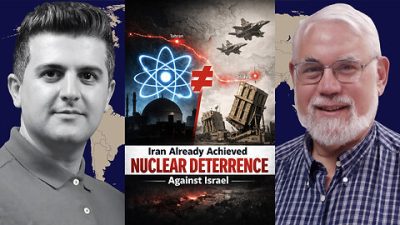
Prof. Ted Postol: Iran Already Achieved Nuclear Deterrence Against Israel
or go to
Aletho News Archives – Video-Images
From the Archives
How the occupied mentality syndrome works
Saudi Arabia on the American chessboard – Part 3
By B. J. Sabri | American Herald Tribune | June 27, 2016
Read part 2: “The occupied mentality Syndrome“
Previously I argued whether Saudi Arabia’s repeated involvements in U.S. interventions and wars stem from free national will or in response to a specific condition. For starters, in Saudi Arabia there is no national will. In Saudi Arabia, the national will is the will of the Al Saud clan. Still, when a major Arab state allies itself with a superpower that committed unspeakable crimes against humanity in almost every Arab country, then something is wrong. This fact alone should compel us to examine the U.S.-Saudi relation for one exceptional reason. As a result of the U.S.-Saudi wars, hundreds of thousands of people in Afghanistan, Iraq, Iran, Libya, Syria, Yemen, and Somalia have lost their lives. Millions became displaced in their own homelands. And millions more rendered refugees.
Attributing the Saudi policies to the bonds of “partnership” with the U.S. is frivolous. There are no bonds between these two thugs except those of business, military deals, secret plots, and wars. Proving this point, bonds such as these have no space for the American and Saudi peoples to share significant cultural or societal exchanges. If partnership is not the reason for the Saudi contribution to the U.S. strategy of empire and imperialism, then another reason must exist.
This leads to three possibilities. … continue
Blog Roll
 Aletho News
- Hezbollah hits Israeli warship off Lebanon’s coast, sets it aflame
- Iran slams US strikes on B1 bridge, Mahshahr petrochemical plants as ‘blatant acts of state terrorism’
- In letter to UN chief, Araghchi warns of dire consequences of US-Israeli attacks on Iran’s nuclear facilities
- Why the CIA conspiracy to invade Iran with Kurdish militias failed
- Why Are Upbeat US Claims About Mission to Rescue Pilot ‘Highly Questionable’?
- Aircraft destroyed during US ‘rescue’ of downed F-15 pilot cost more than $100 million each
- Washington University removes professor who condemned US-Israeli war on Iran
- Russia Warns of Retaliation as UK Authorizes Seizure of Vessels
- Serbia thwarts plot to bomb Russia-Hungary gas pipeline – Vucic
- Al Mayadeen voices solidarity with Dr. Marandi amid death threats
- If Americans Knew
- In Iran, Israel-US take aim at “reason, research, and freedom of thought” – Daily Update
- US loses planes over Iran, Israel downgrades Lebanon war goals – Daily Update
- Israel Is Blocking Palestinians from Easter at Church Where Jesus Resurrected
- Plot to assassinate Palestinian activist follows harassment campaign promoted by Zionist groups and elected officials
- Prominent New York synagogue hosts presentation on why U.S. Jews should support the ethnic cleansing of Gaza
- Tapper vs. Piker: Is the CNN Anchor Auditioning for David Ellison?
- Shouldn’t Democrats Be Able to Condemn Genocide?
- Israel-US kill negotiators, destroy civilian structures, but Iran’s military capabilities still largely intact – Daily Update
- ‘War crime’: Global condemnation as Israeli ministers celebrate death penalty law targeting Palestinian prisoners
- 7 Ways Israel Is Turning Lebanon Into Gaza
- No Tricks Zone
- An Inconvenient Tree: Uncovered In Alps… Europe Much Warmer Than Today 6000 Years Ago
- New Study Reports A 60% Slowdown In Greenland’s Ice Loss Rate In The Last Decade
- Low Intensity Tornado Wrecks Major Solar Farm, Creating A Potential Toxic Dump
- New Study Finds Warming Saves Lives…Cold Temperatures 12 Times More Deadly Than Excess Heat
- German Science Blog Accuses PIK Climate Institute Of Hallucinating Climate Tipping Points
- Devastating Assessment Of Comirnaty Vaccine By Former Senior Pfizer Europe Toxicologist
- New Study: CO2 Is ‘Effectively Negligible’ As An Explanatory Climate Change Factor Since 2000
- Former Pfizer Toxicologist Dr. Helmut Sterz Tells Bundestag Hearing Pfizer Vaccine Should Have Never Been Approved
- Energy Expert: Germany’s Nuclear Phaseout Was A “500 Billion Euro Mistake”
- New Research: South Australia’s Mid-Holocene Sea Surface Temperatures Were 4°C Warmer Than Today
 Aletho News