Foreign Office maintains deafening silence on Chagos Islands despite UN ruling
Press TV – February 2, 2021
Five days after a legal body of the United Nations dismissed British claims of sovereignty over the Chagos Islands, the Foreign Office continues to avoid meaningful engagement the issue.
The United Nation’s International Tribunal for the Law of the Sea ruled on January 28 that Mauritius has sole sovereignty over the Chagos Islands, thus delivering a fatal blow to the UK’s weak legal position.
The UN body’s judgment follows a ruling by the International Court of Justice (ICJ) in February 2019 that the UK must end its occupation, which in turn triggered a vote to that effect in the UN General Assembly in May 2019.
Despite the gravity of the situation, the British Foreign Office has hitherto released just a single terse statement on the issue, essentially reaffirming the UK’s recalcitrant attitude.
“The UK has no doubt as to our sovereignty over the British Indian Ocean Territory (BIOT), which has been under continuous British sovereignty since 1814. Mauritius has never held sovereignty over the BIOT and the UK does not recognize its claim”.
That curt statement, and the subsequent silence, underscores the UK’s resolve to flout international law and maintain a stranglehold over the occupied Chagos Islands.
But despite London’s oft-stated determination to hold onto the Chagos Islands indefinitely, there will inevitably be concerted legal push back by the international community, the state of Mauritius and even by individual aggrieved Chagos islanders.
On the issue of Chagos islanders – who were forcibly removed from their ancestral lands by the UK in the mid-1960s – the long-delayed issue of compensation by the British government is finally attracting attention.
According to the Observer (January 31), less than £12,000 of a £40 million fund set up to compensate Chagos islanders for the loss of their homeland has actually been given to those islanders living in Britain.
The fund was reportedly set up four years ago and yet the Foreign Office has distributed less than one percent in direct support to Chagos islanders who have lost homes and livelihoods as a result of the 55-year British occupation.
According to the Observer, which claims to have seen internal documents, the “English council” tasked with allocating the money has “abandoned the work” and “returned the funds” to the Foreign Office.
The FCO’s mistreatment of Chagos islanders over a 55-year period has even elicited criticism from some sections of the ruling Tories, a party committed to keeping occupied territories around the world.
The Tory MP Henry Smith, whose Crawley constituency is home to the majority of Chagossians living in the UK, has described the process of extracting compensation money from the Foreign office as “tortuous”.
“While there’s some uncertainty among the Chagos community about engaging with the UK government over these funds, it’s outrageous that next to none of this funding has actually been utilized. The fact that this sort of funding hasn’t been deployed is another failure of Foreign Office promises over half a century to the Chagossian community”, Smith said.
It remains to be seen if class action undertaken by the Chagossian community – coupled with pressure from the UN and the broader international system – will produce a shift in the UK’s position in the mid to long term.
Five Palestinian minors say they were severely beaten, tortured by Israeli soldiers during detention
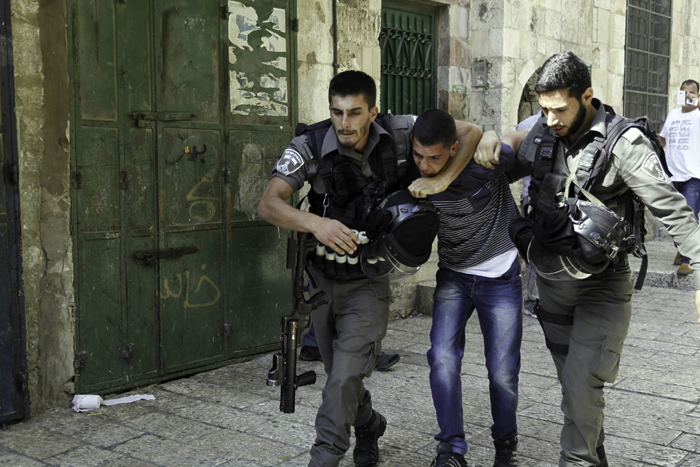
Israeli occupation forcing detaining Palestinian minors in the occupied territories
WAFA – February 2, 2021
Five Palestinian minors said they were severely beaten and tortured by Israeli soldiers and interrogators during detention, today said the Palestinian Commission for Detainees and Ex-Detainees Affairs.
It said it got affidavits from the five minors, who gave details of the beating and torture they were subjected to at the hands of Israeli soldiers and security agents during arrest and interrogation.
Mustafa Salameh, 17, was detained at his family home in Azzoun town, east of the northern West Bank city of Qalqilya. He was beaten with the butt of guns, smacked and kicked around, then shoved into an army jeep where he was thrown on the floor as soldiers kept trampling on him with their army boots, and kicking him while cursing him.
He said in his affidavit that he lost consciousness after that for a while and when he woke up he found himself in Jalama detention center where he was later interrogated for long hours while tied to a chair before being moved to the Majeddo prison for minors.
Mohammad Zalloum, 17, was detained at his family home in Silwan neighborhood of occupied East Jerusalem. He was dragged out of his house, severely punched on his stomach causing him to vomit, and then moved to Asqalan detention center where he was kept in the cells for 23 days, occasionally severely beaten.
Hani Rmeilat, 17, from Jenin refugee camp in the north of the West Bank, was interrogated in difficult conditions at Jalama detention center, assaulted with clubs by five prison guards causing him bruises on his body which required hospitalization at an Israeli hospital, after which he was taken back to the Jalama prison where he was kept for 20 days before being moved to Majeddo prison.
Majd Waari, 17, from Beit Hanina neighborhood of East Jerusalem, underwent severe interrogation at the infamous Russian Compound detention center in West Jerusalem for several hours while tied up on a small chair, smacked on the face and insulted.
Munir Arqoub, 17, from Kufr Ein, north of Ramallah, was detained at the Beit El military checkpoint north of Ramallah, attacked by three soldiers and thrown to the ground, beaten severely, then thrown into an army jeep before he was taken to a nearby military base. He was there left in an open area during cold weather conditions for several hours and denied sleep. He was taken the next day to Ofer military camp and detention center for interrogation and then moved to Majeddo prison.
The Commission said Israel is holding 170 Palestinian minors in its prisons, most of them were subjected to some form of cruelty, abuse, and brutality during their arrest.
Meet Mr. New World Order, Joe Biden
By Timothy Alexander Guzman | Silent Crow News | January 31, 2021
Some call it the New World Order, others call it ‘the liberal international order’ or Globalism. Whatever they call it, the idea is real and it is not a conspiracy theory, it is a plan that has been pushed by the establishment to rule the world for quite some time. Several politicians including former US President George H.W. Bush, Henry Kissinger to banking moguls such as David Rockefeller to the mainstream-media all have said at one time or another that the New World Order is inevitable. Last November, The New York Times published an opinion piece ‘The New World Order That President Biden Will Inherit’ concluded that the idea of a new world order will return to the White House with Biden at the helm, “President-elect Biden has signaled that he intends to lead America back into the international arena, and whatever their qualms or doubts, America’s friends and allies should not wait to join forces in tackling the business of the day — a global pandemic and the future of the planet, to name just two items on the agenda.”
In 2017, as vice-president under then-President Obama, Biden gave his last speech at the World Economic Forum in Davos, Switzerland on the accomplishments of the New World Order led by the US and its European allies, “For the past seven decades, the choices we have made—particularly the United States and our Allies in Europe—have steered our world down a clear path” he said. Biden claimed that the world actually “enjoyed” what he termed the “liberal international order”, “Our careful attention to building and sustaining a liberal international order—with the United States and Europe at its core—was the bedrock of the success the world enjoyed in the second half of the 20th Century.” He said that it was the US together with Europe who has pushed the world into a “just direction”, “After World War II, we drew a line under centuries of conflict and took steps to bend the arc of history in a more just direction.” However, since 1945, the US has bombed numerous countries including Korea (1950-53),Vietnam, Laos and Cambodia (1955-75), Yugoslavia–Serbia (1999), Iraq (1997-present), Afghanistan (2001-present), Libya (2011) and Syria (2014-present) and many other nations since the end of World War II including US-backed coups, imposing harsh economic sanctions and assassinating political leaders. Yet, Biden said the world is much safer than ever before with the US and its European allies in charge of the order, “If you look at the long sweep of history, or even just the trend lines in wars and other incidents of large-scale violence over the past 50, 60, 70 years—as a practical matter, we are probably safer than ever, But it doesn’t feel that way” he says. Yes, it does not feel that way because the US and its allies have created chaos and destruction with their regime change policies and interventions around the world since the end of WWII. “Daily images of violence and unrest from all over the world are shared directly on our televisions and smart phones—images we rarely would have seen in a pre-digital age.” Here is where his hypocrisy shines “It’s fostered a feeling of perpetual chaos—of being overrun by outside forces.” The “outside forces” he claimed that were responsible for creating “perpetual chaos” were mostly conducted by his own CIA and the Military-Industrial Complex.
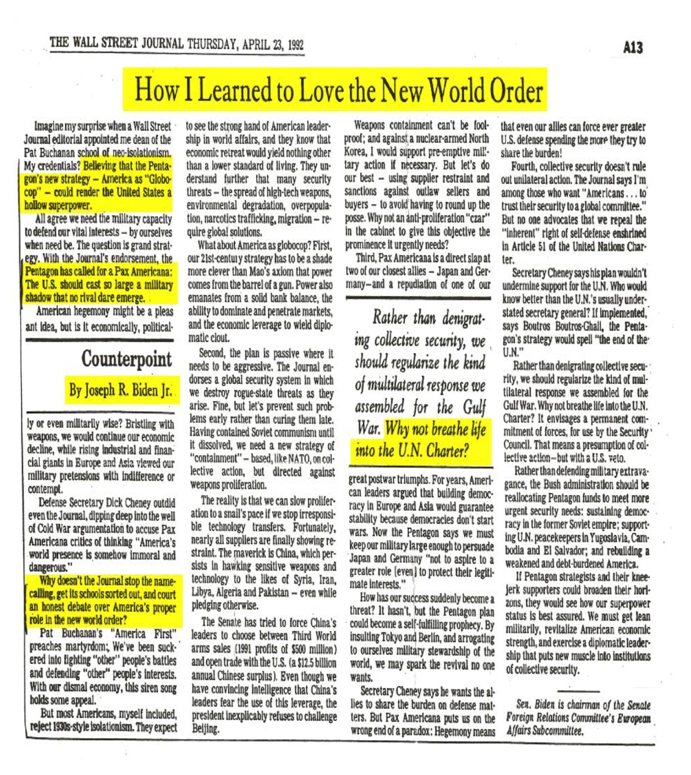
In 1992, The Wall Street Journal tapped then Senator Joseph Biden to write an article ‘How I Learned to Love the New World Order’ where he said that “Imagine my surprise when a Wall Street Journal editorial appointed me dean of the Pat Buchanan school of neo-isolationism.” Biden was referring to Patrick Buchanan, a long-time anti-globalist who worked as a senior advisor to three presidents and was a two-time presidential nominee for the Republican Party and a presidential nominee for the reform party in 2000. He is a journalist and has authored numerous books including ‘A Republic, Not an Empire: Reclaiming America’s Destiny‘ An interesting article from 2013 on Buchanan’s website http://www.buchanan.org ‘ titled ‘Why Neo-Isolationism Is Soaring’ quotes what Buchanan thought about globalism or the New World Order, “Neo-isolationism is the direct product of foolish globalism. … Compared to people who thought they could run the universe, or at least the globe, I am neo-isolationist and proud of it.” Buchanan is clearly adamant about ending the US empire:
The roots of the new isolationism are not difficult to discern. There is, first, the end of the Cold War, the liberation of the captive nations of Europe, the dissolution of our great adversary, the Soviet Empire, and the breakup of the Soviet Union. The Cold War, our war, was over. Time to come home. The Bushes and Bill Clinton said no. So we let the New World Order crowd have its run in the yard. We invaded Panama, intervened in Haiti and Mogadishu, launched Desert Storm to liberate Kuwait, bombed Serbia for 78 days to force it to surrender its cradle province of Kosovo.
Came then the blowback of 9/11, following which we had the Afghan war to overthrow the Taliban and create a new democracy in the Hindu Kush, the invasion and occupation of Iraq to strip Saddam Hussein of weapons of mass destruction he did not have, and the air war on Libya. Others may celebrate the fruits of these wars but consider the costs:
A decade of bleeding with 8,000 U.S. dead, 40,000 wounded, $2 trillion sunk, Iraq and Libya disintegrating in tribal, civil and sectarian war, Afghanistan on the precipice, and al-Qaida no longer confined to Tora Bora but active in Pakistan, Libya, Iraq, Yemen and Syria
Biden basically mocked Buchanan’s ideas of being an isolationist at the time. Many people in Washington, D.C. did not agree with Buchanan’s assessment of ending the US empire around the world. Biden is the complete opposite, he wrote “Believing that the Pentagon’s new strategy-America as globo-cop-could render the United States a hollow superpower.” He continued “all agree we need the military to defend our vital interests-by ourselves when need be, The question is grand strategy. With the journal’s endorsement, the pentagon has called for a Pax-Americana: The U.S. should cast so large a military shadow that no rival dare emerge.” As Biden continued his argument for a US-led world order, he rejected Buchanan’s “America First” isolationist policy:
Pat Buchanan’s “America First” preaches martyrdom: We’ve been suckered into fighting “other” people’s battles and defending “other” people’s interests. With our dismal economy, this siren song holds some appeal.
But most Americans, myself included, reject 1930s-style isolationism. They expect to see the strong hand of American leadership in world affairs, and they know that economic retreat would yield nothing other than a lower standard of living. They understand further that many security threats — the spread of high-tech weapons, environmental degradation, overpopulation, narcotics trafficking, migration — require global solutions
Biden said that being a “globocop” comes with the ability to use its economic influence as a diplomatic tool and by using NATO’s containment policy as a strategy. Biden asked the question, “What about America as globocop?” he continued ” First, our 21st-century strategy has to be a shade more clever than Mao’s axiom that power comes from the barrel of a gun. Power also emanates from a solid bank balance, the ability to dominate and penetrate markets, and the economic leverage to wield diplomatic clout.” Biden also called for an aggressive foreign policy against those who are considered rogue states or simply put, those who don’t follow the rules:
Second, the plan is passive where it needs to be aggressive. The Journal endorses a global security system in which we destroy rogue-state threats as they arise. Fine, but let’s prevent such problems early rather than curing them late. Having contained Soviet communism until it dissolved, we need a new strategy of “containment” — based, like NATO, on collective action, but directed against weapons proliferation.
The reality is that we can slow proliferation to a snail’s pace if we stop irresponsible technology transfers. Fortunately, nearly all suppliers are finally showing restraint. The maverick is China, which persists in hawking sensitive weapons and technology to the likes of Syria, Iran, Libya, Algeria and Pakistan — even while pledging otherwise
Biden’s conclusion on how the U.S. and its allies can succeed in establishing a world order through a revised United Nations charter:
Rather than denigrating collective security, we should regularize the kind of multilateral response we assembled for the Gulf War. Why not breathe life into the U.N. Charter? It envisages a permanent commitment of forces, for use by the Security Council. That means a presumption of collective action — but with a U.S. veto.
Rather than defending military extravagance, the Bush administration should be reallocating Pentagon funds to meet more urgent security needs: sustaining democracy in the former Soviet empire; supporting U.N. peacekeepers in Yugoslavia, Cambodia and El Salvador; and rebuilding a weakened and debt-burdened America.
If Pentagon strategists and their kneejerk supporters could broaden their horizons, they would see how our superpower status is best assured. We must get lean militarily, revitalize American economic strength, and exercise a diplomatic leadership that puts new muscle into institutions of collective security
During the George W. Bush administration, then Senator Joe Biden was the chair of the Senate Committee on Foreign Relations supported the Authorization for Use of Military Force Against Iraq Resolution of 2002 that granted President Bush the authority to invade Iraq. The war in Iraq has killed more than a million Iraqis with millions more injured including those who suffer from post-traumatic stress disorder (PTSD) from the horrors of war. There are over 4,800 US military deaths and 10s of thousands more seriously injured. Many US soldiers also suffer from PTSD who eventually end up committing suicide. Biden also supported the wars against Serbia in 1999 followed by his support for the wars in Libya and then Syria.
In his Wall Street Journal piece, President Biden said that the liberal international order establishment faces many obstacles including security threats such as the proliferation of high-tech weaponry, the environment, overpopulation, immigration issues on south of the US border and drug trafficking, all “require global solutions.” One of his main issues he spoke about was overpopulation. CNN recently reported with enthusiasm ‘Biden signs memorandum reversing Trump abortion access restrictions’ said that “President Joe Biden signed a presidential memorandum on Thursday to reverse restrictions on abortion access domestically and abroad imposed and expanded by the Trump administration.”
According to the report:
“The memorandum will “reverse my predecessor’s attack on women’s health access” and that it “relates to protecting women’s health at home and abroad, and it reinstates the changes that were made to Title X and other things making it harder for women to have access to affordable health care as it relates to their reproductive rights.” The memorandum reverses the Mexico City Policy which is “a ban on US government funding for foreign nonprofits that perform or promote abortions.”
Obviously, abortions reduce population growth and that’s a goal of the establishment because with less people on the planet, it is much easier to control the remaining population. A dream come true for the establishment.
Who knows how long Biden has in office since his mental capabilities are in decline, but it is certain that he will introduce many aspects of his liberal international order while he’s still in office. Rest assured, Biden, Kamala Harris or whoever takes his position will continue to implement policies that will complement the establishment who seeks to rule the world by coercion or even by force, if needed.
References:
*Joe Biden Calls For A New World Order At The 2014 U S Air Force Academy Graduation May 29, 2014
Biden/Harris Aren’t Serious About Rejoining the JCPOA
By Stephen Lendman | February 2, 2021
Time and again, public rhetoric of US officials and actions are world’s apart — why trusting them to do the right thing is foolhardy.
Candidate Biden publicly favored returning to the JCPOA nuclear deal Trump unlawfully abandoned in May 2018.
Selected, not elected, Biden won’t rejoin the landmark agreement unless Iran agrees to his regime’s unacceptable first-step demands.
Straightaway in his tenure, hardliners surrounding Biden seem more intent on abandoning the JCPOA than rejoining it by their rhetoric and actions.
Having breached the deal, it’s for the US to take good faith first steps by reversing Trump’s unlawfully imposed sanctions — a step the new US regime appears unwilling to do.
Iran vowed to reciprocate in good faith if Biden does the right thing by observing his obligations under Security Council Res. 2231.
Instead of agreeing to comply as the rule of law demands, the hardline new US regime is going the other way.
Based on what’s gone on since replacing Trump on January 20, unacceptable US hostility toward Iran appears unbending.
It’s an ominous sign for what may lie ahead.
To his credit, Trump launched no new hot wars on invented enemies.
Bush/Cheney raped and destroyed Afghanistan, Yemen and Iraq.
Obama/Biden continued inherited wars, waging its own on nonbelligerent Libya and Syria.
To his discredit, Trump continued wars he inherited, breaching his vow to end them — along with waging all-out war by other means on China, Russia, Iran, and other nations free from US control.
In its first few days in office, the Biden/Harris regime shows it’ll continue dirty business as usual that includes hostile actions against nations free from US control.
Are plans in place for escalating hot war in Syria? Will intermittent fighting in Libya heat up?
Will war by other means on China, Russia, Iran, Venezuela, and other nations escalate?
Will one or more nations free from US control be preemptively attacked in the weeks or months ahead?
Will Biden regime rhetoric favoring return to the JCPOA be replaced by escalated harshness against Iran?
Will a US staged false flag trigger a hostile move already planned?
Was returning to the JCPOA rhetoric by Biden and regime hardliners surrounding him head fake deception all along?
Knowing how the US operates against nations unwilling to subordinate their sovereign rights to a higher power in Washington, Biden/Harris regime war on Iran by other means is far more likely than good faith steps toward returning to JCPOA compliance.
On Sunday, Iran’s Parliament Speaker Mohammad Baqer Qalibaf slammed Biden’s unacceptable demands on Iran, including Blinken’s hostile remarks, saying:
“Instead of setting preconditions for carrying out its commitments… Biden (and regime members surrounding him) must determine how it is going to fulfill the commitment to the removal of sanctions practically,” adding:
“Iran won’t take good faith first-step actions in return for US promises to be breached like before.”
“It is like we have paid the seller for a commodity, but have not received anything. Who would make such a bargain?”
Separately, Iranian Foreign Minister Zarif tweeted:
“Throughout that sordid mess, Iran abided by the JCPOA, only took foreseen remedial measures. Now, who should take 1st step?”
“Never forget Trump’s maximum failure.”
Claims by Blinken about wanting to negotiate with Iran on returning to the JCPOA — provided its government acts first with no assurance of compliance steps Biden may take — ring hollow.
On Monday, Iranian Foreign Ministry spokesman Saeed Khatibzadeh said the following:
“The US needs to return to its commitments, and if that happens, it will be possible to negotiate within the framework of the Joint Commission of the JCPOA.”
Unless Biden fully complies with SC Res. 2231 and lifts unlawfully imposed sanctions on Iran, preserving the JCPOA will be jeopardized.
Khatibzadeh stressed that rhetoric and signing “a piece of paper will not suffice.”
If Biden “intends to correct the US’ wrong path, it should take practical measures.” Nothing less is acceptable.
On Sunday, IRGC commander General Hossein Salami said Iranian self-sufficiency showed it can operate successfully with or without Washington’s return to the JCPOA and removal of sanctions.
Over the weekend, Atomic Energy Organization of Iran (AEOI) head Ali Akbar Salehi said the following:
Iran is “producing 20 grams (of 20% enriched uranium) every hour.”
“We are producing half a kilo every day.”
“We produce and store this 20% (enriched uranium) and if they return to the nuclear deal, we will return to our undertakings too.”
The AEOI is required to implement policies adopted by Iranian lawmakers.
“(B)oth the government and the AEOI have declared that they do not have any technical problems with implementation of parliament(ary) (laws) and we launched 20% enrichment within 24 hours.”
If the US complies with SC Res. 2231 requirements that include lifting unlawful sanctions on Iran, the above policy can be reversed with equal swiftness.
Iranian lawmakers approved the Strategic Counteractive Plan for Lifting Sanctions and Safeguarding Rights of Iranian People.
The measure highlights Iran’s legitimate right to use nuclear technology with no military component and be free from unlawfully imposed US sanctions.
It calls for increased production of 500 kg per month of uranium enriched to 20% purity and be stored at the Fordow nuclear site, along with other provisions being implemented.
If unlawful actions against Iran by the US and E3 countries are reversed, Iran will return to JCPOA compliance as affirmed by SC Res. 2231 in 2015.
If not, current actions permitted under the agreement’s Article 26 and 36 will continue.
At this time, rhetoric and actions by Biden/Harris suggest continued noncompliance with their JCPOA obligations.
If this policy continues unchanged, the landmark agreement will unravel altogether.
That’s where things appear heading — Iran no doubt to be falsely blamed for lawless US/E3 actions against the country.
If things turn out this way, it’ll be further proof that these countries can never be trusted.
Further negotiations with them will be a waste of time.
A Final Comment
Biden demands what Iran won’t accept — renegotiating the JCPOA to include restrictions on its legitimate missile program.
He also wants constraints on Iran’s lawful involvement with and support for Syria’s Bashar al-Assad and Lebanon’s Hezbollah.
In response to unacceptable Biden regime demands, Iranian Foreign Minister Zarif said the US side in violation of its JCPOA obligations is in no position to demand conditions for Biden’s return to the landmark agreement.
Iran won’t change a single word in what was agreed on following years of negotiations, Zarif stressed.
The Security Council affirmed agreement is binding international and US constitutional law — what no nation can unilaterally change.
Netanyahu tells Biden how to deal with Iran
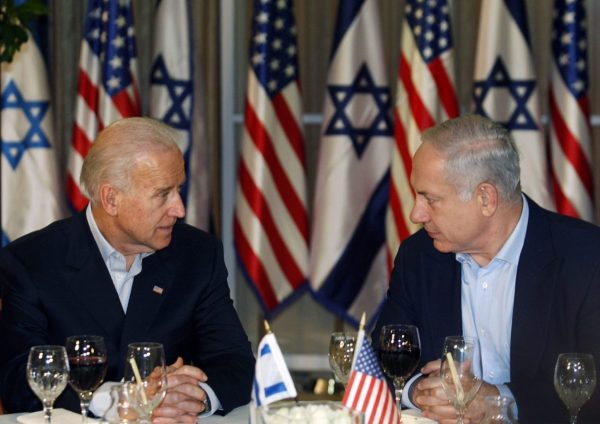
By Philip Giraldi • Unz Review • February 2, 2021
Anyone who persists in believing that the United States is not Israel’s poodle should pay attention to the comedy that is playing out right now. Joe Biden was [proclaimed] president for less than a week when the Prime Minister Benjamin Netanyahu government announced that he would soon be receiving a possibly unwelcome visitor in the form of the Israeli foreign intelligence service Mossad’s chief Yossi Cohen, who will be flying to Washington in February to explain the correct policy when dealing with Iran. And lest there be any confusion on the issue, the Israel Defense Force chief of staff Lieutenant General Aviv Kochavi also announced that any Biden attempt to mend fences with the Islamic Republic will have to meet certain conditions or Israel will exercise other options. He said “In light of this fundamental analysis, I have instructed the Israel Defense Forces to prepare a number of operational plans, in addition to those already in place. It will be up to the political leadership, of course, to decide on implementation but these plans need to be on the table.” Another government minister clarified that the options would include “an attack” on Iran, though there has been no indication whether or not Israel would possibly contemplate deploying its tactical nuclear weapons to prevent retaliation by Iranian forces.
There is no limit to Israeli hubris. A leading Rabbi in Israel is predicting that as the United States is in decline it is up to the Jewish state to take over the role of “guiding civilization forward.” And that kind of thinking shapes how Israel treats the United States with condescension, acting as if it is the knowledgeable elder statesman whose guidance must be respected. In this case the Zionist solution to the Iran problem will by design be unpalatable for the government in Tehran if it intends to remain sovereign. For Israel the correct policy for dealing with Iran is to effectively disarm it and make it impossible to establish any sphere of influence in the countries adjacent to it, to include Iraq, Syria, and Lebanon. That would be to concede Israeli dominance over the entire region and if the Iranians do not play ball the next step would be to convince the United States to attack it on some pretext, possibly to include an Israeli “false flag” to start the process going.
The Times of Israel sums up the Israeli official position as “… Iran must halt the enriching of uranium; stop producing advanced centrifuges; cease supporting terror groups, foremost Lebanon’s Hezbollah; end its military presence in Iraq, Syria and Yemen; stop terror activity against Israeli targets overseas; and grant full access to the IAEA on all aspects of its nuclear program.” Completing the disarming of Iran would also include requiring Tehran to abandon its ballistic missile program.
The irony is, of course, that it is Israel that has a secret nuclear arsenal that it created by stealing uranium and triggers from the United States and it is also the leading regional supporter of terrorist groups, to include al-Qaeda and ISIS. Iran’s presence in Syria is due to its lending assistance to the Damascus government’s resistance to the insurgencies supported by Israel and the United States. And Iran has not targeted Israeli citizens and groups overseas, but Israel and the U.S. have assassinated Iranian officials while also bombing both government and civilian targets in Syria, Iraq and Lebanon. And all of the kinetics occur in a context where Israel continues its illegal occupation of Palestine and ethnic cleansing of the Palestinian people replete with both war crimes and crimes against humanity. Iran is also a signatory to the Nuclear Non-Proliferation Treaty, which Israel is not, so who is the rogue state?
Biden will likely fold like a cheap suit when confronted by the force majeure of Cohen. The new American president has assembled a national security team for dealing with the Middle East that is nearly all Jewish and all Zionist, an affliction that he himself claims to suffer from. The Biden nominee for secretary of state Tony Blinken said at a confirmation hearing last week that the new administration would “consult with Israel” before any possible return to the 2015 Joint Comprehensive Plan Of Action (JCPOA) nuclear deal and he also made clear that there would be additional conditions for Iran. It was an odd comment for a government official who is supposed to support American interests, but it was predictably what Congress wanted to hear. As Iran has already indicated that it is unwilling to abandon its defenses and its role in the region, the Biden proposal will be a non-starter in any case, though Israel will be prepared to apply its own veto if anything undertaken by the State Department moves beyond the talking stage.
Currently there is credible speculation that Israeli intelligence has been able to compromise most if not all of the U.S. government’s information systems as well as those of major corporations. As the Jewish state is the most active in spying against the United States, that should surprise no one. For Israel to interfere in U.S. politics or government blatantly is not exactly new, though it is rare to have anyone in the mainstream media or in government say anything about. That is because Israel’s ability to wage war against critics is second to none, having at its back nearly unlimited financial resources and easy access to the media as well as active supporters from among the nearly six hundred Jewish organizations that exist in the United States.
Indeed, Israel has been involved in American politics frequently, one might even argue incessantly, even if it is predictably never held accountable. To cite only one well known example, it has been suggested that Russiagate was really Israelgate based on what actually took place shortly after the 2016 election. The contact with Russia was set up by Prime Minister Benjamin Netanyahu, who was at the time seeking to kill an anti-Israeli vote in the United Nations. He sought to do so by lobbying Donald Trump son-in-law Jared Kushner on the matter shortly after the 2016 election. Netanyahu was particularly close to the Kushner family, having on at least one occasion slept overnight at their mansion in Manhattan.
Prompted by Netanyahu, Kushner dutifully contacted Trump National Security Advisor-designate Michael Flynn and asked him to privately call Russian Ambassador Sergei Kislyak to lobby Moscow to vote against the bill. There were two phone calls but Kislyak refused to cooperate. It should be noted that while all of this was taking place Barack Obama was still president and his intention to abstain on a vote on Israel’s illegal settlements is what provoked Netanyahu to act, so Netanyahu-Kushner-Flynn were subverting their own elected government and were definitely in the wrong. Flynn was subsequently thrown under the bus by his Jewish friends without any mention in the media of the Israeli role, thereby becoming the first casualty of “Russiagate.” He was subsequently forced to resign from his post in disgrace in February 2017.
The whole issue of the U.S.-Israel relationship constitutes one of the most formidable “red lines” in American politics as part of its power comes from the fact that the media and political classes pretend that it does not even exist. Israel’s power was poisonous enough prior to the election of Donald Trump, but Trump, “advised” by a gaggle of orthodox Jews, dramatically shifted the playing field to favor Israel in ways that will define the relationship for years to come. Biden’s team is little better and the president will be taking his orders from Jerusalem and saluting as long as he stays in the White House. Will it lead to a totally unnecessary and unwinnable war with Iran? That is what Israel demands above all, and Israel always gets what it wants.
Philip M. Giraldi, Ph.D., is Executive Director of the Council for the National Interest, a 501(c)3 tax deductible educational foundation (Federal ID Number #52-1739023) that seeks a more interests-based U.S. foreign policy in the Middle East. Website is https://councilforthenationalinterest.org address is P.O. Box 2157, Purcellville VA 20134 and its email is inform@cnionline.org
Military coup in Myanmar a blow against the Biden regime
By Lucas Leiroz | February 2, 2021
This week, news of a coup in Myanmar shocked international society. Official statements by the UN and several Western governments condemning the attitude of the Burmese military in overthrowing Aung San Suu Kyi and its allies are sharing space in public opinion with neutral statements that only call for the country’s stabilization, as was the Chinese position. Between having been dangerous to democratic institutions or merely changing the government by armed means, there is a range of different possibilities, making the case worthy of a technical and impartial analysis.
The events of February 1, 2021 can be summarized as follows: Burmese State Adviser Aung San Suu Kyi, who heads the country’s government, and President Win Myint were detained by the Burmese army, under extremely obscure circumstances. Previously, tensions between the government and the military of this Asian country had been growing, generating fears of a coup in some sectors of Burmese society – however, such a quick and incisive attitude on the part of the military was not expected by the population.
The root of the conflict of interest between the government and the military was, in short, the last electoral process, which the Army classified as fraudulent and illegal. As a result of the crisis, the country’s political leader was arrested, in what was considered a coup by the media and some foreign governments. Some regional ministers were also captured by the military, as well as several other government’s allies. Citizens’ reports attest that military personnel are spread throughout the country’s streets, carrying out patrolling services and avoiding possible riots.
The military’s distrust of the electoral process is due to several factors. The election was held on November 8 and was the second general election since the end of the military government in 2011. Since the fall of the military, a scenario of tension of interests has been established among the civil political elite, interested in the preservation of democratic institutions, and the military elite, interested in conserving their power and continuing their national project. The country’s ruling party, the National League for Democracy (NLD), led by Aung San Suu Kyi, won by an immense advantage, getting 396 seats out of a total of 476. On the other hand, the Union, Solidarity and Development Party, supported by the Army, took the minimum number of seats in Parliament, which further aggravated the rivalry.
The speech of the Burmese military since the elections was unique in stating that there was large-scale electoral fraud. For this reason, the military had been demanding for months that the government postpone the summons to Parliament, which was scheduled for February 1 – which did not occur, resulting in the coup. Before that, representatives of the Burmese Government and Army met to resolve the conflict but were unable to reach an agreement of common interest.
Previously, in the midst of such fears of a possible anti-democratic coup, the country’s military has on several occasions denied the intention to do anything in this sense, categorically claiming that these accusations were unfounded and disseminated by a pro-government media. However, there are reports that the commander of the armed forces, Min Aung Hlaing, said on January 27 that the national constitution could be repealed if the laws were not properly implemented – and this in fact happened.
However, it would be naïve to believe that this event has no sign of external interference. In fact, a polarized political scenario has been outlined in Myanmar for years. Historically, the military has sympathy with China and Democrats sympathize with the West. Last month, Min Aung Hlaing and the head of Chinese diplomacy, Wang Li, met to discuss the Burmese political crisis and the chief of the armed forces alleged electoral fraud in the November process.
Chinese interest in Myanmar is clear. Maintaining an allied government in a border country is extremely strategic for Beijing and avoids a greater degree of Western influence in its continental zone. Bilateral trade between China and Myanmar has always been intense, but it has declined with the rise of the recently overthrown government, whose pro-Western positions have weakened ties with Beijing. Also, due to the latest events of ethnic conflict and persecution of the majority Buddhist military against Islamic minorities, the West has imposed several sanctions on the Burmese military, which have been consented by the civilian government. It does not seem to be by chance that the Chinese reaction to the coup was limited to a request for both sides to resolve their differences, without any condemnation against the military.
If Chinese influence is real, the military coup in Myanmar can be interpreted as a test and a warning against Washington. Losing space on the Chinese border is unpleasant for American interests but, in the midst of a strong internal crisis, will Biden really react strongly or will his response be limited to mere notes of repudiation?
Lucas Leiroz is a research fellow in international law at the Federal University of Rio de Janeiro.
US forces ‘transporting by choppers’ Daesh terrorists in Afghanistan: Taliban
Press TV – February 1, 2021
The Taliban says the US occupation forces in Afghanistan are engaged in “transporting by their choppers” members of the Daesh Takfiri terrorist group in the war-torn country’s east.
Senior members of a Taliban delegation, who are on an official visit to Iran for talks on the Afghan peace process and relevant topics, made the assertion in a news conference in Tehran on Monday, saying that the US forces in Afghanistan are assisting the Daesh terrorists to escape the areas that are coming under the Taliban control.
“Daesh were in Nangarhar and Kunar; they existed in those areas. They were eliminated by the Taliban there but their members were transferred by choppers,” Suhail Shaheen, a negotiating member of the Taliban told reporters, adding, “When the Taliban laid a siege on them, we saw that only American choppers could fly as the Afghan airspace is fully under the control of Americans.”
The senior Taliban member also referred to the escalation of violence in Afghanistan after the US-Taliban deal last February and said the US forces were to blame as they defaulted on their obligation to end their occupation and resumed the assault.
“After the signing of the agreement, we gave a chance to the Americans to withdraw their troops from Afghanistan and we were committed not to launch any attacks, so if they terminated the occupation we were committed to refrain from any assaults or attacks so it would pave the way for intra-Afghan talks but unfortunately new attacks were launched against us and we were forced to defend ourselves and they even tried to capture our region and they conducted nightly attacks,” he said.
“We have no access to the media but they have. They attribute violence to us and that is not true. They start the violence. They start the violent action and that’s still continuing.”
During the news conference, the Taliban negotiator said the group was after an “inclusive system and establishment” in Afghanistan and not after “monopolizing power,” adding that they would reconsider the agreement with US if foreign forces failed to withdraw from Afghanistan.
“We have resisted the occupation of Afghanistan for 20 years and we will continue resistance against occupation if foreign forces remain in the country,” the senior Taliban member said.
Last week, the Taliban political delegation arrived in Tehran at the invitation of the Iranian Foreign Ministry, the latest of such visits that have been paid several times over the past months.
Iran strongly supports the realization of peace and stability in Afghanistan, which has been embroiled in decades of militancy fueled by foreign military intervention.
The intra-Afghan talks started after the United States agreed to withdraw 12,000 US troops from Afghanistan in exchange for the Taliban’s halting of their attacks on international forces under a deal between the two sides in February 2020.
The deal was intended to result in the reduction of bloodshed, but violence continues to take a heavy toll on the country.
In recent months, deadly attacks and high-profile assassinations have seen a rise in Afghanistan. The Taliban have denied responsibility for the killings, but Afghan and US officials have pinned the blame on the group.
Despite the ongoing talks between Kabul and the Taliban, the administration of US President Joe Biden has said it would review the peace deal reached last year.
The US first invaded Afghanistan in 2001 under the banner of fighting “terrorism.” The invasion toppled the Taliban, but the group has never stopped its attacks, citing the foreign military presence as one of the main reasons behind its continued militancy.
Since the US invasion of Afghanistan, Washington has spent more than two trillion dollars for the war on the impoverished country, according to some estimates. Over 2,400 US soldiers and tens of thousands of Afghan civilians have been killed.
Top Navalny aide asked alleged British spy for millions in funding: intelligence video released by Russia’s FSB
RT | February 1, 2021
Surveillance footage, recorded in the early 2010s, appears to show a close associate of Alexey Navalny seeking cash and intelligence from an alleged British spy and suggesting his anti-corruption work may benefit firms in London.
The tape, which was first reported by RT television on Monday, is said to have been filmed by the Federal Security Service (FSB) sometime in 2012 and allegedly shows a meeting between Vladimir Ashurkov and an employee of the British Embassy in Moscow. Ashurkov is the executive director of the FBK, Alexey Navalny’s anti-corruption organization.
The person he met at a Moscow cafe was identified as James William Thomas Ford, then Second Secretary for political affairs of the UK embassy in Russia. The FSB suspected he was an MI6 agent working under diplomatic cover. The discussion presents problematic optics for Navalny and the FBK team, and appears to support the Russian government’s claim that they deserve to be considered foreign agents.
Part of Ashurkov’s pitch, recorded secretly by the security service, was dedicated to fundraising.
“If we had more money, we would expand our team, of course,” he said, adding that his goal of obtaining “a little money” like “10, 20 million dollars a year” would make a huge difference. “And this is not a big amount of money for people who have billions at stake. And that’s the message I am trying to project in my fundraising efforts and talking to people in the business community,” he said.
The FBK’s stated goal is to expose alleged cases of corruption in Russia. While it is essentially a type of journalistic organisation, its work is ultimately tied to Navalny’s aims of gaining political power. Ashurkov outlined the organization’s activities as “mass protests, civil initiatives, propaganda, establishing contacts with the elite and explain to them that we are reasonable people and we are not going to demolish everything and take away their assets.”
At the time of the meeting, Vladimir Putin had just returned to the Kremlin, and was taking a tougher line on foreign meddling in Russia’s domestic affairs. His predecessor, Dmitry Medvedev, had been more liberal and Western-leaning and Putin’s comeback was greeted negatively in the US and Britain.
In addition to explaining the FBK’s financial needs, Ashurkov said it could use information provided by the British government, particularly the Serious Fraud Office, for its exposés. The agency “has access to a lot of information that would not be available to us, from British sources” on certain Russian people. He named businessmen Roman Abramovich and Alisher Usmanov, who both have assets in United Kingdom, as examples.
Other UK government agencies could have helped as well, the activist suggested, while London, in general, was “already taking a tougher stance towards Russia.”
The FBK’s activities would have benefited British business too, the activist said. “We will release a report on VTB bank [a major financial institution in Russia] in association with Henry Jackson society [a neo-conservative lobby group with an avowed anti-Russian agenda] in London,” he said. Allegations of corruption involving one of the largest Russian banks would “make the case that it represents a threat to European financial markets and their integrity because it is a significant player in Europe.”
“And they make it more difficult for British firms like Lloyds or RBS or other big banks like Barclays to compete.”
The British diplomat did not commit to helping FBK during the conversation, citing the Russian legislation on foreign agents that was primed to come into force in November 2012. But he suggested turning to Transparency International for grants. Ashurkov said he doubted working with Transparency “would be effective.”
Ashurkov is currently residing in the UK, having left Russia in 2014. In his home country, he is wanted on allegations of committing fraud to finance Navalny’s 2013 campaign for the office of the mayor of Moscow.
He was one of the witnesses invited by the British Parliament for its 2018 inquiry into alleged corruption in Russia. His name was also listed in the leaked documents of the Integrity Initiative, an apparent British state-run clandestine information warfare operation linking public figures to coordinate them in supporting London’s preferred narratives and political goals.
The year the tape was allegedly filmed is incidentally the same as when a British government official finally acknowledged that an infamous fake rock espionage incident in Russia was genuine. The scandal broke in 2006 and involved British diplomats using a WiFi device disguised as a rock to collect intelligence from sources in Russia.
“The spy rock was embarrassing,” Tony Blair’s chief of staff, Jonathan Powell, told the BBC at the time, adding that Moscow made its allegations public for political reasons. The purpose, the broadcaster suggested, was to justify the passage of the foreign agents law.
RT has reached out to Mr Ford, Mr Ashurkov, as well as the UK Foreign Office and UK Embassy in Moscow for their comment on the story, but has yet to hear back from any of them.
More Than Half Of Americans To Delay Having Covid Vaccine Or Refuse It
By Richie Allen | February 1, 2021
A Tracking Project by the not for profit Kaiser Family Foundation, has revealed that more than half of Americans are likely to delay having a Covid vaccine or refuse it altogether. According to the survey, only 41 per cent of those who took part said that they are eager to receive the shots as soon as possible. The study which was conducted in January, revealed that 31 per cent of those polled said they would wait and see further results from the vaccines, seven per cent said they would only get inoculated if they were made to, while 13 per cent said they will definitely not receive the shots.
The study has also looked into the concerns among those who are hesitant to receive the jabs, with 68 per cent of those people saying they are worried about the long term effects of the vaccines. Some respondents expressed fears that the vaccine could cause Covid-19 and that it might cause serious side effects, though these concerns are more pronounced in the groups less keen to receive the shots.
Here in the UK, a recent report found that as many as 72 per cent of Black people surveyed said they wouldn’t have a vaccine. Robin Shattock, from the Department of Infectious Diseases at Imperial College London said recently:
“I know there has been concerns about the safety of these vaccines but these are theoretical risks which are so much smaller than getting the virus and potentially becoming very ill or transferring it to a loved one. These vaccines will save a huge number of lives and I urge those who are reluctant to take up the opportunity to be vaccinated.”
Shattock should tell that to the relatives of the 22 seniors who died in a care home in Basingstoke recently, as I’ve written about here: https://richieallen.co.uk/is-the-covid-19-jab-killing-some-seniors-is-it-being-covered-up/
Tell the families of those who died in Norway, or in Gibraltar, shortly after receiving a Covid vaccine, that the risks are theoretical.
Dr. Vernon Coleman, over at http://www.vernoncoleman.com is doing a terrific job documenting the reports of adverse effects and deaths that are pouring in from around the world. The numbers are mounting. The media, as usual, is silent.
Russia ramps up natural gas supplies to China via Power of Siberia mega-pipeline
RT | February 1, 2021
Russian energy major Gazprom pumped more gas to China in January via the Power of Siberia pipeline than it had initially planned, boosting daily supplies by as much as 2.5 percent.
“The export of gas to China through the Power of Siberia gas pipeline continues to grow. Supplies regularly exceed Gazprom’s daily contractual obligations,” the company said in a statement, adding that the volume of gas delivery last month “was 2.9 times higher than in January 2020.”
The 3,000km (1864 mile) cross-border pipeline started official deliveries of Russian natural gas to China in 2019. The so-called eastern route’s capacity is 61 billion cubic meters of gas per year, including 38 billion cubic meters for export.
The agreement on gas supplies via the Power of Siberia pipeline was reached in 2014, with Russia’s energy giant Gazprom and the China National Petroleum Corporation (CNPC) inking a 30-year contract. It is Gazprom’s biggest-ever agreement and the first natural gas pipeline between Russia and China.
Gazprom exported some 2.3 billion cubic meters of gas along the route during the first eight months of 2020. It plans to boost exports by an additional six billion cubic meters.
Russia is set to further increase supplies of piped gas to China, including via the Power of Siberia 2 project. The latter pipeline entered the design stage last year, and will be capable of delivering as much as 50 billion cubic meters of gas once finished.
Gazprom intends to become China’s biggest supplier, making up more than 25 percent of gas imports by 2035.
Locusts; or A Tale of Monstrous Foolishness

By Catte Black | OffGuardian | February 1, 2021
One day in a land far away and a time long gone a Priest came to where the Many were tending their crops and livestock and said…
“There are locusts coming and we must prepare!”
“But locusts come every year and all the years gone by”, the Many replied, “It is always so, why must we prepare?”
“These are not the locusts of all the years gone by,” the Priest said, “these are new and terrible locusts that I call by a New Name. We must prepare.”
“What do these new and terrible locusts with the New Name do?” the Many asked in great fear.
“Why,” said the Priest, “they consume a portion of our crops and then move on.”
The Many trembled in dread.
“But this is what locusts always do”, one man of the Many said, “why must we prepare this year when we never have before?”
The Priest regarded the one man of the Many.
“Did you not hear me?” he said. “These are not the old locusts of years gone by, these are new and terrible locusts and they have a New Name. We MUST PREPARE.”
“But what do the new and terrible locusts with the New Name do that is worse than the old locusts of years gone by?” the one man said.
“Why, are you a fool?” the priest cried. “Did I not tell you they consume our crops and then move on. We MUST PREPARE!”
“Yes, we must prepare!” cried the many in unison, though they did not know what this required.
“I do not understand”, the one man of the Many persisted, “do these new and terrible locusts look different from the old locusts of years gone by?”
“I have not said that,” the Priest replied.
“Do they consume more of our crops than did the old locusts of years gone by?”
“I have made no such claim,” the Priest replied.
“Then if the new and terrible locusts do not look different from the old locusts of years gone by and do not consume any more of our crops than the old locusts of years gone by, how are they new and terrible?”
At this the Priest grew wrathful with a priestly wrath.
“Who are you little man to put others at risk with these questions? Have I not told you these are new and terrible locusts and HAVE A NEW NAME?”

And the Many turned to the one man and said “Yes, fool, do not put others at risk with these questions. The Priest has told you – the new and terrible locusts HAVE A NEW NAME! Be silent in your foolishness and let the Priest tell us how we should prepare.”
And then they turned as one to the Priest and knelt before him and begged: “Oh wise one, tell us how we must prepare against the new and terrible locusts.”
So the Priest stood before them and said…
“I have spoken with great minds and with the gods, and they have told me the only way to prepare against the new and terrible locusts is to wear these hats of Monstrous Foolishness…”
…and he held a hat aloft of such exceeding monstrous foolishness that the Many were dismayed…
“Oh great one, how will the wearing of these hats of Monstrous Foolishness save us from the new and terrible locusts?” they cried.
“The great minds and the gods have studied the question and that is sufficient”, the Priest replied. “All those who have care for others will wear these hats and together we will save ourselves from the new and terrible locusts.”
The Many looked at one another and saw the wisdom of the Priest’s words, and willingly placed the hats of Monstrous Foolishness upon their heads and went back to tending their crops and their livestock, happy that they had been saved.
~ * ~
The next day the Priest came back to where the Many were tending their crops and livestock and wearing their hats of Monstrous Foolishness and said…
“Alas, I have spoken further with great minds and with the gods and they tell me the wearing of the hats of Monstrous Foolishness is not enough to save us from the new and terrible locusts. More is needed”.
The Many turned to the Priest in great alarm and cried, “oh wise one, tell us what we must do! to save us from the new and terrible locusts”
“It is this”, the Priest said, “to save us from the new and terrible locusts you must burn your crops to the ground before they can be eaten!”
“Thank you oh wise one!” the Many cried.
“Wait”, the one man of the Many said, “how will burning our crops to the ground before they can be eaten save them from the new and terrible locusts?”
“Foolish one,” the Priest answered, ” do you not understand the new and terrible locusts will pass us by if our crops are all gone?”
“But”, said the man, “you said to me that the new and terrible locusts will eat no more than the old locusts of years gone by.”
“That is true”, said the Priest.
“So, if we let the new and terrible locusts eat their fill and move on we will still have most of our crops as in years gone by, but if we burn them to the ground we will have none”.
The Priest sighed and the Many sighed also, following his example.
“Do you care nothing for those whose crops will be eaten if we do nothing?” the Priest asked in indignation.
“Do you care NOTHING for the crops that will be eaten?” echoed the Many, in great indignation for the callousness of the man.
And they went into their fields and burned all their crops to the ground so that a portion would not be eaten by the new and terrible locusts.
“But what will we do for bread,” asked the man, “now all our crops are burned to the ground?”
The Many looked troubled at this, for truly that question had not occurred to them. They turned to the Priest for answer.
“Sacrifices must be made, in times of need”, the Priest said.
“Yes”, the Many agreed, finding he spoke the very words they had in their own minds, “sacrifices must be made – and at least we are now safe from the new and terrible locusts!”
“I see the Priest has not burned HIS crops to the ground,” said the one man of the Many, “why is this?”
The Many turned to him at this and said “be silent, fool, enough of your nonsense, the Priest has spoken with great minds and with the gods and he knows best how to save us from the new and terrible locusts. All praise to our Priest and his wisdom.”
~ * ~
Next day the Priest came back to where the people were wearing their hats of Monstrous Foolishness standing in their burned fields and tending their livestock and said…
“Alas, I have spoken further with the gods and great minds and they tell me wearing the hats of Monstrous Foolishness and burning the crops to the ground is not enough to save us from the new and terrible locusts! We must also slaughter all our livestock and let their blood water the earth”.
“How will slaughtering livestock and letting their blood water the earth save us from locusts?” the one man of the Many asked.
The Many were indeed somewhat troubled by this new question and they turned to the Priest for answer.
“Do you not hear me say these are new and terrible locusts?”, the Priest said in his kindly voice. “Do you not understand that new ways must be found to save us from them?”
The Many looked relieved at this and found, once again, the Priest had spoken the very thoughts in their own minds. And so they willingly slaughtered their livestock and let the blood water the earth and rejoiced that they were now finally saved from the new and terrible locusts.
~ * ~

The Priest came a fourth time to where the people were sitting in their burned fields newly watered with the blood of their livestock, wearing their hats of Monstrous Foolishness, and he saw some were dead or dying.
“Alas,”, he said, “because of the incursions of the new and terrible locusts, we now have no bread and no meat and no milk, and even the wearing of the hats of Monstrous Foolishness, the burning of the crops and the slaying of the livestock has not been enough to save us, for see how many are dying.”
At this there was great fear and despair among the Many.
“Oh woe,” they cried, “truly these new and terrible locusts are a deadly scourge for look how many people are now dying despite all that we have done!”
And they turned to the Priest and begged “tell us oh wise one what must be done to save us from the new and terrible locusts that are killing us despite all we have done!”
“Truly”, said the Priest in great sadness, “this land is so scorched and devoured by the new and terrible locusts that nothing remains to be done but to leave our old lives behind and begin again in a new state of equity. You must come to my compound where I will protect you. I have a little food in my own storehouses, which you may have a portion of if you work for the common good by cleaning my house and tending my crops and livestock”.
“Thank you oh wise one!” the Many cried, and prepared to follow the Priest to the safety of his compound.
“Wait”, cried the one man of the Many, “it was not the new and terrible locusts that took away our food, it was us at your command, and now you want to make us your slaves?”
The Priest shook his head in pity, and the Many followed his example.
“What must be done with such persistent ignorance?” he demanded.
“Terrible persistent ignorance”, agreed the Many in unison.
And the Priest said:
“Do you not understand, that if we had NOT worn the hats of Monstrous Foolishness and burned down our crops and killed our livestock the new and terrible locusts would have made things far, far worse than they are now?”
“How?” asked the one man of the Many.
The priest chuckled and the Many followed his example.
“Why, simple fool, because the new and terrible locusts are new and terrible and have a NEW NAME!”
“A new name!” the Many echoed looking in disbelief at the one man who did not understand what this meant.
And then they turned and filed into the Priest’s compound in their hats of Monstrous Foolishness, to work for the common good by tending the Priest’s crops and livestock and cleaning the Priest’s house and singing songs of hope for their new beginning that the Priest’s scribes had written for them to sing.
Meanwhile, the one man left alone in the barren and bloody fields set out alone to find another path and sing his own songs.
Featured Video
Laith Marouf: Hezbollah’s position on US-Iran ceasefire
or go to
Aletho News Archives – Video-Images
From the Archives
The Dirty Little Secret behind the “Global Terrorism Index”
The Omission of Israeli Terrorism in the Occupied Palestinian Territories
By Karin Brothers | Global Research | December 6, 2014
… The Israeli settlements — all of which are illegal – have been identified as a major impediment to peace. The refusal of a major “global” terrorism report to name the Israeli settlers as one of the groups most responsible for terrorism not only misrepresents a major source of regional violence but exposes the Global Terrorism Index as a propaganda tool that supports a U.S. agenda.
In recent years, governments have been attempting to thwart terrorism by blocking supportive fund-raising. When it comes to Israeli settlements, however, the US and Canada actually encourage fund-raising by giving organizations (such as Christian Friends of Israeli Communities (CFOIC) and the Jewish National Fund) financial support in the form of donor tax-deductions.
Charities which provide funds for the Israeli settlements should be regarded as terror-financing organizations. They should not only lose their tax-deductible status, but they should be banned because they support the violation of international humanitarian law. The terror-financing laws that are being strictly enforced for Muslim charities should be applied to Christian and Jewish charities as well. … Read full article
Blog Roll
 Aletho News
- The ‘Opposition Party’ Has Done Nothing to Stop the Iran War and Much to Goad Trump Into Continuing It
- Moscow backs Tehran on status of Lebanon in US-Iran deal
- How UK Regulator Ofcom Quietly Bypassed International Law to Police American Speech
- The Black Cube Files: How Former Mossad Operatives Flipped a Nation
- Laith Marouf: Hezbollah’s position on US-Iran ceasefire: What you’re not being told
- Israel’s priority lies in destroying chances of peace between Iran, US: Ex-UN nuclear chief
- Ceasefire for all or for none: Iran shuts Hormuz over Lebanon attacks
- Strait of Hormuz is Iran’s ‘nuclear weapon’ that forced US retreat: Medvedev
- Energy crisis will last for months – Kremlin envoy
- Europe’s quiet role in the war on Iran
- If Americans Knew
- This is ceasefire? Israel’s biggest massacre yet in Lebanon, another journalist killed in Gaza – Daily Update
- Tucker Carlson on Israel: This Is the Behavior of an Ally? Really?
- Gazans face a triple crisis: severe shortages of water and bread, healthcare in tatters
- NY Times reports how Netanyahu took the US into Iran War
- A sigh of relief over Iran, but Gaza and Lebanon in dire straits – Daily Update
- Thousands dead and neighborhoods razed to the ground: Aid agencies fear southern Lebanon is becoming the new Gaza
- The war the US is fighting for Israel could cost trillions
- ‘Cigarette Burns, Nail Wounds’: Toddler Tortured in Gaza to Coerce Father
- Trump Says US Sent ‘a Lot of Guns’ to Protesters in Iran
- Israeli forces destroy 17 UN peacekeeper cameras in south Lebanon
- No Tricks Zone
- An Inconvenient Tree: Uncovered In Alps… Europe Much Warmer Than Today 6000 Years Ago
- New Study Reports A 60% Slowdown In Greenland’s Ice Loss Rate In The Last Decade
- Low Intensity Tornado Wrecks Major Solar Farm, Creating A Potential Toxic Dump
- New Study Finds Warming Saves Lives…Cold Temperatures 12 Times More Deadly Than Excess Heat
- German Science Blog Accuses PIK Climate Institute Of Hallucinating Climate Tipping Points
- Devastating Assessment Of Comirnaty Vaccine By Former Senior Pfizer Europe Toxicologist
- New Study: CO2 Is ‘Effectively Negligible’ As An Explanatory Climate Change Factor Since 2000
- Former Pfizer Toxicologist Dr. Helmut Sterz Tells Bundestag Hearing Pfizer Vaccine Should Have Never Been Approved
- Energy Expert: Germany’s Nuclear Phaseout Was A “500 Billion Euro Mistake”
- New Research: South Australia’s Mid-Holocene Sea Surface Temperatures Were 4°C Warmer Than Today
 Aletho News