Rights Group Calls on Israel to Immediately Release Palestinian UN Worker

UN employee and human rights activist, Shireen Al-Araj.
Palestine Chronicle | February 1, 2021
The Euro-Mediterranean Human Rights Monitor today expressed its grave concern over the Israeli authorities’ arrest of a UN Palestinian employee in Jerusalem, calling for her immediate and unconditional release.
The Israeli authorities arrested UN employee and human rights activist, Shireen Al-Araj, on January 25, in front of the Magistrate’s Court in Jerusalem. She was summoned to an interrogation on charges of “contacting with foreign clients and persons.”
Al-Araj, who holds an Israeli ID in addition to a UN diplomatic passport, had returned to the Palestinian territories after an Israeli ban that lasted for five years. Her lawyer had contacted her informing her that she has to return to the Palestinian territories to renew her residency papers or she will lose her residency and become a “refugee”, which will deny her entry into the Palestinian territories again.
On January 24, at the border between Jordan and the Palestinian territories, Al-Araj was interrogated upon her arrival, where she was ordered to go to the Magistrate’s Court in Jerusalem the next day for further investigation by the Israeli police.
As she arrived at the court, Israeli intelligence agents stopped Al-Araj near the court door, took her to her home, and confiscated her computers and mobile phones. After that, she was taken to Petah Tikva prison in central Israel. The Israeli authorities prevented her lawyer and an Israeli lawyer appointed by the UN from meeting her or even being with her during the interrogation.
Al-Araj has been working with the UN in several organizations and programs, including the United Nations Relief and Works Agency for Palestine refugees (UNRWA), the United Nations Population Fund and the Office of the High Commissioner in Turkey.
Israel restricts the work of UN workers in the Palestinian territories, despite the UN’s coordination with the Israeli authorities. The Israeli authorities also follow a strict policy with local and international human rights defenders and impose significant restrictions on granting them entry visas to Israel or accessing the Palestinian territories.
Libertarian Terrorists?
By Ron Paul | February 1, 2021
The Department of Homeland Security issued on Wednesday a nationwide terror alert lasting until April 30. The alert warns of potential terrorist attacks from Americans who are “ideologically motivated” and have “objections to the exercise of government authority and the presidential transition, as well as other perceived grievances fueled by false narratives.”
The language used in this alert suggests that millions of Americans are potential terrorists. Second Amendment supporting, antiwar, anti-tax, anti-politics, anti-militarization, pro-life, and anti-Federal Reserve activists certainly have “objections to the exercise of government authority.” They are certainly viewed by the political class and its handmaidens in big tech and the mainstream media as ideological extremists. Anyone who gets his news from sources other than mainstream media or big tech, or who uses certain “unapproved” social media platforms, is considered to have had his grievances “fueled by false narratives.” For something to be considered a false narrative, it need only contradict the “official” narrative.
The “domestic terrorist” alert is the latest sign that activities on January 6 on Capitol Hill, like the attacks of September 11, 2001, are being used to advance a long-standing anti-liberty agenda. Legislation expanding the federal government’s authority to use its surveillance and other unconstitutional powers against “domestic terrorists” is likely to soon be considered by Congress. Just as the PATRIOT Act was written years before 2001, this legislation was written long before January 6. The bill’s proponents are simply taking advantage of the hysteria following the so-called insurrection to push the bill onto the congressional agenda.
Former CIA Director John Brennan recently singled out libertarians as among the people the government should go after. This is not the first time libertarians have been smeared. In 2009, a federally-funded fusion center identified people who supported my presidential campaign, my Campaign for Liberty, or certain Libertarian and Constitution parties candidates as potentially violent extremists.
The idea that libertarianism creates terrorists is absurd. Libertarians support the non-aggression principle, so they reject using force to advance their political goals. They rely instead on peaceful persuasion.
Libertarianism is being attacked because it does not support just reforming a few government policies. Instead, it presents a formidable intellectual challenge to the entire welfare-warfare state.
The ultimate goal of those pushing for a crackdown on “domestic terrorism” is to make people unwilling to even consider “radical” ideas — to make people so afraid of certain ideas that they refuse to even give those ideas a fair hearing.
Progressives who are tempted to support what is being promoted as a crackdown on right-wing violence should consider the history of government harassment of progressive movements and leaders such as Martin Luther King, Jr. What do they think a future right-wing authoritarian would do if given power to go after “ideological extremists”?
All Americans who cherish the Bill of Rights should come together to stop this latest crackdown on liberty. My Campaign for Liberty will be mobilizing Americans to stop passage of any domestic terrorism legislation, while my Institute for Peace and Prosperity and my Liberty Report will provide Americas with the most up-to-date information about the continuing attempts to smear those who speak the truth about government lies.
(You can watch the Ron Paul Liberty Report live on YouTube Monday-Friday at noon, eastern time.)
Copyright © 2021 by RonPaul Institute.
Hezbollah fighters intercept, shoot down Israeli reconnaissance drone in southern Lebanon
Press TV – February 1, 2021
The Lebanese Hezbollah resistance movement says it has intercepted and shot down an Israeli unmanned aerial vehicle as it crossed into Lebanon’s airspace near the border village of Blida in the south of the Arab country.
Hezbollah said in a brief statement that the drone was struck on Monday morning, adding that it was now in the control of the drone. It did not provide any further details.
The Israeli military, however, asserted that the drone had fallen in Lebanese territory during an operation, alleging that “there is no risk of breach of information.”
The development came a day after Palestinian resistance fighters brought down an Israeli quadcopter conducting an espionage mission against the besieged Gaza Strip.
The drone was shot down on Sunday while taking images over Beit Hanoun Crossing, which is located on the enclave’s northern border with the occupied territories, the Arabic-language Palestine al-Yawm news agency reported.
Israel frequently violates Lebanon’s airspace. Lebanon’s government, Hezbollah and the United Nations Interim Force in Lebanon (UNIFIL) have repeatedly condemned Israel’s overflights, saying they are in clear violation of UN Security Council Resolution 1701 and the country’s sovereignty.
The resolution, which brokered a ceasefire in the war Israel launched against Lebanon in 2006, calls on the Tel Aviv regime to respect Beirut’s sovereignty and territorial integrity.
On August 23 last year, Hezbollah resistance movement said it had downed and seized an Israeli drone as it flew over the Lebanese border.
The Israeli military claimed back then that a drone had fallen in Lebanon during operational activity along Lebanese border, claiming that there was no risk of breach of information.
Tensions have been running high between Israel and Hezbollah since July 20 last year, when Tel Aviv killed Hezbollah member Ali Kamel Mohsen in an airstrike in Syria.
The Israeli military has placed its forces near the Lebanese and Syrian borders on high alert after Hezbollah promised retaliation.
Israeli forces shelled the Lebanese village of Habaria in late July 2020 to stop an alleged Hezbollah offensive, but the Lebanese movement dismissed the allegation, calling it the result of tension and confusion among Israeli forces.
Azerbaijan won the war in Nagorno-Karabakh but reduced its sovereignty
By Paul Antonopoulos | February 1, 2021
Although Azerbaijan won the war against Armenia, both countries have in fact lost part of their sovereignty.
Azerbaijan won the war and expanded territorially after it captured or received the districts surrounding Nagorno-Karabakh proper that Armenian forces captured in the first war (1988-1994). The status of Nagorno-Karabakh proper remains undetermined but is protected by Russian peacekeepers and is still governed by Armenians.
Despite this territorial expansion, Azerbaijan has in fact partly lost its sovereignty. During the war, reports began emerging that Azerbaijani military leaders were becoming increasingly frustrated with the level of control that Turkey had over their fighting forces. These reports were quickly dismissed and denied by Azerbaijan as Armenian attempts to create division through misinformation. But if this was just misinformation, then there would be no risk of division to begin with, meaning it would not be worth giving attention to, suggesting there was certainly an element of truth to it.
Azerbaijan’s military success lays with two key factors: the Armenian political and military incompetency and lack of will, and Turkey’s contribution with drones, special forces, intelligence and transfer of Syrian jihadists.
Armenian Prime Minister Nikol Pashinyan never truly committed to the war effort as Armenian forces were never fully mobilized, powerful Iskander missiles infrequently used, the Armenian Air Force mostly grounded, Armenian diaspora and foreign volunteers rejected from fighting, and local Armenian militias not equipped with enough ammunition, maps and communication devices, nor were the militias assigned commanders – yet this was supposedly a “war for survival,” as Pashinyan termed it.
None-the-less, despite the incompetency of the Armenian leadership, Azerbaijan’s rapid success in Nagorno-Karabakh would not have been possible without significant Turkish support. Even Azerbaijan’s success is limited as it did not achieve its main war aim – the capture of Nagorno-Karabakh.
More importantly, Ankara’s footprint in the country massively expanded through the deployment of more Turkish troops to Azerbaijan, control of more military bases, and the establishment of a joint observation center with Russia in the Agdam region.
As said, reports circulated during the war that divisions in the Azerbaijani military and political circles were emerging between a pro-Turkish faction and another faction in opposition to Turkey’s dominant role in the war effort. These reports have only intensified in recent days as Turkish troops are now deployed in Azerbaijan. Azerbaijani politicians and military leaders are beginning to worry about Ankara’s strong influence in the country, with critics commenting that Azerbaijan has become the 82nd province of Turkey. Although Azerbaijan now controls most of the formerly Armenian-held territory, it cannot exercise control over it without Turkish and Russian oversight.
In fact, even Iran has greater opportunities to influence Azerbaijan that it was not able to do before the war. Azerbaijan’s capture of the districts to the south of Nagorno-Karabakh proper means that it shares external borders with only Armenia and Iran. Effectively Iran has great opportunities to be one of the leading foreign investors in the region as Armenia and Azerbaijan have not normalized their relations. Iranian Foreign Minister Mohammad Javad Zarif visited the Nakhichevan exclave of Azerbaijan, the region wedged between Armenia, Turkey and Iran, to boost regional cooperation through new railroad and transportation routes.
In turn, it will be inevitable that Iran will attempt to gain influence through pan-Shi’ism, but this may prove difficult to gain a foothold as pan-Turkism has become the dominant ideology of Azerbaijan because of Turkey’s own soft power manoeuvers. Russia will utilize its influence through its peacekeepers in the region, and also soft power through economic exchanges.
Although Azerbaijani President Ilham Aliyev will relish his country’s long-awaited victory after his father Heydar Aliyev signed a humiliating ceasefire in May 1994 to conclude the First Nagorno-Karabakh War, the long-term repercussion means that Turkey dominates the Azerbaijani military and wields great political influence over Baku. Also, there is limited Azerbaijani governance in the territories it controls because of Russia’s watchful eye through the deployment of peacekeepers. And finally, we can see much stronger Iranian influence as it aims to penetrate the region through economic and religious means.
Azerbaijani flags may be flying over the captured territories, but it certainly has come at the price of reduced sovereignty – militarily, economically, politically, and perhaps even religiously and culturally.
Paul Antonopoulos is an independent geopolitical analyst.
Featured Video
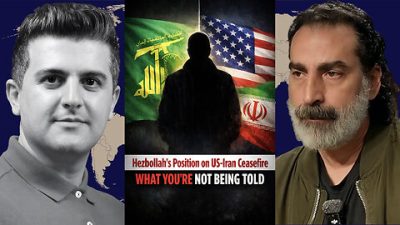
Laith Marouf: Hezbollah’s position on US-Iran ceasefire
or go to
Aletho News Archives – Video-Images
From the Archives
The Dirty Little Secret behind the “Global Terrorism Index”
The Omission of Israeli Terrorism in the Occupied Palestinian Territories
By Karin Brothers | Global Research | December 6, 2014
… The Israeli settlements — all of which are illegal – have been identified as a major impediment to peace. The refusal of a major “global” terrorism report to name the Israeli settlers as one of the groups most responsible for terrorism not only misrepresents a major source of regional violence but exposes the Global Terrorism Index as a propaganda tool that supports a U.S. agenda.
In recent years, governments have been attempting to thwart terrorism by blocking supportive fund-raising. When it comes to Israeli settlements, however, the US and Canada actually encourage fund-raising by giving organizations (such as Christian Friends of Israeli Communities (CFOIC) and the Jewish National Fund) financial support in the form of donor tax-deductions.
Charities which provide funds for the Israeli settlements should be regarded as terror-financing organizations. They should not only lose their tax-deductible status, but they should be banned because they support the violation of international humanitarian law. The terror-financing laws that are being strictly enforced for Muslim charities should be applied to Christian and Jewish charities as well. … Read full article
Blog Roll
 Aletho News
- Spain orders reopening of Tehran embassy, condemns Israel’s carpet bombing of Lebanon
- Israel faces ‘unsustainable’ strategic crisis following 40-day war against Iran: Analyst
- Iran restricts Hormuz access to 15 vessels per day under ceasefire terms: Report
- The ‘Opposition Party’ Has Done Nothing to Stop the Iran War and Much to Goad Trump Into Continuing It
- Moscow backs Tehran on status of Lebanon in US-Iran deal
- How UK Regulator Ofcom Quietly Bypassed International Law to Police American Speech
- The Black Cube Files: How Former Mossad Operatives Flipped a Nation
- Laith Marouf: Hezbollah’s position on US-Iran ceasefire: What you’re not being told
- Israel’s priority lies in destroying chances of peace between Iran, US: Ex-UN nuclear chief
- Ceasefire for all or for none: Iran shuts Hormuz over Lebanon attacks
- If Americans Knew
- This is ceasefire? Israel’s biggest massacre yet in Lebanon, another journalist killed in Gaza – Daily Update
- Tucker Carlson on Israel: This Is the Behavior of an Ally? Really?
- Gazans face a triple crisis: severe shortages of water and bread, healthcare in tatters
- NY Times reports how Netanyahu took the US into Iran War
- A sigh of relief over Iran, but Gaza and Lebanon in dire straits – Daily Update
- Thousands dead and neighborhoods razed to the ground: Aid agencies fear southern Lebanon is becoming the new Gaza
- The war the US is fighting for Israel could cost trillions
- ‘Cigarette Burns, Nail Wounds’: Toddler Tortured in Gaza to Coerce Father
- Trump Says US Sent ‘a Lot of Guns’ to Protesters in Iran
- Israeli forces destroy 17 UN peacekeeper cameras in south Lebanon
- No Tricks Zone
- An Inconvenient Tree: Uncovered In Alps… Europe Much Warmer Than Today 6000 Years Ago
- New Study Reports A 60% Slowdown In Greenland’s Ice Loss Rate In The Last Decade
- Low Intensity Tornado Wrecks Major Solar Farm, Creating A Potential Toxic Dump
- New Study Finds Warming Saves Lives…Cold Temperatures 12 Times More Deadly Than Excess Heat
- German Science Blog Accuses PIK Climate Institute Of Hallucinating Climate Tipping Points
- Devastating Assessment Of Comirnaty Vaccine By Former Senior Pfizer Europe Toxicologist
- New Study: CO2 Is ‘Effectively Negligible’ As An Explanatory Climate Change Factor Since 2000
- Former Pfizer Toxicologist Dr. Helmut Sterz Tells Bundestag Hearing Pfizer Vaccine Should Have Never Been Approved
- Energy Expert: Germany’s Nuclear Phaseout Was A “500 Billion Euro Mistake”
- New Research: South Australia’s Mid-Holocene Sea Surface Temperatures Were 4°C Warmer Than Today
 Aletho News