Why Californians Have Sky-High Electricity Bills
By Irina Slav – OilPrice.com – May 5, 2021
Californians pay for some of the most expensive electricity in the United States. They also live in one of the greenest states, at least from an energy perspective. California is only going to get greener. Meanwhile, electricity bills are expected to continue their rise. Some deny there is a link between the two.
The facts show otherwise.
A paper by the California Public Utilities Commission released earlier this year identified the state’s plans to reduce greenhouse gas emissions by adopting more renewable energy as one big factor for bigger utility bills and expectations for further increases in electricity rates in the coming years.
The report said that while the state’s plans to reduce emissions will negatively affect electricity bills, a concerted switch to what the authors call “all electric homes and electric vehicles” could lead to a substantial drop in monthly bills. However, this would require a large upfront investment, which would be impossible to shoulder by medium- and lower-income households.
“In the absence of subsidies and low-cost financing options, this could create equity concerns for low- to moderate-income households and exacerbate existing disparities in electricity affordability,” the report said.
But funding such a hypothetical move to “all electric homes and electric vehicles” is only part of the problem. Another part, ironically, is distributed energy systems.
A March report in CalMatters summarized the reasons for Californians’ high electricity bills as follows: first, the size and geography of the state make the fixed costs associated with the maintenance of its grid higher than in most other states; second, households with rooftop solar installations don’t pay for these fixed costs even if they use the grid. And all this is deepening the divide between wealthy and not-so-wealthy Californians, making electricity increasingly less affordable for the latter.
Distributed solar installations appear to be only affordable for the wealthier citizens of the state. They can afford the upfront costs and then benefit from lower electricity bills, according to one of the authors of a UC Berkeley’s Haas Business School study that CalMatters cited in its report.
Solar power is regularly touted as cheaper and cheaper, even exceeding the affordability of fossil fuels. The truth, however, is that the cost declines that have been celebrated by renewable power lobbies only concern the PV panels. Granted, any cost decline in solar is good news, but what most reports forget to mention is that it’s not just panels that make solar farms or even rooftop installations.
Besides panels, solar power installations also involve other components—whose costs are not falling—and there is the cost of installation. Taken together, all these make up a rather hefty sum, which explains why it is wealthy Californians who are the ones taking advantage of the state’s programs aimed at encouraging the adoption of low-carbon energy sources. They are also the ones reaping the benefits at the expense of poorer Californians.
California has something called a net energy metering (NEM) program that basically pays owners of solar installations for feeding electricity into the grid. An analysis of the system between 2017 and 2019, Utility Dive reported recently, shows that the costs of the program stood at $9.46 billion while the benefits stood at $7.96 billion. Another study of the program, focusing on customer bills, found that the benefits of the program came in at $7.58 billion while costs were as high as $20.58 billion and much of that was shouldered by the people who couldn’t afford to buy a rooftop solar installation. … Full article
No comments yet.
Featured Video

MIT Prof Ted Postol: U.S. Iran Missile War
or go to
Aletho News Archives – Video-Images
Frlom the Archives
Not Ready for the Big Leagues
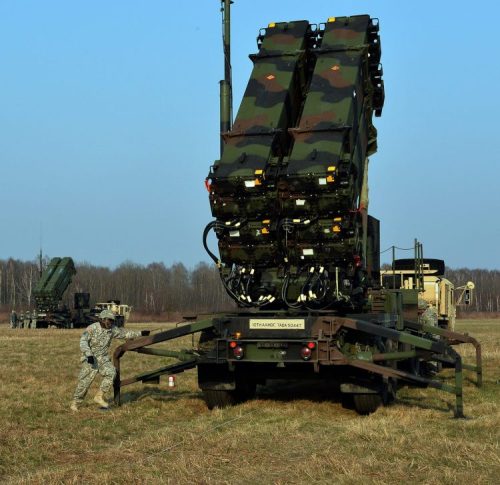
Patriot Missile Launcher
By William Schryver | imetatronink | January 20, 2024
… In an attempt to cover just three large airbases against a series of salvos of 100+ missiles of various types, the entire US stockpile of PAC-3 interceptors could very conceivably be exhausted in little more than a week or two. … continue
Blog Roll
 Aletho News
- MIT Prof Ted Postol: U.S. Iran Missile War
- Unpacking glaring contradictions in US-Zionist justifications for war against Iran
- Iraq and Cuba hit by blackouts amid US pressure and attacks on Iran
- US-Israeli Efforts to Degrade Iran’s Missile Might Failed – Military Researcher
- New American copium: Ghost of Kuwait
- IRGC strikes critical Israeli military sites with Khorramshahr-4 missiles in latest wave
- US racks up billions in losses during first four days of war as Iran pummels key Pentagon assets: Report
- US and Israeli Claims of Depleted Iranian Arsenals are Just Military Propaganda – Expert
- Iran denies attacking Azerbaijan, suggests Mossad involvement
- Iranian Armed Forces say no missile fired from Iran into Turkey
- If Americans Knew
- ‘Dirty Work’ :The truth about how Israel was founded
- Mass Expulsion in Lebanon as Israel Expands War: “We Don’t Know Where to Go”
- Lies, distortions, and propaganda: how the U.S. mainstream media coverage on Iran hides the truth
- Palestinians in Gaza fear famine returning as Israel cuts off food amid Iran war
- AIPAC, other pro-Israel groups enter midterms with $100 million to spend
- Iranian girls killed by ‘double-tap’ strikes on Minab school
- Bari Weiss Is Going Full ‘Propaganda-Palooza’ With the Iran War
- Inside the Pro-Israel Campaign to Stop ‘The Voice of Hind Rajab’ From Winning an Oscar
- After Iran, It’s Turkey
- War rages on Iran, while Israel withholds everything from Gaza – Not a ceasefire Day 146
- No Tricks Zone
- New Study: A Century Warming Of 1.1°C Is ‘Commonplace’ And ‘Not Unusual’ During This Interglacial
- New Study: ‘Internal Noise’ And Volcanic Forcing Can Trigger 10-15°C Warming Within Decades
- Glaciers Worldwide Are Suddendly Surging, Experts Blame Warming!
- Surprising Discovery: Sahara Is Greening…Billions Of Trees Where Once Thought To Be Barren
- New Research Reaffirms Clouds, Aerosols, And Surface Solar Radiation Are ‘Driving The Climate System’
- Germany: Electric Car Catches Fire At Charging Station, Sets Off Local “Inferno”, Widespread Damage
- New Study: Canada’s New Brunswick Was 1°C Warmer Than Today During The Medieval Warm Period
- Coal Power Back In Trend As Globe Tries To Keep Pace With Growing Demand For Power
- New Study: A 4°C Warmer Beaufort Sea Had ‘No Sea Ice’ 11,700 – 8200 Years Ago
- Unfudging The Data: Dutch Meteorological Institute Reinstates Early 20th Centruy Heat Waves It Had Erased Earlier
 Aletho News
Leave a comment